JAP | ENG
Granada, Spain
October 2013
#2/3
I visited Seville, Córdoba, and Granada in Andalusia in 1968 on my way back from Brazil. This was my second visit.
Alhambra.
The Alhambra (Nasrid Palace) (also see: GRANADA, SPAIN OCTOBER 2013 #1/3) is a royal palace consisting of three palaces: the Messar Palace, the Comares Palace and the Palace of the Lions (also known as Court of lions).
Among them, the Lion’s Palace, the king’s private residence, which will be described below, is one of the best masterpieces of Spanish Islamic art, and is called “the flower of Islamic architecture“.
The walls are decorated with arabesque patterns of trees, flowers, Arabic poetry and words, and verses from the Quran, and each room has marble floors, openwork windows, and ceilings decorated with icicle-like decorations called muqarnas (stalactites).
Court of the Lions in the Alhambra
(Patio De Los Leones)
World Heritage Site
Location map of the Court of lions, adjacent to the east of the Comares Palace.
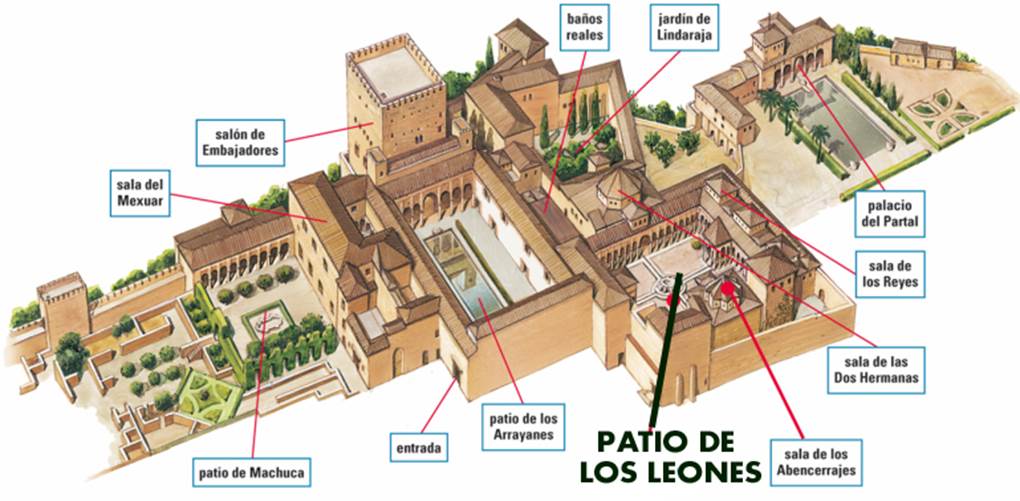
From the courtyard of the Comares Palace (Court of the Myrtles), take a narrow passage and enter the Courtyard of the Court of the Lions.
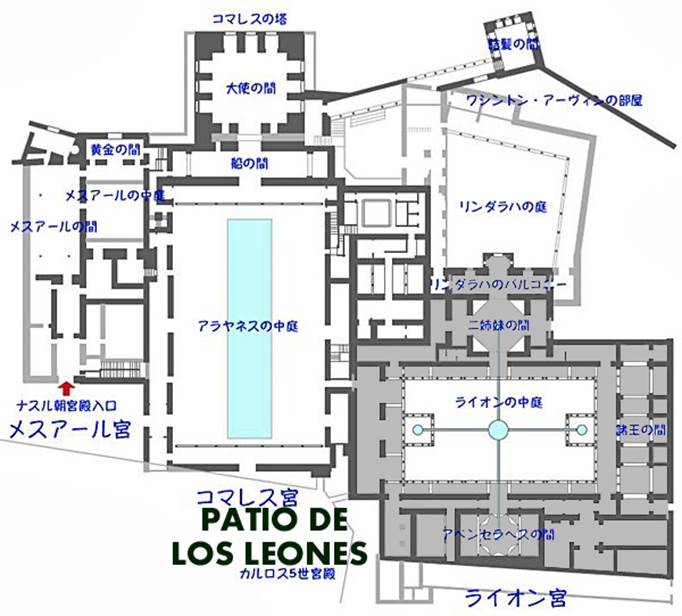
Courtyard of the Court of Lions in the Alhambra.
In the center of the Court of the Lions is a fountain supported by 12 lions, surrounded by 124 marble columns decorated with arabesque patterns that support the roofs of the four galleries.
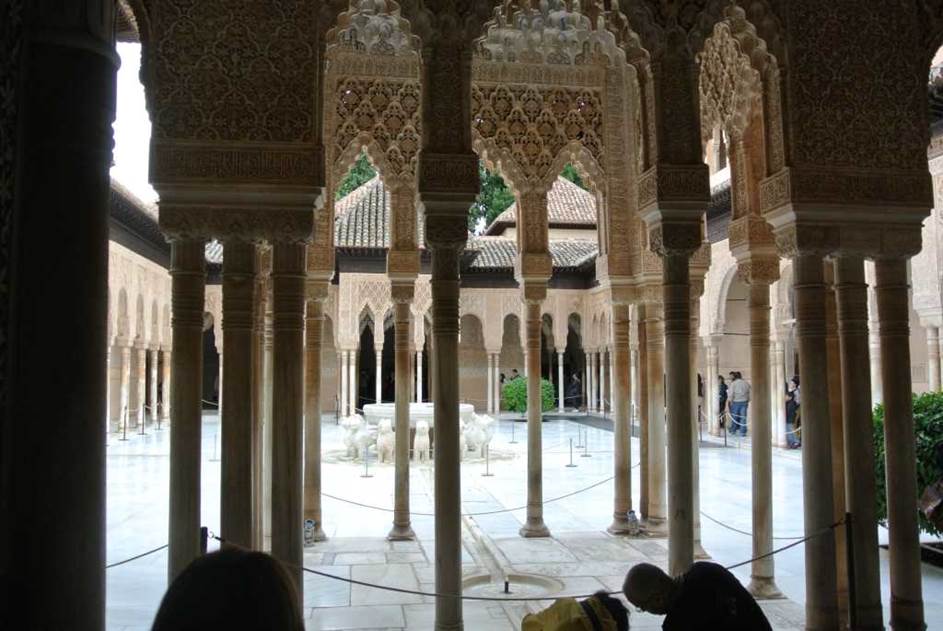
Photo by author, 2013
Well-manicured green plants are placed symmetrically in the four corners, creating a nice accent. In the background of the building, cypresses from the Lindarach Garden serve as a borrowed scenery.
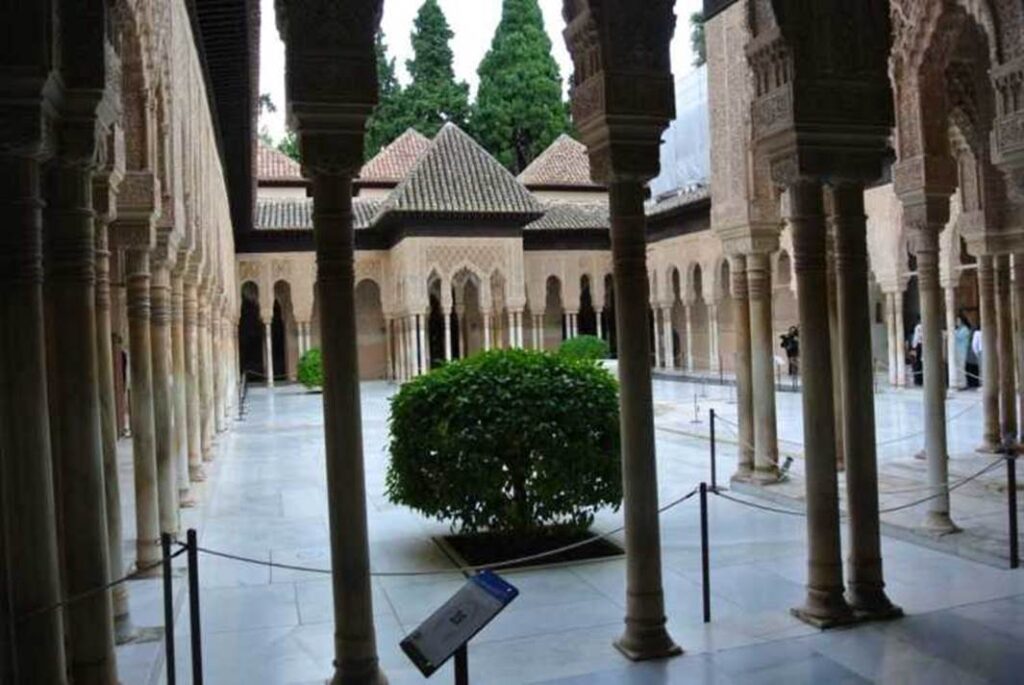
Photo by author, 2013
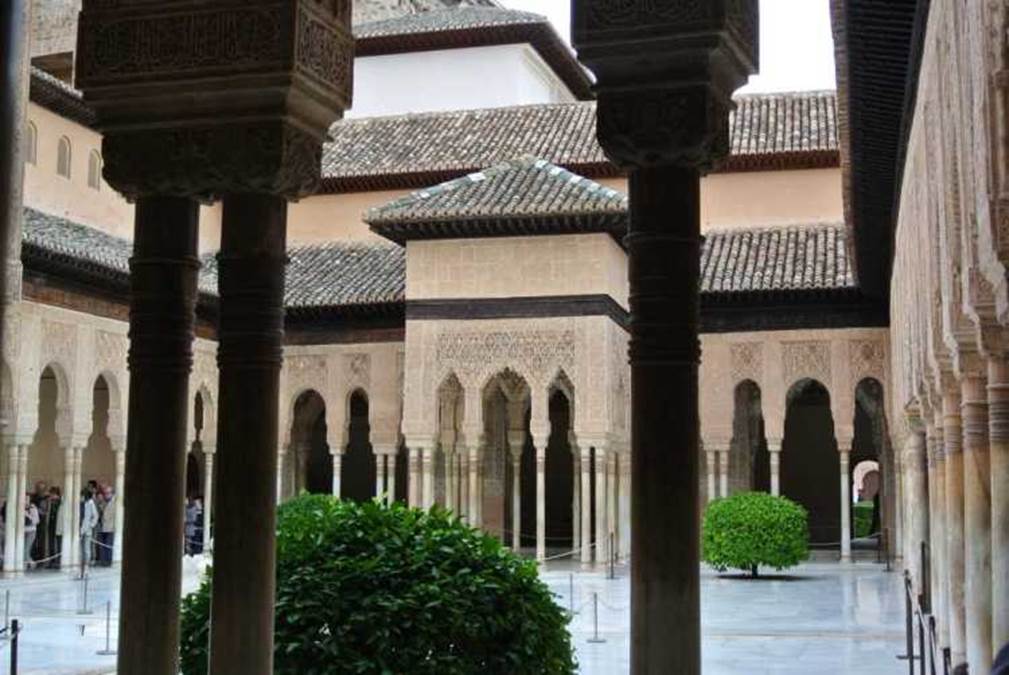
Photo by author, 2013
Overwhelming arabesque pattern!!
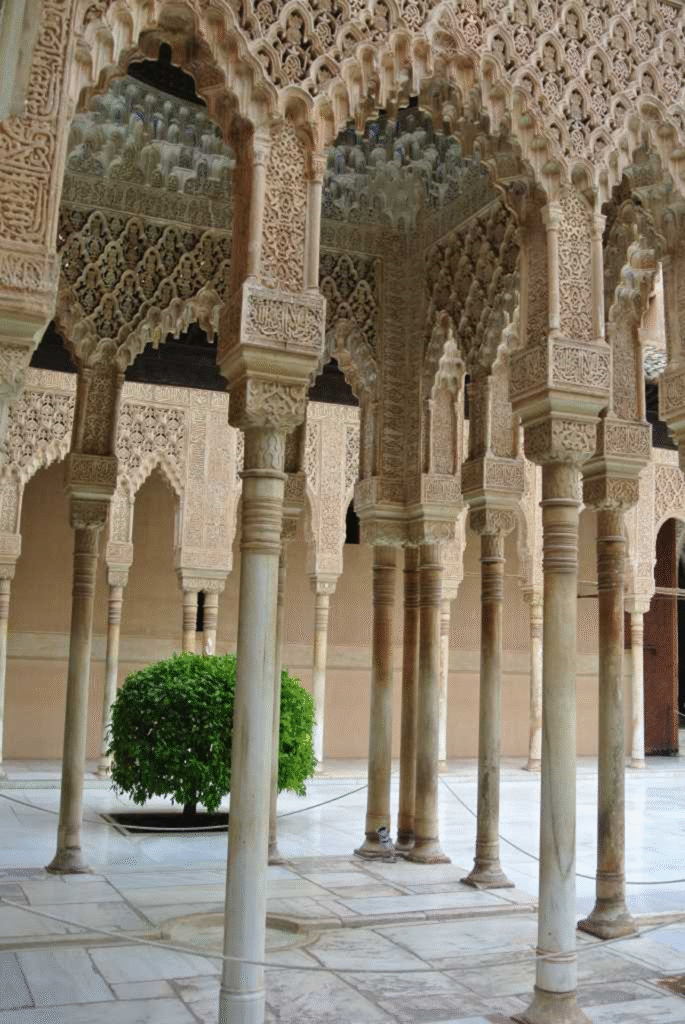
Photo by author, 2013
Observing the buildings surrounding the courtyard of the Lion Palace. The floor is boldly covered with white marble on the front. Around it, a very fine white marble columns that seems to be too thin supports the Islamic arch. The arch is a natural beige color with a light pink tint. On top of that, dull dark brown roof tiles are placed, and the eaves of the roof create a dark shadow.
The lower part of the building is lightened, and the upper part is darker and heavier. This feeling is unique and shows the extraordinary ability of the client and the designer.
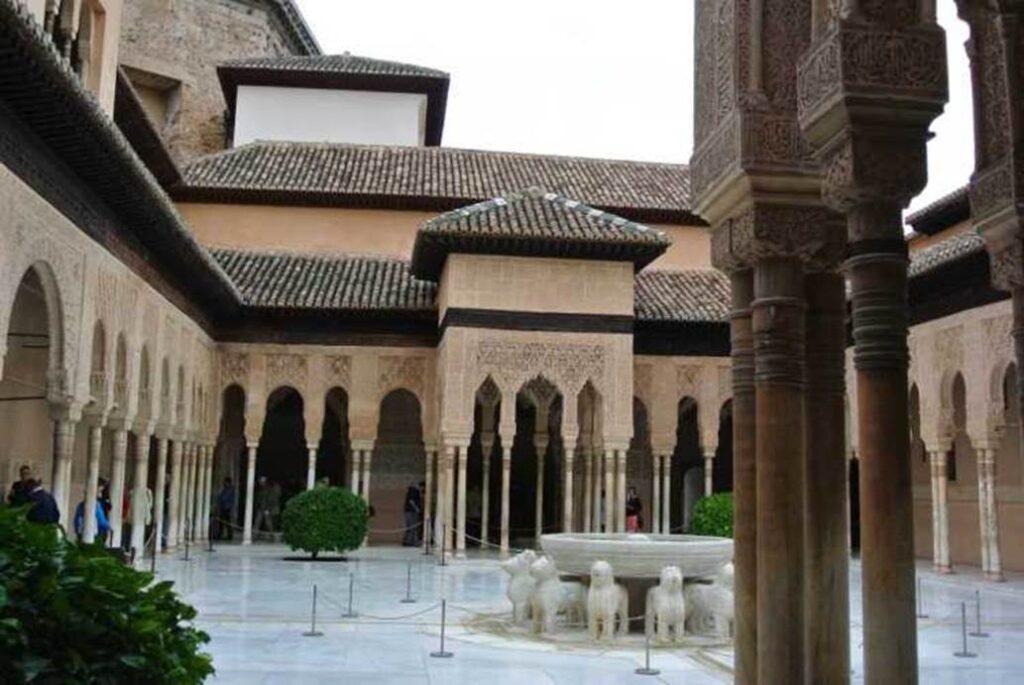
Photo by author, 2013
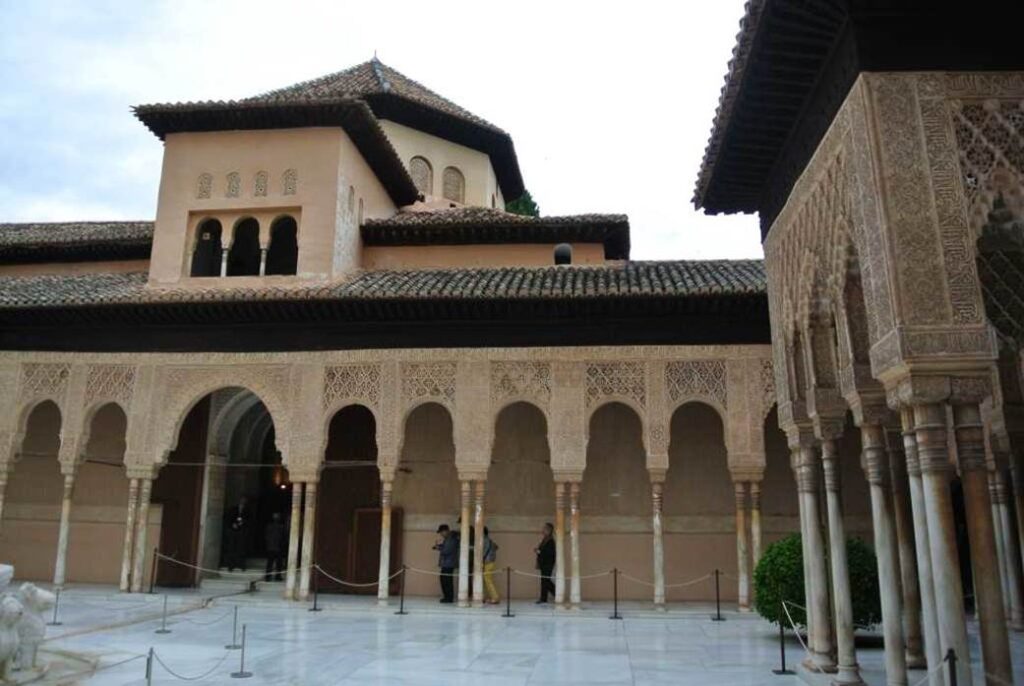
Photo by author, 2013
The Court of Lions was built as a living space for the king. The highlight of the courtyard, which is one of the most beautiful in the palace, is the crisscross waterway. In the center of the cross waterway is a fountain supported by 12 lions. Water flows from the mouths of the 12 lions, and the water is carried to the rooms on the four sides, north, south, east and west, through the crisscross waterway.
This is a novel idea, and at the same time, it shows how the client and designer considered water as an important element.
As for the lion sculpture, it seems that the sculptor and craftsman who carved it may have never seen a real lion. It looks like some kind of fictional animal.
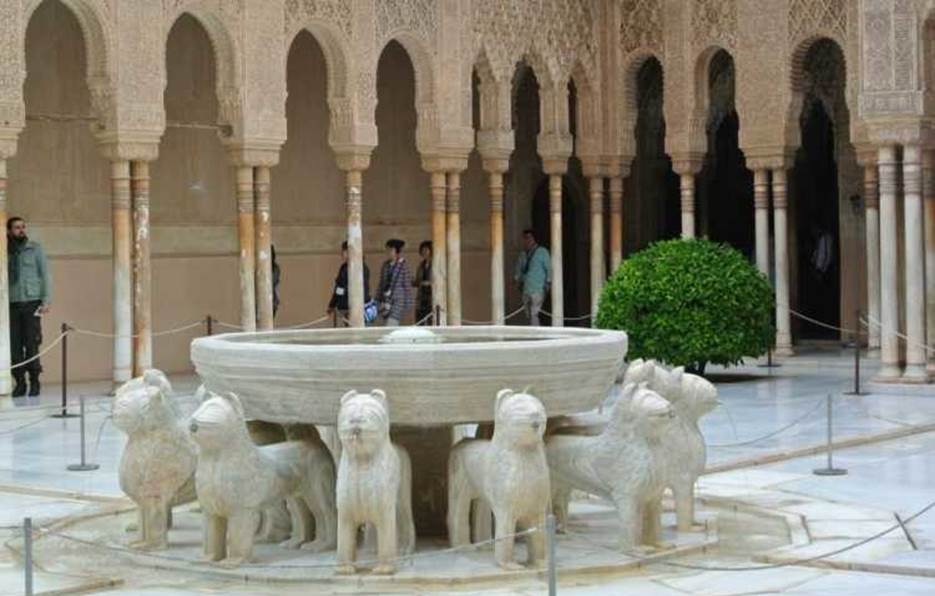
Photo by author, 2013
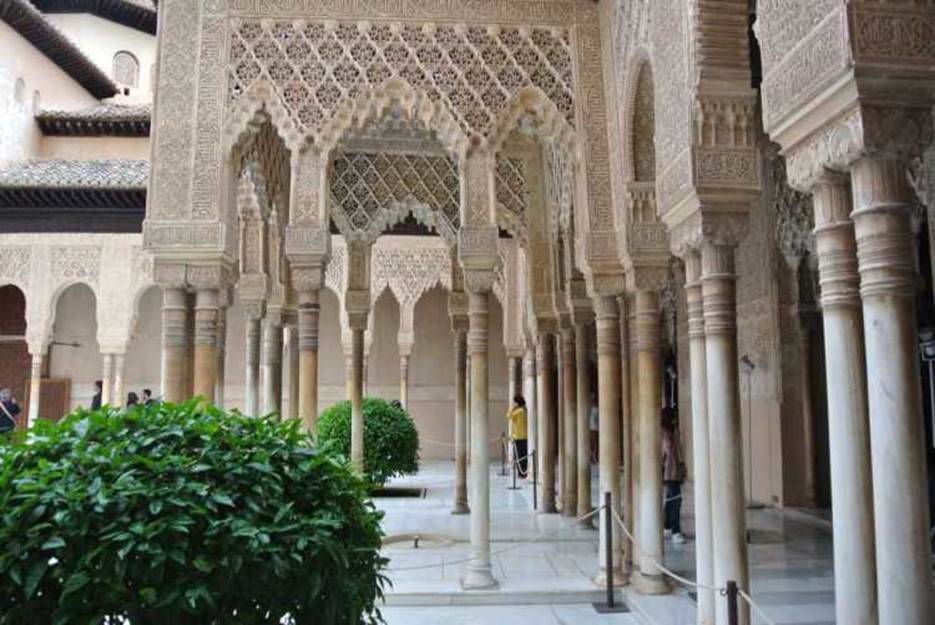
Photo by author, 2013
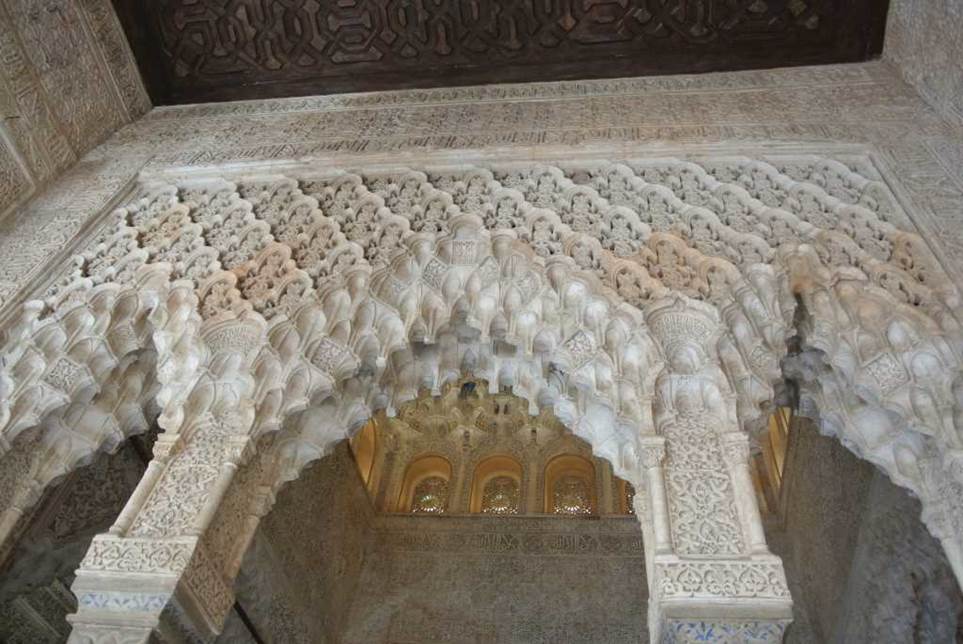
Photo by author, 2013
Muqarnas
Muqarnas is an architectural technique in Islamic architecture that creates concave surfaces by assembling small curved surfaces in a stalactite or honeycomb shape. They are often made of bricks, stones, or plaster, in a form of small sharp depressions that are layered and repeated.
It is often used on underside of domes, arches, vaults and curved ceilings. It is unique to Islamic architecture. It was very popular from the late 13th century to the 15th century in the Islamic world, where idolatry and realistic expression were prohibited. Muqarnas can be said to be a tangible expression of the unique aesthetic sense and spirituality of Muslims.
Muqarnas is an Arabic word meaning stalactite vault, and is a three-dimensional architectural decoration consisting of layers of recessed elements, each of which repeats several simple geometric elements.
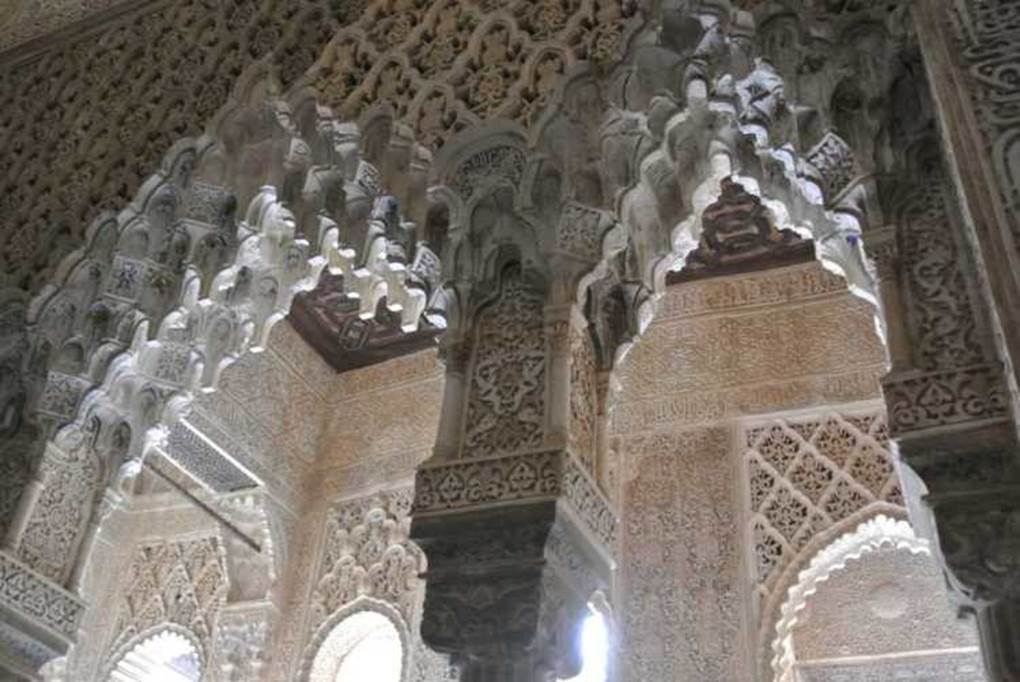
Photo by author, 2013
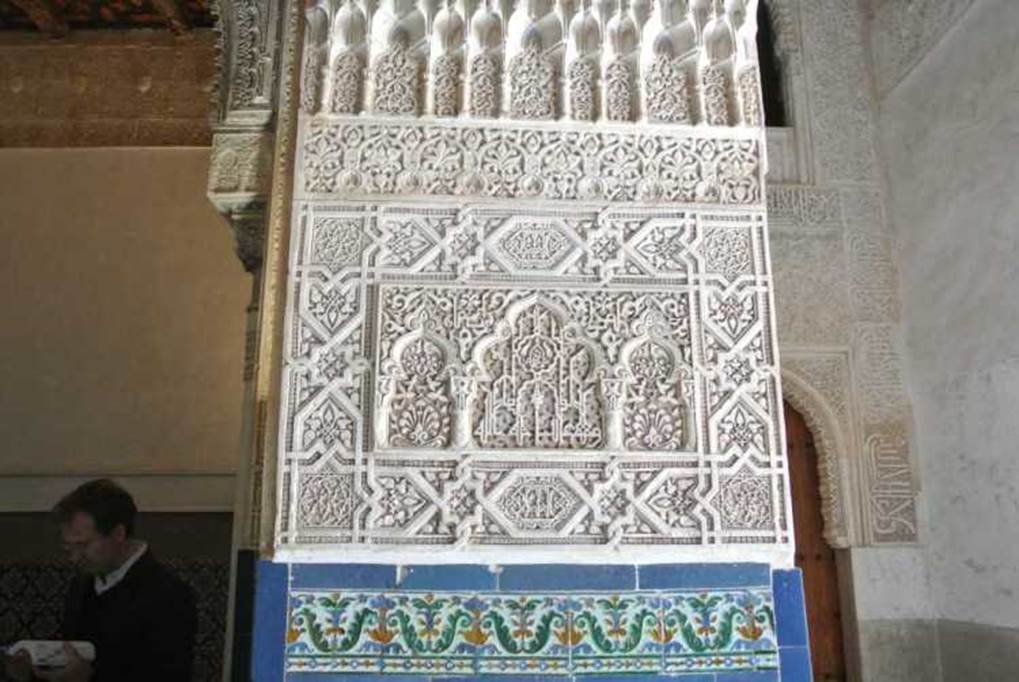
Photo by author, 2013
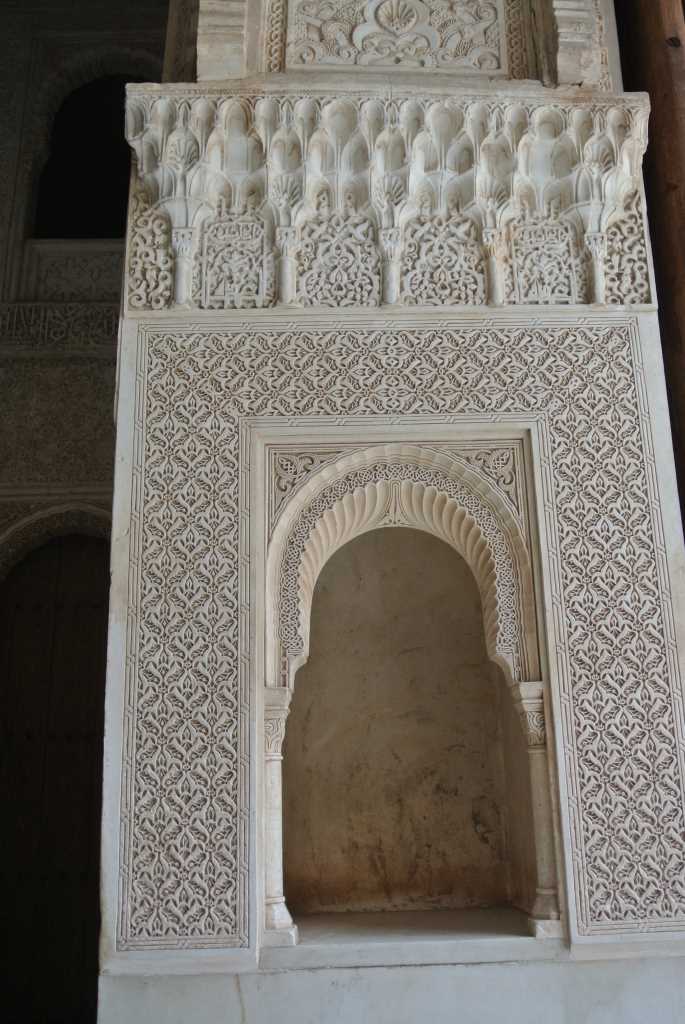
Photo by author, 2013
Hall of the Abencerrajes (Sala de los Abencerrajes)
The Hall of Abencerrajes, on the south side of the courtyard is the king’s bedroom. The ceiling is richly decorated with stalactites. The light coming in from the high windows creates a mysterious space.
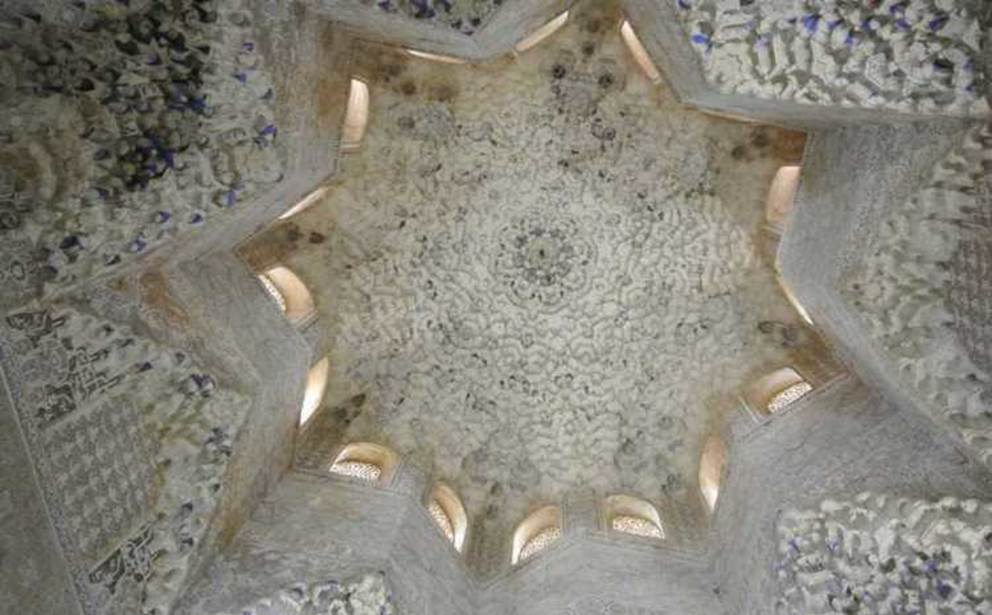
Photo by author, 2013
Hall of the Two Sisters (Sala de las dos Hermanas)
On the north side is the “Hall of the Two Sisters”. It is the oldest building in the area. It is across the street from Abencerrajes.
The octagonal ceilings, many of which are motifs of stars and flowers, and are intricately carved with stalactites. It must have been a great feeling of happiness to see this ceiling first thing in the morning.
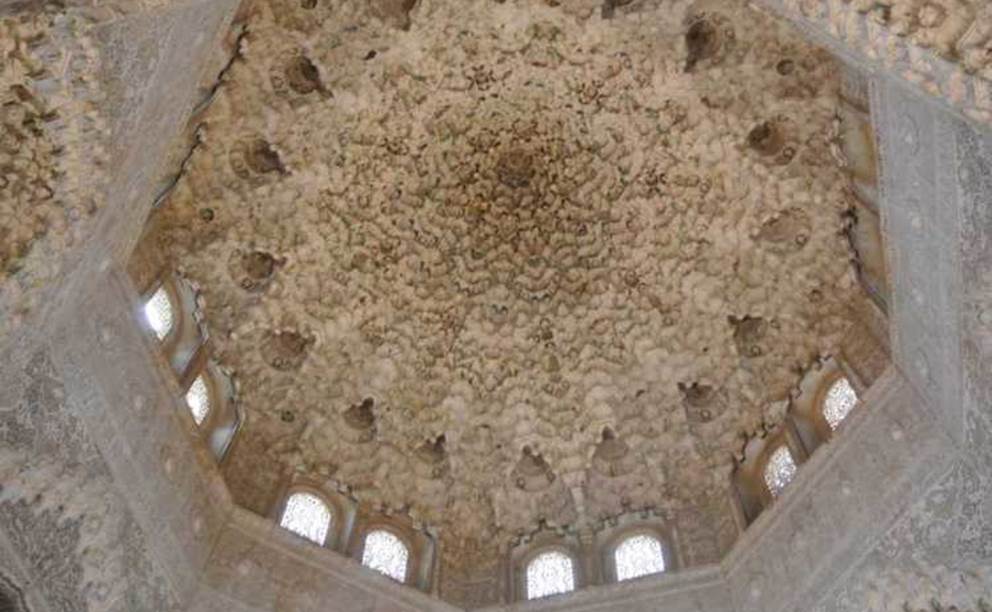
Photo by author, 2013
Hall of the Muqarnas
The Mezquita, which is a religious building, is a solemn building ordered by the authorities, and the building is used by the general public. On the other hand, only a limited number of people can enter and exit the Alhambra, and it is not possible to see what is going on from the outside.
This difference shows that the decoration of the holy Mezquita is for the public (emphasis on power), while the decoration of the Alhambra is private and artistic.
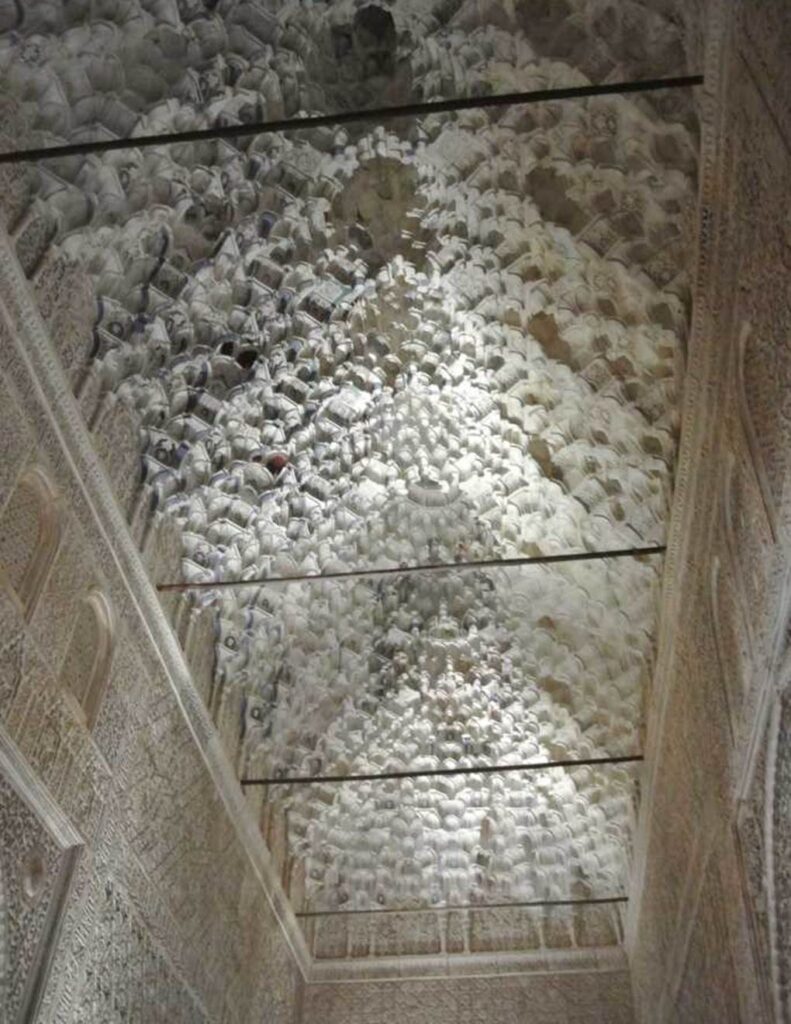
Photo by author, 2013
The last monarch of the Nasrid dynasty of Granada avoided fighting the Reconquista and chose the path of bloodless surrender by withdrawing to Morocco.
This honourable withdrawal allowed the Islamic architectural heritage of the Alhambra to be spared from destruction and remain intact to this day.
Thanks to this, we can still appreciate the 15th century palace architecture even after more than 500 years. The monarch went into exile, but in return he left a great legacy for humanity.
Daraxa’s Mirador (Mirador de Daraza) World Heritage Site
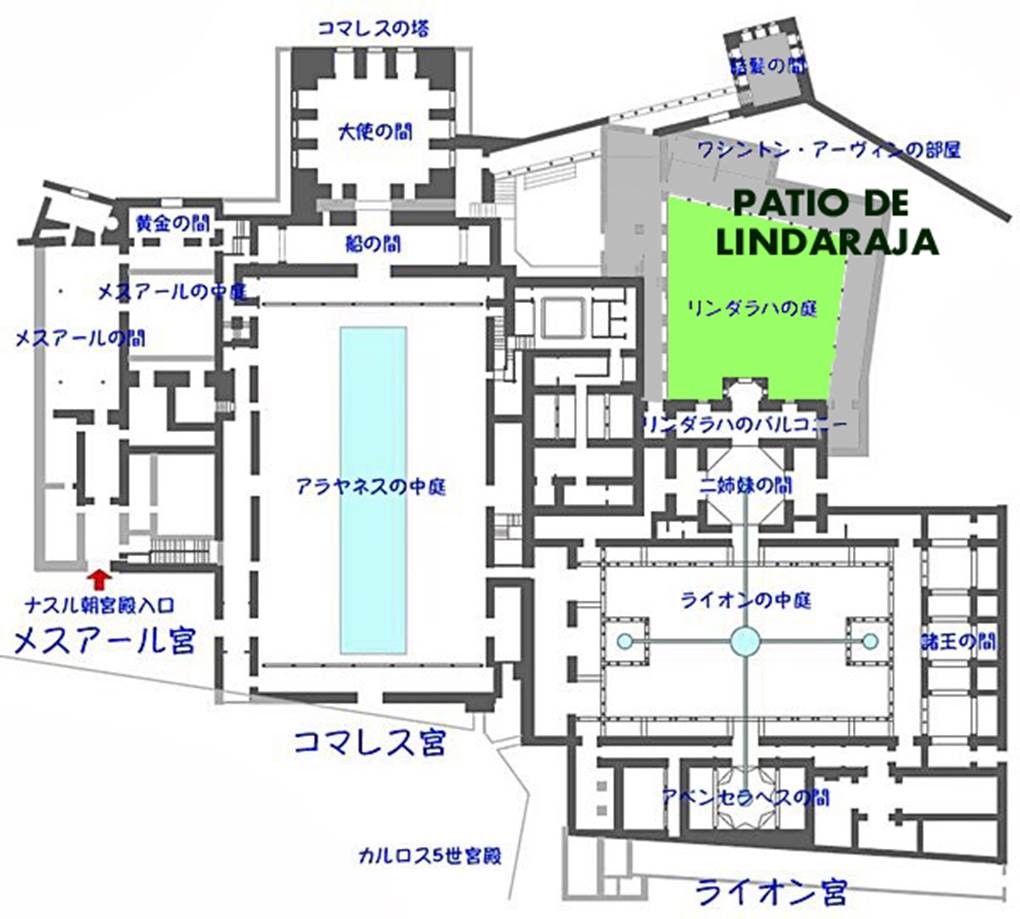
It is a well-maintained garden at the north end adjacent to Court of Lions.
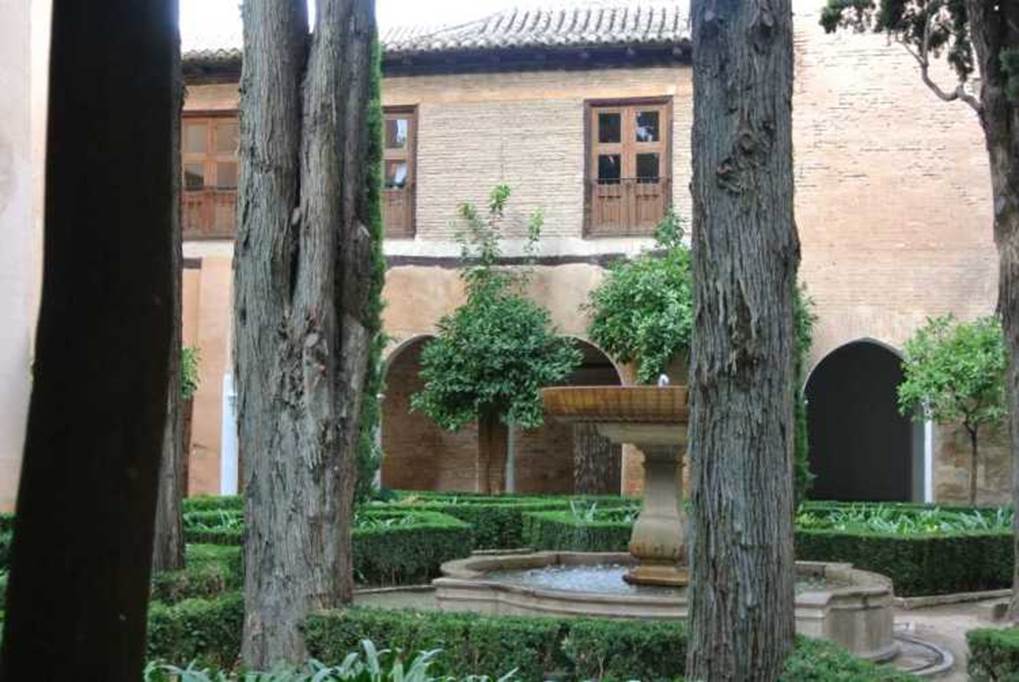
Photo by author, 2013
Lindaraja’s balcony overlooks the lush courtyard through beautiful double-glazed windows.
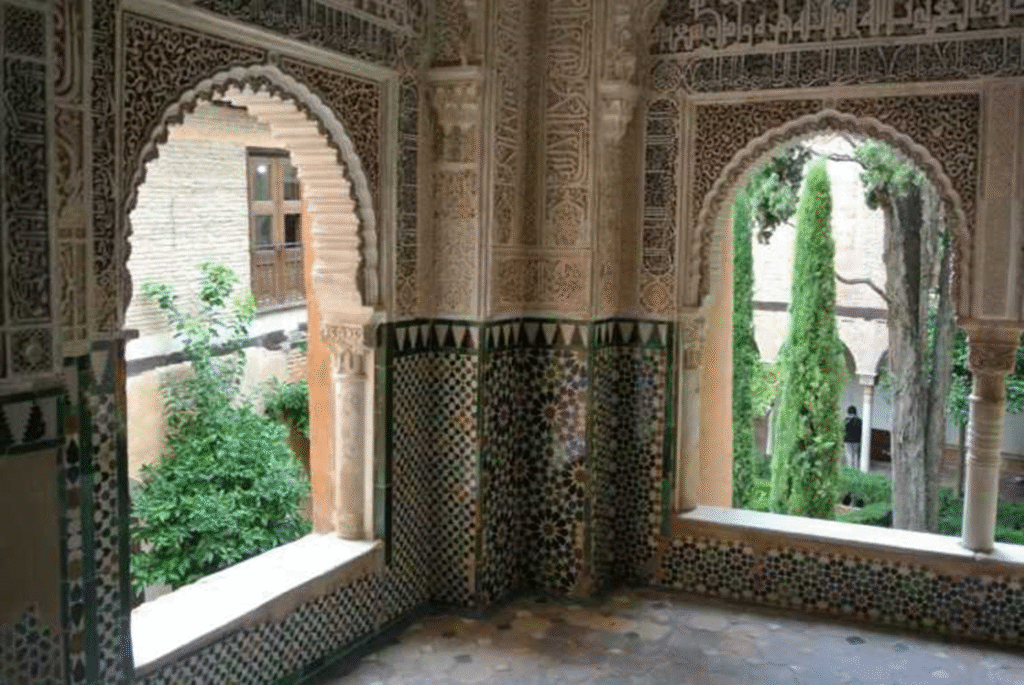
Photo by author, 2013
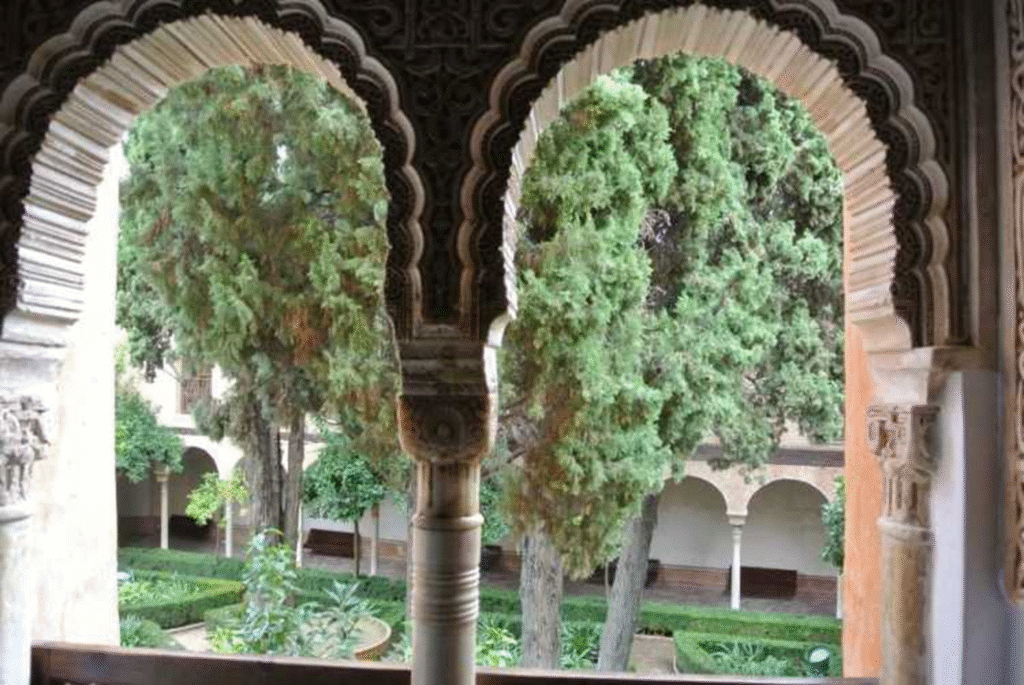
Photo by author, 2013
From Lindaraja, you can get a panoramic view of the Albaicin, where the Islamic townscape remains.
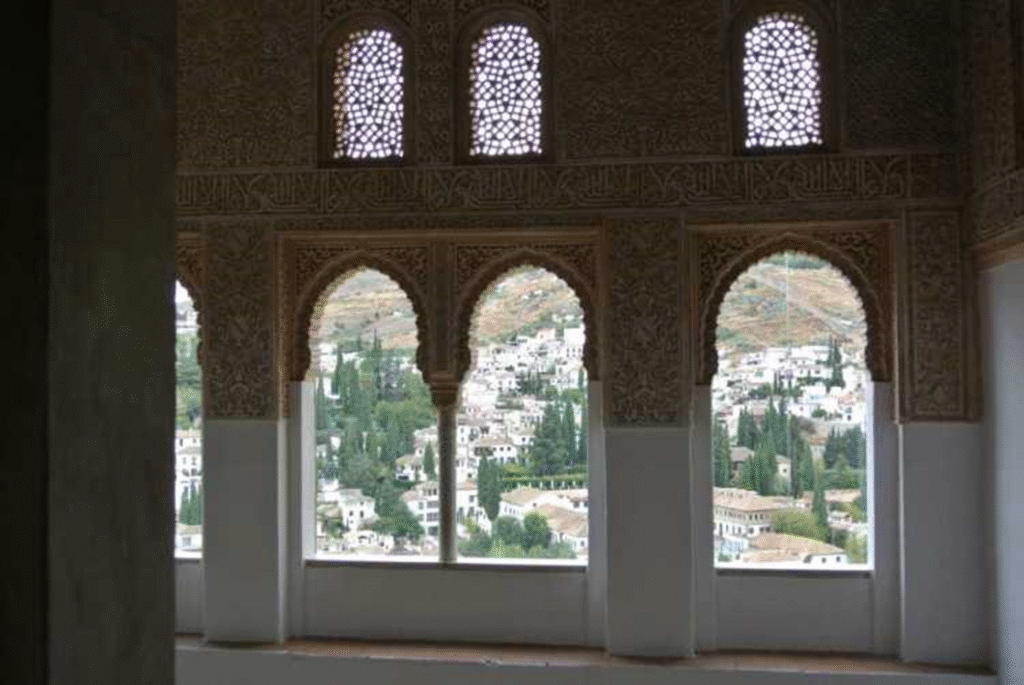
Photo by author, 2013
Hammam (Bathhouse)
World Heritage Site
The dome roof of a hammam (bathhouse). Arab baths, or hammams, are said to have originated from Greek and Roman baths that Arab conquerors found in Syria. Light is let in through small vertical and horizontal skylights.
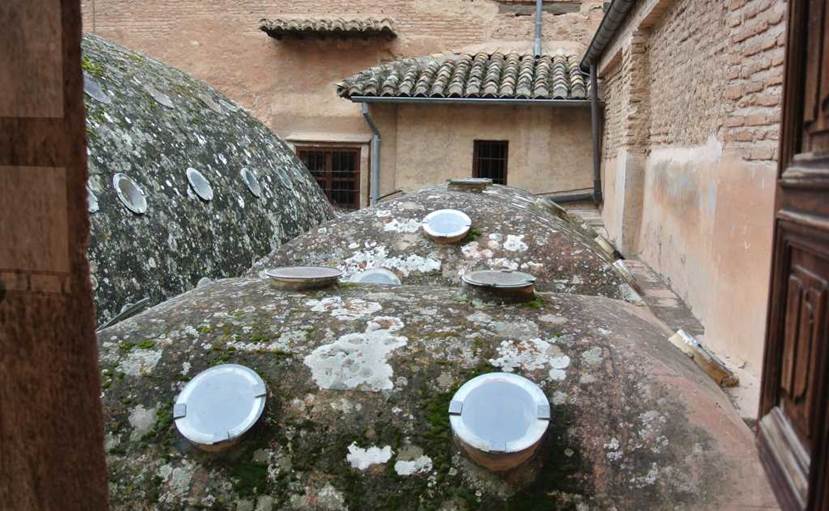
Photo by author, 2013
Partal Palace (El Palacio del Partal)
World Heritage Site
After leaving the Nasrid Palace and walking for a while, we reach the Tower of the Ladies and the Garden of the Partal.
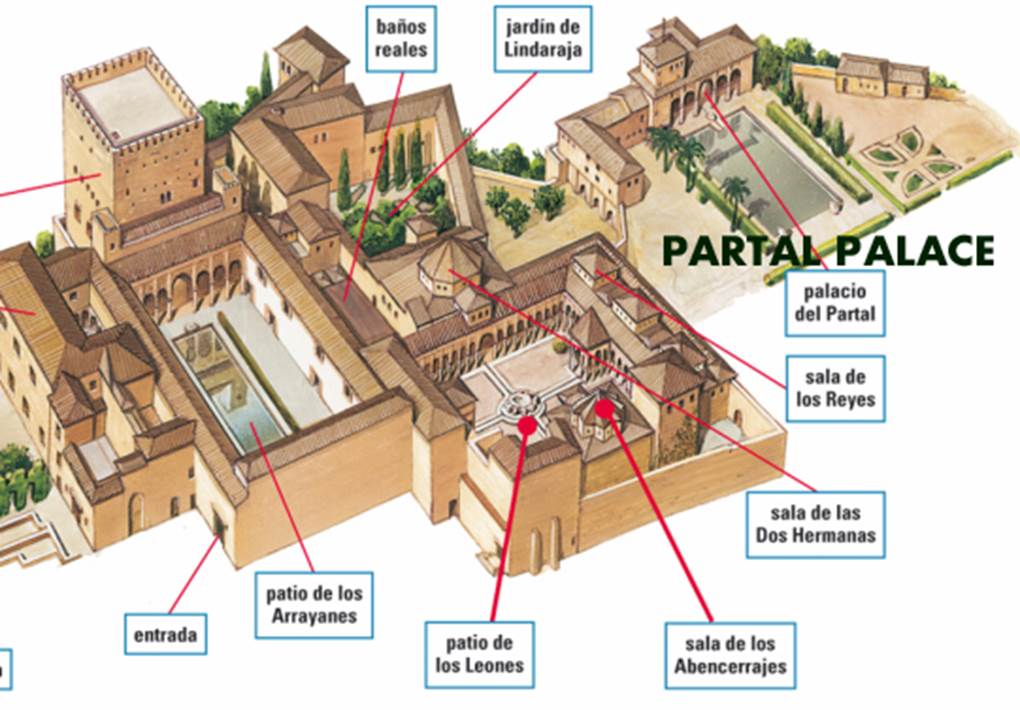
Tower of the Ladies (Torre de las Damas) has decoration that is the oldest of the Alhambra (during Arab rule). At the beginning the building was called “Partal” (which means portico) because of the portico formed by the five arches.
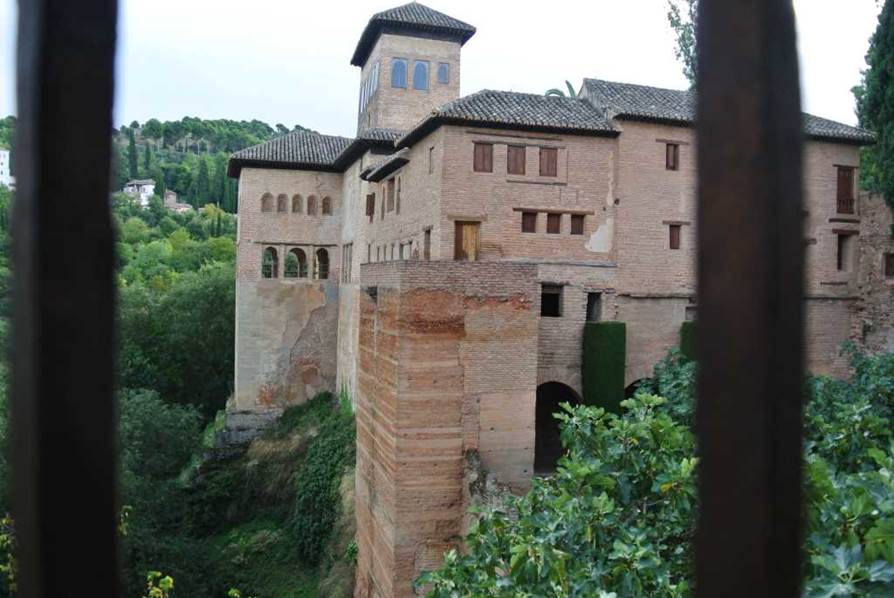
Photo by author, 2013
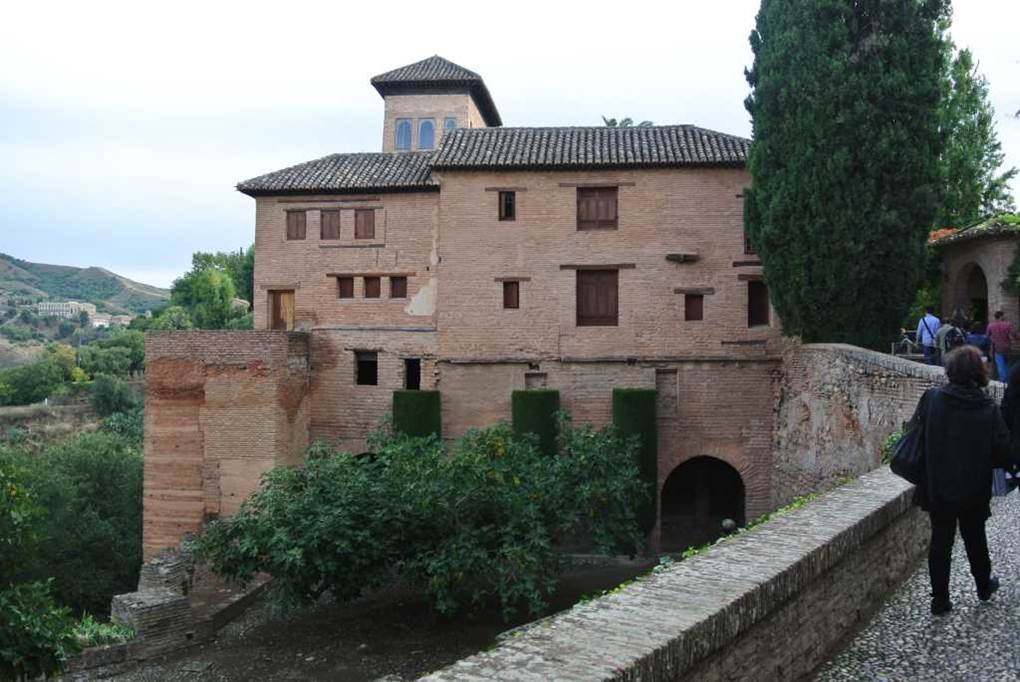
Photo by author, 2013
Albaicin District
World Heritage Site
The Partal Palace overlooks the Islamic city of Albicin.
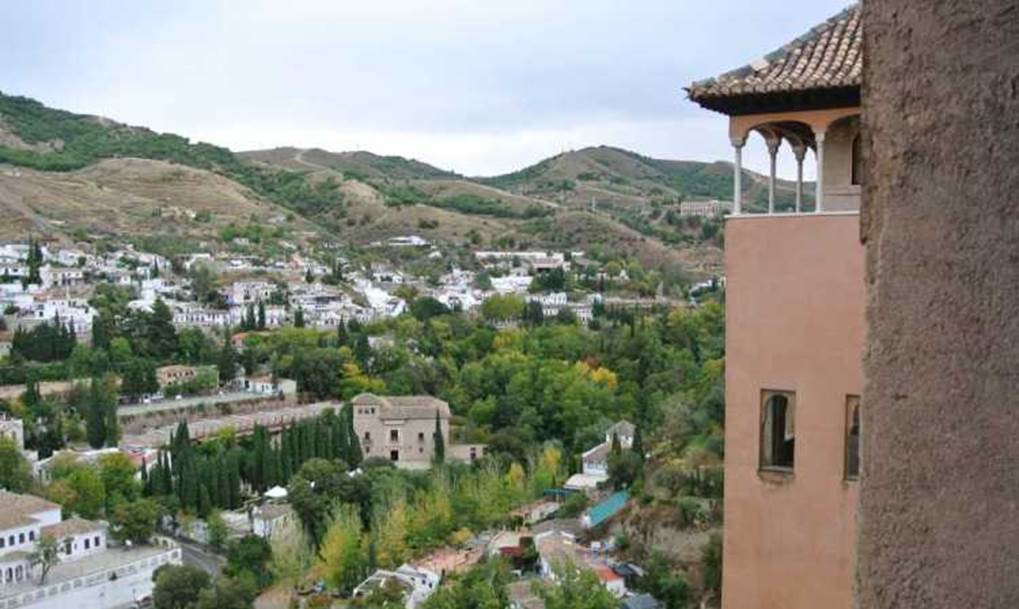
Photo by author, 2013
Albaicin, where Islamic streetscapes remain.
The Albaicín, an area once inhabited by Muslims and home to Granada’s oldest town, is a beautiful place that is also registered as a World Heritage Site.
Located on a small hill 700~800m above sea level, the view of the white-walled house can be seen clearly from the Tower of the Ladies. These beautiful white houses and narrow lanes are spread out to prevent the invasion of the enemy during the fall of Granada in the Reconquista. Even now, it is like a maze, and the streets remain sloped, so if you walk around without a guide, you will get lost.
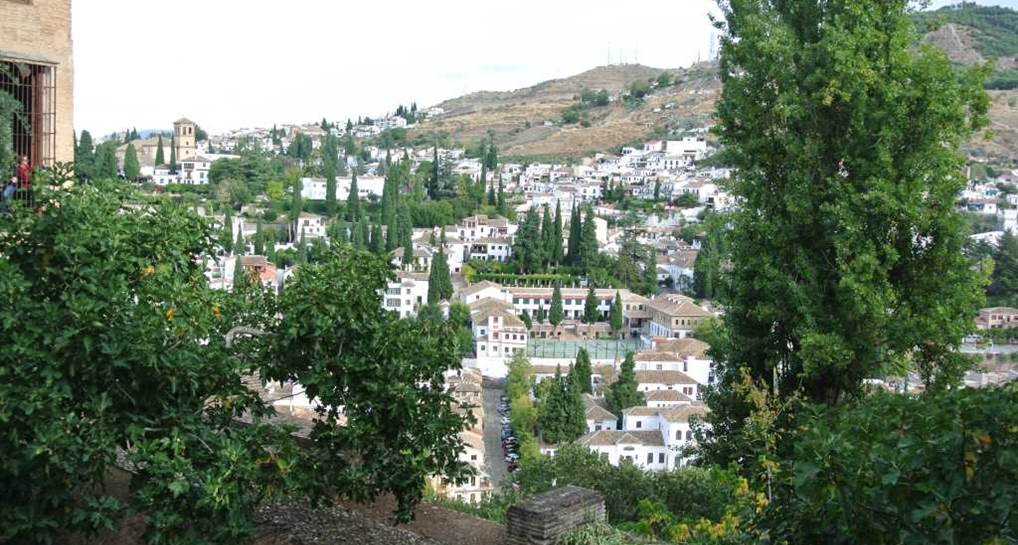
Photo by author, 2013
In one corner of the labyrinth of the Albaicín, there is a facility for tourist to perform flamenco music and dance.
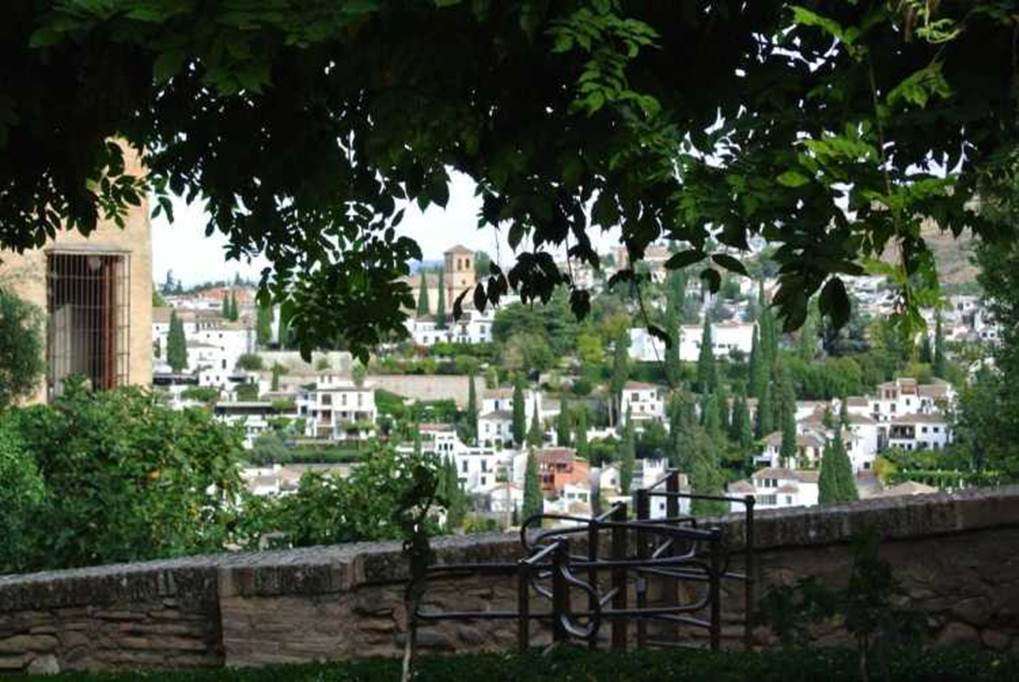
Photo by author, 2013
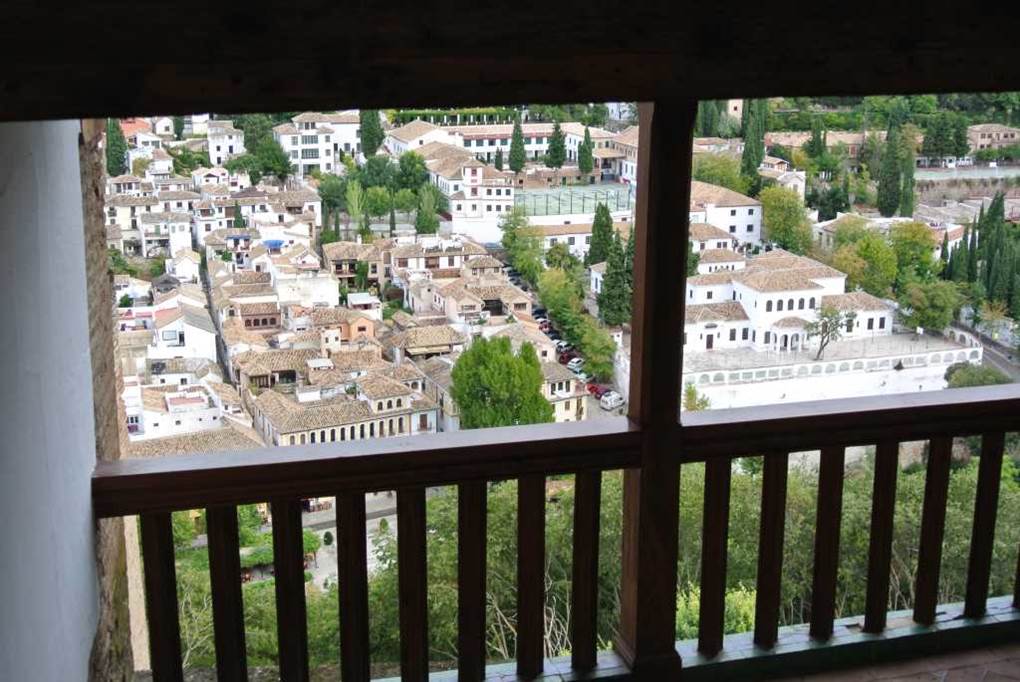
Photo by author, 2013
Palace of Charles V
The exterior wall of the Renaissance palace built by King Charles V of the House of Habsburg. The second floor is a library.
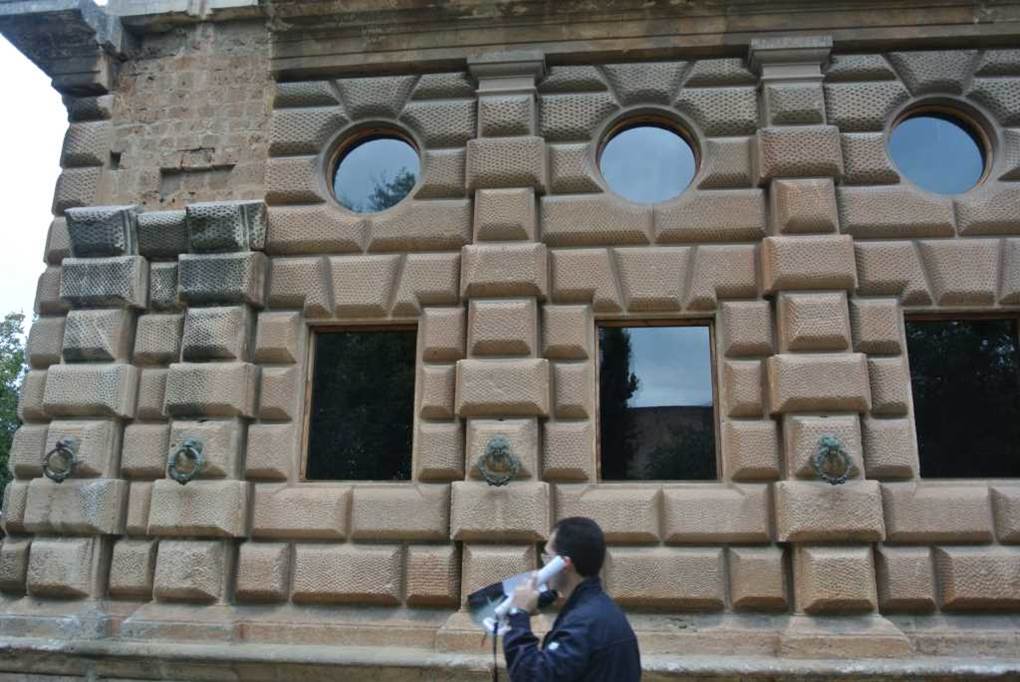
Photo by author, 2013
The construction of the Palace of Charles V began later in 1527 and was completed in 1957. The Renaissance building, with a square exterior and a circular courtyard, does not match the Alhambra. It is a building that seems to have been forcibly inserted into the royal palace later.
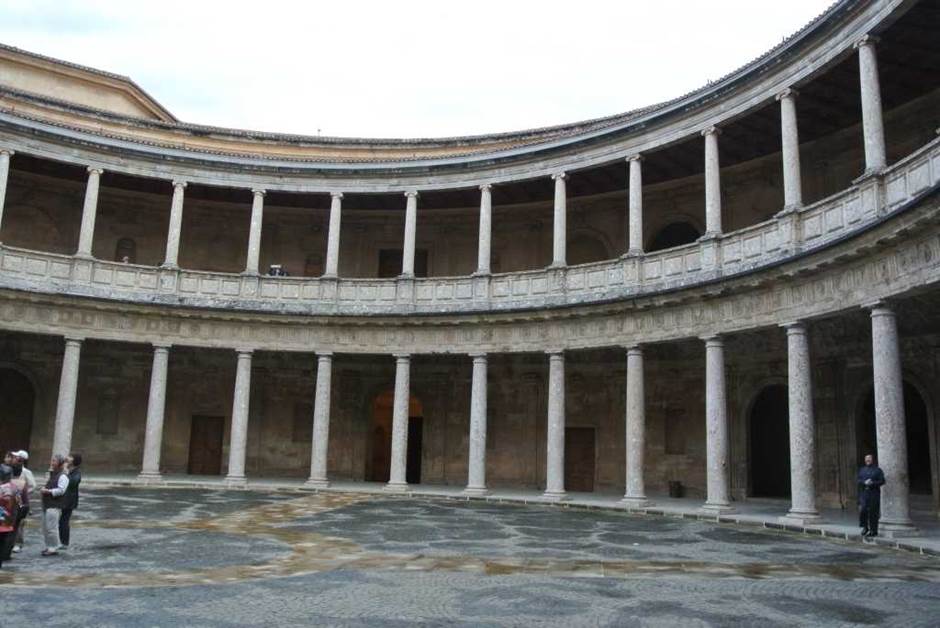
Photo by author, 2013
The ceiling of the gallery surrounding the circular plaza is as shown in the photo. It shows a complete lack of aesthetic consideration.
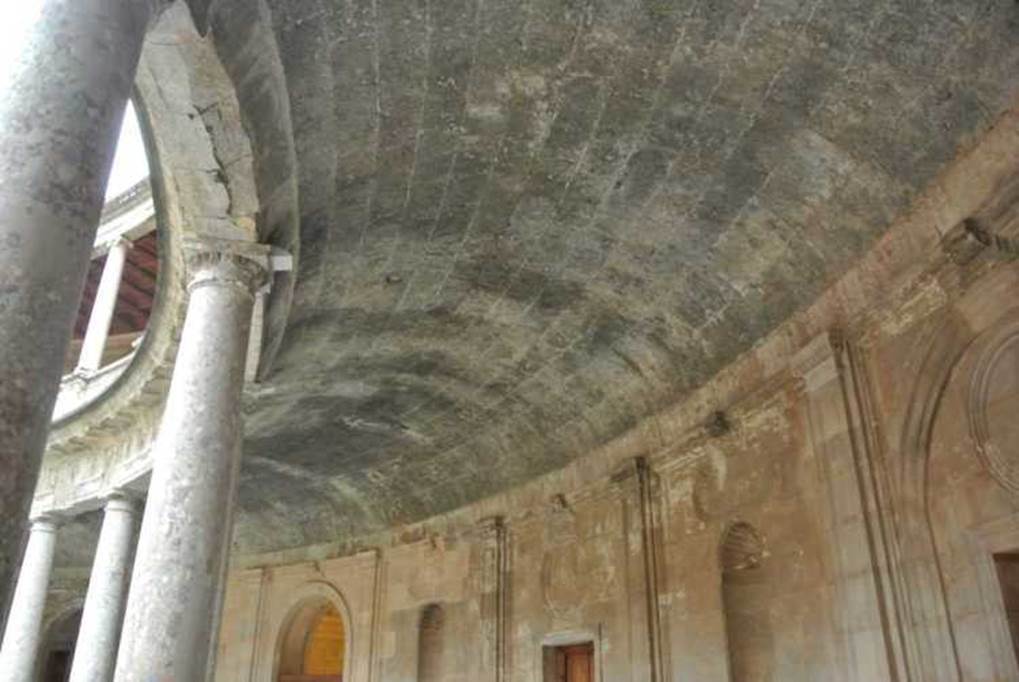
Photo by author, 2013
In the Mezquita of Córdoba, the fusion of Islamic and Christian cultures was successful, but in the Alhambra it was a failure, leaving only a huge, inorganic building. The intricate and delicate arabesque patterns of the Alhambra and the grand Palace of Charles V could not be fused.
All photos by author, Oct 2013