JAP | ENG
Granada, Spain
October 2013
#3/3
Generalife, a UNESCO World Heritage Site
The Generalife Palace was built in the early 14th century. It is a detached palace on the north side of the Alhambra and was used as a summer vacation home for the royal family. It consists of a small palace and a large garden.
Location of Generalife. The green part on the right side of the map below.
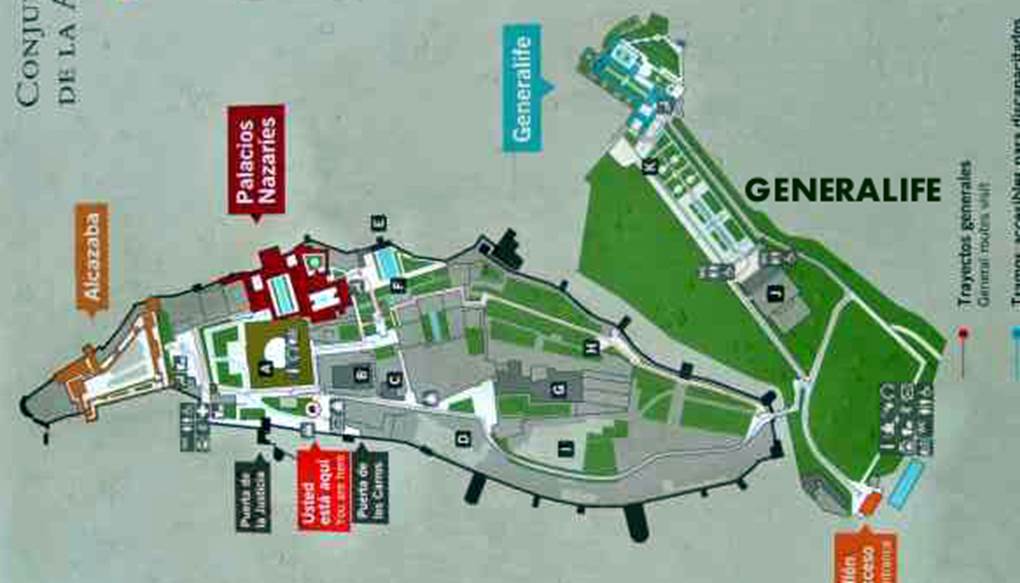
Photo by author, 2013
Water from the Sierra Nevada Mountains is drawn into moats and fountains using Islamic civil engineering techniques, and the garden never ceases to drain water. It is also a “water palace” built by the people of the desert with great skill.

Photo by author, 2013
There is an observation deck on a higher ground in the garden, from which you can see the defensive towers of the Alhambra Palace on the left and the hill of the Albaicin village, a World Heritage Site, on the right. All of the buildings in the photograph, including the location where the photo was taken, are UNESCO World Heritage Sites.
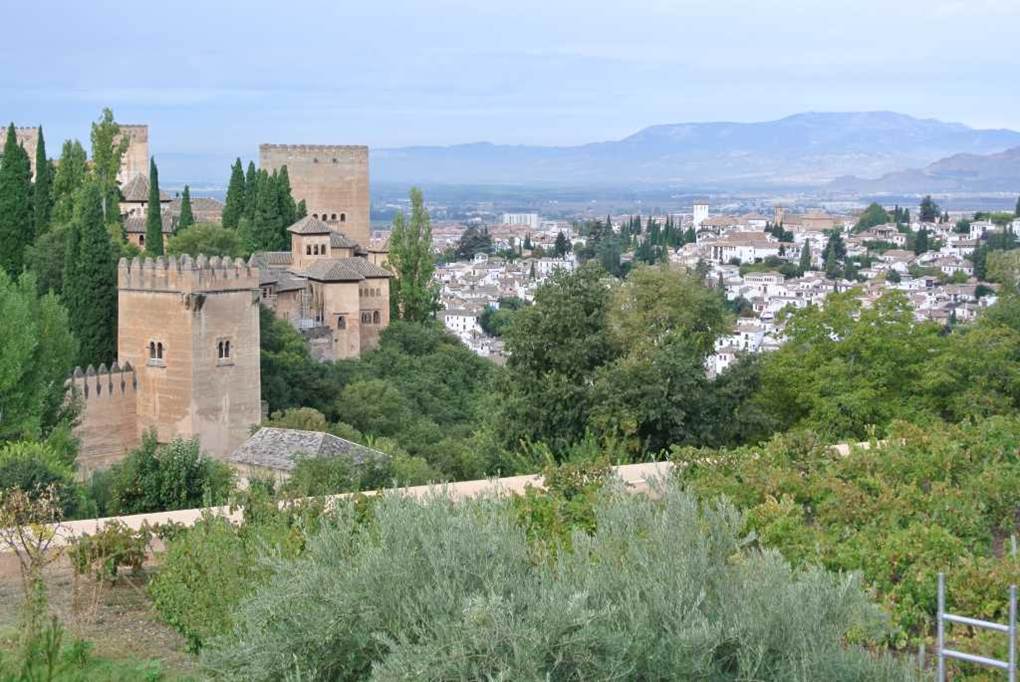
Photo by author, 2013
Tourists relaxing in the square. The garden grounds are so large that it is impossible to see the whole area.
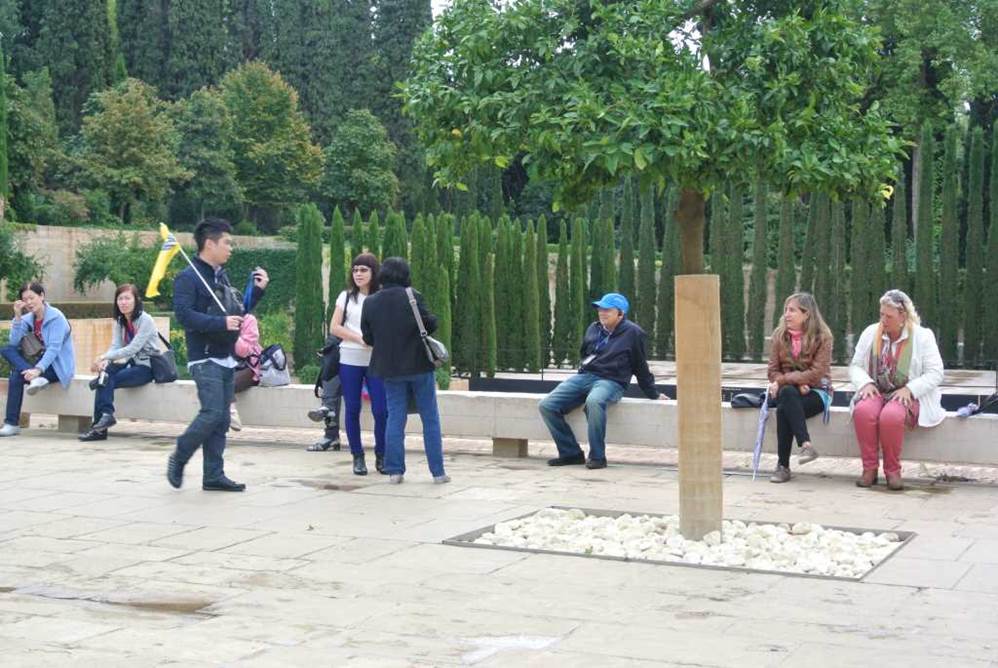
Photo by author, 2013
The Generalife Gardens is a vast garden with many ponds and fountains, well-kept cypresses and other trees, and flower beds with roses, jasmines, and other flowers.
The pond was constructed so that water would constantly overflow from the Sierra Nevada Mountains, taking advantage of the difference in elevation of the land.

Photo by author, 2013
The Palace.
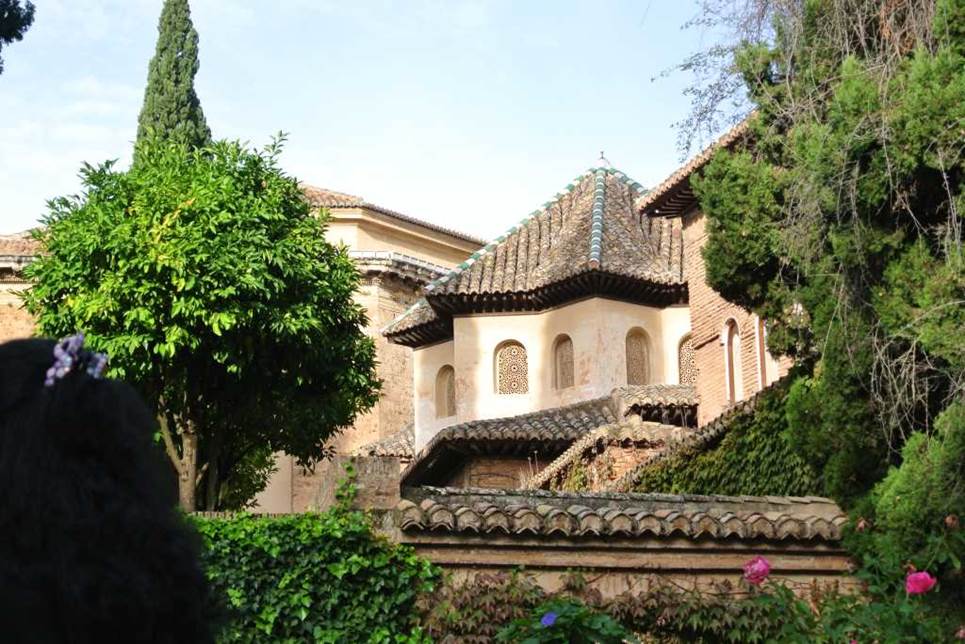
Photo by author, 2013
Crushed stone from the local riverbanks covers the garden floor.
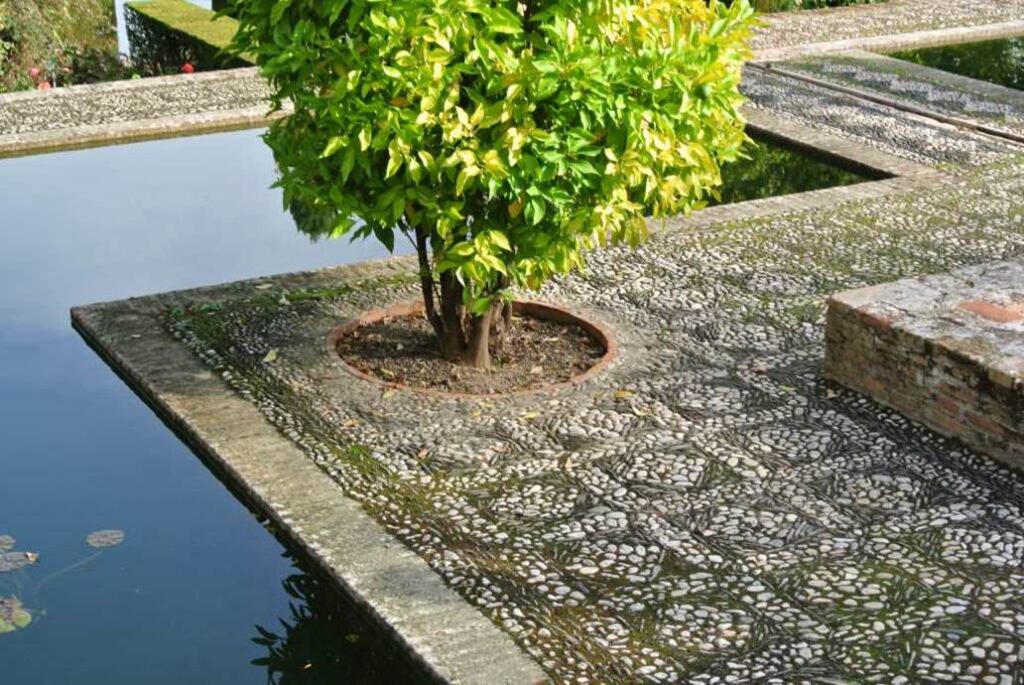
Photo by author, 2013
Gardens in the Palace of the Generalife. It would take a lot of money and effort to manage a garden of such a vast area.
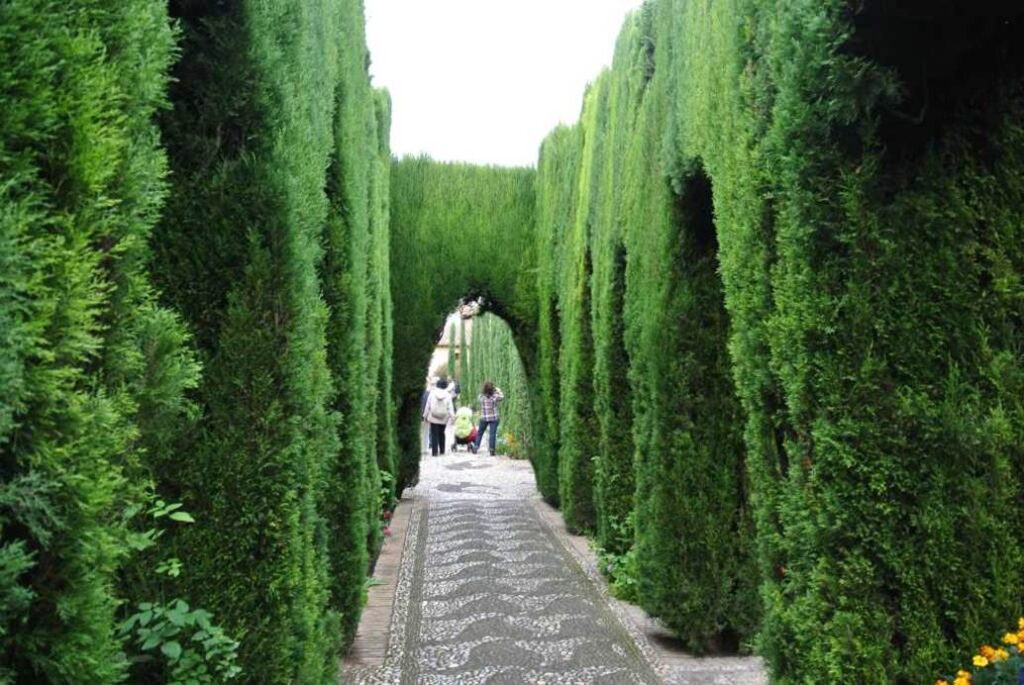
Photo by author, 2013
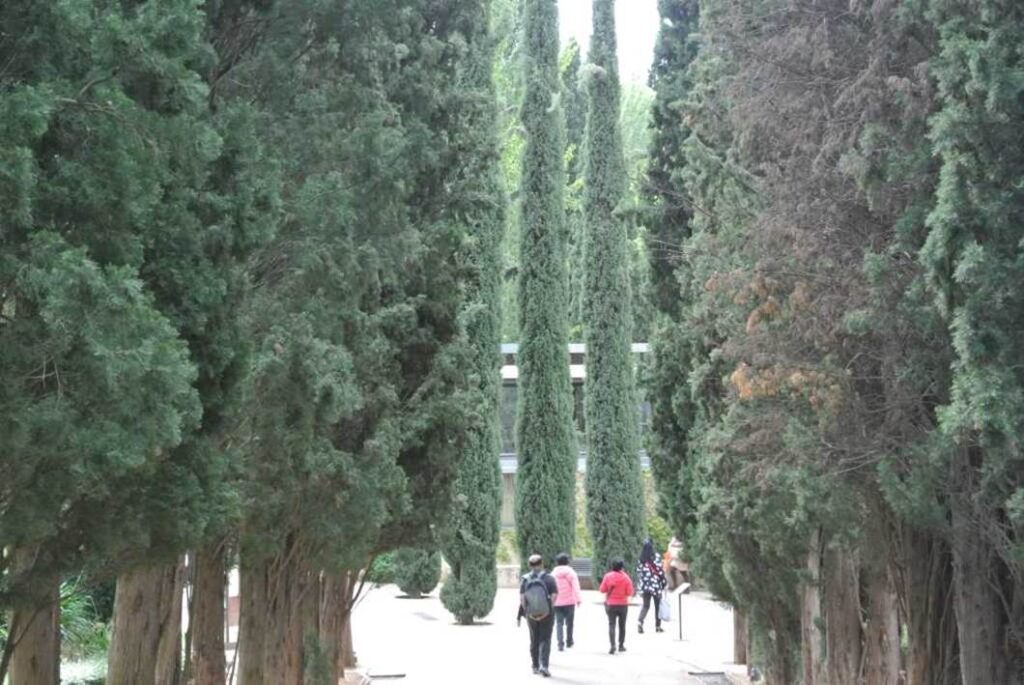
Photo by author, 2013
We went down from the Alhambra to the old town of Granada. The cypress-lined streets continue
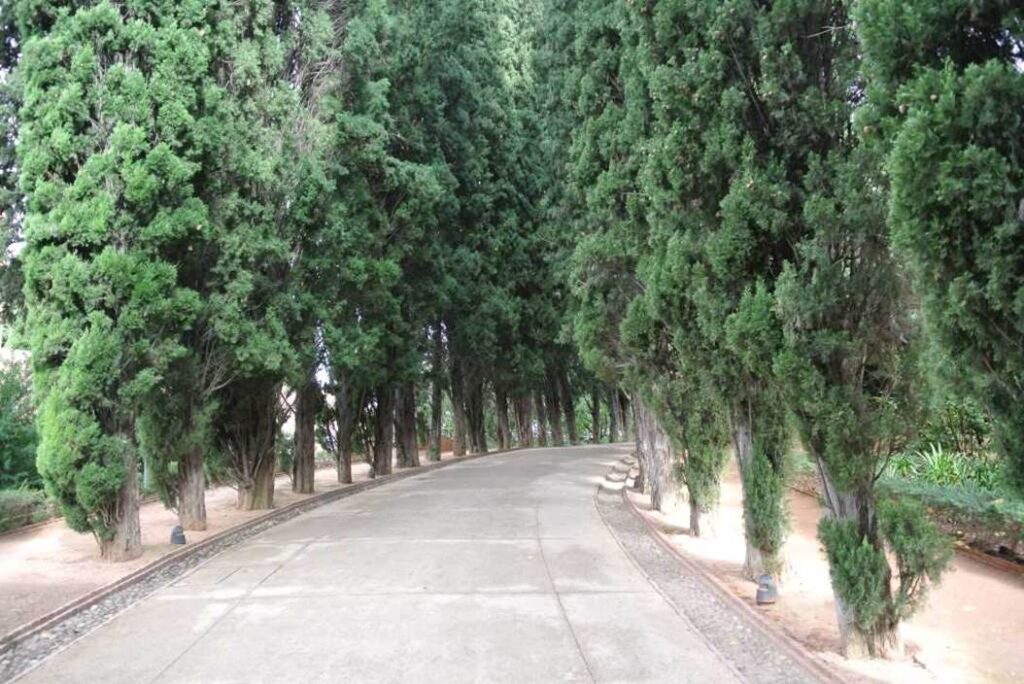
Photo by author, 2013
We walked down the slope, breathing in the fresh October air of Granada.
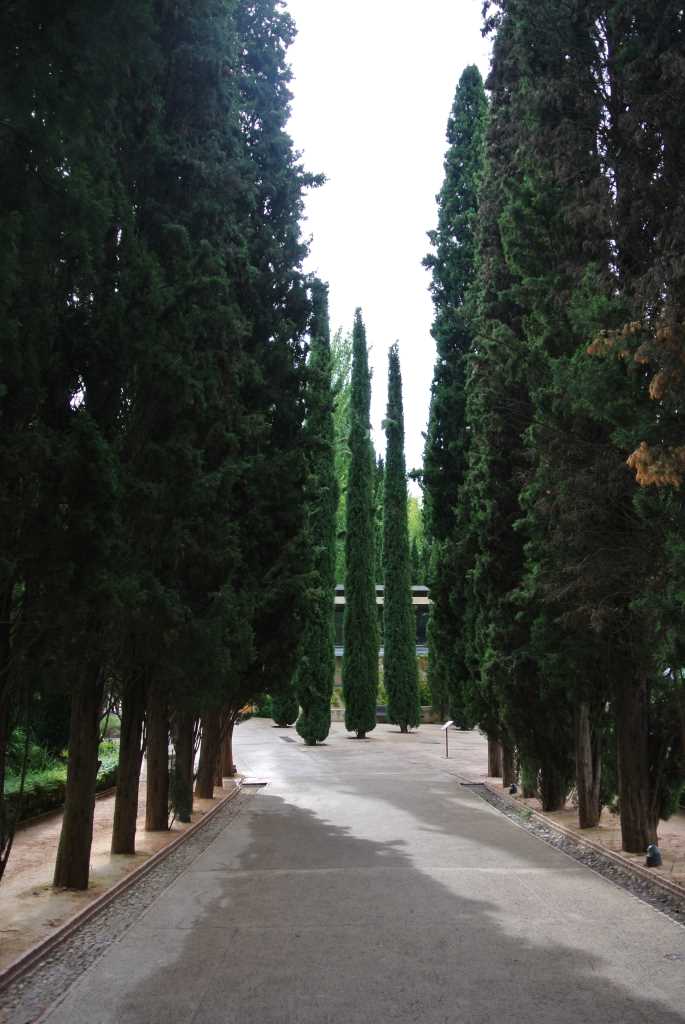
Photo by author, 2013
Downtown Granada
The road signs in Granada are well-made, as you would expect in a tourist city. You can see that there are ski resorts in the Sierra Nevada (snowy mountain range).

Photo by author, 2013
In addition to signs for cars, signs for pedestrians are also available. Directions are expressed in time (min), not distance (m). This is a kind consideration.
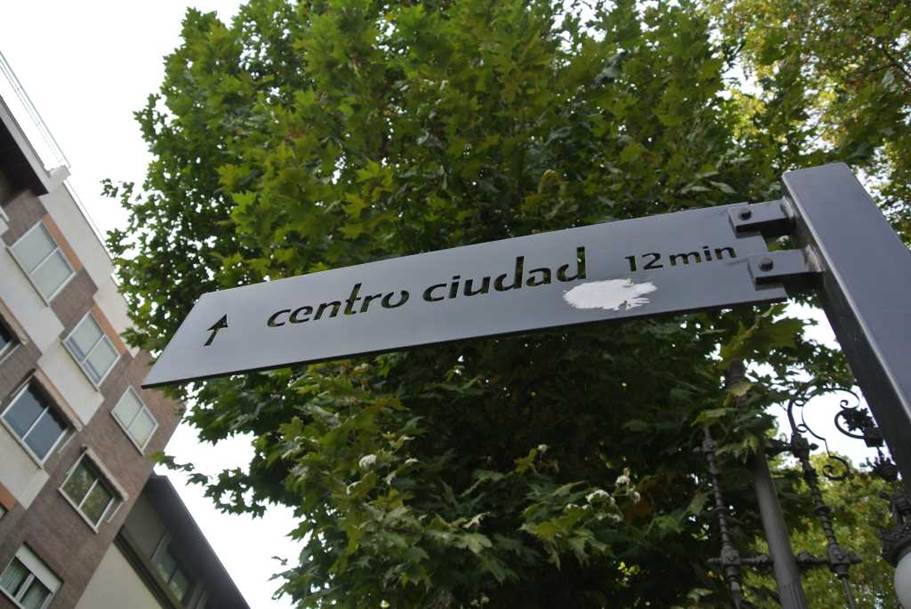
Photo by author, 2013
A Church in the city.
It is good that it does not have the heaviness of Gothic architecture.
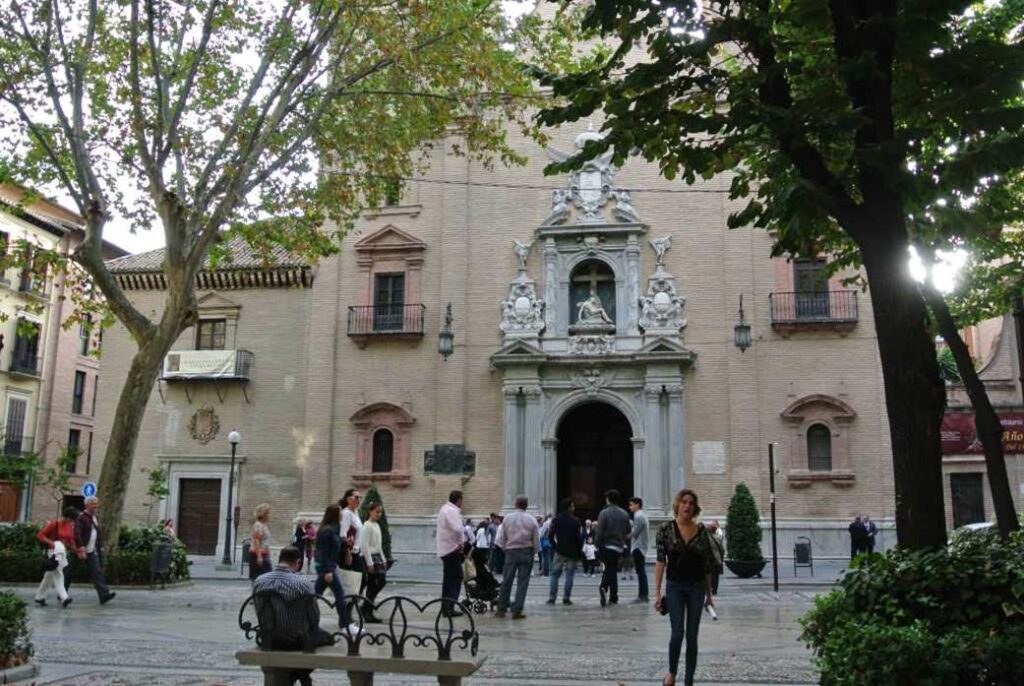
Photo by author, 2013
A Hotel in the city.
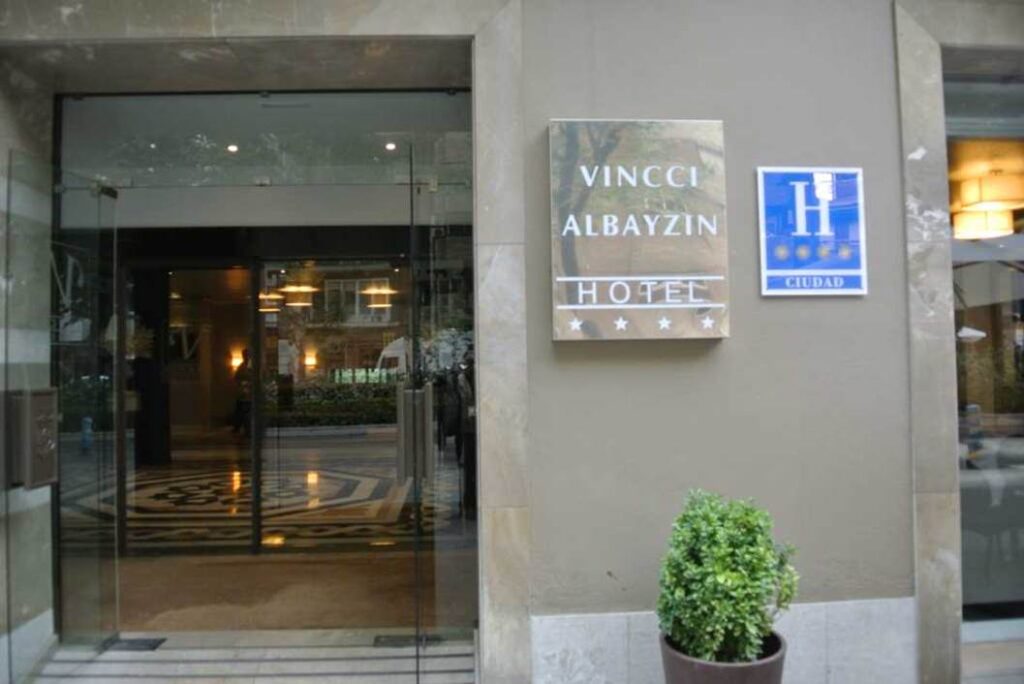
Photo by author, 2013
The street signs are made of custom-made tiles.
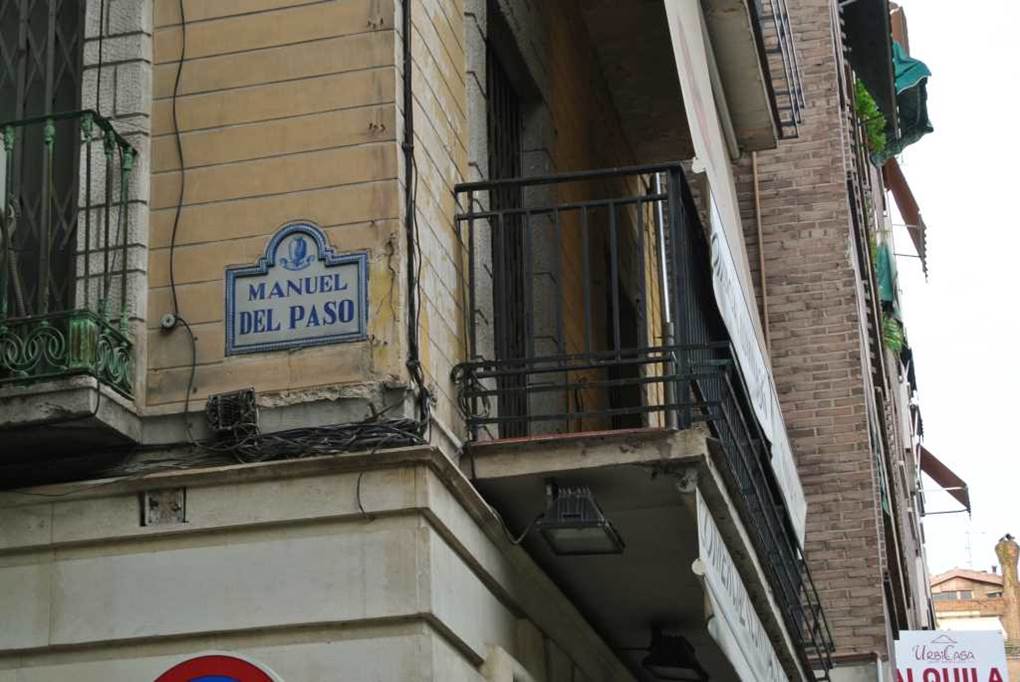
Photo by author, 2013
It is a townscape where commerce and housing are integrated. There is a sufficient population in the city center, and the practice of compact city prevents the population from dispersing to the suburbs.
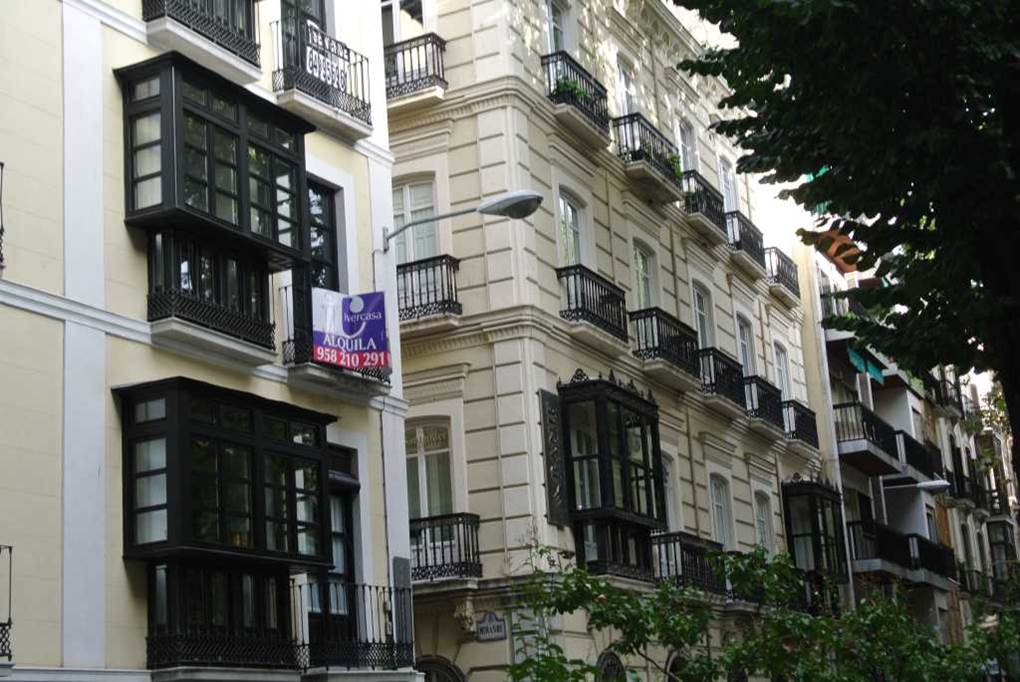
Photo by author, 2013
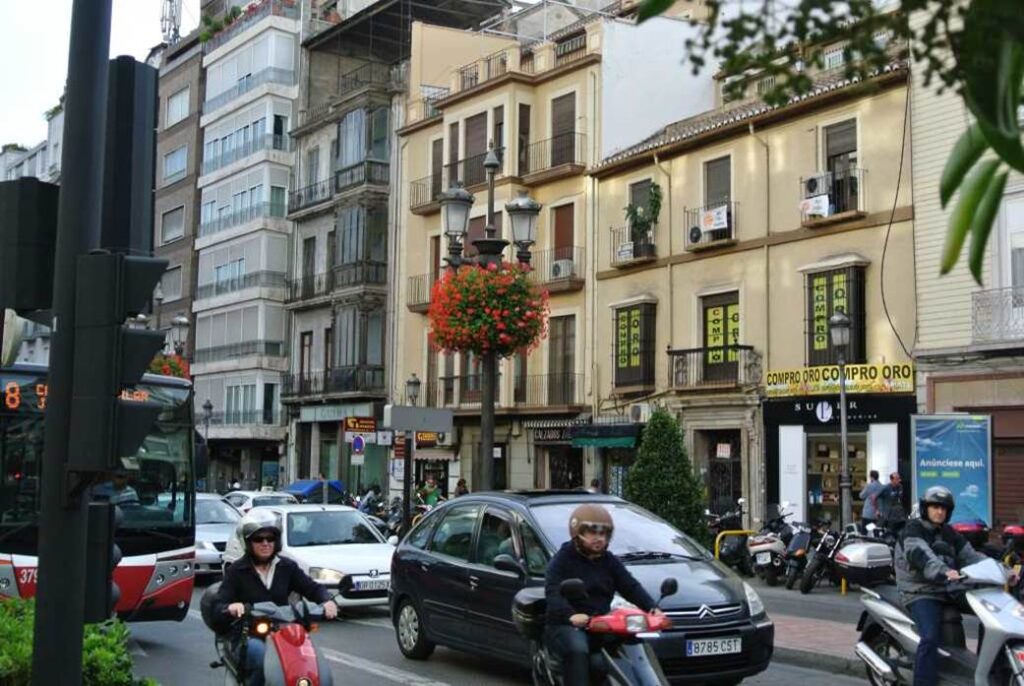
Photo by author, 2013
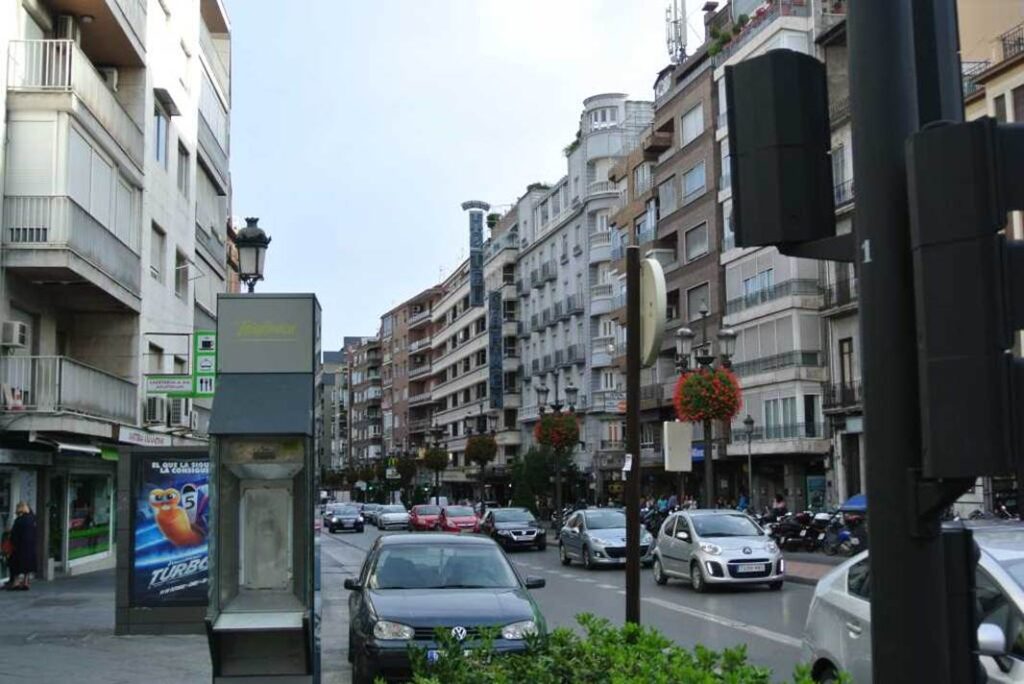
Photo by author, 2013
The landscape design of the city’s roadside trees is just right, successfully creating a pleasant urban landscape.
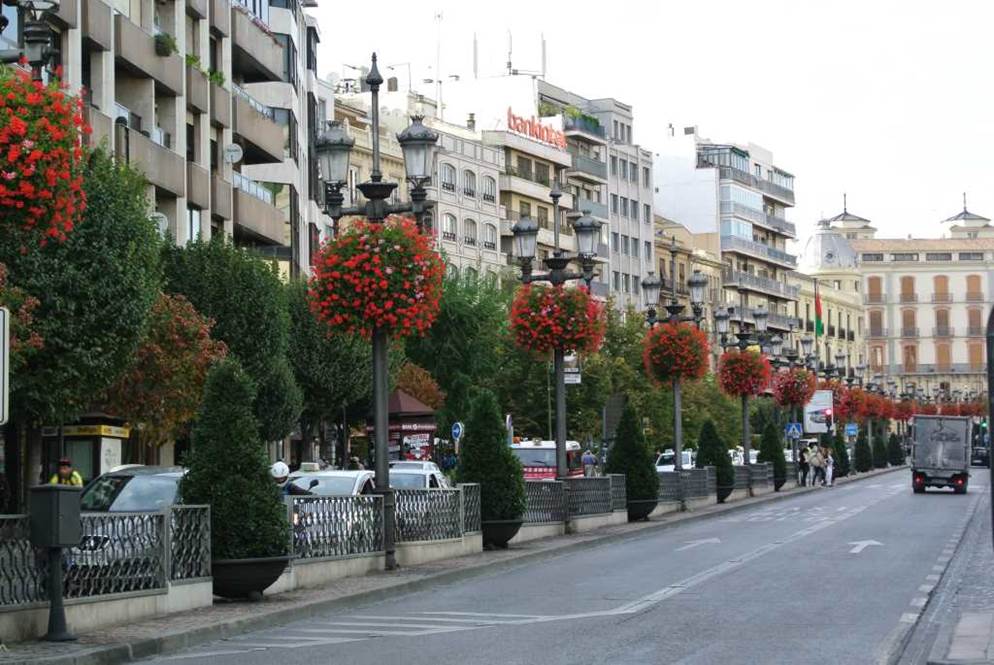
Photo by author, 2013
There are no telegraph poles or wires on the streets. There are no signboards, and the city policy prioritizes aesthetics and the appreciation of old buildings.
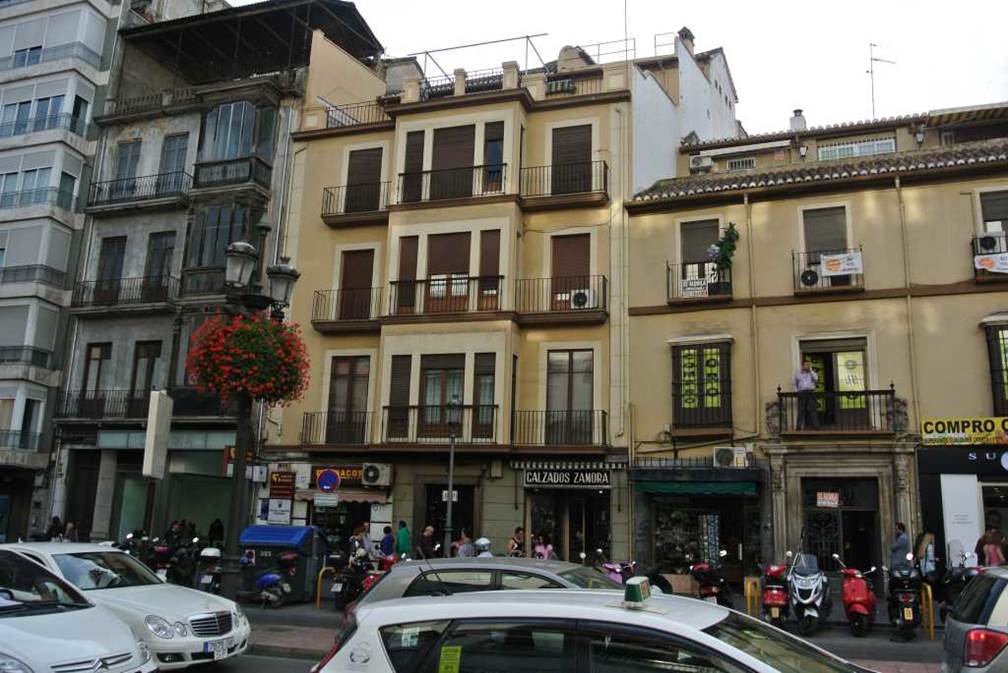
Photo by author, 2013
Flamenco
Granada in Andalusia is said to be the birthplace of flamenco.
The prototype of flamenco is said to have originated around the end of the 18th century when the Roma (Gypsies) of Andalusia adopted traditional Muslim dances and music.
Since around the 16th century, Gypsies have been persecuted and discriminated against. In the midst of this harsh history, the fusion of life and culture with other ethnic groups occurred, and the dance art of flamenco crystallized as a gypsy performing art. It could be said to be a “dance art of passion,” expressing the deep lament and sorrow they felt over discrimination.
Tablao (live music venue) on the Sacromonte hill in Granada:
Flamenco in the cave (Zambra Maria La Canastera)
In the middle of the 19th century, a tavern called “Café Cantante” (singing bar) was born where you can enjoy flamenco, and this developed into the current live music venue called “Tablaos”. Spectators enjoy flamenco dance and music along with food and drinks.
The hills of Sacromonte, on the outskirts of Granada, are still inhabited by Roma. There are many cave flamenco tablaos dug into the slopes of this hill. Pictured below is the famous tablao Zambra Maria La Canastera in Sacromonte.
A distinctive feature of tablaos is the large number of pots and pans hanging from the ceiling. It is said that this is due to the fact that pot making was a traditional craft of the gypsies.
Preparations were set for the start of the flamenco dance.
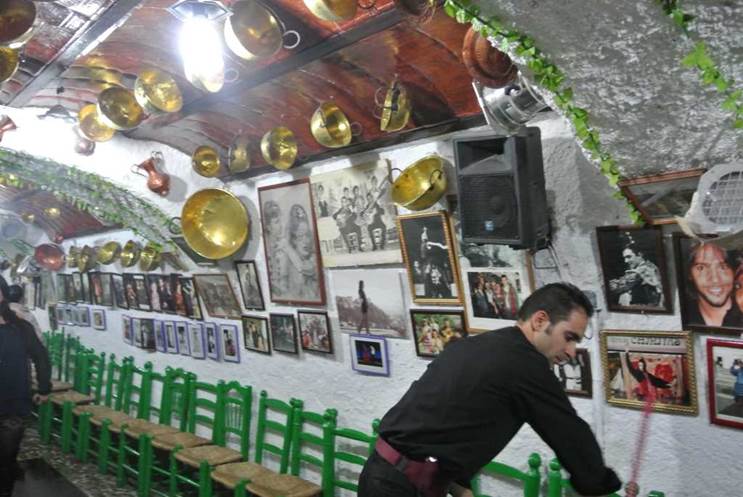
Photo by author, 2013
The entrance to the cave tablao on the hill of Sacromonte filled with audience. They are seated in two rows facing each other along the narrow cave wall. Most of the customers are Westerners. Shortly after this, the flamenco dance begins.
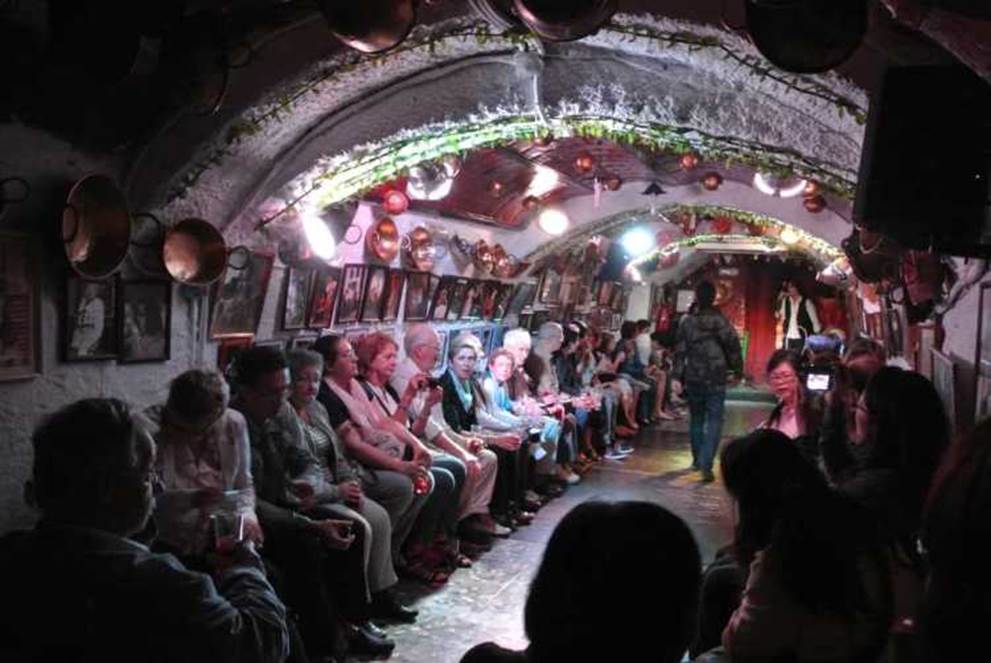
Photo by author, 2013
A black-haired dancer who appears to be a gypsy appears, and a band of four or five people is ready, creating a sense of tension before the show.
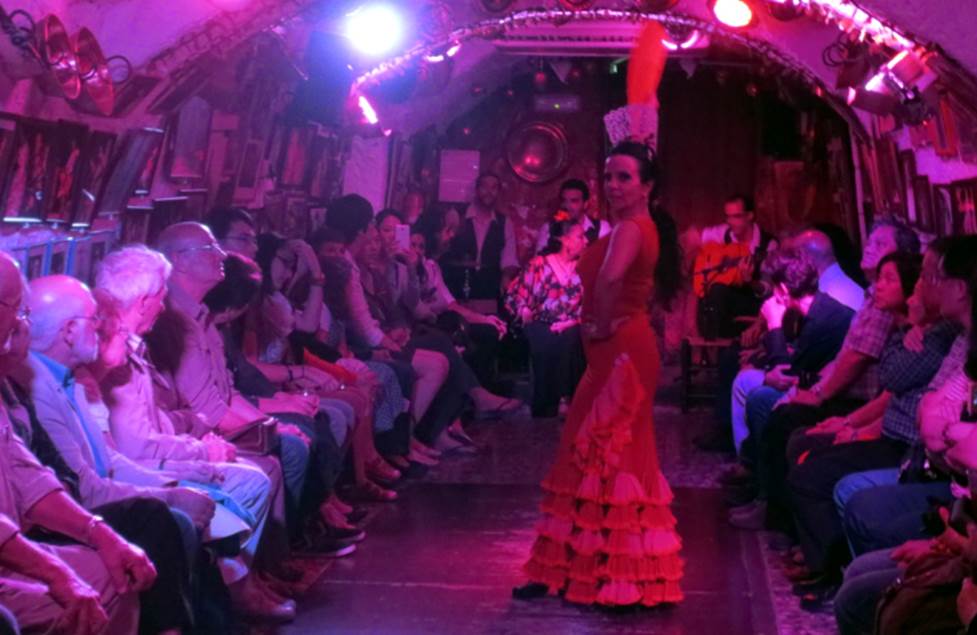
Photo by author, 2013
The music and the tapping of feet echo through the cave.
Because the cave is so narrow, you can hear the breath of the dancers from up close, creating a sense of realism that is outstanding.
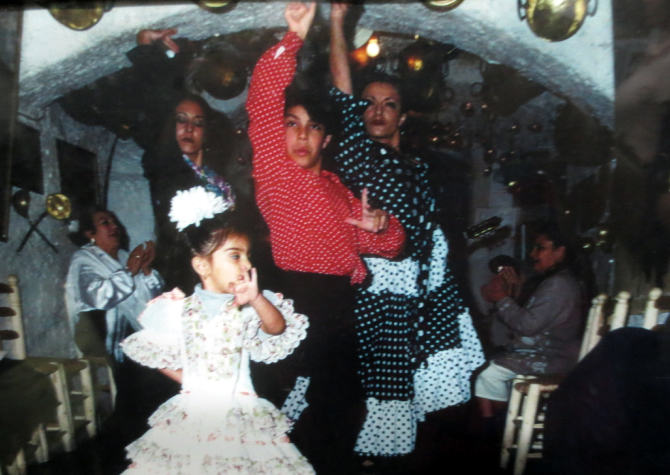
Photo by author, 2013
Later, child dancers joined in.
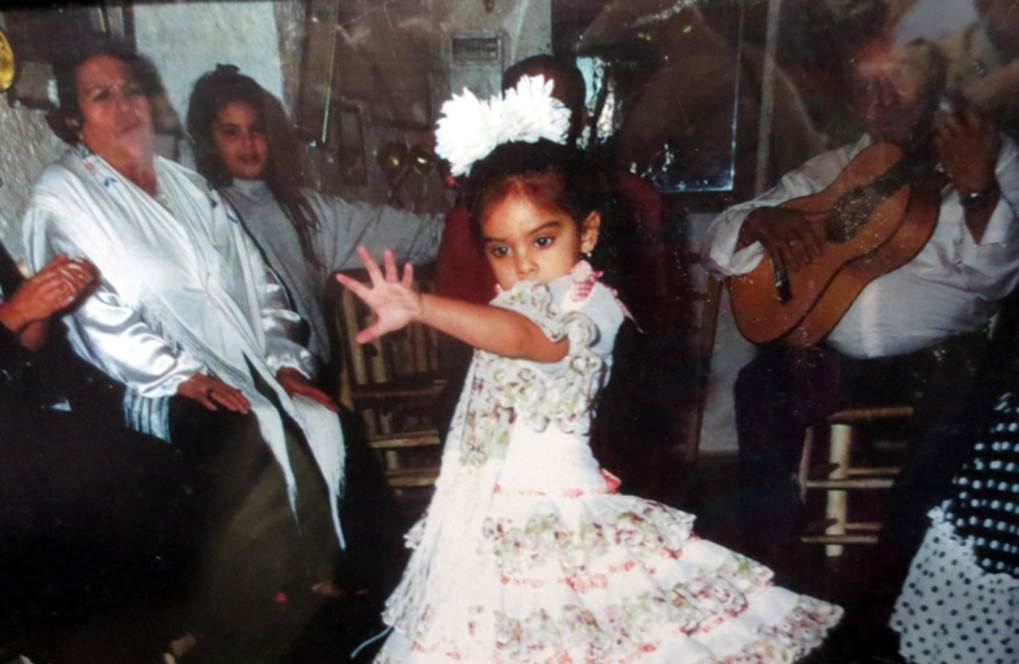
Photo by author, 2013
Photographs of many customers being displayed on the walls of the cave.
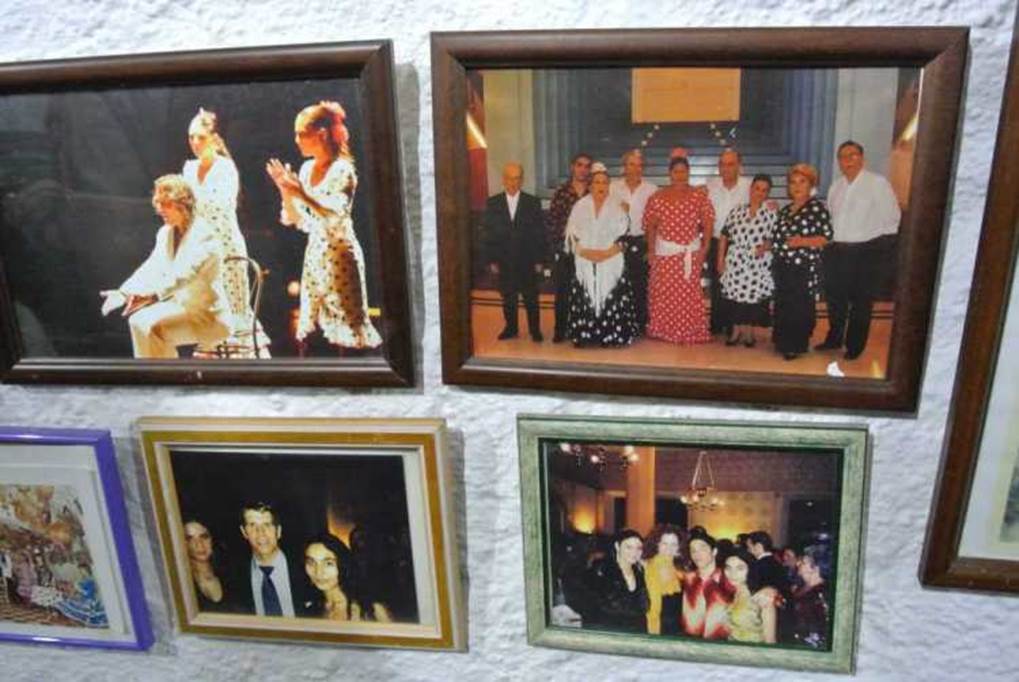
Photo by author, 2013
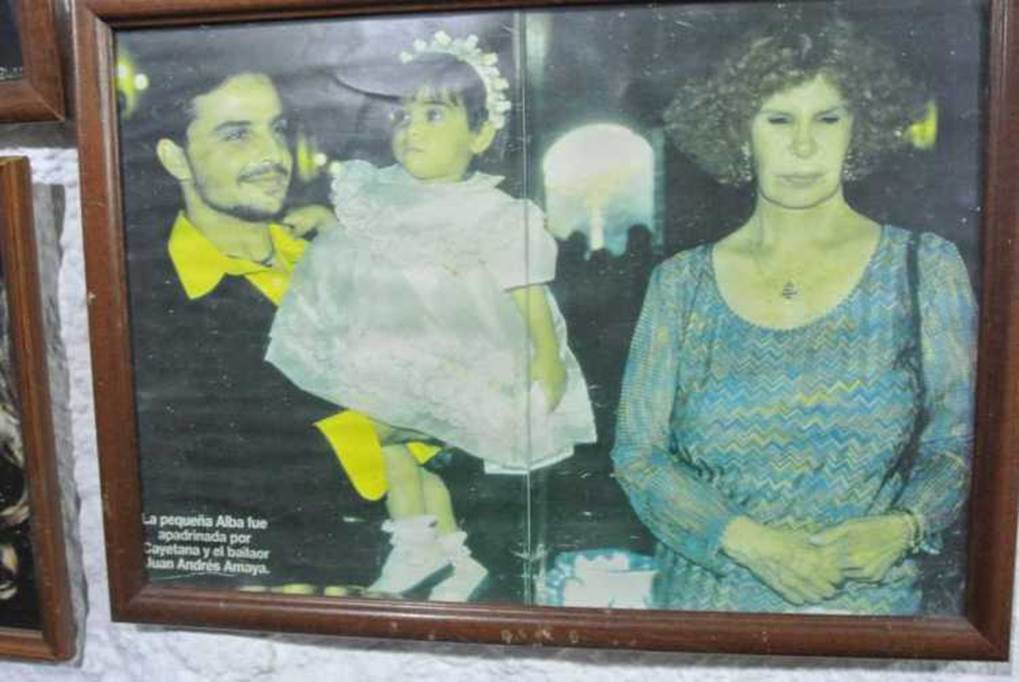
Photo by author, 2013
In the early 1970s, I was invited by a friend to see a flamenco dance at the Grand Theater in Shinjuku,Tokyo. The stage set, music, and dancers left a glamorous impression unique to Latin dance, but the real thing here in Granada left a different impression.
All photos by author, Oct 2013