JAP | ENG
Granada, Spain
October 2013
#1/3
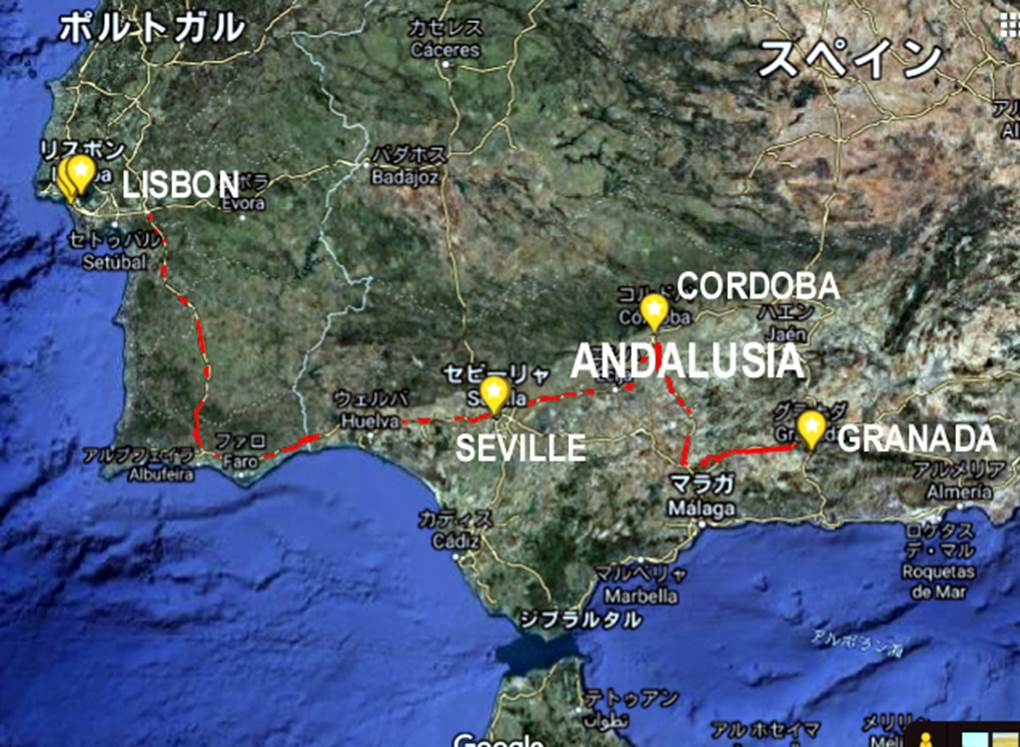
We left Lisbon, Portugal, entered the Andalusia region of Spain, passed through Seville and Cordoba, and arrived in Granada, our last stop in Andalusia.
During the Reconquista (the reconquest of Spanish territory), Cordoba fell in 1236 and Seville in 1246.
The last area remaining in the Islamic world was the southern Andalusia region, centered around Granada.
Granada is a city at the foot of the Sierra Nevada (snowy mountain range), so it is a place rich in greenery due to melting snow.
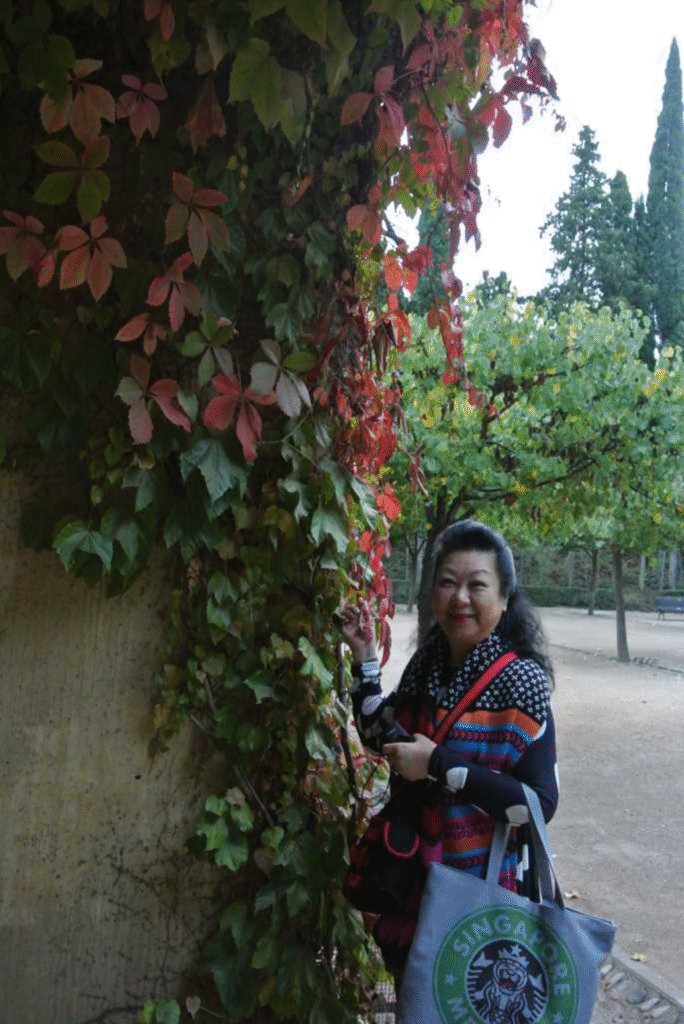
Photo by author, 2013
Photo by author, 2013
From the base of the fortress, we climb up a slope like this with an altitude difference of about 50 m to reach the castle gate (about 780 m above sea level). There was a restaurant surrounded by greenery on the way.
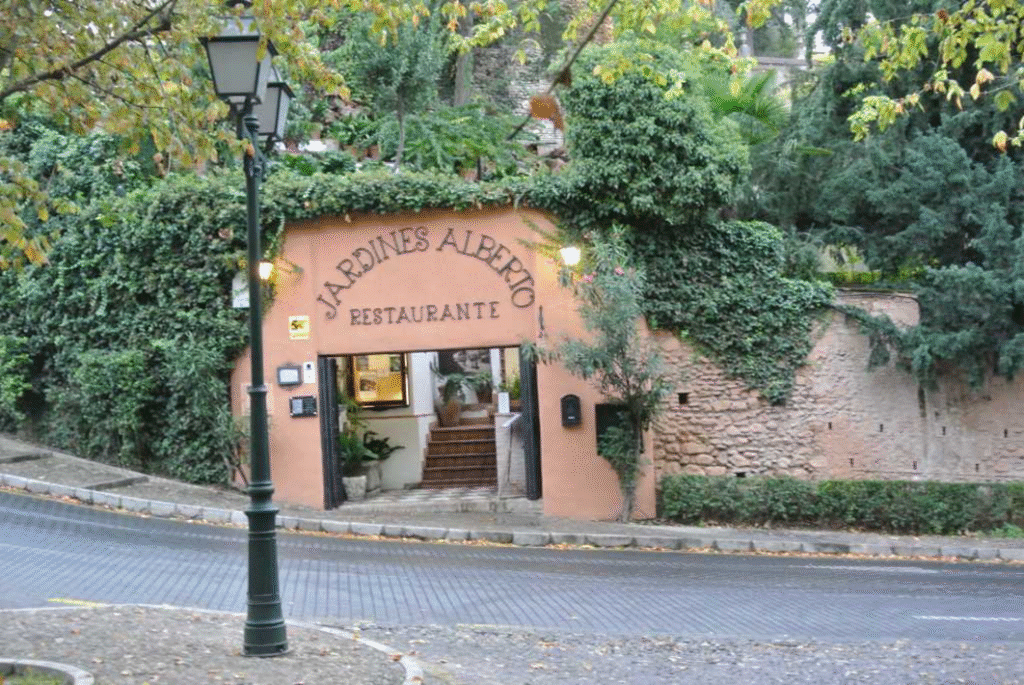
Photo by author, 2013
Alhambra
Granada was the capital of the Nasrid Kingdom of Granada, the last Islamic dynasty. For about 780 years, until the 15th century, Granada left behind a cultural legacy such as the Alhambra Palace.
Furthermore, as the Nasrid dynasty was the last Islamic dynasty in the Iberian Peninsula, a large number of Muslim residents flowed in from Christian-controlled areas, resulting in a society in which the population was almost entirely Muslim, with the exception of a few foreigners.
The influx of residents included intellectuals and artisans, enriching the human resources of the Nasrid Kingdom of Granada, which resulted in economic and cultural development and military strengthening, forming the background for the construction of the Alhambra.
The Alhambra, both a citadel and a palace, was a court city with a variety of facilities such as fortresses, barracks, stables, government offices, audience halls, mosques, madrasas, palaces, residences, baths, workshops, gardens, and cemeteries on its large territory, and was also a fortified city with thousands of people. It is said to have been built during the Nasrid period.
Alhambra and Citadel City Guide Map.
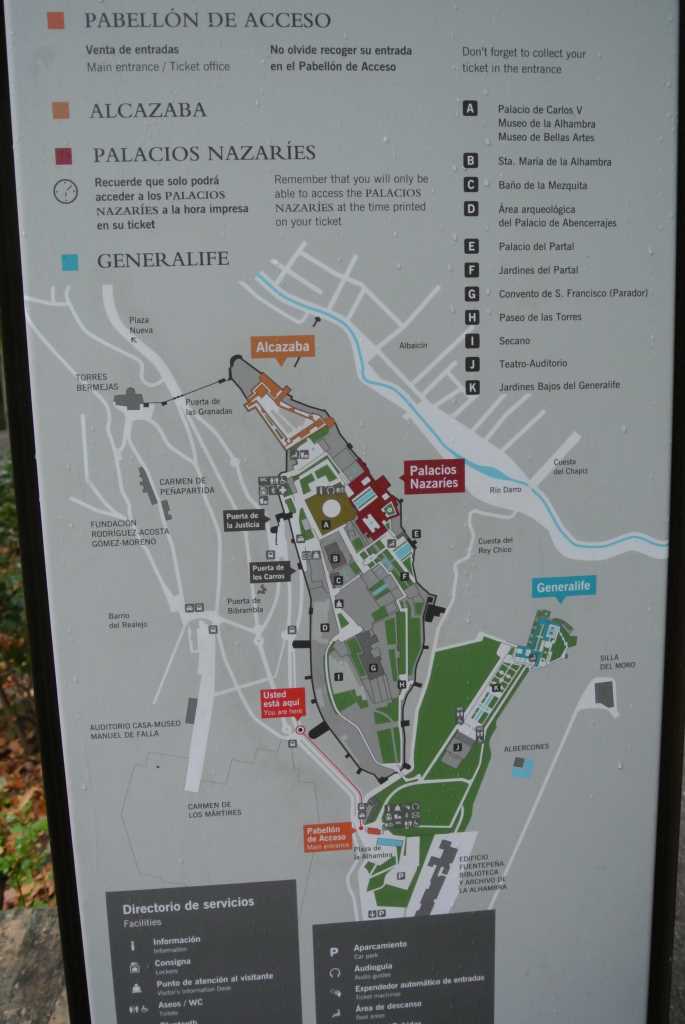
Photo by author, 2013
Granada surrendered without bloodshed on 2 January 1492.
The last Nasrid monarch later went into exile in Fez, Morocco, and the Nasrid dynasty came to an end.
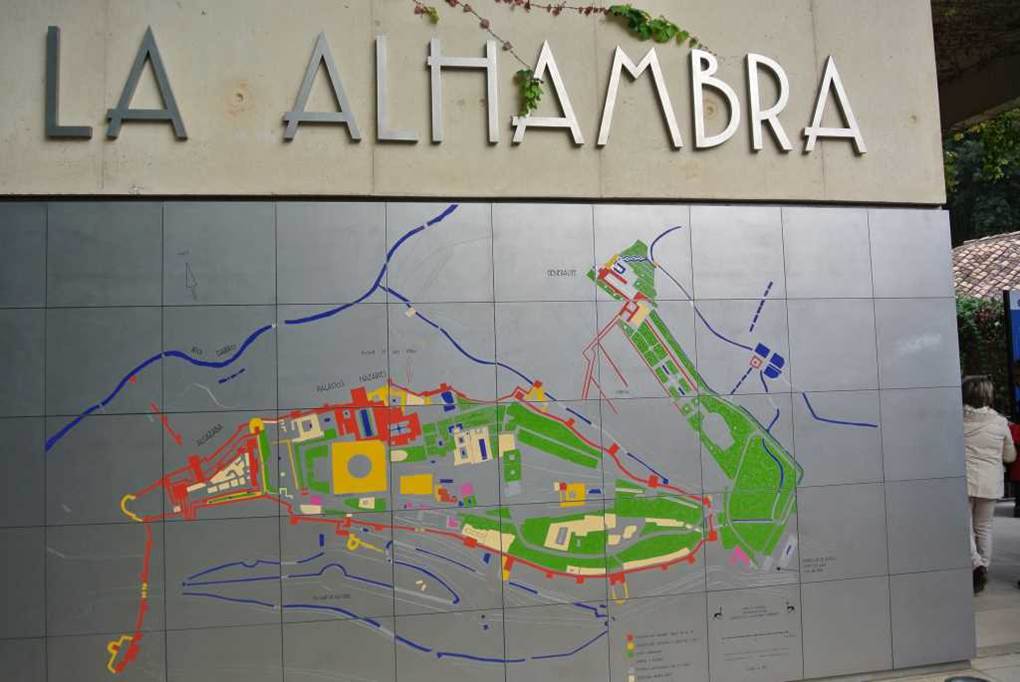
Photo by author, 2013
Tower of the Rocks (Torre de las Rocas)
We climbed up a long slope and finally reached the top of a hill.
There were gun batteries there.
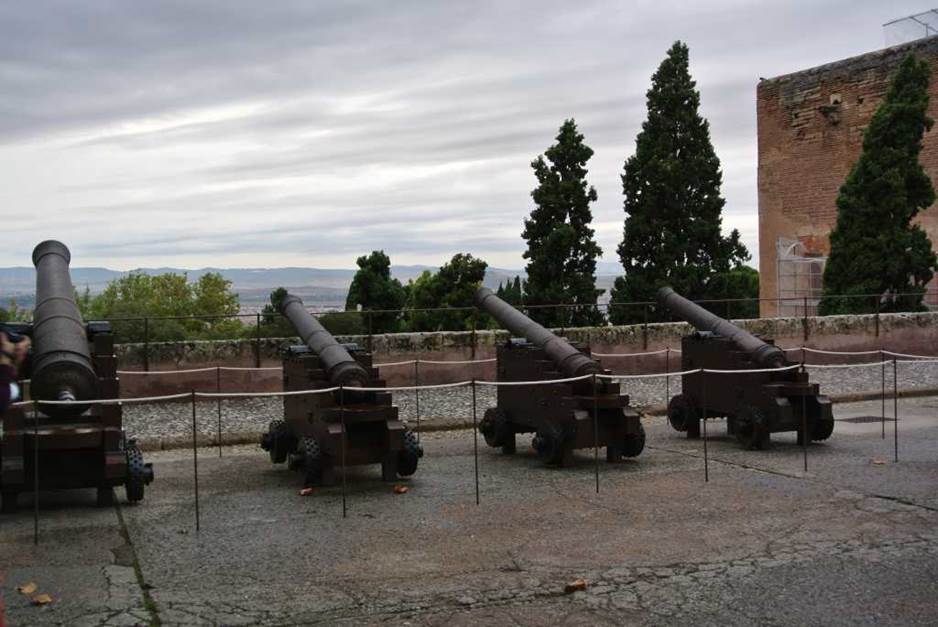
Photo by author, 2013
The Wine Gate (PUERTA DEL VINO)
The main gate leading to the Alhambra. See guide map below for the location of the Wine Gate.
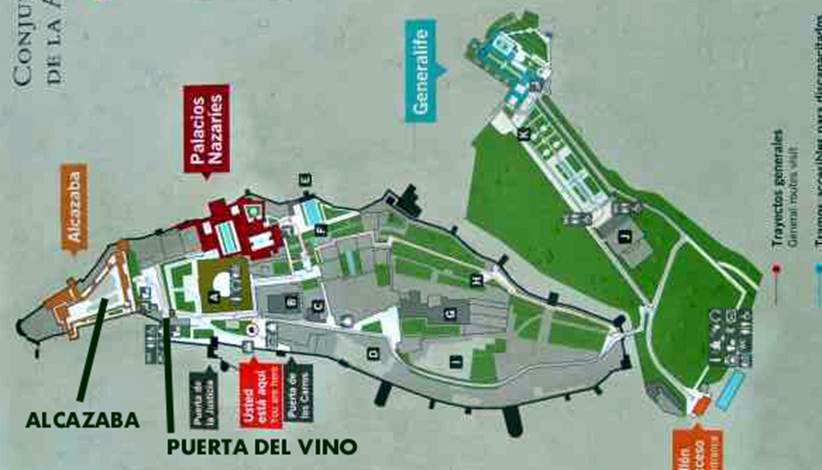
The main gate leading to the Alhambra Palace. The Wine Gate (below), from which you enter the castle. Just before the gate is the Alcazaba fortress.
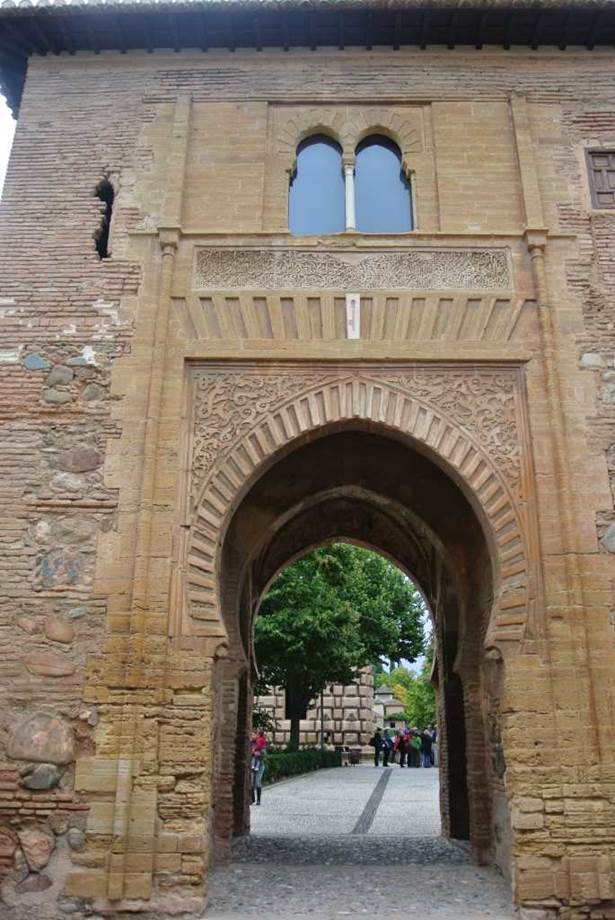
Photo by author, 2013
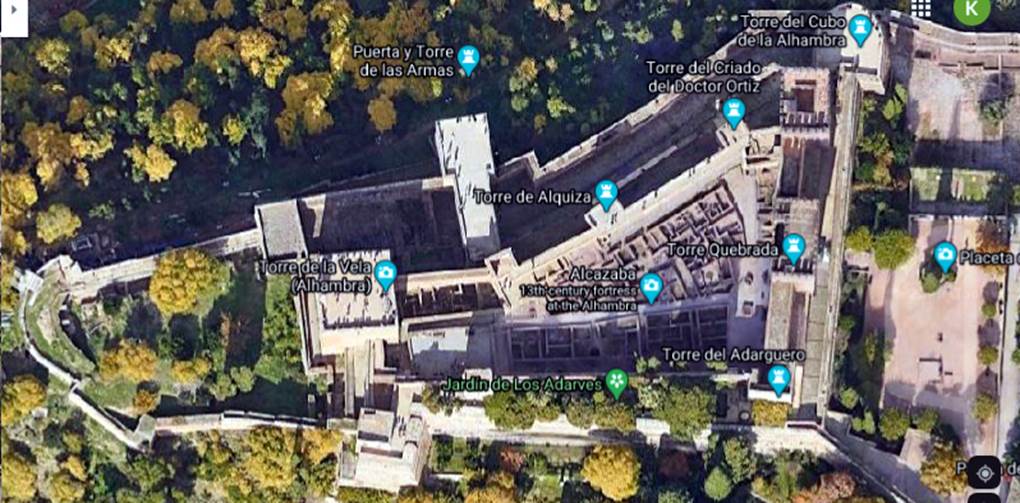
Alcazaba Fortress.
It is located on a cliff on the westernmost side of the Alhambra.
A castle wall made of a mixture of stone and brick.
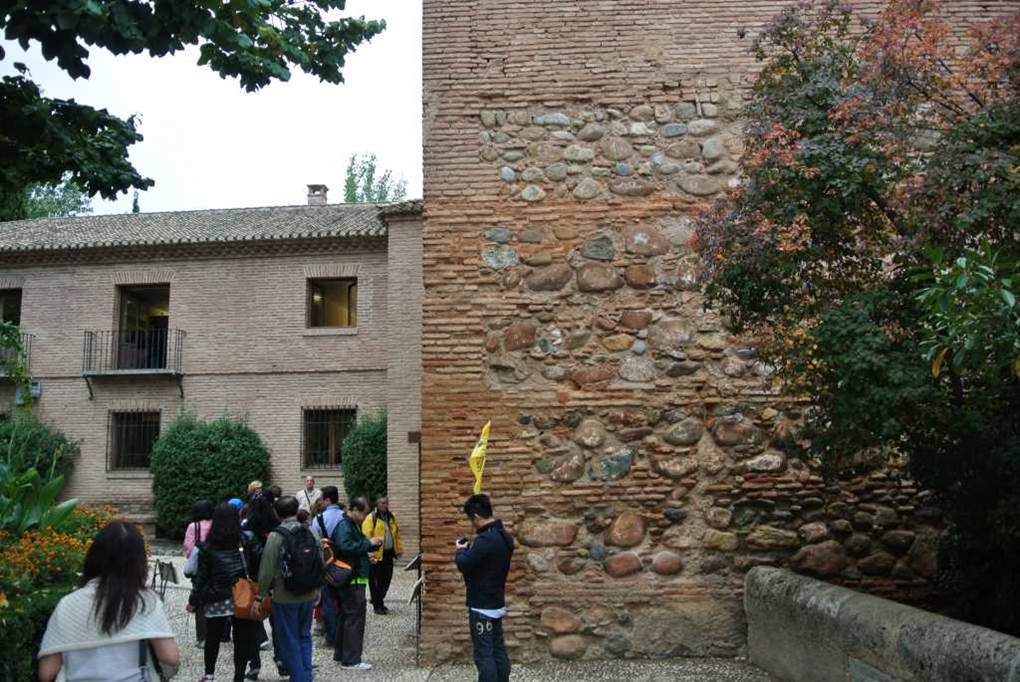
Photo by author, 2013
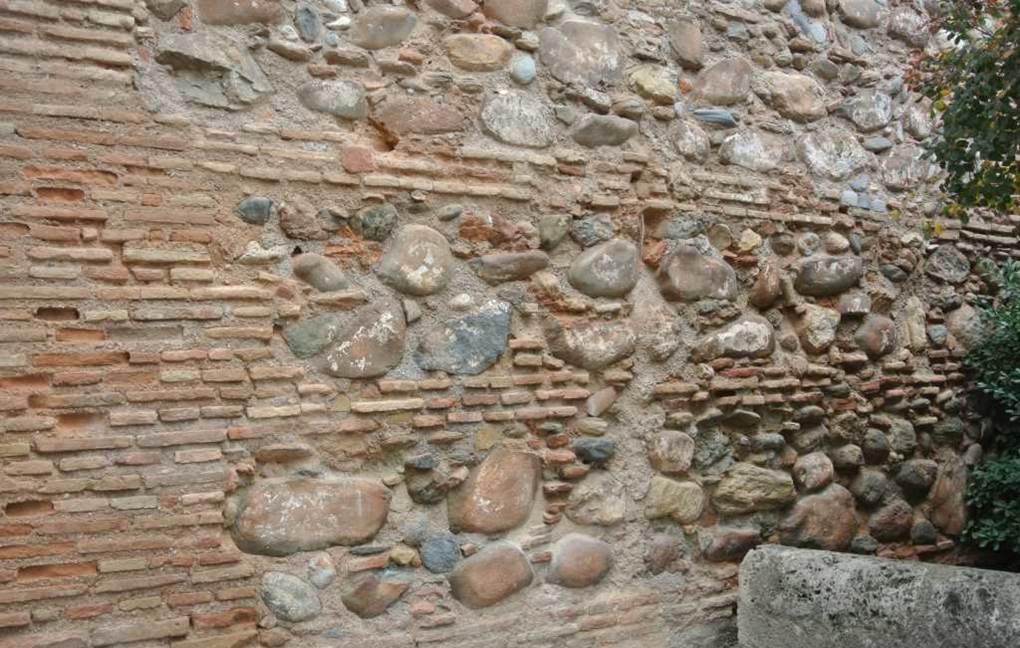
Photo by author, 2013
The impregnable fortress “Alcazaba” barracks area
It is an “Alcazaba” fortress built to defend Granada when the stronghold of the Islamic Spanish dynasty was in Córdoba. It is said to have been built on top of an earlier Roman fort and is the oldest part of the Alhambra.
View from the Alcazaba.

Photo by author, 2013
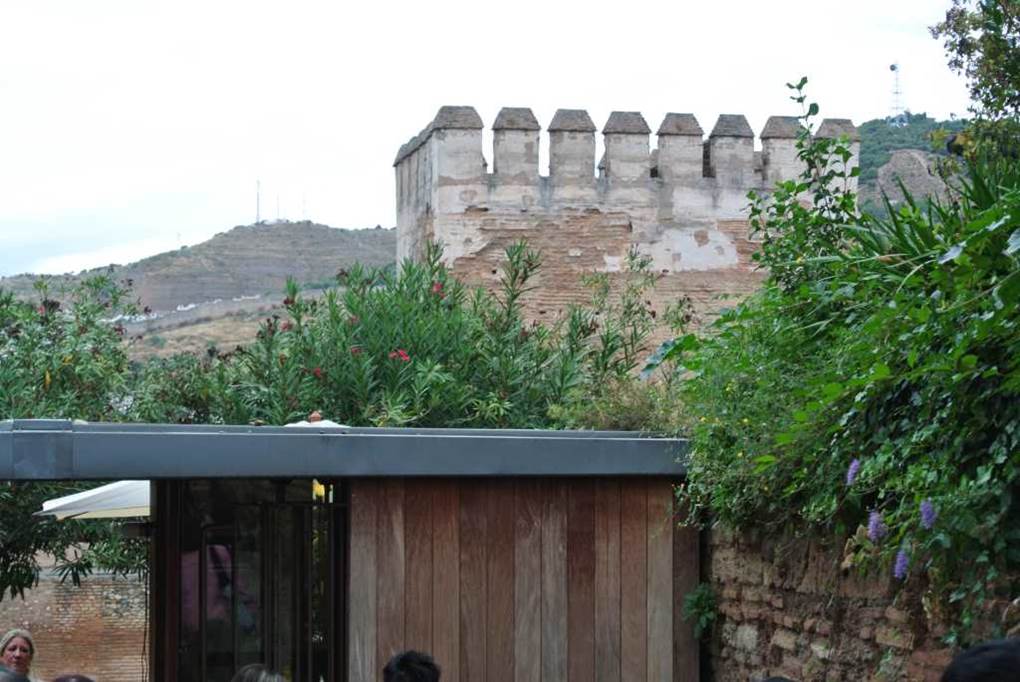
Photo by author, 2013
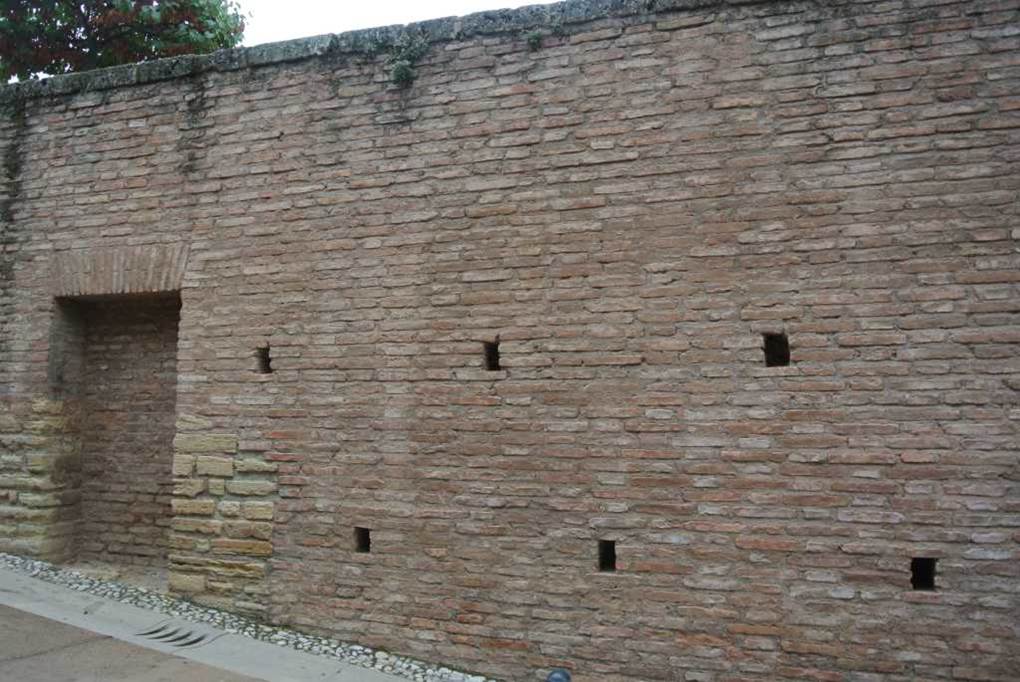
Photo by author, 2013
Adarguero Tower (Torre del Adarguero)
There are many defensive towers around the walls at regular intervals.
The photo below is an example.
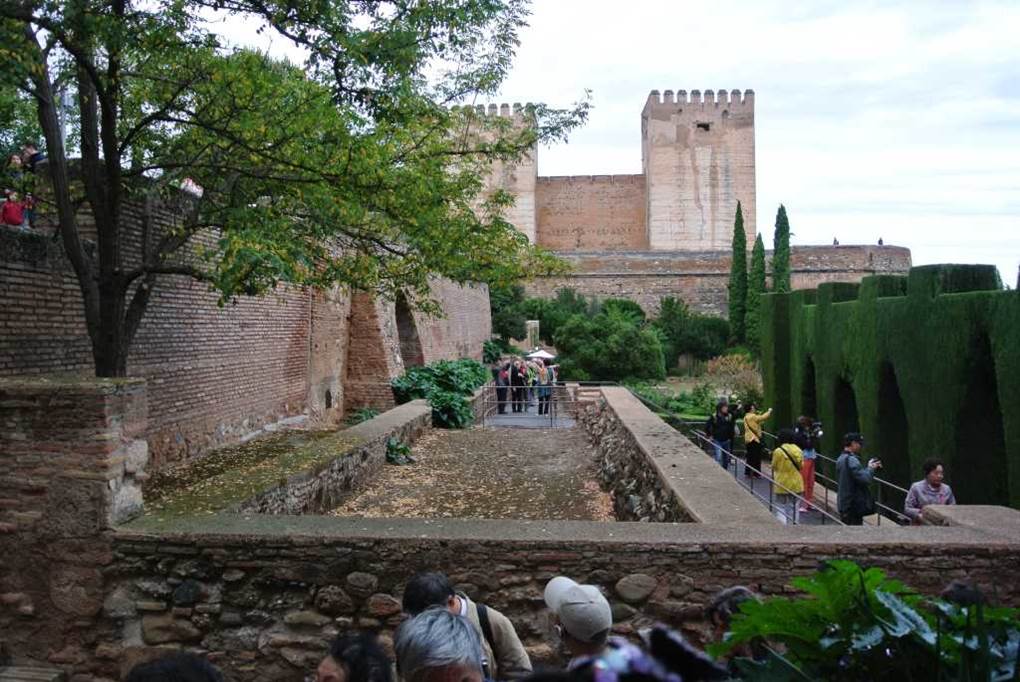
Photo by author, 2013
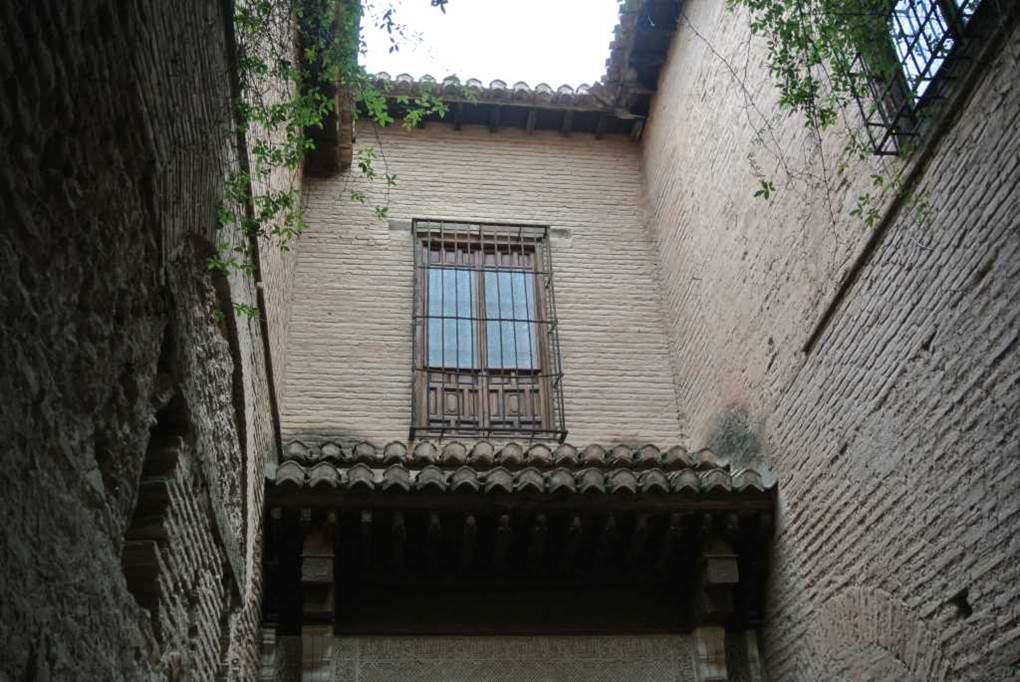
Photo by author, 2013
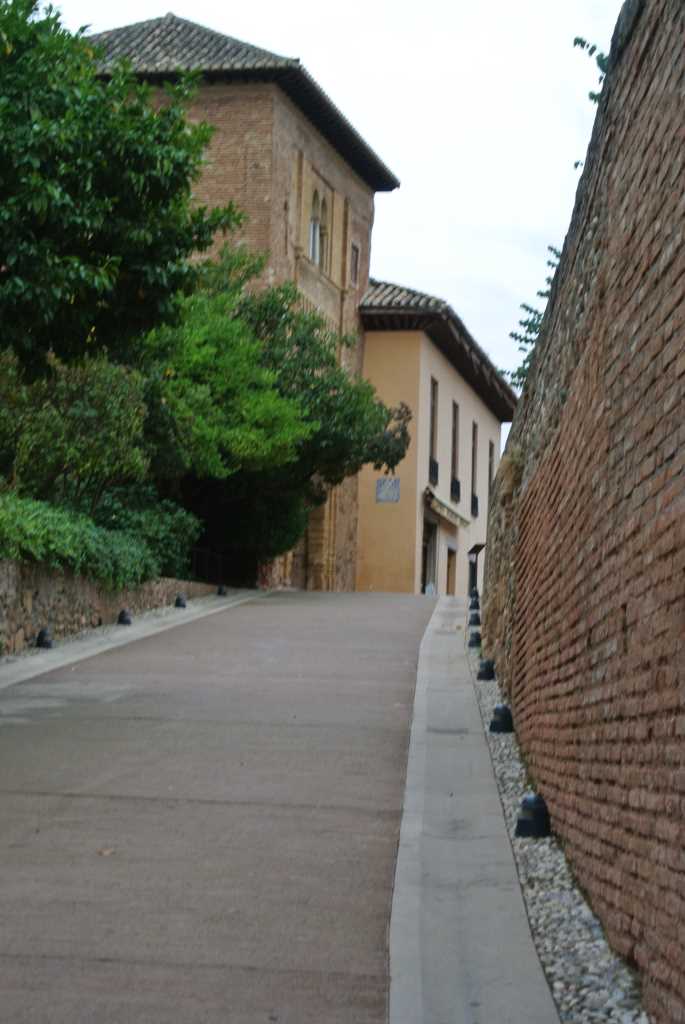
Photo by author, 2013
The main part of the Alhambra.
The Alhambra, which means “Red Castle”, stands eternally on the hills of Granada.
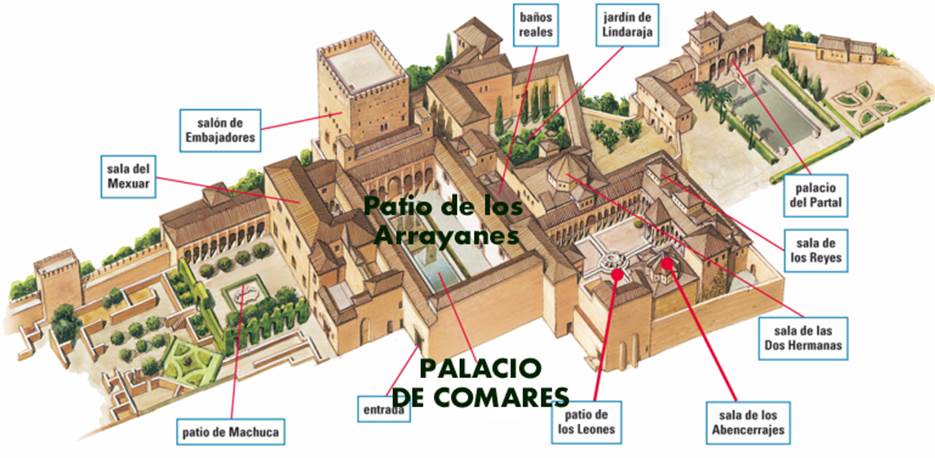
The interior of the Nasrid Alhambra is divided into two parts.
1) The Comares Palace (palacio de comares), a public space for office centered on the courtyard of Arayanes and
2) The Lion Palace, a private space where the royal family live, centered around the Lion Courtyard.
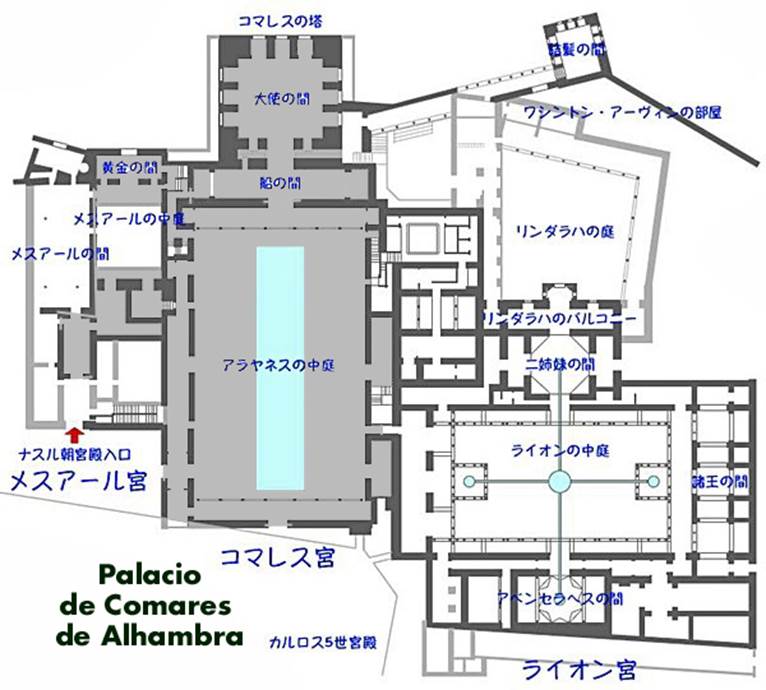
Palacio de Comares de Alhambra
In the heart of the Alhambra. It is said to have been built during the Nasrid Dynasty, the last Islamic kingdom of Andalusia. It is a building that shows off the greatness of the king.
Courtyard of Mesar
To enter the Arrayanes Courtyard, the central courtyard of the Comares Palace, one passes through the Mesar Courtyard.
A photo of the courtyard of the Messar, the entrance to the building.
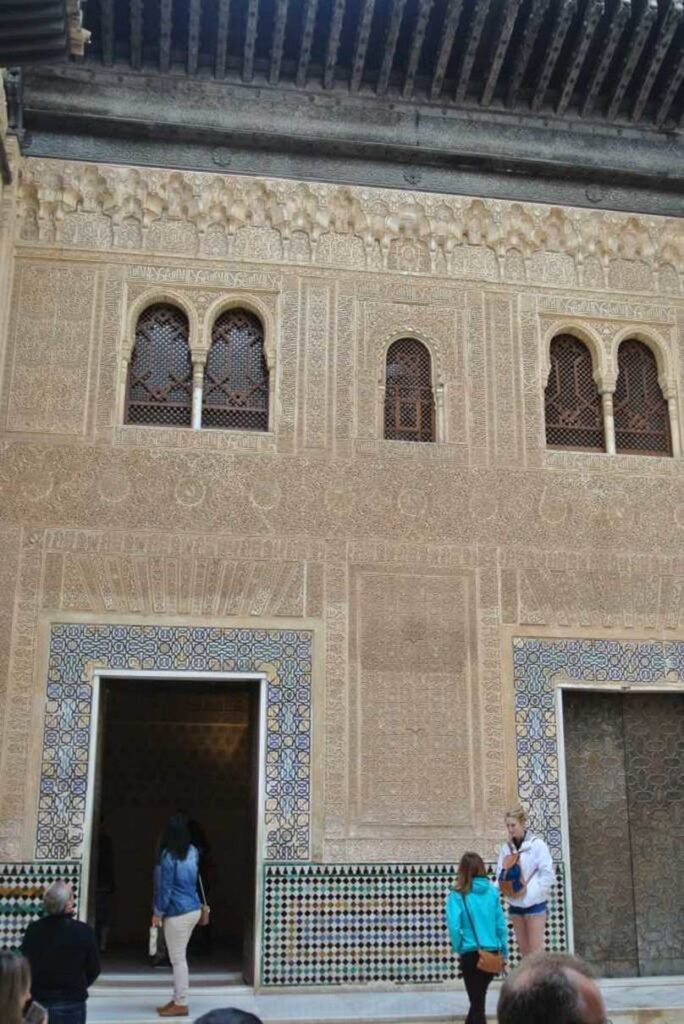
Photo by author, 2013
Tiles with arabesque patterns on the lower wall.
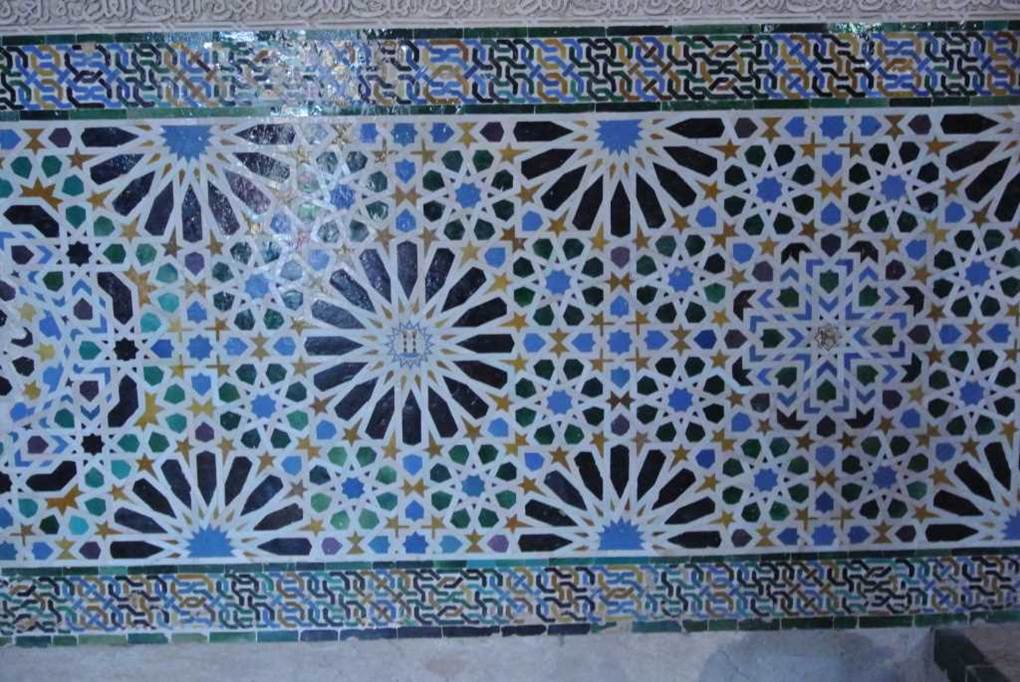
Photo by author, 2013
The eaves and windows in front of the entrance.
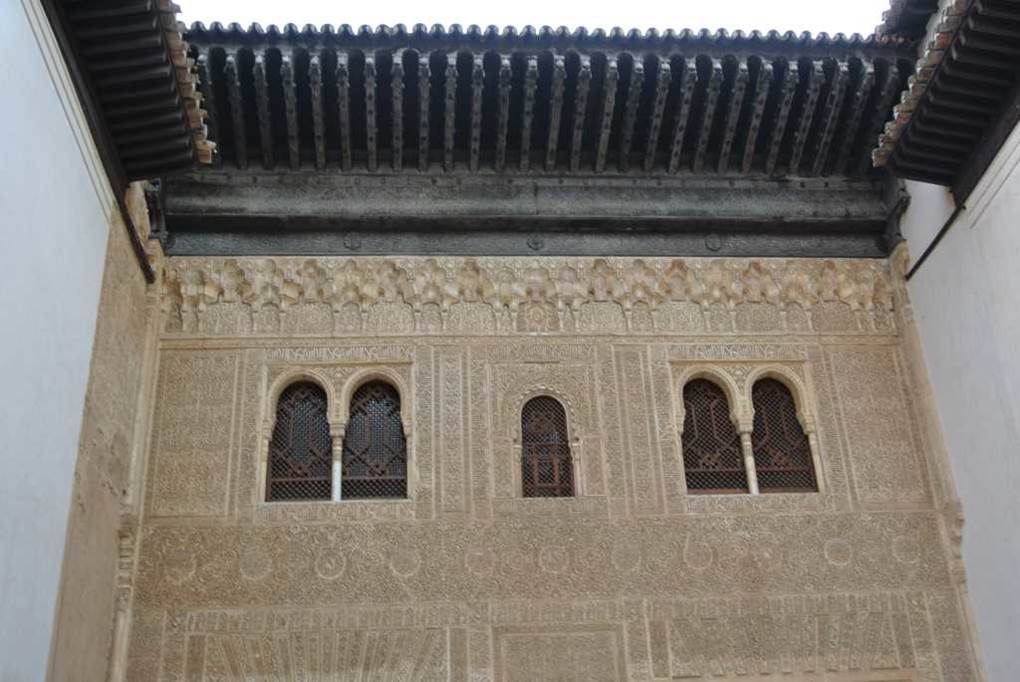
Photo by author, 2013
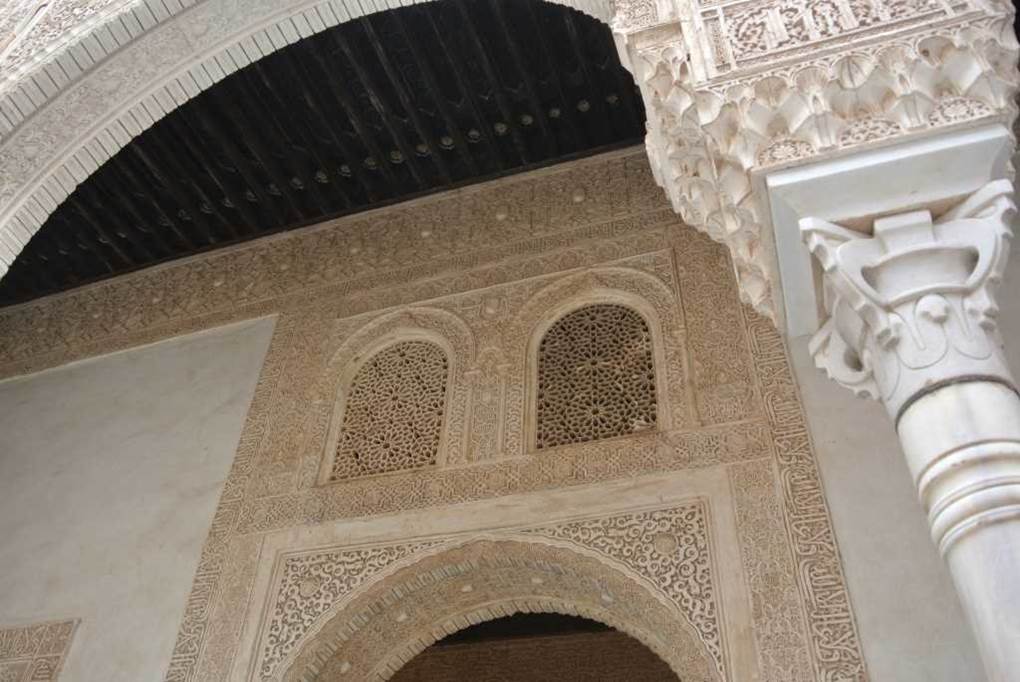
Photo by author, 2013
Messart Hall Ceiling
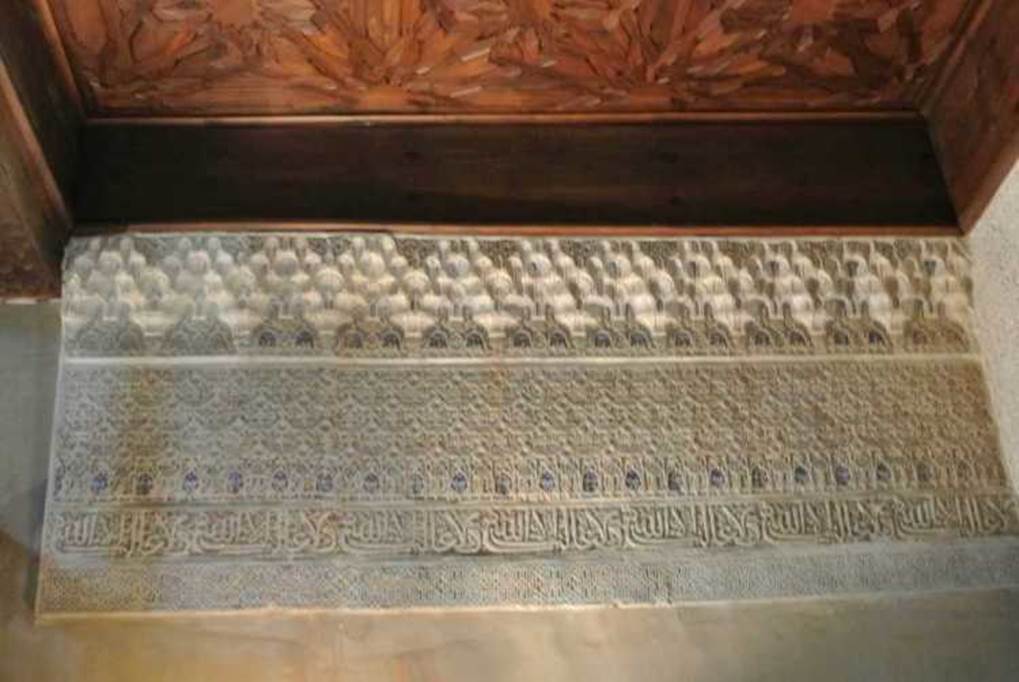
Photo by author, 2013
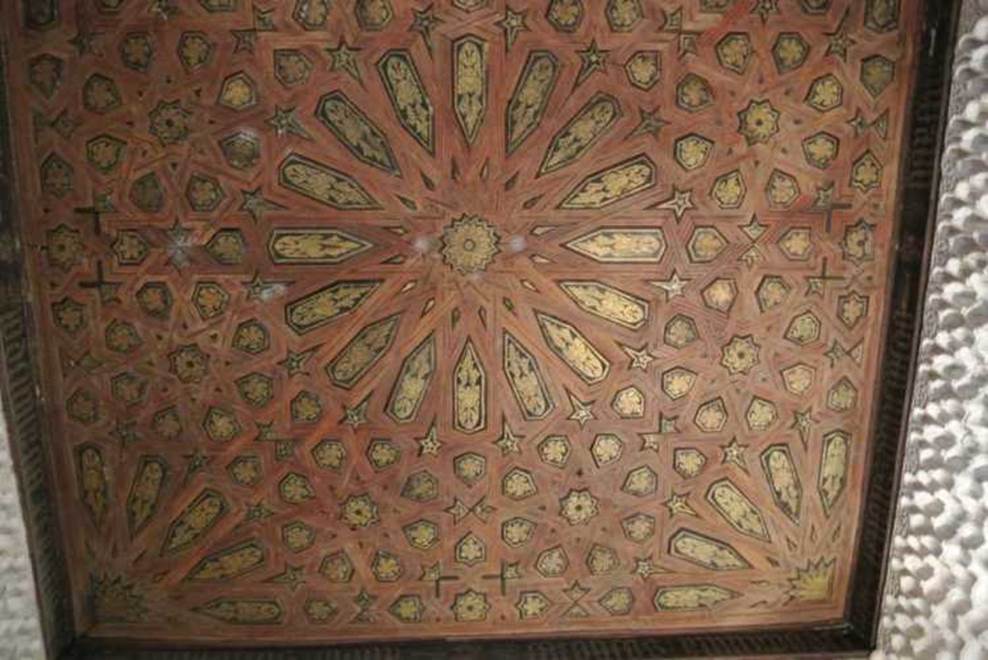
Photo by author, 2013
Court of the Myrtles (Patio de los Arrayanes)
There is a courtyard at the entrance. It is in the Arrayanes Courtyard with a pool filled with water and the Comares Tower in the background. The pool, filled with water on a high ground, is a symbol of power.
Beneath the Comares Tower is the Hall of the Ambassadors.
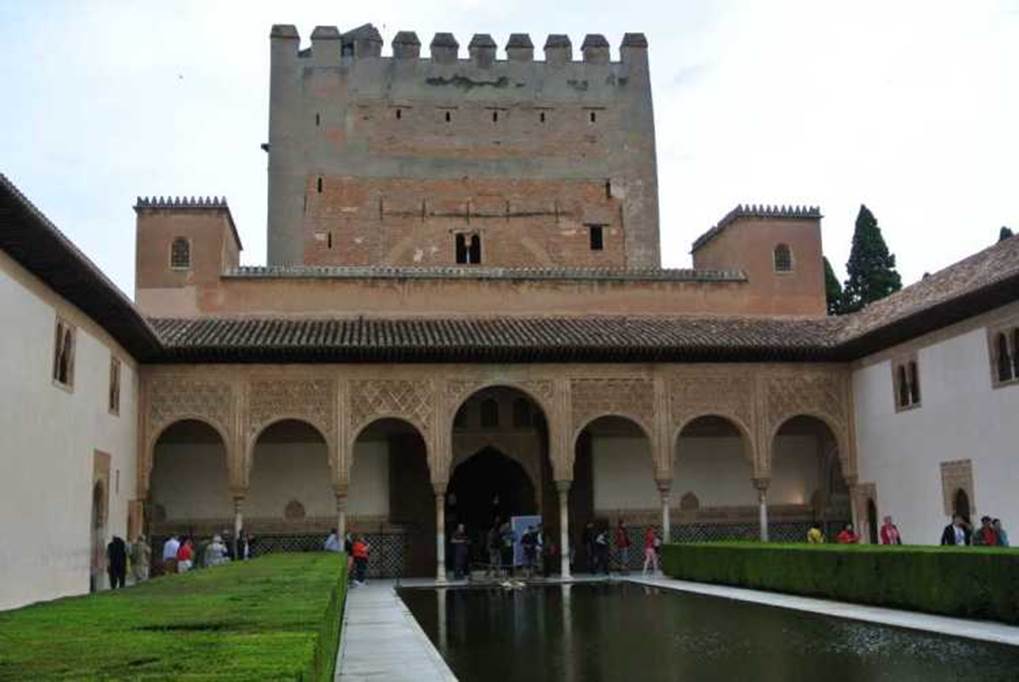
Photo by author, 2013
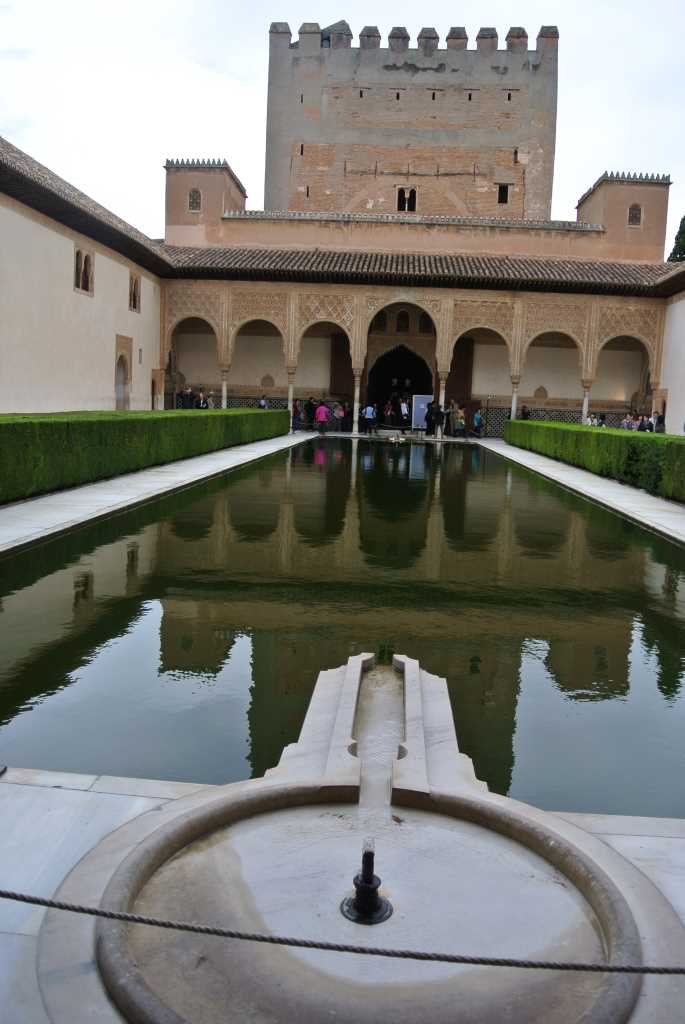
Photo by author, 2013
This photo shows the opposite elevation of the Comares tower, where visitors enter the courtyard from here.
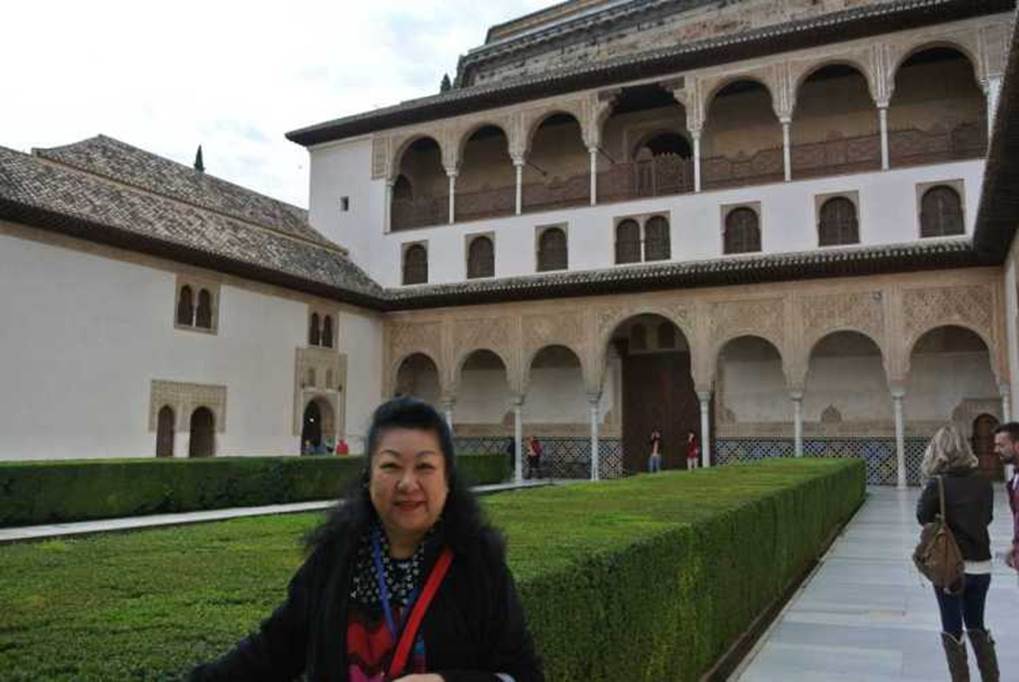
Photo by author, 2013
You can see the visitors clustered under the entrance arcade.
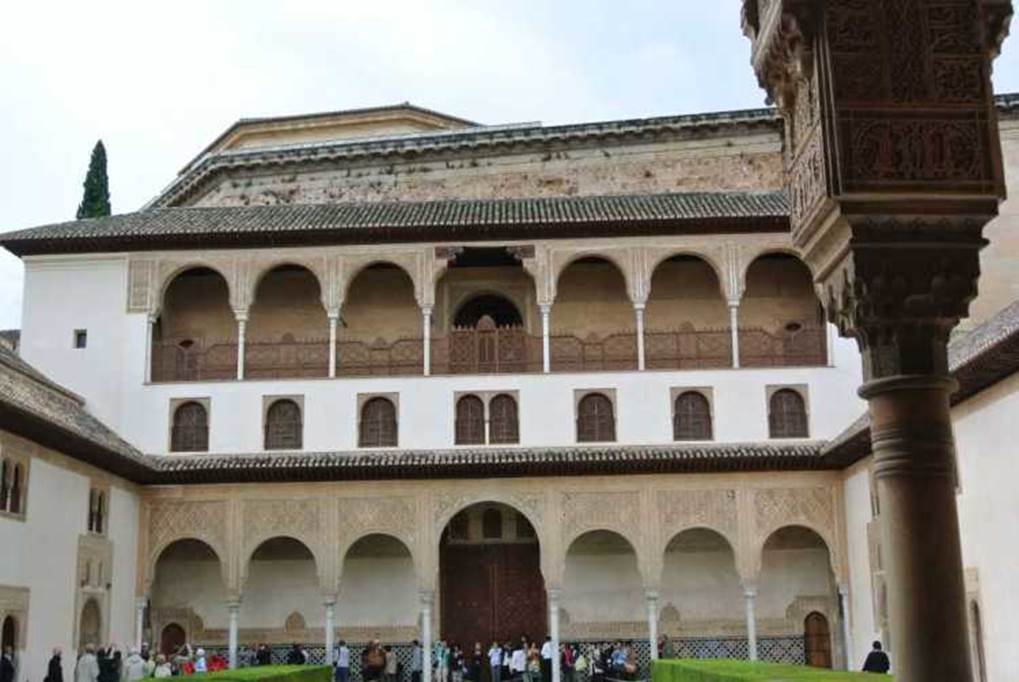
Photo by author, 2013
The Hall of Ambassadors (rooms within Comares Palace)
This is the room where the ambassador who came to have an audience with the king is passed. It is the largest hall of the Alhambra.
The soft light from the high windows, the stunning window and wall decorations, and the Arabic inscription of the Qur’an on the walls are overwhelming to behold.
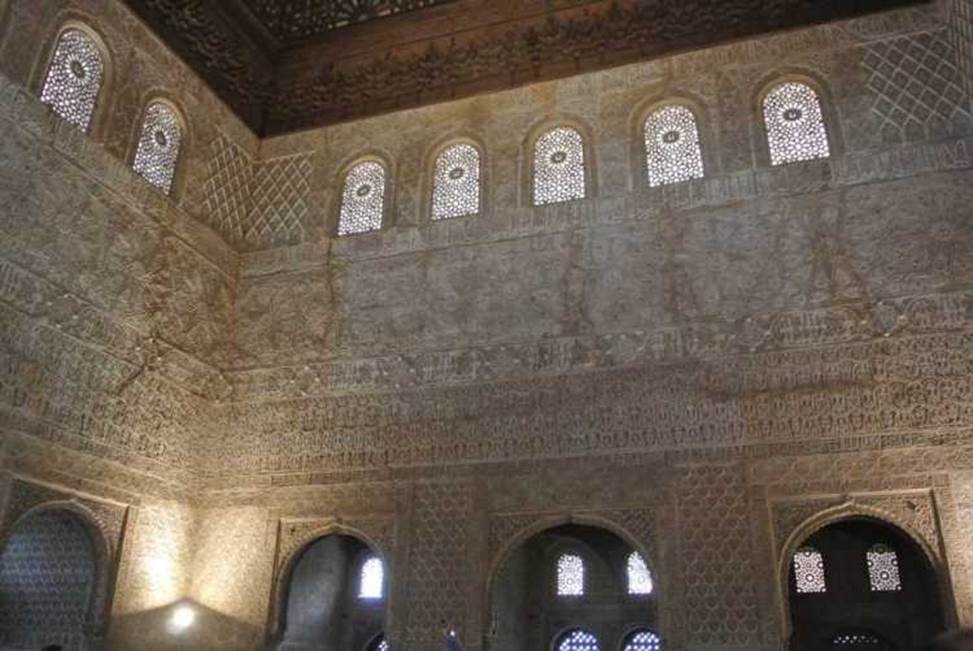
Photo by author, 2013
This is a daylight window to illuminate the floor.
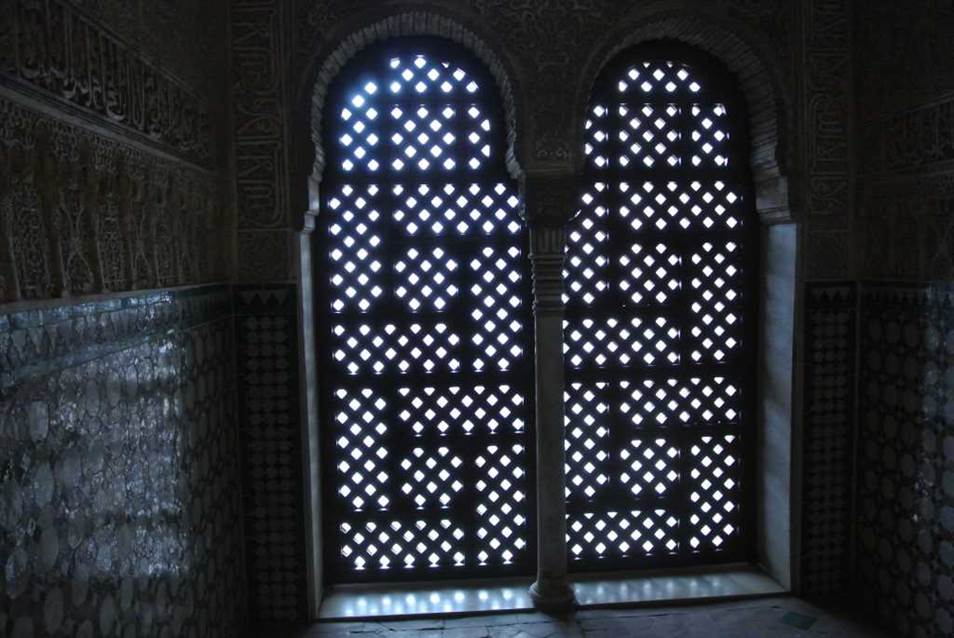
Photo by author, 2013
The craving on the ceiling is an exquisite work of art
The ceiling is a work of art, with a continuous window at the top of the wall, allowing indirect light to reach it.
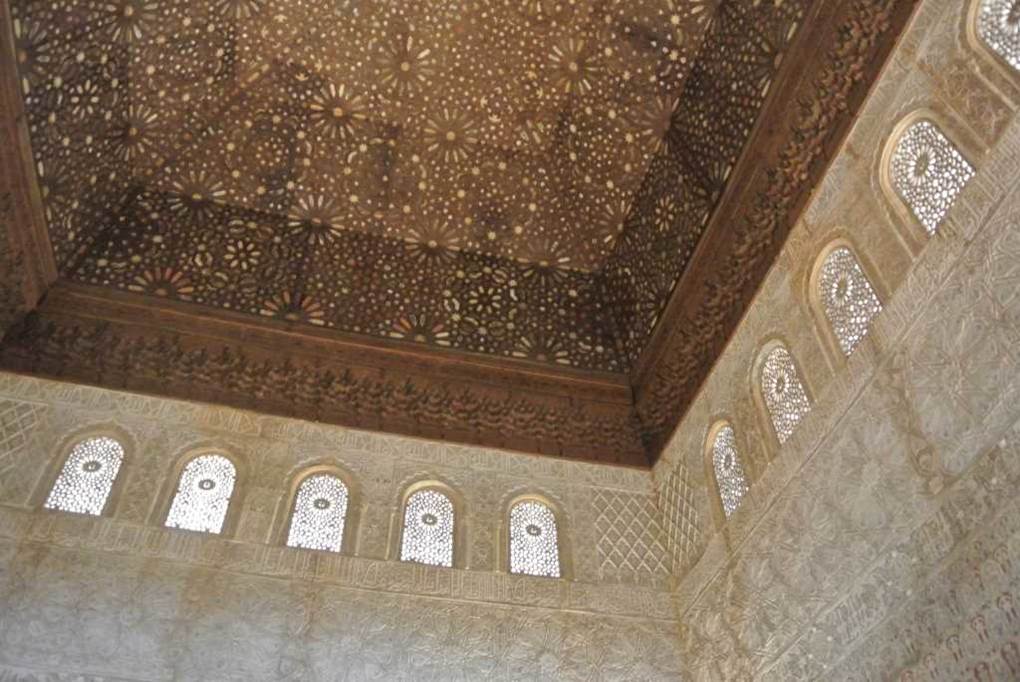
Photo by author, 2013
No matter how many times you look at these open windows, you won’t get tired of them.
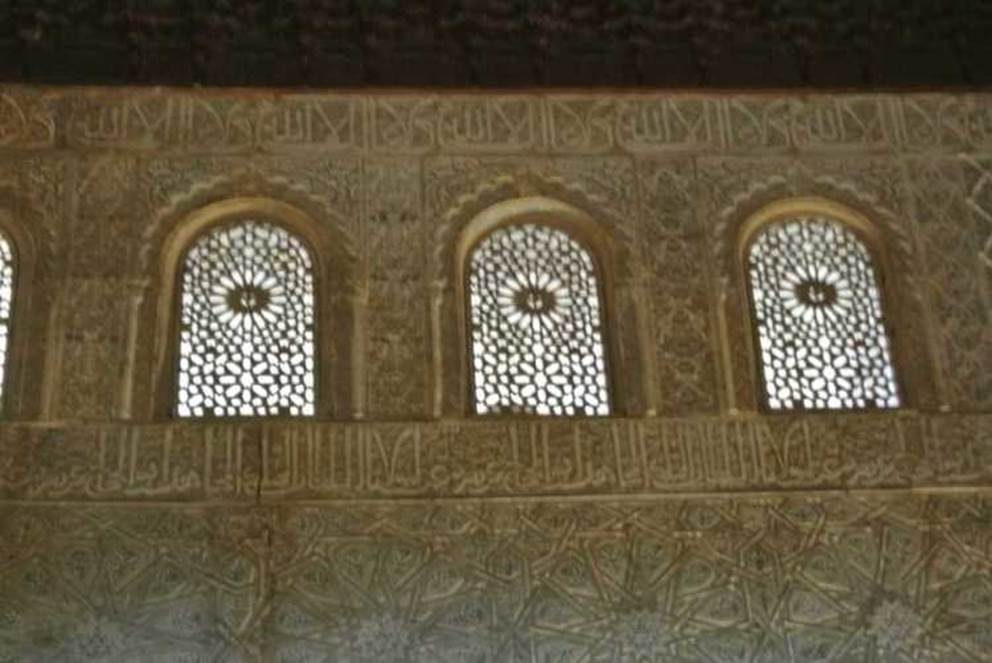
Photo by author, 2013
It can be seen that the shape, size and details of each window (opening) are designed according to its purpose and function.
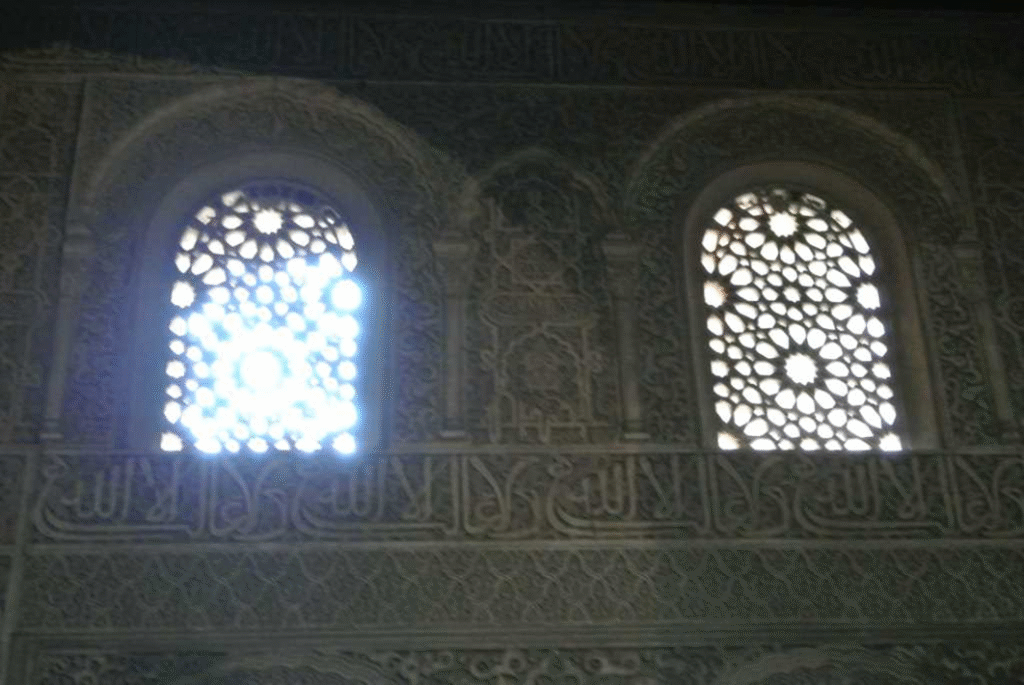
Photo by author, 2013

Photo by author, 2013
The Arabic script is integrated with the decorative design of the walls.
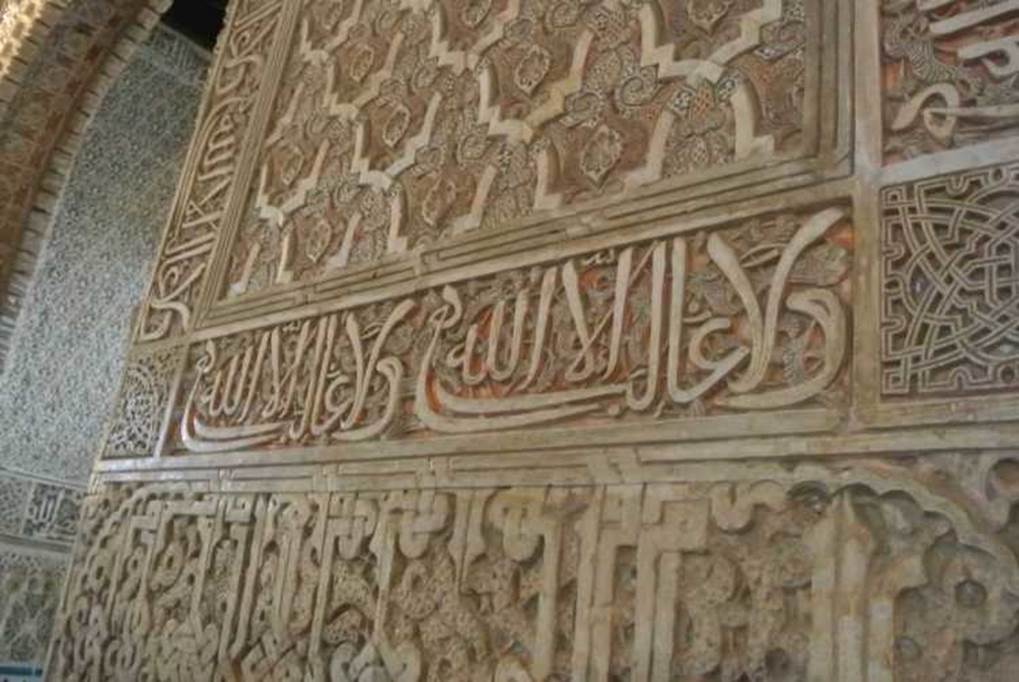
Photo by author, 2013
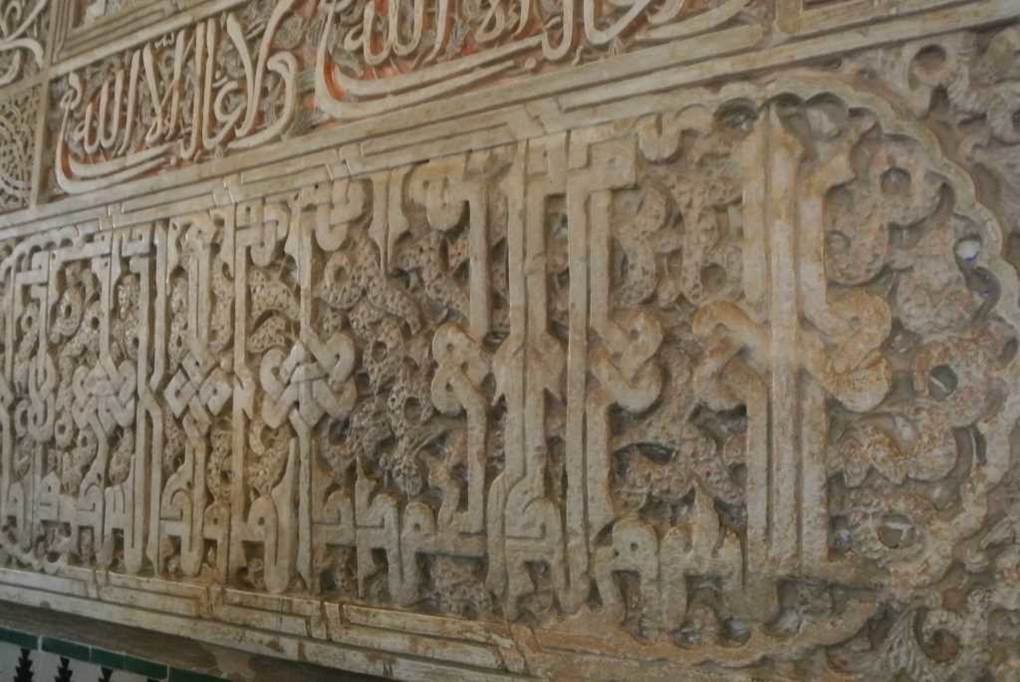
Photo by author, 2013
All photos by author, Oct 2013