JAP | ENG
Shanghai, Suzhou #3/6
1985
Hanshan Temple outside Suzhou City
Legend: Hanshan Temple ① is located along the Fengjiang Canal, a tributary of the Grand Canal, about 5 kilometres west of the old town of Suzhou Station ② and Beisi pagoda ③.
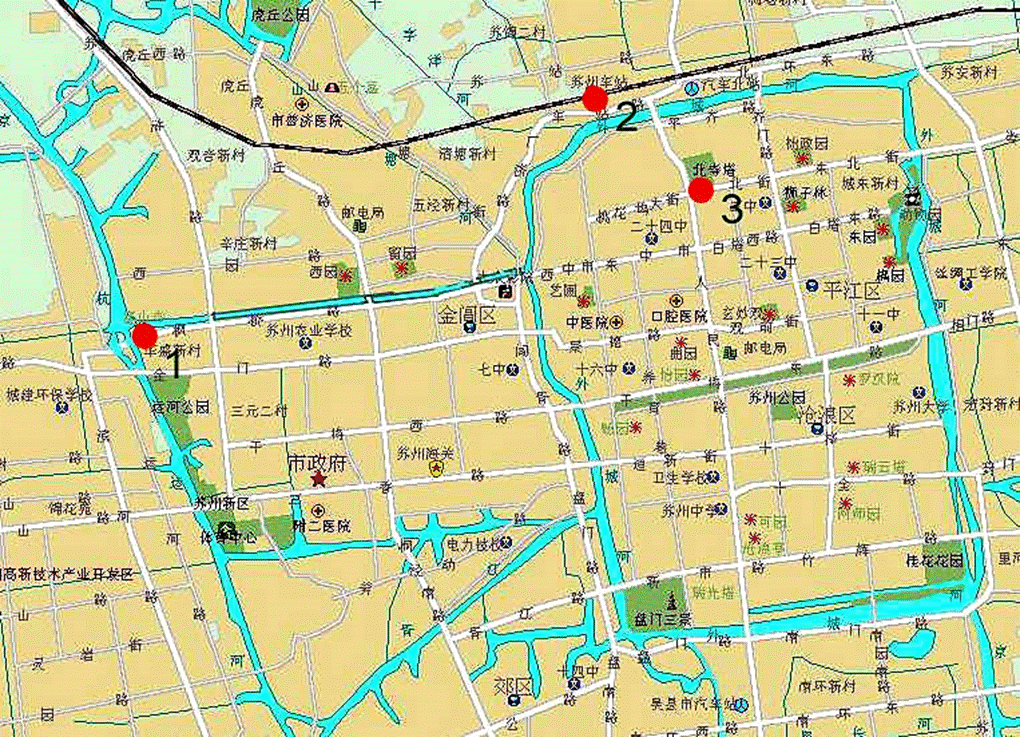
Hanshan Temple ①
Alongside Hanshan Temple is the Fengjiang Canal.
It has a romantic name, but it is also a canal where local people live.
The current name of the temple, Hanshan Temple, is said to come from the legend that the wind-crazed man Hanshan built a hermitage here in the mid-7th century during the Tang Dynasty.
Zhang Ji wrote the famous poem “Night Mooring at Fengqiao Bridge” in the mid-8th century. It is certainly an ancient temple.
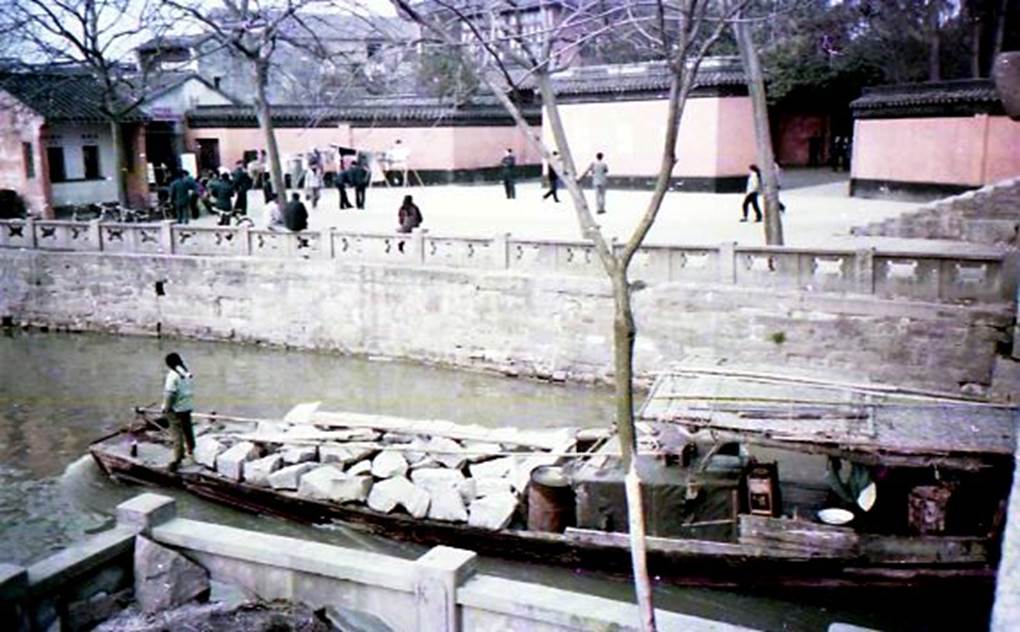
Photo by author, 1985
A view of the cold Hanshan Temple outside Suzhou from the top of the Jiangcun Bridge in 1985. It’s a very good spot
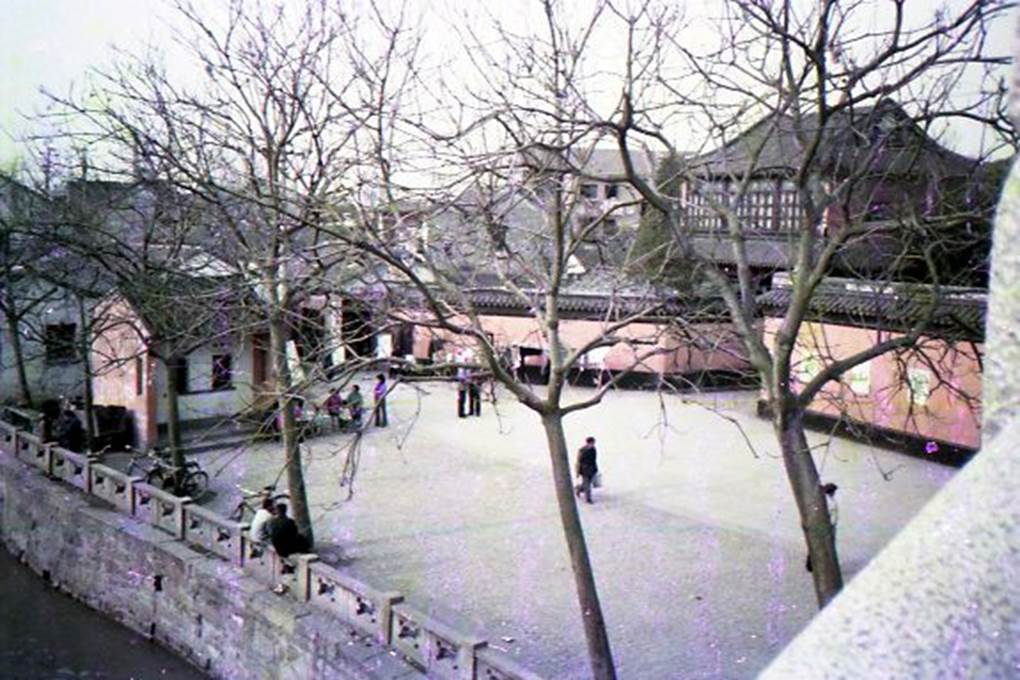
Photo by author, 1985
Fortunately, it was spared during the Second Sino-Japanese War.
Hanshan Temple appears in the theme song of the 1940 movie “China Night”, “Suzhou Night Song”(lyrics by Saijo Hachiju, composition by Hattori Ryoichi, sung by Li Xianglan).
There is no main gate, and one enters the temple grounds through the gaps on either side of the Zhaobi wall, which is unique.
The front of the temple faces west toward the Fengjiang Canal, and is not bound by the traditional south-facing layout that is the rule for traditional Chinese temples.
The layout of the buildings in the temple grounds is flexible. A group of three people pose for photo in front of the Hanzanji Temple.
An official from Suzhou City (right), the author’s friend Mr. Y (middle), and the author (left)
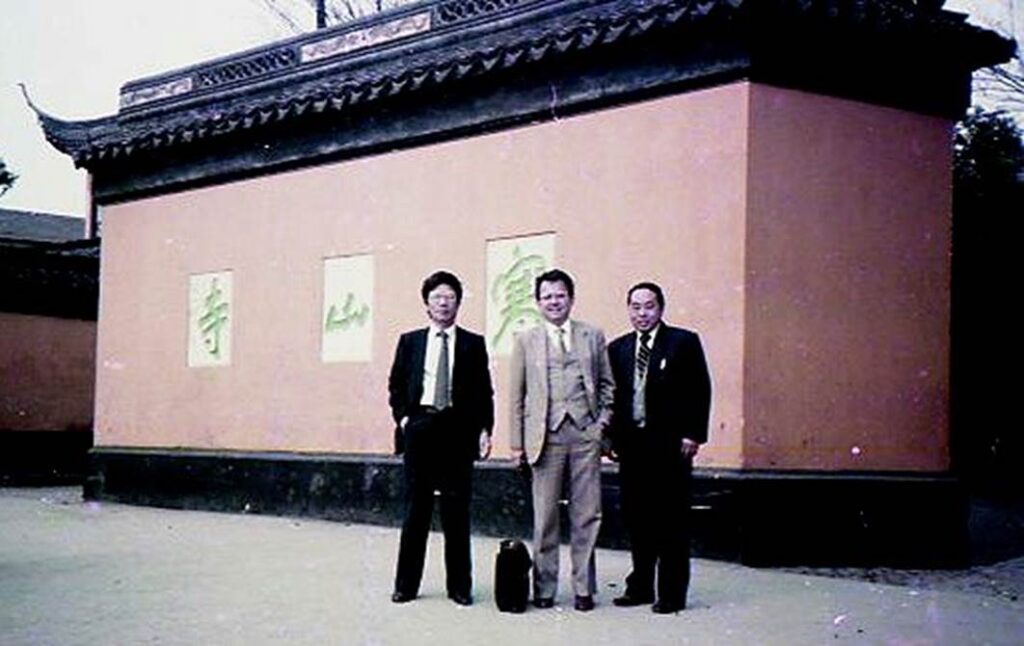
Photo by author, 1985
When you enter the precincts of Hanshan Temple and look back, you can see the Jiangcun Bridge that you have crossed. This spatial configuration is excellent.
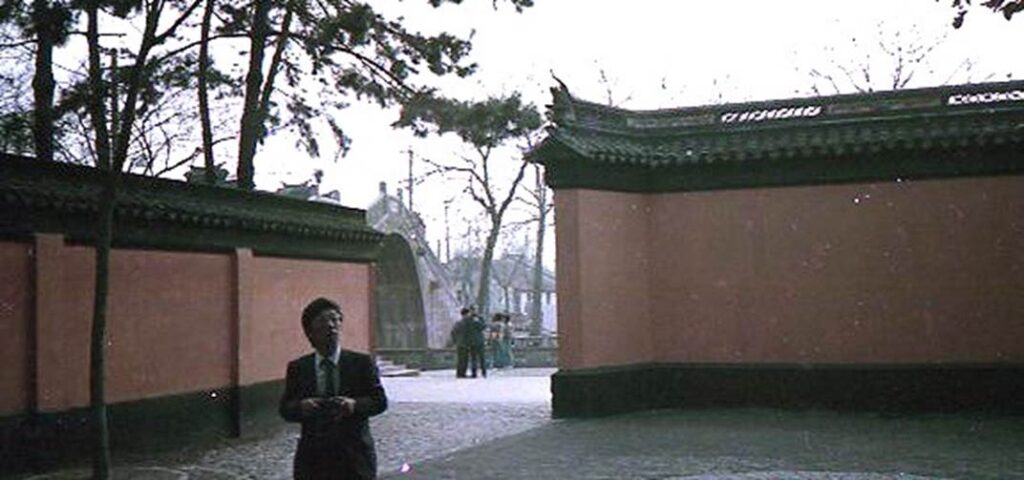
Photo by author, 1985
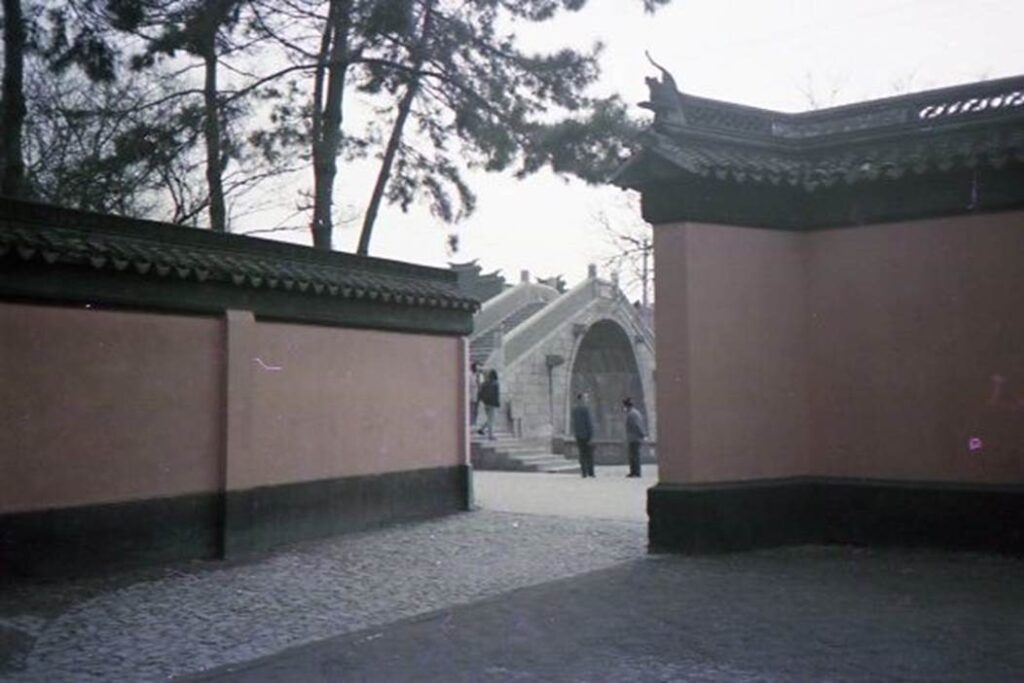
Photo by author, 1985
First, you will be guided to the bell tower.
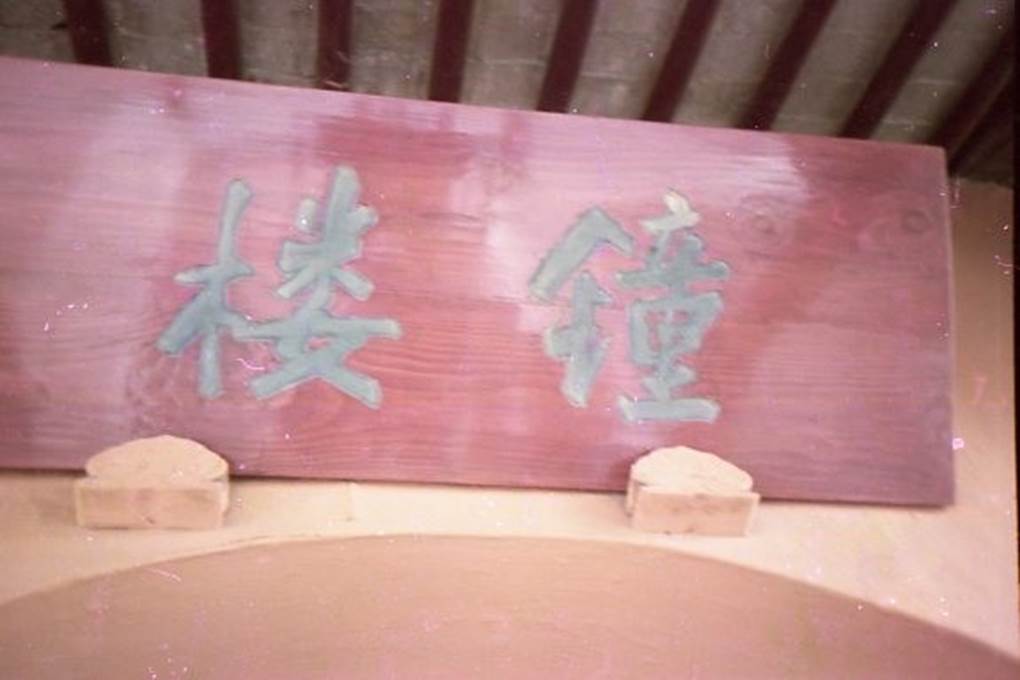
Photo by author, 1985
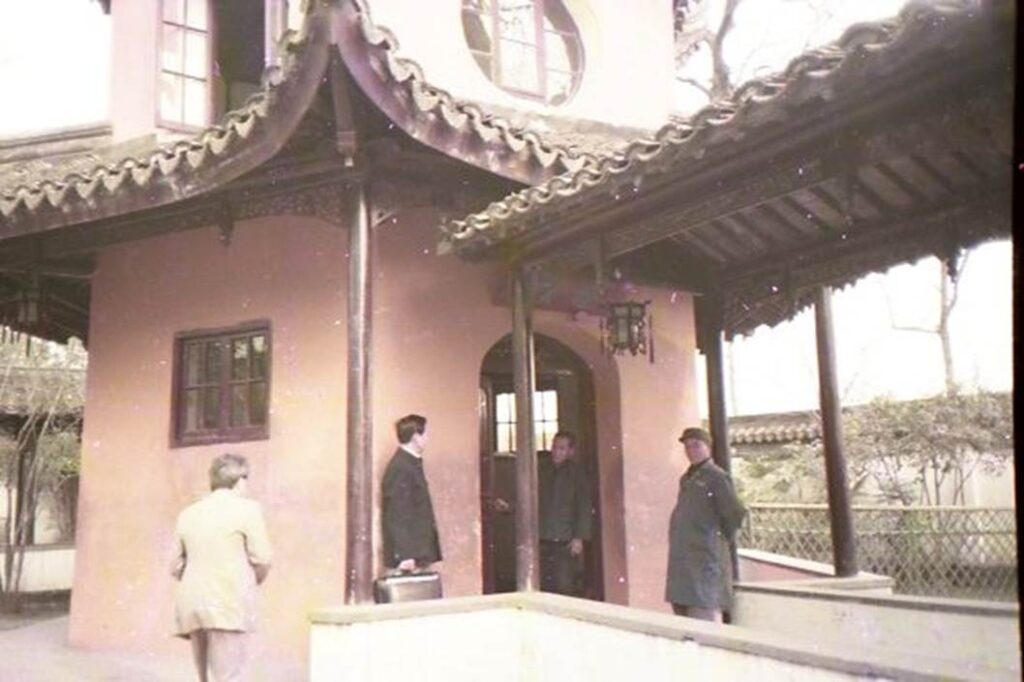
Photo by author, 1985
New Year’s Eve Bell
The event of welcoming the new year by ringing the bell on New Year’s Eve is said to have been started by Japanese volunteers in 1979.
Since then, the bell has been rung every year on New Year’s Eve at Hanshan Temple.
Threesome. Suzhou City officials (right and left), author (middle)
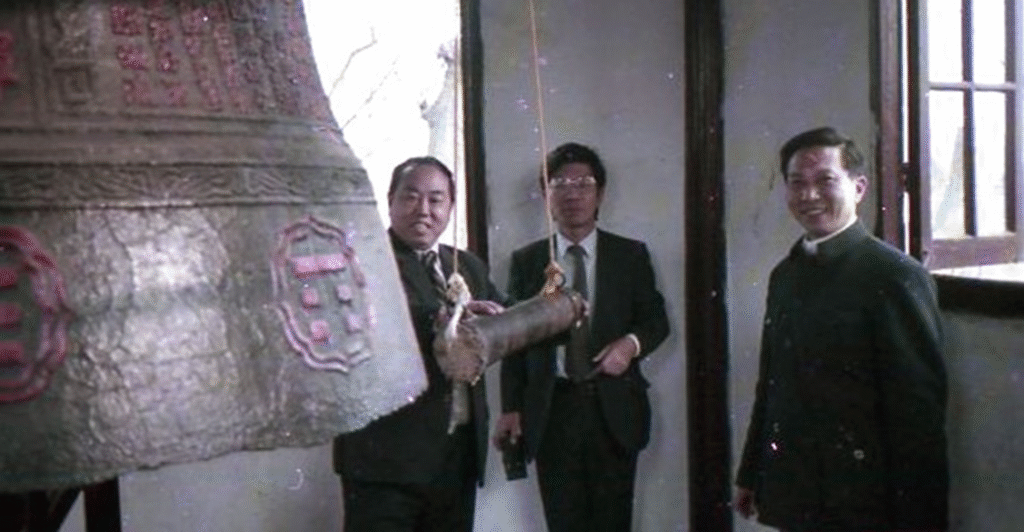
Photo by author, 1985
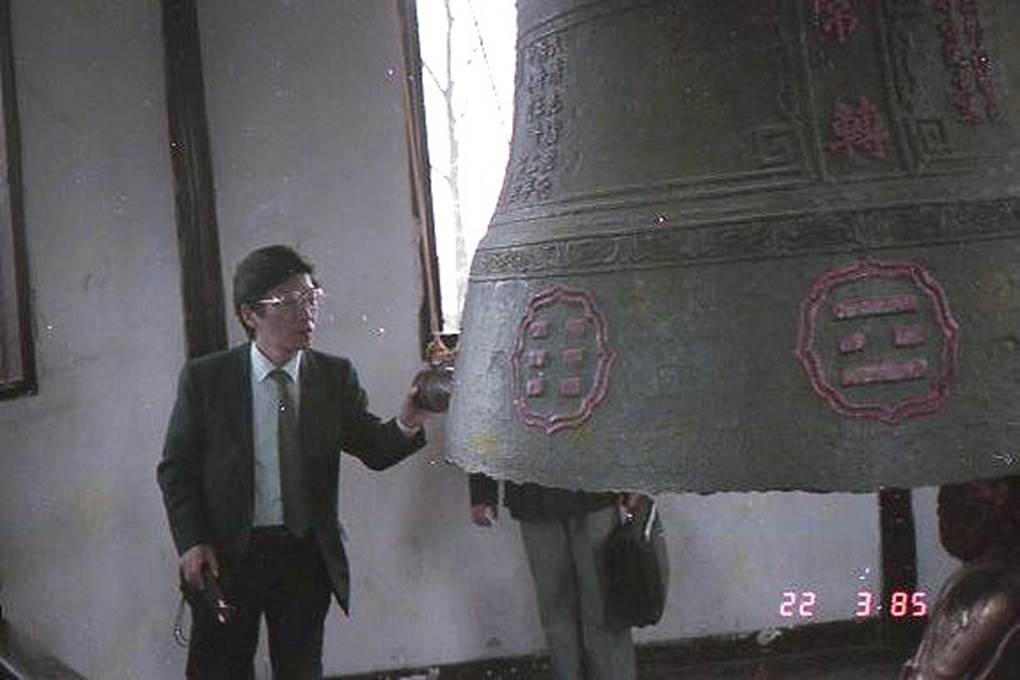
The Bell of the Night and the Author, 1985
Seven-character quatrain “ Night mooring at Fengqiao Bridge “
The seven-character quatrain (a form of poetry consisting of four lines, each containing seven words) “Night mooring at Fengqiao Bridge” by Zhang Ji, a poet and politician of the mid-Tang Dynasty, is widely known in Japan, as it is taught in Chinese poetry and classical Chinese classes.
This poem is said to describe a traveller who was exiled from the capital and stayed overnight on a boat near Fengqiao Bridge, which spans the Fengjiang River on the western outskirts of Suzhou, and was unable to sleep due to his longing for his journey, when he heard the sound of the bell of Hanshan Temple.
This place was the starting point for entering Suzhou from the north via the Grand Canal.
For a writer who loves to travel, this Chinese poem,” Night mooring at Fengqiao Bridge,” is a timeless work that touches my heart.
I immediately purchased a print.
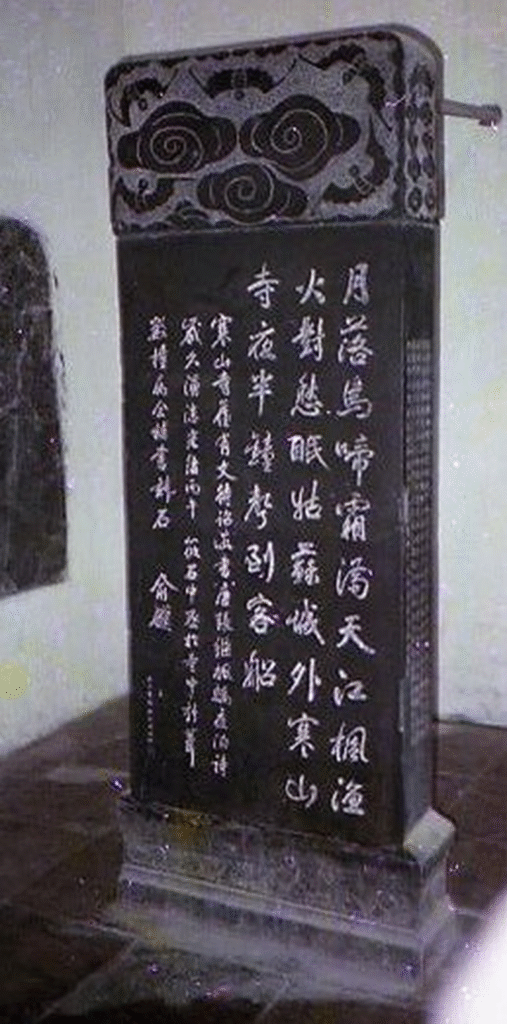
Monument of “Kaede Bridge Night Night”
Photo by author, 1985
I had the grounds of Hanshan Temple all to myself.
There were no other tourists and it was a quiet space.
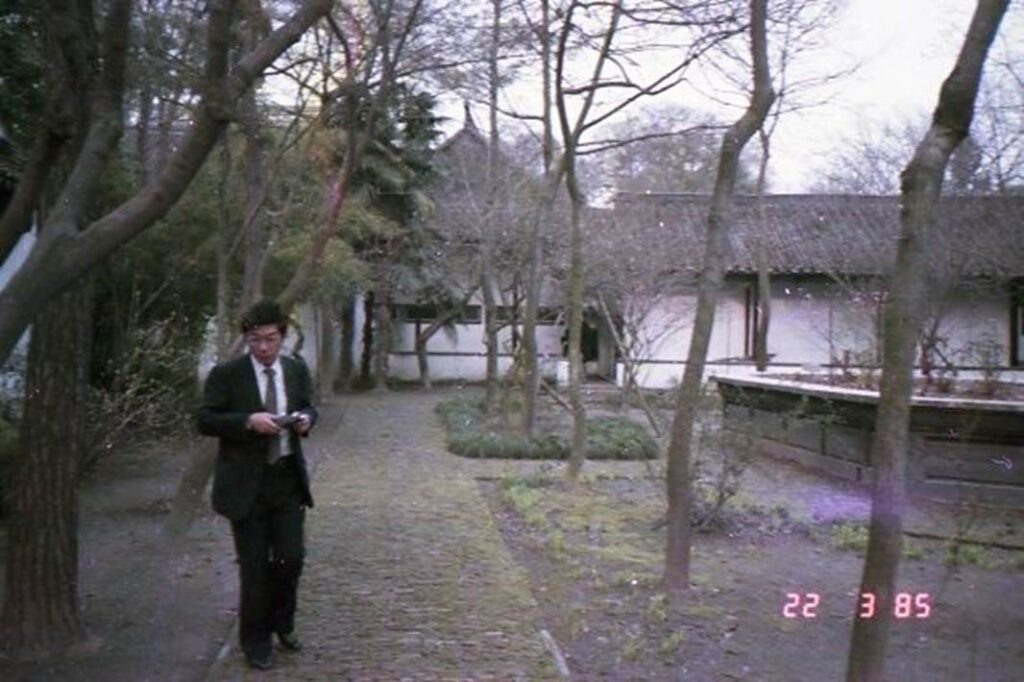
Photo by author, 1985
Roofing materials were found within the temple grounds.
Small, unglazed grey roof tiles are characteristic of this area.
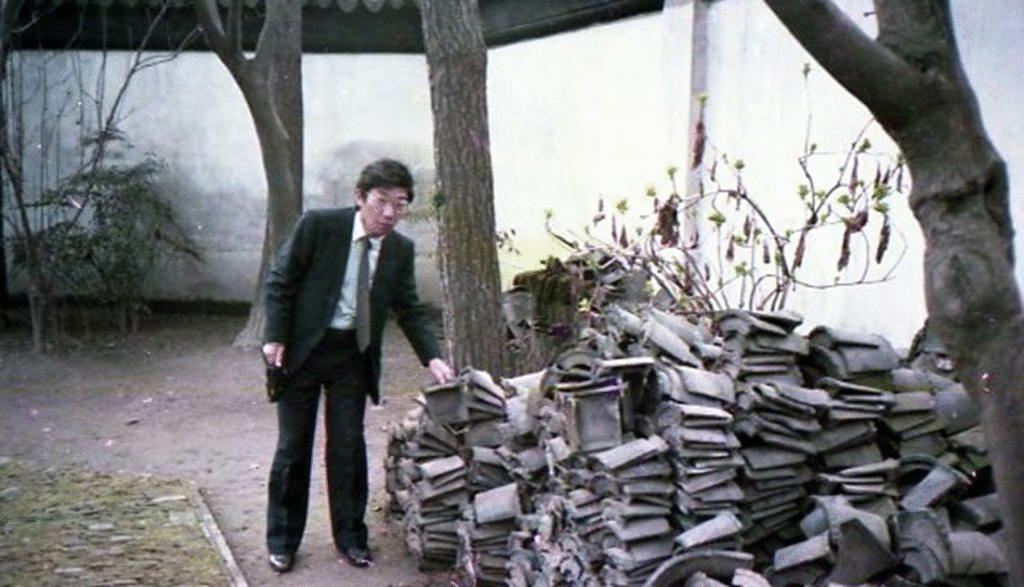
Photo by author, 1985
A monk recites a sutra.
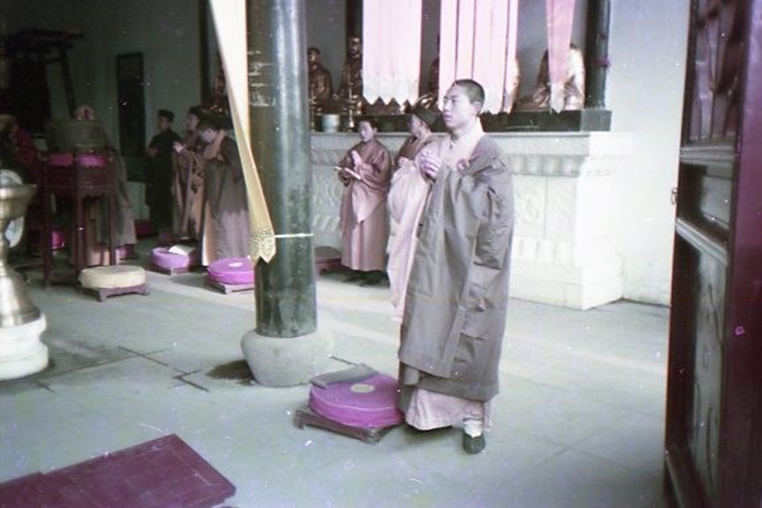
Photo by author, 1985
1. Hanshan Temple 2.Jiangcun Bridge 3.Iron Bell Pavilion 4.Fengqiao Bridge 5.Fengqiao Ancient Town 6.Fengjiang Canal 7.Jingkang Canal
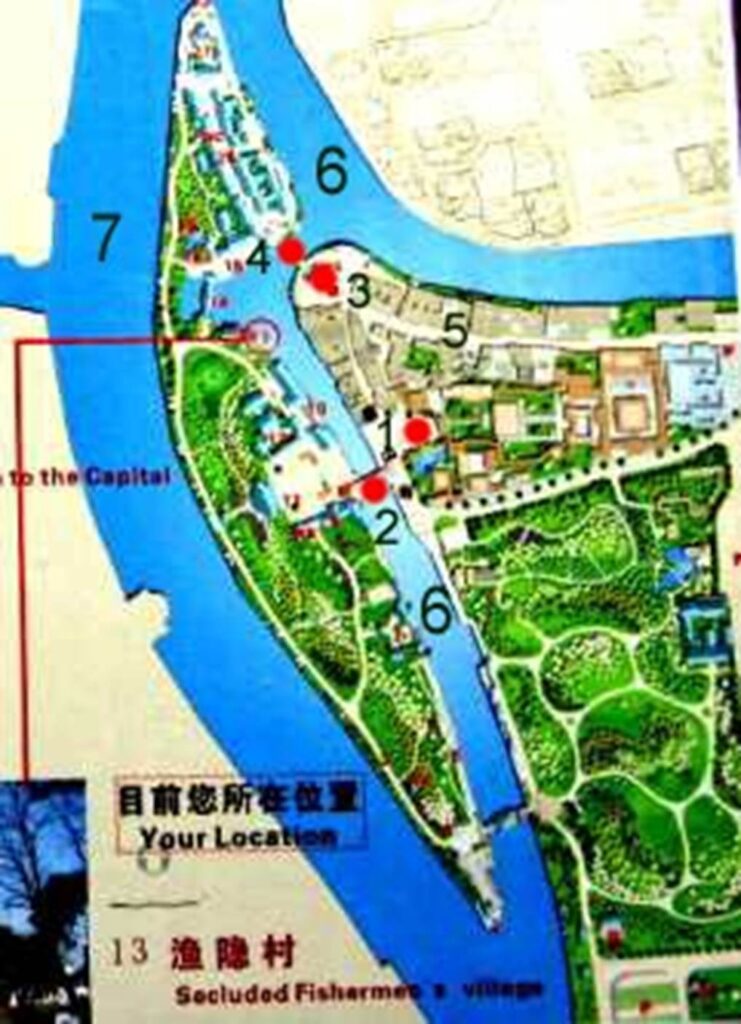
Ancient bridges
(Jiangcun Bridge, Maple Bridge, Jiangcun Bridge)②
Jiangcun Bridge is a bridge over the Fengjiang Canal, located right next to Hanshan Temple, and is the bridge that many visitors use to visit the shrine.
The yellow wall on the right is the outer wall of Hanshan Temple.
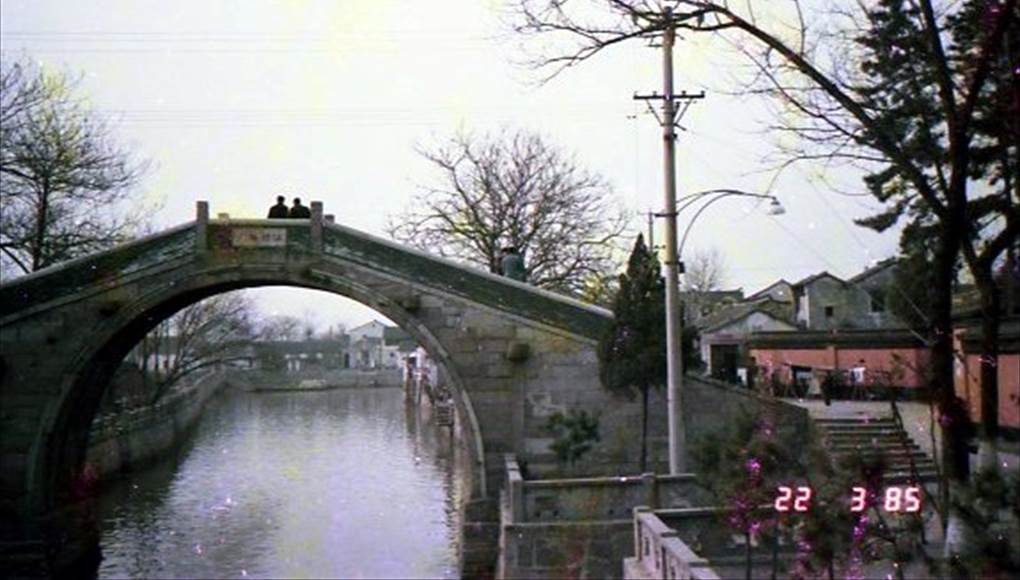
Photo by author, 1985
Maple Bridge (Fengqiao bridge)④
Fengqiao Bridge is a drum-shaped stone bridge located 100 meters north of Hanshan Temple. It is also a strategic point for water transportation where the Fengjiang Canal, which branches off from the Beijing-Hangzhou Grand Canal, intersects with the bridge.
It is said that Zhang Ji composed the seven-character quatrain “Night Mooring at Fengqiao Bridge” at the foot of this bridge.
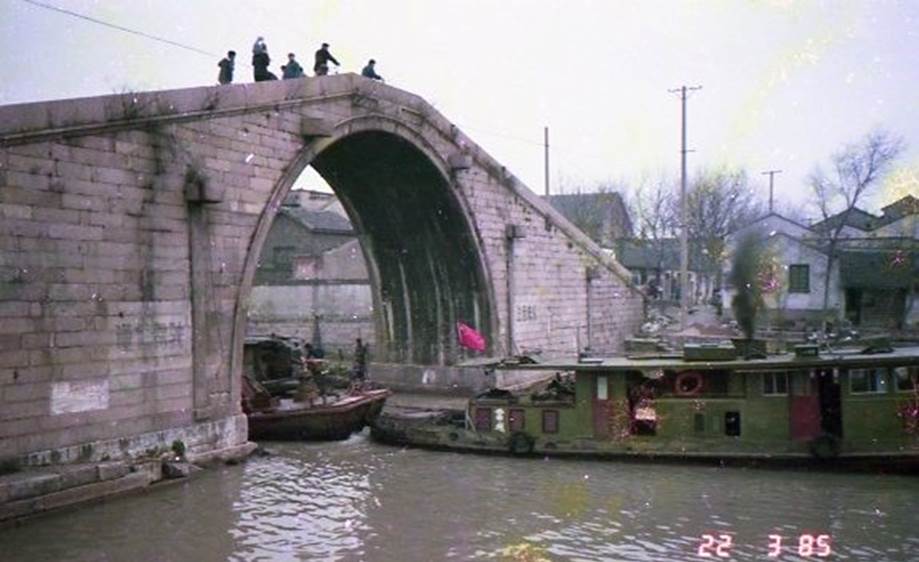
Photo by author, 1985
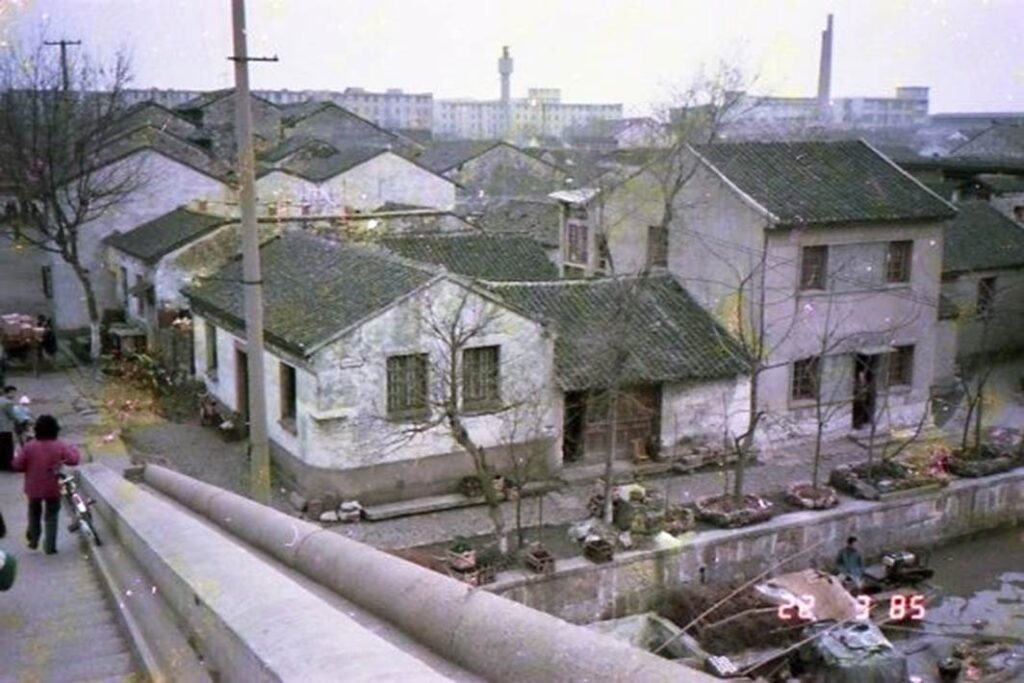
Photo by author, 1985
It is designed so that you can pull a bicycle and cross.
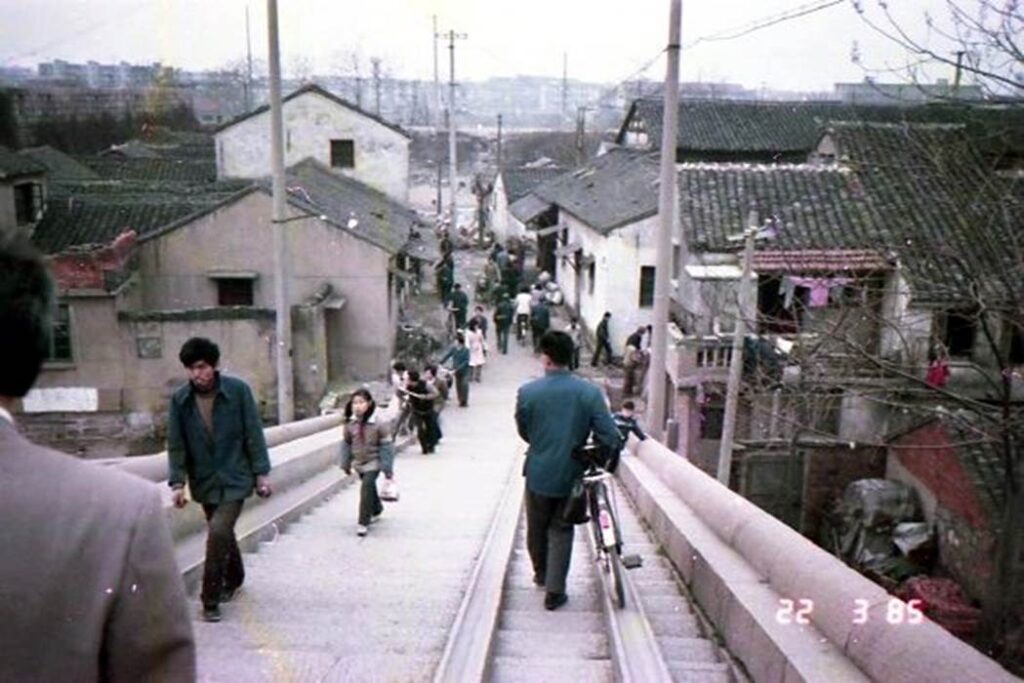
Photo by author, 1985
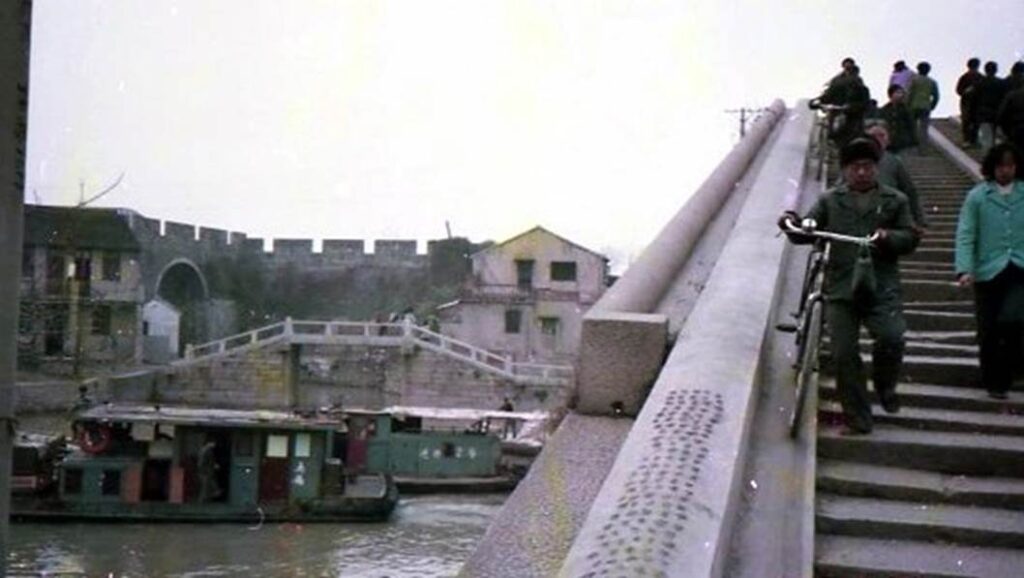
Photo by author, 1985
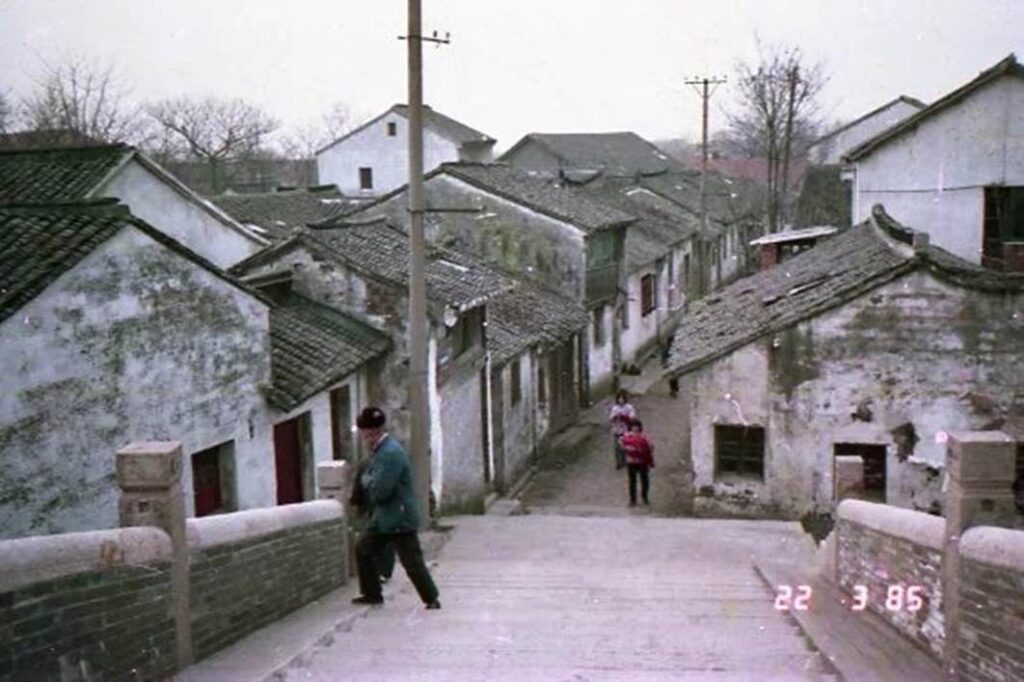
Photo by author, 1985
Two girls at the foot of the Maple Bridge.
You can’t cross by car, but you can pull a bicycle.
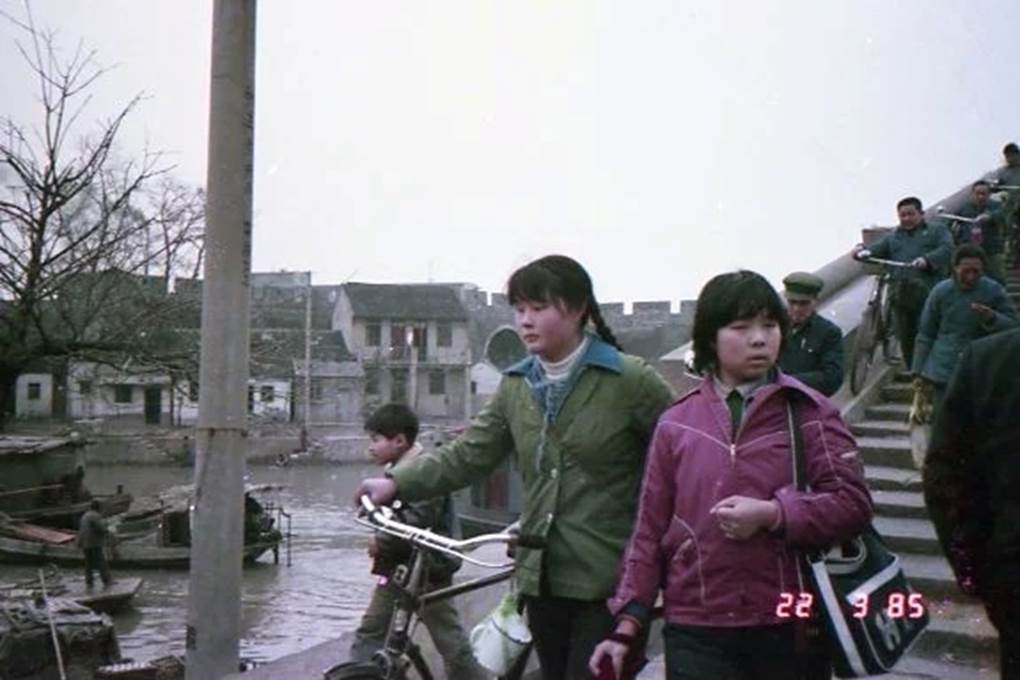
Photo by author, 1985
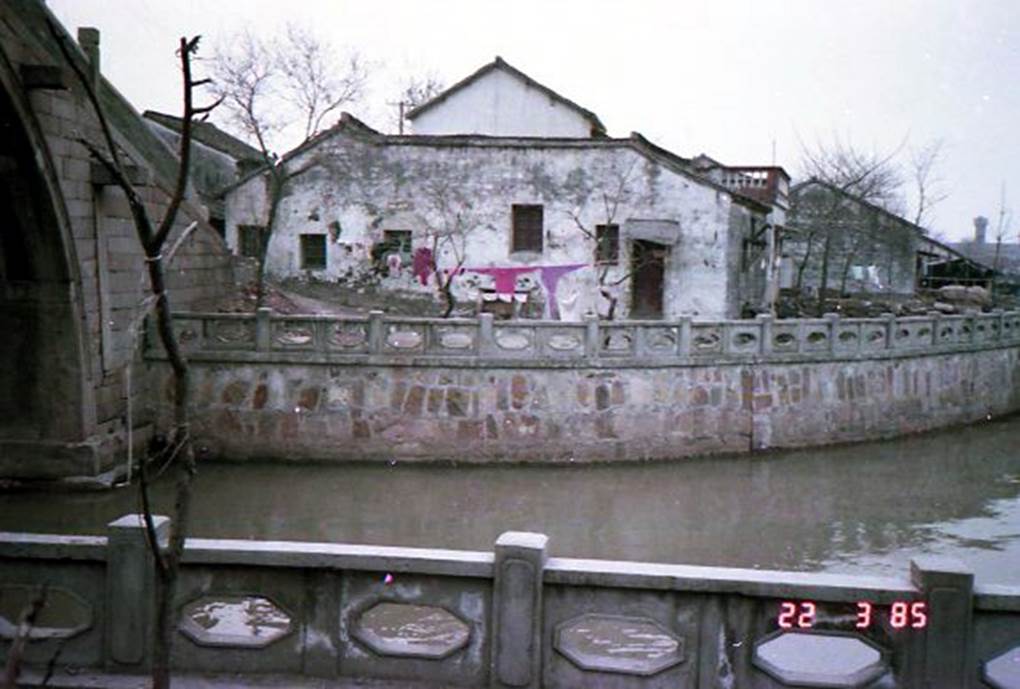
Photo by author, 1985
The fork of the canal. In the background is the Jiangkang Grand Canal.
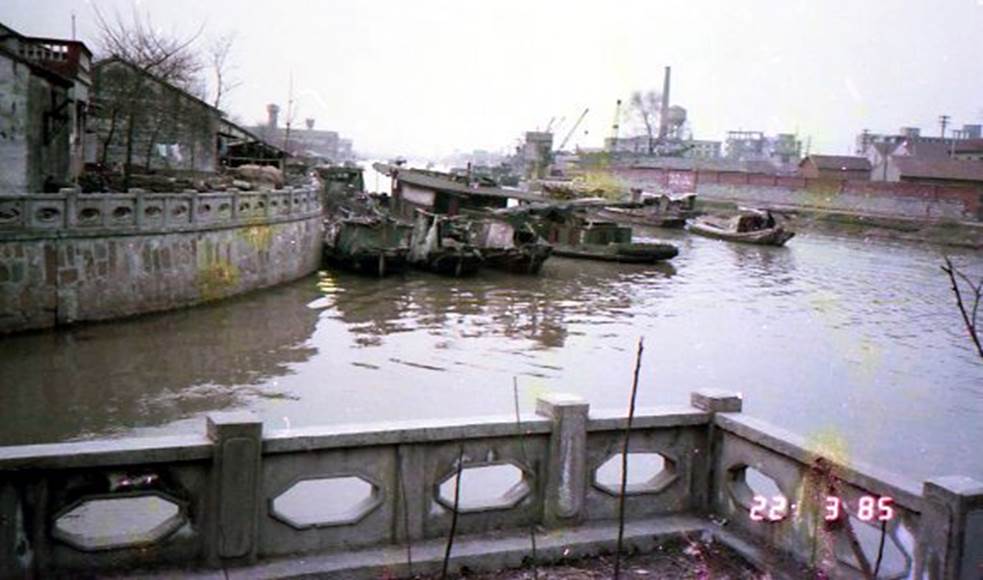
Photo by author, 1985
Iron Bell Pavilion and the Fengjiang Canal
Iron Bell Pavilion③
An ancient gate built on the bank of the Fengjiang River on the north side of the grounds of Hanshan Temple, beside Hanshan Temple.
It is the only gate built in Suzhou during the Ming Dynasty that still remains today. It was built to repel and defend against enemy forces that would invade the Suzhou from the Jingkang Grand Canal.
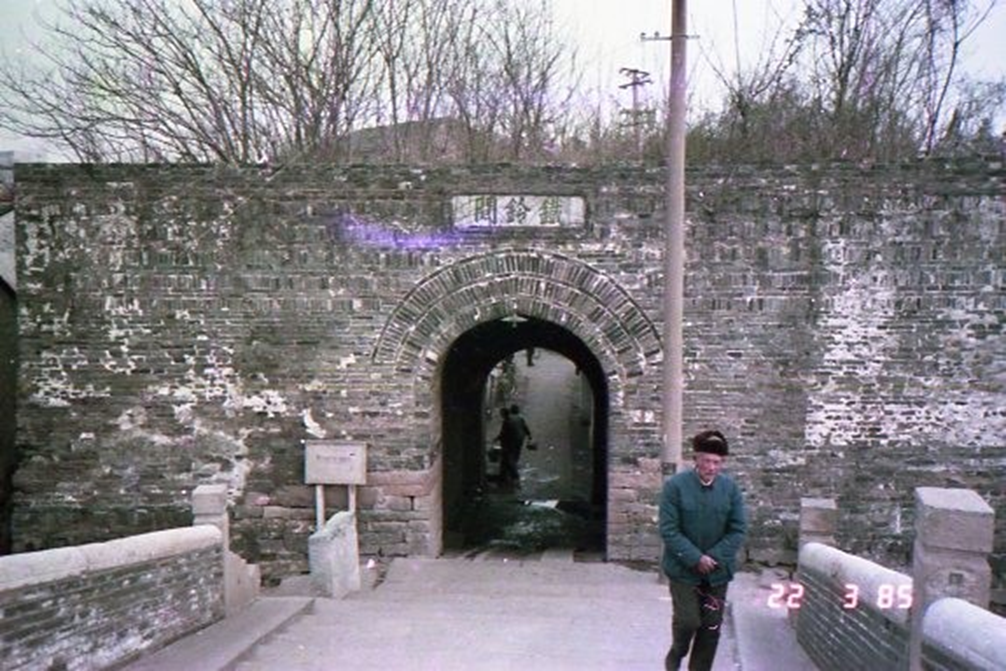
Photo by author, 1985
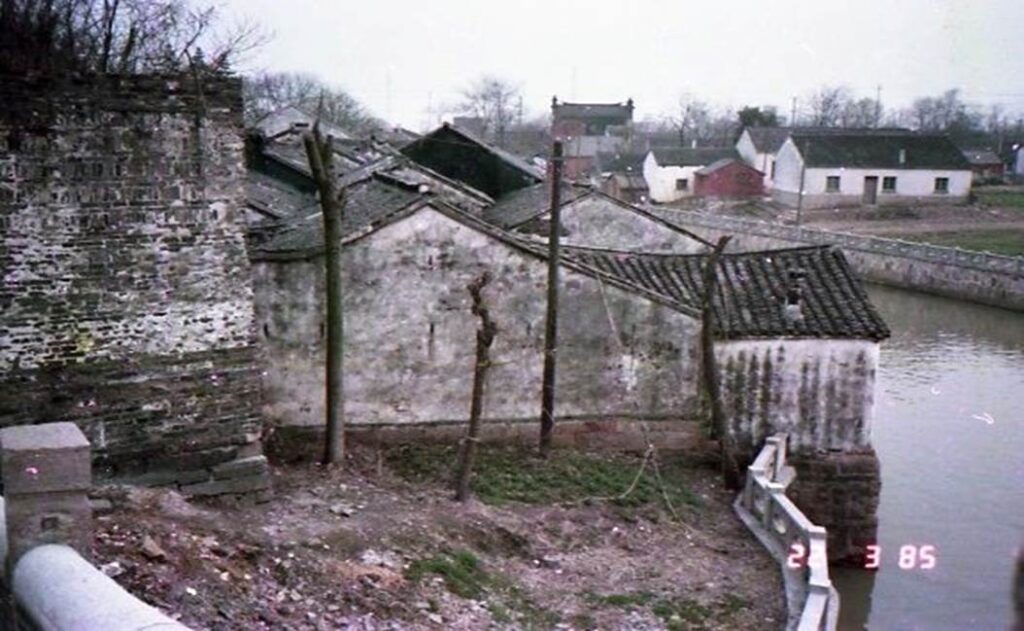
Photo by author, 1985
View of Suzhou City from Fengqiao Bridge
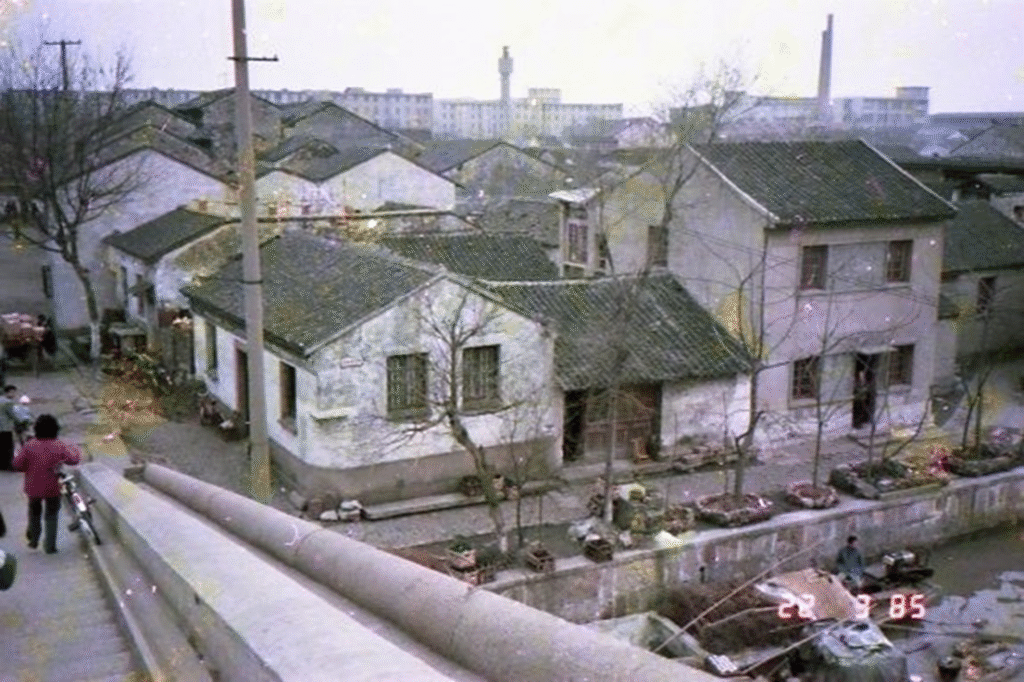
Photo by author, 1985
Fengqiao Ancient Town⑤ and Beisi Pagoda
A distant view of Suzhou city from the top of the Maple Bridge, which is an arch bridge. At the foot of the bridge, the Fengqiao Ancient Town (5) spreads out on the north side of Hanshan Temple. (Foreground)
In the distance, the north tower of Bo’en Temple (3), 9 layers and 76 meters, towers 6 km away, towering like an icon of Suzhou.
In 1985, there were no structures blocking the Southern Song Dynasty tower. It’s a spectacular view!
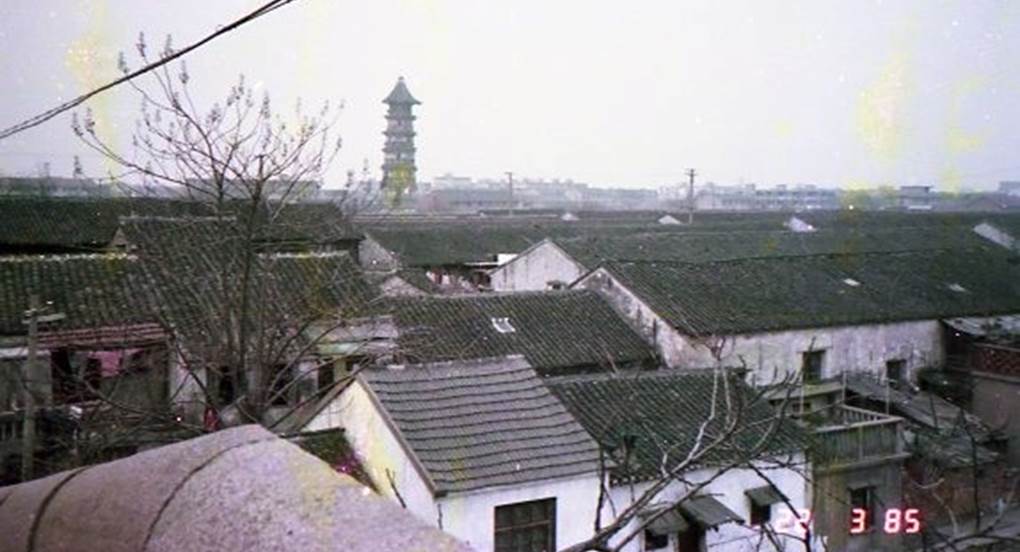
Photo by author, 1985
Fengjiang Canal ⑥
A transport ship loading and unloading cargo via the embankment stairs.
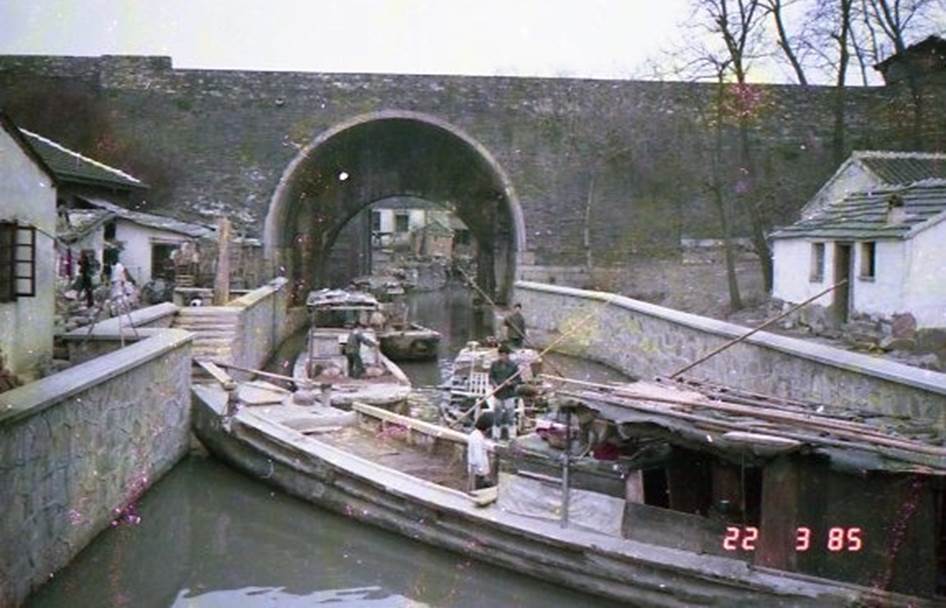
Photo by author, 1985
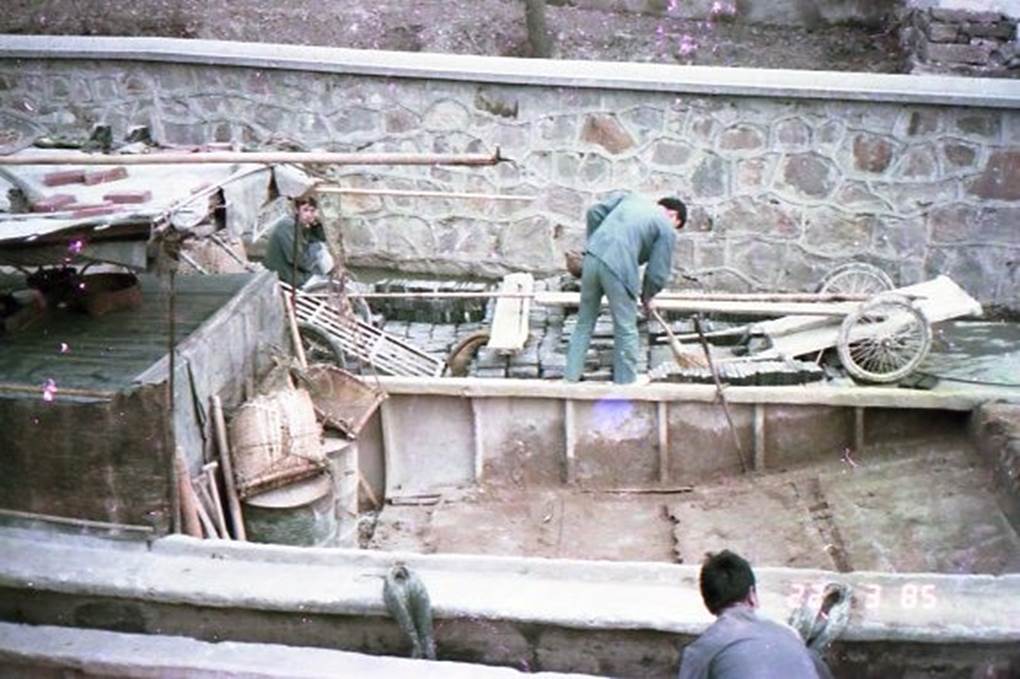
Photo by author, 1985
A young woman seems to be lifting earth and sand by hand.
It’s a lot of hard work.
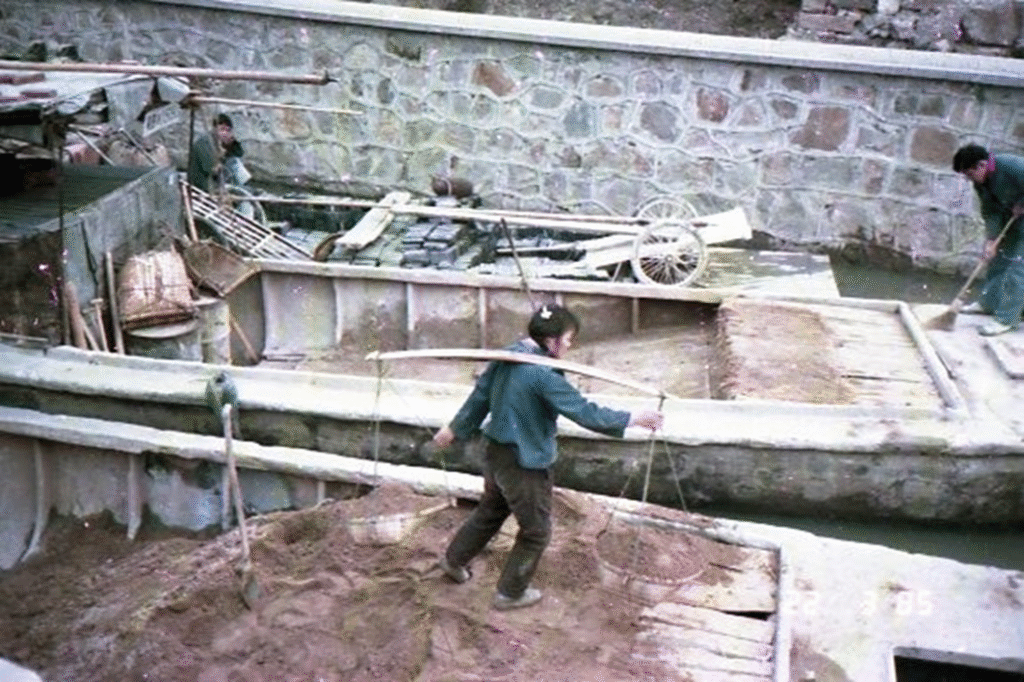
Photo by author, 1985
Jiangkang Grand Canal ⑦
An endless line of goods carriers!
Beyond this, it joins the Jingkang Grand Canal, which was the main artery of transportation at that time.
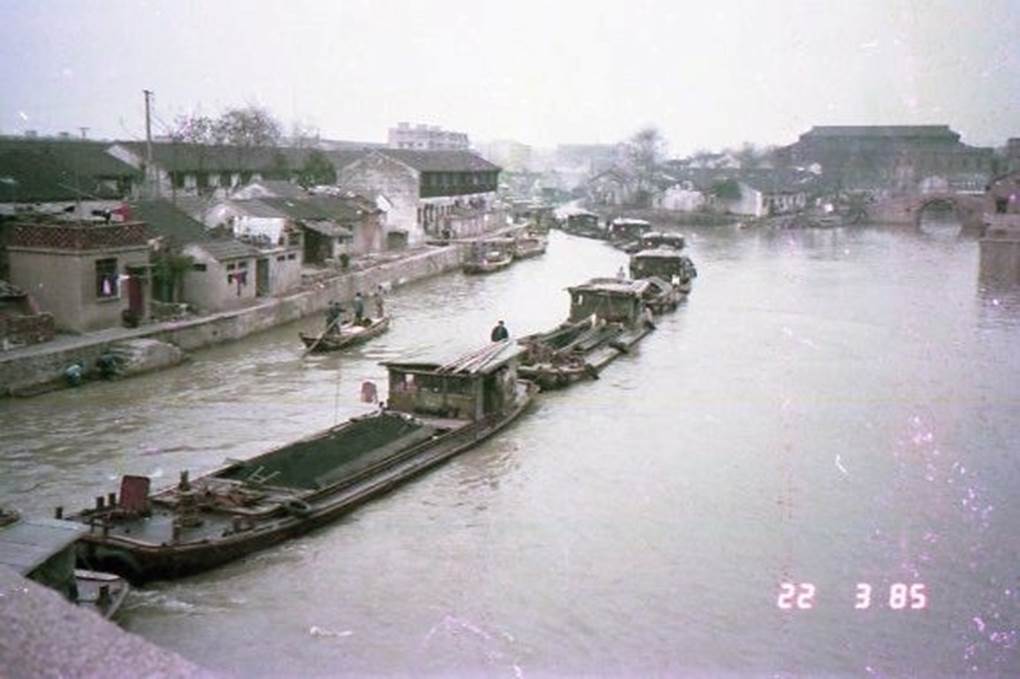
Photo by author, 1985
The cargo seems to be coal.
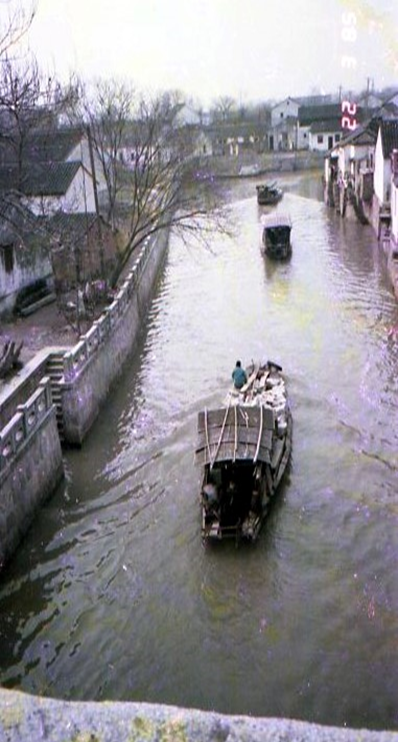
Photo by author, 1985
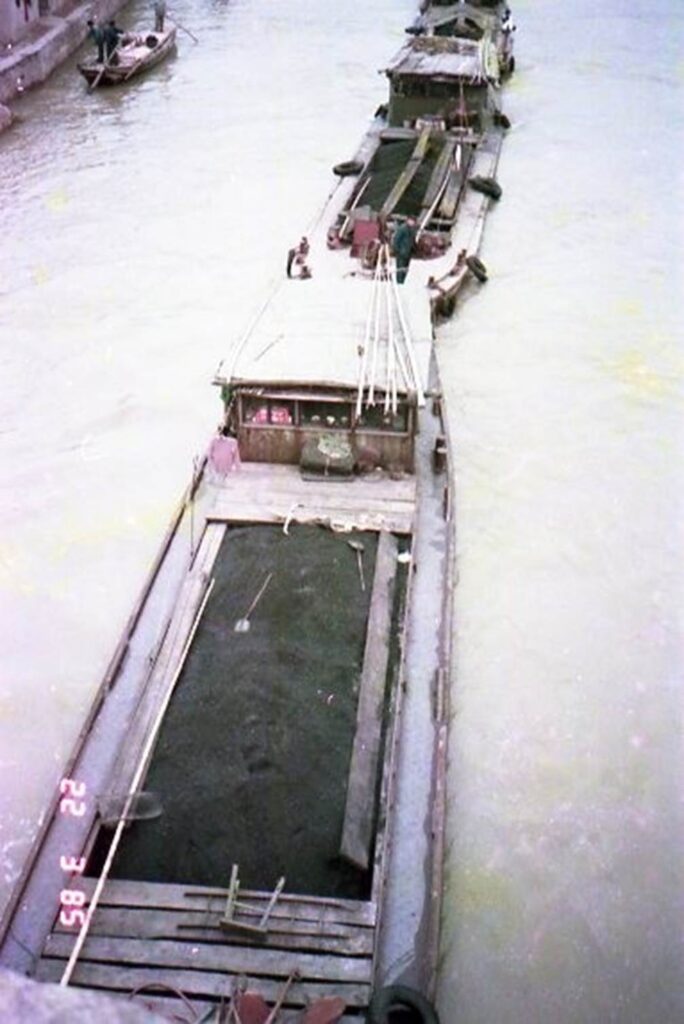
Photo by author, 1985
There is a traffic jam of transport ships.
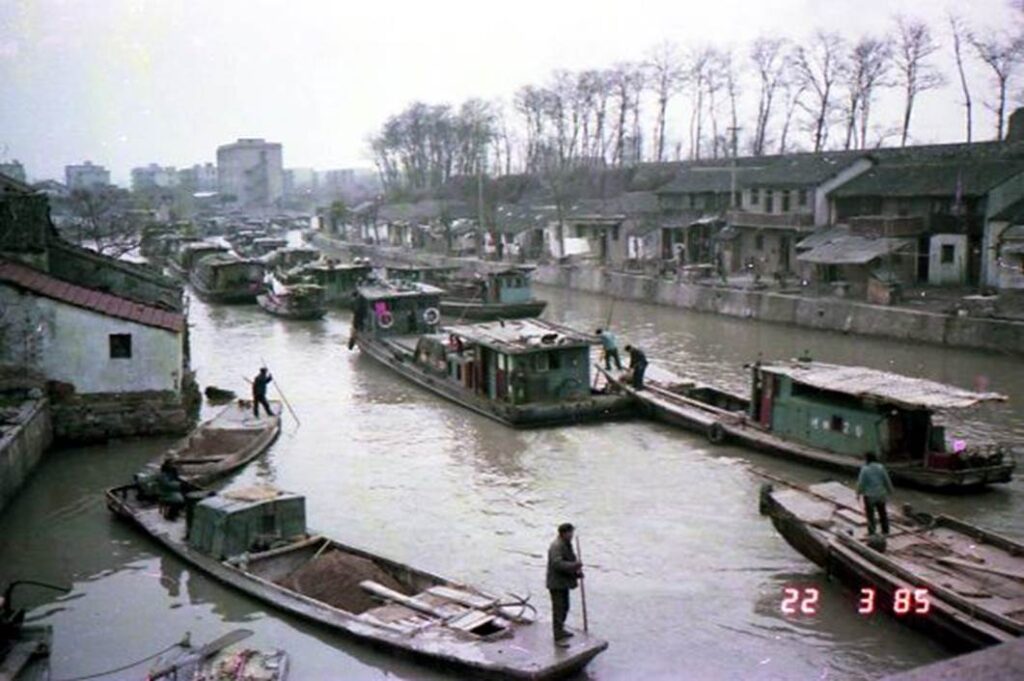
Photo by author, 1985
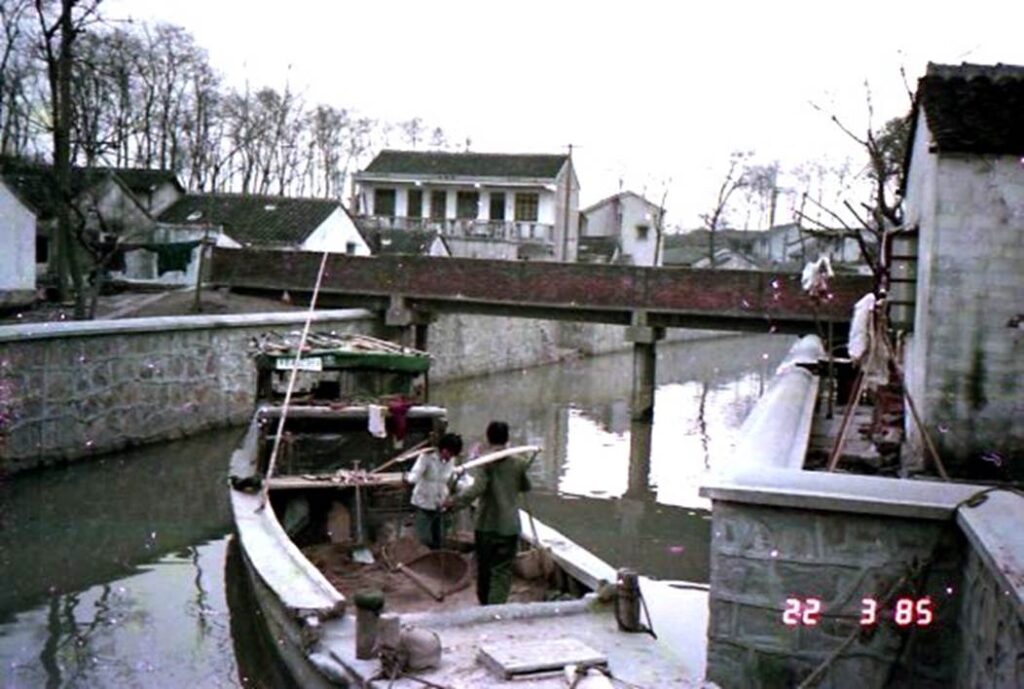
Photo by author, 1985