JAP | ENG
Athens, Greece
October 2014
#3/4
We descend from the Acropolis Hill on a sunny day and head on foot to our next must-see destination, the New Acropolis Museum.
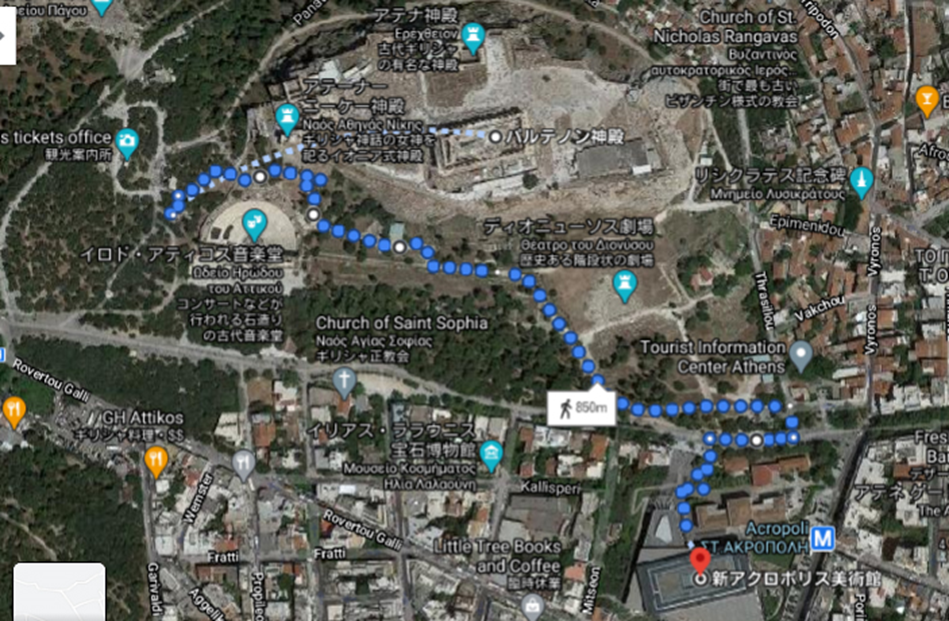
Before visiting the New Acropolis Museum, we took a break at the adjacent café and restaurant.
The area south of the Acropolis is different from the Plaka district, and there are many sophisticated hotels and eateries.
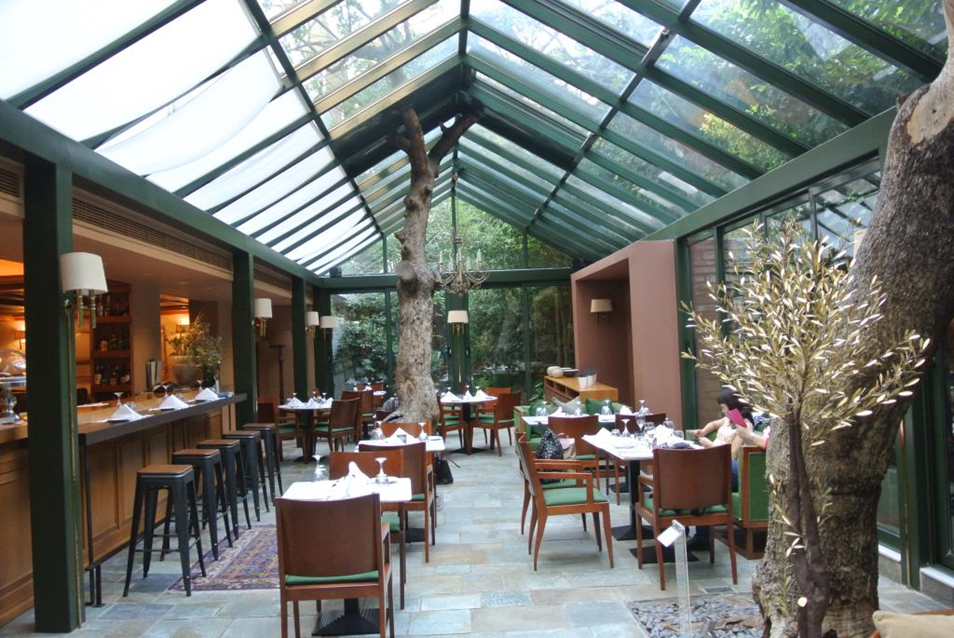
Photo by author, 2014
The tree grow through the roof, and their leaves spread over the glass roof, providing a comfortable shade.
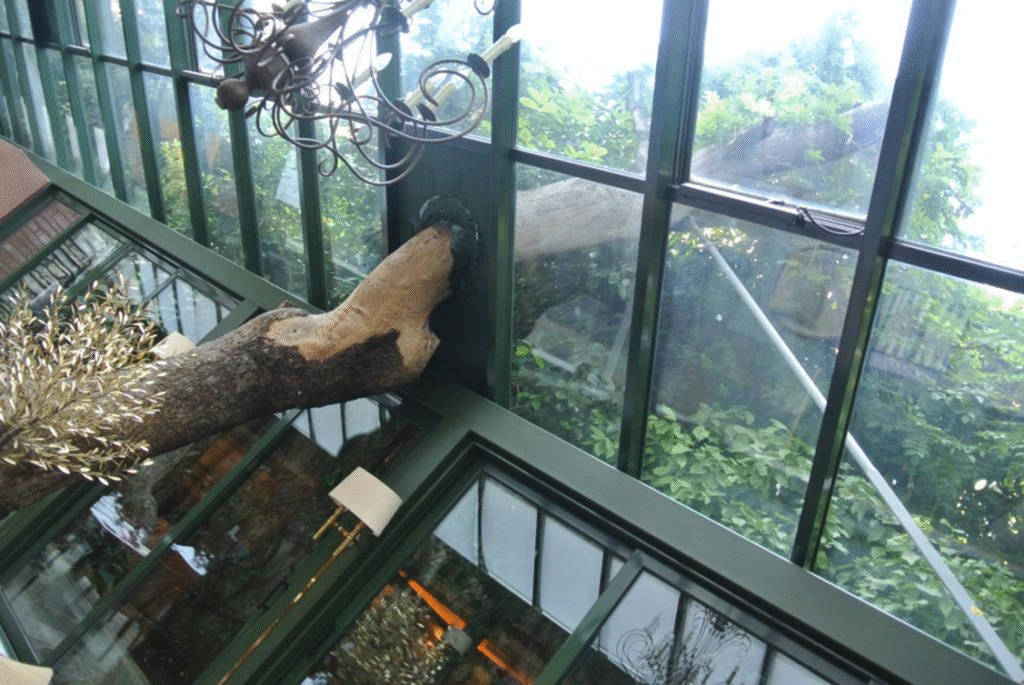
Photo by author, 2014
I met an employee who was very friendly to travellers.
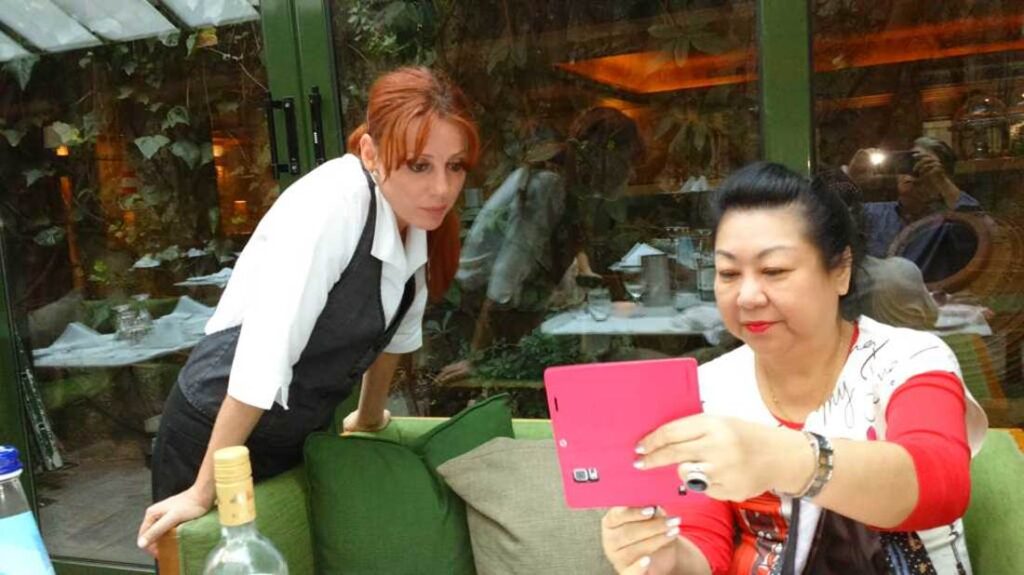
Photo by author, 2014
New Acropolis Museum
It is an archaeological museum that mainly houses and exhibits cultural properties excavated from the excavation site of the Acropolis.
It houses artifacts excavated on the top and base of the Acropolis hill.
The artifacts dated from the Bronze Age to the Eastern Roman Empire.
It opened in 2009.
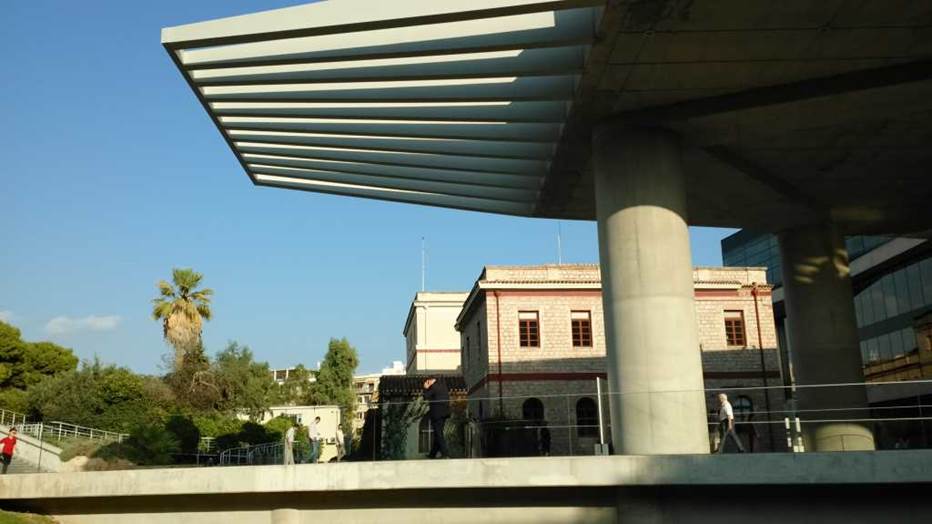
Photo by author, 2014
The original site was a large section of barracks. After the design of the new museum was completed, excavations of the ground revealed the remains of two layers, an ordinary private house and a workshop. The lower layer is from the classical period, and the upper layer is from the early Eastern Roman Empire.
Therefore, measures were taken, the building was raised above the ground, thick transparent glass panels were installed on the floor, and the design was changed to allow the remains to be observed from above.
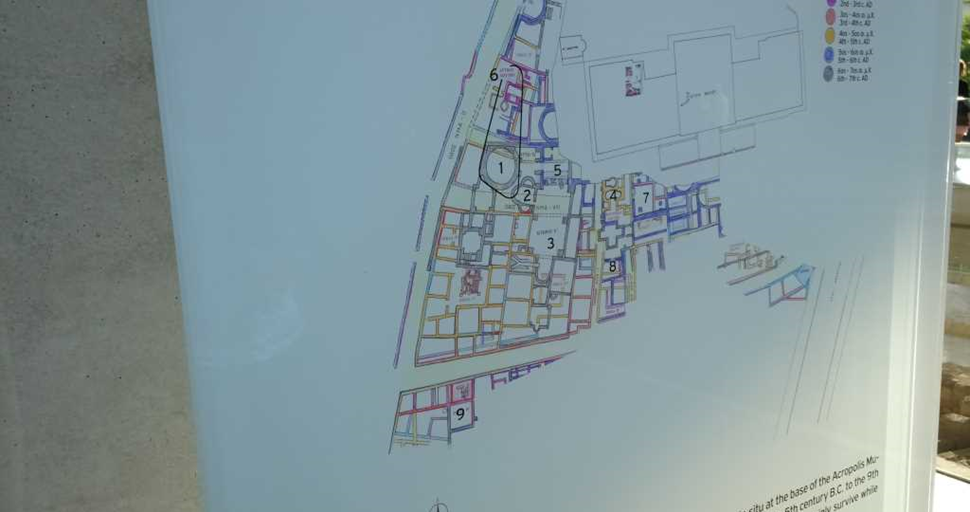
The remains of a Byzantine watchtower.
It can be seen under the glass floor of the Archaeological Museum.
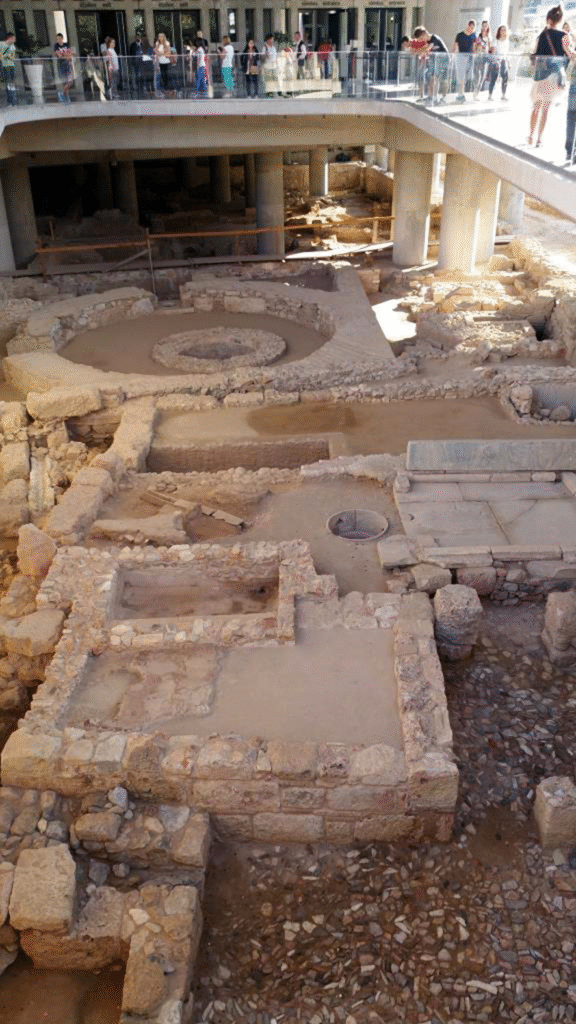
Photo by author, 2014
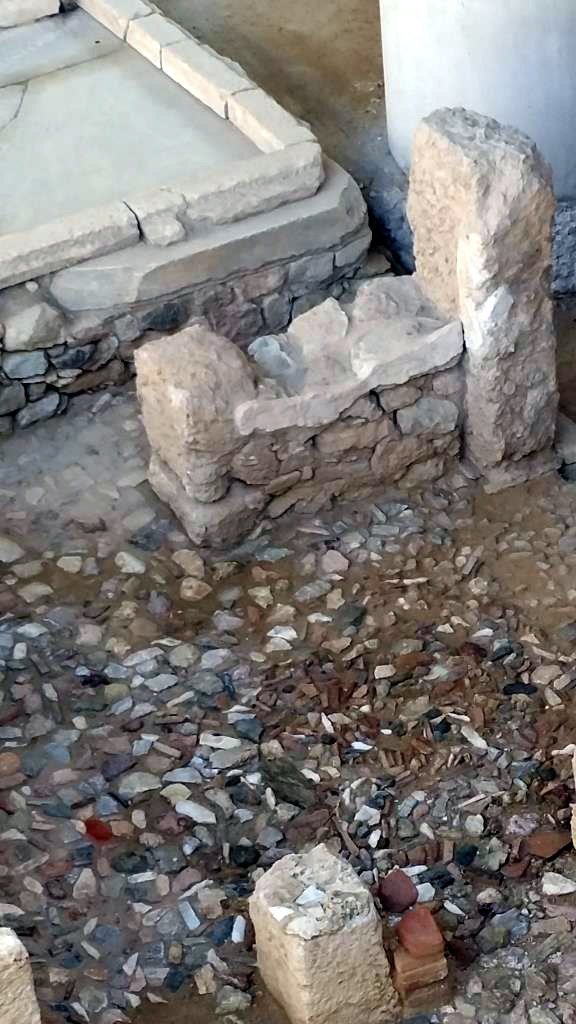
Photo by author, 2014
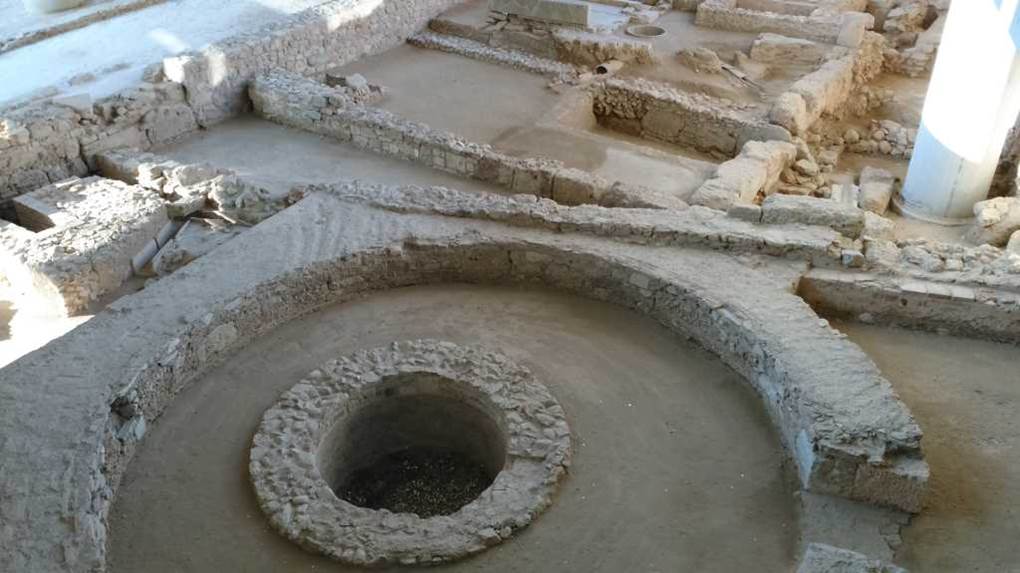
Photo by author, 2014
After visiting the New Acropolis Museum, we strolled to our next destination, Monastiraki Square, on foot.
The distance was about 1.2 km, but there were many cafes and souvenir shops along the way, so it took about an hour to walk there.
1 New Acropolis Museum → 2 Plaka Hotel → 3 Monastiraki Square
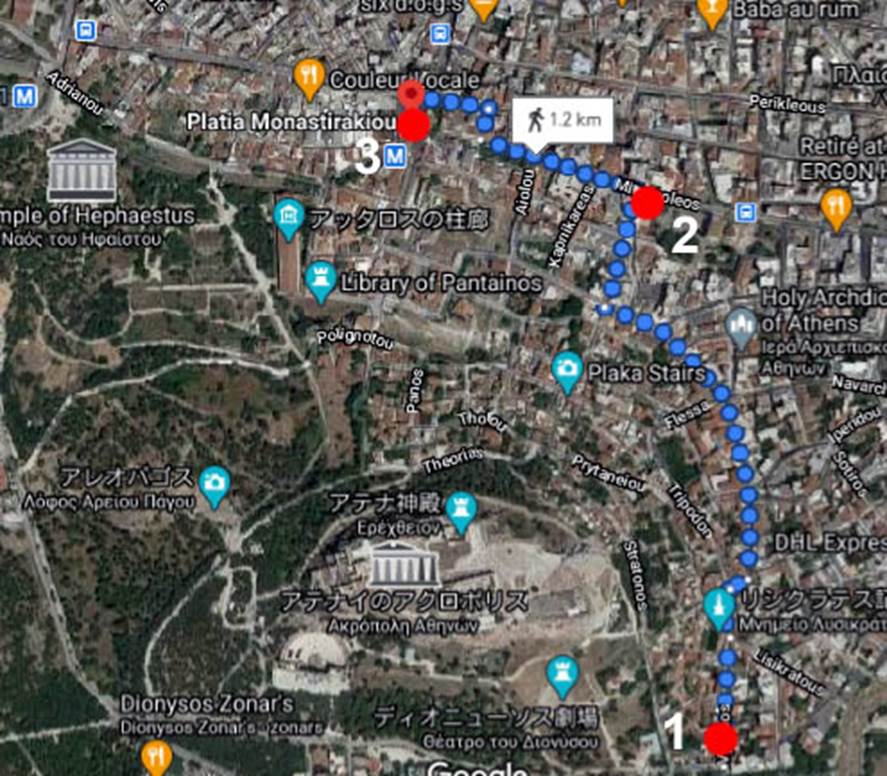
The area around the Plaka Hotel, at the foot of the Acropolis, is one of the most pleasant city blocks for travellers to stroll around.
It is a district with a crowded array of old houses, historic church buildings here and there, and a distinctive townscape.
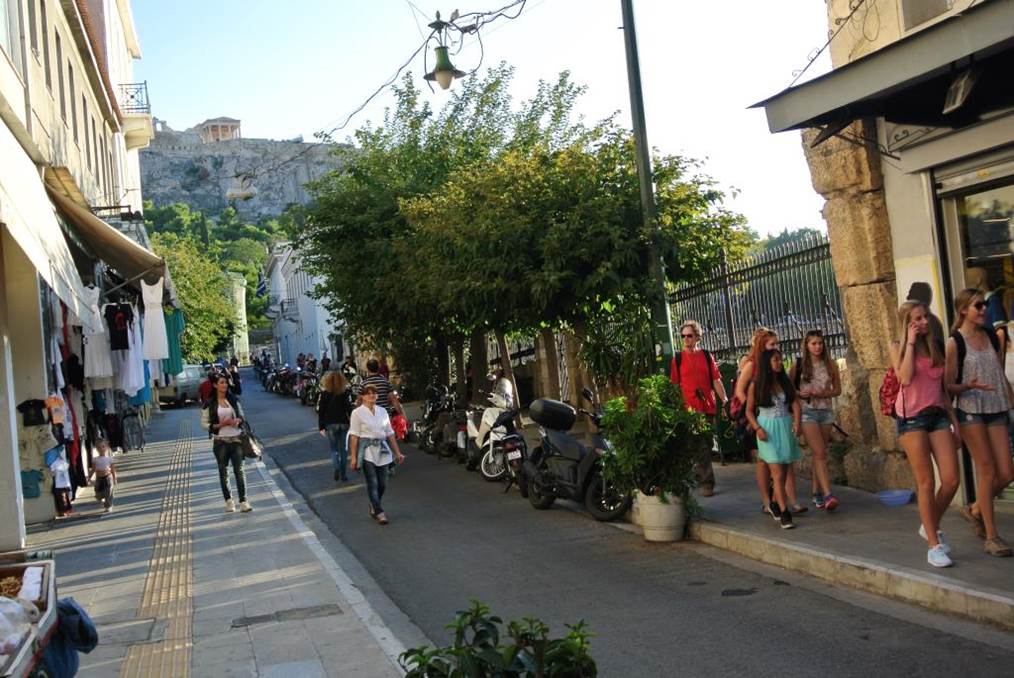
Photo by author, 2014
As the side street opens up, the Acropolis comes into view.
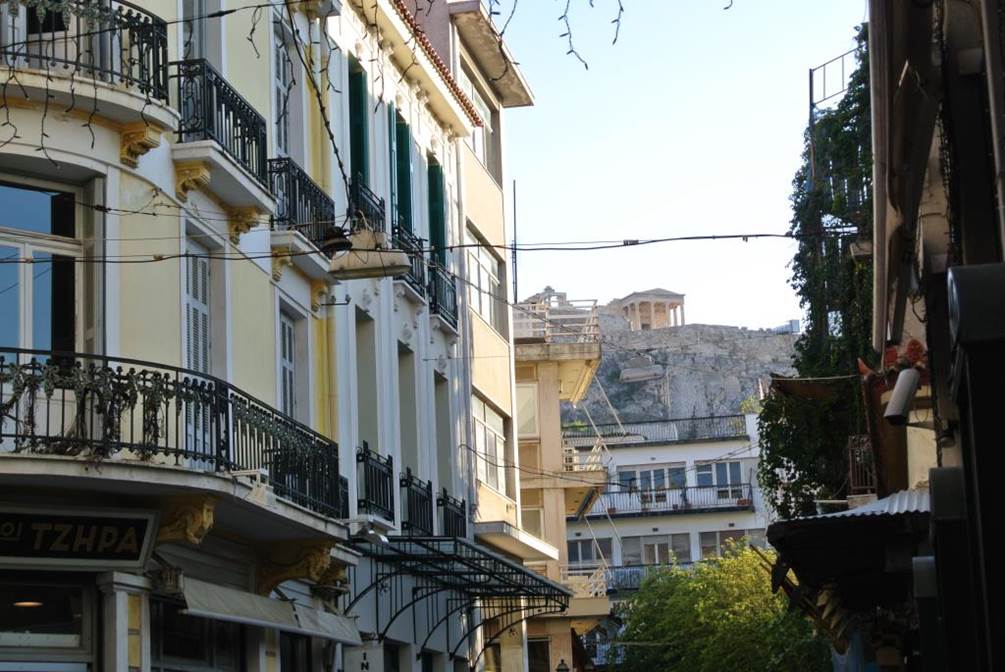
Photo by author, 2014
In the narrow and intricate alleys, there are many ivy-like trees, and the greenery entwined with the buildings creates a unique atmosphere.

Photo by author, 2014
Since there are many tourists, cafes, tavernas, bars, souvenir shops, etc. are lined up outdoor.
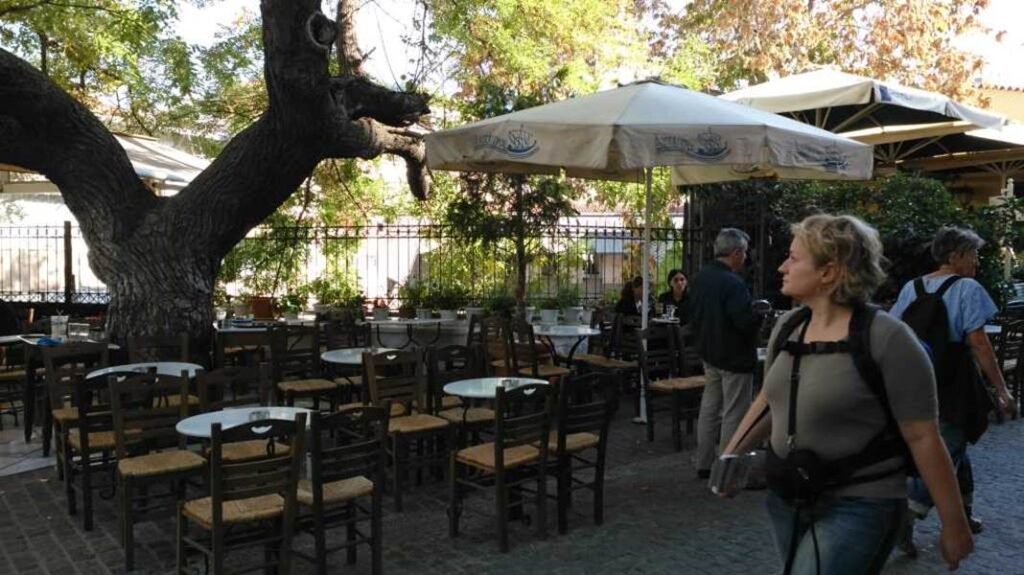
Photo by author, 2014
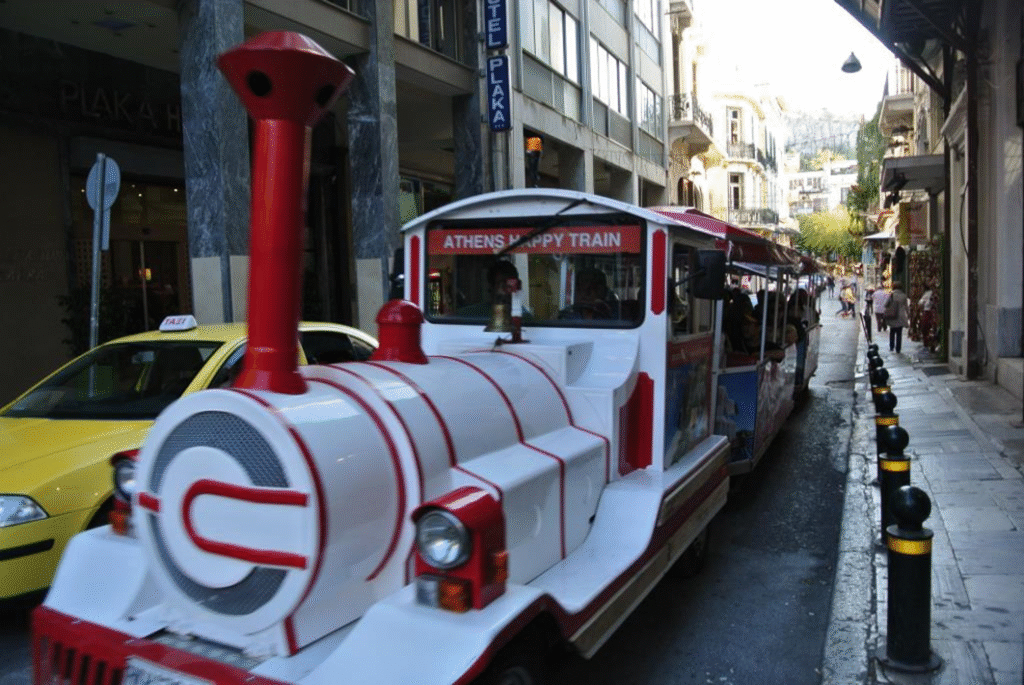
Photo by author, 2014
The three-car ATHENS HAPPY TRAIN passes through the narrow, winding alleys. Its flashy red and white colors are distinctive. There are many tourists, but the area has not yet reached the point of overtourism.
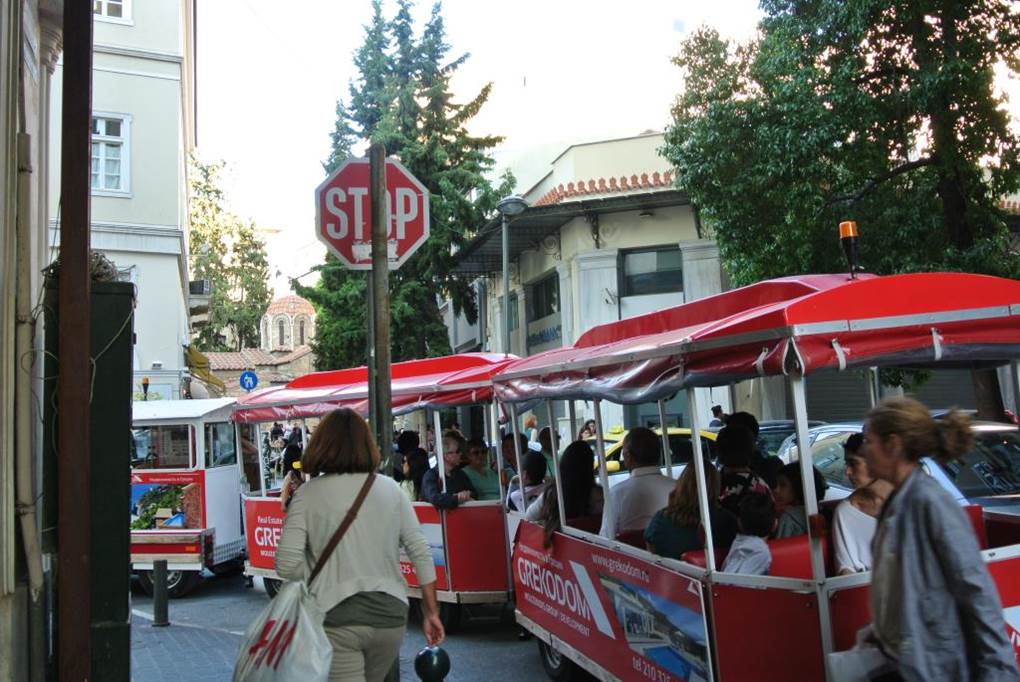
Photo by author, 2014
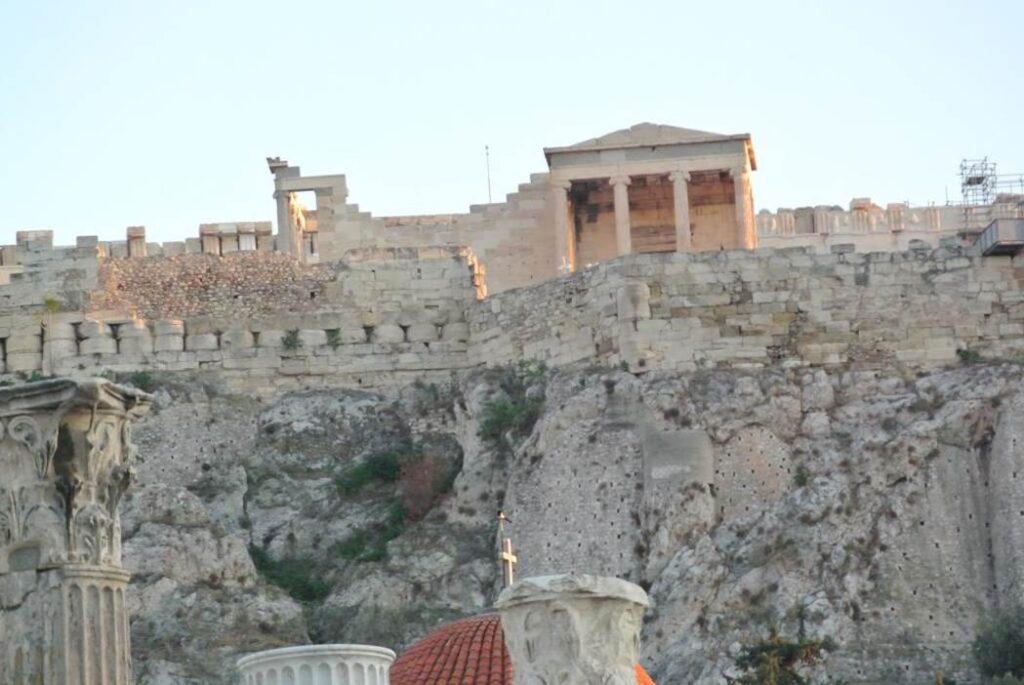
Photo by author, 2014
There was a wedding hall along the way.
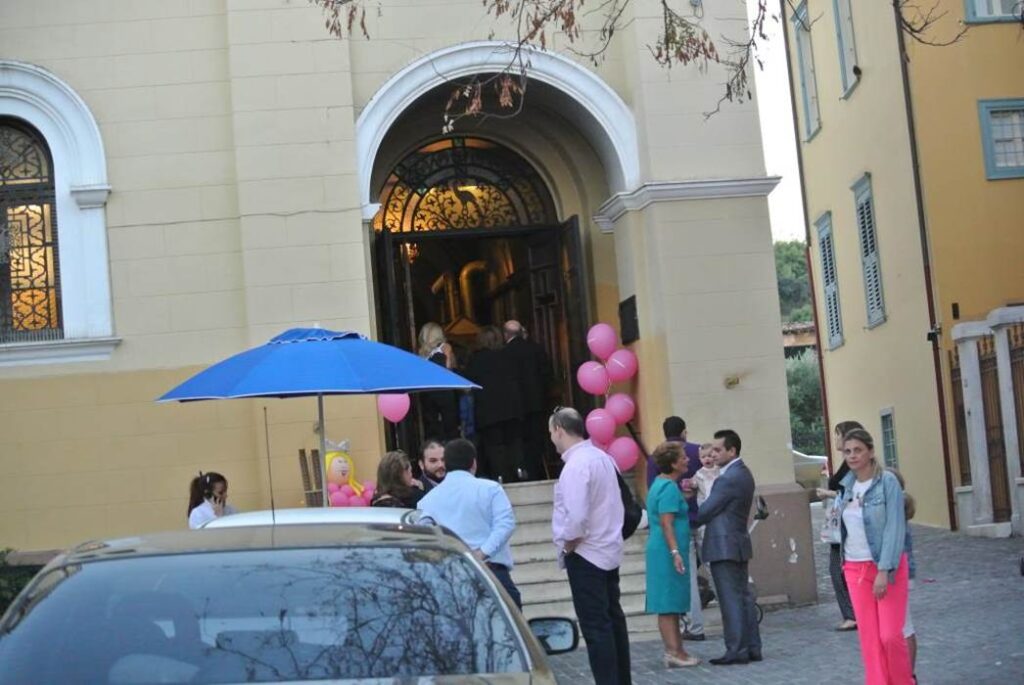
Photo by author, 2014
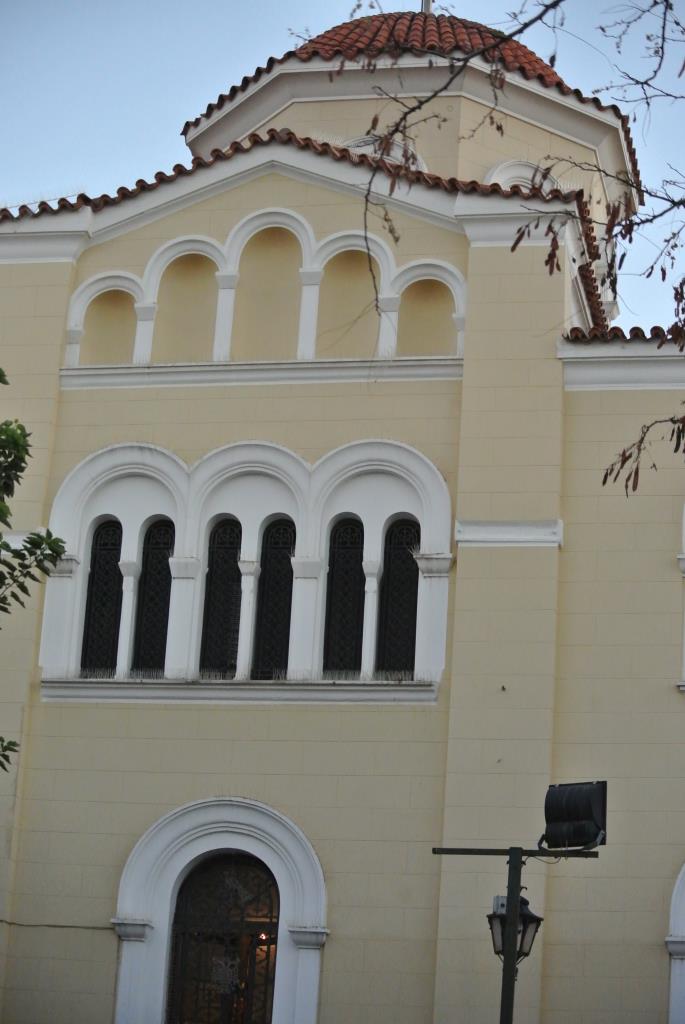
Photo by author, 2014
Monastiraki Square
We went out to a square where many tourists and locals gathered.
There was also a Monastiraki subway station, and in the center was a fountain around which people were having fun playing with bubbles.
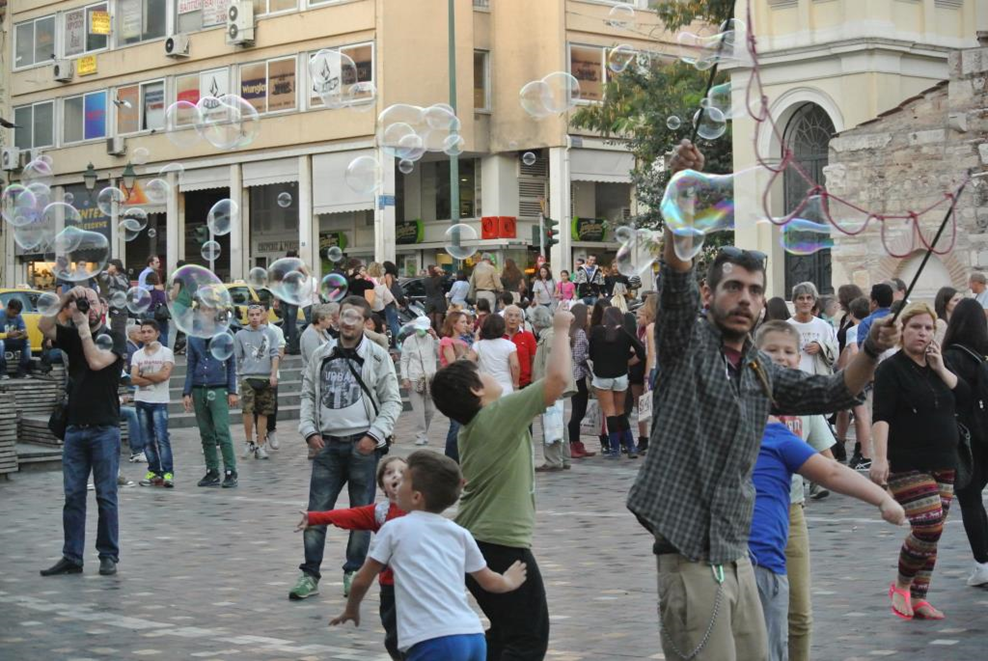
Photo by author, 2014
Greece has an abundance of delicious fruits.
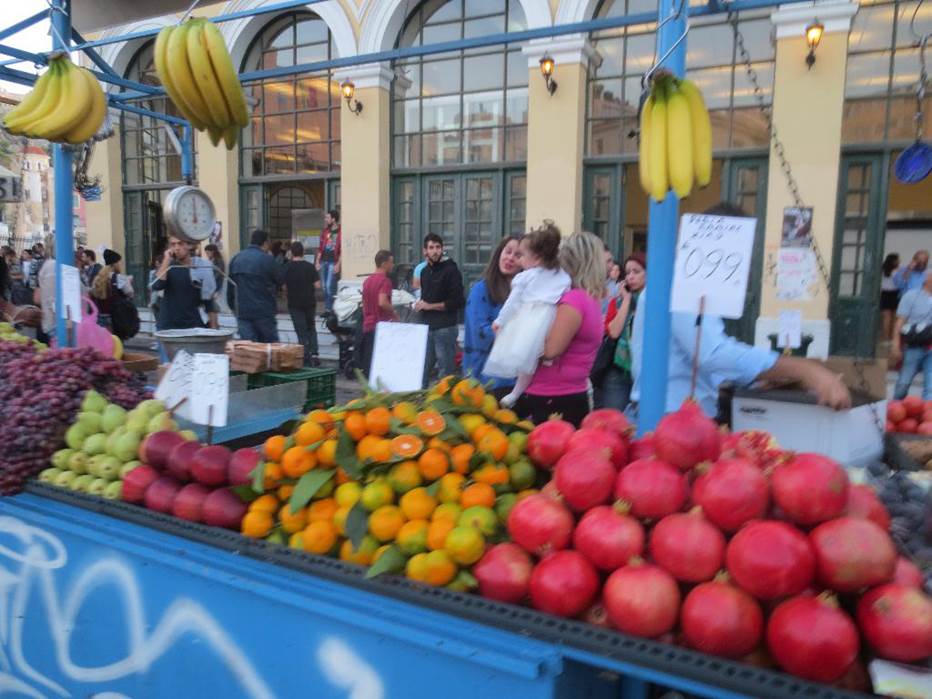
Photo by author, 2014
Church of the Pantanassa
This is the remains of a church or monastery built around the 10thcentury, located in a corner of Monastiraki Square.
The roof has a mukuri roof, which gives it a very unique look.
Apparently, this monastery (Monastrio) is the origin of the name of this area.
It makes sense.
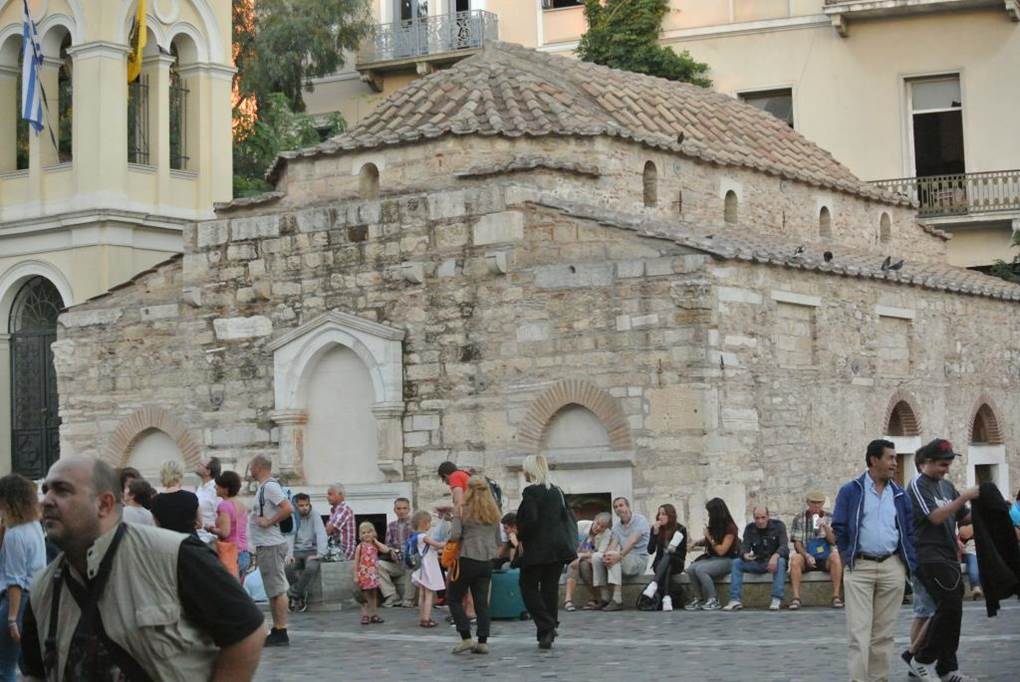
Photo by author, 2014
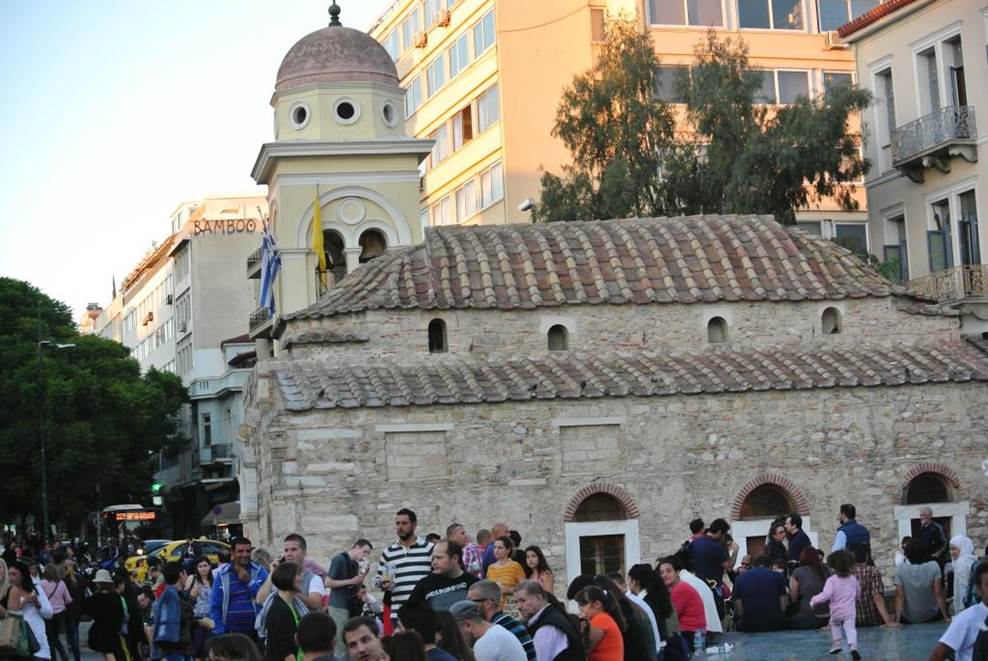
Photo by author, 2014
I like the uneven lines of these roof tiles.
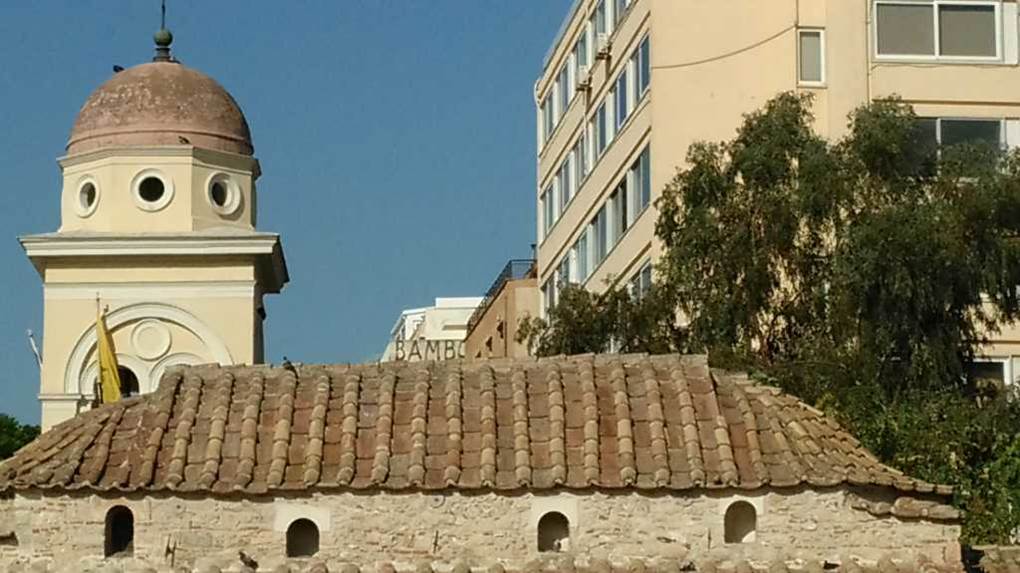
Photo by author, 2014
Tzisdarakis Mosque
The Tsistarakis Mosque was built in 1759 by the Ottoman governor of Athens, Tzisdarakis.
Tziszarakis is said to have used marble columns from Hadrian’s Library (see below) as building materials when building the mosque.
He was sentenced to a heavy fine for violating the rules for destroying an ancient structure without the permission of the Ottoman Empire, and Tsistarakis is said to have been ousted.
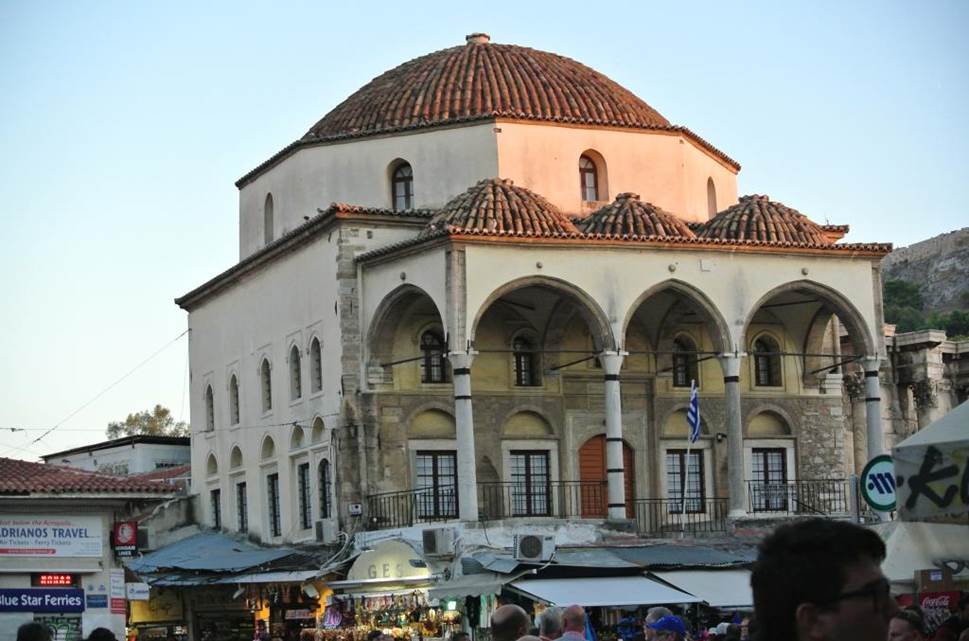
Photo by author, 2014
After the independence of Greece, it was used for various purposes such as barracks, prisons, and warehouses. From 1918 to 1973, it was used as a museum of Greek crafts.
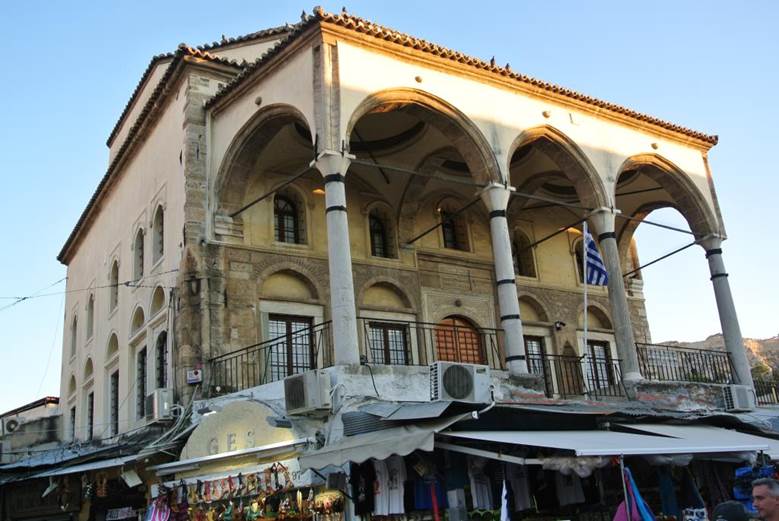
Photo by author, 2014
Ancient Agora of Athens
In the first decade of the 5th century B.C., the Persians invaded, and after 20 years of fighting, the Greeks defeated the Persians in 479 B.C.
Ancient Athens produced philosophers, scientists, and politicians, and ideas such as direct democracy and democratic politics left a great influence on Western culture thereafter.
The main components of Greek cities were the Acropolis, a religious sanctuary lined with temples that was the last fortress where citizens could take refuge when surrounded by enemies, the Agora, which was the city’s central square, market, commercial center, and cultural facility with theatres and arenas, and the residential area, which occupied the largest area.
The Athenian Agora was a plaza and market located in the central-northwestern part of Athens with various public facilities arranged around it, as well as a place for citizen to socialize.
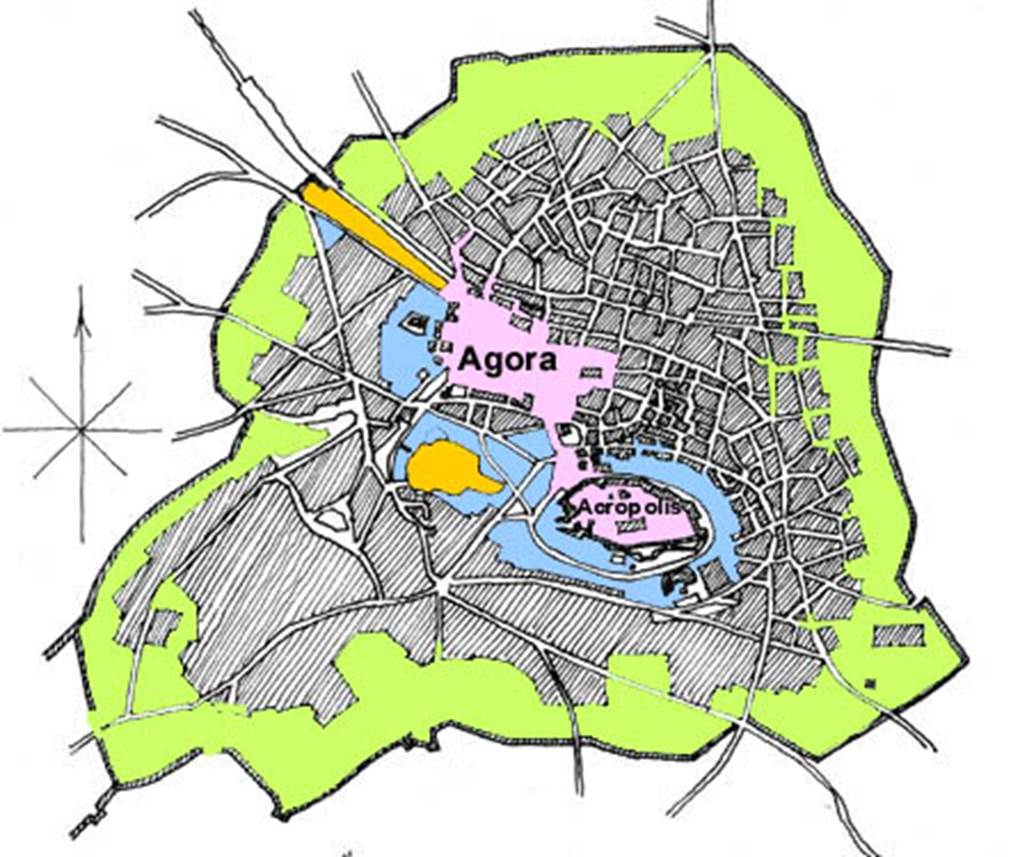
Agora means a market, but in ancient times it had a broader meaning, and it was a political, economic, and cultural center.
It was a hub of life, with rows of shops, where commerce took place, people went shopping, public institutions such as councils and courts were established, and where opinions were exchanged and information was gathered.
Speeches by philosophers and politicians were often held in this ancient agora, and Socrates and Plato often held debates here. It can be said that this is the birthplace of democracy.
It is quite pleasant to wander around this area, now an archaeological site, imagining this and piquing one’s intellectual curiosity.
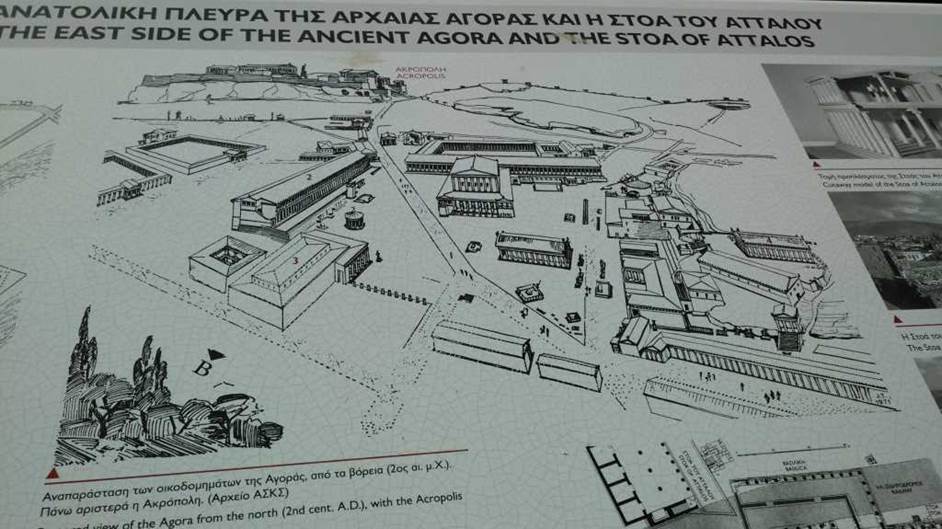
The American Institute of Classical Studies conducted the excavation with financial support from Rockefeller. The excavation site is a mess of ancient ruins and modern houses.
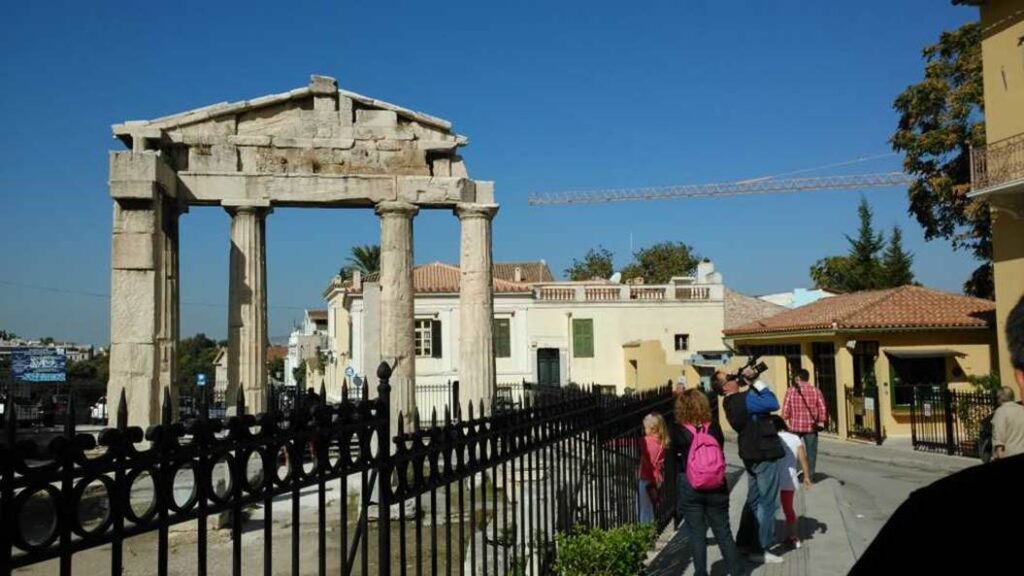
Photo by author, 2014
From the site of the ancient agora, you can see the temple of the Acropolis.
In this one photo, you can see a mixture of ancient Greece, ancient Rome, Byzantine, Ottoman and modern structures.
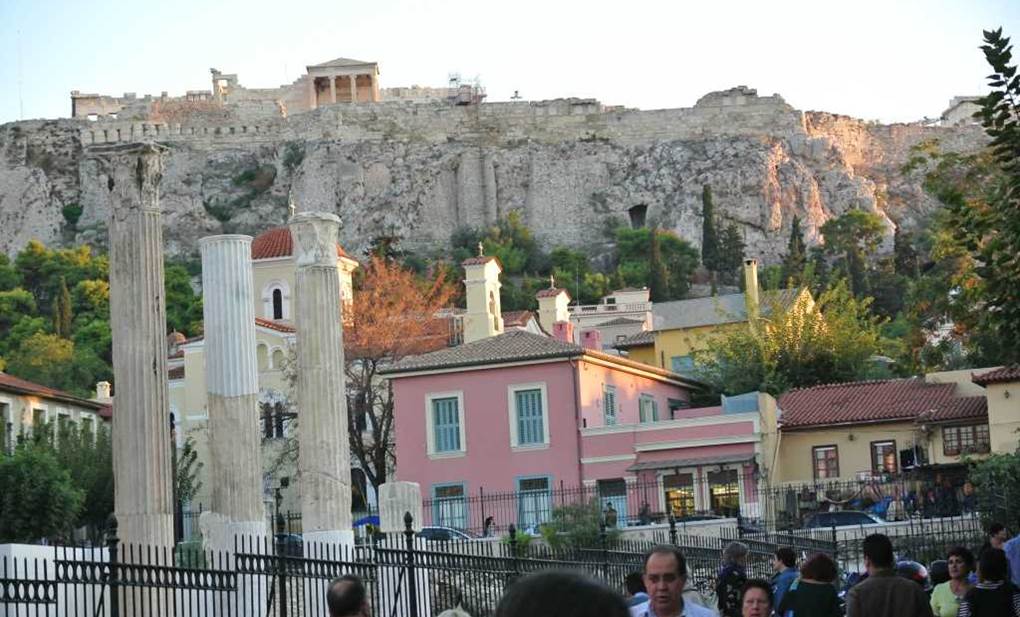
Photo by author, 2014
Temple of Hephaistos
The Temple of Hephaestus is located in the ancient Agora.
It was built around the 5th century BC.
Construction began in 449 BC and was completed around 416-415 BC.
Because it was built in a district where blacksmiths and potters gathered, it became a temple dedicated to Hephaestus , the Greek god of fire and blacksmithing.
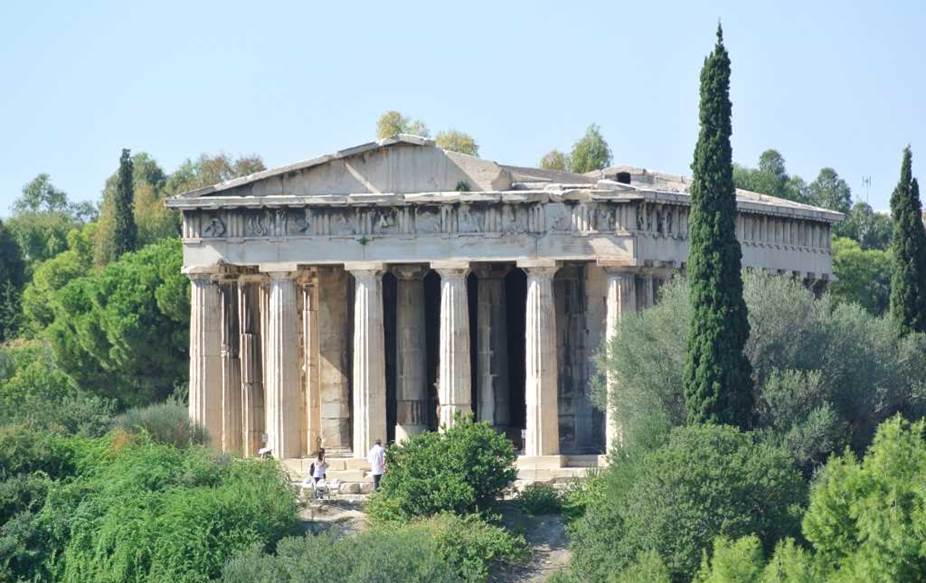
Photo by author, 2014
It is a Doric-style building with a size of 13.7m from north to south and 31.7 m from east to west, and the roof is supported by 6 columns on the short side and 13 on the long sides (34 columns in total).
Of all the temples in Greece’s many archaeological sites, it is the most intact.
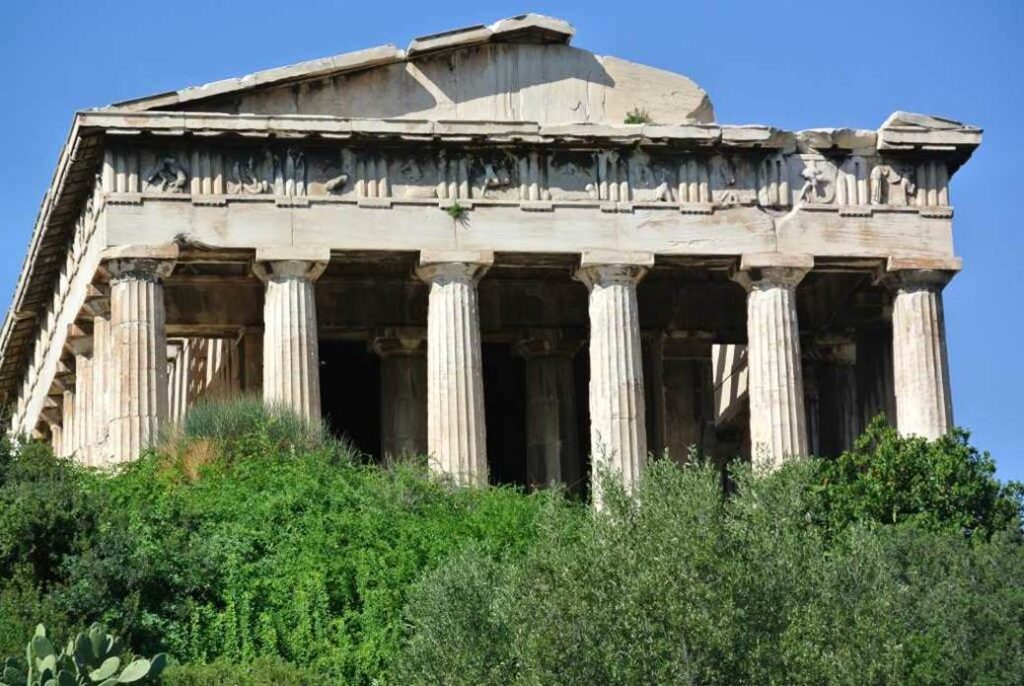
Photo by author, 2014
I later learned that Socrates and Plato also had philosophical discussions in the ancient agora.
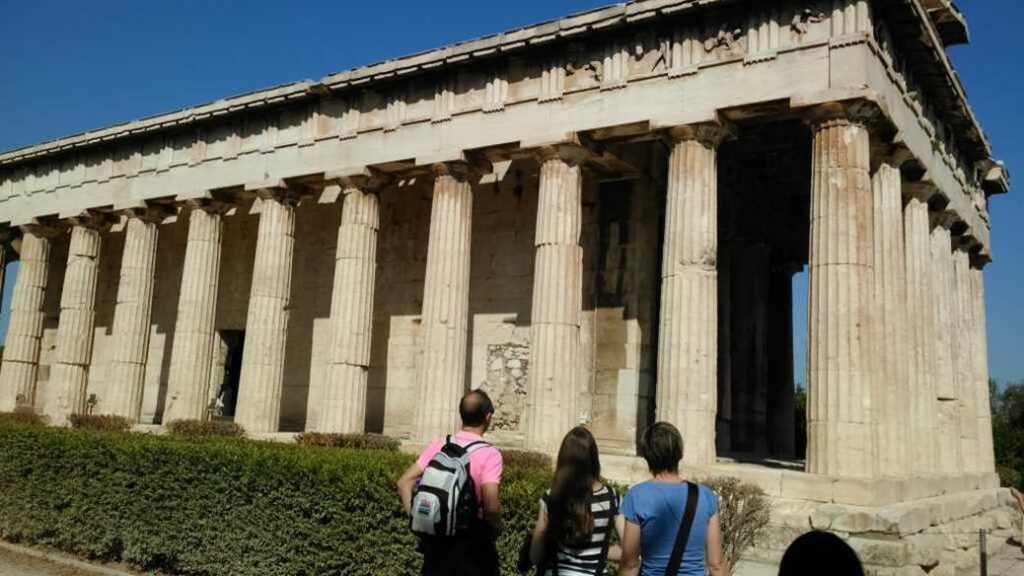
Photo by author, 2014
STOA OF ATTALOS
Portico Museum of Attalus (Museum of Ancient Agora).
It is the only Greek archaeological site that has been fully restored.
It is a two-storey building about 115 meters long and 20 meters wide, and you can see beautiful colonnades in the Doric and Ionic styles of ancient Greece.
Most of the valuable artifacts excavated in the ancient agora are on display.
STOA means “eaves covered walkway”.
Built during the reign of King Attalus (159 BC-138 BC), it was rebuilt between 1952 and 1956 and is now used as a museum of the ancient agora.
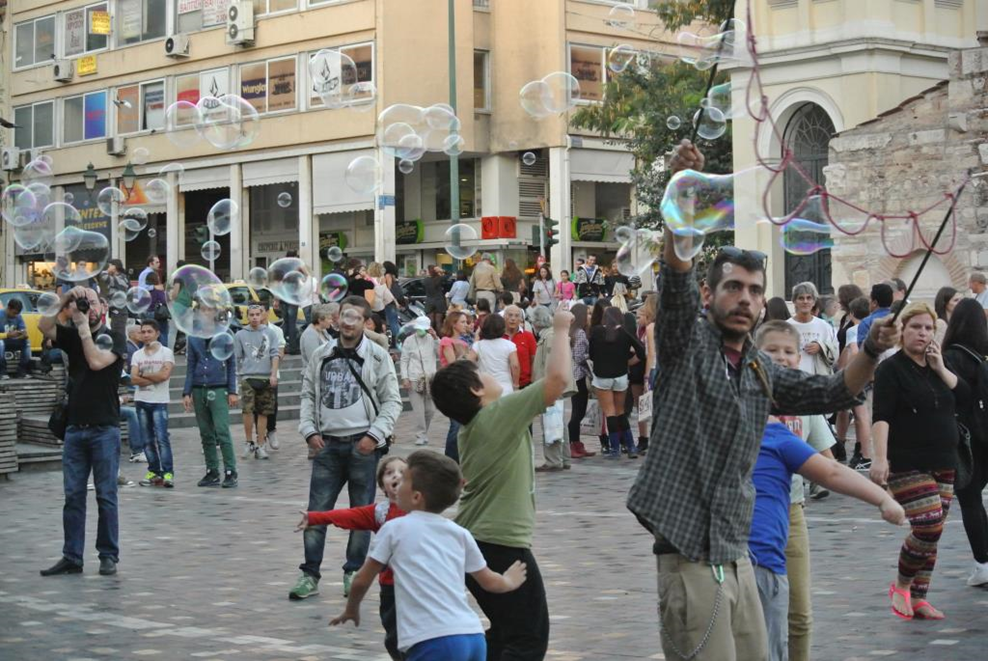
Photo by author, 2014
It is now a museum. Portico Museum of Attalus.

Photo by author, 2014
The Portico Museum of Attalus is the only Greek structure that has been fully restored.
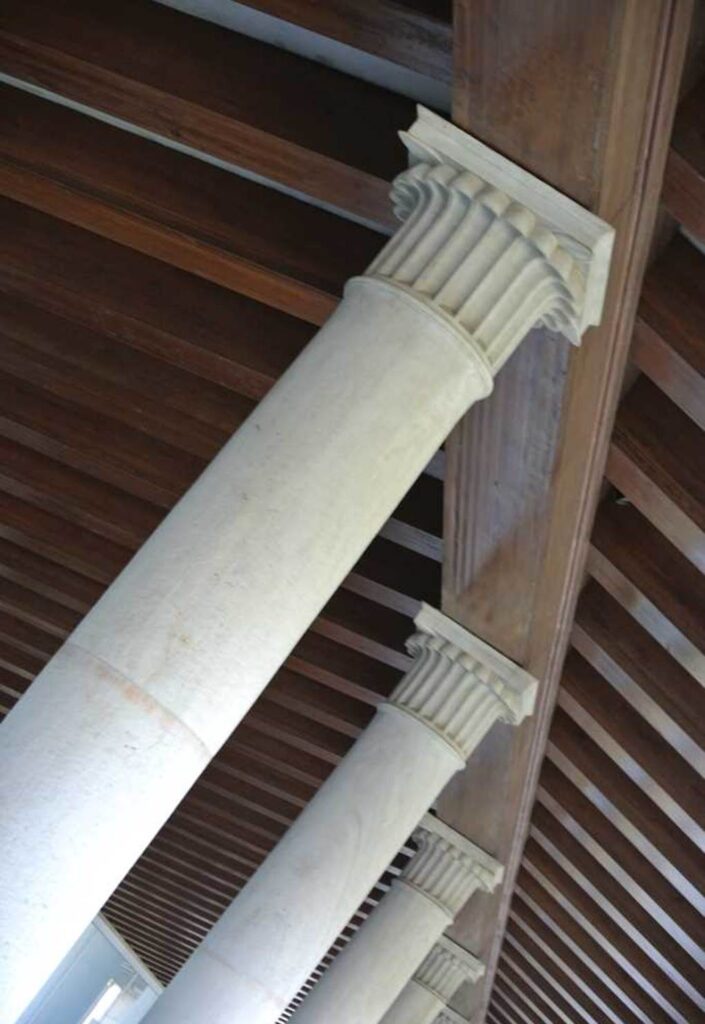
Photo by author, 2014
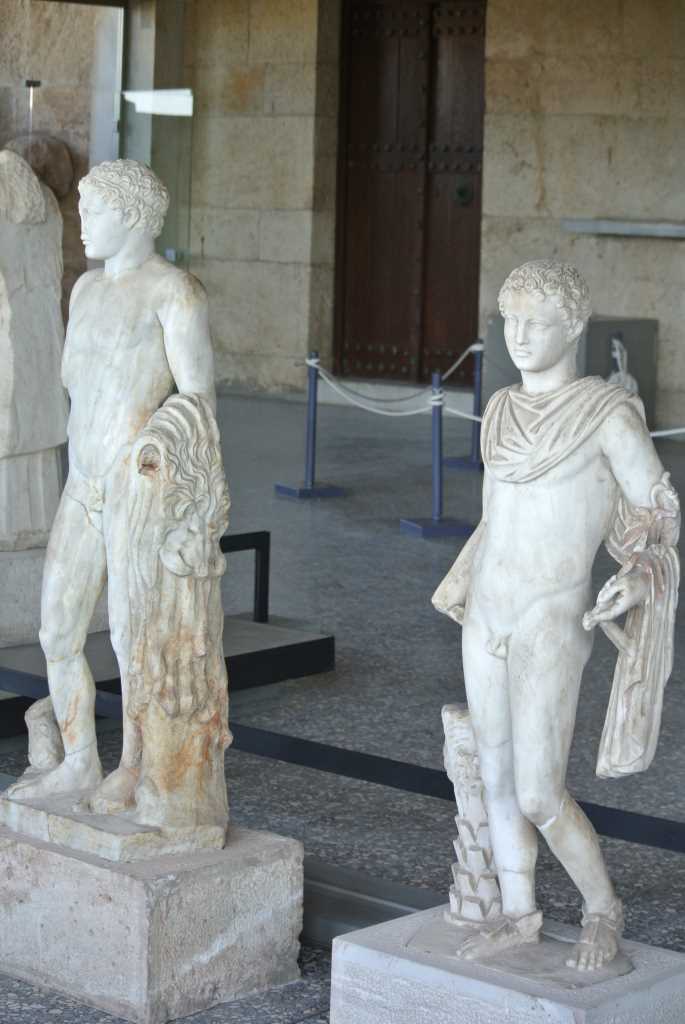
Photo by author, 2014
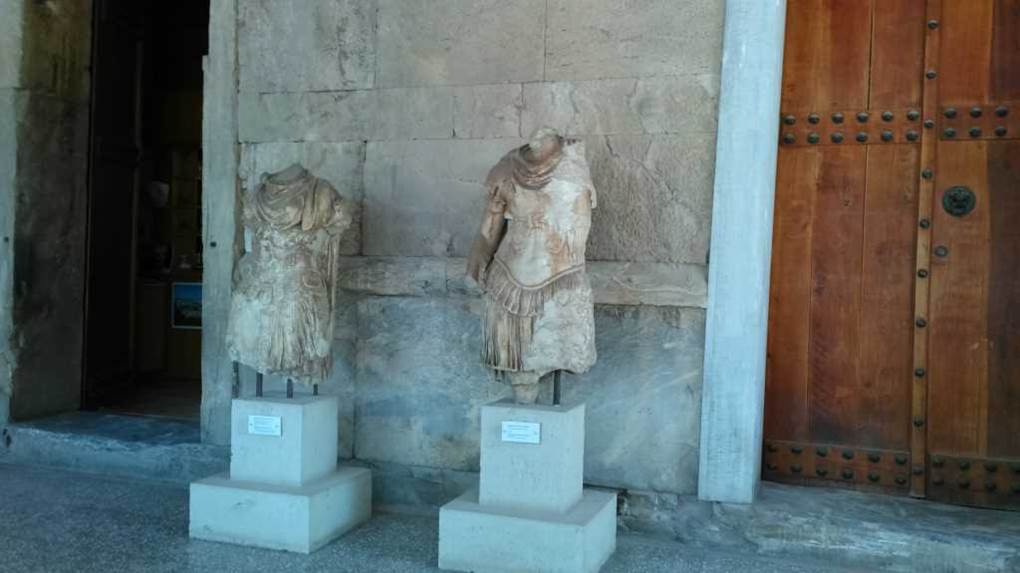
Photo by author, 2014
Ancient Agora Circle Hall, THOLOS
Tholos is the meeting place and seat of government of the democratic polis of ancient Greece.
It is said that it also functioned as a guest house and a dining room.
Any male Athenian citizen over the age of 18 could freely participate, speak, and vote in the assembly.
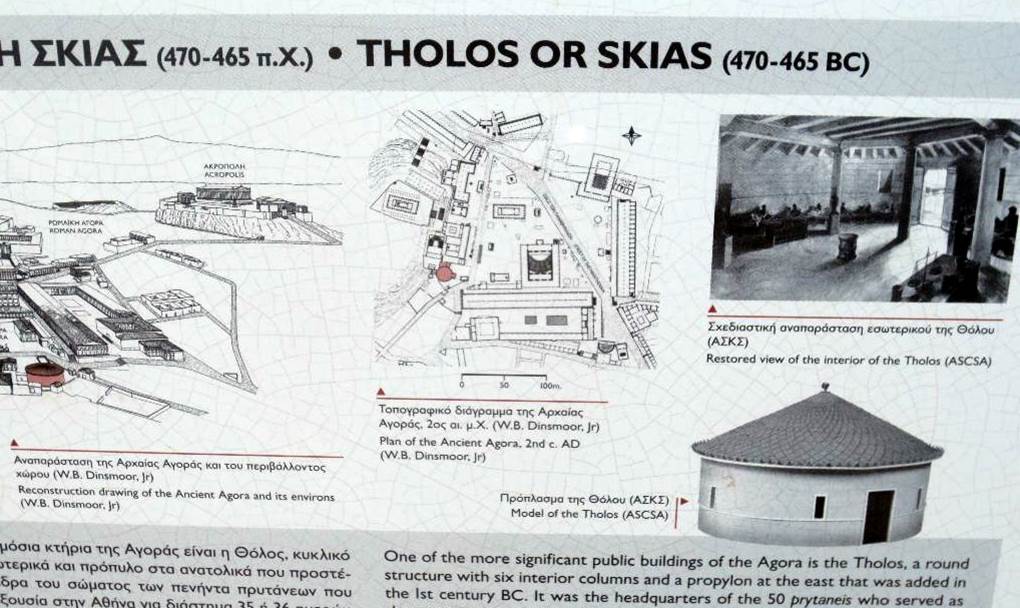
Photo by author, 2014
It is a model that shows the structure of a conical roof.
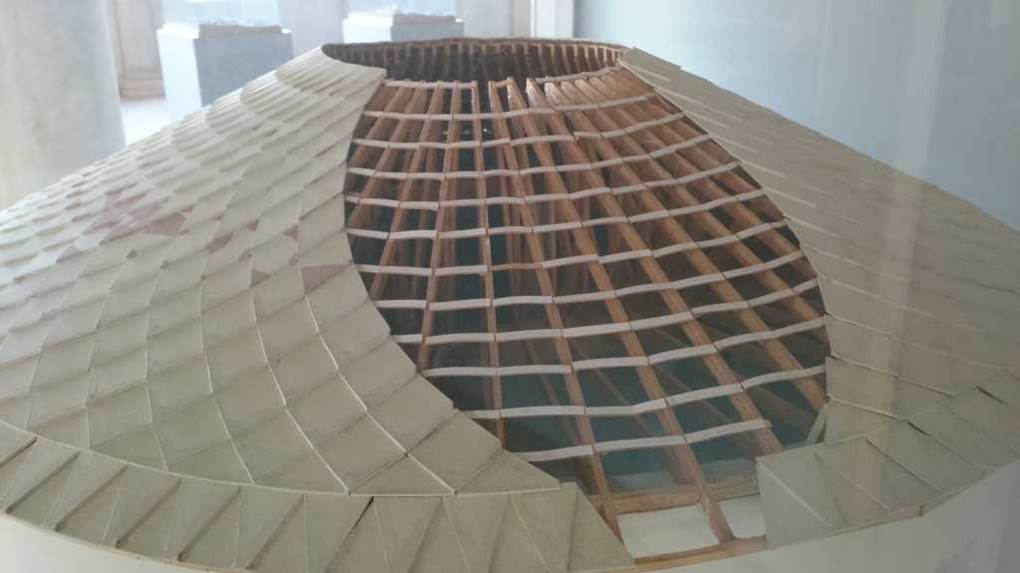
Photo by author, 2014
Roman Agora of Athens
The agora of the ancient Greek era is called the ancient agora to distinguish it from the Roman one, and the later Roman agora is called the Roman agora.
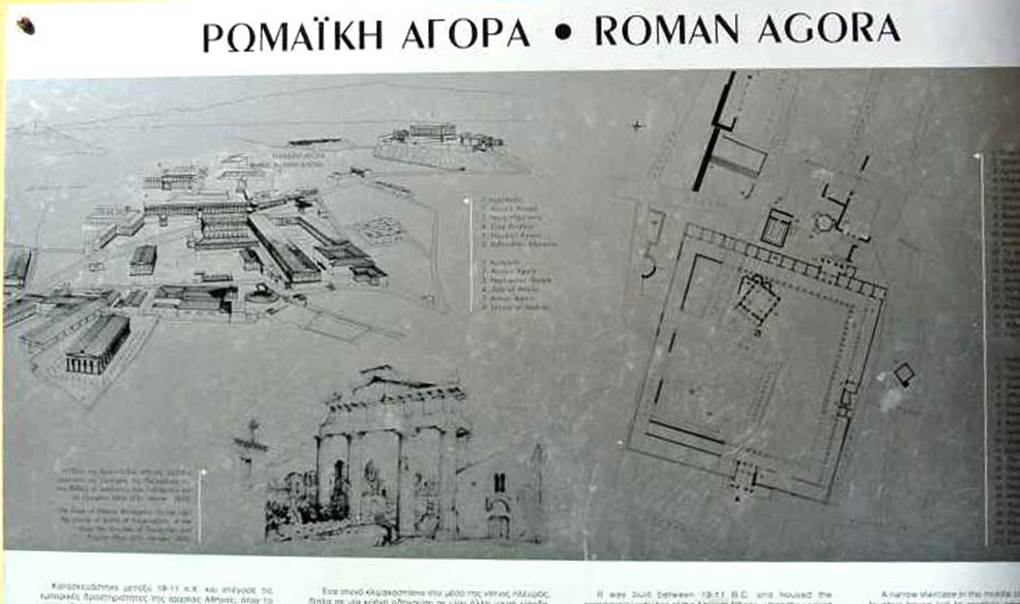
Hadrian’s Library
Built in 132 by the Roman Emperor Hadrian, it was modeled after the ancient Roman forum and is in the Corinthian capital style, a kind of Roman architectural style. It is said that there was a reading room next to it and an auditorium on the corner.
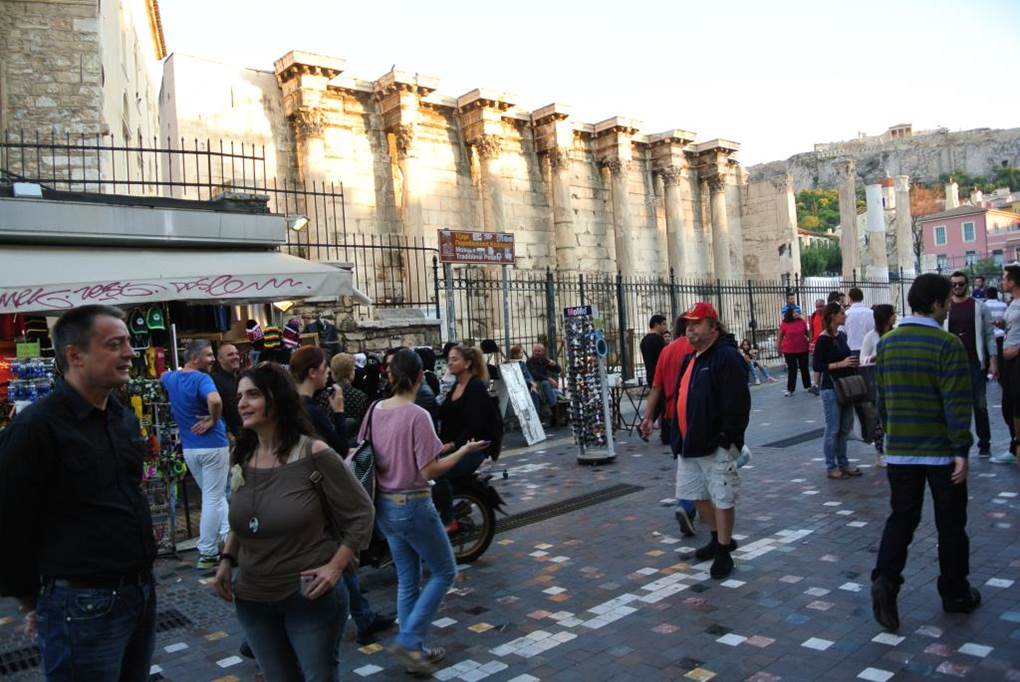
Photo by author, 2014
The building on the east side of the site is said to have housed scrolls of papyrus, the writing medium used in ancient Egypt.
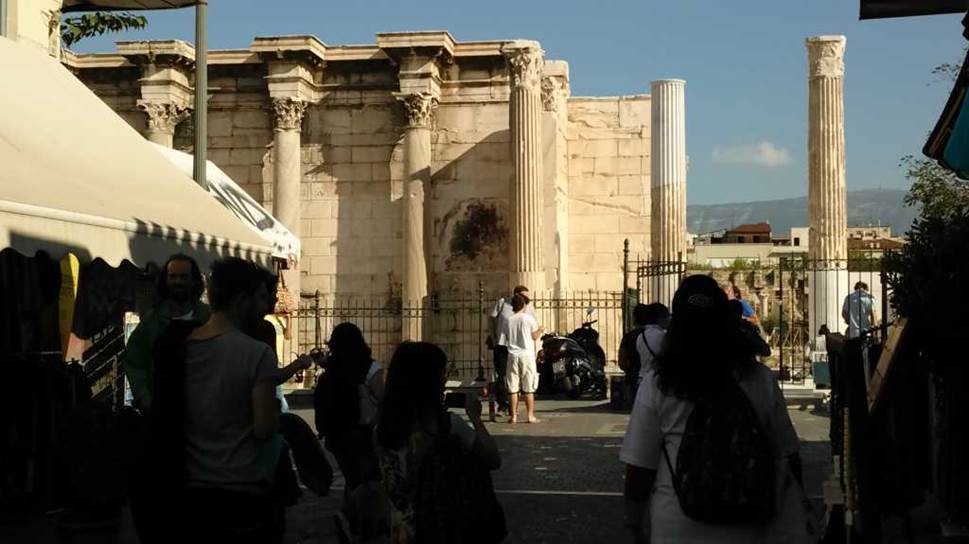
Photo by author, 2014
A Roman library and an Ottoman mosque stand next to each other.
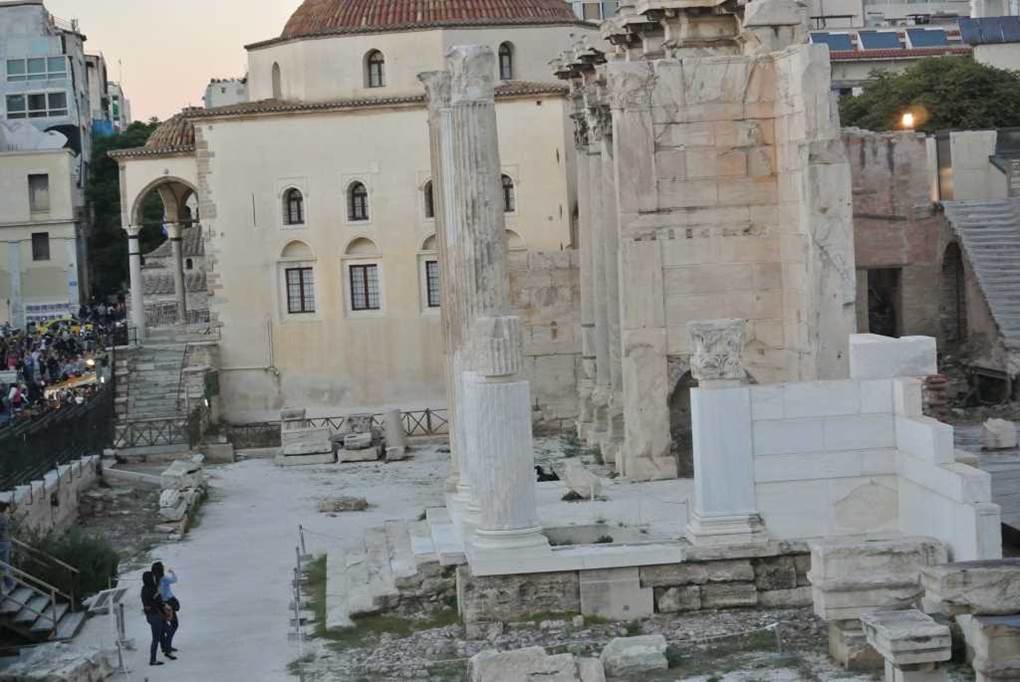
Photo by author, 2014
Odeon of Agrippa
It was built around 15 BC by Agrippa, a soldier of the first emperor of the Roman Empire, in the ancient agora of Athens.
The music hall was 25 × 25 meters in size, the ceiling was 23 meters high from the stage, and the number of seats was about 1,000.
It is said that the building collapsed around 150 AD. (Center of the photo below)

Photo by author, 2014
There was a mixture of buildings with similar designs from the Italian Renaissance period.
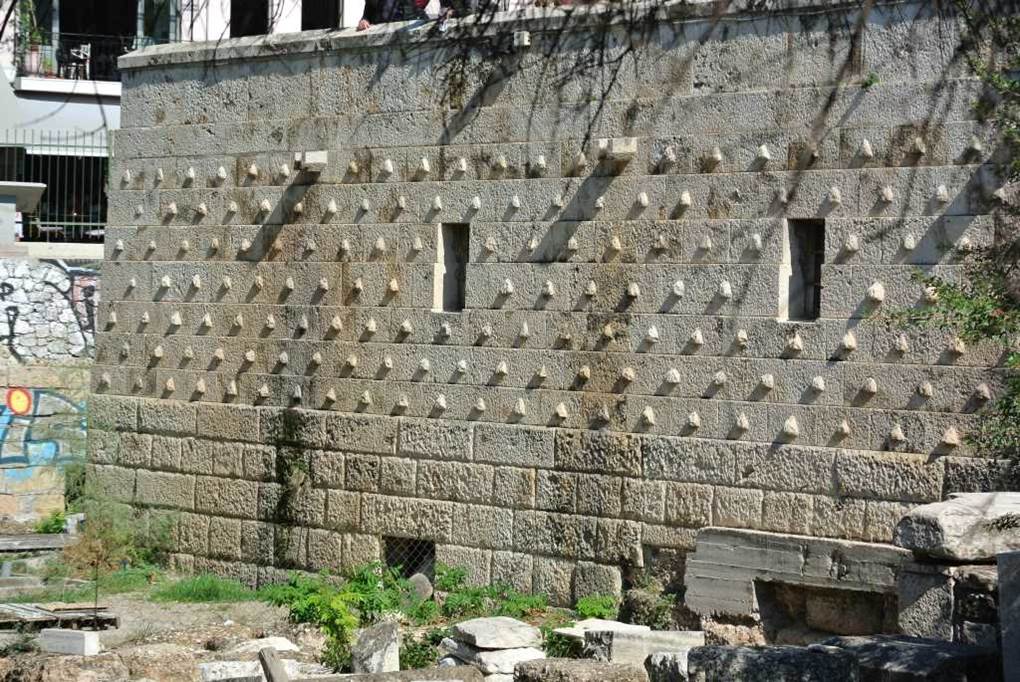
Photo by author, 2014
The Athens subway coexists with ancient ruins.
The Athenian subway runs through the ruins of ancient Greece. This is a sight you will never see anywhere else in the world.
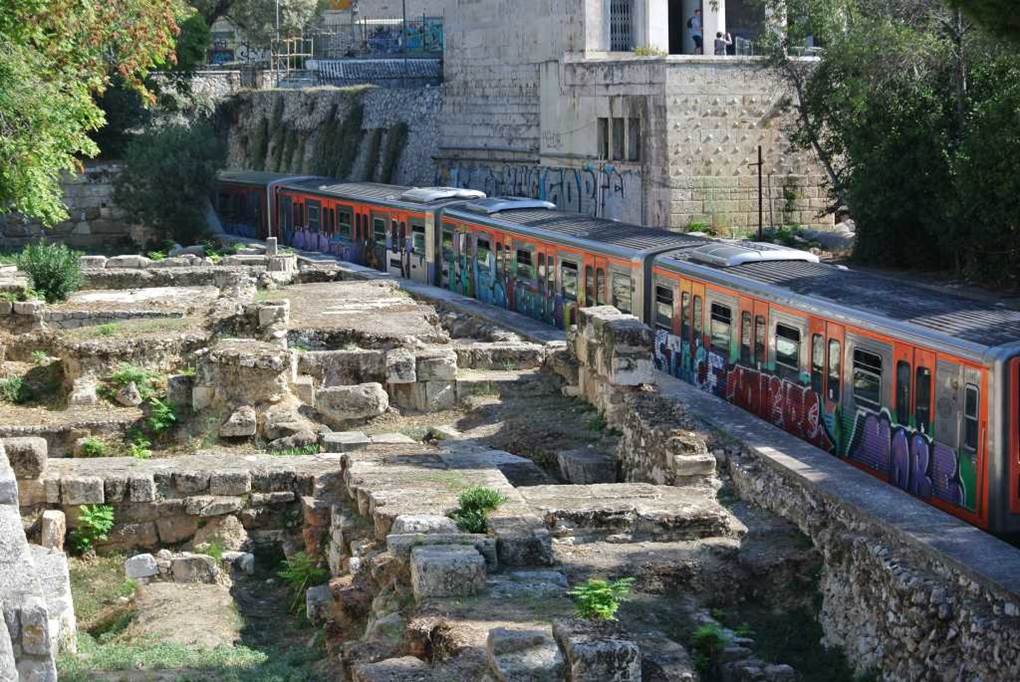
Photo by author, 2014
Artifacts from the 5th century BC and the 21st century AD fit into this one picture! Even the graffiti on the exterior wall of the building is shown.
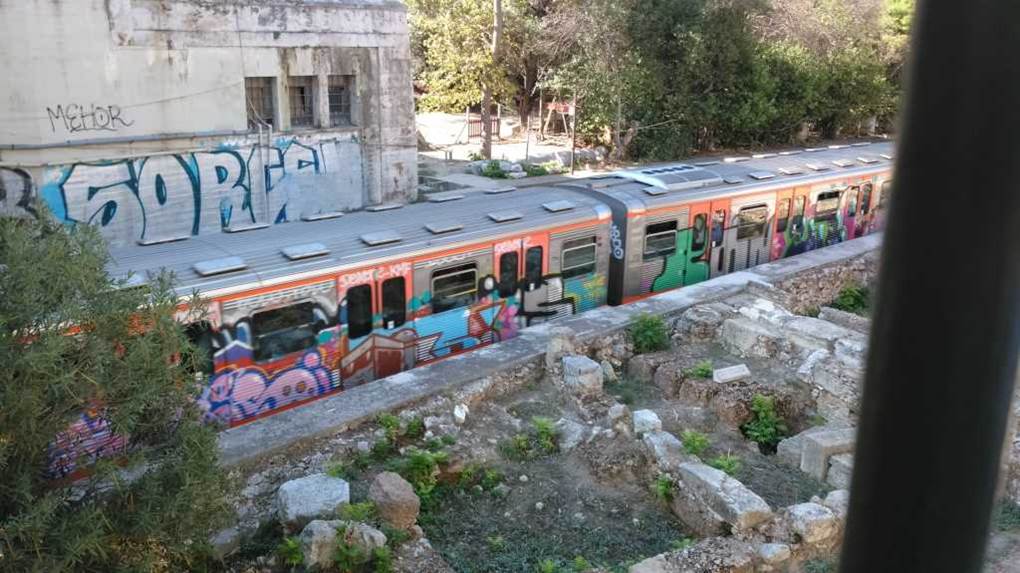
Photo by author, 2014
All photos by author, October 2014