JAP | ENG
India Travelogue 1989
#1/26
Kanchipuram
My first trip to India.
In February 1989, I decided to go on my first trip to India, scheduled for two weeks.
My first stop was the rundown airport in Chennai, which was still called Madras at the time.
At the time, India was in the midst of a socialist economy, and due to the yoke of the policy of prioritizing domestic production, it was decades behind the major cities in Southeast Asia.
Ambassador Hotel in downtown Chennai
The chair is too small compared to the spacious room. It doesn’t fit my body.
The three-way mirror is huge. It was a somewhat uncomfortable room.
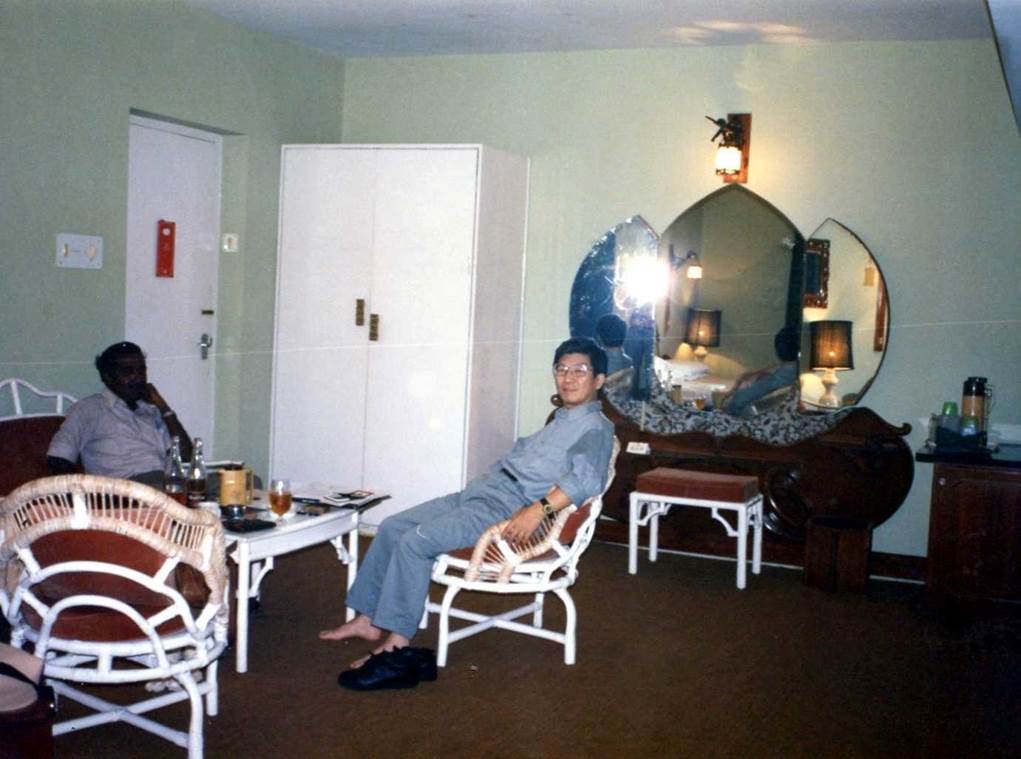
Photo of author, 1989
This chair is exceptionally large. Is it used for meditation?
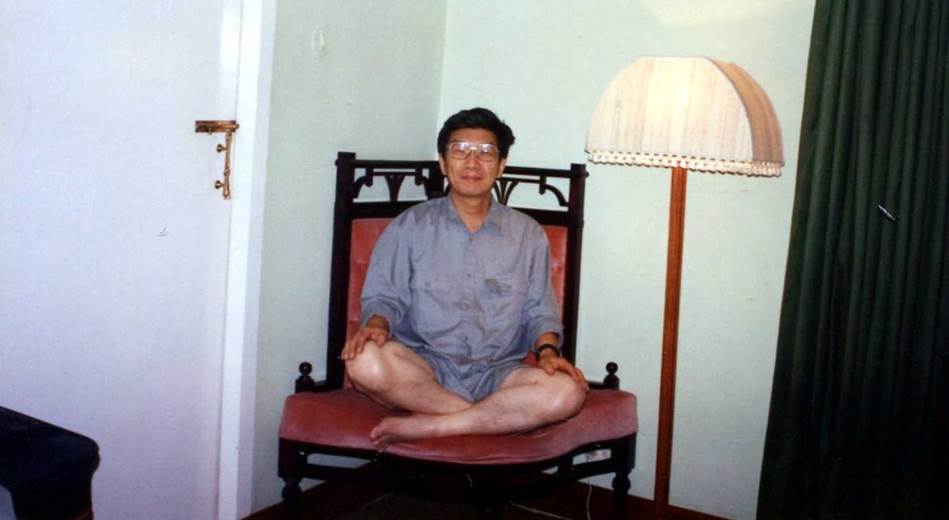
Ambassador Hotel in downtown Chennai.
Photo of author, 1989
The morning of the first day in India. This disproportionately large balcony.
Looking down, I saw a thatched house.
Breakfast smoke was rising, and women were coming in and out of the house.
Is this thatched house on the hotel grounds or is it a house next door, is the inhabitant of this house an employee of the hotel, or is it a squatter?
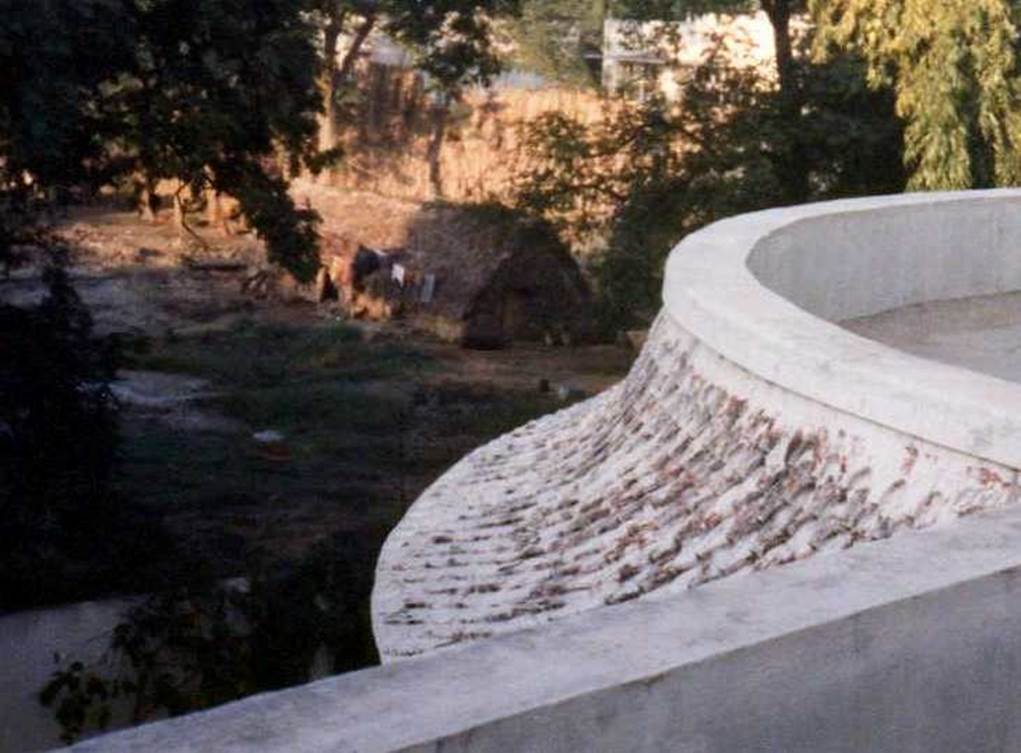
Photo by author, 1989
A super big room and a disproportionately small bathroom.
Is this hotel typical of India?
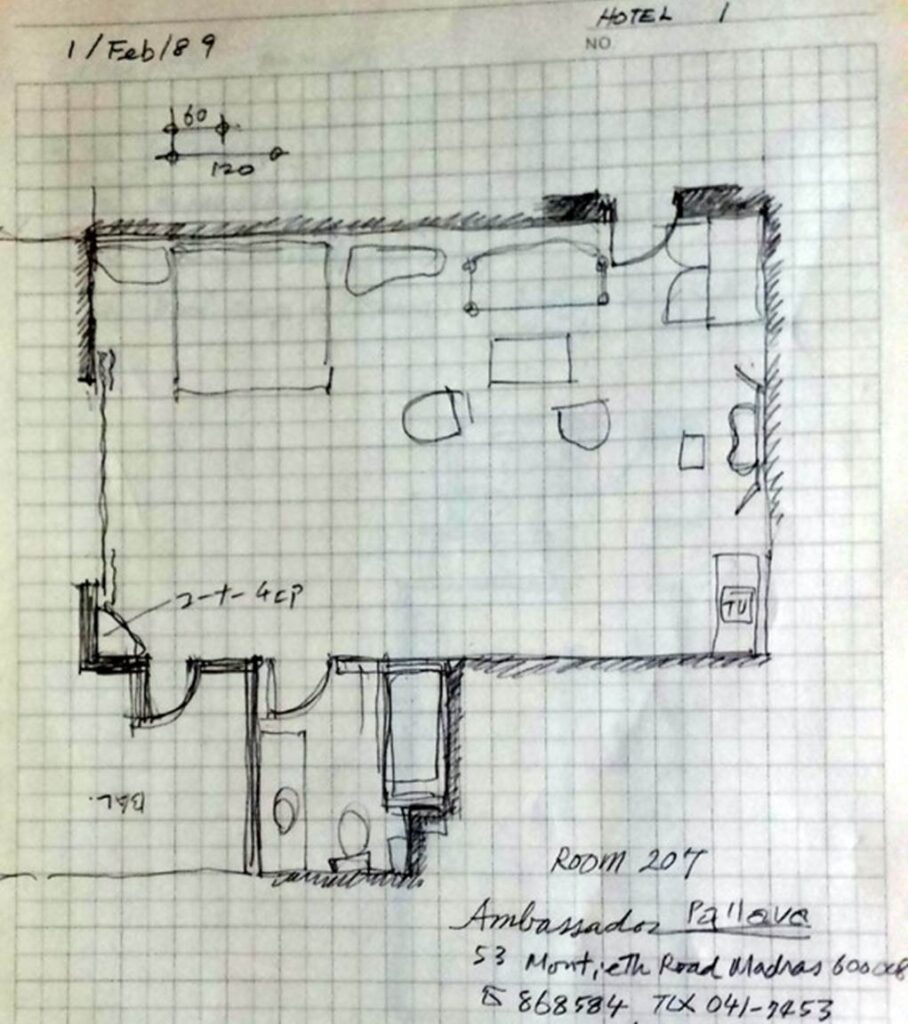
Author’s sketch, 1989
The road to Kanchipuram
We left our hotel in Chennai in a car provided by the travel agency and travelled with an Indian female guide along a triangular route from Chennai to Kancheepuram, Mahabalipuram and the Coromandel Coast.
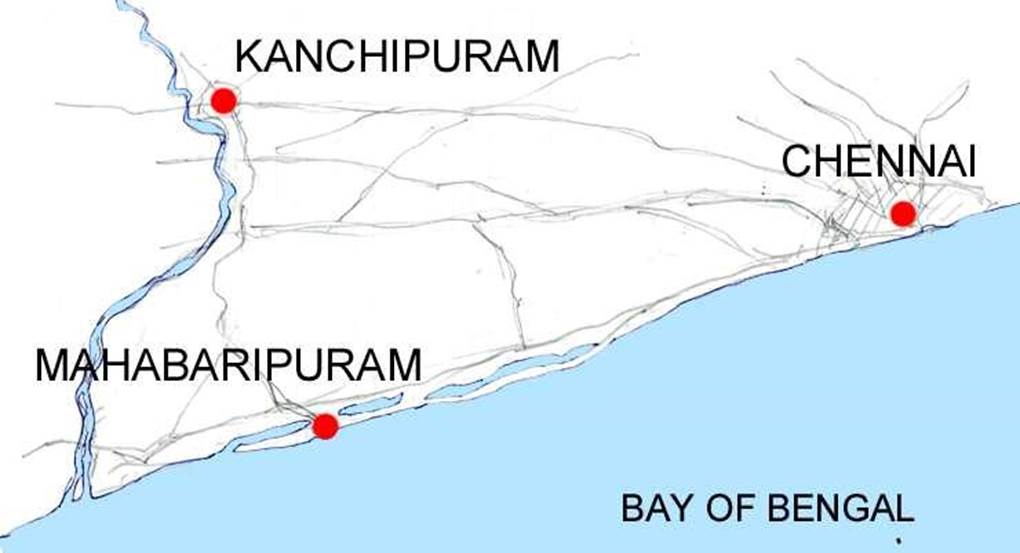
Author’s sketch, 1989
I drove 60km southwest from Chennai, the capital of Tamil Nadu in southern India. The temperature in early February in India is within the comfort zone for the human body, and I felt very good as a traveller.
On both sides of the road, a kind of symbolic palm tree that is not seen in tropical rainforest regions is planted, creating an atmosphere like a pilgrimage route to the world heritage city of Kanchipuram.
As I approached Kanchipuram, the spires of a temple called a gopuram appeared in response to the palm trees, and my expectations for this place, which was once the capital of the Pallava dynasty, grew.
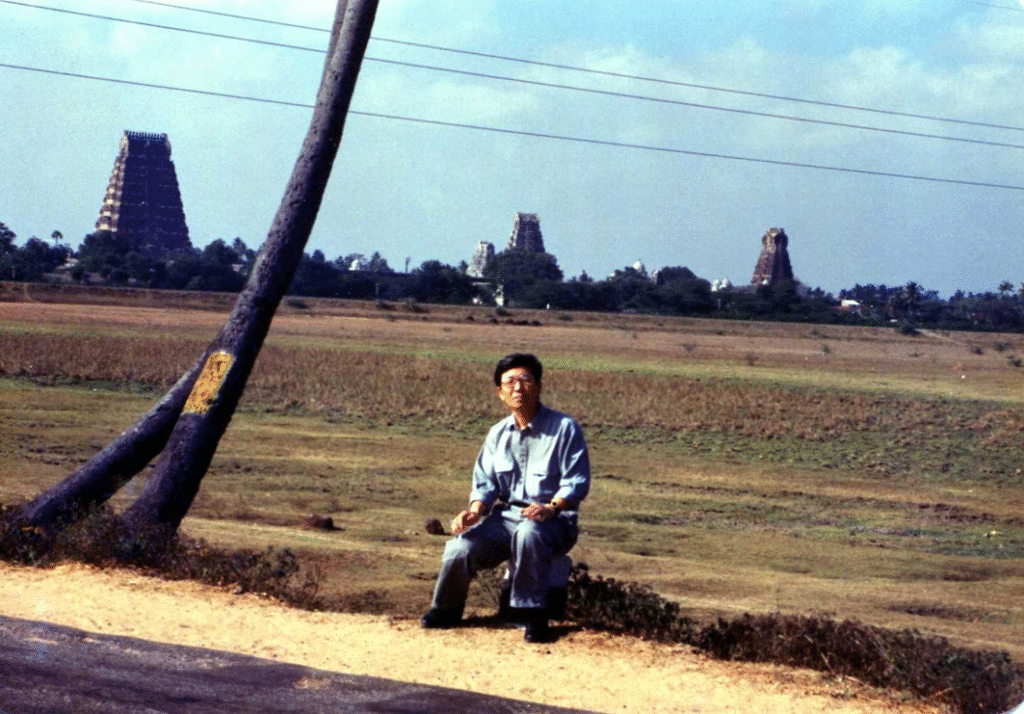
Photo of author, 1989
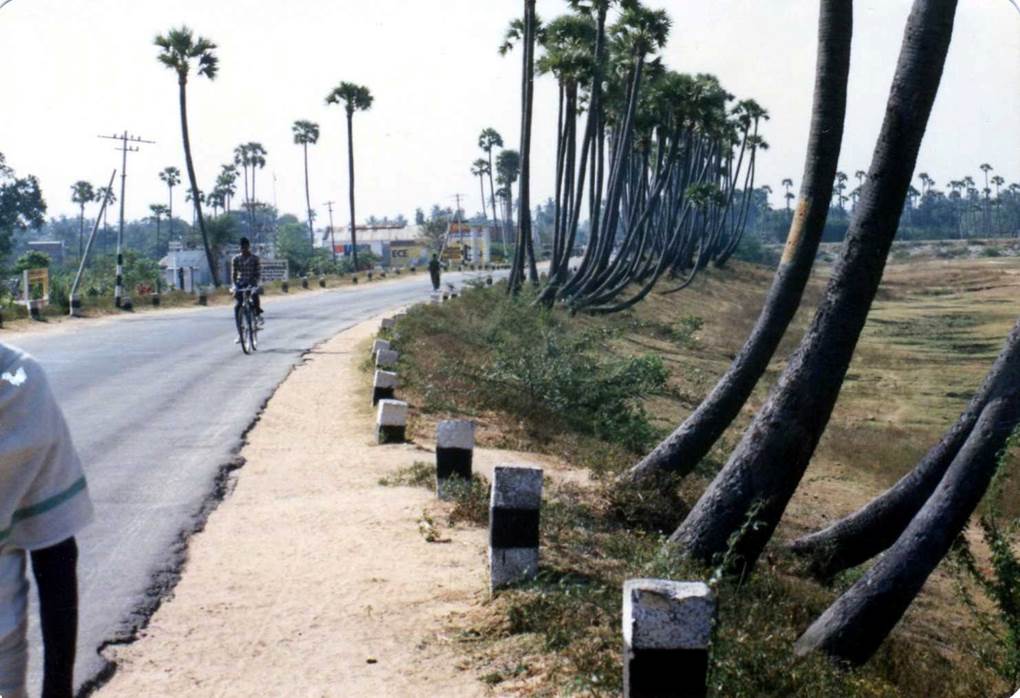
Photo by author, 1989
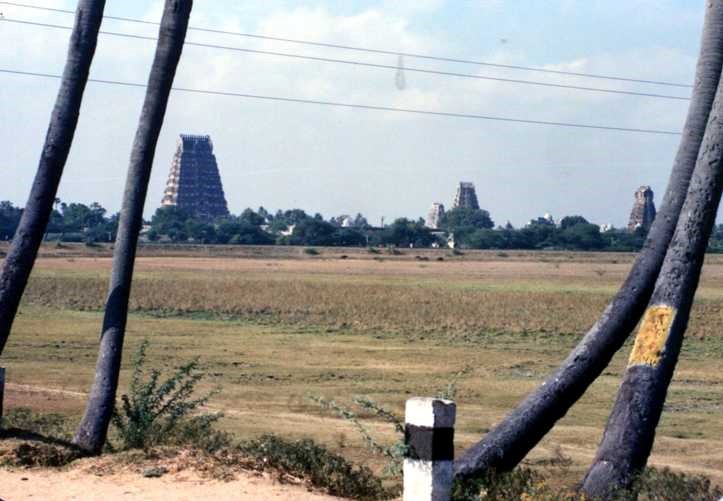
Photo by author, 1989
This type of palm tree is unique to South India.
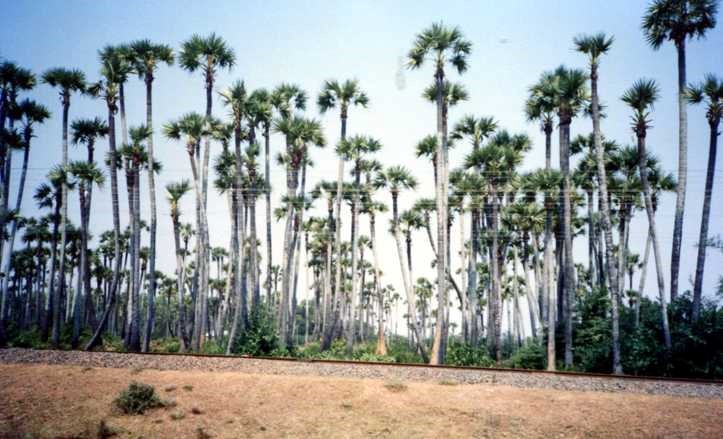
Photo by author, 1989
Kanchipuram UNESCO World Heritage Site
There are 200 Hindu temples, including Kailasanathar Temple and Ekambaranatar Temple, and it is known as a holy place. It is famous for its handicrafts such as hand-woven saris, silk fabrics, and bamboo products.
The green marks and red circles in the map are Hindu temples. Light blue represents ponds and lakes.
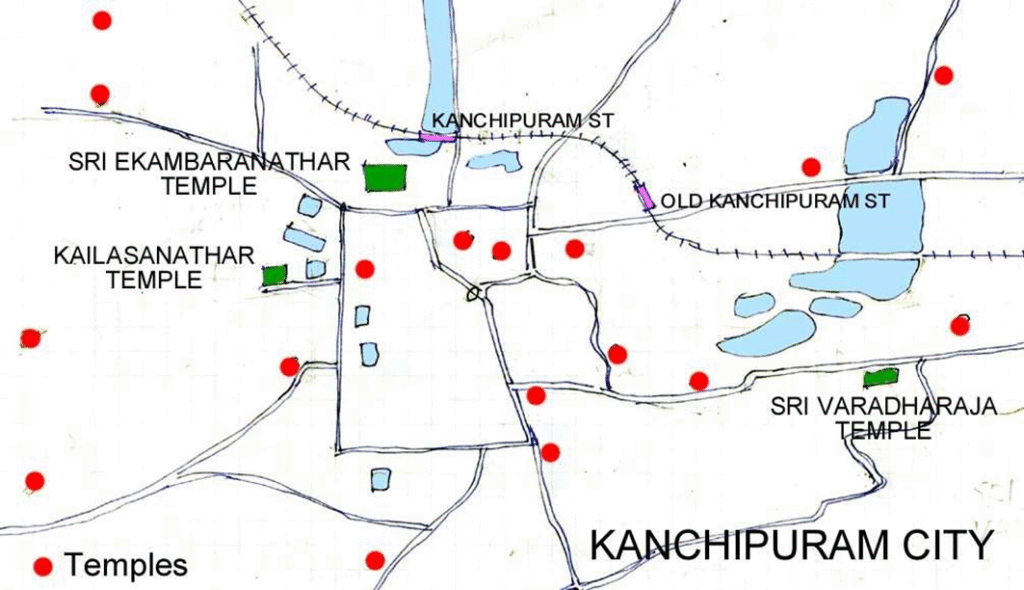
Author’s sketch
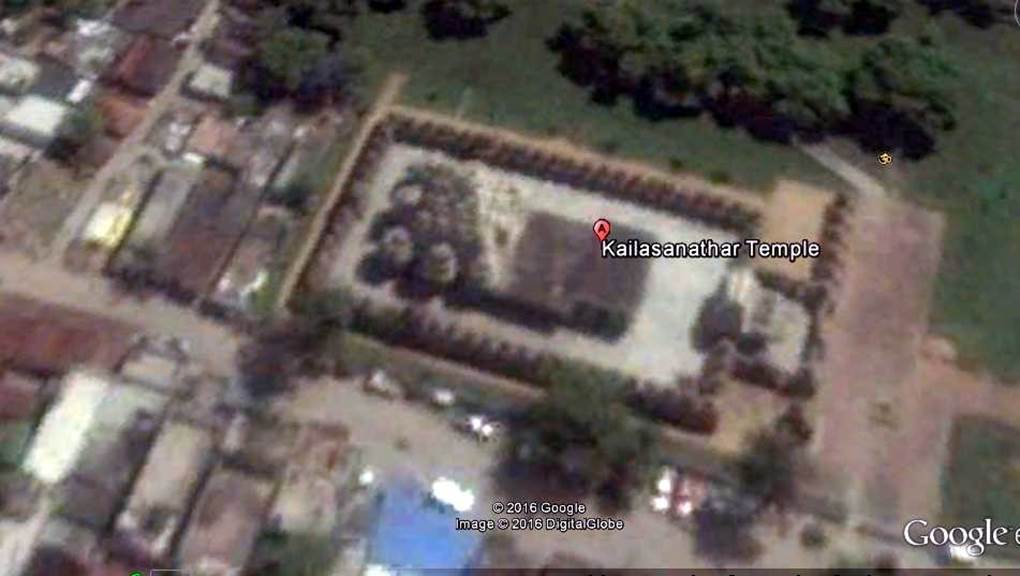
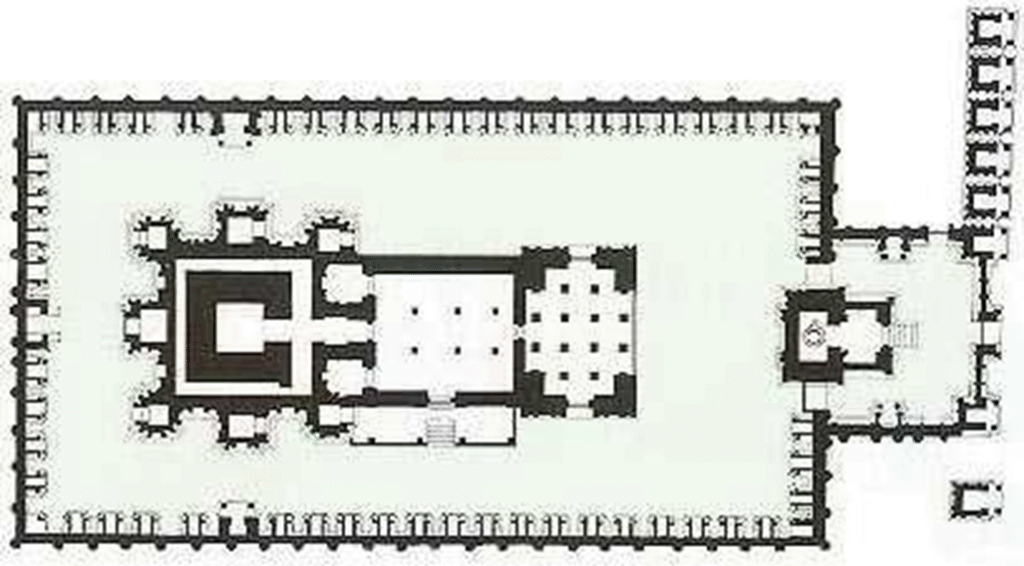
KAILASANATHAR TEMPLE
The oldest temple in Kanchipuram. Built towards the end of the 7th century, the Pallavan and Dravidian architectural style.
The ground is granite, and the upper buildings and sculptures are Indian sandstone.
The Power of Stone Carving
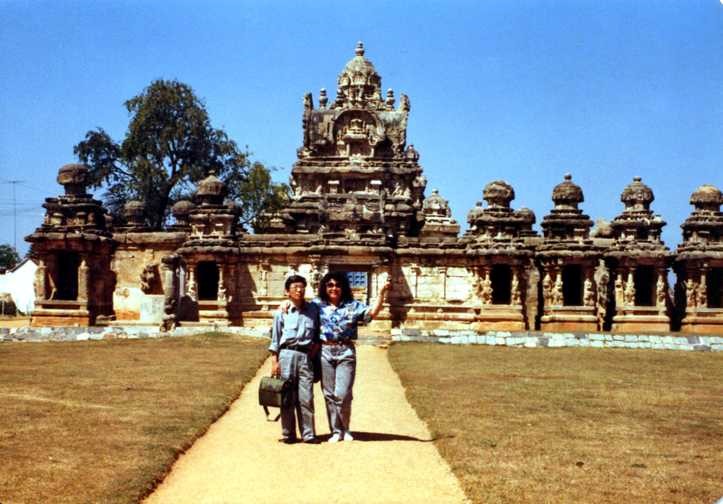
Photo of author, 1989
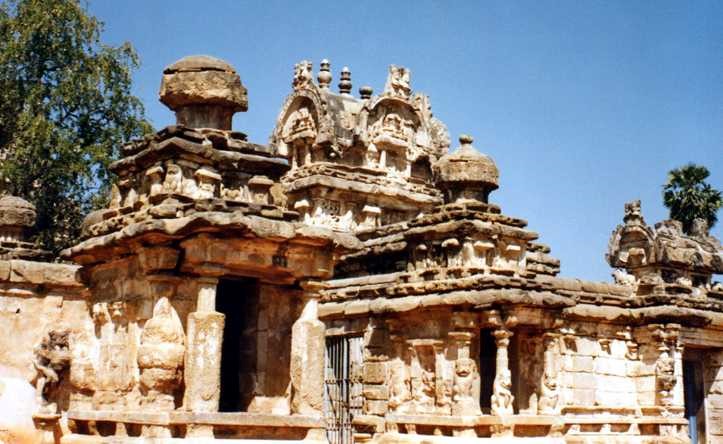
Photo by author, 1989
This carved stone colonnade and staircase are integrated into the building.
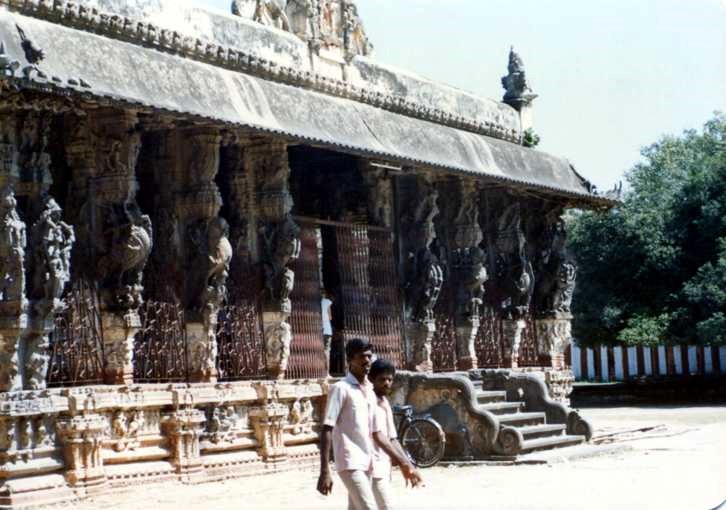
Photo by author, 1989
Resting in the shade.
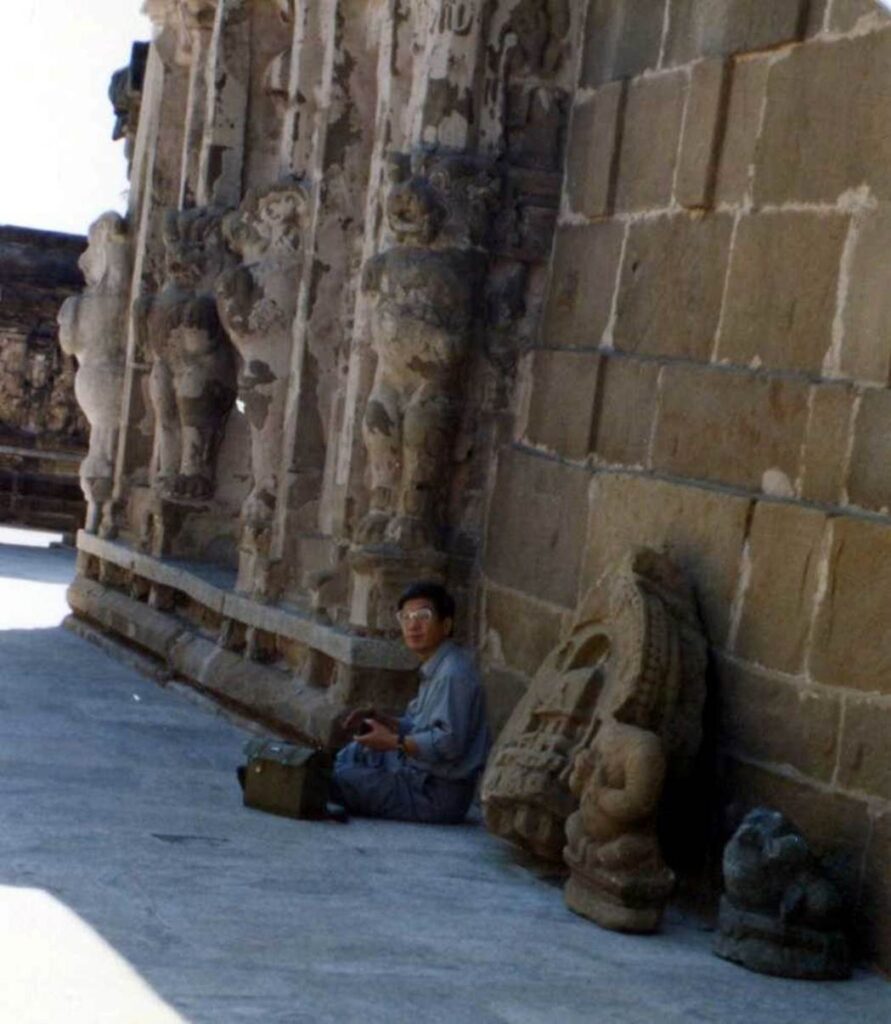
Photo of author, 1989

Photo by author, 1989
KANCHI KAMAKSHI AMMAN
It is the only temple in Kanchipuram dedicated to a goddess.
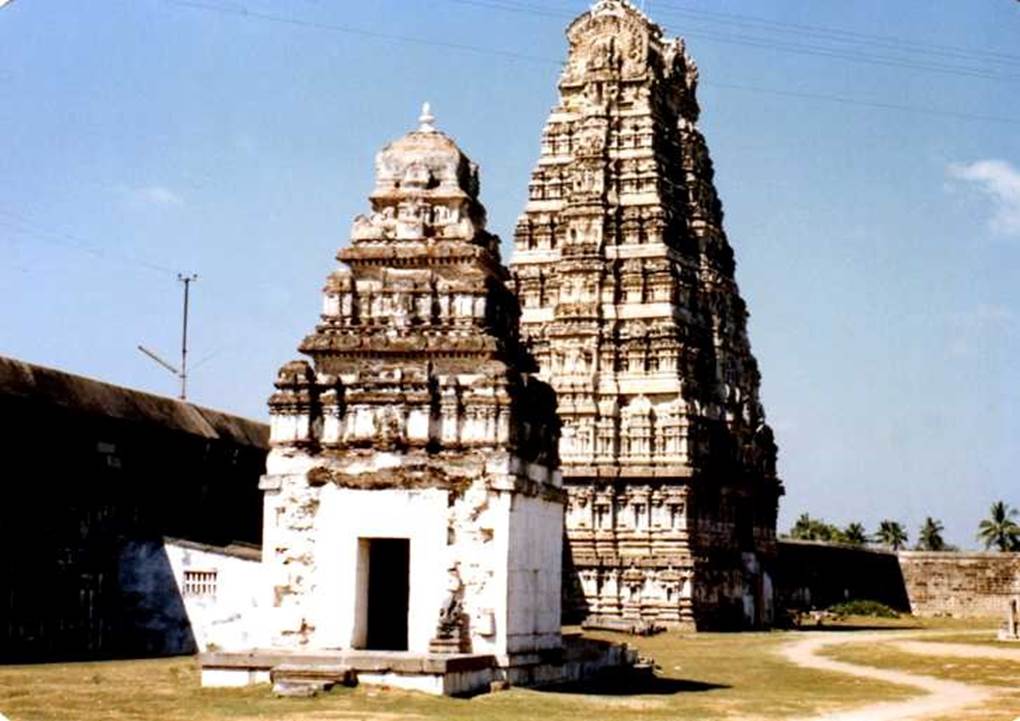
Photo by author, 1989
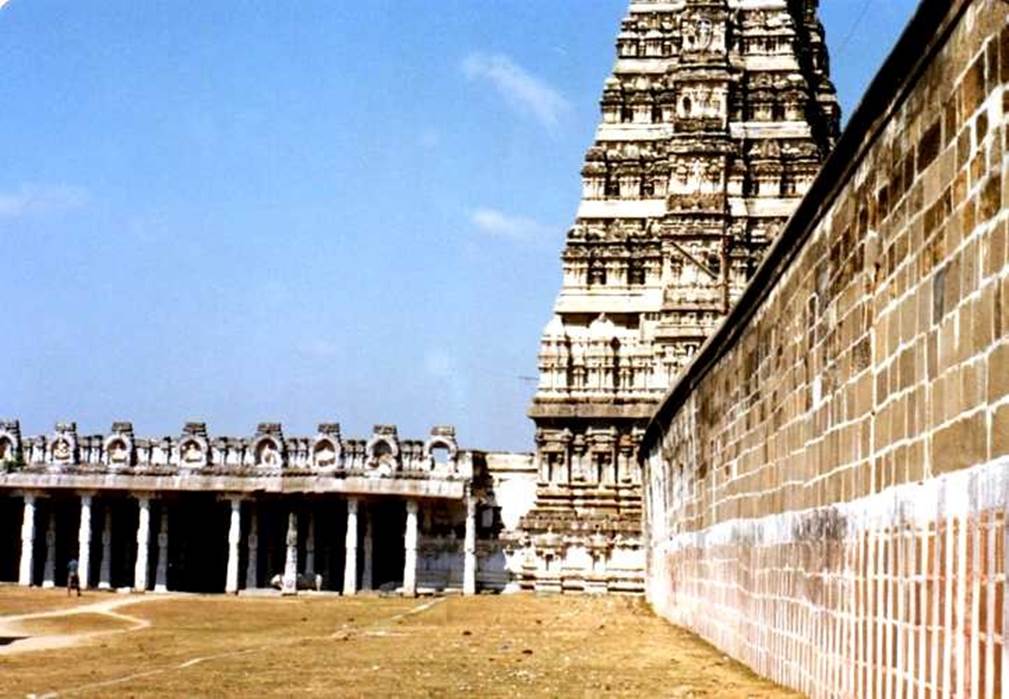
Photo by author, 1989
There is always a bathing place in the temple grounds.
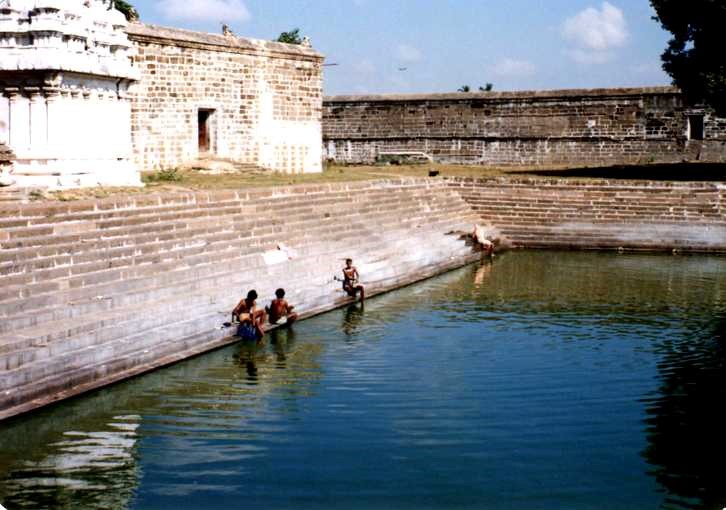
Photo by author, 1989
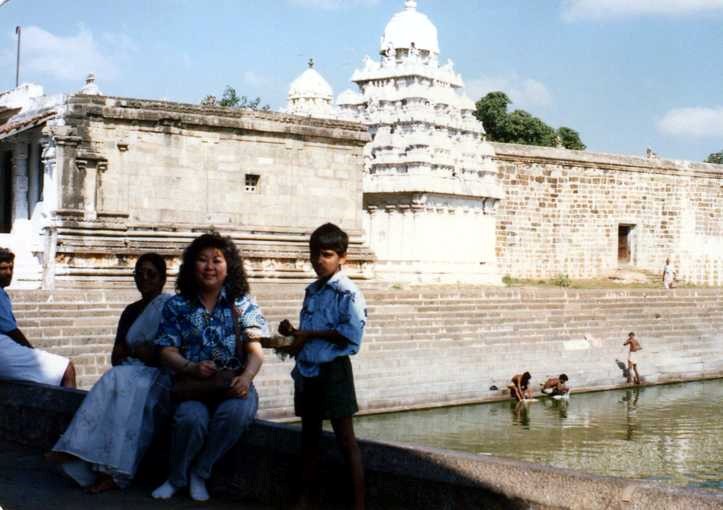
Photo by author, 1989
SRI VARADHARAJA TEMPLE
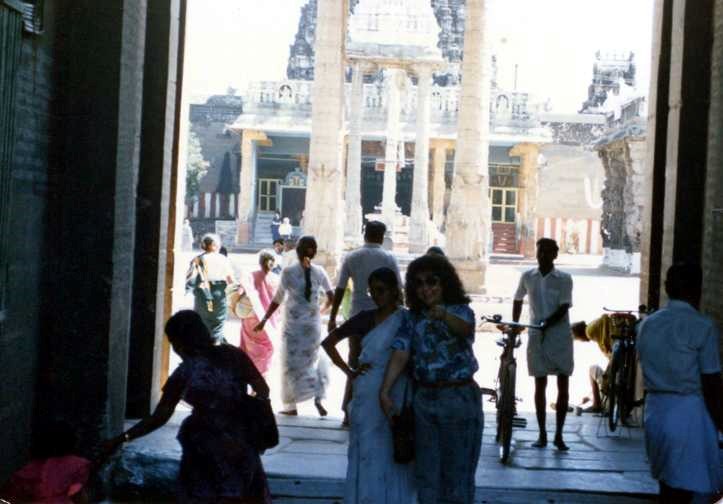
Photo by author, 1989
These slender 4 pillars on the front! Isn’t it too thin?
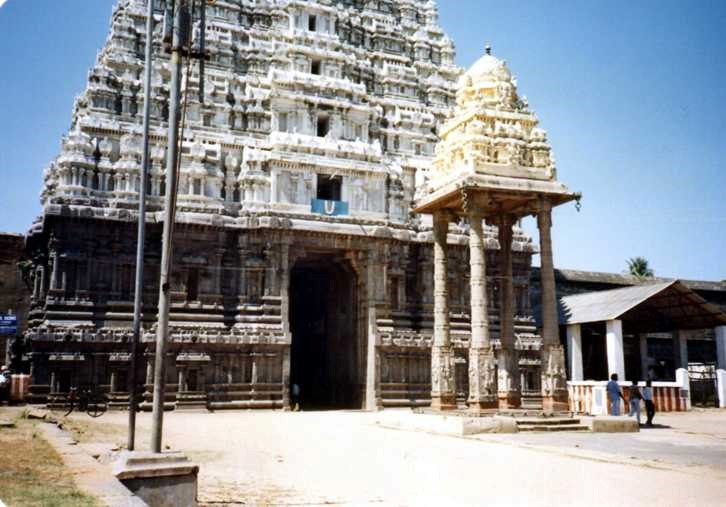
Photo by author, 1989
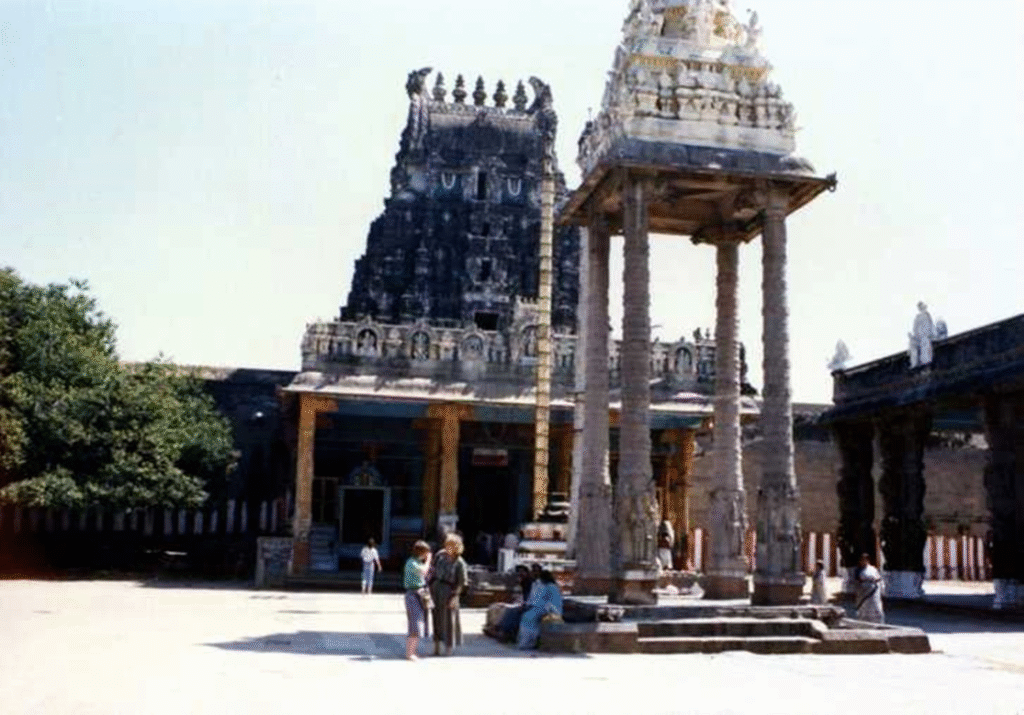
Photo by author, 1989
Ekambareswarar Temple
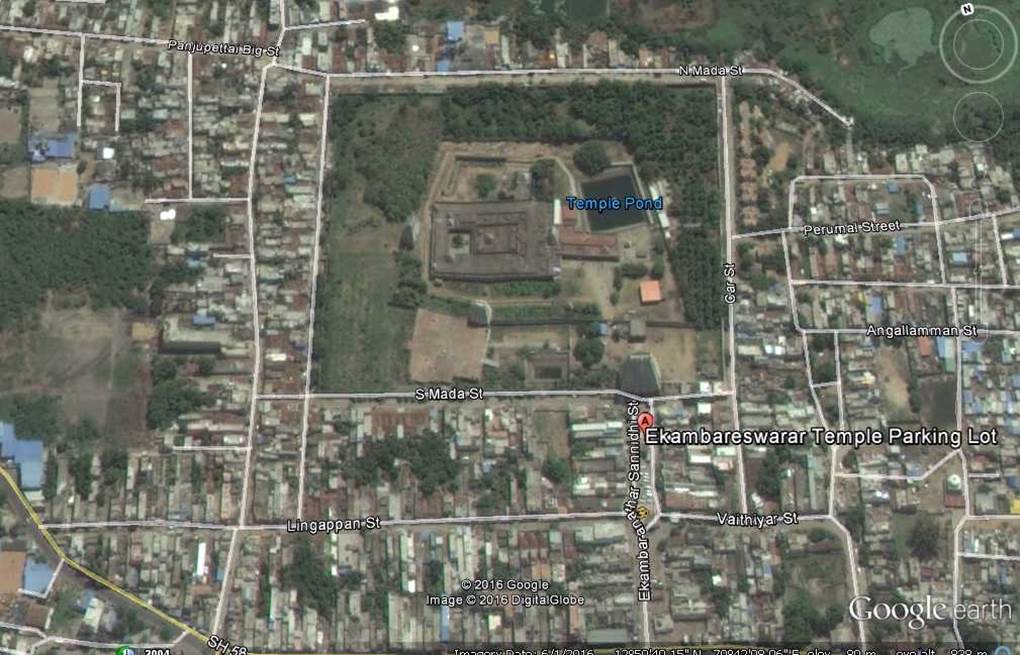
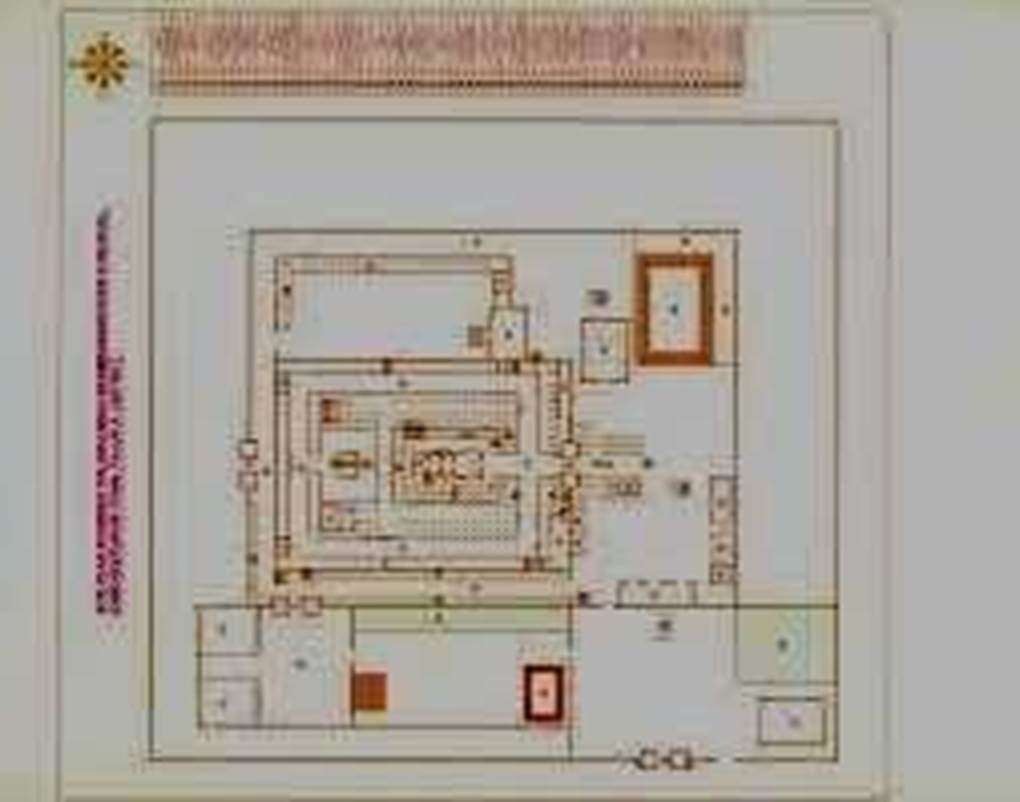
The temple’s gopuram tower is 58 meters high and is one of the tallest temple towers in India.
It was built during the Chola dynasty in the 9th century.
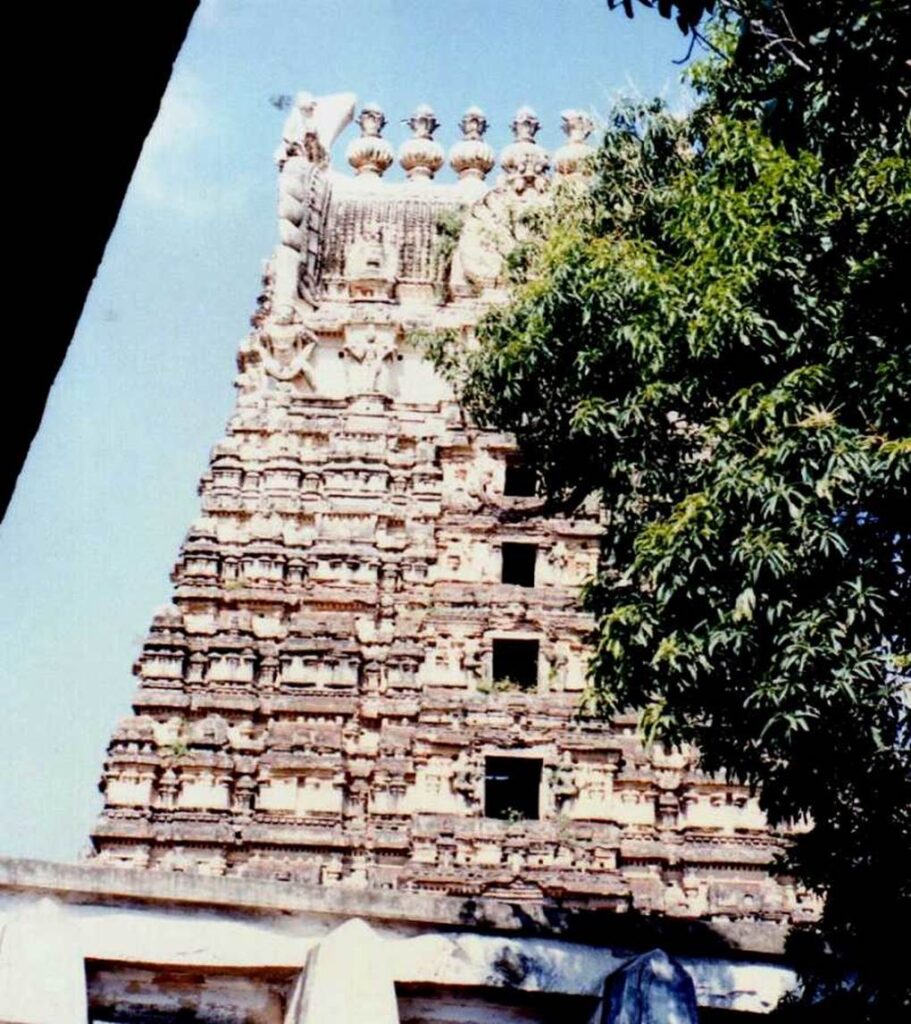
Photo by author, 1989
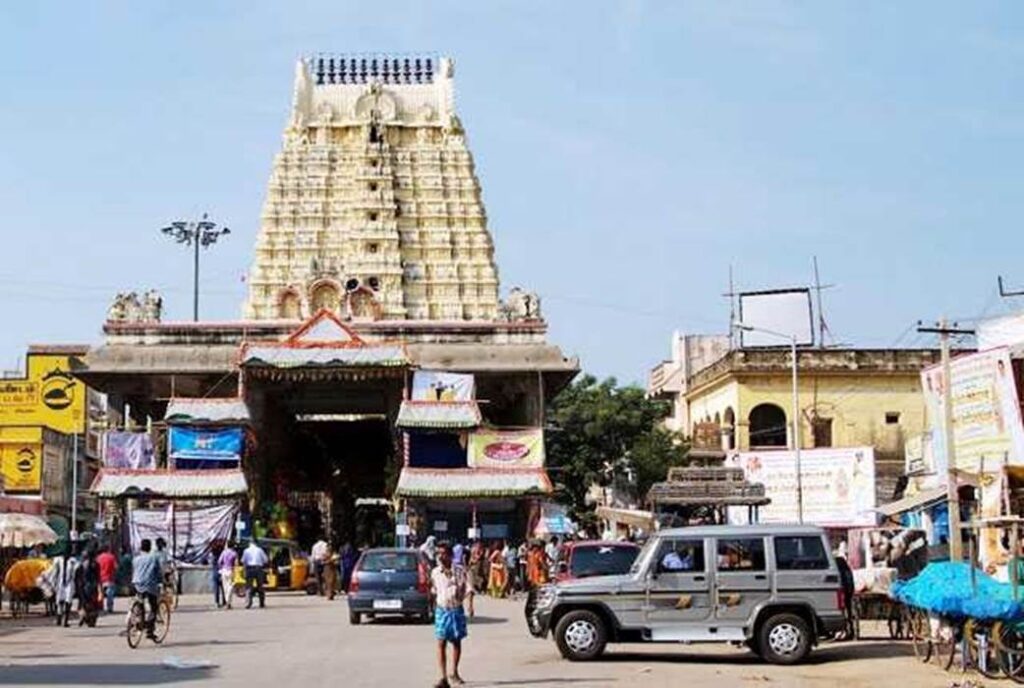
Photo by author, 1989
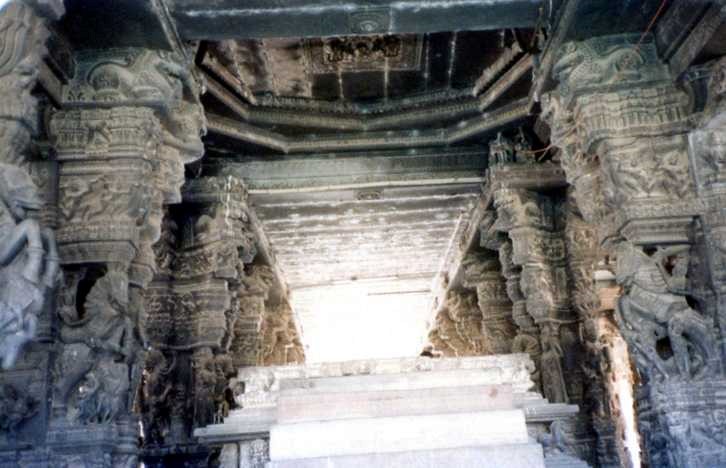
Photo by author, 1989
According to the guide, the building’s orientation was calculated so that the morning sun would be projected from the high window at the top of the photo into the colonnaded hall at the bottom.
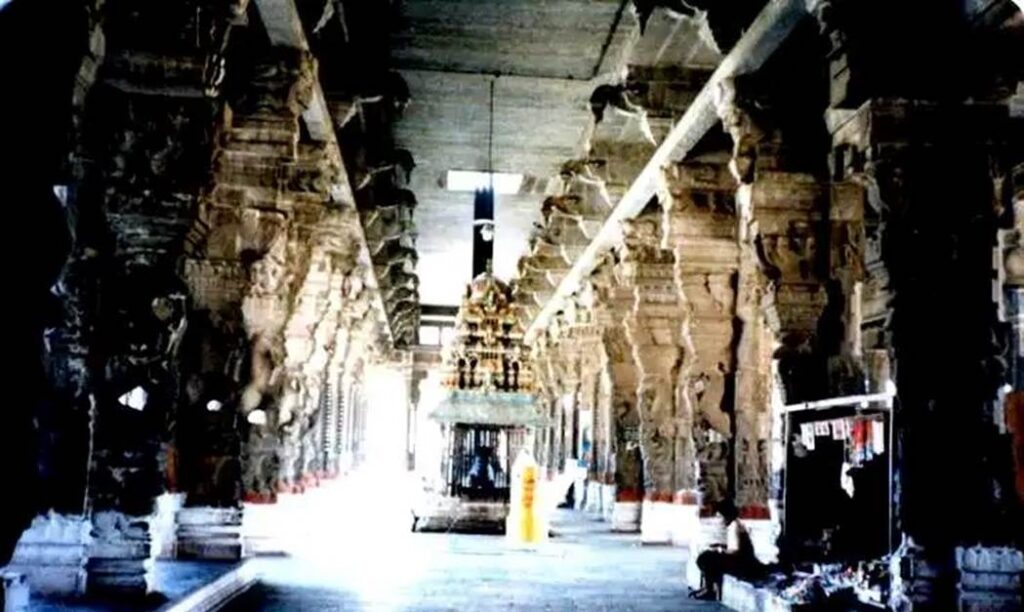
Photo by author, 1989
Even so, I never encounter any foreign tourists, including Japanese people.
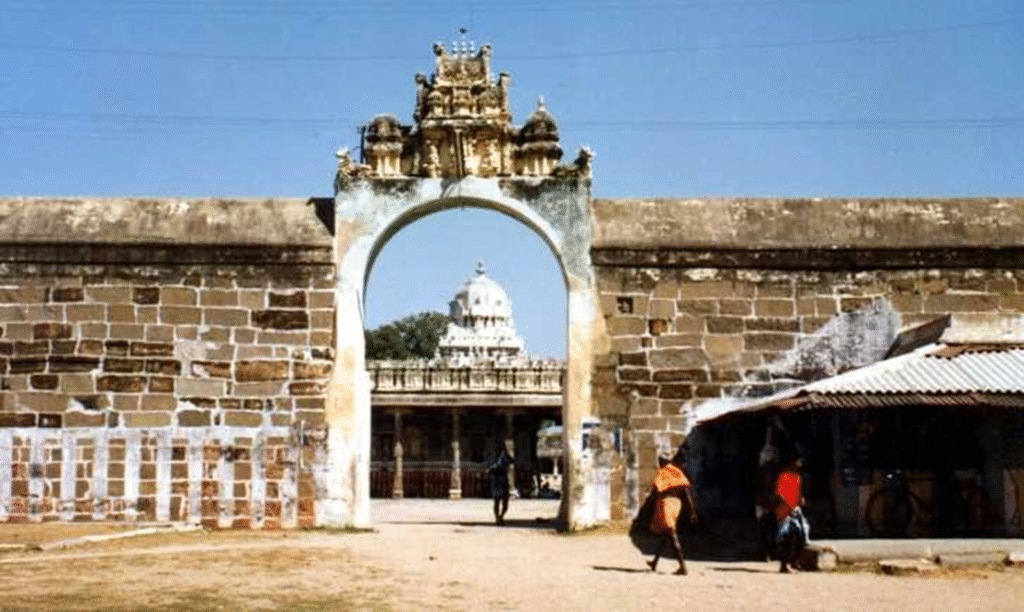
Photo by author, 1989
SCULPTURES
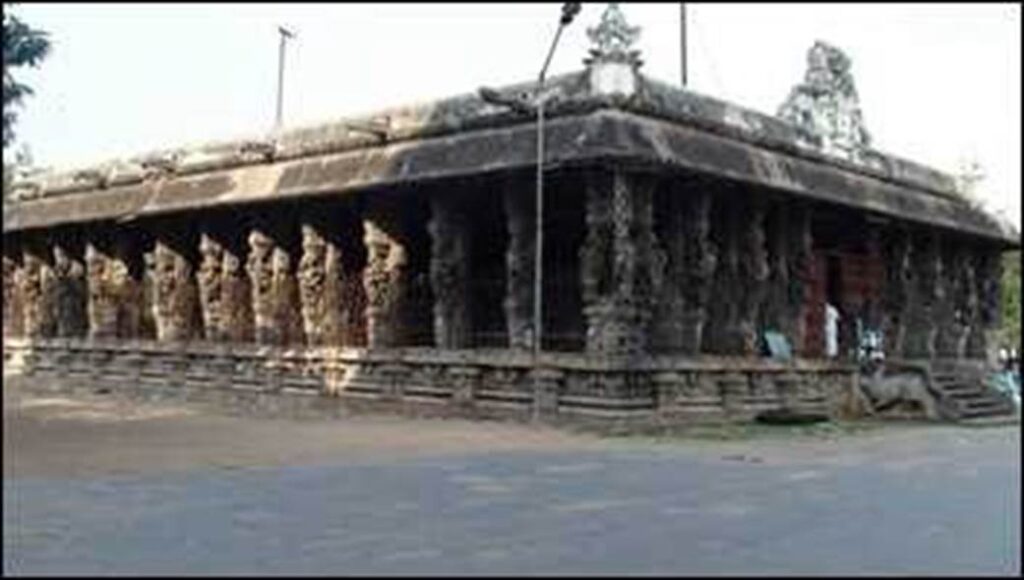
Photo by author, 1989
The overwhelming work of the sculptors!
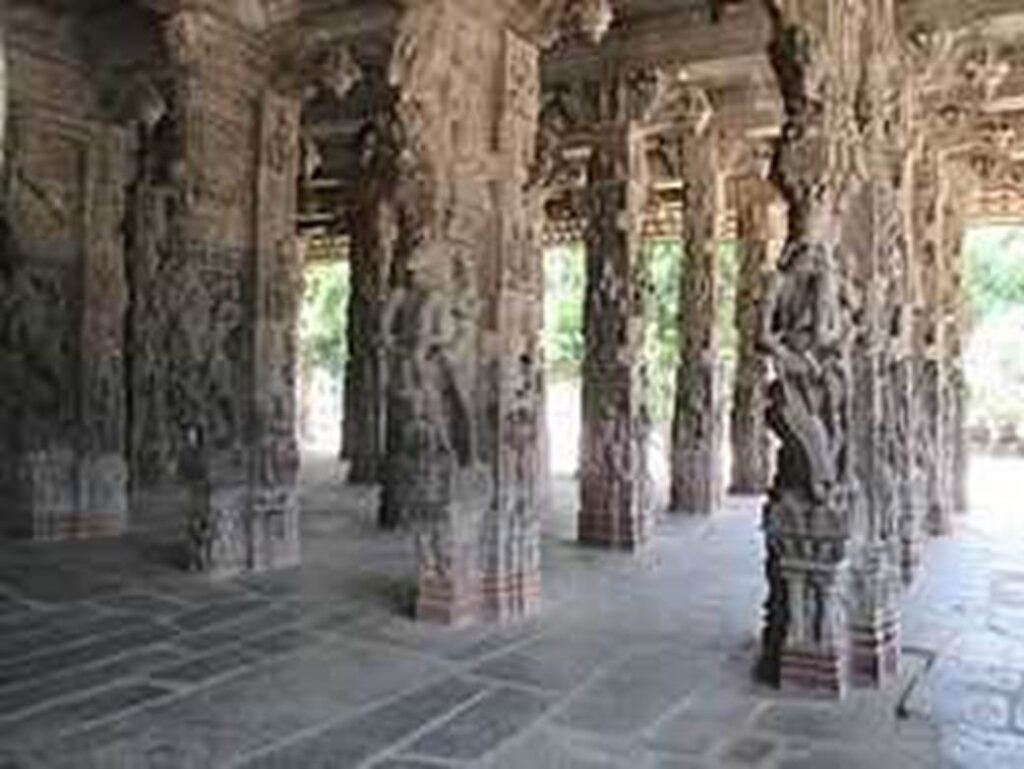
Photo by author, 1989
Worshippers
Young woman meditating in the square inside the temple.
100% of Indian women were wearing traditional saris. The young woman meditating stood out exceptionally as she was wearing loose western clothes.
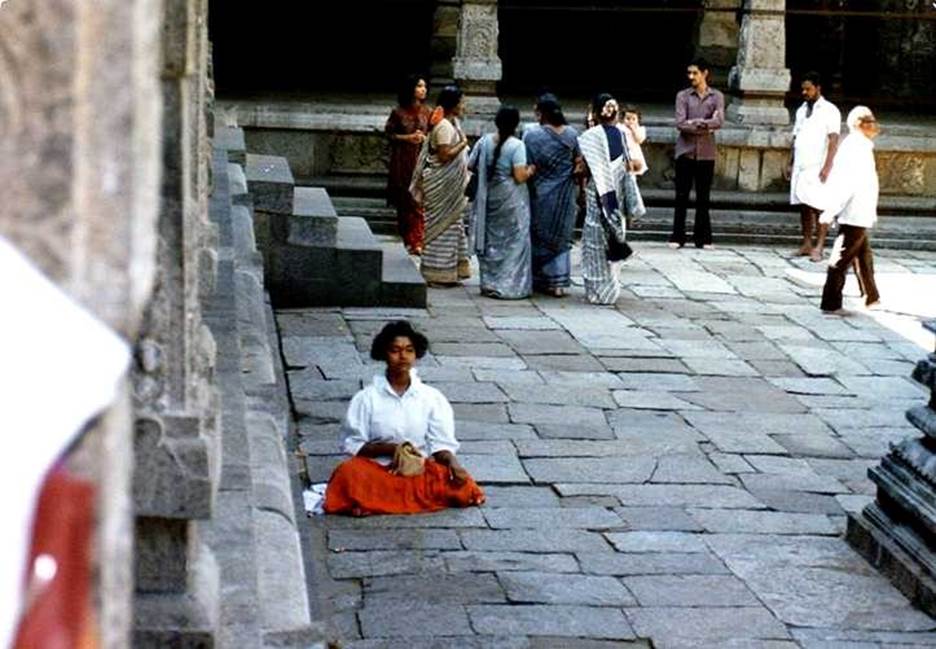
Photo by author, 1989
An elderly man who arrived at a holy place and felt sick, and the worshippers who cared for him.
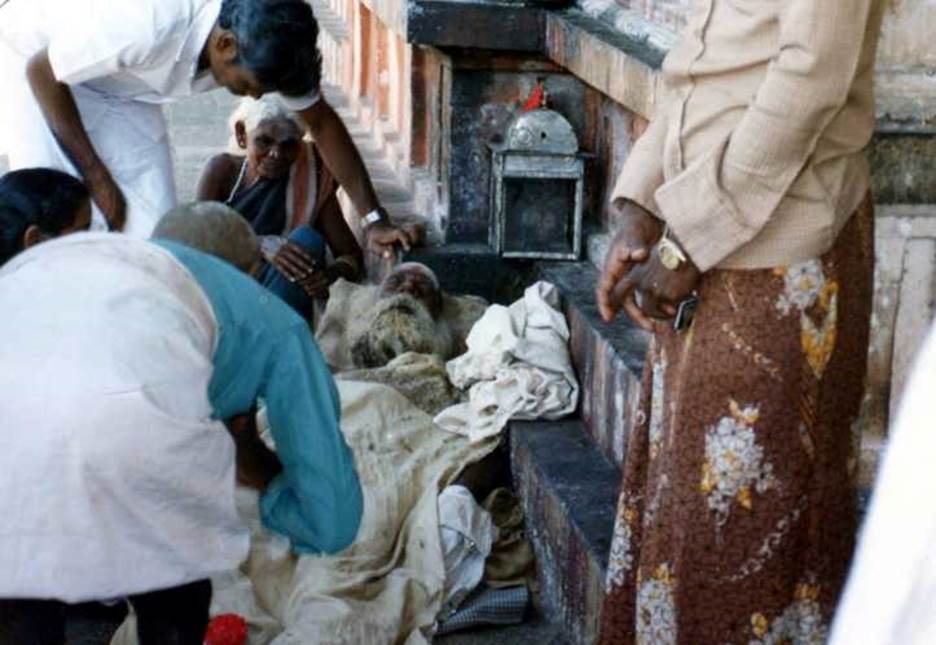
Photo by author, 1989
A sculpture of an entire stone pillar.
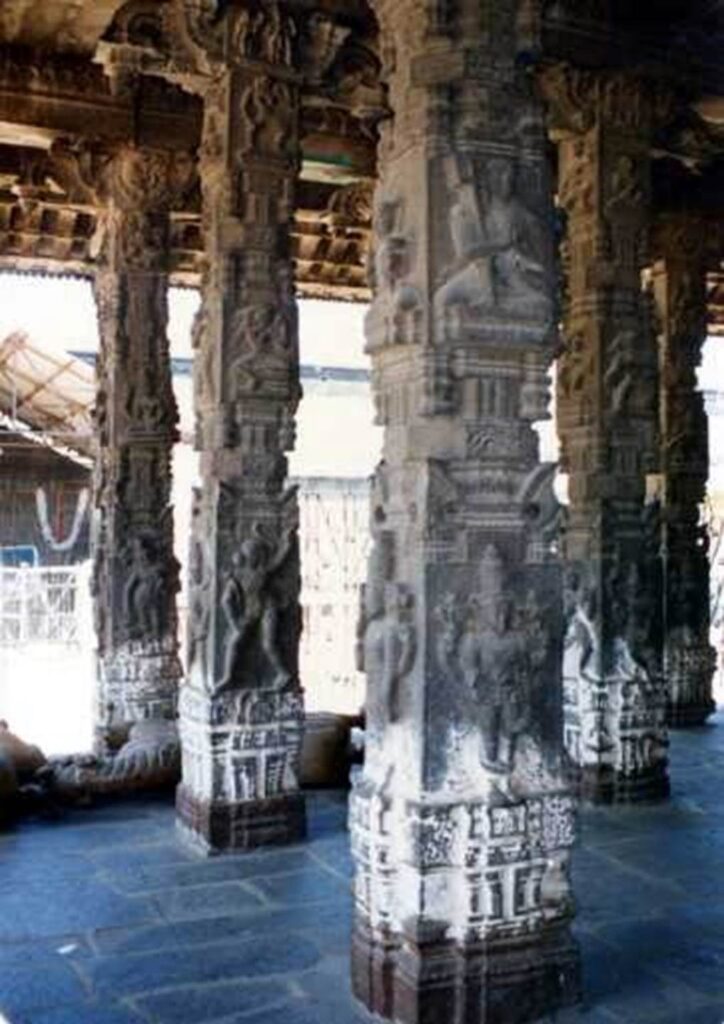
Photo by author, 1989
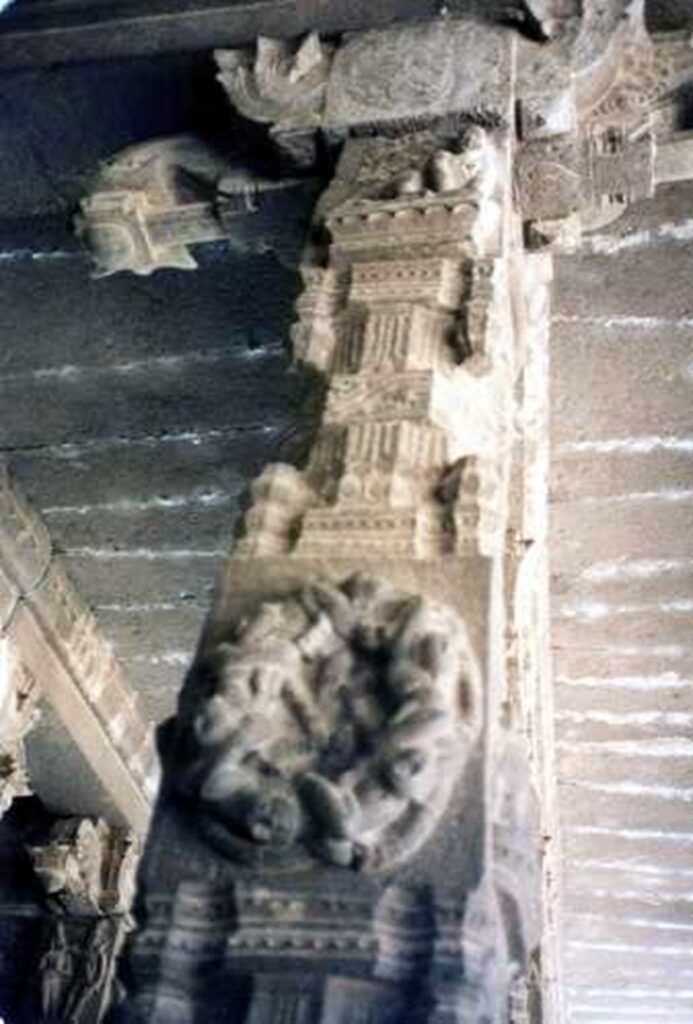
Above: A sculpture on a single whole stone pillar.
Photo by author, 1989
Outside the temple, there are always shops like this
When you go outside after visiting the solemn temple, you will be greeted by a relaxing shop. It is a place for chatting and for worshippers to buy souvenirs for their hometowns. After all, the women are dressed in traditional sarees.
For some reason, the child is dressed in Western clothes and stands out.
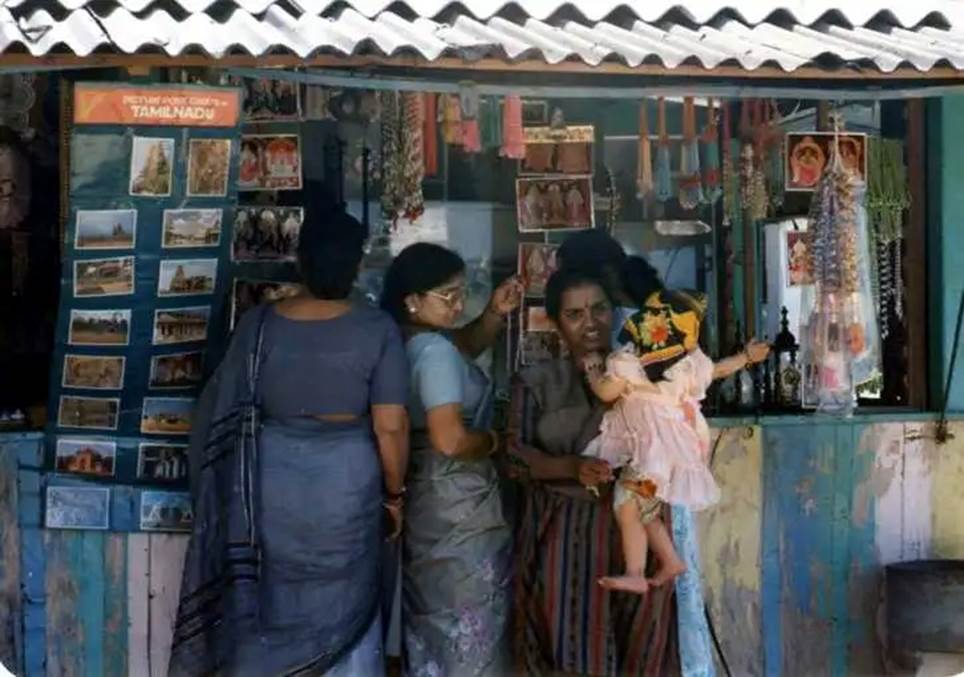
Photo by author, 1989
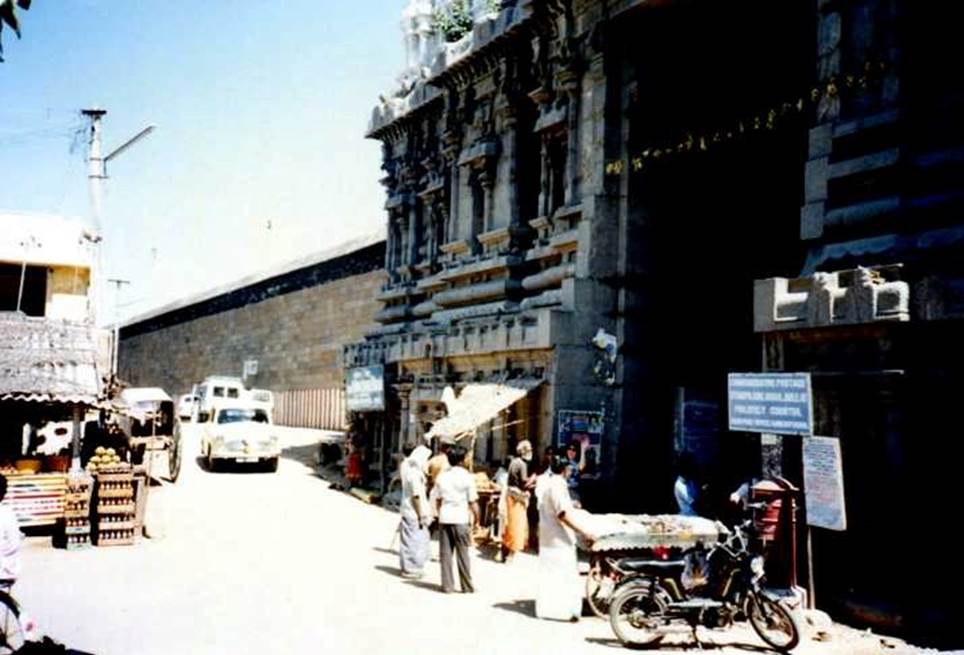
Photo by author, 1989