JAP | ENG
Southeast Asian Waterfront
#2/6
MALAYSIA
The southernmost point of the Continental Asia
The Strait of Malacca is a key shipping point connecting the Indian Ocean and the South China Sea to the Pacific Ocean.
The Port of Singapore, located at the entrance to the Strait of Malacca, is at the southernmost point of the Asian continent Landmass, and due to its outstanding geographical location, it is the most important transit point connecting Europe, the Middle East and the Far East Asia.
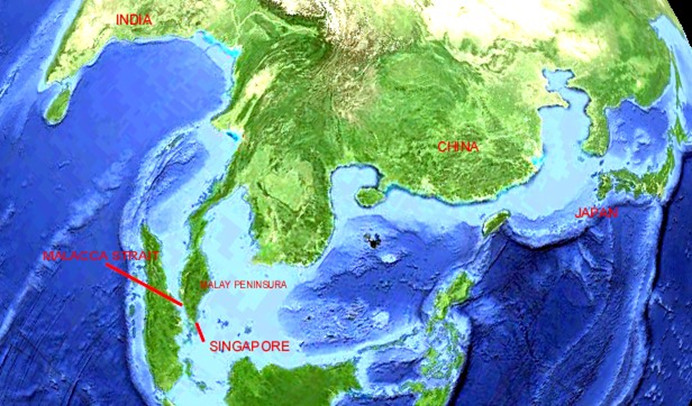
Malay Peninsula and Singapore Island
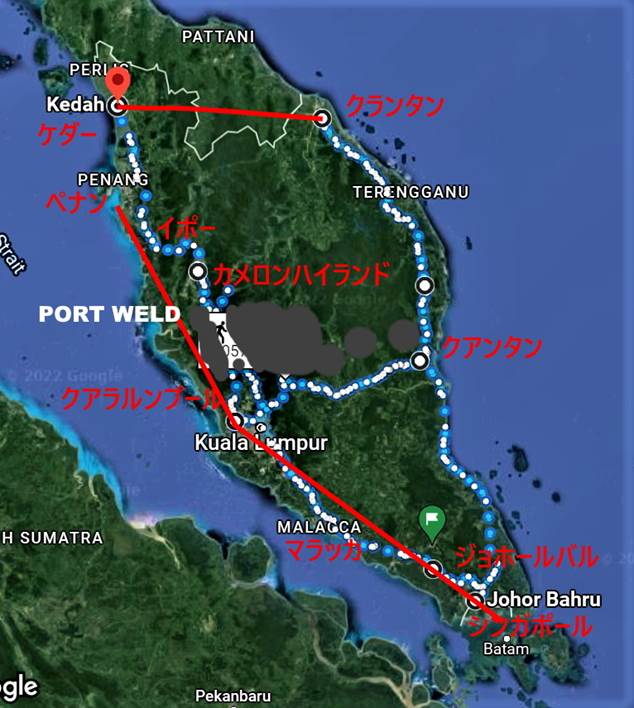
Author’s route 1 (by air-red line)
Author’s route 2 (by land-white/blue dots)
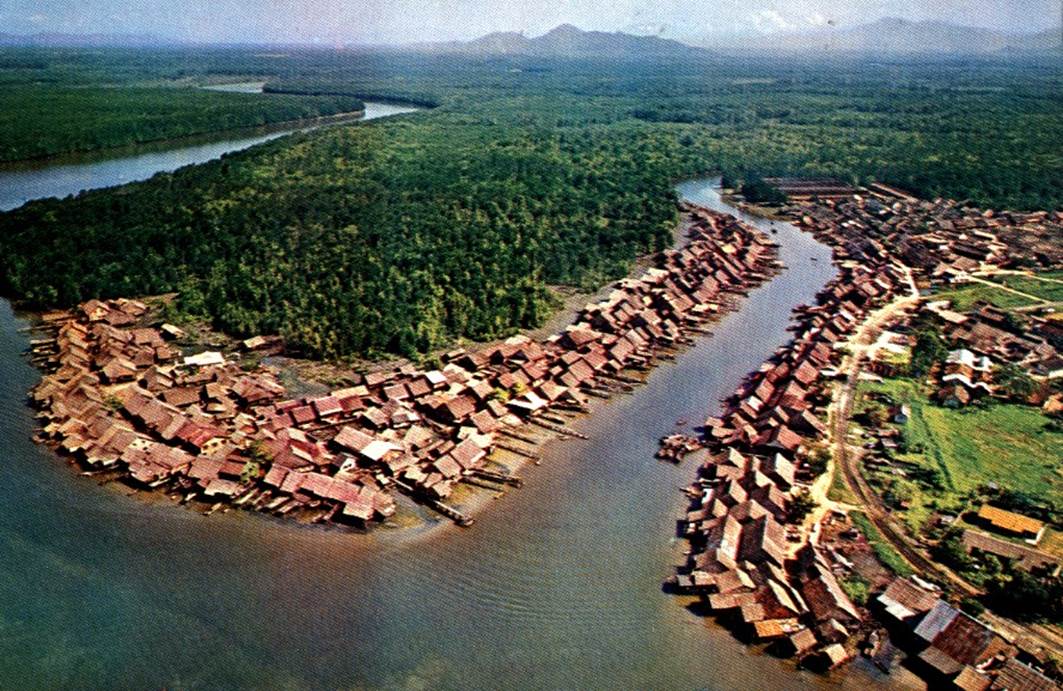
A POSTCARD OF PORT WELD, MALAYSIA
In 1969, I was stationed in Singapore for work, and a few months later, I was browsing through various postcards at a store on the corner.
And one of the photos caught my eye and made a strong impression on me.
Isn’t this what Southeast Asia is all about?
For a long time after that, I couldn’t get this floating settlement out of my mind, but I couldn’t identify its location for several decades.
The reason for this was that when Malaysia was a British colony, it was called Port Weld, and after independence, the name was changed to Kuala Sepetang in Malay.
During that time, I have been thinking about what it means to live on water, and I have been able to see and hear various similar floating towns in Southeast Asia, so I would like to write about them here.
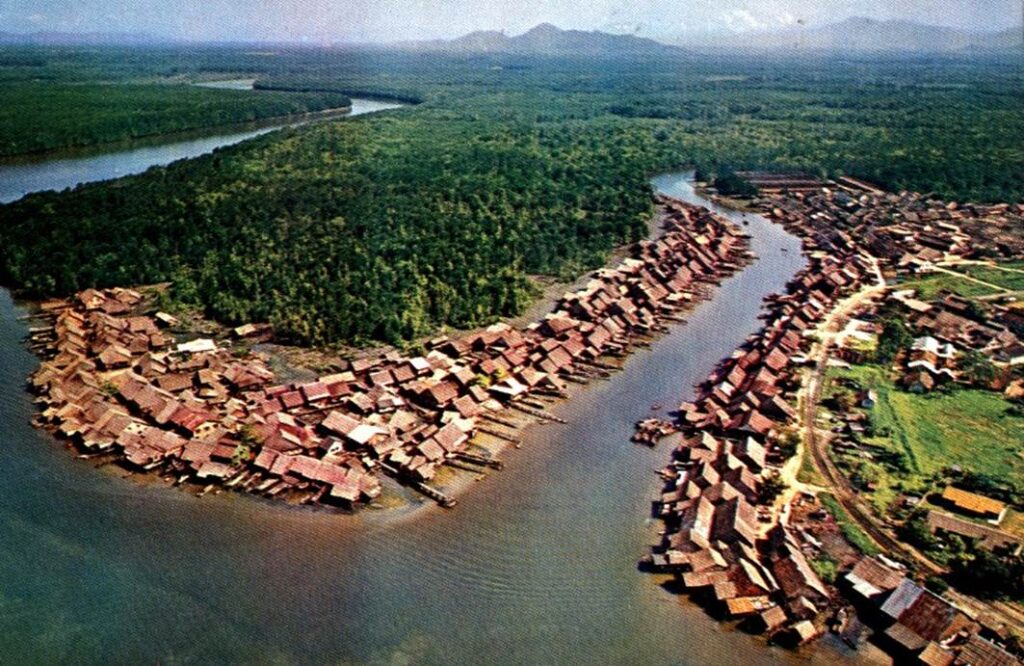
KUALA SEPETANG (FORMERLY PORT WELD) Perak, Malaysia
KUALA SEPETANG
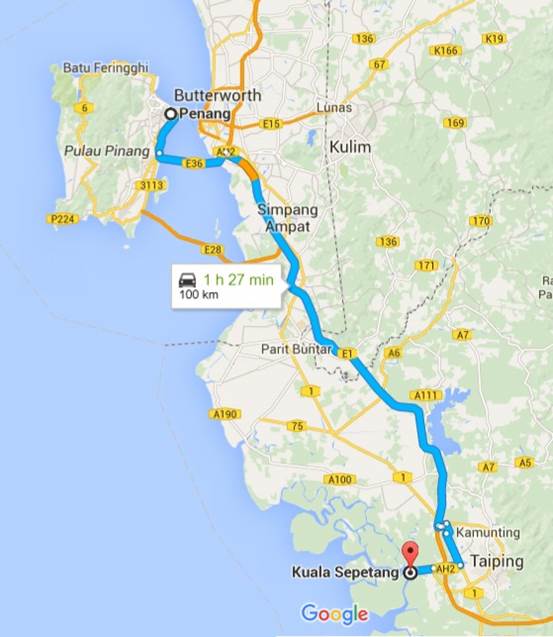
Crossing the Penang Bridge, which connects Penang Island in Malaysia to the Malay Peninsula, and travel about 100 kilometers to the south, and you will arrive in Taiping. In the middle of the 19th century, tin mines were discovered in the area around the city, attracting immigrants and rapidly growing rapidly.
In the middle of a mangrove swamp
Later, Port Weld (Kuala Sepetang) was developed inland near the mouth of the mangrove swamp as a tin shipping port.
Malaysia’s first railway was built between Taiping and this port around 1885.
Its service ended in 1987 due to the depletion of the tin mine.
Port Weld (Kuala Sepetang) is located in the middle of the mangrove swamp
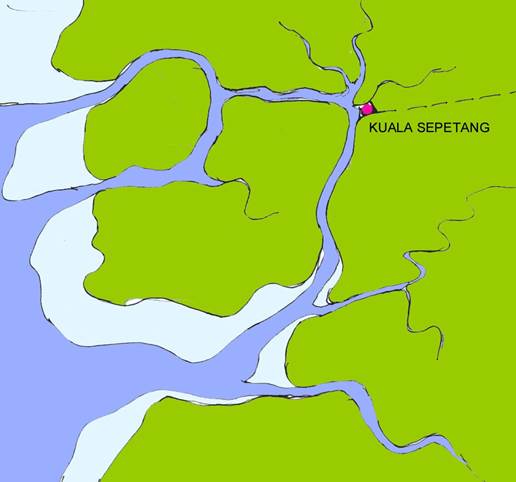
The light blue part represents the mangrove forest Author’s sketch
Abandoned station building
It is now a museum
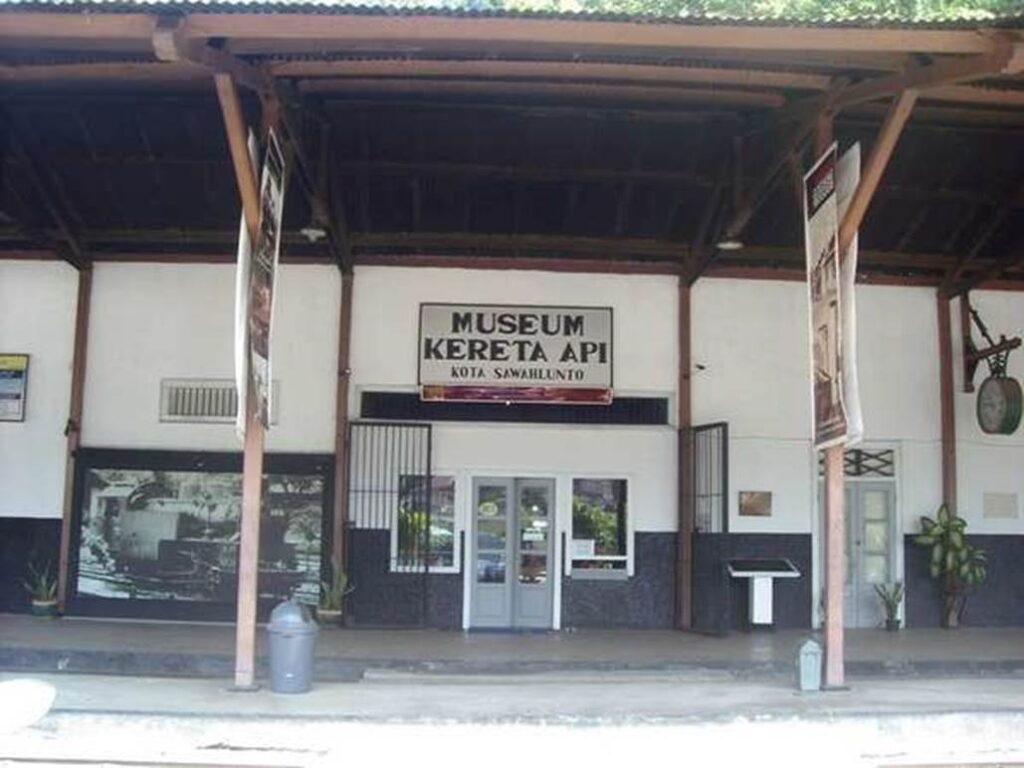
Abandoned station, Port Weld
Port Weld Harbour was built by cutting through a mangrove forest
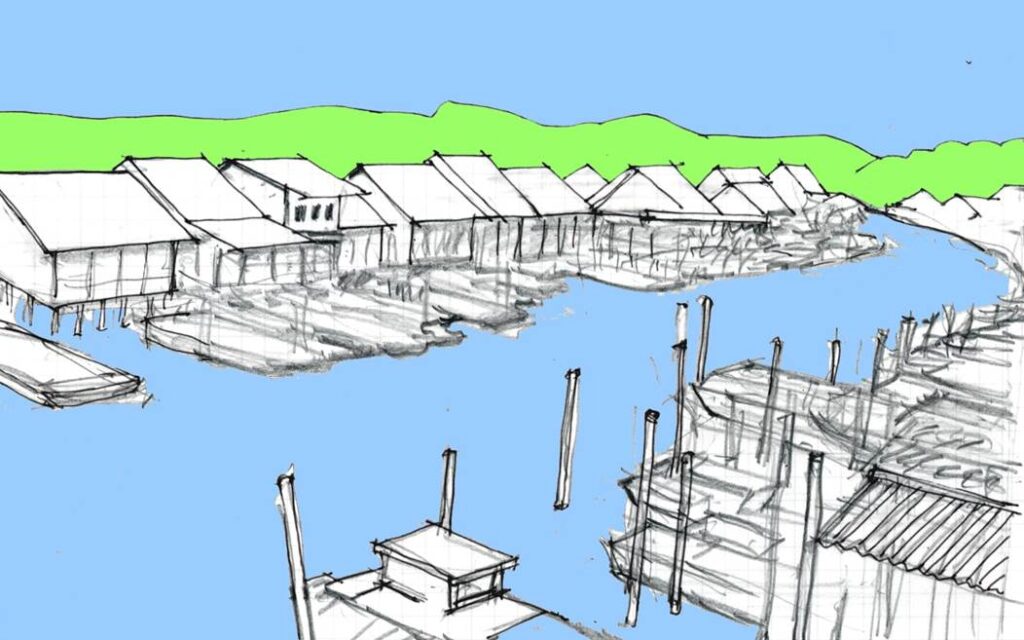
Tin ore was transported by ship to Penang Island, 100 kilometers from this port, smelted and exported to other parts of the world.
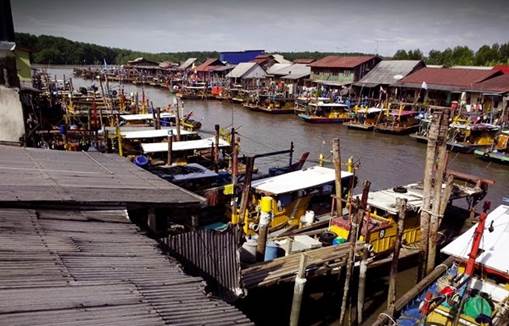
Port Weld
Tsunami and Mangrove Forests
On December 26, 2004, the day after Christmas, a huge earthquake and tsunami struck off the coast of Sumatra. The death toll reached 250,000 people. The tsunami reached the southern coast of Sri Lanka and the coast of the Bay of Bengal, India, thousands of kilometers away. Later, I visited these areas to see the traces of the tsunami with my own eyes and heard explanations from the local people about what it was like at that time. The tsunami also hit Puket Island in Thailand and Penang in Malaysia, and hotels on the beach were devastated.
Strangely, the tsunami did not cause any damage to the nearby shores of the Straits of Malacca (Malay Peninsula and Sumatra Island) or Singapore, which is at the deepest part of the Straits. I have been pondering the mystery of this natural phenomenon for many years. The following is my hypothesis, but the ecosystem of mangrove forests that grow densely deep into the beaches on both sides of the Straits of Malacca must have play a role in absorbing the tsunami and weakened its power.
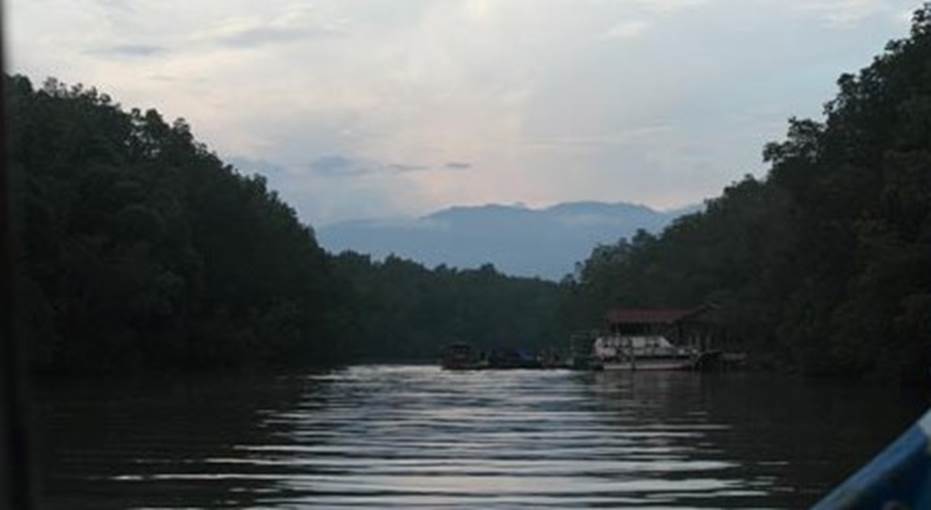
Mangrove forests on the seaside and at mouth of rivers
The complex roots of mangrove forests that infest the coast act as natural breakwaters to prevent beach erosion.
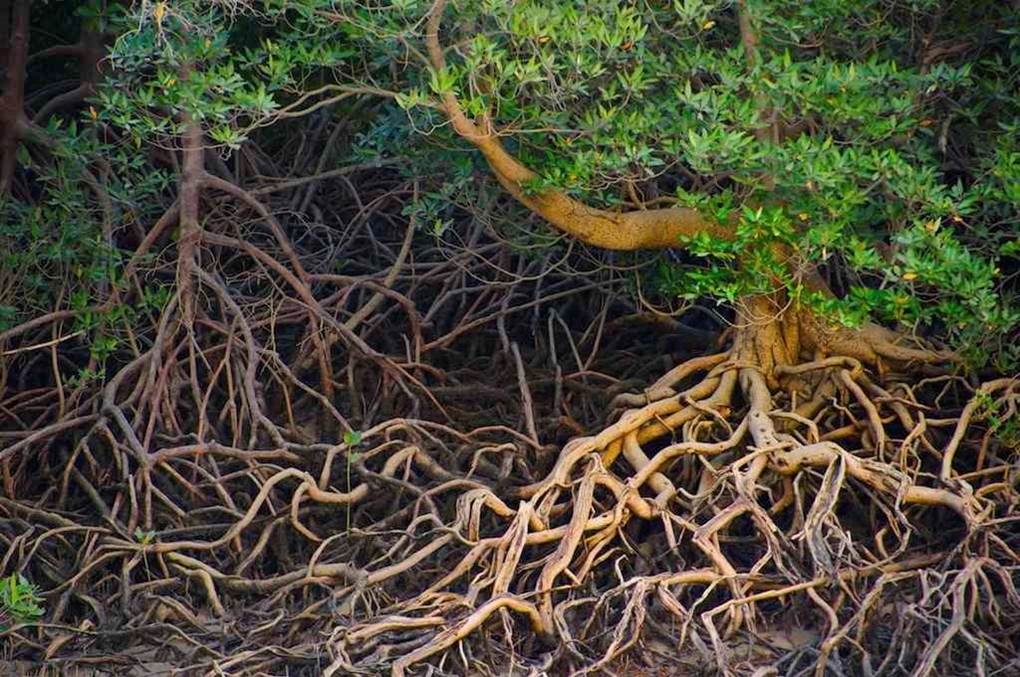
Stems growing from the roots of mangrove forests, which are made up of various trees that can tolerate saltwater. (When I walk barefoot on this, the soles of my feet hurt).
The world of fishermen and mangrove forests
There are many fish and shellfish living in the brackish waters.
In particular, it is a treasure trove of small shrimp, and it is always caught in fishing villages.
I ask the fishermen to share the shrimp that are he is boiling in a kettle near the guard house. A heaping pile of boiled shrimp is sprinkled with salt and eaten by everyone. After eating, I counted the amount of shrimp I had and found that there were 42 of them.
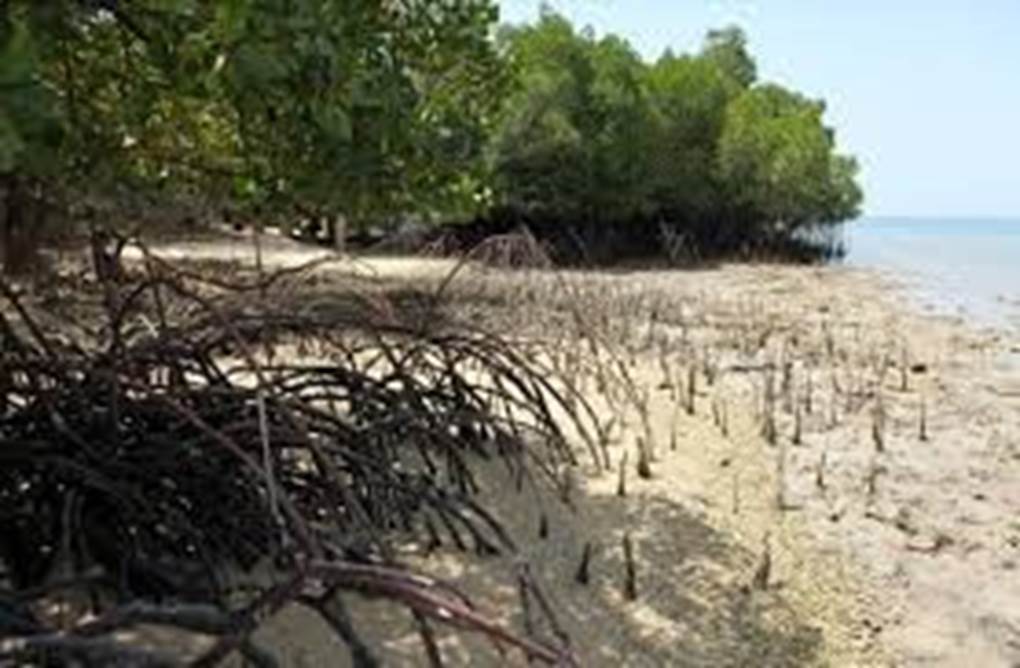
The mangrove forest beach in Malaysia.
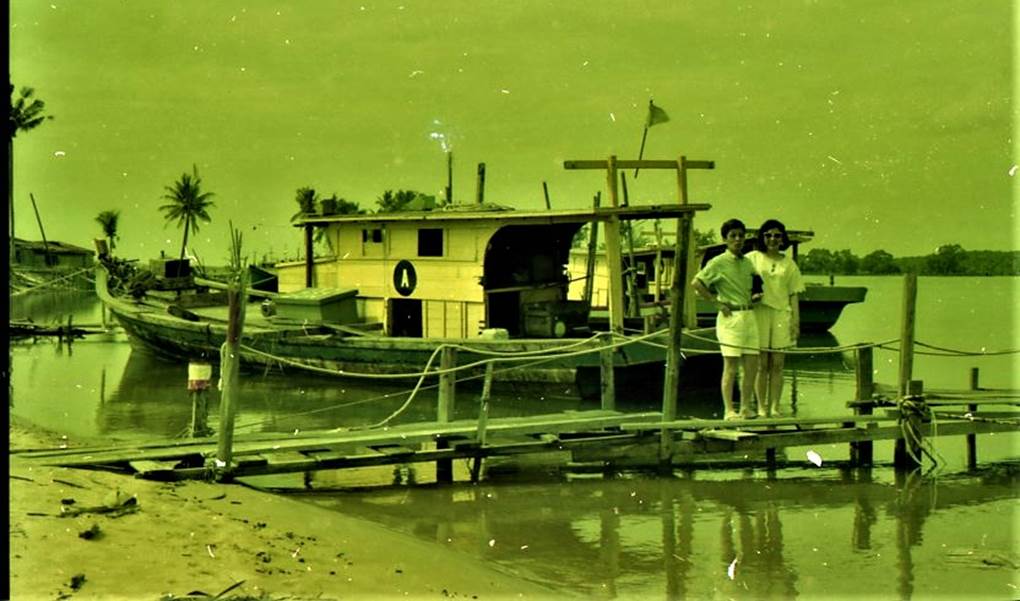
Photo of author, 1970s
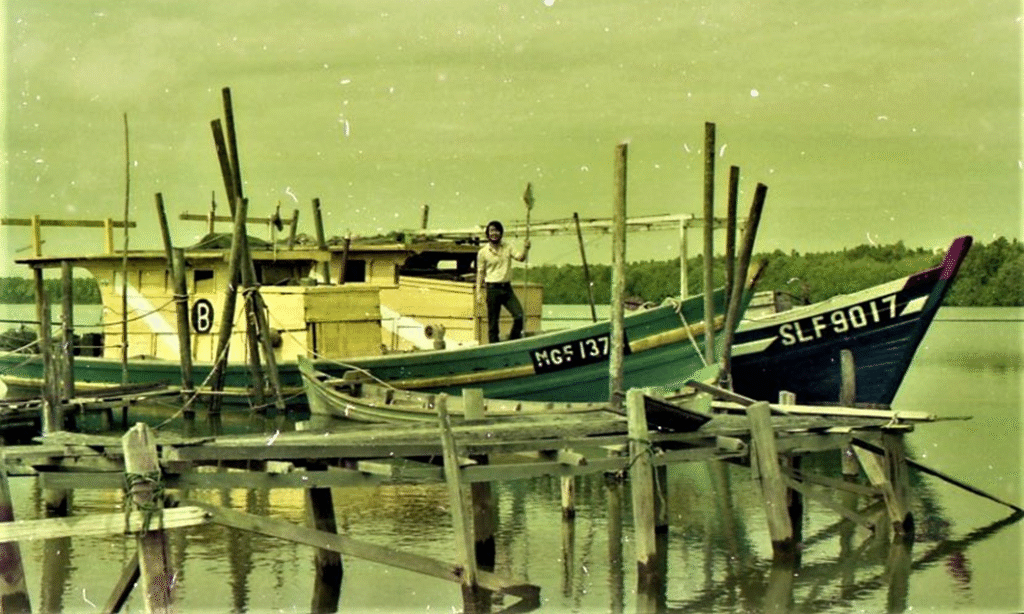
Photo by author, 1970s
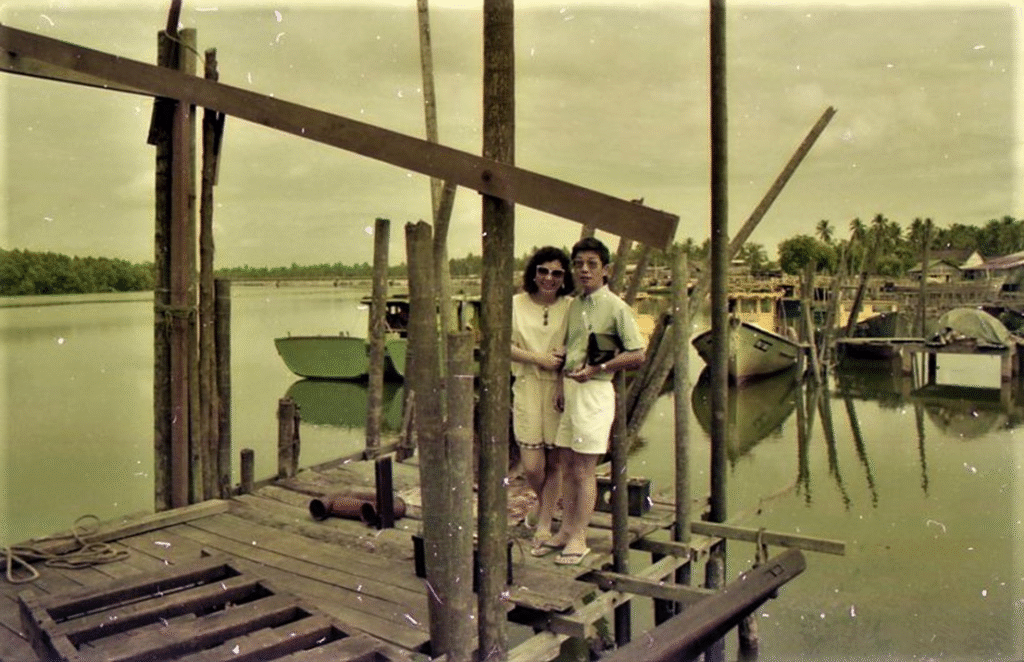
Photo of author, 1970s
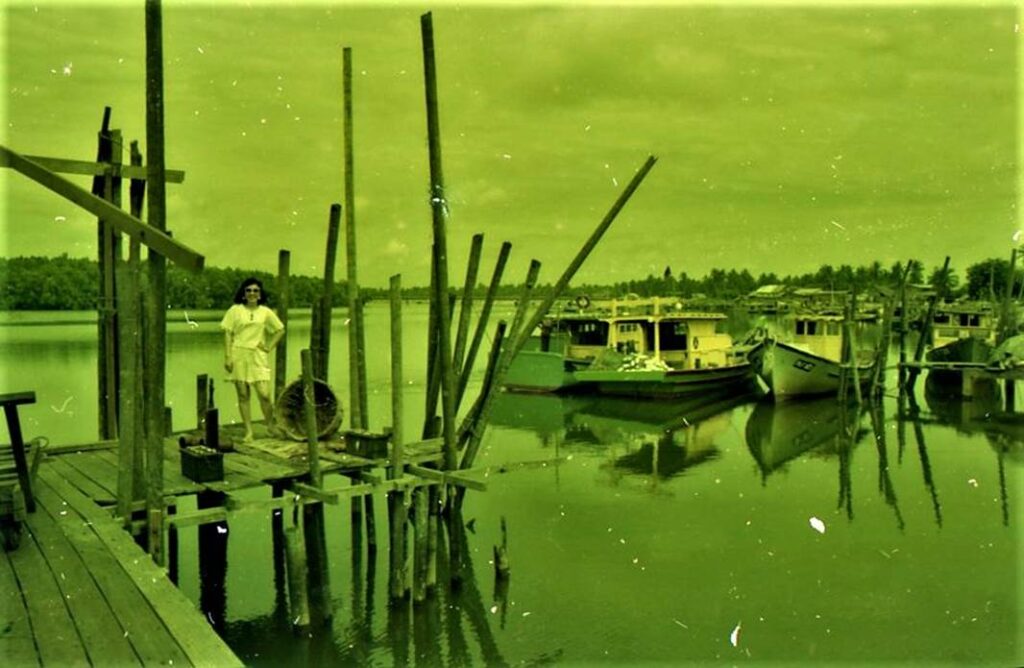
Photo by author, 1970s
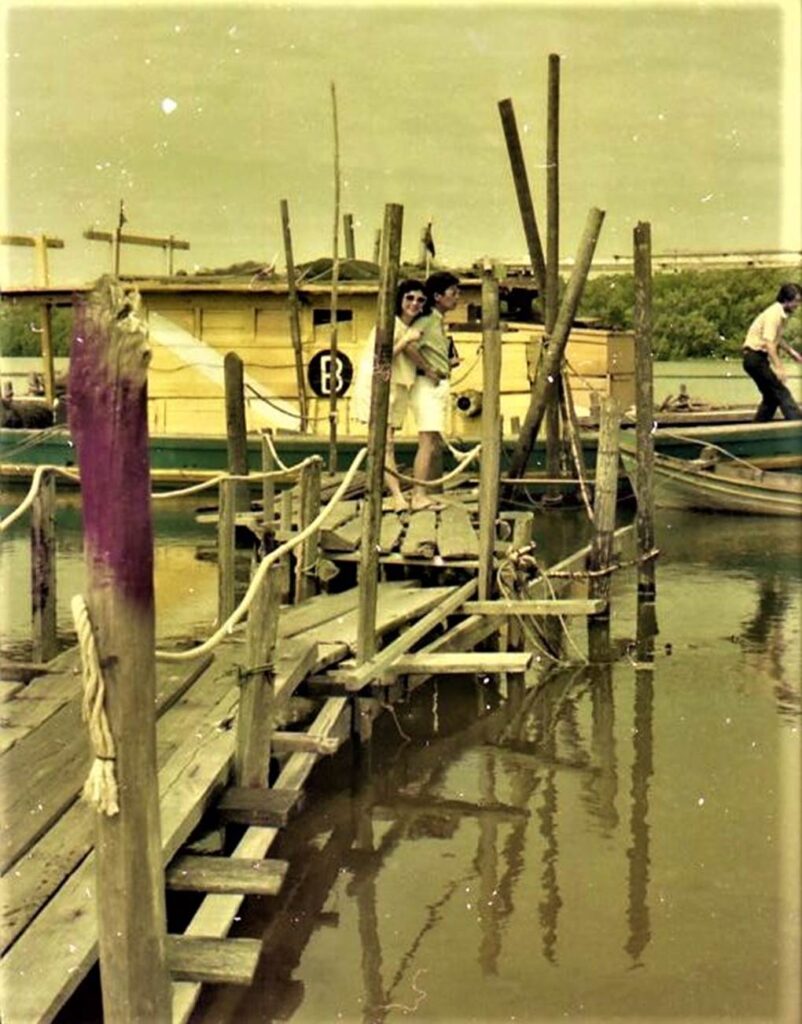
Photo by author, 1970s