JAP | ENG
Let’s go to the other side of the world #3/3
Singapore→ Rio de Janeiro
Travelling abroad in 1962
Boisbain Boarding Diary 3
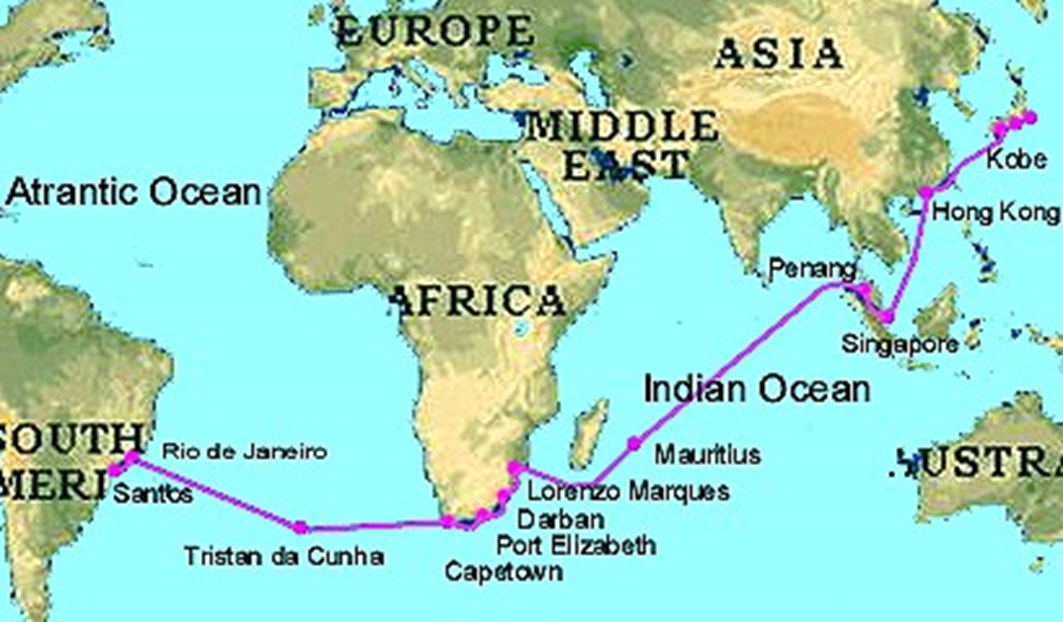
●Yokohama Jun11 ●Kobe Jun17 ●Hong Kong Jun22/24 ●Singapore Jun28/Jul02
●Penang Jul06 ● Mauritius Jul15 ● Lourenço Marques Jul20 ●Durban Jul22/25
●Port Elizabeth, Cape Town Jul30 ●Rio de Janeiro Aug08 ●Santos
From Singapore to the Indian Ocean.
And for the first time crossing the equator
After that, the ship passed Penang Island and safely entered the Indian Ocean, saying goodbye to the Asian continent, and an Equator Festival was held on the ship in the Indian Ocean.
For people in the Northern Hemisphere, including Western passengers at the time, the moment of crossing the equator and entering the Southern Hemisphere was undoubtedly a major event in their lives
Mauritius Island
Mauritius was an uninhabited island before Portuguese navigators arrived in 1507. In 1638, the Dutch began colonizing the island, but abandoned it in 1710.
It was a French colony from 1715 to 1810.
It was a British colony from 1810 to 1968, before gaining independence.
The current population is 1.26 million in 2016.
Most of the population is Indian (68%) and African (27%).
This once uninhabited island is now an exotic place with the highest population density in Africa and the third highest GDP per capita in Africa.
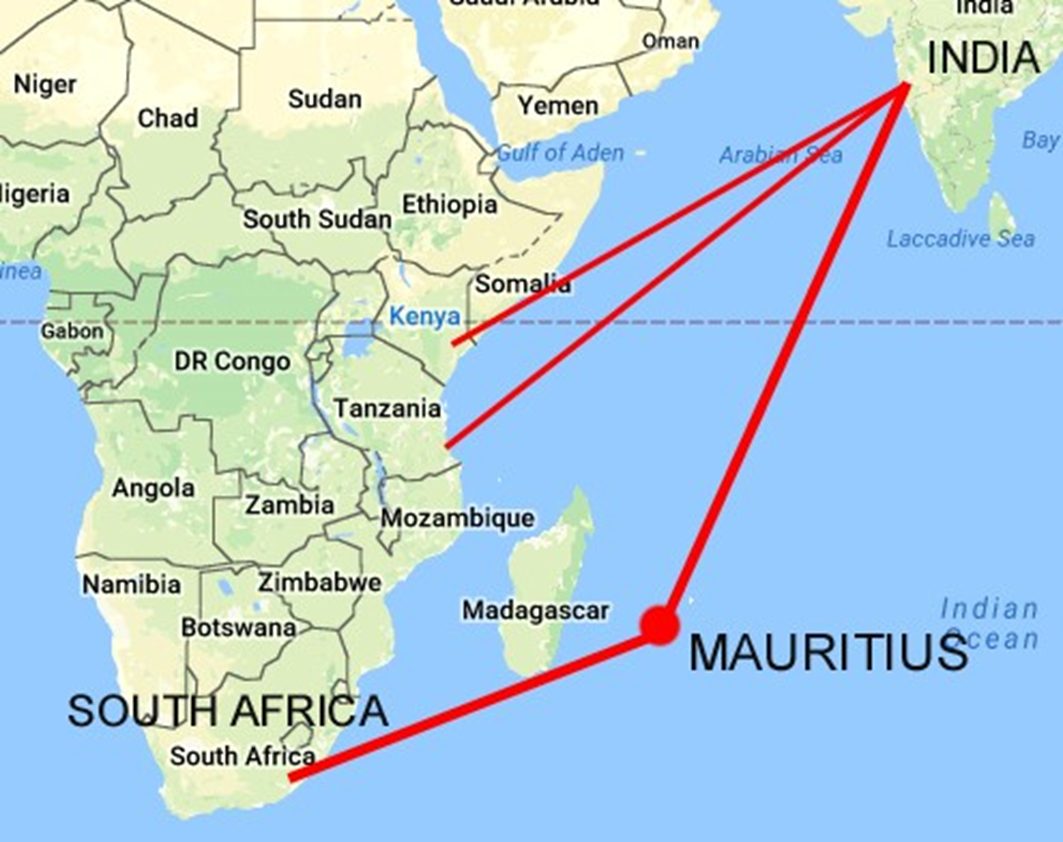
Mauritius Island
Portuguese Mozambique
After dropping anchor in Port Louis on the island of Mauritius, I was allowed to land for the first time in a long time in the Portuguese territory of Mozambique.
I went to a stylish cafe in the capital city of Lourenço Marques (now Maputo).
The atmosphere here was different from the coffee shops I had been to in Tokyo at the time. NNot only was the coffee tasted better, but to my surprise, the waiters were Africans who spoke Portuguese.
It was here that I was able to speak Portuguese with a Latin African for the first time, a language I would need in Brazil in the future, a language I had learned from private tutors over the course of a year.
A building in the city of Laurenco Marquez ( now Maputo).
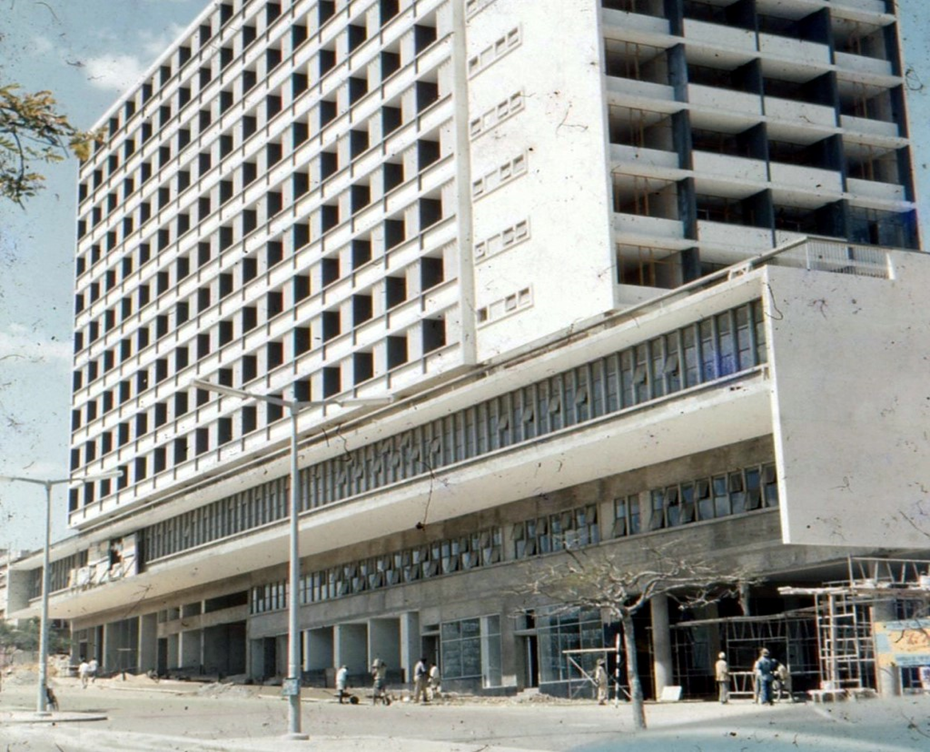
Photo by author, 1962
Colonial building Lourenço Marques.
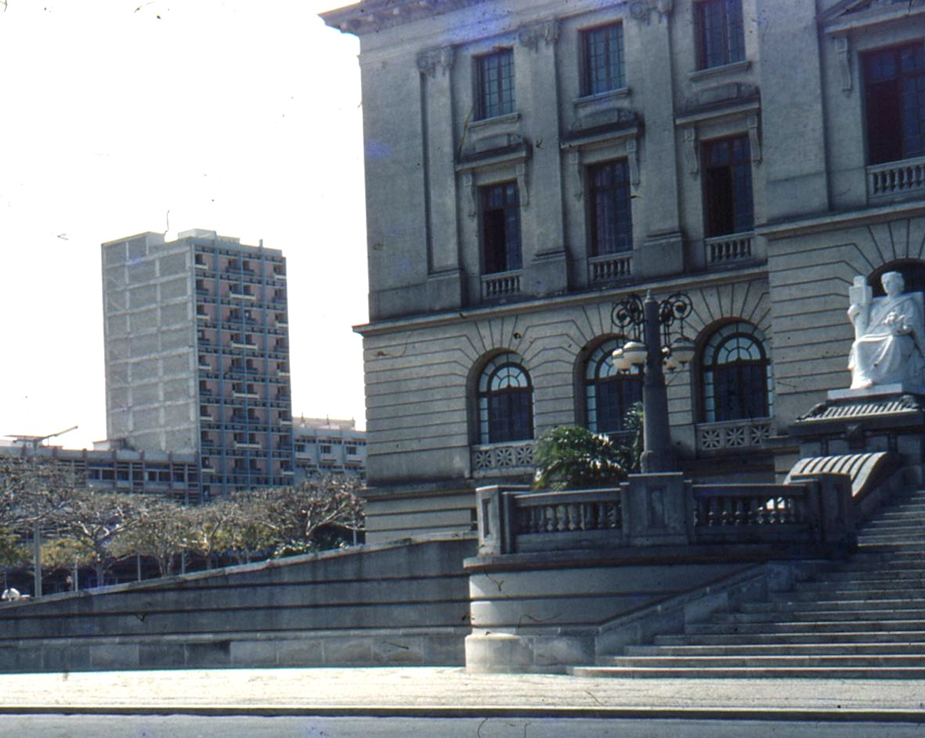
Photo by author, 1962
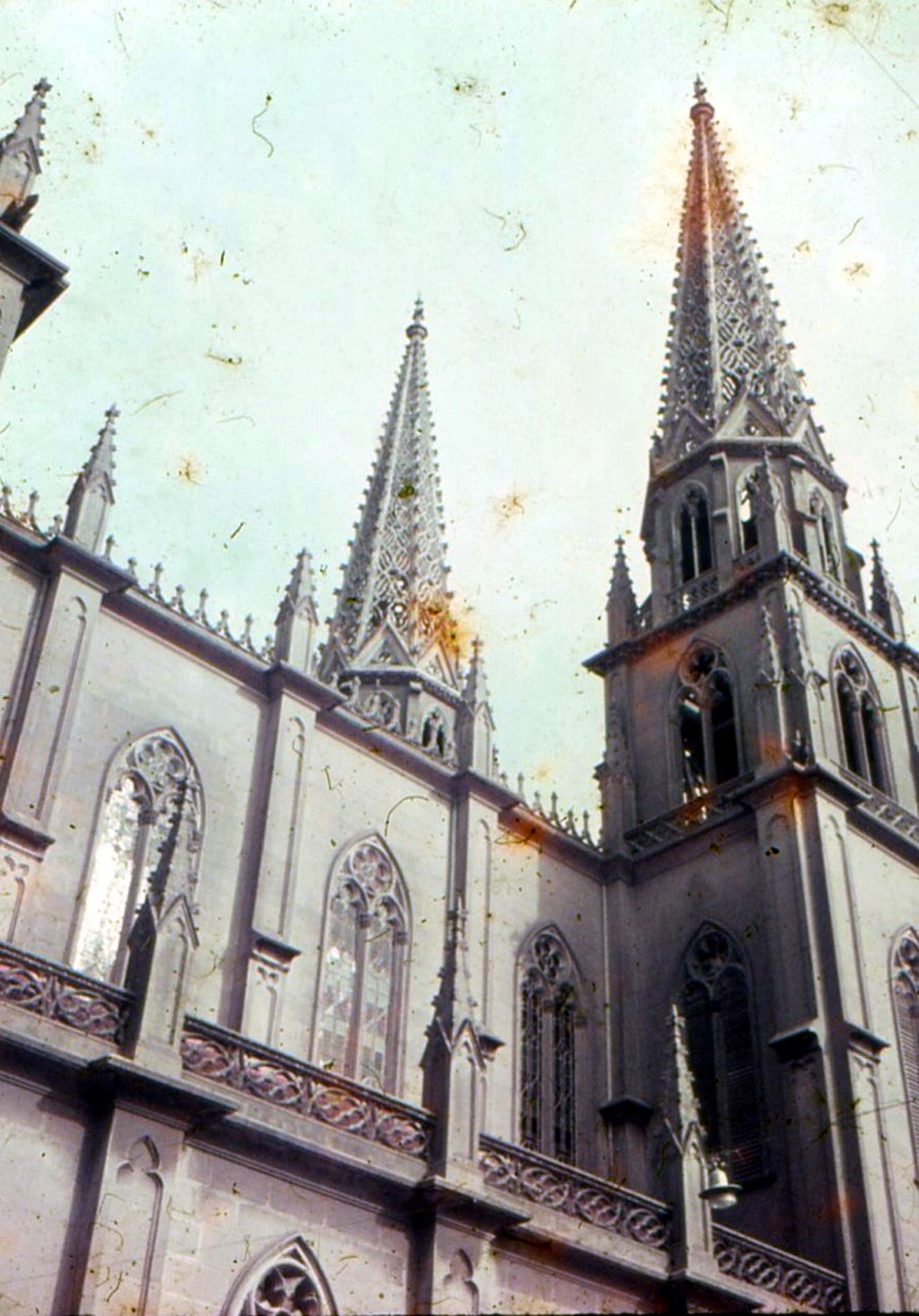
Laurenco Marques (now Maputo) Massive church.
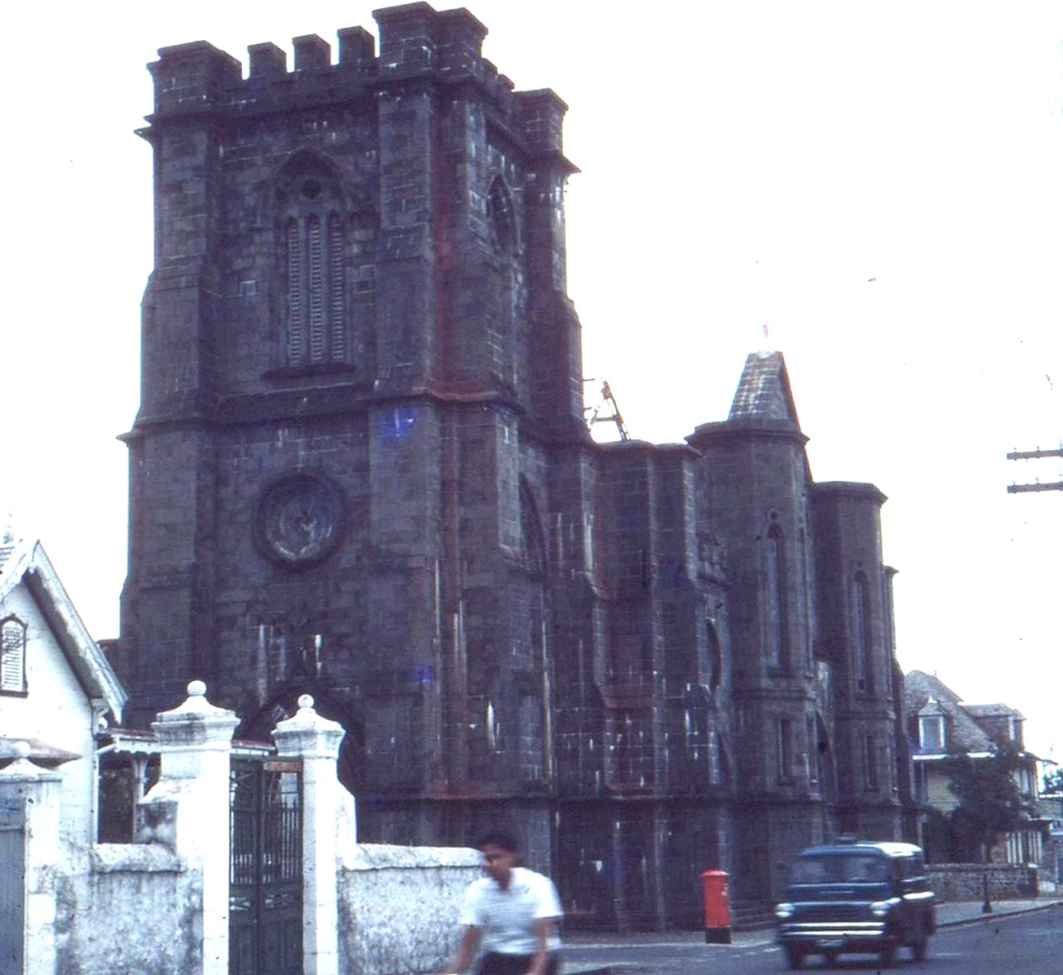
Photo by author, 1962
What happened to segregated South Africa?
In Durban, I knew that the ship would be anchored for a few days, so I decided to visit the African continent for the first time.
There, an unexpected scene awaited me.
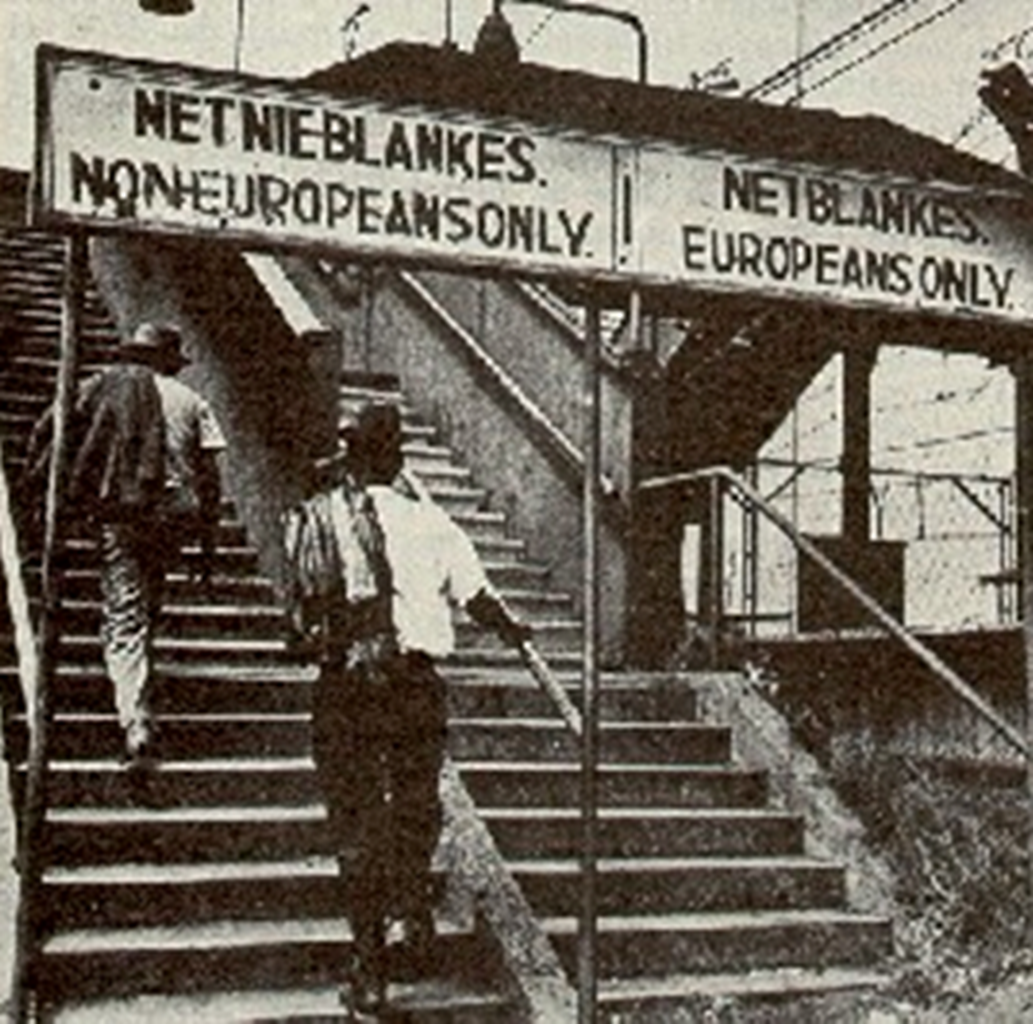
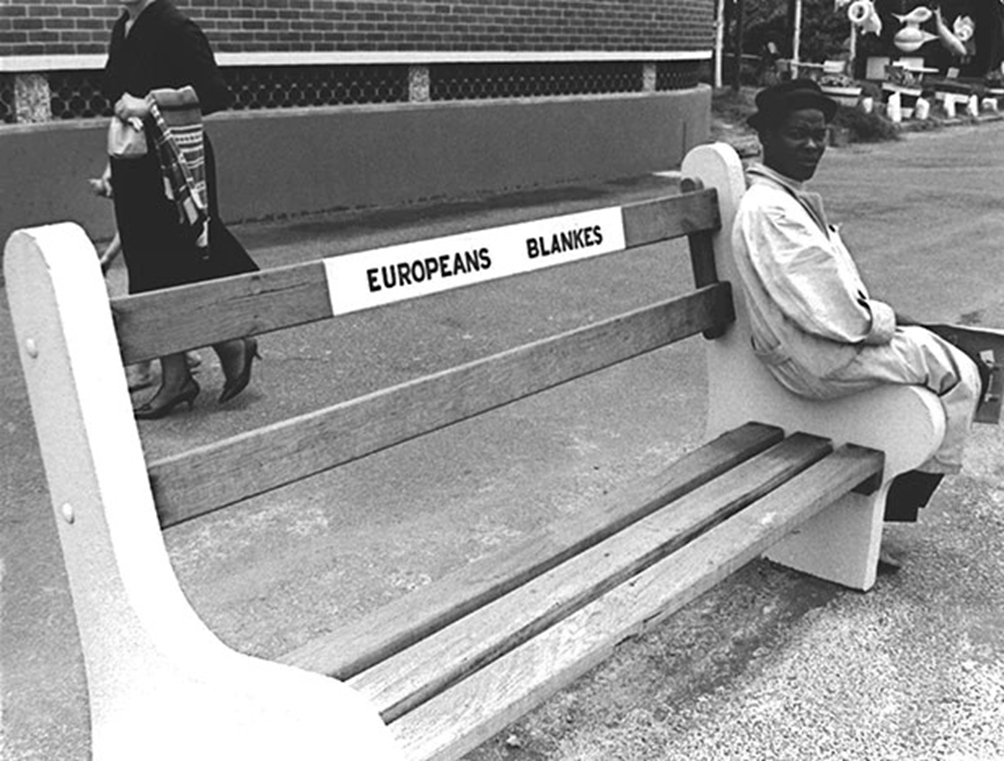
When I went to the park, there was a bench. There was a sign on the bench. It said “EUROPEAN ONLY”. When I went to eat at a restaurant, there were separate entrances for WHITE and COLOURED.
In this country, Japanese people are treated as quasi-white, which is creepy.
Next, I decided to take a bus. It was a double-decker bus, but the first floor was for white people and the second floor was for black people.
The first floor for white people was empty, so I thought I would sit there, but I felt quiet gazes and it seemed uncomfortable.
I thought I would try the black people’s seat on the second floor, so I climbed the spiral staircase and stepped inside.
Then, a loud commotion suddenly arose from the crowded car, and it became a big commotion. I realized that the commotion meant welcome, so I sat in an empty chair. Even in this racially discriminatory society, black people have not lost their inherent cheerfulness.
Relax in the shade of a tree in the city of Durban, South Africa.
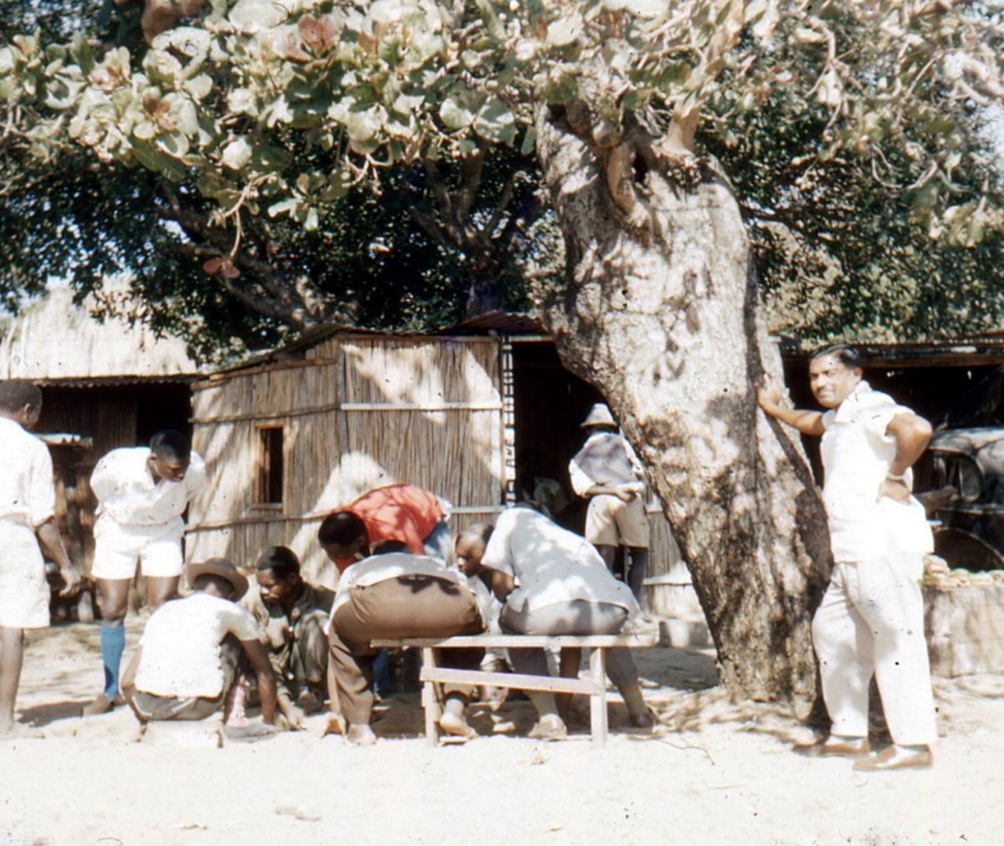
Photo by author, 1962
Local Zulu performance for tourism Durban, South Africa
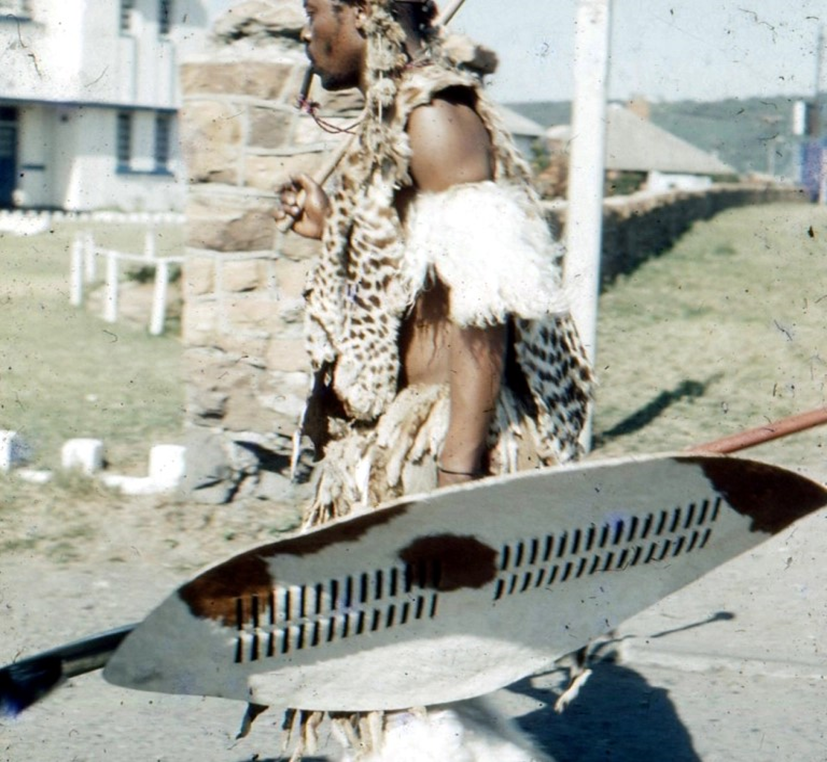
Photo by author, 1962
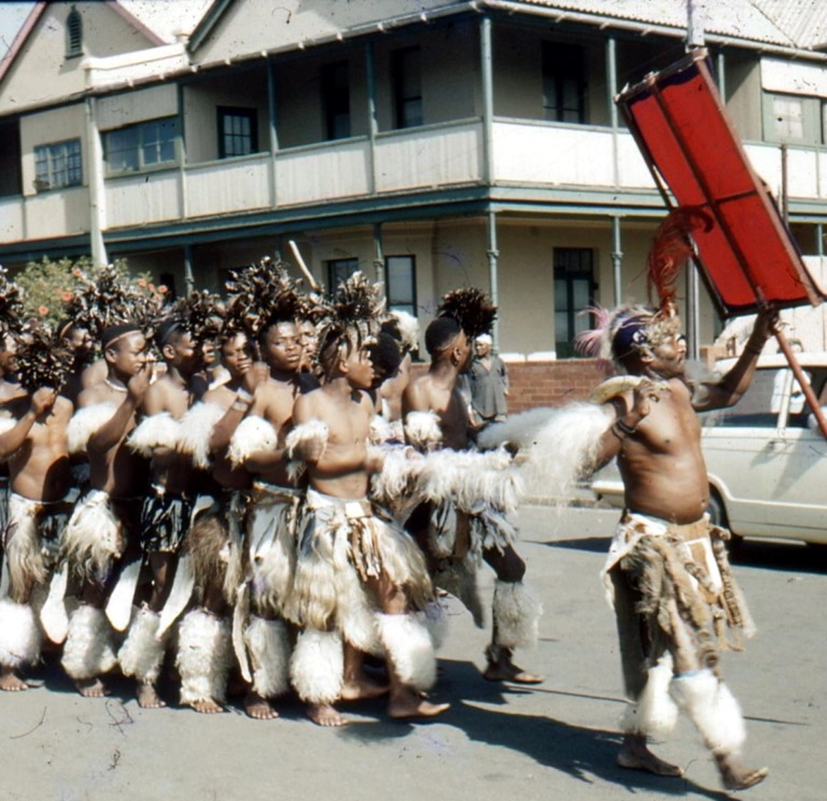
Photo by author, 1962
Since I had plenty of time, I wanted to take a train to see the interior of Durban, so I waited at the station platform.
A diesel train with 5-6 cars arrived.
Each car was divided into two sections: for whites and non-whites.
I got on the non-white section and enjoyed the view from the window, as shown in the photo on the left, and got off along the way.
In a village on the outskirts, an Indian man invited me to stay at his house, so I agreed for one night.
There, I was introduced to bedbugs.
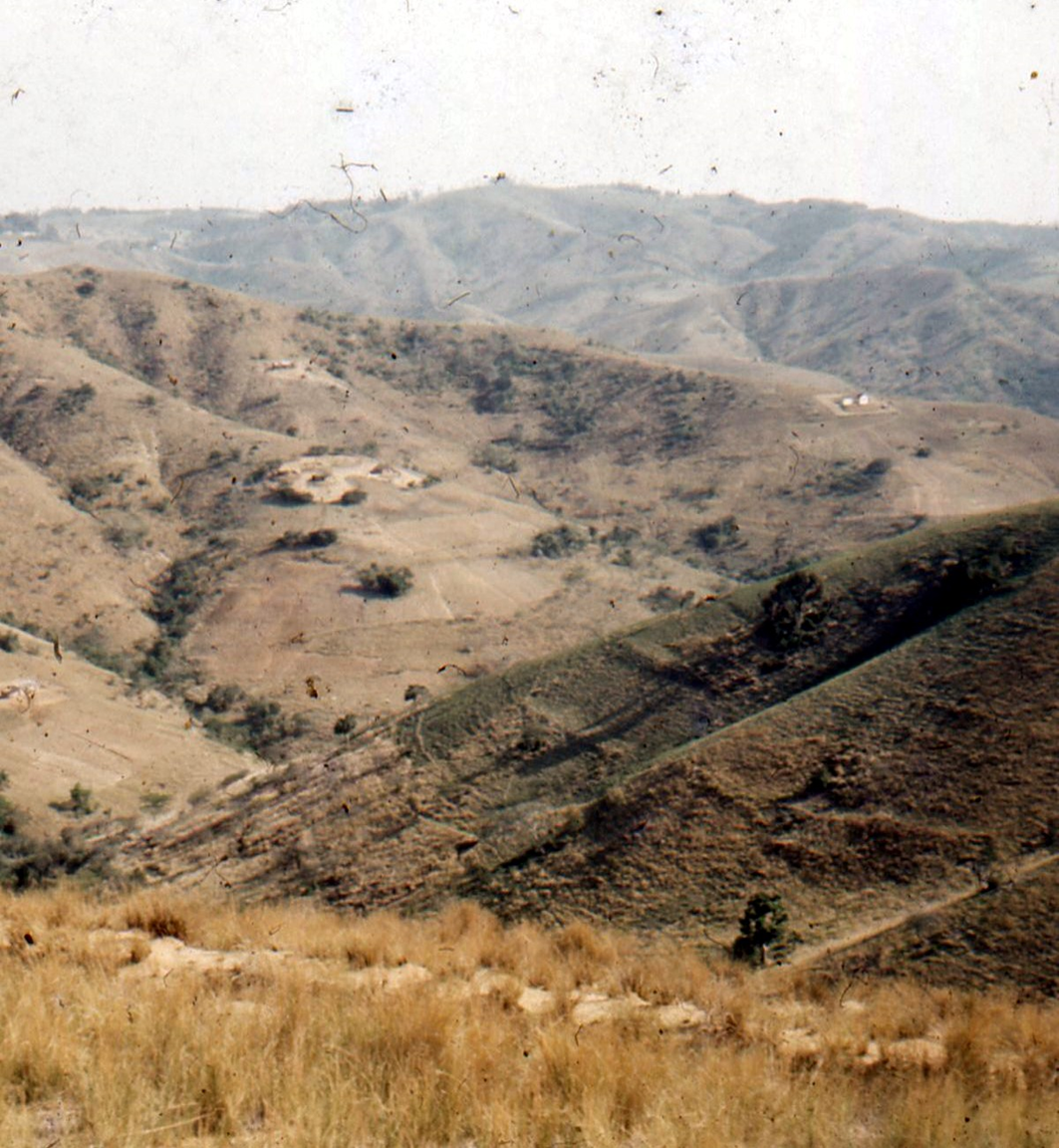
Photo by author, 1962
After being bitten by a bedbug, red linear spots appeared on my skin and it was very itchy. This was a serious problem and I had to hurry back to the port.
Once on board, I went to the medical room. There, a young Japanese nurse was there and treated me kindly. She explained the illness and gave me appropriate treatment, which I was grateful for, and relieved my worries.
A group of Japan passengers on an immigrant ship and people from Durban.
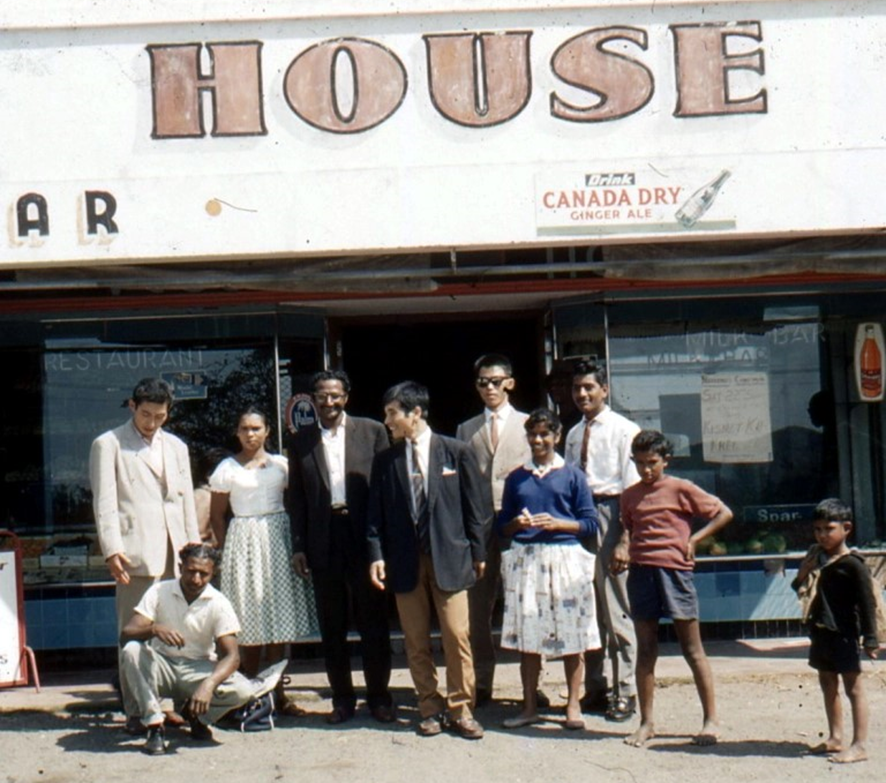
Photo by author, 1962
The city of Durban, South Africa.
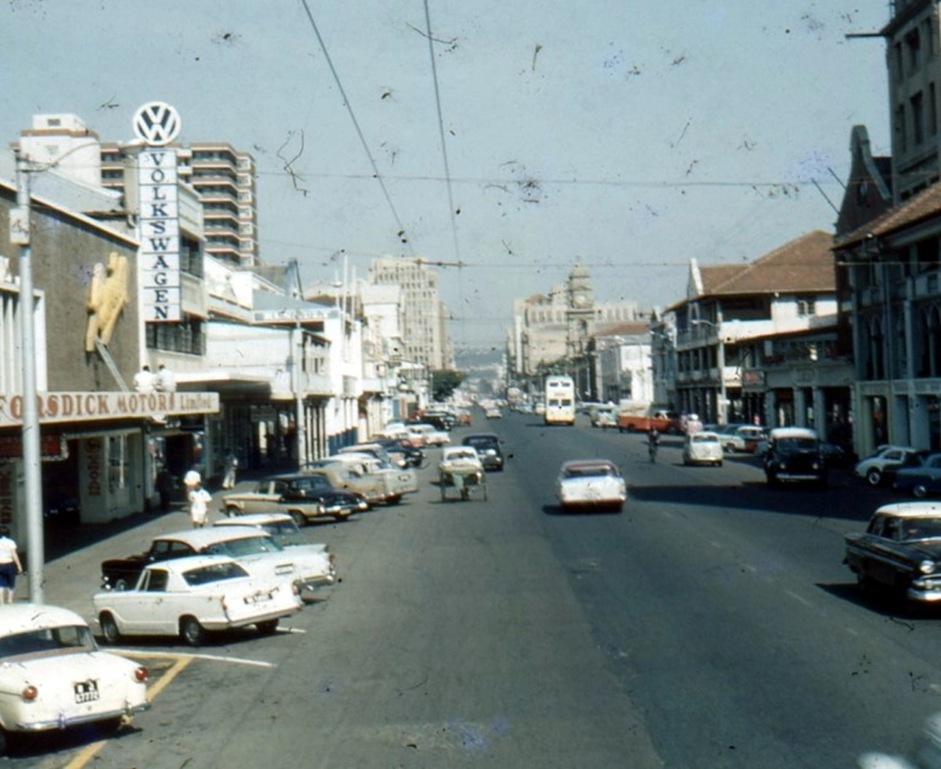
Photo by author, 1962
Colonists on an remote island
Let’s take a look at the history of these two uninhabited islands. One is the Indian Ocean, the island of Mauritius, 200 km from the African continent, and the other is the island of Tristan da Cunha in the South Atlantic.
In the fall of 1962, an immigrant ship departed Cape Town and swayed around the Cape of Good Hope. A bottle of liquor on the floor fell and rolled over.
Tristan da Cunha
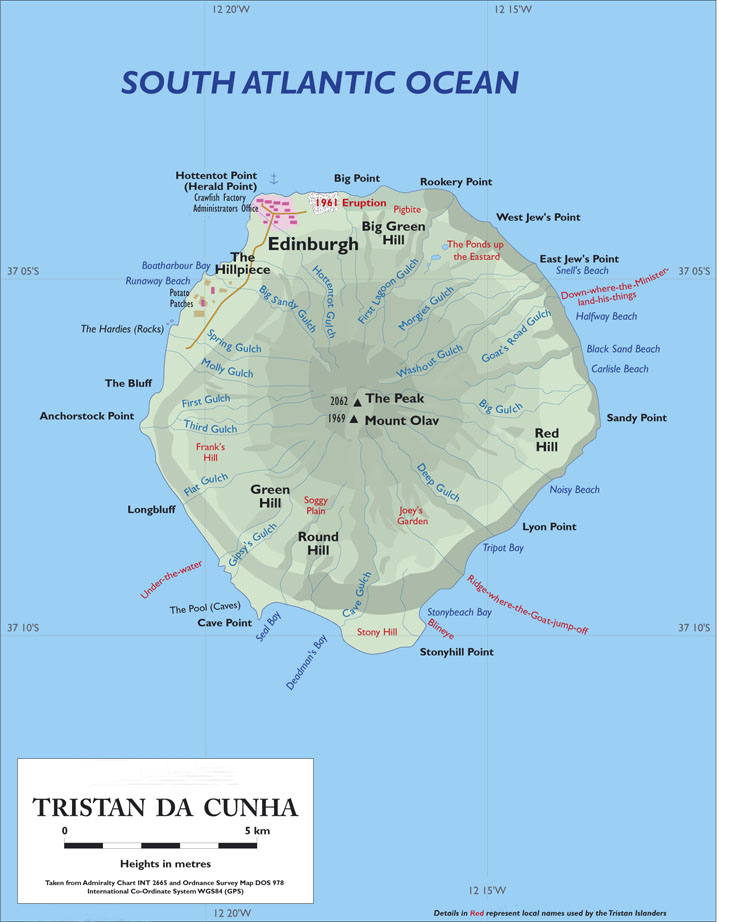
Source:.tristandc.com
Trista first discovers Portuguese navigators.
In 1506, he was the namesake of this volcanic island.
Annexed to the British colony in 1806 and the first permanent resident colonist in 1810.
293 inhabitants in 2016. It is a typical isolated island in the middle of the sea.
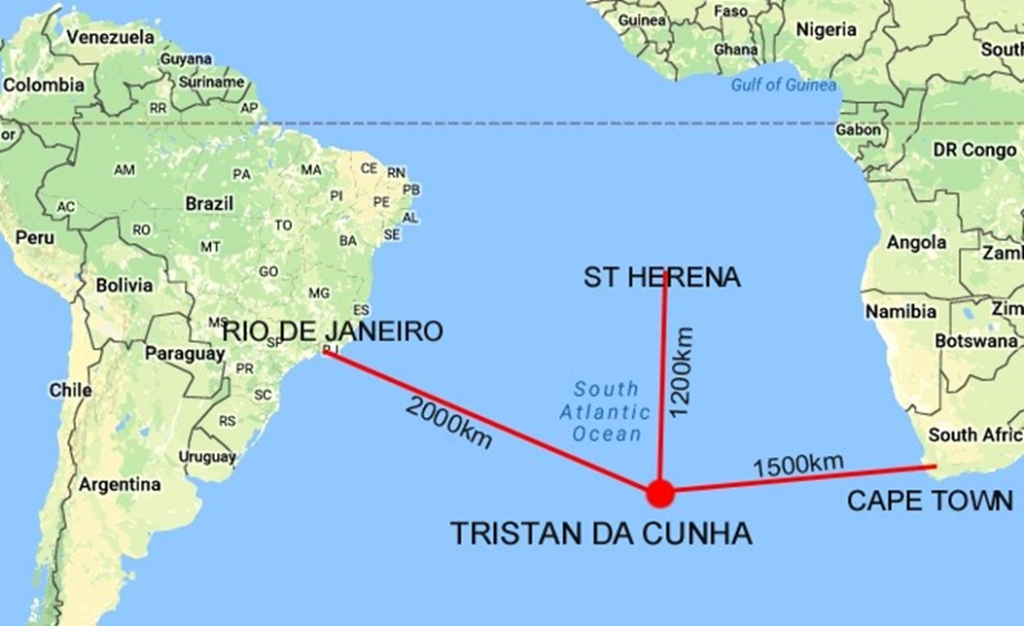
Refugees from a remote islands
A few days after leaving Cape Town, an announcement was made that refugees from a remote island in the middle of the South Atlantic would be boarded. When I stepped out on deck, I saw a steep volcanic island looming over the drizzling waters. The name of the island was Tristan da Cunha.
After a while, the ship, which was anchored offshore, rescued by sailors from a ladder lowered to the side of the ship and came up to the deck. August in the southern hemisphere was the winter season, and everyone’s faces were pale. The cold, fear, and loneliness of the stormy sea were oozing out.
They were all of European descent, and they were going to disembark in Rio de Janeiro and head to Europe.
In 1961, there was a major volcanic eruption, and an evacuation advisory was issued for all islanders.
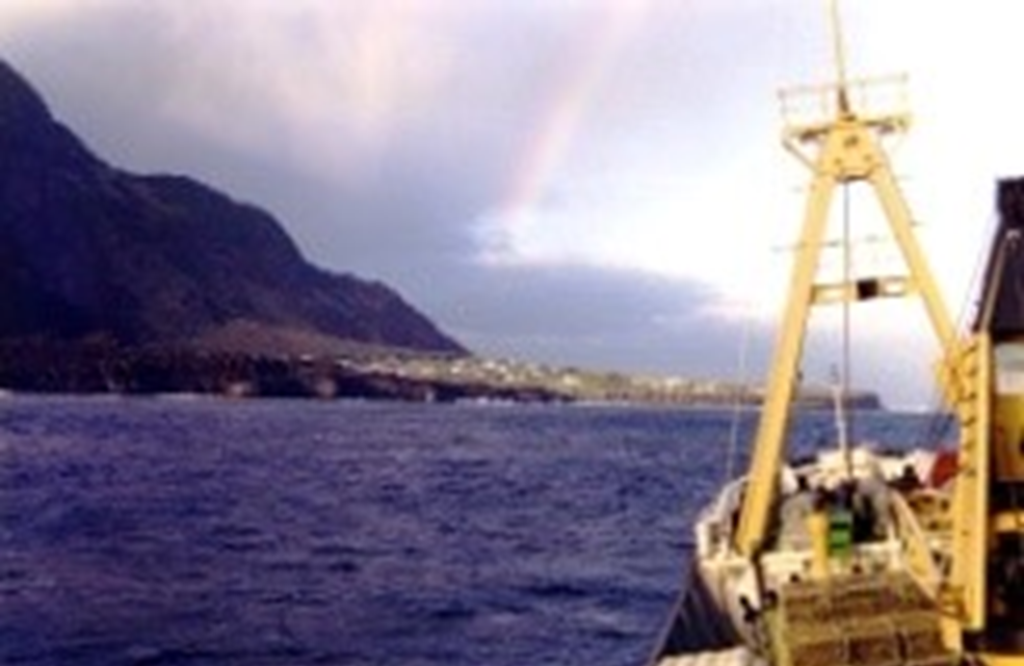
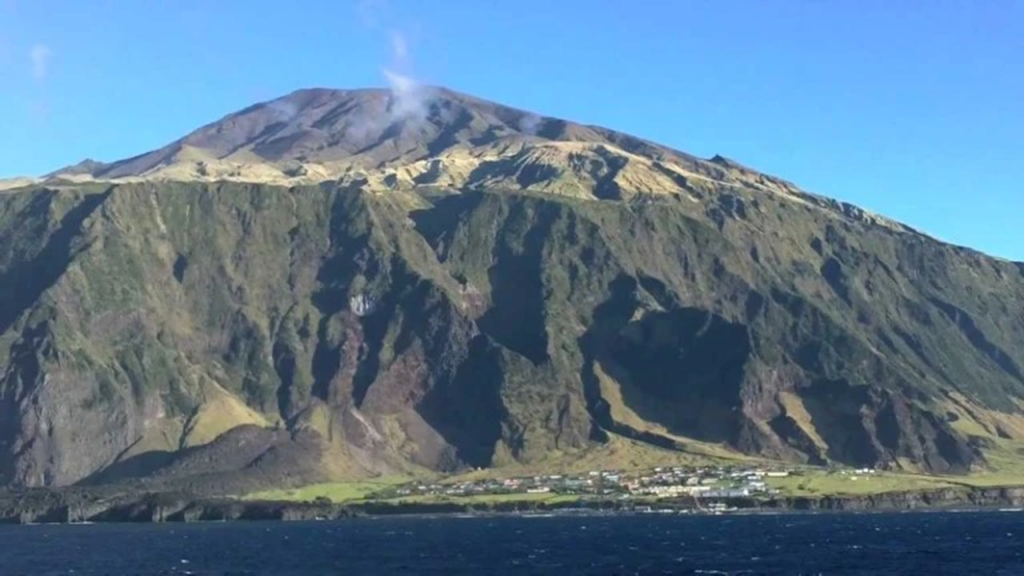
Photo by author, 1962.