JAP | ENG
Meteora, Greece
October 2014
I took an express bus to the Meteora Monasteries, a World Heritage Site located 360km north of Athens.
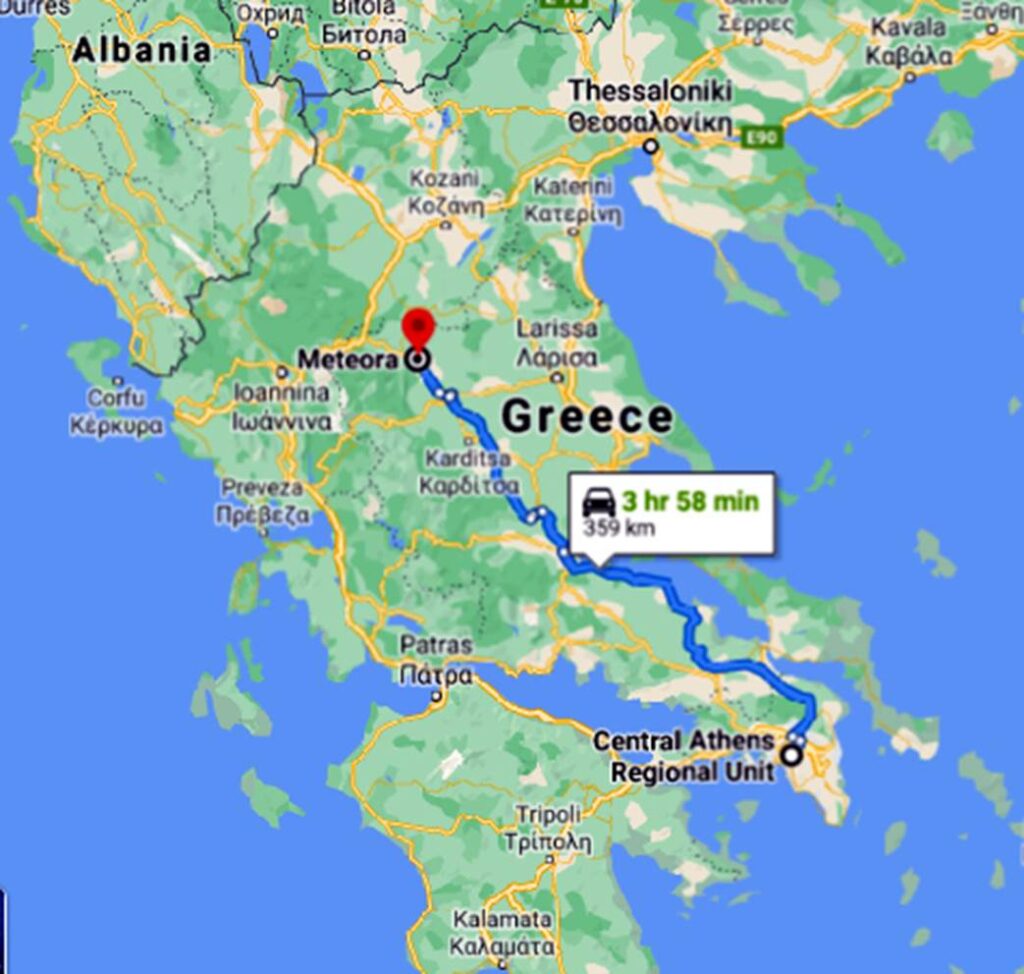
The nearest town, Kalabaka, where the Meteora Monasteries are located, can be reached by train.
I decided to try to take pictures of the Greek railways.
Early in the morning, I asked the staff at the front desk of the hotel to arrange tickets, but it seemed to be full, so I gave up on the train trip and decided to switch to the express bus, and so I took a taxi to the central bus terminal.
Bus terminal in Athens
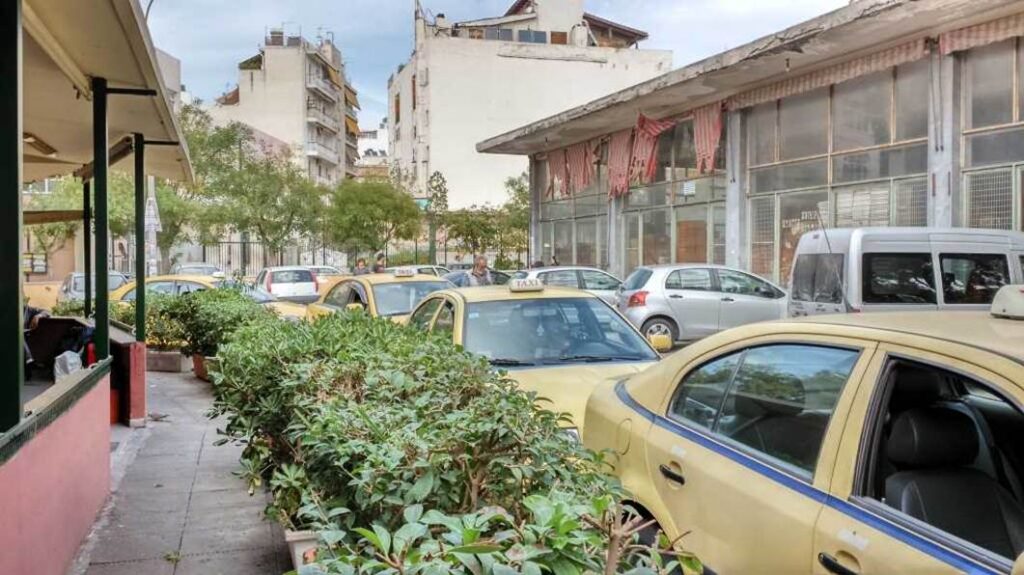
Photo by author, 2014
There are many brand new buses waiting to travel to various regional cities in Greece.
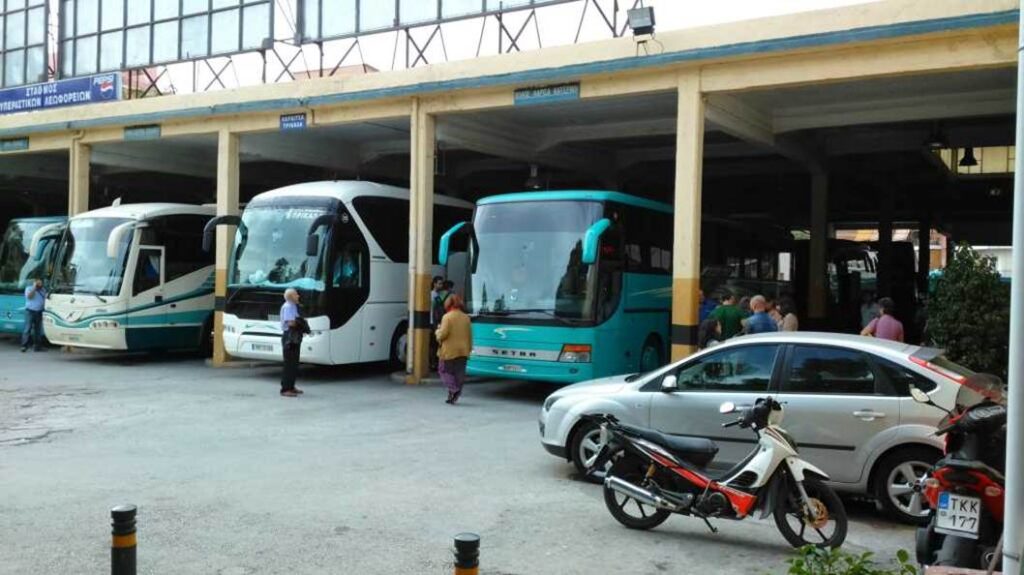
Photo by author, 2014
Finally, I was able to get a one-way ticket for the express bus.
I had already booked a hotel in Meteora, so I had to check in today.
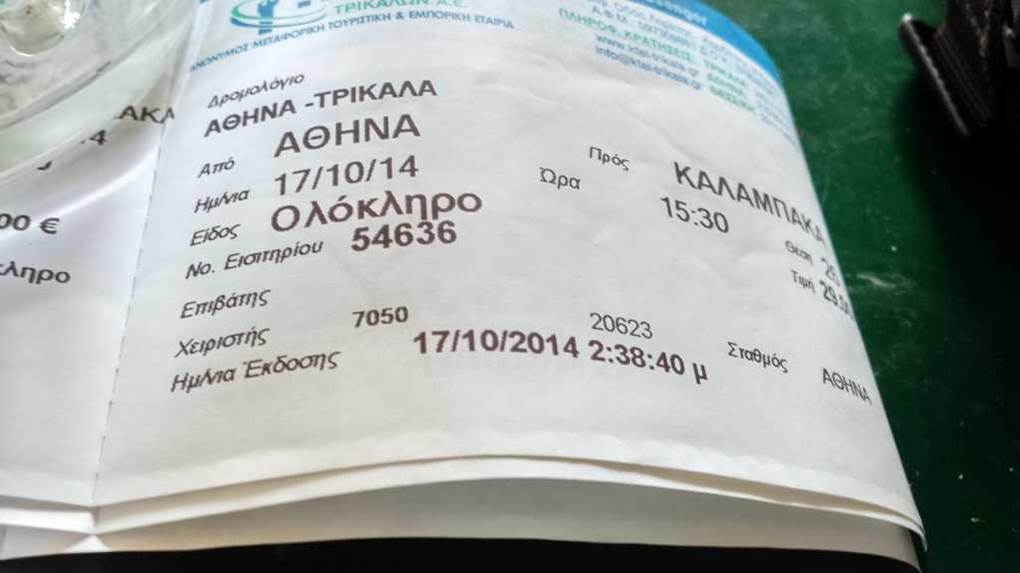
Photo by author, 2014
Here’s how the waiting area at the bus terminal looks like.
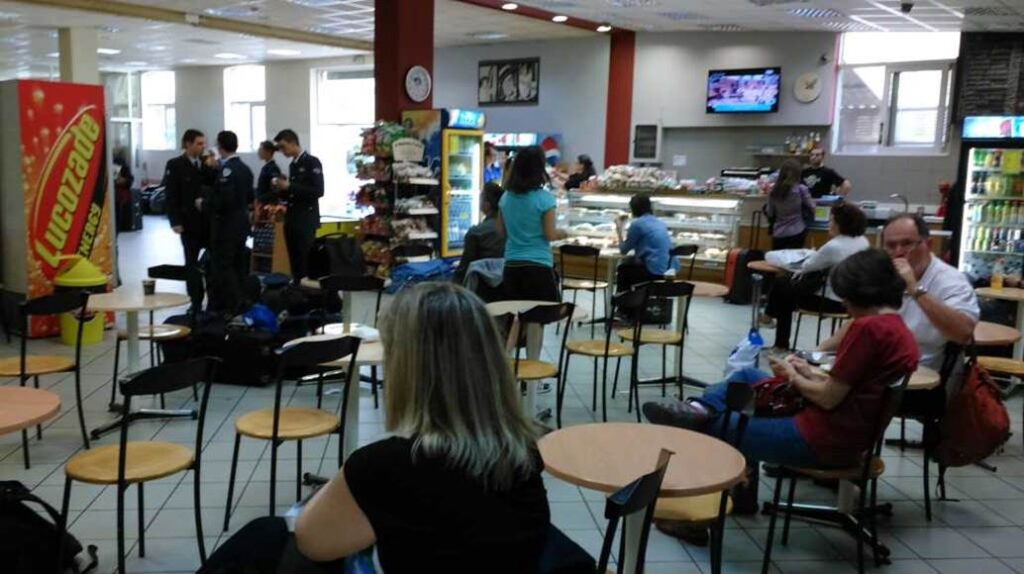
Photo by author, 2014
A rest stop at the halfway point of the journey.
In Japan, it is like a roadside station.
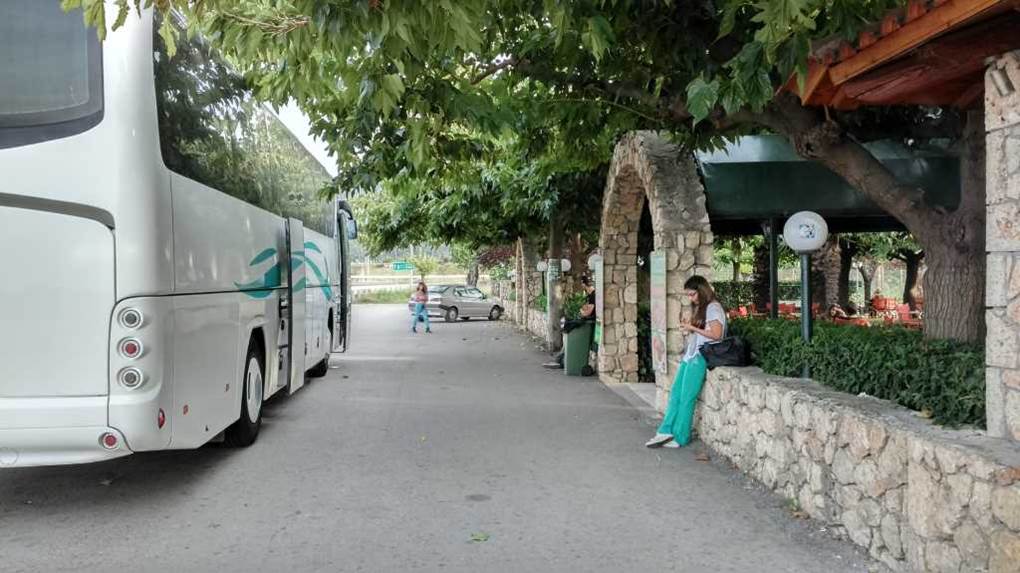
Photo by author, 2014
It is a resting place with surround by trees and feels like a park.
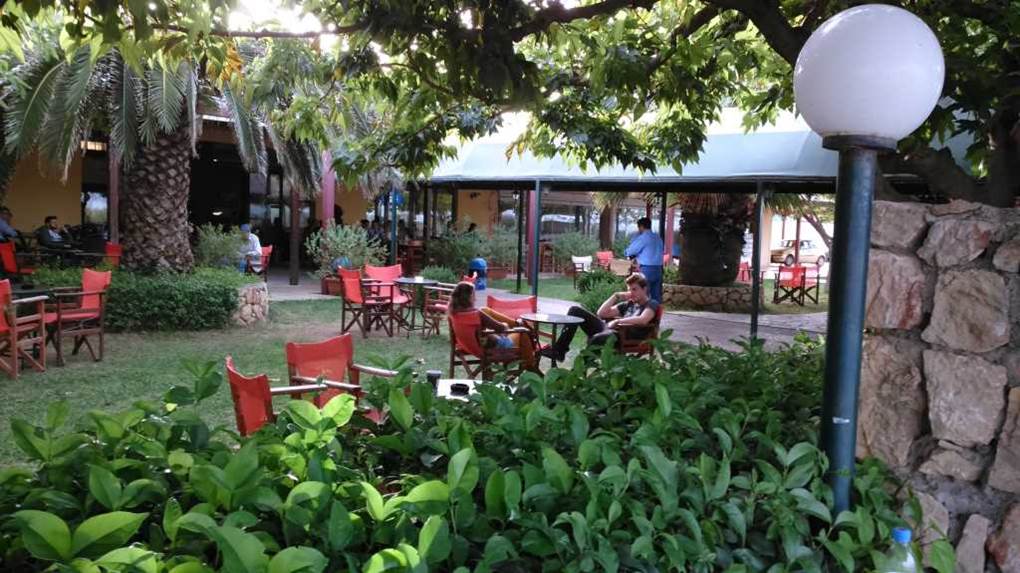
Photo by author, 2014
Turkish-style grilled skewers.
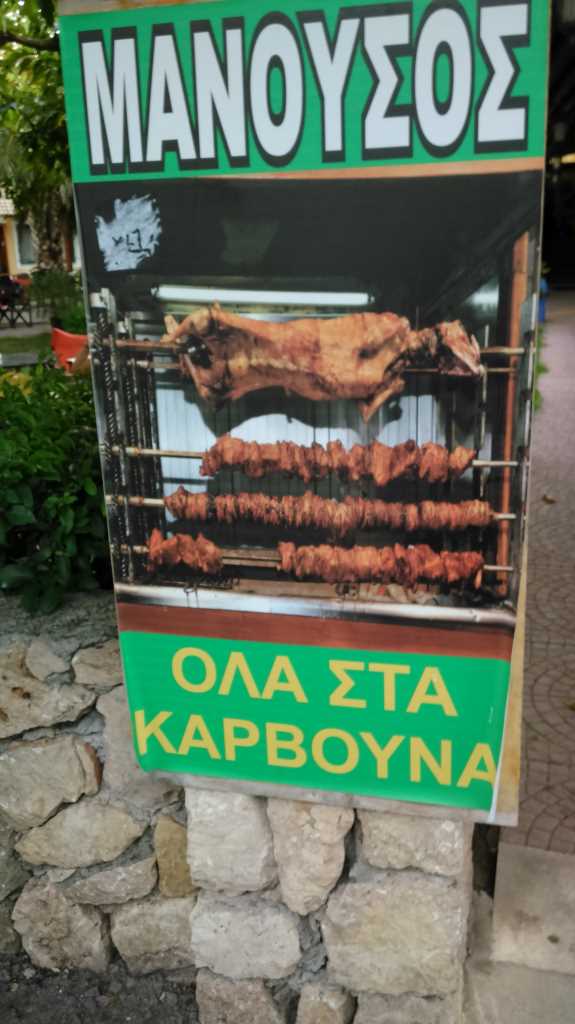
Photo by author, 2014
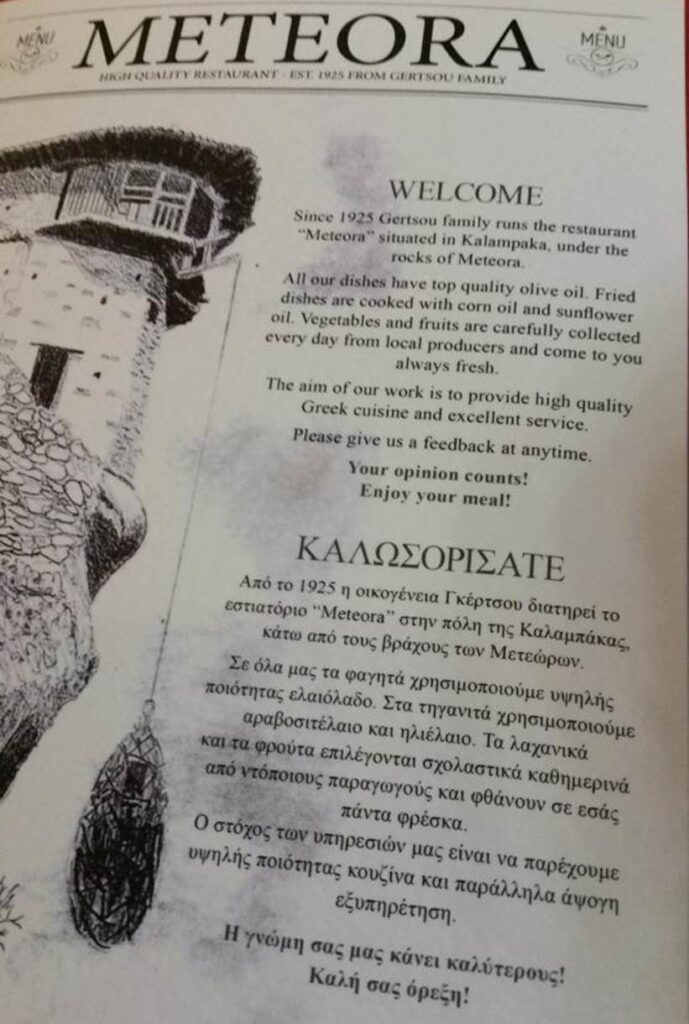
Comfortable restaurant in Kalabaka
The distance from Athens to this regional city is shorter than the distance between Tokyo and Osaka, but in the end, the bus journey took a whole day.
While I arrived in Kalabaka, the nearest town to Meteora, and looked for a restaurant, it was already getting dark. On the outskirts of the city, within walking distance of the hotel, I found a nice restaurant where I could relax.
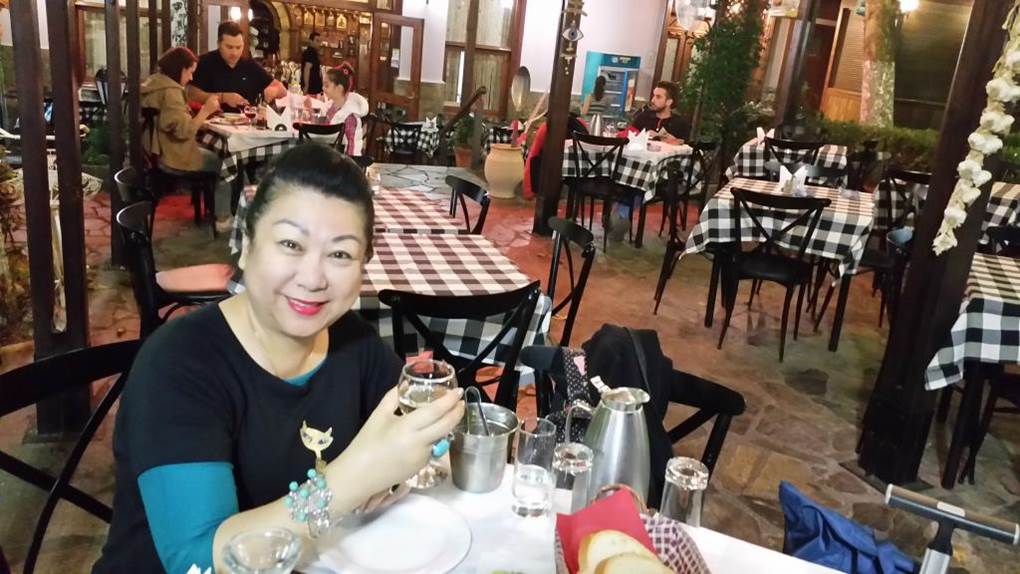
Photo by author, 2014
This restaurant in a rural town. The furniture and furnishings suits my tastes.
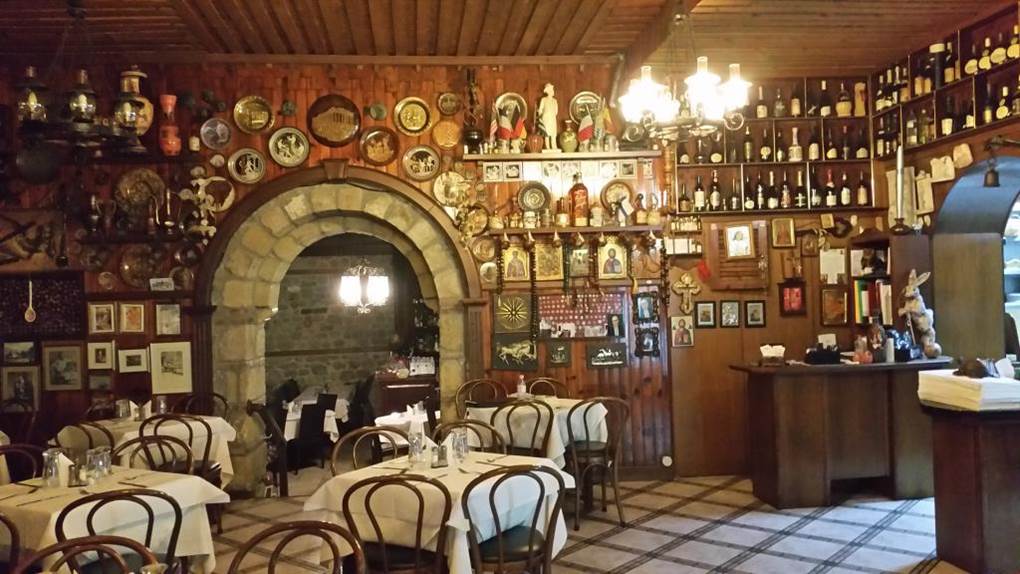
Photo by author, 2014
From the town of Kalabaka, another 150km north leads to the Albanian border. The food of this restaurant is mainly meat, and there is little seafood, giving the feeling that you have travelled inland.
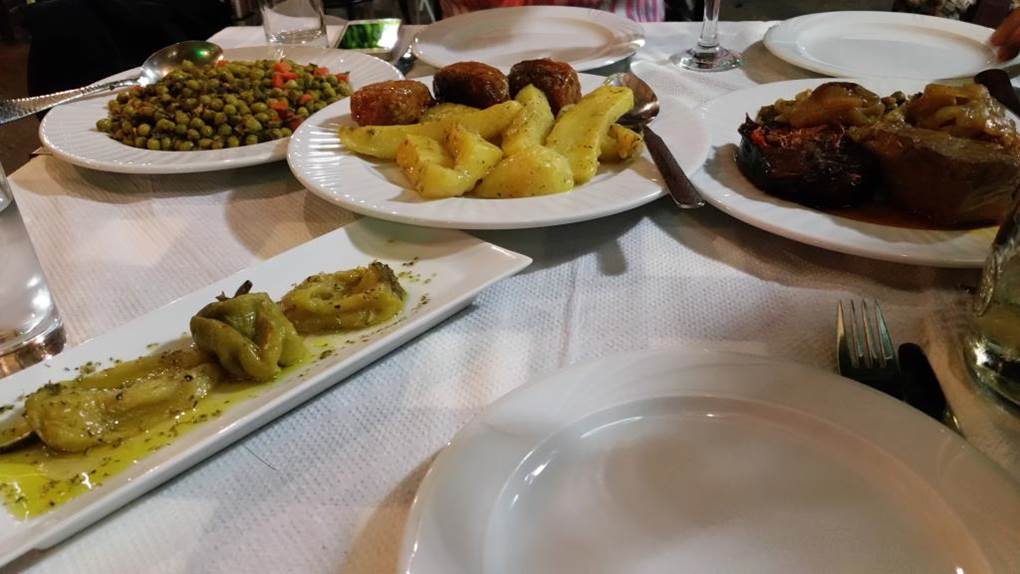
Photo by author, 2014
Dellas Boutique Hotel Kalabaka
The room on the first floor in the foreground in the photo below is the hotel room where I checked in late the night before.

Photo by author, 2014
Opposite the small square in front of the room is a huge, steep rock mountain. The outside air is dry and cold, and the climate is pleasant and chilly.
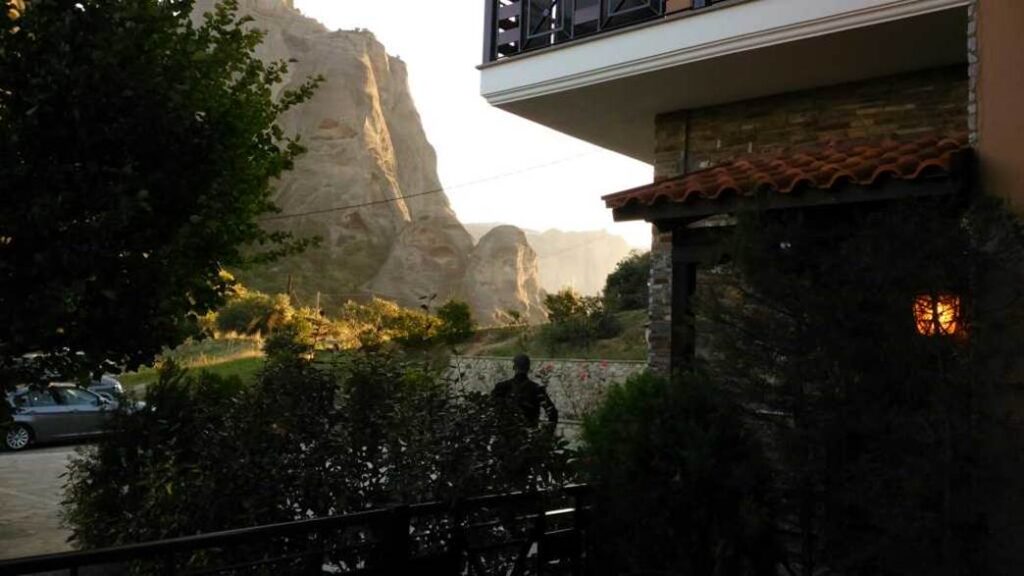
Photo by author, 2014
After breakfast, a chartered taxi is waiting, and from here I will head out to the mountain of strangely shaped rocks.
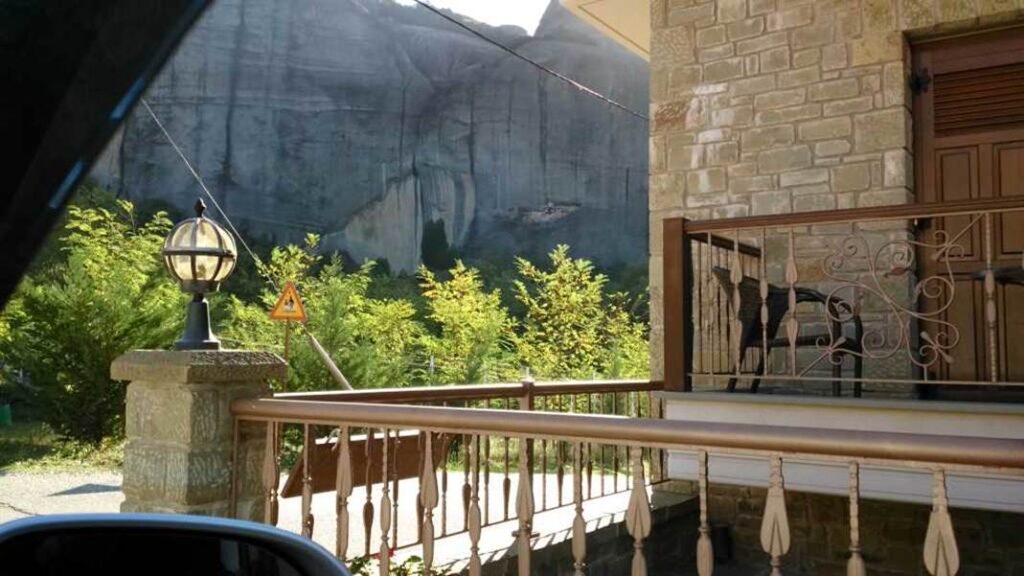
Photo by author, 2014
Meteora Monasteries UNESCO World Heritage Site
Meteora is located in mainland Greece, northwestern Thessaly, at the northern end of Thessaly, and is a monastic community built on a group of rock formations. It is a general term for the so-called Meteora monasteries.
Due to its Greek Orthodox monastic culture and its unique topographical value, it is registered as an UNESCO World Heritage Site. Meteora is derived from the Greek word “Meteoros”, which means “hollow”.
I follow the tourist guidebook to visit the monastery in the sky in order from (1) to (6).
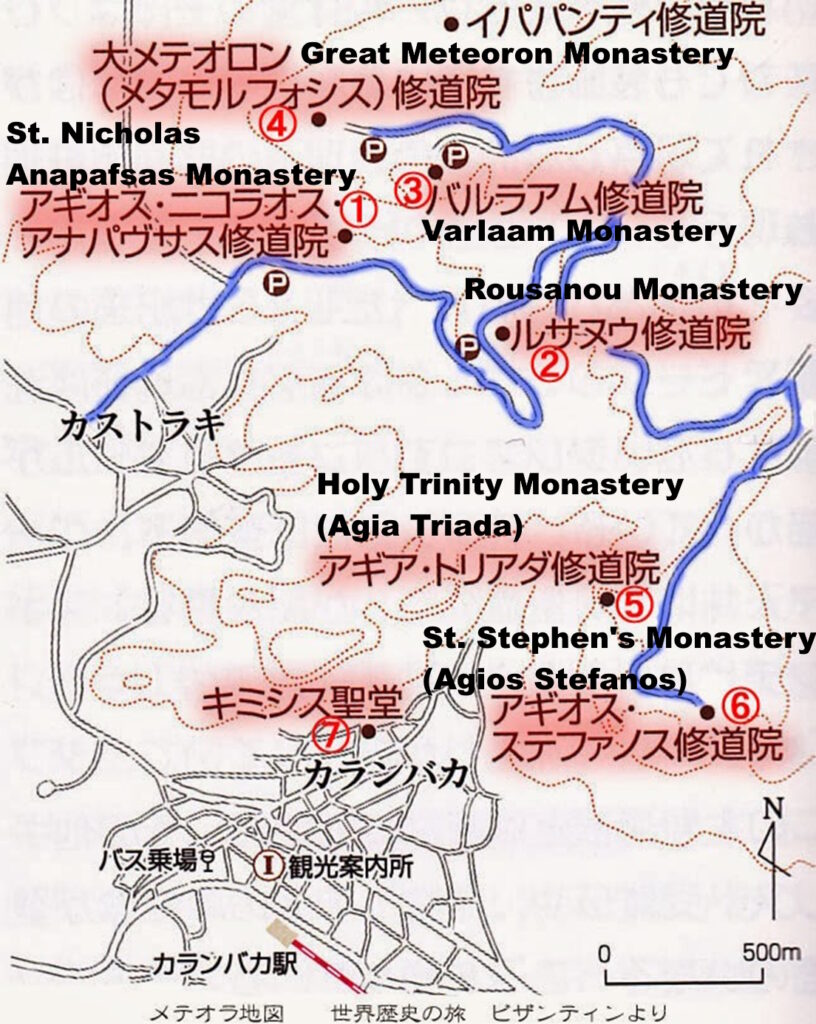
map from tourist guidebook
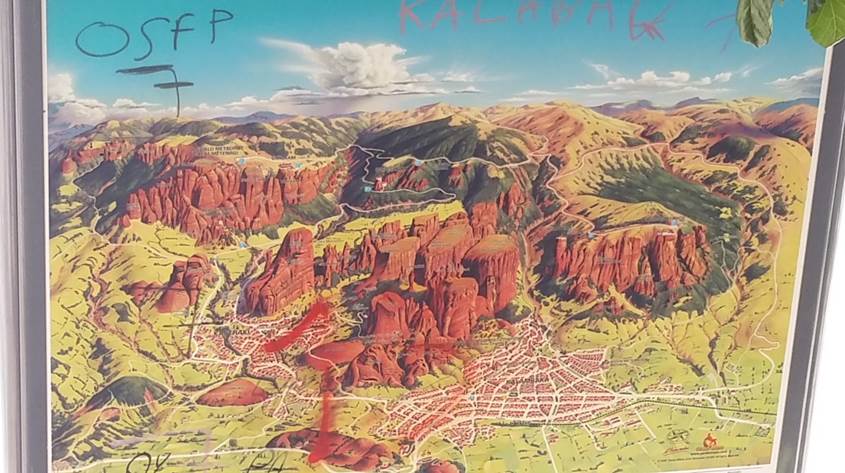
Topographic map of Meteora Rock Formations
Monastic communities are located at the tops of the rock formations, and visitors can visit sacred places of prayer and meditation in the sky.
As early as the 9th century, Greek Orthodox monks are said to have severed their ties with the world and settled in caves and crevices in the rocks of the rugged terrain of Meteora. The monks of this period did not form monastic communities as they do today, but mostly practiced alone.
The center of monastic activity at that time was Mount Athos in the northeast, but around 1340, the monks of Mount Athos took refuge in Meteora to avoid the war caused by the weakening of the Eastern Roman Empire.
In 1356,a monk named Asanasius founded the Holy Monastery of Great Meteoron (Megalo Meteoron) on one of the rocky mountains of Meteora, and it is said that the core of the monastic community was established in Meteora.
I pass between the steep monoliths and climb deeper and deeper.
The road has been well-funded and nicely paved.
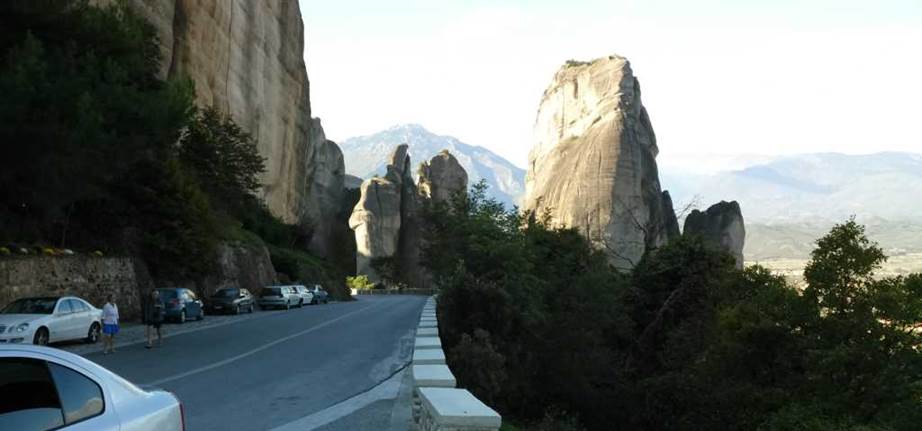
Photo by author, 2014
As I go deeper, the sheer rocky mountains become bigger.
The height from the flat ground is said to be over 40 m.
On the right, at the top of a separate rocky mountain, the buildings look small.
The excitement builds up even more when I reach this point.
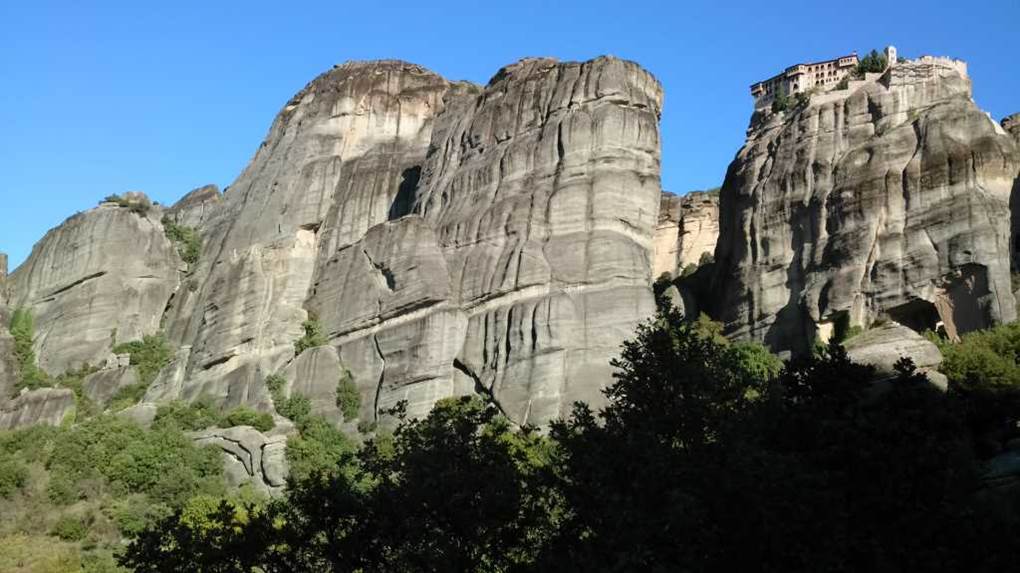
Photo by author, 2014
① St. Nicholas Anapafsas Monastery
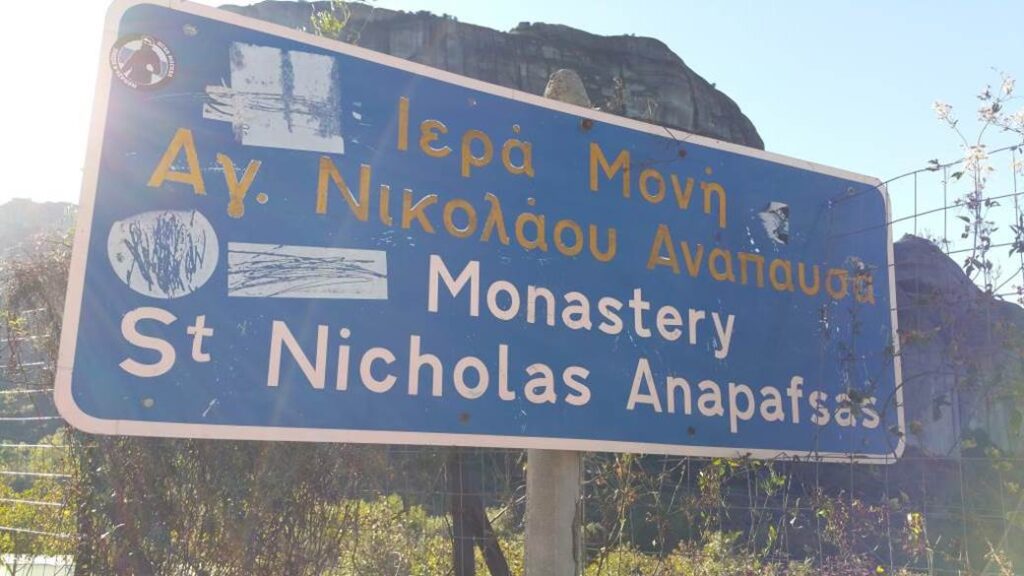
Photo by author, 2014
The monastery is built on a rock 80 meters high.
Since there is no flat space at the top of the rocky mountain, the building stretches upwards and upwards in many layers.
It was built at the end of the 14th century.
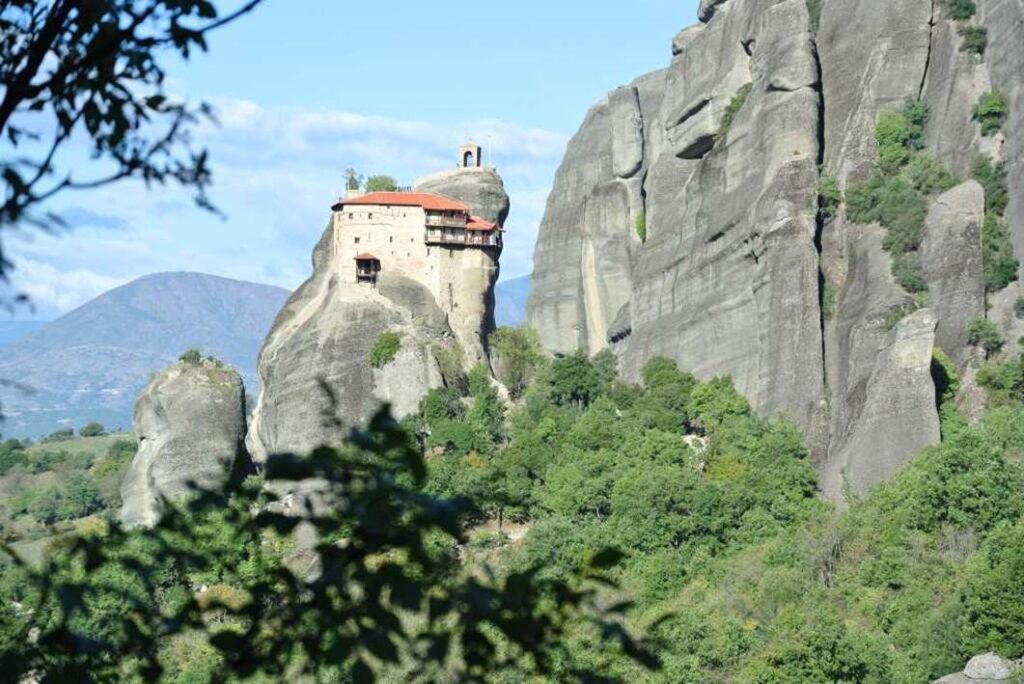
Photo by author, 2014
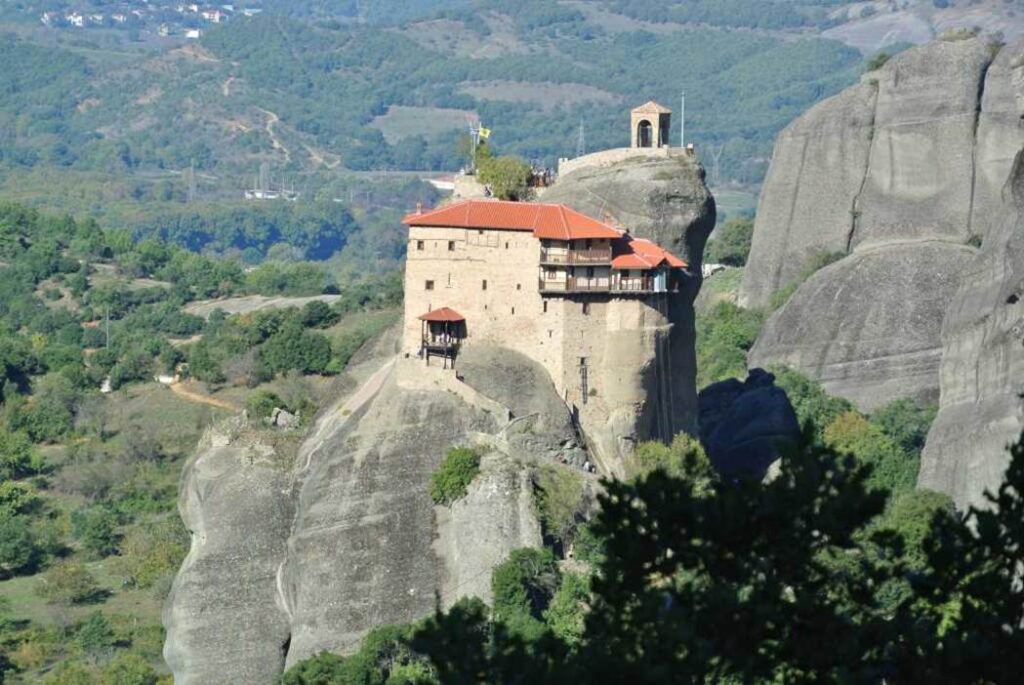
Photo by author, 2014
Inside are religious paintings and valuables items.
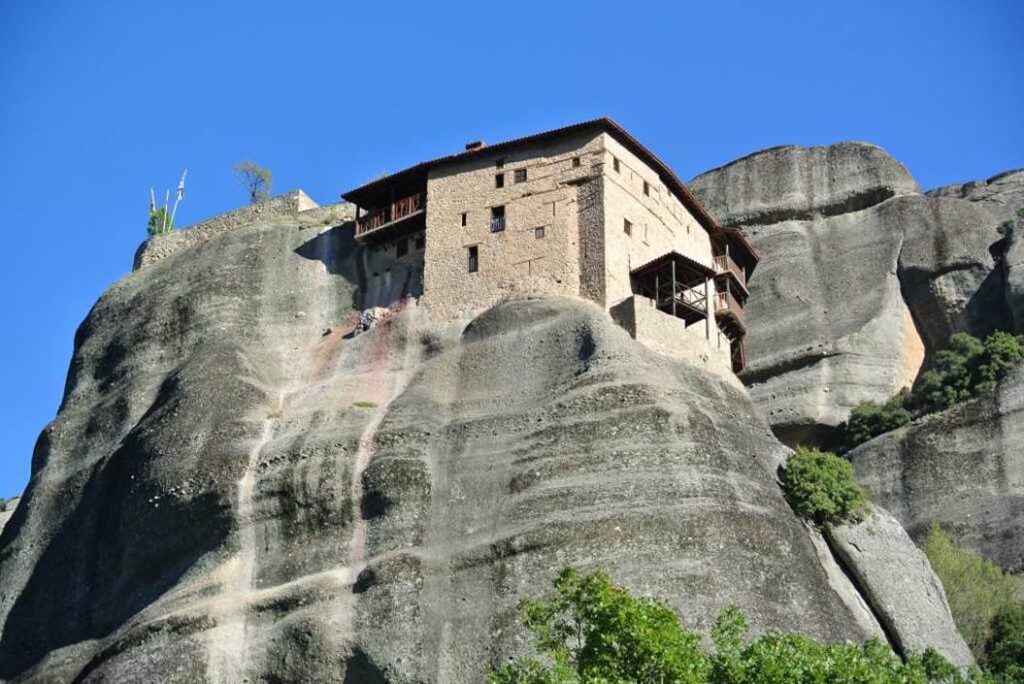
Photo by author, 2014
This time, I limited myself to taking pictures from the outside.
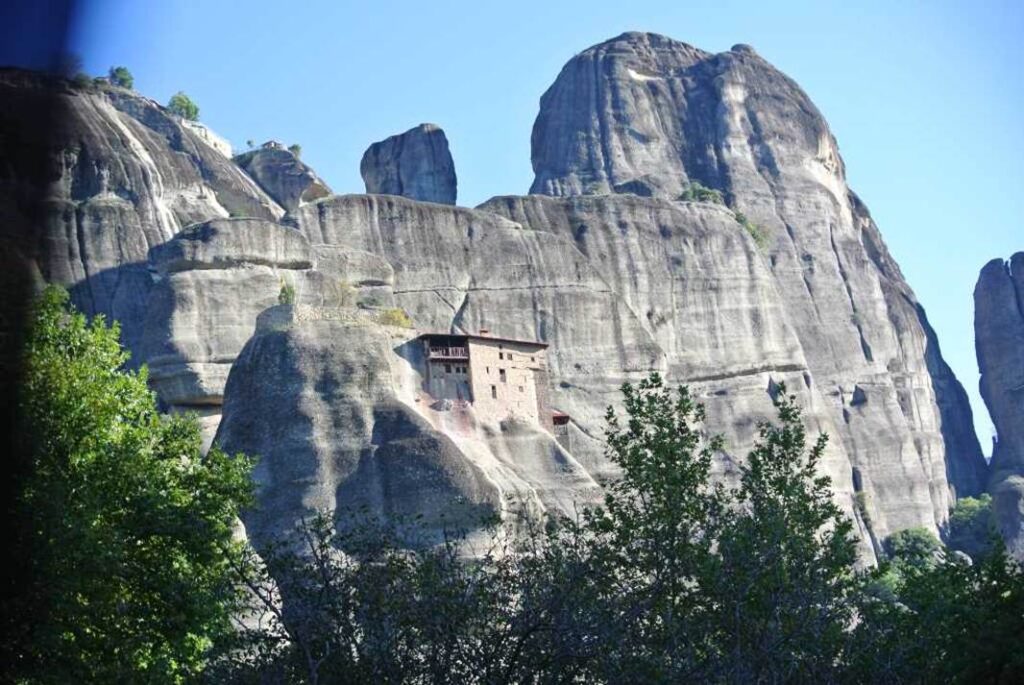
Photo by author, 2014
The Ottomans gave certain protection to the monastery of Meteora and guaranteed its activities, so soon the monks returned and the monastic activity continued as usual.
Due to interest in Meteora’s scenic beauty and monastic culture, the area has become a tourist destination, making it less suitable for monks who shun the secular world.
As a result, an increasing number of monks are abandoning Meteora and moving to the more closed Mount Athos.
The Meteora monastic community was founded by monks who abandoned Assos during times of conflict, but now, with the wave of modernization, the opposite phenomenon is occurring.
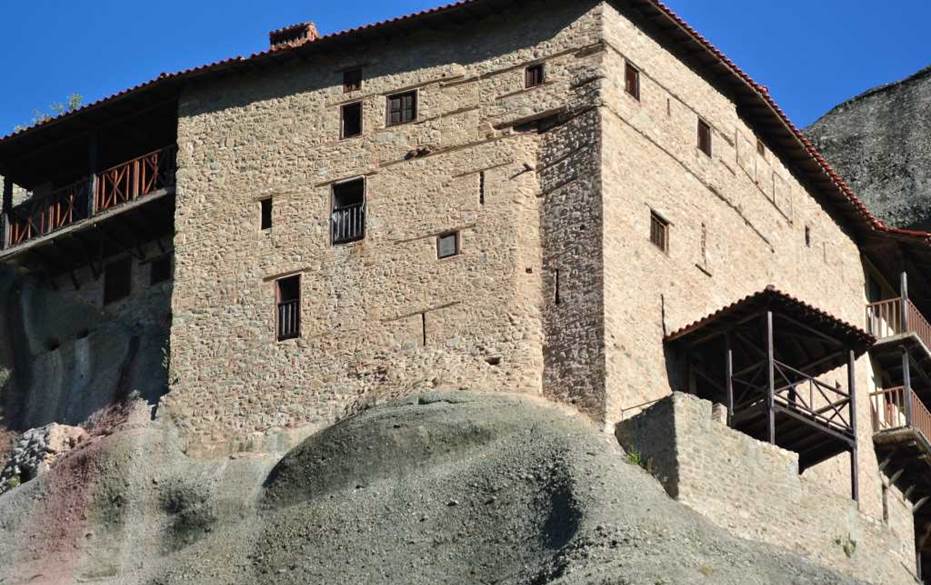
Photo by author, 2014
View from the observation deck on the side of the road.
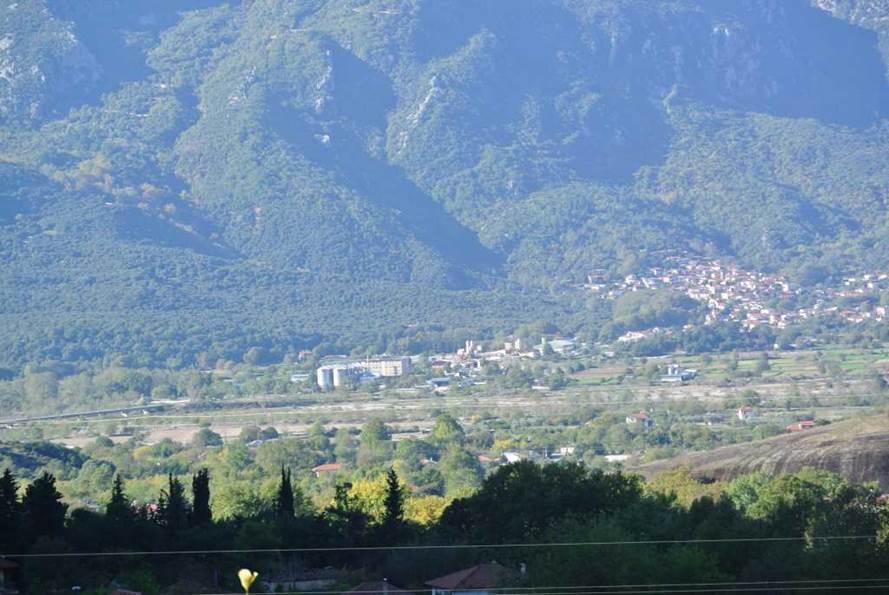
Photo by author, 2014
② Rousanou Monastery
A monastery dedicated to the saint Agia Varvara.
It is currently active as a convent.
It is difficult for humans to approach the strange rocks, and transportation is still not convenient, but on the contrary, it is popular with tourists, and the number of secular visitors is increasing, and it is becoming unsuitable for the life of monks who avoid the world.
Today, the ancient Mount Athos has been restored to its former self-governing status as the religious center of the Eastern Roman Empire and Greek Orthodox Church, with a religious autonomous character similar to the Vatican, and a strict site that is still off-limits to women and the general public.
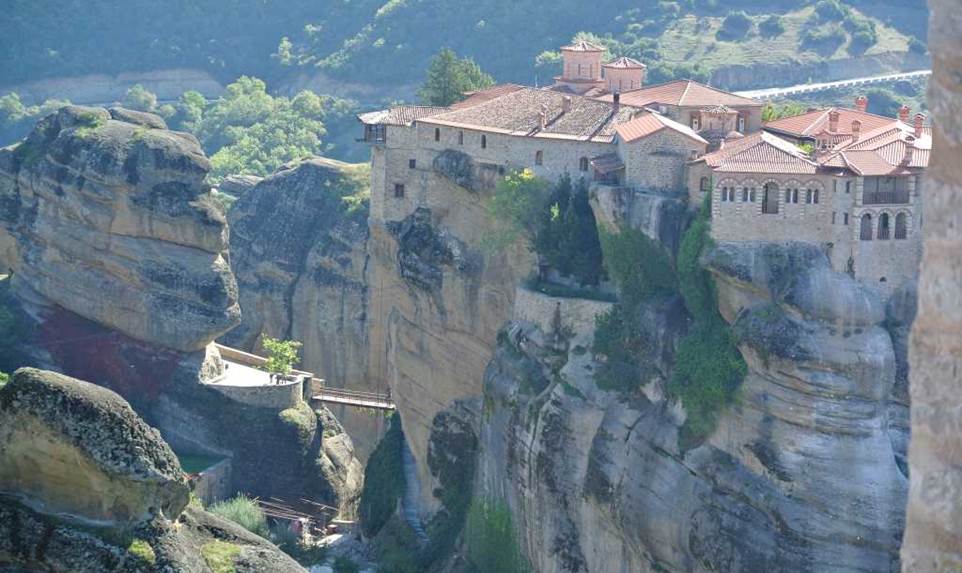
Photo by author, 2014
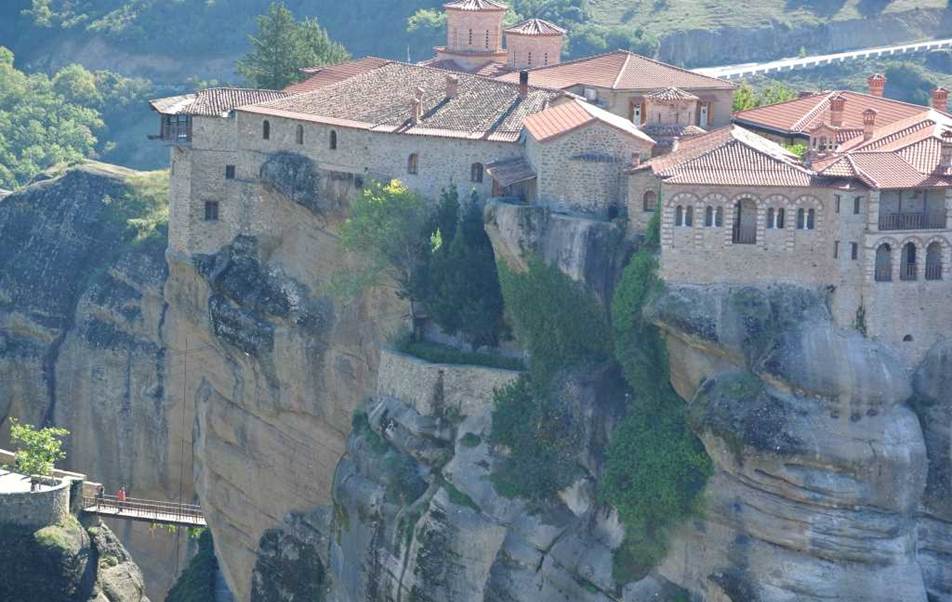
Photo by author, 2014
③ Varlaam Monastery
It began in the 14th century when a hermit named Varlaam built a church dedicated to the Three Wise Men.
In 1517, two brothers of monks built a monastery on the site.
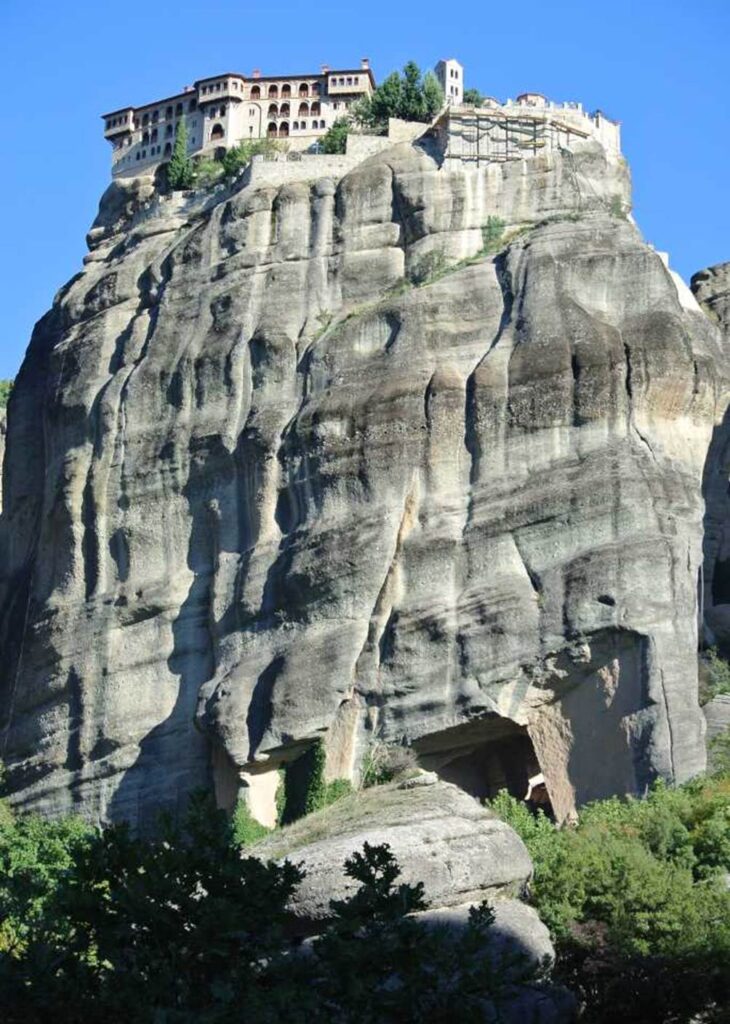
Photo by author, 2014
The monastery is built on a huge rocky mountain and is connected to the road by a bridge. Built in 1536, the tower has a hoist and ropes that are still used to haul goods.
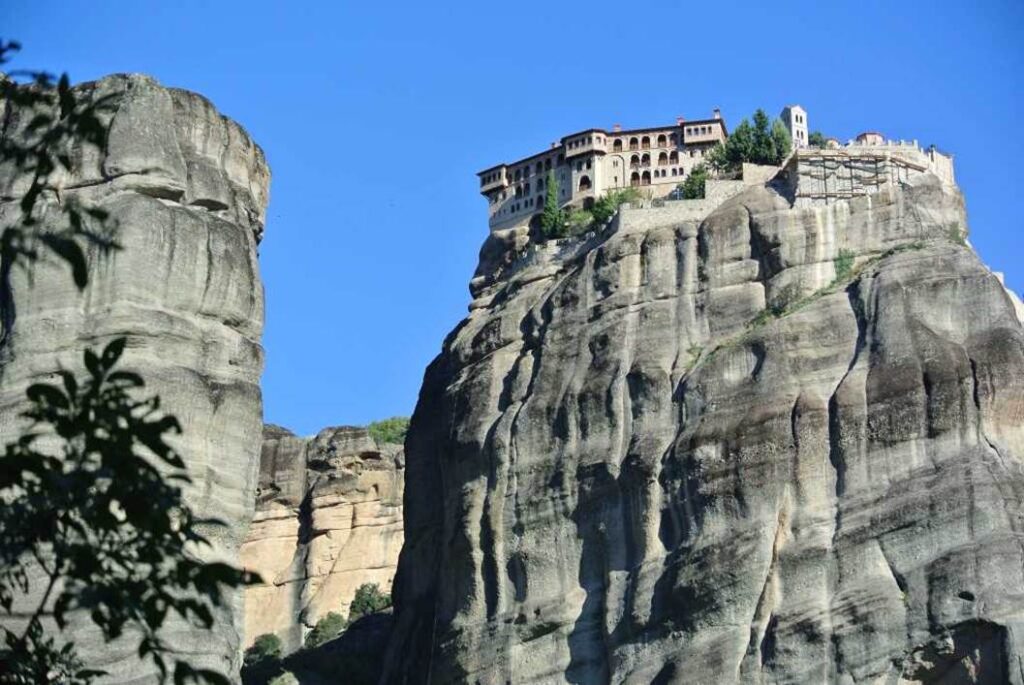
Photo by author, 2014
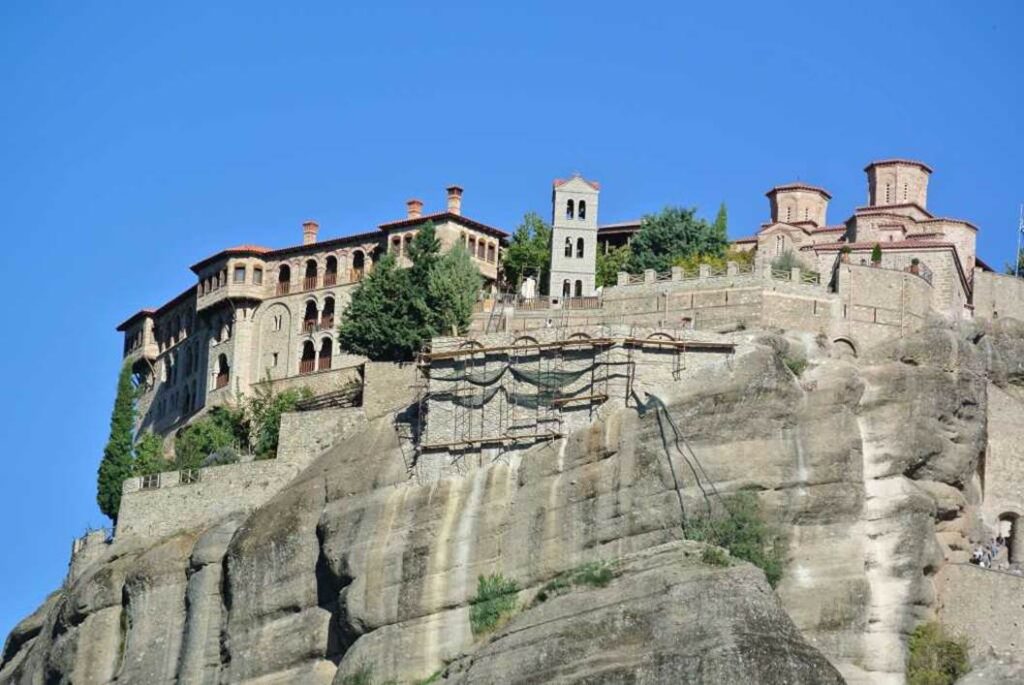
Photo by author, 2014
④ Great Meteoron Monastery
It is the largest monastery in Meteora. To visit the monastery, first descend the 100 steps from the road to the valley floor. From there, another 200 steps lead to a flat entrance at the top.
The largest monastery of Meteora, it was founded by Asanasius in the mid-14th century on a rock at an altitude of 616 m. It is also called the “Transfiguration of the Messiah (= Metamorphosis) Monastery”.
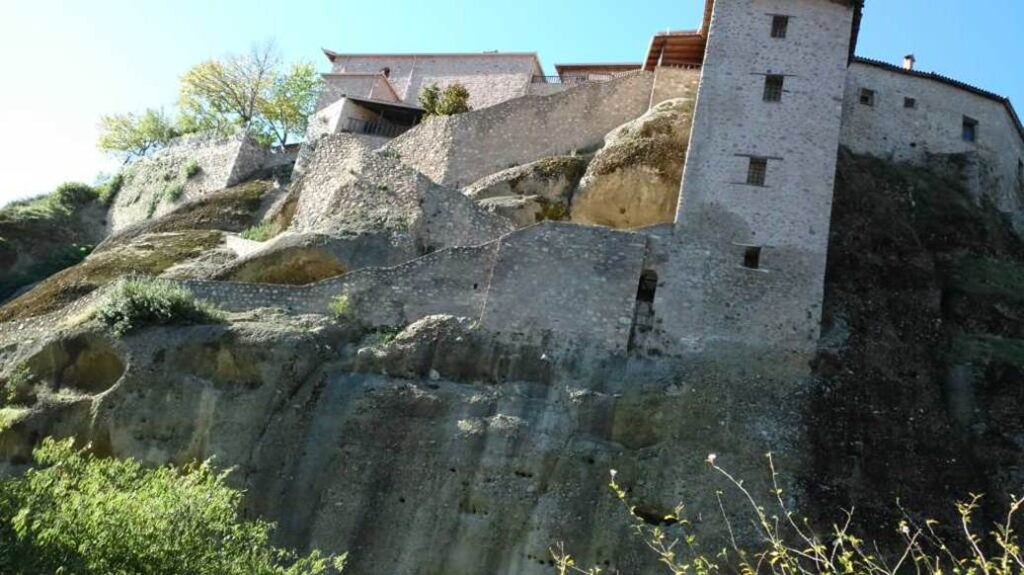
Photo by author, 2014
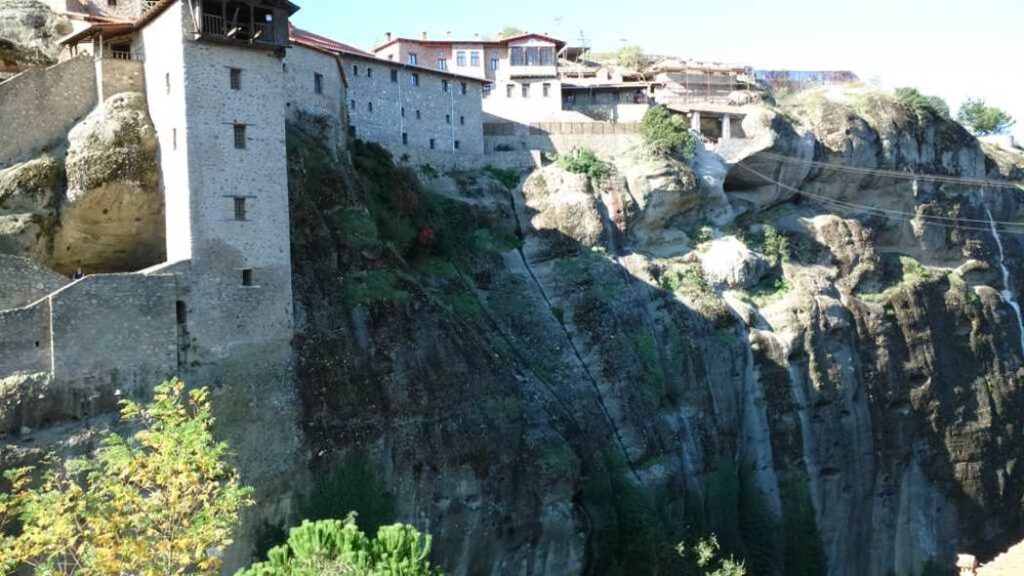
Photo by author, 2014
Until a long time ago, baskets were raised and lowered from the top of the long, narrow building with vertically-spaced windows in the center of the foreground. Now, visitors climb the zigzag path to the shrine on the left.
There are 192 steps.
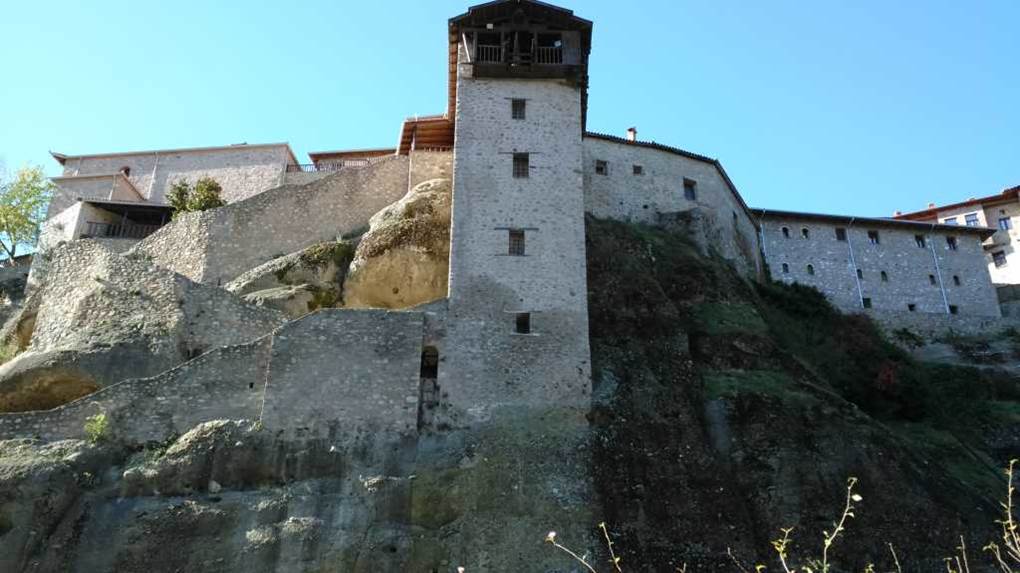
Photo by author, 2014
As I approached the starting point for the climb to Great Meteoron Monastery from the valley floor, I passed about 20 Japanese tourists who had come down from above.
They were all senior men and women in their 70s, talking loudly to each other and still excited about reaching the summit.
They were still feeling elated from the sense of accomplishment they felt from climbing up and down the 600 steps round trip, and from their encounter with Greek Orthodox Christianity and a different culture at the monastery in the sky.
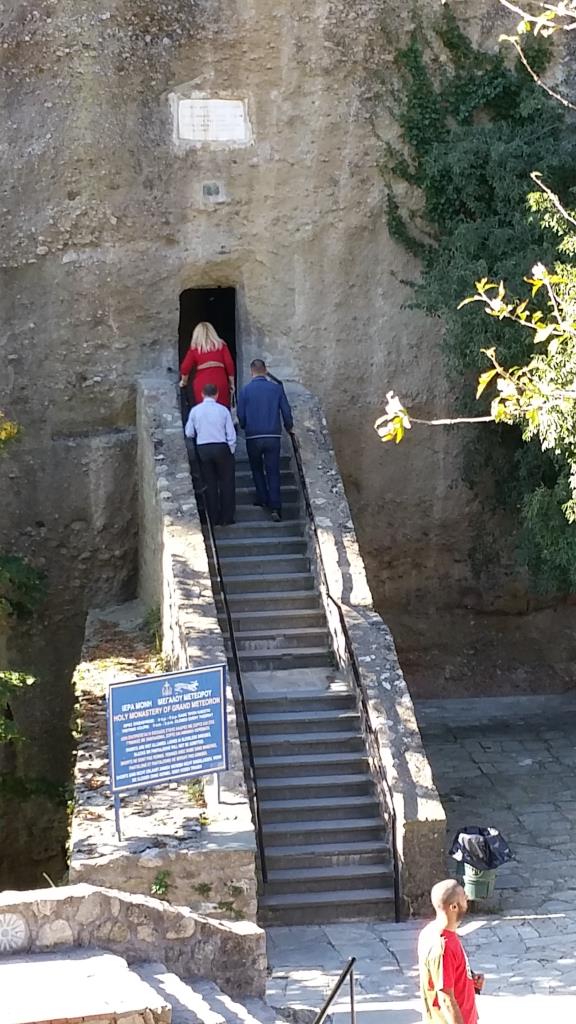
Photo by author, 2014
There are alternating hand-carved tunnels and stairs, and I just have to keep on climbing.
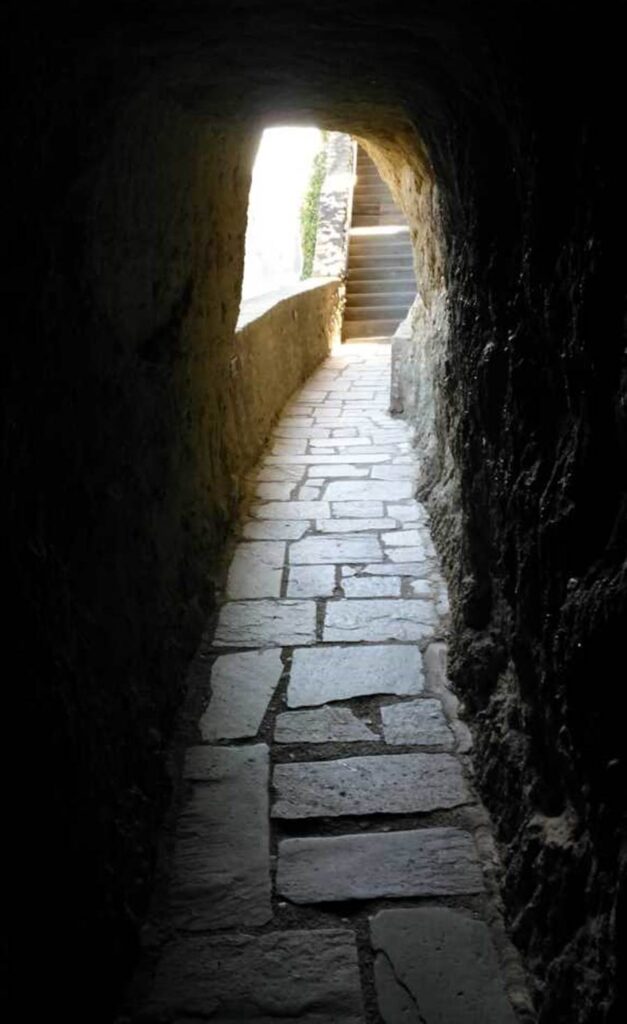
Photo by author, 2014
The tunnel carved into the rocky mountain becomes narrower and steeper the further I go up. Pickaxe marks are clearly visible on the ceiling and walls.
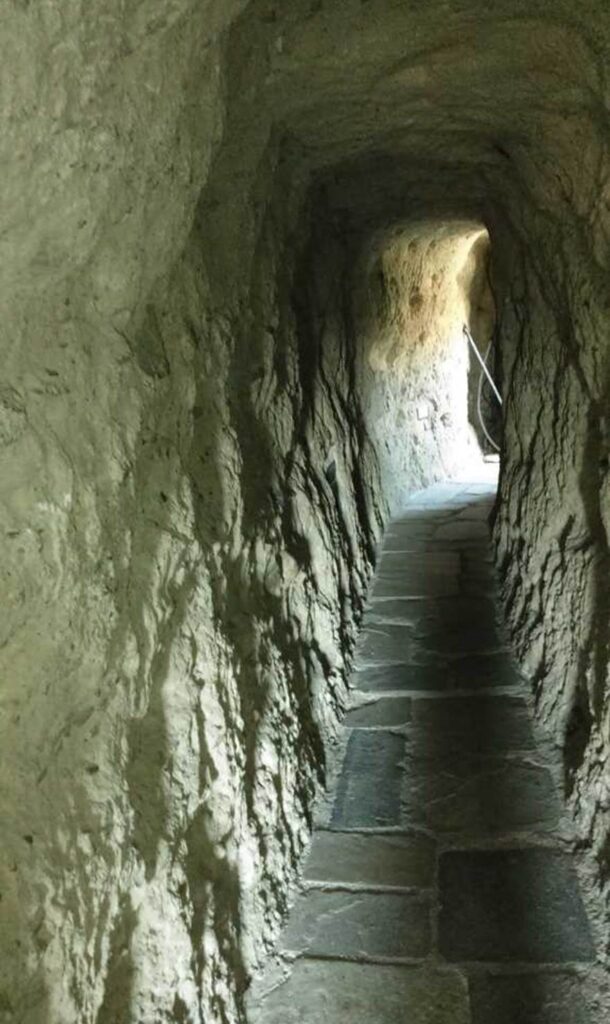
Photo by author, 2014
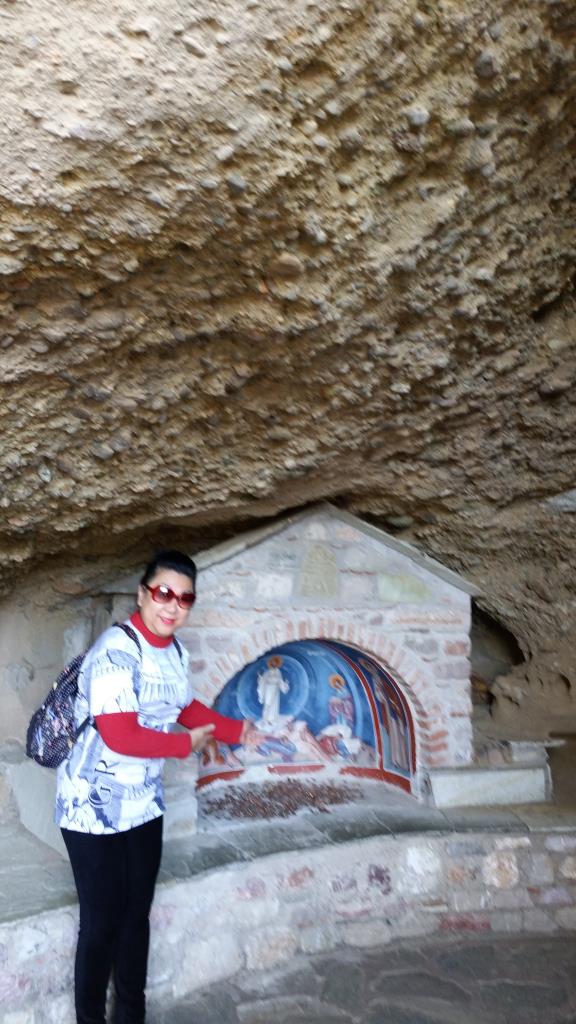
Photo by author, 2014
A unique wall with a mix of brick and stone appeared.
It seems that the summit is near.
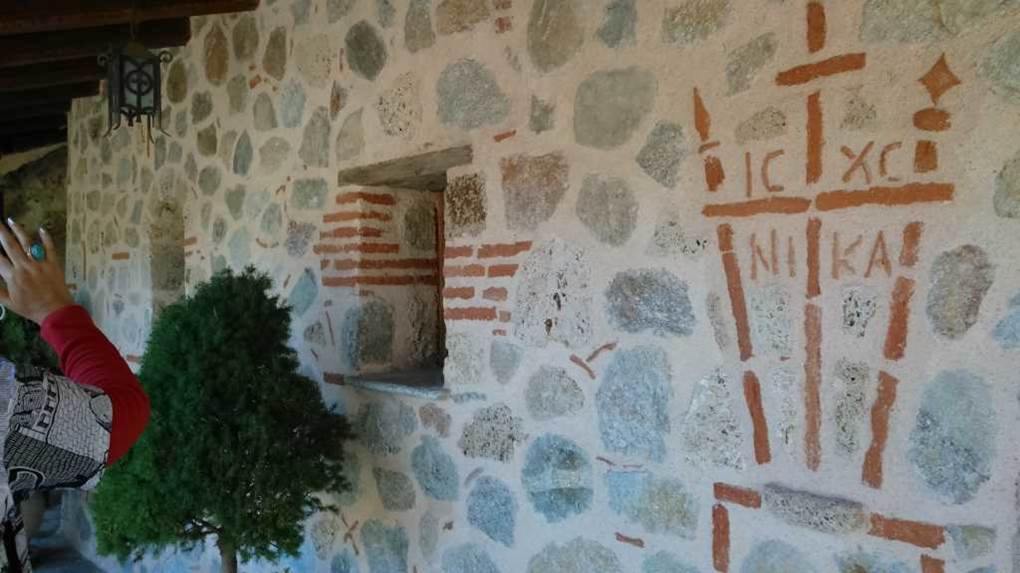
Photo by author, 2014
I’ve reached the top.
Climbing the final flight of stairs to enter the temple grounds.
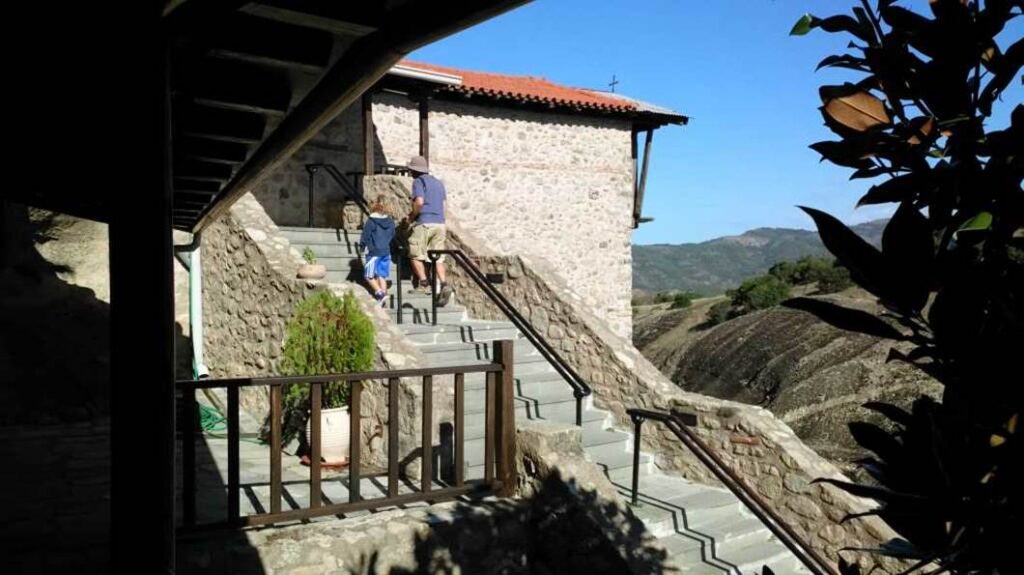
Photo by author, 2014
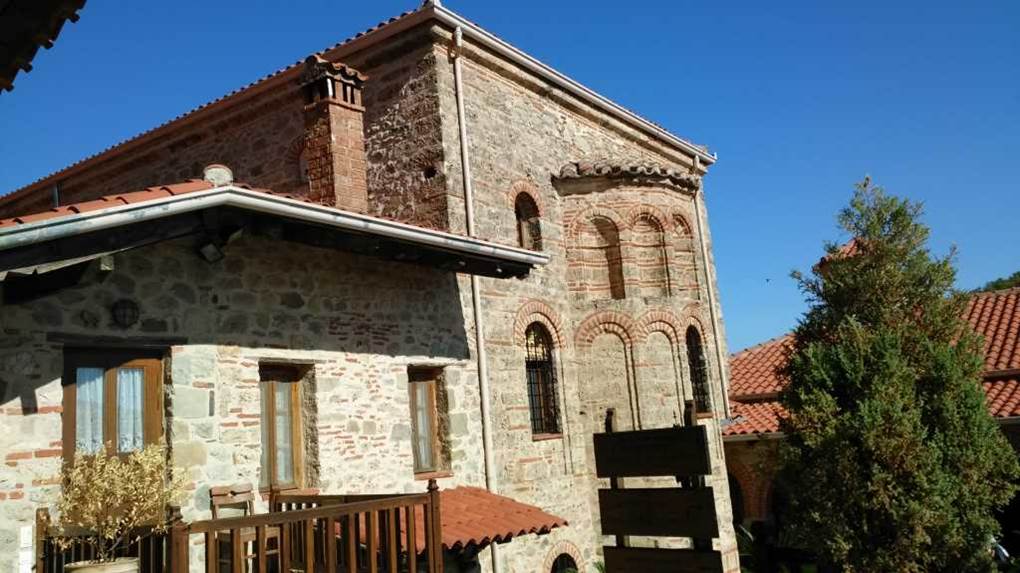
Photo by author, 2014
The grounds are entirely made of stone and ceramic roof tiles. It must have taken a tremendous amount of manpower and time to lift these building materials to the top of the rocky mountain.

Photo by author, 2014
Late Byzantine architecture
Main Cathedral of the Monastery of Metamorphosis (The Katholikon)
It is said that Saint Iosaph, the successor of St. Athanasius (1302-80), built the main cathedral (Katholikon) in 1388. There are frescoes and icons created between 1483 and 1552, and it is also a treasure trove of Byzantine art. The dining hall was now open to the public as a museum.
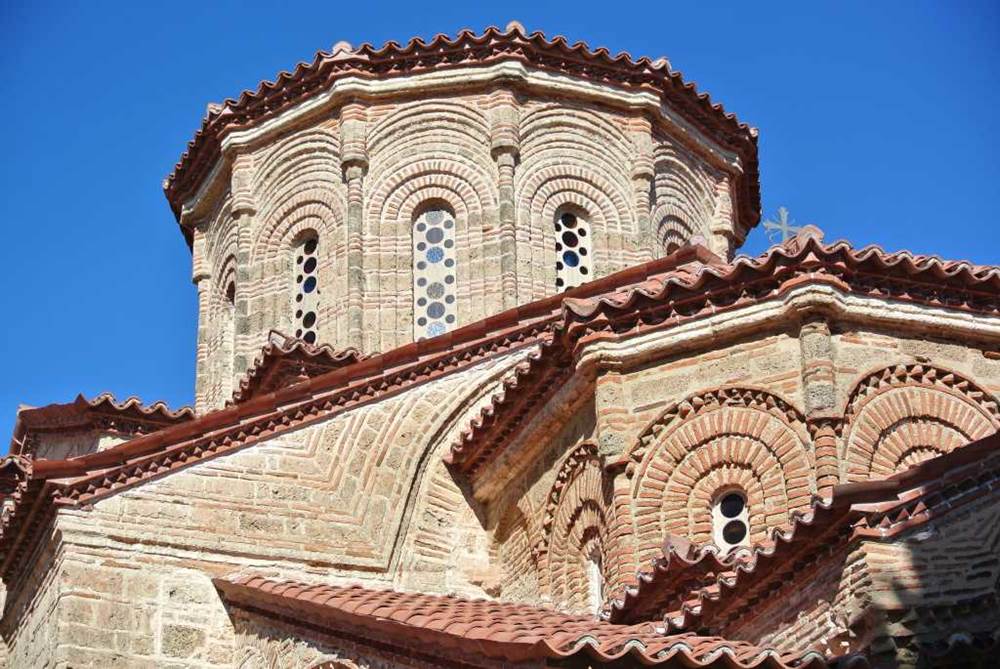
Photo by author, 2014
The Monastery of Metamorphosis (Holy Monastery of the Transfiguration) completed in 1388.
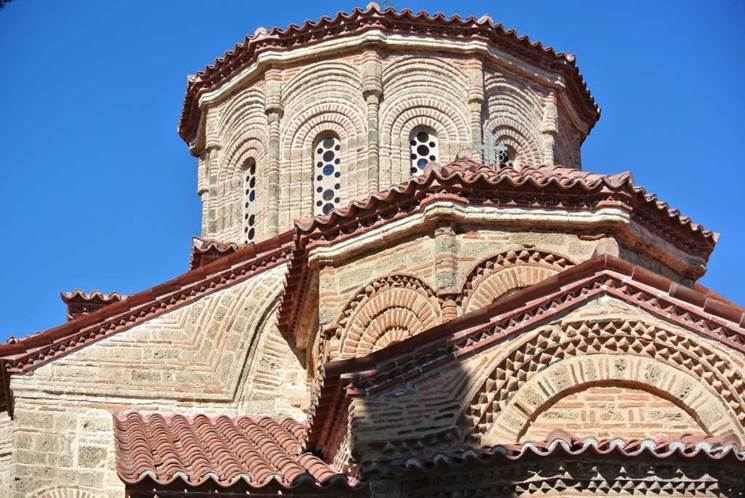
Photo by author, 2014

Photo by author, 2014
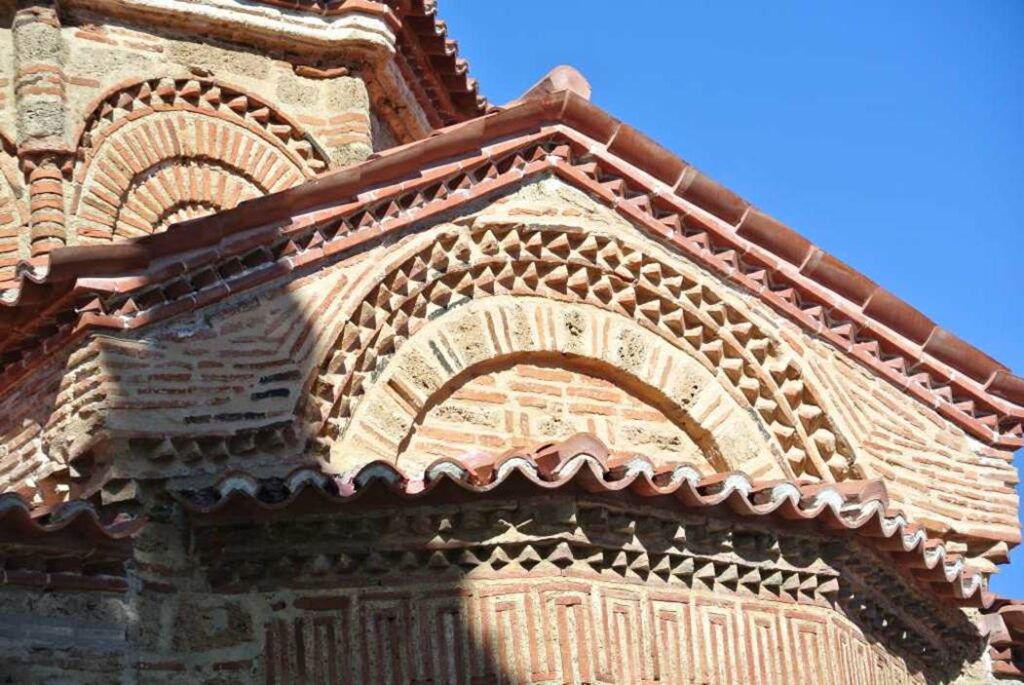
Photo by author, 2014
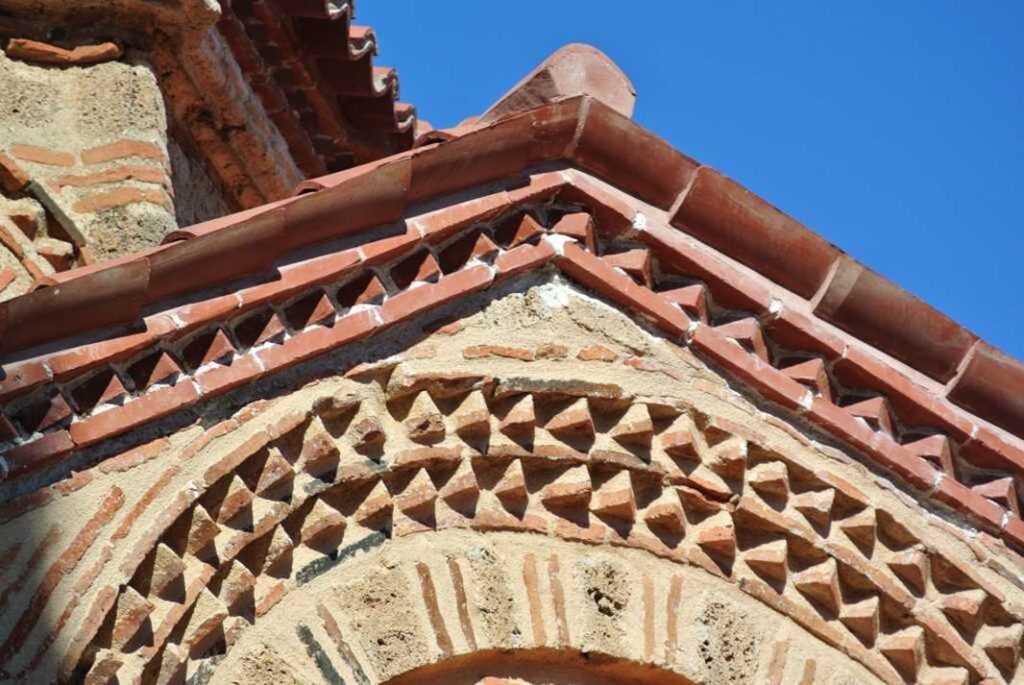
Photo by author, 2014
A treasure trove of Byzantine art
Here is a photo of the interior of the Monastery of Metamorphosis.
With frescoes and icons created between 1483 and 1552, it is a treasure trove of Byzantine art.
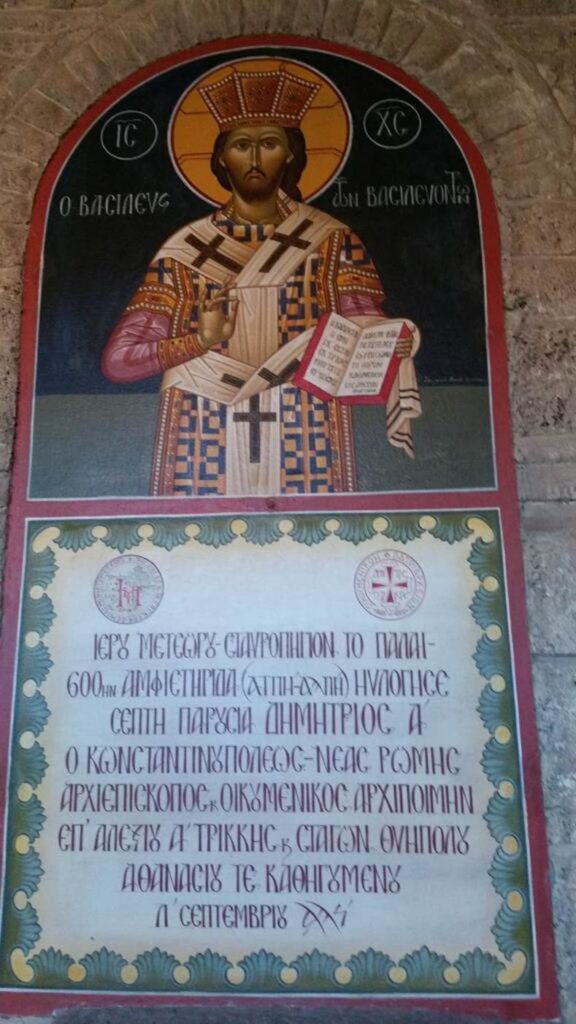
Photo by author, 2014
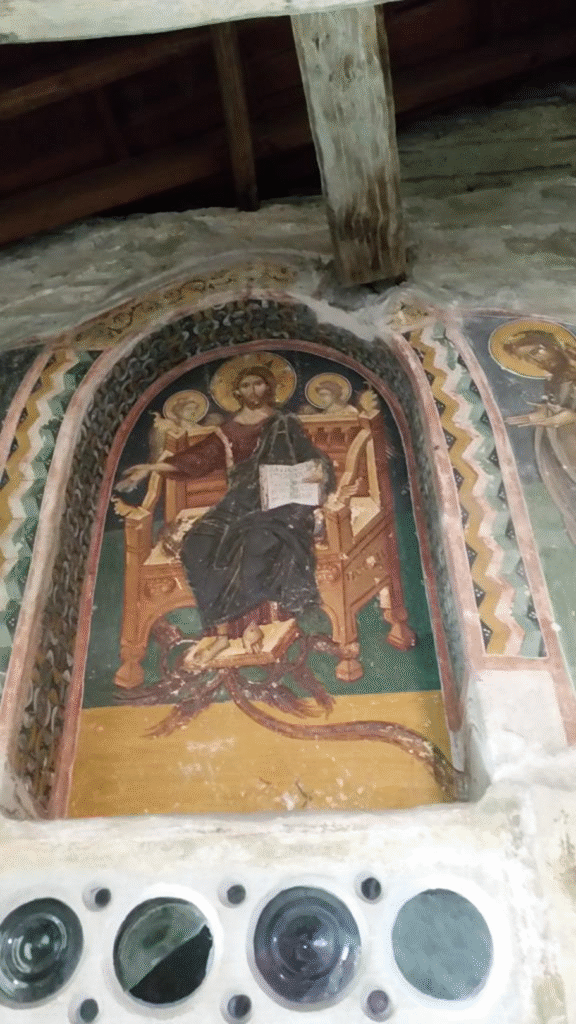
Photo by author, 2014
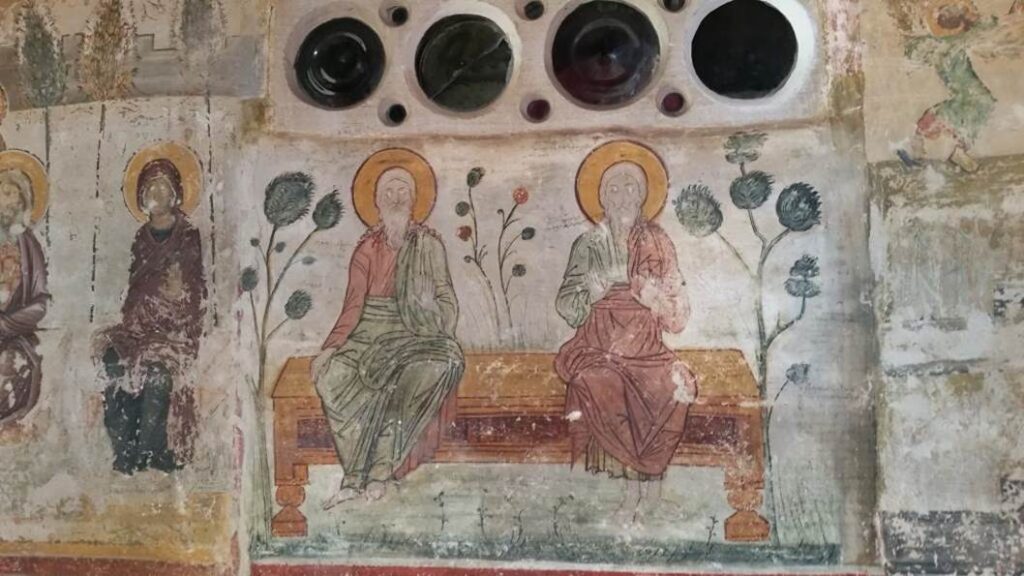
Photo by author, 2014
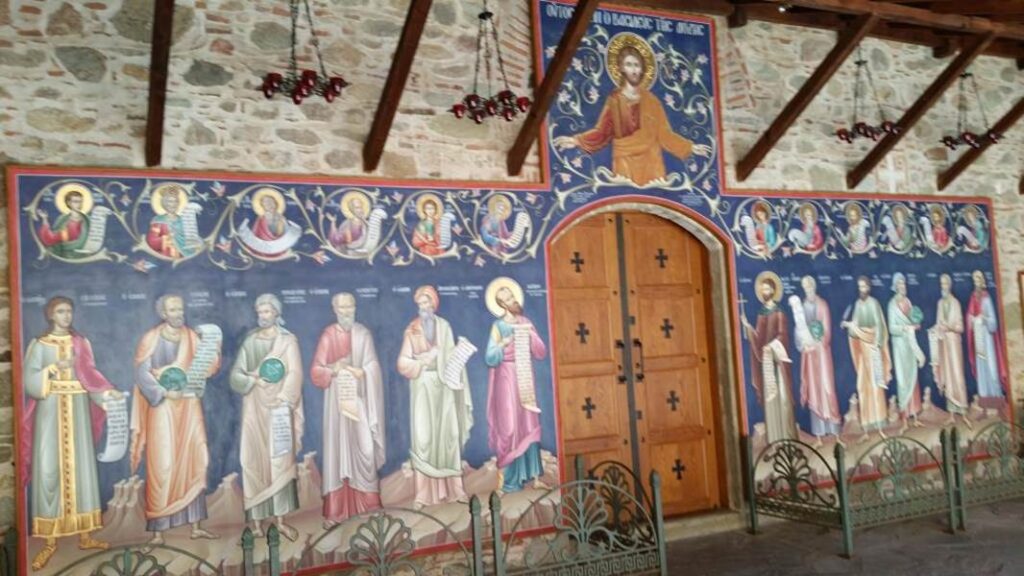
Photo by author, 2014

Photo by author, 2014
The kitchen of the monastery.
It is no longer in use, but old tools were on display.
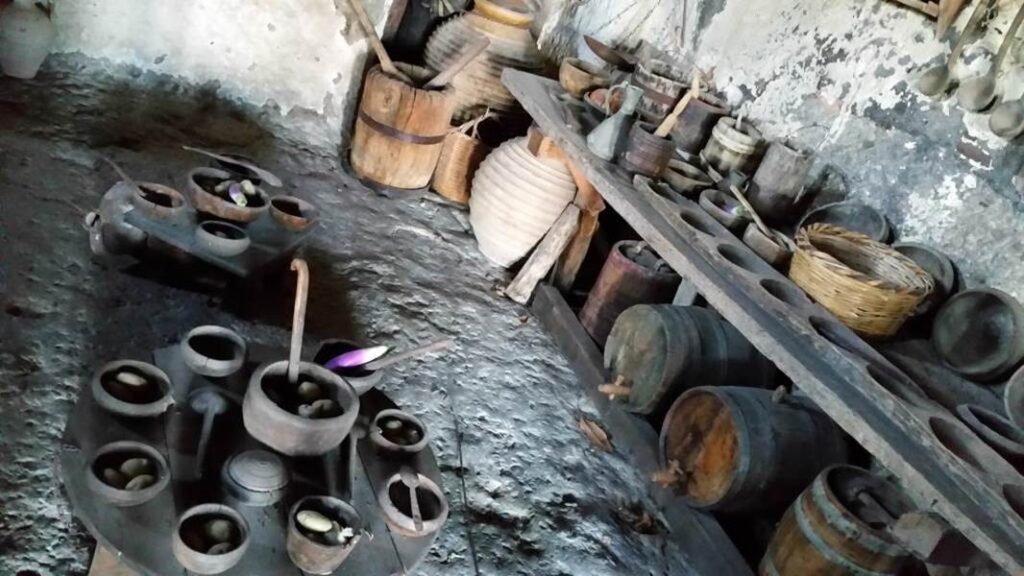
Photo by author, 2014
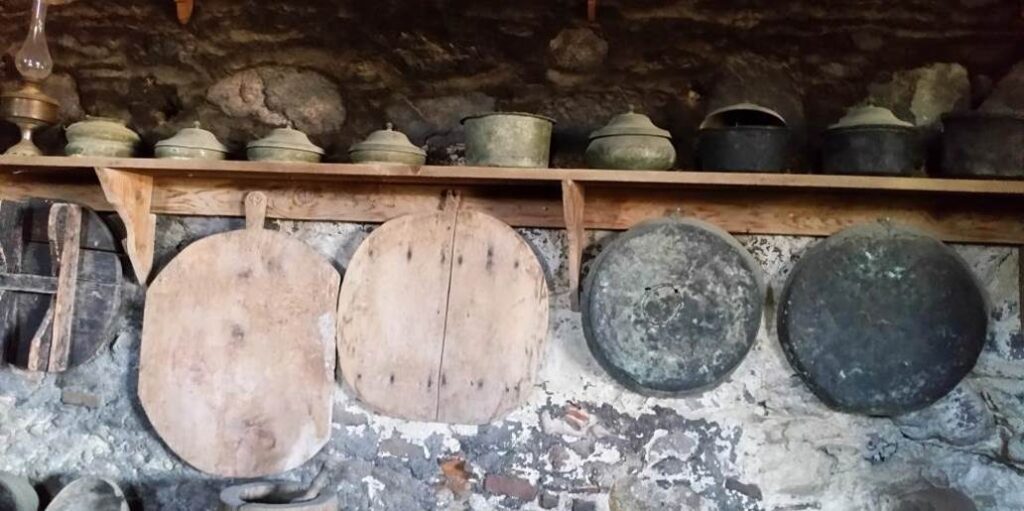
Photo by author, 2014
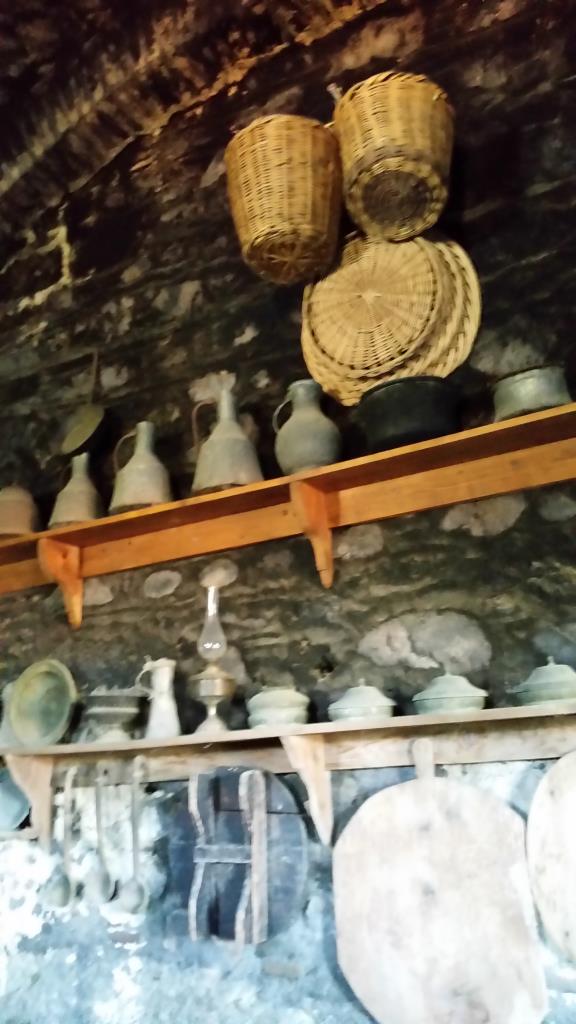
Photo by author, 2014
The burial site.
I was surprised by this. The explanation was that it was the monks’ homes.
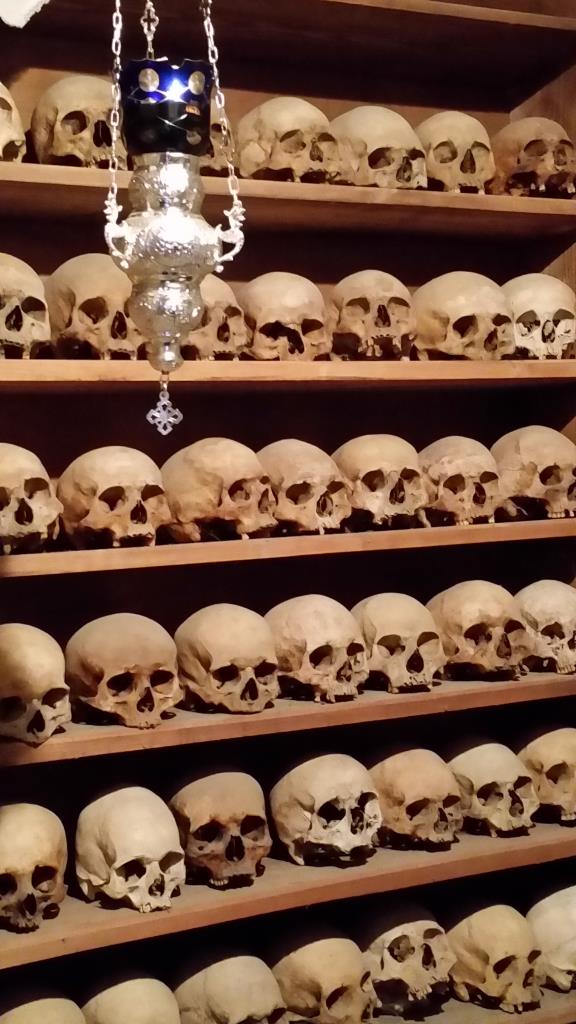
Photo by author, 2014
⑤ Holy Trinity Monastery (Agia Triada)
A monastery built by the monk Dometius in the 14th century.
It is located at the top of a 565-meter-high cliff. Until 1925, when the 140-step staircase was built, ladders and hoists were used.
It seems that it was also used for the last scene of the James Bond movie “007 Your Eyes Only” because of its outstanding view.
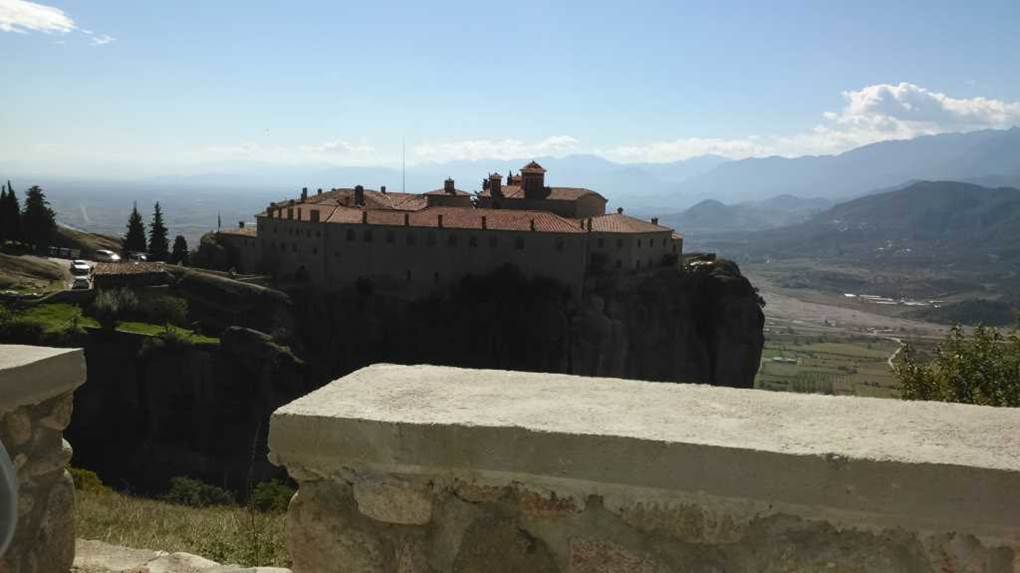
Photo by author, 2014
From the gap between the rocky mountain, you can see the plains and settlements below.
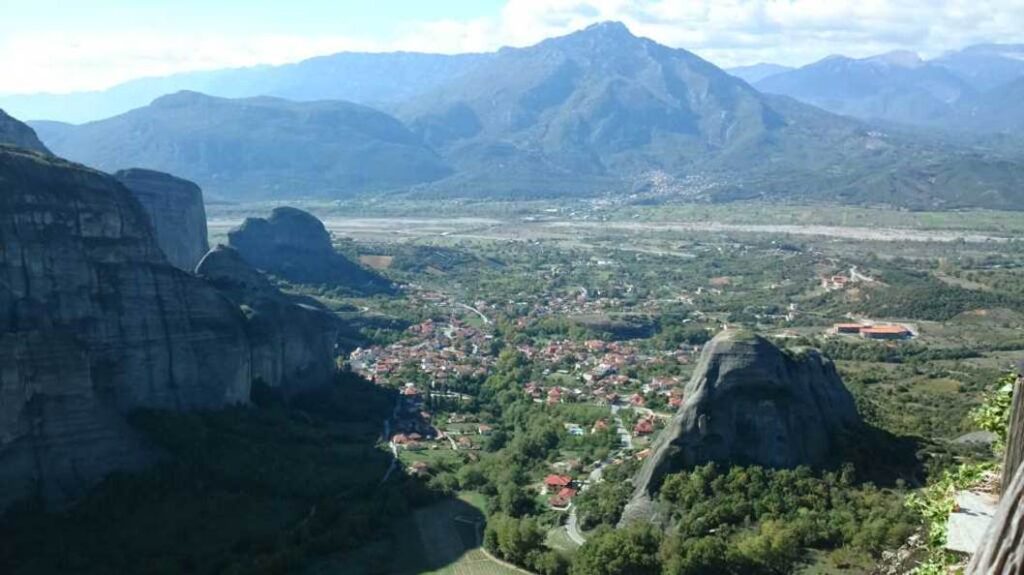
Photo by author, 2014

Photo by author, 2014
⑥ St. Stephen’s Monastery (Agios Stefanos)
It is said that the hermit Jeremias was there in 1192, but it was founded as a co-resident monastery in 1367 (now a convent for women).
It is the oldest monastery in Meteora.

Photo by author, 2014

Photo by author, 2014
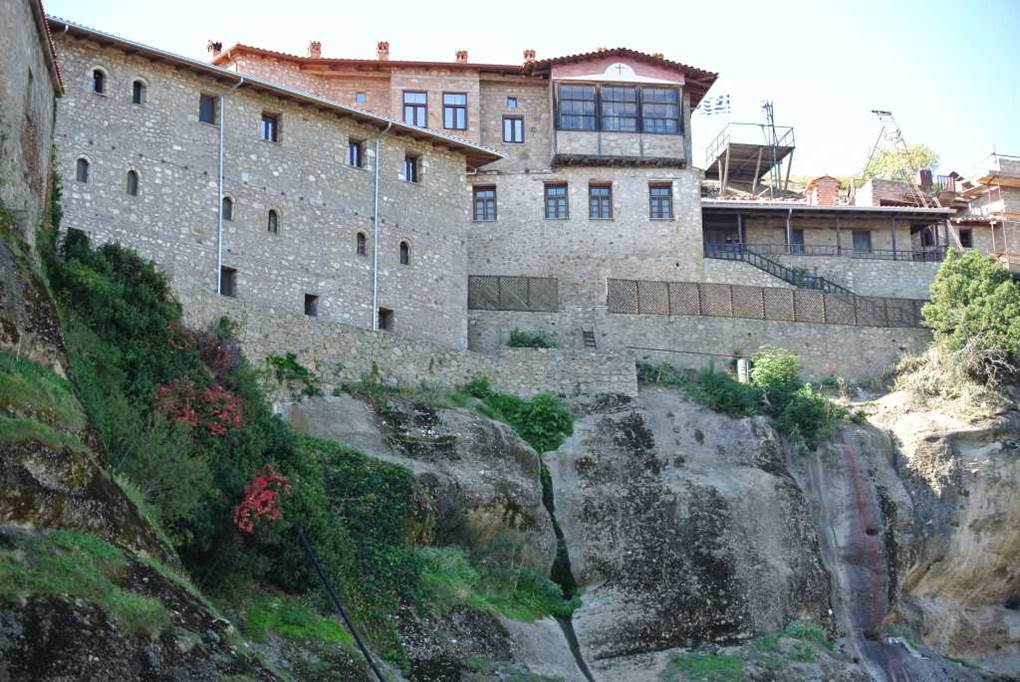
Photo by author, 2014
A view of the village below from among the rock formations.
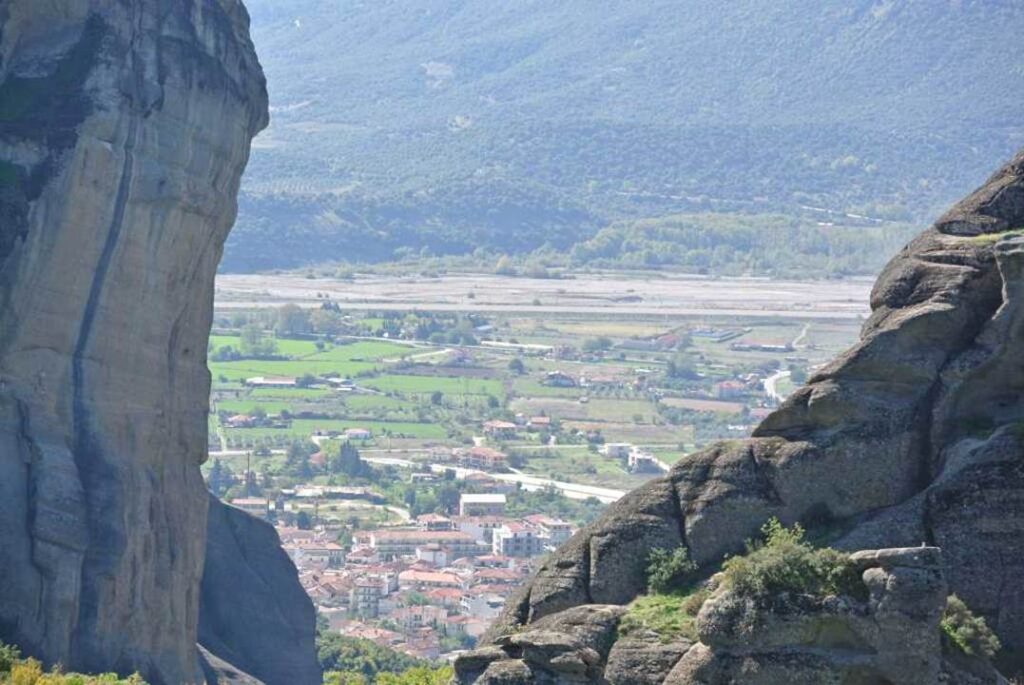
Photo by author, 2014
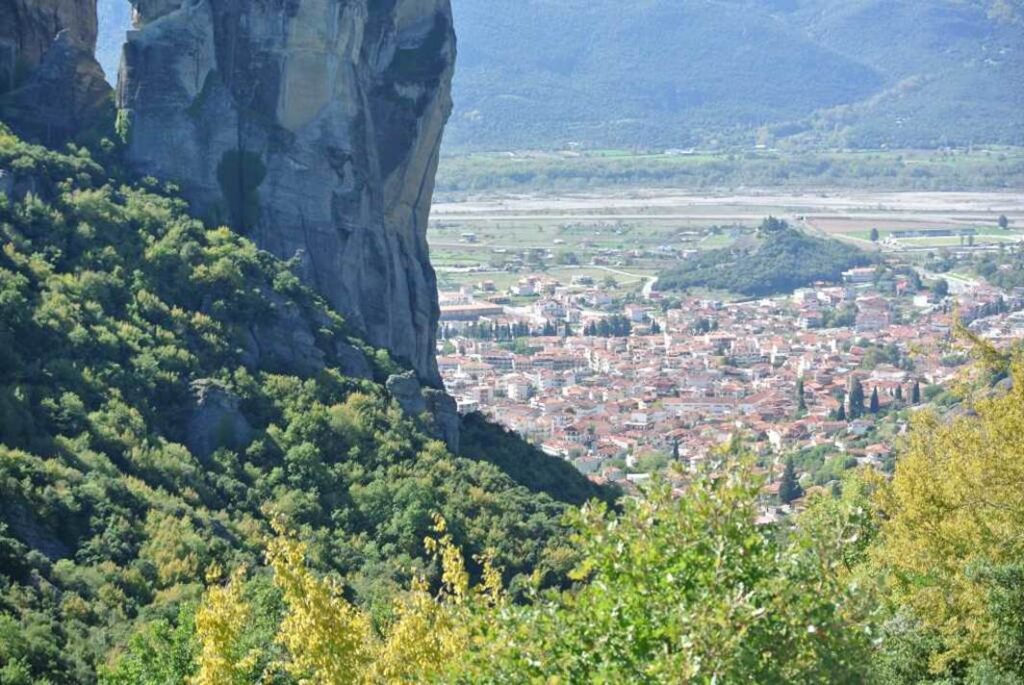
Photo by author, 2014
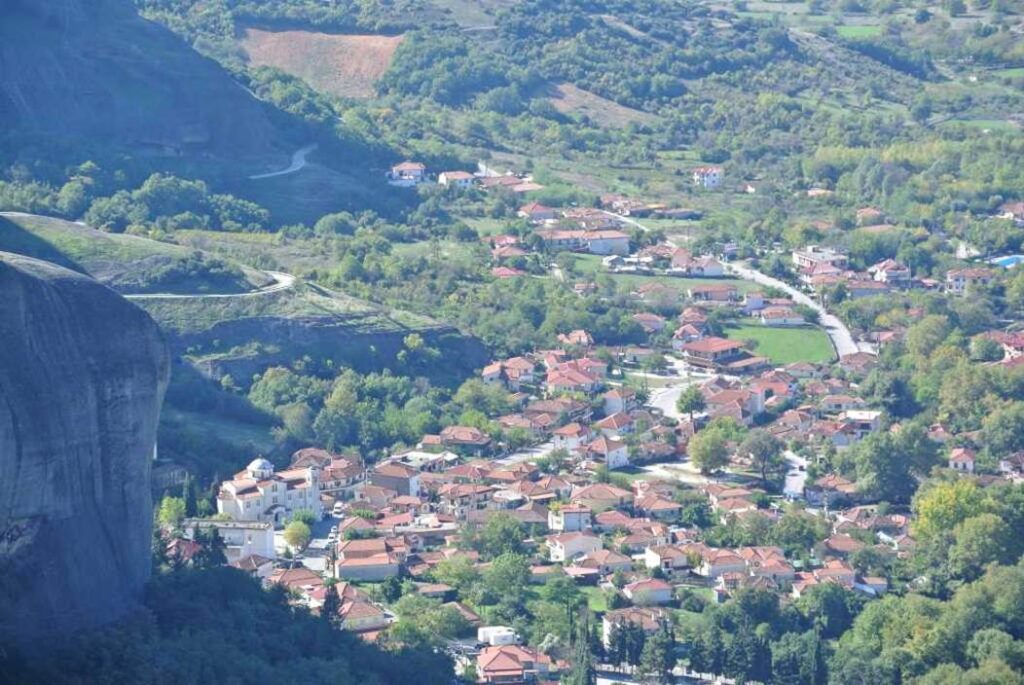
Photo by author, 2014
If you take a closer look at the village, you will see that all the houses are unified with orange tiled roofs and white walls.
Almost all of them are single-family houses, and there are no apartment buildings to be found. An ideal living environment has been formed and it is a peaceful scene.
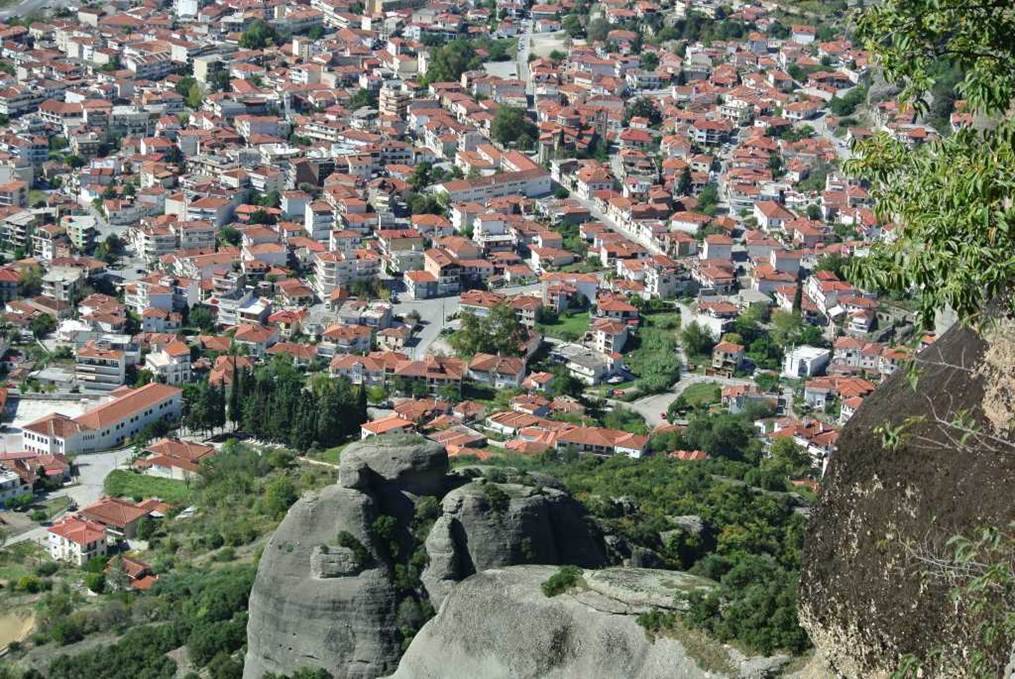
Photo by author, 2014
All photos by author, October 2014