JAP | ENG
Around Bali #10/10
Paintings
The origin of Balinese painting
Classical Painting:
The Court Art of the Majapahit Dynasty in Java
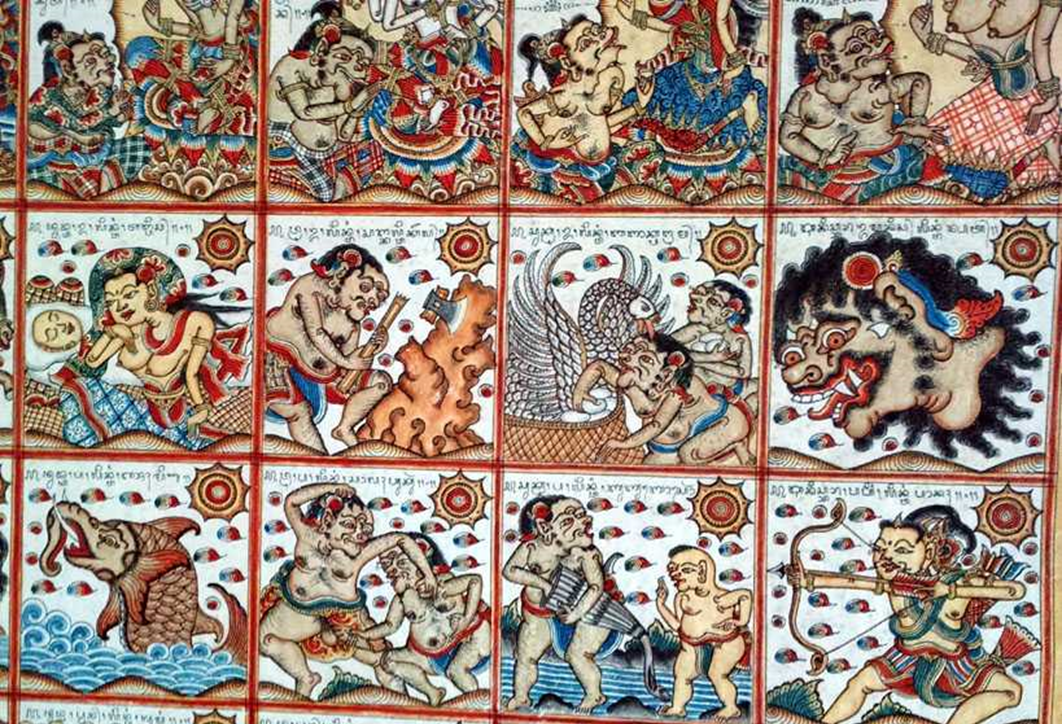
A traditional votive performing art used in festivals and ceremonies. A painting technique that has been used since the 16th century and is influenced by wayang (shadow puppetry) with motifs from Hindu mythology, the Ramayana and the Mahabharata.
This traditional two-dimensional technique has been passed down to the present day and is called Kamasan style, named after a village outside Klungkung in eastern Bali.

Neka Art Museum, Ubud
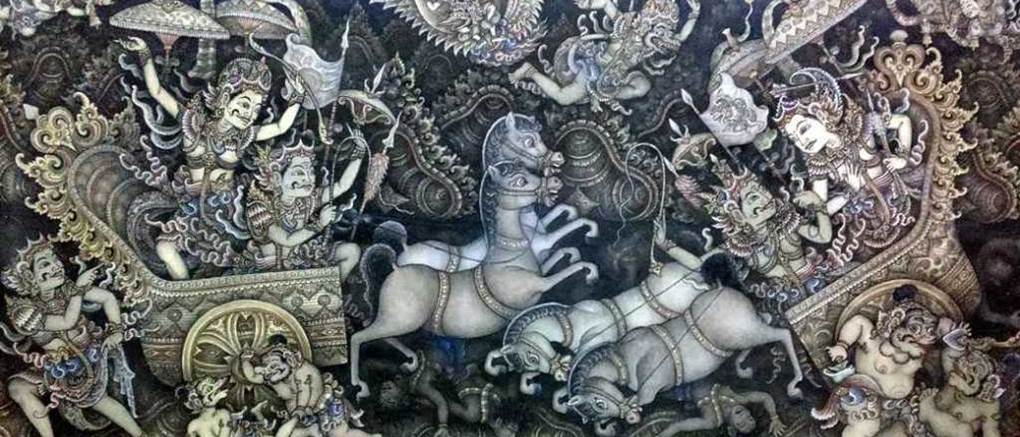
Neka Art Museum, Ubud
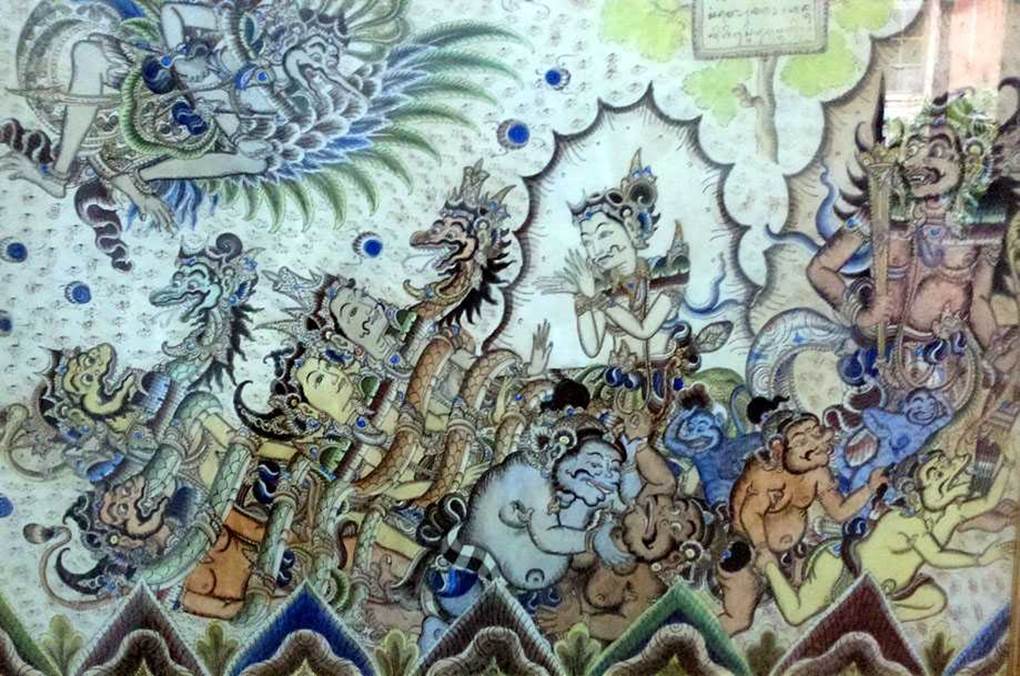
Neka Art Museum, Ubud
Klungkung, East Bali
Kamasan Style
The palace of Klungkung, the ancient capital of the Semarapura dynasty.
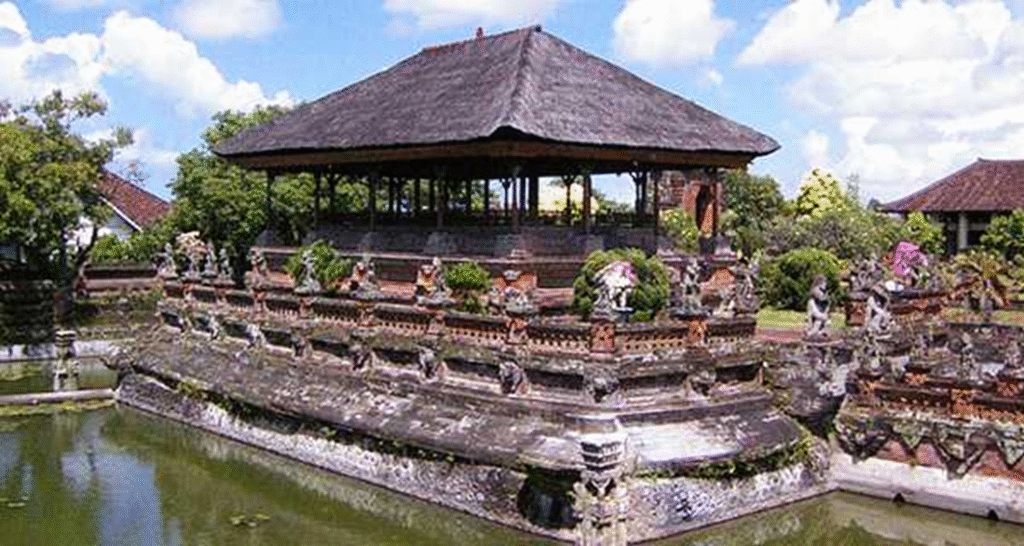
Photo by author
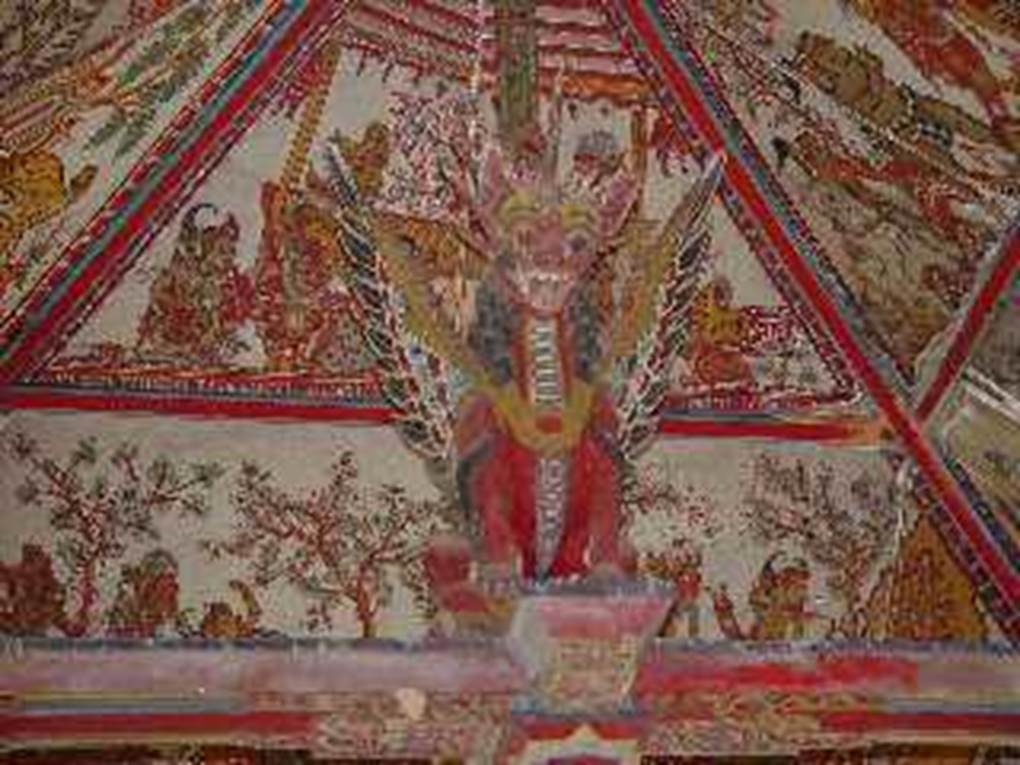
Photo by author
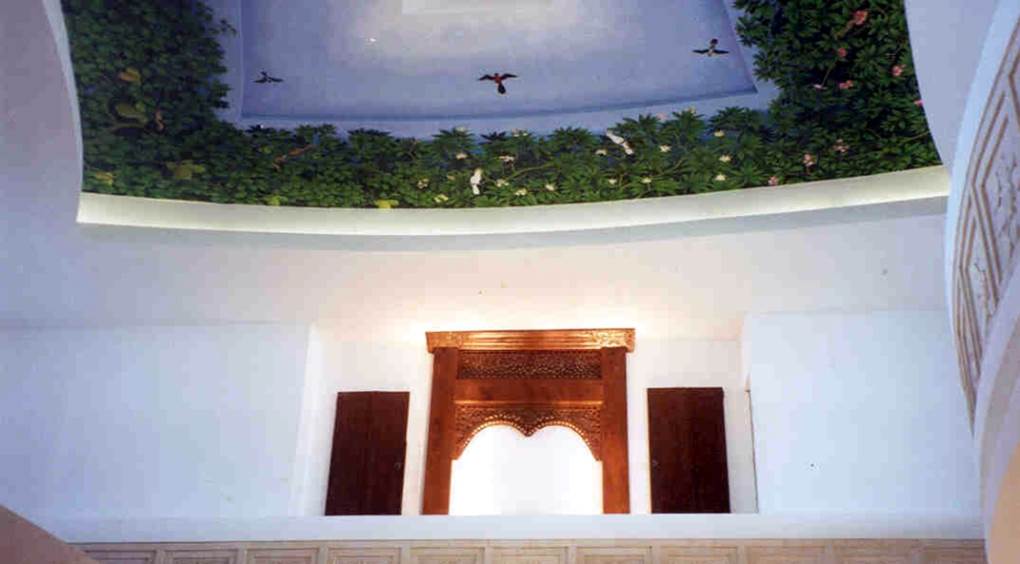
Ceiling painting of the palace in Kamasan style.

NEKA ART MUSEUM
It was built by renowned painting collector Suteja Neka and opened in 1976. There is an exhibition hall that showcase traditional Balinese paintings such as Kamasan style, Batuan style, and Ubud style, an exhibition hall that display the works of Arie Smit, a Dutch-born Indonesian painter who lived on Bali, and an exhibition hall that display contemporary Indonesian paintings.
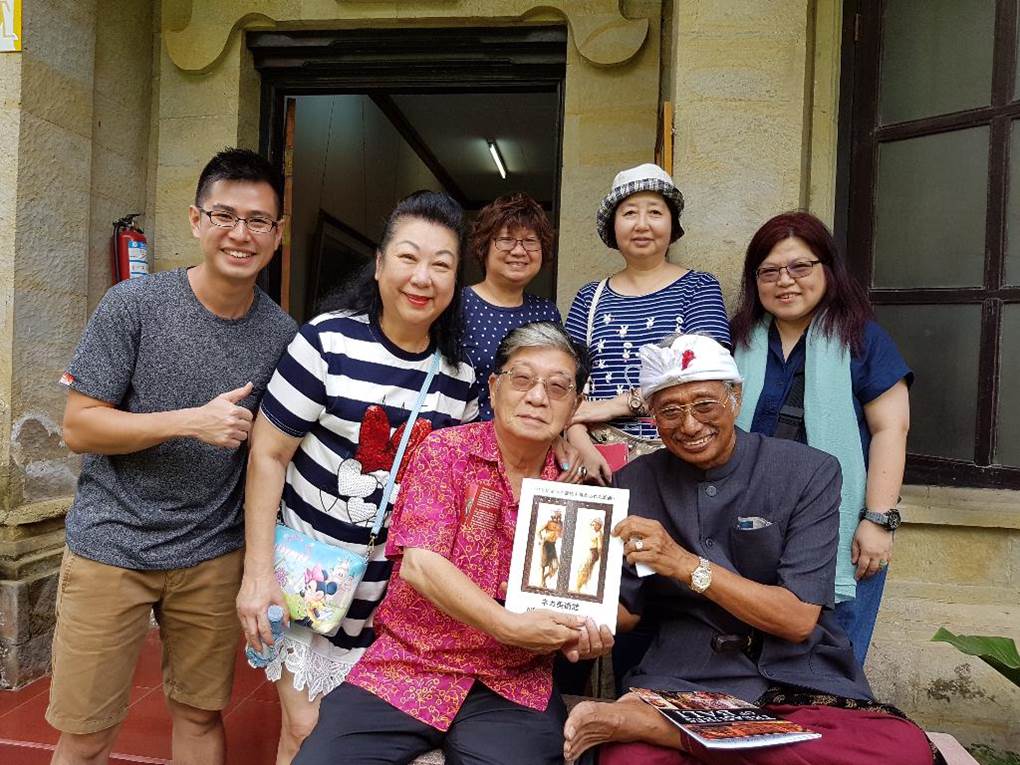
A commemorative photo of Balinese painting collector and artist Suteja Neka and the author. In front of the entrance of the Neka Museum in May 2018. Accompanying were three aspiring Singaporean painters who has hearing impairments.
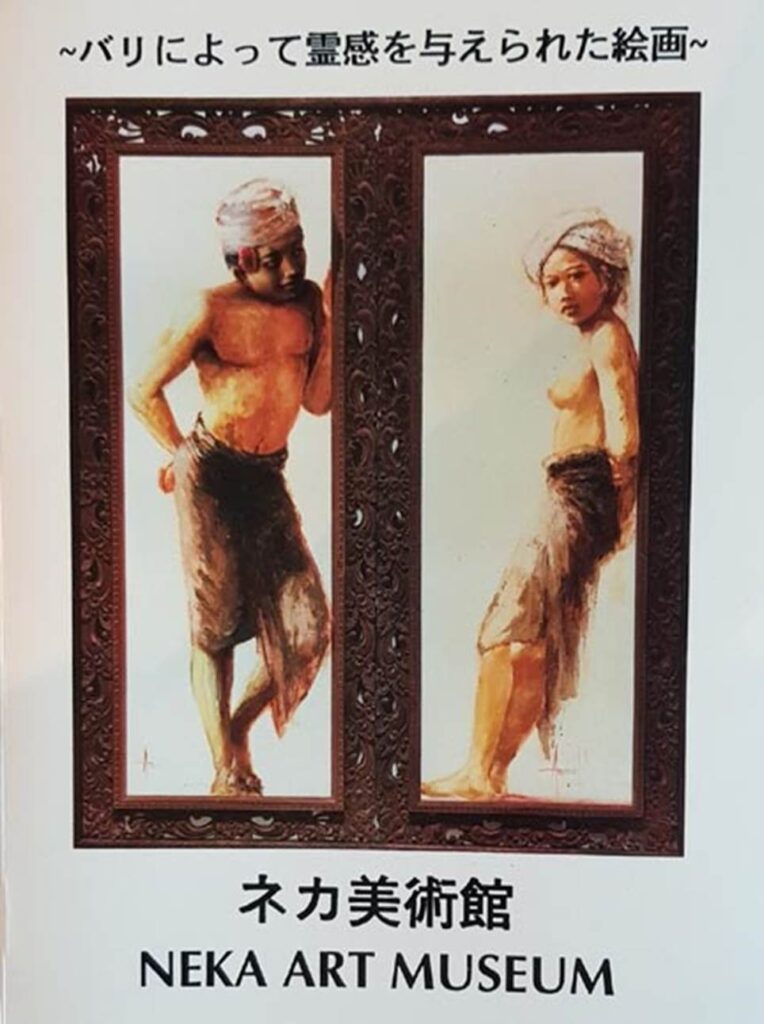
A booklet signed by the director of the Ubud Neka Museum, Mr. Suteja Neka, in May 2018.
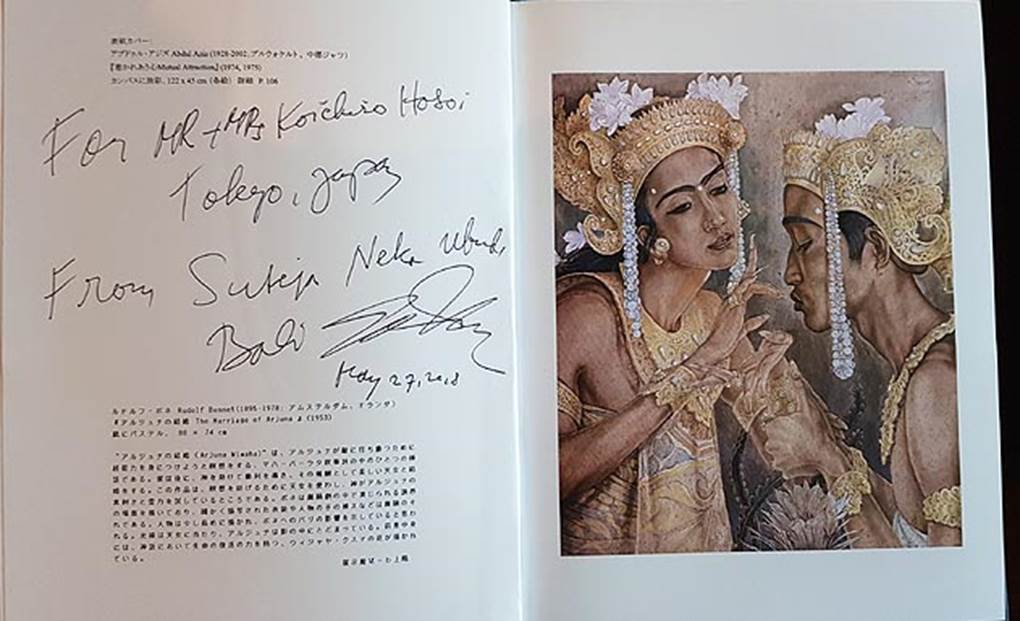
The photographs below were taken with special permission from the director of the Ubud Neka Museum, Suteja Neka.
Artists who migrated to Bali from Europe
1. Rudolf Bonette
He lived in Bali from 1929 to 1942 and influenced local artists with his three-dimensional expressions.
He painted the daily life of Balinese people, apart from mythological and religious motifs. In 1936, he joined the artist organization Pita Maha (Great Light) and became an active member.
In 1942, he was captured by the invading Japan army and sent to a prisoner of war camp on the island of Sulawesi. In 1947, he returned to Bali, but in 1957, due to deteriorating relations between Indonesia and the Netherlands, he was deported and spent the rest of his life in the Netherlands till his death 20 years later. He was born in Amsterdam in 1895 and died in the Netherlands in 1978.
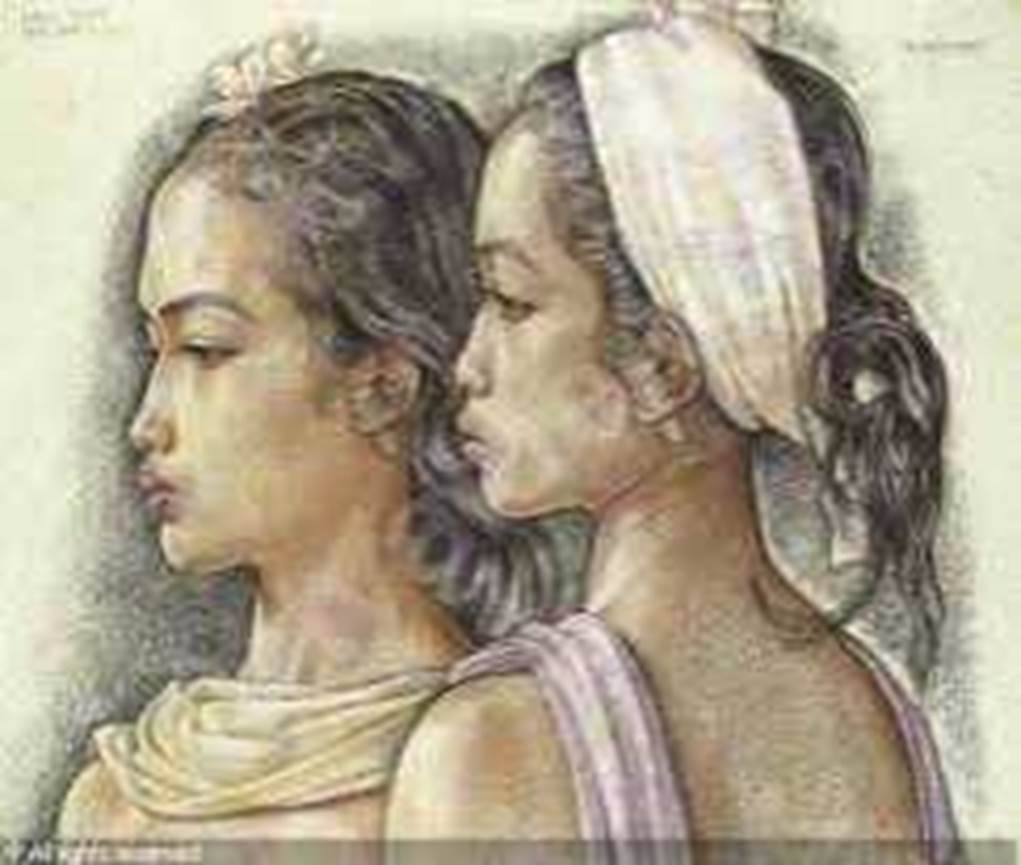
Neka Art Museum, Ubud
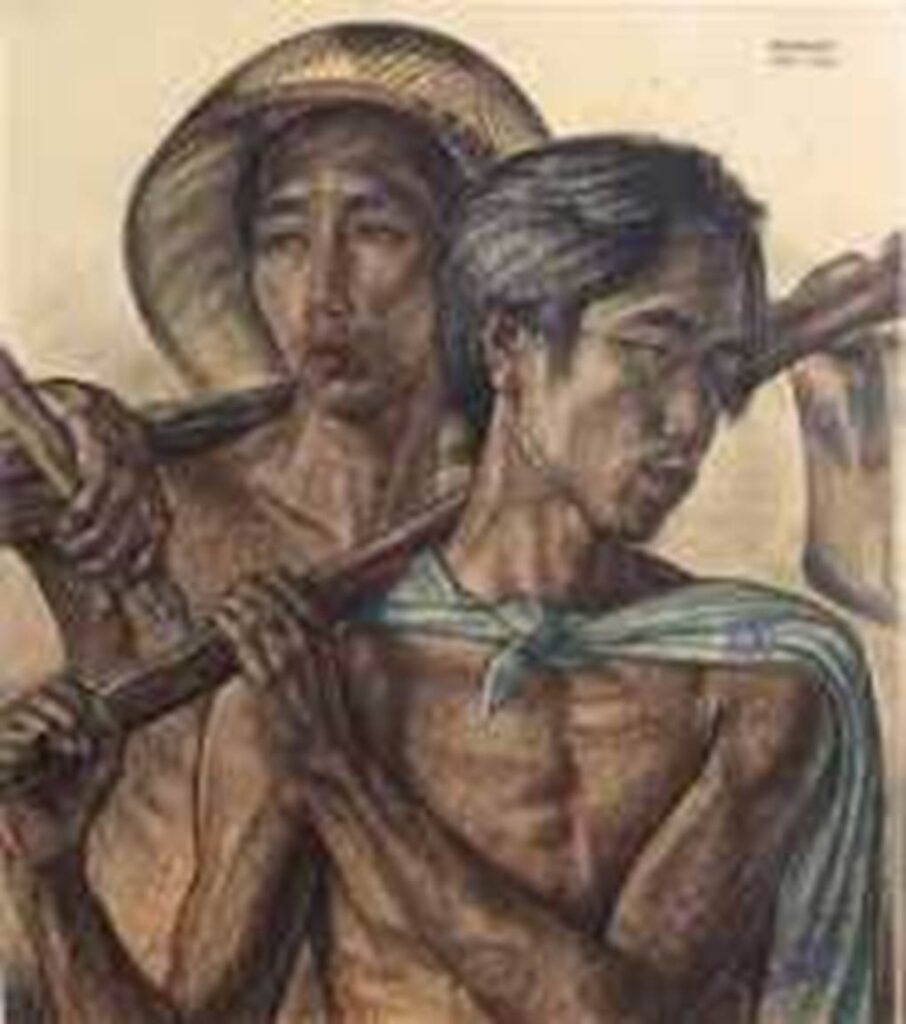
Neka Art Museum, Ubud
Ubud style
This painting style was influenced by Western techniques in the 1930s during the colonial period under the guidance of Rudolph Bonnet and others, and incorporated perspective and shading in Ubud to depict village life away from religious elements. The depiction of the Balinese people contributed to making Bali known to the world.
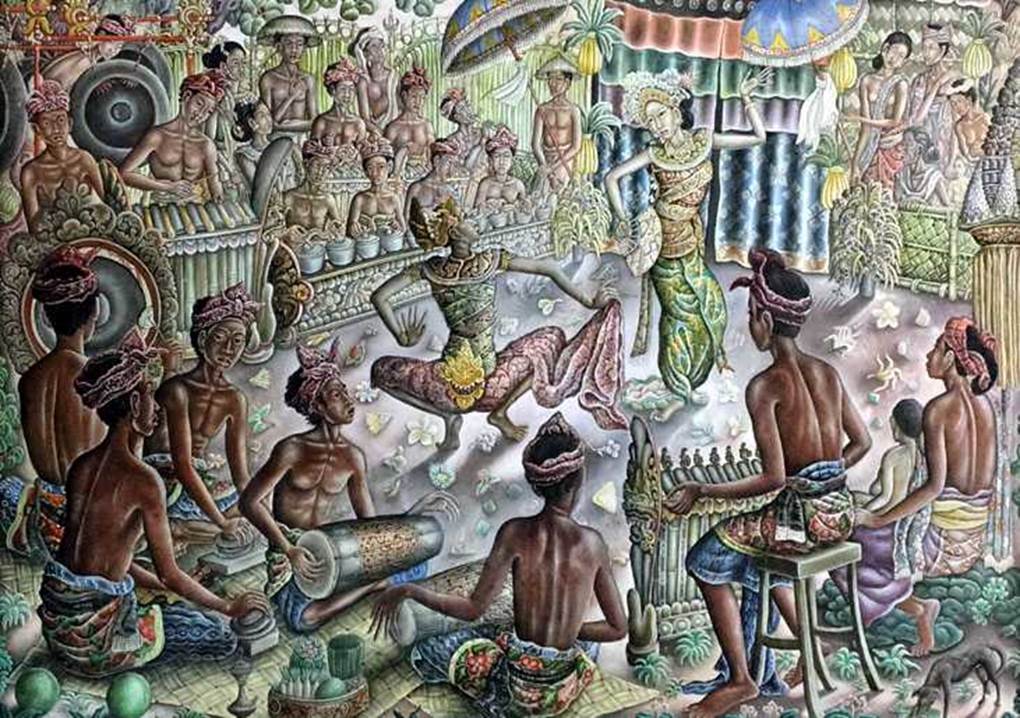
Neka Art Museum, Ubud
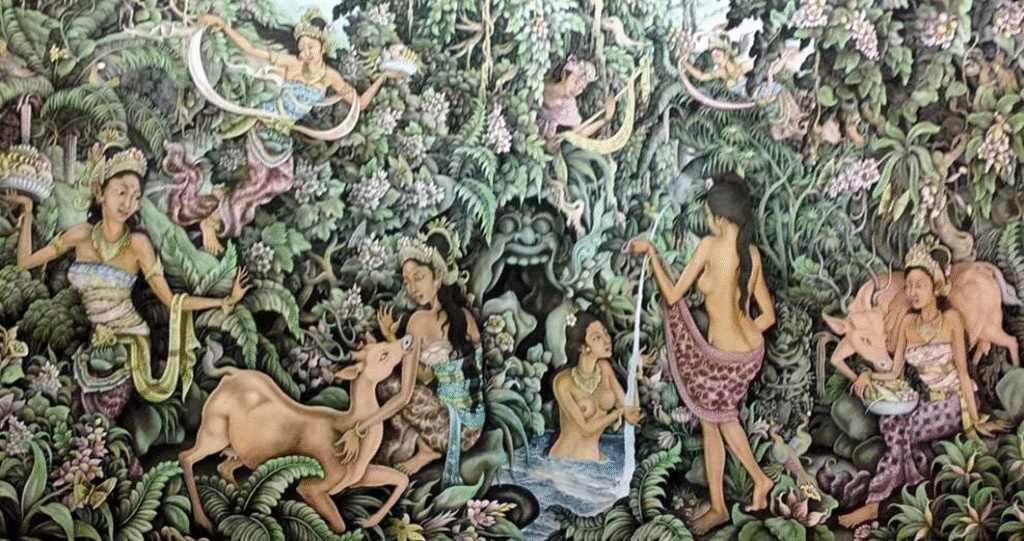
Neka Art Museum, Ubud
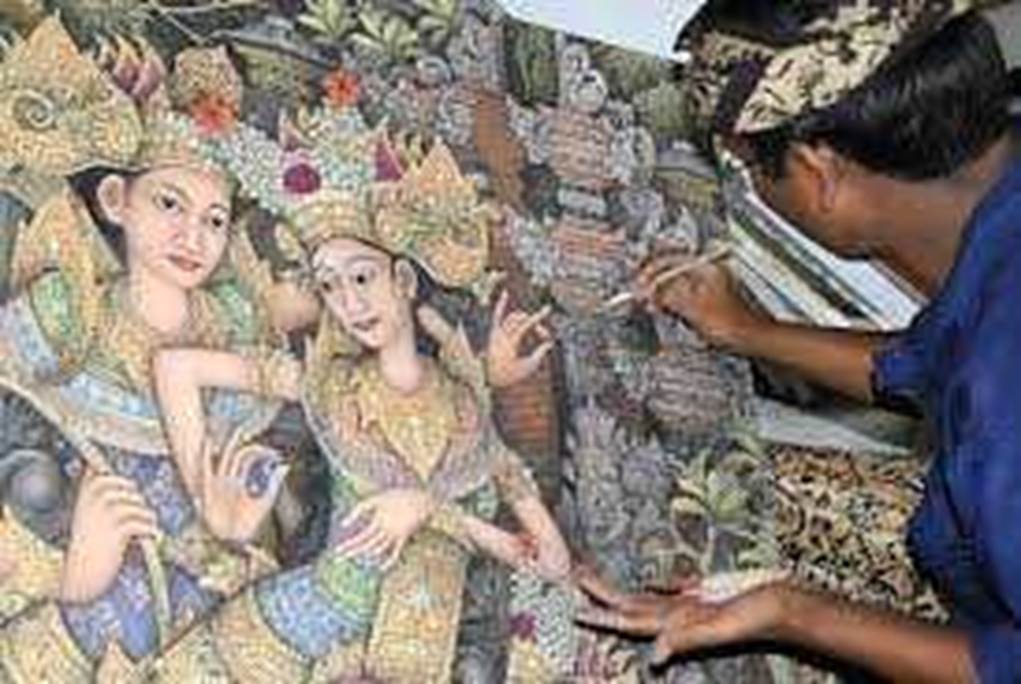
Neka Art Museum, Ubud
2. Walter Spies
Germans born in Russia. The son of a German diplomat in Moscow. Moved to Yogyakarta, Java in 1923. Moved to Ubud, Bali in 1927. Because of his German nationality, he was arrested and deported by the Dutch Indonesian authorities.
He incorporated Western-style perspective painting into his paintings, expressing the spiritual world in a fantastical style using shadows and haze, and influenced later Balinese painters. He was extremely talented not only in painting but also in music.
While sailing to the island of Ceylon, it was bombed by Japan troops. On the orders of the sailors, the German prisoners of war were not released and drowned. (1895-1942)
He loves this fantastic Bali landscape more than anyone else, and expresses its essence on the canvas with a unique technique.
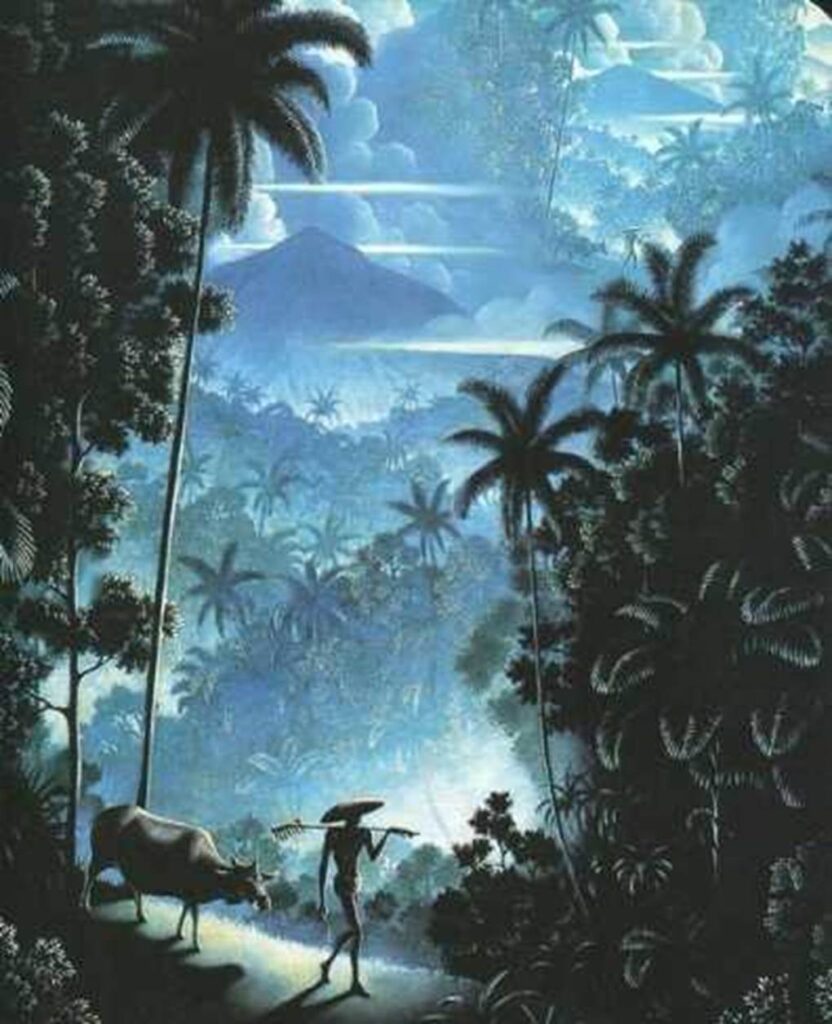
Neka Art Museum, Ubud
Neka Art Museum, Ubud
Batuan Style
Miniature paintings that are not much influenced by Western painting methods and have inherited traditional techniques without perspective or three-dimensionality and have evolved in their own way. The style originated from the artists of Batuan Village, a southern suburb of Ubud.
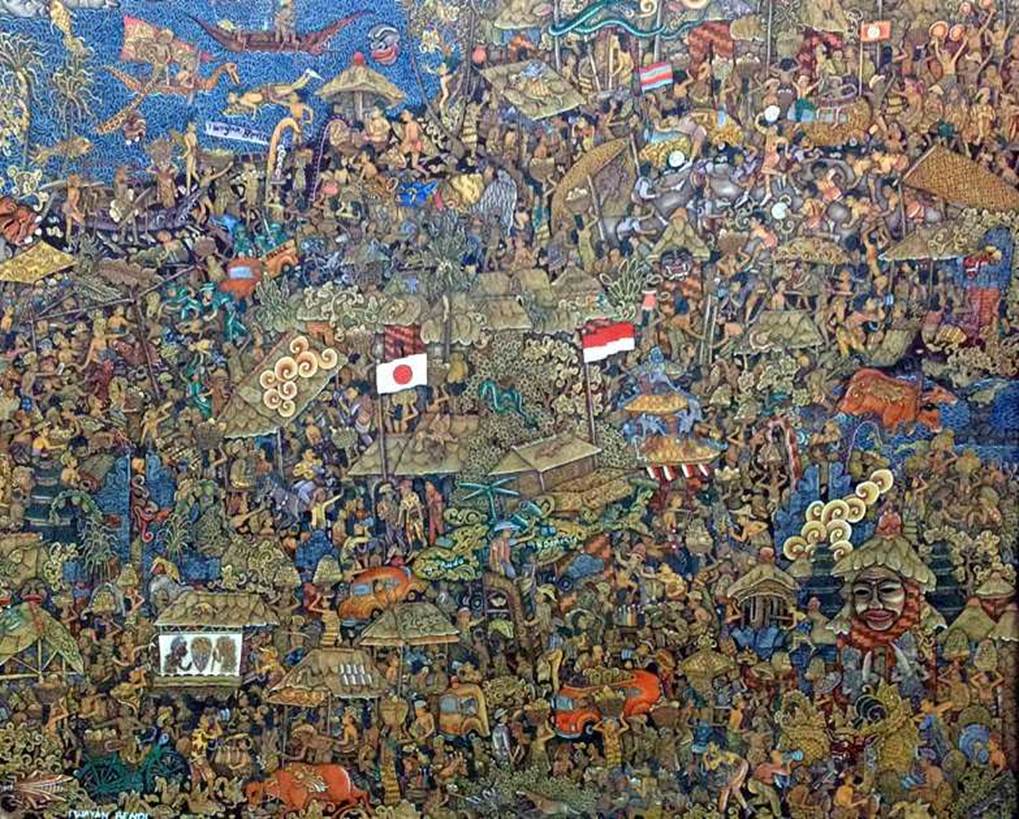
Panting by I made Budi, Neka Art Museum
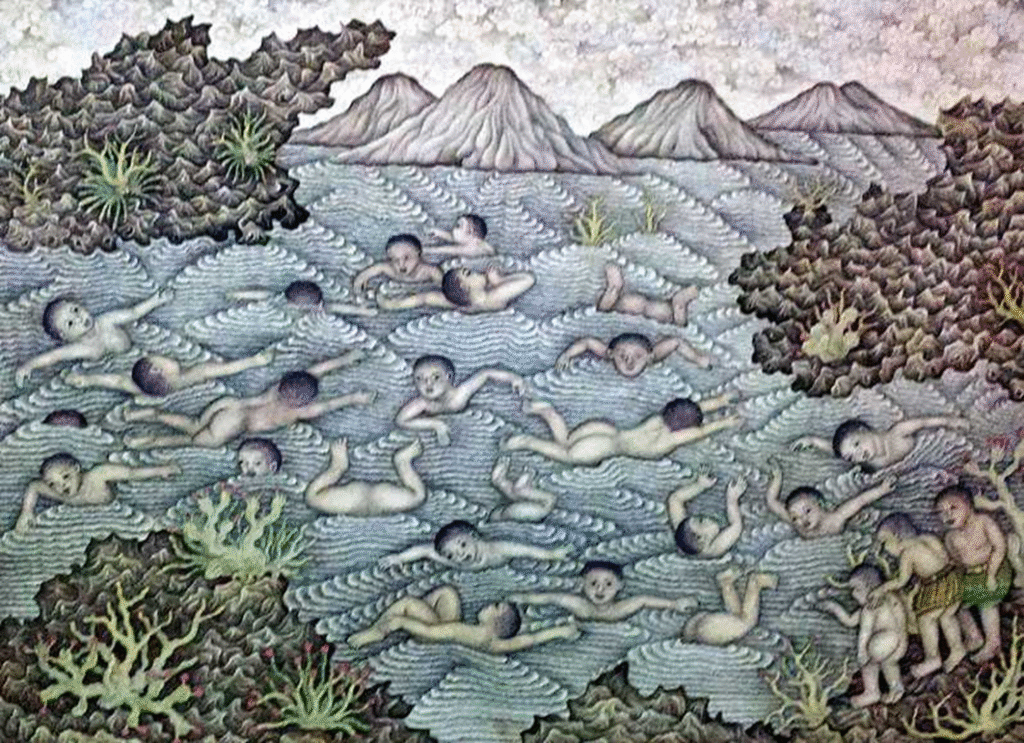
Neka Art Museum, Ubud
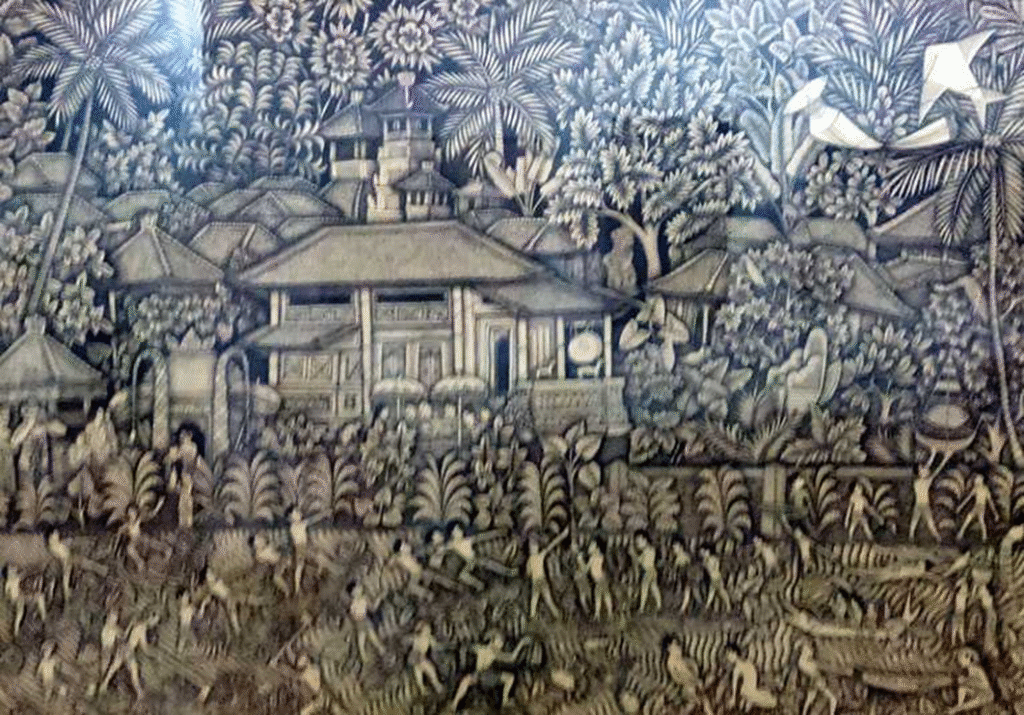
Neka Art Museum, Ubud
3. Gusti Nyoman (Lempad Style)
Gusti Nyoman Lempad, painter, sculptor and architect born in 1862, who lived to be 116 years old.
Born near Ubud, he was illiterate but served the Sukawati royal family as a stone carver. He is said to have been involved in the construction of temples and other buildings as an Undagi, a traditional Balinese architect.
After that, he demonstrated his talent as a painter and established a unique style of soft line drawing. He joined European painters such as Rudolph Bonnet and Walter Spiess, who came to Bali before the war, and the 1936 Pita Maha (Great Light) artists’ organization, but his painting style was not influenced at all, and he opened up his own world, and is recognized as a leading Balinese artist to this day.
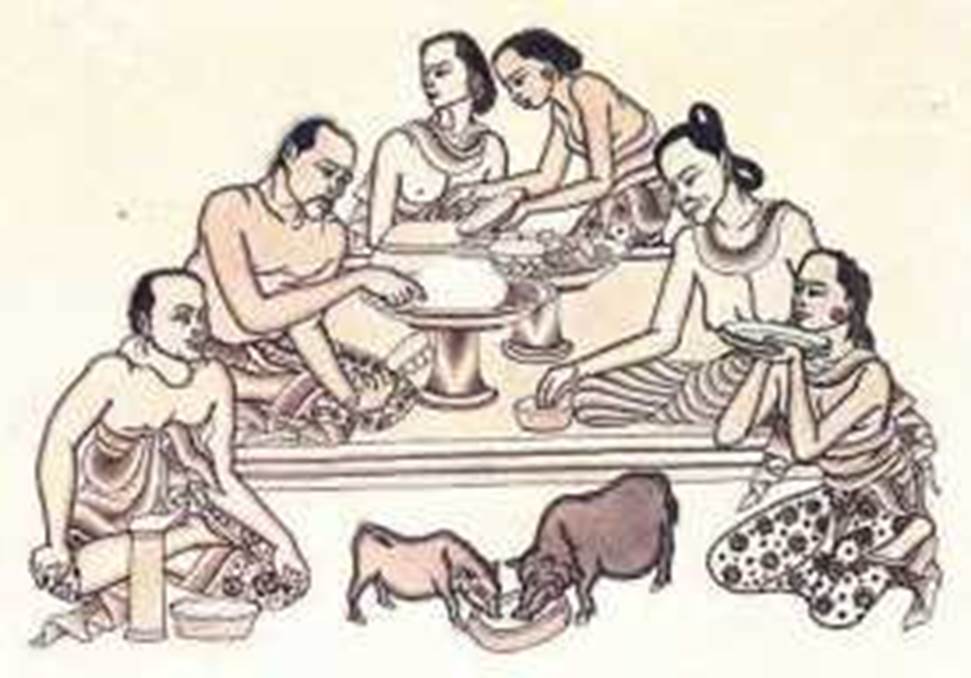
Neka Art Museum, Ubud
Works of I Gusti Nyoman Lempad 1862-1979, Undagi, Painter, Sculptor
A flowing monochrome line drawing
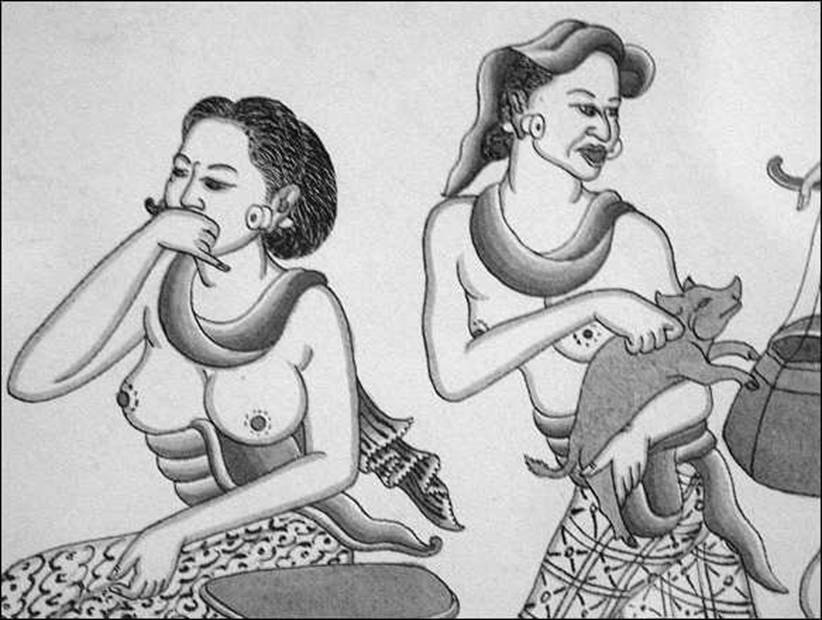
Neka Art Museum, Ubud
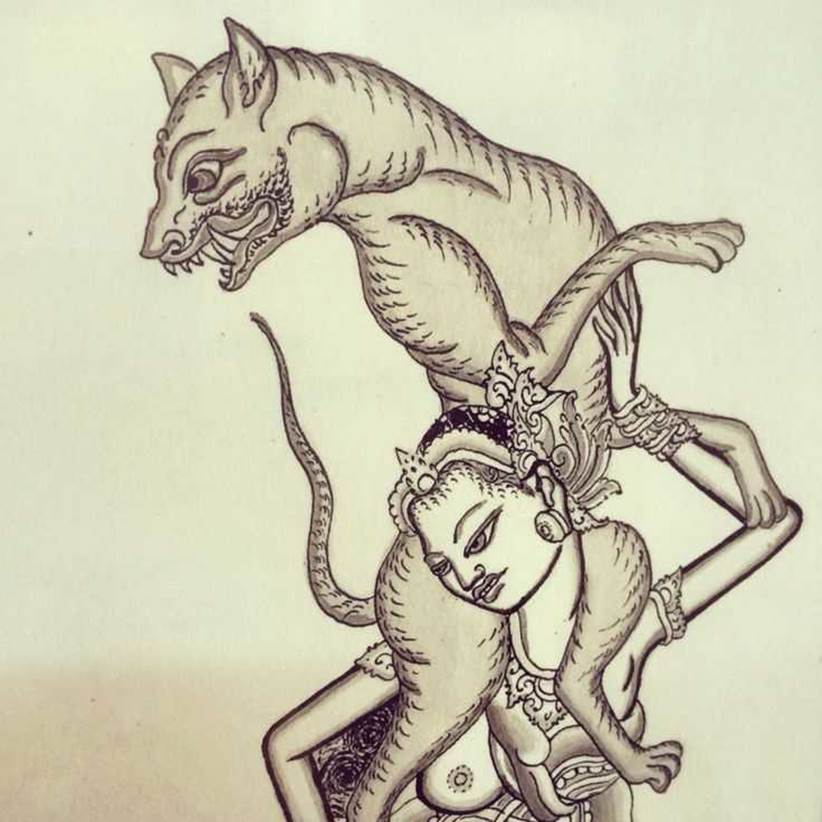
Neka Art Museum, Ubud
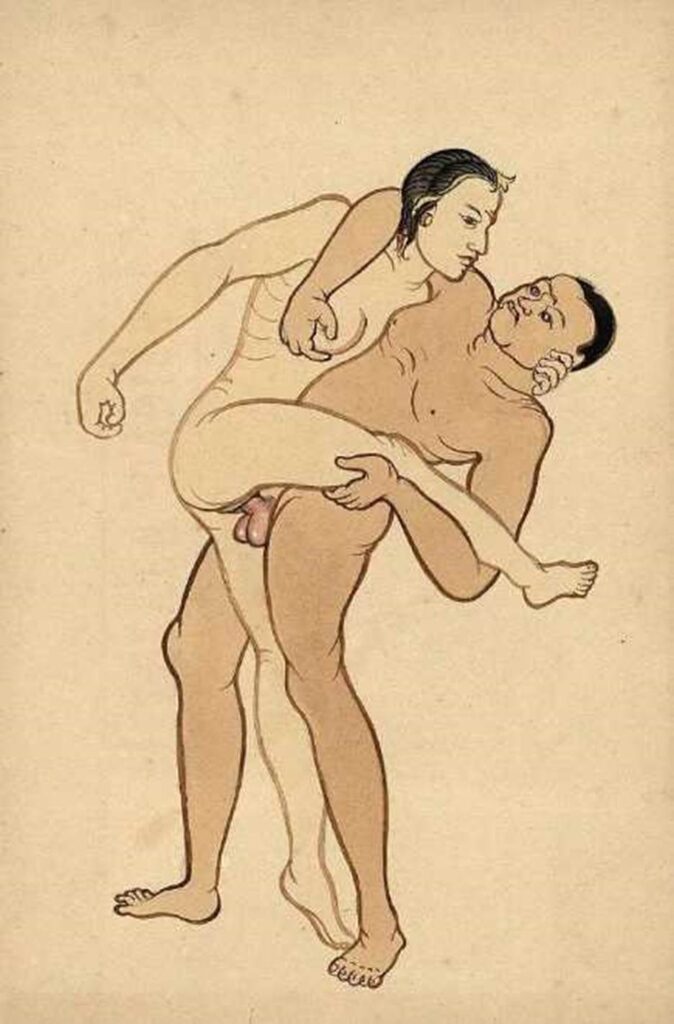
Neka Art Museum, Ubud
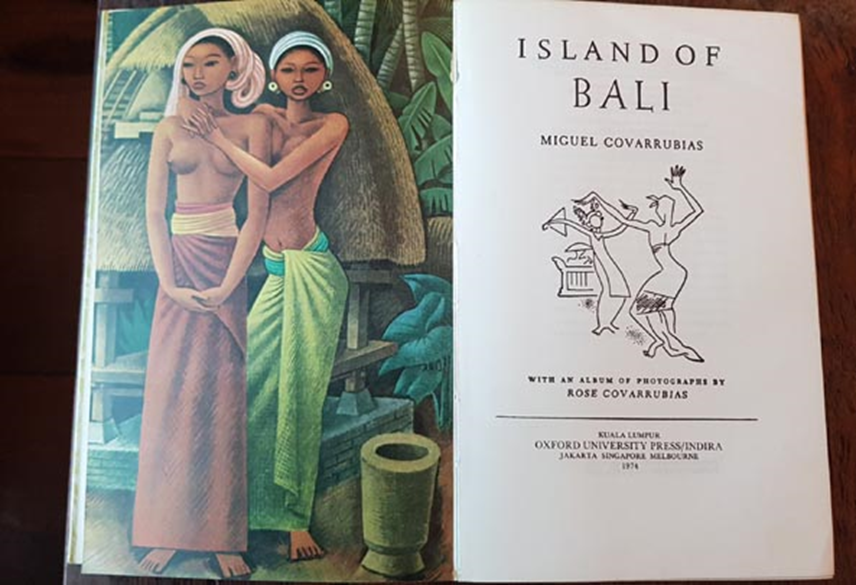
4. Miguel Covarrubias, Painter and Illustrator
Born in Mexico. In 1930, he went to Bali on his honeymoon. In 1933, he stayed in Bali again. In 1937, he published the famous Island of Bali, which is a well-known bible book of the discovery of Bali before the war from the perspective of Westerners. It had a great influence on later generations.
Island of Bali, Published in 1937
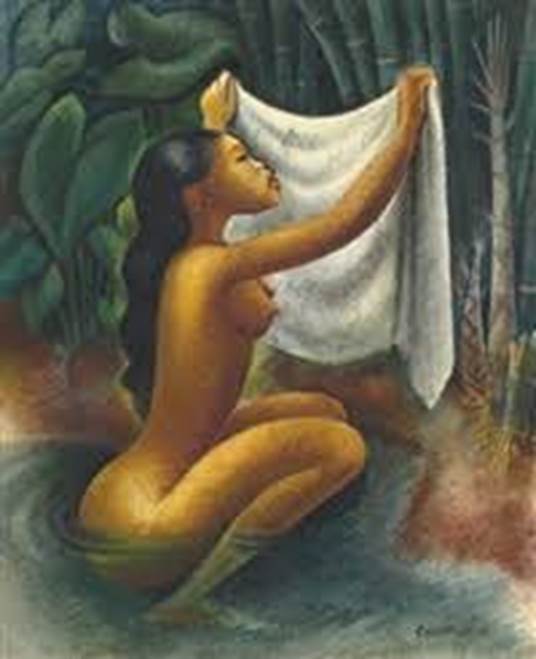

New postwar style
5. Arie Smit 1916-2016
In 1938, he joined the Dutch East Indies Army, and three months later he was sent to Batavia (now Jakarta), where he was engaged in the mapping of Dutch Indonesia and the lithography of the topography of Bali.
In 1942, he was sent to eastern Java and became a prisoner of war in the former Japan Army. For the next three years, he was forced to work on railways and roads between Thailand and Burma. After the war, he returned to the Netherlands.
In 1946, he returned to the new Indonesia and became an Indonesian citizen in 1951.
In 1956, he first visited Bali at the invitation of Rudolph Bonnet. His work is characterized by vivid colors. He later lived in Penestanan, Ubud, and nurtured many young artists among young farmers. He lived in Bali until he passed away in Denpasar in 2016 at the age of 99.
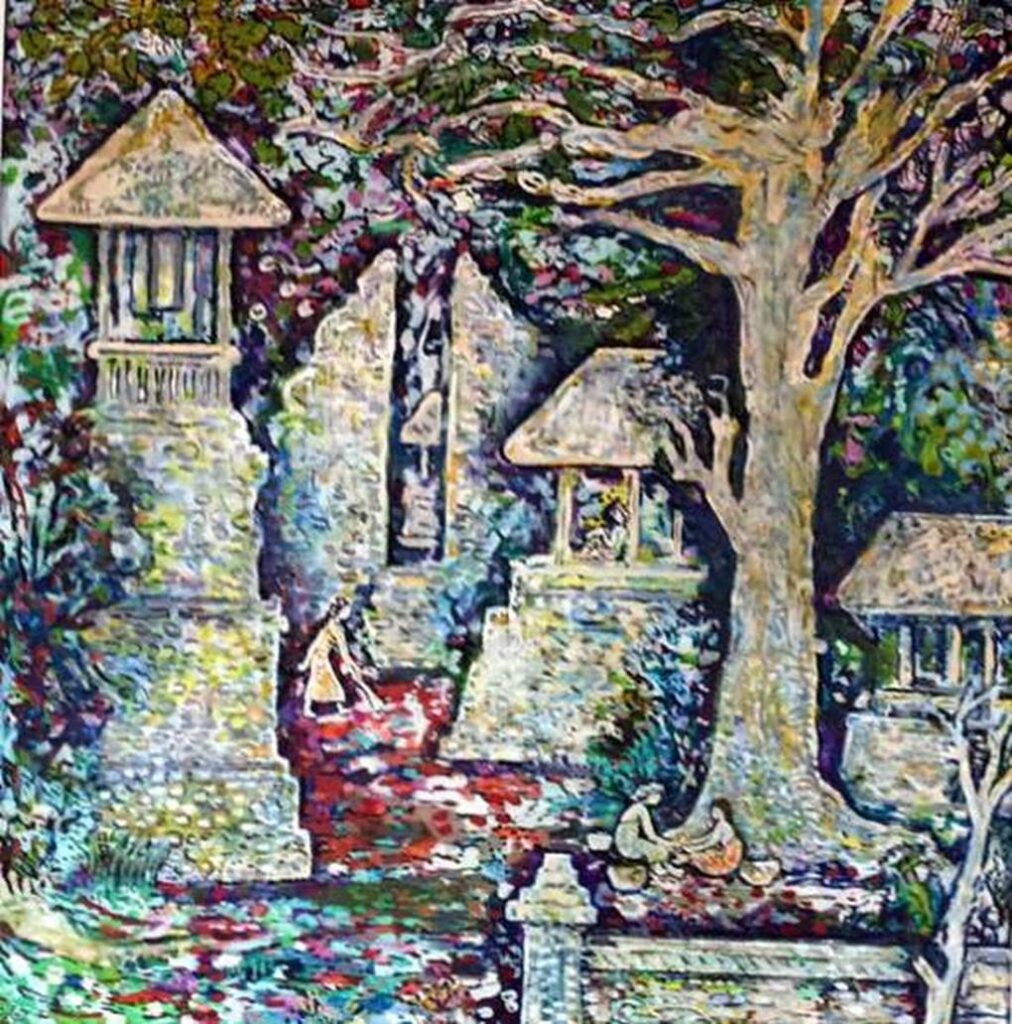
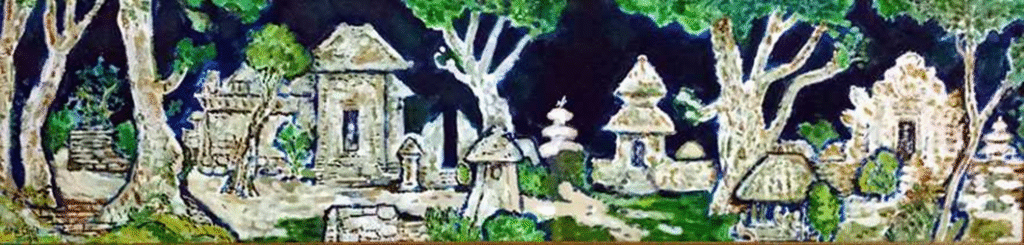
Neka Art Museum, Ubud
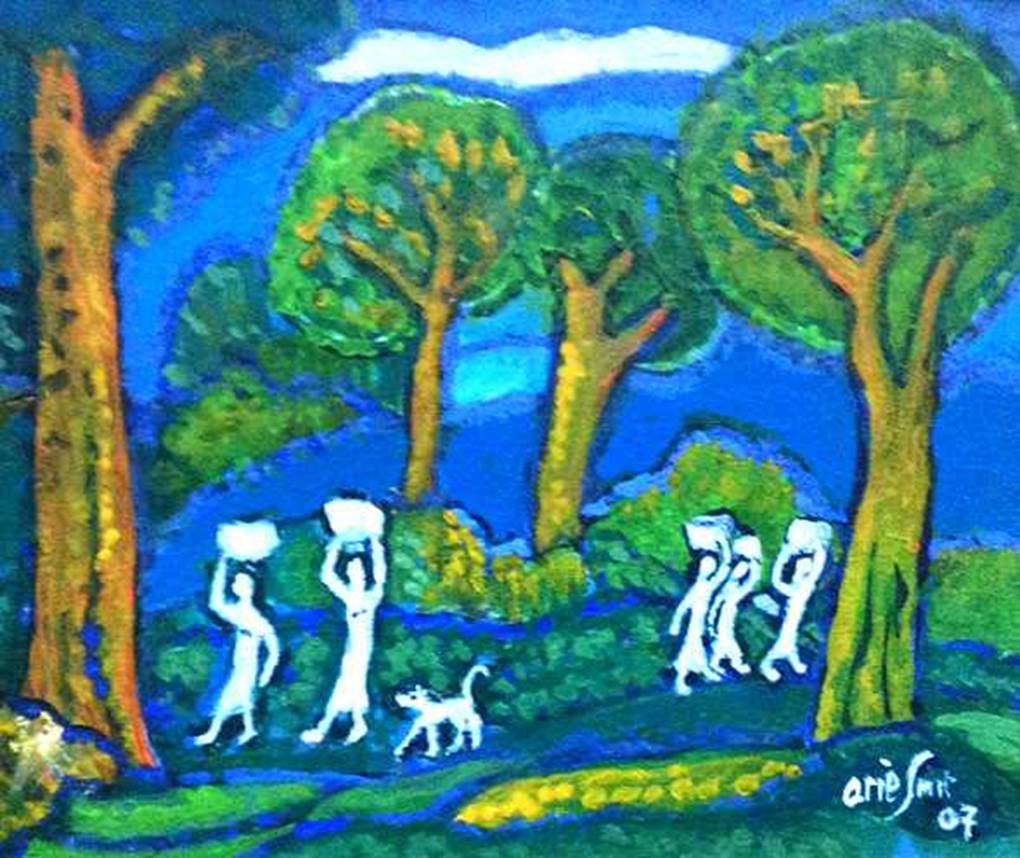
Neka Art Museum, Ubud
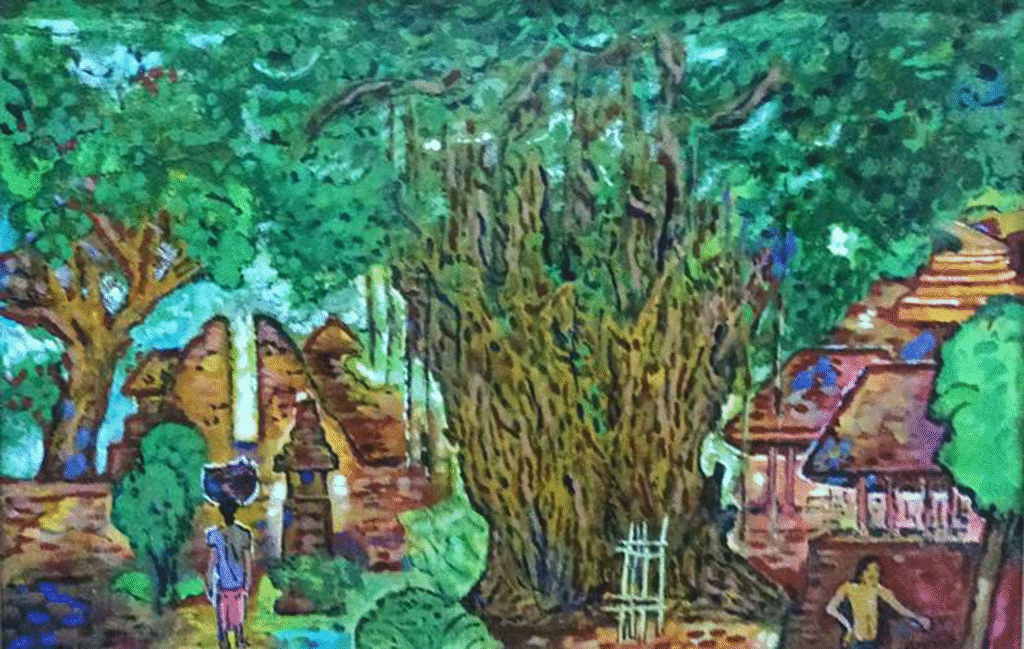
Neka Art Museum, Ubud
Neka Art Museum, Ubud
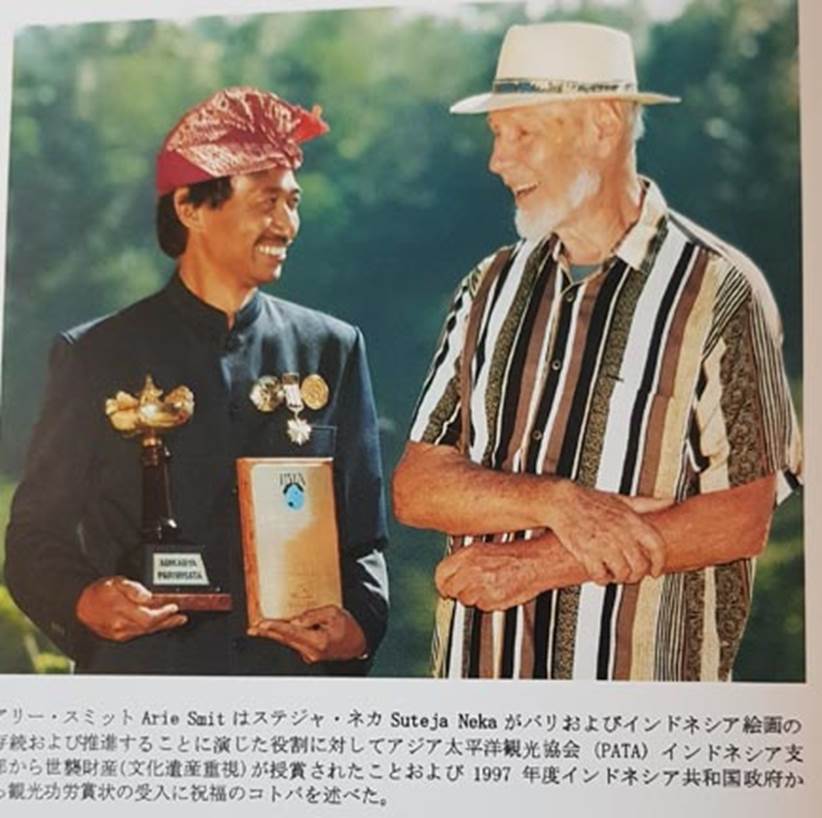
Arie Smit, a painter of the past, and Suteja Neka, director of the Ubud Neka Museum.
Young Artist 1960s
Painters from peasant backgrounds who grew up in Punestanan in Ubud under the influence of Ali Smit and others. Many of them use tropical colors to depict rural life and festivals in Bali.
Representative artists include I Kutut Soki, Londo, Wayan Balik, I Wayan Nuada, I Nyoman Tjakra, I Wayan Pugur.
Title of work: Wedding Ceremony. By: I Nyoman Tjakra. 1970s
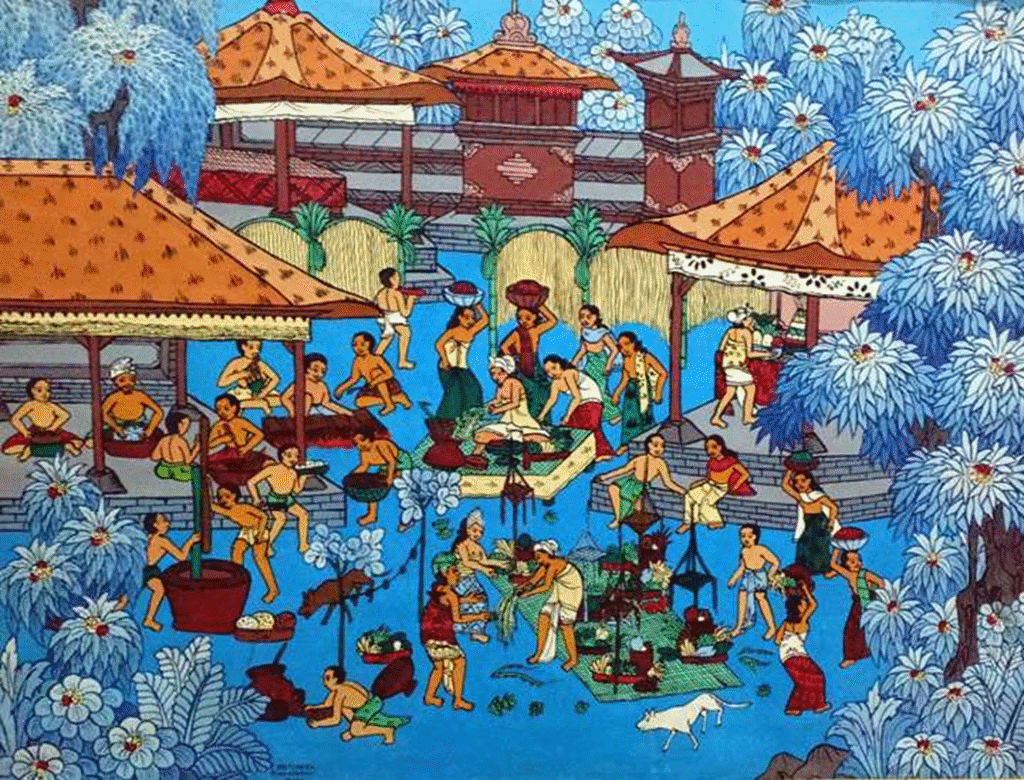
Neka Art Museum, Ubud
Title of work: In the Village. By: I Wayan Pugur, 1970s.
Expressing the life of an ordinary farmer.
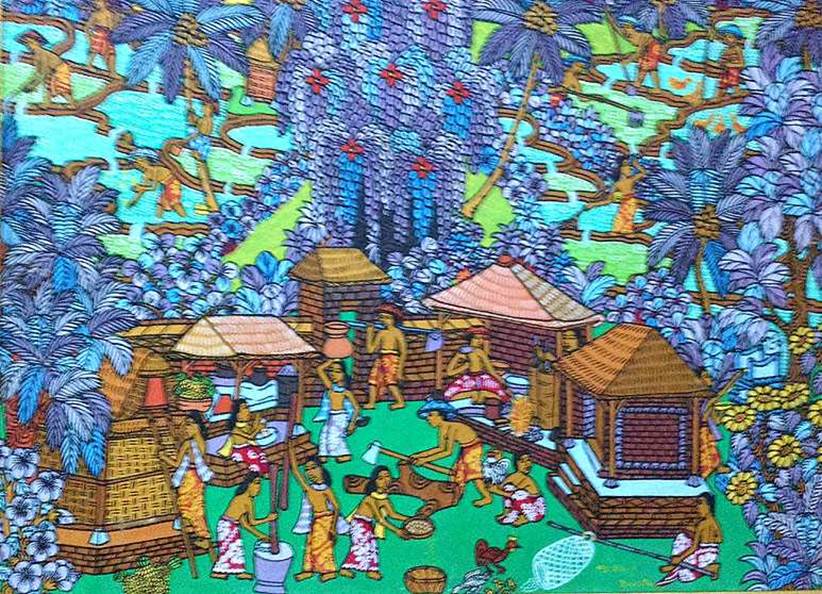
Neka Art Museum, Ubud
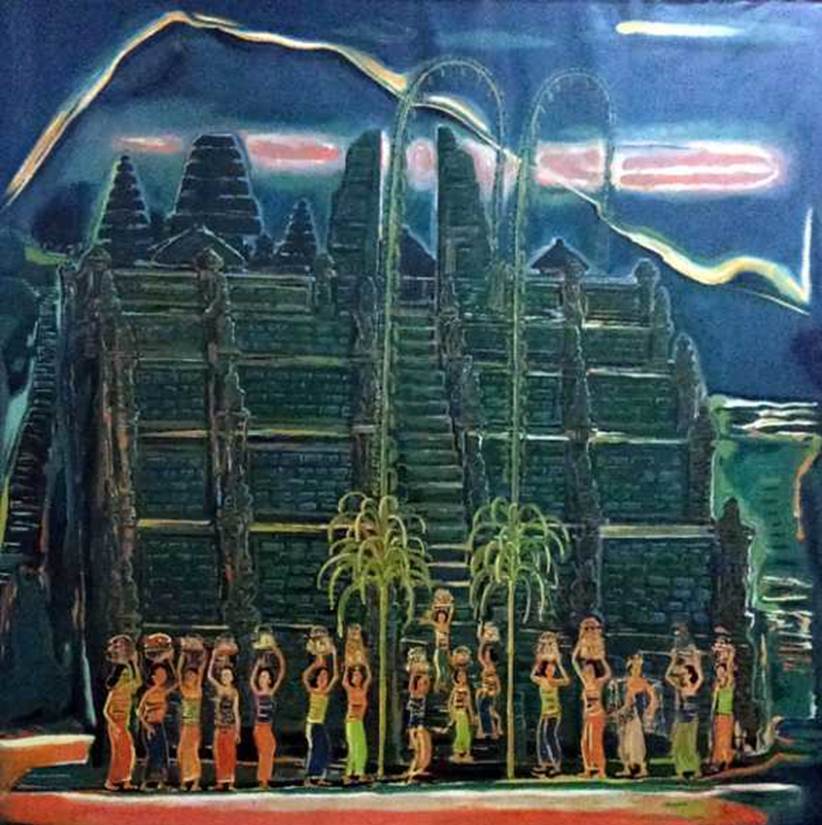
Neka Art Museum, Ubud
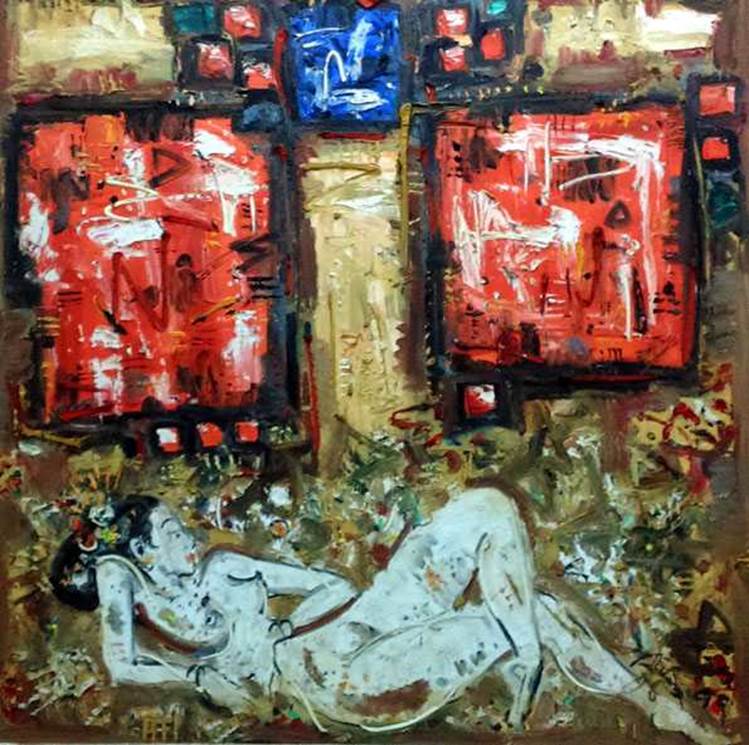
Neka Art Museum, Ubud
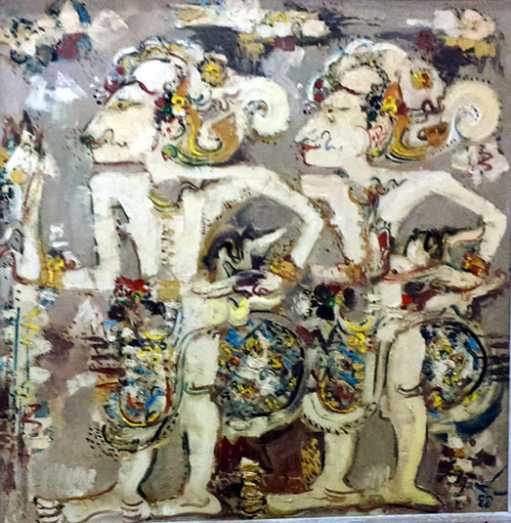
Neka Art Museum, Ubud
Pengosekan style
In the early 1970s, in the village of Pungosekan in southern Ubud, artists who formed the Pita Maha Art Association began their activities. A painter who had been painting flowers, birds, wind and moon as a subject met and a puppet painter for (shadow puppet theater), and a new trend of tropical flower and bird painting was born. This school, known as the Pungosecan style, has gained popularity in the European market and in the realm of interior design.
JIRNA STUDIO
This is the work of an art studio that I commissioned to paint a ceiling painting for a duty-free shop in downtown Bali , which I designed, in 1996
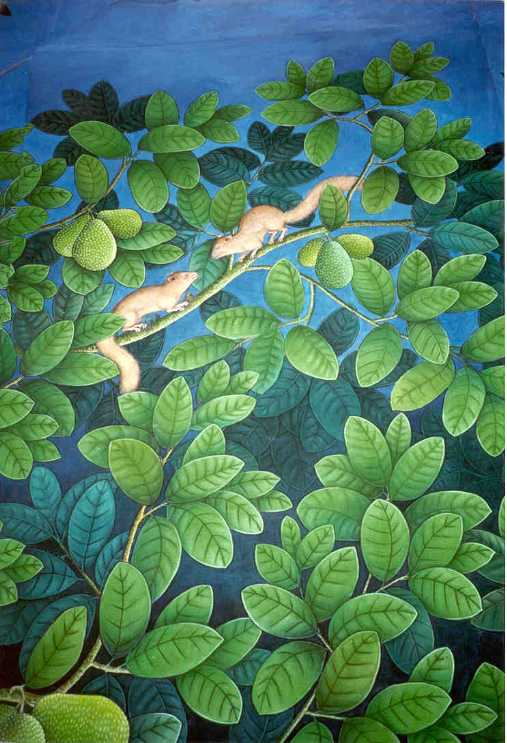
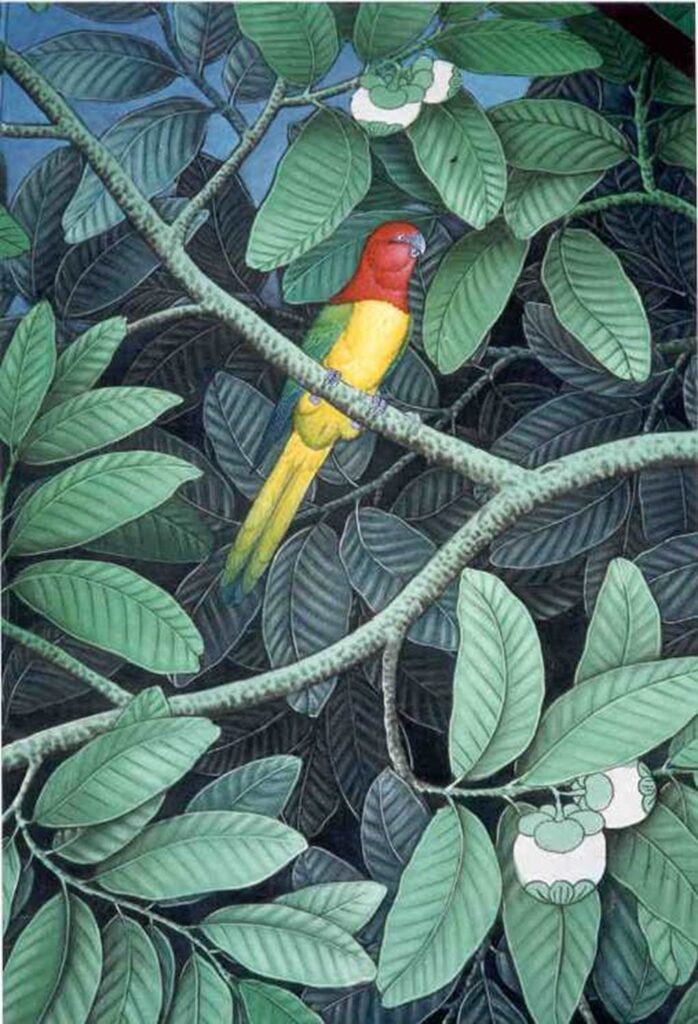
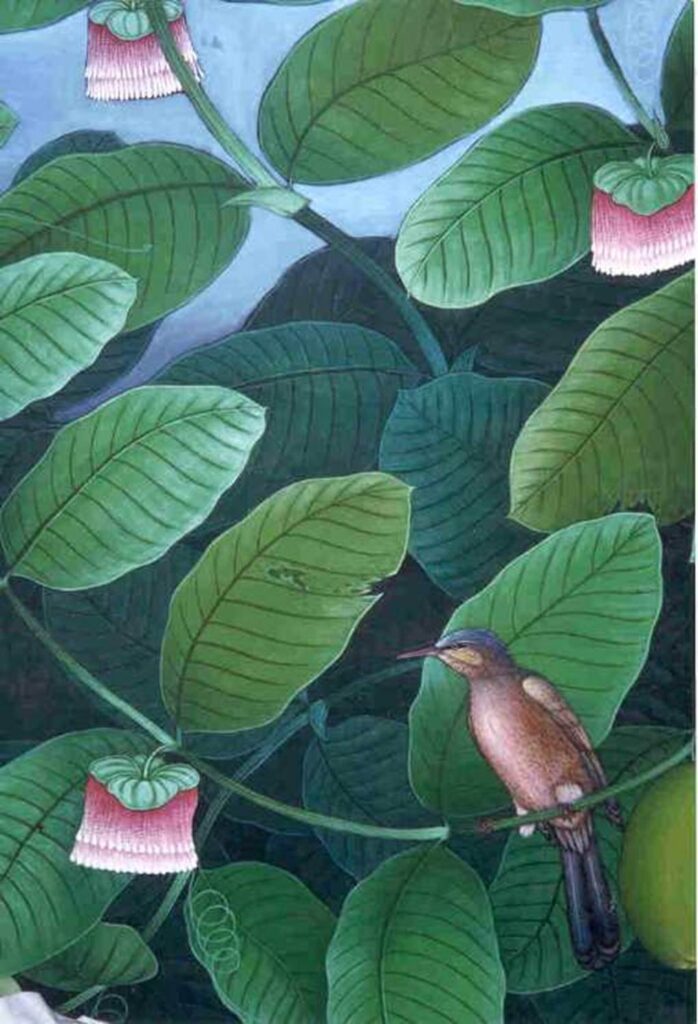
Jirna art studio, 1996.
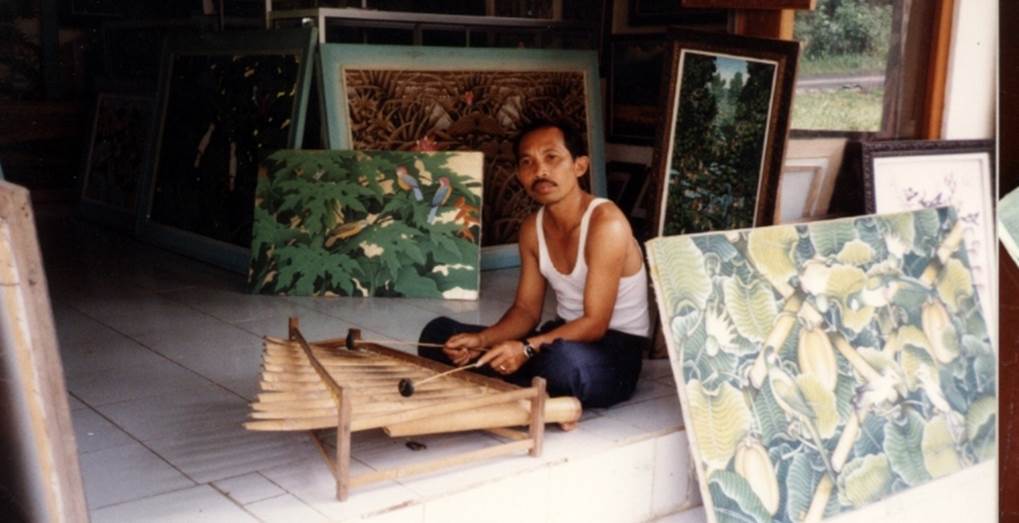
Have the children in the neighbourhood paint the outline of the painting.
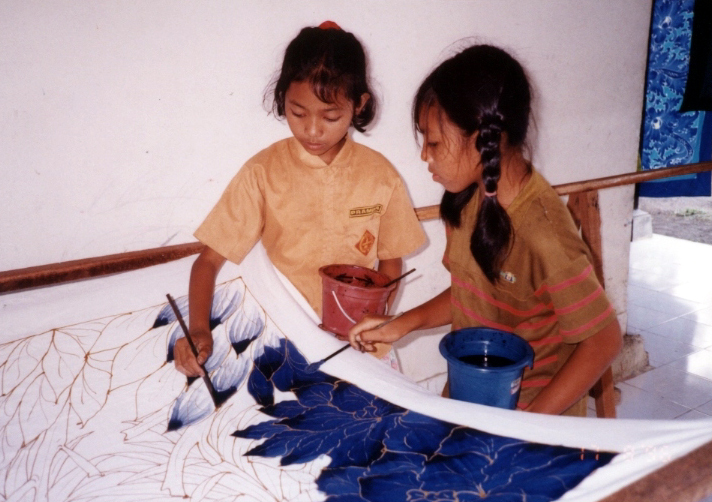
After that, the master finished the painting by applying multiple top coat.

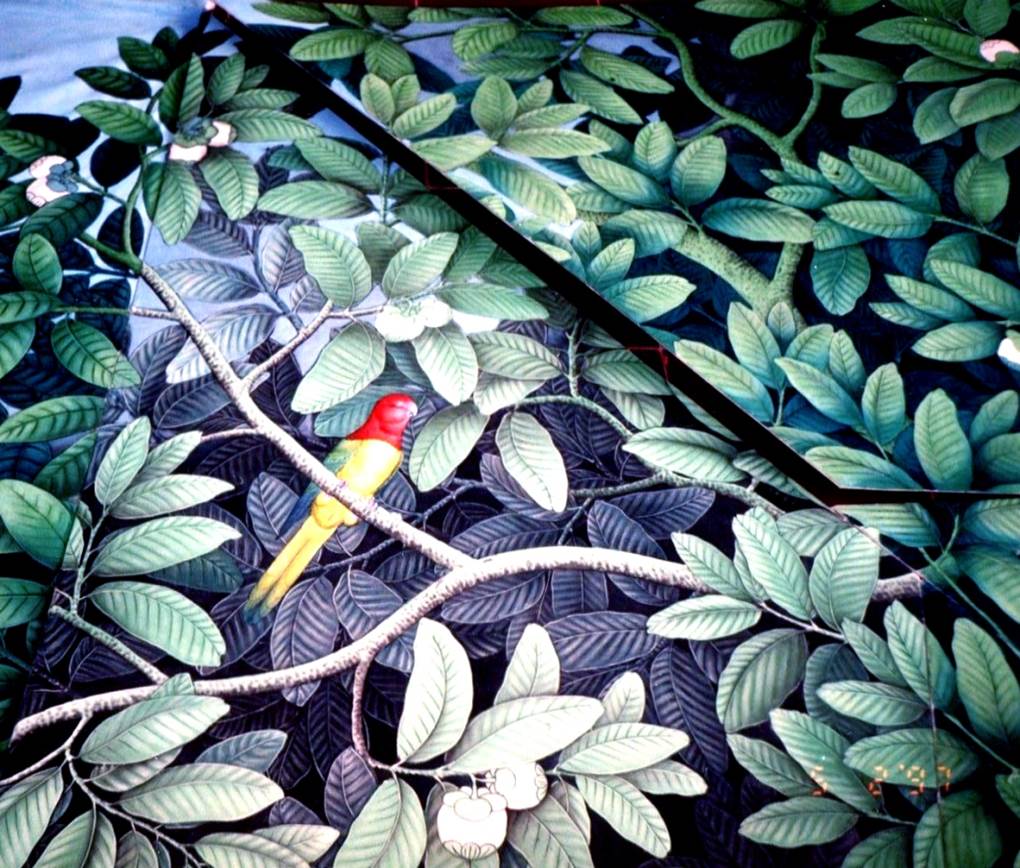
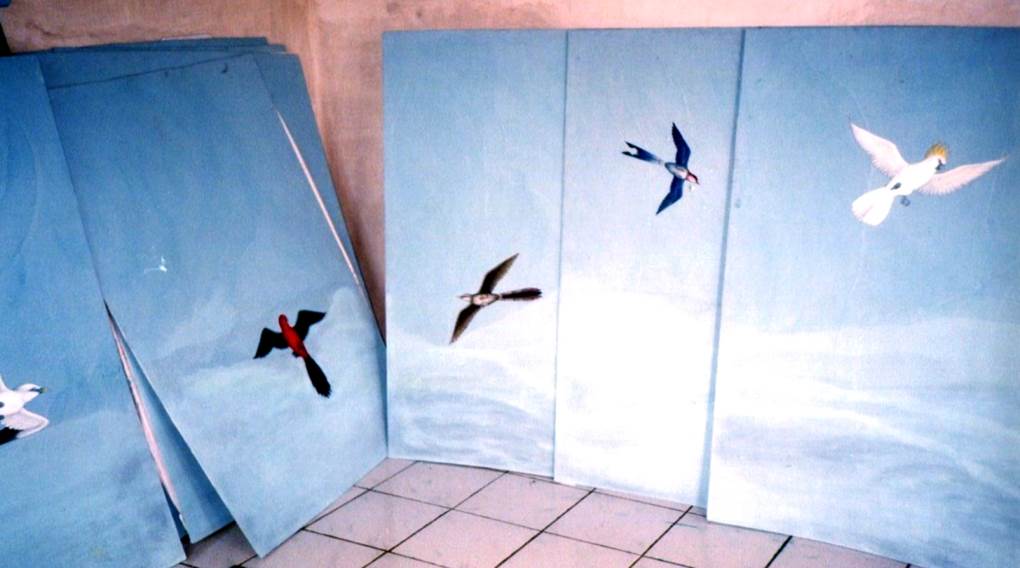
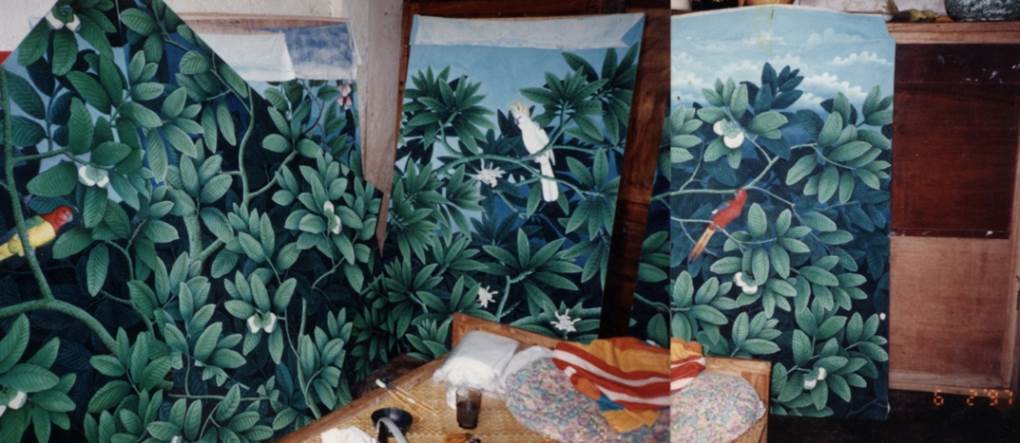
Finished pieces. These flowers, winds, birds, and moons are combined to create a ceiling painting for a shopping mall. Taken in 1996.
Then, in 1998, the Asian economic crisis hit Indonesia, and five years later, I visited the gallery, but the shutters were down, and the whereabouts of the painter were unknown, so unfortunately I have not been able to meet him again to this day.
I GAK MURNIASIH (Murni)
A leading female artist of Pungosecan style painting in Bali. Using the sexual trauma of her girlhood as a springboard, she expresses her own world and creates a unique painting style.
Born in 1966. Died at the young age of 39 in 2006. Her work is characterized by soft curves and unique colors.
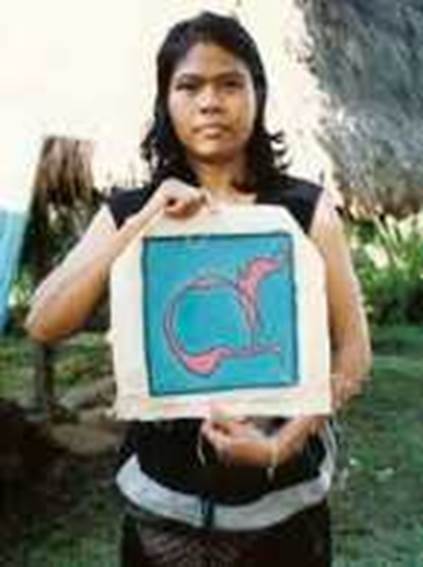
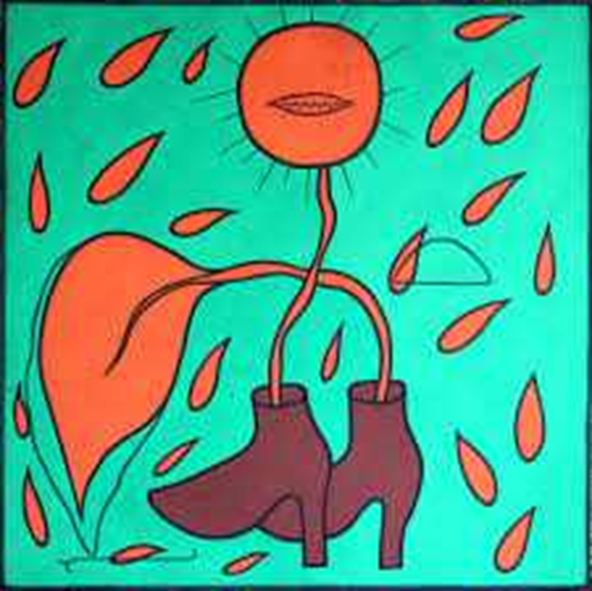
Murni’s studio can be reached by going down a narrow rural road from the main street of Ubud. Photo taken in 1996.
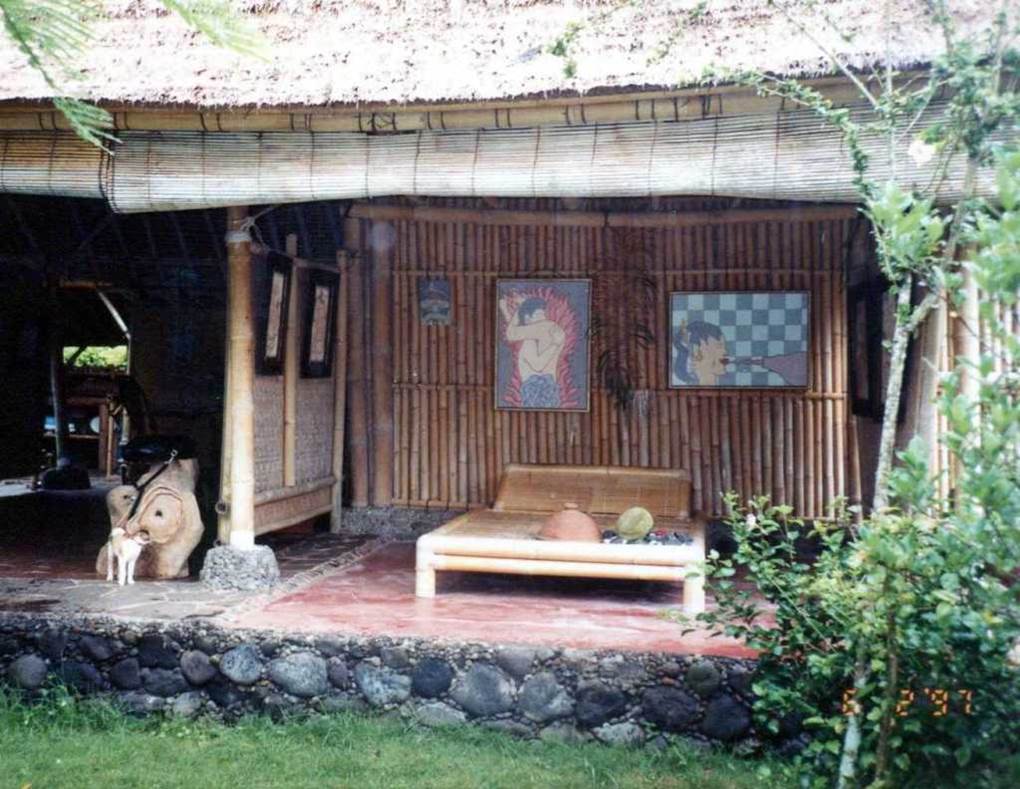
Photo by author, 1996
The work hangs on the bamboo wall in the corner where the simple daybed is placed. Photographed in 1996.
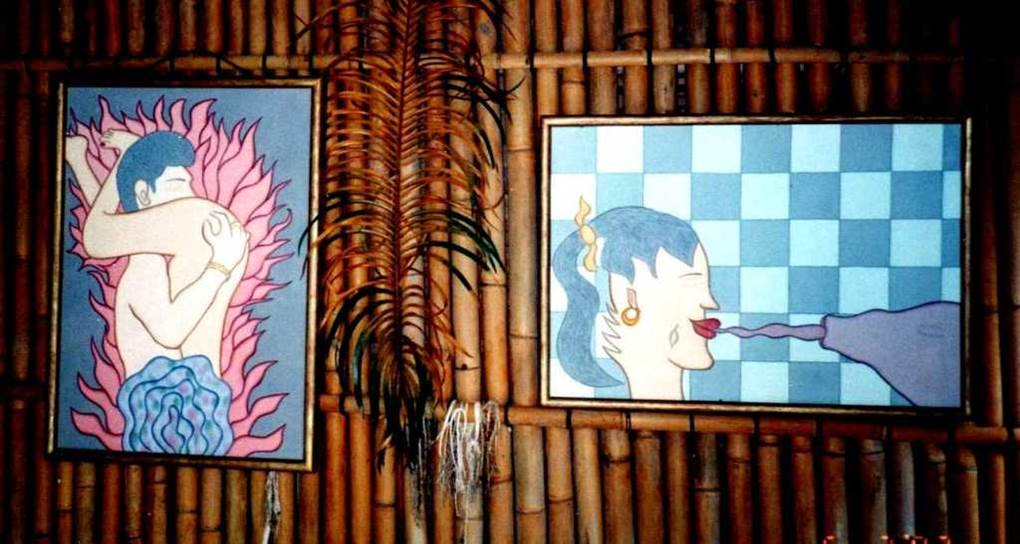
Photo by author, 1996
CONTEMPORARY ART
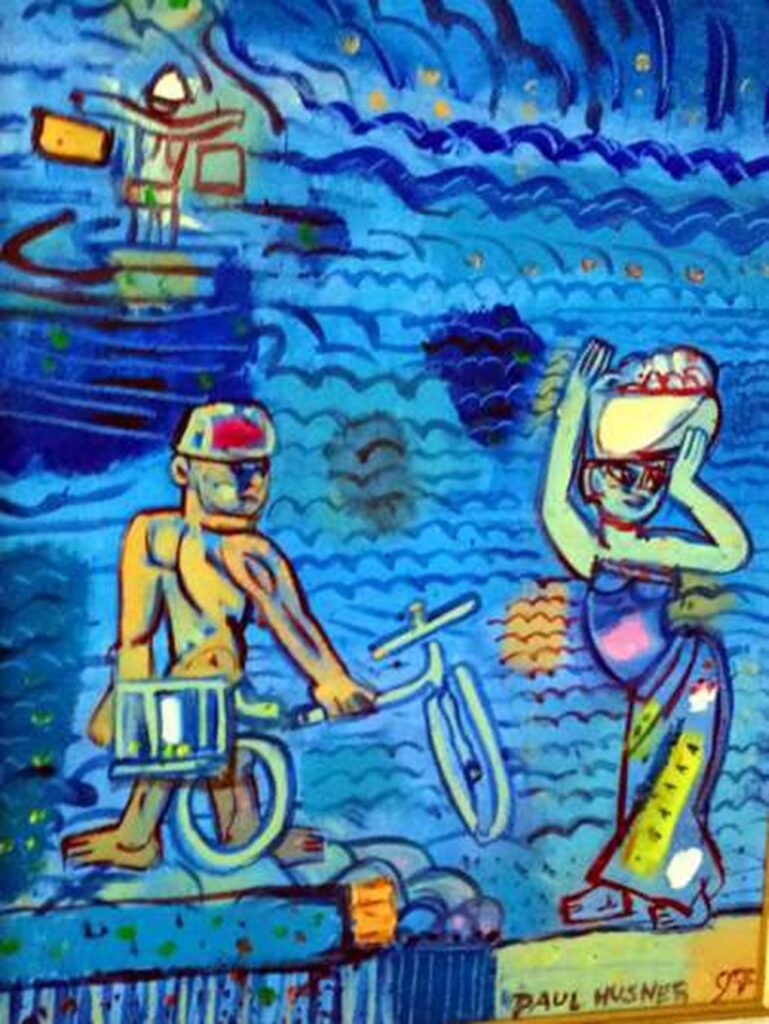
Neka Art Museum, Ubud
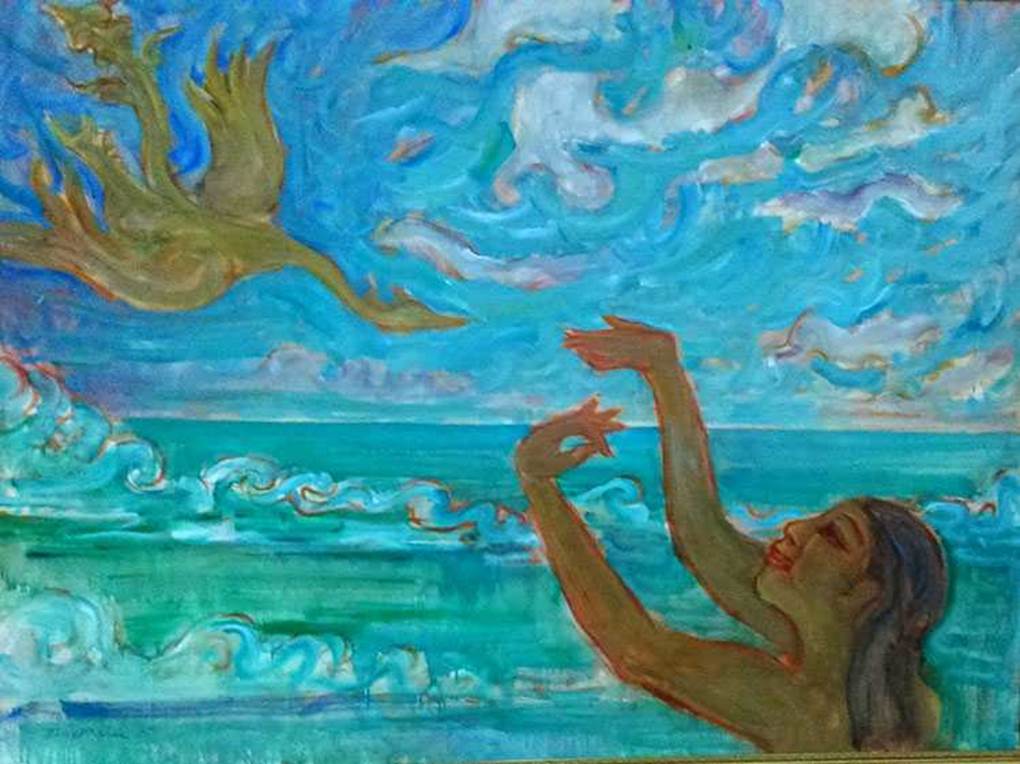
Neka Art Museum, Ubud

Neka Art Museum, Ubud
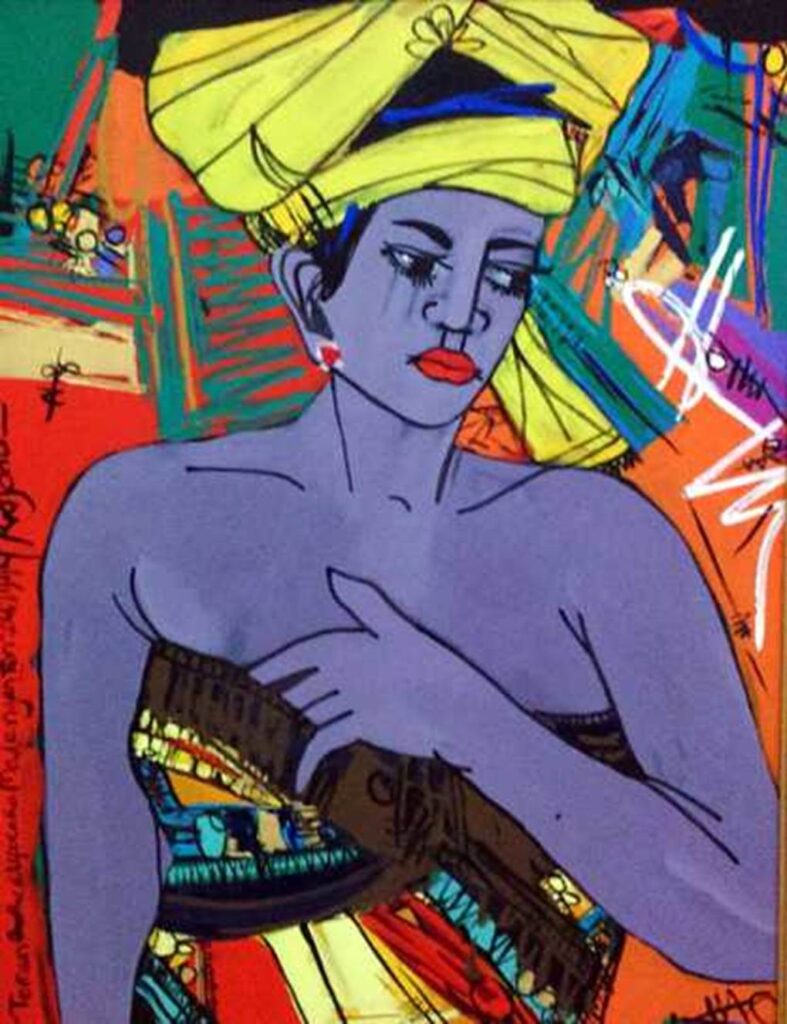
Neka Art Museum, Ubud
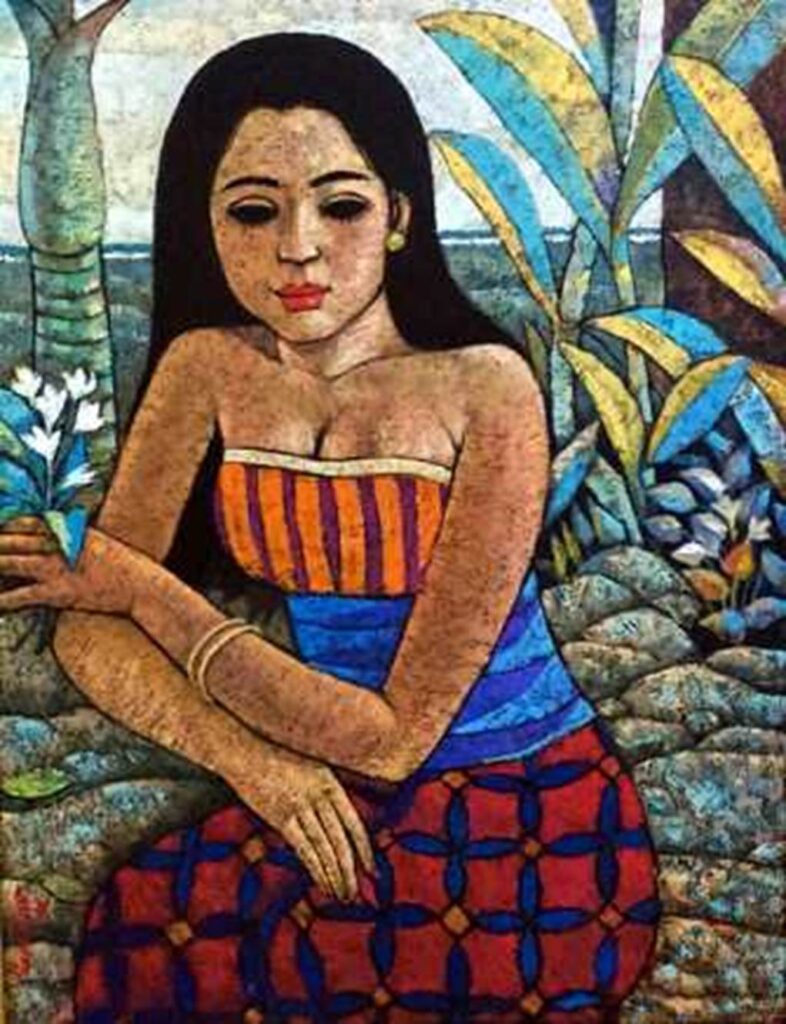
Neka Art Museum, Ubud
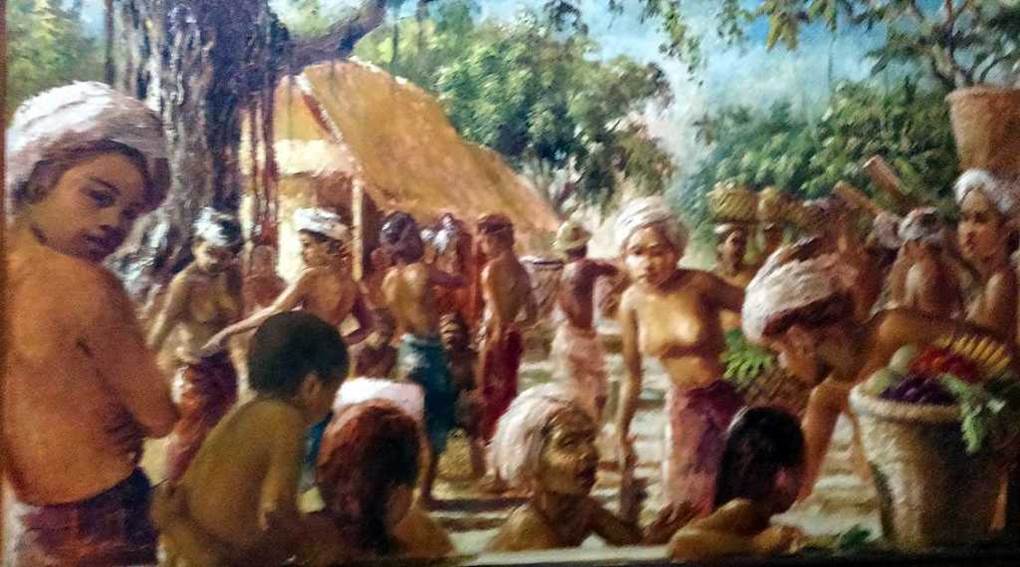
Neka Art Museum, Ubud
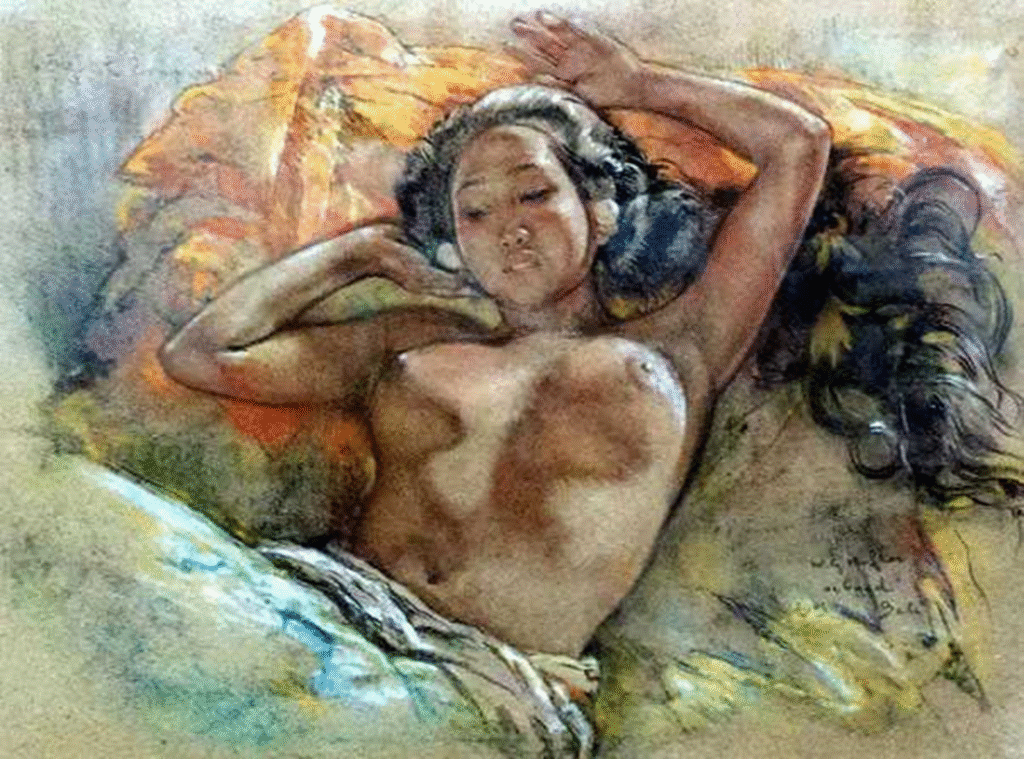
Neka Art Museum, Ubud
Why did Ubud come to be called the Village of Art?
It is impossible to talk about Ubud becoming the art center of Bali without mentioning the involvement of the Ubud royal family.
The royal family of Ubud (Tjokorda) first introduced Balinese gamelan and dance to the world at the 1930 Paris Colonial Exposition in France. This led to an unprecedented “Bali boom” in Europe.
Many foreign artists, including the German painter Rudolf Bonnet, the Dutch painter Walter Spiess, and the Mexican musician Miguel Covarrubias, settled in Ubud under the patronage of the royal family of Ubud.
Antonio Blanco Museum
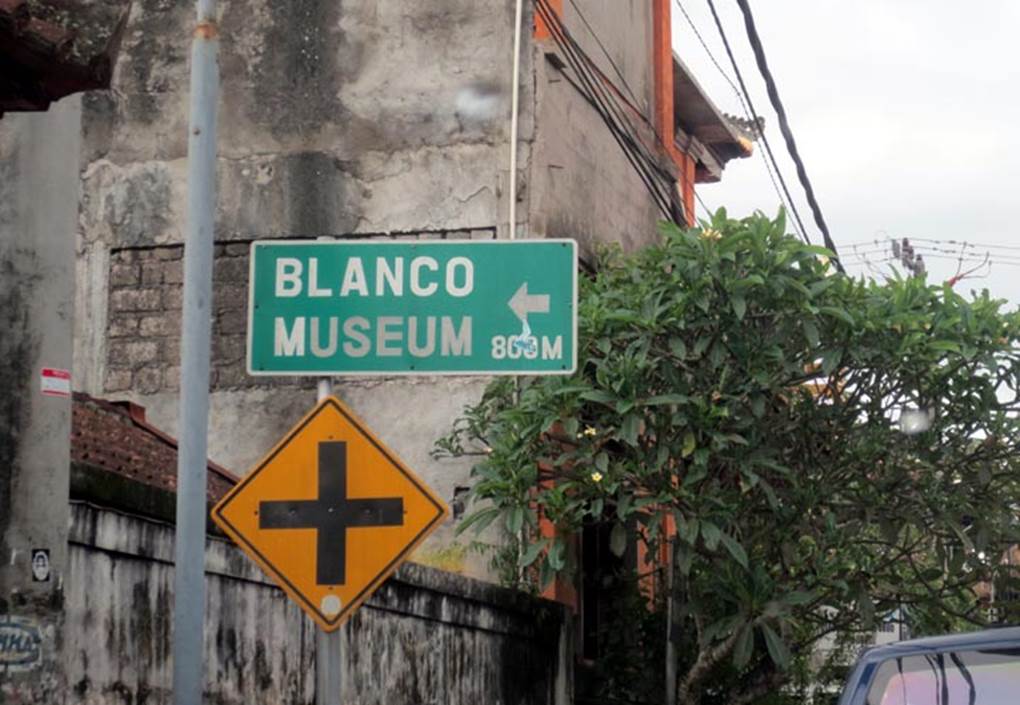
A billboard on the main street of Ubud. Public road signs are rare for private museums. In Ubud, artists are respected.
Blanco was born on 15 September 1912, in Manila, the capital of the Philippines. His father is Spanish and his mother is Italian. After graduating from high school, he studied anatomy at the National College of Arts in New York. It is said that he was particularly interested in the human body.
Blanco was fascinated by a book titled “Island of Bali” by Mexican artist Miguel Covarrubias (mentioned above). He set off on a journey around the world to broaden his horizons.
Blanco was very interested in Ubud, which is described in the book ISLAND OF BALI, and in 1952 he was introduced to the royal family of Ubud. In this way, he was taken care of by the Tjokorda family, and during his stay at the royal palace, he often saw them practicing dance in the courtyard. Gradually, he became fascinated by Bali.
After a while, the Tjokorda family kindly gave Blanco 2 hectares of land on the hills of Campuhan, and built him a house and studio for free. A simple hut with a bamboo frame and woven bamboo walls was built with the help of the villagers. The people Blanco met in Ubud, including the Tjokorda family, were all sensitive, friendly, caring and wonderful people.
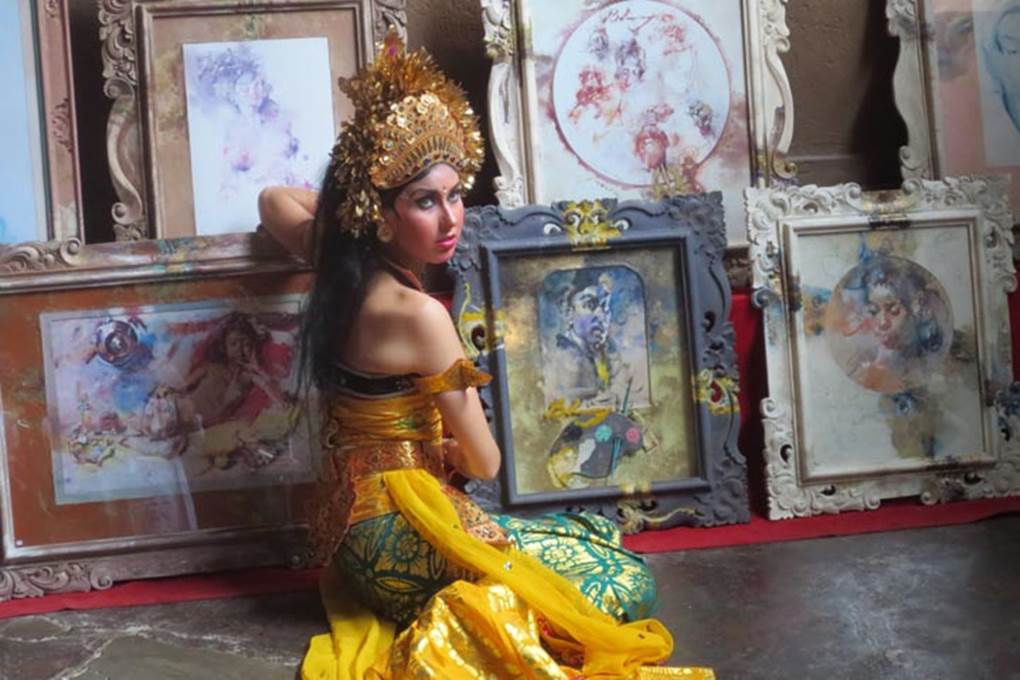
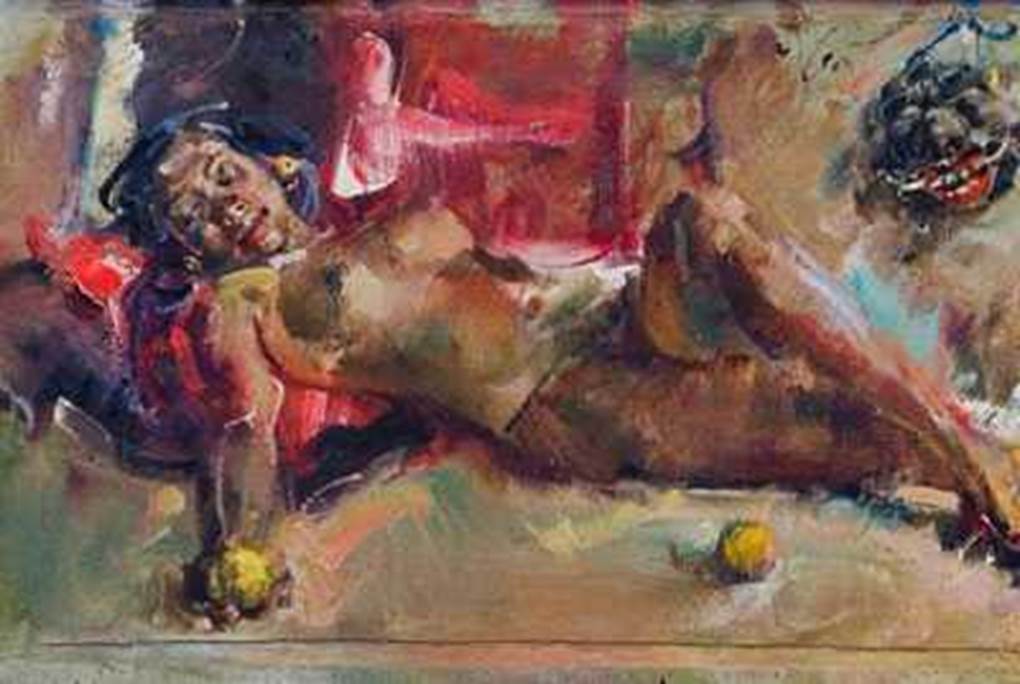
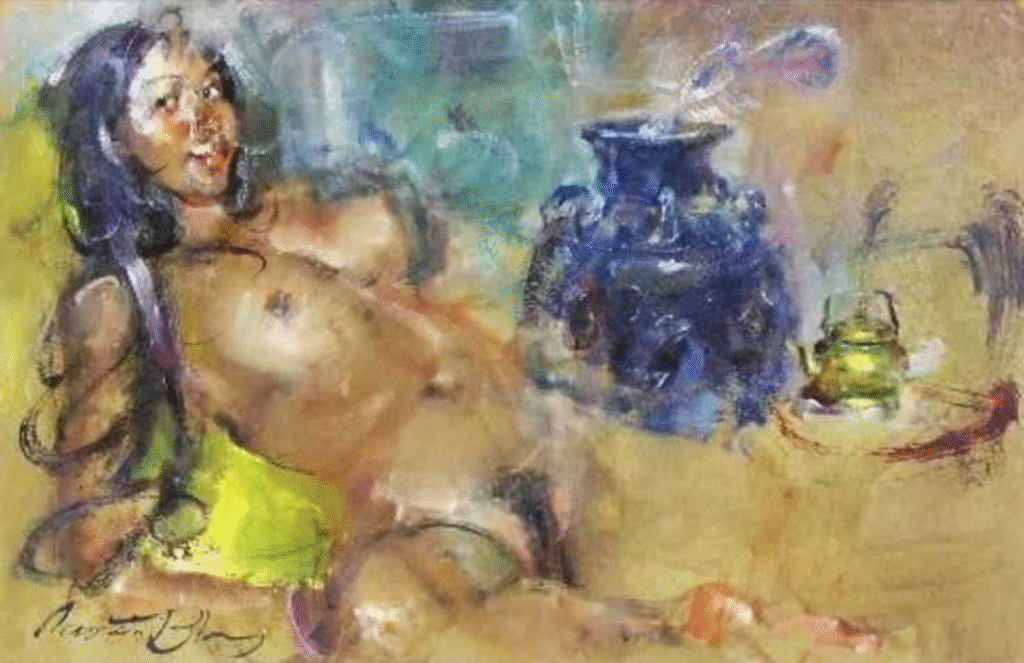
Blanco’s style of painting was free-spirited, as if to prove his passionate and eccentric personality. There was a beautiful girl in the maid’s family. Her name was Ronji, and she was a woman who taught dance to children at the royal palace. She was a famous dancer. She later married Blanco.
Antonio Blanco was still alive when I visited his studio in 1995, and I remember him proudly talking about the fact that he had held an exhibition in Japan. He is a very humorous person.
Location map of museums in Ubud.
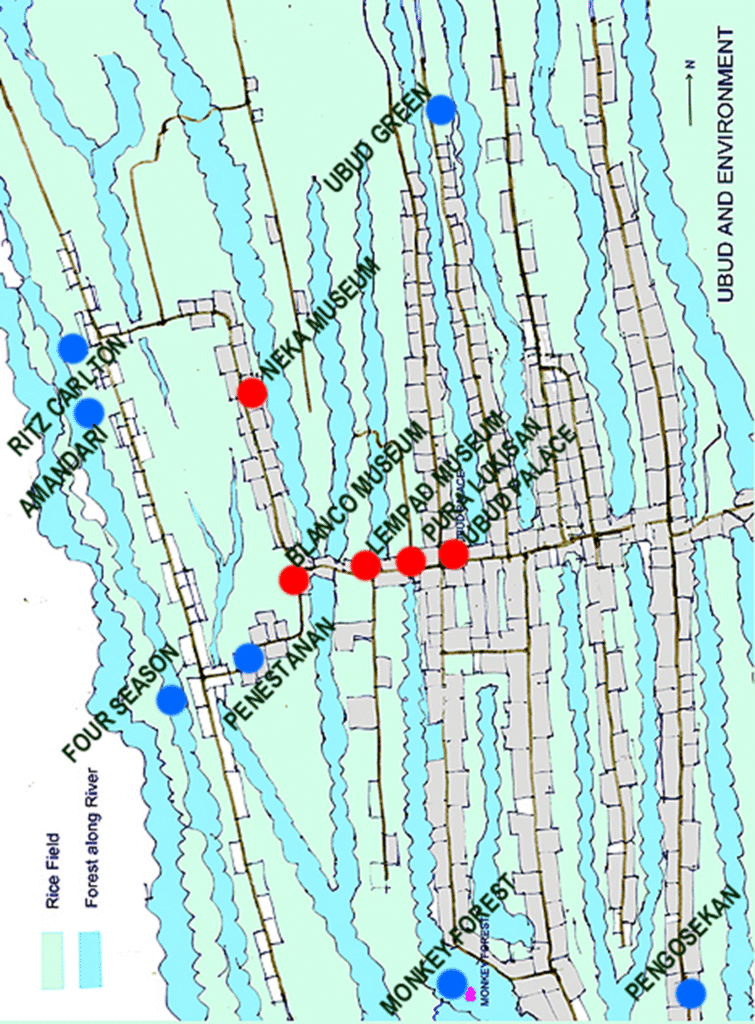
Author’s Sketch
All photos by author and some with special permission from the director of the Ubud Neka Museum, Suteja Neka.