JAP | ENG
Around Bali #2/10
Sightseeing
1982 #2
Bali for the second time in 1982
Four years after my first trip to Bali, I had the opportunity to visit Bali again in 1982.
This time, I decided to go with Mr. and Mrs. K, who live in Jakarta, whom I’m indebted to for various things. At that time, most airports in regional cities in Indonesia were not international airports, and one had to go through immigration procedures in the capital, Jakarta, and then transfer to a domestic flight.
Before the opening of the current Jakarta, Soekarno-Hatta Airport in 1985, international flights entered the country at Halim Airport (now for military use), and from there they were forced to rely on local taxi to Kemayoran Airport (now defunct) for domestic flights.
The flight was with Garuda Airlines. It was my first time in first-class, and to our surprise, the four of us were the only passengers. We were served by beautiful Indonesian stewardesses (at that time, they were still called air hostesses), and it was a one and a half hour flight with all the amenities we could ask for.
It was still a time when you were free to smoke as long as the seatbelt signs were off. Three out of four people were smokers.
Until the early 1980s, all seats on international flights had ashtrays on their armrests, and smoking was allowed at any time except take-off and landing.
After that, smoking seats were limited to the last row of economy seats, and finally from around 2000, smoking was banned in all seats and in the entire plane, including the toilets.
First class for the first time
Garuda Airlines First Class departing from Jakarta, 1982

Photo by author, 1982
It had been about four years since I first visited Bali, but the large-scale development by the state had just begun to lay groundwork in the Nusa Dua area, a coastal area in southern Bali, and there were not many tourists yet.
From the airport to Sanur, a new bypass was built, and the car on the roads were upgraded from bumpy old car to a new ones. We stayed at the same Hyatt hotel in Sanur as before, and rented an Indonesian Toyota SUV with a driver to tour the island.
The main roads were already paved, and we were able to move around smoothly without traffic jams like in recent years. It was around this time that tourist routes were just starting to appear, souvenir shops (modern-day roadside stations) were sprouting, and in the parking lots, you could hear people calling out to customers in Japanese.
Bat Cave Pura Goa Lawah
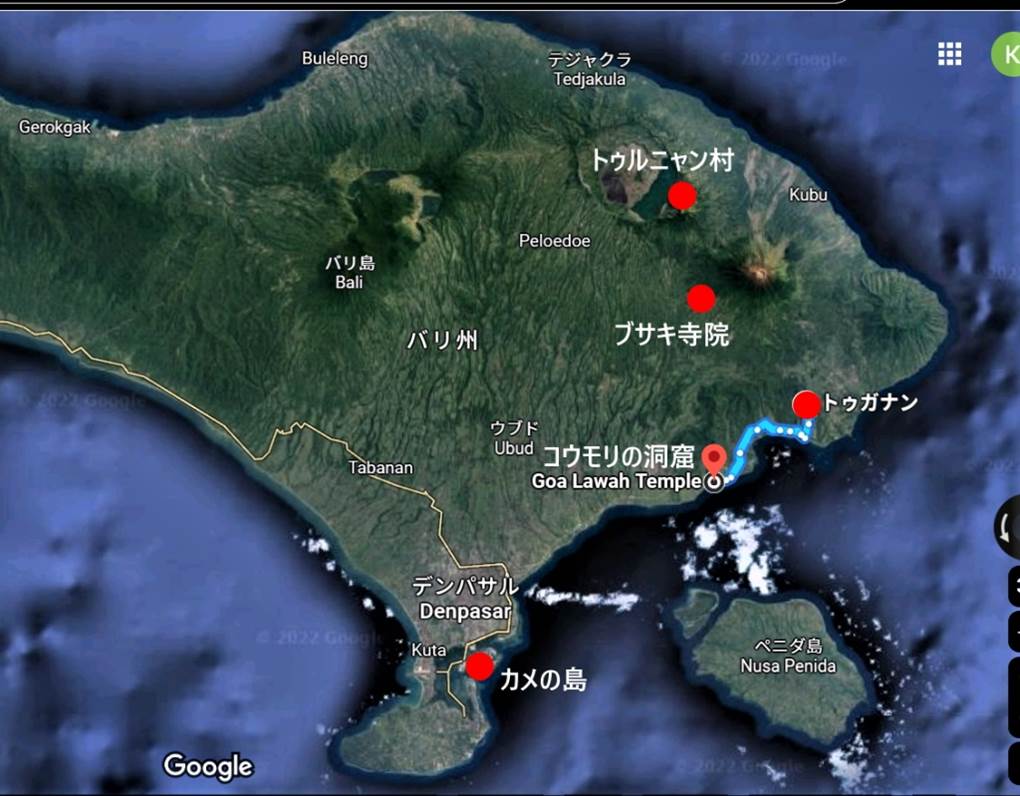
About an hour or 40km along the east coast from Sanur is the Bat Cave temple, Pura Goa Lawah.
Hindu Power Spots
Legend has it that the cave is connected to Pura Besakih, the main temple of Balinese Hinduism, located on the hillside of the holy Mount Agung, 30 km away.
Legend has it that thousands of bats live in the cave of the inner temple, and that a huge snake lives in the cave. With a long history and legends, this place is unmistakably a Hindu power spot.
Local Balinese Hindus praying together at Bat Cave Temple in 1982.
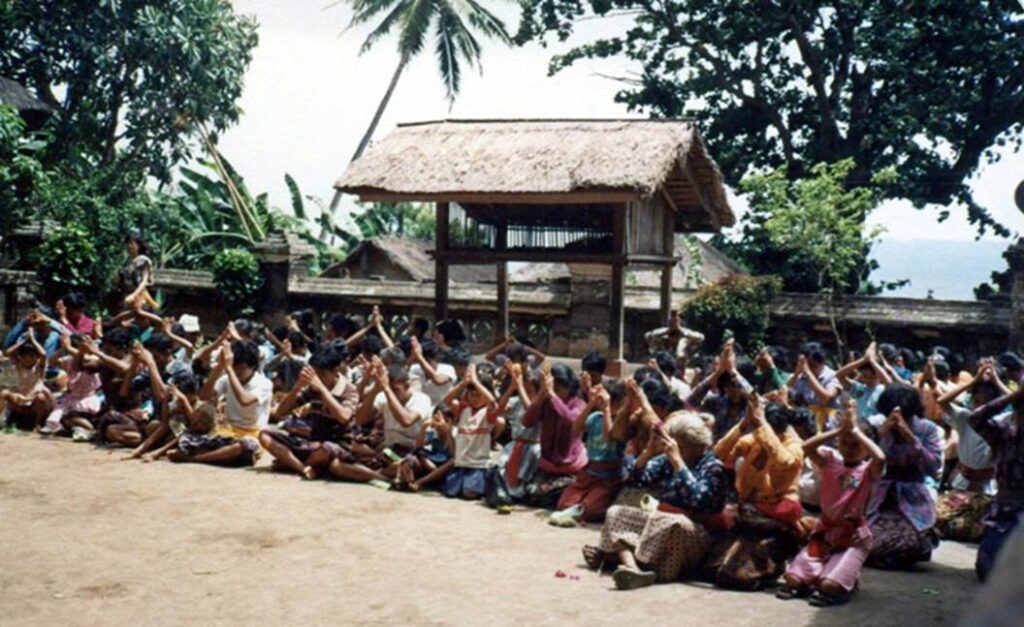
Photo by author, 1982
Bat Cave
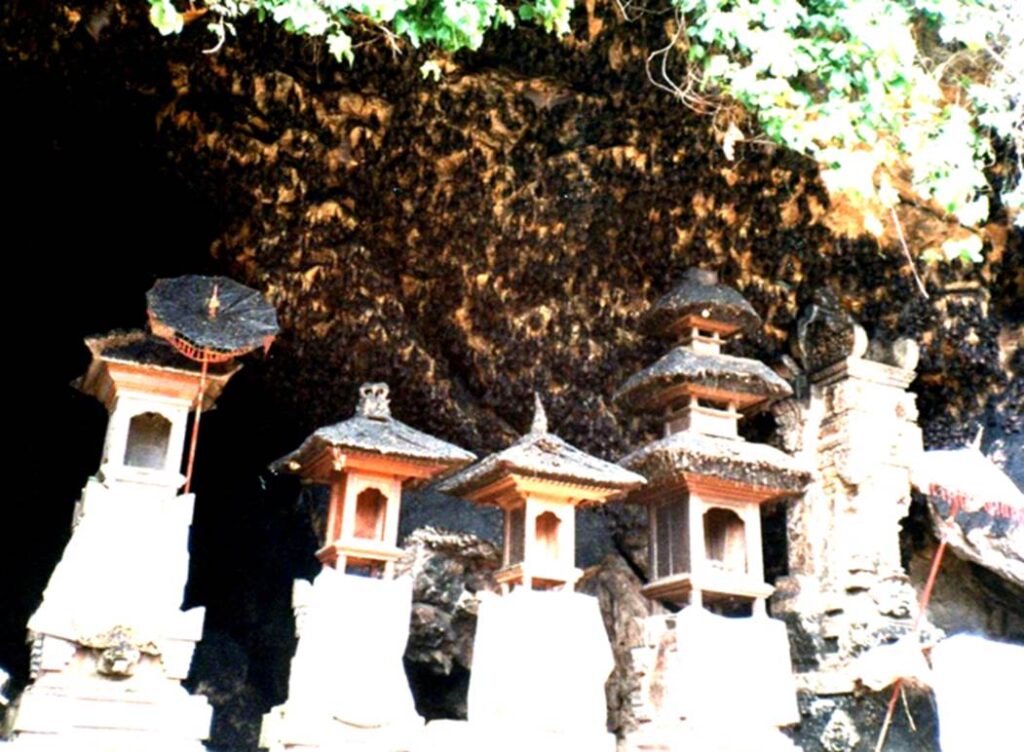
Photo by author, 1982
Cave entrance, thousands of bats live in the cave. There are so many of them that the rock face is hidden and cannot be seen.
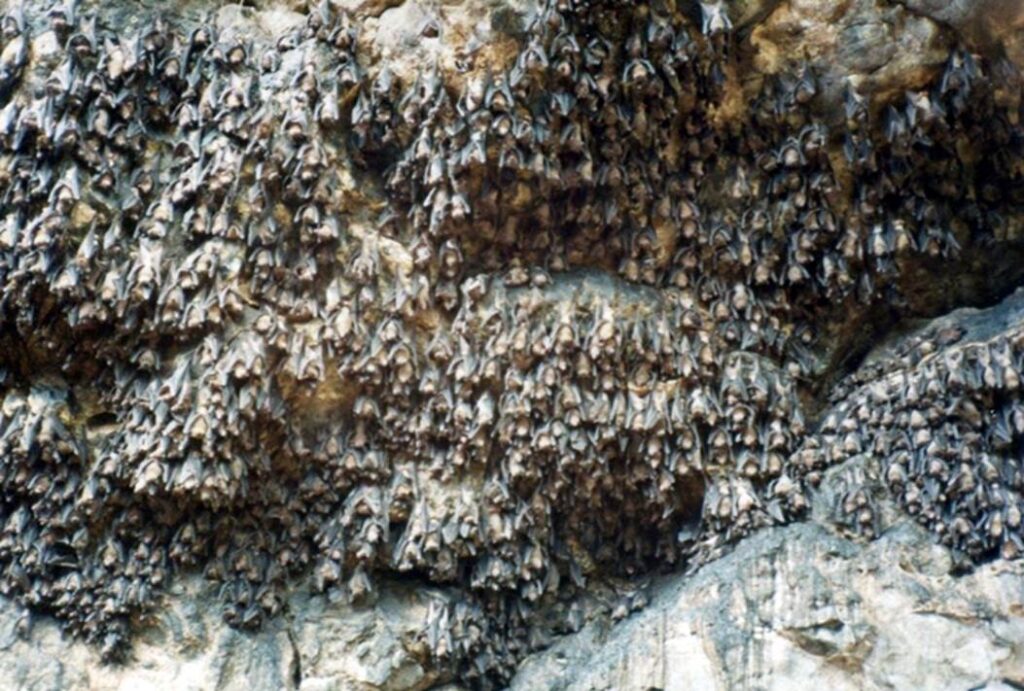
Photo by author, 1982
Tenganan Village
About 20km further east from the Bat Cave Temple, we reach a small village surrounded by mountains on three sides. This is Tenganan Village.
This is a village where the lifestyle of the original Balinese people who have lived for centuries still remains.
Map of Tenganan Village
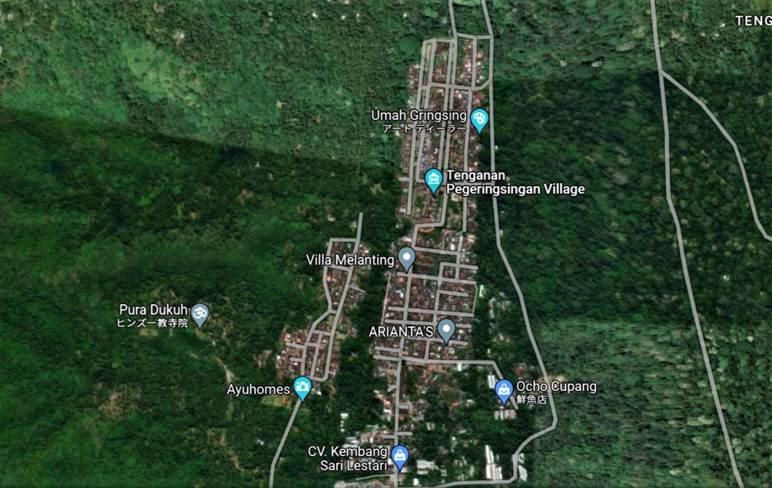
The public square in Tenganan village.
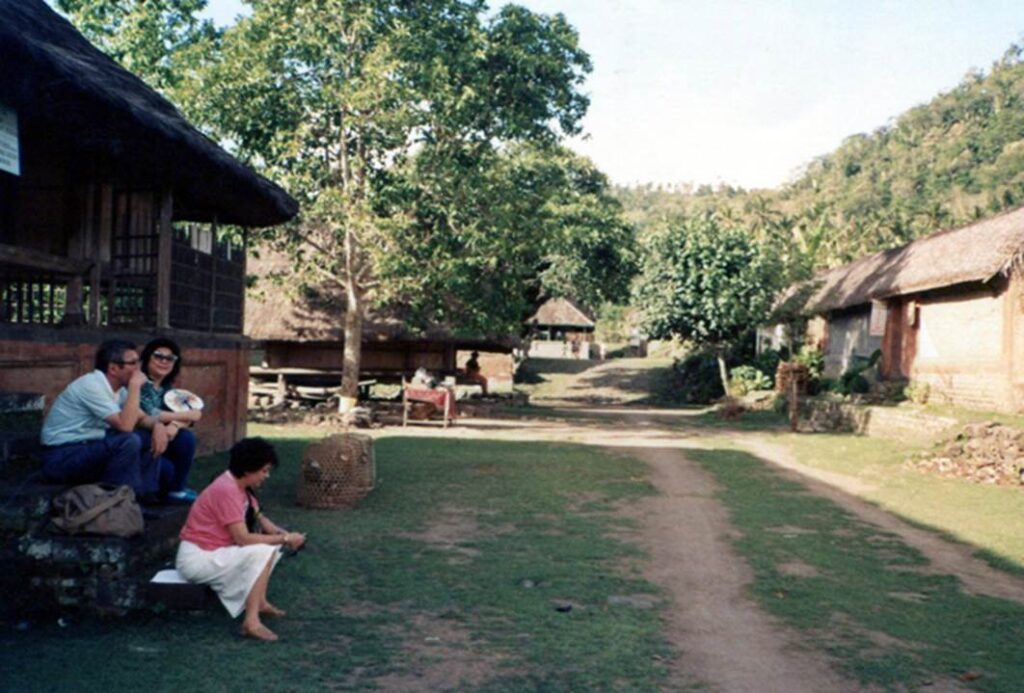
Photo by author, 1982
The meeting hall, a public space in the village.
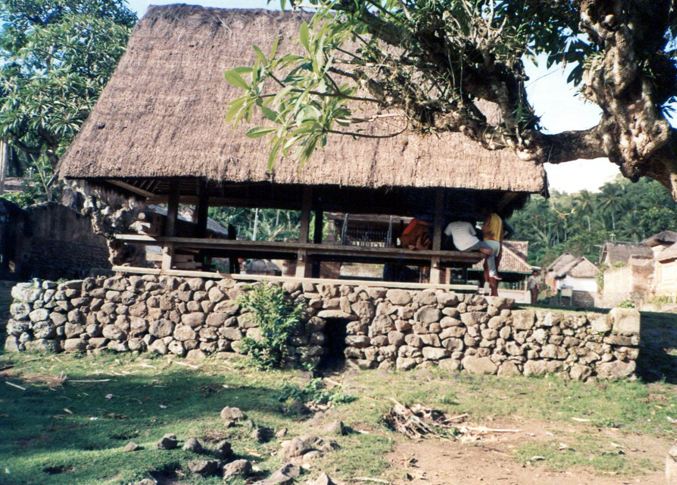
Photo by author, 1982
Men in the village preparing for an outdoor cockfight.

Photo by author, 1982
Islam, introduced by Arab merchants who reached Aceh, Sumatra, at the northern tip of Indonesia, expanded its territory to the eastern tip of Java in the 16th century, and collapsed the Majapahit dynasty of the Hindu kingdom at its peak. Around the time of its collapse, royal families, officials, monks, artisans, etc., fled to Bali.
It is said that the multi-layered mixture of Hindu culture brought from Java and the Hindu culture that has existed in Bali since ancient times forms the philosophy, religion, and culture of Bali today.
The village of Tenganan is a village of people who have inherited the Balinese settlement before the arrival of Majapahit in the 16th century to this day.
Cockfighting is a pastime for the villagers.
Swords are attached to the legs of fighting cocks. There are many different types of swords, and they are stored carefully as a set. Cock fighting is an important form of gambling entertainment for the villagers.
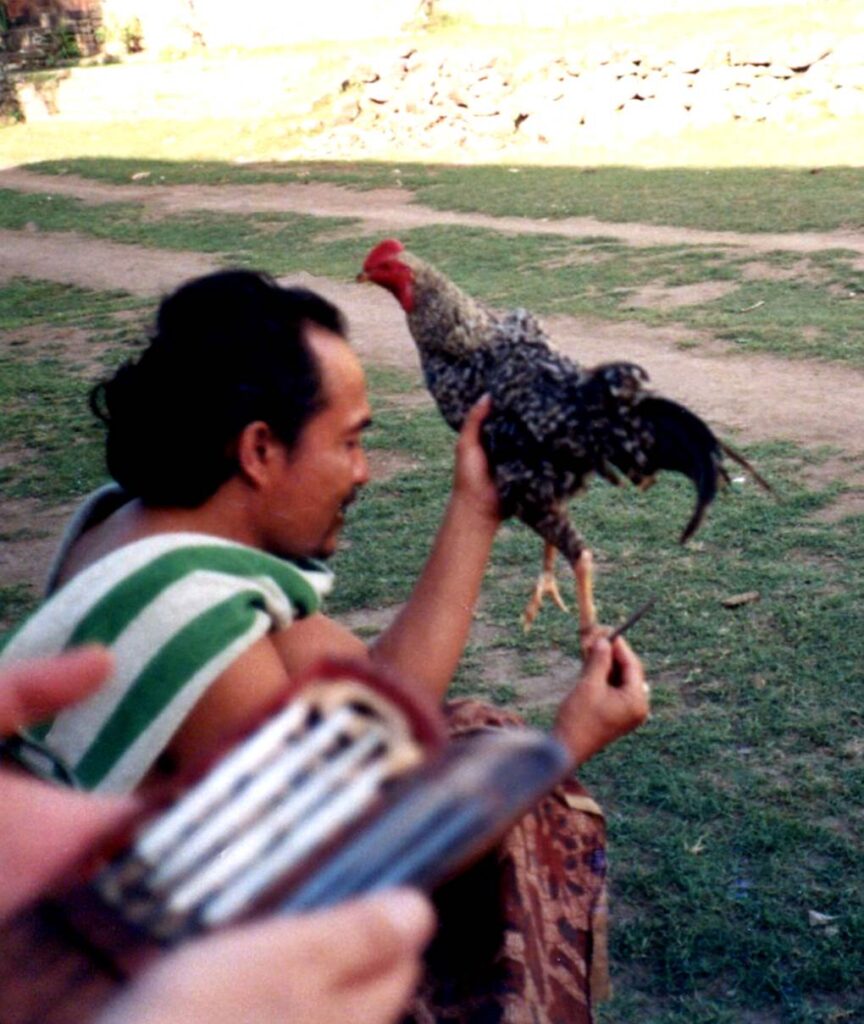
Photo by author, 1982
Traditional textiles of the village
A villager explains the village’s traditional weaving to a tourist.
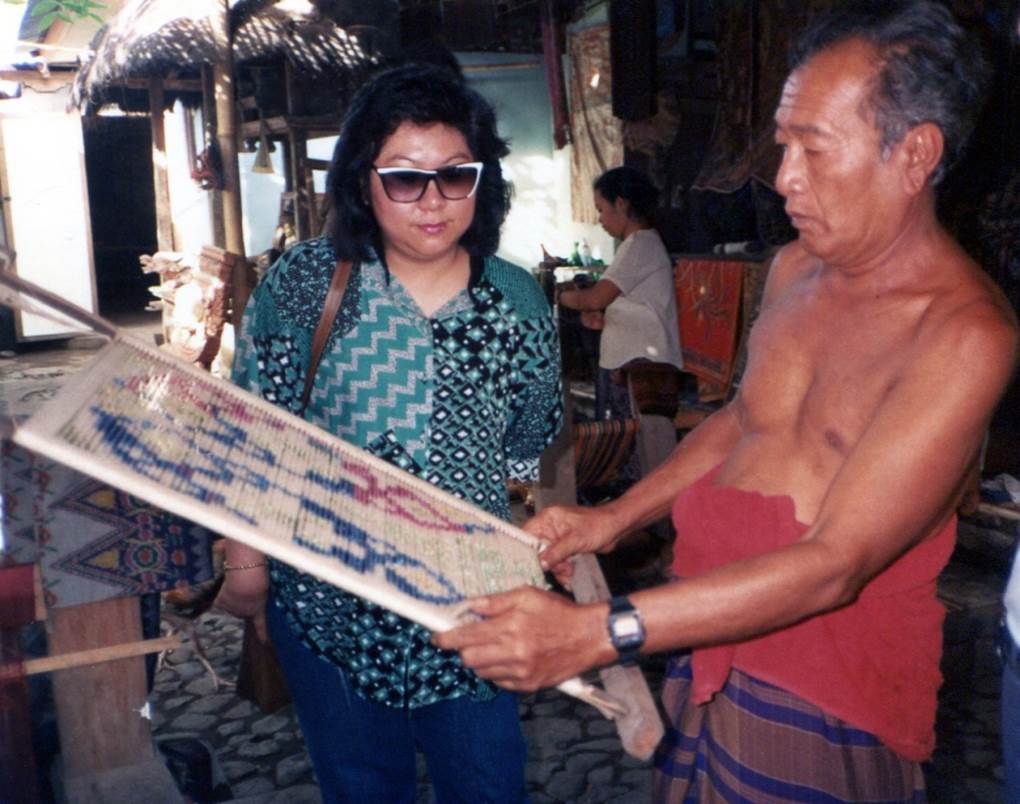
Photo by author, 1982
Trunyan Village
A two-hour climb up the central road from Sanur leads to the outer ring of Mount Gunung Batur, one of Bali’s main peaks.
It overlooks the 1,700-meter Batur Volcano, which is surrounded by the outer ring mountains at 1,300 to 1,700 meters above sea level, and Lake Batur, a caldera lake about 1,000 meters above sea level.
The outer rim and Lake Batur.

We reached a ridge at an altitude of 1300 m. It’s pretty cold.
At the foot of the distant Outer Ring Mountain is the village of Trunyan.
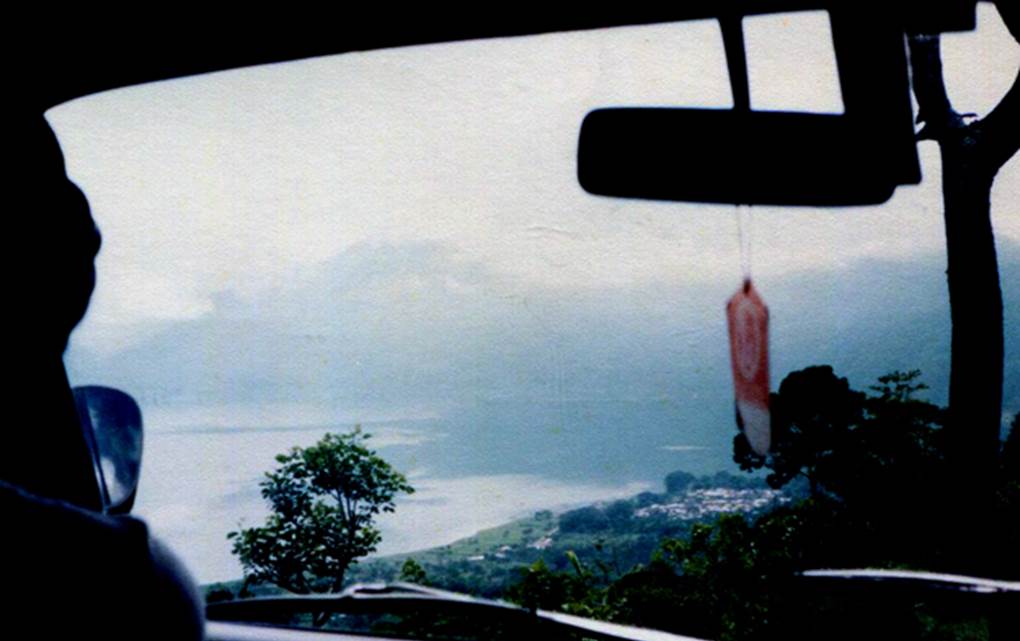
Photo by author, 1982
The distant outer ring mountains are always in the mist.
The caldera lake is spectacular.

Photo by author, 1982
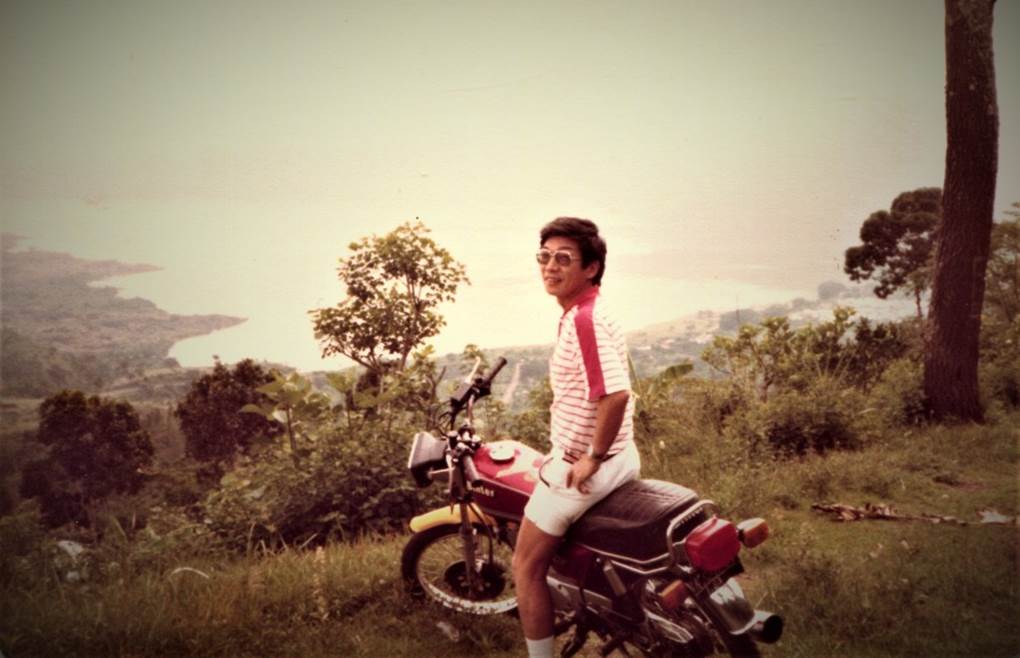
Photo of author, 1982
Price Negotiation
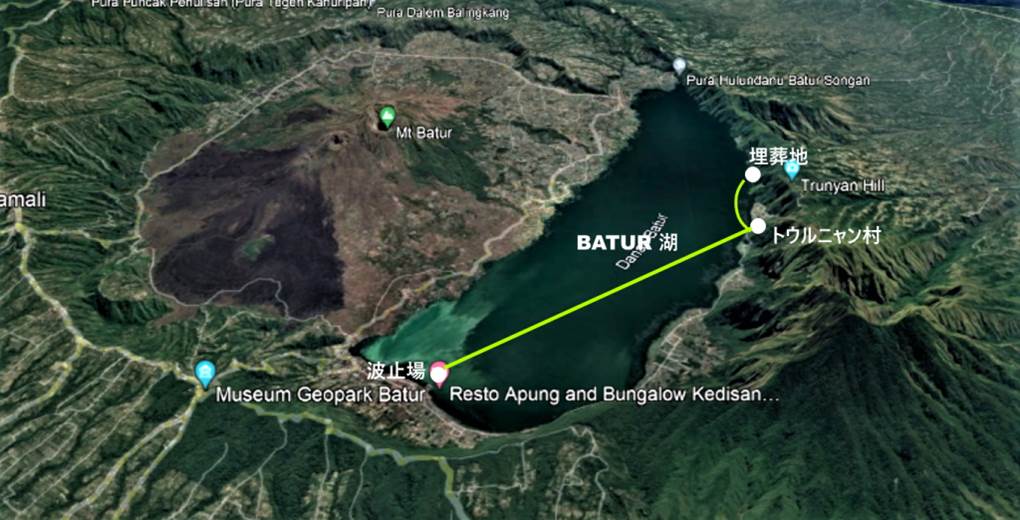
You can drive down the steep outer ring mountain to the lake Cardera side by iroha slope for about 300m. The only way to get to the village of Trunyan is by small boat, about 2km from the shore of the lake.
The village is surrounded by steep outer ring mountains and is not accessible by road. Therefore, it is the Monopoly of the boatmen, who are likened to the unlicensed taxis that provide this boat service.
On the shores of Lake Batur, negotiating the price of a boat crossing to the village of Trunyan on the opposite bank.

Photo of author, 1982

Photo of author, 1982
Premeditated crime of the boatman
Negotiations are settled, and four people board the ship. For a while, I enjoyed the scenery of the caldera lake created by volcanic activity.
About 1 km in the middle of the lake, the engine suddenly stopped.
I thought it was a malfunction, but it wasn’t.
There was a woman among the four who couldn’t swim, so I was in a bit of a panic. This was all part of the plot that the boatman had planned to get from us extra charges. We paid the money and arrived safely at the pier in Trunyan village.
Nowadays, the number of visitors has increased dramatically, and a large sign with a price list is displayed on the well-maintained wharf. At the same time, the sense of exclusivity that existed until the early 1980s is fading.
Trunyan Village, isolated from the world below
The village of Trunyan, backed by a mountain range about 700m high, is isolated and the only access is from the lake. The isolated village stands on the lakeside, strangely silent.
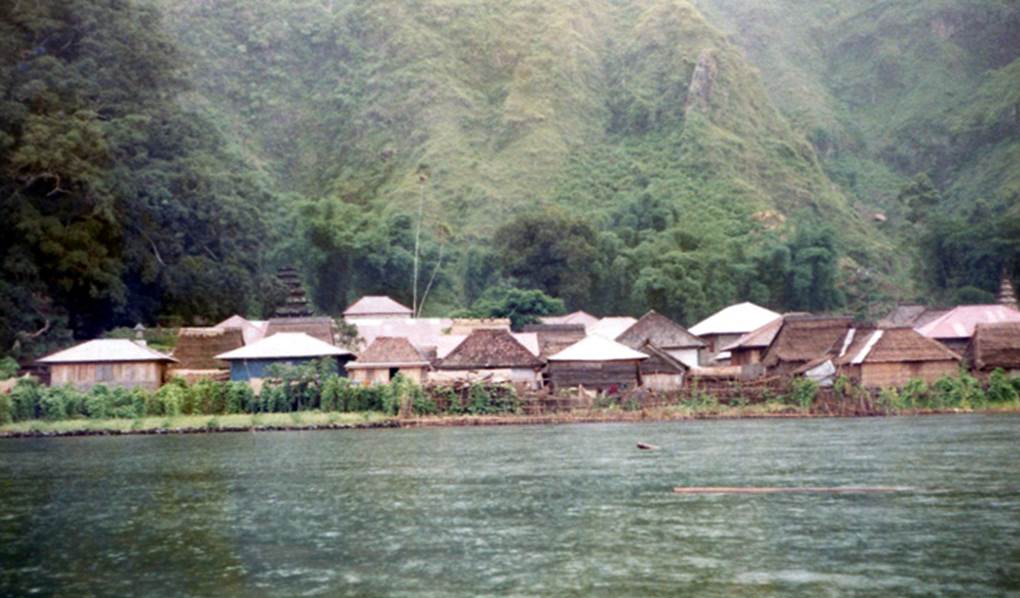
Photo by author, 1982
A quiet corner of the village. It’s a great photography subject.
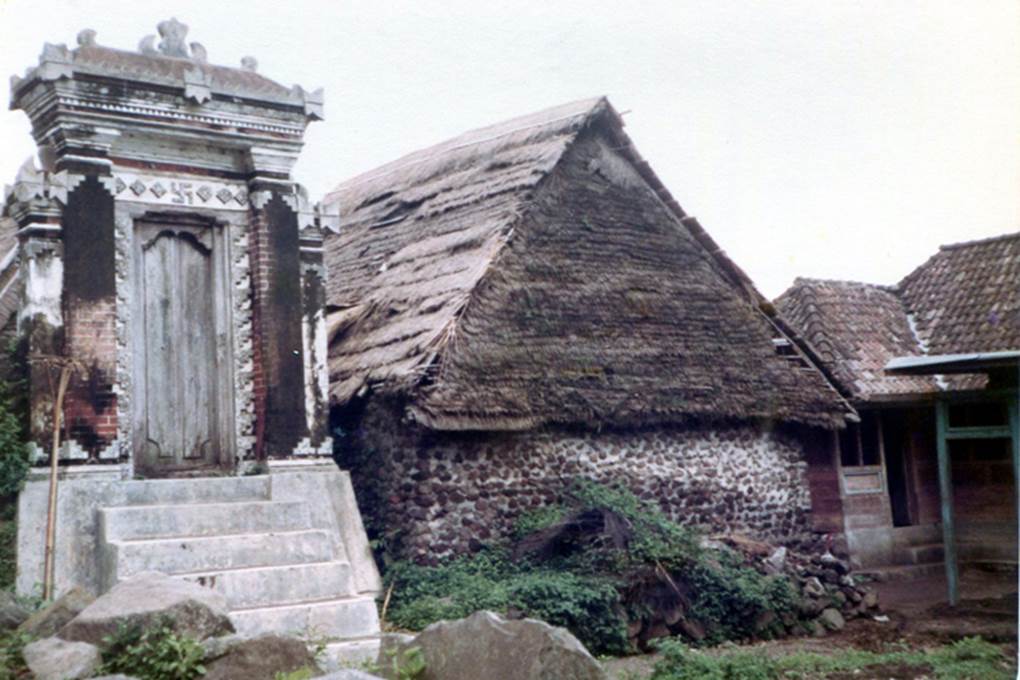
Photo by author, 1982
The wharf was minimal, with no facilities, and we just sat on the sand and put a plank on the boat to get off.
When the boat approached the beach about 20 meters, several men were prowling around the dock. Each of them is spitting on the ground. It’s disgusting.
I later learned that this practice was a custom to prevent outsiders from bringing evil spirits into the village. It is not clear whether such acts are still practiced.
Near the village dock.
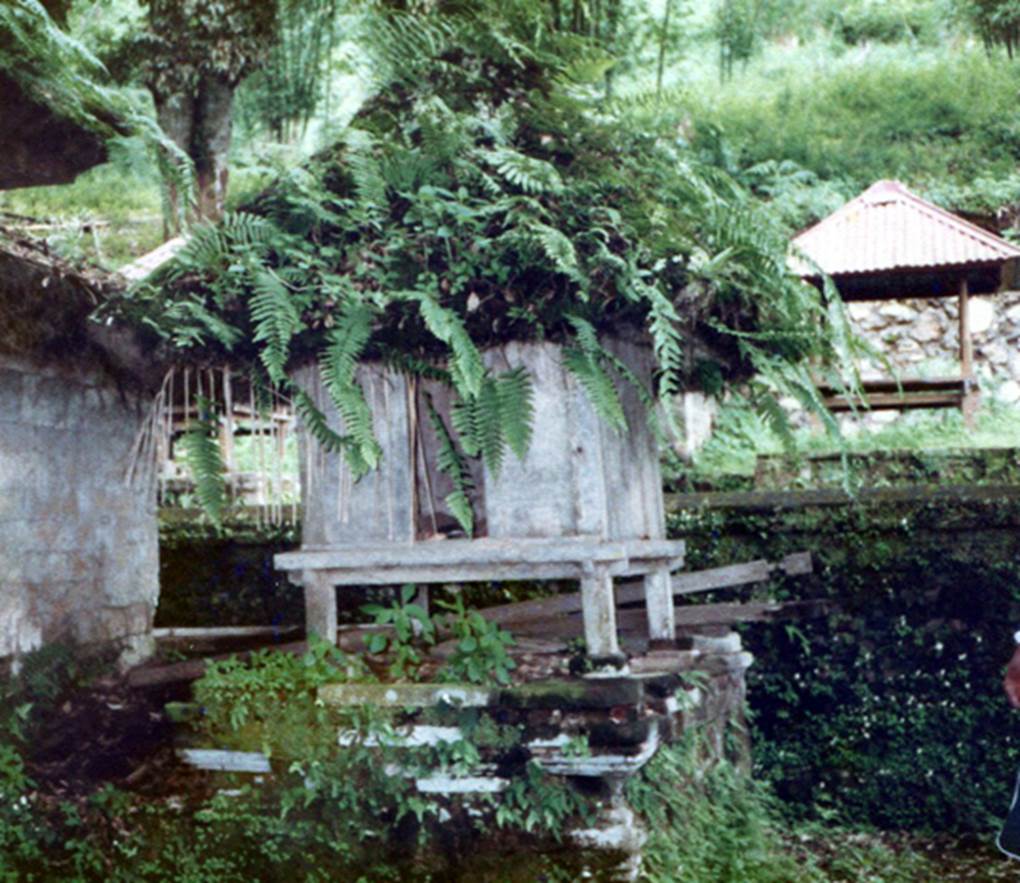
Photo by author, 1982
The roof and exterior walls are made of wood.
The trees on the cliffs in the background have been cut down for over a long period of time.

Photo by author, 1982
The people of Trunyan village, like the aforementioned Tenganan village, can be interpreted as a branch of the same proto-Balinese people who were not influenced by the cultural and religious influence of the Majapahit dynasty that arrived in Bali from the 16th century onwards.
Under such unexplored geographical conditions, it would have been difficult for the external environment to reach, or it would have been possible to reject it. About 300 people have lived here for generations.
Marriages among villagers have been practiced among each other for many years, and many of them have disabilities due to incestuous marriages.
With such a background, I felt a very strong sense of the closed-off atmosphere in the village.
Of course, it was forbidden to visit the temples and houses in the village, and there was no sense of openness like in the villages below in Bali.
It was a world unique to this place. I somehow managed to get around these restrictions and take some photos.
A stupa on the outskirts of the village.
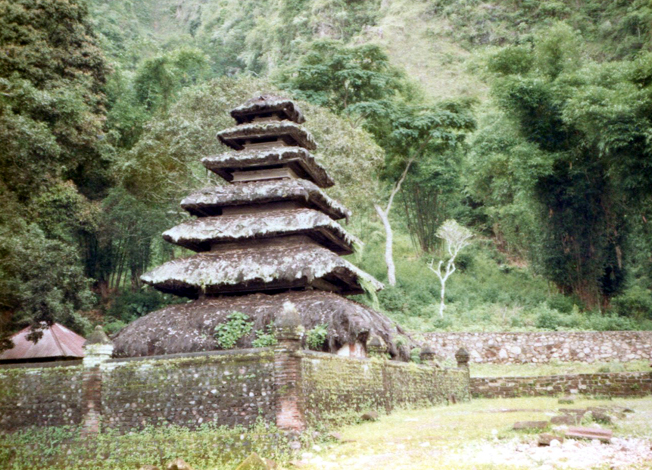
Photo by author, 1982
The meeting house, which is a public space in the village. It feels eerie in here.

Photo by author, 1982
A rare sky burial site in the world
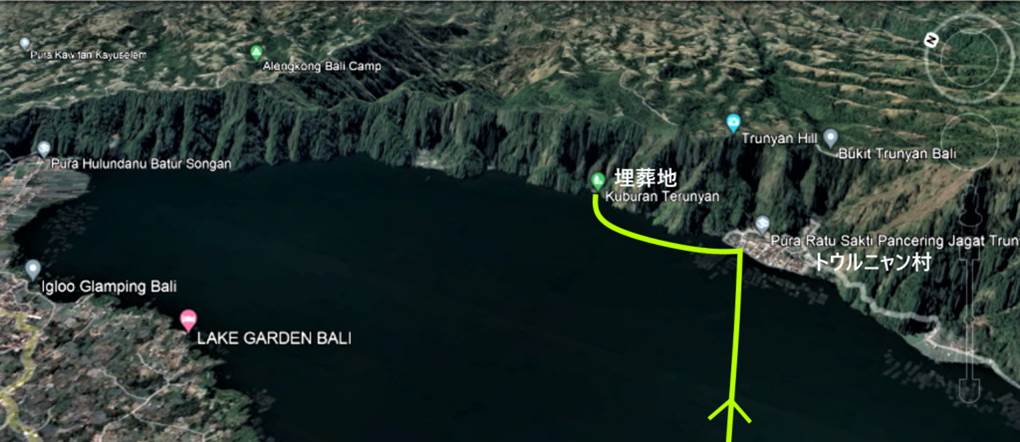
Another purpose of visiting Trunyan village was to see a rare sky burial site, that is, a cemetery. From the previous village’s boat dock, we took a rowboat to the shore about 500m north, and their cemetery was on a tiny flat area at the foot of a cliff approaching the lake. The forest was close to the lake, and it was dark and humid, covered with large trees and no view of the sky.
The dead were brought here from the village, and the corpses lay directly on this damp soil without digging a hole, and a bamboo enclosure was set up.
This is to prevent birds and beasts from spitting on them.
The corpse is kept here until it decays naturally, and later only the skull is collected and placed in the village morgue.
The remaining bones are not collected, but are left in the cemetery.
There is almost no flat land at the edge of the lake. It is a place that is impossible to access from the lower world without a boat.
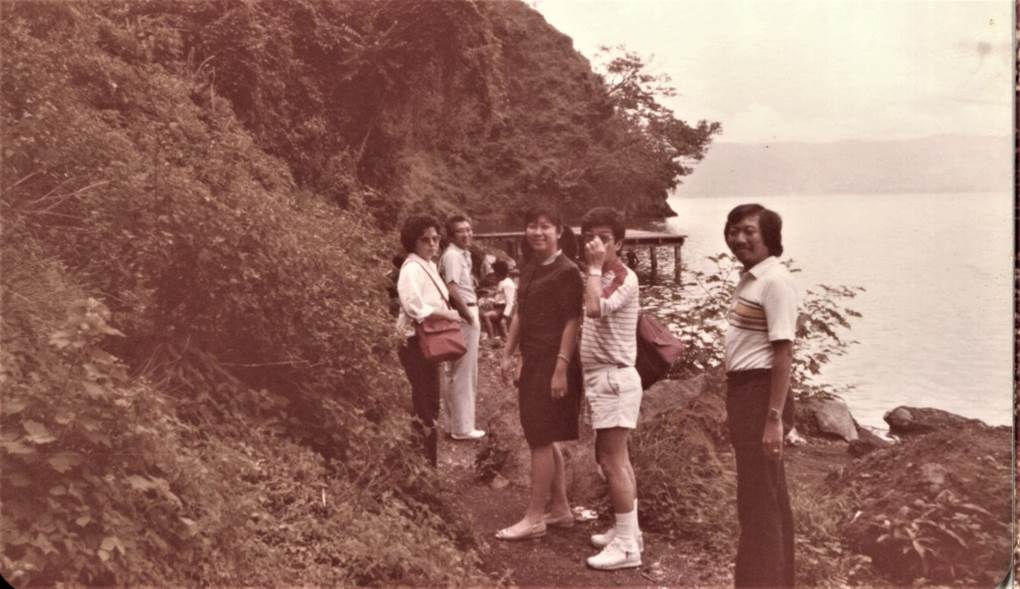
Photo of author, 1982
By the way, I walked around this burial site for a while, but I didn’t smell any strange smell at all. I was curious and asked the local guide, and he explained the following.
A team of Dutch scientists who were interested in this phenomenon visited the site and investigated, but they could not find the cause of the lack of strange odour.
The conclusion was that there was a certain type of large tree at this burial site, and it was speculated that this tree might be related to the deodorization, but this is still an incredible phenomenon.
Public cemetery in the village. Seven or eight bodies were buried in the open.
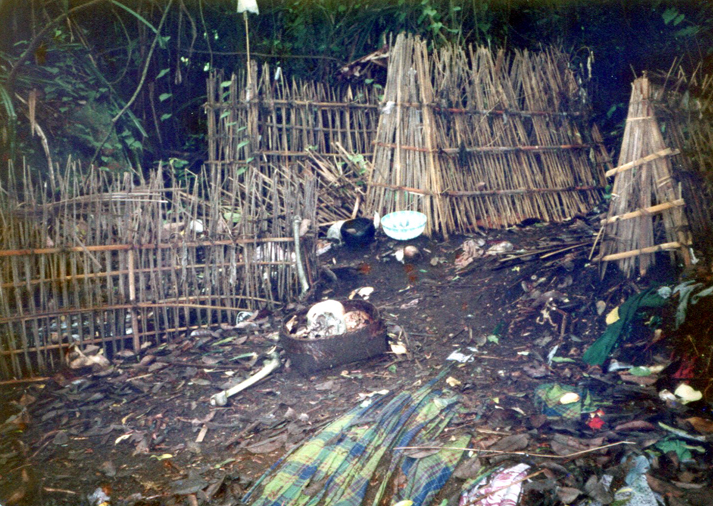
Photo by author, 1982
Within the enclosure is a body that was buried in the open sky.
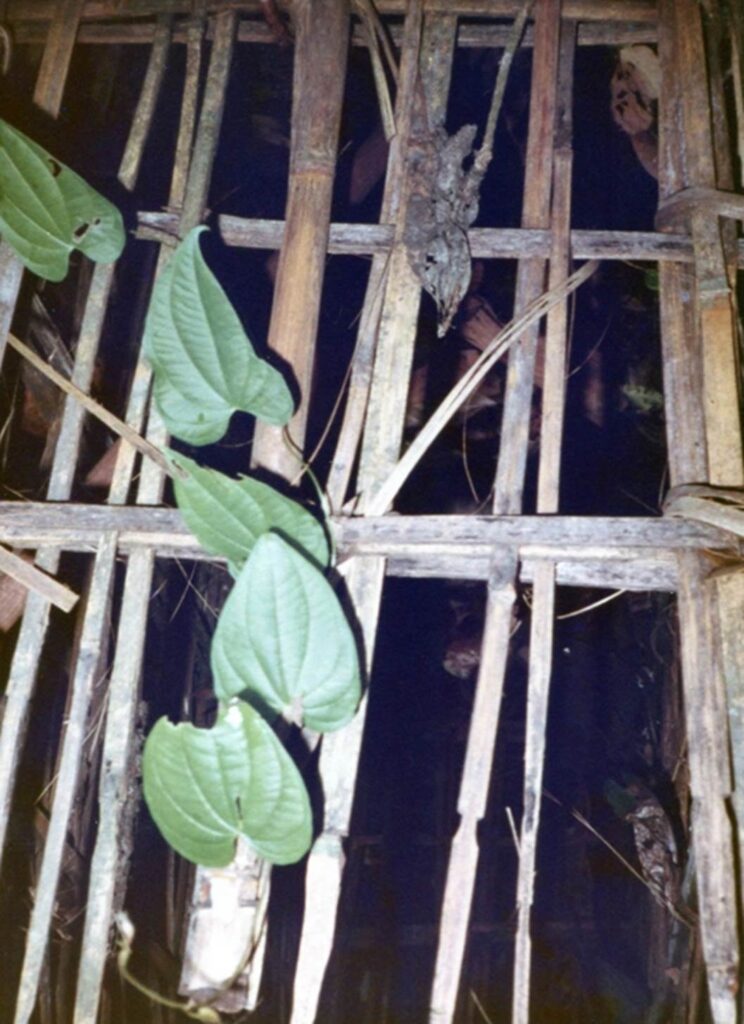
Photo by author, 1982
The first thing we did when we returned to the Hyatt Hotel in Sanur from the burial site was to thoroughly wash our footwear.
After that, we went to a restaurant for dinner and met the general manager of the hotel who was of Western descent. When we told him about the sky burial site, he was astonished.
He commented that foreign tourists usually shy away from such places and rarely visit them. From his point of view, it was understandable that he was afraid of bringing endemic diseases and unknown bacteria into the hotel.
This is the description of the village in 1982. There was barely any farmland to cultivate, and most of the accessible trees on the mountain behind the village had been cut down. It was rare, if not a miracle, that a typical marginal village had survived until that time.
In recent years, in the 21st century, there has been a splendid sign on the wharf of the village that reads “Welcome to Trunyan” in English. With the increase in flights by LCCs and the globalization of travel, this village will no longer be exclusive, and will the cash income from tourists be the survival of the marginal settlement in the future?
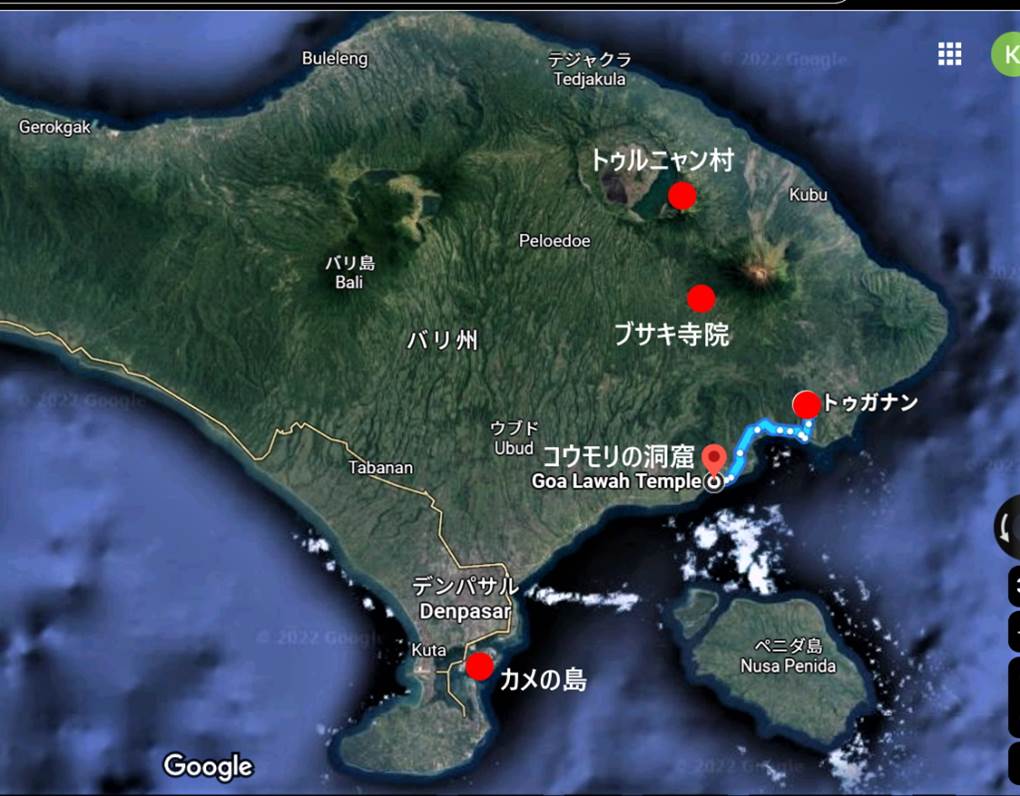
TURTLE ISLAND
Cross to Turtle Island by sightseeing boat.

Photo of author, 1982
Children raise and care for the sea turtles.
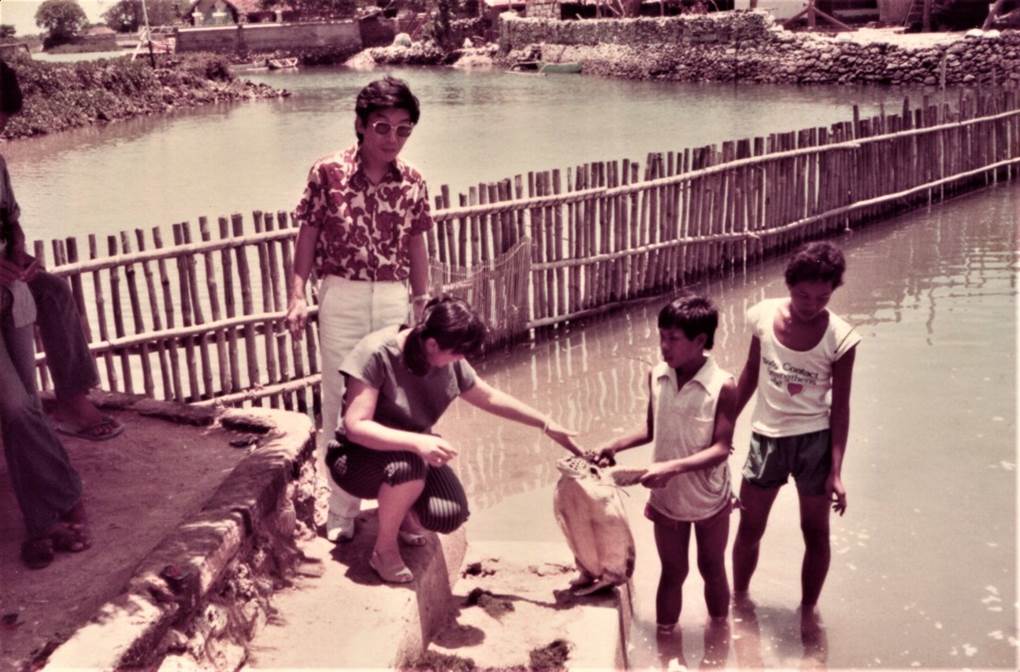
Photo of author, 1982
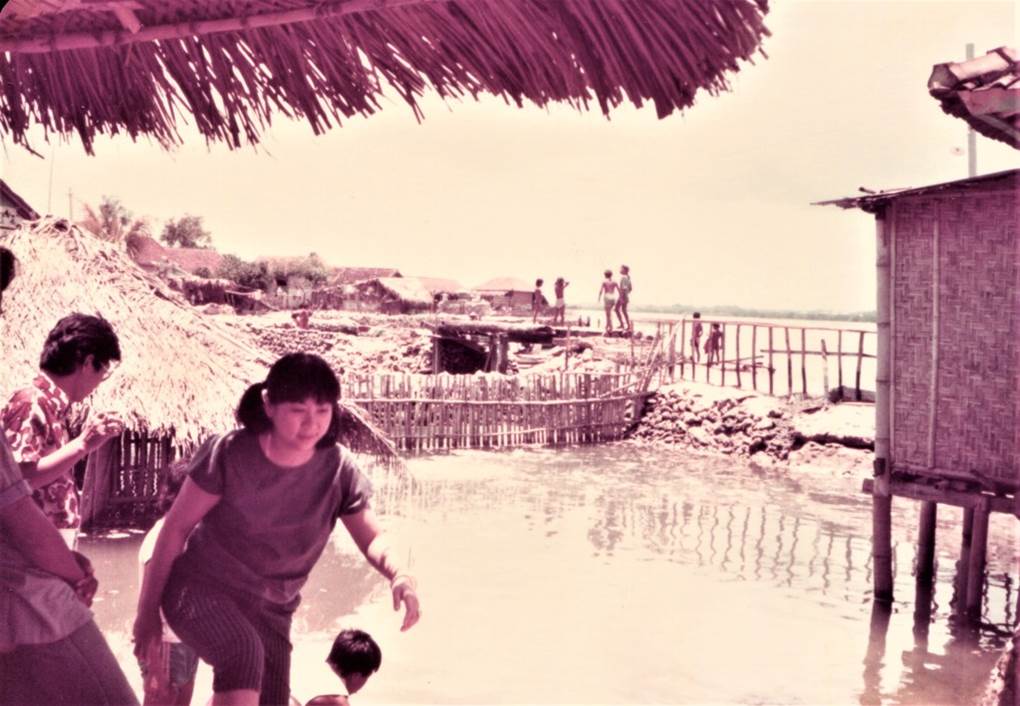
Photo by author, 1982
Besakih Temple
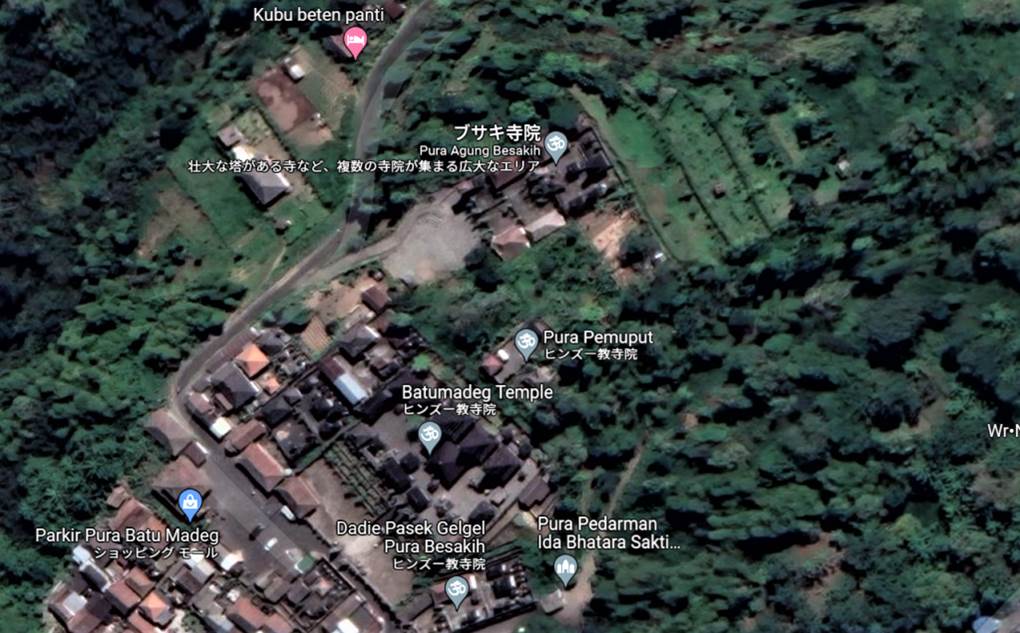
Besakih Temple (Pura Besakih) is the main temple of Balinese Hinduism.
It is located on the slopes of Mount Agung, which is revered as a sacred mountain by the Balinese people.
The area is a complex religious facility consisting of more than 30 temples, with Besakih Temple located at the top of the mountain.
Besakih temple also known as “Phantom World Heritage Site”
Since 1990, the Indonesian government has tried to inscribe Besakih Temple on the list of World Heritage candidates, but the temple has been strongly opposed and the plan has not been realized.
The reason for the opposition is that “if it becomes a World Heritage Site, various regulations will be imposed, and it will be inconvenient as a Balinese Hindu temple.” This is why Besakih Temple is also known as a “Phantom World Heritage Site”.
Google Map of Besakih Temple and Complex.
When our group of four visited in 1982, foreign tourists were rare.
However, since the increase in budget air lines to Bali, it has become a very crowded tourist destination.
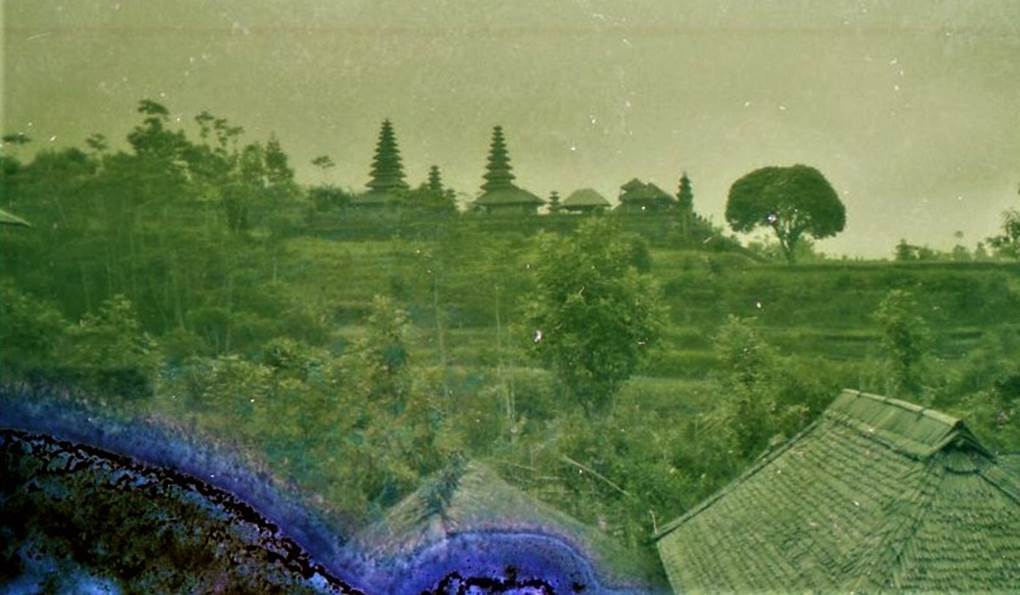
Photo by author, 1982

Photo of author, 1982
Village carpentry workshop
A family-owned sawmill and woodworking shop in a garden near Ubud, Bali.
It is also a playground for children.
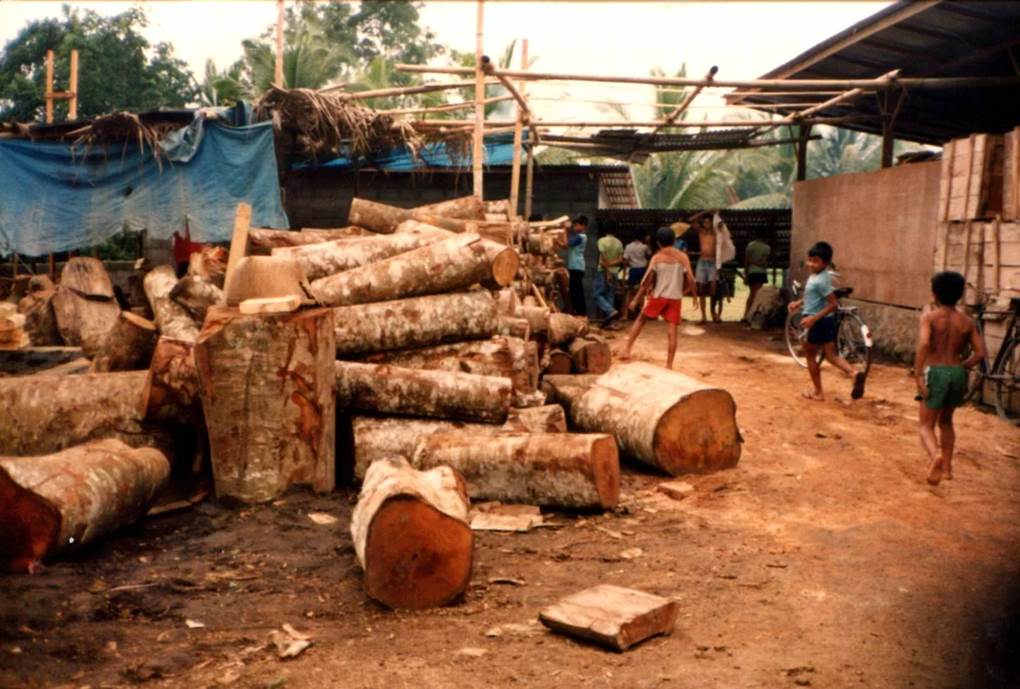
Photo by author, 1982
Adults are concentrating on woodworking.
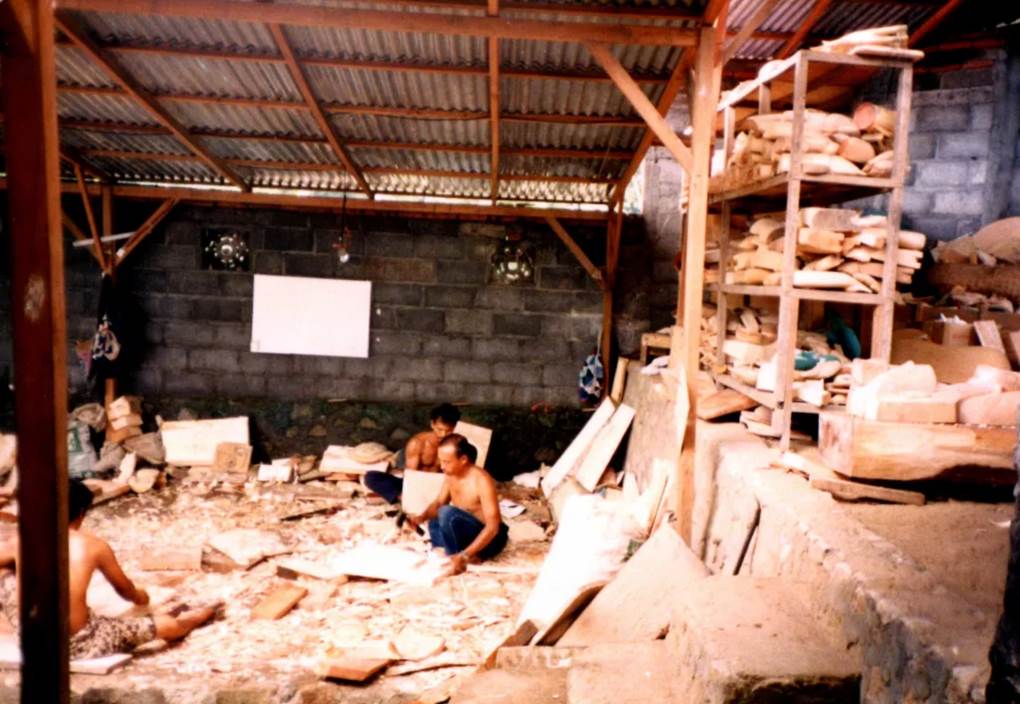
Photo by author, 1982
Canyon Quarry
The layers of volcanic ash that have been deposited over the years are eroded by the river, revealing sedimentary rocks at the bottom.
The compressed sedimentary rocks are excavated and used as building materials and sculpture materials. It is a world of local production for local consumption.
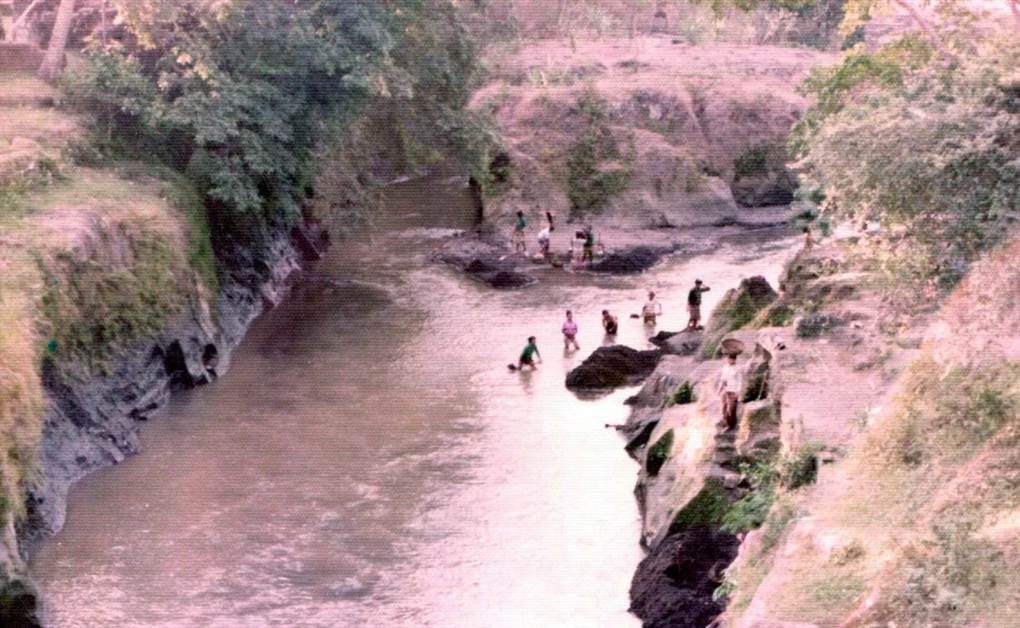
Photo by author, 1982
After experiencing the otherworldly world of Bali, we return to the hotel.
An antique car that was in the hotel.
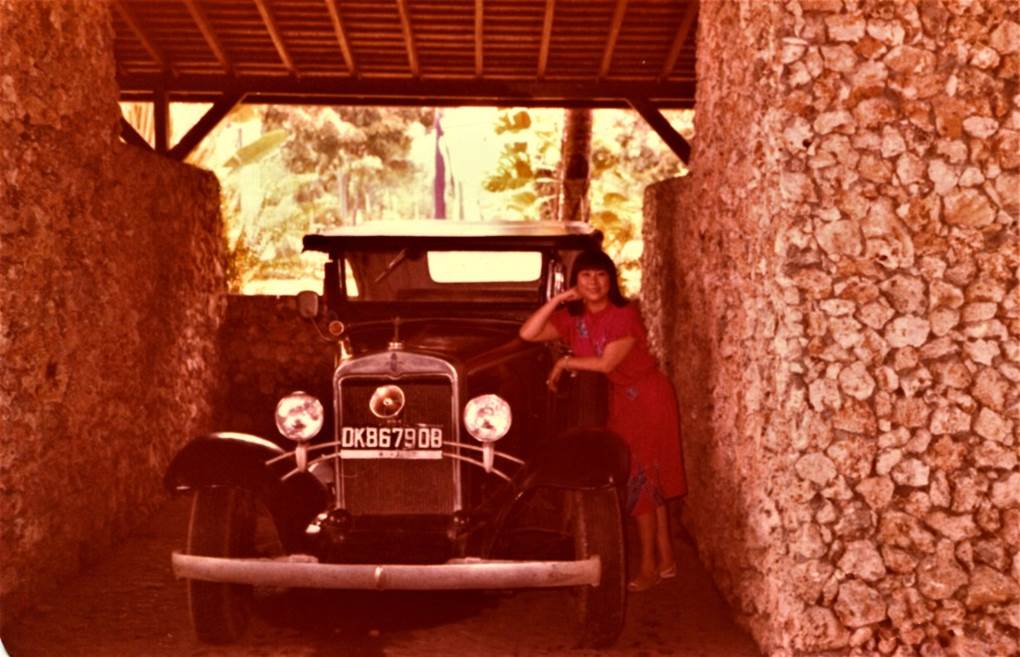
Photo by author, 1982
We return to the hotel and relax.
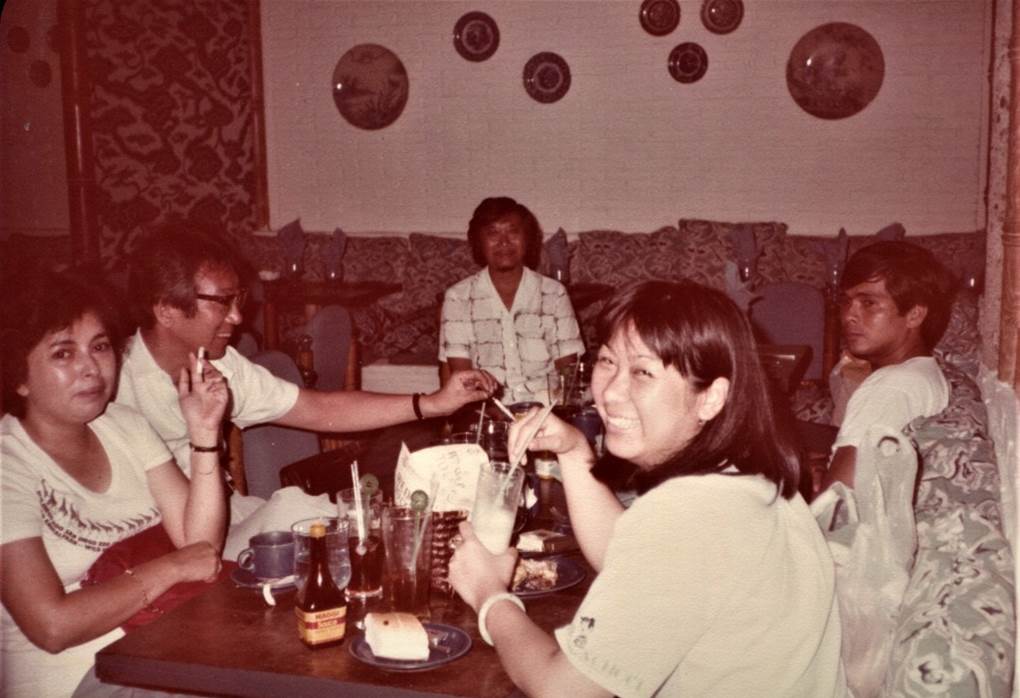
Photo by author, 1982
A commemorative photo was taken after checking out of the Bali Hyatt Hotel.

Photo by author, 1982