JAP | ENG
Valencia, Spain
October 2013
#2/2
I have travelled around various cities in Spain, and it was here in Valencia that I came across modern architecture.
City of Arts and Sciences (Ciudad de las Artes y las Ciencias)
The City of Arts and Sciences is a complex of facilities for science education and the arts. Construction began in 1996 and was completed in 2005. The designer is Santiago Calatrava Valls, who has works all over the world. He also designed the stadium for the Athens Olympics and also many bridges.
Calatrava’s buildings are characterised by a unique and creative architectural style that harmoniously combines numerous exposed bone structures with structural engineering.
Another co-designer was Madrid-born Mexican architect Félix Candela (1910-1997). When the civil war broke out in Spain in 1939, he fled to Mexico, where he began his design career. Although he moved to the United States in 1971, most of Candela’s work is in Mexico. His work is known for creating spaces with flowing curves and curved surfaces that integrate structure and expression.
A bird’s-eye view of the City of Arts and Sciences.
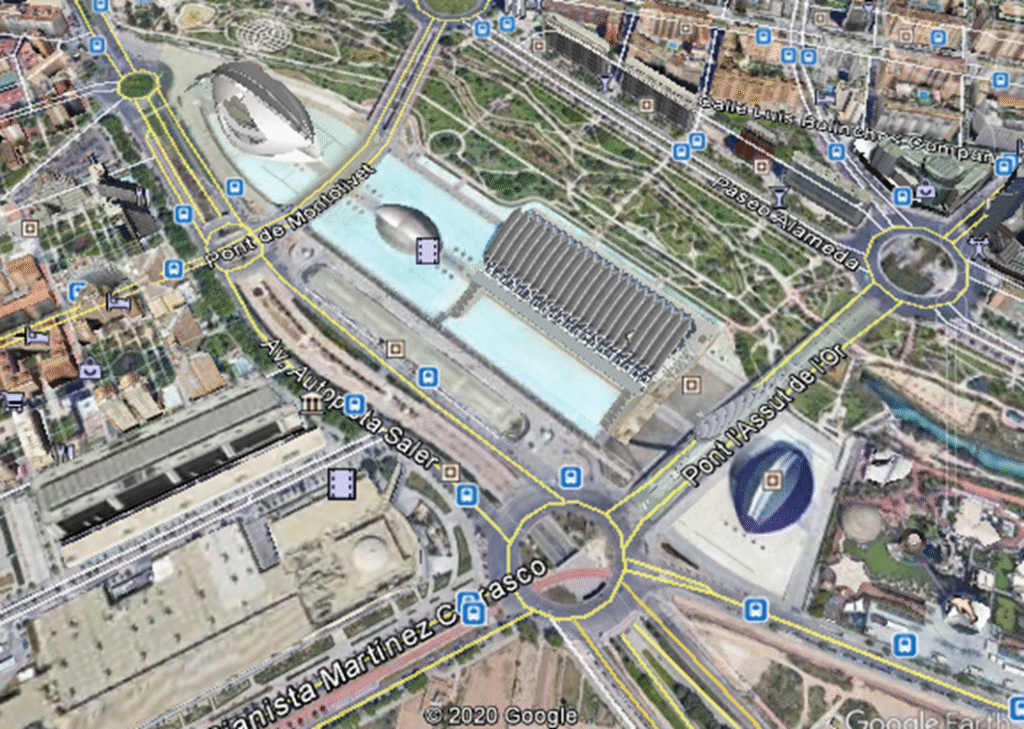
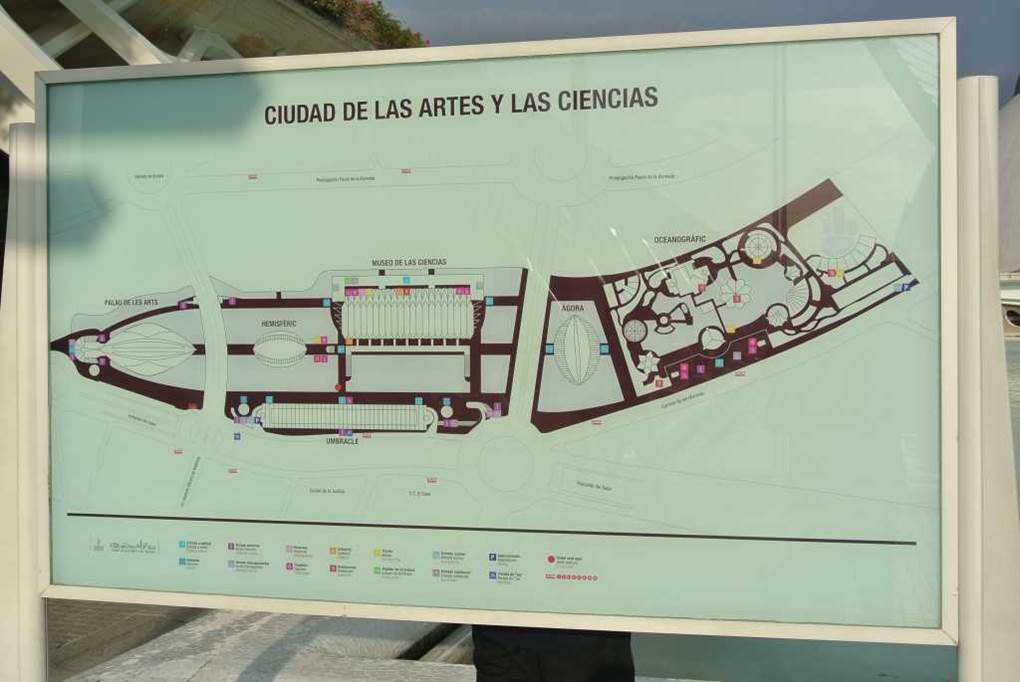
A signage guide of the City of Arts and Sciences. This vast site was originally the Turia River, which ran through the center of Valencia, but was diverted to the south of the city after a major flood in 1957. The old riverbed of the Turia River was turned into a park. Later, the City of Arts and Sciences was planned on this site, and it was to be connected with a series of five impressive modern buildings.
Prínce Felipe Science Museum
(Museu de les Ciències Príncipe Felipe)
This 40,000m2 museum features interactive exhibits.
This time I was only able to photograph the exterior.

Photo by author, 2013
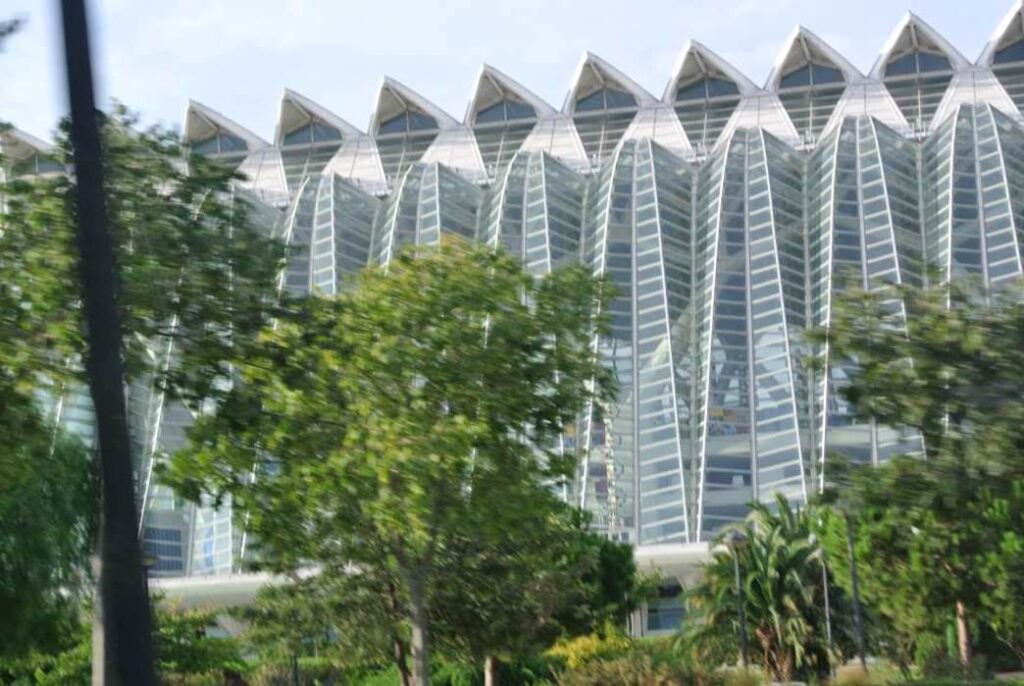
Photo by author, 2013

Photo by author, 2013

Photo by author, 2013
L’Umbracle
L’Umbracle is an open public space by the pool on the first floor, and a garden and promenade on the second floor. On the second floor, there is a garden planted with Valencian native plant species and a sculpture garden with sculptures by Yoko Ono and others.
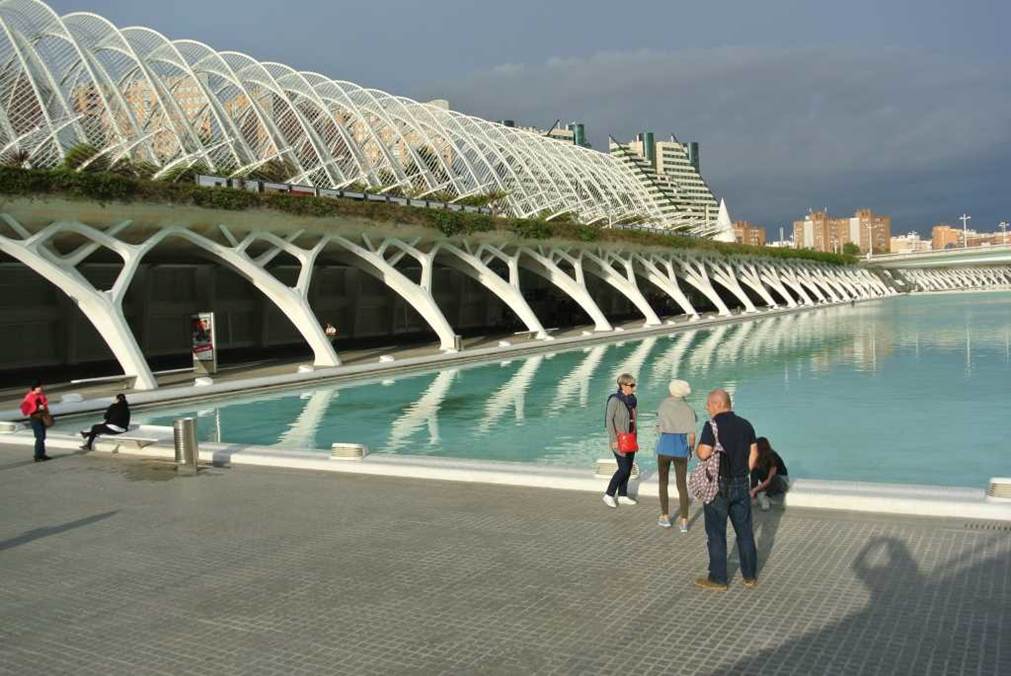
Photo by author, 2013

Photo by author, 2013
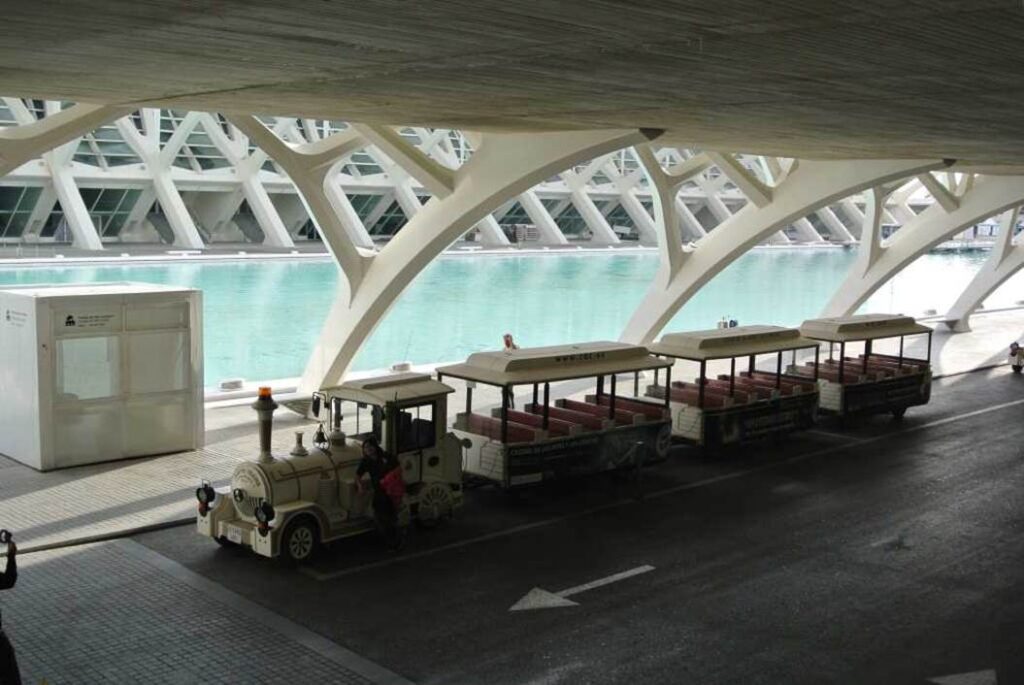
Photo by author, 2013
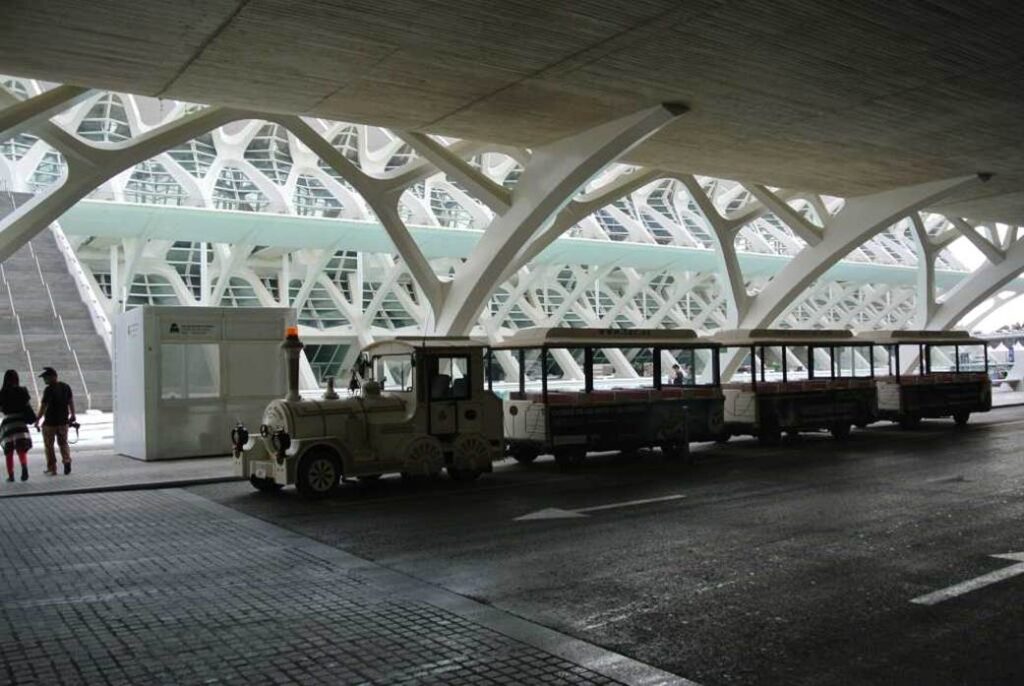
Photo by author, 2013
Parabolic arches

Photo by author, 2013
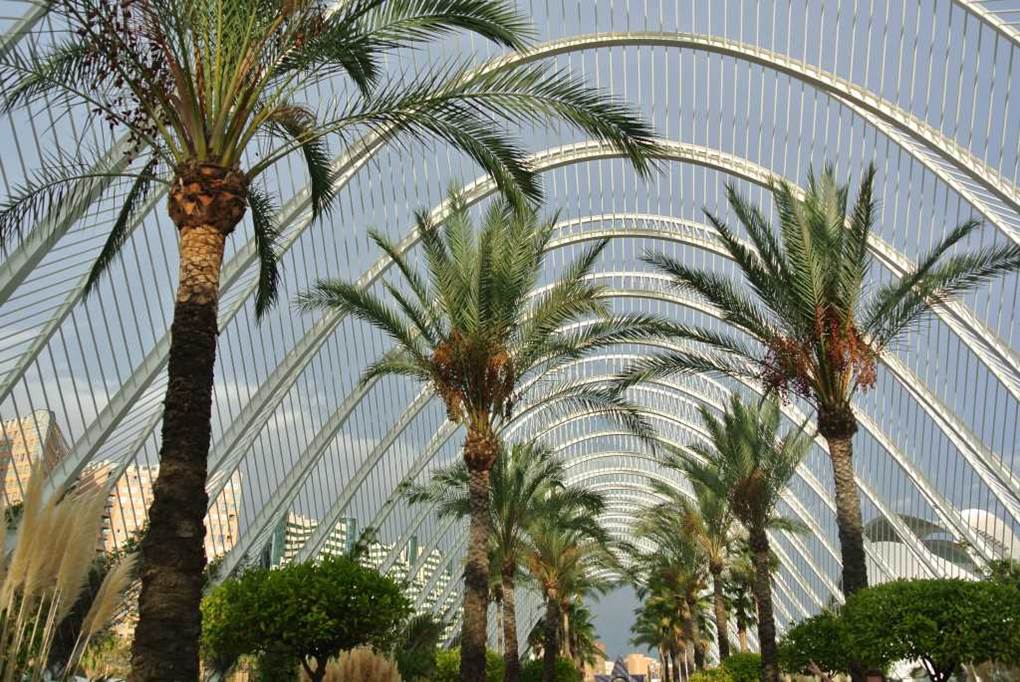
Photo by author, 2013
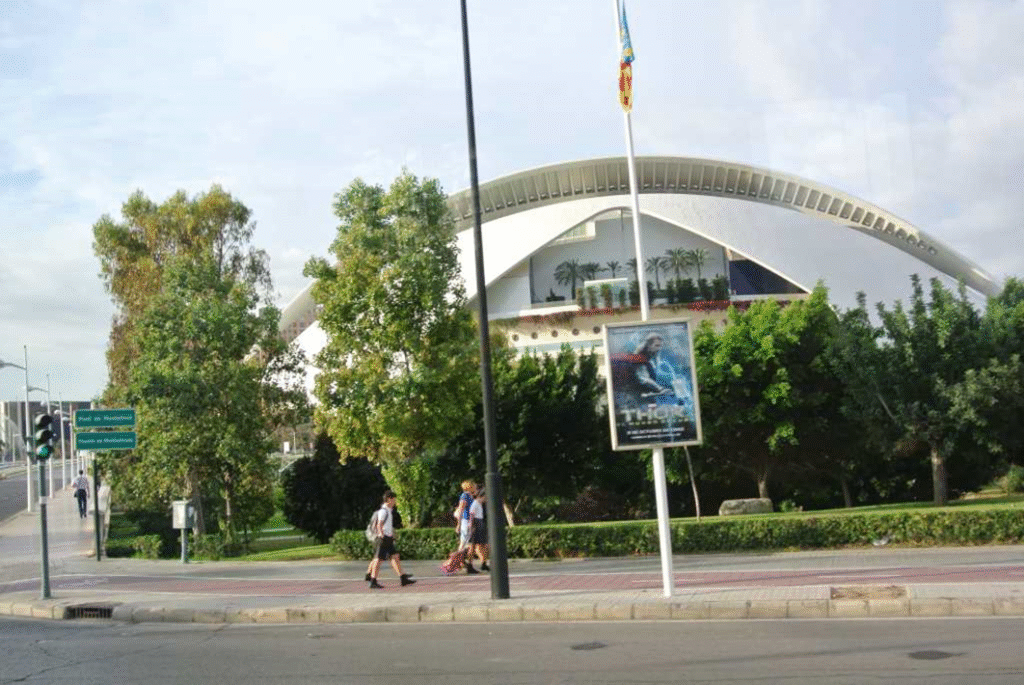
Queen Sofía Palace of the Arts
(Palau de les Arts Reina Sofía)
It has a movie theater, planetarium, and laserium built in.

Photo by author, 2013
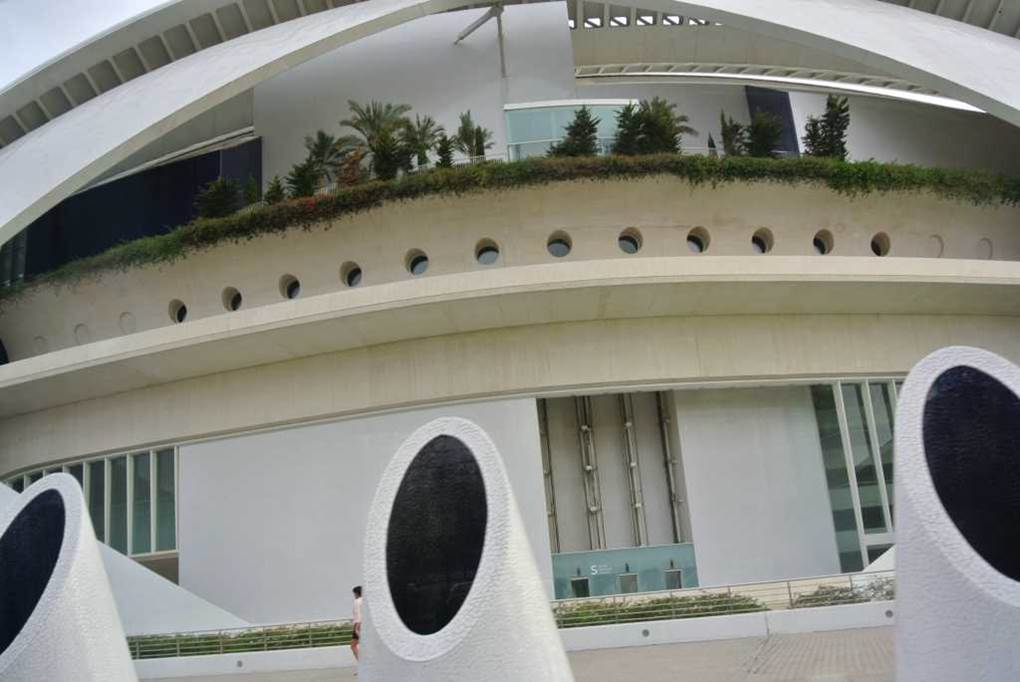
Photo by author, 2013

Photo by author, 2013
Àgora
It is a facility where various events such as sports and concerts are held.
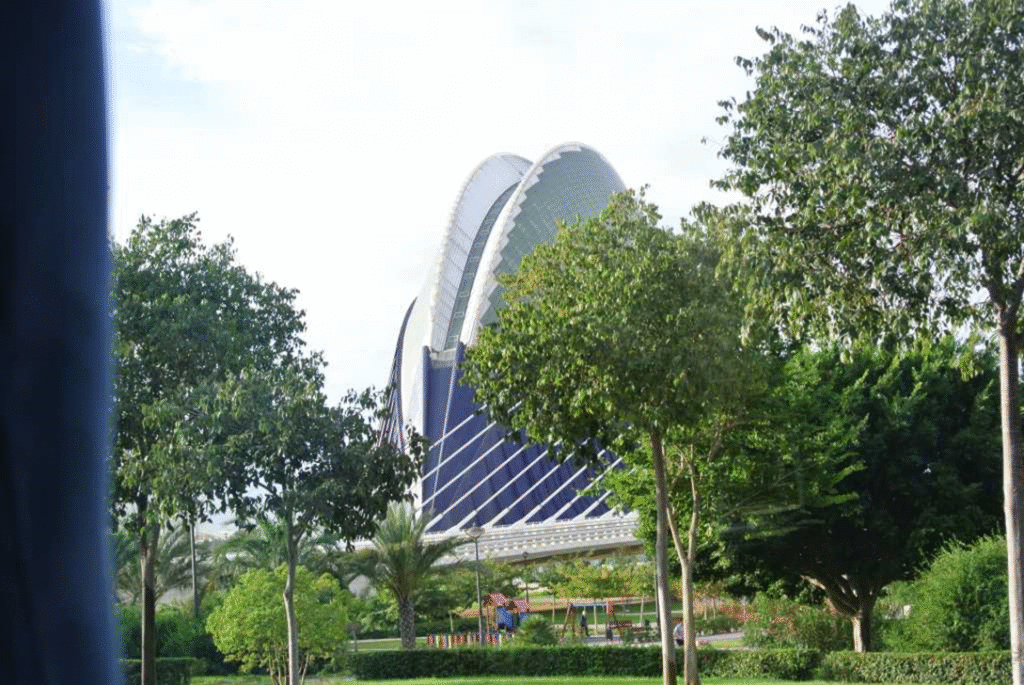
Photo by author, 2013
Kingdom Bridge
with the guardian beast (gargoyle) of the Pont del Regne
A gargoyle is a sculpture in the shape of a monster that functions as a gutter. Gargoyles were installed on the roofs of medieval religious buildings (churches and monasteries) so that rain from the gutters flowed out of the monster’s mouth and various places. At the same time, it is also a form of talismans.
Gargoyles are usually in the form of animals, but in the case of this bridge, they are animal-like demons with human figures and wings. The artist of these two gargoyles on the left and right sides of the bridge is sculptor Joan Marti, and they are made of bronze. It is rare to see guardian beasts on bridges that ward off evil and protect the city. The right side is the city area, and the left side is the suburbs.

Photo by author, 2013
Tower of El Miguelete in Valencia Cathedral
The cathedral is located in the heart of the old town. This was originally the site of a mosque built by the Arabs, but it was rebuilt as a cathedral in the 13th and 14th centuries.
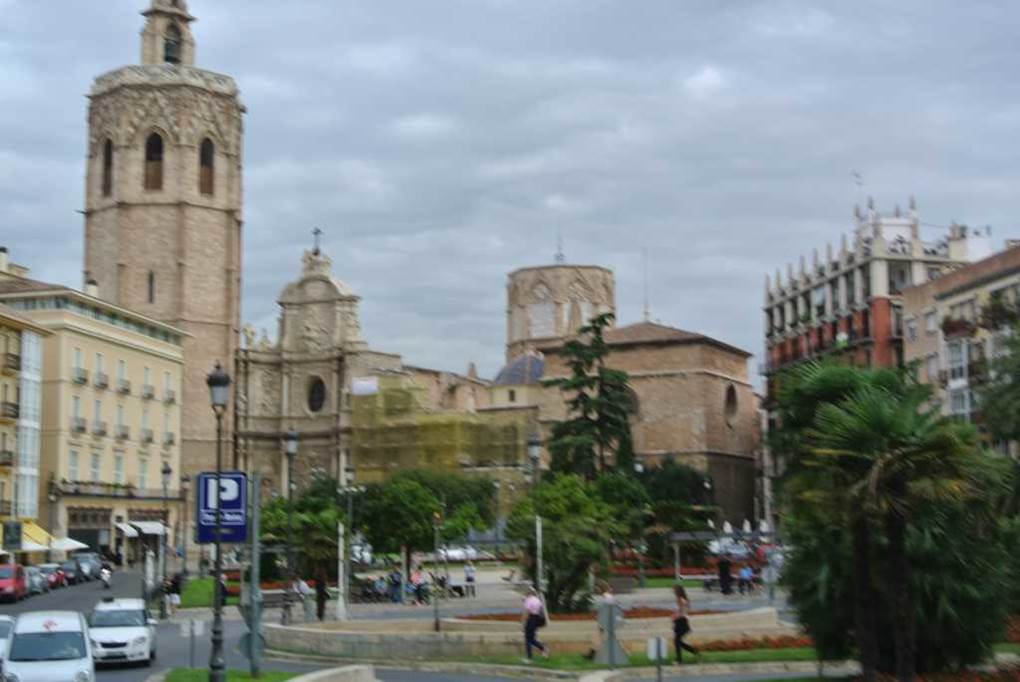
Photo by author, 2013
Located in Plaza de la Reina, the center of Valencia’s Old Town, the Cathedral is marked by the Tower of Miguerete. It was built over a period of more than 150 years, and is a mixture of various architectural styles such as Gothic, Baroque, and neoclassical.

Photo by author, 2013
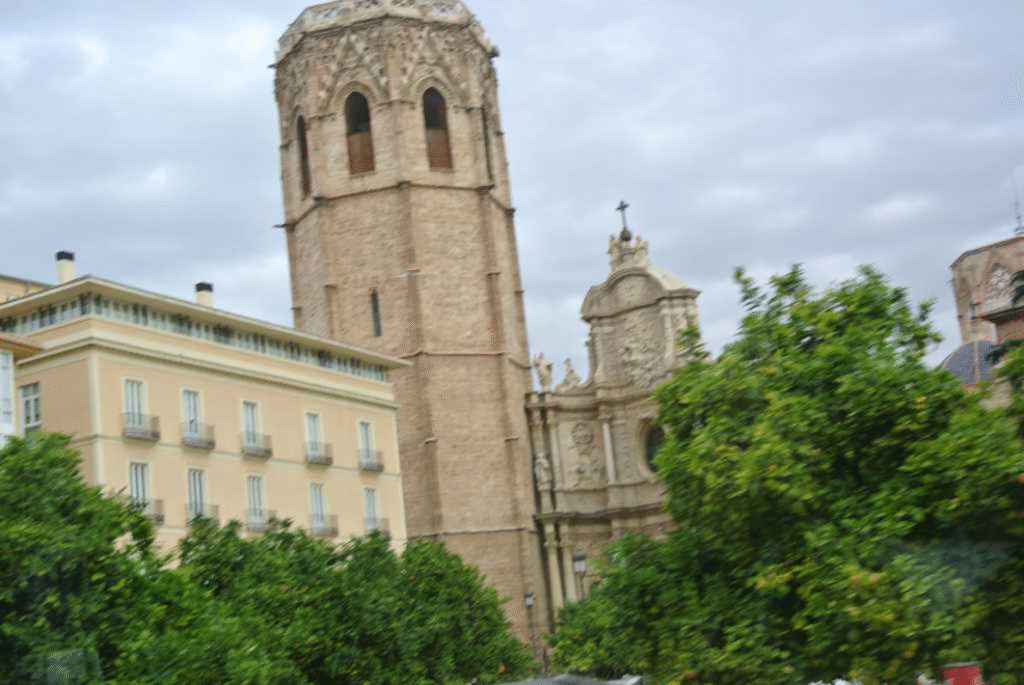
Photo by author, 2013
Road signage
Road signs in Valencia are bilingual (two languages). At first glance, Spain has the impression of a unified state centered on the capital city of Madrid, but Valencian is used in the Valencia region, and Catalan is used in everyday life in Barcelona.
Road signs are written in Spanish on the top and Valencian on the bottom.

Photo by author, 2013
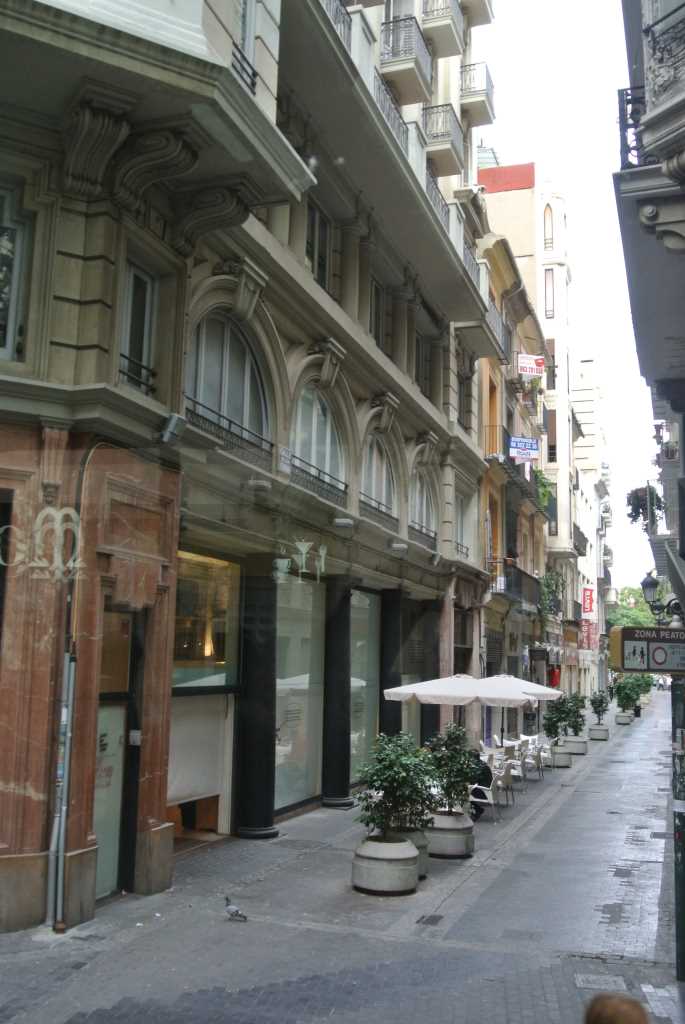
A café on a side street.
Valencia North Train Station (Gare du Nord)
Located in the heart of Valencia, the Gare du Nord was completed in 1917 by the Valencian architect Demetrio Ribes Marcos in the style of modernismo. The station is served by AVE and other medium and long distance trains, and is a hub for access to major cities, including the suburbs of Valencia.

Photo by author, 2013
A spacious station square. The subway passes underneath and is convenient for transfers. To the left is the Valencia bullring!
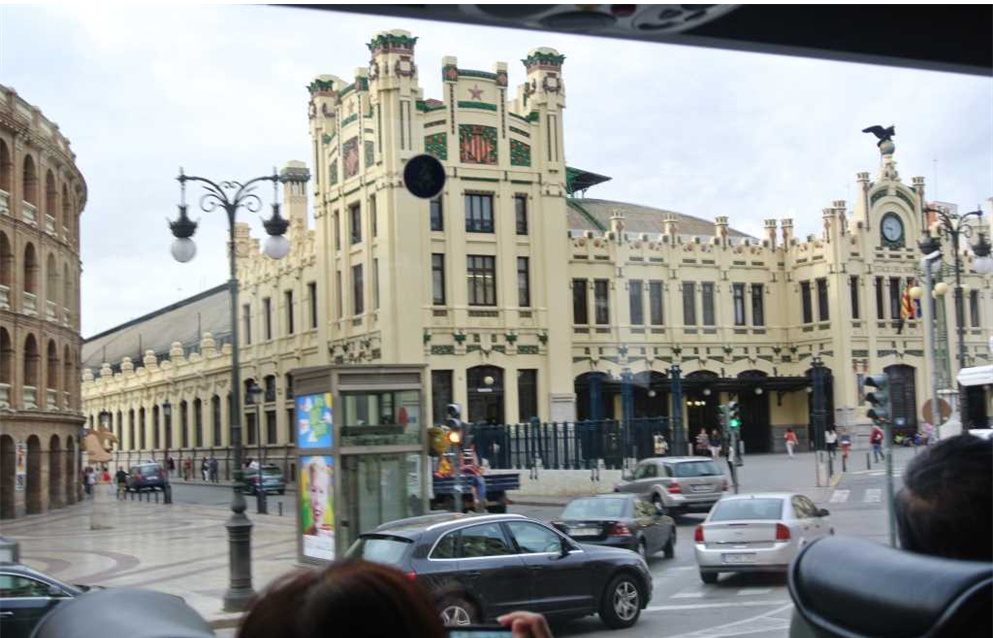
Photo by author, 2013
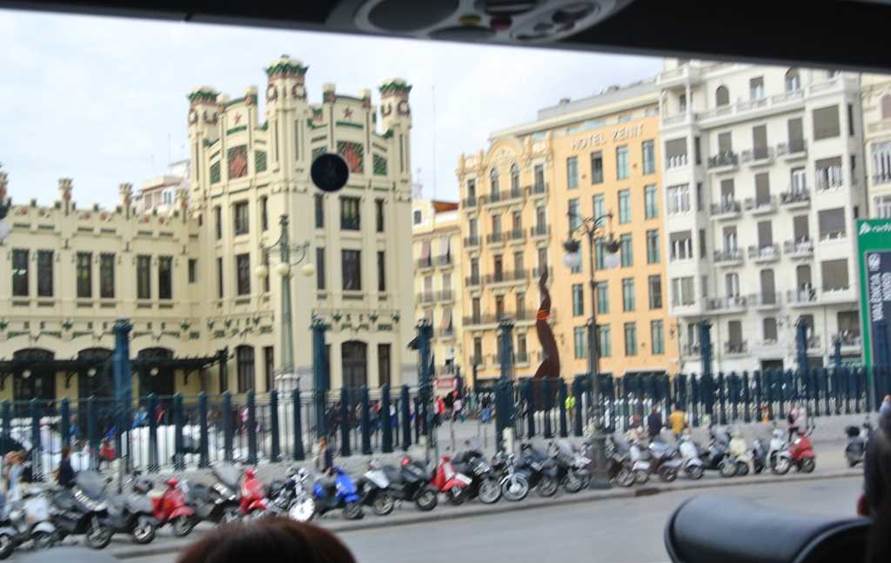
Photo by author, 2013
València North Station is on the left and to the right is the Valencia Bullring. (Plaça de Bous de València).
Large facilities that attract visitors are located next to each other.
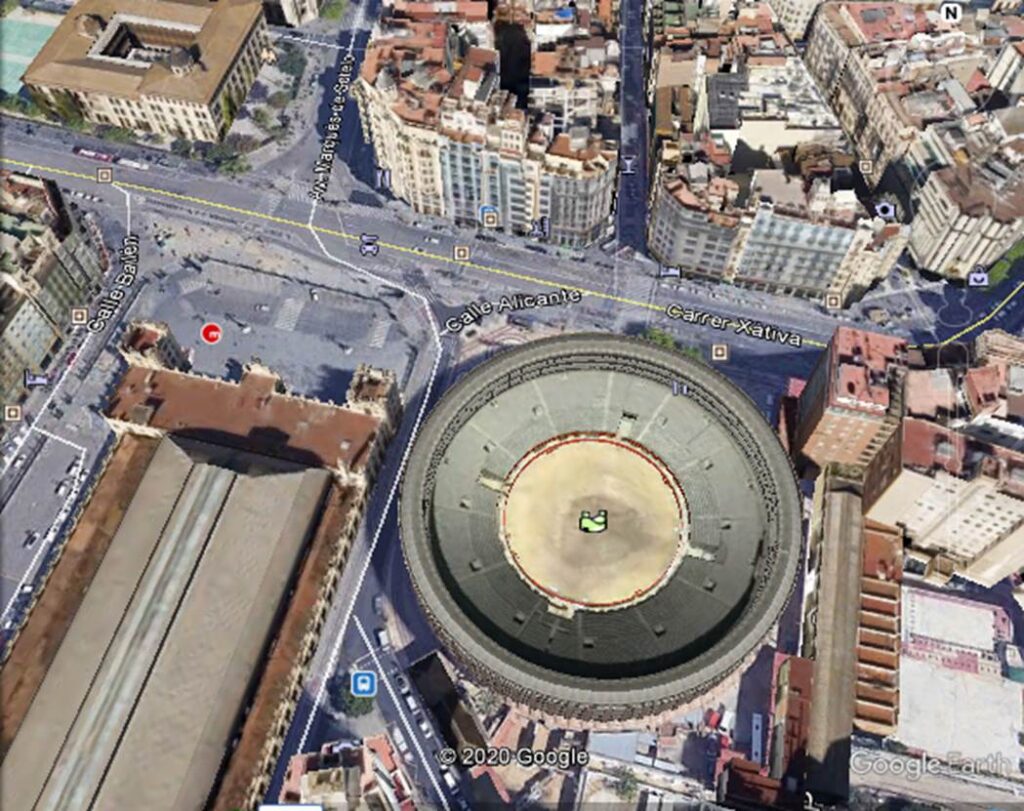
Valencia Bullring (Plaça de Bous de València)
The Valencia Bullring is the second largest bullring in the world.
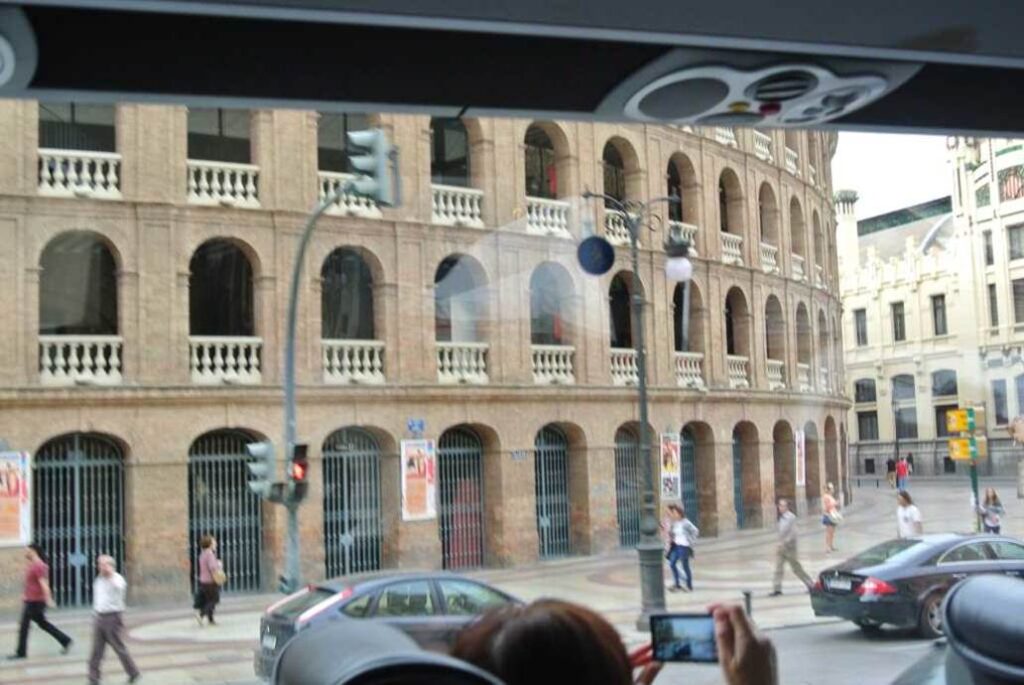
Photo by author, 2013

Photo by author, 2013
Valencia city view
The photos below shows various buildings in the center of Valencia, shot from inside a car. There are no electric poles or wires to be seen, and no buildings have air conditioning units on their exterior walls. Graffiti on the walls, trash cans, and rubbish are also out of sight. The city is well-managed and clean, and it’s a lot of fun to look around the city.
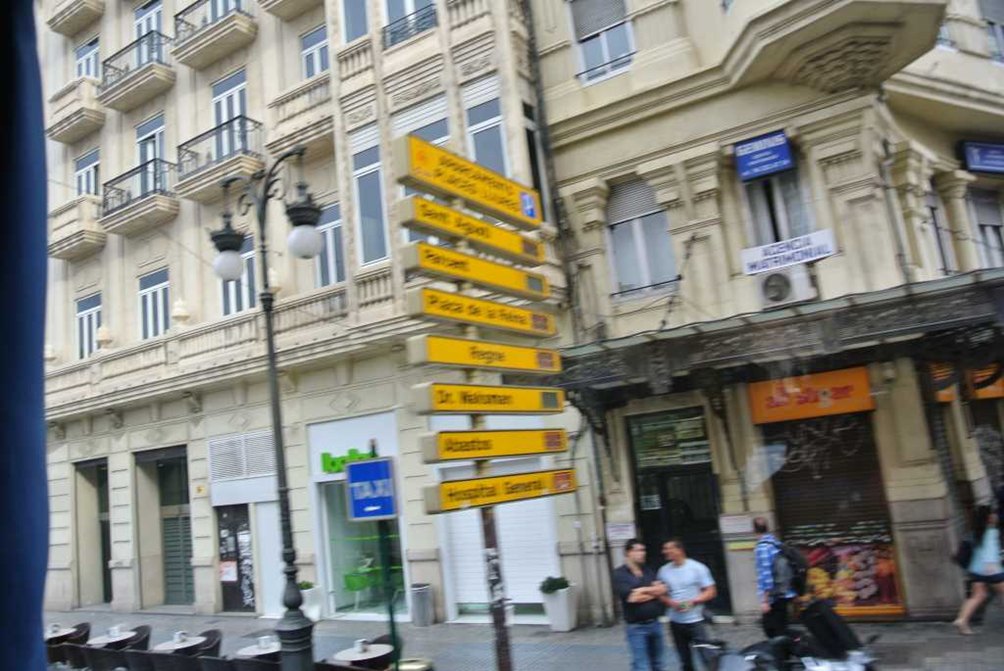
Photo by author, 2013
An Apple store in an old building, attracting groups of young people.

Photo by author, 2013
Balcony and railing design.
There are various designs and variations, and you will never get tired of looking at them.

Photo by author, 2013
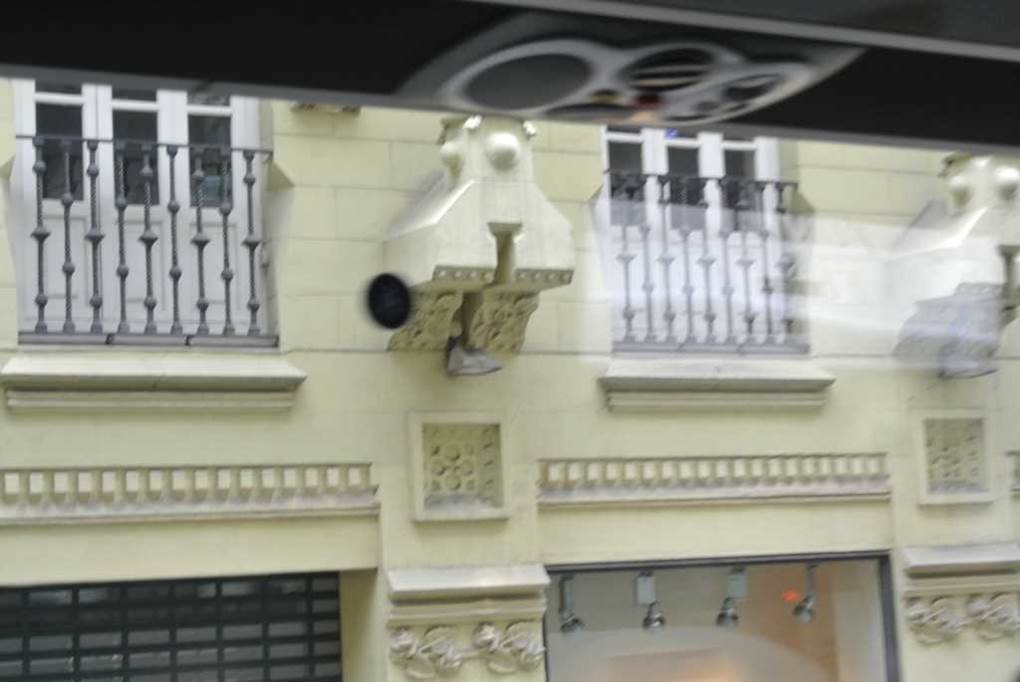
Photo by author, 2013

Photo by author, 2013

Photo by author, 2013

Photo by author, 2013
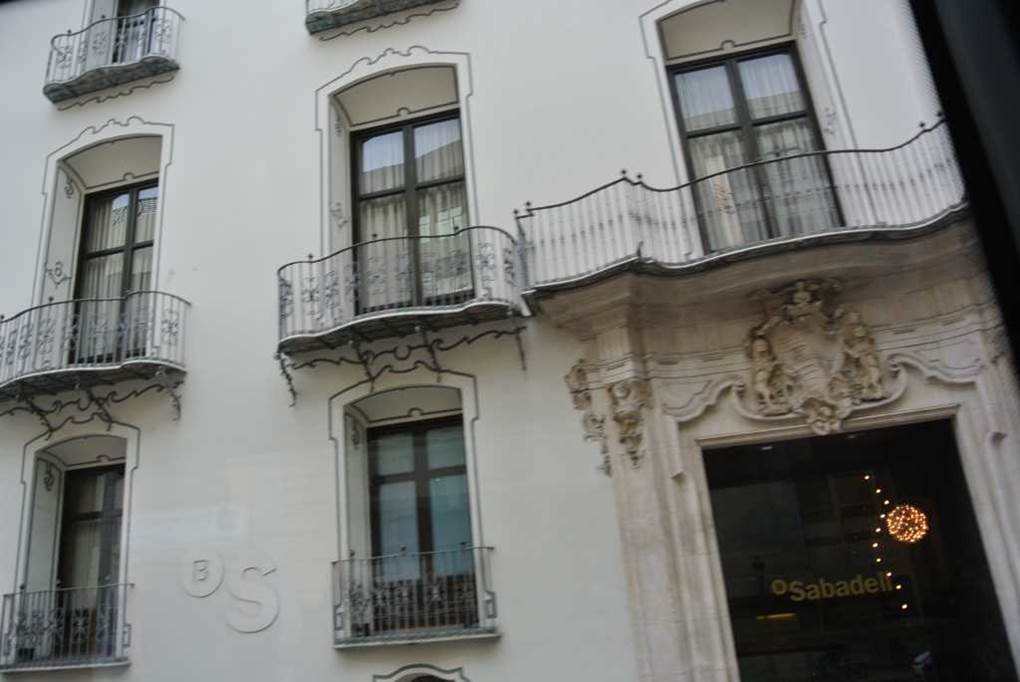
Photo by author, 2013
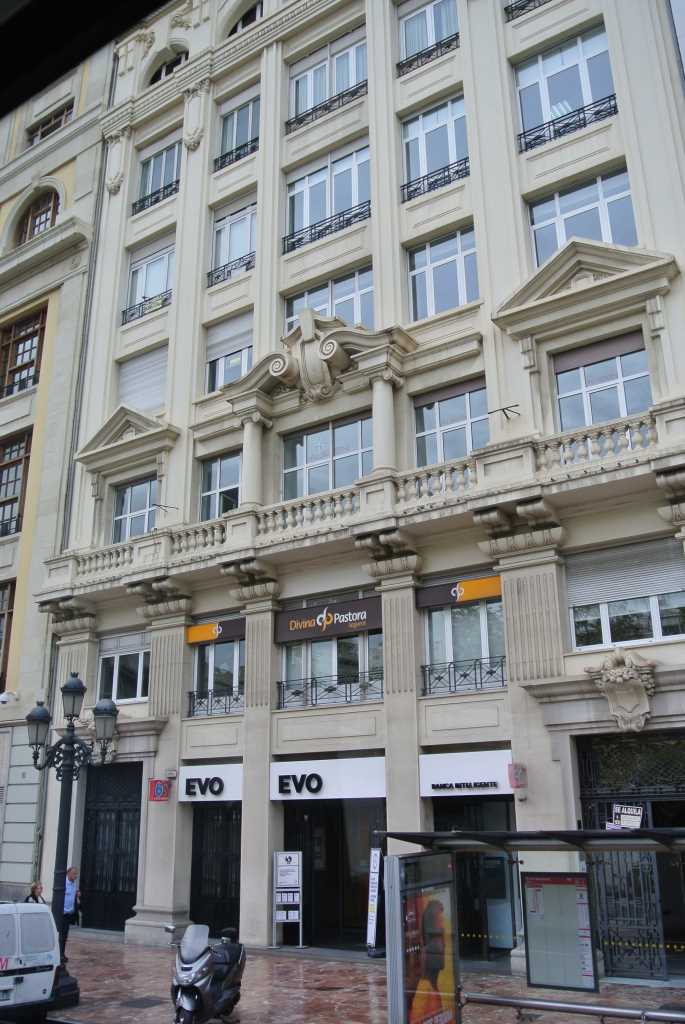
Photo by author, 2013
Government offices.
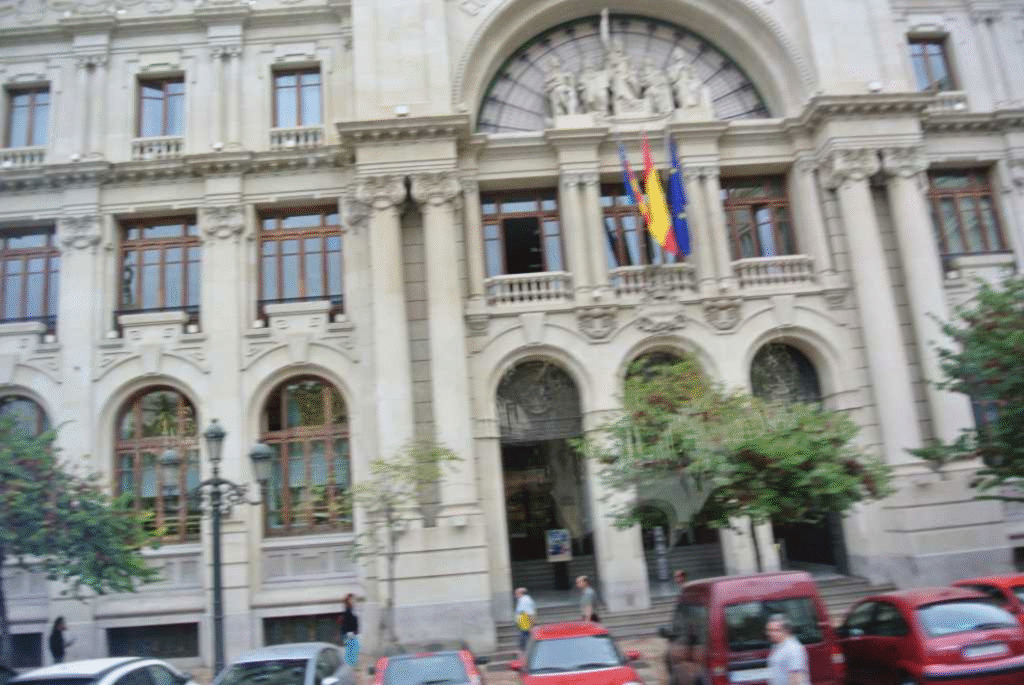
Photo by author, 2013
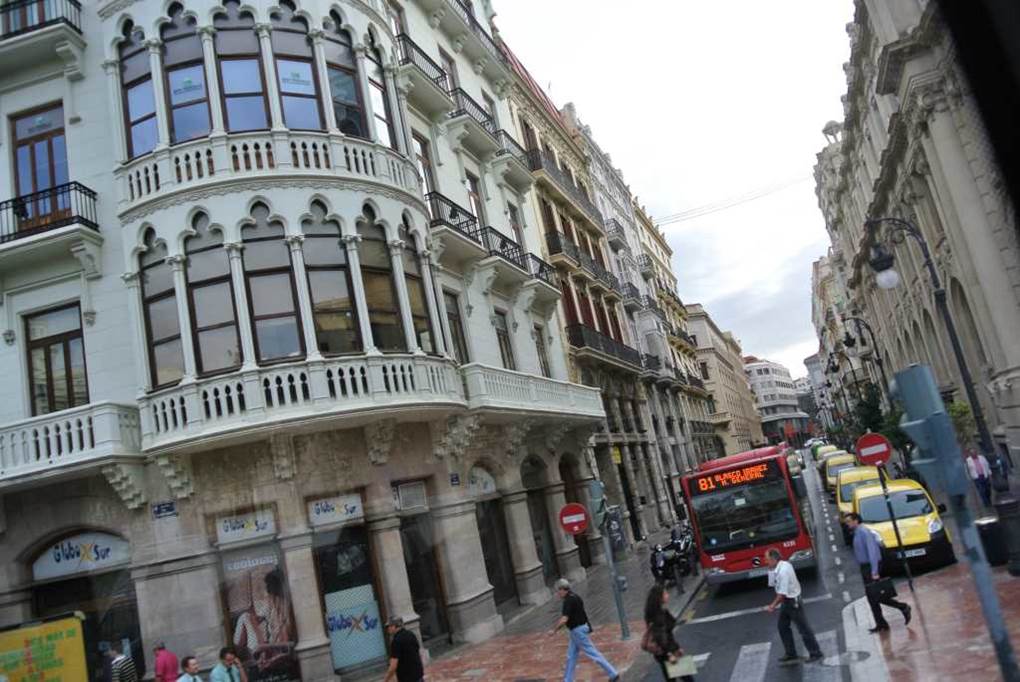
Photo by author, 2013
Restaurant
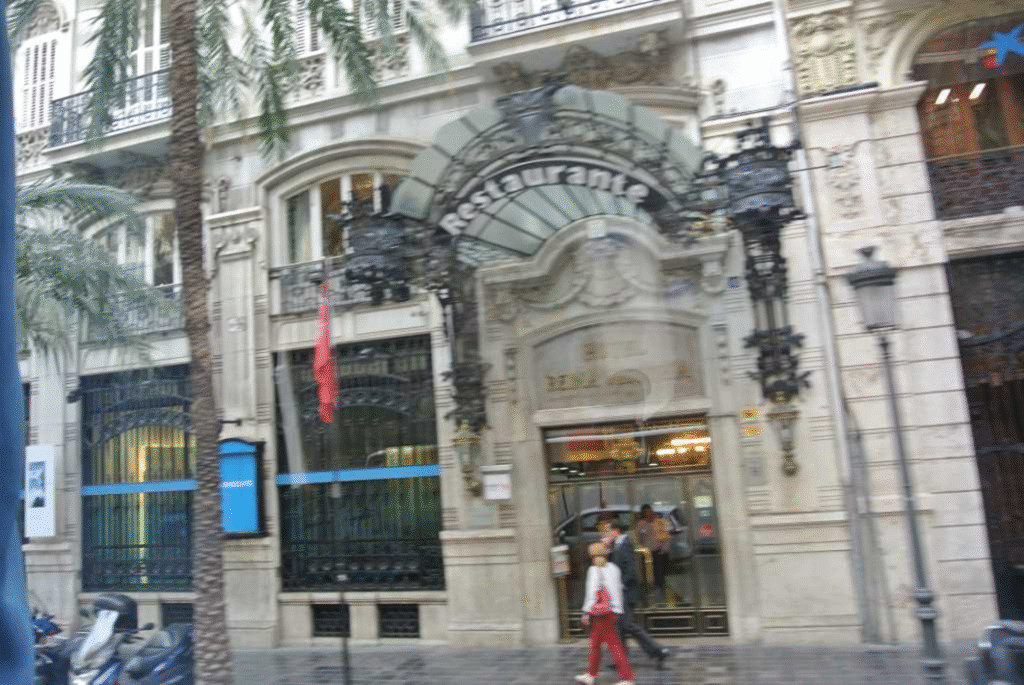
Photo by author, 2013
Bank inside a building on a corner lot.

Photo by author, 2013
Security grills on the first floor of the bank.

Photo by author, 2013
Spanish Economic Crisis (2012)
In the city of Valencia, I stopped off at a relaxing outdoor cafe for a short break. There was a senior couple who looked like tourists at the table next to me, and without anybody initiating the conversation, we started chatting.
They are Germans and are enjoying their retirement in a seaside resort near Valencia.
According to him, Spain’s real estate industry has grown rapidly since the early 2000s due to the development of resorts in major cities and coastal areas against the backdrop of low interest rates. The investors in the resort properties were people from northern European countries such as the United Kingdom, Germany, and the Netherlands, who longed for the warm climate of the Mediterranean.
In the latter half of the 2000s, the real estate bubble burst due to the Lehman shock, and the impact was long lasting, and in 2012 it became a serious situation.
Resorts under construction were abandoned by construction companies, and investors abandoned properties whose prices had plummeted, moving back to their own countries.
In Spain, where the bubble burst during the global financial crisis, 1.4 million properties were abandoned across the country, including vacant houses and projects under development. It’s terrifying.
After the collapse of the Franco dictatorship, which lasted for nearly 36 years, the country transformed into an model student of liberal economics in the 1980s~90s.
Since the early 2000s, the real estate industry has grown rapidly due to the development of major cities and coastal areas against the backdrop of low interest rates. The economy was prosperous, and many people dreamed of owning their own homes.
When I visited in 2013, the bubble had burst spectacularly due to the financial crisis, and the unemployment rate had reached an all-time high of 27%. By talking to foreigners living there, I learned about the reality that is not apparent from the exterior of this wealthy-looking town.
A German senior couple I am chatting with, in a café in Valencia.
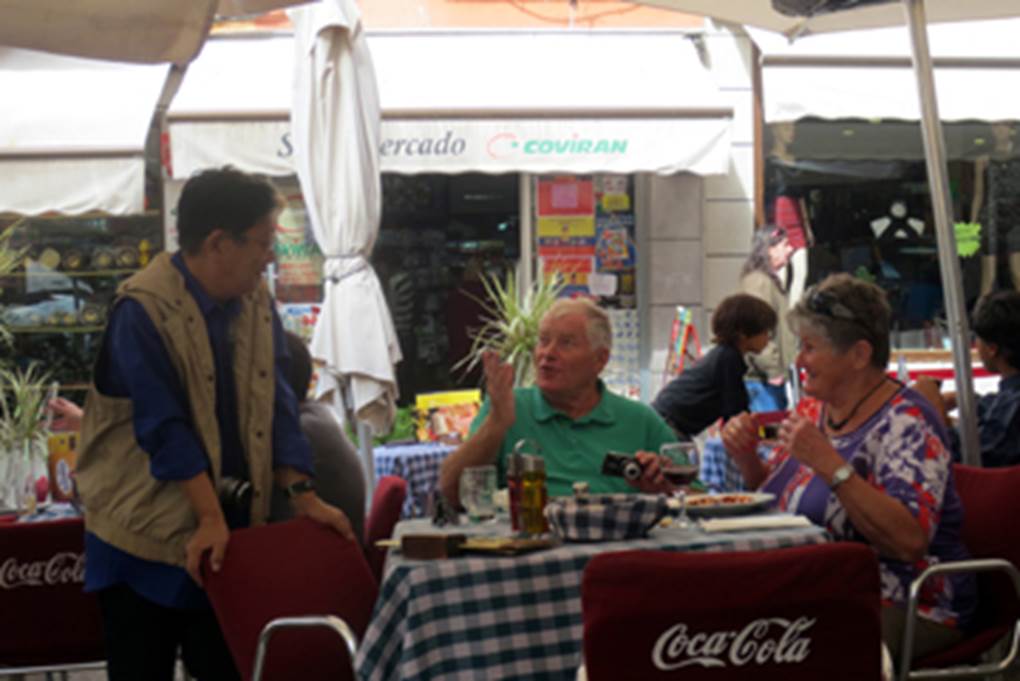
Photo of author, 2013
All photos by author, October 2013