JAP | ENG
Walking in Paris
1998
Eurostar to Pasir
Recalling the time nearly 30 years ago when ferry services crossed the English Channel between the UK and France, I felt a deep emotion as I feel the vibrations of the Eurostar along the 492km distance between Paris and London, which is now connected by rail.
At that time, the Eurostar ran on conventional lines in the United Kingdom, and the first station was Waterloo International Station. This conventional line section, up to Folkestone just before the Straits of Dover (English Channel), was a triple-track system like the Akita Shinkansen, and could not run at high speeds..
The reason for this was that Britain was initially reluctant to connect the continent by rail, and preparations for the construction of a new track (gauge of 1,435 mm) were delayed.
The Channel Tunnel opened in 1994, and I used it four years after it opened.
(It was eight years before the Shinkansen ran through the Seikan Tunnel, 54 km)
So for me, it was the first time I had travel on rail through an undersea tunnel, and I was deeply moved.
As the Eurostar exited the undersea tunnel and entered the French side, it began to pick up speed. It gave me the strong impression that I had entered a developed country from a developing country (pardon me for saying this).
As we approached Paris, the countryside outside the window was shrouded in thick fog. In this climate, visibility from the driver’s seat must be extremely poor. Despite this, the Eurostar driver did not slow down, and continue at breakneck speed. It was a trip that made me realize the amazingness of French railway technology.
In 2007, a new high-speed line in the United Kingdom was opened between Folkestone and London, replacing the slow train service and putting the service on equal footing with the French side.
French Railway
Paris-Nord (Gare du Nord)
As the Eurostar approached the Gare du Nord train station, the cityscape from the train window became déjà vu.
No wonder, as 30 years ago, I lived in an acquaintance’s apartment in the 18th arrondissement of Paris for about two weeks, and travelled back and forth around Europe from the Gare du Nord station.
Immersed in the memories of the past, the Eurostar finally entered the Gare du Nord. Immigration was done on the British side, so there was no screening for entry into France. How convenient!
The Eurostar arrives at the Paris-Nord Station (Gare du Nord)

Photo by author, 1998
Since European high-speed rail cars use the platform of a standard gauge conventional line, there is a large step between the floor level of the train and the platform, which is different from Japan’s Shinkansen (bullet train).
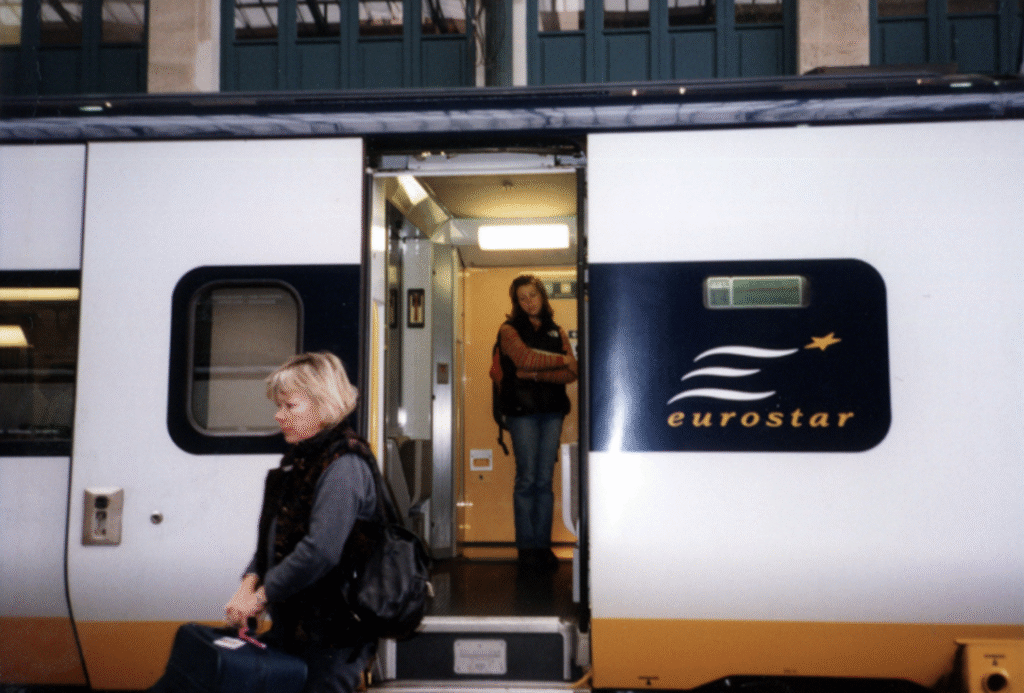
Photo by author, 1998
Thalys (French High speed rail) at a stop. Like the Eurostar, it is based on the French TGV and has been modified in various ways to run on sections with different electrification systems.
It runs through France, Belgium, the Netherlands, and Germany. It has a maximum speed of 300 km/h. It began operation in 1996
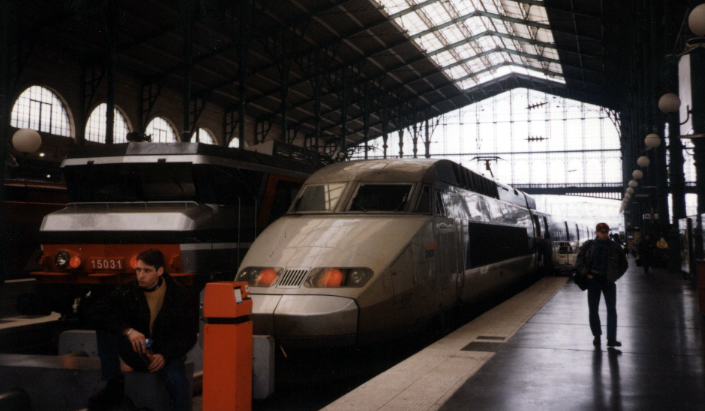
Photo by author, 1998
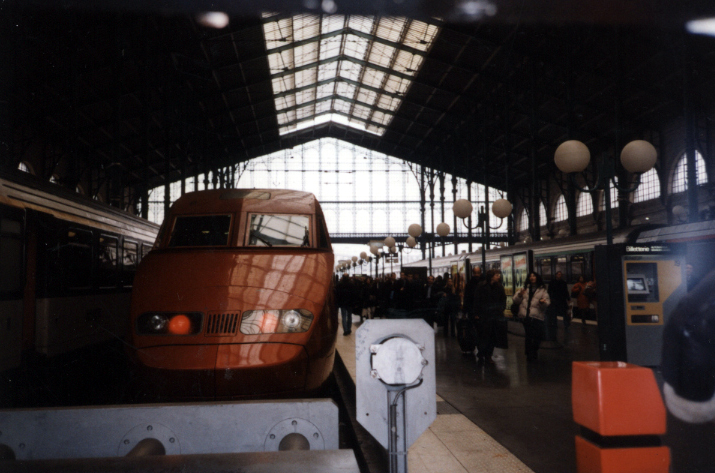
Photo by author, 1998
Thirty years ago, using this station as a starting point, I took a Eurail Pass sleeper train (using a four person private sleep car) and went back and forth to Brussels, Rotterdam, Amsterdam, Bonn, Cologne, Hamburg, Lübeck, Copenhagen, Stockholm, etc. instead of staying at hotels (to save hotel costs).
Also, in the 1960s, the majority of travellers returning to Japan from France used the Trans-Siberian Railway, and this station was the starting point for that route.
The nostalgic Gare du Nord (Paris Nord Station).
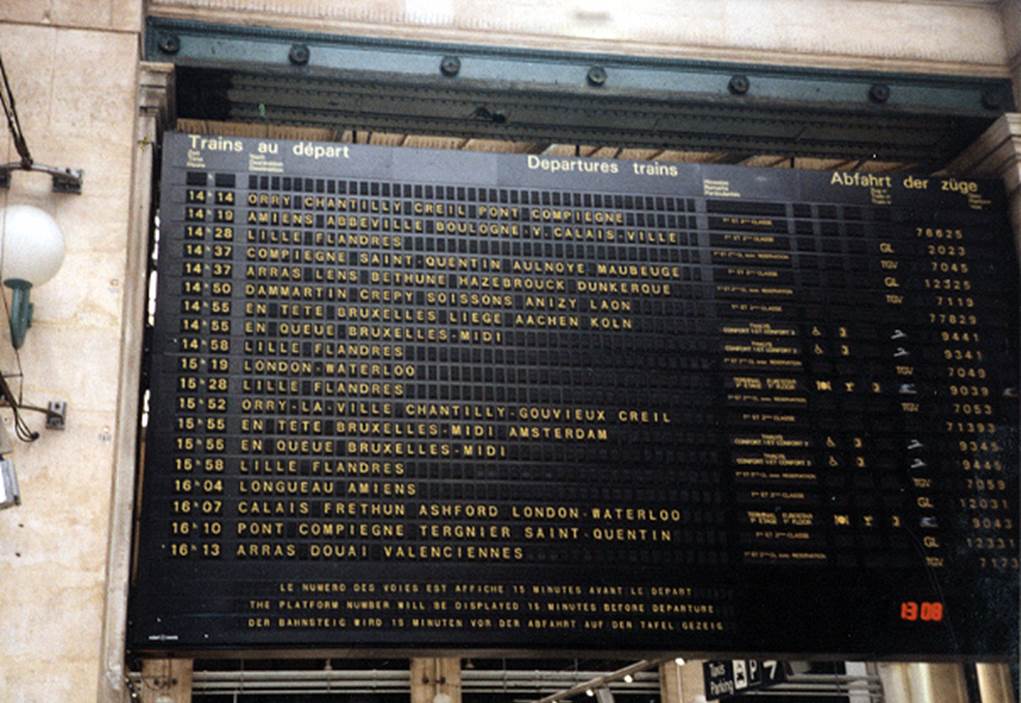
Photo by author, 1998
Montmartre
From this point on, as I was traveling at my own expense, I choose to stay at the Ibis Paris Montmartre, a mid-range hotel close to Montmartre.
Montmartre is located on the highest hill in Paris at 130 meters above sea level.
It is the place where the founding of the Society of Jesus began in 1534.
There were six comrades, including Ignatius Loyola and Francis Xavier.
While ordinary tourists to Montmartre usually go from the foot of the Sacré-Coeur to the Place du Tertre, I decided to take the back streets, which are shown in the map below. I walked slowly up the hill for about one kilo meter, passing cemeteries, small farms, and the old studios and homes of artists, following the scenery and breathing the same air that permeates the area.
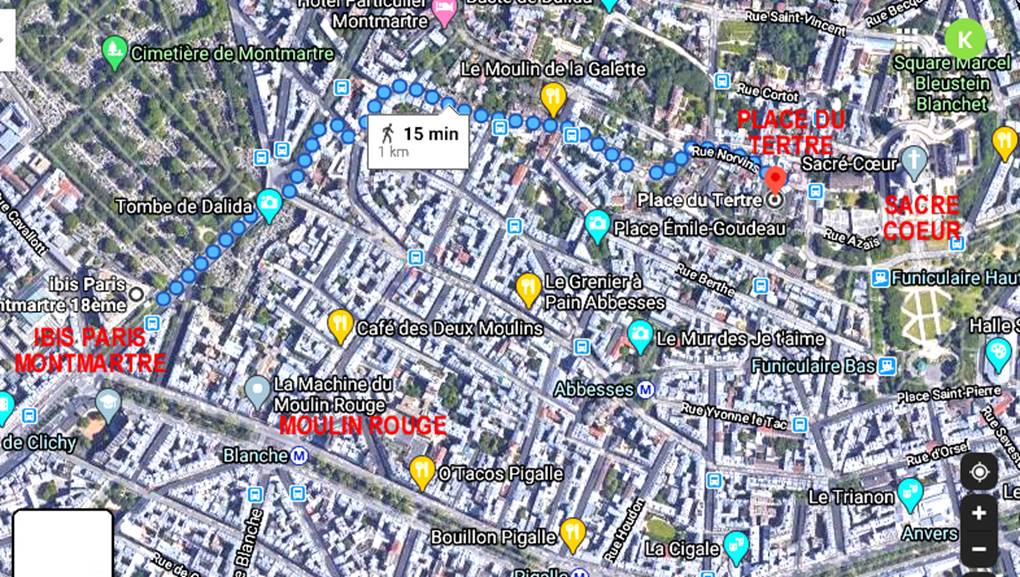
Montmartre has long been an agricultural estate on the outskirts of Paris, symbolized by vineyards and windmills.
Artists looking for cheap apartments, studios, and outdoor spaces to sketch in left the city, which had been developed during the great renovation of Paris, and moved to Montmartre, where picturesque rural scenery still remained.
Picasso’s cubism was born here. Van Gogh also painted here for a time.
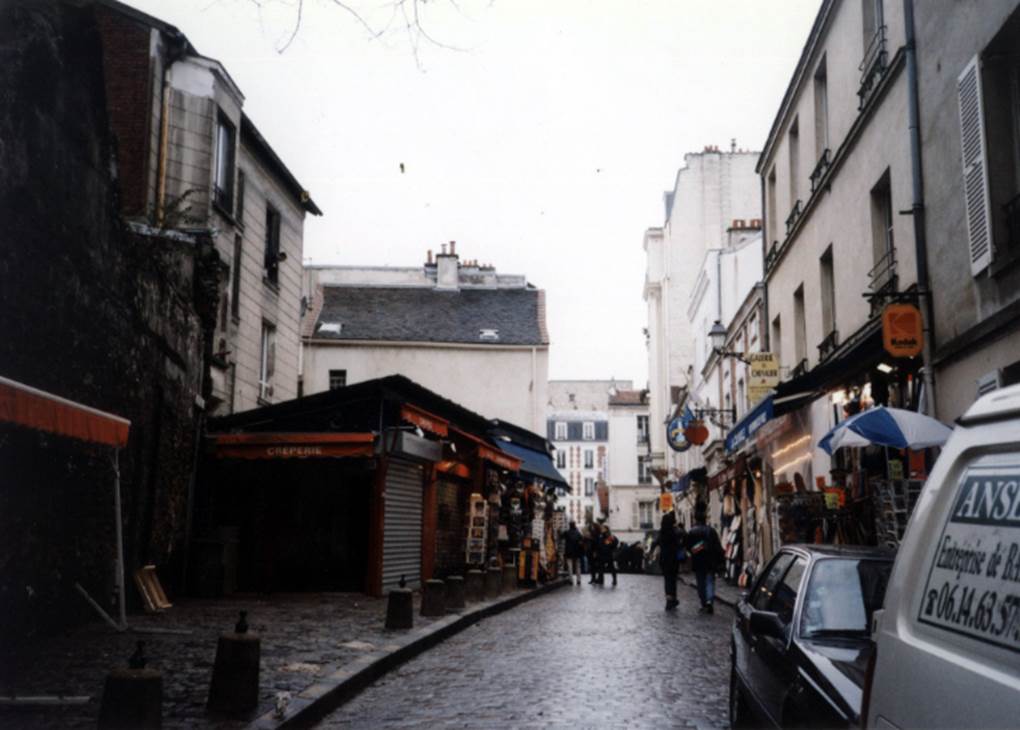
Photo by author, 1998
MAISON CATHERINE in Montmartre
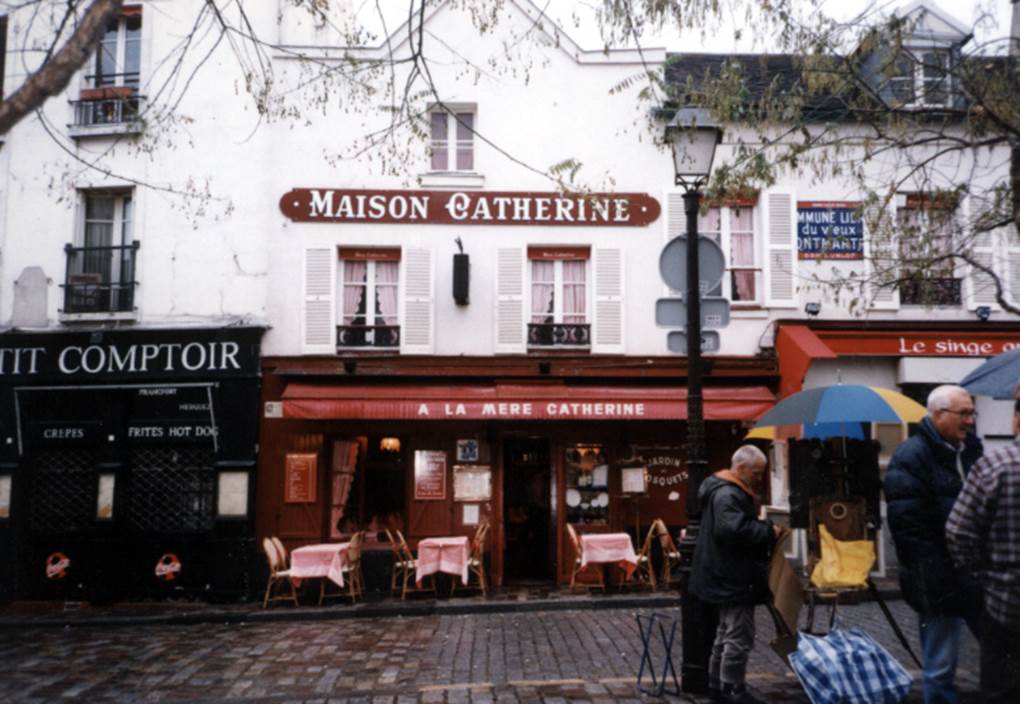
Photo by author, 1998
Café au Lait at Place du Tertre
The altitude is about 130 meters.
It was once the center of Montmartre and the site of the first village hall.
Painters gather here to paint portraits of tourists, evoking the time when Montmartre was a center for artists. Many artists lived here in the early 20th century.
Day and night, many tourists stroll the area to visit Place du Tertre, the Sacré-Coeur Basilica, the Cabaret Lapin Azil, the Moulin Rouge, the studios of Picasso and others, and the landscapes painted by Utrillo.
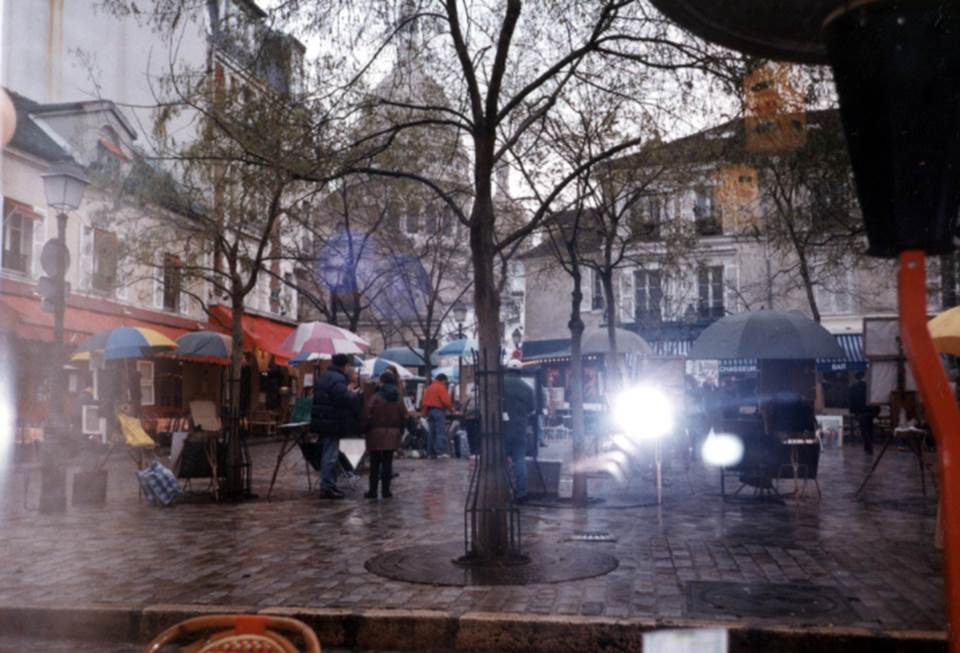
Photo by author, 1998
I climbed the slope of Montmartre and arrive at Place du Tertre, but it was early in the morning and there were still few people.
I entered a café, but it was also empty. I immediately ordered a café au lait (coffee with milk) and croissant.
What came out of this store was top-notch and it’s difficult to describe it in words. Not even a cup of coffee or a piece of bread was overlooked.
One can only say that Paris is truly the city of food.
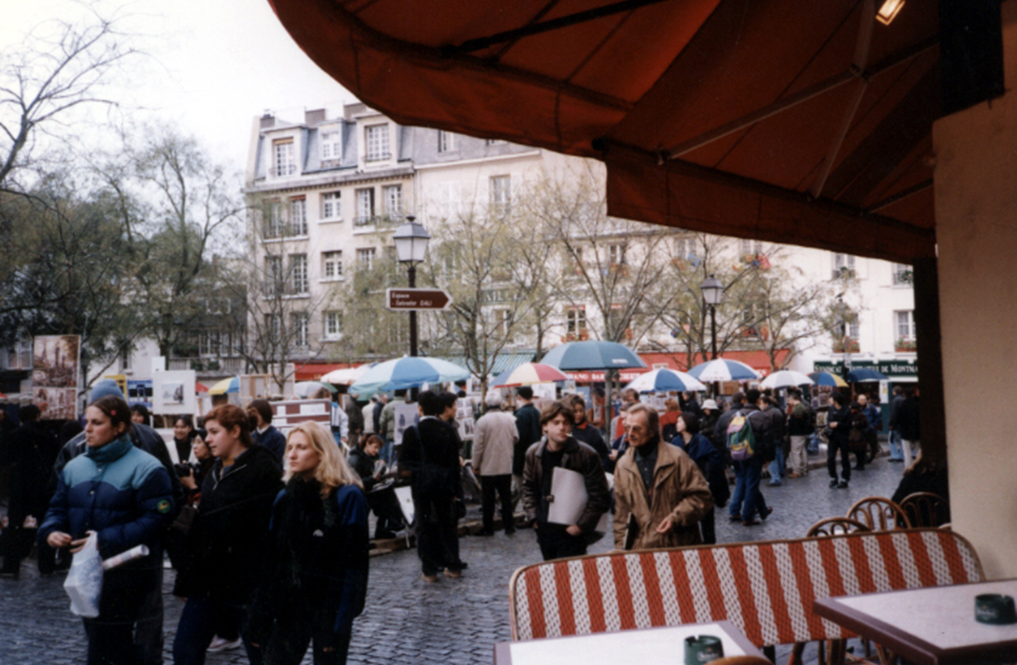
Photo by author, 1998
Sacre-Coeur Basilica
(Basilica of the Sacred Heart of Montmartre)
A landmark of Paris. Located on a hill in Montmartre, the white dome of the Sacré-Coeur Basilica is visible from all over the city. It was built with public donations from 1876 to 1912 after the defeat of France in Franco-Prussian War.
The square in front of the Sacré-Coeur Basilica.
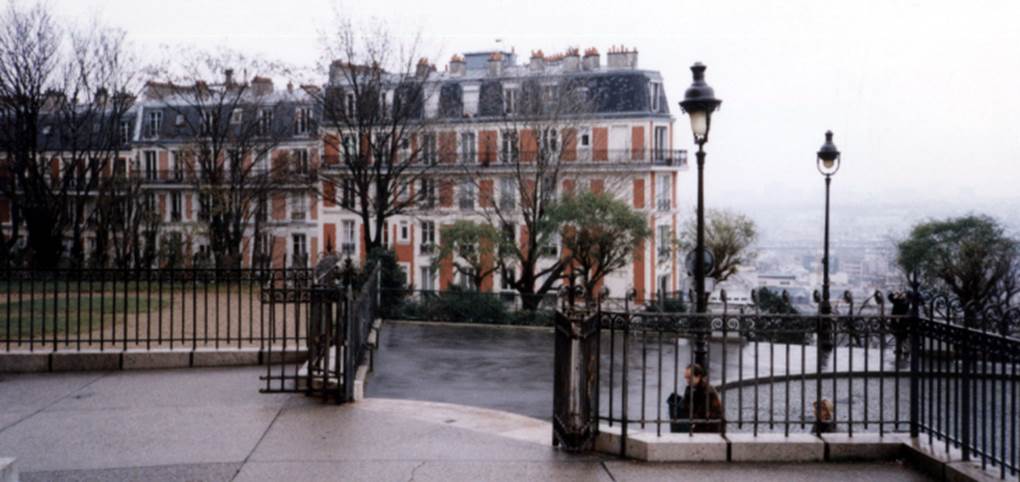
Photo by author, 1998
In front of the Sacré-Coeur Basilica, which is about 130 meters above sea level, you can see the city of Paris from the terrace on the hill.
The hazy skyscrapers (210 meters high) in the upper right corner of the photo is the Tour Montparnasse (Montparnasse Tower). It was built on the former site of Montparnasse Station in 1972, but it sparked a fierce debate over its appearance, and since then no taller buildings have been allowed in Paris.
These strict regulations on the appearance of the city have made it possible for Paris to exist as it is today.
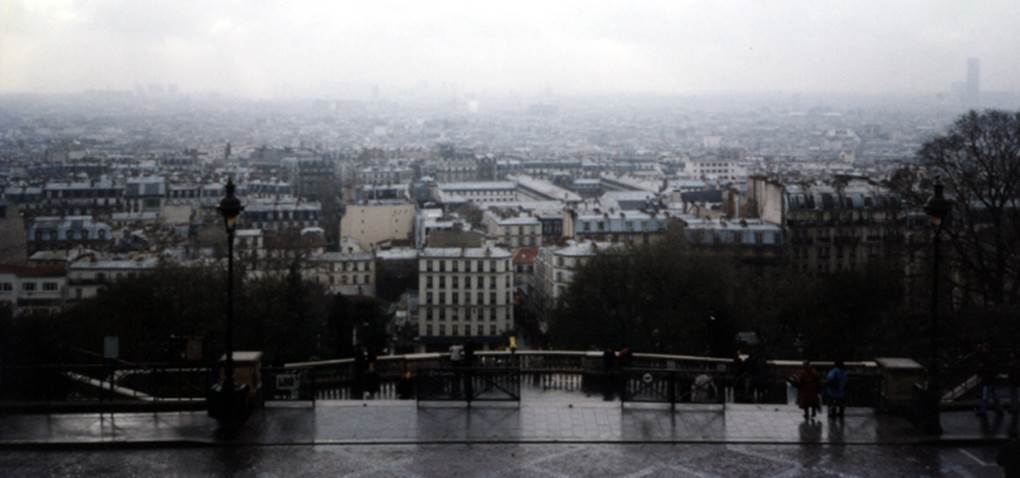
Photo by author, 1998
From the Sacré-Coeur Basilica, take the stairs down to the park below, where a cable car leads upwards from the southern foot of the hill. The roof of the entrance was made of transparent glass, so that the view was not obstructed. As you would expect from Paris.
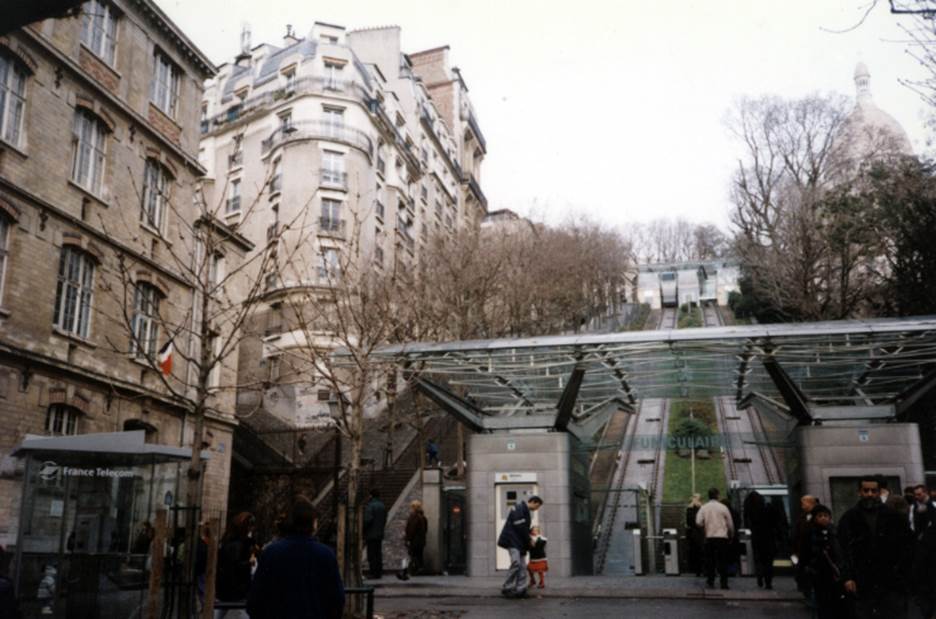
Photo by author, 1998
The absence of Parisian taxes and regulations, as well as the fact that the nuns on the hill had been making wine for many years, caused the lower (southern) side of Montmartre to become a drinking district.
From the end of the 19th century, Montmartre became a decadent entertainment district, with cabarets such as the Moulin Rouge lining the streets and famous singers and performers performing on its stages.
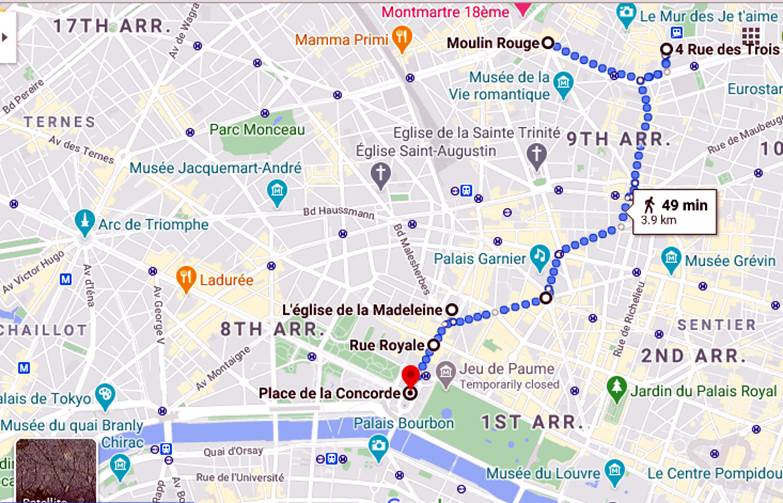
I decided to walk 4 km down the hill of Montmartre to Place de la Concorde, the itinerary was: Moulin Rouge > Rue des Trois Frères > Opéra > Madaleine Church > Rue Royale > Place de la Concorde.
Moulin Rouge
It is famous for its shows, which combine singing, dancing, French cancan, and street performances. It is also famous for the fact that the painter Lautrec frequented here and painted a number of posters modelled after the dancers. Famous musicians who were active here include Elvis Presley and Frank Sinatra.
The Montmartre neighbourhood is a city block where the sacred and the secular coexist in perfect harmony, which I like. In addition, the mountain side and the downtown area are well blended, making it an interesting district in Paris.
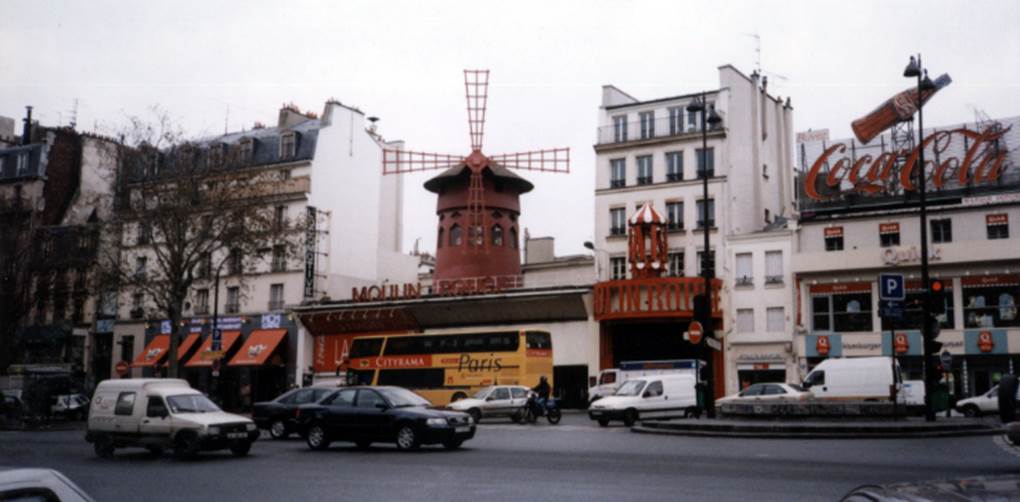
Photo by author, 1998
Rue des Trois Frères, Paris 18th arrondissement.
There is a retro sign of the subway.
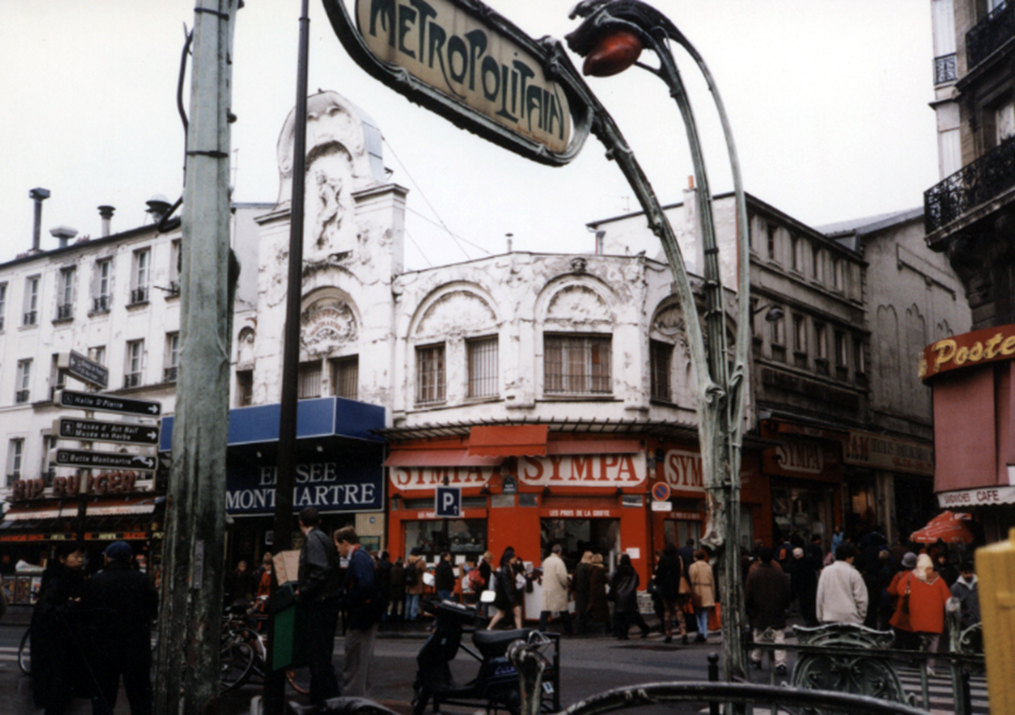
Photo by author, 1998
BISTROT DU BOUCHER and fireplace chimney
If you look at the old building in the center of the photo, you can see that the fireplace chimney was installed like this.
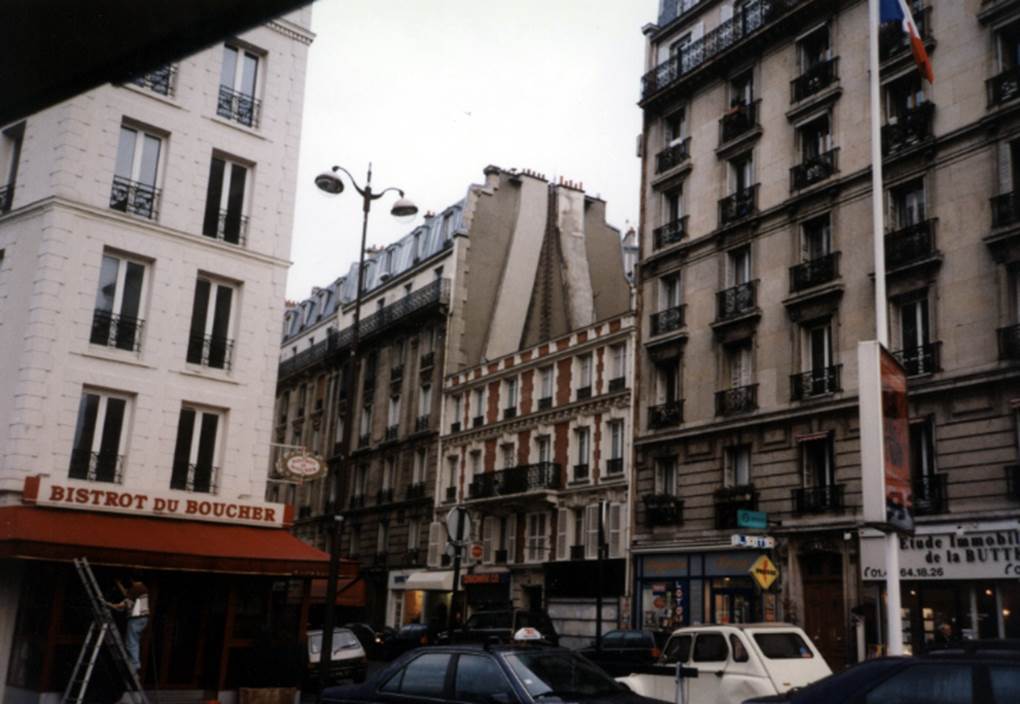
Photo by author, 1998
Boutique Bernardaud
Founded in 1863, a shop selling ceramics and table ware.
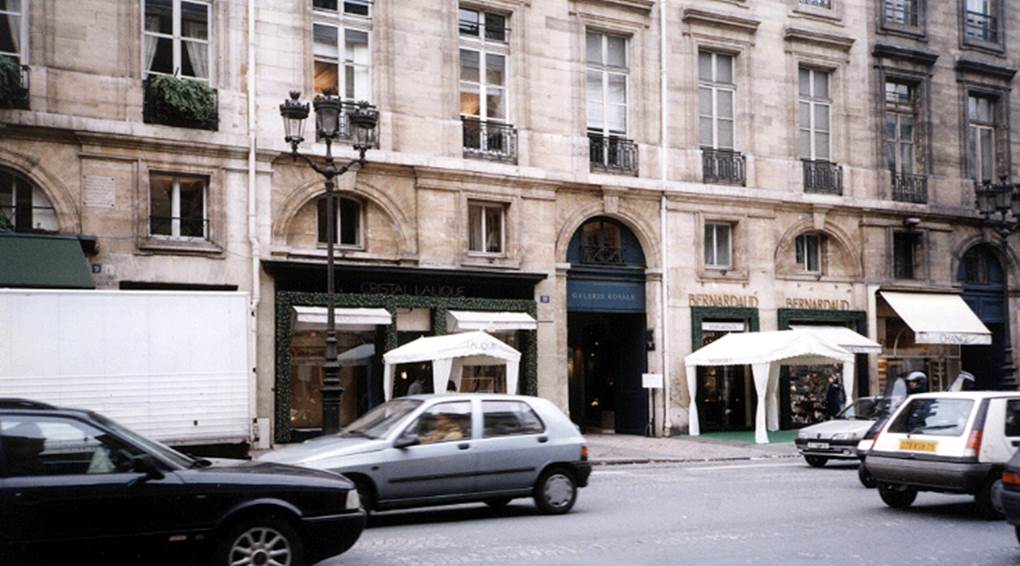
Photo by author, 1998
Christofle
Christofle was founded in 1830 as a shop selling silver and other metal tableware, on 9 Rue Royale.
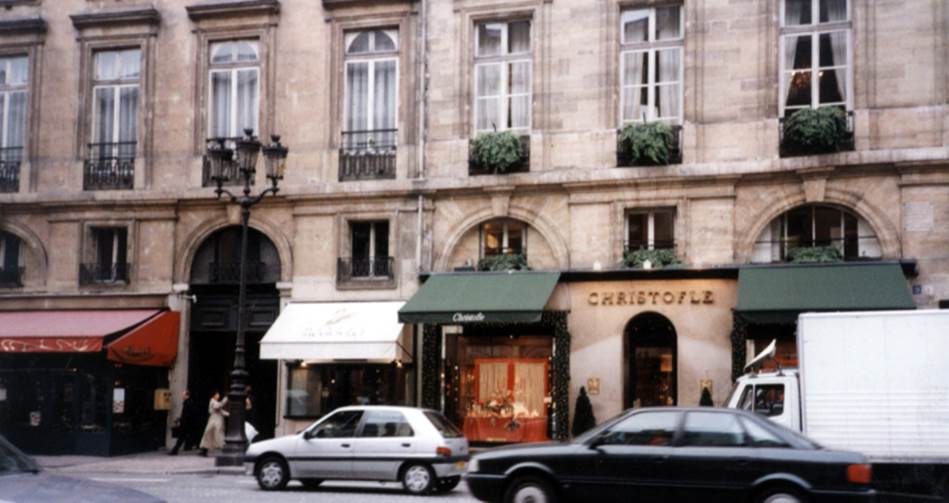
Photo by author, 1998
Boutique Maxim’s de Paris
Opened in 1893, it became a famous restaurant in the 1950s, with Onassis, Maria Callas and others as customers.
7 Rue Royale, 8th arrondissement of Paris
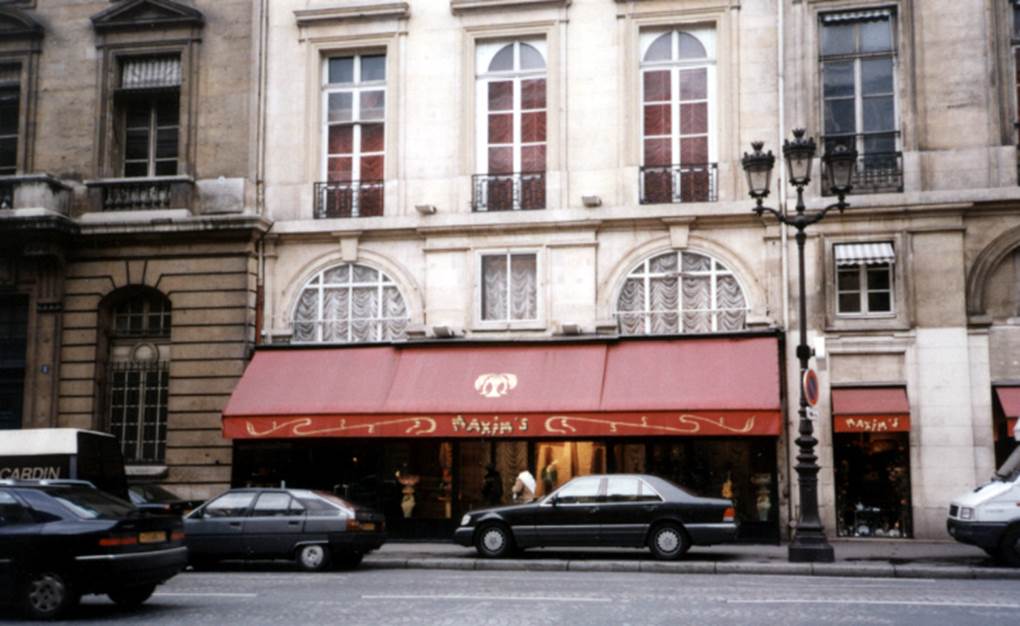
Photo by author, 1998
Madeleine Church
Looking back from the Place de la Concorde, at the end of Rue Royale is the Madalene Church.
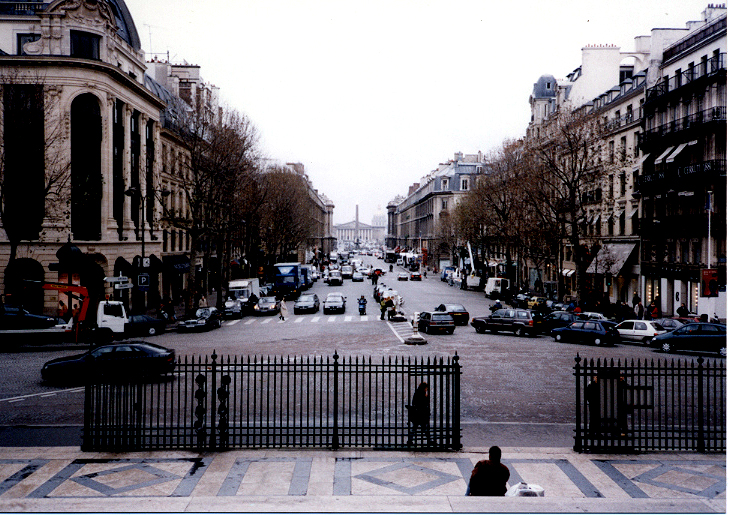
Photo by author, 1998
A fence separating the Place de la Concorde from the Louvre. Simple and tasteful.
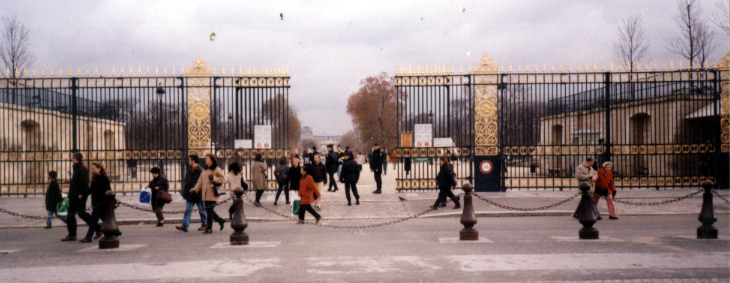
Photo by author, 1998
Hotel du Louvre
The area around the Hotel du Louvre is a place where the charm of Paris, the city of flowers, such as the Louvre, the Palais-Royal, the Comédie-Française, and the Opéra Garnier, is gathered. You’ll want to stay in this landmark location and spend a comfortable time luxuriously and slowly.
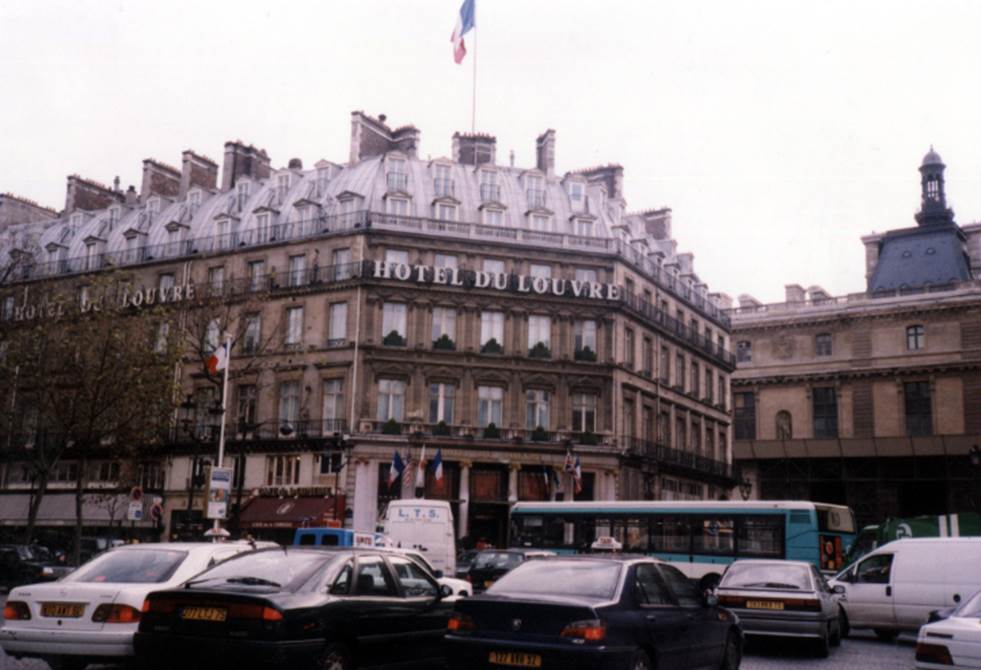
Photo by author, 1998
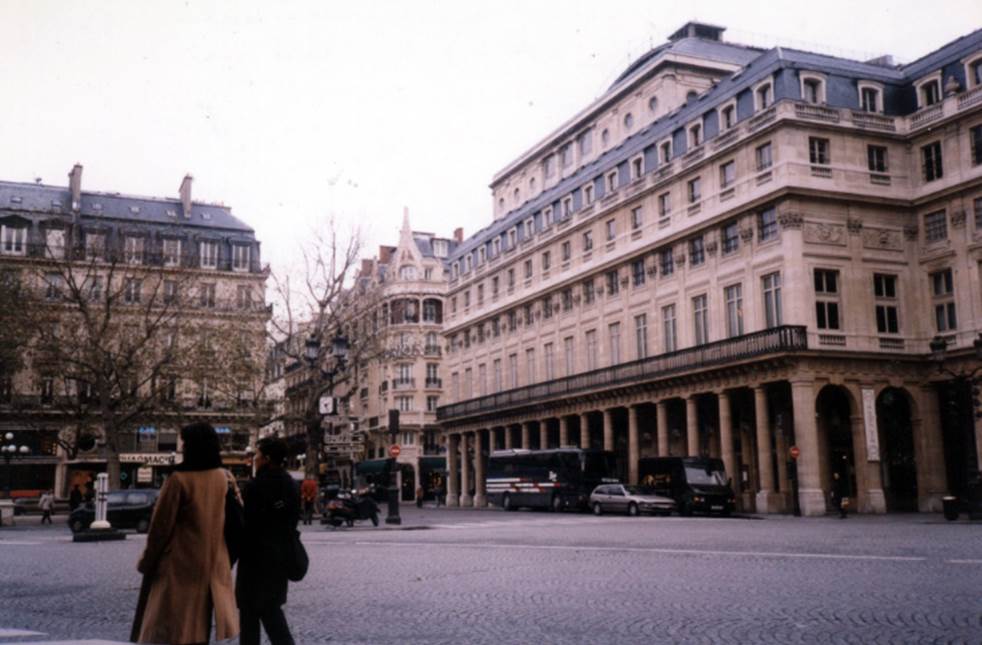
Photo by author, 1998
Return to the Latin Quarter
As I recall, when I first visited Paris 30 years ago, it was 1968 and I was still in my twenties. At that time, the enthusiasm for the “May Crisis” in France, which was caused by a mass uprising of workers and masses led by students, and the “Prague Spring” reform movement in Czechoslovakia, was still fresh in the air.
Barricades were erected in the Latin Quarter, a student area on the south bank of the Seine in Paris, and a “liberated zone” was created, just after the revolt had been put down. Traces of clashes with police, which had been caused by people digging up the cobblestones, were everywhere, creating a devastating scene.
This time, in 1998, my exploration of the Latin Quarter involved walking through lively back streets filled with bars that had a medieval feel, and conducting my own fixed-point observations.
From the medieval Latin Quarter to the modern Avenue des Champs-Élysées.
I went to the Champs-Élysées for dinner.
This turned out to be the right choice.
I just wandered into a bistro on a whim and it was called “Atari.”
I ordered a set menu and house wine, which is what Parisians usually eat.
The combination of the fried veal and the red wine was perfect.
I will never forget this single meal.
Photos by author, 1998