JAP | ENG
India Travelogue 1993-1994
#19/26
Goa
I arrived at Vasco da Gama Airport in Goa on a domestic flight from Kochi.
Just from the name of the airport, I could already smell Portugal.
I ended up staying at the home of a friend of mine who is originally from Goa and lives in Singapore.
Goa
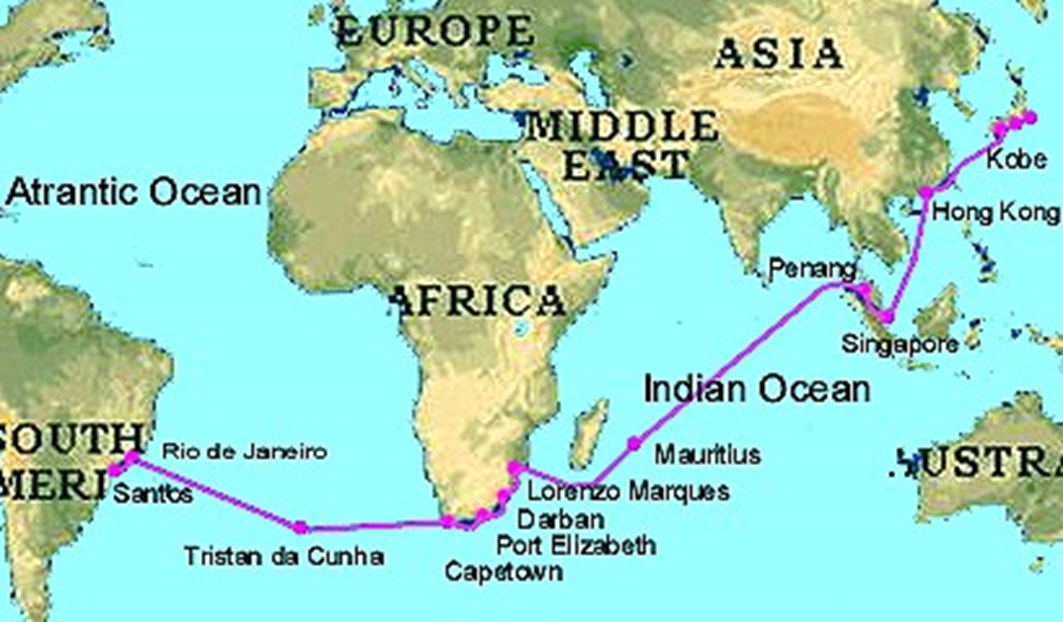
Originally, Goa was an important city of the Islamic dynasty until the beginning of the 16th century. In 1590 the capital of Portuguese India was moved from Cochin to Goa. Later, a regular route was opened from Goa to Lisbon via the Cape of Good Hope. Through this route, various Asian goods, including fragrances, were brought directly from the Middle East to Europe, and the value of Goa’s existence was established.
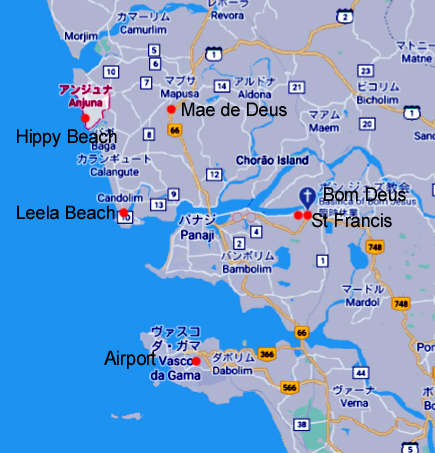
Goa has a variety of different attractions scattered across remote districts. Each of them has a distinct personality, and it takes a lot of effort to understand them on a map.
1. Old Town (World Heritage Cathedral remains) The urban area has disappeared.
2.New Town (Panaji). It is the center of present-day Goa, and the population is concentrated in Panaji.
3.Anjuna district. A gathering place for hippies. A place with a lot of backpackers.
4.Aguada District. A cluster of luxury beach resorts.
Each of them is far apart and has different cultures and destinations, so it takes time to visit all of them.
At the beginning of the 17th century, Goa entered a golden age.
Connecting Lisbon, Mozambique, Goa, Malacca, Macau, and Nagasaki, Goa became the center of Portugal’s maritime empire. The city is lined with magnificent churches, monasteries, governors’ palaces, and other buildings, and it is said that it was comparable to European cities.
Now (1993), all that remains is the disappointing and dilapidated guide map below. The ruins of the cities and settlements that would have existed at that time are no longer there, and you can only see the many churches that have remnants of their glory.
Rusty map of the old Goa area
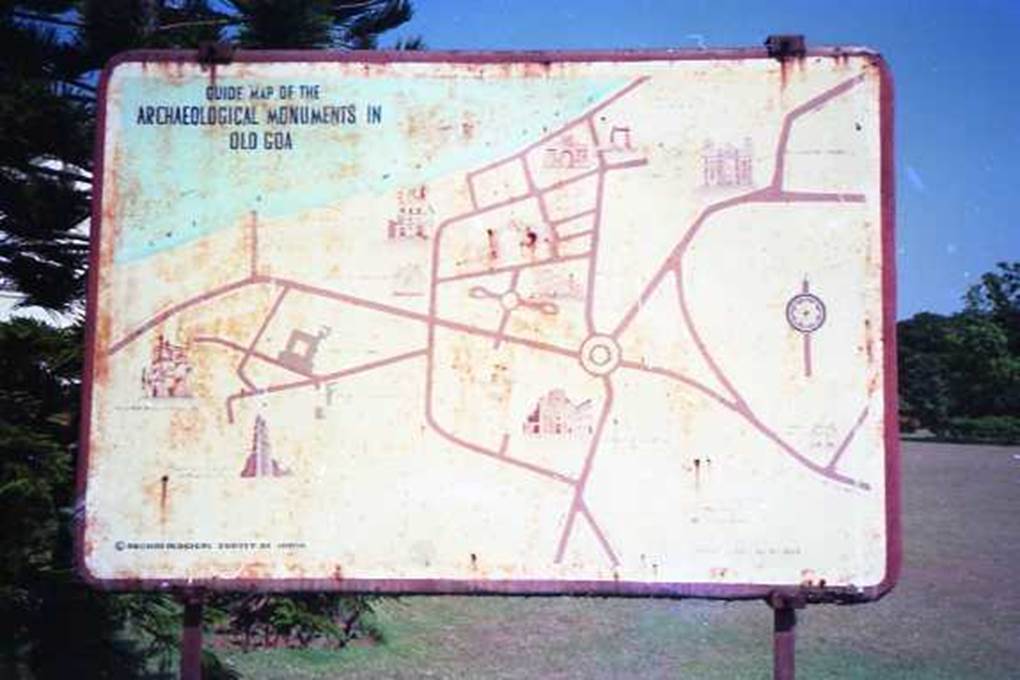
Photo by author, 1993
Basilica of Bom Jesus
(World Heritage Site)
It was built between 1594 and 1605. Francis Xavier’s body is buried here. He was reported to have died in 1552 in Chuandao Town, Guangdong Province, China. He was then transported via Malacca to Goa, where he was buried in this church.
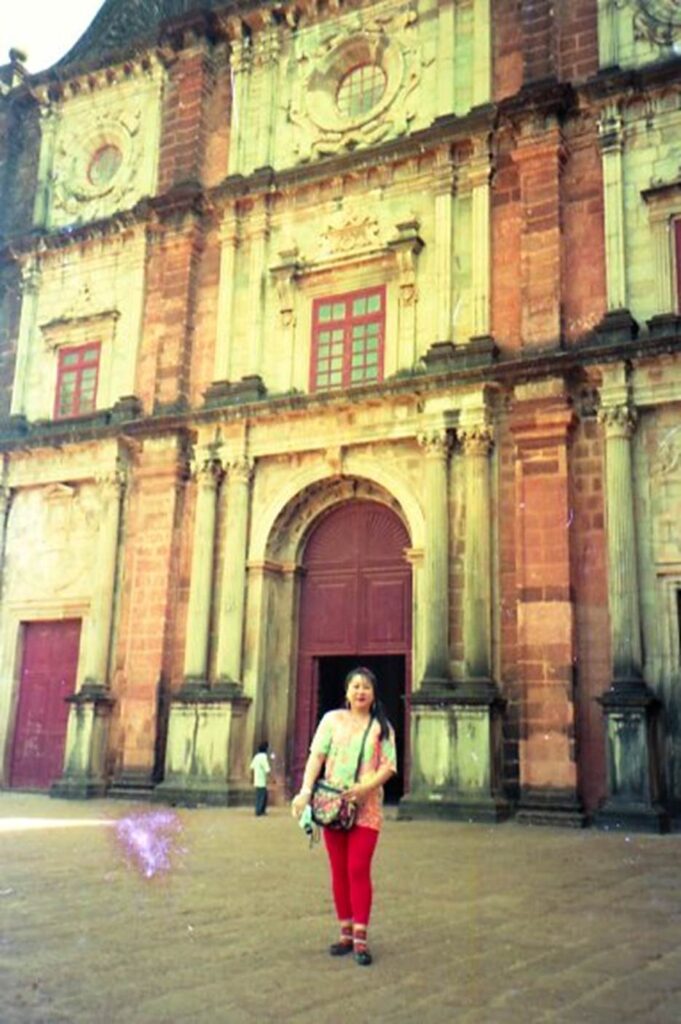
Photo by author, 1993
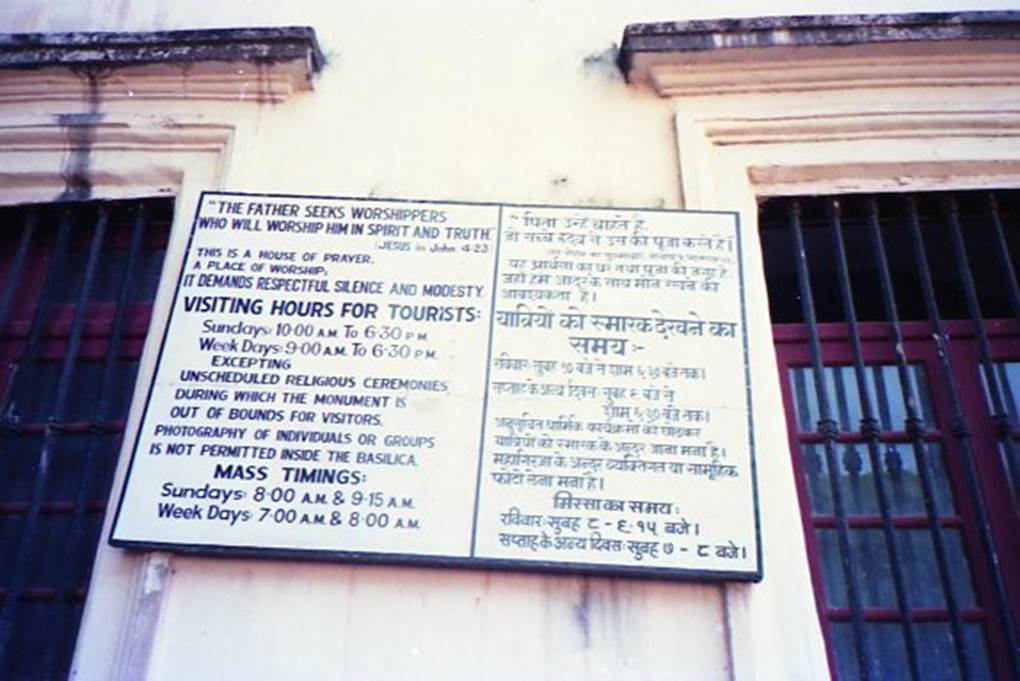
Photo by author, 1993
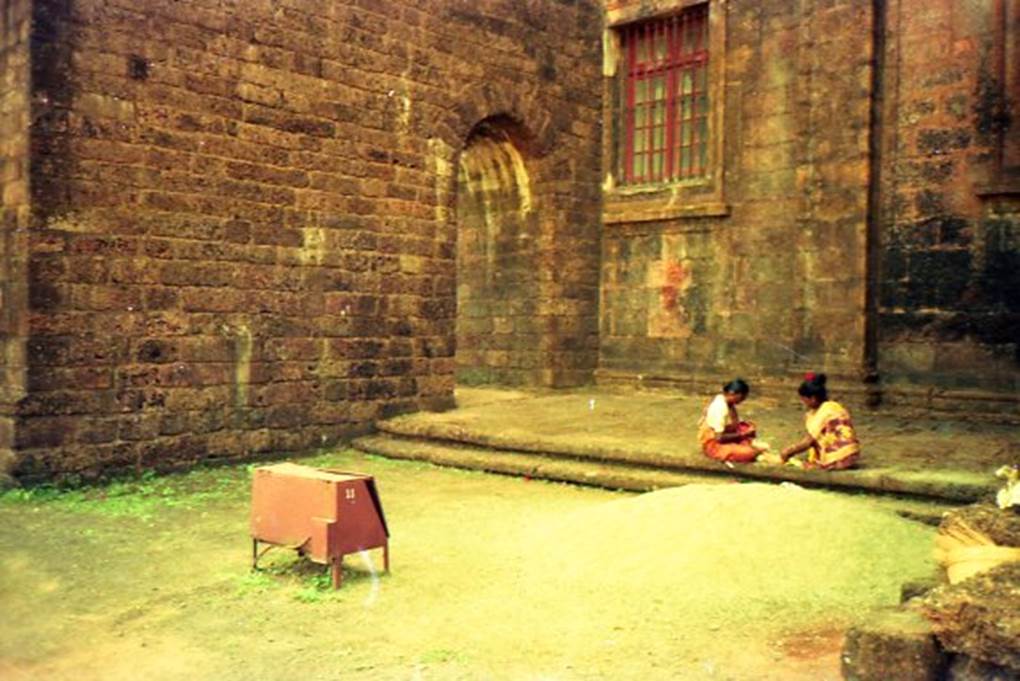
Photo by author, 1993

Photo by author, 1993
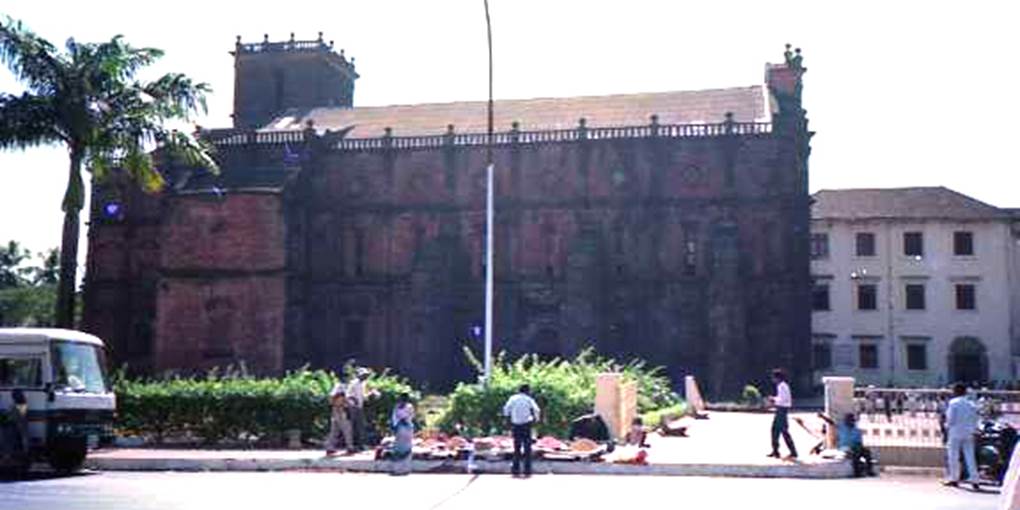
Photo by author, 1993
Massive buttresses on the sides of the church with exposed bricks.
A buttress is a retaining wall or architectural structure that supports and reinforces the main wall by creating a secondary wall that protrudes at a right angle from the main wall that constitutes the main body of the building, and receives the lateral load that occurs on the main wall due to the weight of the roof that does not have appropriate supports. (explanation from Wikipedia)
Most Gothic cathedrals in Europe are built with a buttress structure.
(Notre Dame Cathedral is a typical example.)
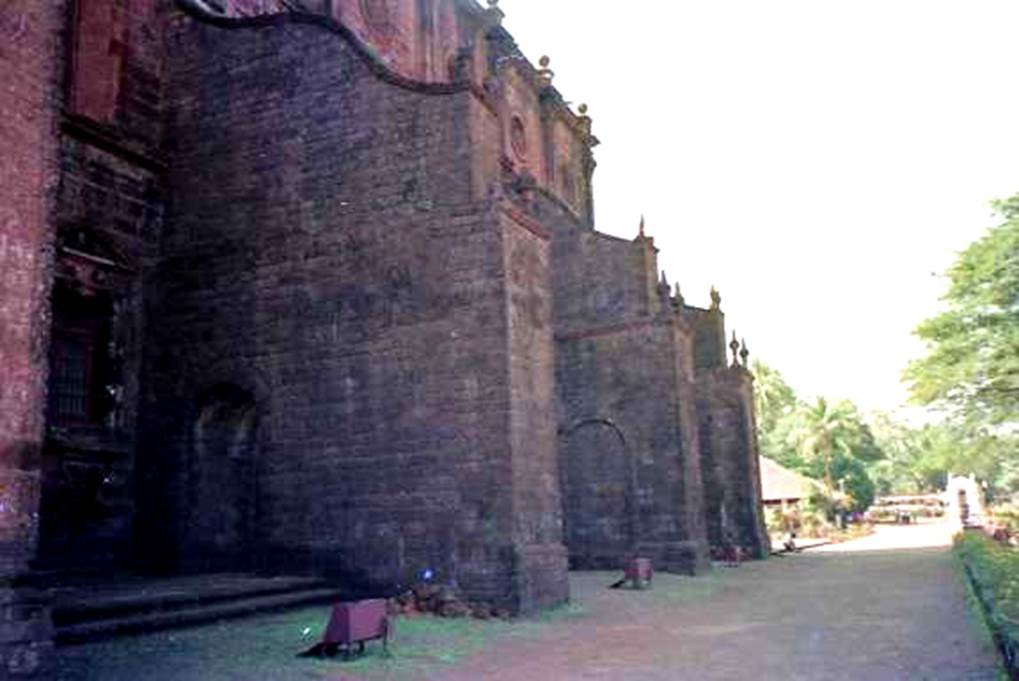
Photo by author, 1993
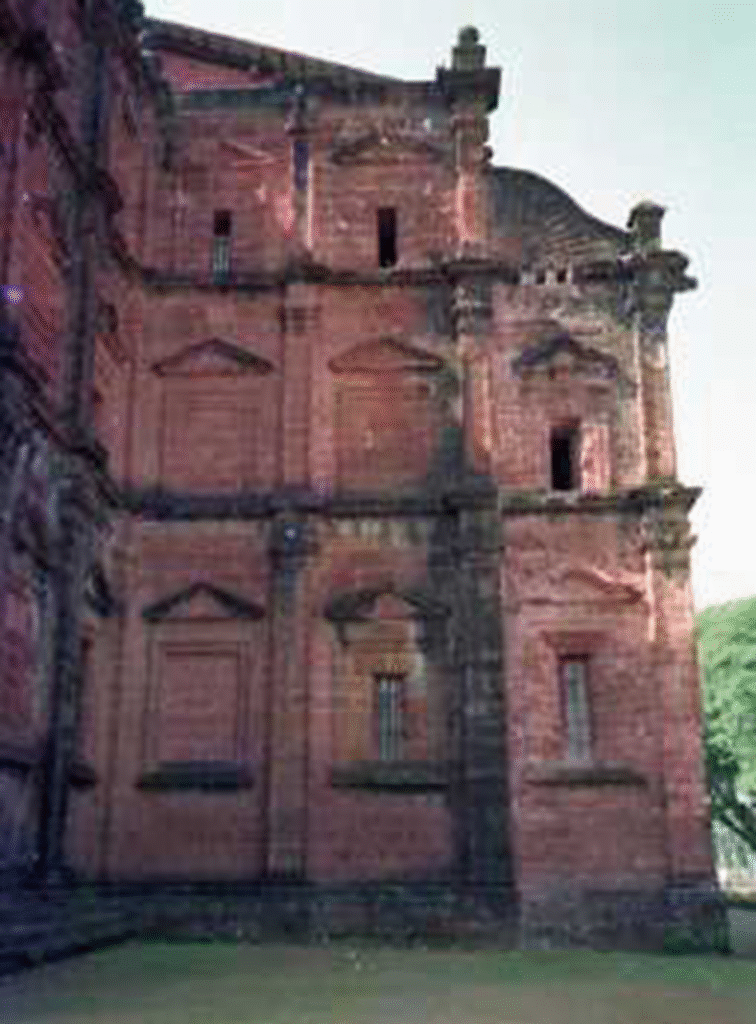
Photo by author, 1993
Part of a buttress.
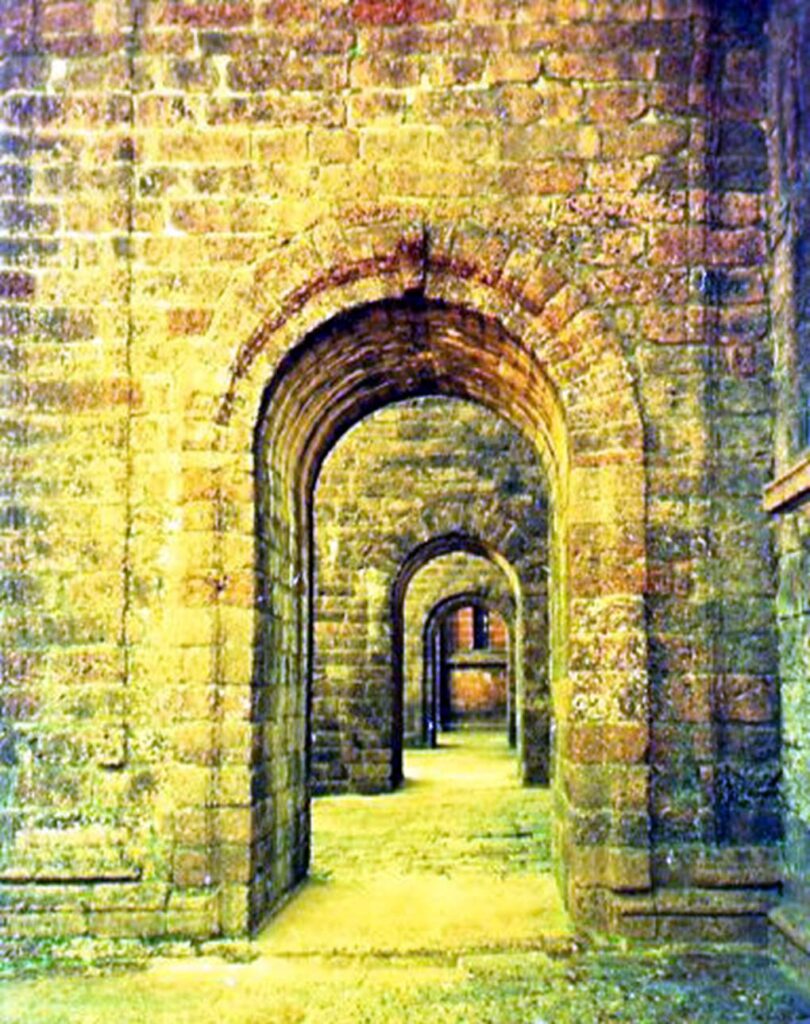
Photo by author, 1993
Inside the Basilica of Bom Jesus. Surprisingly simple interior.
It is still an active place of prayer.
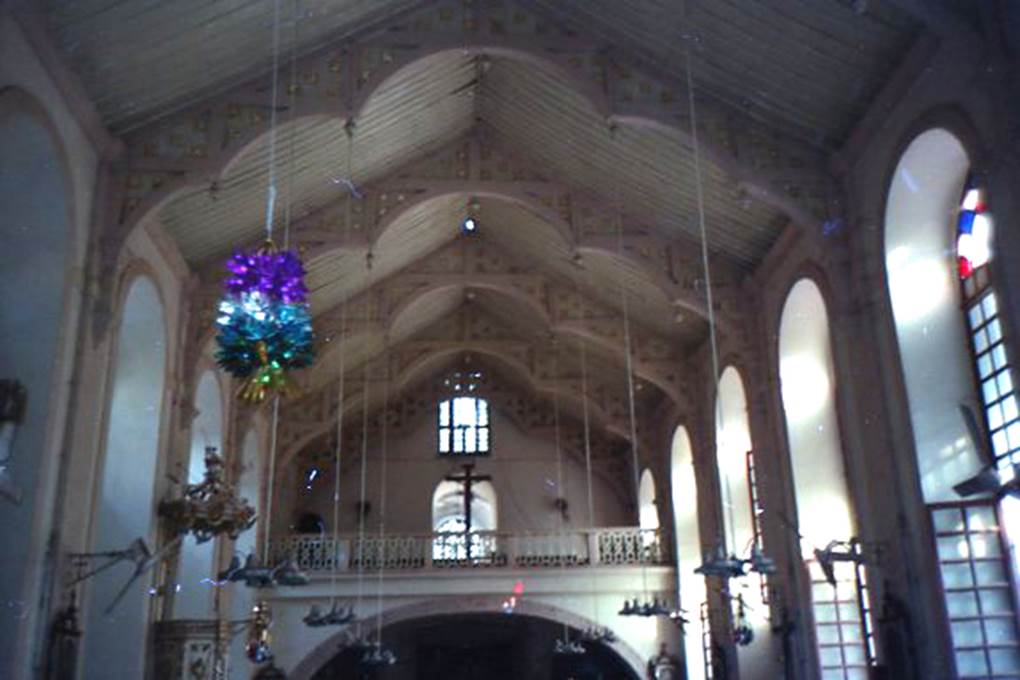
Photo by author, 1993
An altar that has been in use for 420 years.
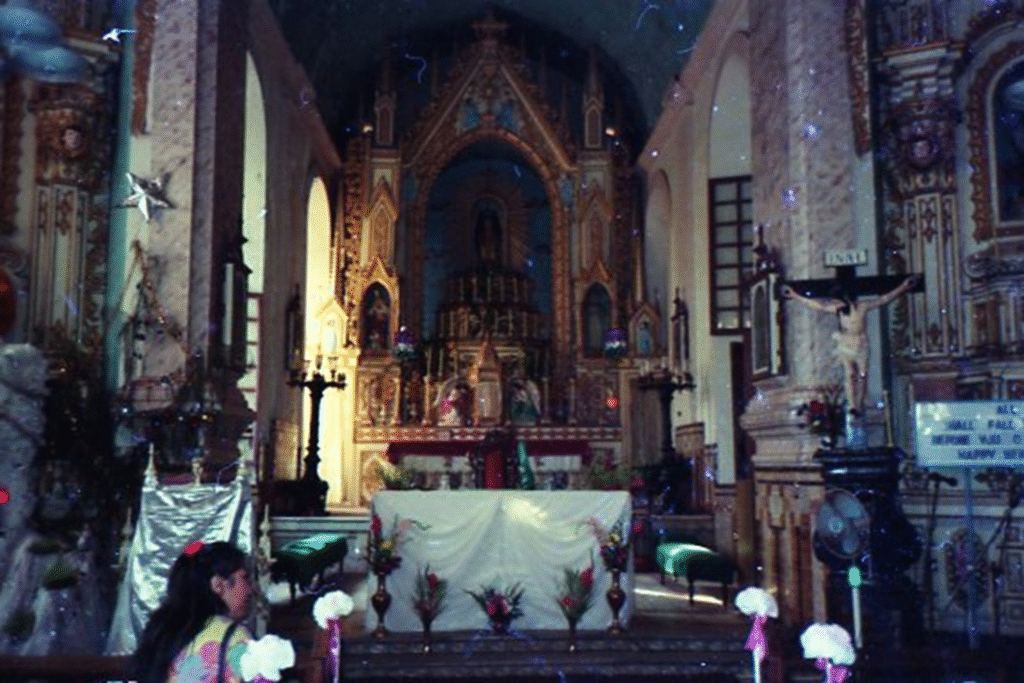
Photo by author, 1993
The altar is designed in a Latin style, but with a hint of Hindu craftsmanship
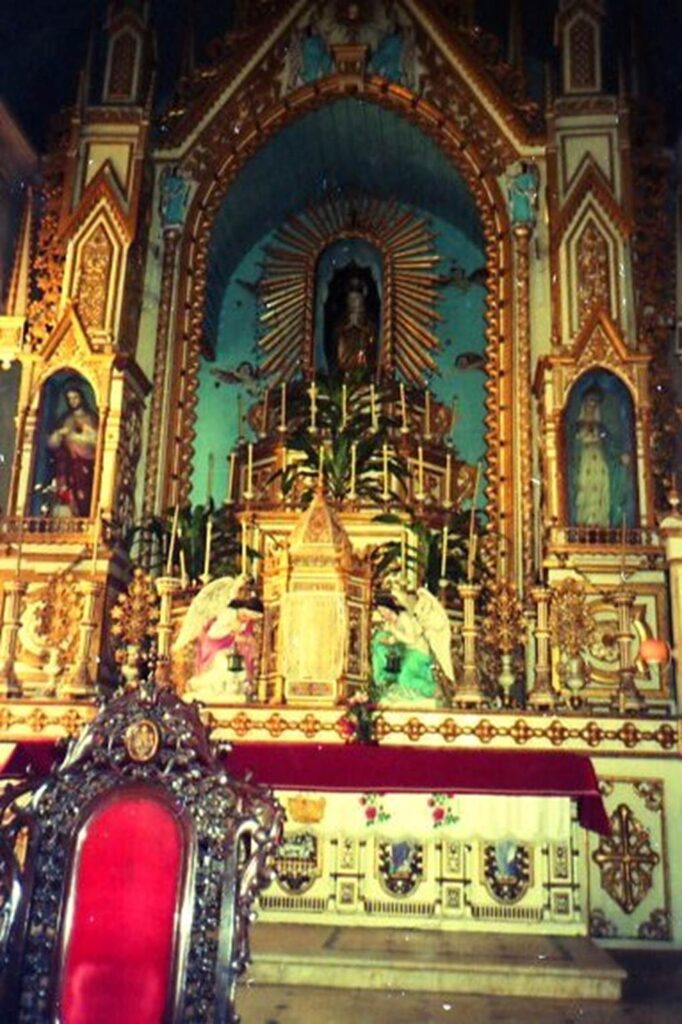
Photo by author, 1993
Photo by author, 1993
A stone pillar placed outside the cathedral.
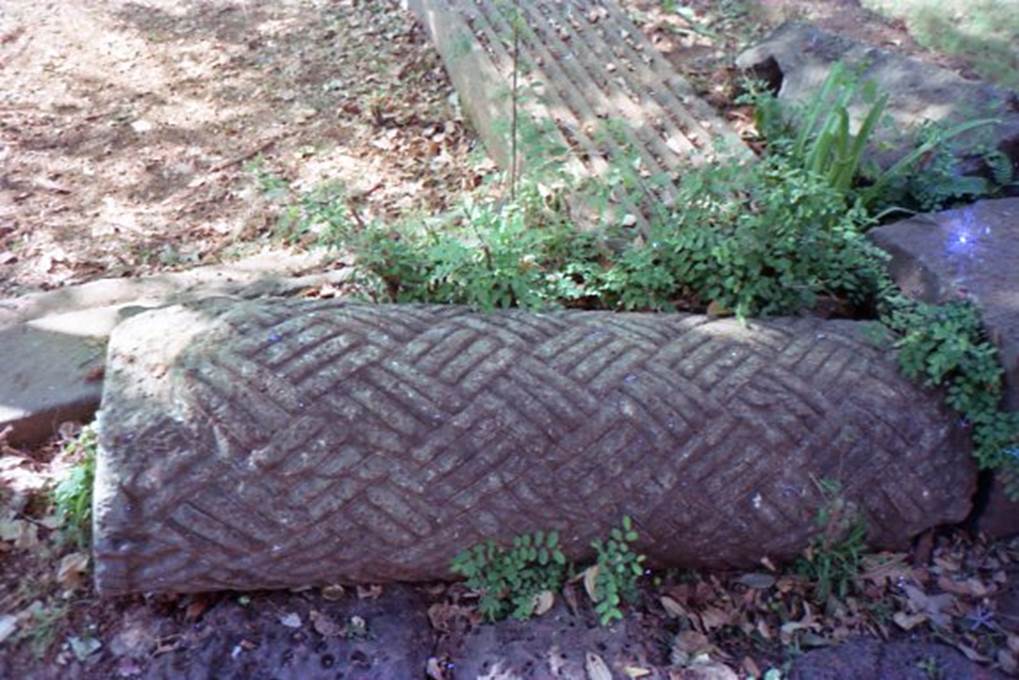
Photo by author, 1993
Church and Convent of St. Francis of Assisi
(World Heritage Site)
The church and monastery were completed around 1661. A World Heritage Site. In the early days it was a small chapel. Laterite blocks and limestone.
Pearl of the East.
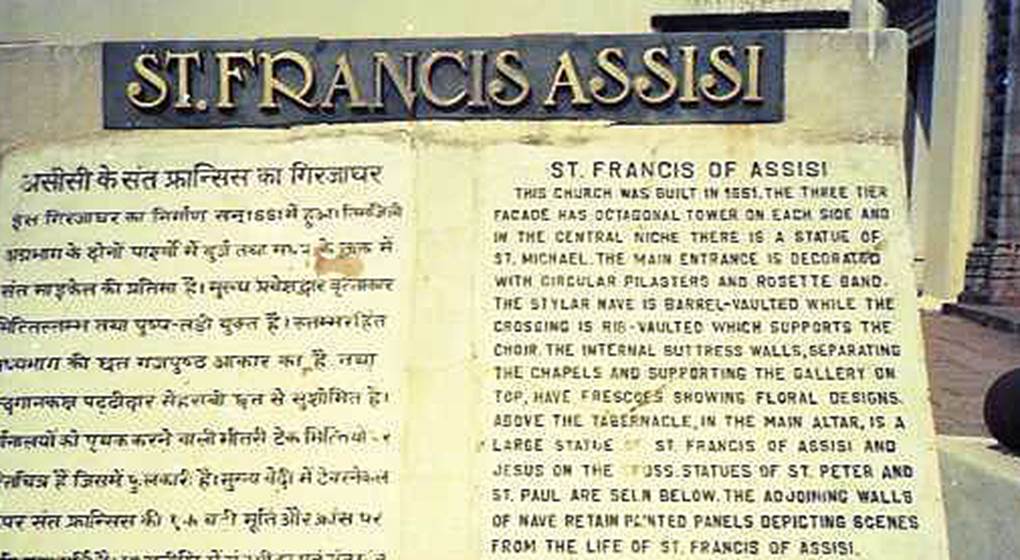
Photo by author, 1993
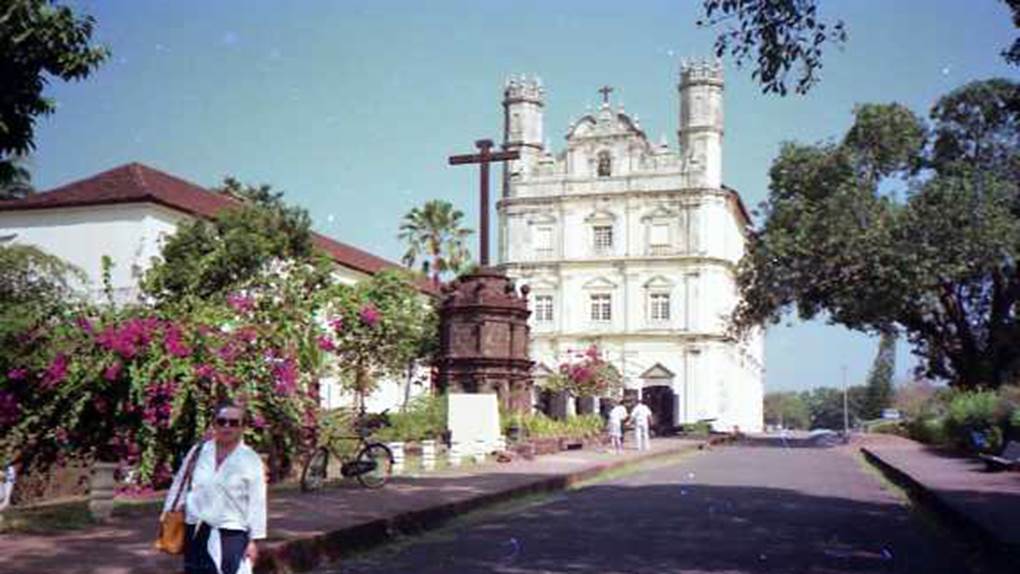
Photo by author, 1993
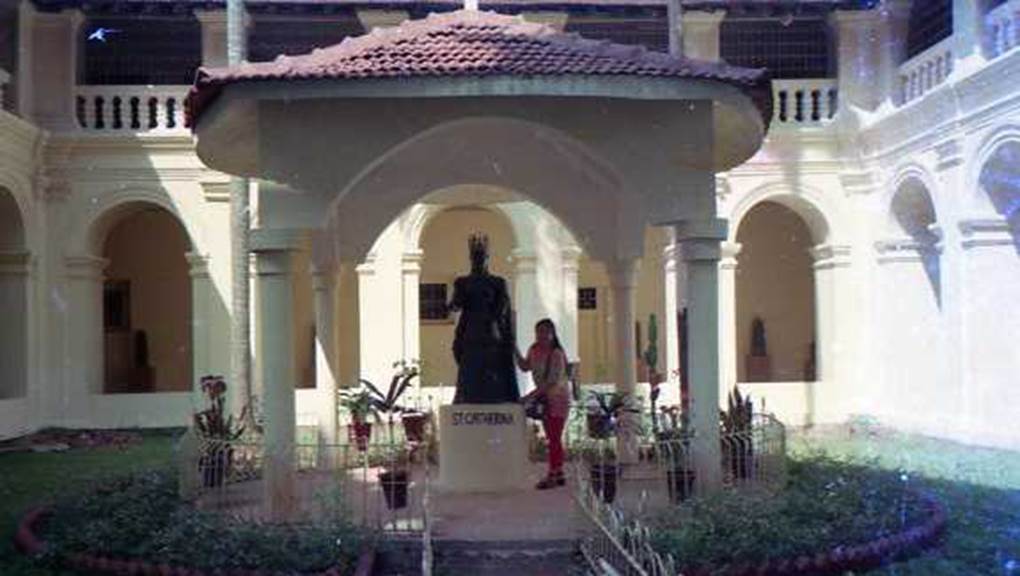
Photo by author, 1993
MAE DE JESUS Church
The Gothic church is relatively new, dating back to around 1873.
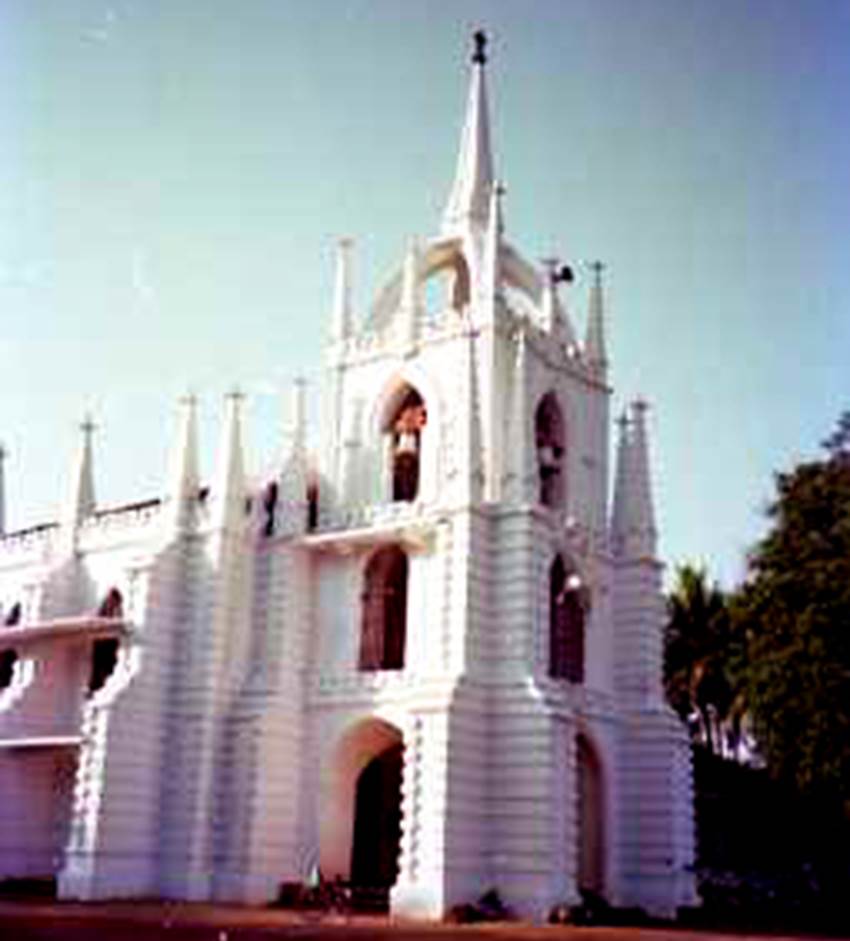
Photo by author, 1993
There are also buttress structure here.
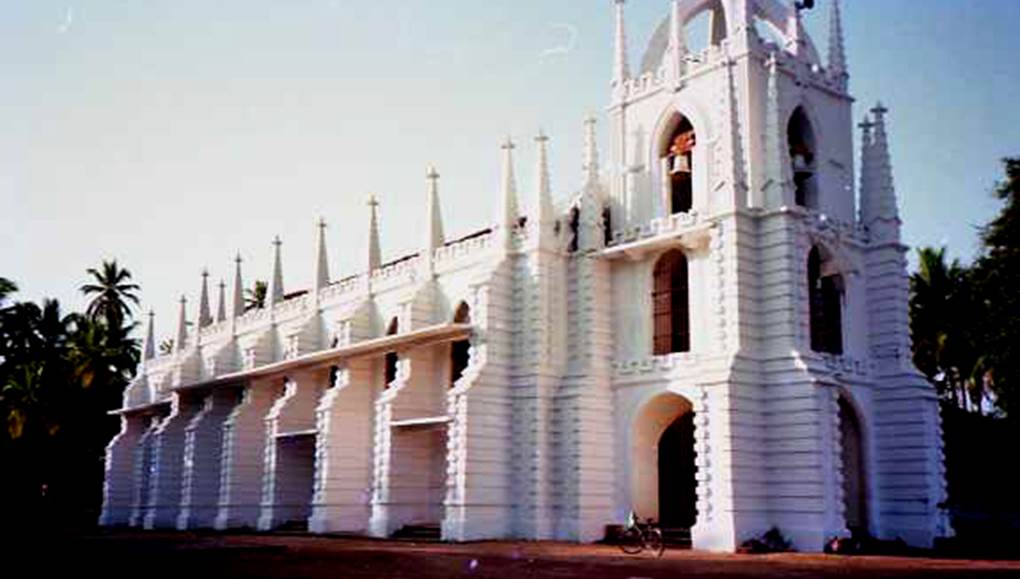
Photo by author, 1993

Photo by author, 1993
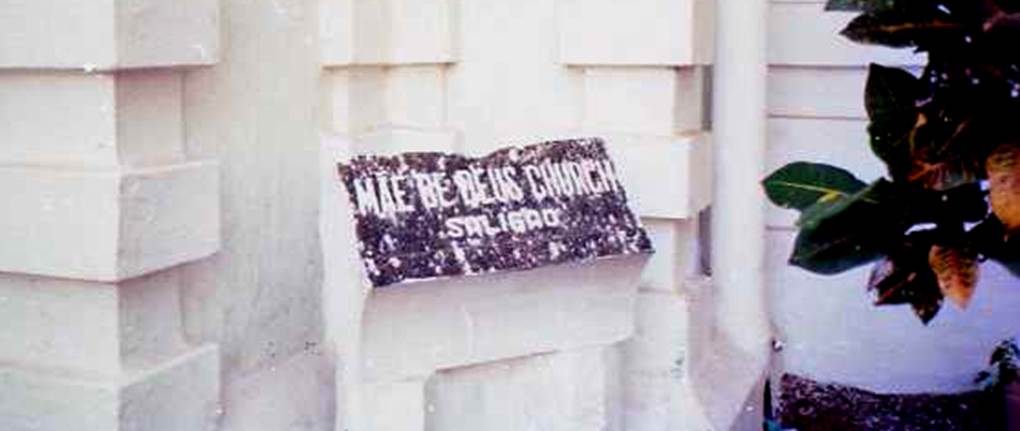
Photo by author, 1993
Latin Quarter of Goa
With the guidance of an acquaintance who had emigrated from Goa to Singapore, I decided to visit an area where people of direct Portuguese descent gathered. I was taken to Panaji, the capital of Goa, and to an area where Portuguese descendants lived together.
It was a house in a nice residential area. I was allowed into the living room. More than 10 young people gathered there and were chatting. The conversation was conducted in Portuguese.
That day happened to be New Year’s Eve 1994. I noticed people happily passing around marijuana to welcome the new year, and felt like I had entered an interesting other world. Later I found out that the area was called Latin Quarter.
Anjuna Beach, the mecca for hippies
In the 1960s, some hippies originating in Europe and the United States were attracted to Eastern religions and philosophies, such as those from India, and proposed anti-establishment and left-wing ideas as well as a return to “communal life” in nature.
The “hippies” who can be said to be the forerunners of backpackers have found a place called Anjuna Beach in Goa, India, as one of the sacred places (according to their values) that they have found in the world.
Since 1960, it has become a hub for backpackers from Western Europe and has established itself as a mecca for trance parties and psychedelic music.

On New Year’s Eve, December 31, 1993, I drove from Latin Quarter in Panaji to Anjuna Beach with my Indian friends from Singapore and acquaintances I met locally to attend a trance party.
It was evening, and we arrived on a vast stretch of unobstructed beach facing the Arabian Sea, just as the sun was setting on New Year’s Eve. The beach was already crowded with the enthusiasm of a considerable number of young people. Soon, loud music and psychedelic lighting stir up the party mood, and everyone went into a trance state….
Trance party at Anjuna Beach, a mecca for hippies

Leela Beach Resort
January 1, 1994! I went back to my friend’s house in the morning from a trance party on Anjuna Beach. When I woke up on the morning of New Year’s Day, I was met with a fierce backlash from the two women who accompanied me. I was told that they had a scary night the night before, on New Year’s Eve, because of the howling of their friend’s dog. No matter how much I apologized, I couldn’t get them to forgive me.
I was ordered to check into a luxury resort hotel tonight, and I had to make a reservation. I told my friend in Goa about the situation and left his house. Since it was the peak time for European tourists during the year-end and New Year holidays, all the hotels were fully booked.
Around noon, two vacant rooms were available at the Leela Beach Hotel, and fortunately I was able to check in. The walk-in room rate turned out to be exorbitant and not easy on the wallet.
THE LEELA BEACH GOA

Two people who are very satisfied with the beach resort in Goa, after checking in.

Photo by author, 1994
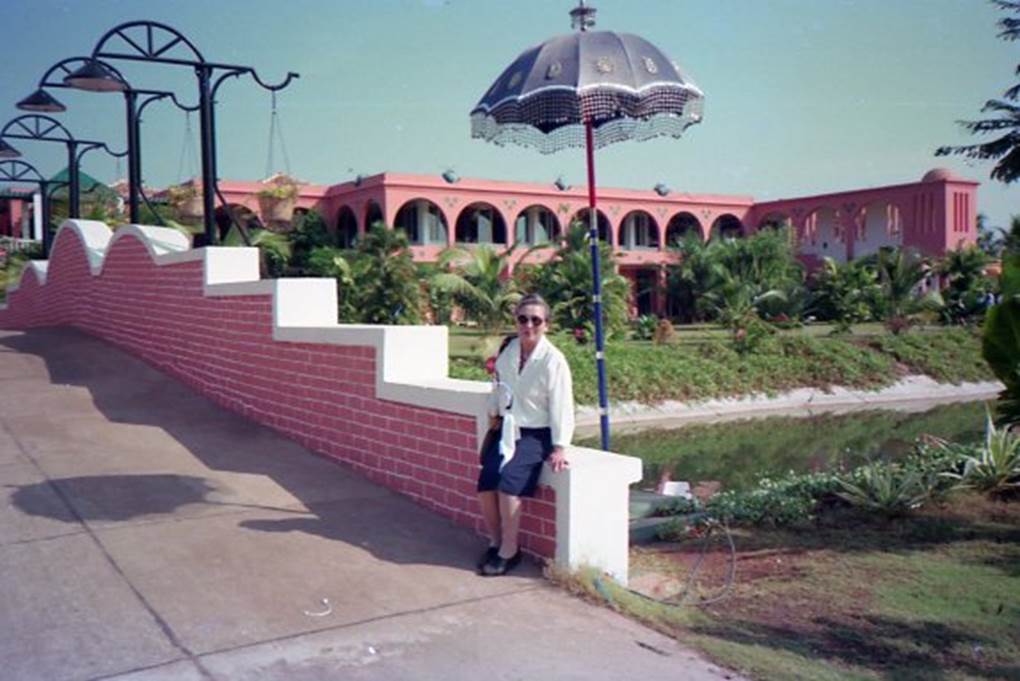
Photo by author, 1994
Leela Beach Hotel with direct access to the Arabian Sea beach.
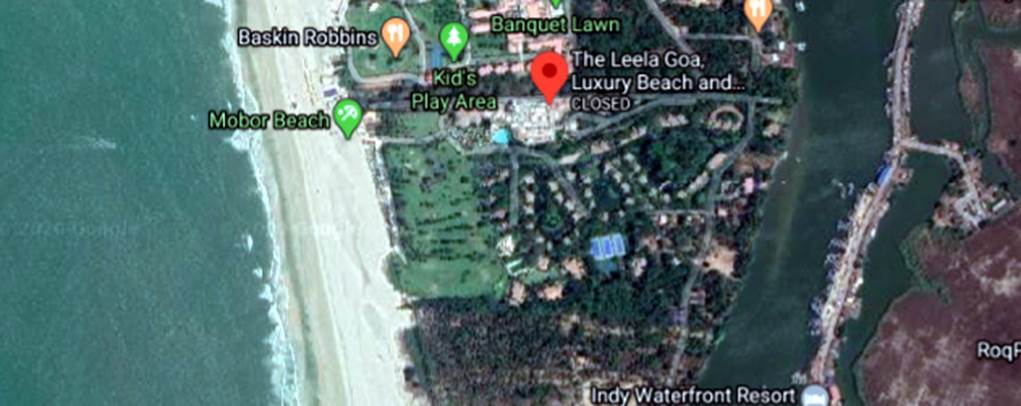
Sketch of the guest room floor plan of the Leela Beach Hotel Goa
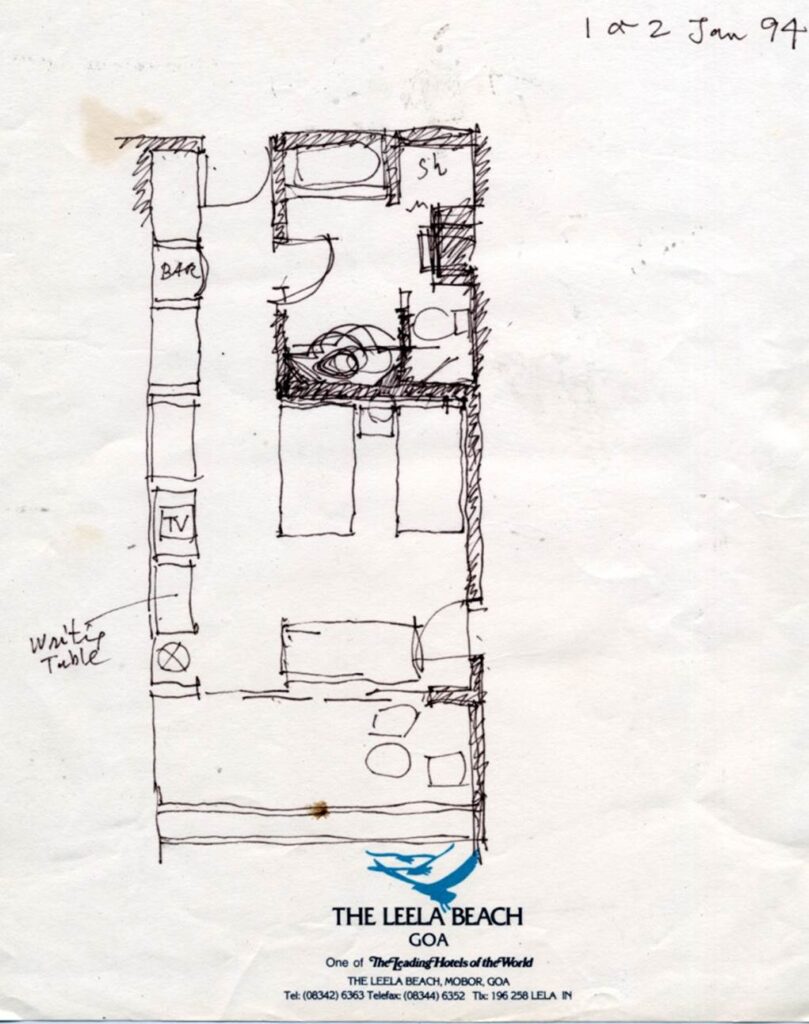
Author’s sketch, 1994
A tea ceremony teacher from Tokyo accompanied me to the beach to fulfill her heartfelt wish to “dip my feet in the water on the Arabian Sea beach and make it a memorable experience.”
She had been hesitant to travel alone in India.
The other side of the Arabian Sea is the African continent.

The next morning, on January 2nd, we headed to the airport in Goa to board a flight to Mumbai. The plane was a large Airbus, but it was full of Western passengers. Having come to Goa, I can understand why this place is so popular with Westerners.