JAP | ENG
India Travelogue 1993
#16/26
Thanjabur
India for the third time
In 1993, WWW (World wide web) was being introduce and the wave of digitalization began to grow. In my office, documents were prepared by secretaries on typewriters. However, when emails began to be exchanged over the Internet, I found myself having to type on a keyboard for the first time in my life.
Unfamiliar with using the keyboard to input and staring at the monitor increased the stress of daily work. So, in order to reduce stress and stiff shoulders, I wanted to immerse myself in the exact opposite analog behavior. By chance, I became acquainted with a teacher who taught tea ceremony etiquette at the University of Singapore.
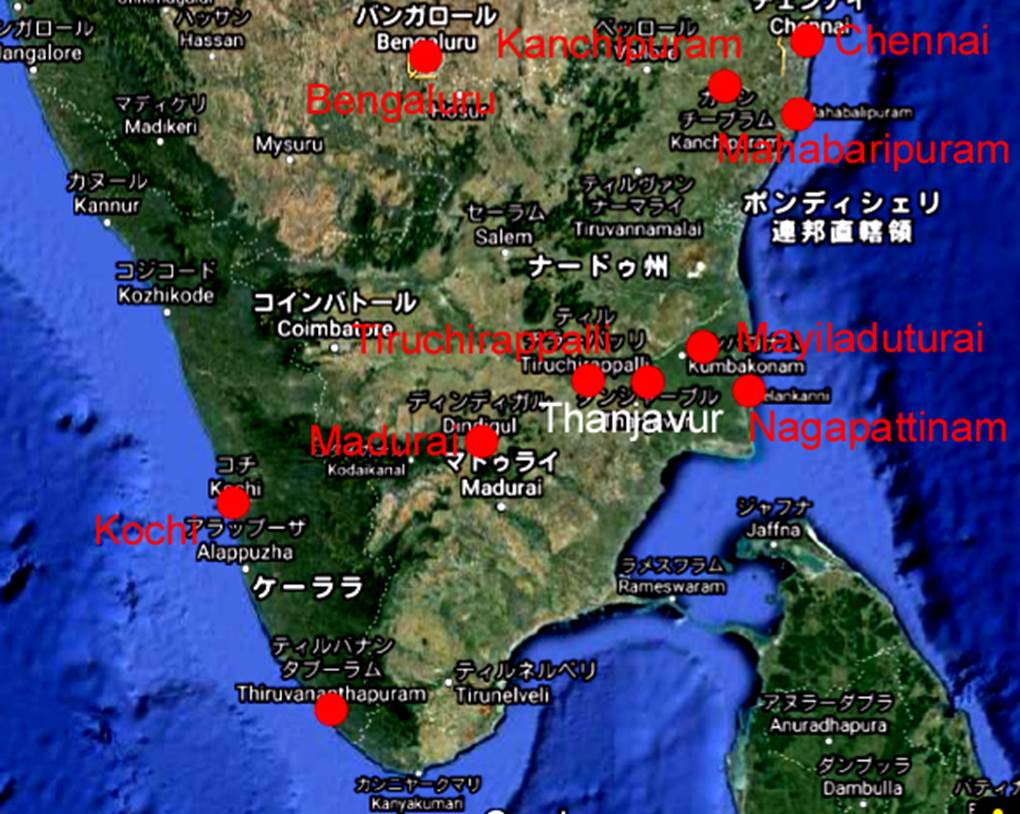
At the same time, I was planning a third trip to India, and the tea ceremony professor’s wife was also going join us, making it a three-person group. The whole trip is shown on the map below.
Chennai> Thanjavur> Madrai> Kochi> Thiruvanduram> Goa> Mumbai.

Thanjavur
Thanjavur (also known as Thanjai or Tanjore) is an ancient capital of the state of Tamil Nadu in southern India with a population of 250,000. It is located on the right bank of the middle of Kaveri River, one of the main rivers of Tamil Nadu. The fertile Kaveri Delta extends downstream to the Bay of Bengal. It is located in a strategic location called the “granary of South India”. It was the capital of the Chola dynasty from the beginning of the 10th century to the early 14th century and flourished as a center of Tamil culture.
Brihadeeswara Temple, Thanjavur
UNESCO World Heritage Site
Thirty-five kilometers south-southeast of Chennai, India, is the unfamiliar town of Thanjavur. I learned that there was a Hindu religious building from the Chola dynasty that ruled southern India in the past, so I decided to visit it.
The temple is the magnificent 11th-century Brihadeeswara Temple. It was registered as a World Heritage Site in 1987.
The town of Thanjavur, like other cities in India, is a noisy crowded place. It is unimaginable that this town is a World Heritage Site. However, when you actually visit, you will find a temple complex with rich, sculpted beauty that was favored by architects. According to the guidebook, it was completed in 1010. In Japan, it is an architectural heritage of the late Heian period, about 40 years before the completion of the Byodo-in Temple in Uji.
Location map of Brihadeeswara Temple.
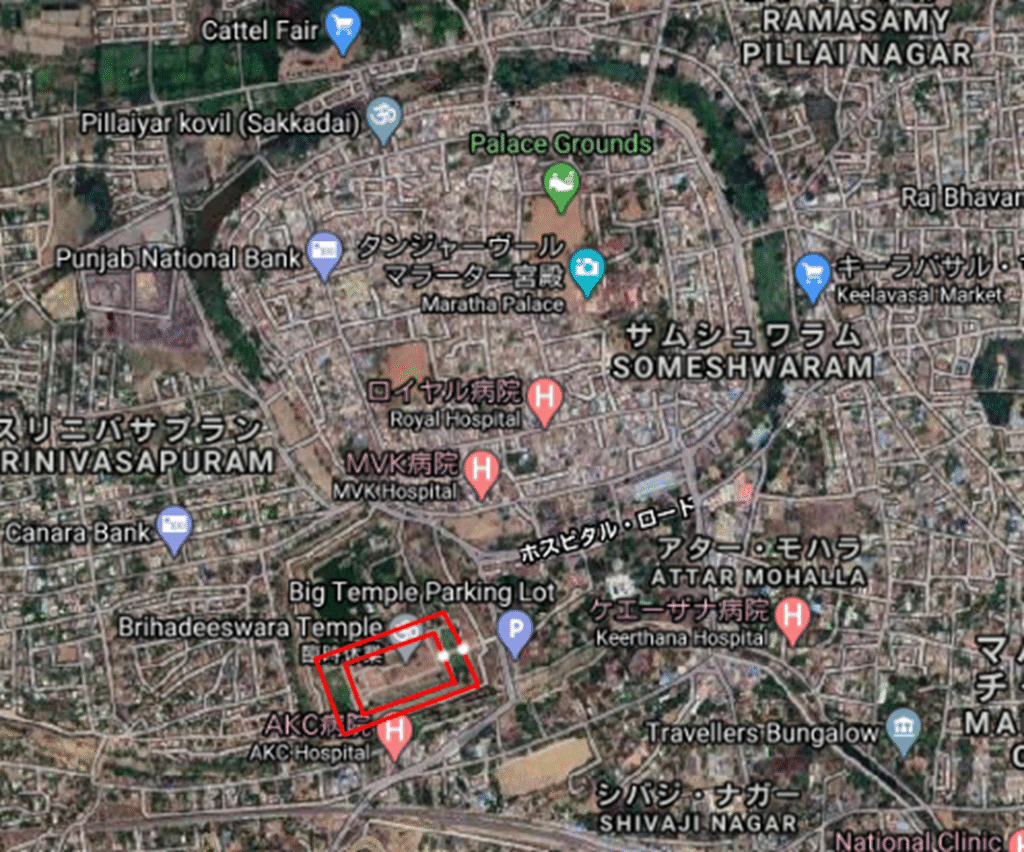
The entire Brihadhishwara temple is surrounded by a corridor with a high defensive wall of about 75 × 150 meters.
From the east, the gopuram, the Nandi (elephant) shrine, two mandapas (prayer halls), the antechamber and the sanctuary are lined up on the east-west central axis. The scale and artistry of its architecture make it the pinnacle of southern-style Hindu temples.
To better understand the temple grounds, I sketched a bird’s-eye view of the temple grounds. The right side is to the east, and the left side is to the west.

Author’s sketch
Maintenance was being carried out on the north side of the defensive wall.
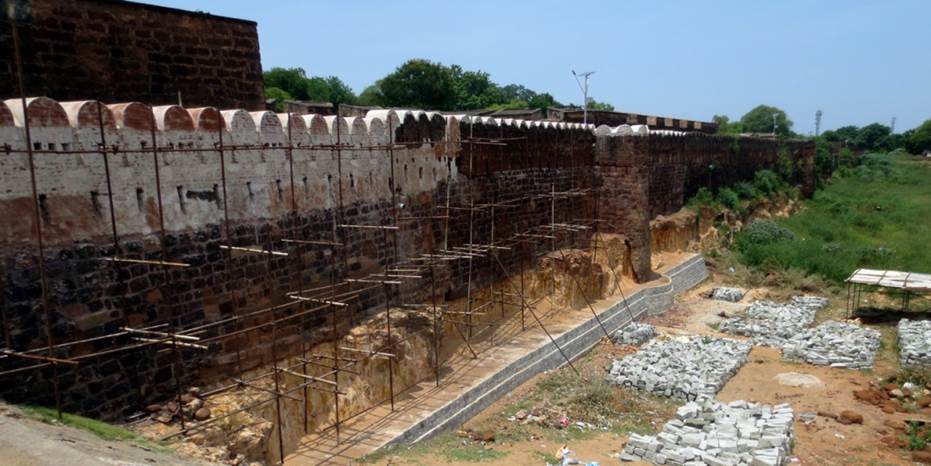
Photo by author, 1993
The first gopuram. Photographed from the southeastern city wall.
In front of the protective wall is a moat. It is now dry.
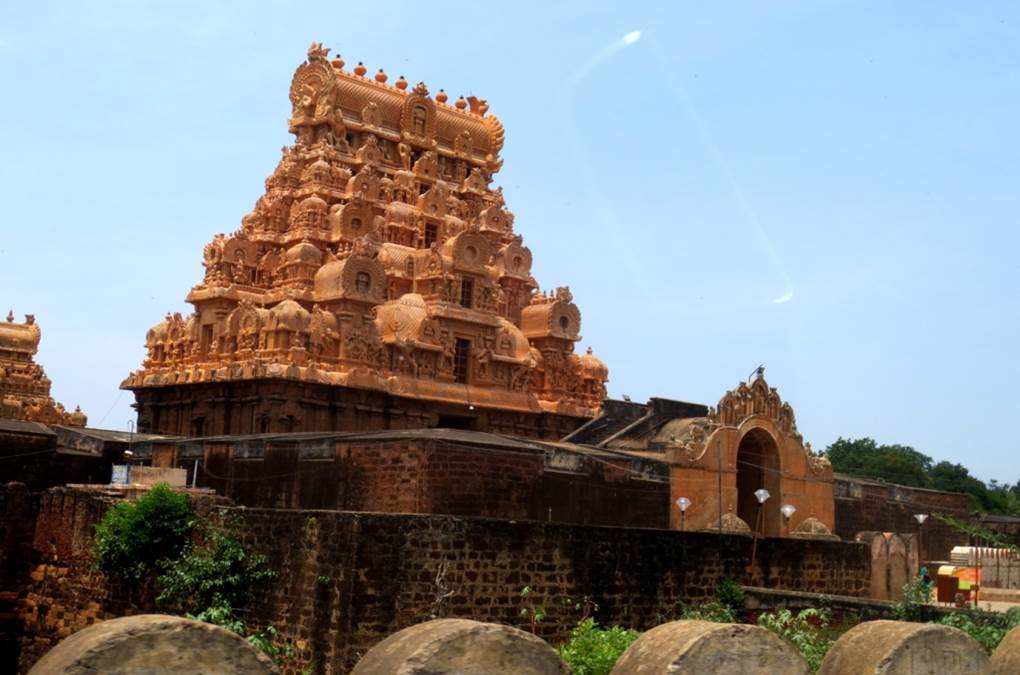
Photo by author, 1993
First Gopuram
The sacred gate of Keralantakan, built by the king. It faces east.
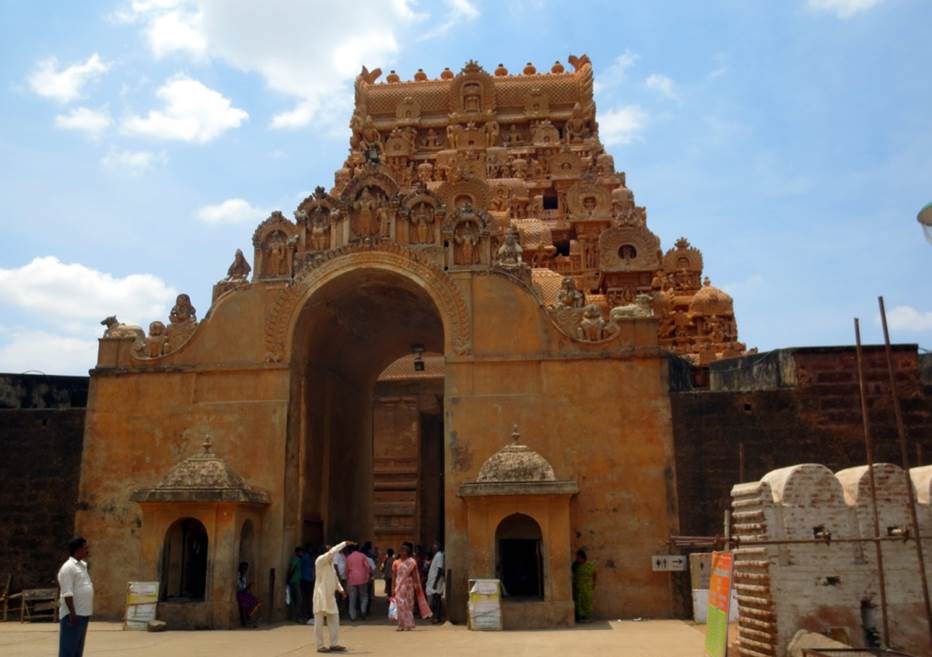
Photo by author, 1993
Entering the temple grounds from the bustling city through the Gopuram, you enter a different world. The stone used to make the building is of good quality, and the original shape has been faithfully preserved.
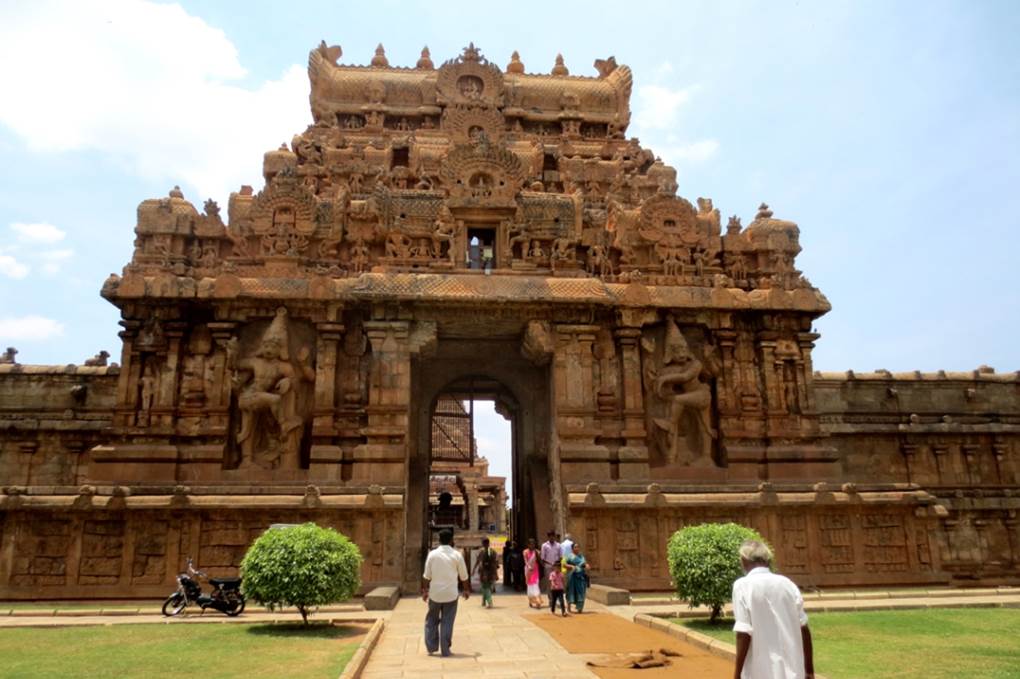
Photo by author, 1993
The holy gate of Keralantakan built by the king. From the inside (west side).
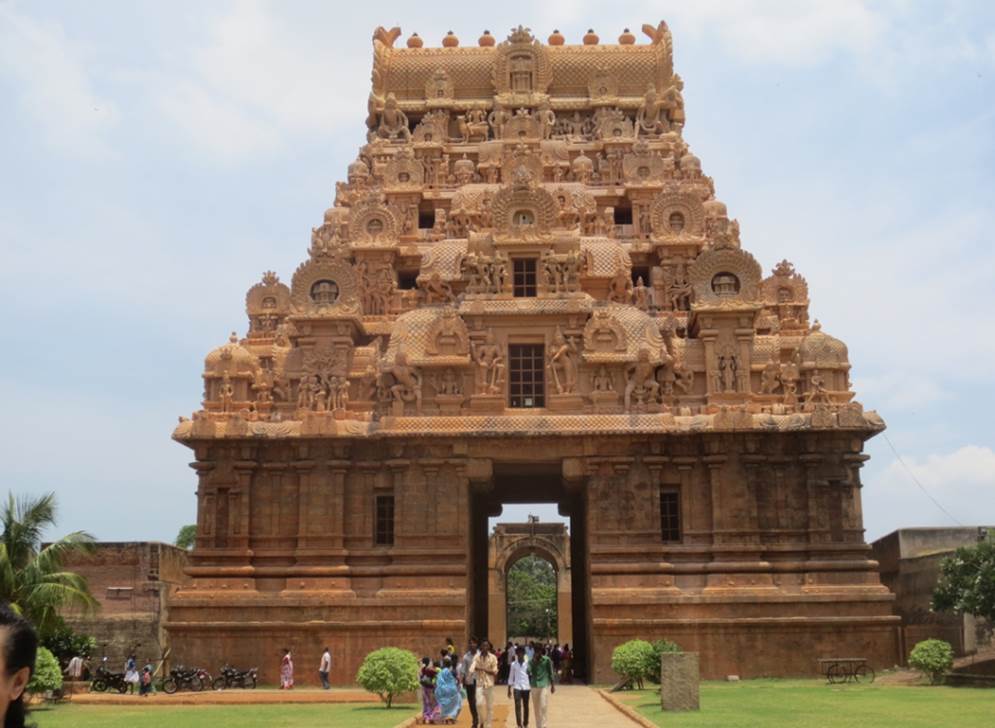
Photo by author, 1993
The Brihadishvara Temple has a stone tablet with inscriptions in both Tamil and Sanskrit dating back to the 11th century.
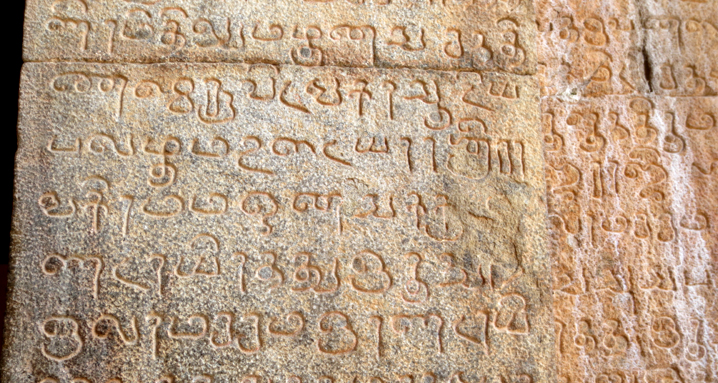
Photo by author, 1993
I found some elegant stone masonry work.
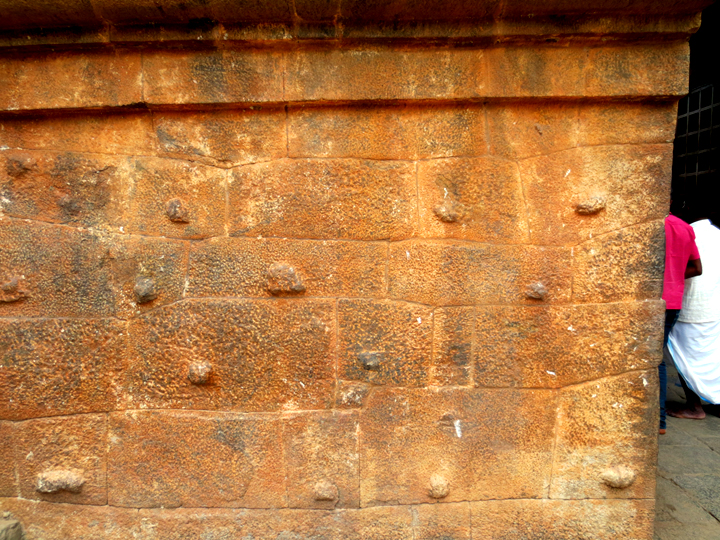
Photo by author, 1993
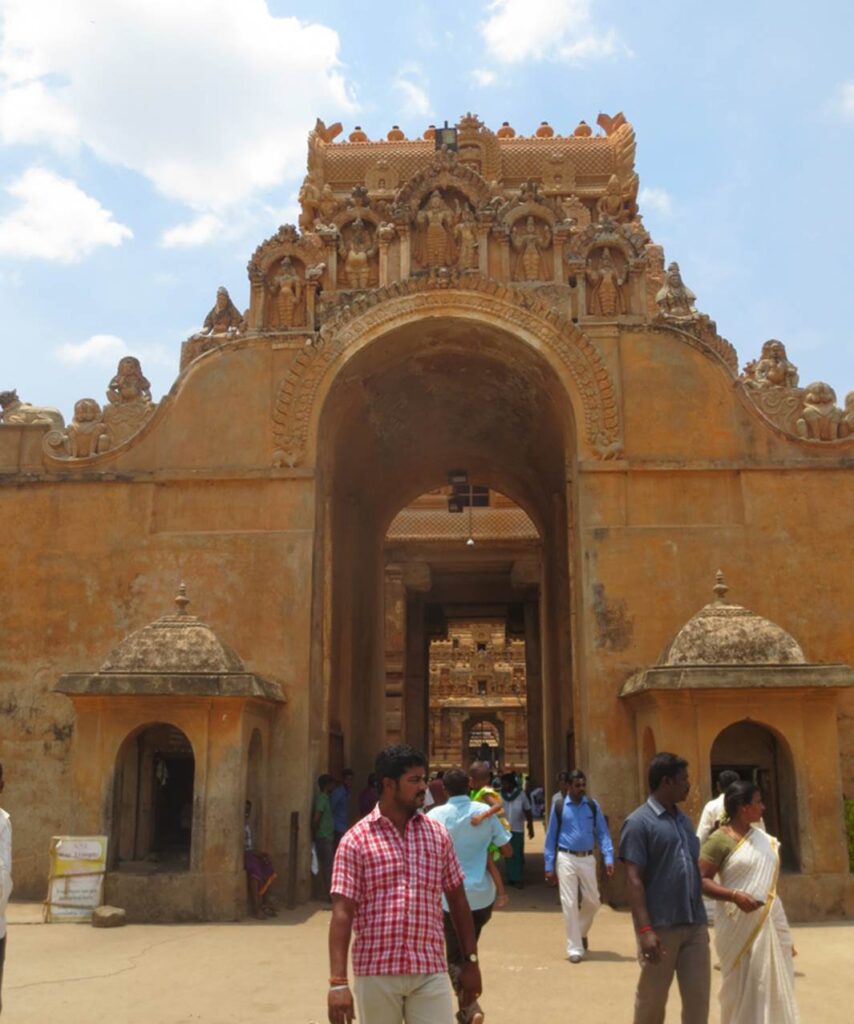
Photo by author, 1993
Second gopuram
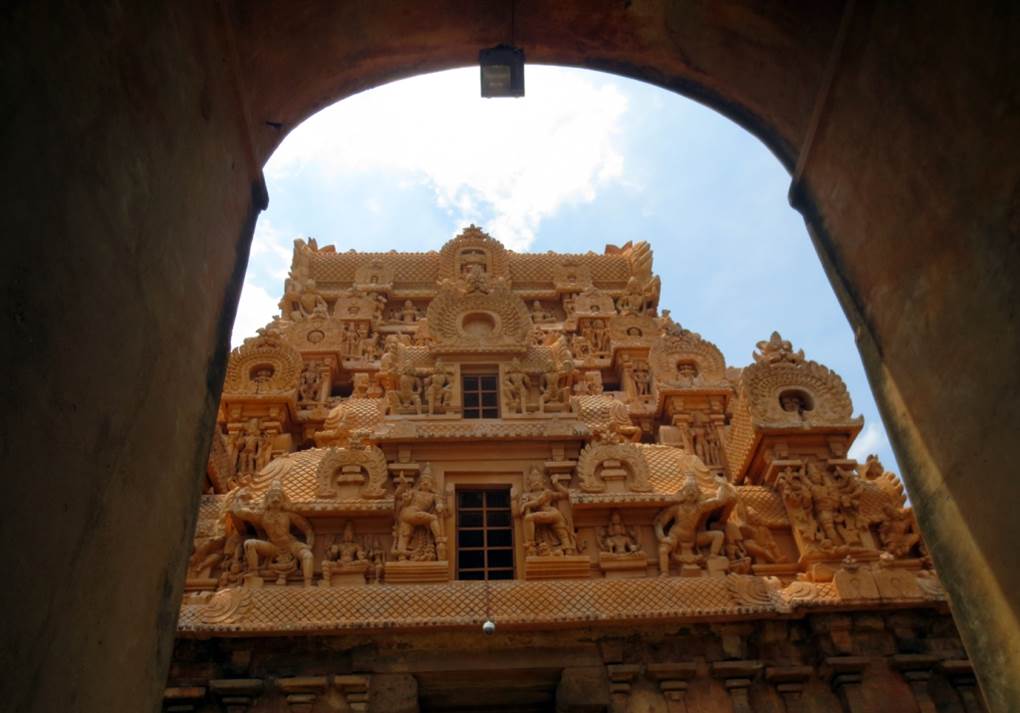
Photo by author, 1993
The second gopuram, the gate to the inner garden.
The sacred gate. Copy from the first gopuram.
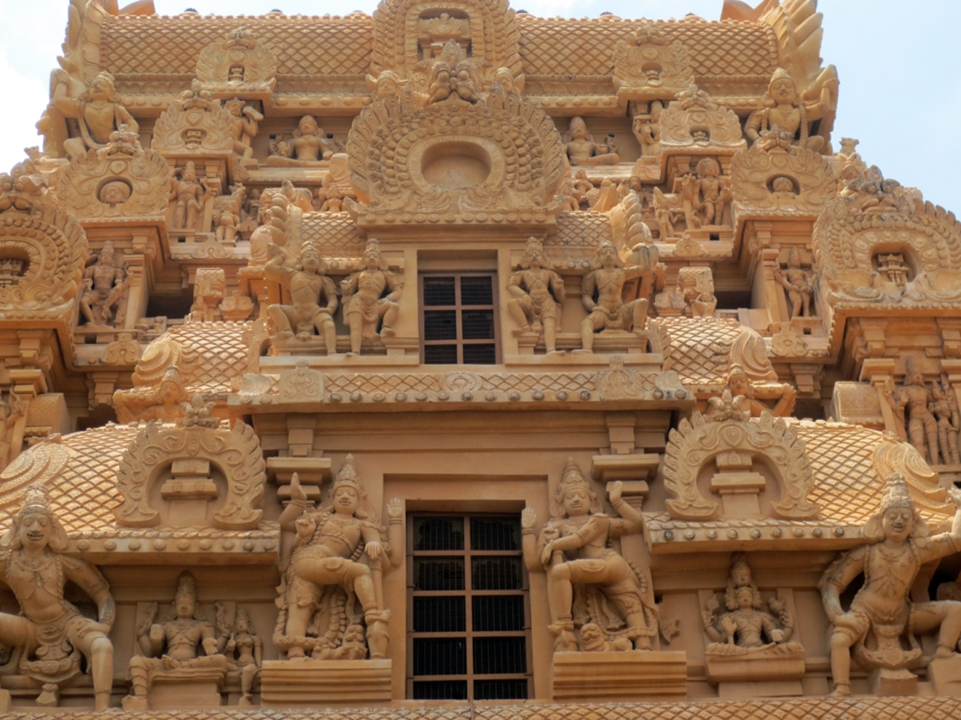
Photo by author, 1993
After passing the second gopuram, there is a square. In the foreground is the Nandi mandapam, and a sculpture of an elephant is enshrined. Overlapping in the background is the main shrine of this religious facility.
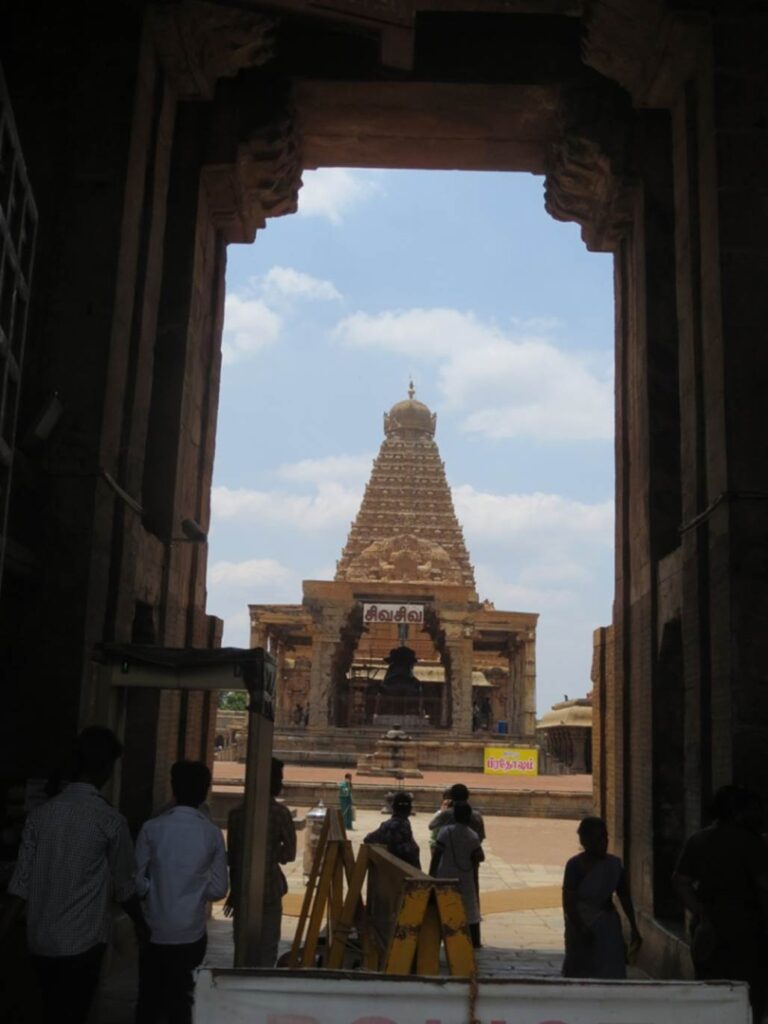
Photo by author, 1993
A photo of the second gopuram taken from the square after passing through the gate.
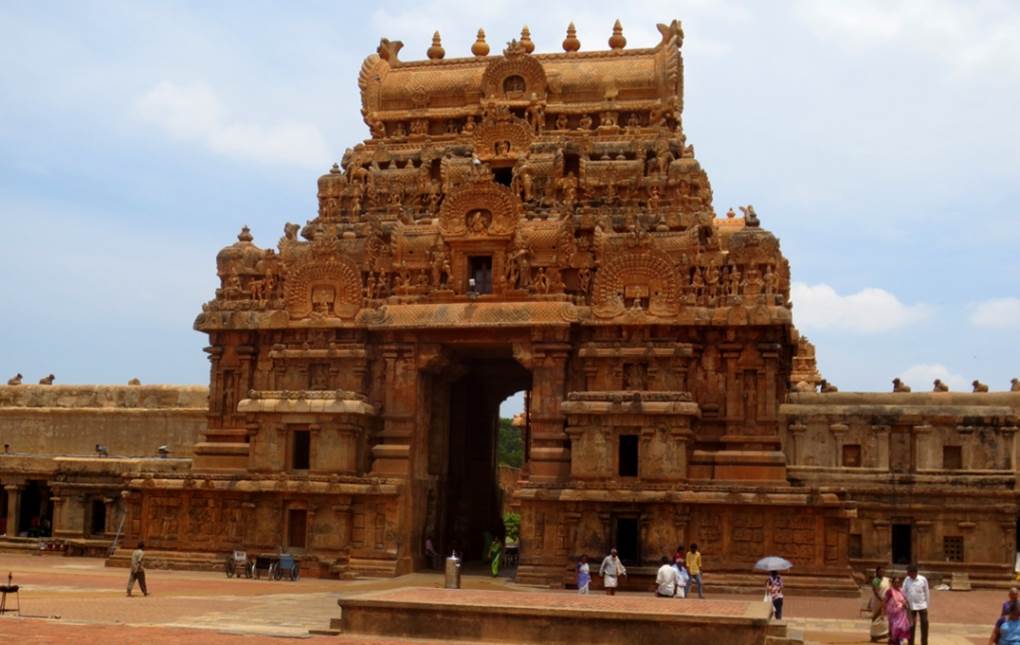
Photo by author, 1993
Nandi Mandapam
At this point, next to Nandi mandapam, is the entrance of Sri-vimana, the main shrine of the Brihadishvara temple.
The 1,000-year-old Brihadishvara Temple has a 25-ton stone dome with an additional 50 tons of granite on top. It is not known how this 50-ton rough stone was transported to a height of 60 meters at more than 1,000 years ago

Photo by author, 1993
Nandi mandapam. A statue of a giant elephant can be seen in the center.
The ceiling is painted with symbolic religious paintings, which increases the religious feelings.
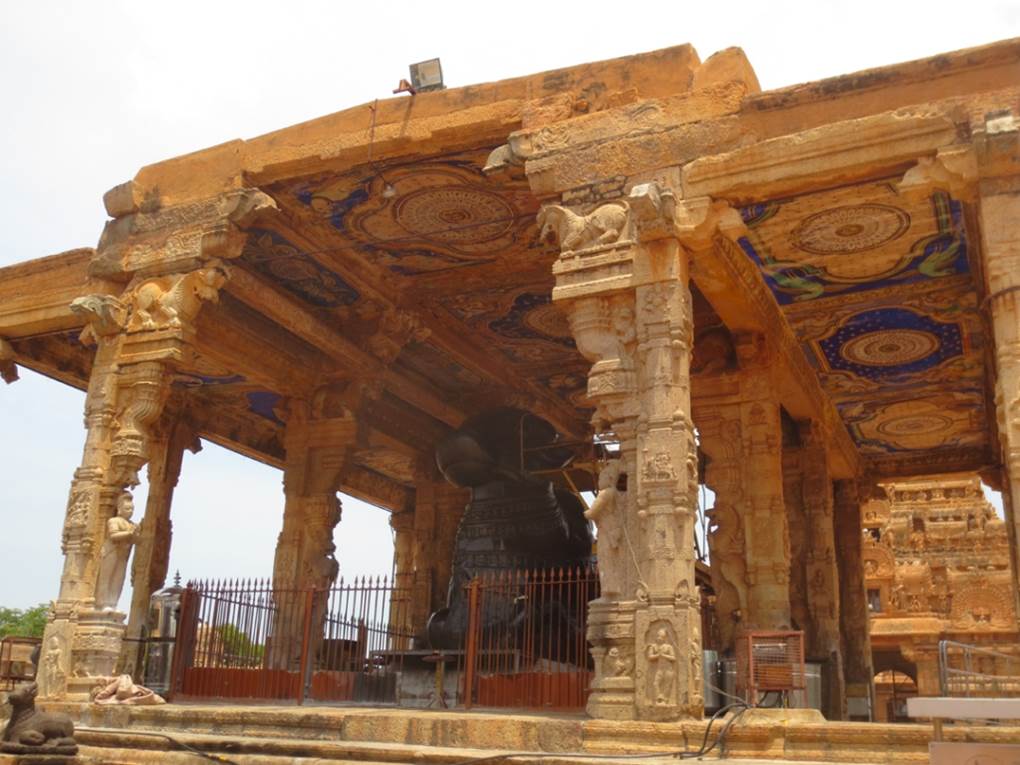
Photo by author, 1993
One of the pillar of Nandi Mandapam.
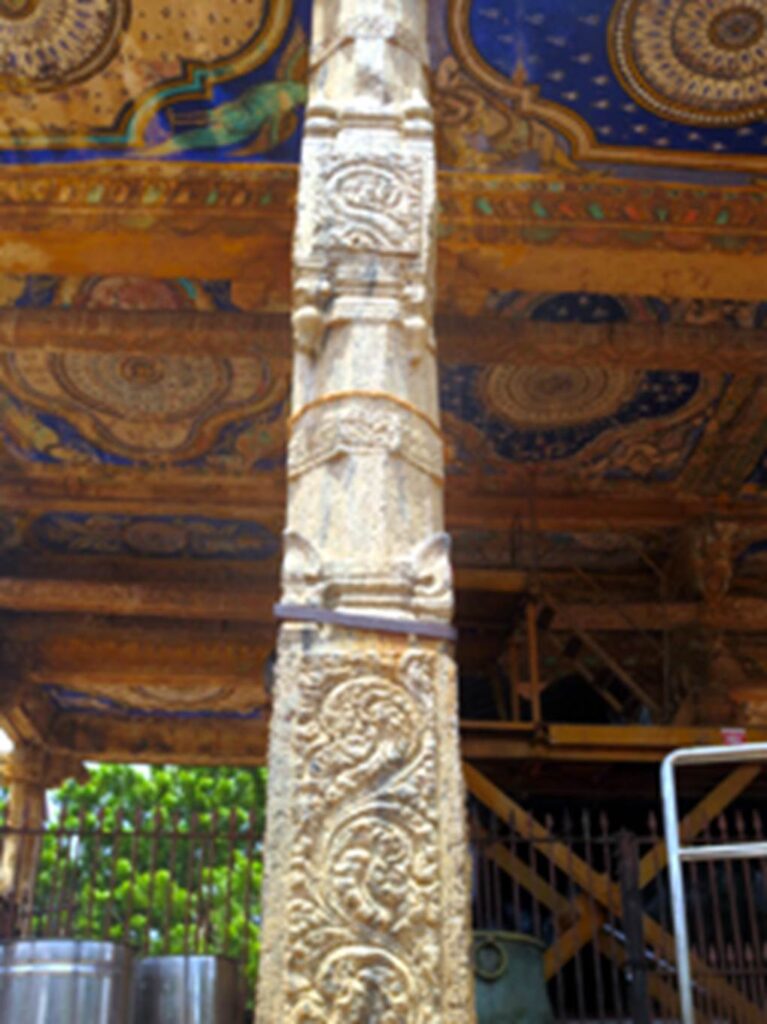
Photo by author, 1993
Elephant sculpture on the entrance staircase.
The building and sculptures work together to express the unity of the temple.
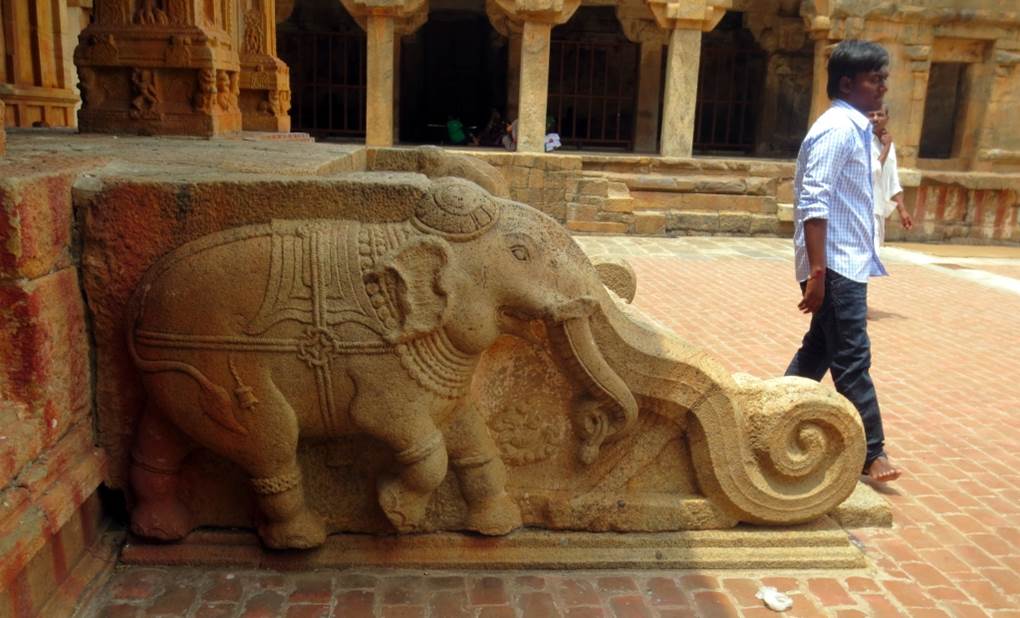
Photo by author, 1993
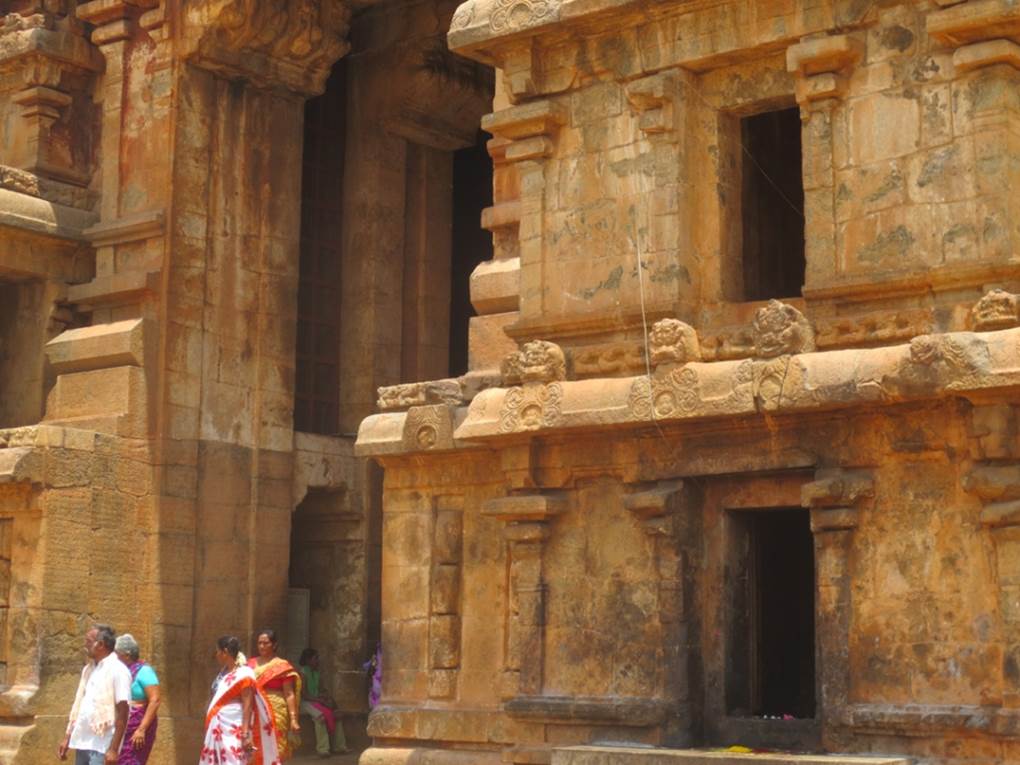
Photo by author, 1993
Sri-Vimana (main worship hall)
Photograph of the main shrine Sri-vimana from the west side.
It is mass of granite.
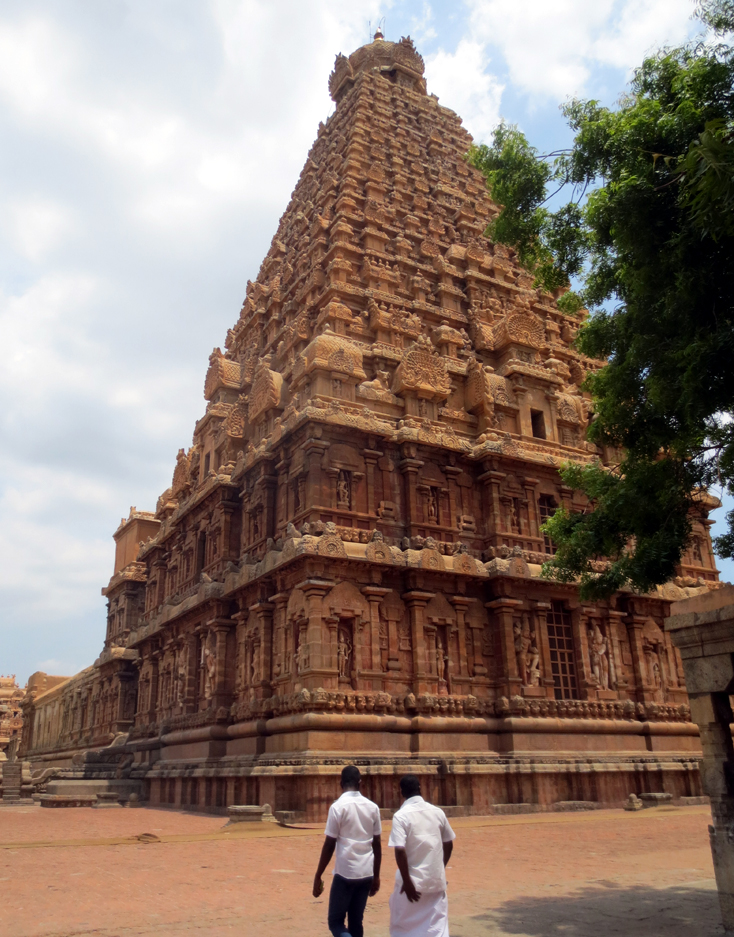
Photo by author, 1993
People who have finished their worship come out onto the square through the exit on the side of the main worship hall.
The curve ends on the side of the stairs are beautiful.

Photo by author, 1993
A group of worshippers emerge from the main worship hall.
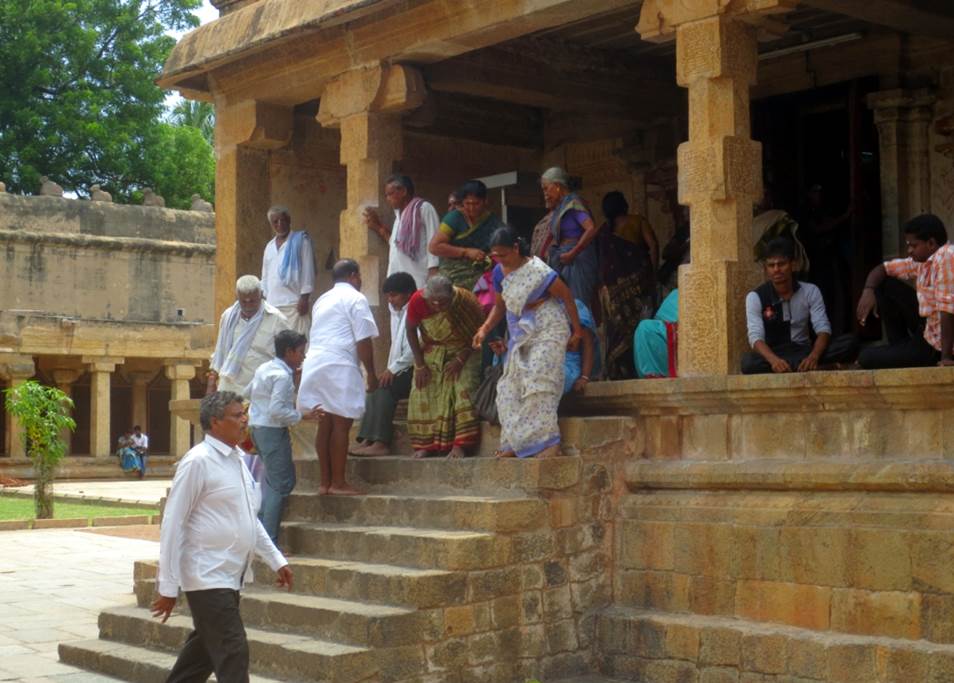
Photo by author, 1993
At the exit of the main worship hall, there is a magnificent statue of Shiva.
I wonder how much money is this statue alone is worth?
It is an excellent piece of sculpture.
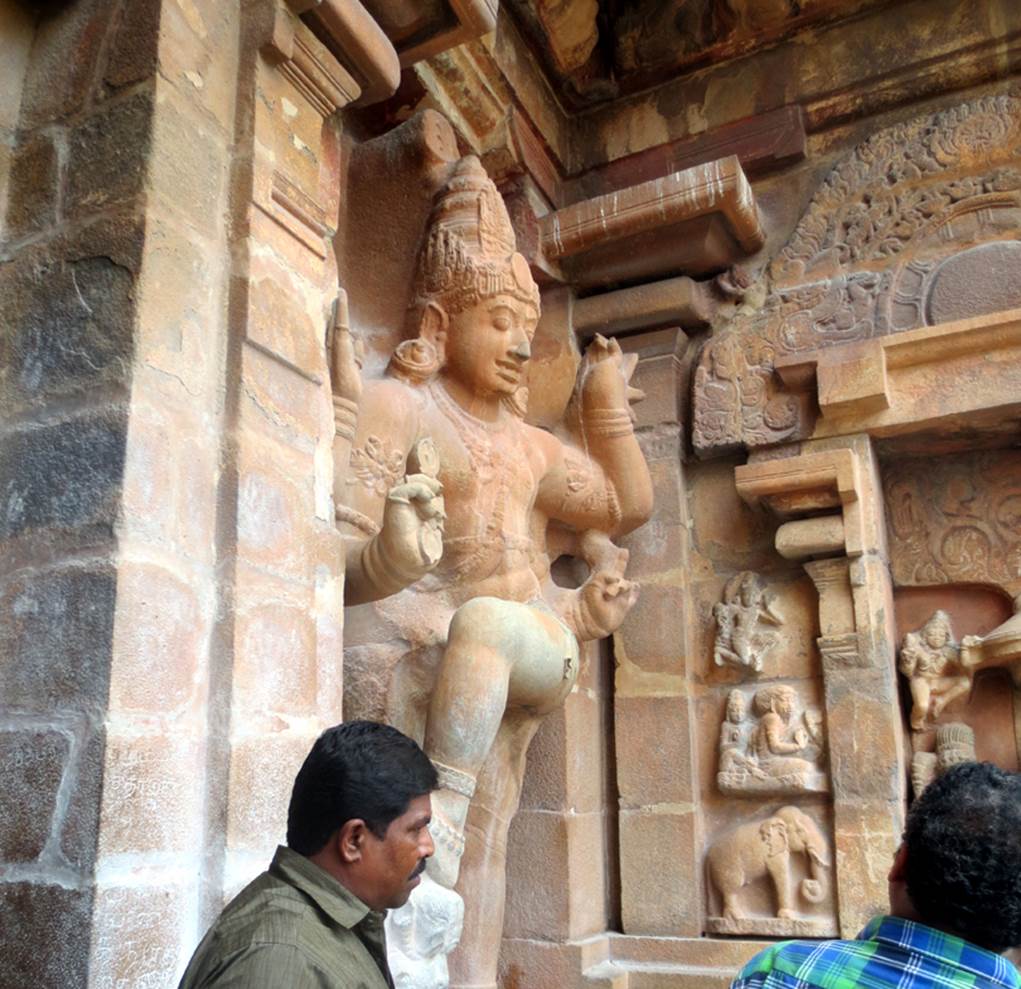
Photo by author, 1993
Interior ceiling of the main worship hall.
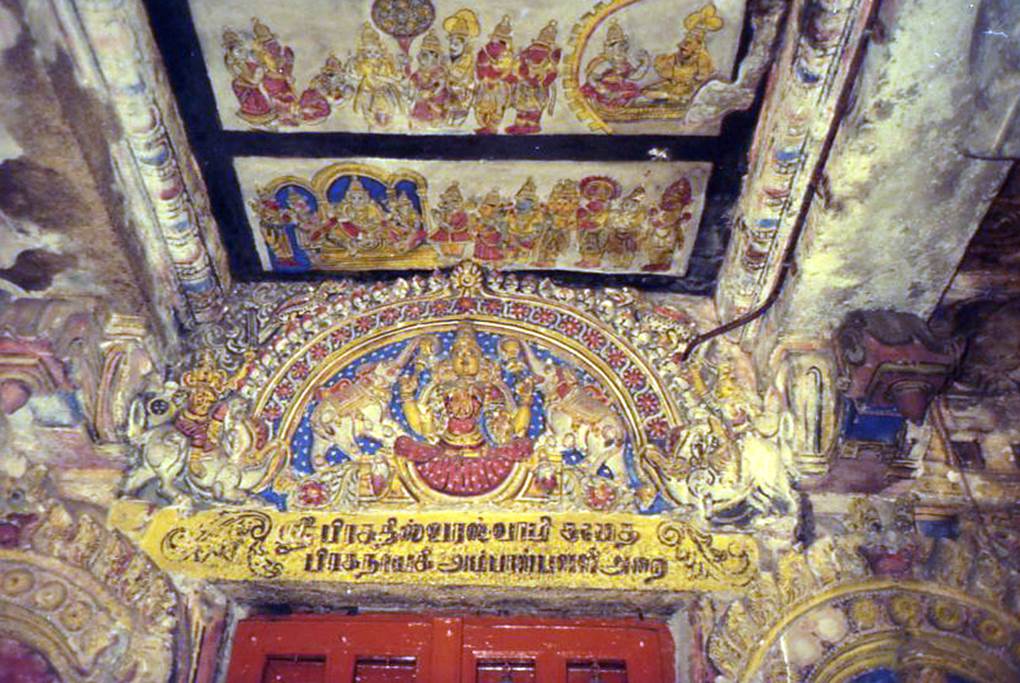
Photo by author, 1993
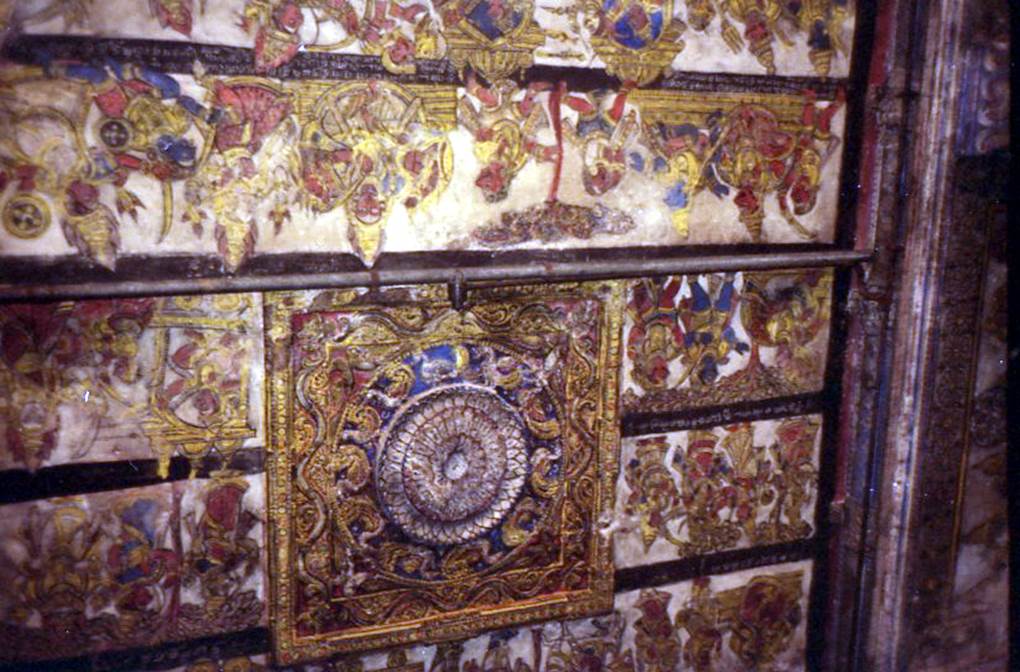
Photo by author, 1993
The inner chamber of the main worship hall and the sanctuary
Karvalai (inner chamber) means “fetus chamber” (i.e. womb) in Tamil. The innermost central space behind this door is called the garbha griha (sanctuary). A huge pagoda (shikhara) is erected directly above it. Only priests are allowed to enter behind this door.
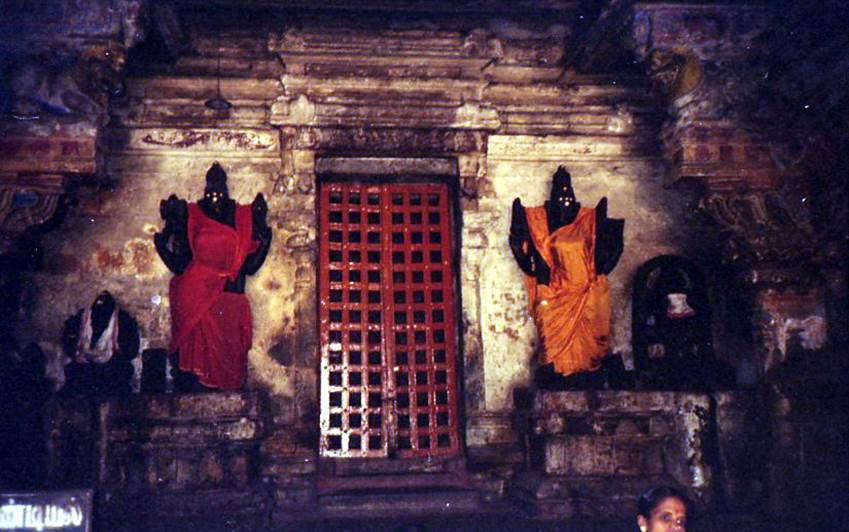
Photo by author, 1993
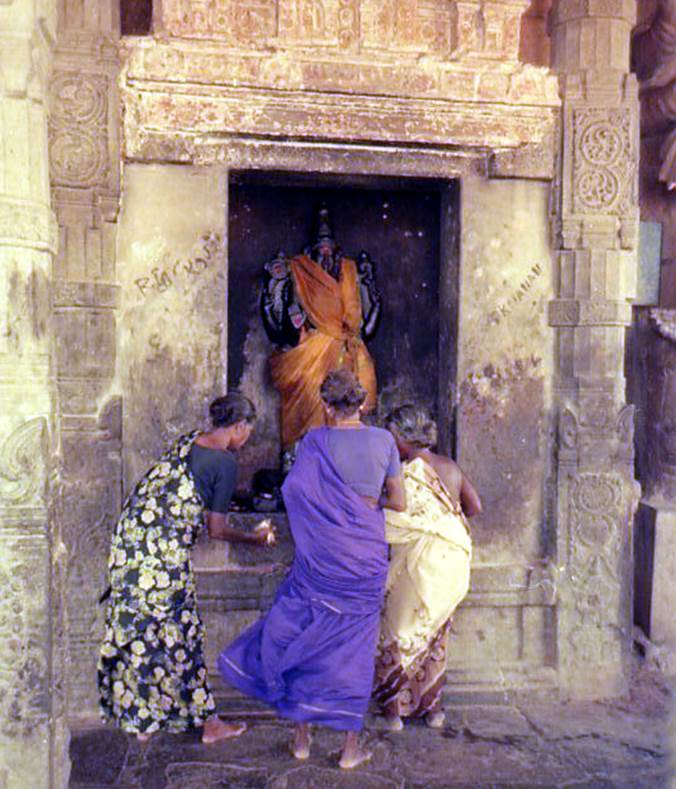
Photo by author, 1993
Subrahmanyar shrine
The Subrahmanyar shrine is located in the square on the north side of the main shrine. As a building attached to the main shrine, this architecture is also attractive, and although it is small, it has a strong presence.

Photo by author, 1993
The connection area between the Subrahmanyar shrine and the main shrine Sri-vimana.
I found a comfortable space there where worshippers were meditating without being bothered by tourists.
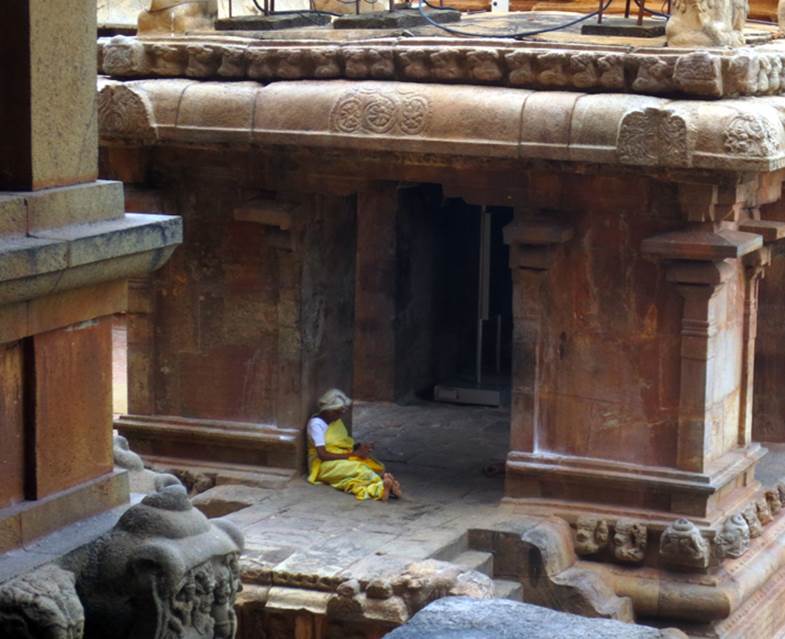
Photo by author, 1993
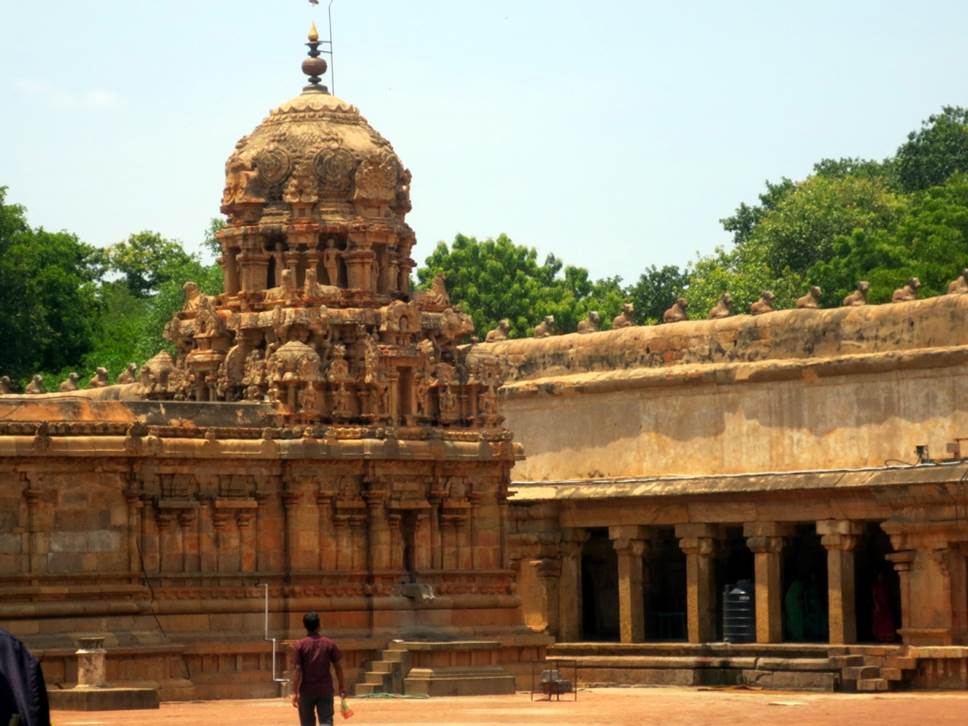
Photo by author, 1993
In the square behind the main shrine, Sri-vimana, the only large tree casts shadows on the floor. People who have finished worshiping gather here to relax. it is very peaceful and tranquil.
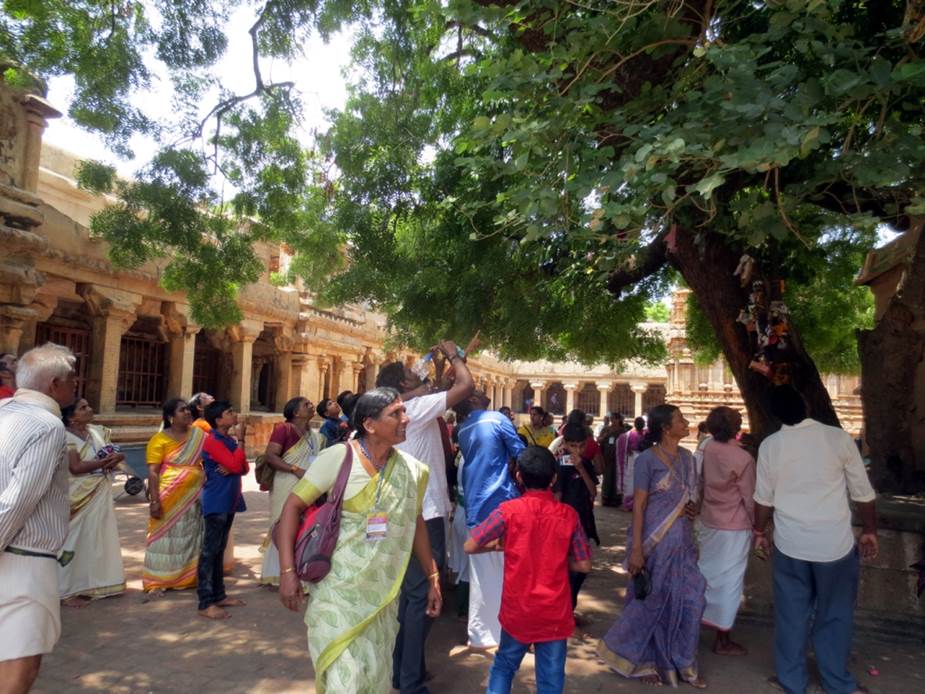
Photo by author, 1993
The back of the corridor is surrounded by a massive defensive wall.

Photo by author, 1993
Three-dimensional curved surface of the eaves roof
The three-dimensional curved surface of the stone eaves roof is beautifully shaped.
This unique sculptural technique of Hindu architecture can be seen in arid regions of India.
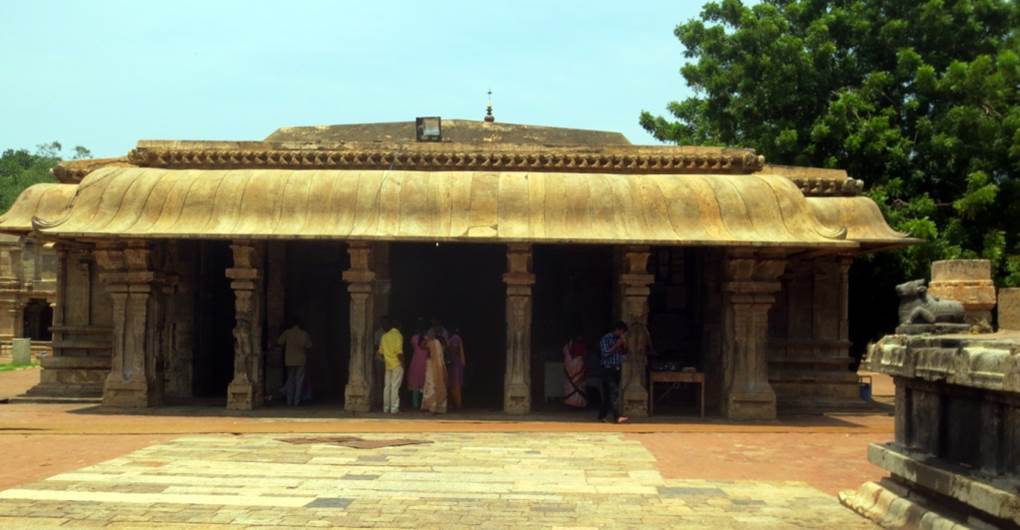
Photo by author, 1993
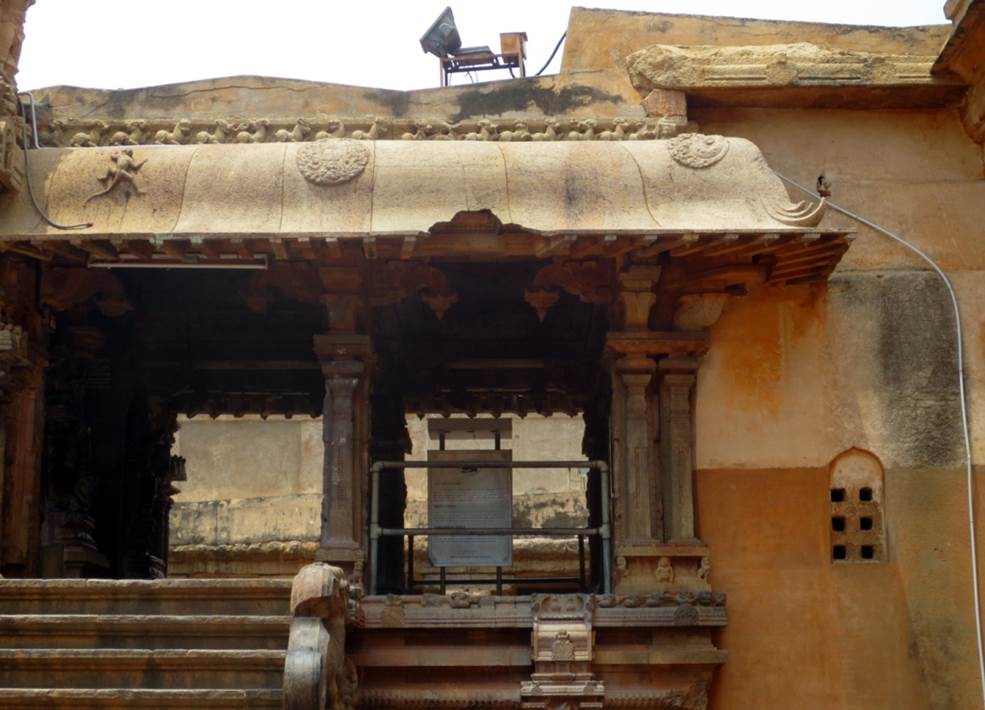
Photo by author, 1993
Graceful stone curves and their details. Worth appreciating.
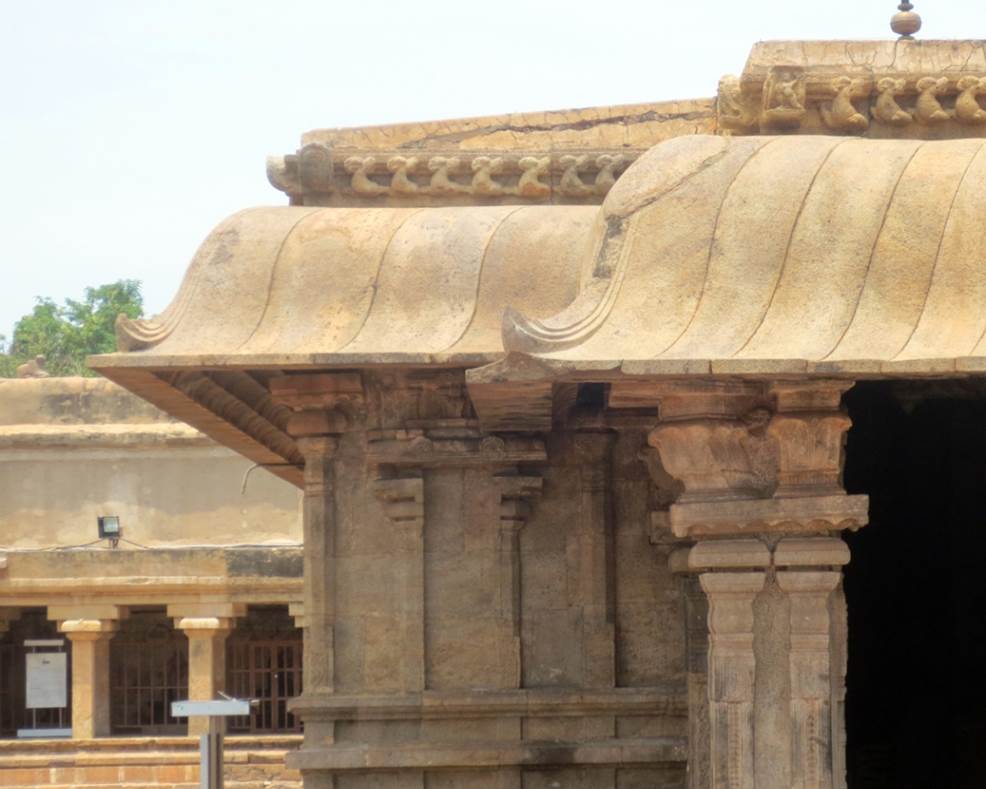
Photo by author, 1993
The steps of the stairs are made entirely of large stones.
This simplicity feels good.
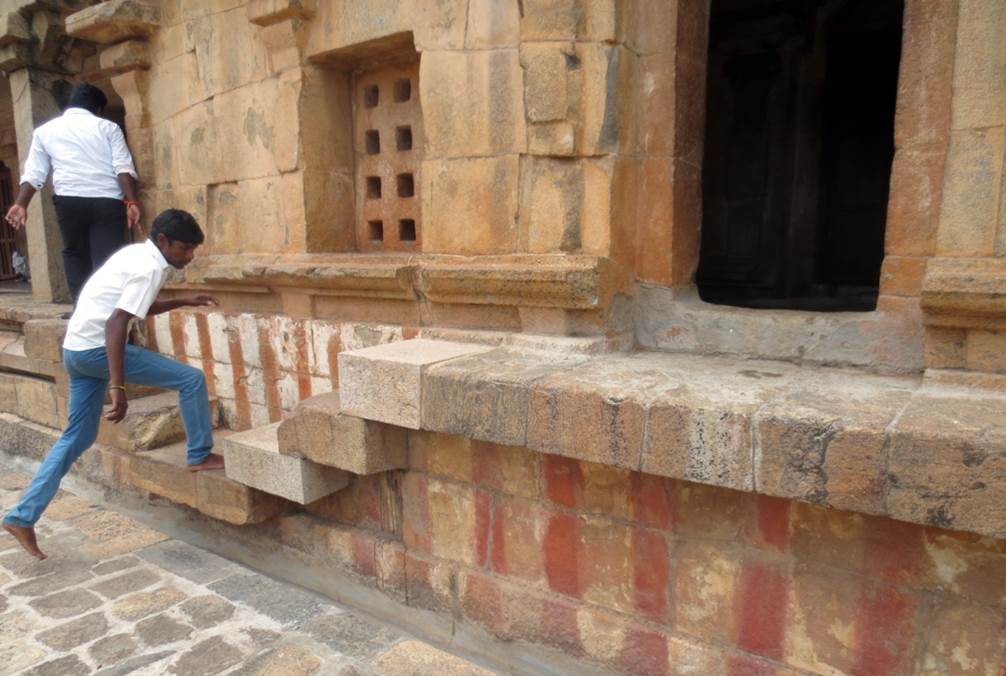
Photo by author, 1993
Two sets of Shiva lingams and yogis are placed along the side walls.
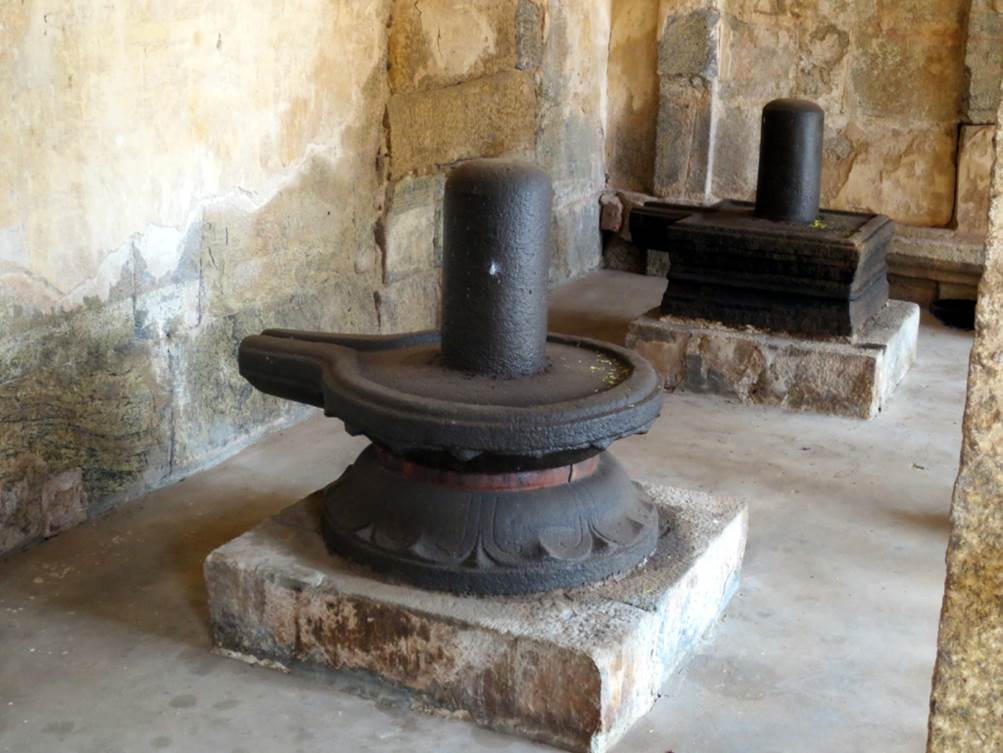
Photo by author, 1993
It’s looks like an ancient Indian script.
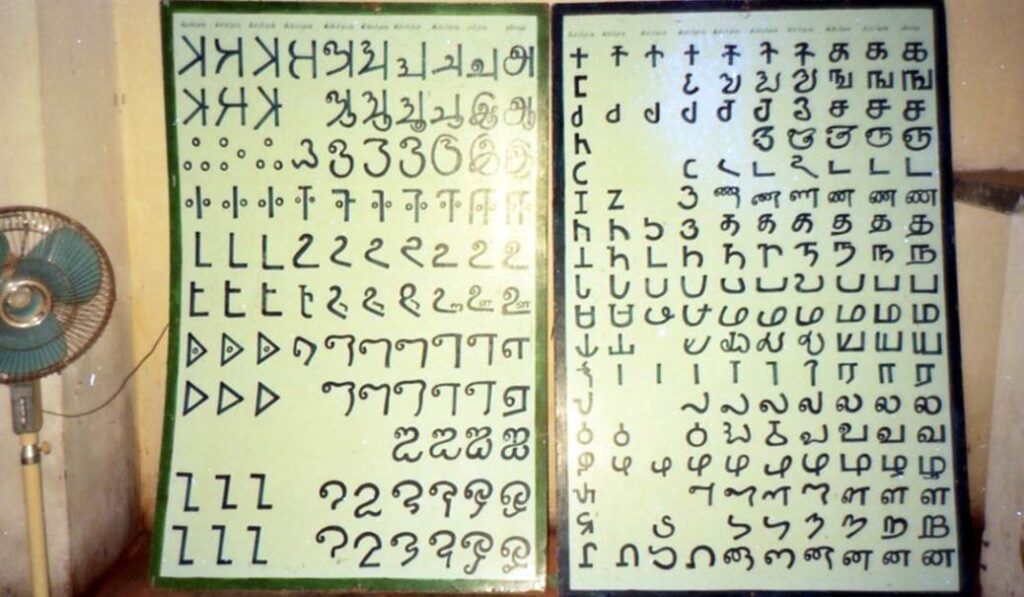
Photo by author, 1993