JAP | ENG
India Travelogue 1991
#15/26
Ajanta, Ellora
Aurangabad
On January 19, I left Udaipur Airport at 11:20 a.m. and took a domestic flight to my next unfamiliar destination, Aurangabad. I arrived at 12:25 p.m., and when I left the airport and looked around, it looked like a cowboy town in a western movie. The altitude is 513 meters, and Mumbai is 350 km to the southwest, and in the middle of the Deccan Plateau. Within 30 km of Aurangabad are two UNESCO World Heritage Sites: Ajanta and Ellora.
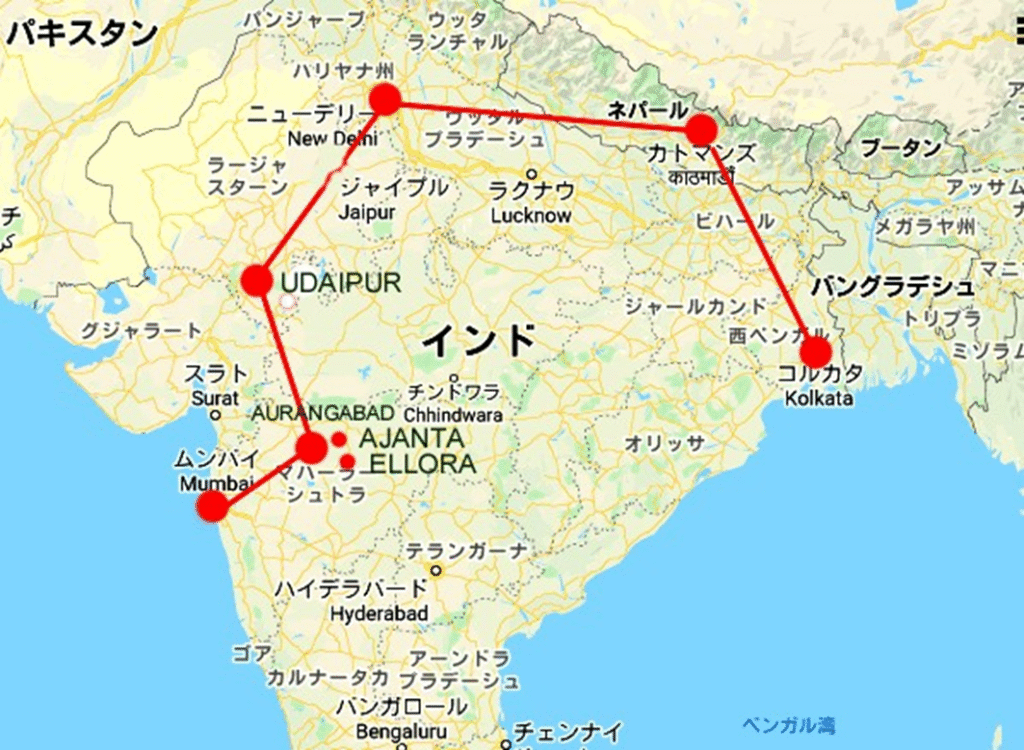
Ajanta
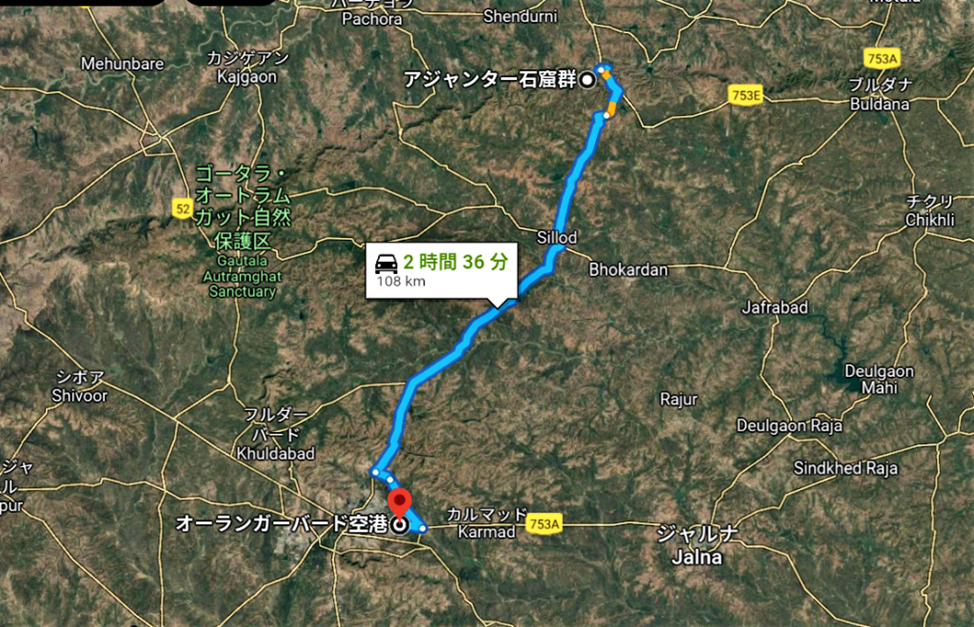
The Ajanta Caves are located about 100 km, two and a half hours drive from Aurangabad Airport.
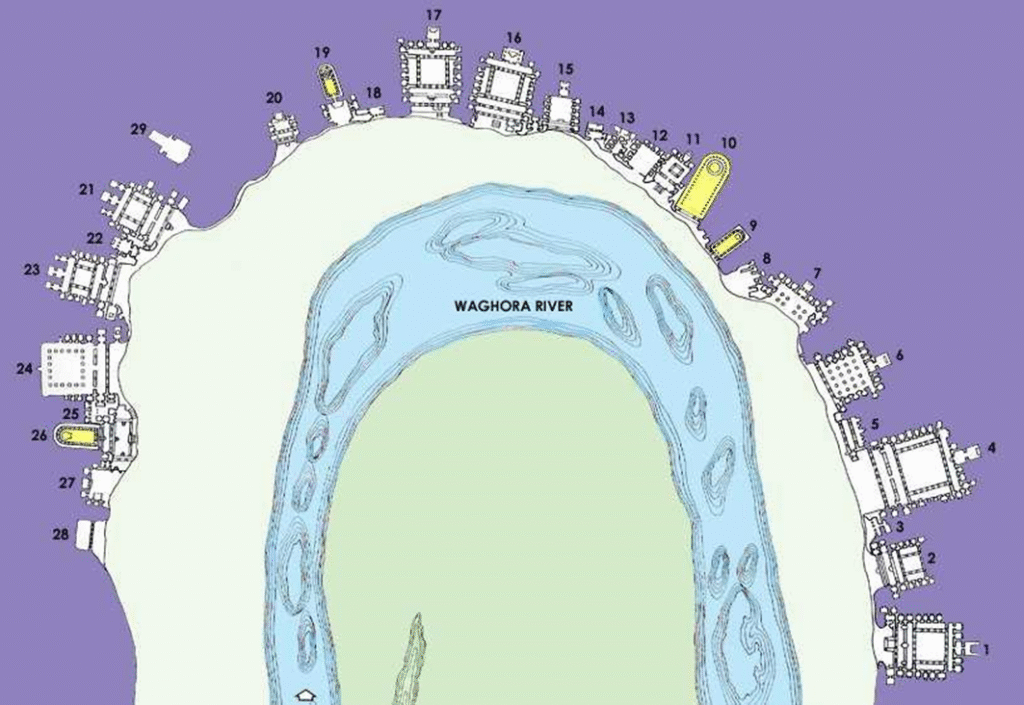
The Ajanta Caves are an ancient Buddhist cave temple complex consisting of 30 large and small caves carved out intermittently over a 550m stretch of cliff surrounding a bend in the Waghola River in northern Maharashtra, India.
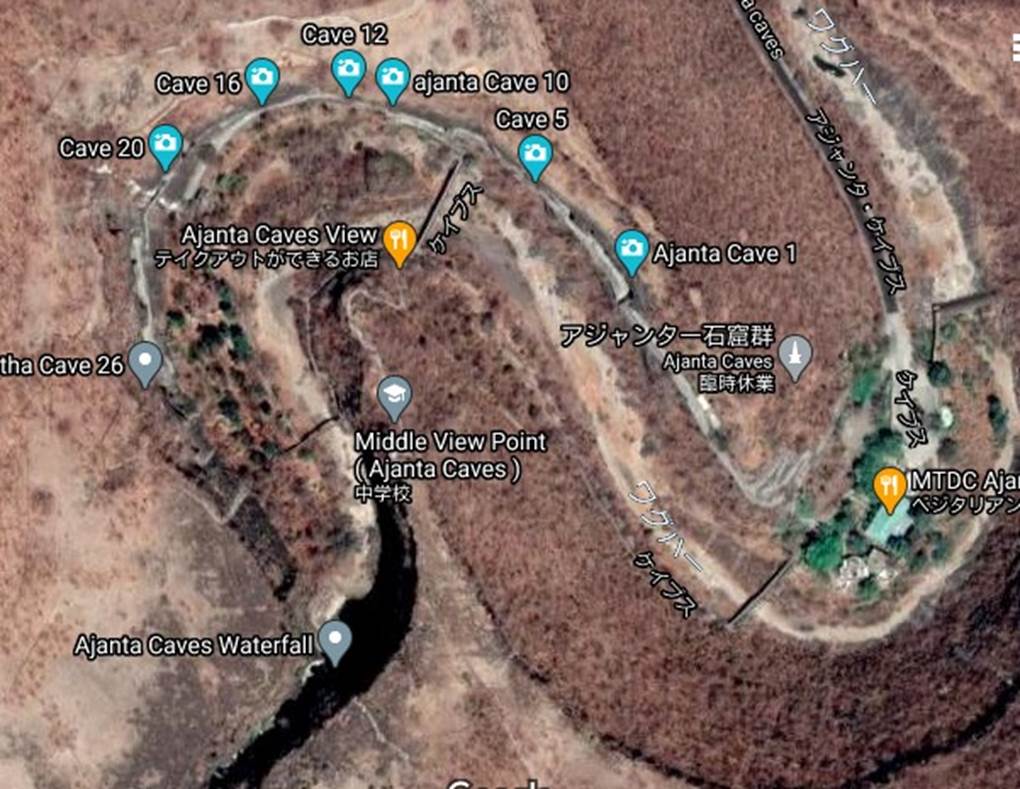
Ajanta Caves from Google Maps
Ajanta Caves World Heritage Site
The cliffs surrounding the bend of the Wagora River, which flows through the Deccan Plateau of Maharashtra, stretch for 550 meters. Hollowed out of the bedrock on the slopes, 30 caves, large and small, have been built. Ancient Buddhist cave temples remain here. Inside, the oldest period of Buddhist art, including Gupta murals and sculptures, remains.
The caves here are also thought to be the source of the caves that were brought all the way from Afghanistan to Western China. I believe that the Ajanta Caves are still of great value today as the origin of traditional Indian art and as the origin of Buddhist art that spread to East Asia. I cannot help but be amazed that such a world-class heritage is located in this remote part of India.
The caves are divided into two periods, the early period (first period) and the late period (second period). The early period was built between the 1st century BC and the 2nd century AD.
The Ajanta Caves were discovered in 1819 when a British soldier on a tiger hunt was attacked by a huge tiger. He fled to the Wagor Valley and got lost in the caves. He ended up rediscovering the caves, which had been abandoned for many years and had become a home for bats.
Since the caves were spaces for the monks to pray, live, and practice, they were all small and simple with few decorations. Ajanta dates back to the middle of the 6th century, and some of the caves were abandoned while they were still in the middle of construction.
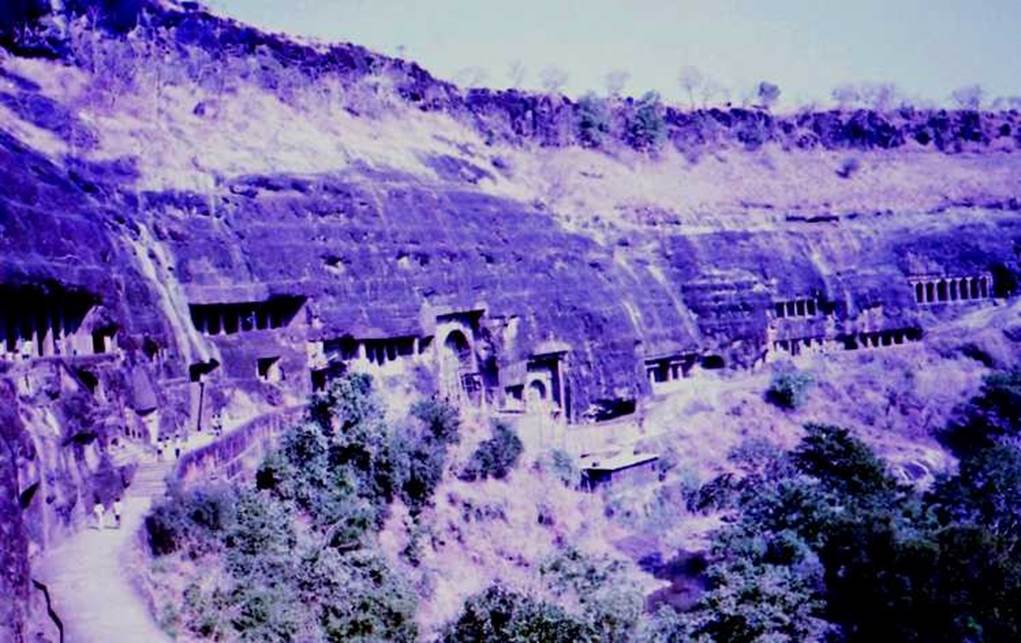
Ajanta Caves, Photo by author, 19 Jan 1991
The passage to the caves is carved between the rock wall and the canyon. Therefore, there are many ups and downs. It is difficult for elderly people and those who are overweight, so manual carriers are on standby to help them move. A team of four carriers was charged US$20 for about 30 minutes of work. This means that they earn US$5 per person for 30 minutes, so it must be a good source of income for them.
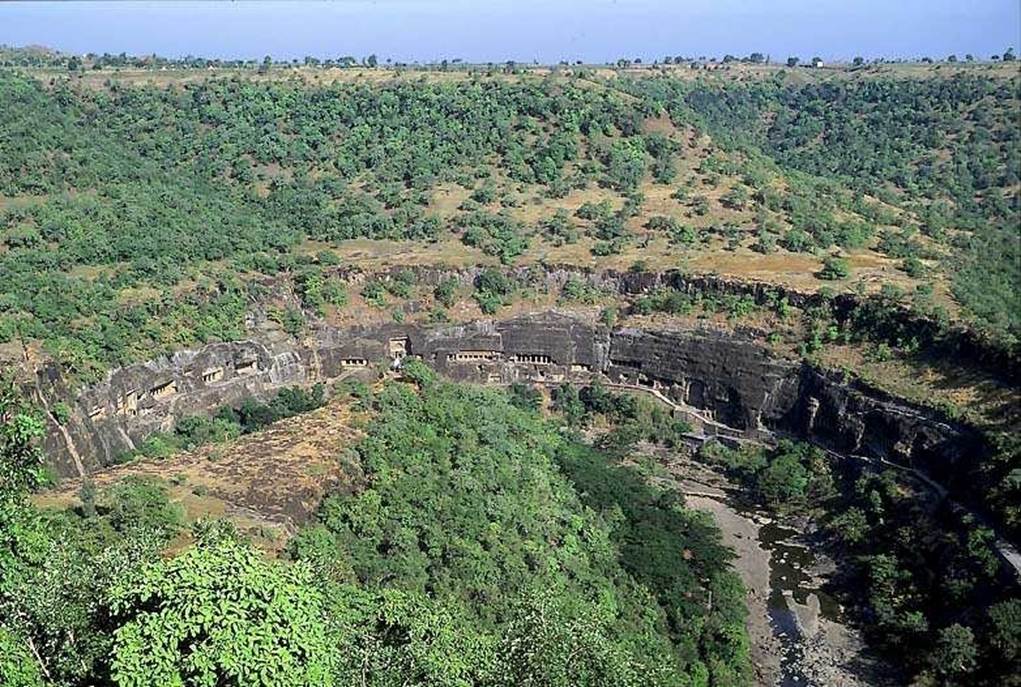
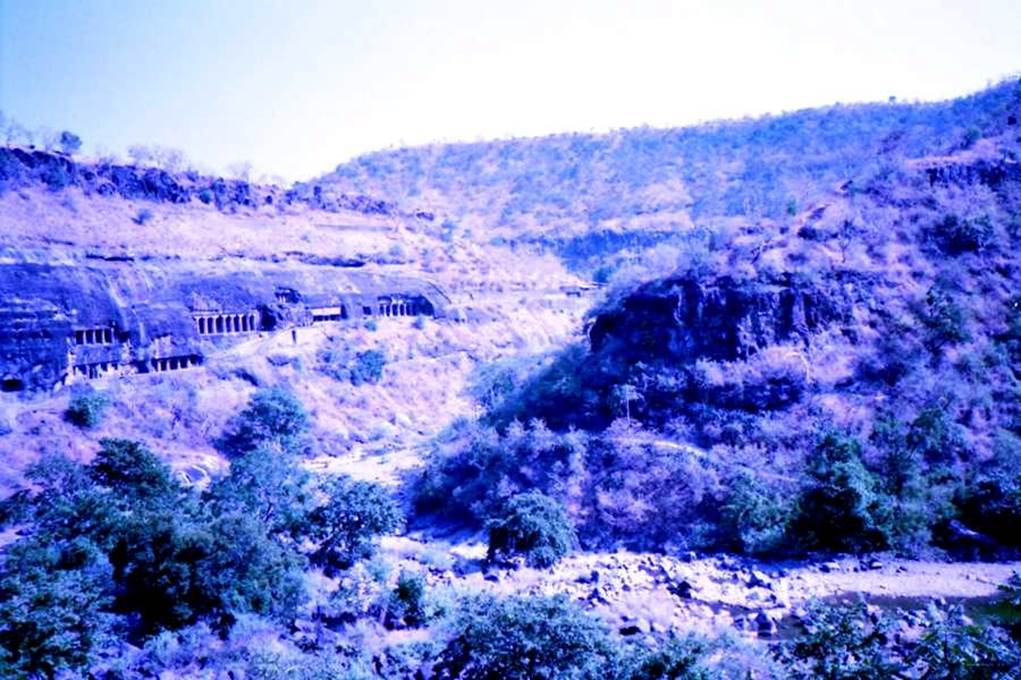
Ajanta Caves, Photo by author, 19 Jan 1991
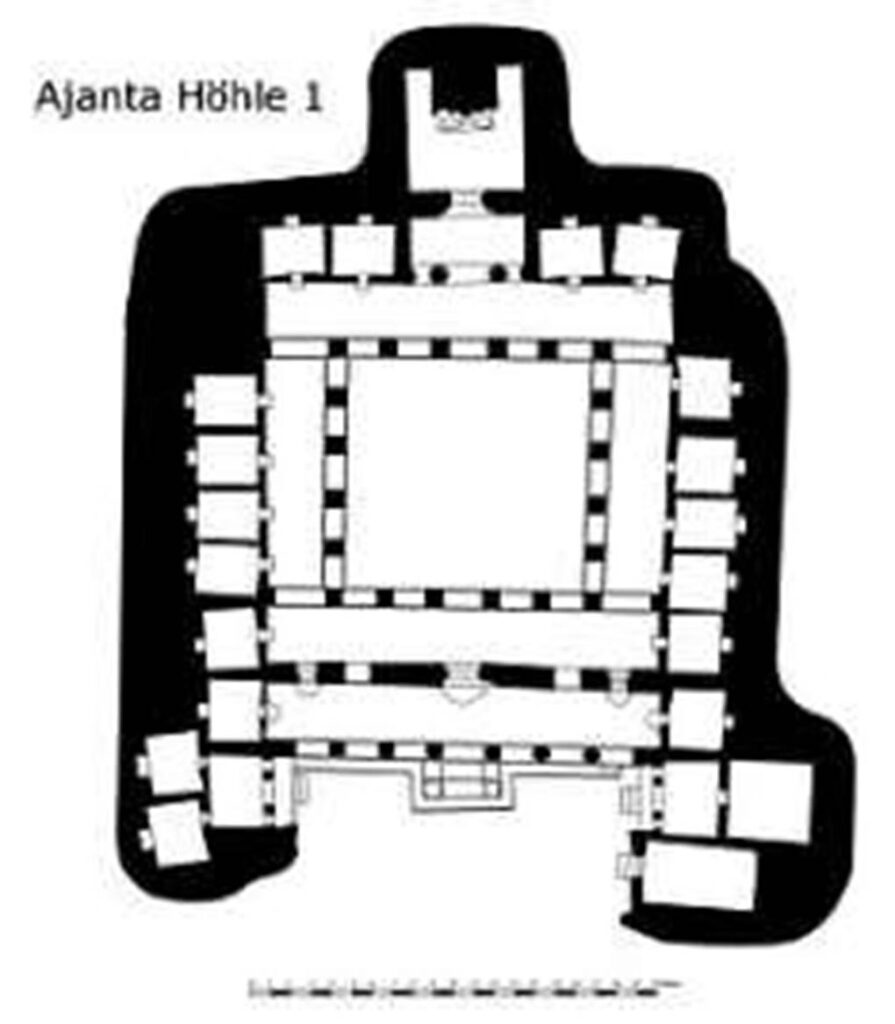
There are 30 caves, large and small.
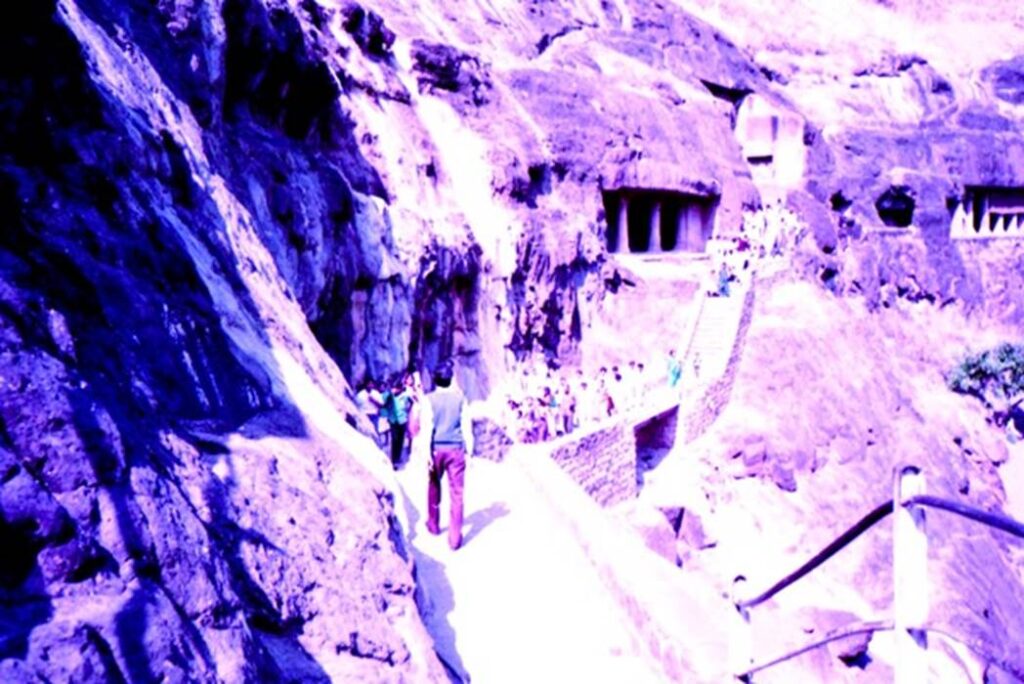
Ajanta Caves, Photo by author, 19 Jan 1991
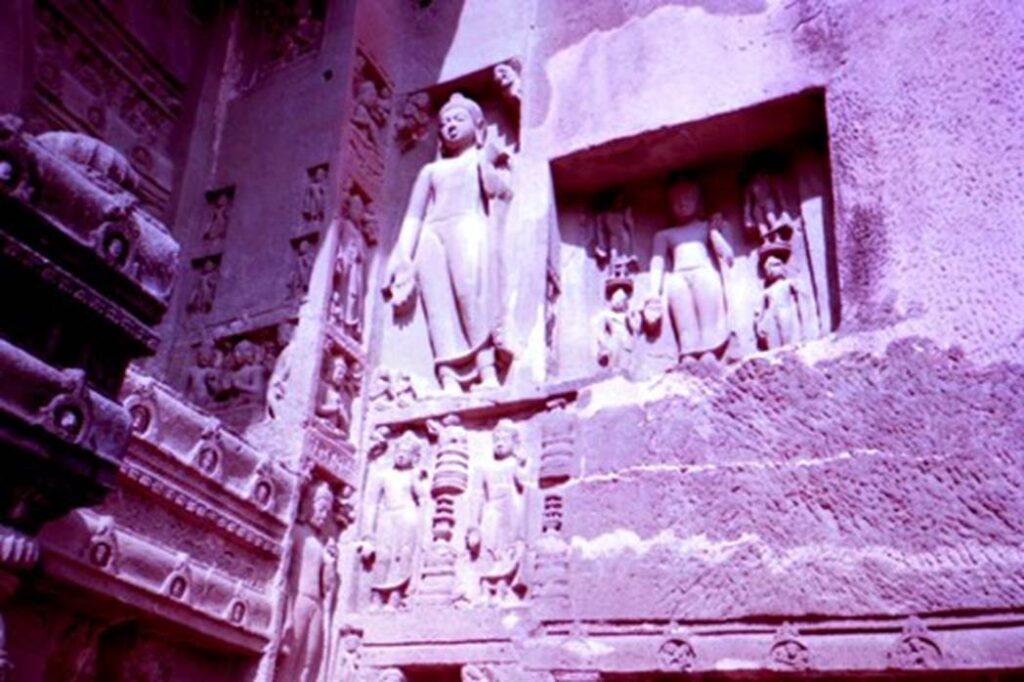
Ajanta Caves, Photo by author, 19 Jan 1991
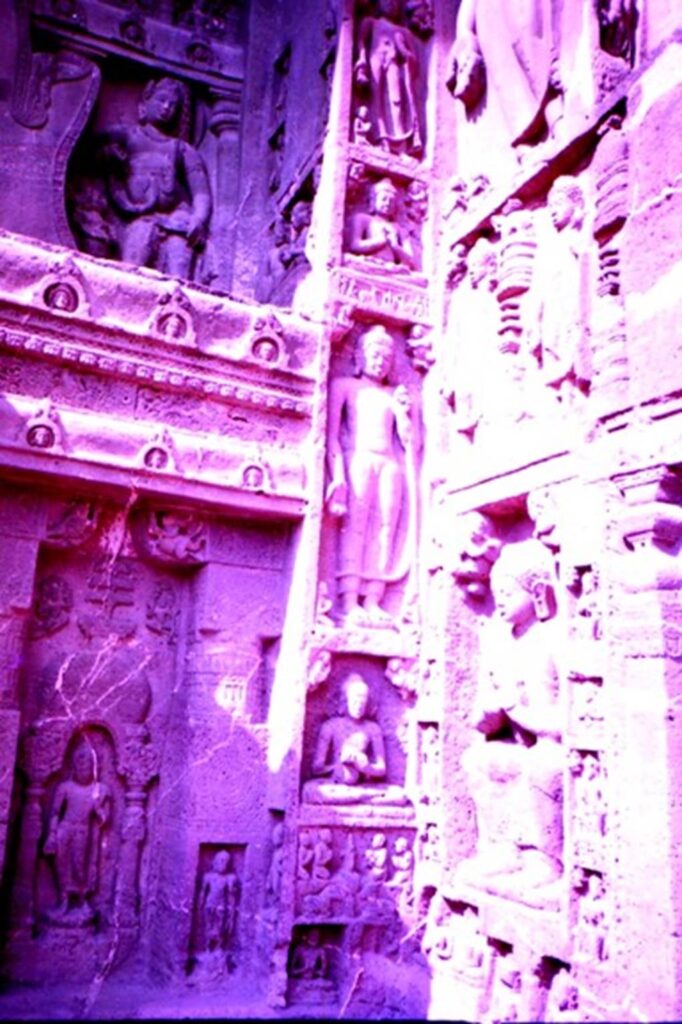
Ajanta Caves, Photo by author, 19 Jan 1991
Subtraction architecture
If building a foundation and then stacking stone on top of it can be considered “architecture by addition,” then the religious facilities at Ajanta can be described as “architecture by subtraction.”
Ellora
Ellora is a village about 30km from Aurangabad. It is home to the world-famous Ellora Caves. A total of 34 cave temples and monasteries have been carved into the area. They were built between the 5th and 10th centuries.
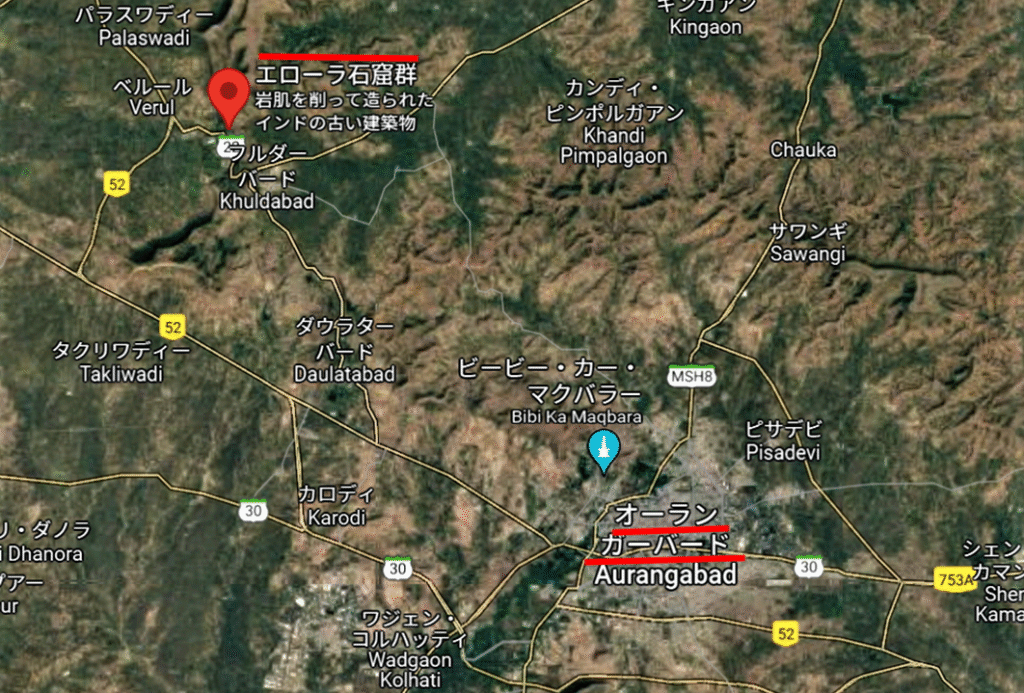
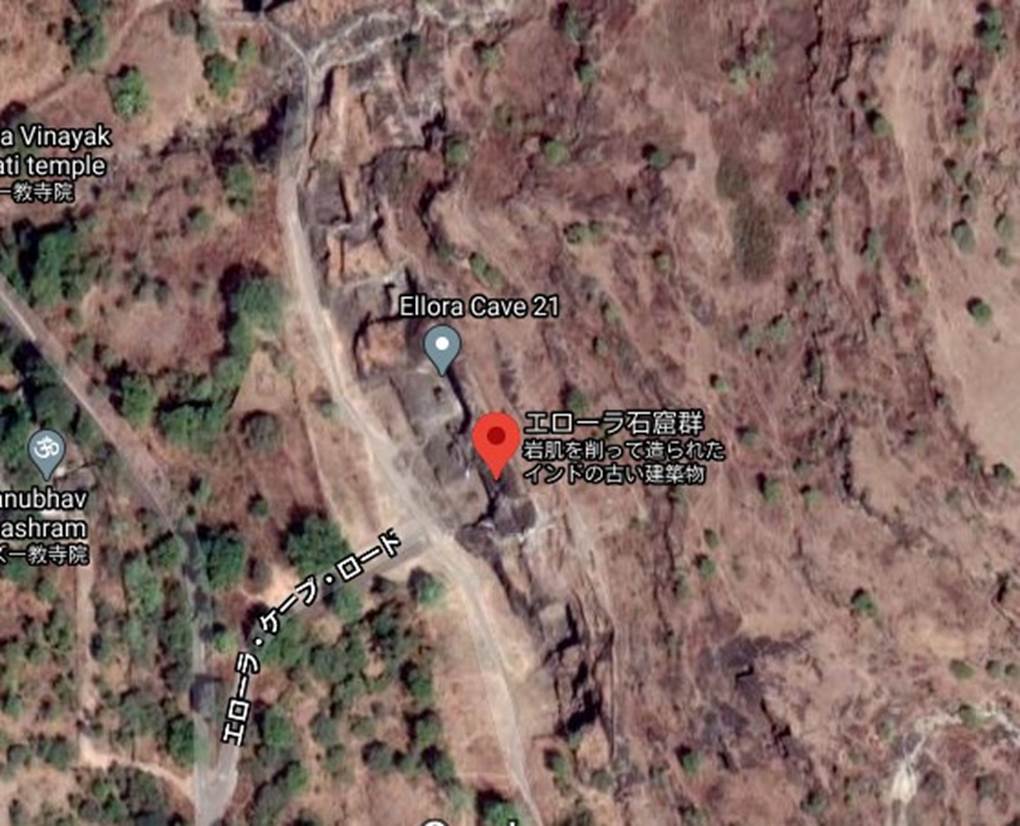
Ellora Caves from Google Maps
Ellora Caves World Heritage Site
The Ajanta ruins are said to have existed since around the 1st century BC, while the Ellora ruins are later, said to have been built in the 6th or 7th century.
The ruins of Ajanta and Ellora give a sense of the transition from around the 1st century BC, when the Buddhist cave temples were built in India, to the period when Buddhism gradually declined and Hinduism gained popularity.
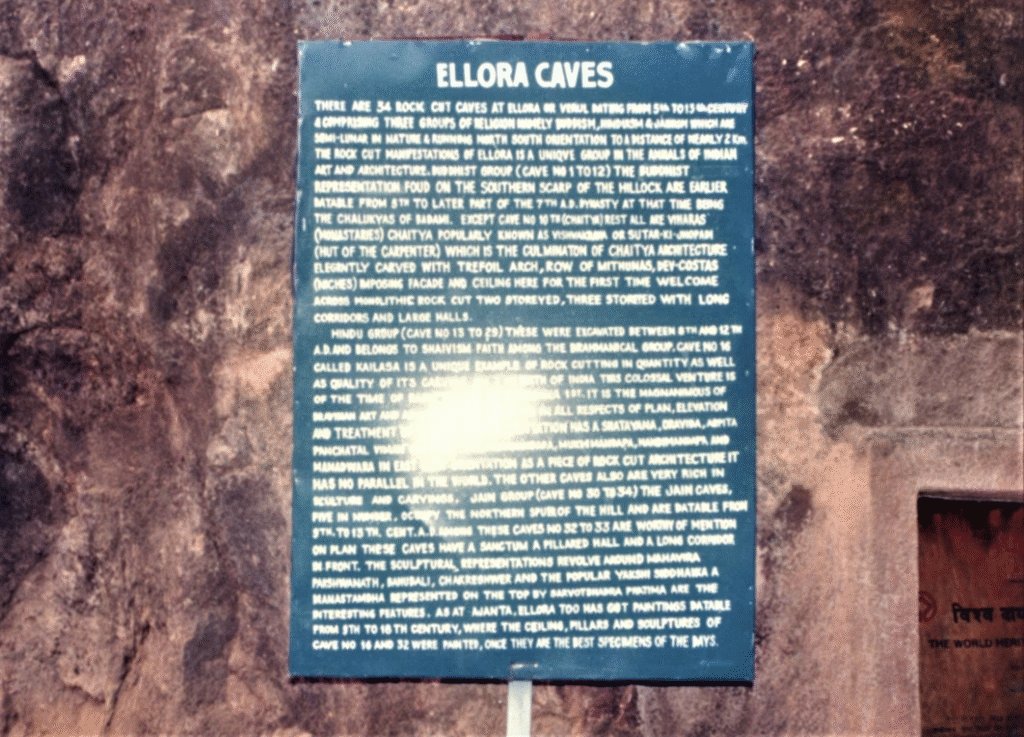
Caves 1 to 12 are Buddhist temples.
Cave 17 from Cave 13 to Cave 29 are Hindu temples (Hindu caves).
Five caves, from Caves 30 to 34, are Jain temples.
The Ellora Caves are home to not only Buddhist temples and monasteries, but also Hindu and Jain temples, which became popular later.
Buddhism fell into decline, and even when looking at the Ellora Caves, one can see that it was being completely replaced by Hindu sculptures and murals.
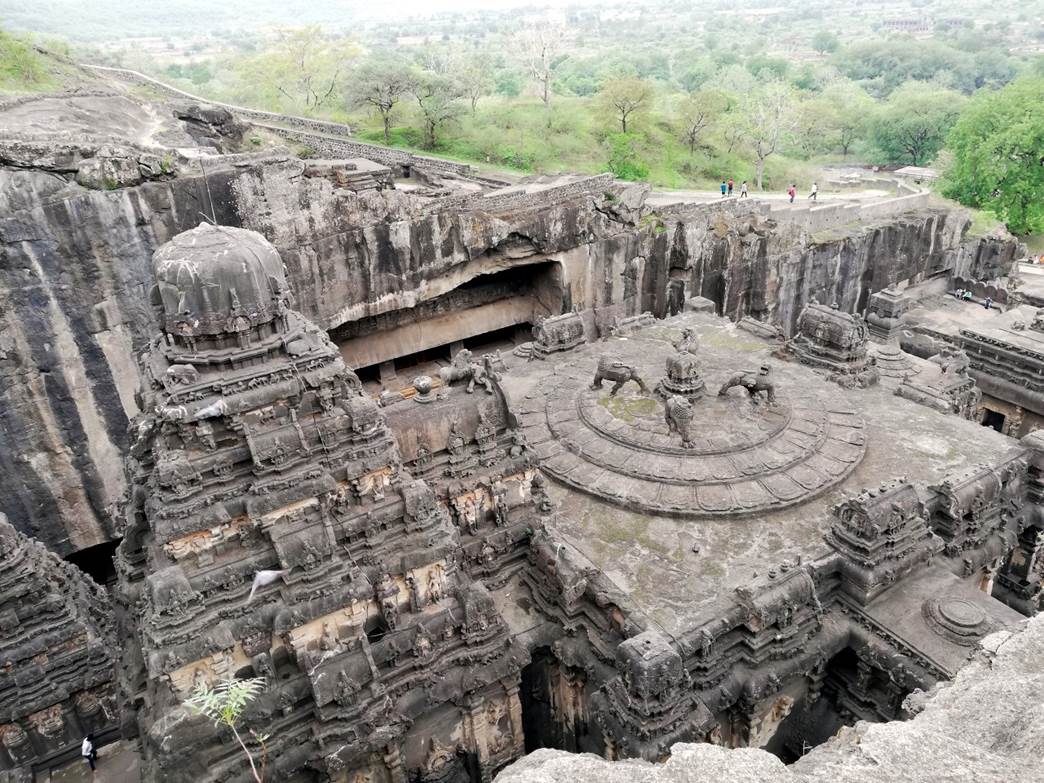
Kailasanata Temple Ellora Cave 16.
The idea of carving a temple out of a rocky mountain was influenced by the aforementioned “Ratha” of Mahabalipuram, and by excavating rocks on a large scale, they created temple architecture that went beyond the category of rock caves. The Hindu Kailasanatha Temple is the largest ruin in the Ellora Caves.
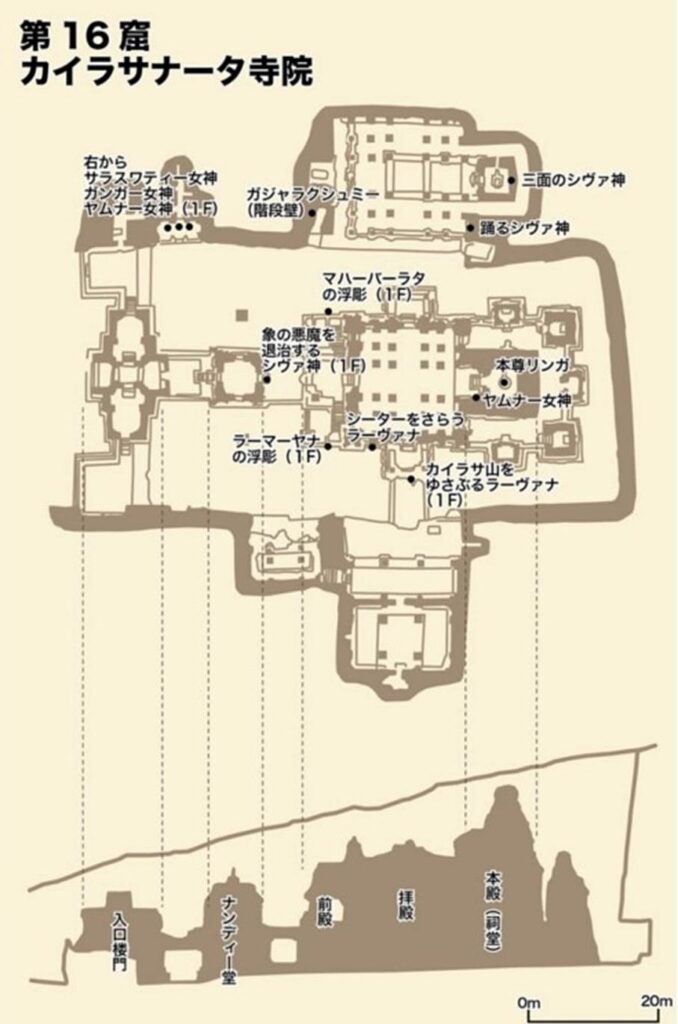
From “West India 015 Ellora”
The Kailasanata Temple is said to be twice the size of the Parthenon in Athens. It is unmistakably carved from a single bedrock stone, and the finished product is a multi-storey structure. It must have been done systematically by the teamwork of religious figures, architects, artists, and many stonemasons. Coming to this remote part of India, I was amazed to find such a cultural heritage in the depths of India, and it was well worth visiting.
The Kailasanatha temple has a U-shaped, three-tiered structure with a depth of about 45 meters from top to bottom.
The top of Kailasanatha Temple.
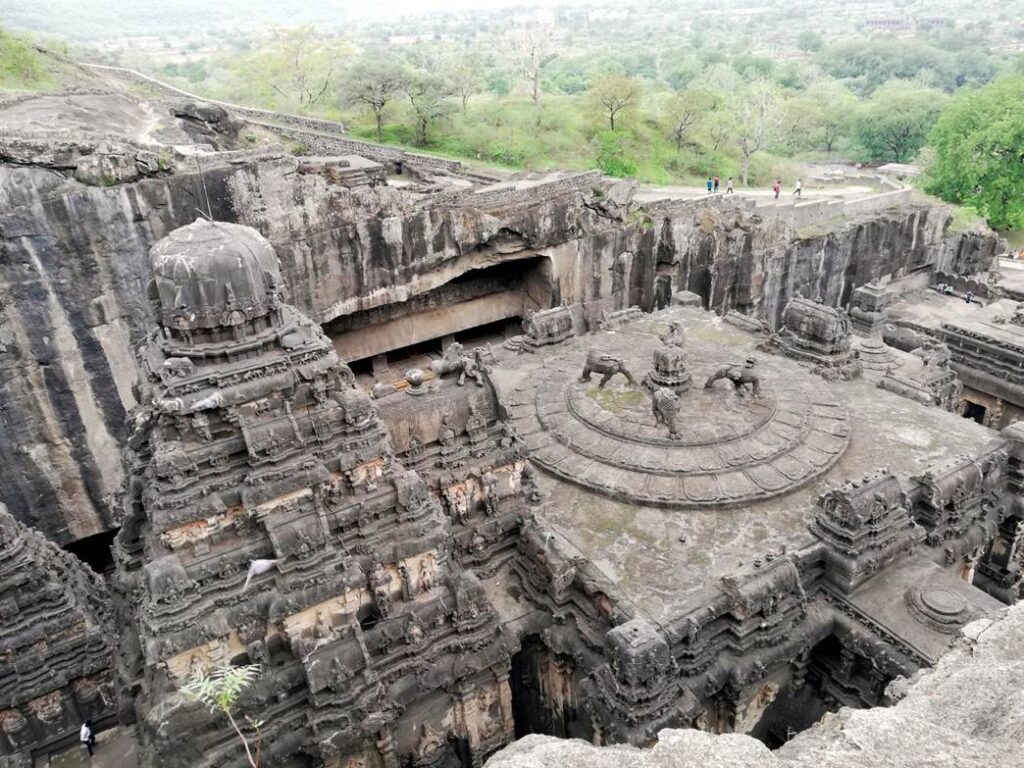
Source: 4travel.jp
The builders began at the top of the mountain and carved their way down. According to archaeologists, between 757 and 783 AD, they carved more than 20 tons of volcanic rock. It would have been a lot of work.
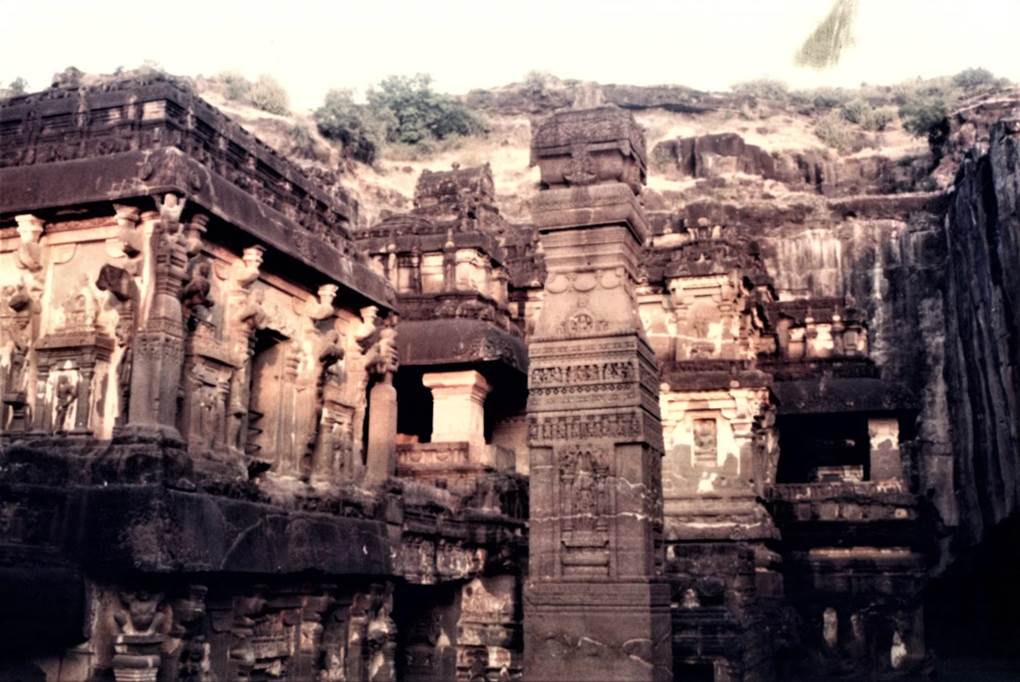
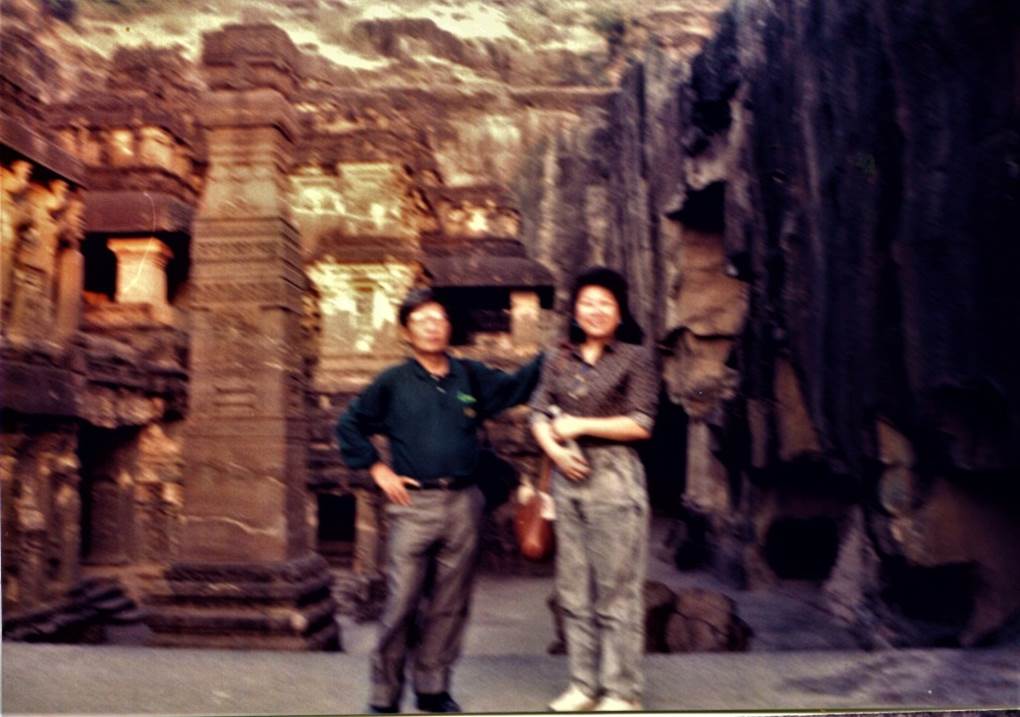
Photo of author, 1991
It is said that it took 100 years and 200,000 tons of rock create this “cave”.
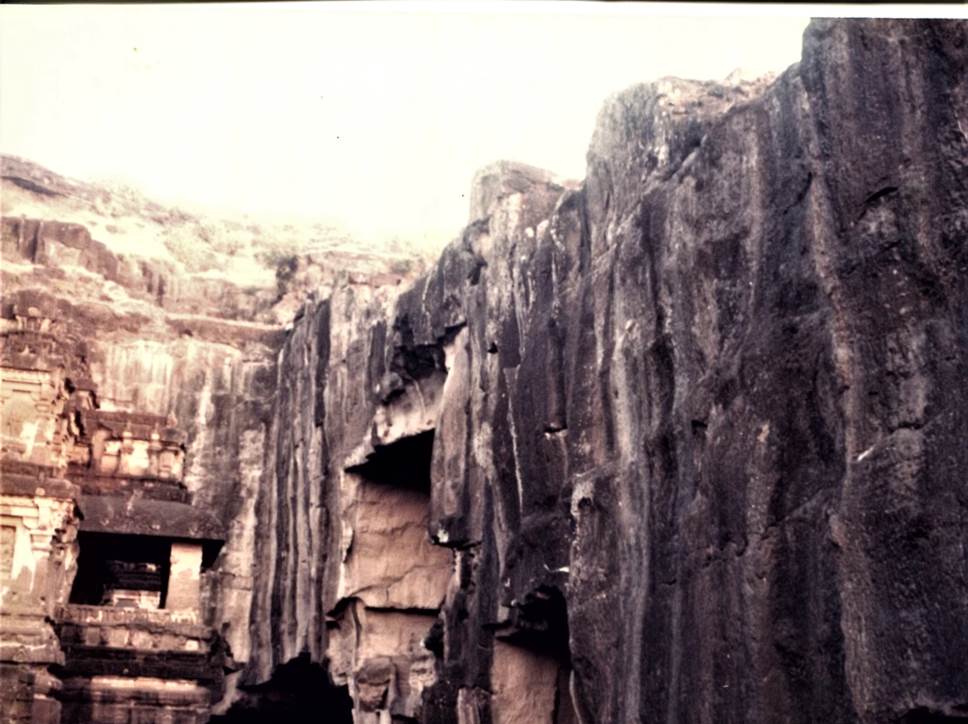
Photo by author, 1991
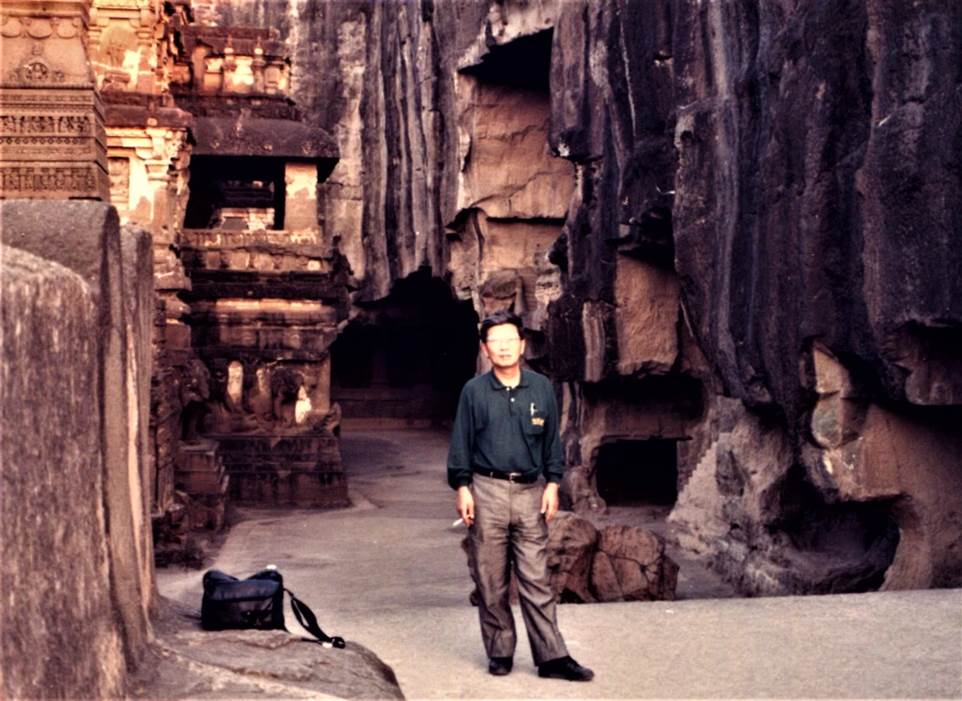
Photo of author, 1991
It is a great work of art, painstakingly carved by skilled craftsmen into a solid monolith in a cave on the mountainside.
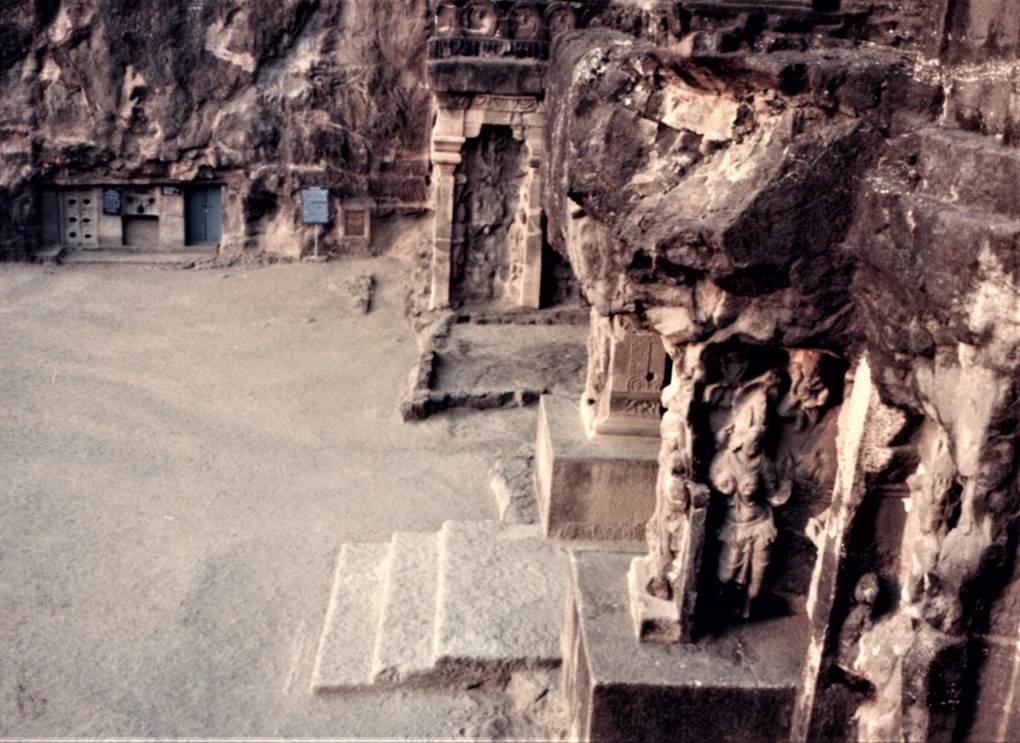
Photo by author, 1991
It is said that it took 100 years and 200,000 tons of rock create this “cave”.
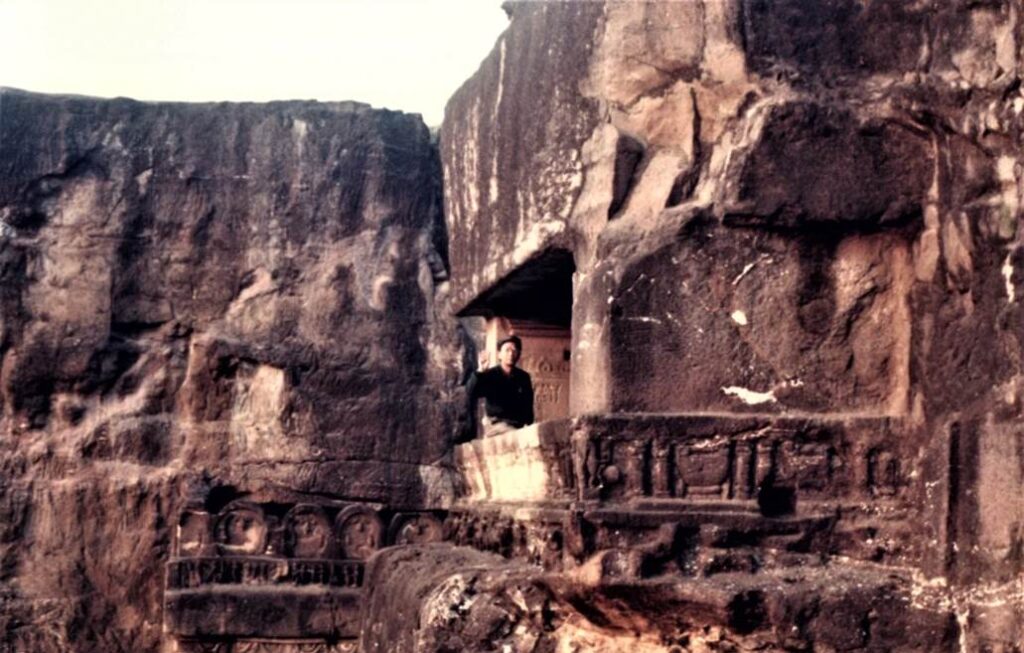
Photo of author, 1991
We climbed up to the upper floor of Kailasanatha Temple.
There were only two of us and a local guide.
There was no one watching over us, and no one asked for permission.
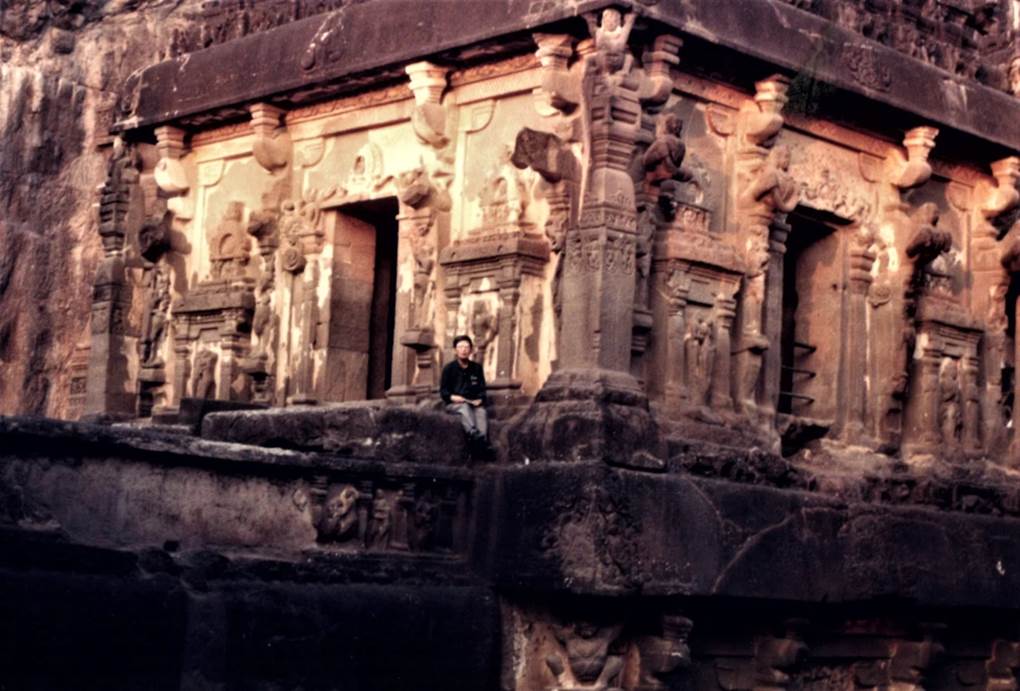
Photo of author, 1991
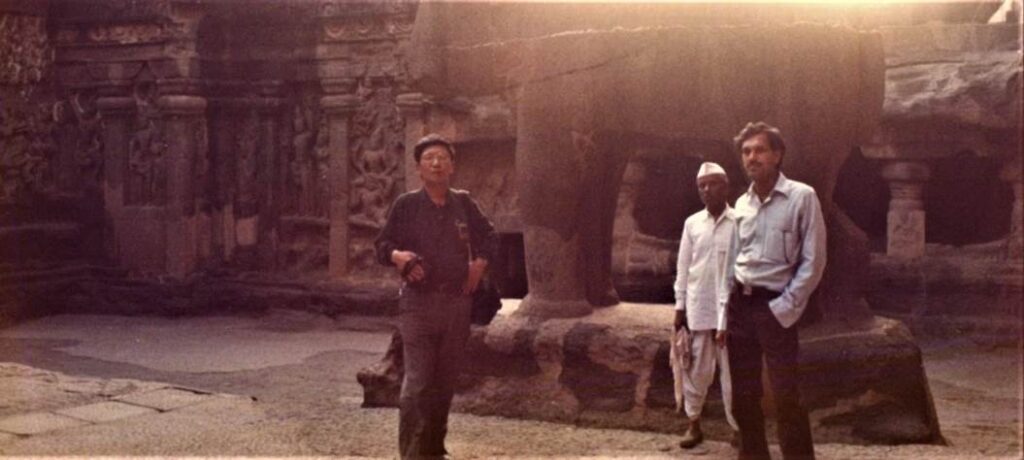
Photo of author, 1991
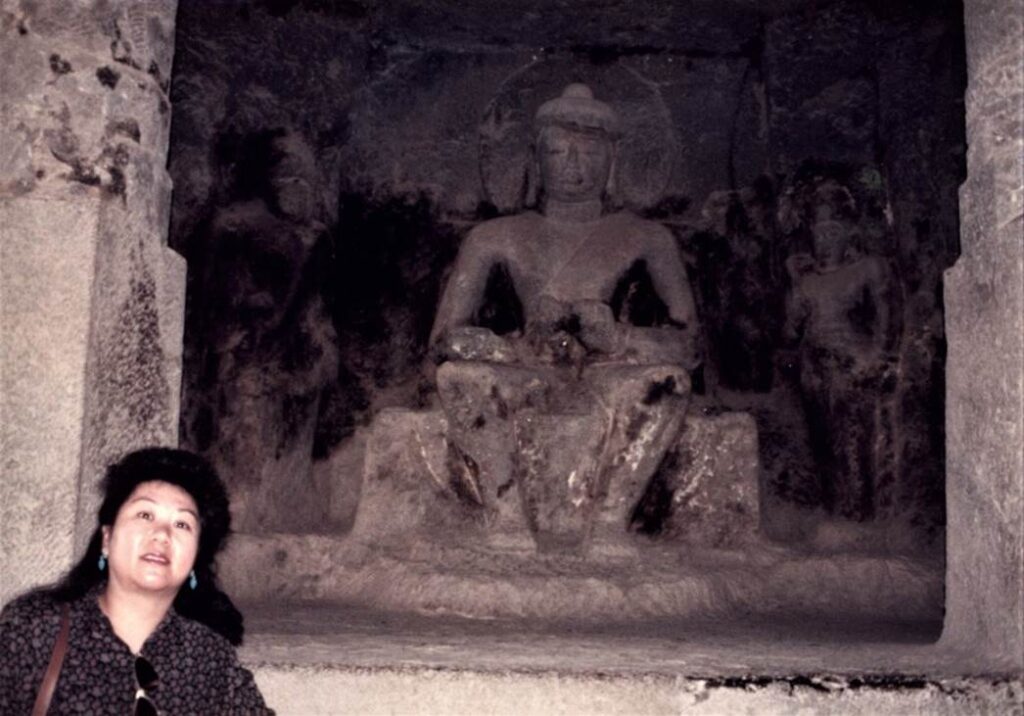
Photo by author, 1991
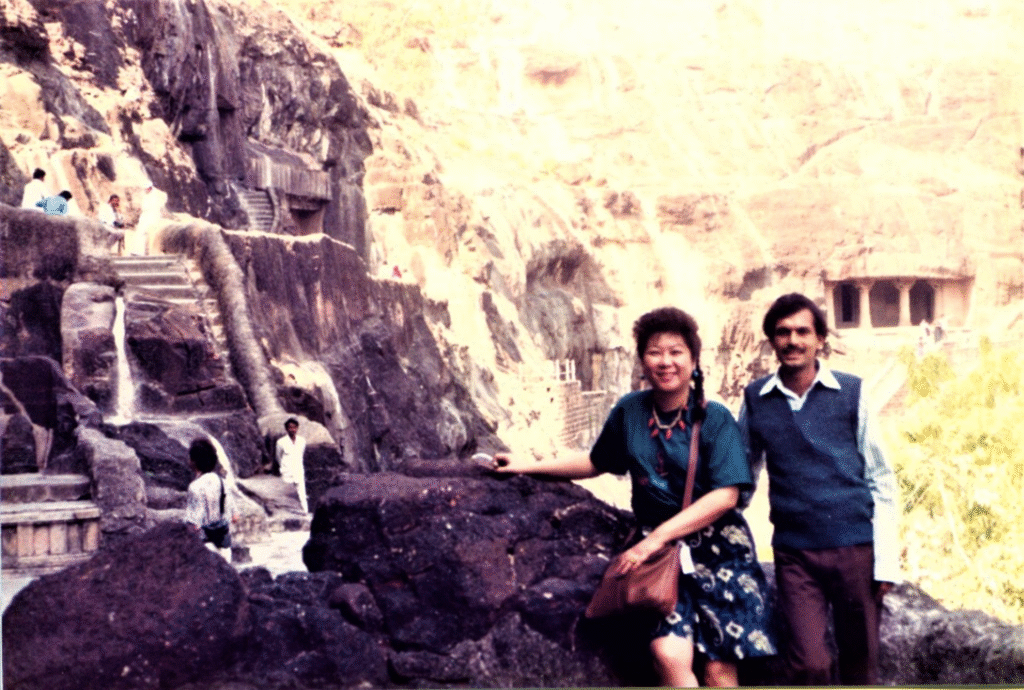
Photo by author, 1991
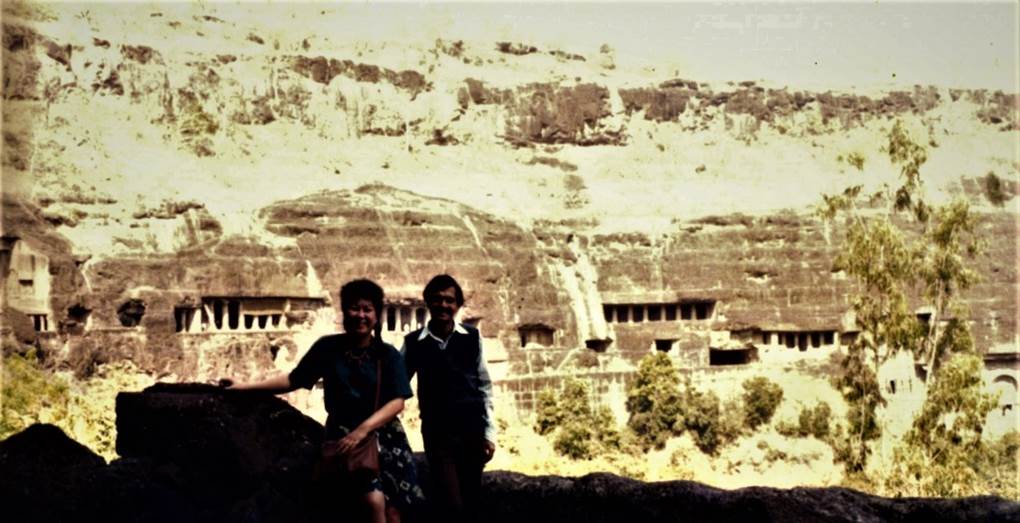
Photo by author, 1991
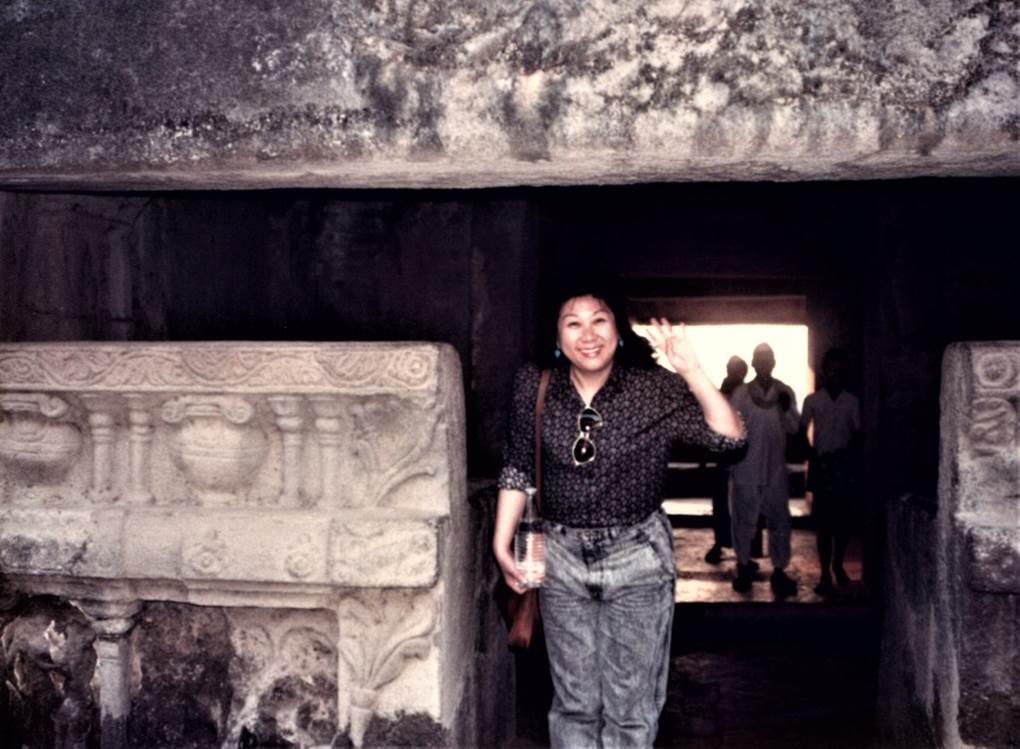
Photo by author, 1991
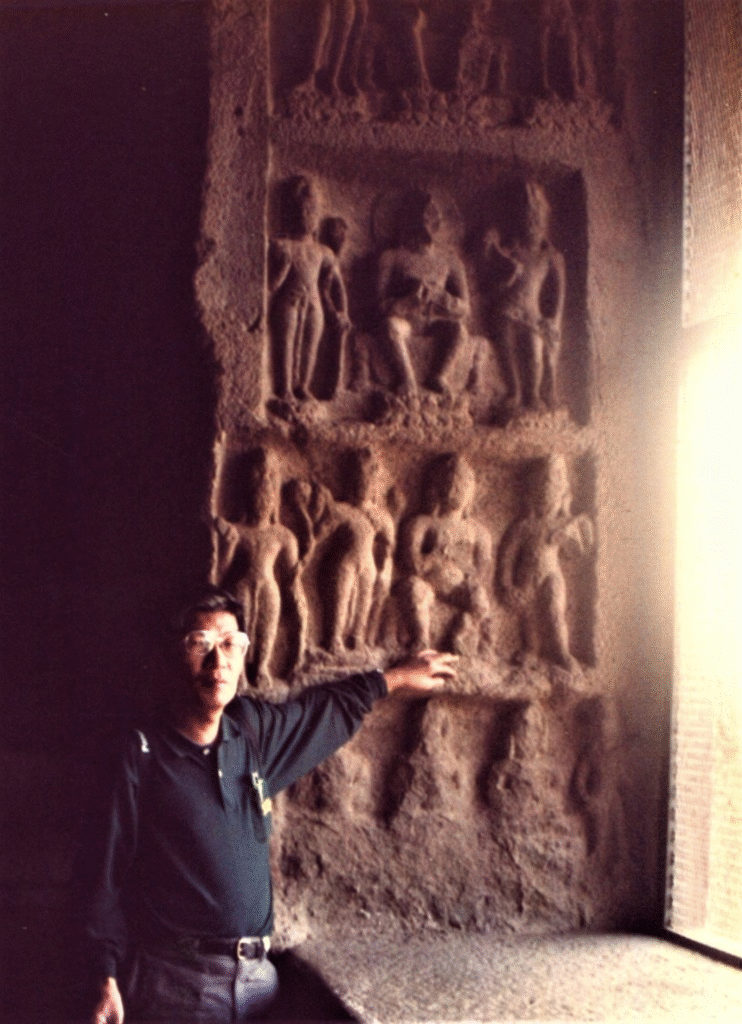
Photo of author, 1991
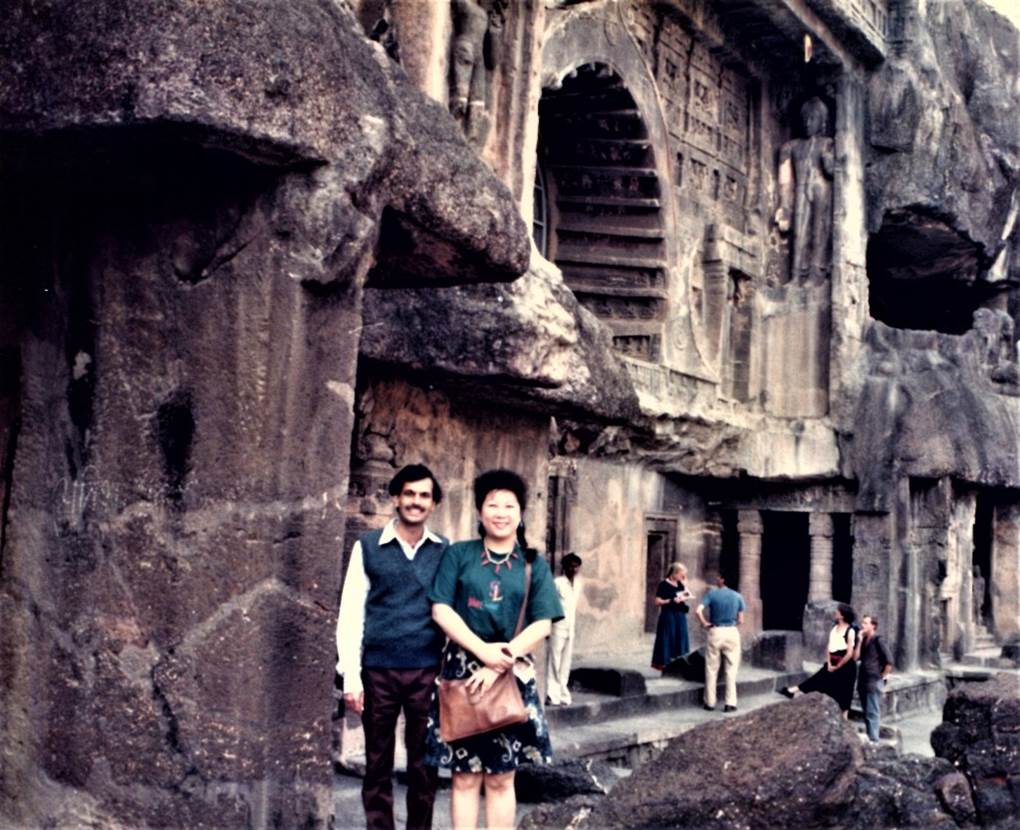
Photo by author, 1991
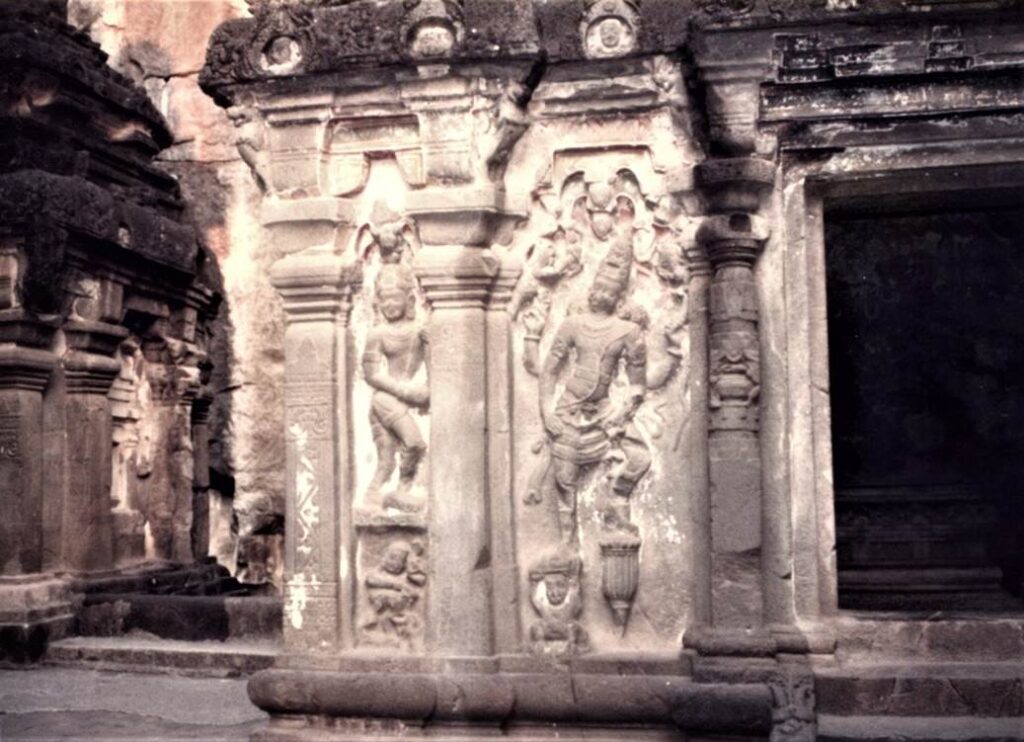
Photo by author, 1991
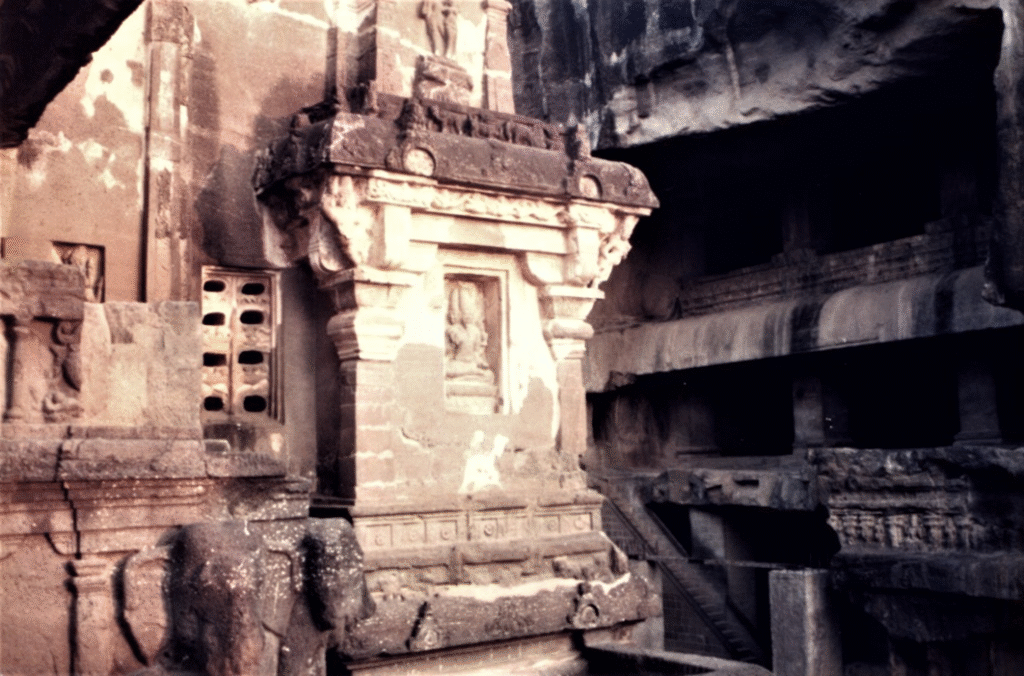
Photo by author, 1991
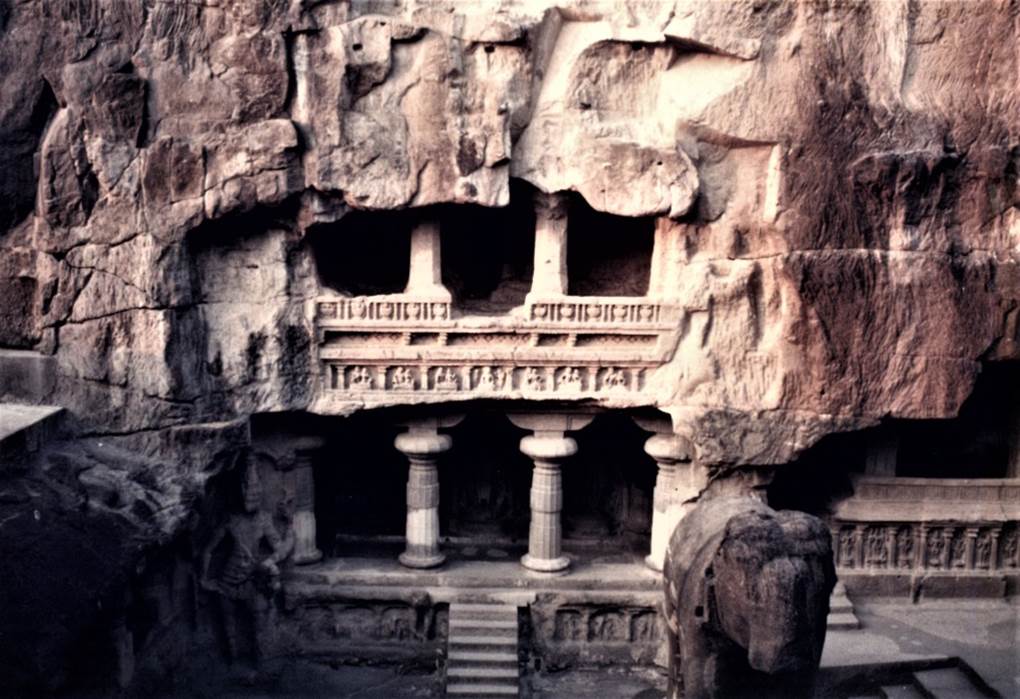
Photo by author, 1991
After visiting the Ellora Caves, we took a break.
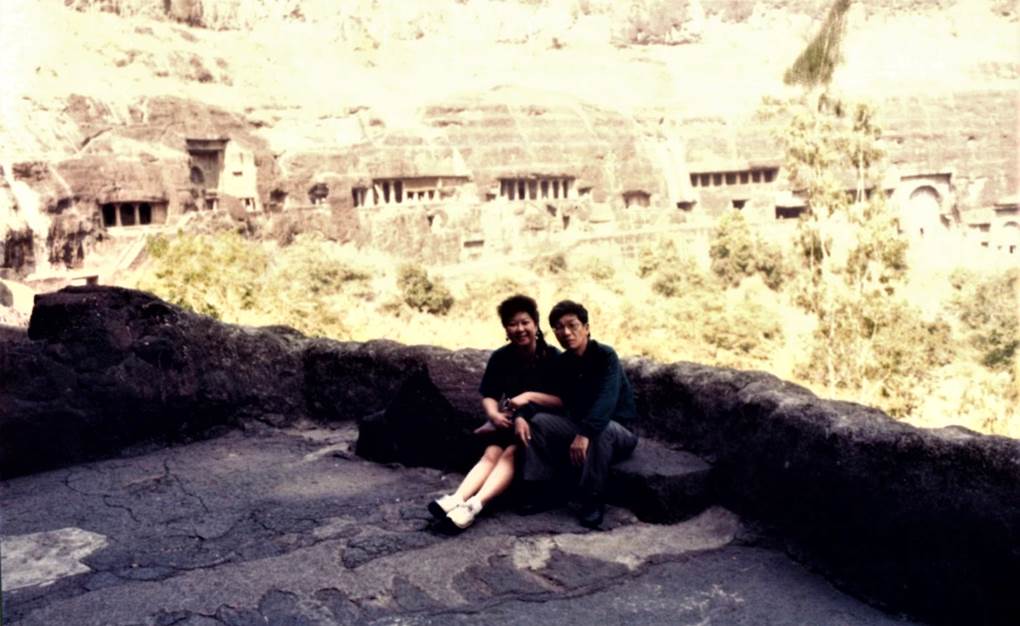
Photo of author, 1991
Not only the Ajanta caves, but also the Ellora caves are carved into the rock walls and the canyons. This means that there are many ups and downs. It is difficult for the elderly and overweight, so manual carriers are on standby to help them move. A team of four carriers is charged US$20 for about 30 minutes of work. This means they earn US$5 per person for 30 minutes, so it must be a good source of income for them.
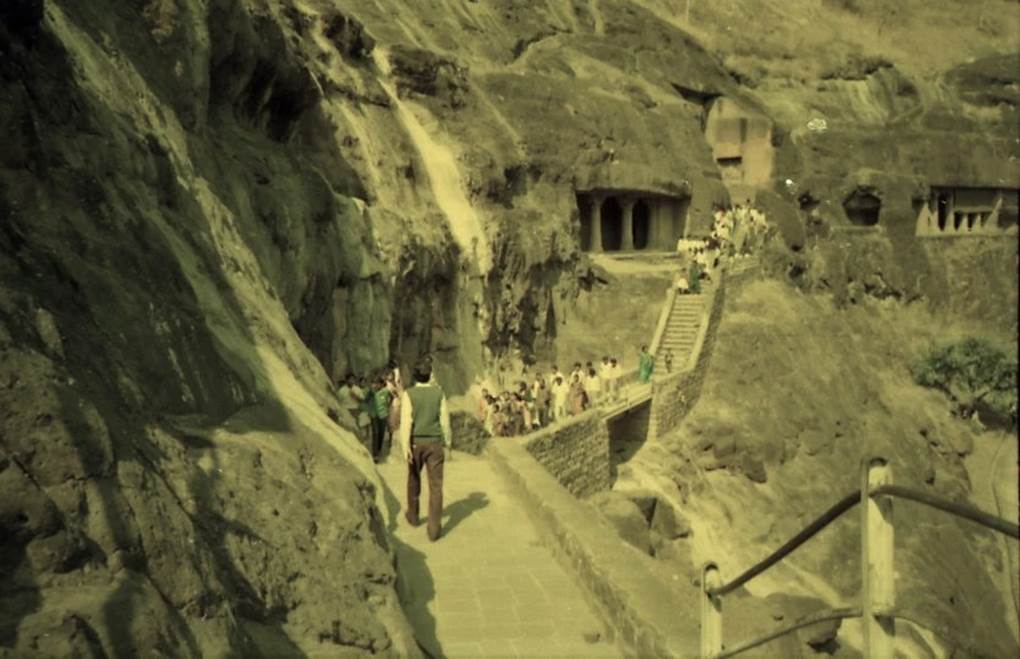
Photo by author, 1991
On the night of January 20, 1991, Mumbai (then Bombay) Airport was in turmoil.
On the last day of my trip to India, where the Gulf War broke out two days ago, I arrived at the airport to catch the 00:05 flight to Singapore, but the Mumbai airport was in chaos.
The reason for this was that the Gulf War took place on the other side of the Arabian Sea, which faces Mumbai.
I went through the check-in process. I was told that our confirmed seats were not available. It must have been an emergency and some high-ranking government official or military personnel must have taken the seats. I quickly rebooked the same flight for the next day and requested accommodation for the night.
After some negotiation, the hotel I was assigned was decided to be THE LEELA MUMBAI, a 5-star hotel located right next to the airport. I decided to relax and recover from the fatigue of my trip by watching the Gulf War news on CNN until I left India.
THE LEELA MUNBAI

Source: getyourvenue.com