JAP | ENG
India Travelogue 1989
#13/26
Vanarasi #2
Stroll along the Ganges River
After observing the crematorium, dark with smoke from the cremations, I decided to head further north and take a walk along the banks of the Ganges River.
Here, there were no crowds of pilgrims, but many people working on civil engineering projects. While taking a walk, I was able to see the construction work being carried out to extend and expand the ghat in preparation for the expected increase in the number of bathers in the future.
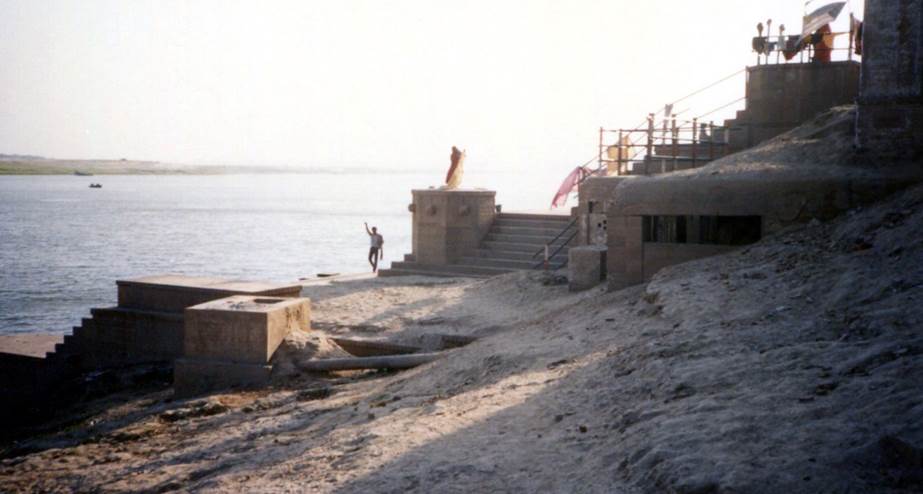
Photo by author, 1989
Crematorium on the far right
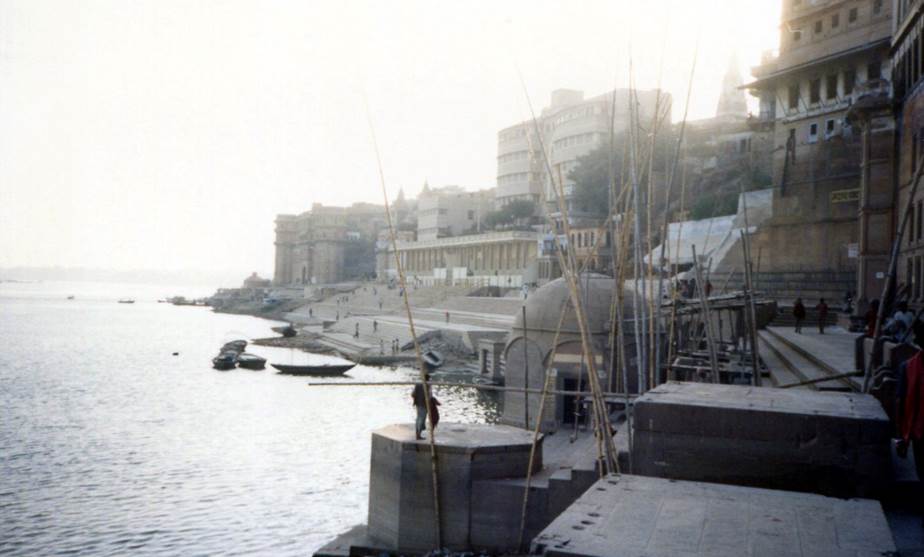
Photo by author, 1989
On the north side of the crematorium, firewood used to cremate the bodies is piled up haphazardly.

Discovery of a building in progress that is sinking

Photo by author, 1989
Hindus have an extraordinary passion for religious buildings.
This temple is a wonderful work of art, both in terms of the shape and proportions of the building.
However, it is sinking with a slight inclination to the clay soil near the river bank.
Ironically, this has actually made the building more noticeable and a good subject for photography.
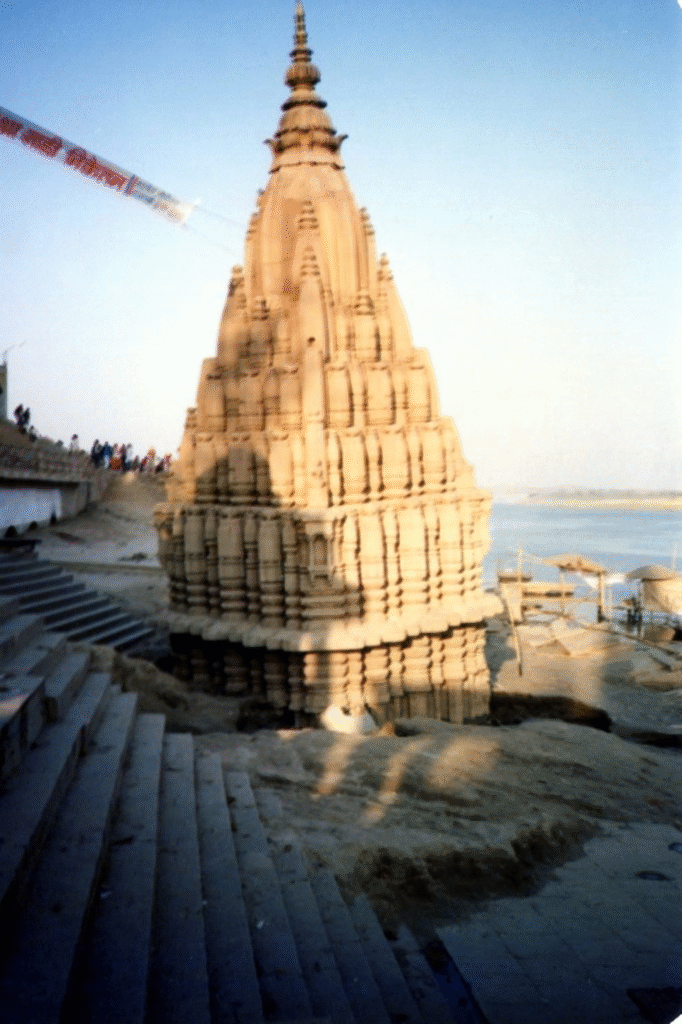
Photo by author, 1989
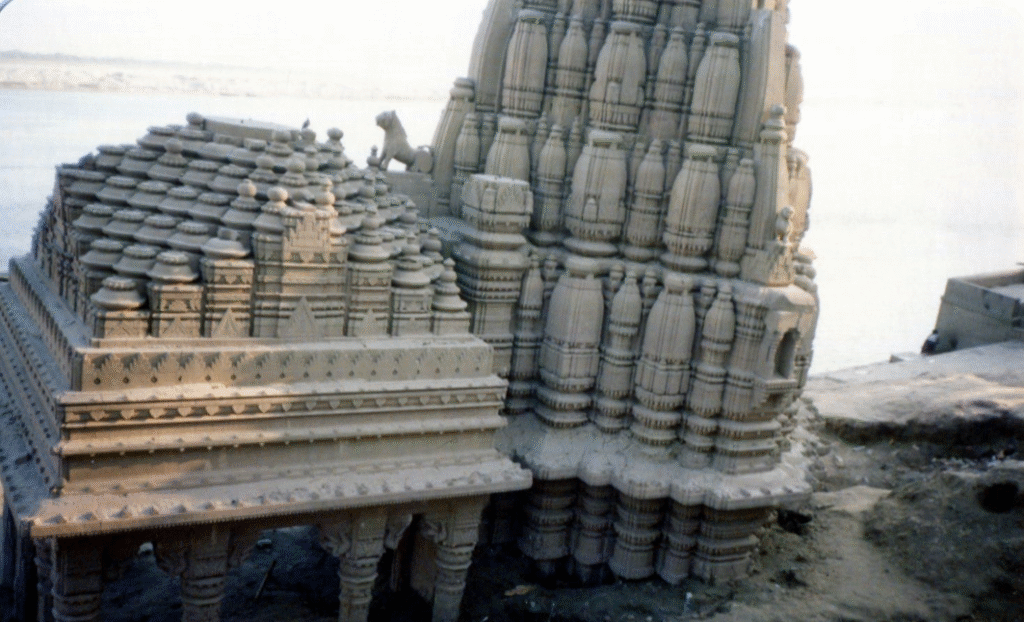
Building in progress is currently sinking. Photo by author, 1989
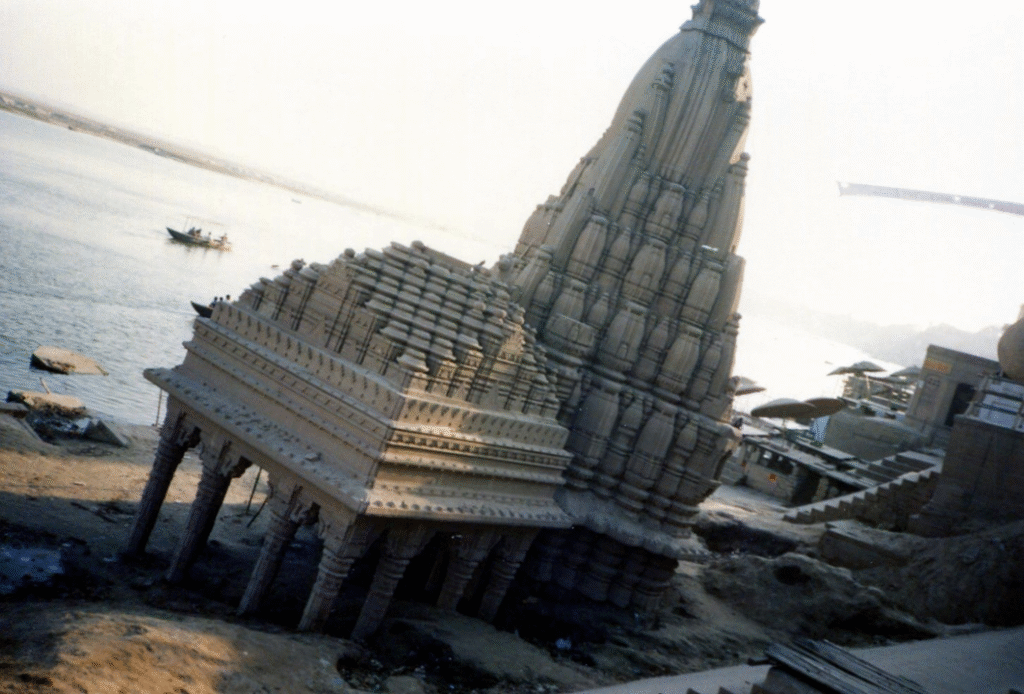
Photo by author, 1989
The ghat is being expanded
A ghat being expanded along the Ganga River on the north side of the crematorium.
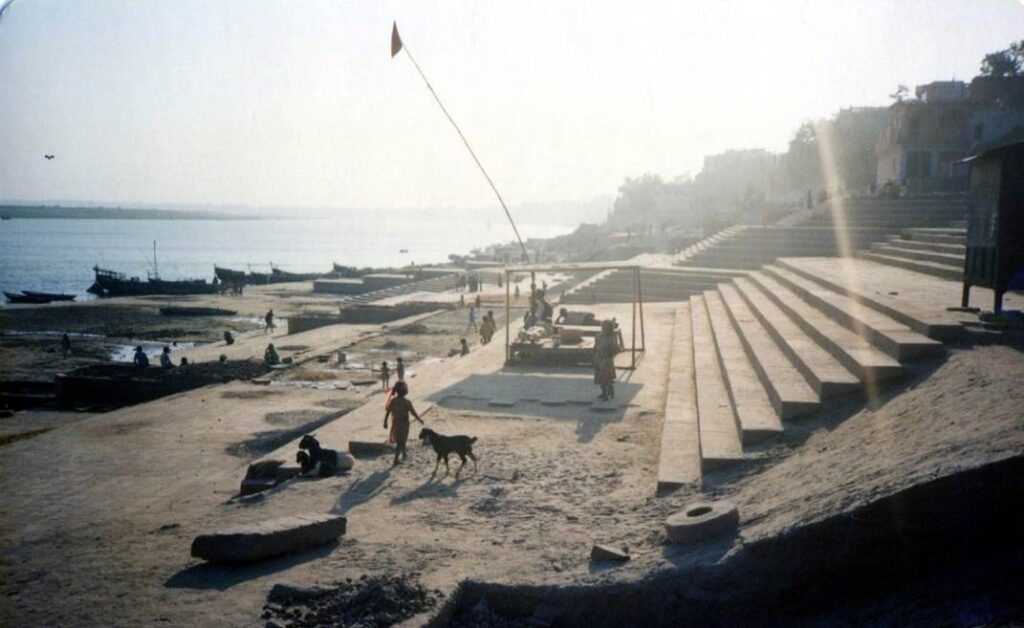
Photo by author, 1989
There is no safety fence at the construction site, and the construction workers do not wear helmets. Construction machinery is rarely seen, and almost everything is done by hand. The carbon footprint is extremely low, making it the ultimate eco-friendly job.

Photo by author, 1989
This area is home to a group of dilapidated buildings spread out on the terraces of the Ganges River. The completion of the ghat in front of it will attract many pilgrims to the area, allowing these buildings to be reused, revitalized, and beautifully maintained.
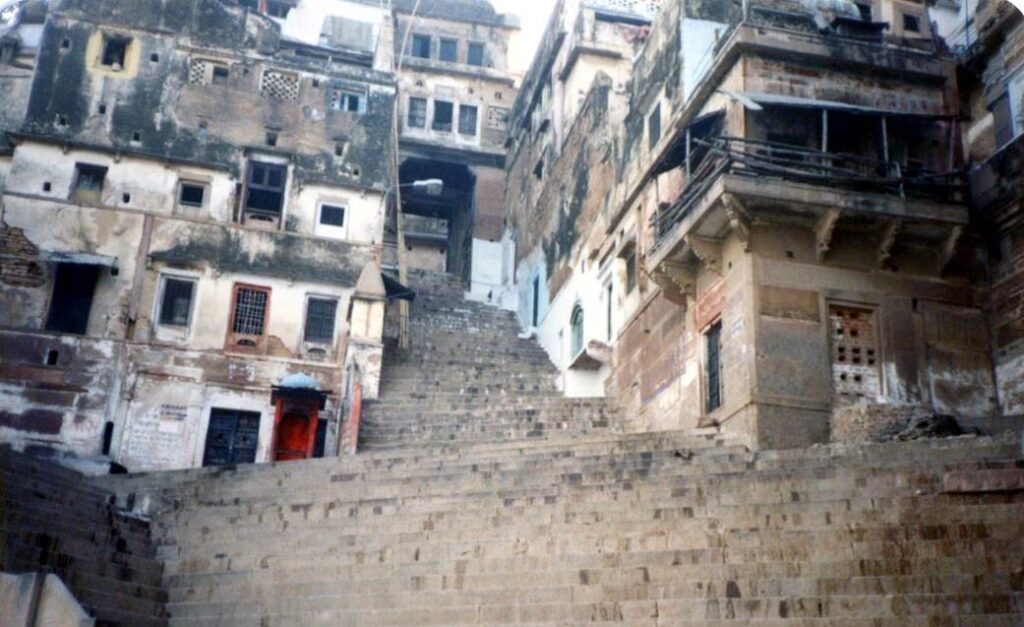
Photo by author, 1989
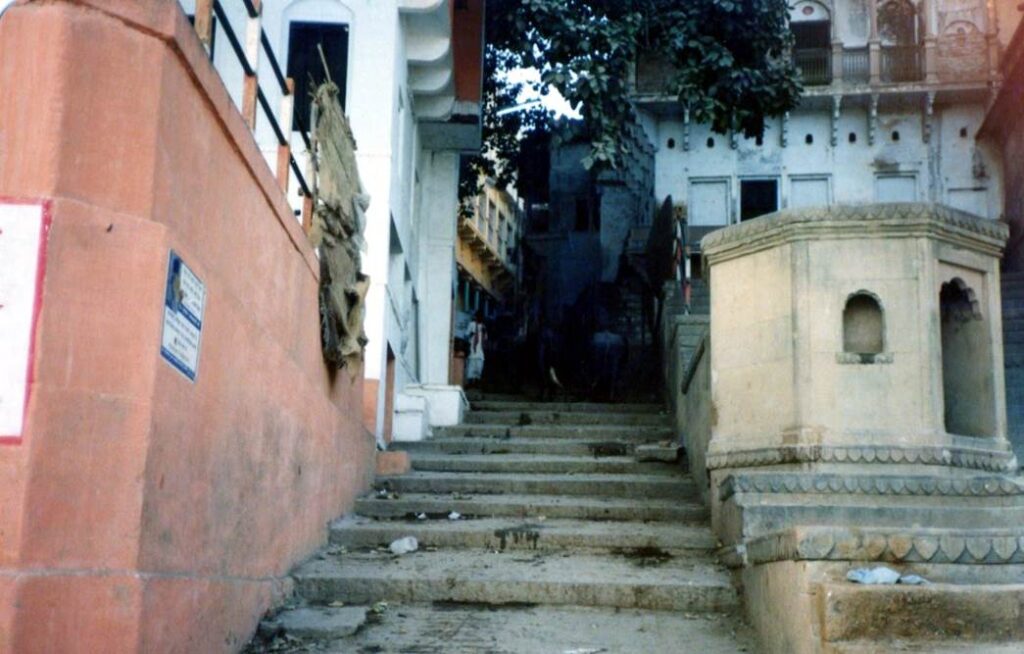
Photo by author, 1989
All people’s gazes are on the Ganges and its opposite banks.

Photo by author, 1989
The building is made entirely of red Indian sandstone, and it has a beautiful presence.
The irregular shape of the roof creates a good accent and matches well against the background of the ganga.
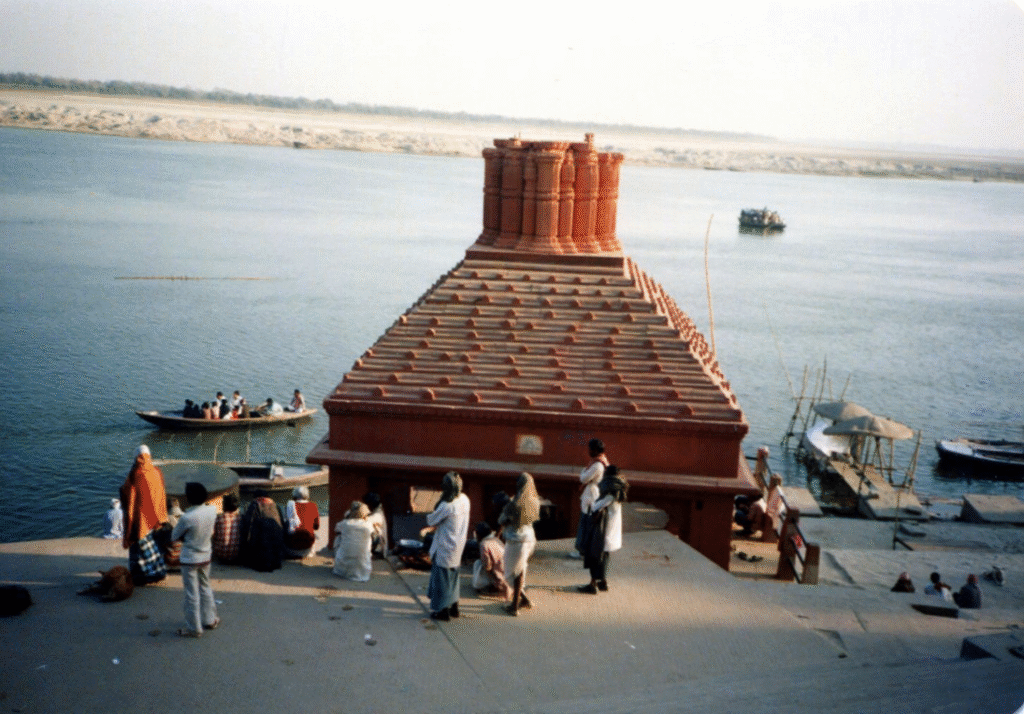
Photo by author, 1989
People working on earthworks
From early in the morning, workers are busy with earthworks on the banks of the Ganges River.

Photo by author, 1989
The soil and sand seems to have been transported by boat from the opposite shore.
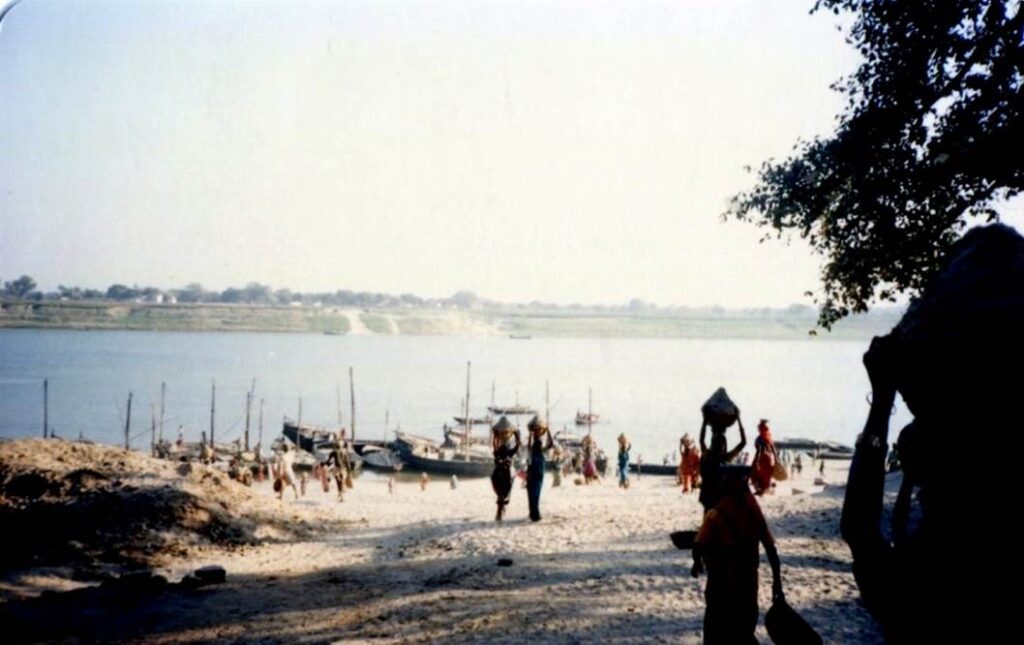
Photo by author, 1989
If you do a little bit every day, you will eventually complete it.
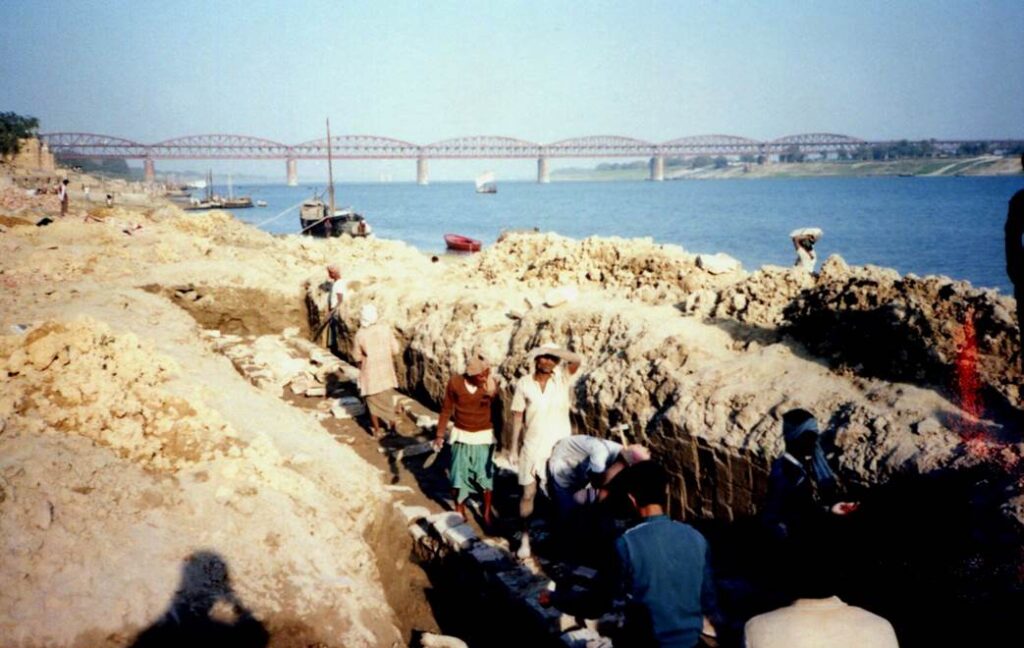
Photo by author, 1989
Transportation of soil and sand for construction work is a job mostly done by women.
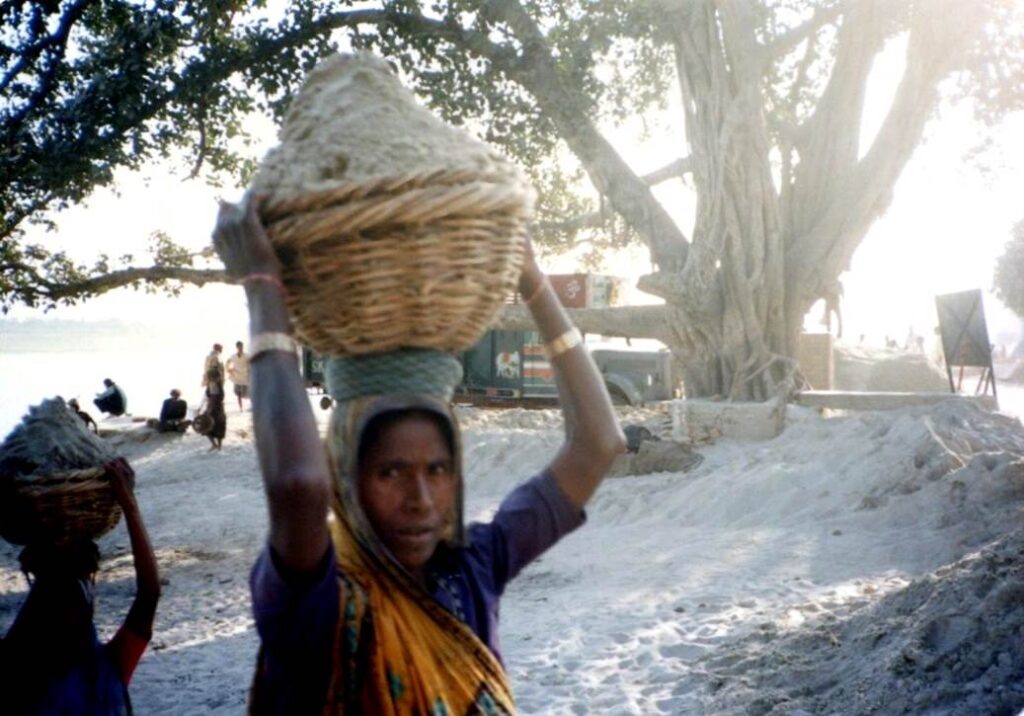
Photo by author, 1989
Iron bridge across the Ganges
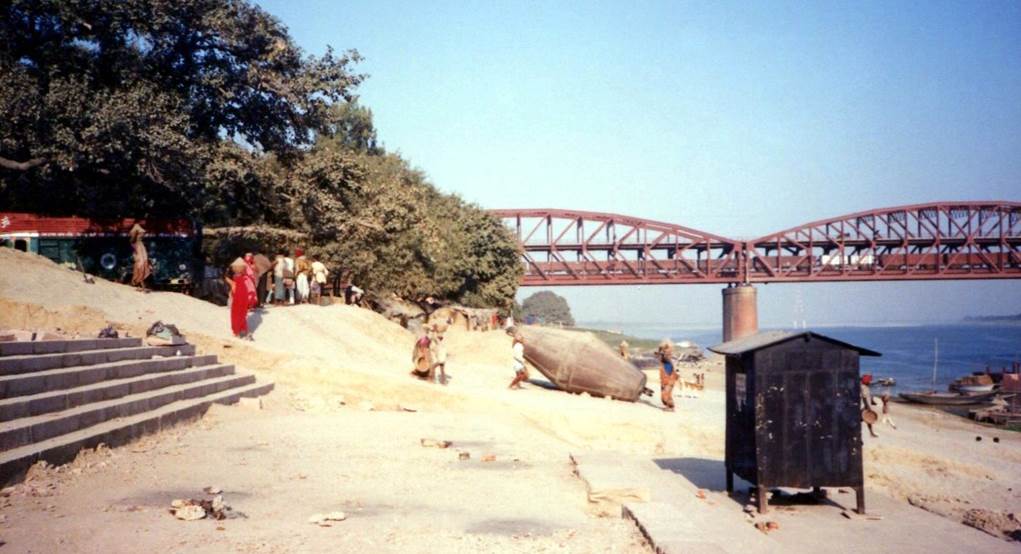
Photo by author, 1989
An iron bridge with a total length of about 1 km over the Ganges River {Ganga}.
The lower level is the railway, and the upper level is the road.
The railway turns right to Howrah Station in Kolkata, the capital of the British Indian Empire at the time.
If you go to the left, you will pass through Banarasi Railway Station, which leads to the capital Delhi. It is an important railway trunk line in India.
It was designed and built by a British railway company led by British engineer Walton, and was completed in 1887.

The flow of the river is from right (south) to left (north)
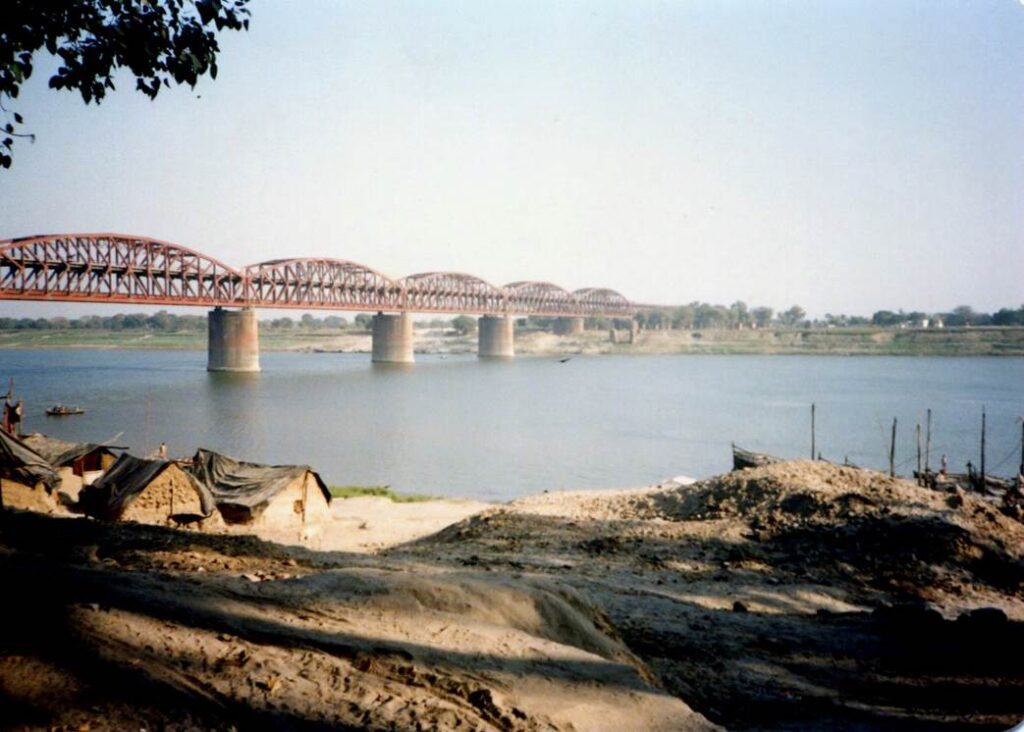
Photo by author, 1989
Cows by the river
After bathing, they sunbathe comfortably.
The cows also rest on the banks of the Ganga River.
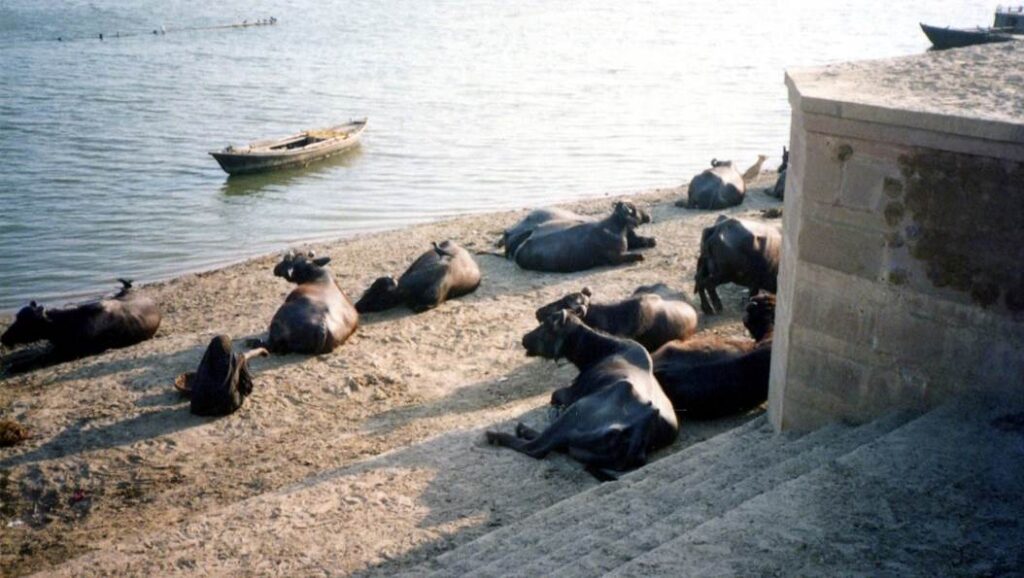
Photo by author, 1989
The cows are also spending the day enjoying themselves by the Ganga

Photo by author, 1989
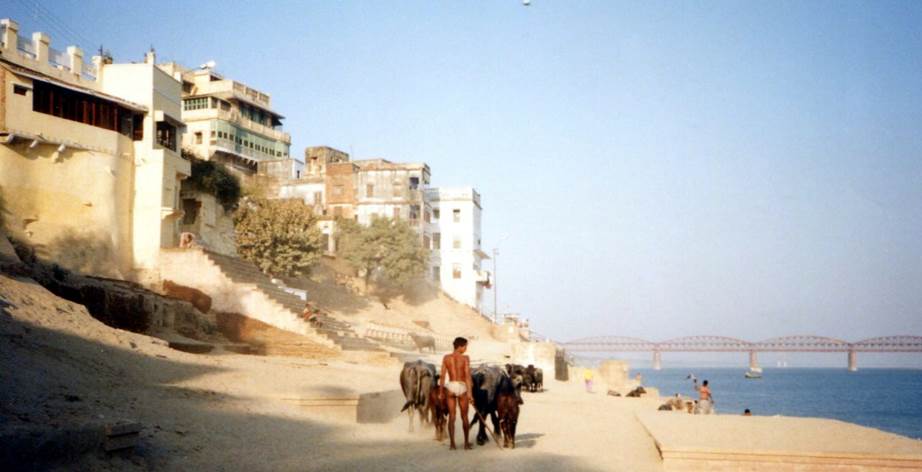
Photo by author, 1989
Lonely sheep
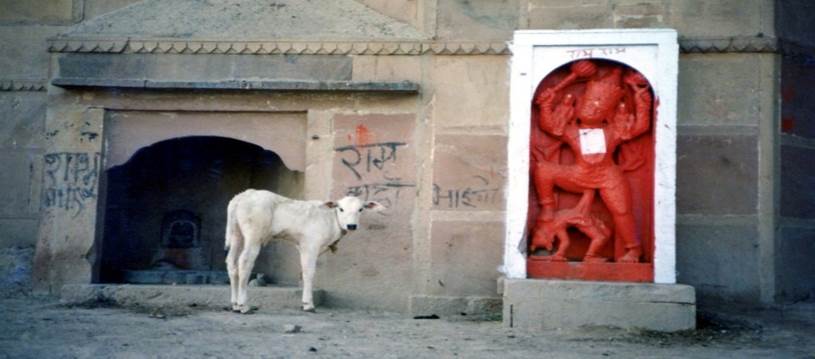
Photo by author, Feb 1989
Eco-art of cow dung

Photo by author, Feb 1989
The art of cow dung. Using sun-dried cow dung as a material, residents put artwork outdoors.
Undigested plant fibers and intestinal fluids are made into rice crackers with bare hands, attached to the wall, and used as fuel for cooking after drying.
The ultimate eco-art piece!
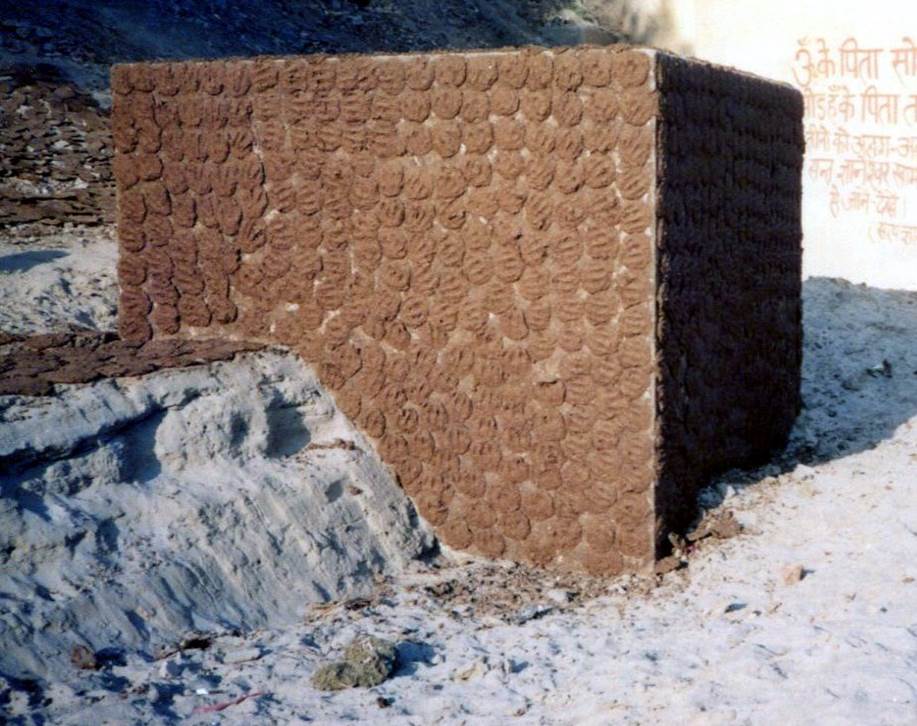
Photo by author, Feb 1989