JAP | ENG
India Travelogue 1989
#5/26
Jaipur #1
Rajasthan
Jaipur is the capital of Rajasthan, which borders Pakistan. Rajasthan has an area of 342,236 km², making it the largest state in India by area. Japan covers an area of 377,915 km², so Rajasthan is almost the same size as Japan. However, more than half of the state is desert-like, making it a perfect place for camels.
During the early Mughal Empire, it is known for its fierce resistance to the Islamic conquering empire in order to protect the independence of the Hindu princely states. Rajasthan has six hill forts registered as UNESCO World Heritage Sites, making it a true treasure trove of world heritage sites.
JAIPUR CITY
It is said that the city was planned and constructed around the 18th century based on Hindu compass directions. Jaipur’s City Palace is at the center, the Amber Fort is on the north side of the north-south axis, and the Rambagh Palace Hotel is on the southern axis.
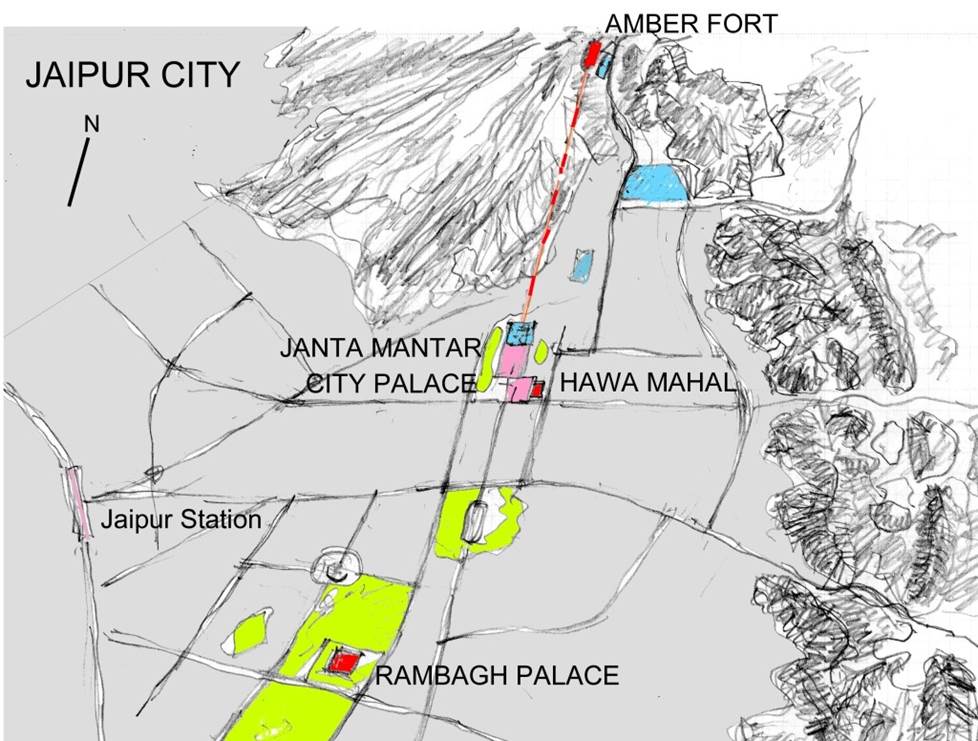
Author’s sketch
RAMBAGH PALACE HOTEL
RAMBAGH PALACE, JAIPUR
It is said that this hotel began when the Maharaja of Jaipur expanded an existing mansion in 1931. After World War II, when Britain left India and India became a republic, the princely state was abolished and the Maharaja became a citizen.
According to the hotel butler, the prince’s wife, Maharani Gayatri Devi, was a legendary figure known as “the most beautiful queen in the world,” and the story of Rambagh Hotel cannot be told without mentioning her, who was the hotel’s owner. She was said to be the last Maharani and passed away in Jaipur in 2009 at the age of 90. She would have been 70 when I stayed at the hotel.
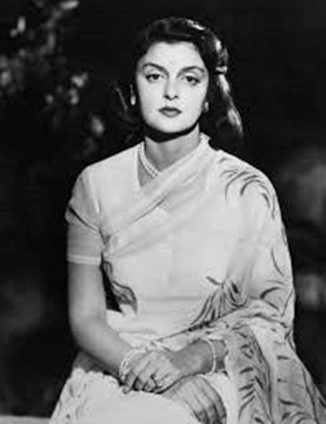
Maharani Gayatri Devi
Source: PIMTEREST.JP
The palace, which has been part of royal life for more than 120 years, has been renovated and opened as a hotel.
That was in 1957. Since then, it has hosted VIPs from all over the world, including Queen Elizabeth and Jacqueline Kennedy.
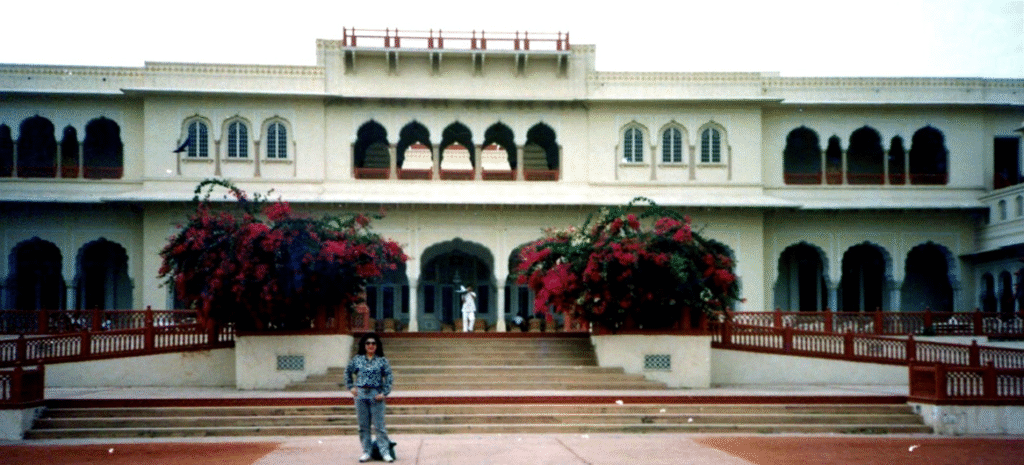
Photo by author, 1989
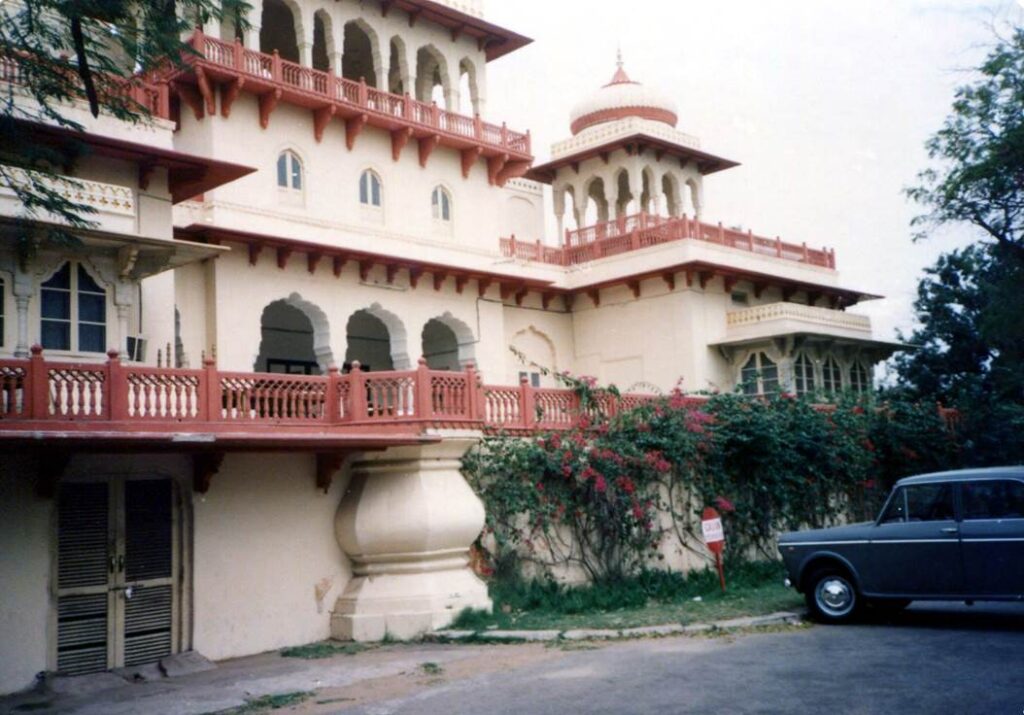
Photo by author, 1989

Photo by author, 1989
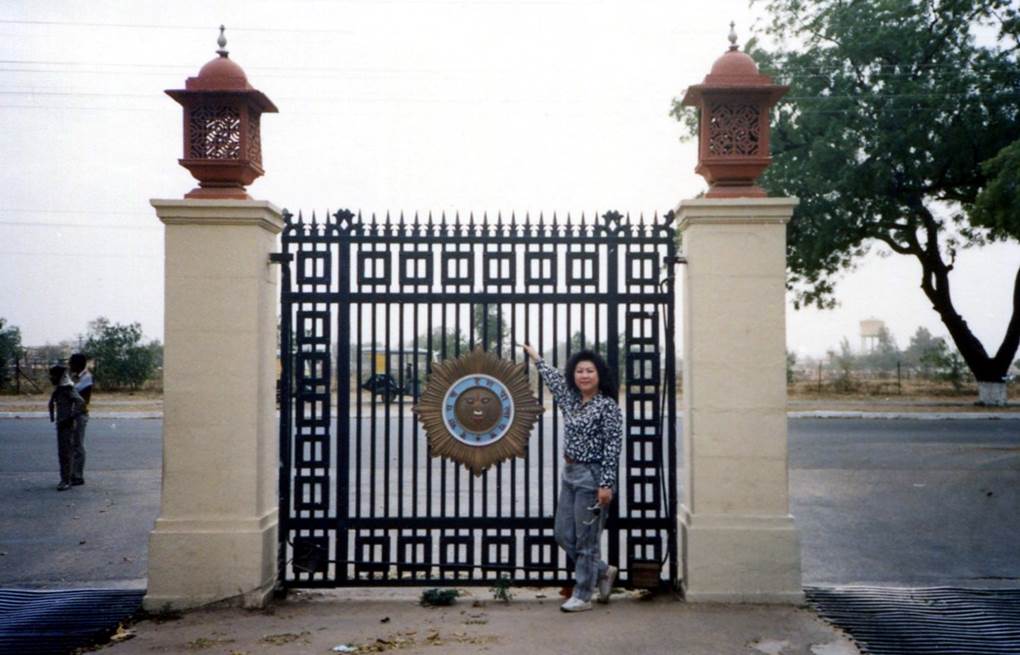
Photo by author, 1989
After checking in, you will be guided to your suite while crossing the corridor and looking out at the courtyard
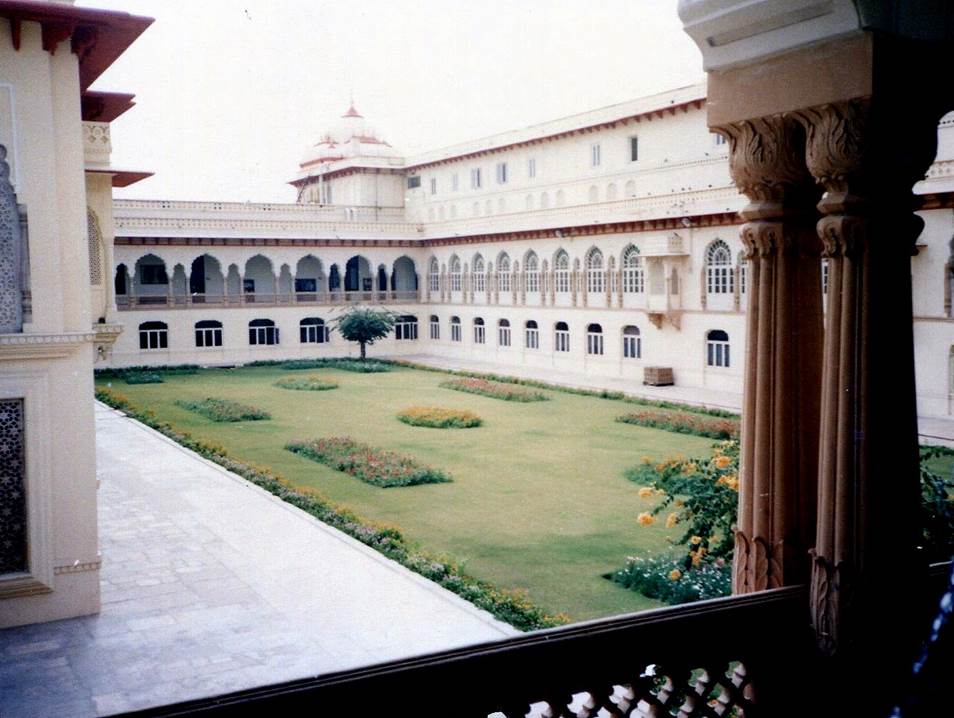
Photo by author, 1989
The work on the ceiling in the corridor leading to the suite is excellent.

On the way to the guest room, you will see a pleasant design of the watermark windows and vaulted ceilings.
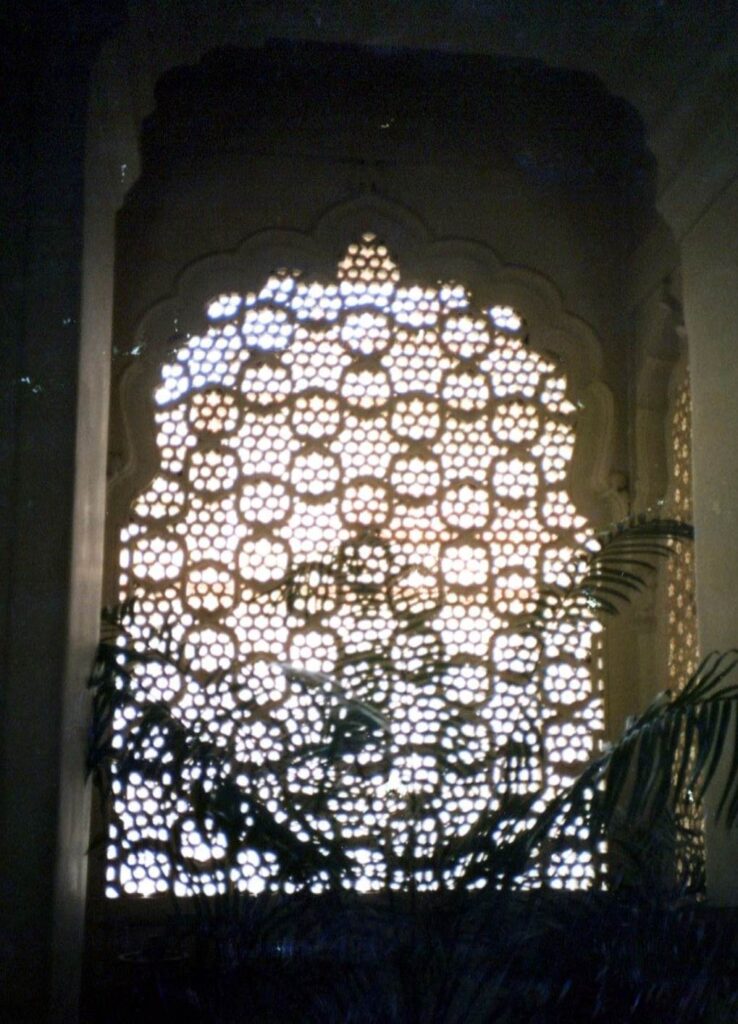
Photo by author, 1989
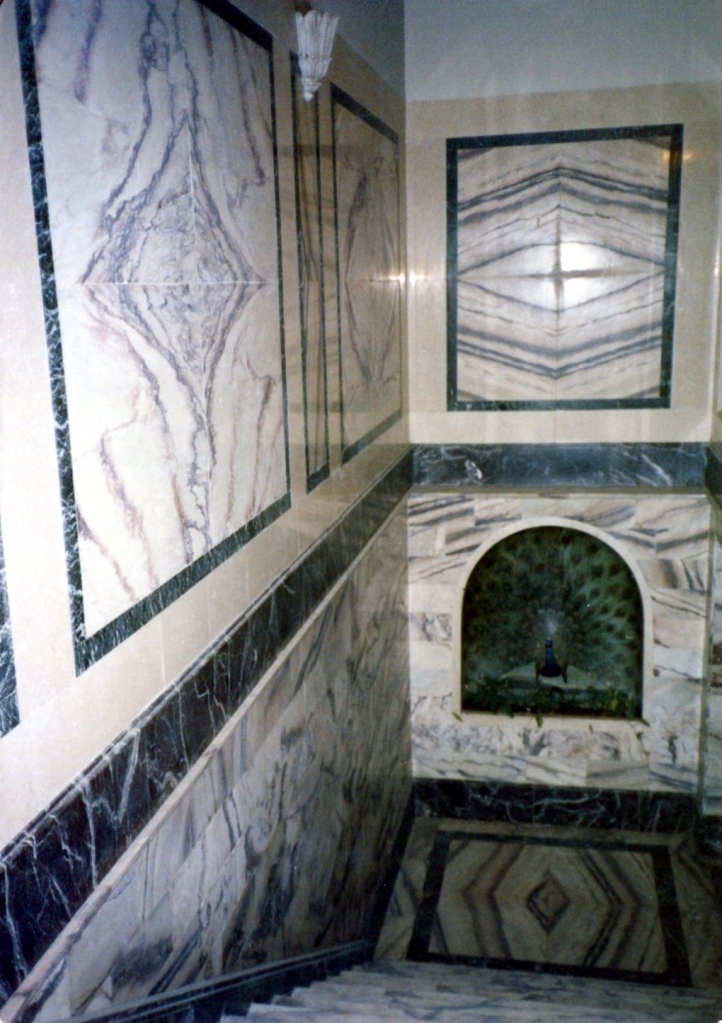
Photo by author, 1989
Suite Room Layout
According to the hotel butler, this suite was formerly the library of the Maharaja of Jaipur. It truly is a classy room. The actual area of the room I stayed in was 70m2.
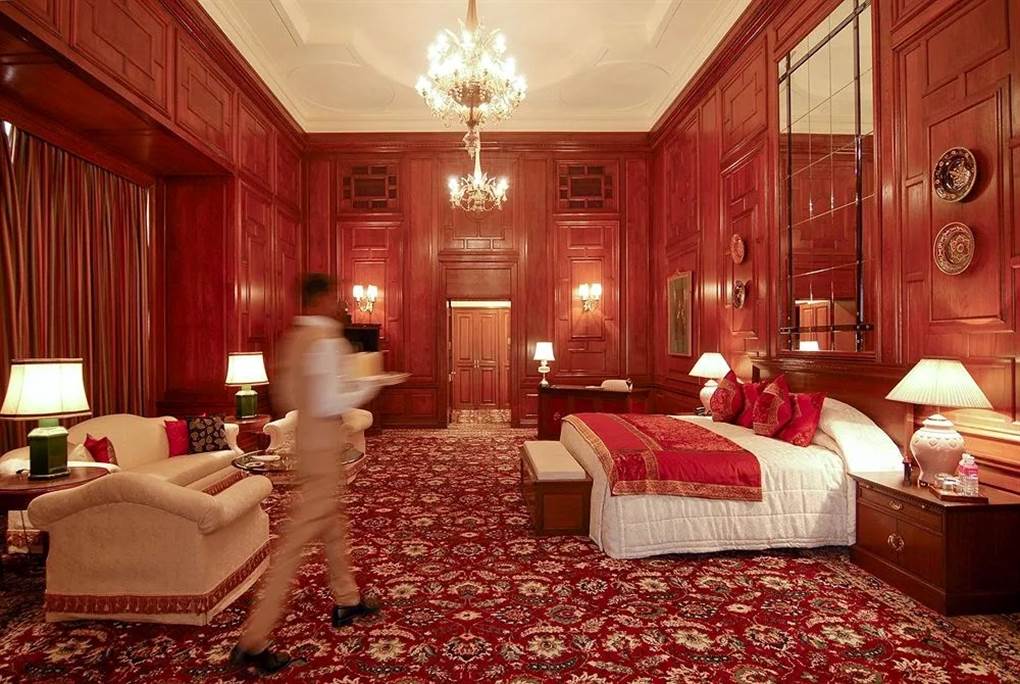
All walls are made of solid teak wood.
Photo by author, 1989
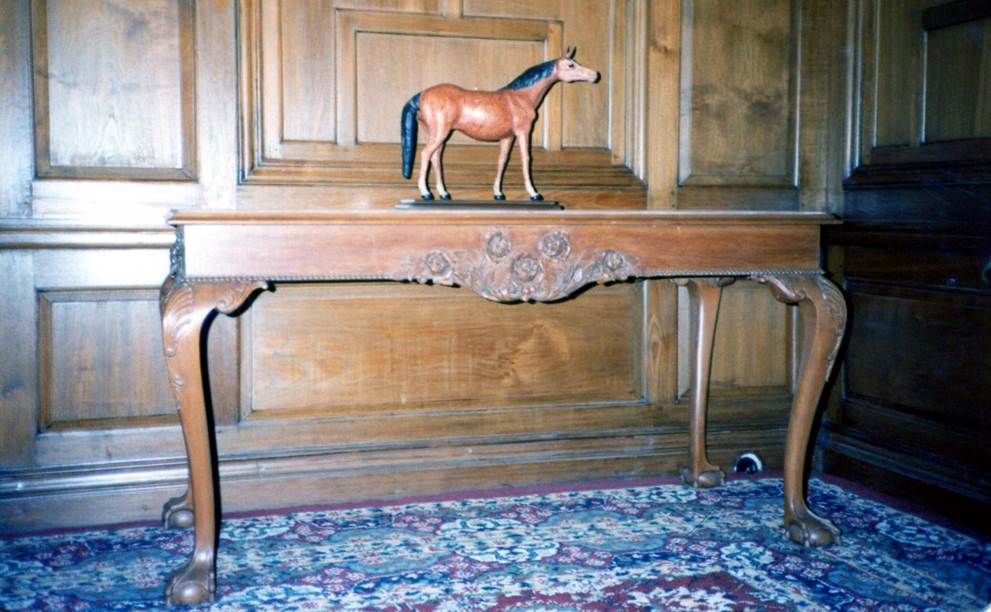
Photo by author, 1989

Photo by author, 1989
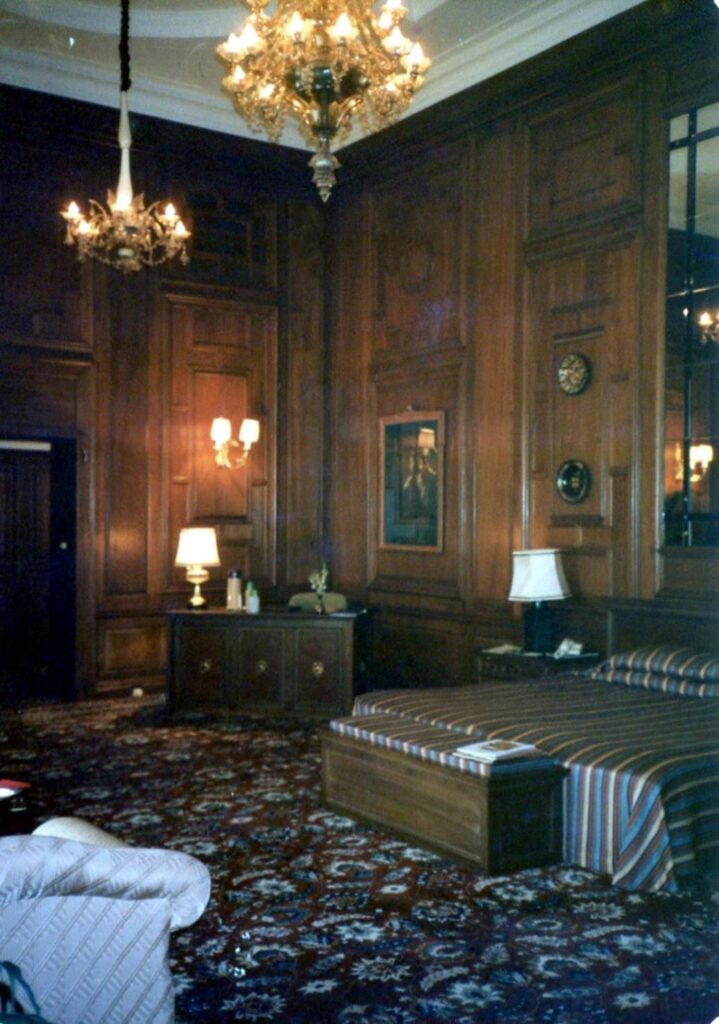
Photo by author, 1989
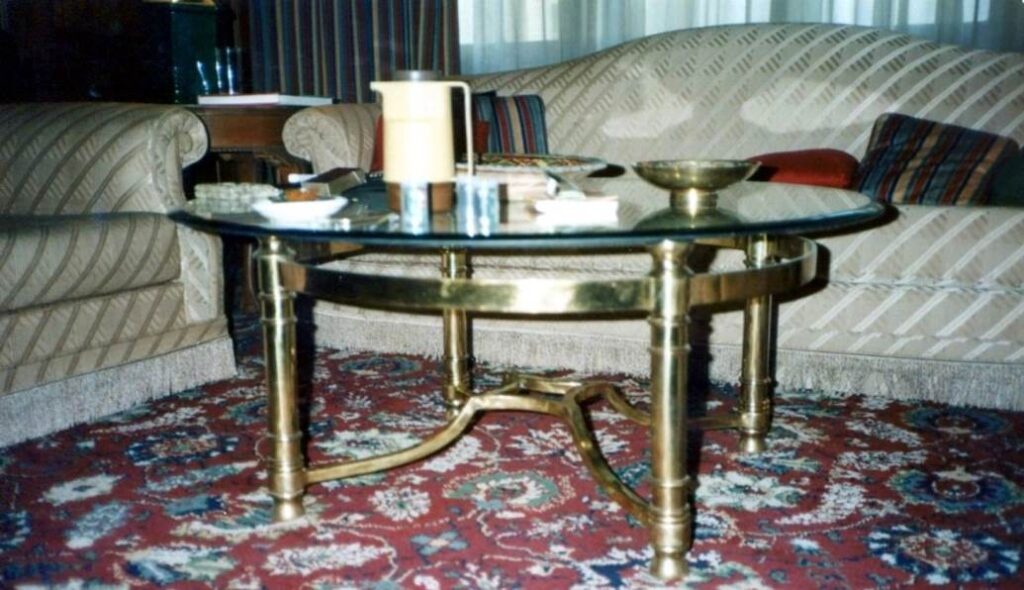
Photo by author, 1989
Bathroom
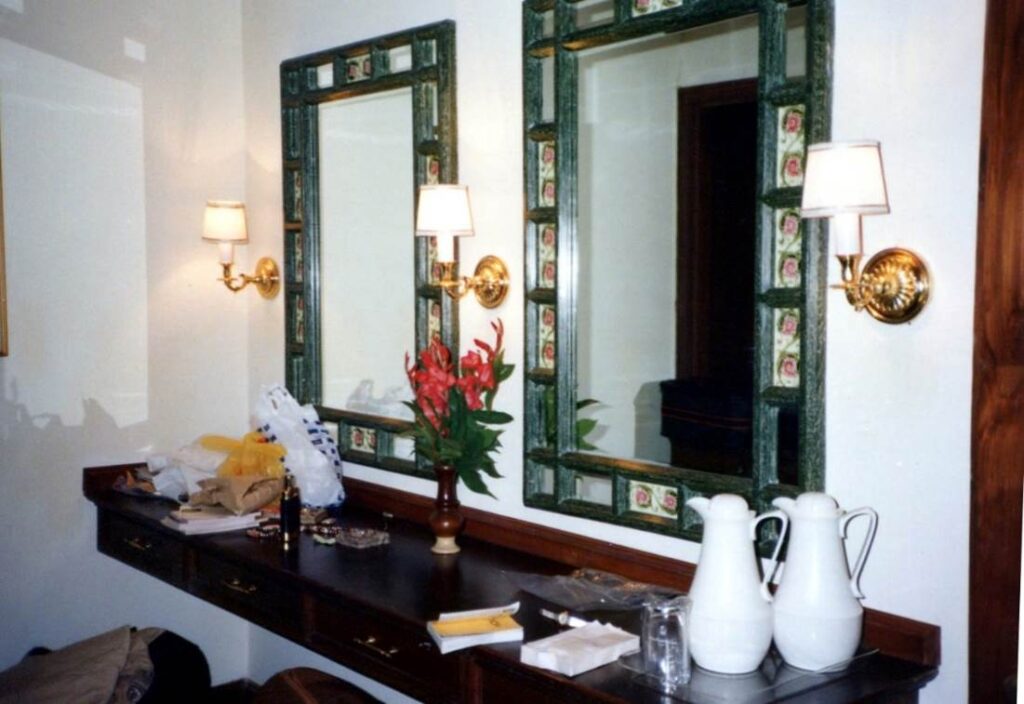
Photo by author, 1989
LOCATION OF THE POTHIKANA SUITE ROOM.
It faces the courtyard.
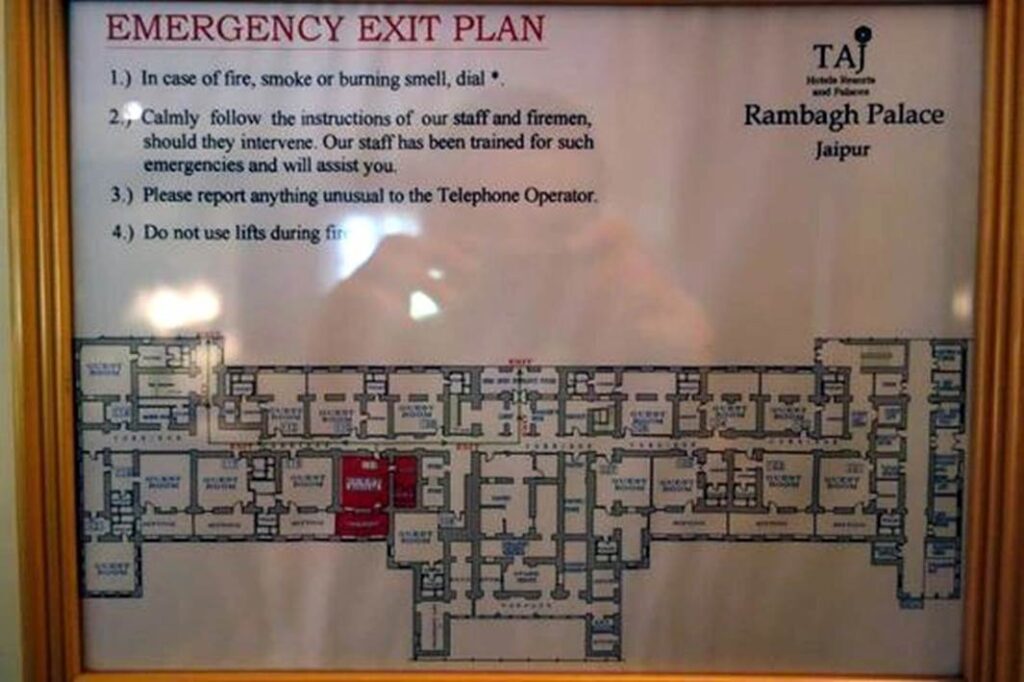
Photo by author, 1989
POTHIKANA SUITE Room layout, 2 Night stay
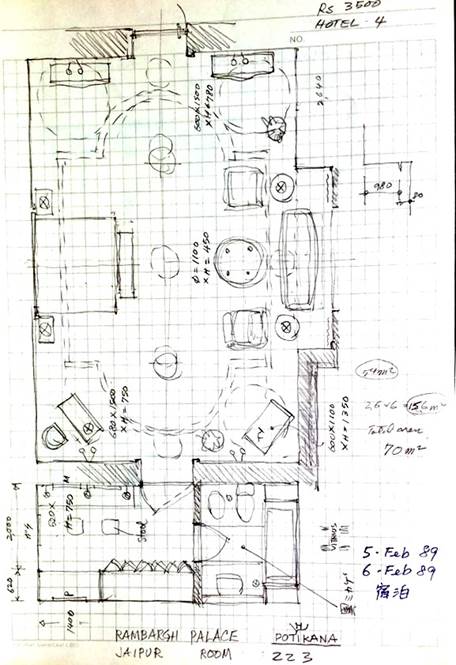
Author’s sketch
Enjoying India beer and Indian tea in the hotel’s large and quiet courtyard
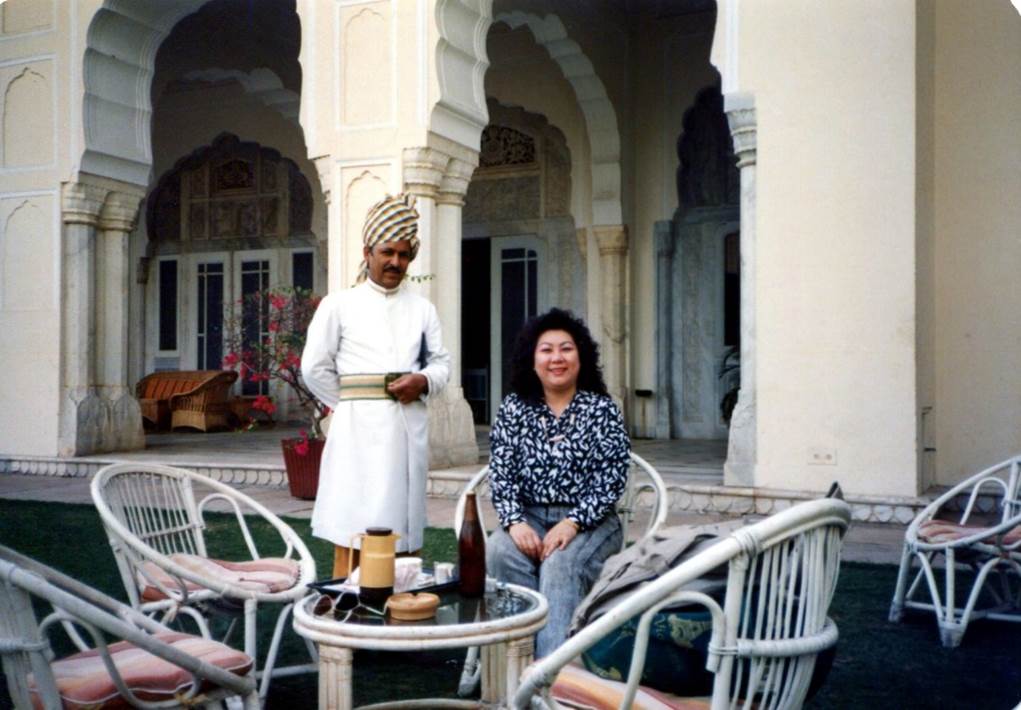
Photo by author, 1989
In the evening, I ordered room service. Curry rice with plenty of vegetables came. When I tried it, it had an elegant aroma and was delicious. It is an authentic dal curry flavor of northern India. They seemed to be adjusting the spices according to the tastes of foreigners.
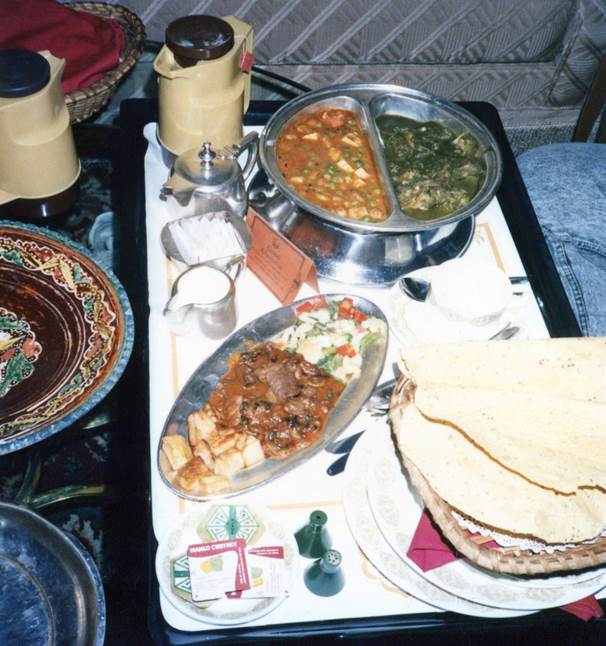
Photo by author, 1989
Jaipur Traffic
As I have plenty of time today, I’ll start early in the morning and take a good look around the city of Jaipur. I decided to go around by rickshaw.
When I asked the hotel doorman to arrange a rickshaw, he said that a car would be fine, but a rickshaw would not be able to get close to the entrance of the hotel.
The hotel’s status didn’t allow it.
Now that I understood what he meant, I decided to go to the park next to the hotel and find a rickshaw waiting there.
We negotiated the hourly rate and decided to take a leisurely look at the town of Jaipur while feeling the outside air.
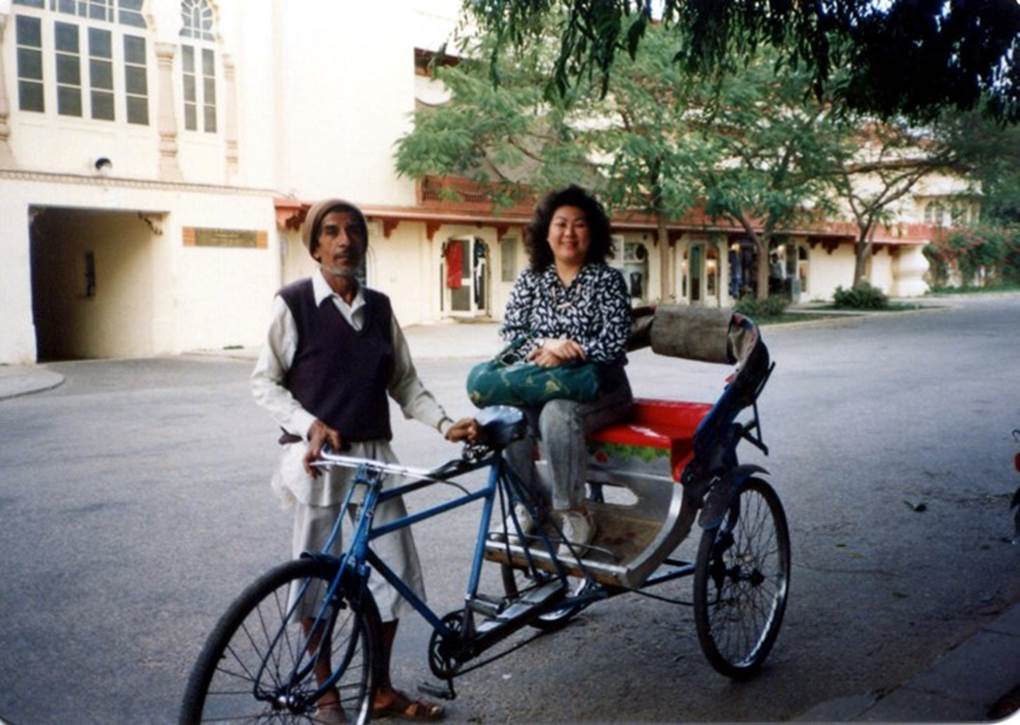
Photo by author, 1989
The following photos show the people of Jaipur in 1989 and their various modes of transport. The roof of the bus is also a passenger seat.
There are fences on both sides of the roof to prevent it from falling off.
There is also an iron ladder for climbing.
Since it is a region with little rain, is this OK?
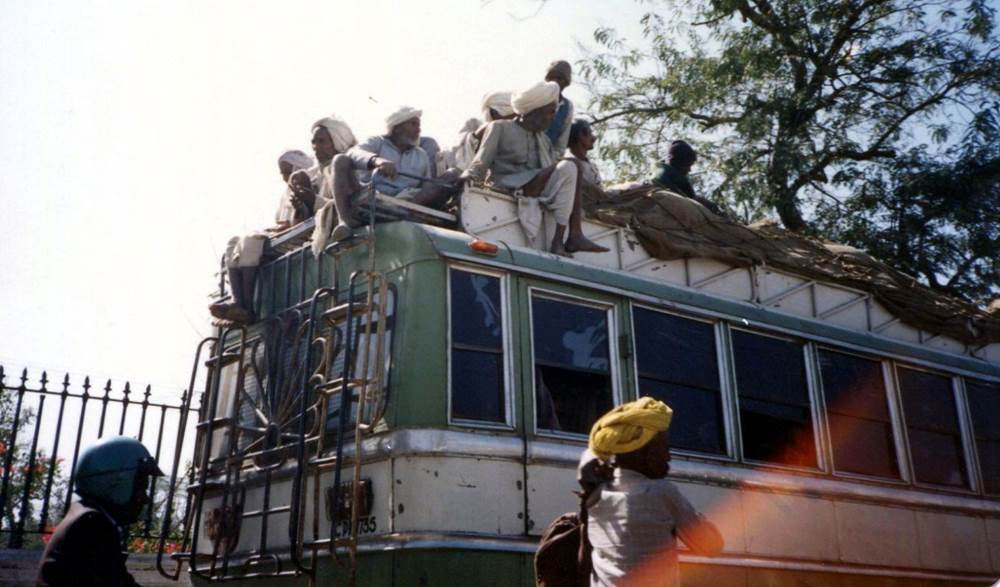
Photo by author, 1989
A crammed auto three-wheeled bus.
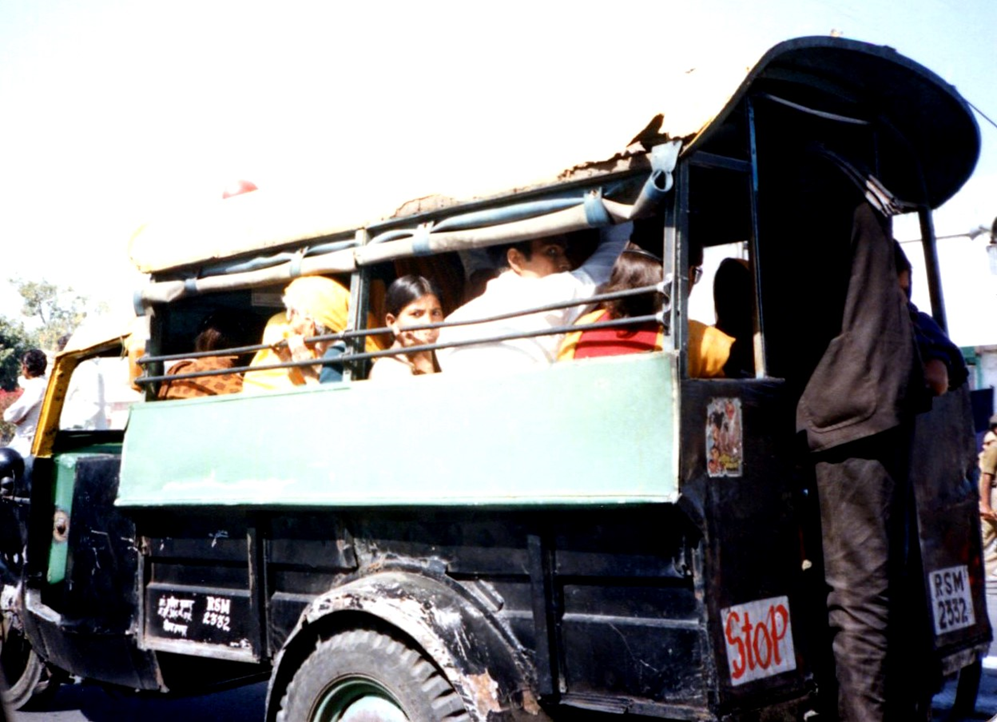
Photo by author, 1989
Bajaj, an auto tricycle that originated in India.
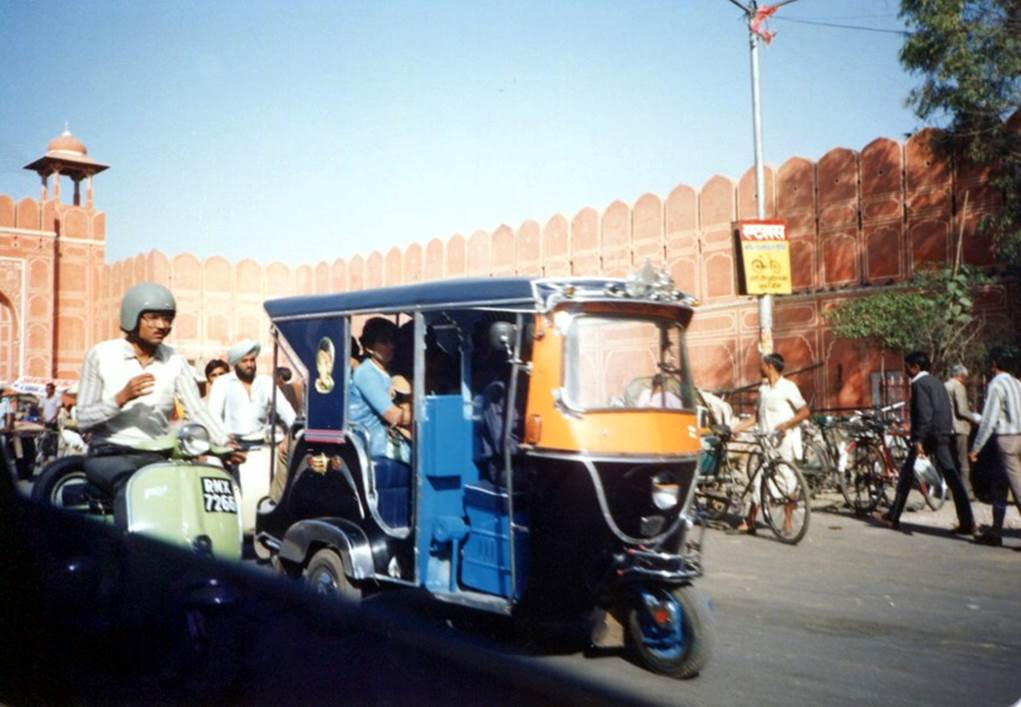
Photo by author, 1989
There are also many bicycles.

Photo by author, 1989
There are also rickshaws
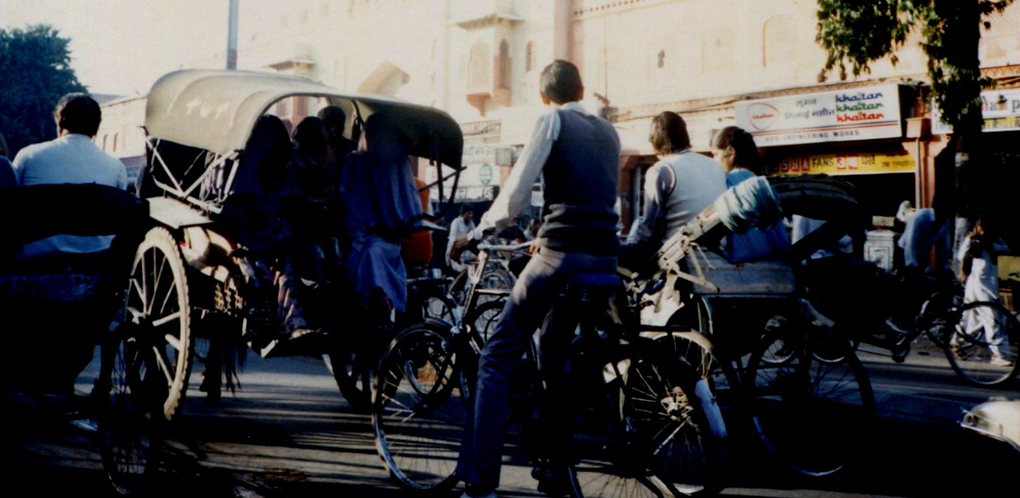
Photo by author, 1989
There was also an ox cart.

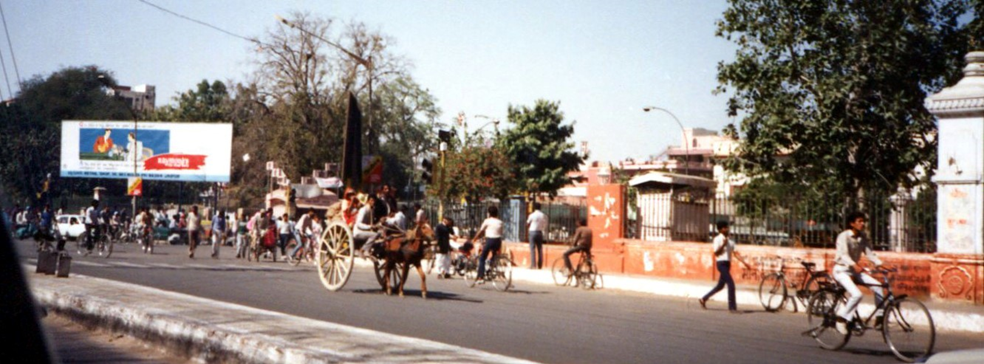
Bicycles
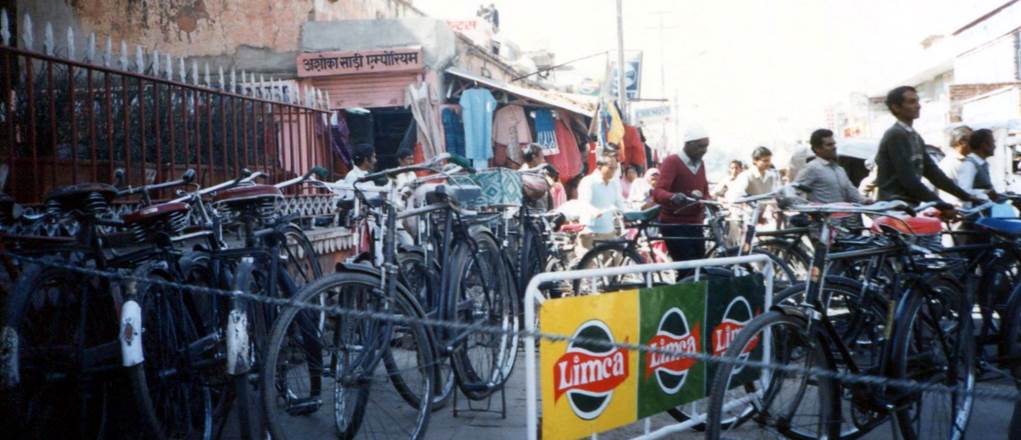
As you can see in the photo, the boundary between the sidewalk and the roadway is unclear.
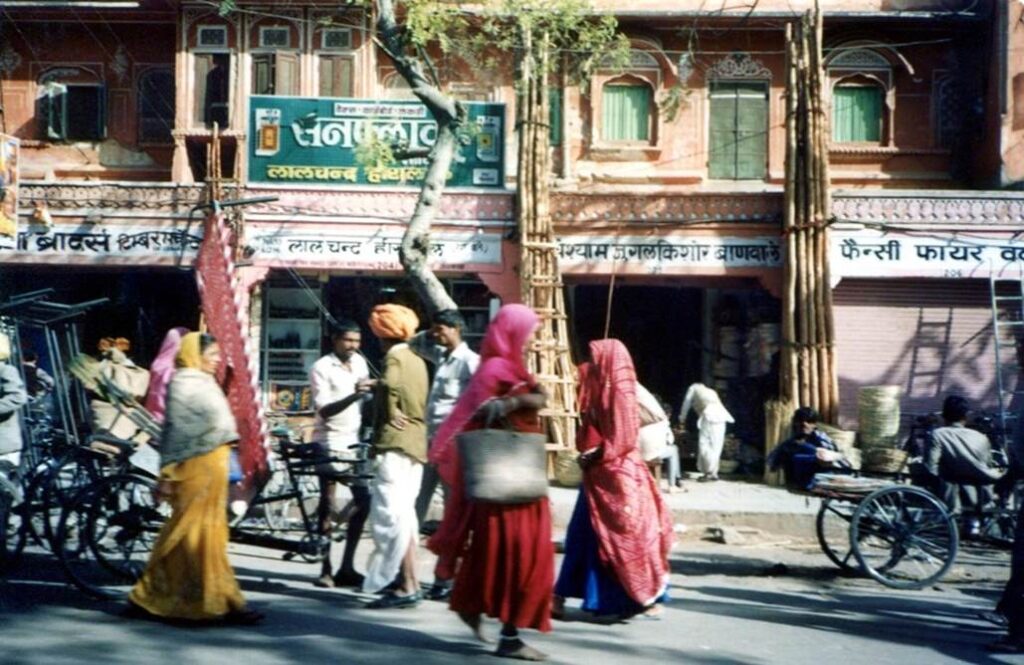
Bicycles, motorbikes, tricycles, ordinary cars, trucks, oxcarts and even camels mingle with the crowds of women in colourful saris who stroll along the roadway, each securing their own space for themselves.
In modern times, citizens of East Asia have abandoned traditional dress and switched to Western clothing, but here in India, everyday attire remains all saris, as in the past.
Camel chariots also marched in the procession.
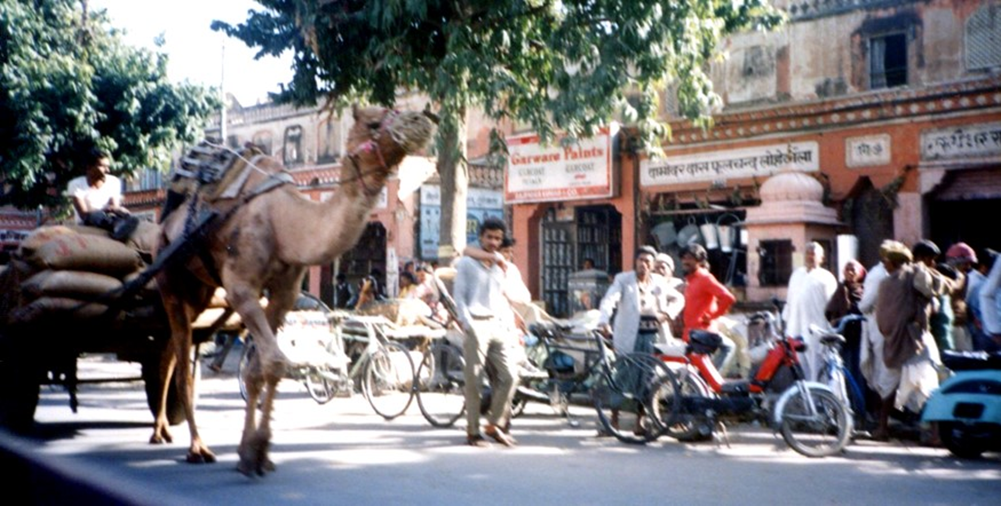
Photo by author, 1989
Cars waiting for customers.
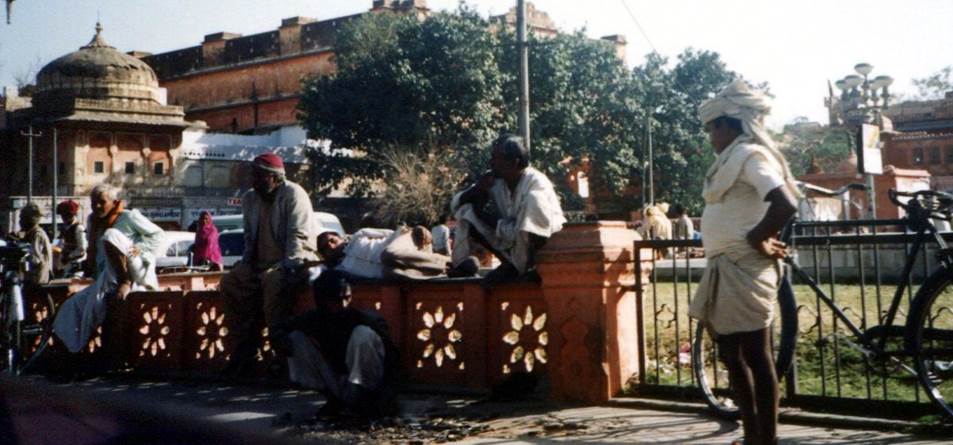
Photo by author, 1989
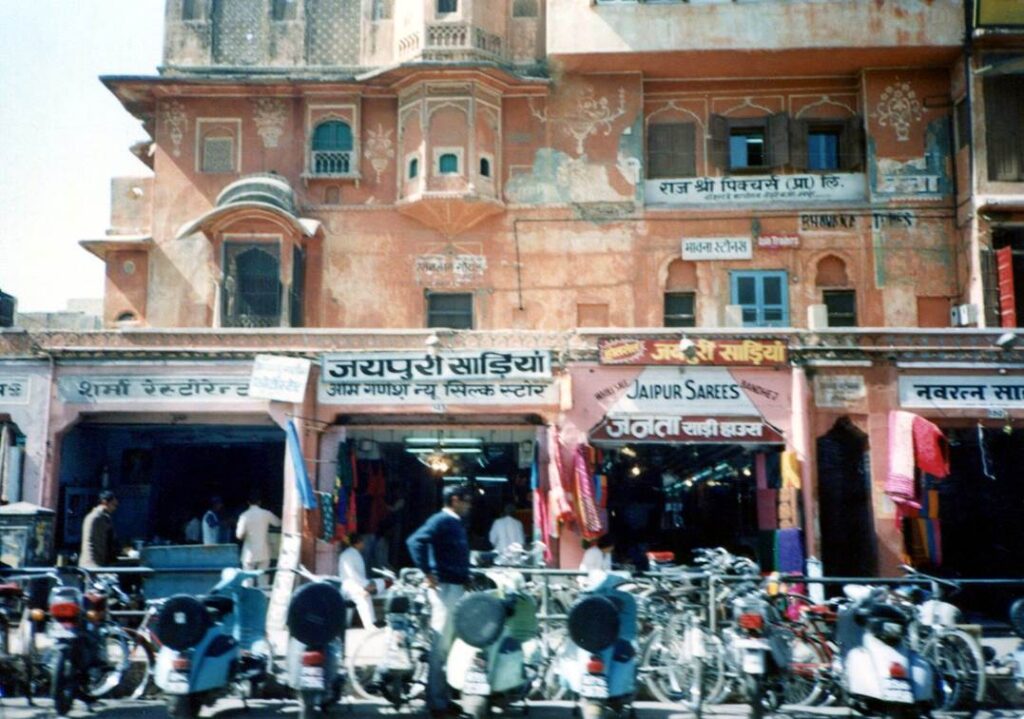
Photo by author, 1989
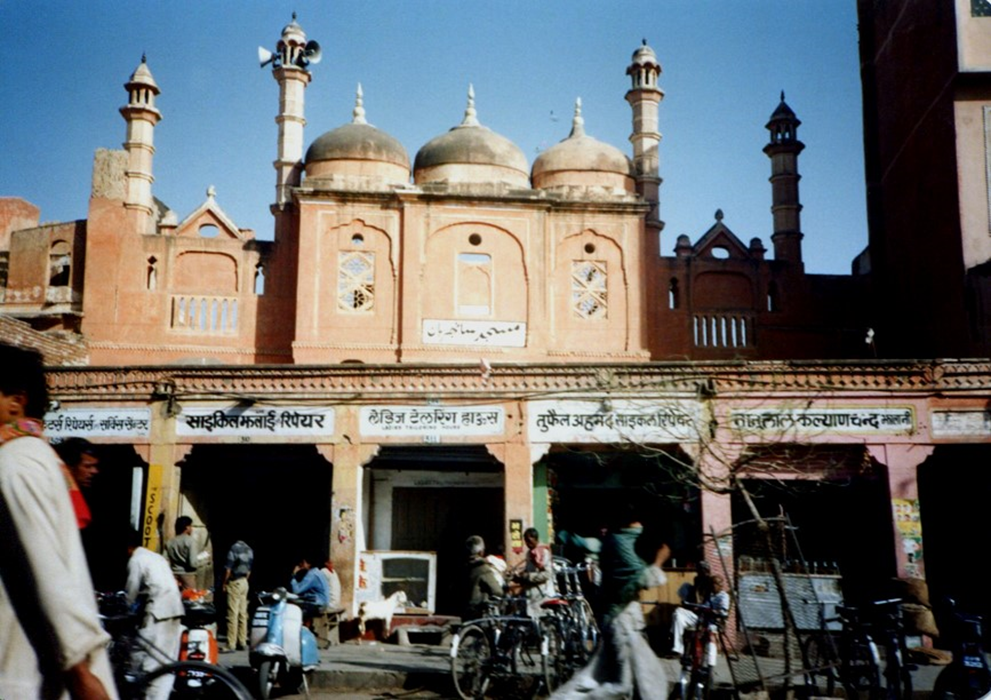
Photo by author, 1989
A goat parent and child and a Muslim woman watching over them.
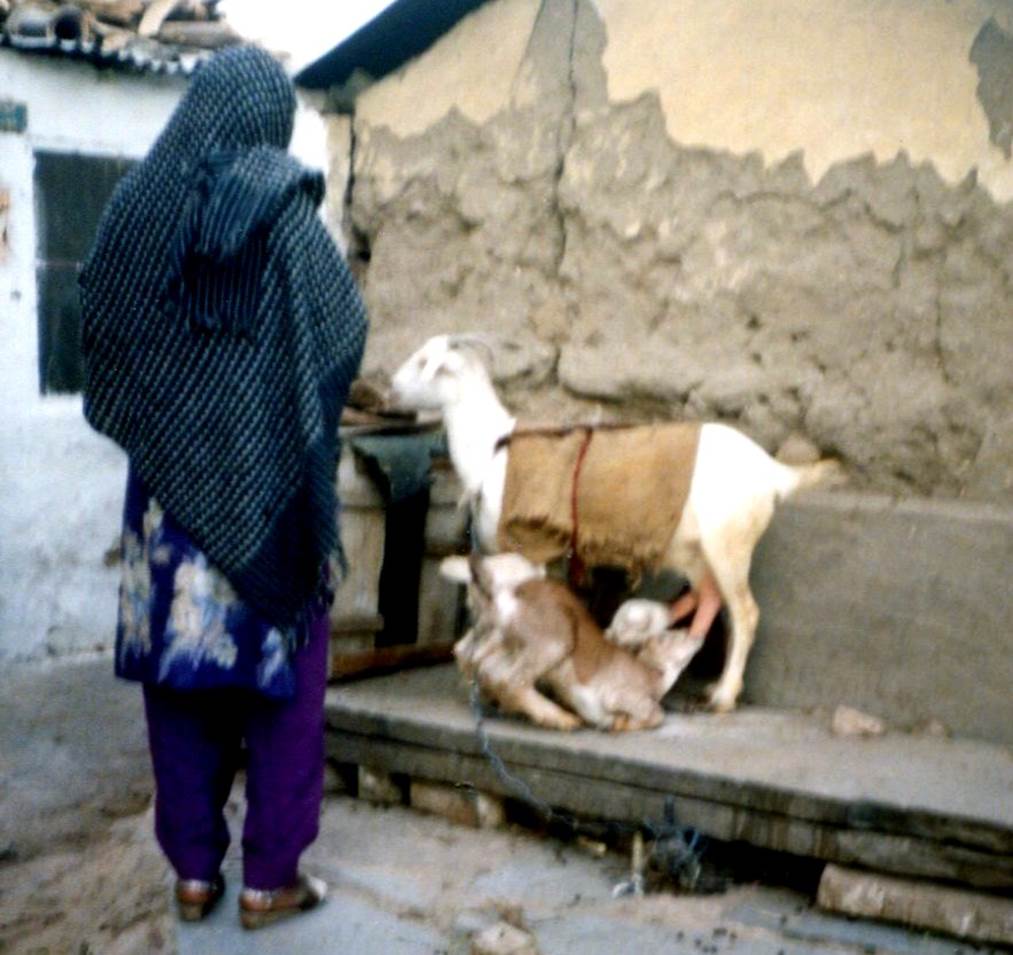
Photo by author, 1989
Indian Sandstone Buildings
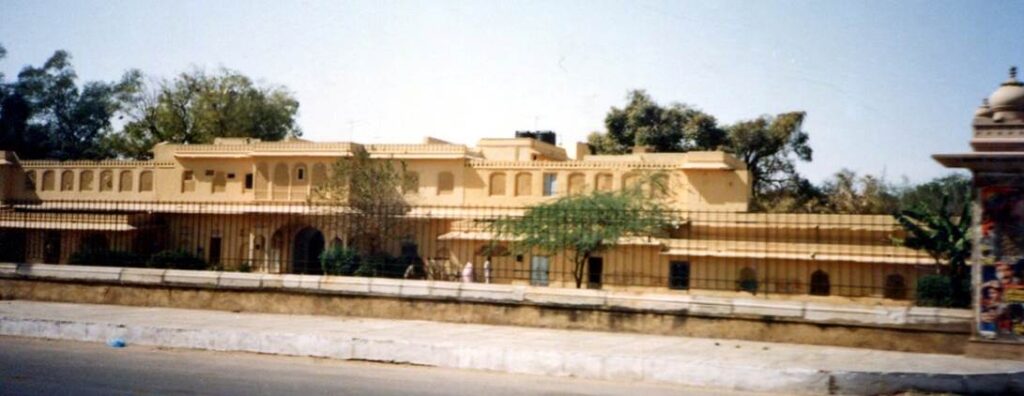
Photo by author, 1989
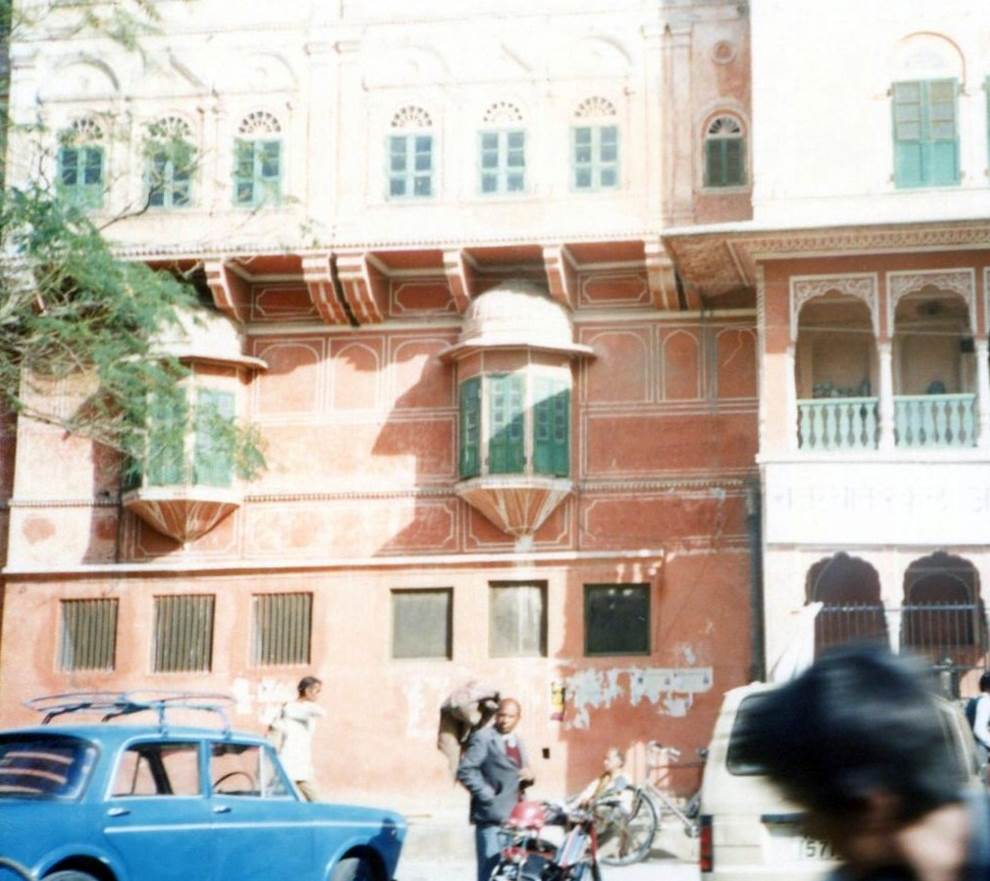
Photo by author, 1989
There was an open-air market with the Indian sandstone walls in the background.
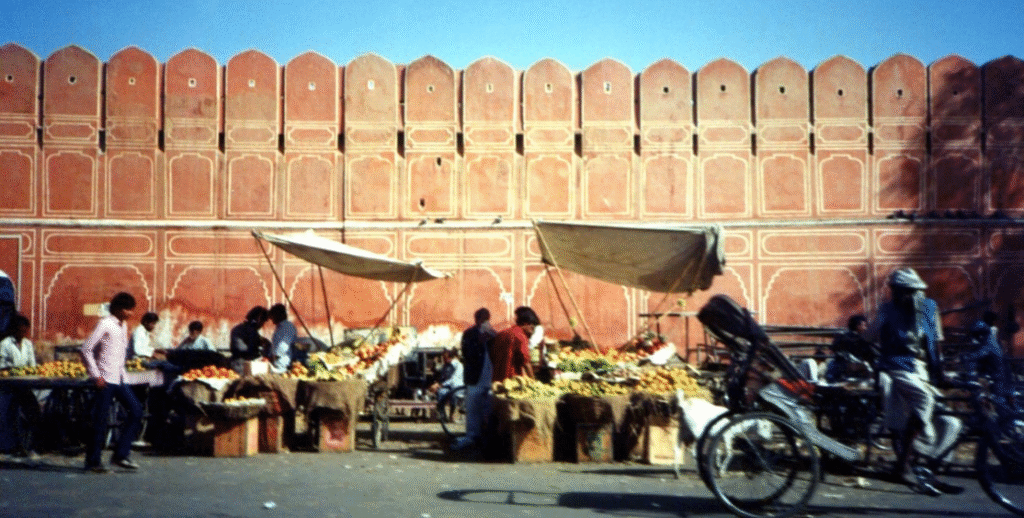
Photo by author, 1989