JAP | ENG
Indian Travelogue 1989
#2/26
Mahabalipuram
MAHABALIPURAM 1989 02 01
Mahabalipuram is located about 60 kilometers south of Chennai (Madras).
Mahabalipuram was the outer port of Kanchipuram, the inland capital of the Pallava dynasty (4th-9th centuries).
It flourished as a major base facing the Bay of Bengal during the Pallava dynasty, and many Hindu temples were built along the coast.

Positional relationship between Kanchipuram > Mahabalipuram > Chennai
Author’s sketch
Buildings of Mahabalipuram
UNESCO World Heritage Site
Some of the earliest stone temples are the masonry “Shore Temple” and the “Five Latas“.
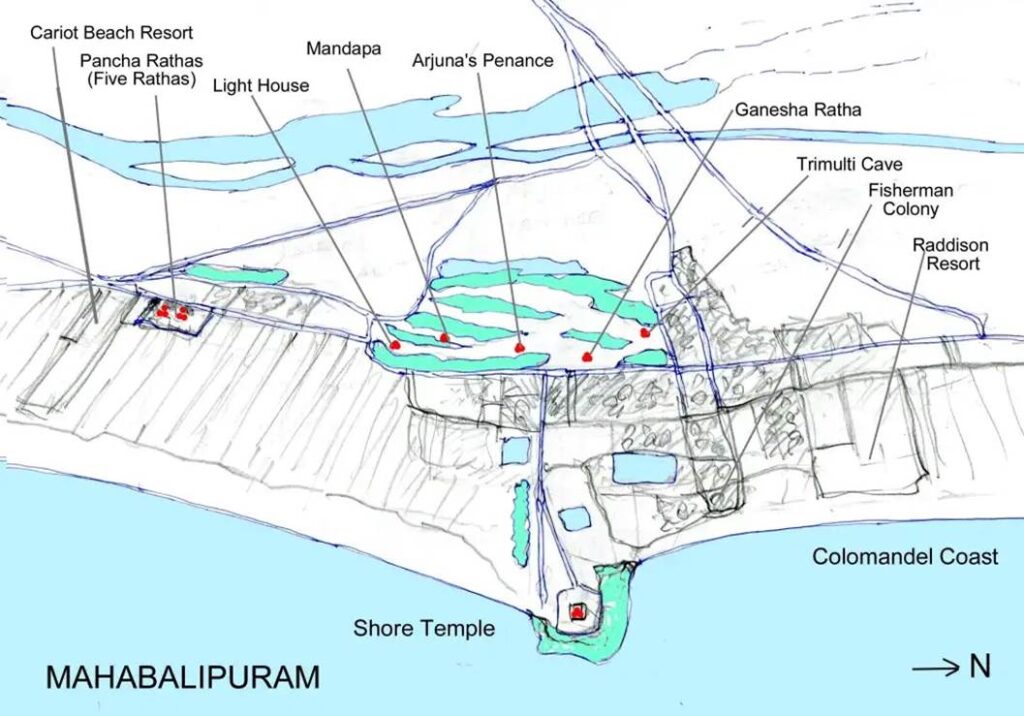
Mahabalipuram Author’s sketch Coastal Temple
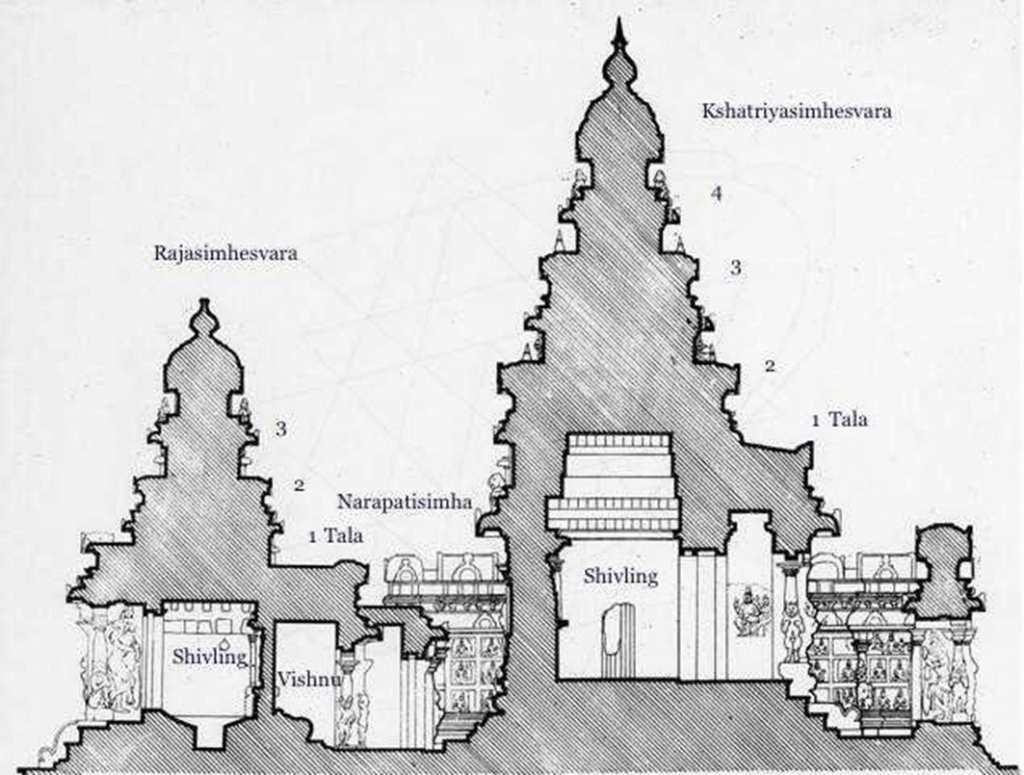
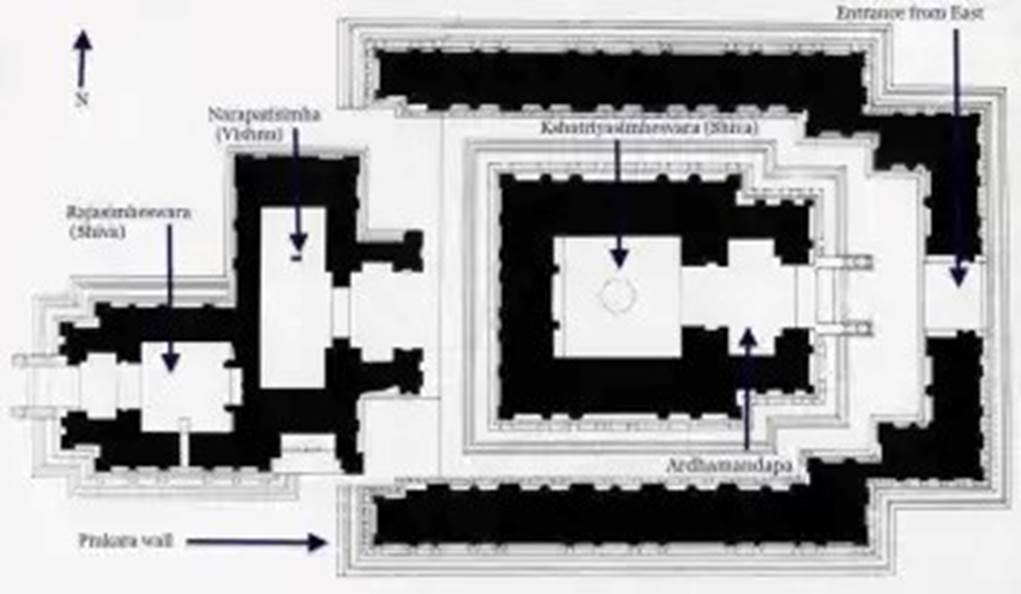
The Shore Temple, built on the seashore from the end of the 7th century to the beginning of the 8th century, is a stone temple constructed of piled cut stones.
Most of the other ruins were built from the first half to the latter half of the 7th century. In other words, the Shore Temple belongs to a later period in Mahabalipuram.
It withstands strong direct sunlight and sea breezes from the open sea, and has existed since the 8th century to this day.

Photo by author, 1989

Photo by author, 1989
Shore Temple

Photo by author, 1989
Shore Temple
There used to be seven temples, but most of them have been submerged, and now only two remain. It was built around the 8th century, but has been weathered considerably by the sea breeze over the years.
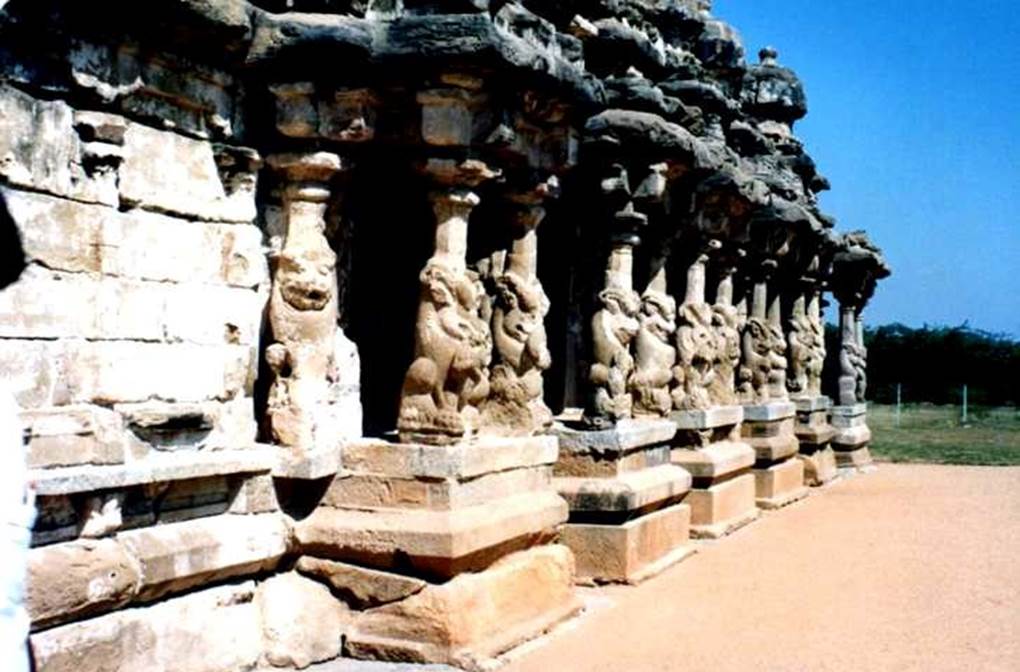
Photo by author, 1989
Local Children & Families
Local Indian children and family figures blend well into this world cultural heritage site, creating a beautiful picture.

Photo by author, 1989
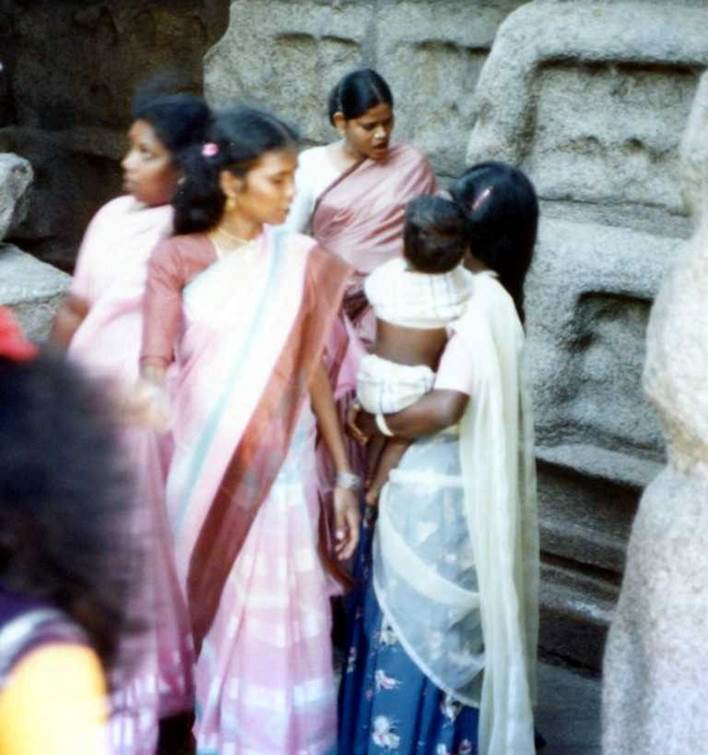
Photo by author, 1989
ARJUNA’S PENANCE
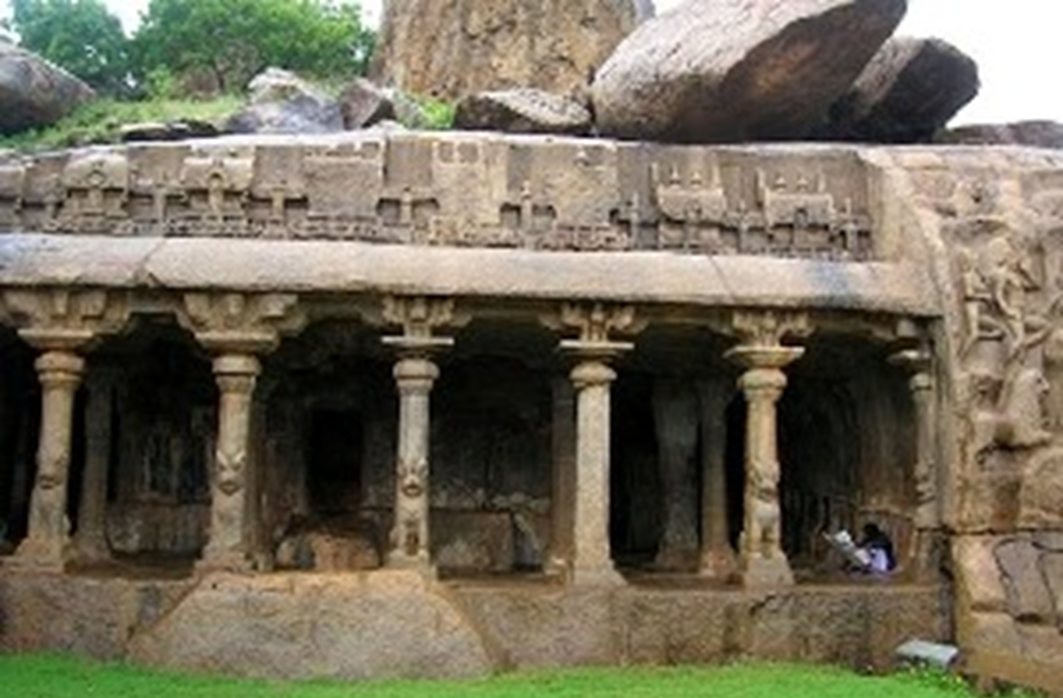
It is said that the huge natural rock from the Paleozoic era depicts the hero “Arjuna’s Penance” from the epic poem “Mahabharata,” one of the Hindu scriptures, or the story of the Ganges’ descent to earth, also known as the Descent of the Ganges. There are 146 rock carvings in total.
A cave temple has been carved into the left half.
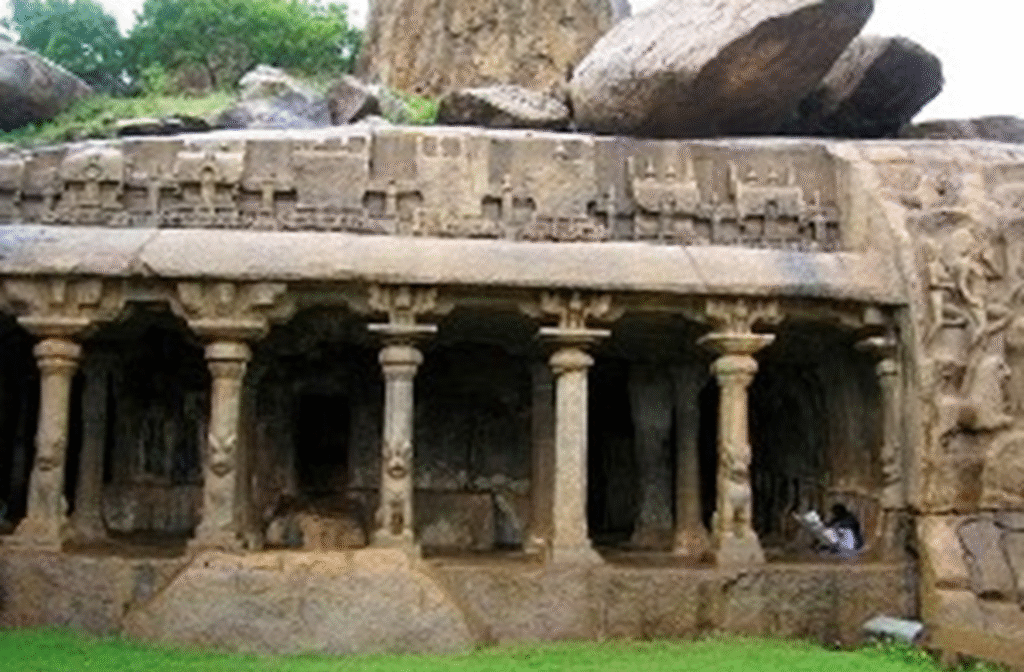
Photo by author, 1989
Rock Sculpture
The cliff sculpture is carved into a rocky mountain 9 meters high and 27 meters wide, making it the largest stone relief in the world.
It is said to depict a scene from the ancient Indian epic “Mahabharata” of “Arjuna’s penance”. There were many other things to see, but I had limited time and could not afford to look at this stone carving in detail.
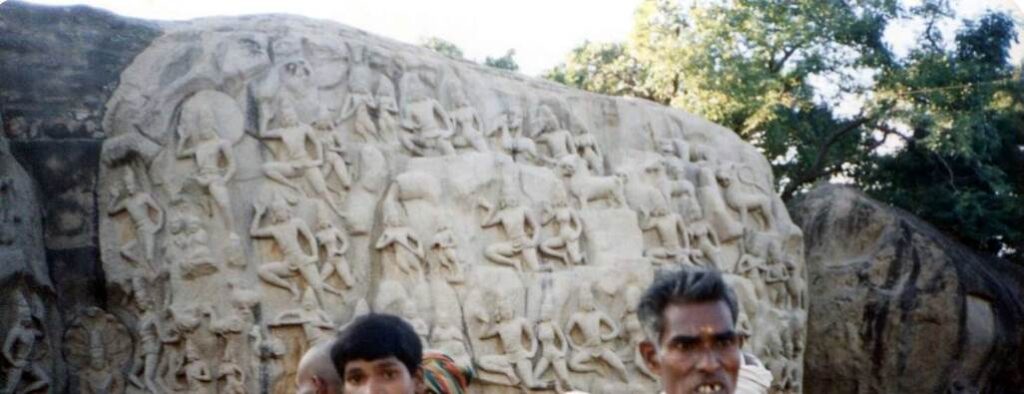
MANDAPA Photo by author, 1989
GANESHA RATHA
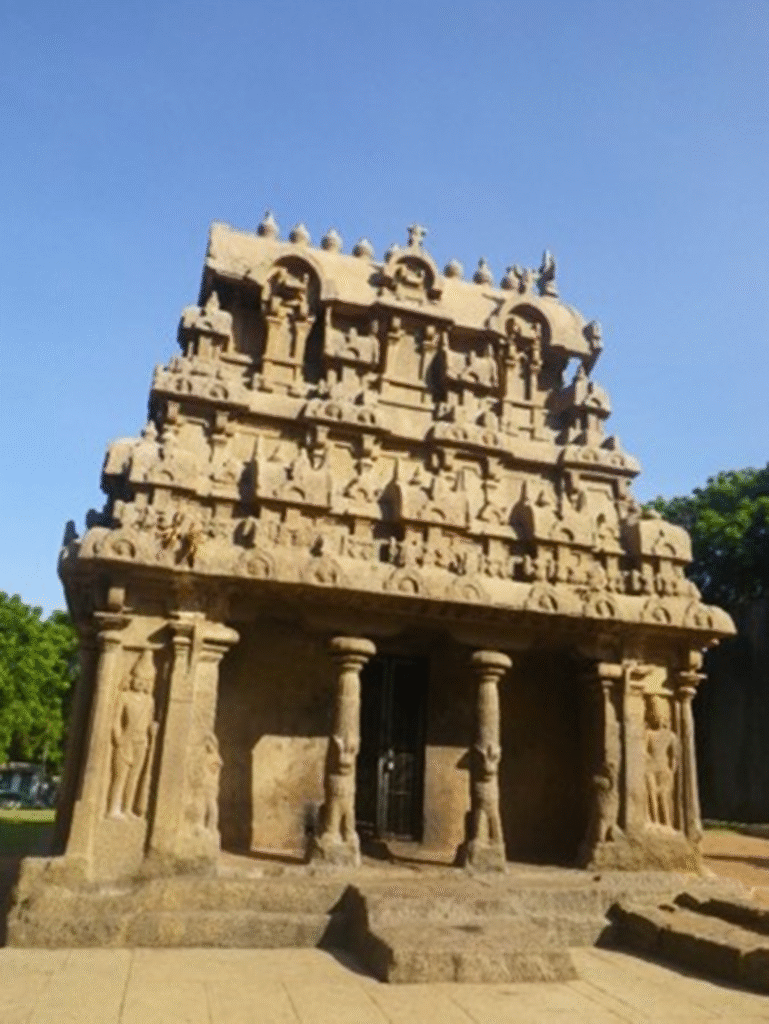
Photo by author, 1989
The Five Rathas, Pancha Rathas
The meaning of the Pancha = the number 5
Meaning of Rathas = float (dashi) or temple.
Pancha Rathas is said to have had a great influence on South Indian temple architecture by imitating ancient wooden houses and Hindu temples, and the surviving South Indian Hindu temples are said to be based on one of these five.
Huge natural rocks from the Paleozoic era.
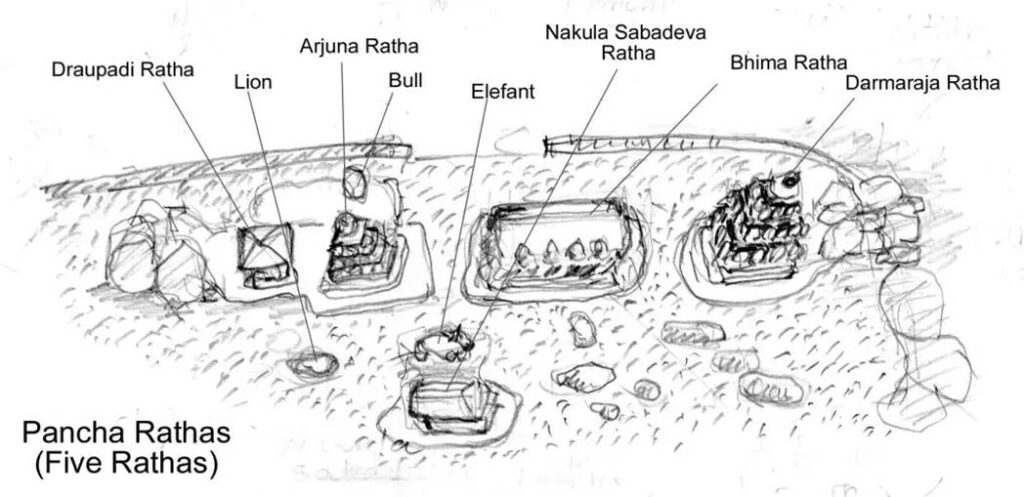
The five natural stone blocks shown in Sketch 1 below were carved into the cave temples, forming the five rathas.
It is said that a ratha is a rock temple carved out of one large block of rock.

Author’s sketch 1
Layout of the Five Ratas
Layout of the five rock temples carved from the rock mass in “Sketch 1”
Author’s sketch 2
Each temple is named after a major character in the Mahabharata.
All of them are extremely elaborately made, from the decoration of the roof to the gateposts and the carvings on the walls. It is said to be an imitation of a wooden temple in South India at the time. It is also extremely valuable as a document that conveys the appearance of ancient architecture in South India. You can feel that it is a valuable ruin excavated in the 19th century.
This group of buildings can be observed in the same site in the order of cave temples> stone carving temples> stone temples. It is also a valuable place that shows that this area was the frontrunner of ancient Hindu architecture in South India.
From left to right: Arjuna Rata > Bhima Rata > Dharmalaja Rata

Photo by author, 1989
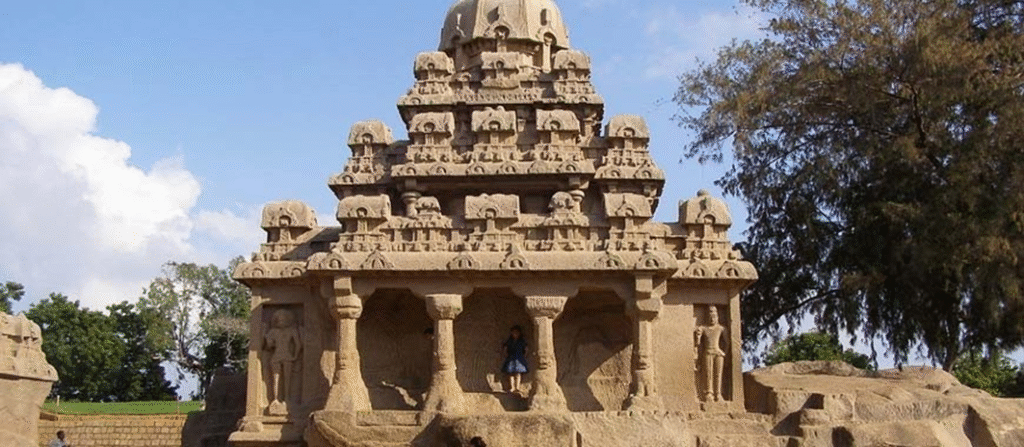
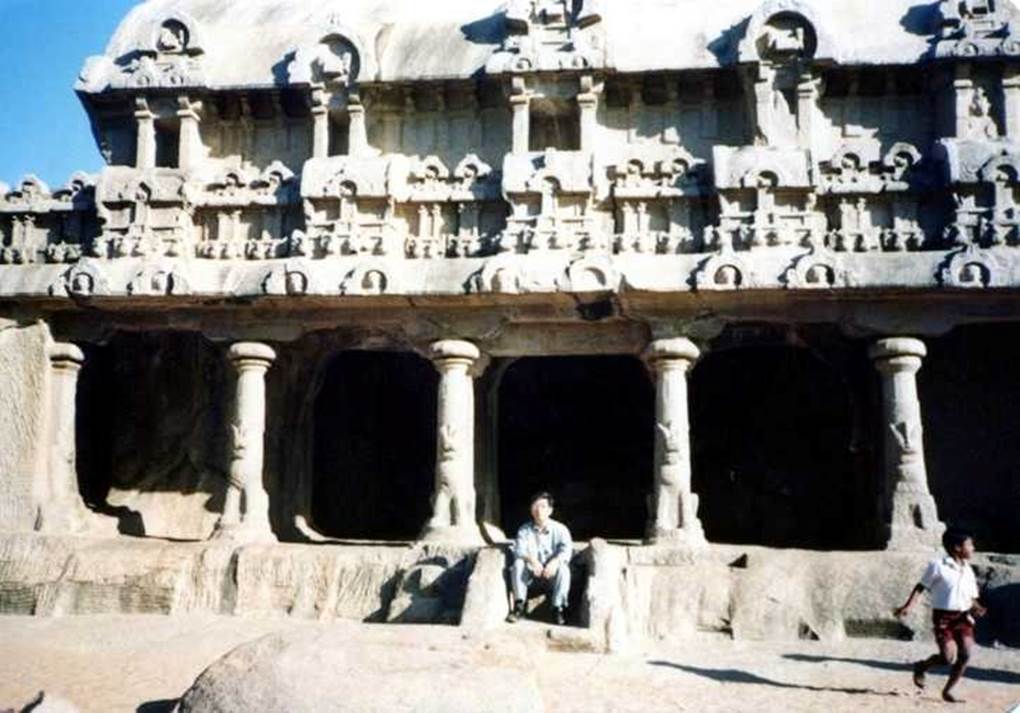
Dharmaraja Ratha
This is the largest hollowed-out rock-cut temple among the five rathas. The interior is unfinished. The horseshoe-shaped protruding window-like carvings accent the piled roof. The sculptural ability is extremely high.
Author’s sketch 2, far right
Photo by author, 1989
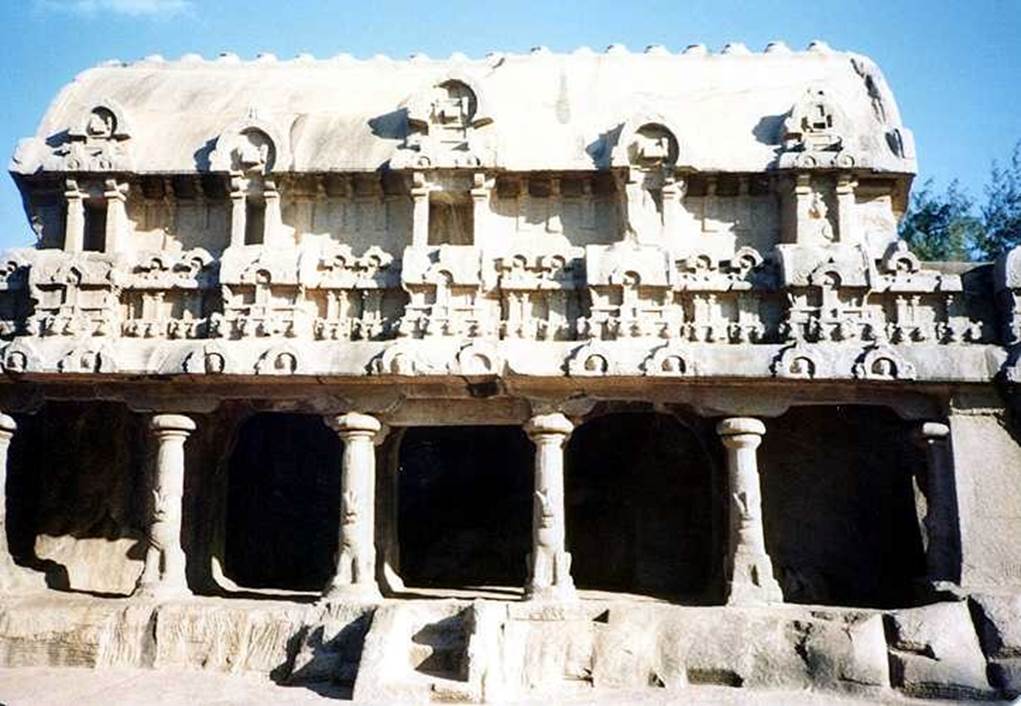
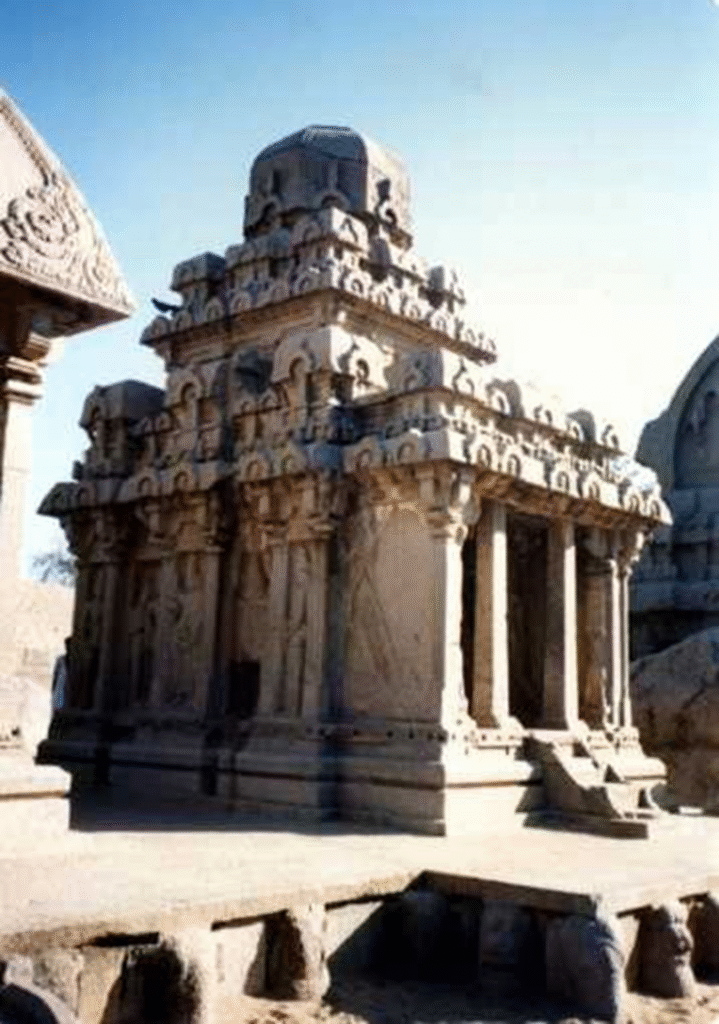
Bhima Rata
Hollow cave temple. The interior is unfinished, but the inside is a cool space.
Author’s sketch 2, second from the right
Photo by author, 1989
Author’s sketch 2, second from the right
Photo by author, 1989
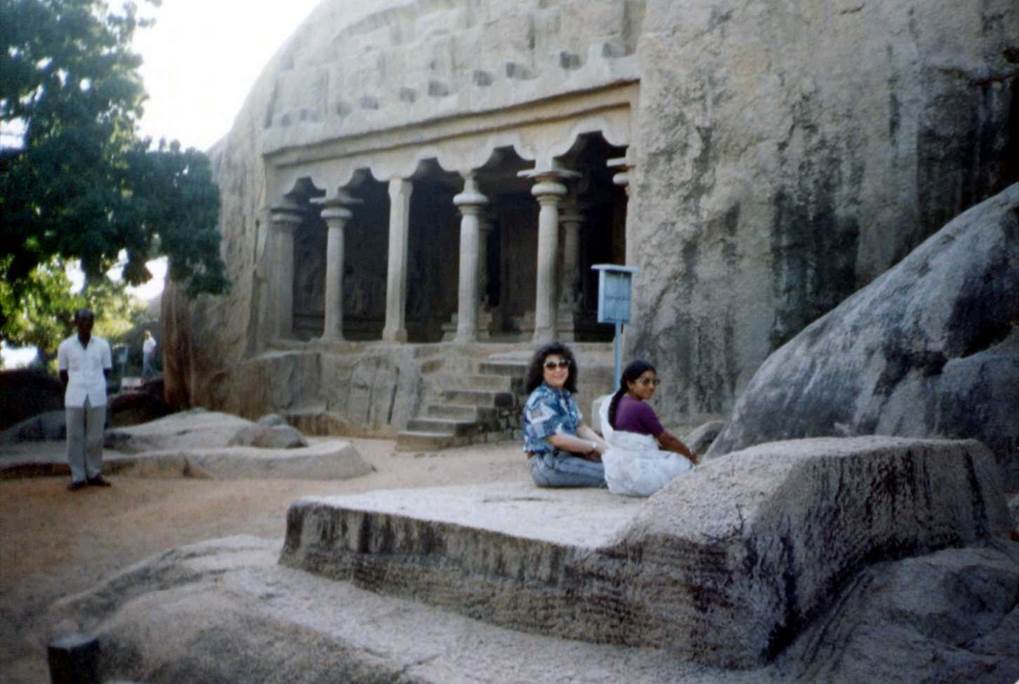
Arjuna Rathas
Author’s sketch 2, third from right
Photo by author, 1989
Nakula Sahadeva Ratha
Author’s sketch 2, front
Photo by author, 1989
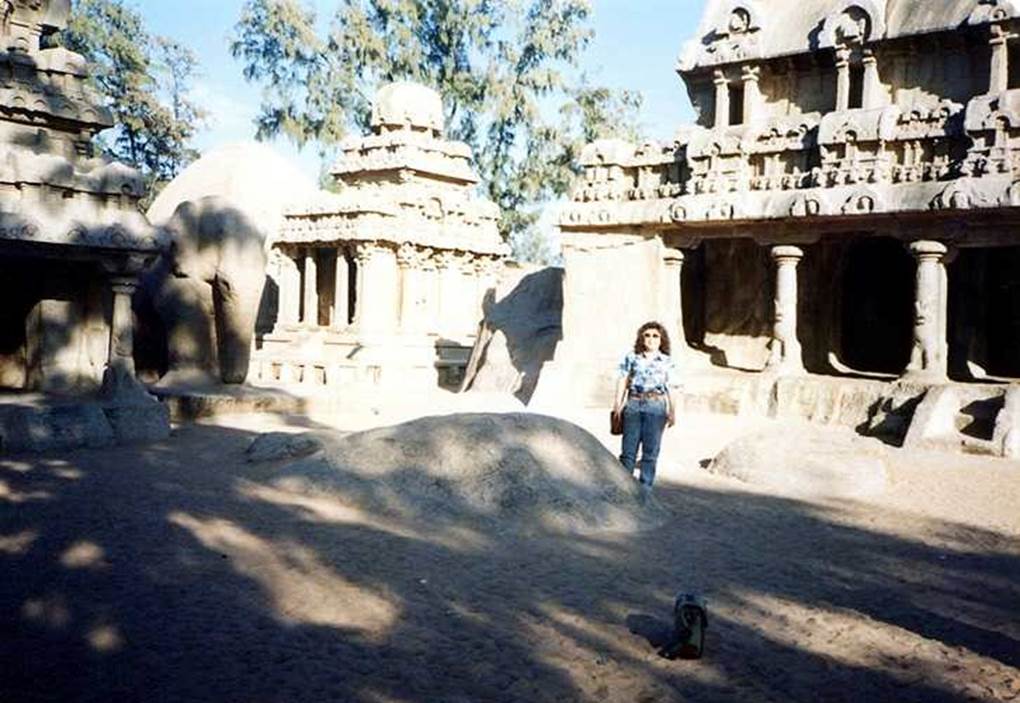
Photo by author, 1989

Photo by author, 1989
Dhrappadi Rathas
The smallest of the five ratas in the cave temple. The interior is unfinished.
It is said to be a stone representation of the thatched-roof dwellings of this region.
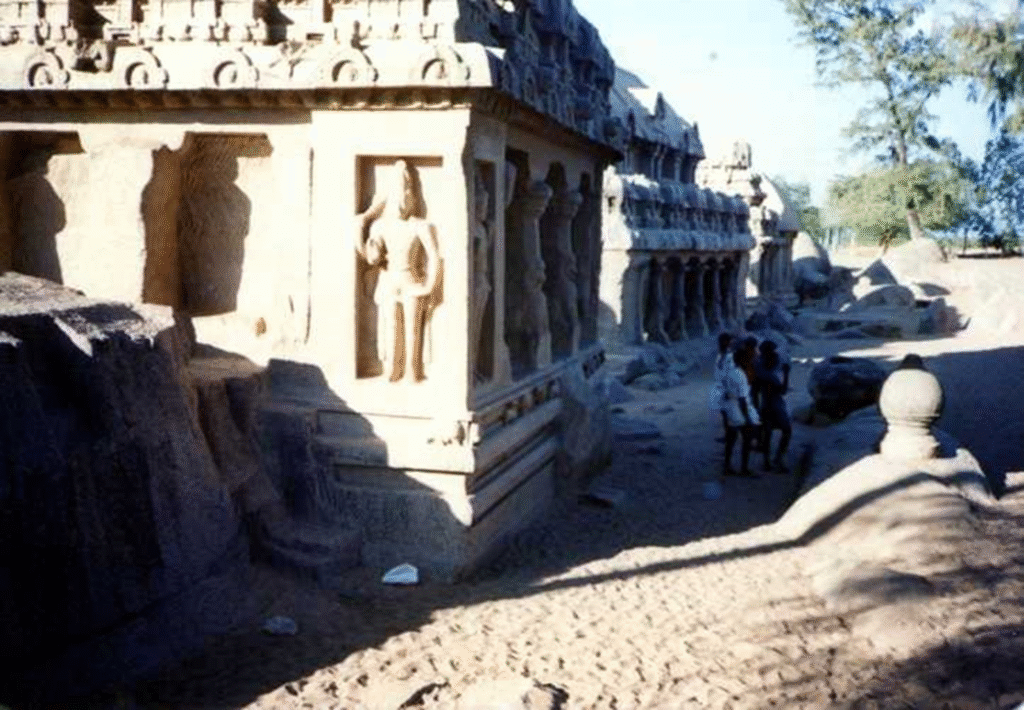
Author’s sketch 2, far left
Photo by author, 1989
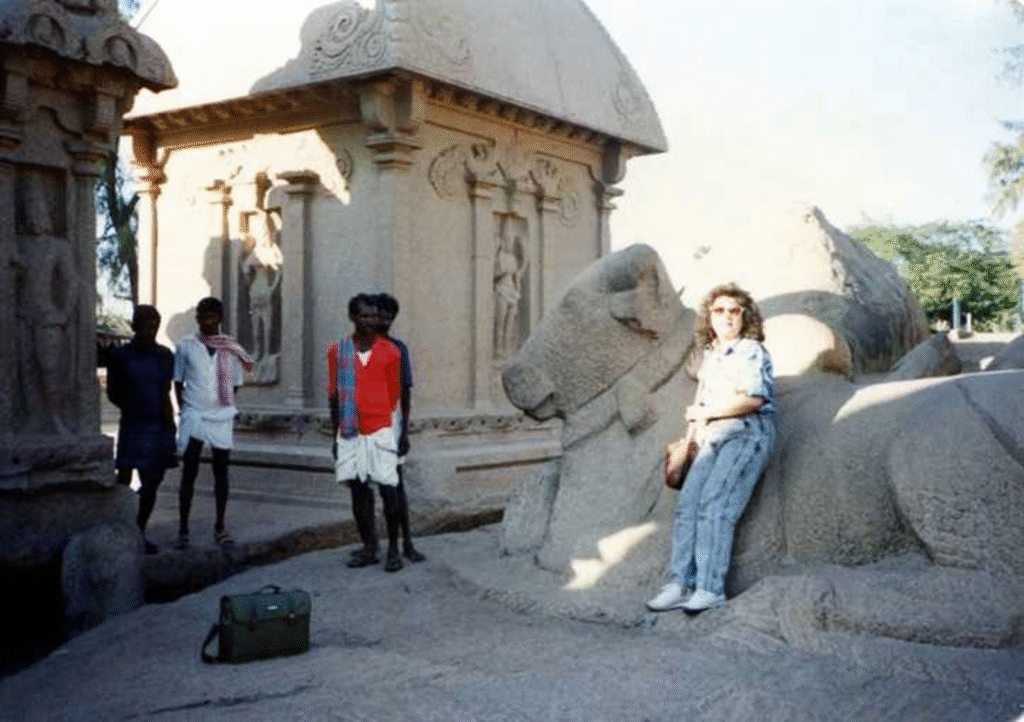
Author’s sketch 2, far left
Photo by author, 1989
LIGHTHOUSE
The lighthouse on the hill overlooks the Bay of Bengal in the Indian Ocean.
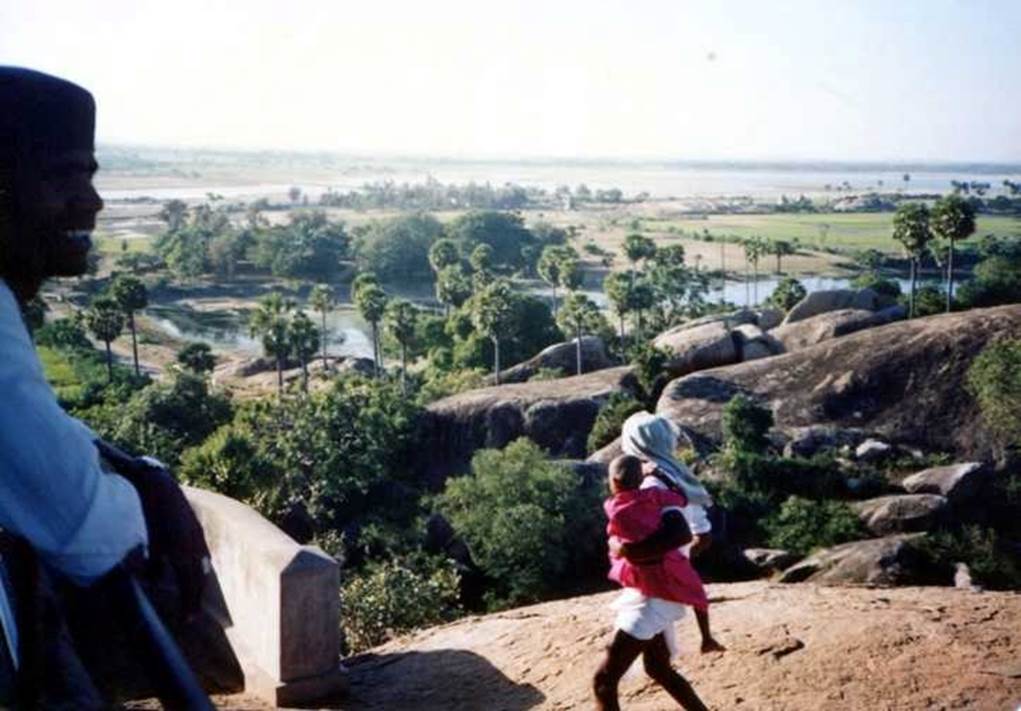
Photo by author, 1989
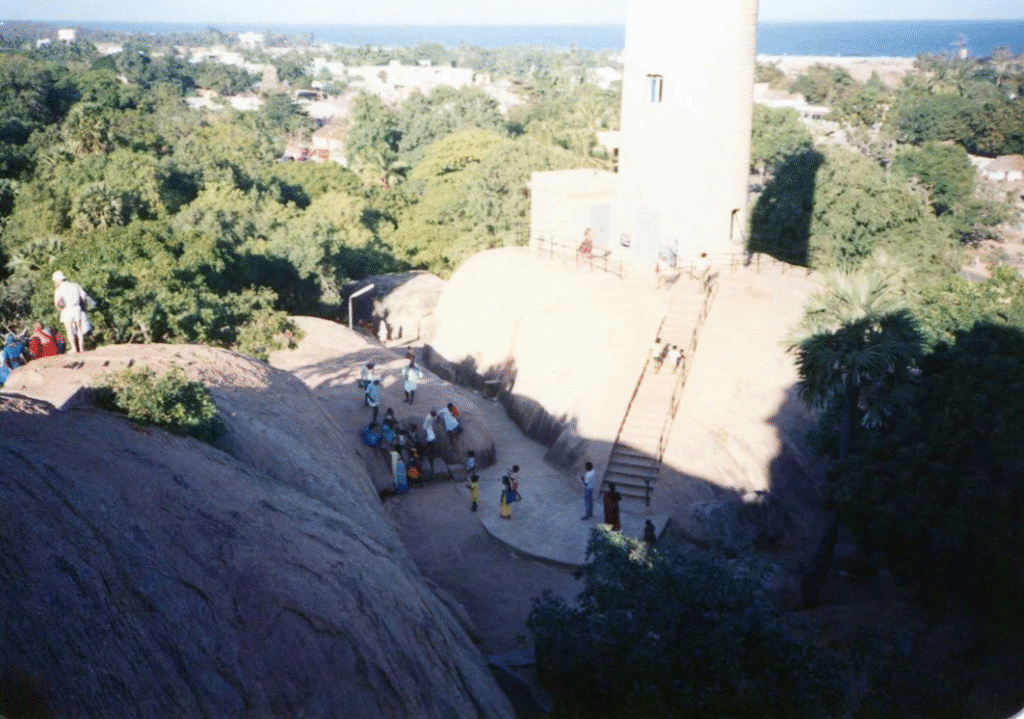
Photo by author, 1989

Photo by author, 1989
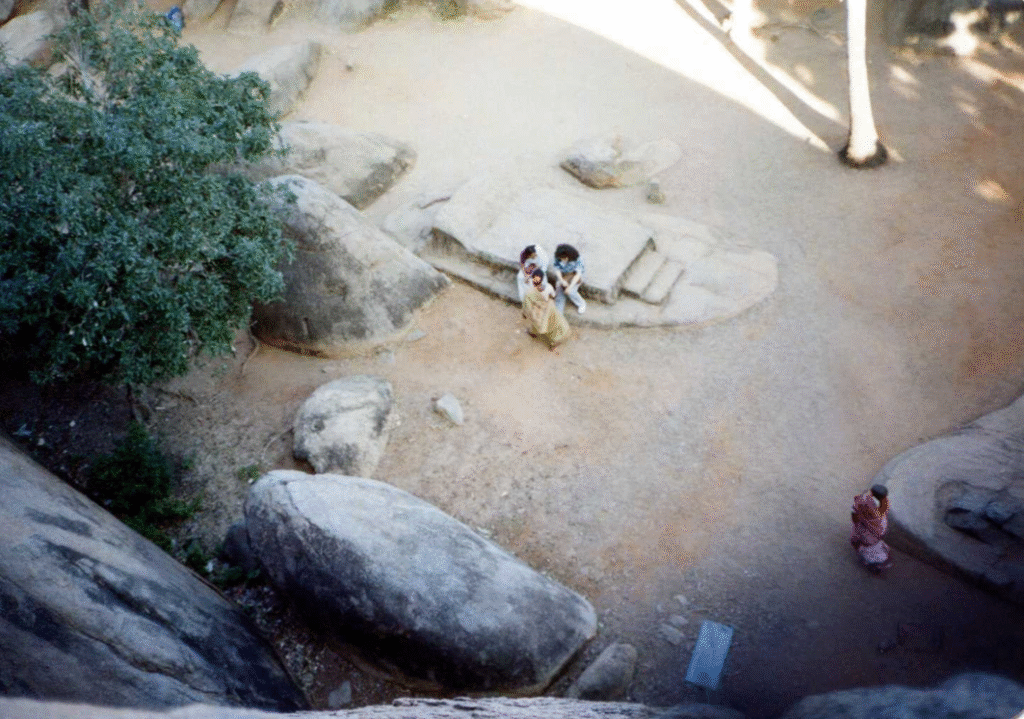
Photo by author, 1989
COLOMANDEL COAST
The Coromandel Coast is a 700 km stretch of coast in the Bay of Bengal, India, on the eastern side of the state of Tamil Nadu on the opposite shore of Ceylon.
Travel guide is a vegetarian
As I walked along the white sand beach facing the Indian Ocean, I found an open-air restaurant. Blown by the sea breeze, we decided to have lunch with our travel guide, an Indian lady. When I opened the menu, I was told that she was a vegetarian and that she did not eat any animal meat.
It was here that I met a vegetarian for the first time in my life.
I was surprised that a vegetarian diet could build a good body, and I realized that my guide’s good body built was made up of vegetarian diet, so we ate together.
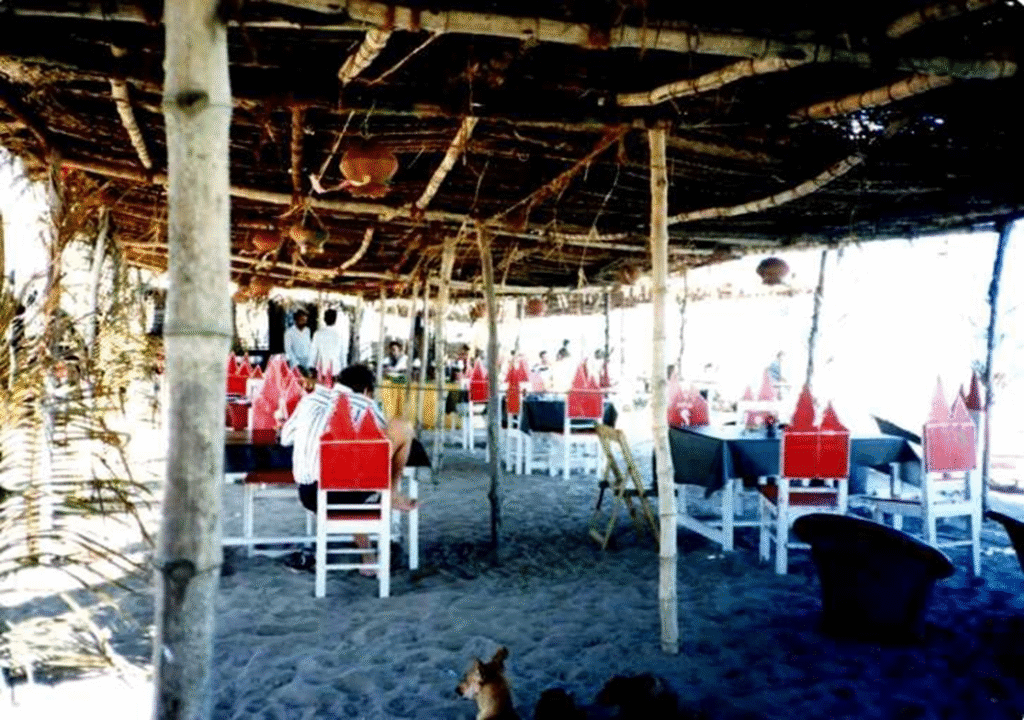
Photo by author, 1989
There were a lot of flies on this beach.
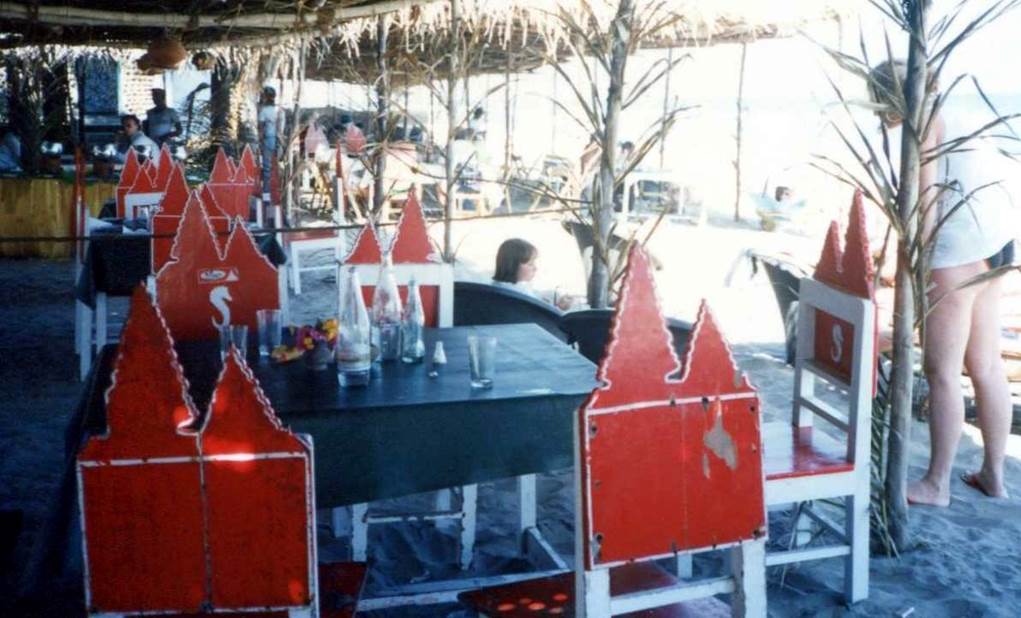
Photo by author, 1989
India has a close relationship between animals and humans.
(Coromandel Coast)

Photo by author, 1989
Mahabalipuram Town
Houses with deep eaves are typical of South India. In the Indian winter, it feels very pleasant to sit under the eaves.

Photo by author, 1989
Road view of a village adjacent to the Malabaripuram World Heritage Area.
People come and go, ox carts carry large loads, and cars, motorbikes and buses run past them.
This diverse range of transportation can be said to be a uniquely Indian scene.
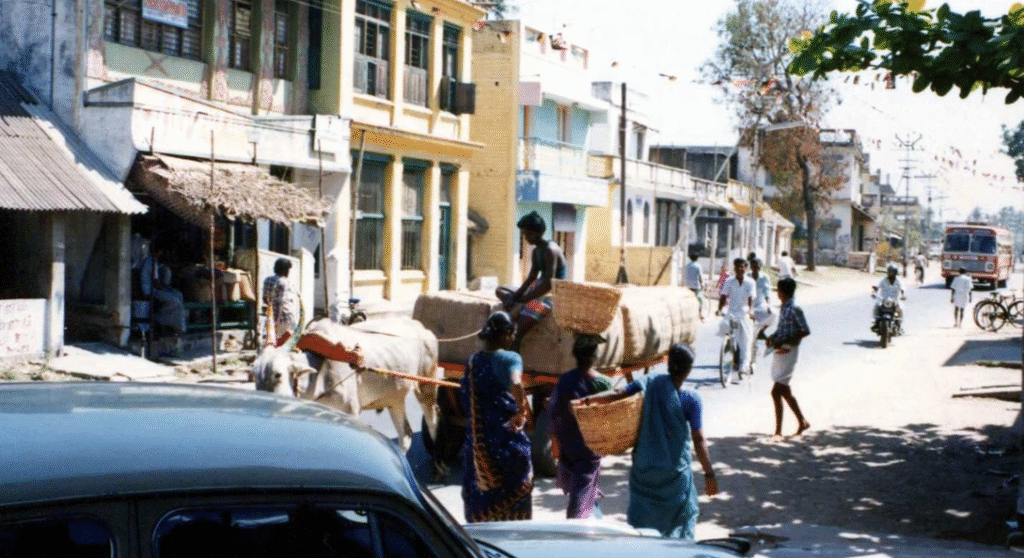
Photo by author, 1989
In accordance with the old custom, a housewife creates a pattern of amulets by studding colored powder on the floor of the entrance.
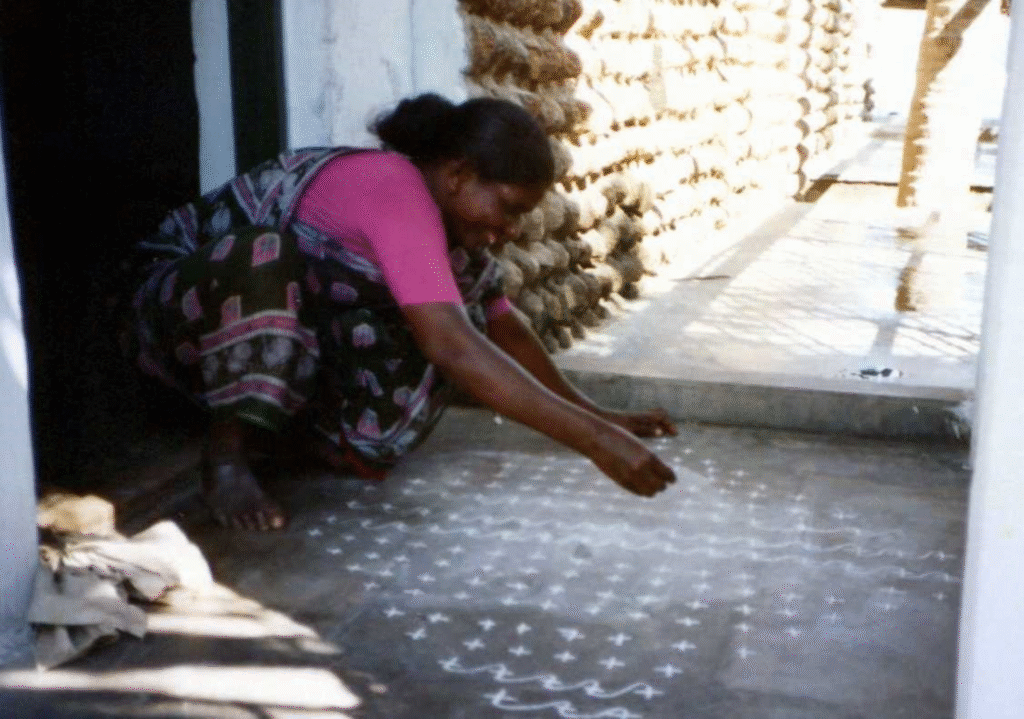
Photo by author, 1989
The Coromandel Coast is a coastal area that has risen and fallen since the Age of Exploration in the 15th century, when the Portuguese, and then Western powers such as the Netherlands, France, and Britain took a chance on colonial domination of India.
Attention was paid to the traditional Indian chintz as a trade commodity, and cotton textiles and dyeing from this region spread throughout the world.
Javanese chintz in Indonesia and Yuzen dyeing in Japan are also influenced by products from this region.
Here at the souvenir shop in Mahabalipuram, a wide selection of Indian chintz and silk fabrics are displayed, attracting tourists.
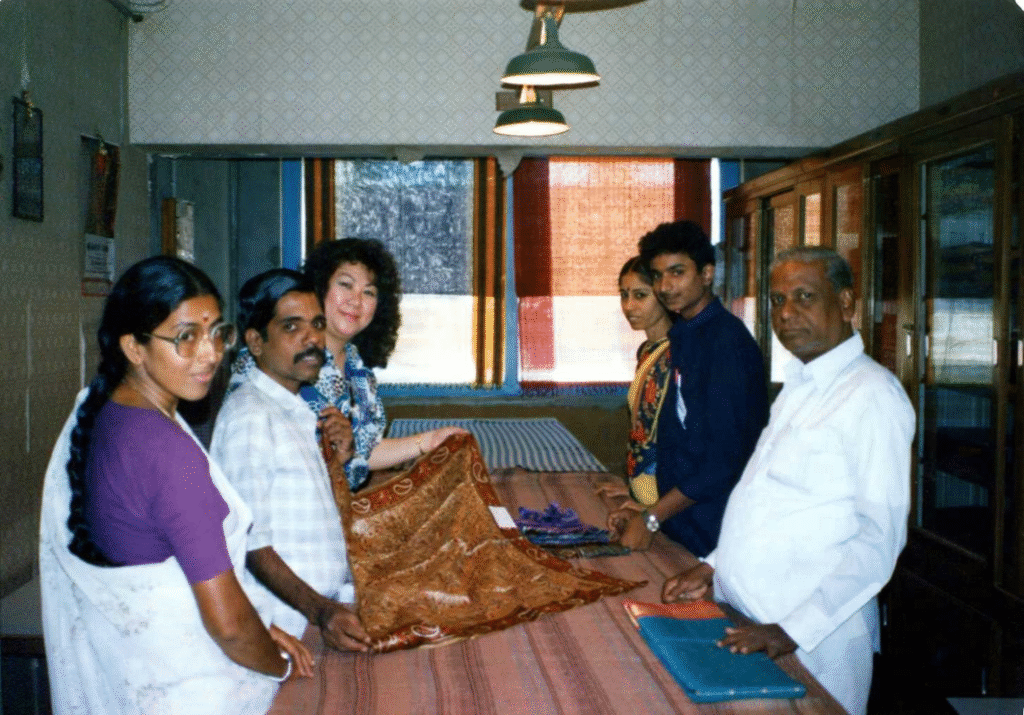
Photo by author, 1989