JAP | ENG
USA, MEXICO #1/6
1977
San Francisco
America and Mexico research trip
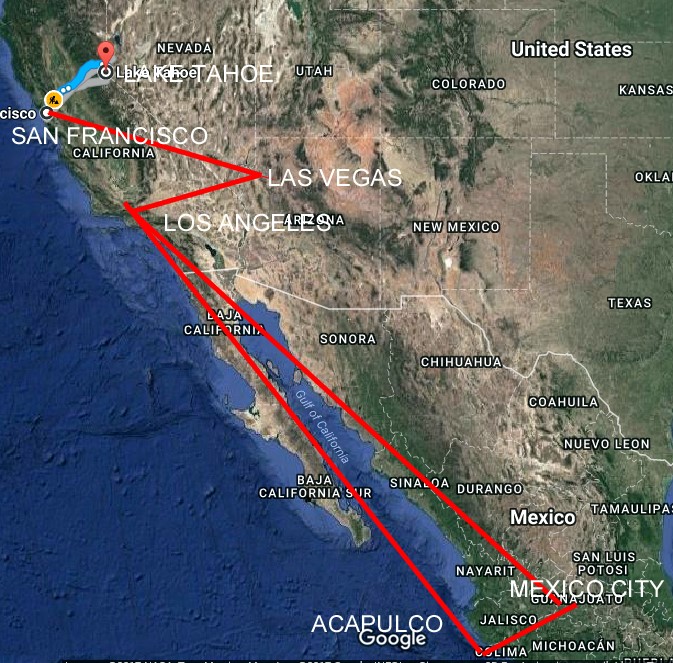
In 1977, I was invited by a hotel developer in Kuala Lumpur to take a tour of the United States and Mexico. It was my first time to cross the Pacific Ocean. Below are the flight routes and records of my flight between the United States and Mexico.
San Francisco
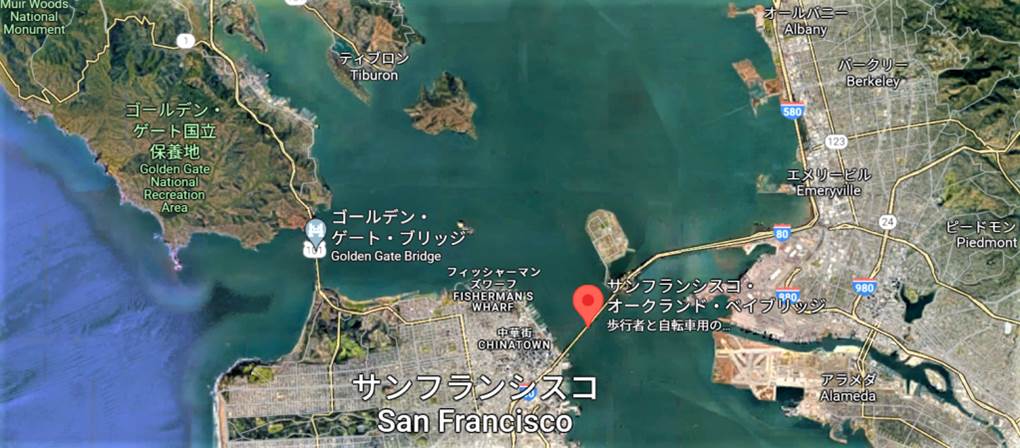
The first stop was San Francisco. The day I arrived, I was jet-lagged, dazed and groggy.
I was able to meet up with a Singaporean university classmate for the first time in a long time at Union Square in the city center.
His Japanese is on par with Japanese people, and he told me that he works for a Japanese construction company, in charge of sales to Chinese companies in the United States
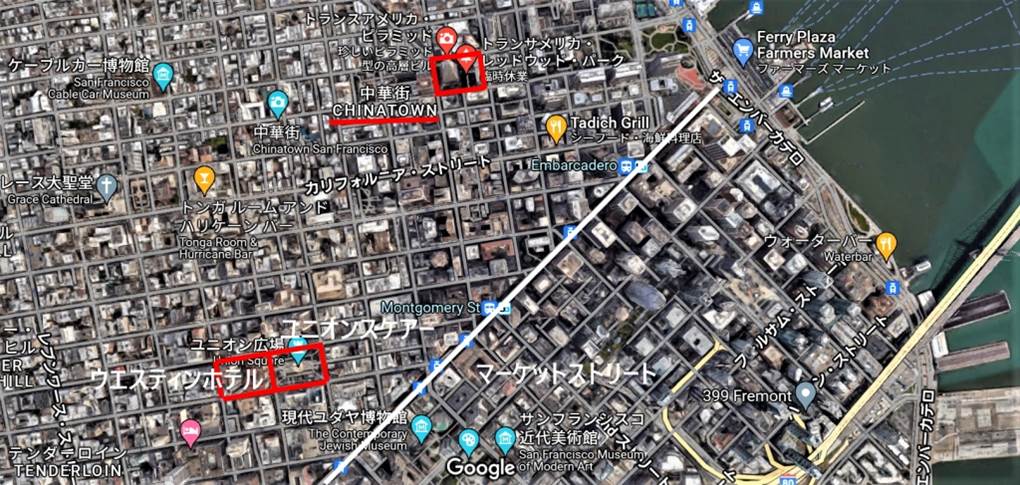
Union Square
Union Square in the heart of San Francisco. Photograph of the Westin Hotel from this square in 1977. It is a very stately hotel building.
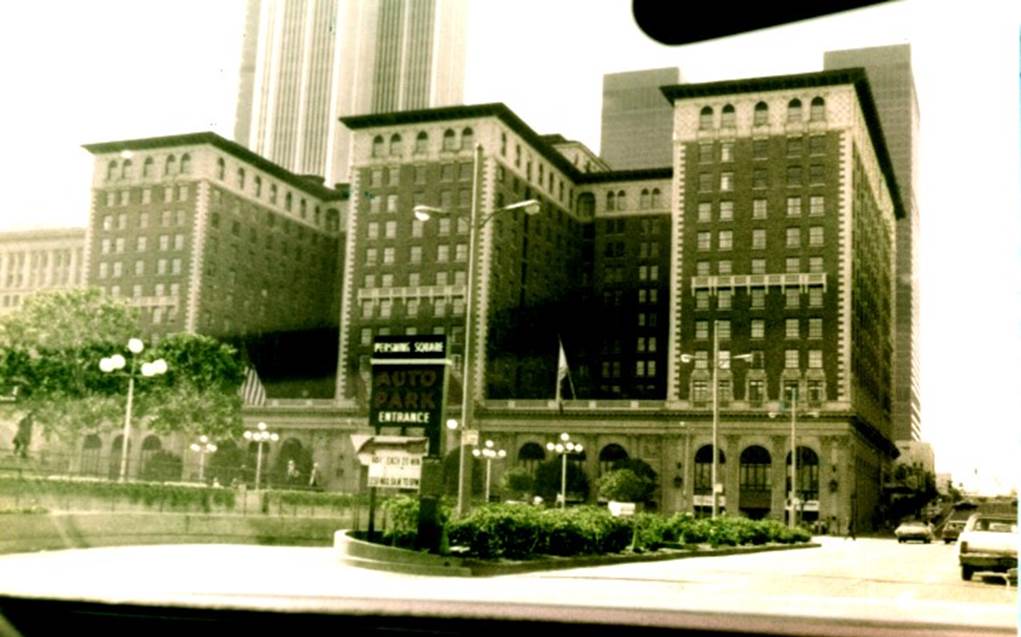
Photo by author, 1977
In 1977, glass observation elevators had already been installed in the United States.
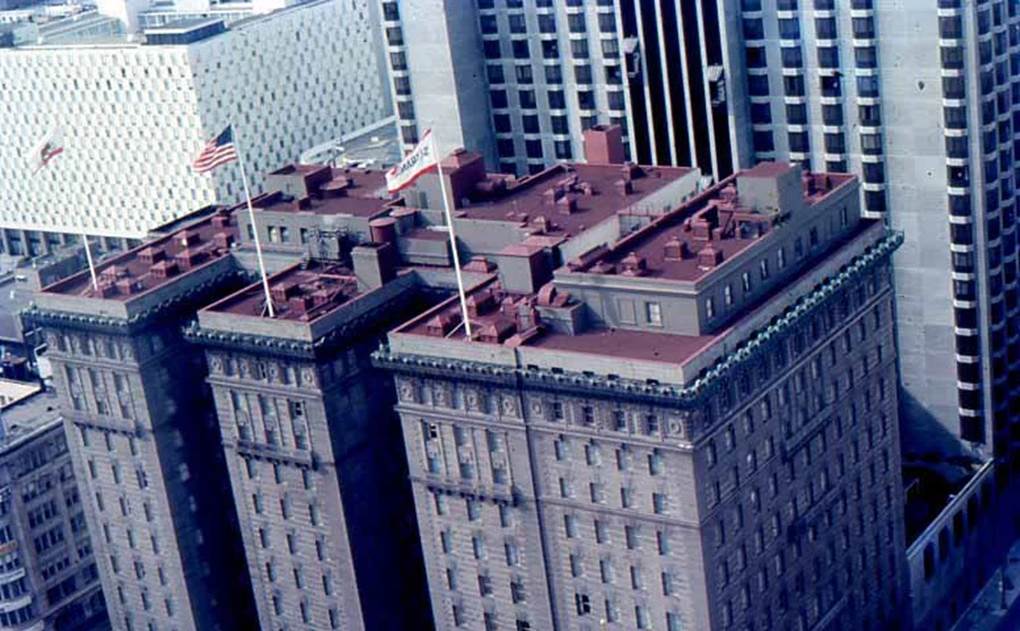
Photo by author, 1977
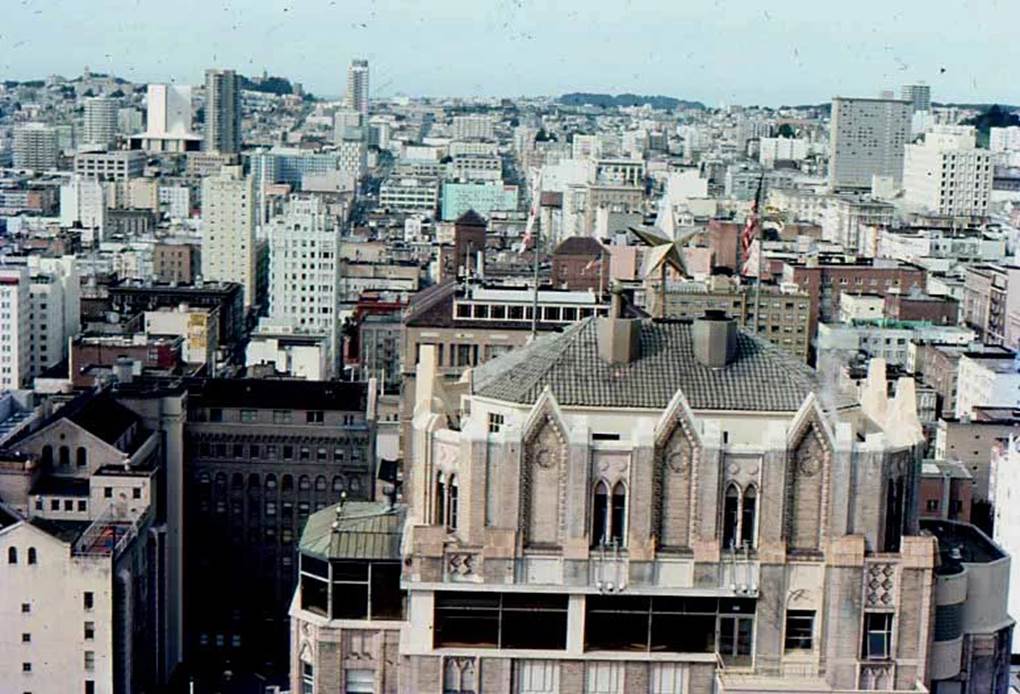
Photo by author, 1977
San Francisco’s Chinatown
Chinatown was within walking distance of Union Square and was located in a prime location in San Francisco.
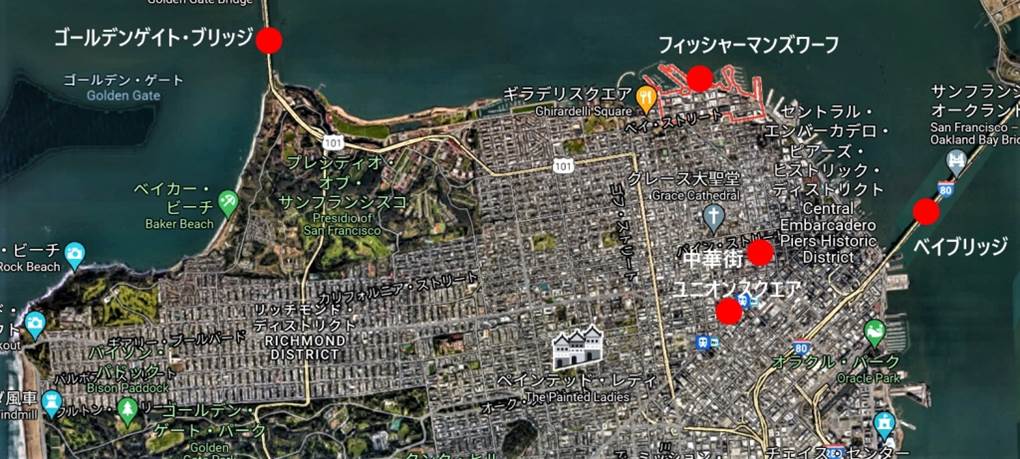
The Chinatown I heard about is in the middle of the city and is lively.
It was lively, but there were few new buildings, and the streets looked dull.
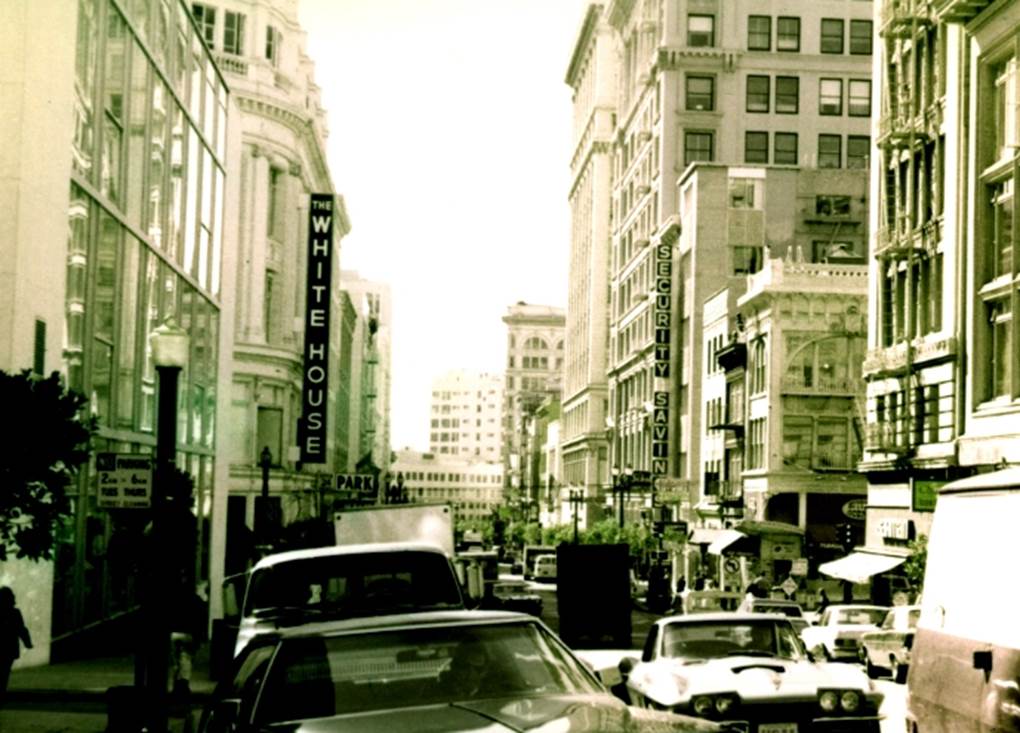
Photo by author, 1977
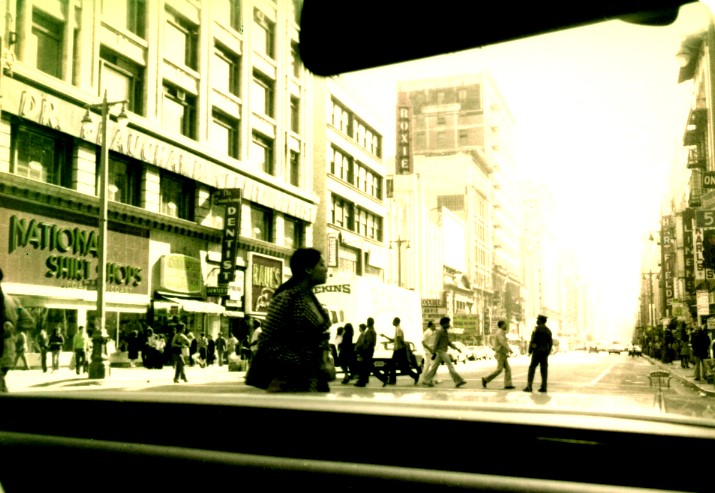
Photo by author, 1977
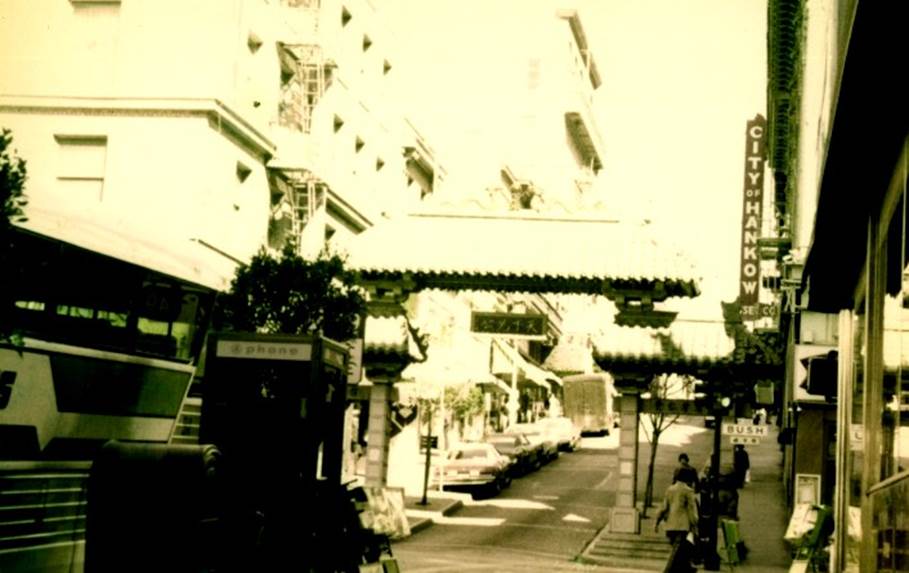
San Francisco’s Chinatown Photo by author, 1977
San Francisco, the city of hills
San Francisco is a hilly city. Everywhere you go, you will come across slopes (hills). The gold rush must have forced them to do urban planning in a hurry. Regardless of the topography of the lowlands and hills, the city is built in a grid pattern of roads. The city plan and infrastructure were built in a short period of time, but this has become the city’s unique feature.
The main roads are also on slopes, and the public transportation, trams, go up and down the slopes.
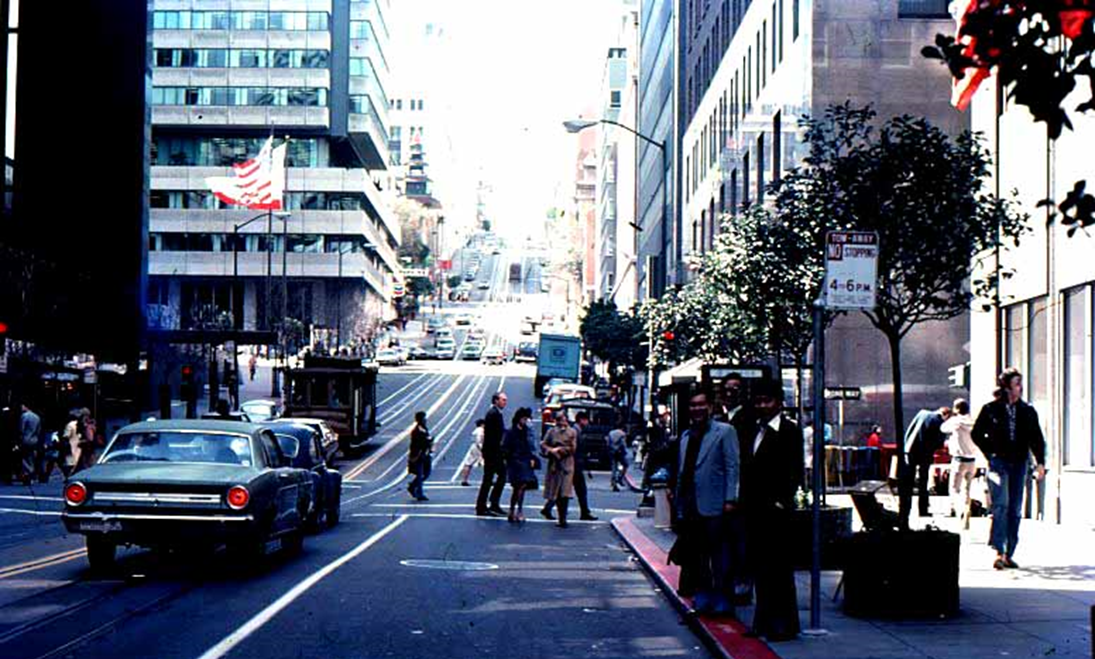
Photo by author, 1977
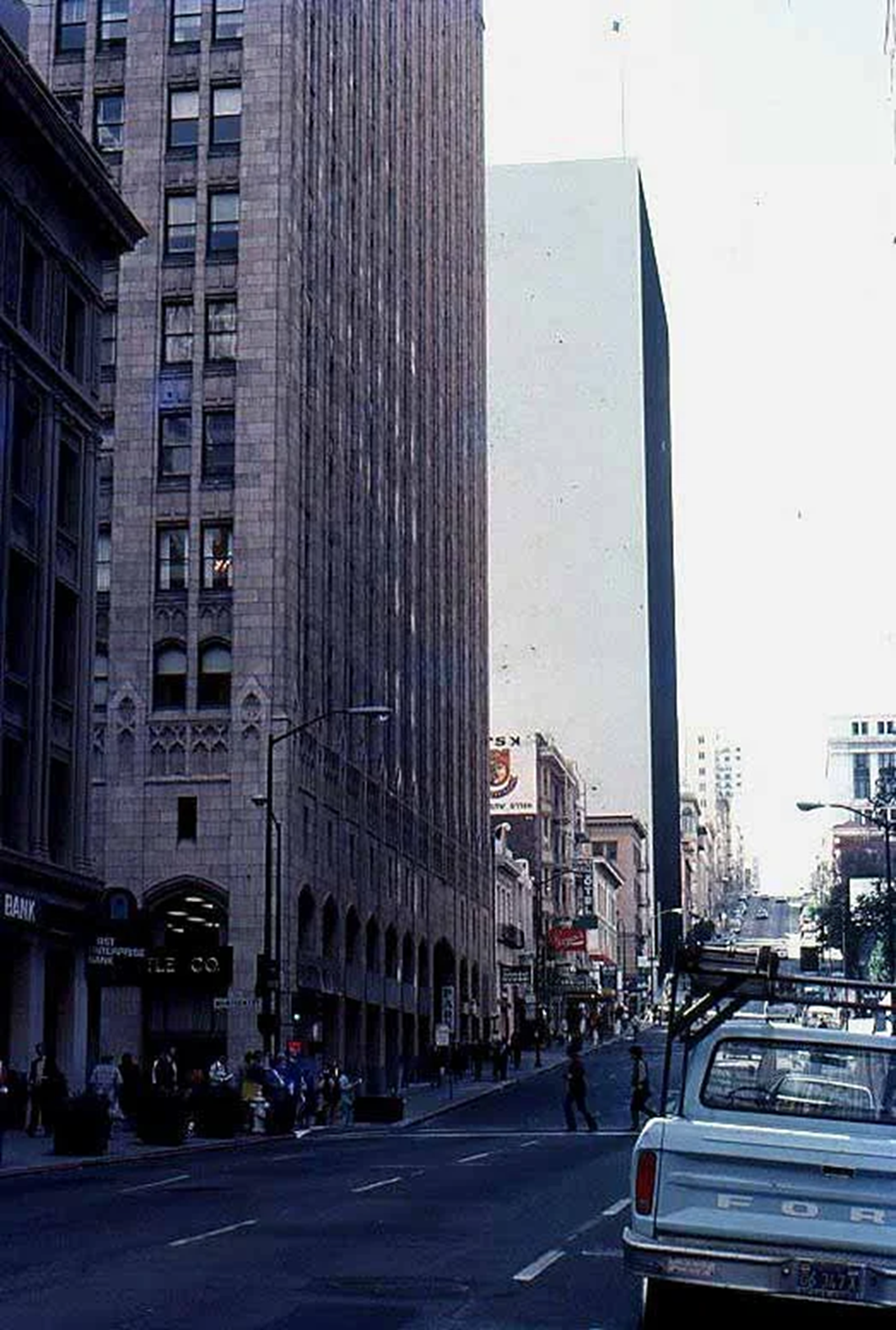
Photo by author, 1977
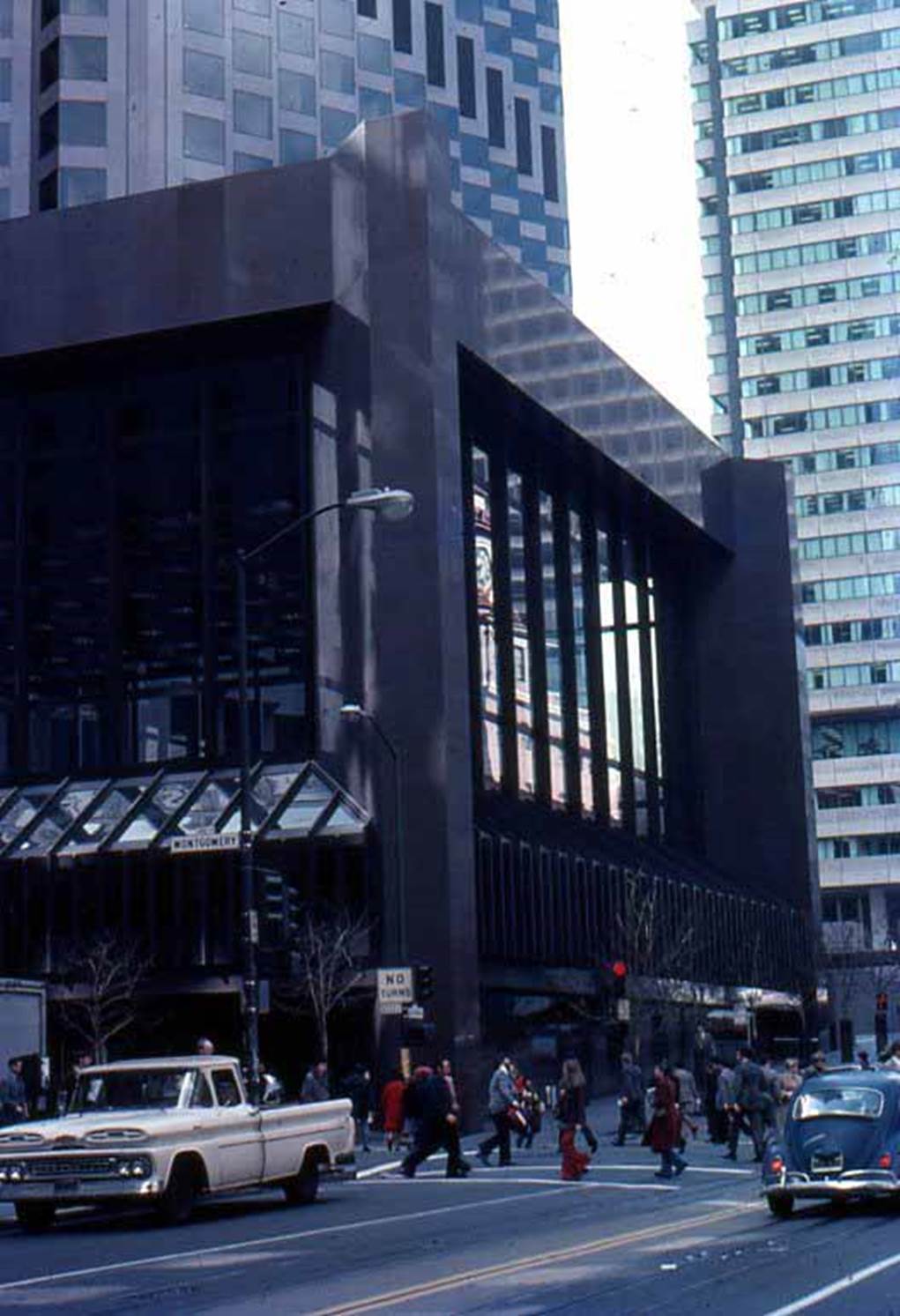
Photo by author, 1977
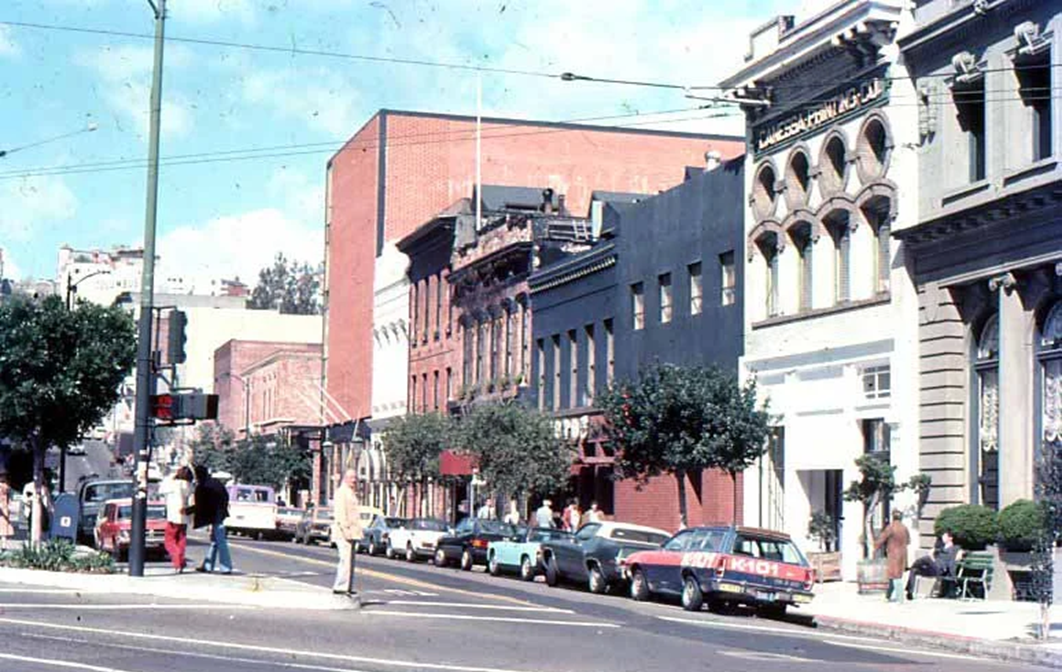
Photo by author, 1977
San Francisco’s glittering, newly built white skyscrapers and buildings under construction.
Meanwhile, in Japan’s capital, Tokyo, the Kasumigaseki Building opened on April 12, 1968 (Showa 43), and at the same time, a group of skyscrapers was beginning to appear in the Shinjuku subcenter.
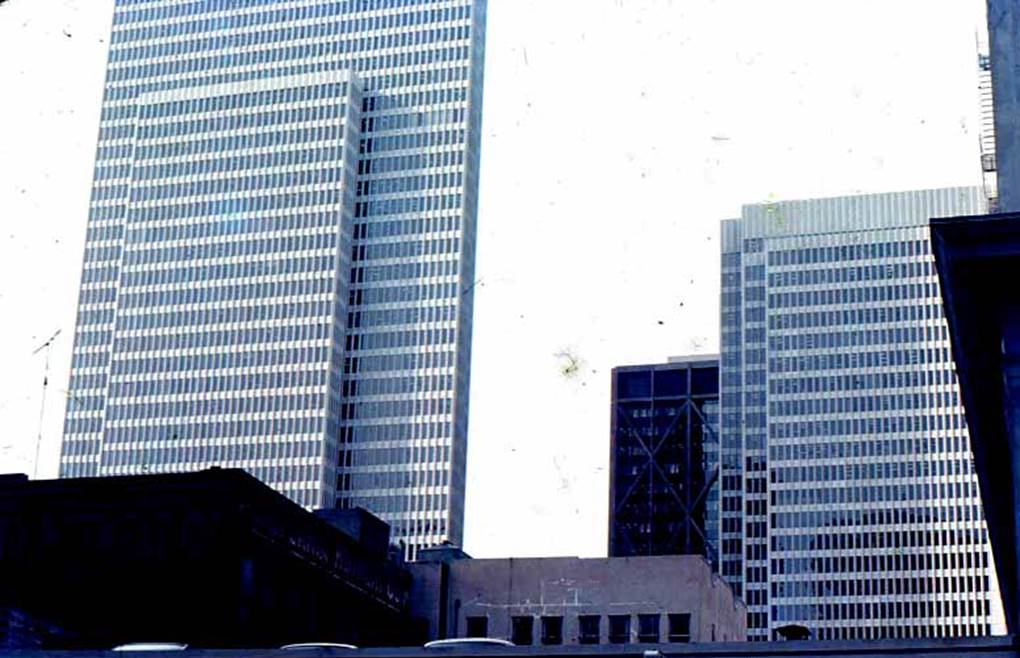
Photo by author, 1977
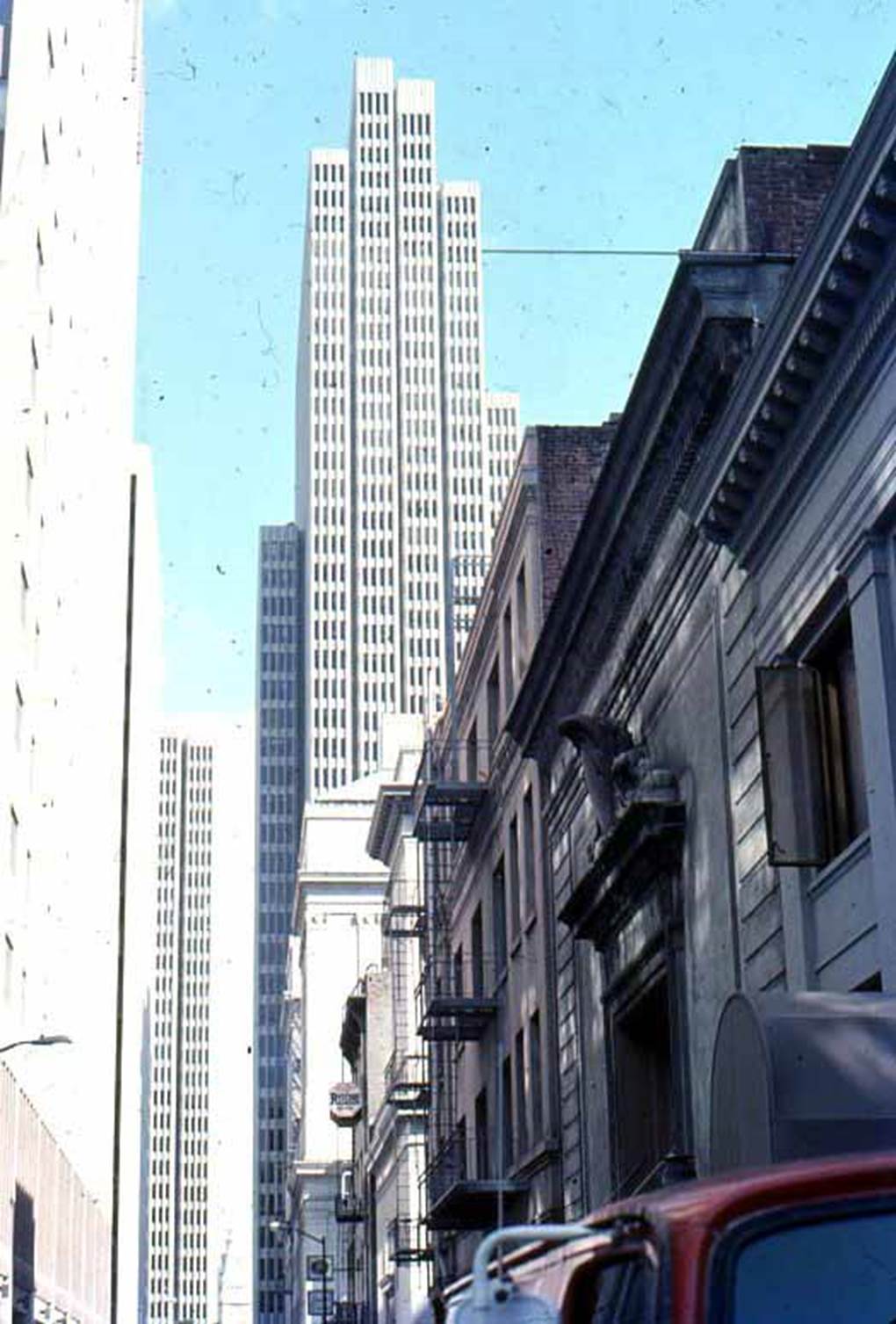
Photo by author, 1977
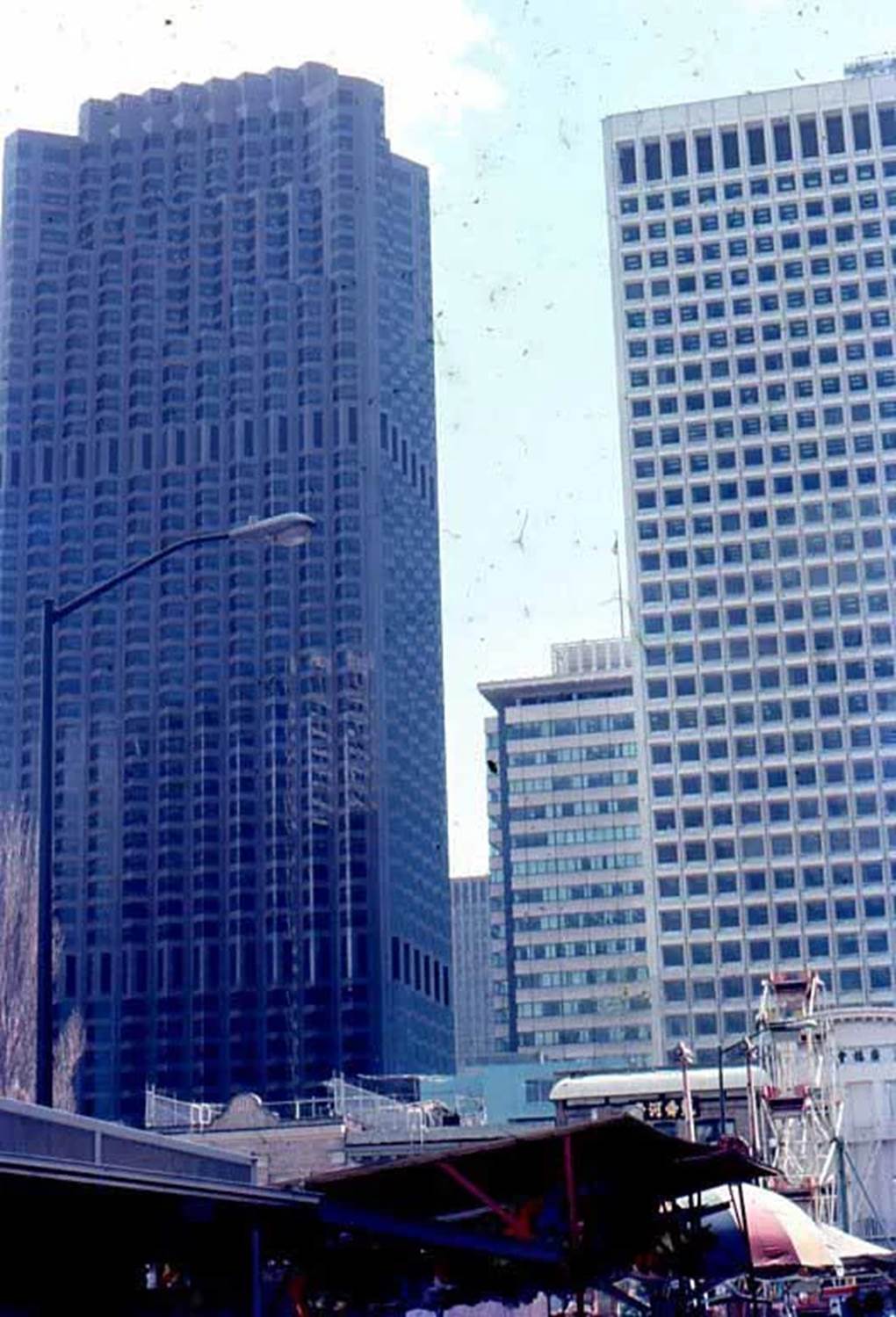
Photo by author, 1977
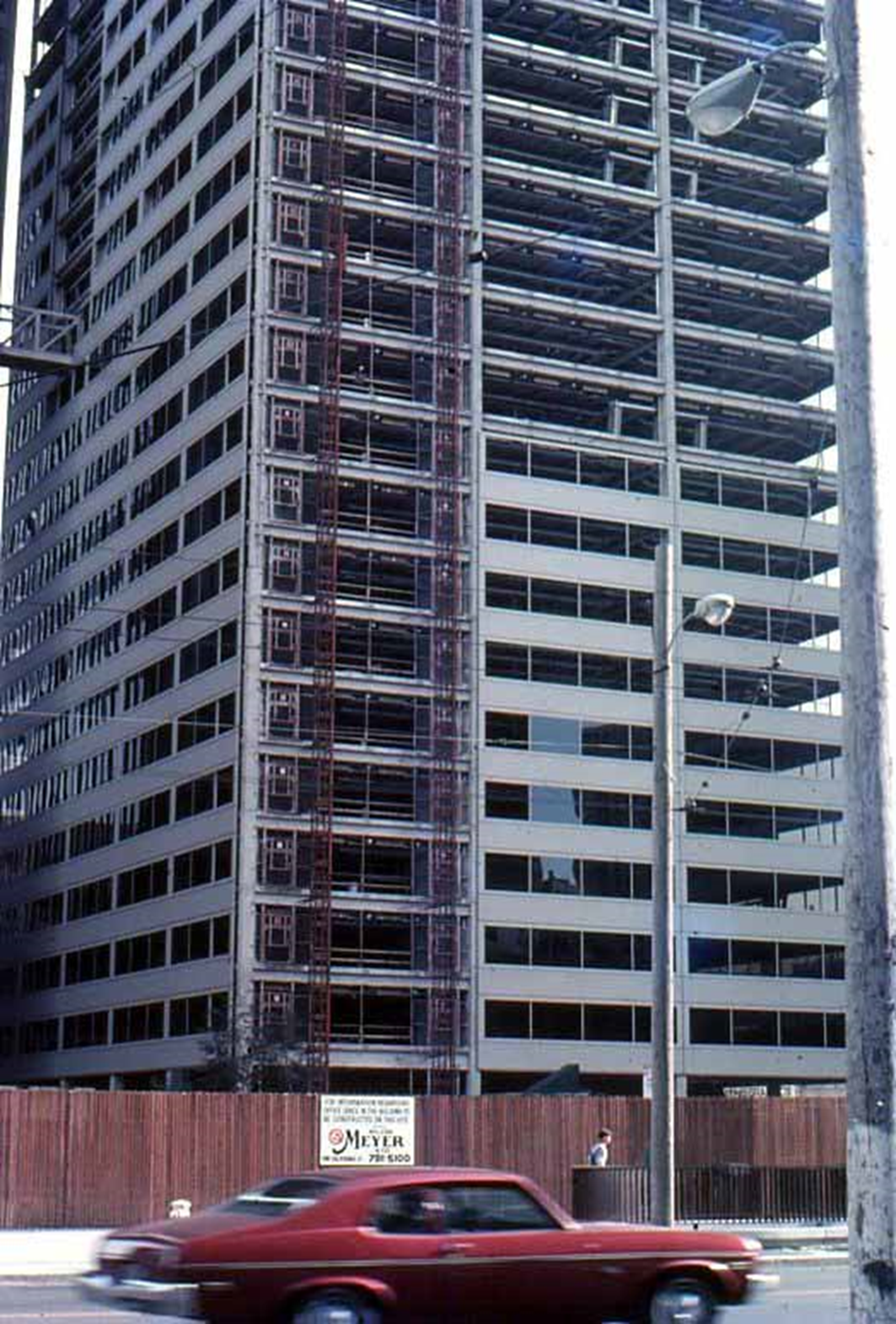
Photo by author, 1977
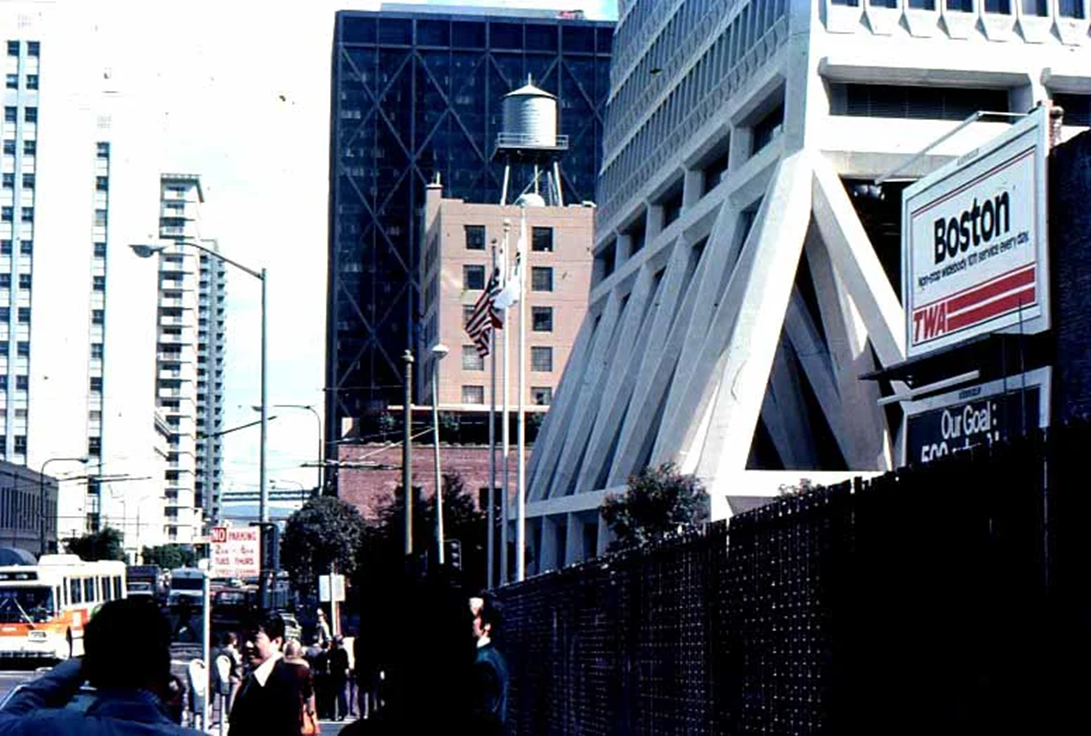
Photo by author, 1977
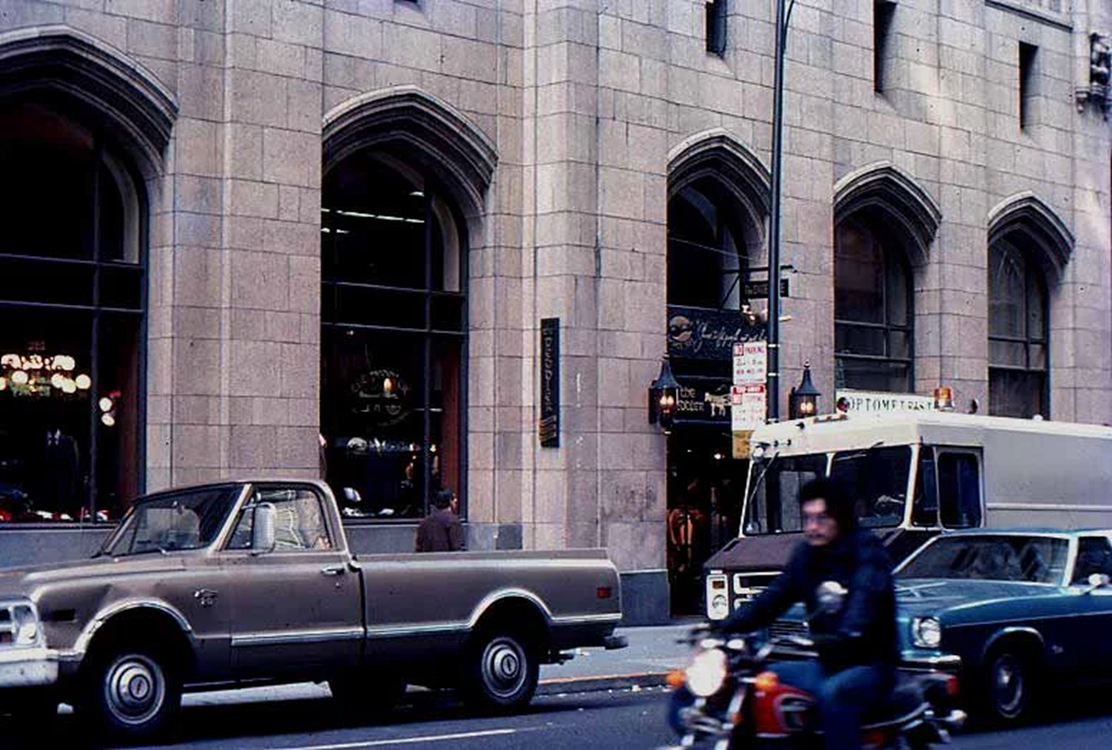
Photo by author, 1977
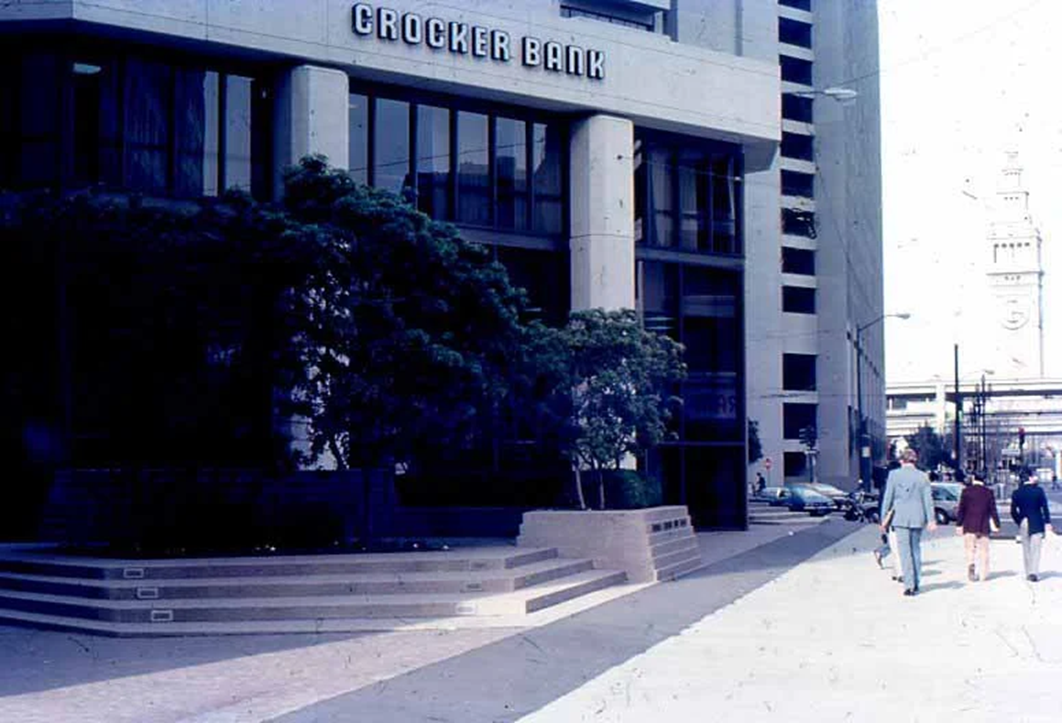
Photo by author, 1977
San Francisco’s Landmarks
TRANSAMERICA PYRAMID
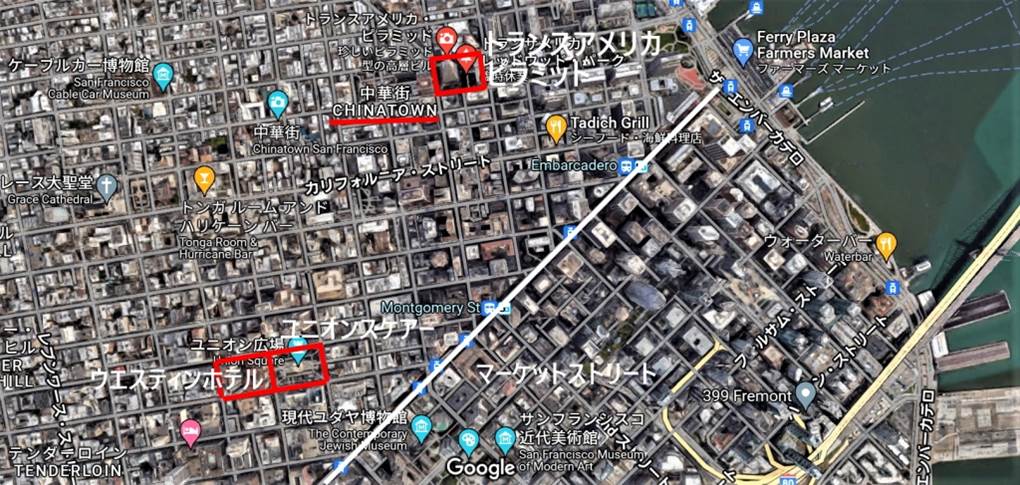
The Transamerica Pyramid is 260 meters high and has 46 floors.
When the project was announced, its unusual design provoked fierce opposition, but shortly after its completion in 1972, it became a San Francisco’s landmark.
Designed by William L Pereira
It was designed to withstand earthquakes in consideration of the earthquake-prone ground of San Francisco, and survived the Great San Francisco Earthquake of 1989 unscathed.
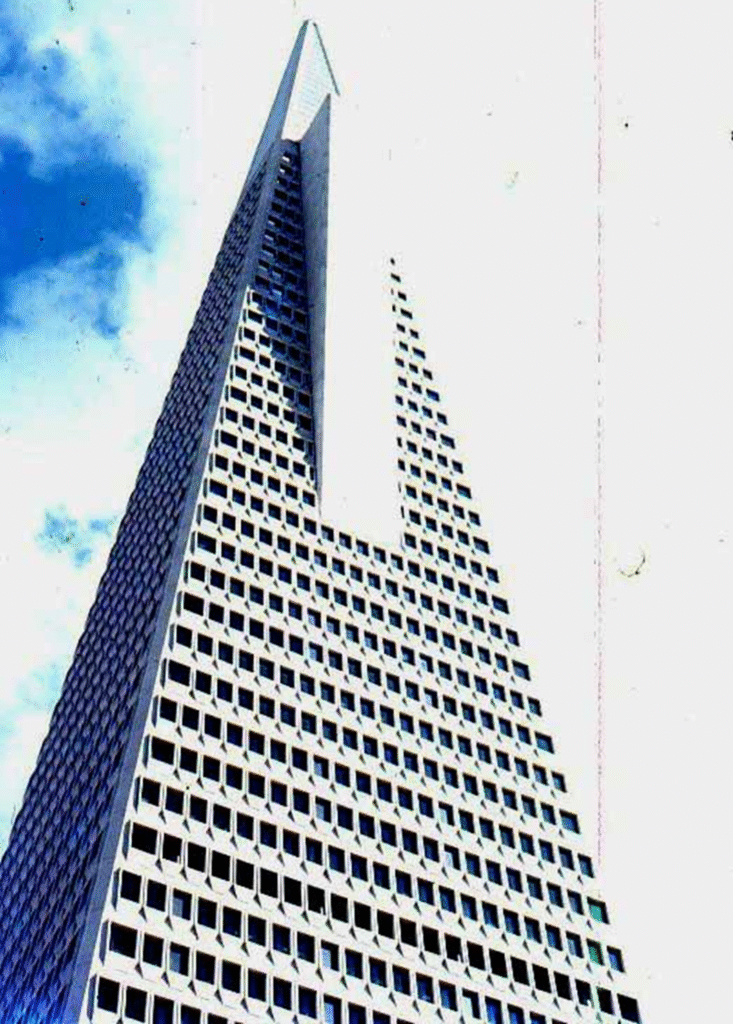
Photo by author, 1977
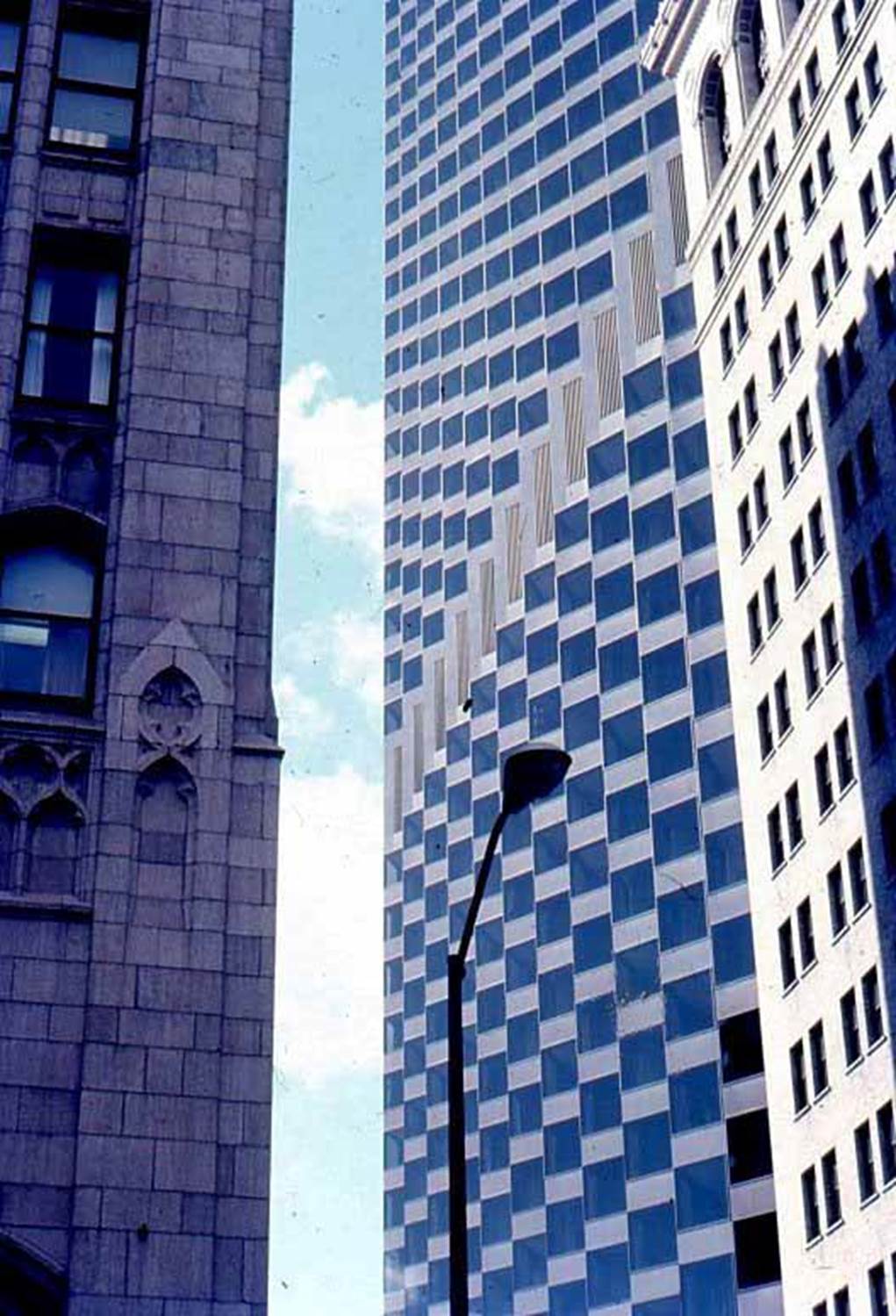
Photo by author, 1977
Restaurants in San Francisco
It can be said that the serving size of all meals is jumbo.
Vegetable salad is also served in large bowls. I realized that the United States is also a rich agricultural country.
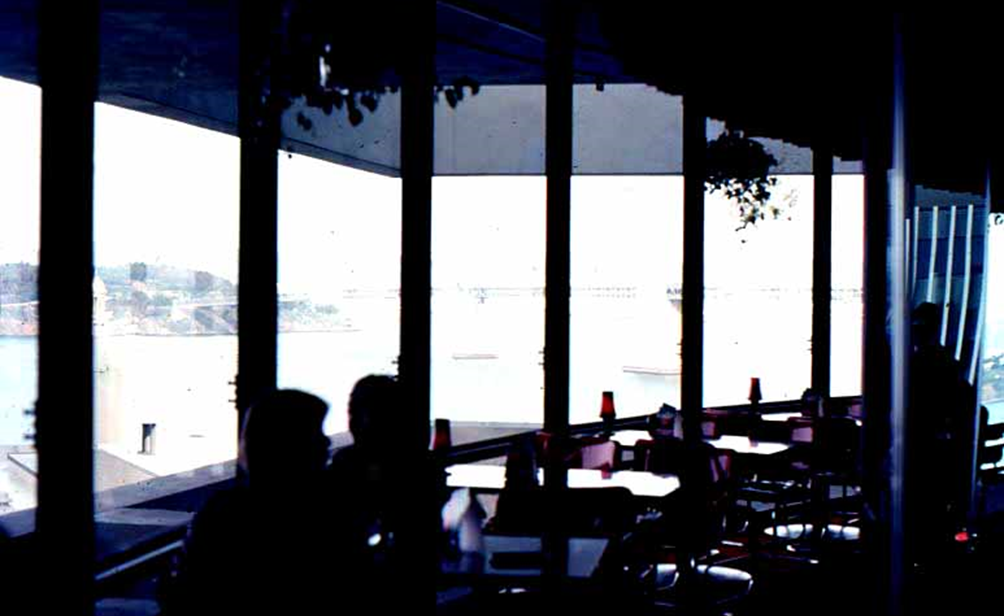
Photo by author, 1977
HYATT REGENCY SAN FRANCISCO
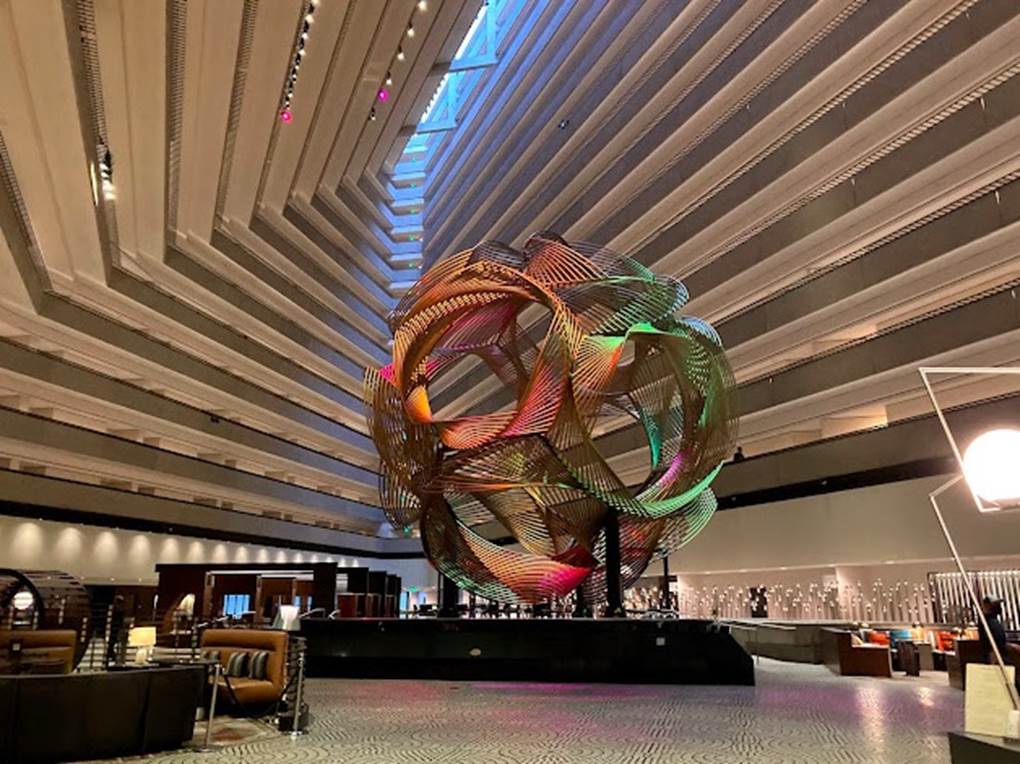
This hotel has a huge atrium inside.
The corridors of the guest rooms run around it above, and it is an innovative and original design that incorporates a large lobby lounge, which left a strong impression on me.
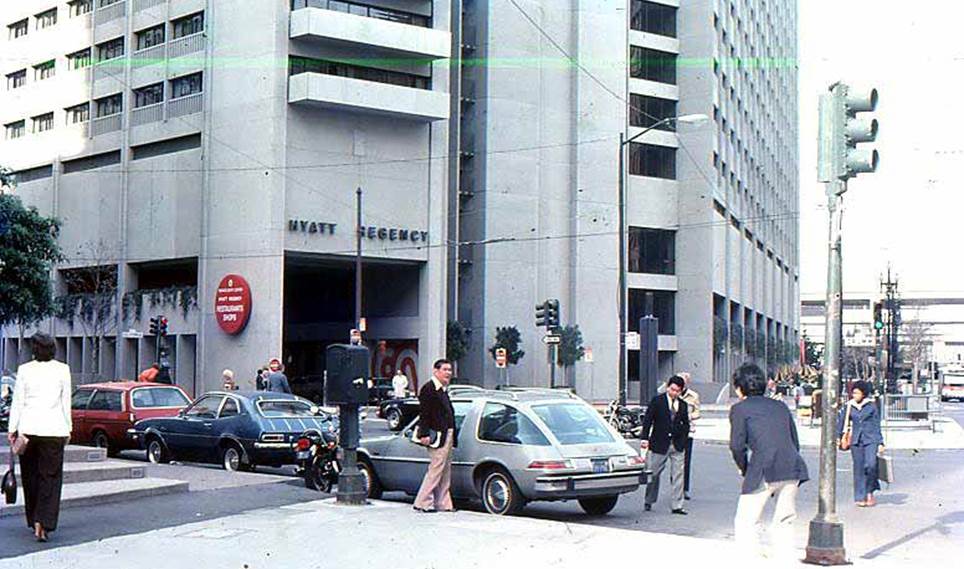
Photo by author, 1977
Current atrium
Designed by John Portman
John Portman is an American futuristic architect and real estate developer known for his hotels with high-rise interior atriums, which were completed in 1974 and would later be copied in hotels in other major cities around the world.
Portman also had a major influence on the cityscape of his hometown, Atlanta.
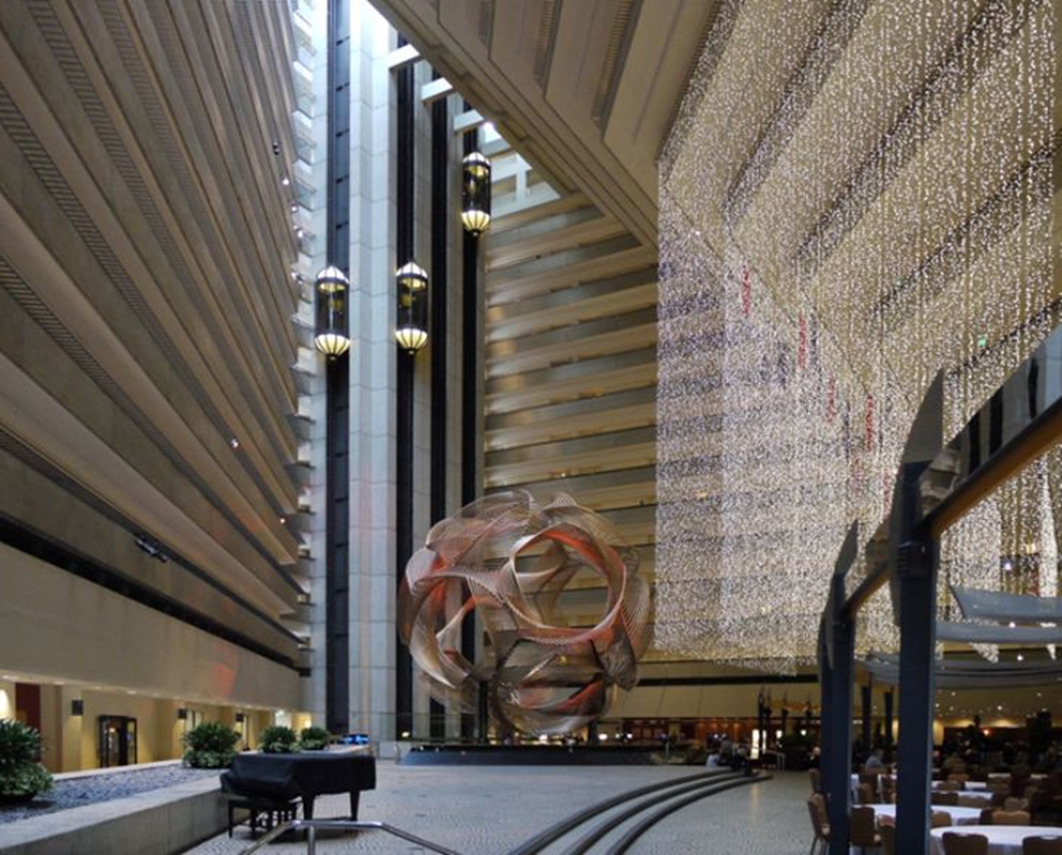
Reprinted from www,printest.jp
Residential Areas
Good weather. There are a series of tasteful houses along the slope. Many of these houses are of wooden construction.
This wooden structure is called the 2X4 (two-by-four) method, and is a “framework” made by assembling pieces of wood measuring about 2 inches by 4 inches, and then joining “structural panelling” to this frame and integrating it with metal fittings and other hardware to form a strong hexahedral structure. It is also called the “framework wall construction method”.
A major feature of the 2×4 construction method is that it allows buildings to withstand earthquakes using surfaces such as floors and walls.
As a historical background, in the United States during the Wild West, the 2X4 construction method (two-by-four method) became widespread due to the fact that there were few skilled craftsmen in the United States, and it became the standard construction method for wooden houses. Currently, about 90% of wooden houses in the United States and Canada are said to be built using the 2X4 construction methods (two-by-four construction method).
From this period, this construction method was introduced to Japan and became popular among housing designers and builders. A college classmate of mine also studied in Canada and introduced this architectural method to Japan in the 1970s.
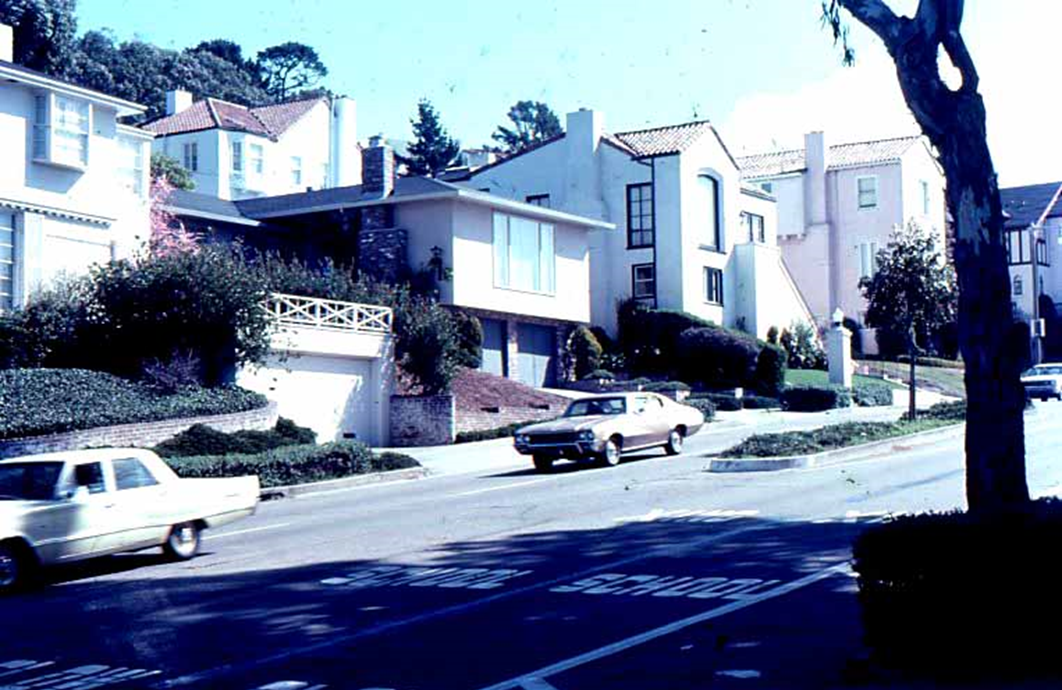
Photo by author, 1977
A mansion in the suburbs
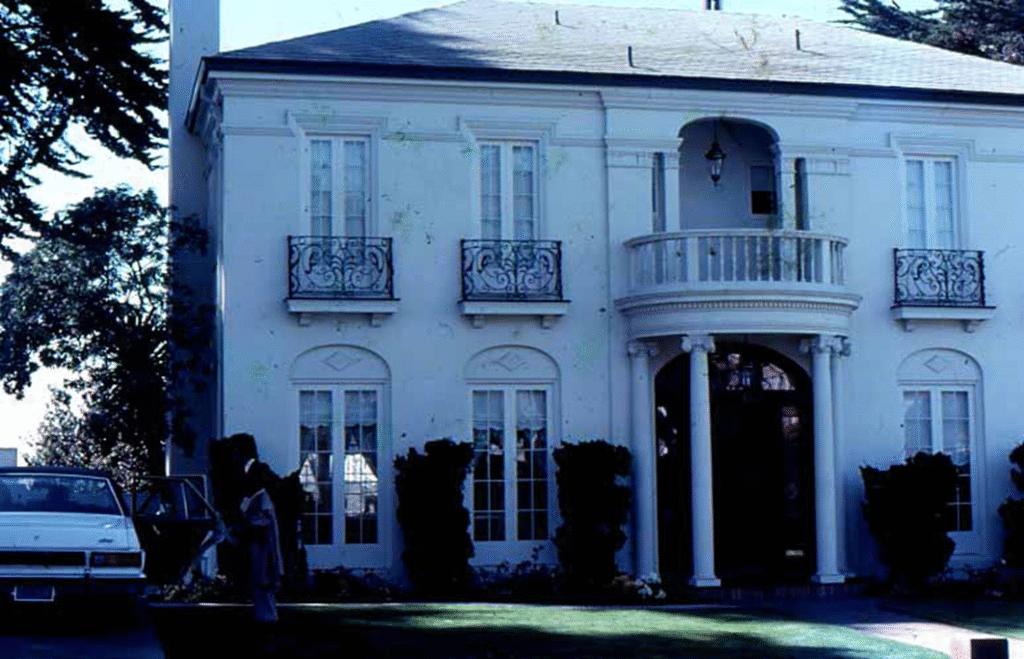
Photo by author, 1977
San Francisco earthquake of 1906
In April 1906, a magnitude 7.5 earthquake occurred directly beneath the California Fault near downtown San Francisco.
Approximately 3,000 people died in the earthquake, and 225,000 people lost their homes in a large fire.
The fire that broke out immediately after the earthquake continued to burn for three days, destroying parts of the city, including Union Square and City Hall.
The 1989 San Francisco Earthquake
Then, in 1989, the Loma Prieta earthquake occurred in San Francisco, damaging the Bay Bridge and causing road collapses. It also caused large fires.
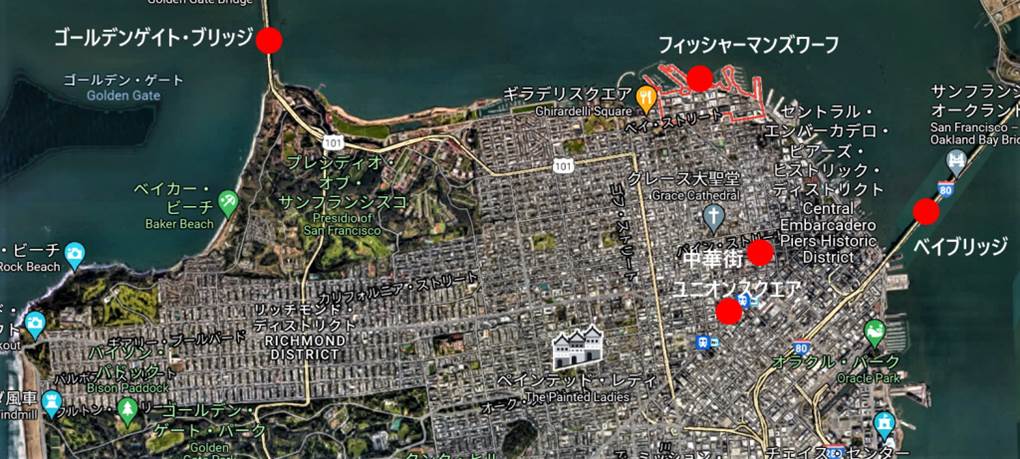
Golden Gate Bridge
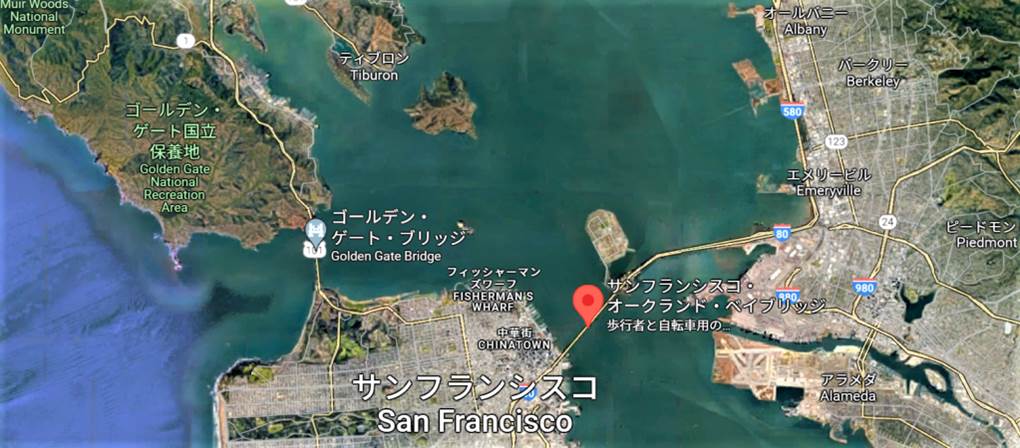
The suspension bridge was completed in 1937 and is a symbol of San Francisco.
Crossing the Golden Gate to the north, the city disappears and there are quiet parks and recreational areas.
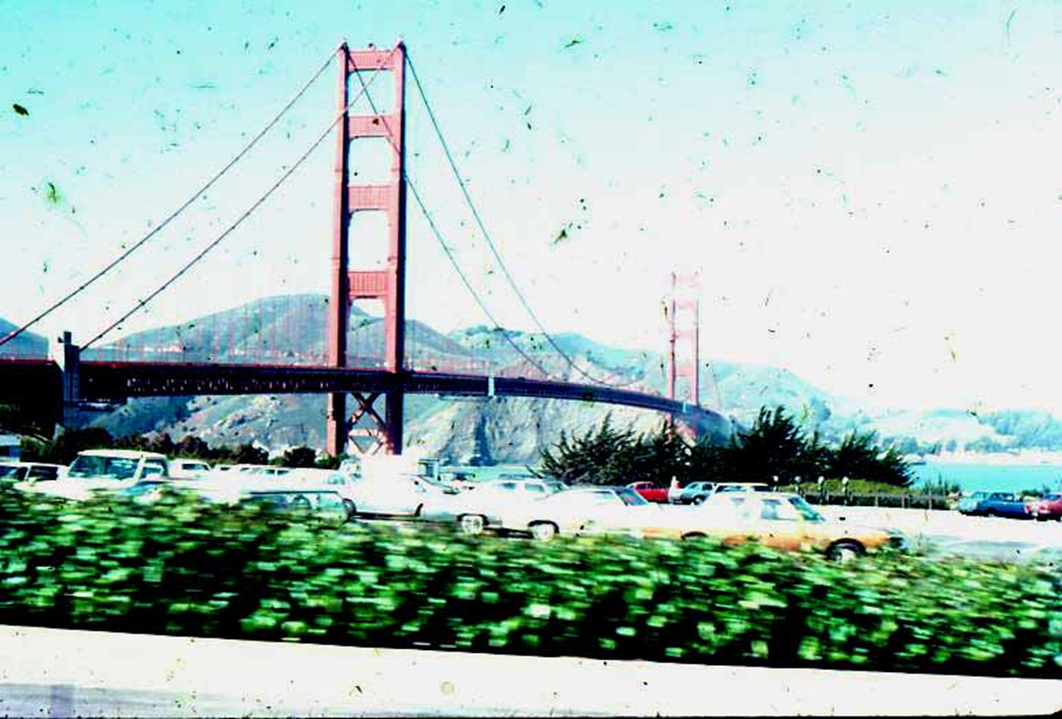
Photo by author, 1977
I went to the pier below the bridge to take a picture. It’s a beautiful bridge.
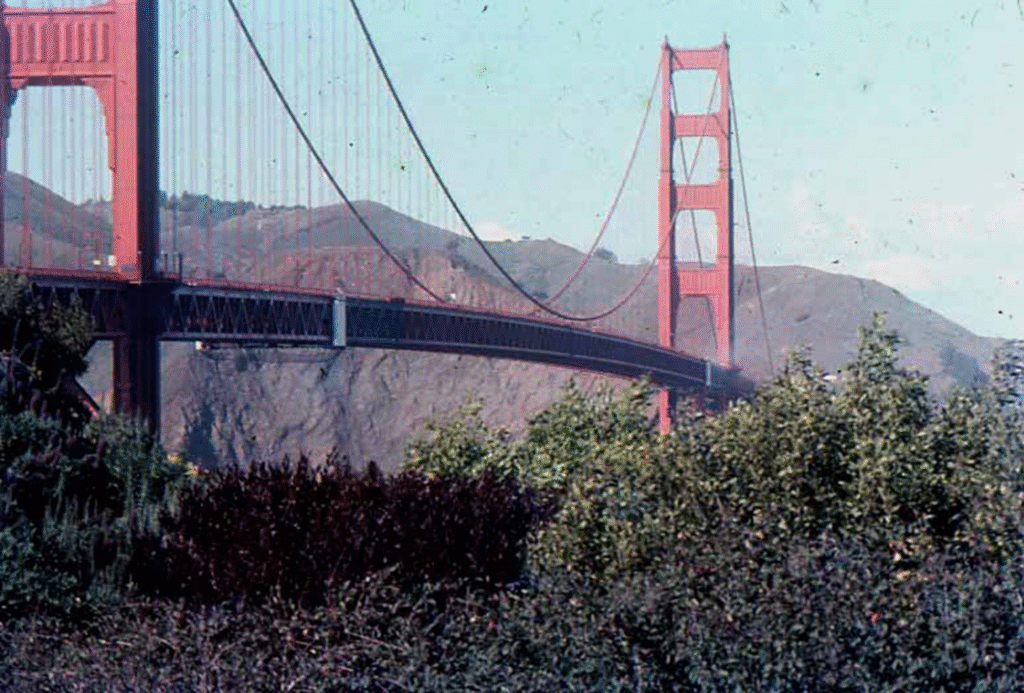
Photo by author, 1977
Fisherman’s wharf
I went to Fisherman’s Wharf, which I heard was a famous place in San Francisco.
It is said to be a fishing port that existed before the gold rush in the west.
As the name “Fisherman’s Wharf” suggests, it was a place where many various fishing boats moored and freshly caught fish, shrimp and crabs were unloaded.
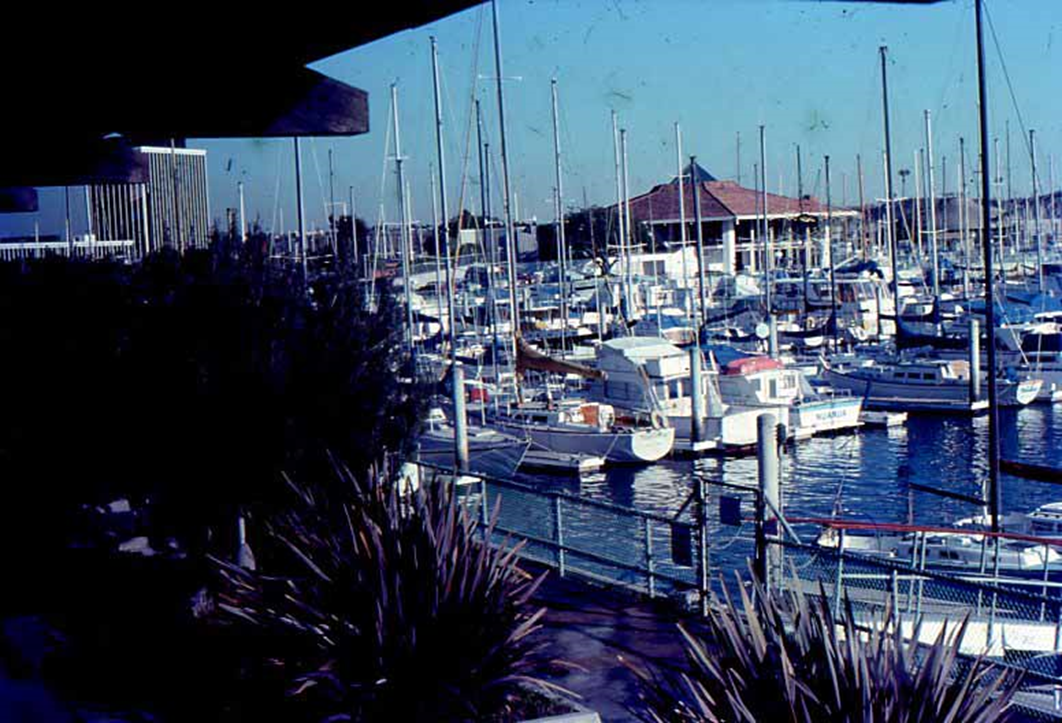
Photo by author, 1977
Lobster House. Freshly caught seafood is cooked and served to customer. There are many restaurants with a casual atmosphere.
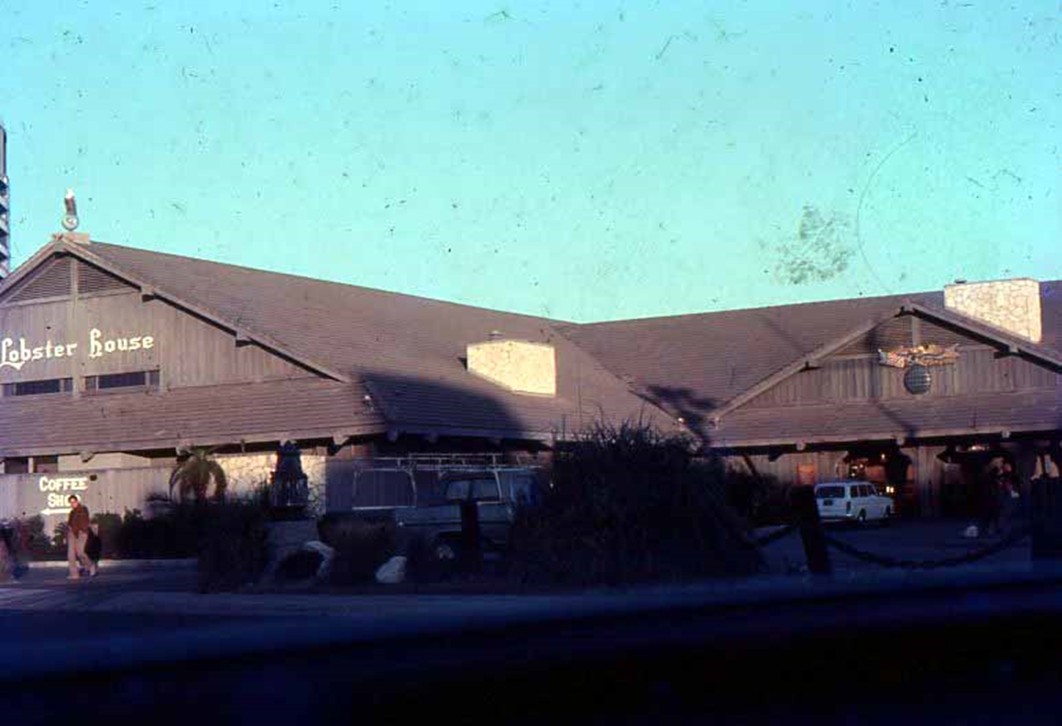
Photo by author, 1977
Bay Bridge and BART
(Bay Area Rapid Transit)
BART started operation on September 11, 1972, so when I took it, its only four and a half years. What surprised me when I tried the BART was that the floor of the train was carpeted.
I remember being surprised to find that the floors of public transportation trains in San Francisco were carpeted like hotel rooms, compared to linoleum sheets on the Tokyo National Railway, which was always packed.
Highway from the Bay Bridge to downtown San Francisco.
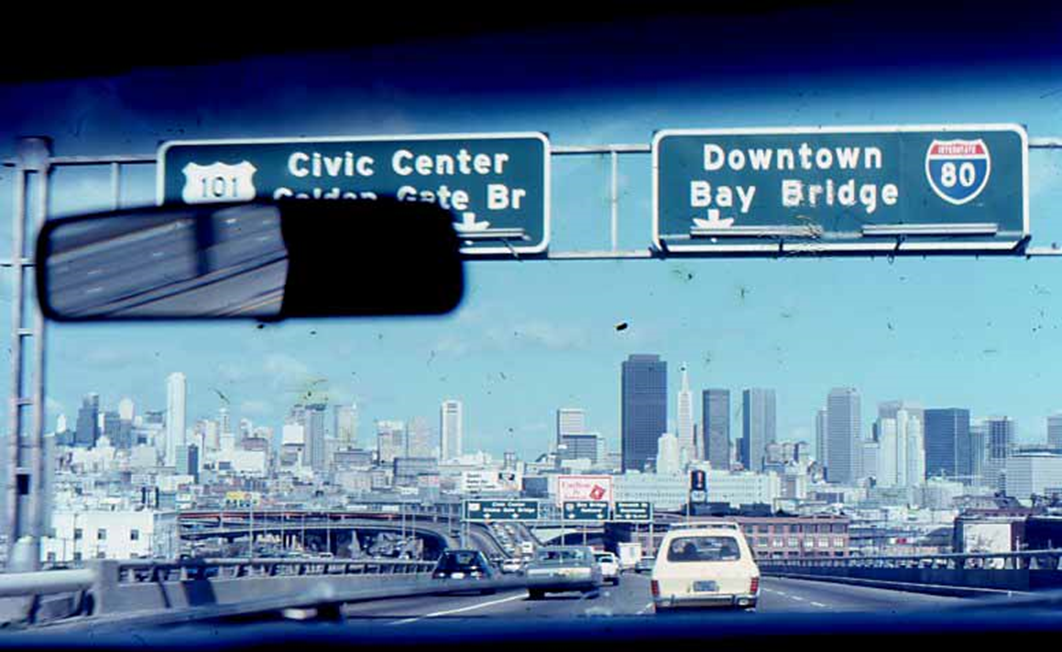
Photo by author, 1977
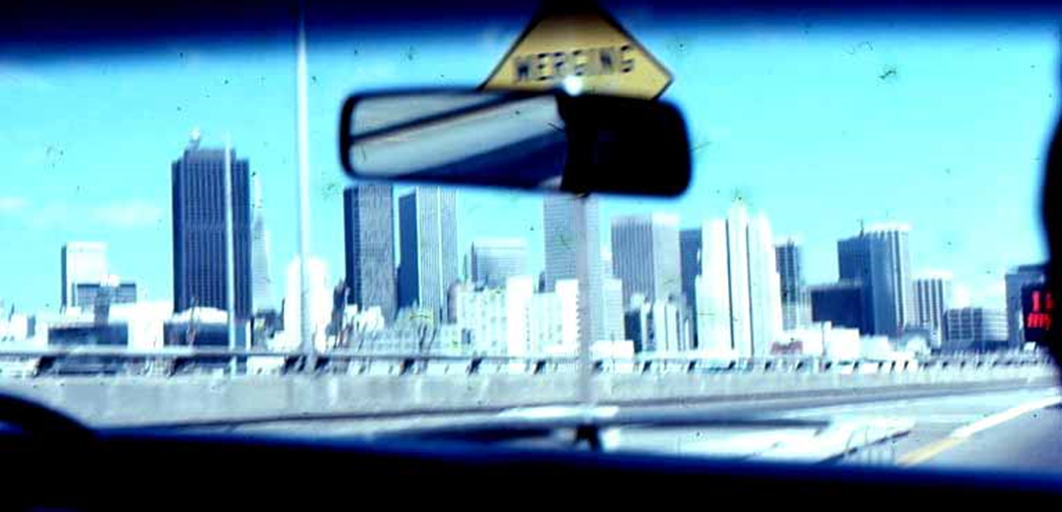
Photo by author, 1977