JAP | ENG
Singapore’s Early Days
1970s
#8/10
Singapore Waterfront
Collyer Quay Singapore 1971
When I first started living in Singapore, I was wandering around the city and found a postcard like the one below. The cityscape looked almost the same as when I stopped in Singapore on a Dutch ship on my way to Brazil eight years ago.
At that time, I entered an unbearably humid food stall near the river mouth in the city. There, I saw Indian and Malay people eating curry rice served on banana leaves with their bare hands for the first time.
I remember being shocked by their eating manners.
Eight years later, the scene was the same as it was then.
During that time, Singapore had been in a state of stagnation.
Downtown Waterfront Postcard of the early 1970s
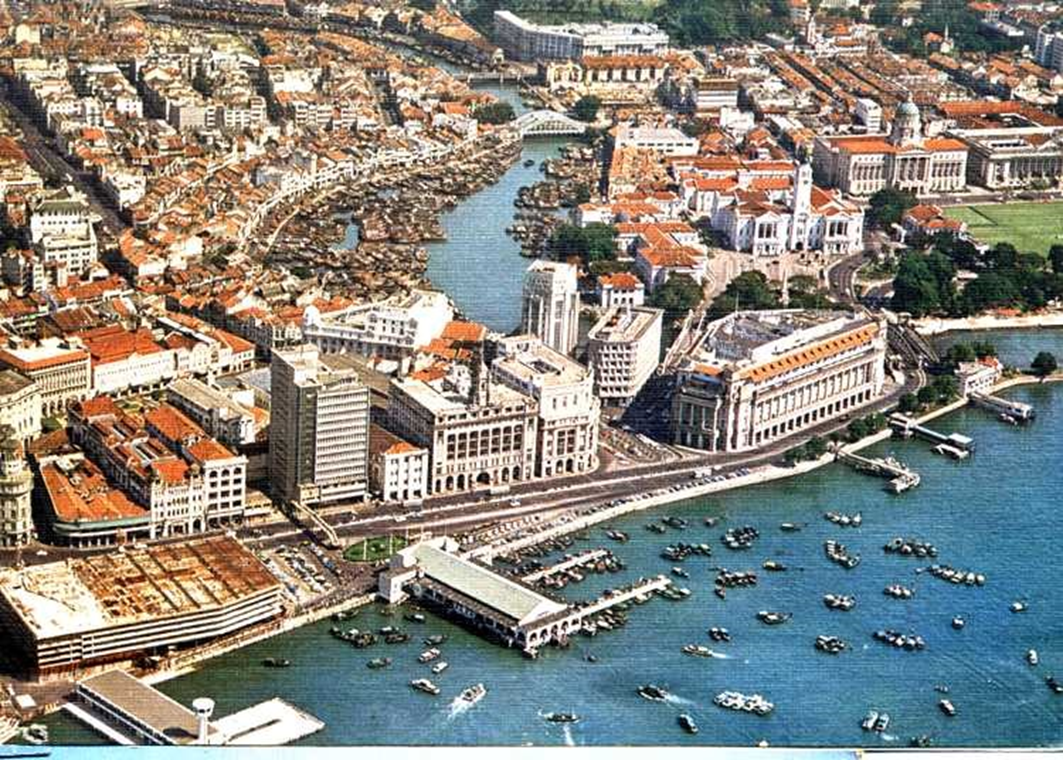
Downtown Waterfront Postcard from the early 1970s
The downtown waterfront after development.
All but two buildings have disappeared due to development.
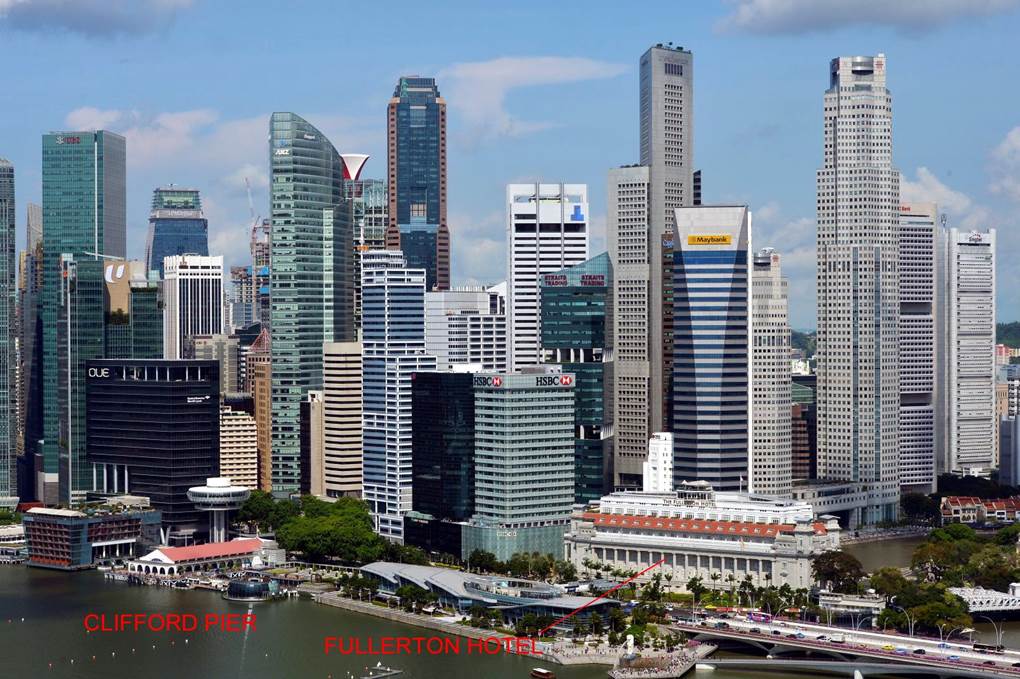
Postcards from the early 1970s
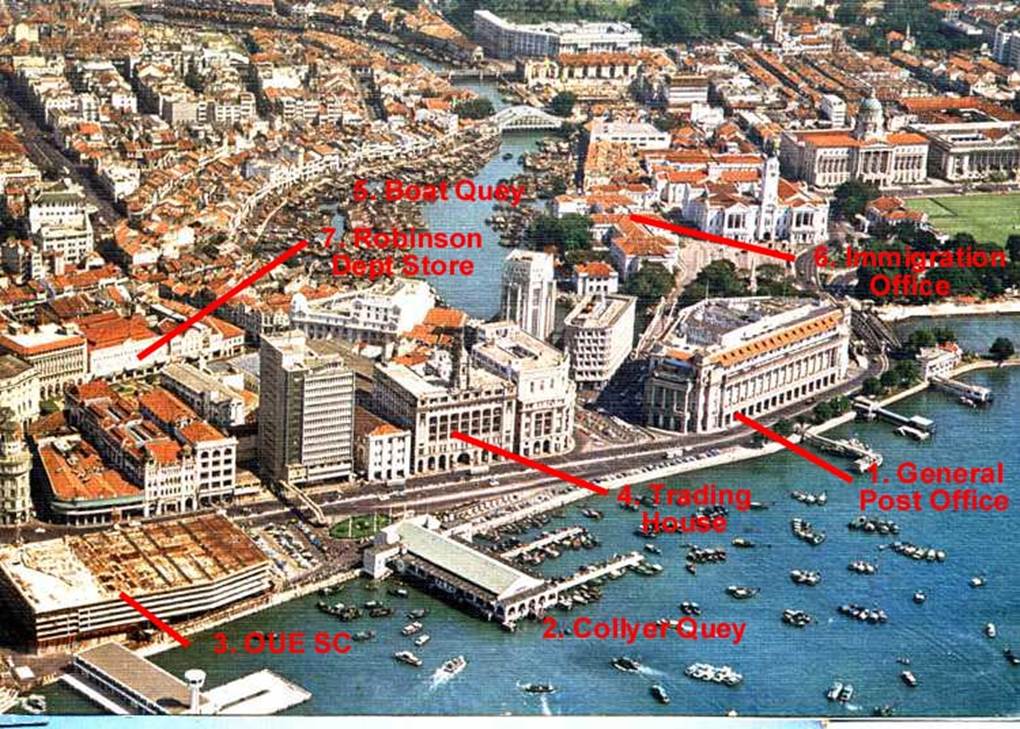
Postcards from the early 1970s of Collyer Quay and the Singapore River
1. Former Singapore Central Post Office.
It was built in a prime location at the mouth of the Singapore River. It was completed in 1928. On the top floor was the office of the Minister of Finance.
I have visited here several times for meetings on the design of the Minister’s private residence. The main post office was subsequently moved elsewhere and the building was sold to the private sector.
Around 1990, the interior was renovated while retaining the exterior, and it was replaced by the five-star Fullerton Hotel, which was designated as an important cultural property of the country.
2. Clifford Pier.
The main entrance to the Port of Singapore. It was later desalinated and became Marina Bay, where it ceased its role as a wharf and became a restaurant.
3. UOB shopping centers, nightclubs, parking lots. Construction was underway at the time. I was involved in supervising the design.
4. The Hongkong and Shanghai Banking Corporation Building and Change Alley.
To the left of the Hongkong and Shanghai Banking Corporation, there were many small shops. There was a hot and humid arcade district without air conditioning called Change Alley. Most of the money changers were Indians or Arabs wearing slippers. Since it was a free port, all kinds of currencies could be exchanged here. Later, the whole place was demolished for redevelopment.
6. Immigration Department of Singapore.
A very small colonial-style building. It was in charge of work visas and other permits in Singapore. In 1969, British administrators were still working in the building. After that, the immigration operations expanded, so it was moved to another place.
7. Robinson Department Store.
Singapore’s finest department store at the time. It was filled with duty-free item that I had never seen in Japan, and there was a wide selection of European brands, various leather goods and alcoholic beverages.
Many Colonial style buildings
(Collyer Quay Singapore)1971
Later, the building on the far right (the former Central Post Office) remained, and everything was demolished and redeveloped, and nothing remains now.
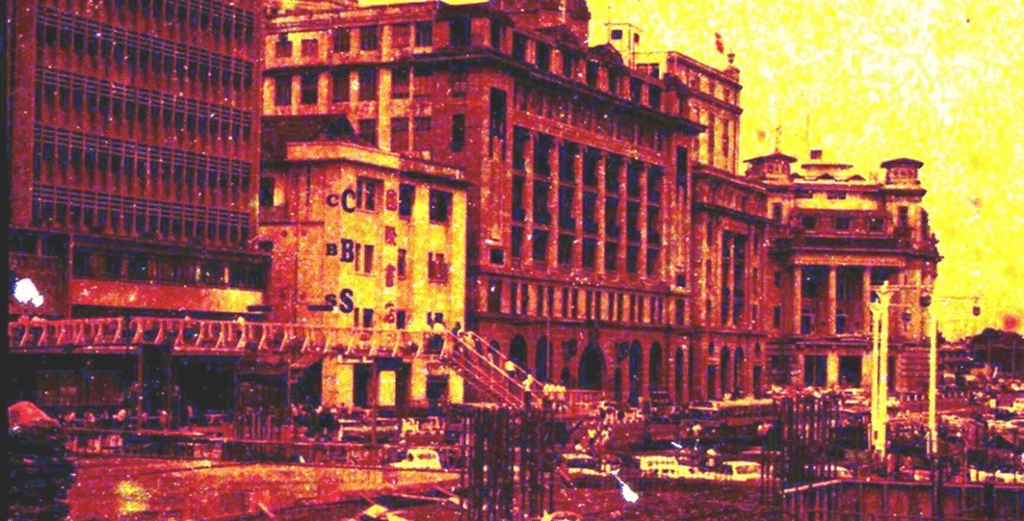
Photo by author, 1971
5. Boat Quay.
At that time, many small wooden cargo boats were densely packed. Men called coolies, who were forced to work hard under the tropical sun for low wages, load and unload cargo to warehouses on the banks of the river. The river was heavily polluted with garbage
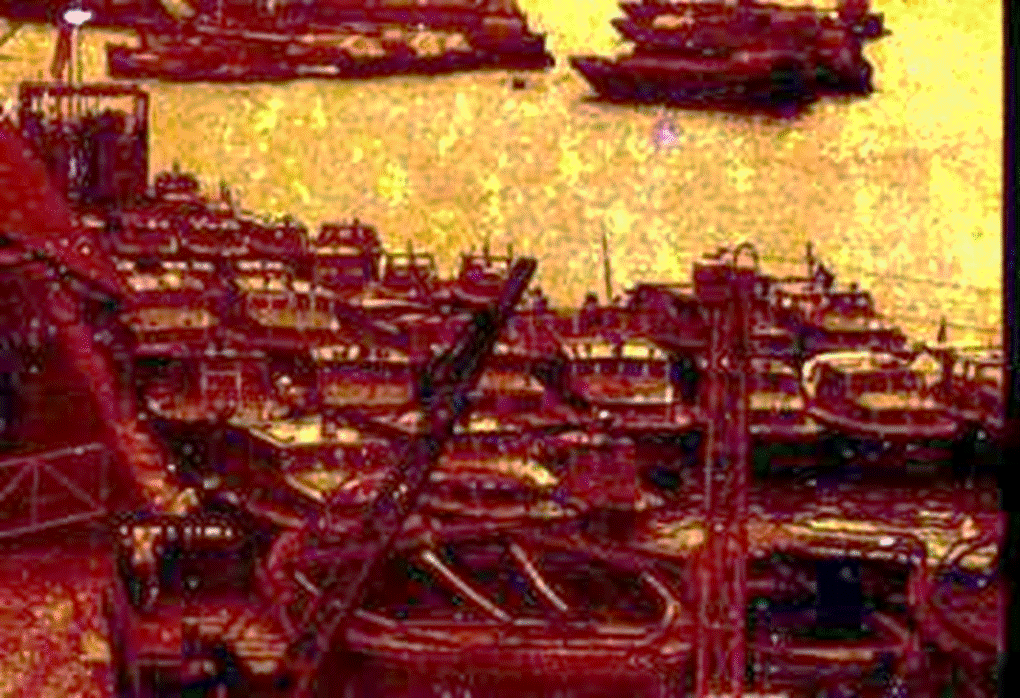
Photo by author, 1971
Clifford Pier
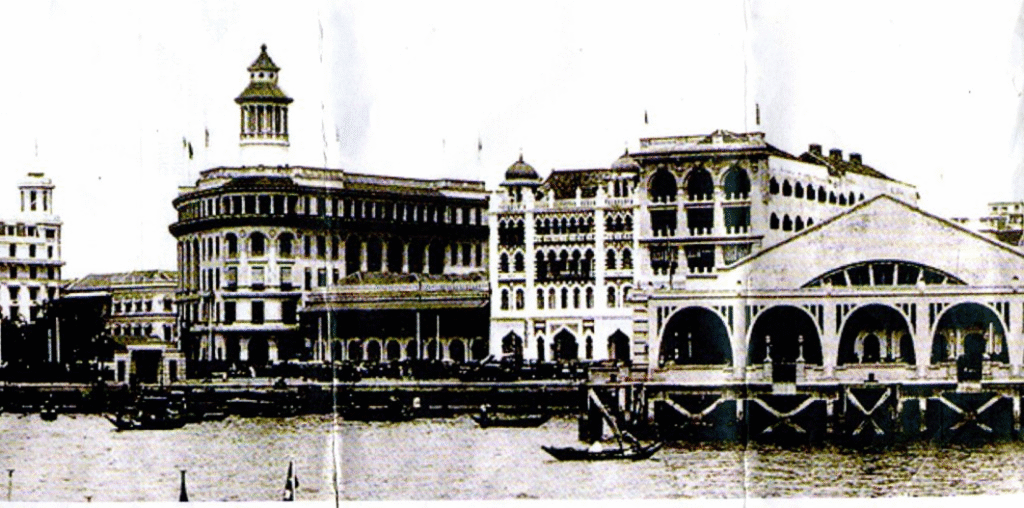
Clifford Pier, the gateway to shipping, taken from a 1971 construction site
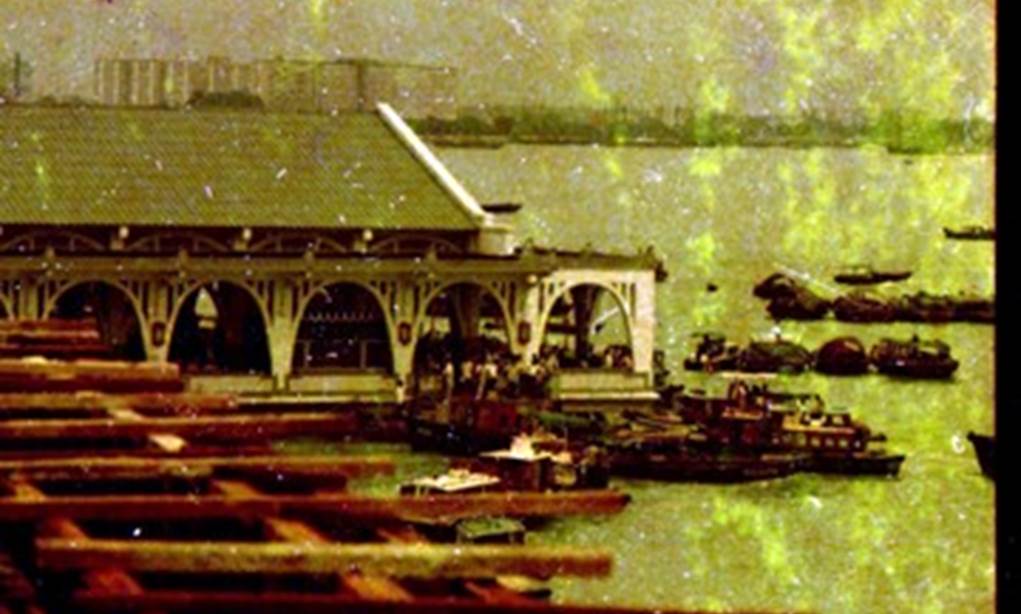
Photo by author, 1971
Housing complexes are being built across the sea.
It can be seen that even before the 1970s, the government’s public investment was directed at the provision of public housing before anything else.
The policy continued, and later around 80% of Singaporean families live in these high-rise residential complexes.
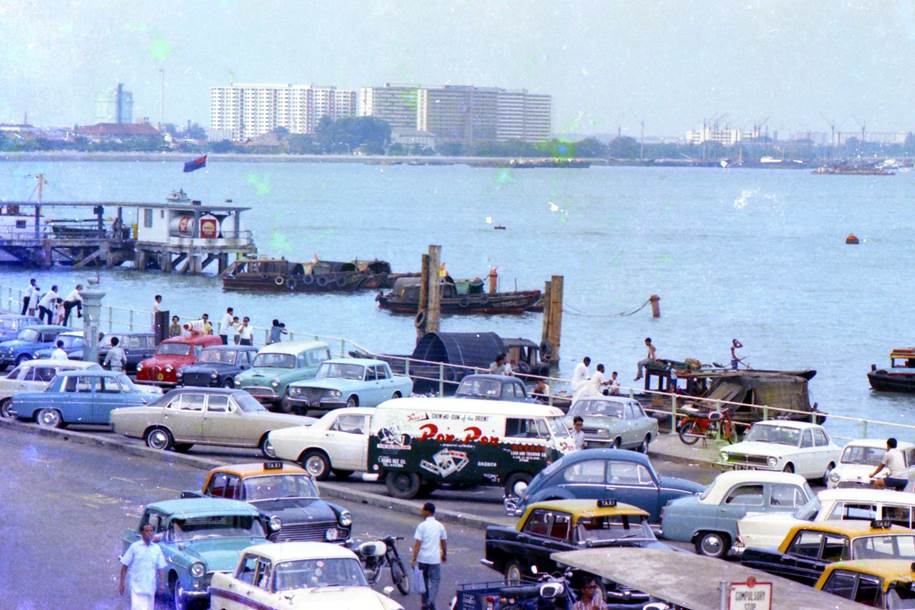
Photo by author, 1971
As you can see in the photo above, there were traffic lights on the main street, but there were no pedestrian crossings, and there was walking everywhere. They were crossing the road freely. That was normal road manners.
Below is a photo of Clifford Pier in 1971.
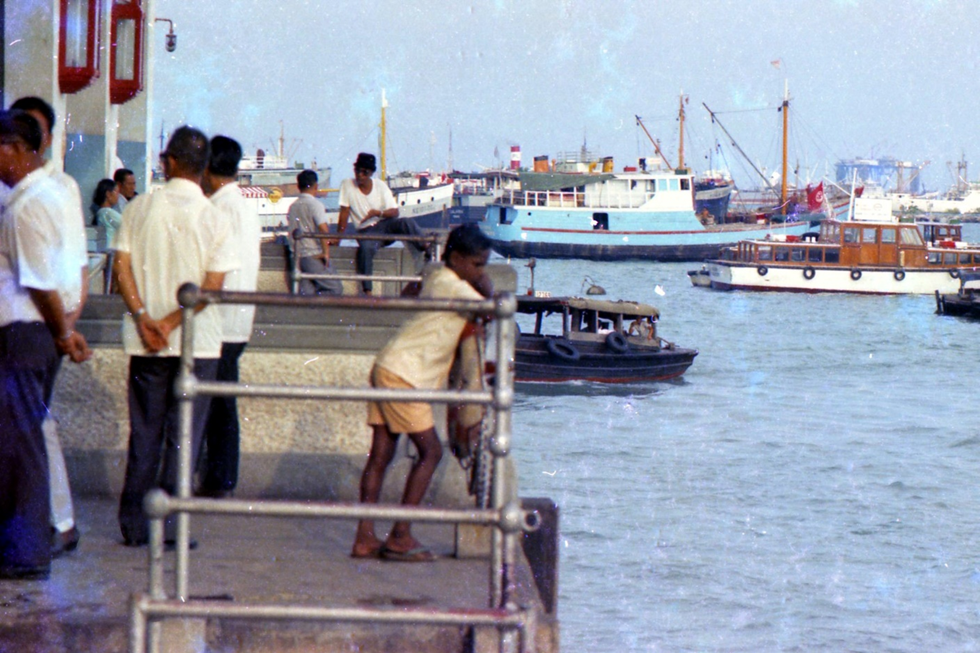
Photo by author, 1971
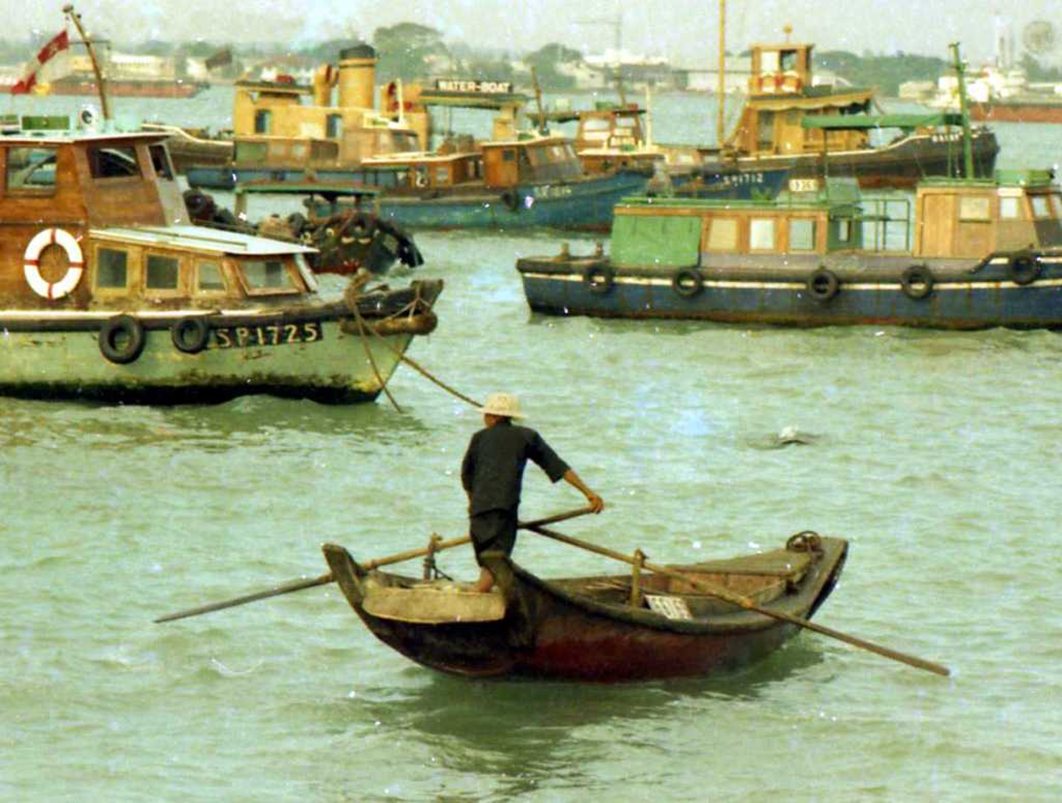
Photo by author, 1971
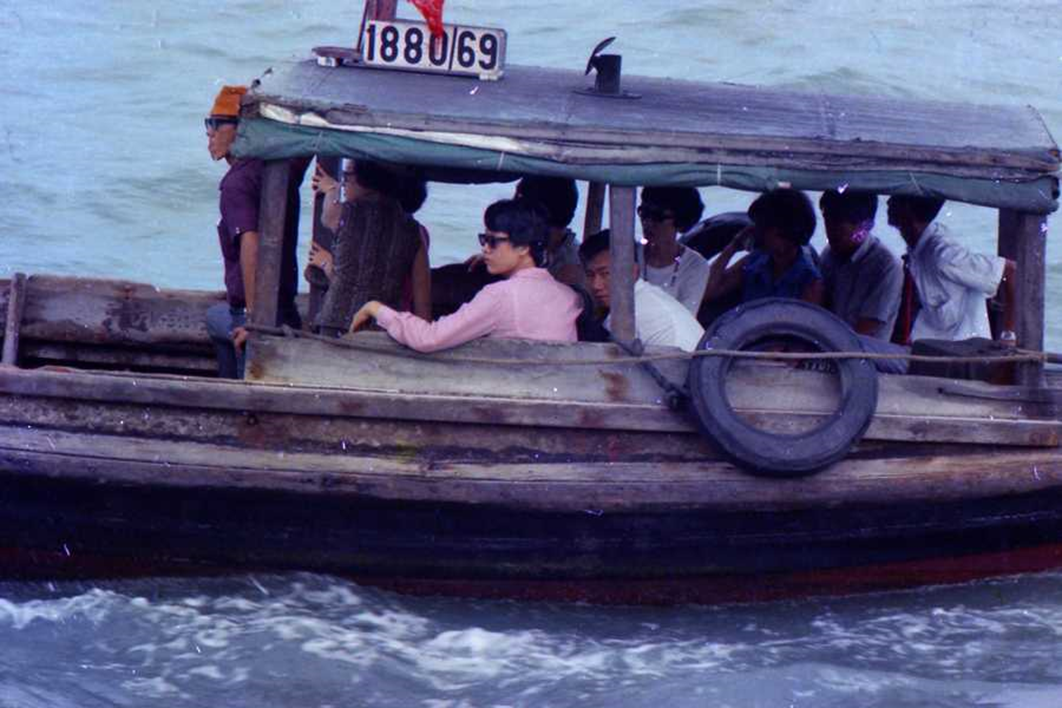
Photo by author, 1971
Clifford Pier, the gateway to the sea
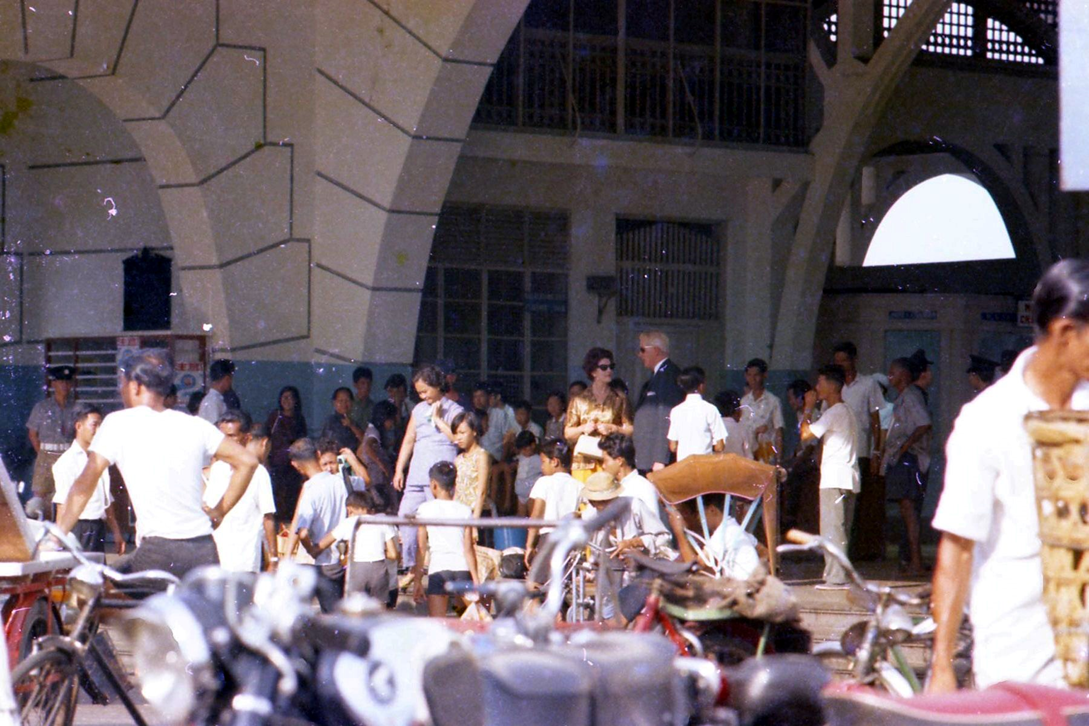
Photo by author, 1971
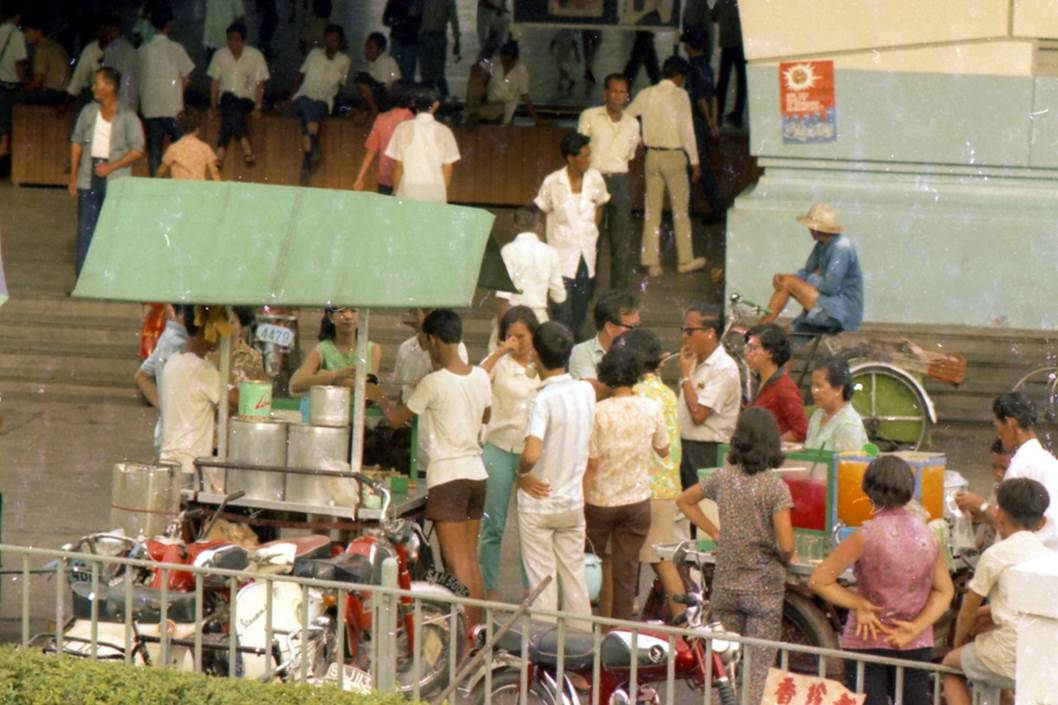
Photo by author, 1971
People crowding in front of Collyer Quay Clifford Pier stalls for drinking water and juice. Photo taken in 1971
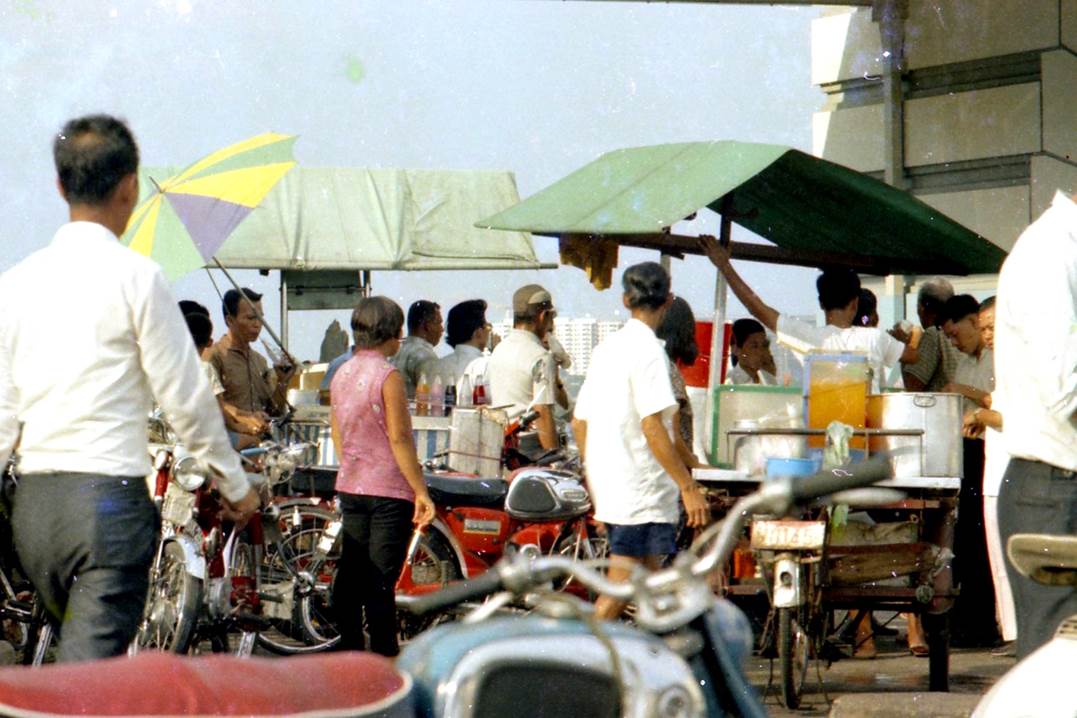
Photo by author, 1971
Rickshaws waiting for customers at Clifford Pier in Collyer Quay.
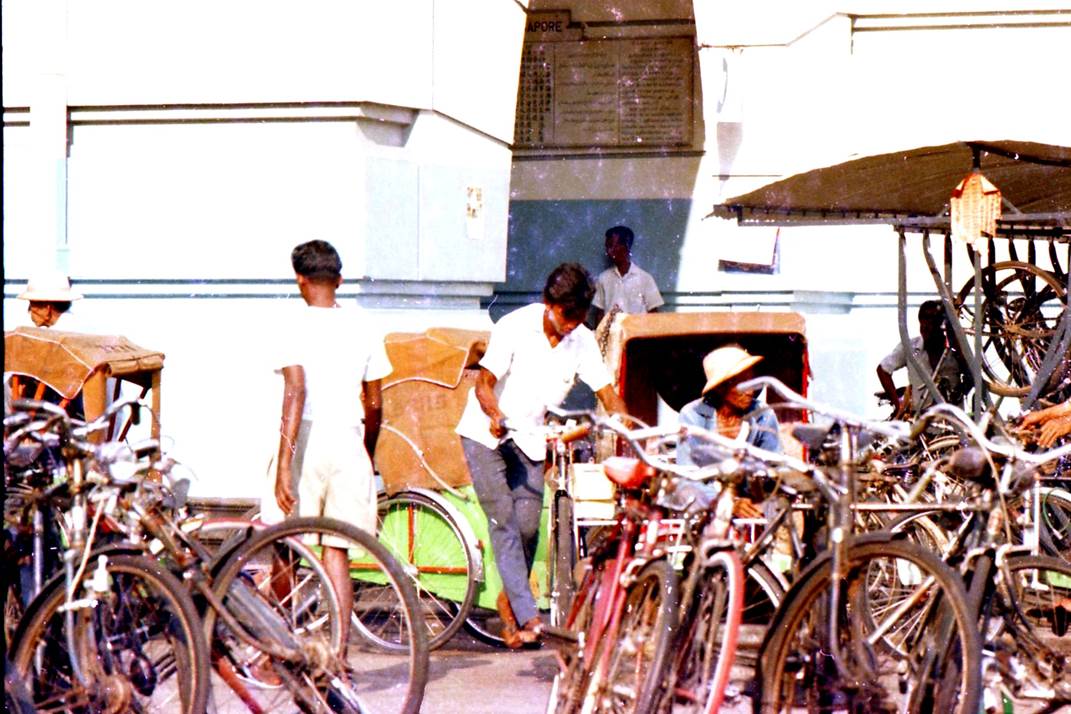
Photo by author, 1971
When night falls….
The daytime appearance of this wharf changes completely at night.
Workers and family members like the one in the photo above disappear like the tide recedes. When it gets dark, many sailors from cargo ships anchored off the coast land at this pier in small boats. As if waiting for it, the lights turn to the tones of the lonely night city, and it becomes a place for young women who work at night to hang out.
During the day, it is a point of contact between the general public and the sea. When the sun goes down, it is a point of contact between the sea people and the land. It is rare to see a place that serves two different purposes depending on the people who gather there.
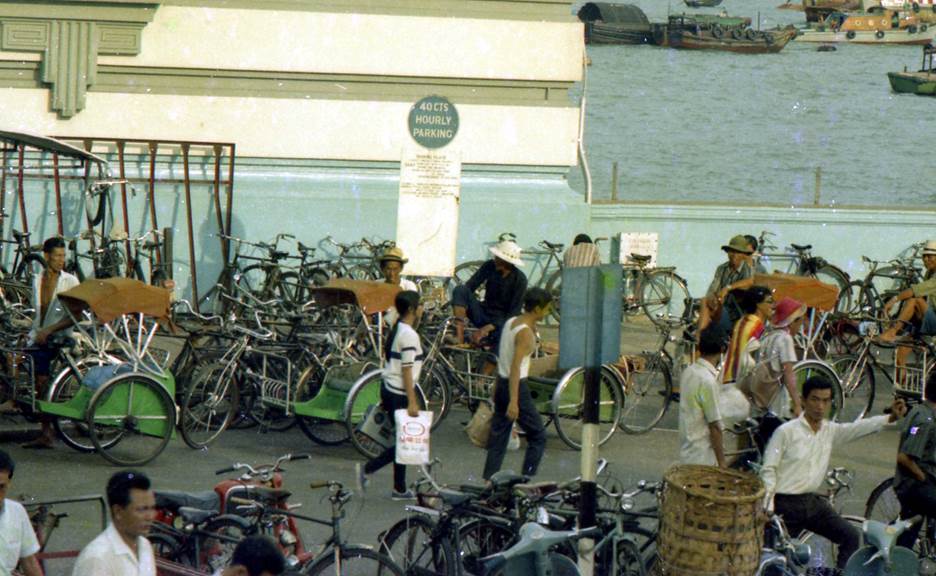
Photo by author, 1971
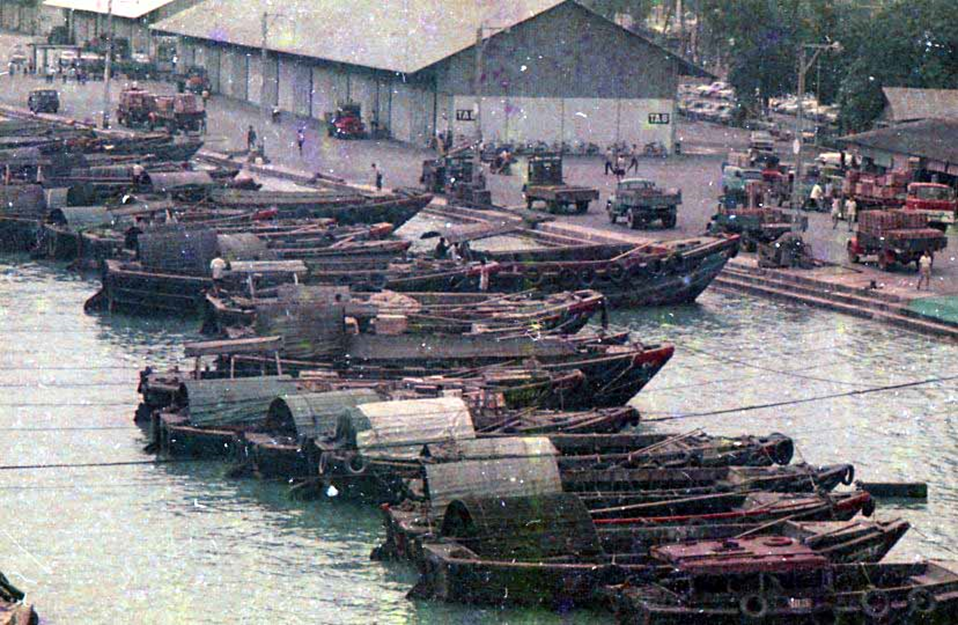
Photo by author, 1971
An ongoing projects overlooking Clifford Pier
A theatre restaurant was planned for the top floor of the building that I was involved in completing. It was something like the high-end nightclub “Copacabana” in Akasaka, Tokyo. A female stage lighting designer from “Mugen” (opened in 1968, closed in 1987), which was the most cutting-edge in the world at the time, was dispatched from Tokyo to Singapore for a meeting.
After the meeting, we went to a seedy outdoor place where we could easily eat and drink to rest and recharge. Late at night, the nearly naked American soldiers would get drunk, go on the roof of a public toilet, and dance naked with a few of them, and make a lot of noise. They would drink like that until the night was over.
Around 3am, when the store was about to close, locals and Westerners would always get into a fight, and I ended up watching it. They were in the middle of a life-or-death battle in Vietnam, and we, the people being protected, could not blame them for using their vacation time to vent the horror of the fierce war in Bangkok or Singapore.
Afterwards, I returned to Japan briefly, where I visited the psychedelic stage at Mugen, an upscale go-go club and live house in the basement of Akasaka Caesars Palace, and was also invited to an after-party at an underground theatre in the basement of Imoaraizaka in Roppongi,Tokyo. I was completely immersed in these otherworldly spaces, and used this experience to my advantage in my future work on set.
The seven photos below document the progress of the construction.
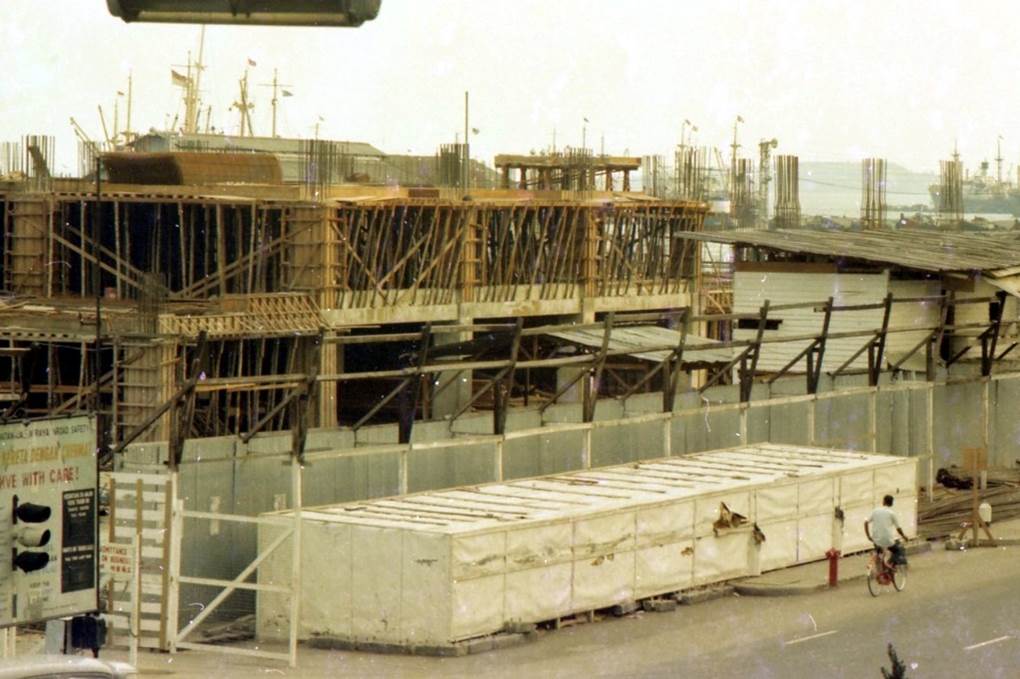
Photo by author, 1971
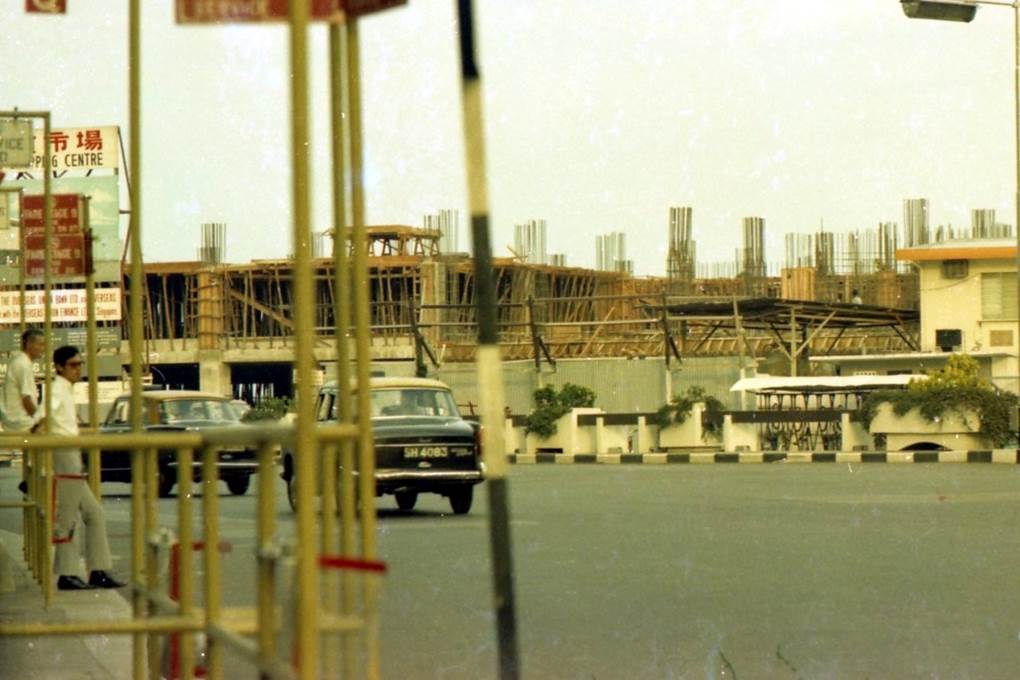
Photo by author, 1971
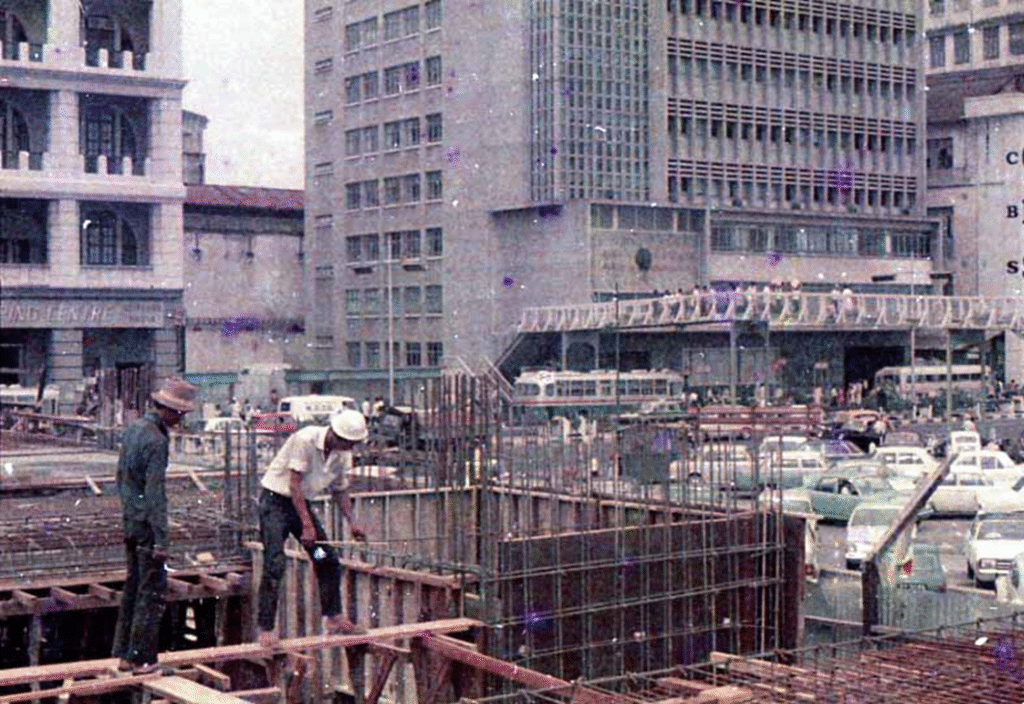
Photo by author, 1971
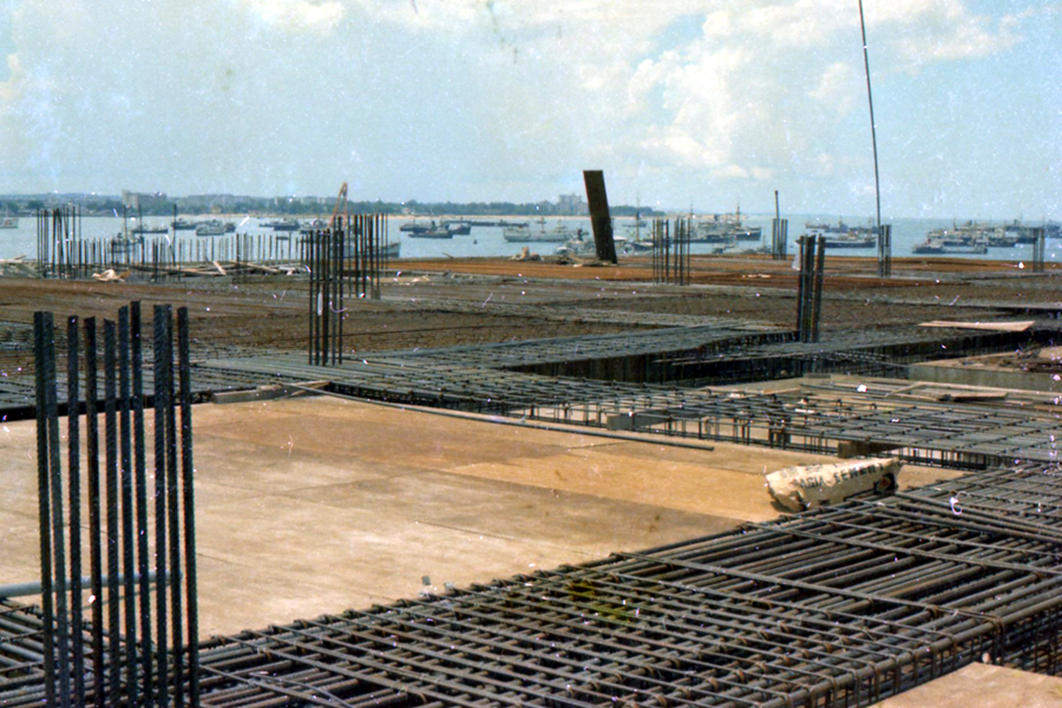
Photo by author, 1971
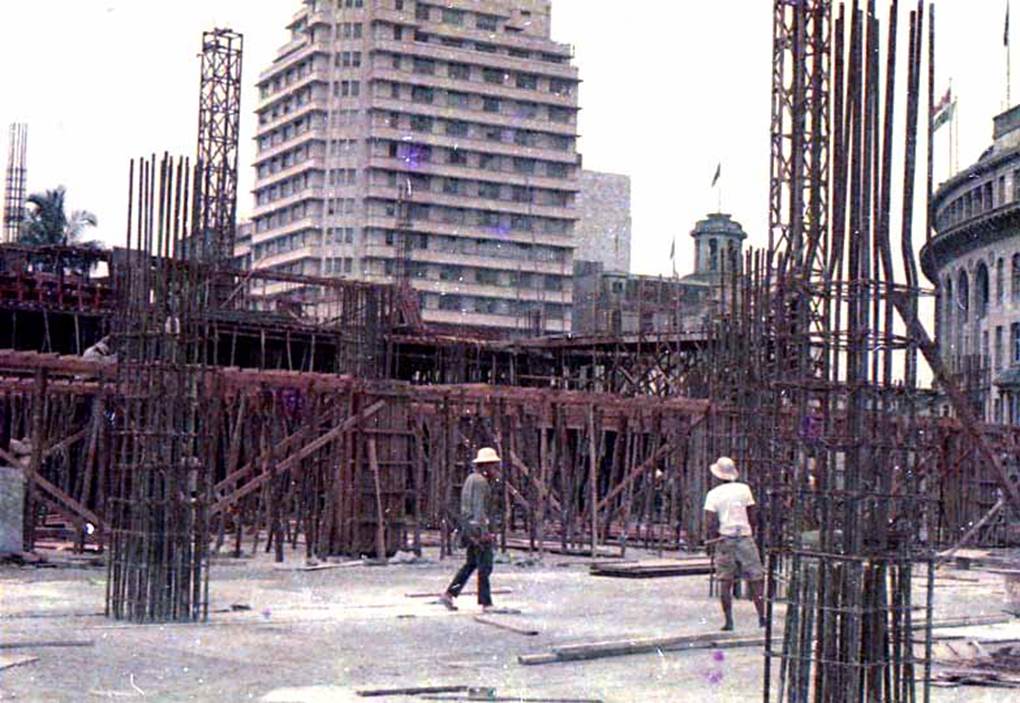
Photo by author, 1971
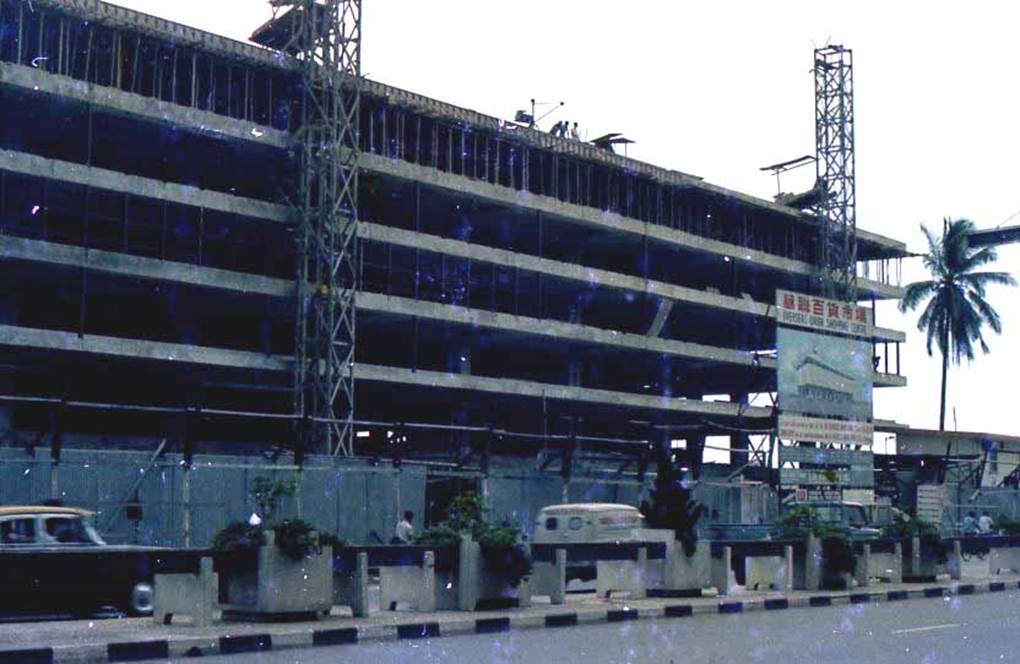
Photo by author, 1971
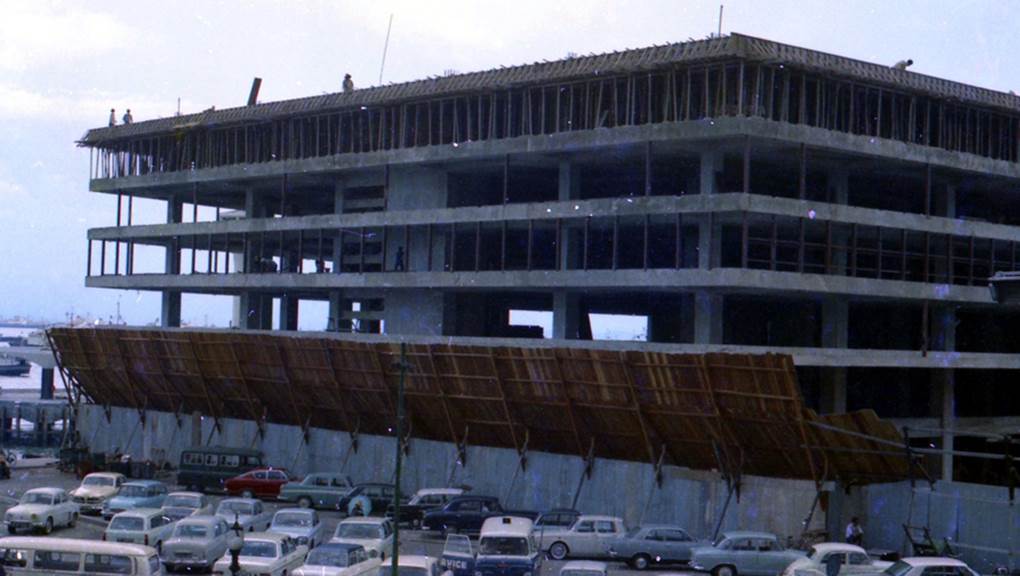
Photo by author, 1971
The building overlooking the front is a project that I was involved in completing. There are shops and banks on the first floor, restaurants on the second floor, and a large nightclub on the upper floor. It was the only place in Singapore where a topless show was approved as a special case.
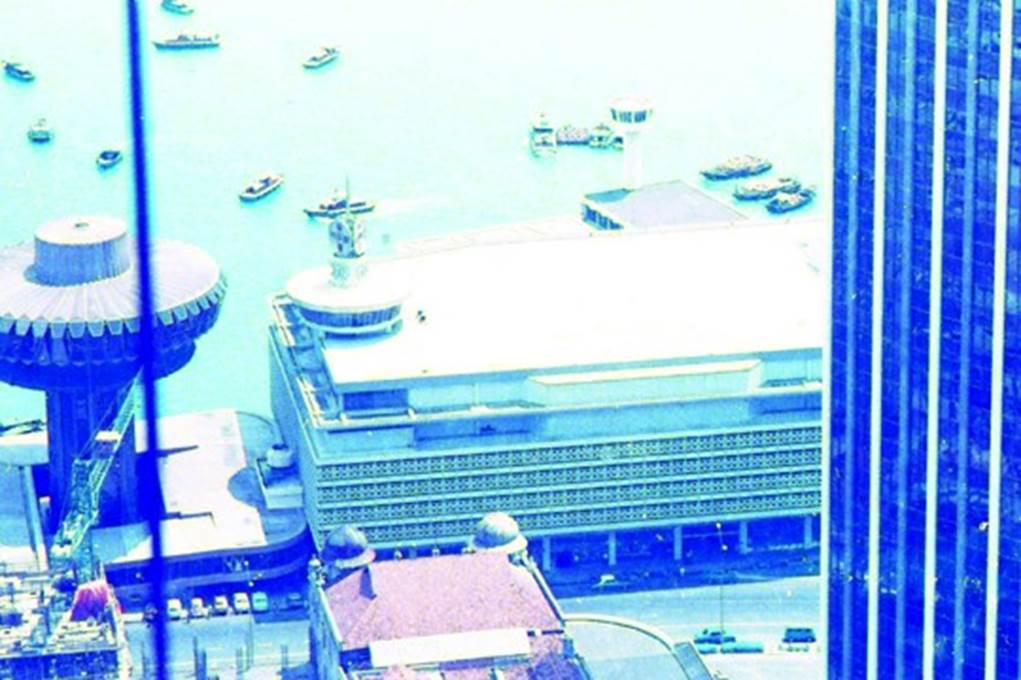
Photo by author, 1972