JAP | ENG
Long term stay in Brazil #1/15
São Paulo #1
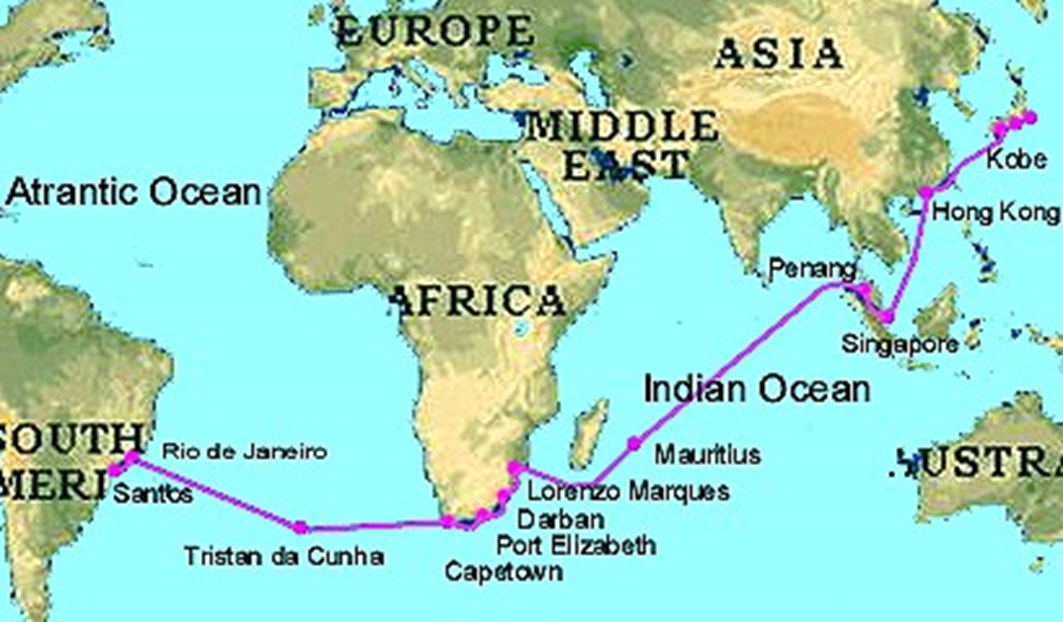
Travelling aboard, 1962
São Paulo
Wandering around São Paulo, looking for a house and a job
It was drizzly evening when the Boisvain docked in Santos, Brazil.
After disembarking, I went to a coffee bar that served Brazilian coffee.
There was a mixture of races with various skins, and it was lively, and it was truly a different world of races.
As is customary, I was introduced to a Brazilian nominal sponsor on the Brazilian side, and formally completed the landing procedure for Brazilian permanent residents.
Having experienced South Africa, which is the most racially discriminated country in the past, I intuitively felt a surge of enthusiasm for working here in Brazil when I witnessed the reality of the racial melting pot that is Brazil in South America.

Certificate of landing from the Department of Transportation of São Paulo
Population data from the United Nations Office of Statistics
| 1950 | Tokyo 11 million | Sao Paulo 2.3 million | Dhaka 330,000 |
| Kolkata 4.51 million | |||
| 2010 | Tokyo 36 million | Sao Paulo 22 million | Dhaka 14 miillion |
| Kolkata 15 million |
1960s São Paulo’s population is 5 million, about half white, 30% mixed-race, the rest are blacks Indians and Asians.
It originated in 1554 as a mission village for the Jesuit mission.
In the mid-1600s, it was the base for the Bandeirantes expedition to the interior of Brazil.
From the mid-1800s, it developed as a coffee bean accumulation in the coffee plantation of São Paulo.
By 1800, São Paulo had become one of the largest cities in the country, but at this time São Paulo was still only a provincial city, and it was a small city compared to the capital Rio de Janeiro.
This situation changed drastically around 1830, when coffee cultivation began in the state of São Paulo.
Coffee cultivation, which was initially carried out around Rio de Janeiro, declined due to exhaustion of soil power, etc., and coffee farmers who sought suitable land settled in the northern and southern parts of São Paulo State and began coffee cultivation.
Coffee is very suitable for the climate and soil of São Paulo, and São Paulo has rapidly developed as a coffee gathering place in response to the explosive increase in demand for coffee in Europe due to the Industrial Revolution at the time.
In 1867, a railway line was opened between São Paulo and the outer port of Santos, and the coffee economy expanded further.
In 1872, the population of São Paulo was 26,000, but by 1920 it had risen to 580,000.
However, in São Paulo, where the coffee boom was booming, there was a shortage of labour.
Slavery still existed, but it was subject to harsh criticism from within the country, and slave labor was unproductive and a drag on profits.
Therefore, the introduction of immigrants from other countries was considered, and in 1881, migration began from Italy and other countries. Migrants travelled by train from Santos, where the ship arrived, to São Paulo, where they were assigned to various farms.
Some of the migrants stayed in the city, and some of those who settled on farms moved back to São Paulo.
In this way, São Paulo has become a city where immigrants gather from all over the world, and racial diversity is progressing.
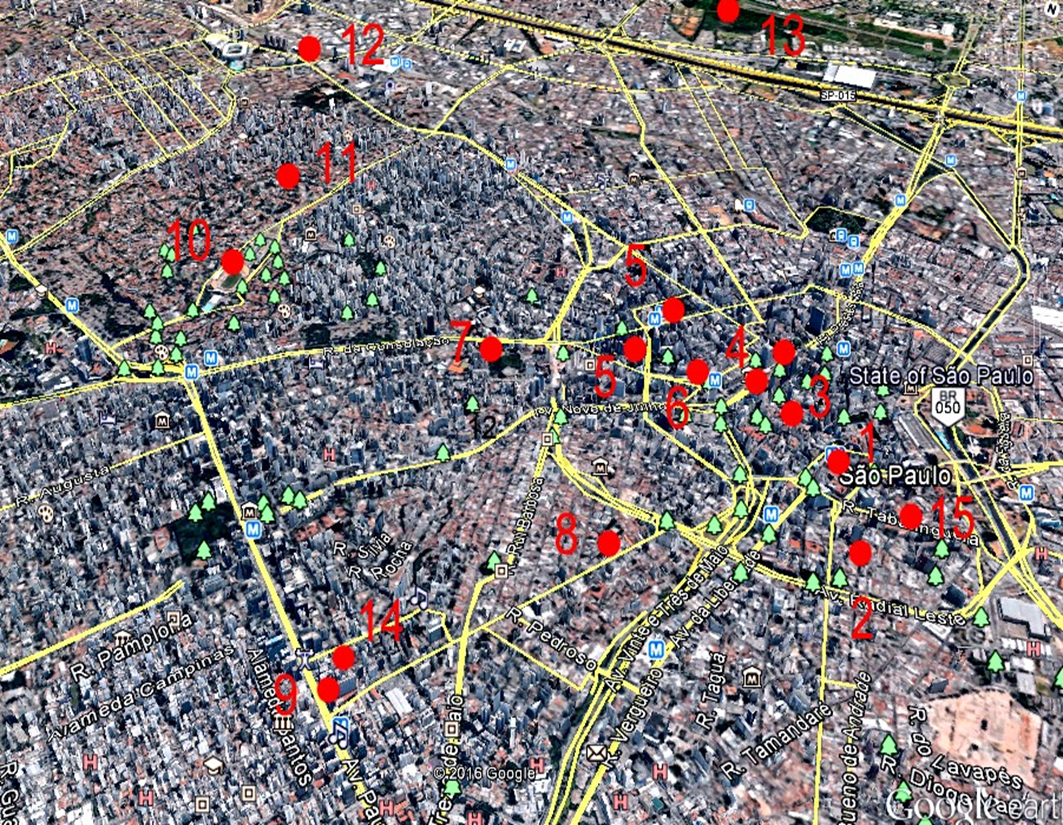
Map of the main city of São Paulo
About half of São Paulo’s population is white immigrants from Europe.
The majority of the white population is of Latino European descent from Portugal, Italy, and Spain.
As a result, Brazil became the largest Catholic country in the world, including other races. As for the language, the first Portuguese language to be inhabited has become the standard language throughout Brazil.
English is a language that is completely alien to most people’s daily conversations.
The Portuguese I had learned in Tokyo was useless in the streets, and it took me six months to learn to use the language in conversation.
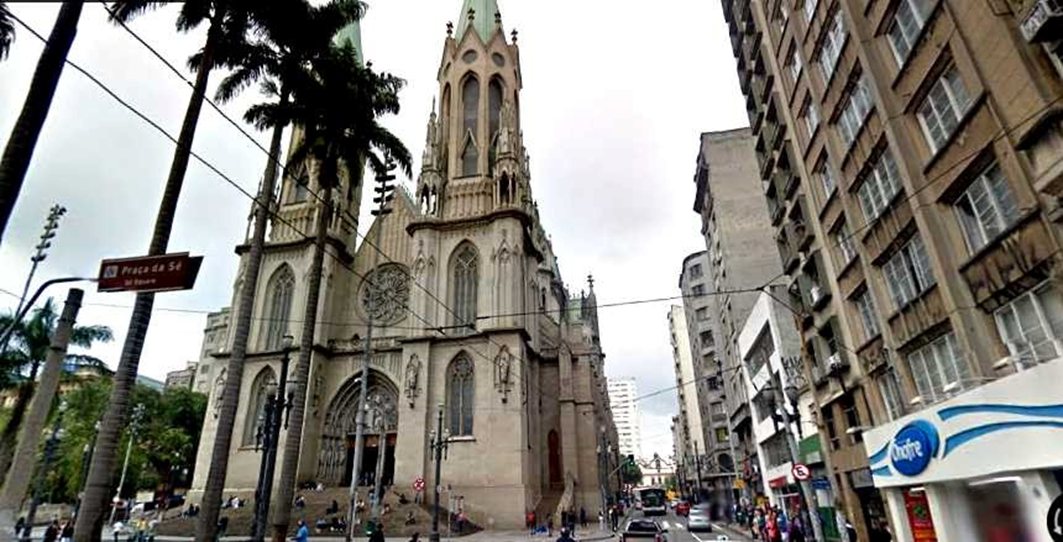
1. Sé Cathedral
Sé Catedral in Praça da Sé Square.
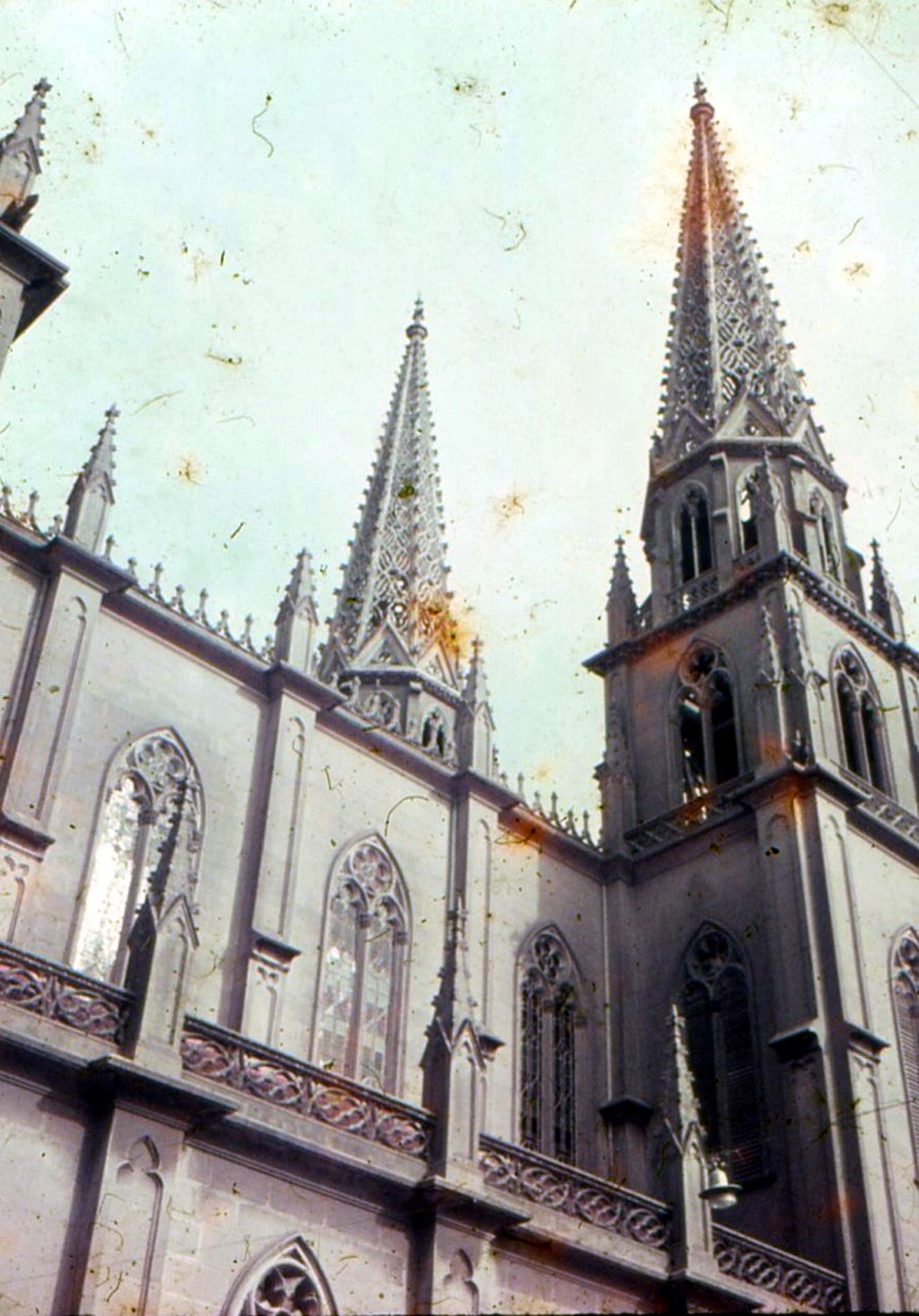
Photo by author, 1962
Sé Cathedral in Praça da Sé Square.
Starting point of roads in São Paulo.
Construction began in 1913 and was completed in 1954, in time for the 400th anniversary.
Construction on the unfinished tower continued until 1967.
Around Sé Square, there are many cafes, pizzerias, and bars serving lively and delicious Brazilian coffee, making it a great plaza for socializing and relaxing after work.
The Symbol of São Paulo in front of the Plaza de Sé Cathedral
,
Photo by author, 1962
2. Japan Town
Liberdade district, Rua Galvón Bueno
The first official immigrants from Japan arrived at the port of Santos on the Kasato Maru in 1908. Subsequent Japanese immigrants settled mainly in the state of São Paulo, and eventually formed a Japanese town in the city of São Paulo.
On the day I landed in Santos, I was accompanied by a Japanese guarantor and stayed at a lodging given to me in the Japanese town of São Paulo that very same day.
At this stage, I had 40 dollars in my pocket. I was invited by some first-generation Japanese people I met in the Japanese town, and I covered my immediate expenses with the few cruzeiros (Brazilian currency at the time) I won by gambling on mahjong.
After that, I was advised by a senior from my university who lived in São Paulo, and decided to leave the Japanese town and jump into the Brazilian society.
I sold off the duty-free SLR camera, movie camera, Swiss watch, etc. that I had bought in Hong Kong, and moved to an area where no Japanese people were living, and converted them into cash to use for rent at a boarding house and food expenses.
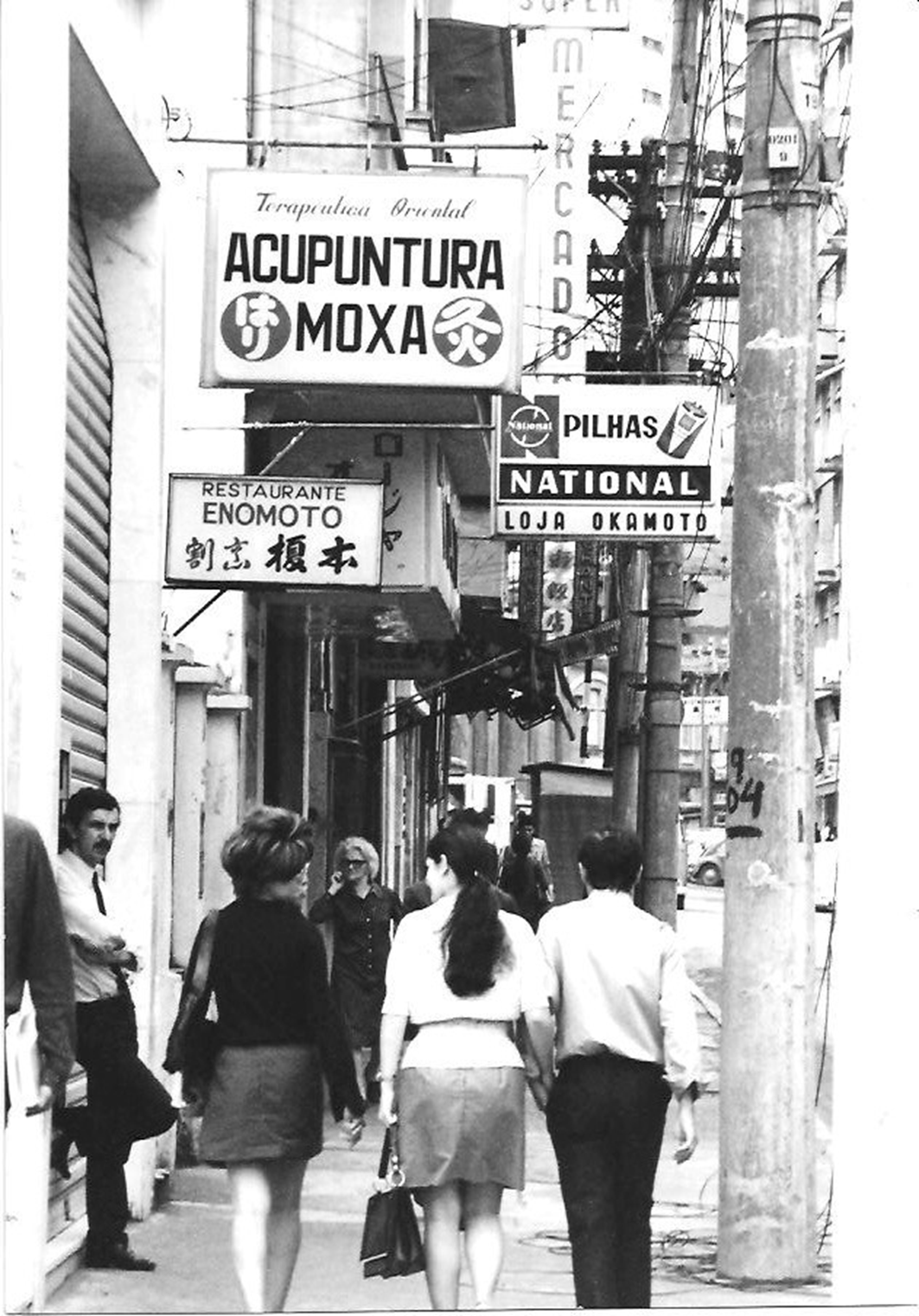
Rua Galvón Bueno
3. RUA DIREITA, Old Town, Historic district
Below. The historic financial district of Old Sao Paulo, connecting Praça da Se Square and Anyangabarú.
During my stay in Brazil, I experienced ferocious inflation. I exchanged my monthly salary for US dollars on this street, and when I had a certain amount of money, I used it to make a down payment on a Volkswagen.
After that, I planned to sell the car and use the money to return home after I had paid off the loan.
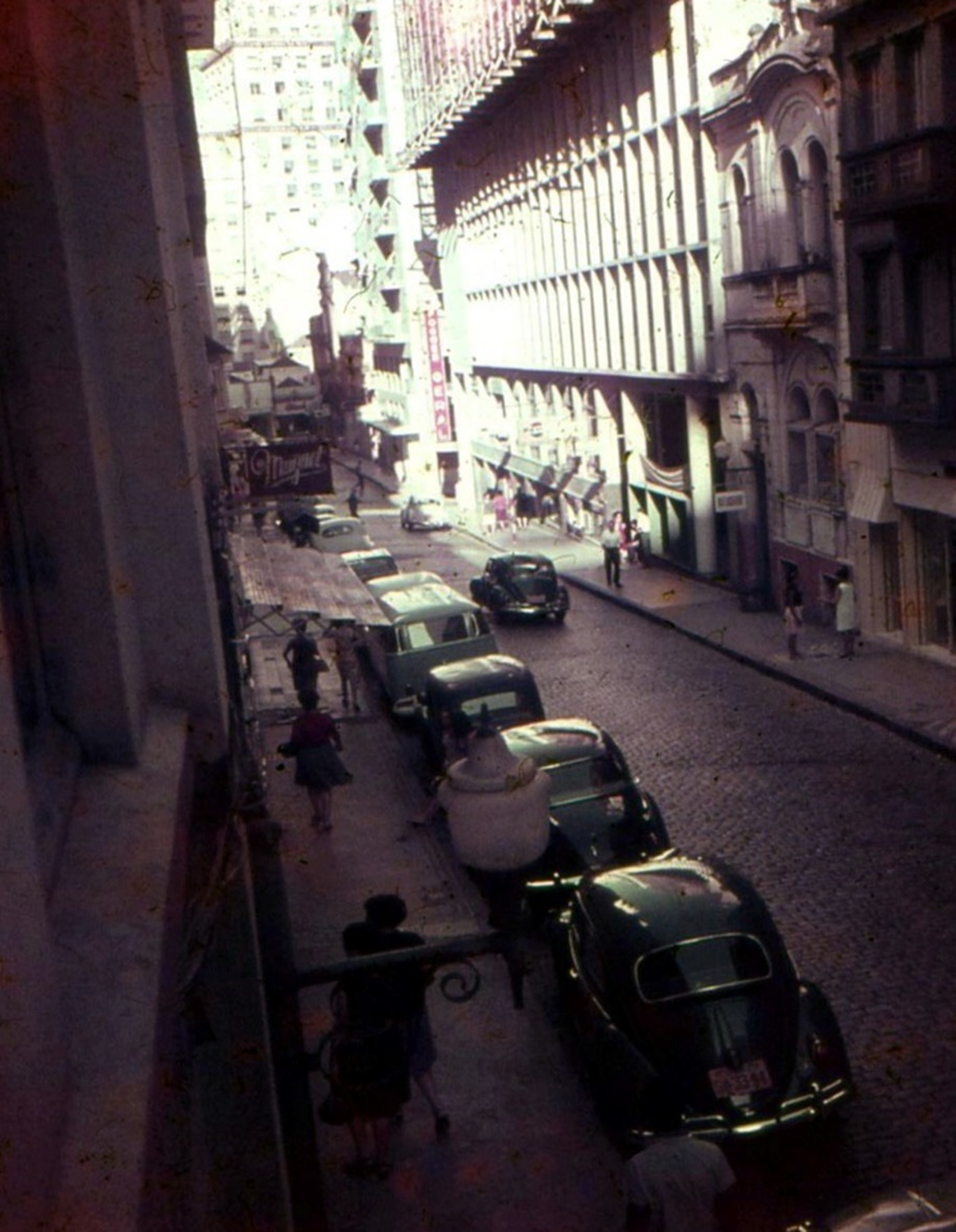
Focusing on the model of a parked car,
Photo by author, 1962
EDIFICIO GUINLE was built in 1912 and completed in 1916. (A seven-story Art Nouveau building. This construction is considered to be the pioneer of the use of reinforced concrete in the country.
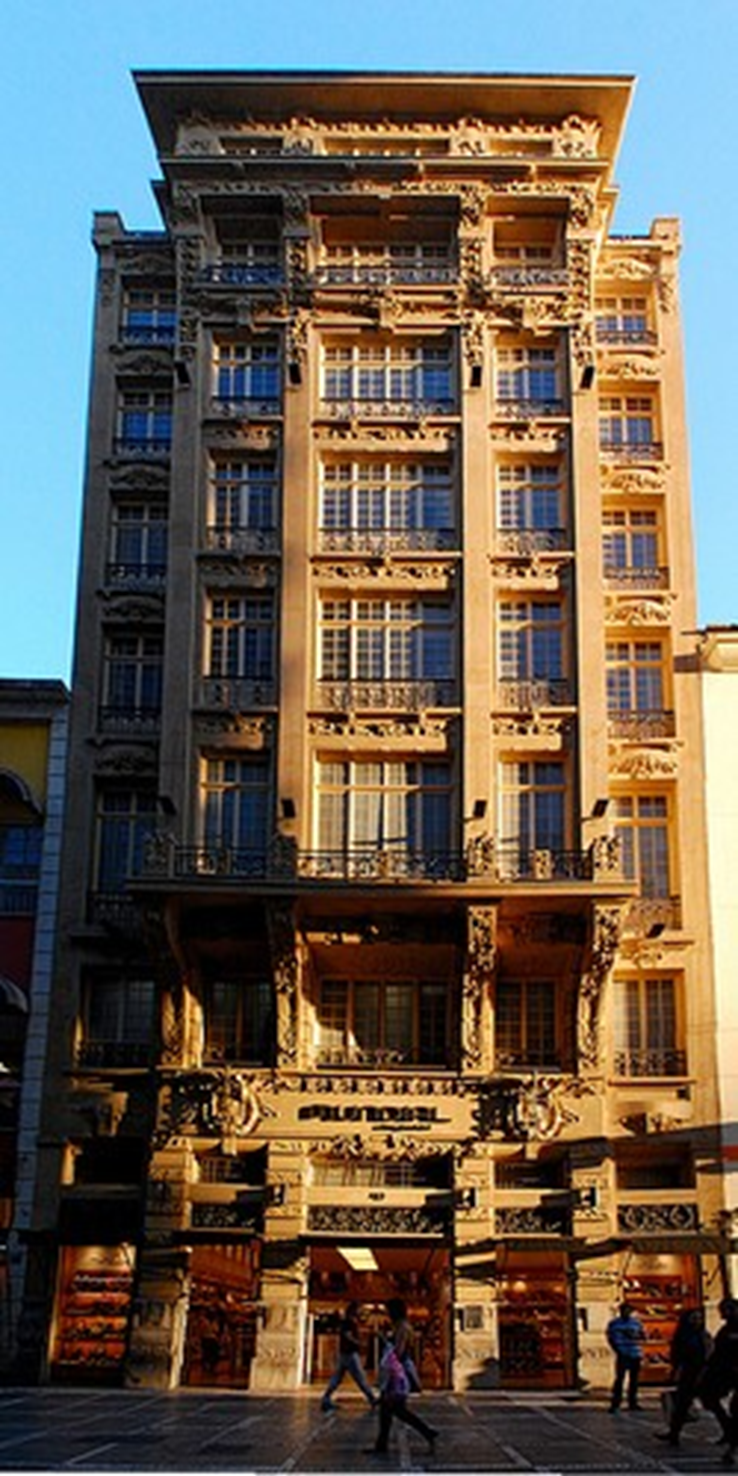
GUINLE Building
A typical downtown area of São Paulo
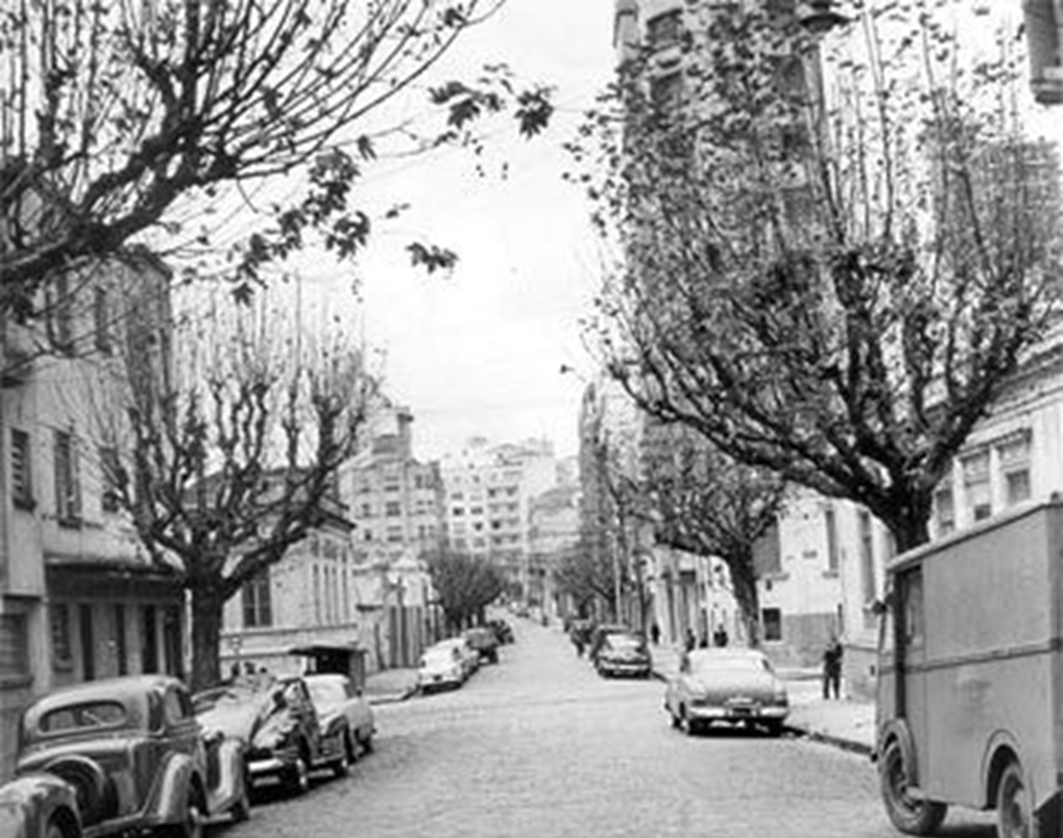
Photo by author, 1963
4. São Paulo’s transport hub
Anhangabaú Valley was the most important area of São Paulo at that time.
This photo of the public facilities and buildings in the new town was taken around 1962 from under VIADUTO DO CHA (known as Ochanomizu Bridge by Japanese people). Major buildings such as the City Hall, the Opera House, and long-established department stores were built around here.
VIADUTO DO CHA
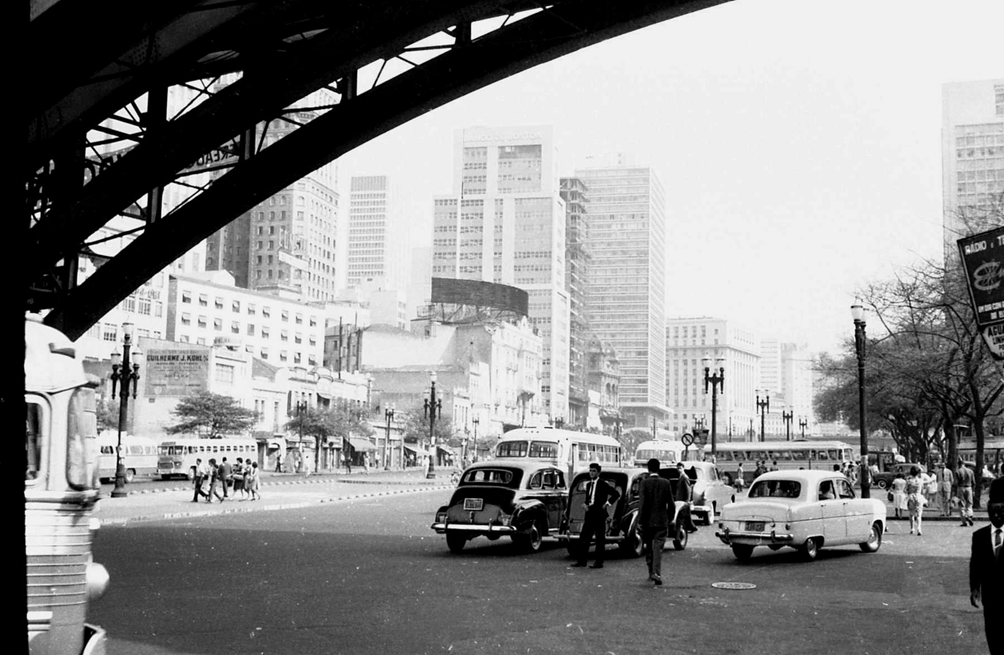
Photo by author, 1963
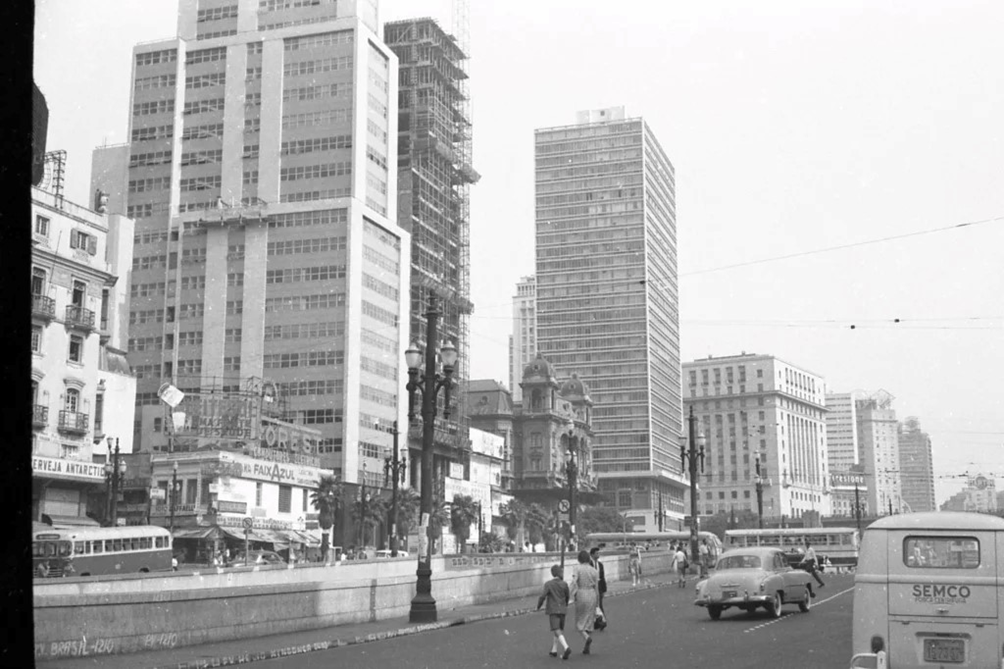
Photo by author, 1963
Dynamic center of São Paulo, photographed by the author around 1963.
The majority of cars are American-made Ford and German-made Volkswagen.

Photo by author, 1962
Vendors and people in the city

Photo by author, 1963
In front is the Arteno Arantes Building. Completed in 1947, it was the tallest building in São Paulo until 1960. It is 161m high and has 36 floors.
It is currently the fourth tallest building in Brazil. Photo taken in 1963.
AVENIDA São João 5 km long straight main avenue
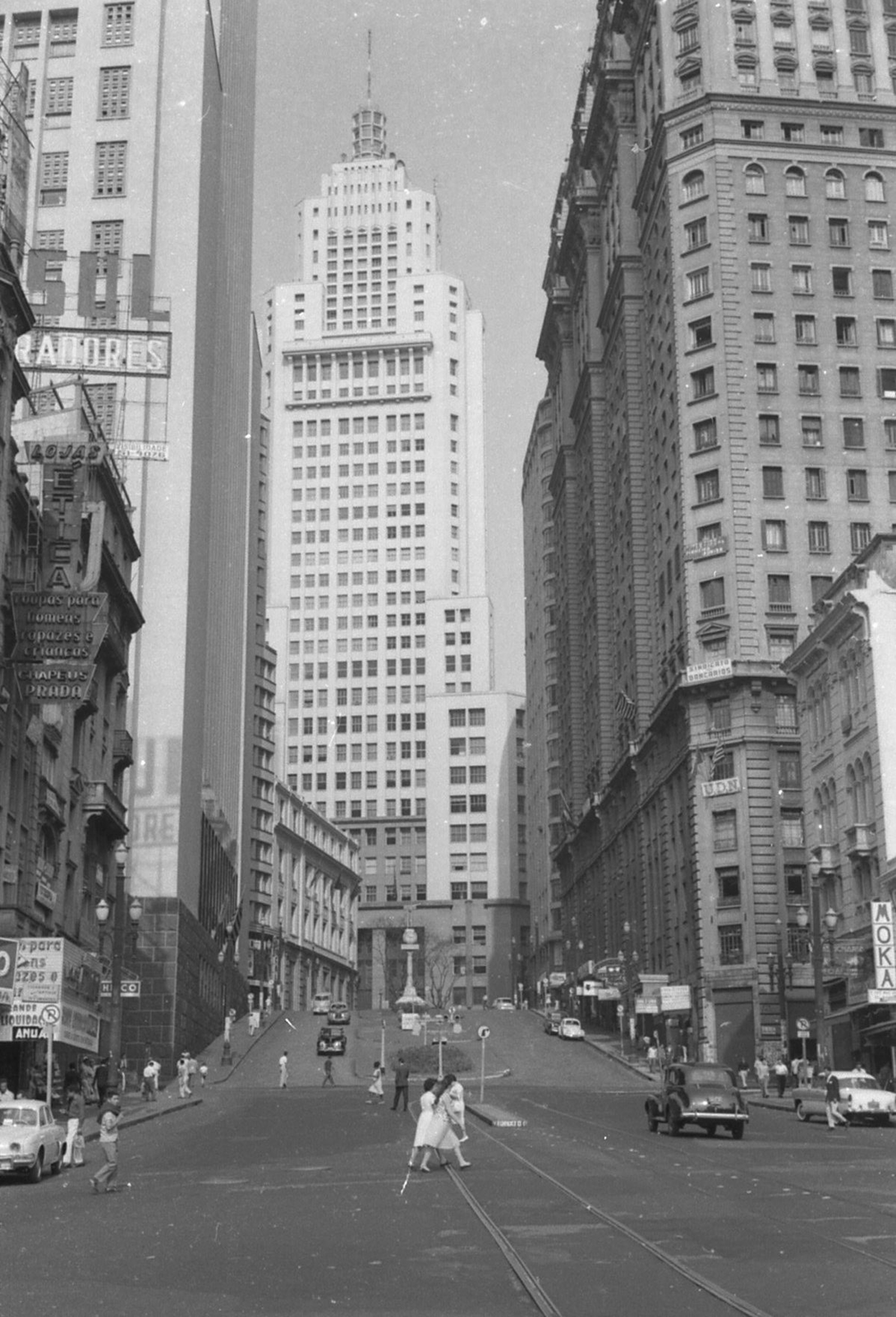
Photo by author, 1963
5. New Town center, Republic Square
Although the Plaza de la República and its surrounding areas are by stylish buildings at first glance, they are one of the most dangerous areas in São Paulo. Women roam the area at night, and crimes targeting foreign tourists have also occurred.
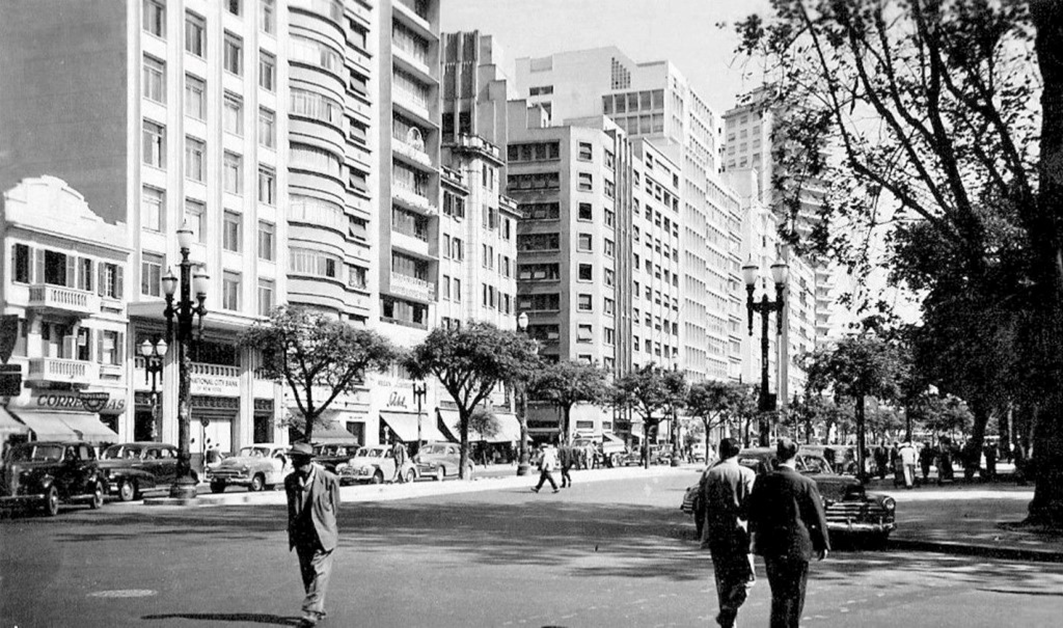
Photo by author, 1963