JAP | ENG
SINGAPORE EARLY DAYS
1970S #7/10
MANDRAIN ORCHARD
The engine started !
In the late 1960s and early 1970s, Singapore was based on its position as a free trade port, with transit trade, shipping, shipbuilding, commerce, etc.
It was still a city-state before the development of Southeast Asia.
Tourists from overseas were rare, and the number of Japan working residents was mainly elite, such as trading companies, banks, insurance companies, and special engineers, and there were only a few thousand.
In the early days of the country, the government began to introduce preferential tourism policies for private investors, solicit investment from the private sector, tender for land, and launch a number of hotel projects.
At the same time, foreign direct investment from overseas manufacturing industries also increased, and the demand for hotels also increased, and the aim of the country’s initial policy was successful.
Participation in the Mandarin Orchard Project
Opening Ceremony
The speech was delivered by the president of a major local bank, which also owns the building. Senior government officials from that time were also in attendance.
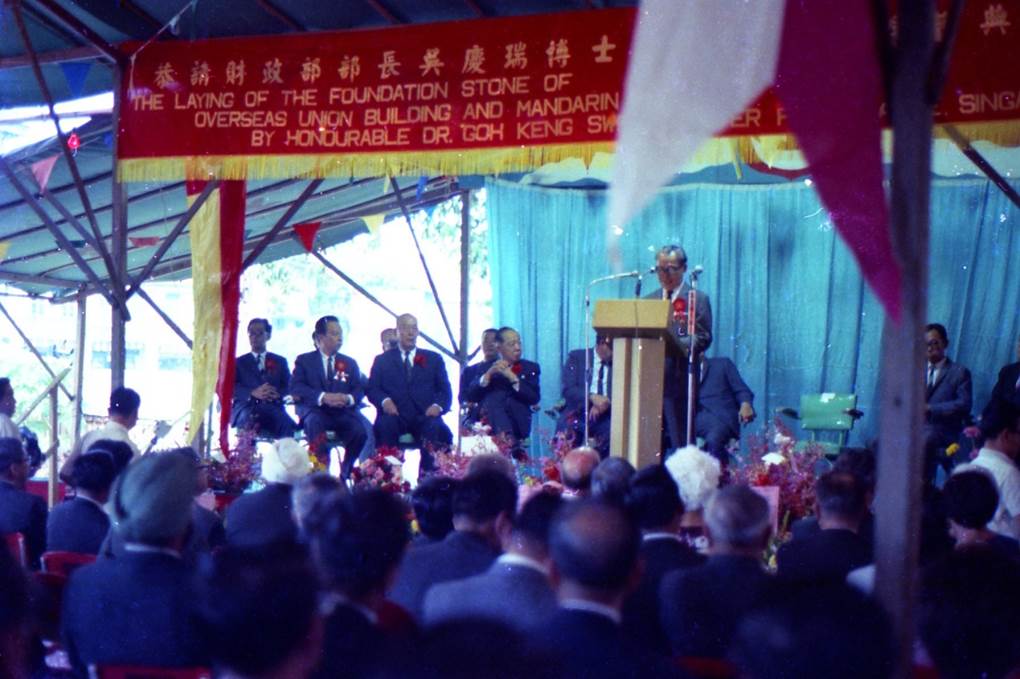
Photo by author, 1969
Opening Ceremony
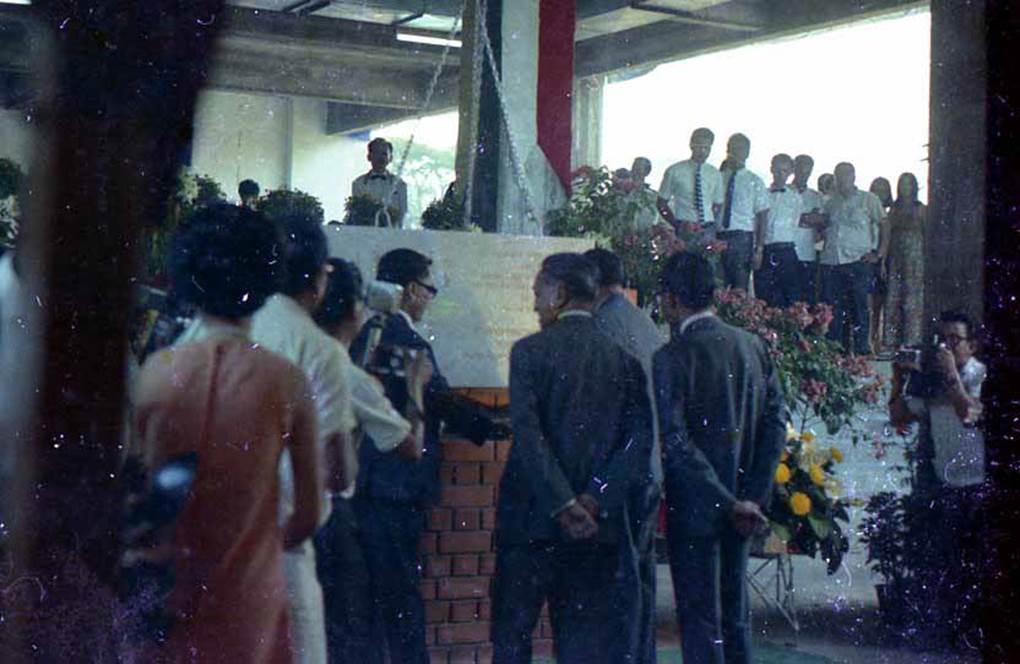
Photo by author, 1969
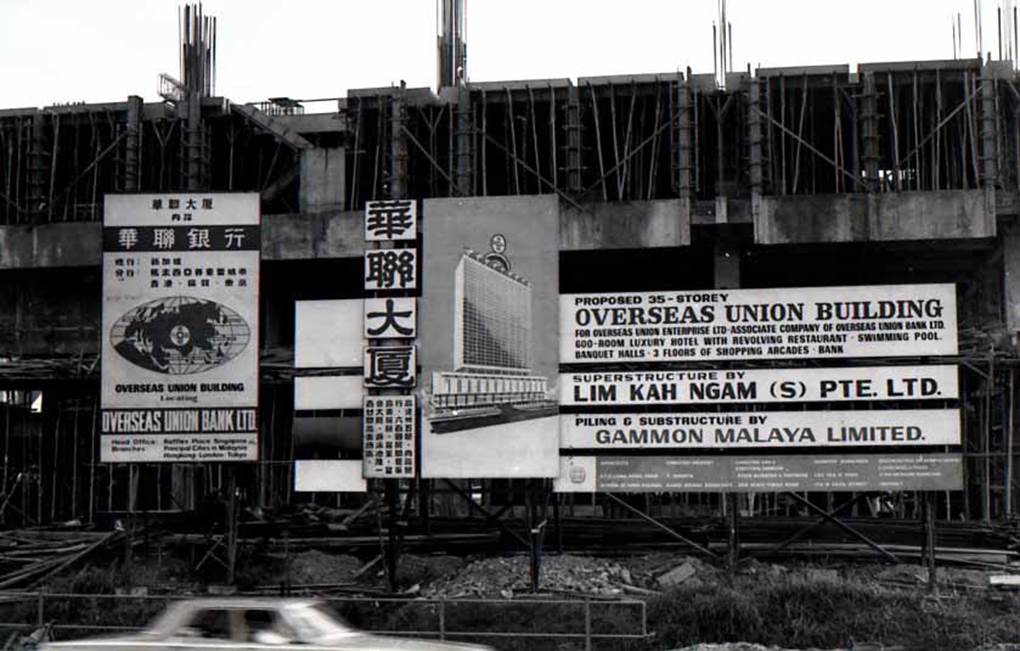
Since then, the project has been going smoothly using traditional construction methods by a local construction company.
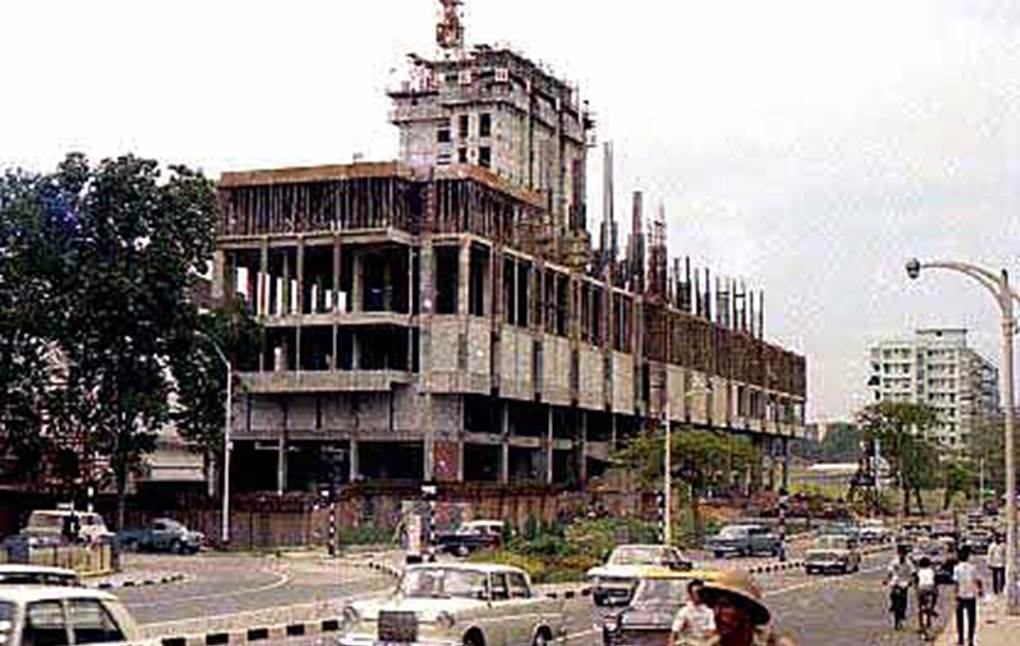
Photo by author, 1970
Orchard Road. Two-way traffic.
Orchard Road in 1970.
It is now a one-way street, but at that time it was a two-way street.
By this time, traffic congestion had already intensified.
Japan cars have not yet entered the market, and the overwhelming majority of cars ware made in the UK.
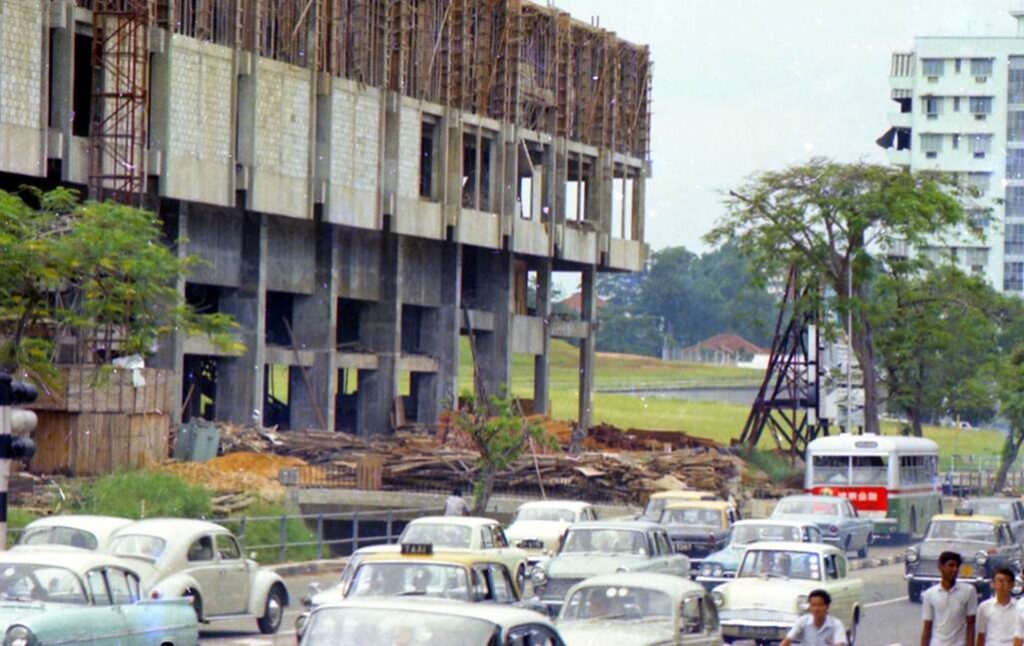
Photo by author, 1970
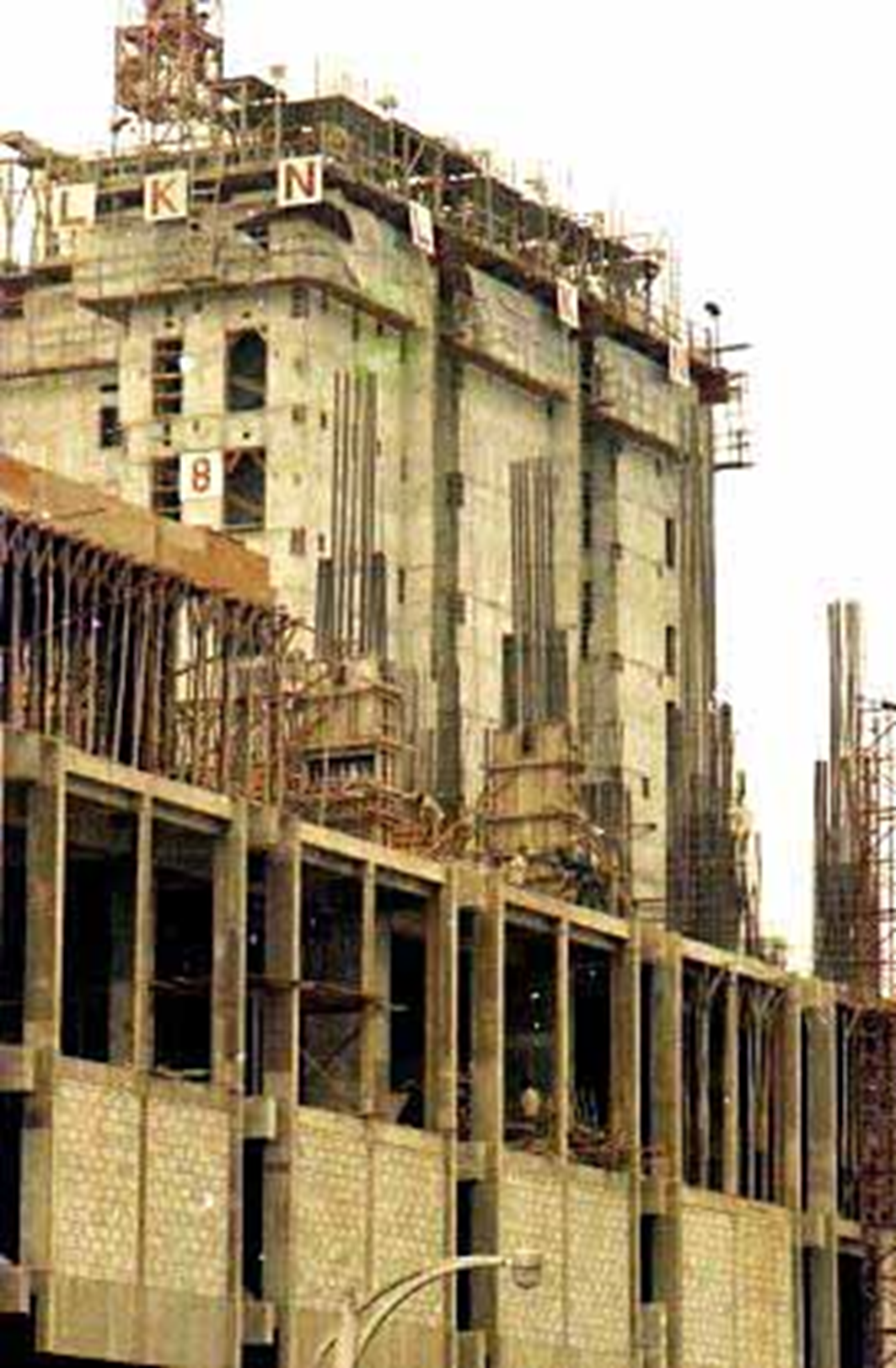
Photo by author, 1970
A construction site in 1970 with no scaffolding, no safety enclosures, and no construction lifts. Unfortunately, four people were killed in accidents before the construction was completed.

Photo by author, 1970
Looking back at those days, I hardly ever watched television.
I couldn’t understand fast-paced English, much less Chinese, so television was useless to me.
The local English-language newspaper, The Straits Times, was the only source of information.
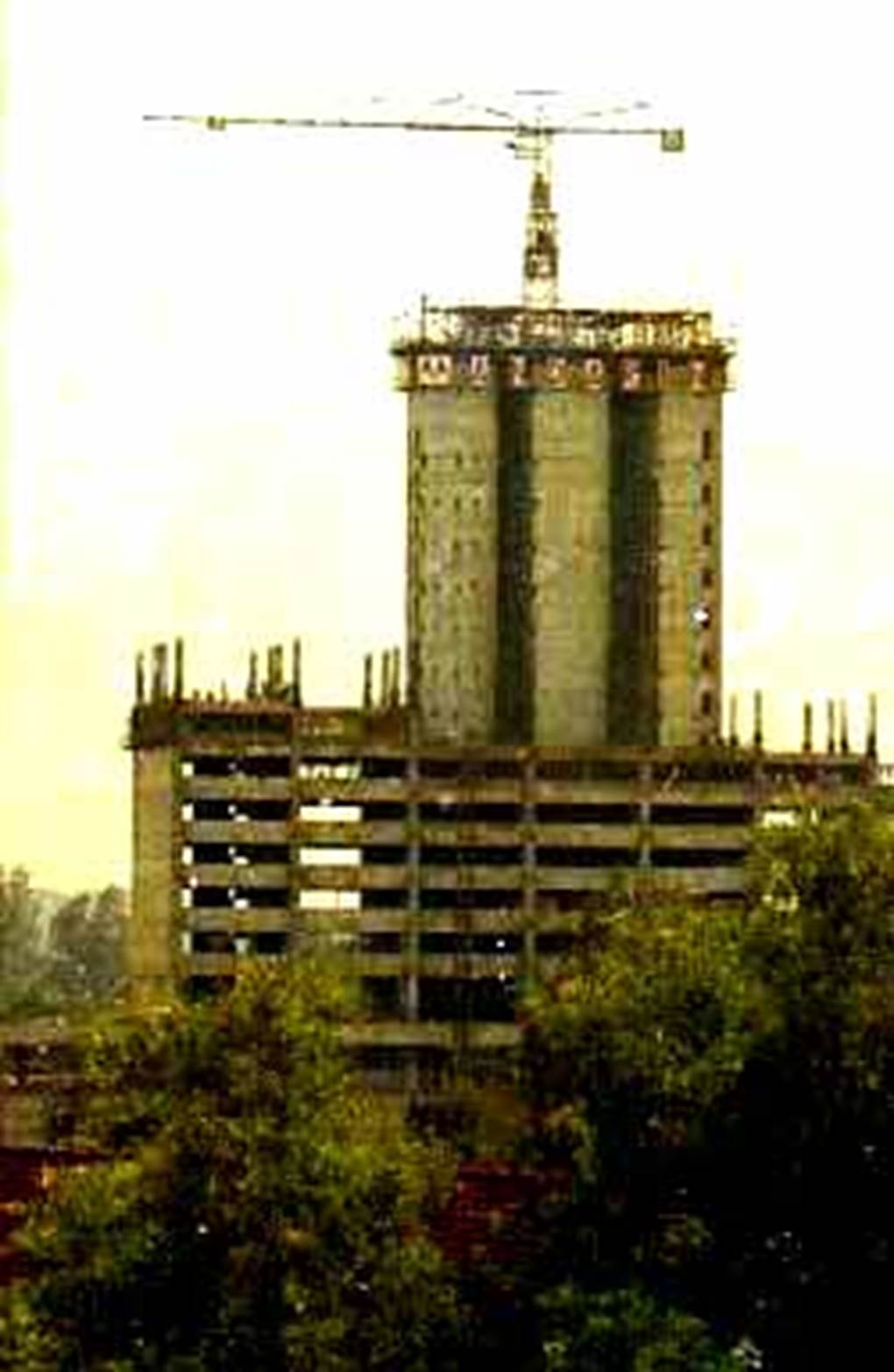
Photo by author, 1970
Regular meetings at the construction site were held weekly with a large group of more than 20 people.
I was at a loss as to how to deal with the Singaporean English that was flying around, and I think it was a nuisance to everyone. However, there was no problem in reading and writing the meeting record (in English).
The meeting records would sometimes contain things that were different from what was said, and I would have to correct the entries the following week, which was a bit confusing. Among the craftsmen on site, Chinese dialects such as Hokkien and Cantonese were flying around.
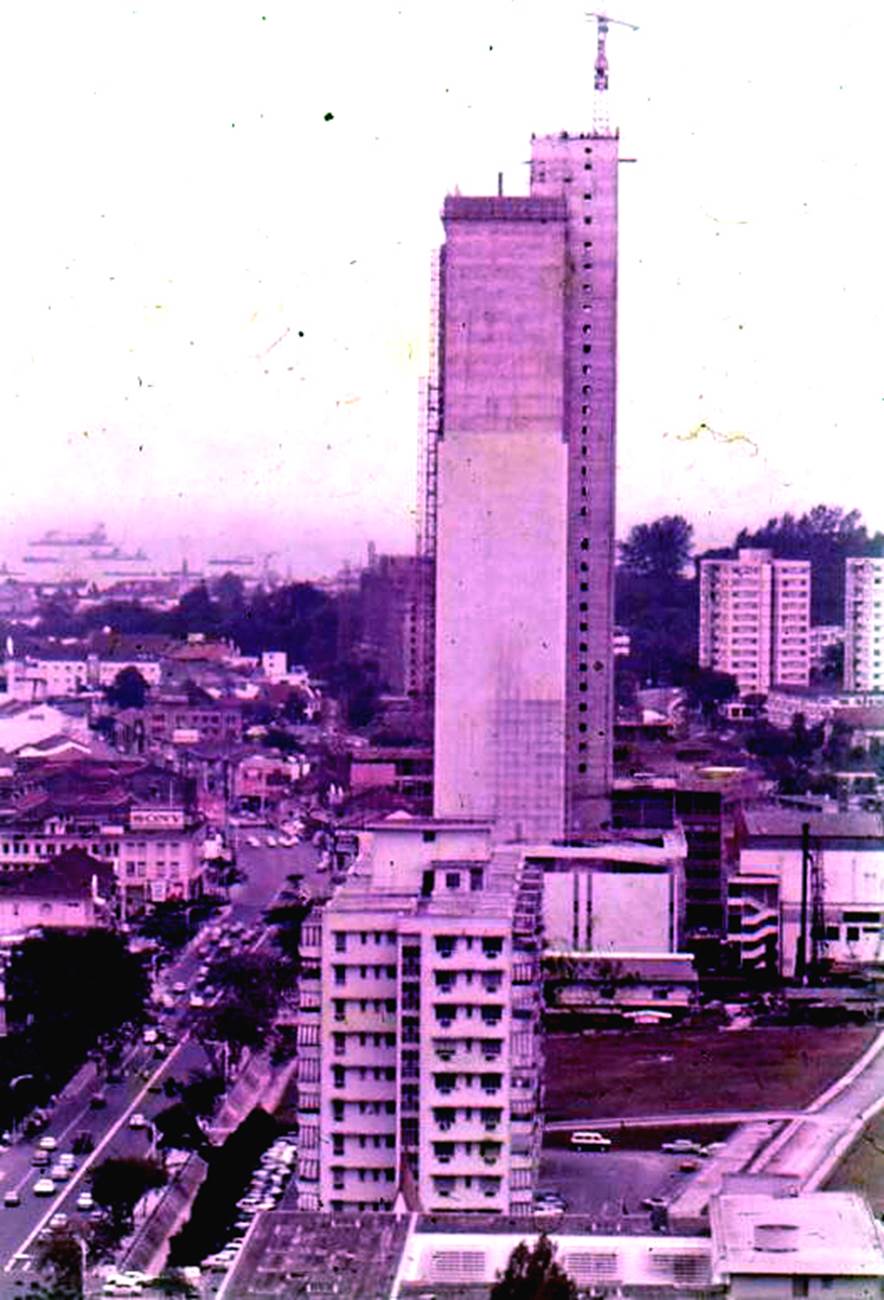
Photo by author, 1970
During the three years of construction, every day was like a battlefield, with the creation and issuance of supplementary drawings for design drawings that were not sufficient, and the resolution and coordination to deal with unexpected problems.
What was fun was the drinking parties that all the people involved in the construction got together for whenever the construction finished.
It was customary for the local people, who were in the majority, to challenge us foreigners, who were in the minority, by gulping down whiskey or brandy until we were completely drunk.
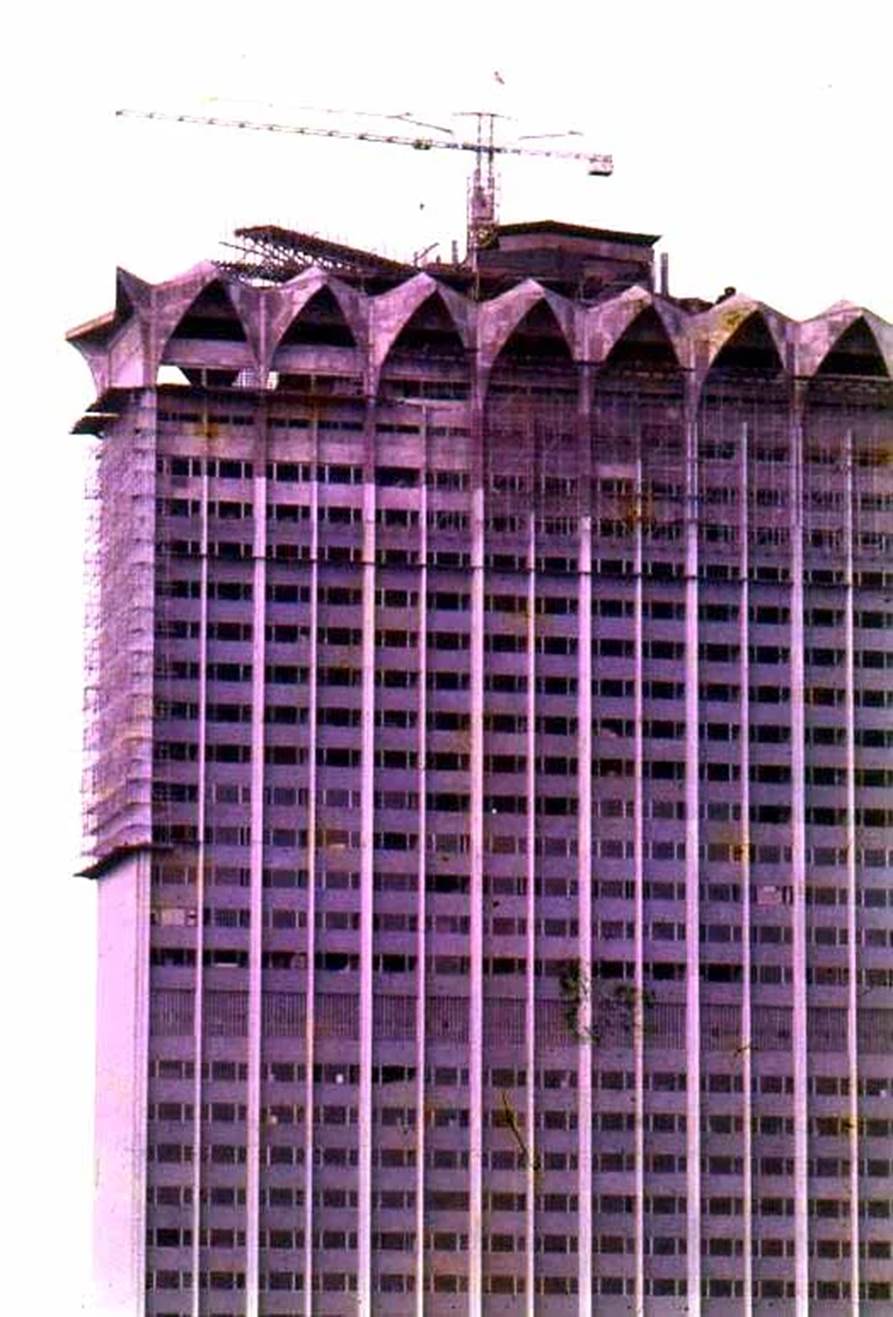
Photo by author, 1971
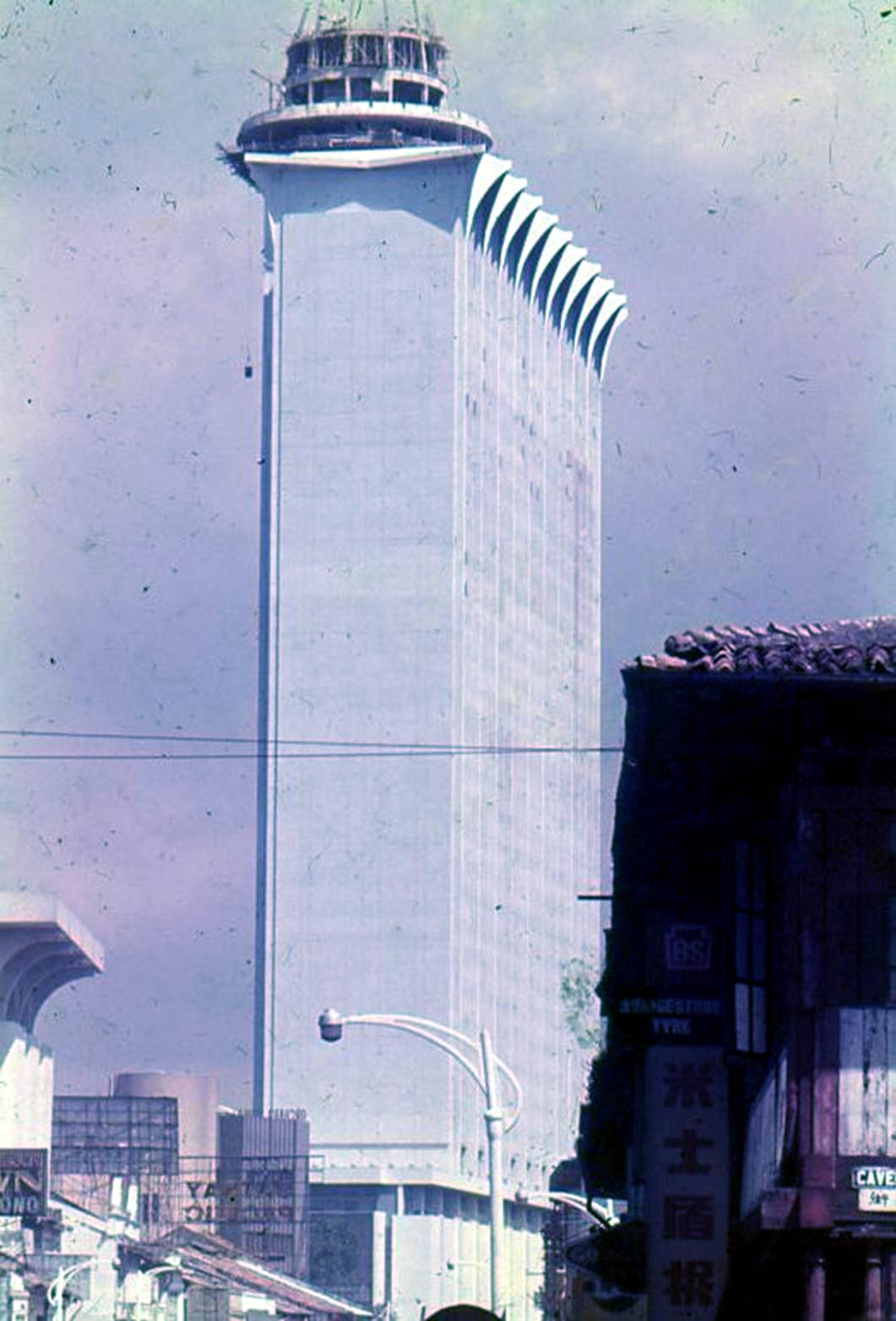
Photo by author, 1972
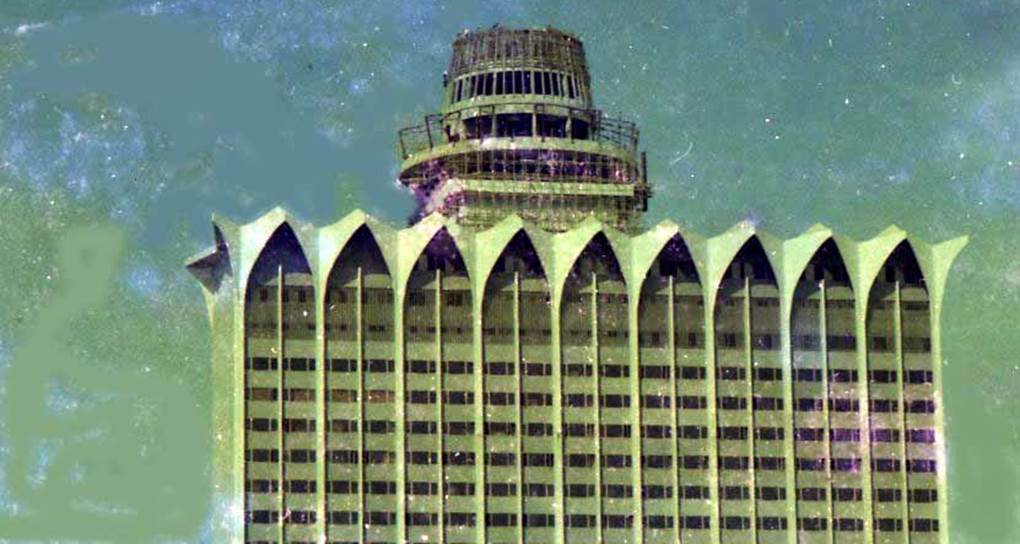
Photo by author, 1972
At the time, construction of the Keio Plaza Hotel was progressing at the same time as the development of the Shinjuku subcenter in Tokyo.
People were paying close attention to how quickly the two would be completed. In the end, the Keio Plaza opened in about two and a half years, while the Mandarin in Singapore took about three and a half years, so there was a delay of about a year.
In Japan, bathrooms around the water were modularized, and factory-produced products were brought to the site for installation, paving the way for speeding up construction.
In Singapore, by comparison, everything was done by hand on site.
In addition, four unfortunate accidents occurred during construction, each time resulting in a two-week suspension from the authorities, which was one of the reasons for the delay.
Fixed-point observations: Then and Now
The Mandarin Hotel on Orchard Road, Singapore, just before its completion, and the cityscape 30 years later were photographed from the same point so that they could be compared, and be documented.
I rose to the roof level on the 36th floor. In the upper right corner of the photo, you can see the Emerald Mansion where I lived.
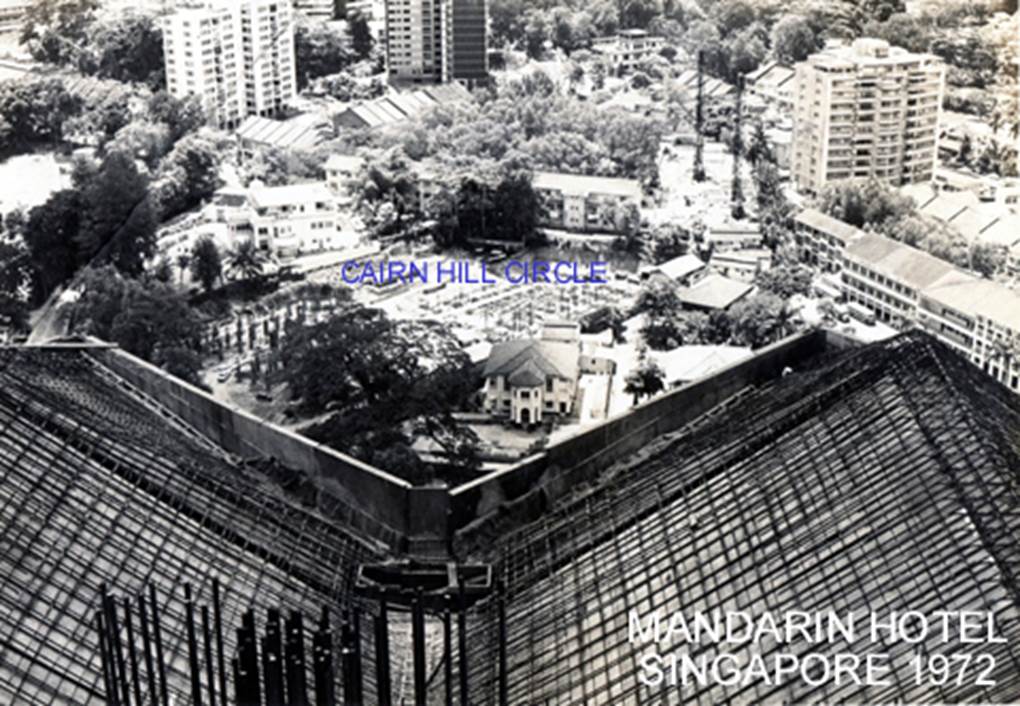
Photo by author, 1972
From the same angle around year 2000. Covered in a green screen, the Emerald Mansion where I lived is being renovated. It’s already in the valley of buildings.
Photographed from the Mandarin Orchard Hotel around 2000.
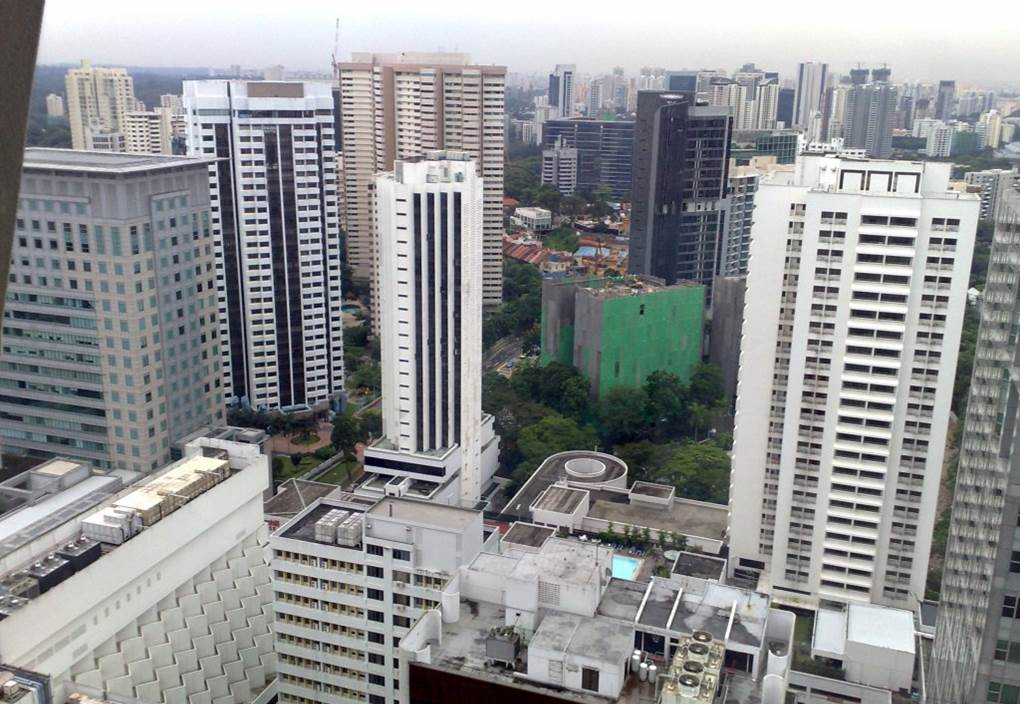
Photo by author, around year 2000
From the roof level of the 36th floor, you can see the city on the east side, the sea, and if the weather is good, you can also see the Indonesian island of Batam. Photo taken in 1972
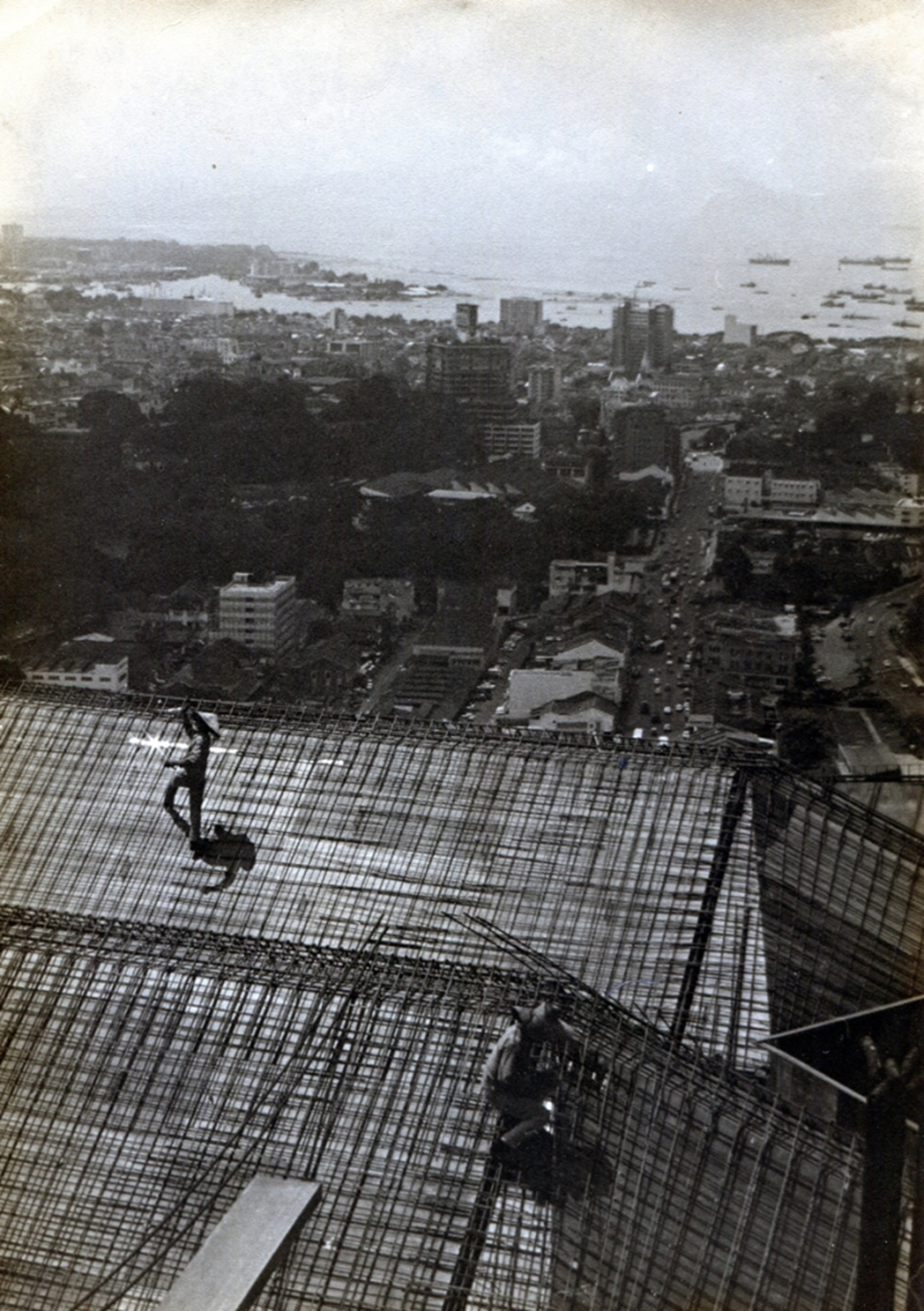
Photo by author, 1972
Shot from the same angle around year 2000. The number of hotels and office buildings has increased, and it has become difficult to see the sea.
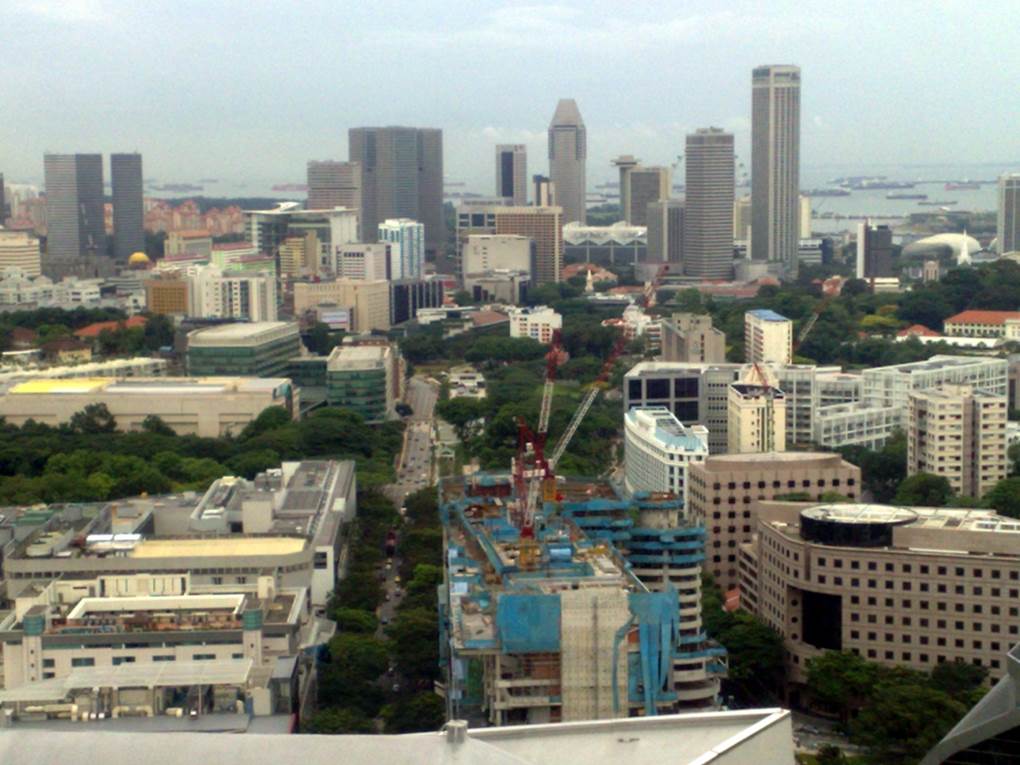
Photo by author, around year 2000
View of the green belt on the west side from the roof level of the 36th floor.
In 1972. On the far right is the soon-to-open Shangri-La Hotel.
On the left is the already-opened Hilton Hotel.
Takashimaya will appear in the vacant lot directly below.
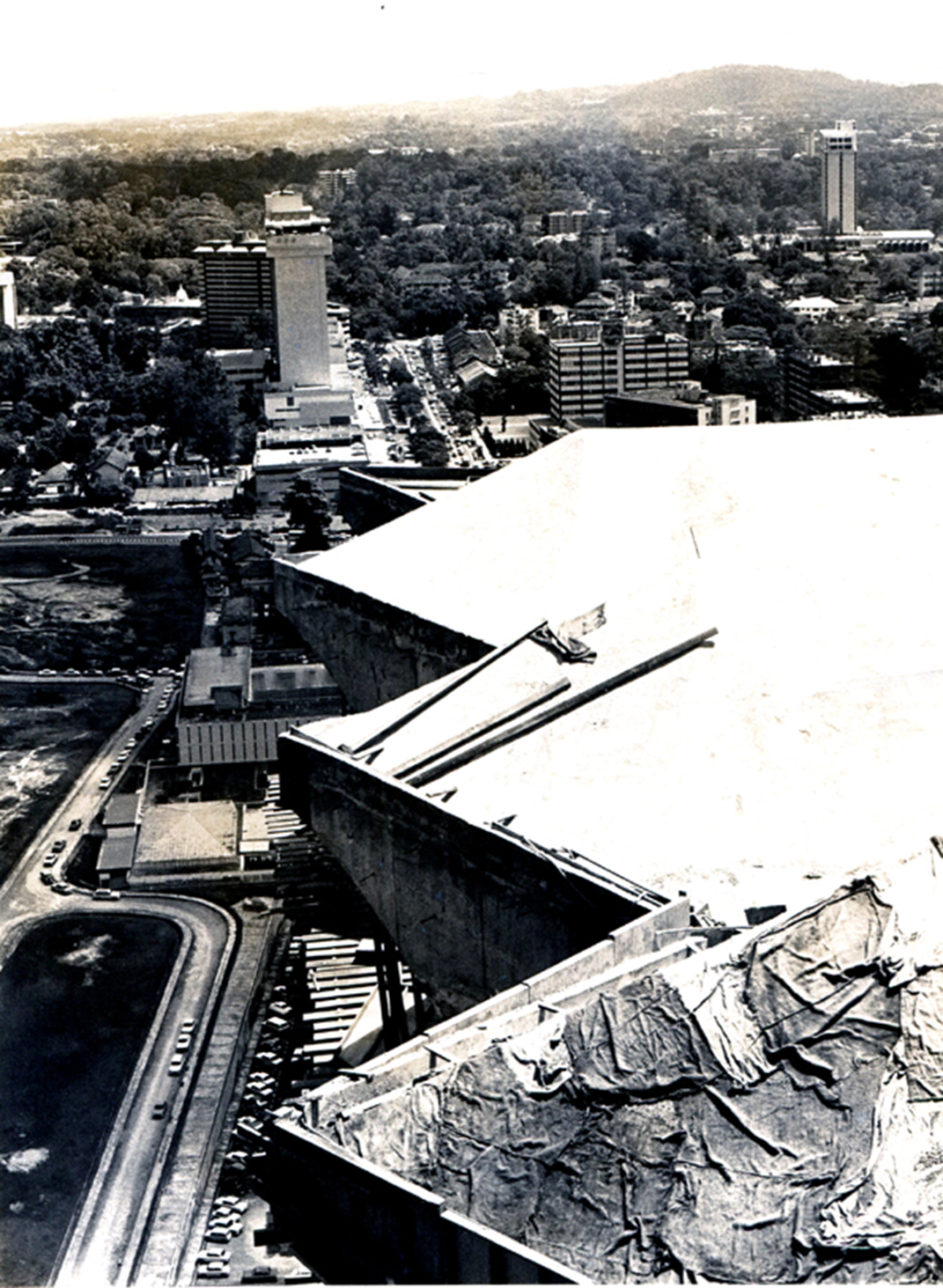
Photo by author, 1972
The green belt on the west side from the roof level of the 36th floor.
In 2000, Takashimaya’s SC was completed and opened on the front site.
Both Shangri-La and Hilton are hidden by new buildings and are no longer visible. The brown building, Ngee Ann City, houses Takashimaya on the lower floors. The author’s office was located in the building on the far right. Shaw House.
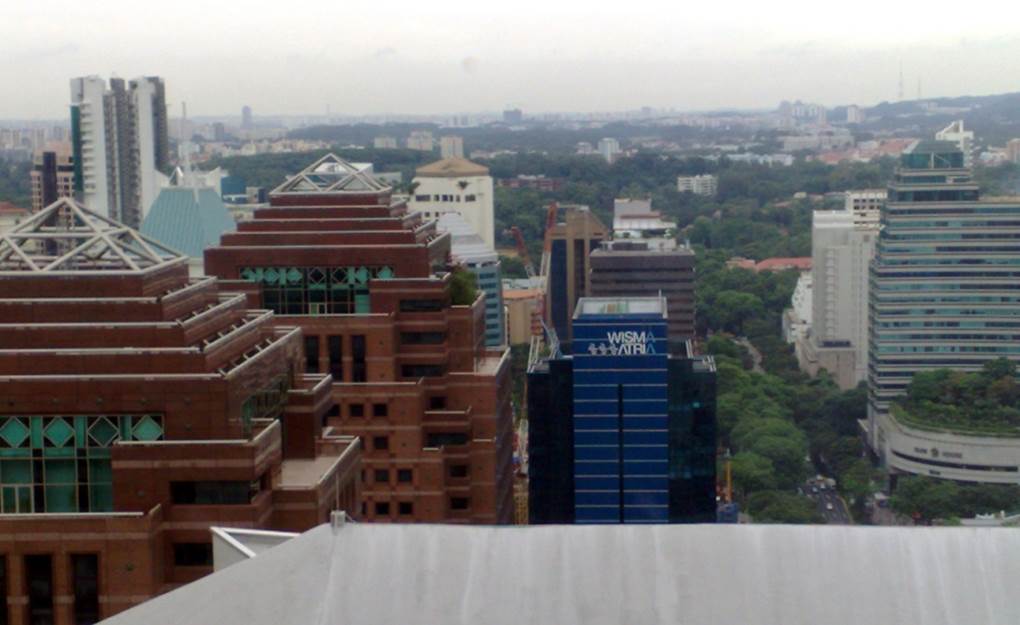
Photo by author, around year 2000
The Hilton has already opened on the front. The green space in the distance is a landscape preservation district with a high-end residential area. The Japan embassy is also located in this area.
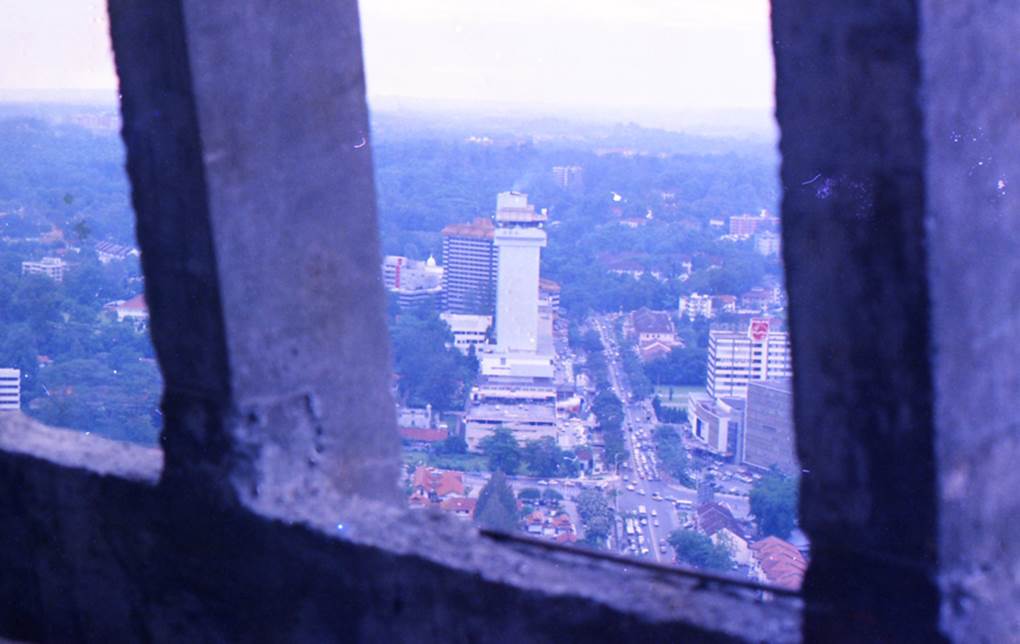
Photo by author, 1972
Steelworkers constructing the roof of the revolving restaurant on the top floor
without helmets!
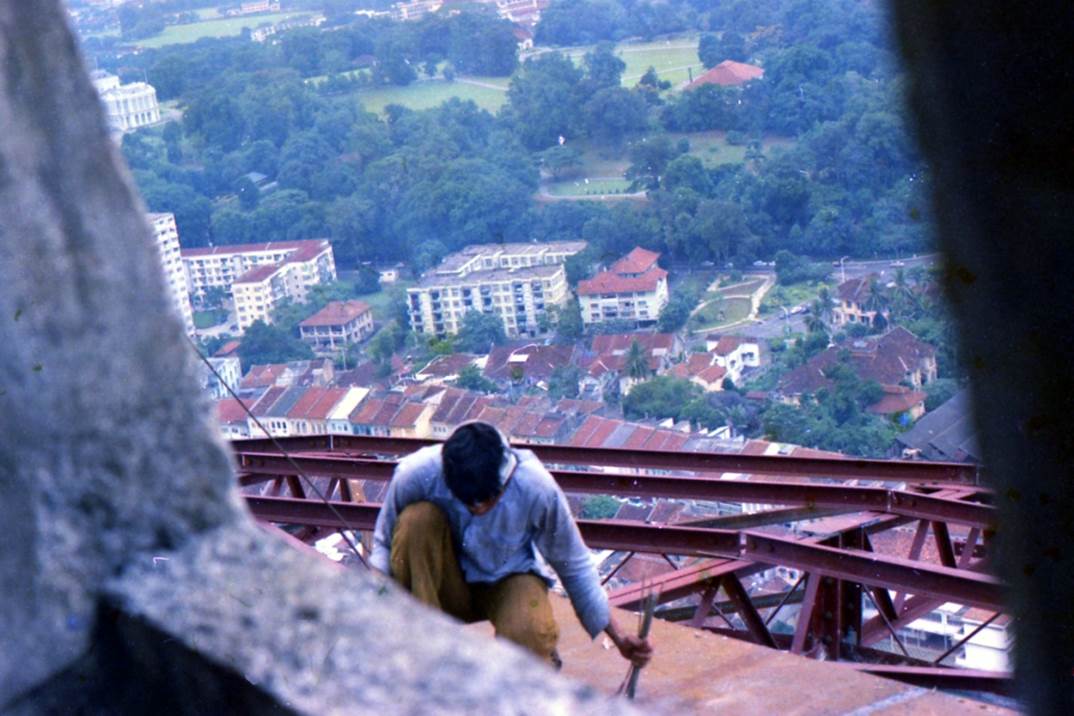
Photo by author, 1972
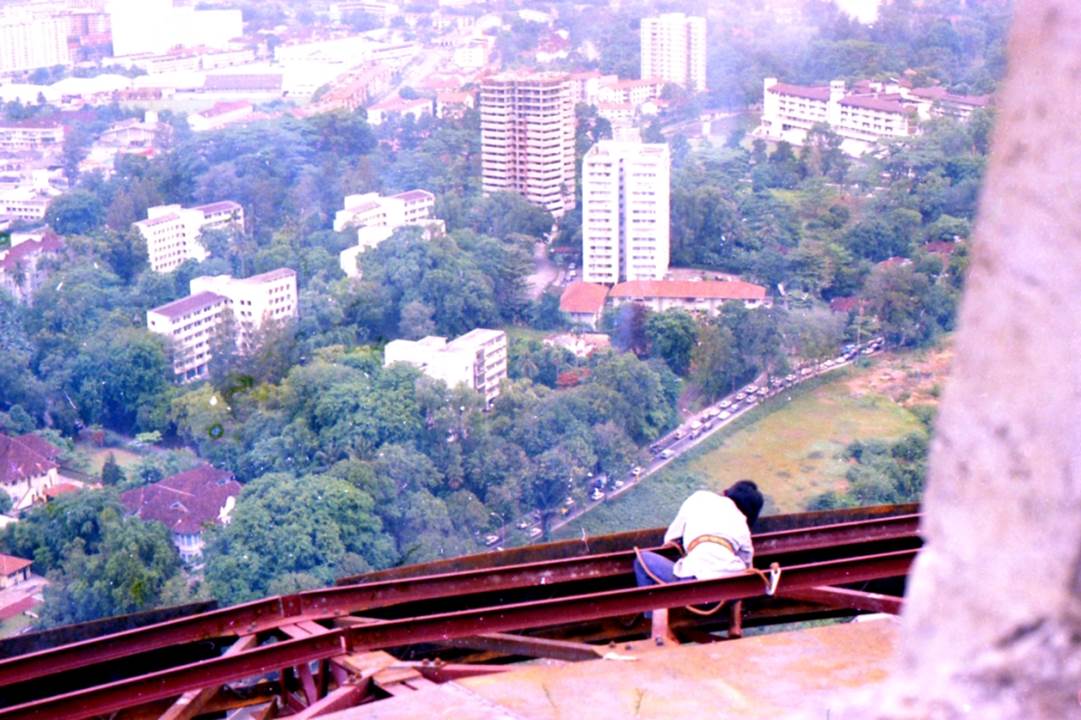
Craftsmen without a lifeline and helmet at that time
Photo by author, 1972
Shot from the same revolving restaurant on the top floor.
A large number of condominiums are springing up one after another.
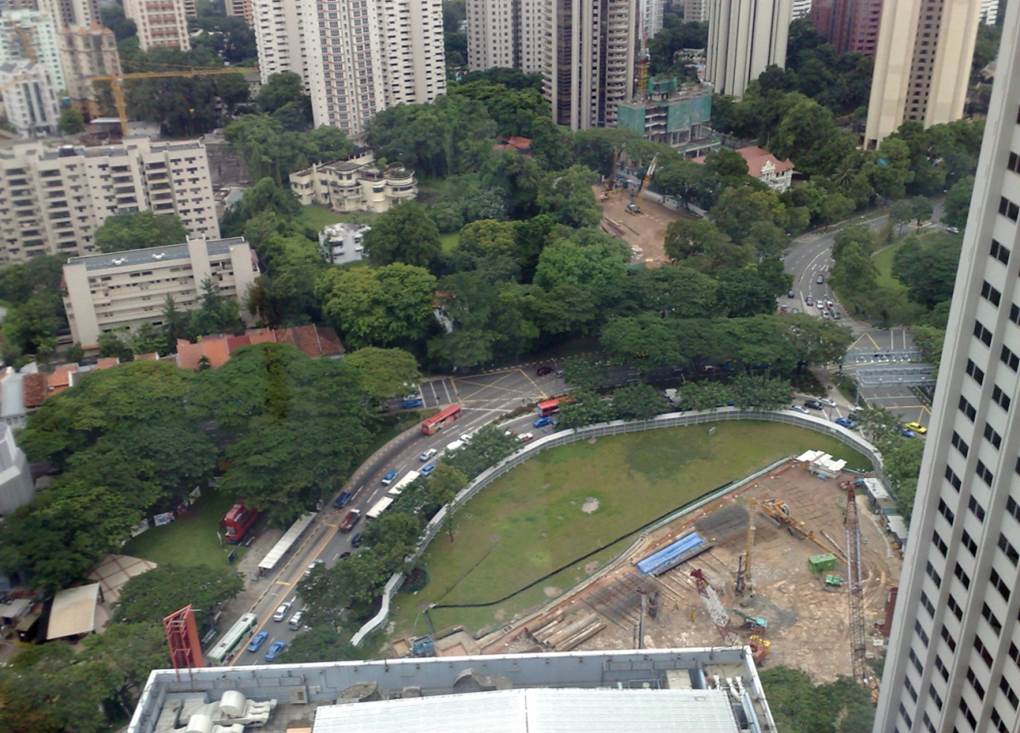
Photo by author, around year 2000
From the upper floors of the Mandarin Hotel. Bukit Timah Hill in the back left, 1972
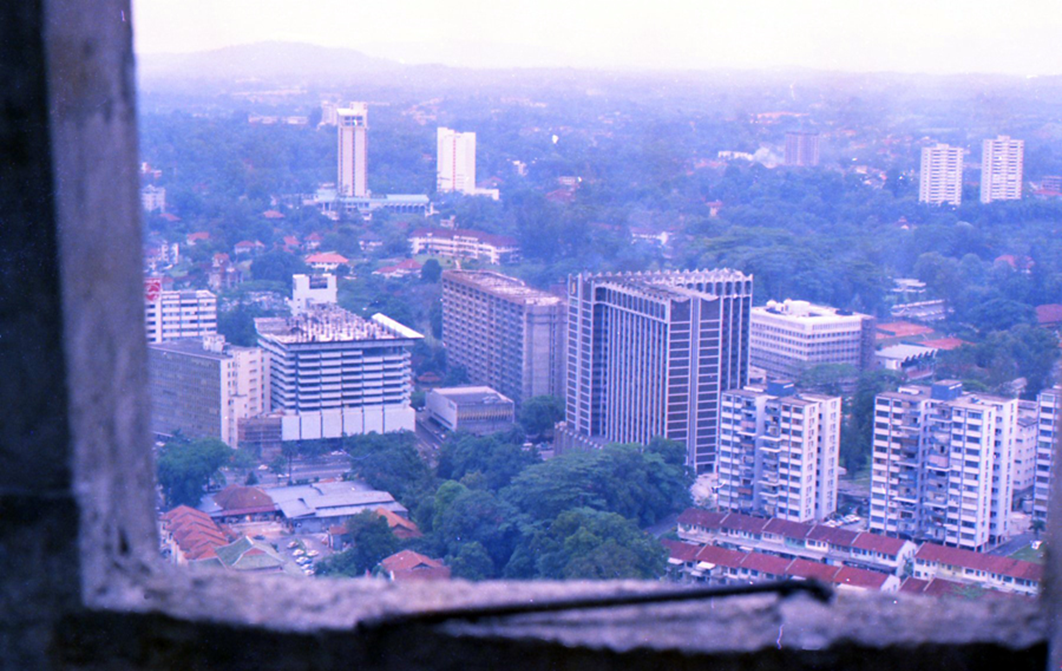
Photo by author, 1972
The densely populated high-rise building. From the same angle in 2000.
Bukit Timah Hill in the back left. Protected area of the rainforest
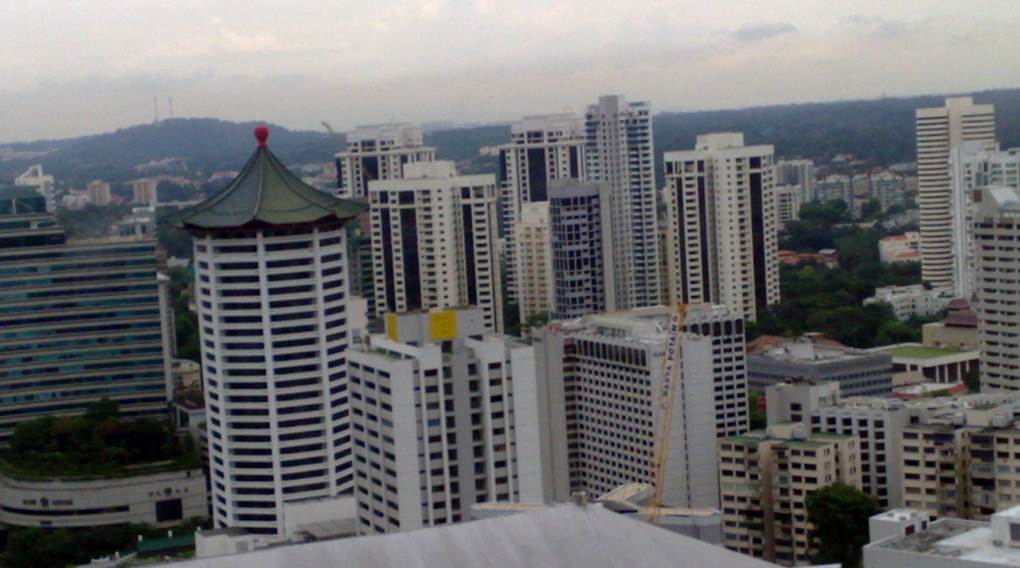
Photo by author, around year 2000
The final pail of concrete pouring work.
The owner, who is also the president of the bank, holding a topping-off ceremony at the cooling tower on the 39th floor. (3 photos below)
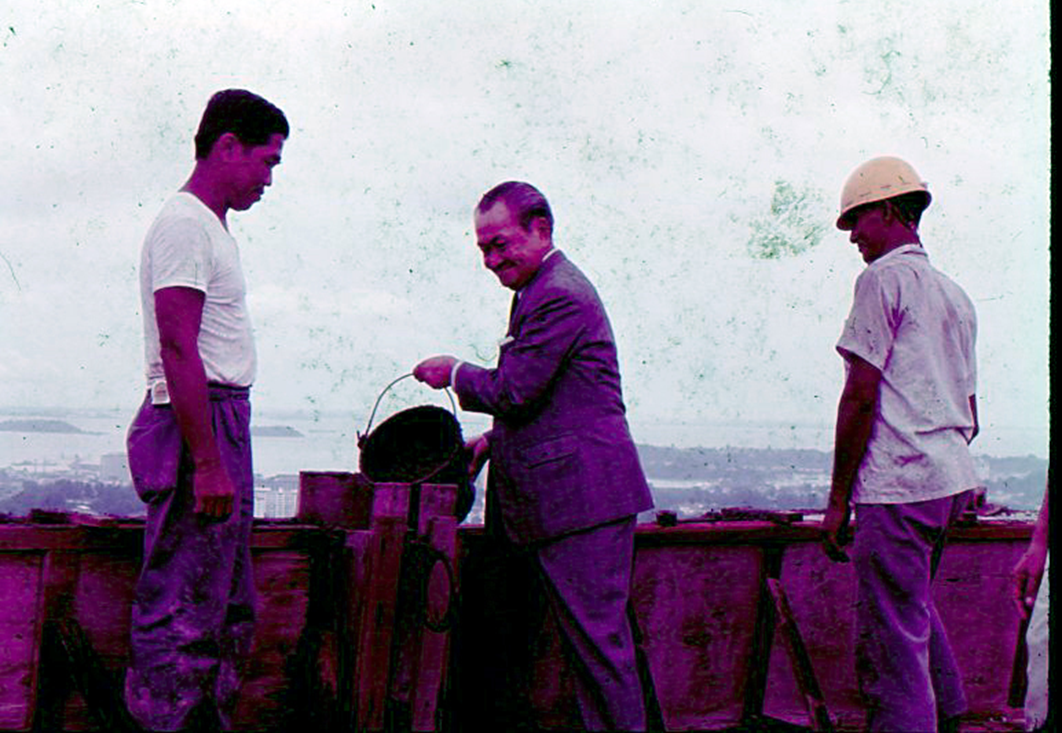
Photo by author, 1972
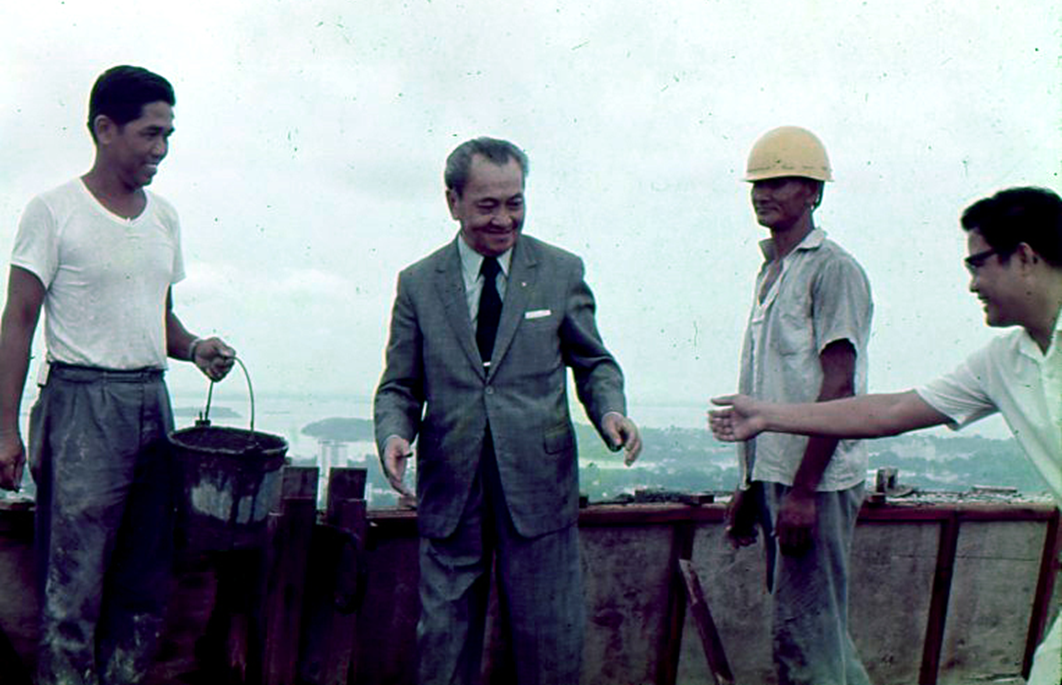
Photo by author, 1972
Reaching out and leading the way are site managers and project managers of local construction contractors (LKNs).
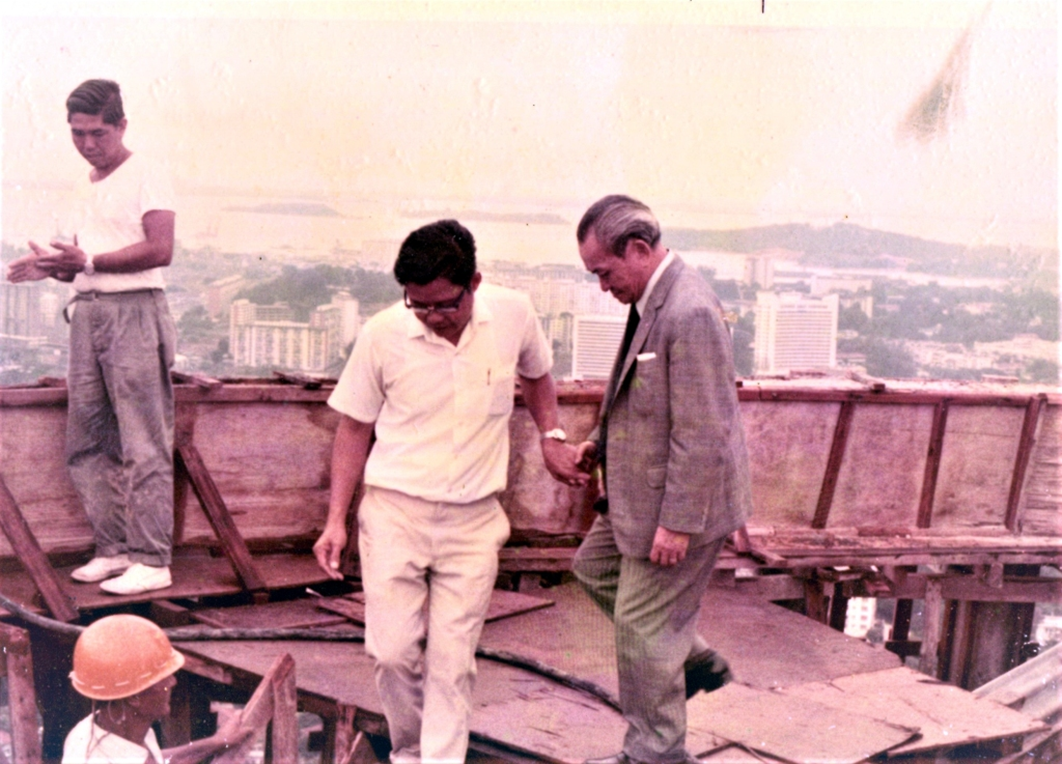
Photo by author, 1972
A classmate from junior high school travels to Singapore from Tokyo.
On the roof of the Mandarin Orchard Hotel, which was about to be completed in 1972. The green space directly below is the President of Singapore’s official residence. (Istana)
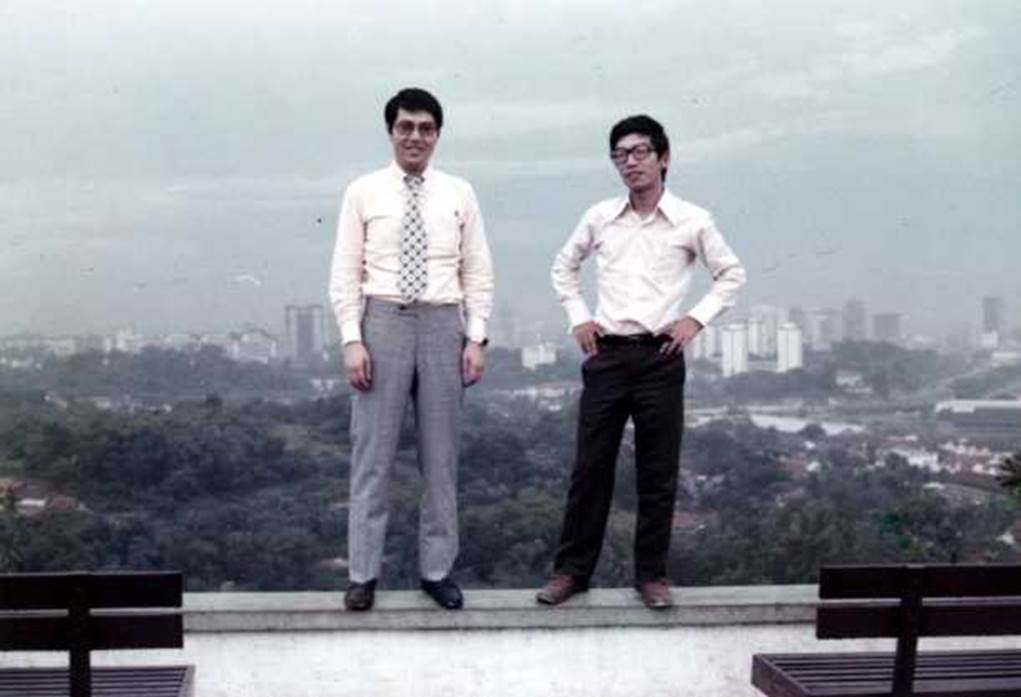
Photo of author, 1972
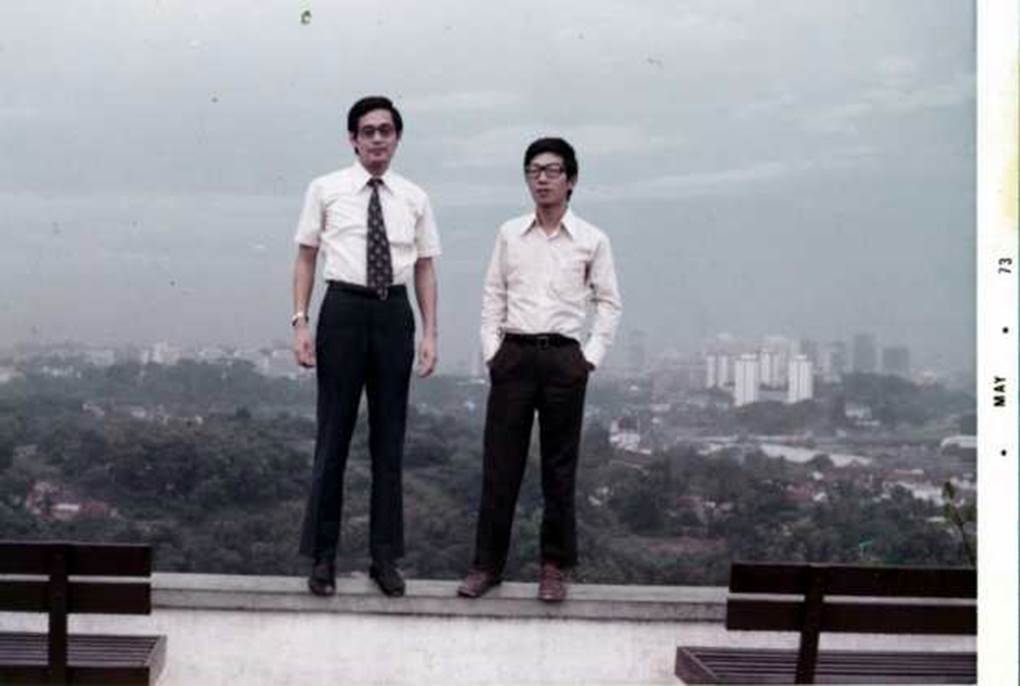
Photo of author, 1972
People preparing to open a Japan restaurant in the hotel.
They are busy preparing Singapore’s first authentic Japan restaurant.
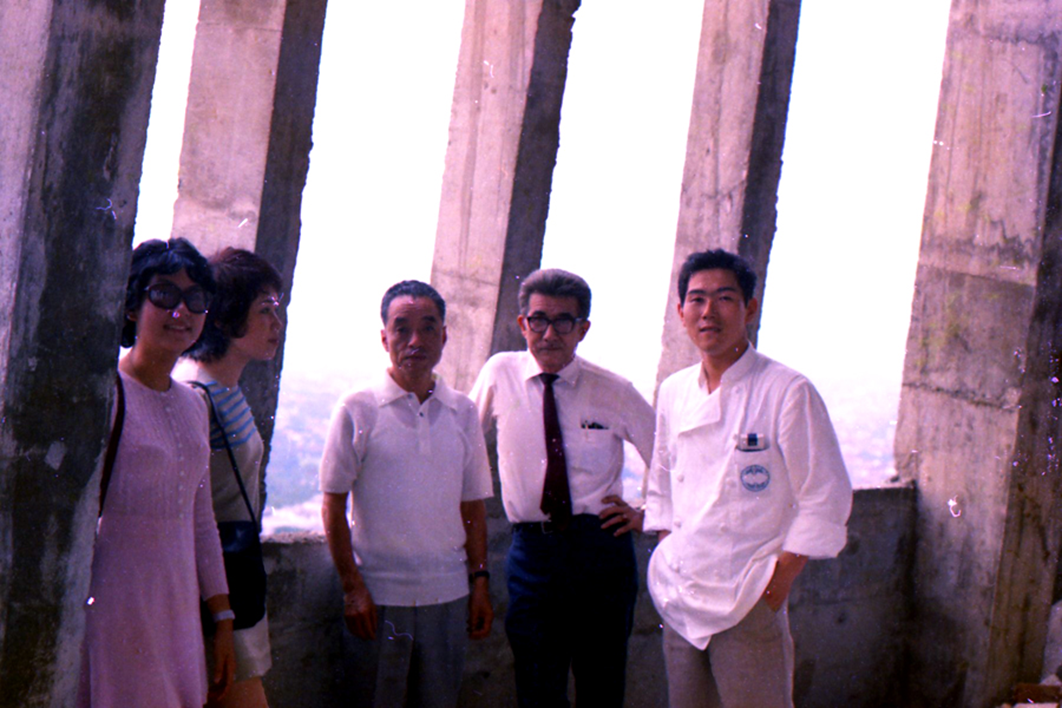
Photo by author, 1972
The Mandarin Hotel on Orchard Road shortly after completion.
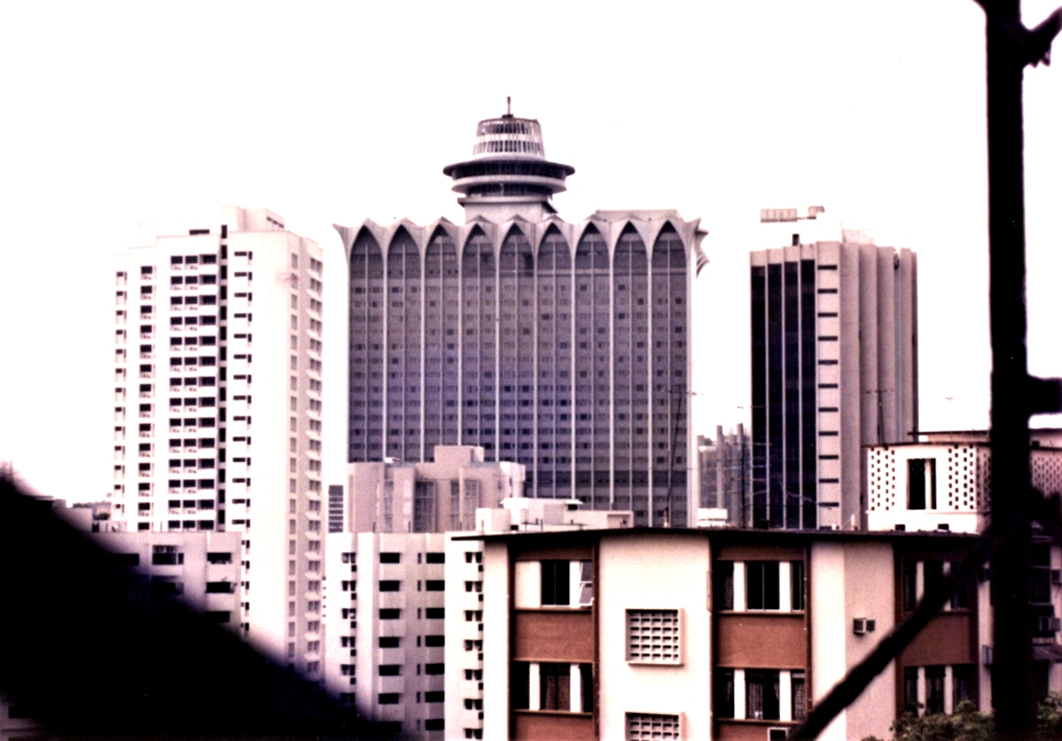
Photo by author, 1972
The hotel entrance just after completion in 1972. At the entrance, there was an Indian doorman wearing a turban. Inside the hotel, there was a young female hotel staff member wearing a bright red Chinese dress.
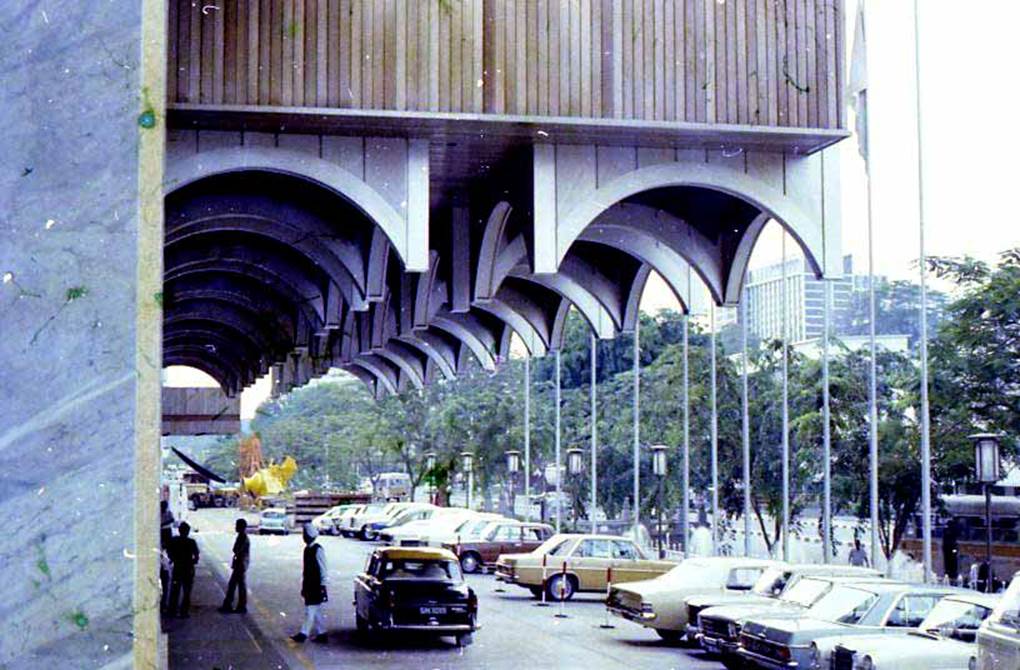
Photo by author, 1973
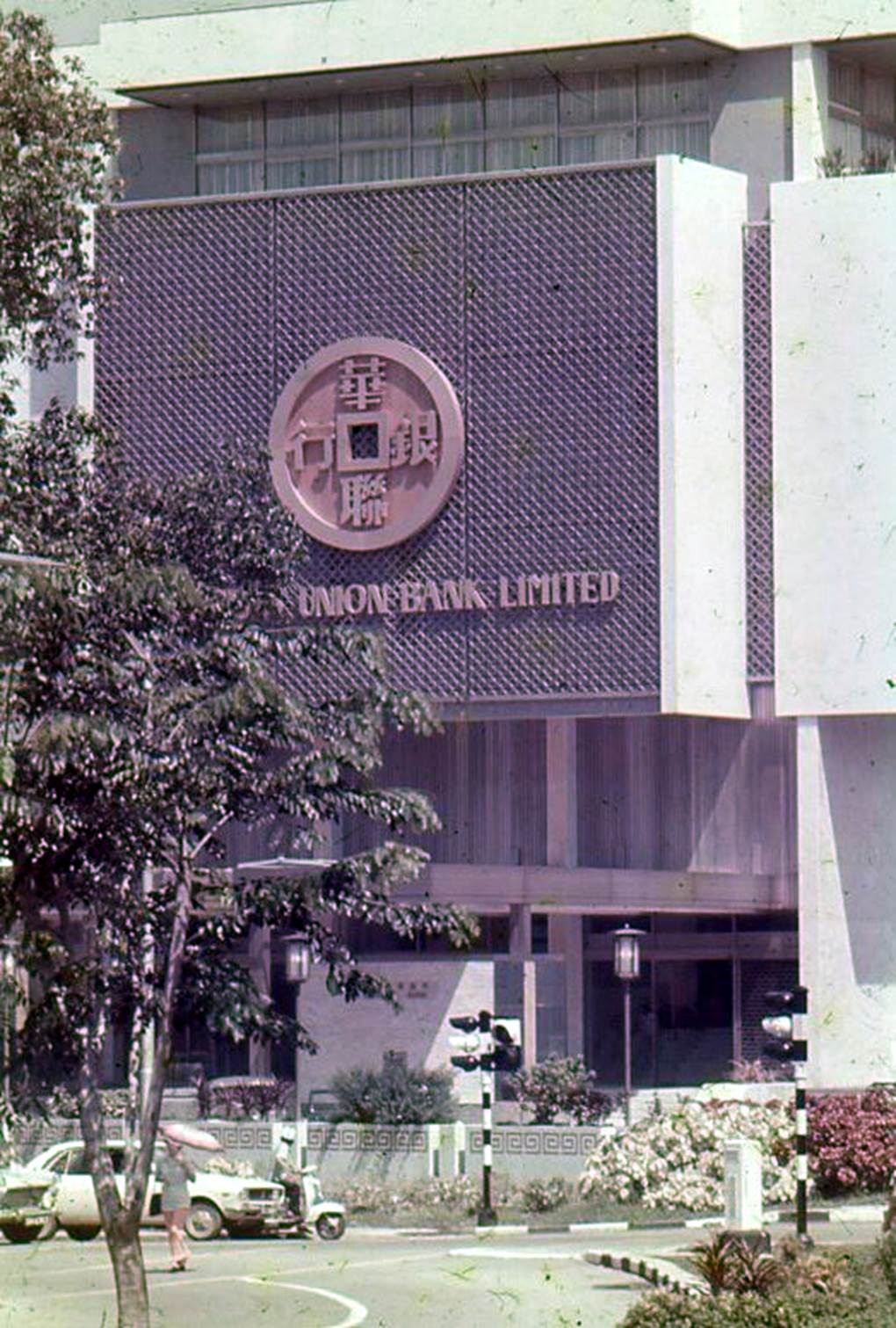
Photo by author, 1973
(2 photos below) The front desk shortly after the hotel opened.
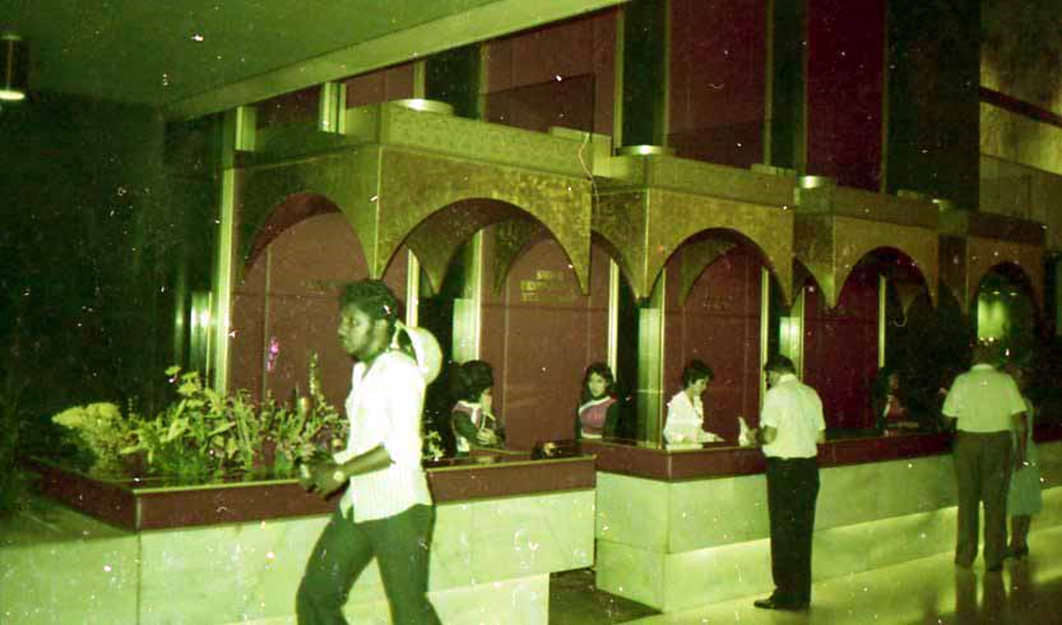
Photo by author, 1973
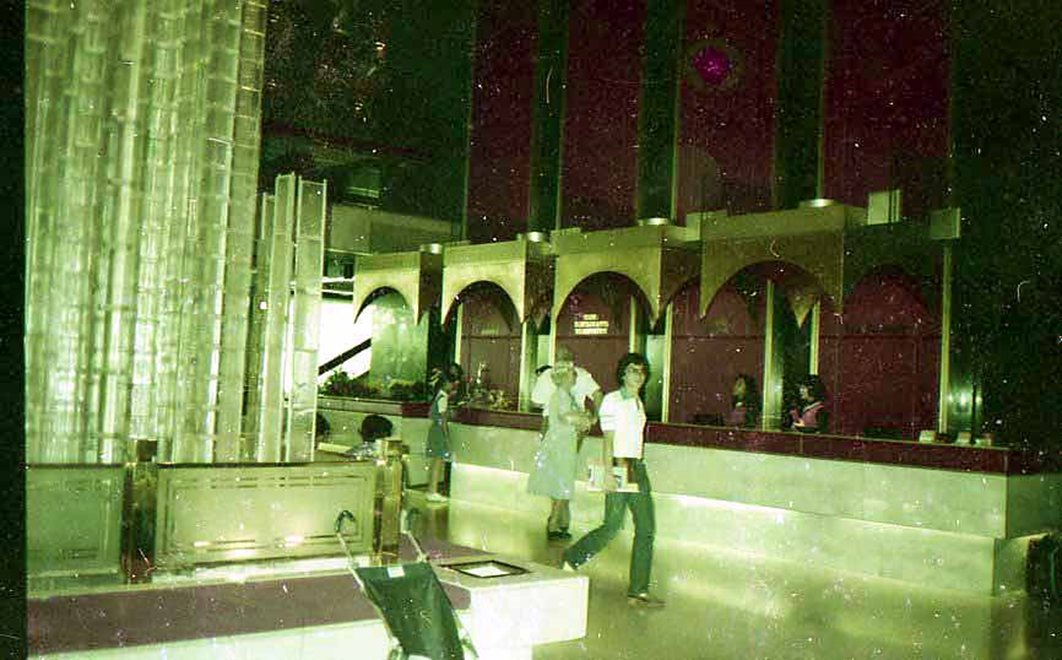
Photo by author, 1973
Crystal fountain in the center of the lobby.
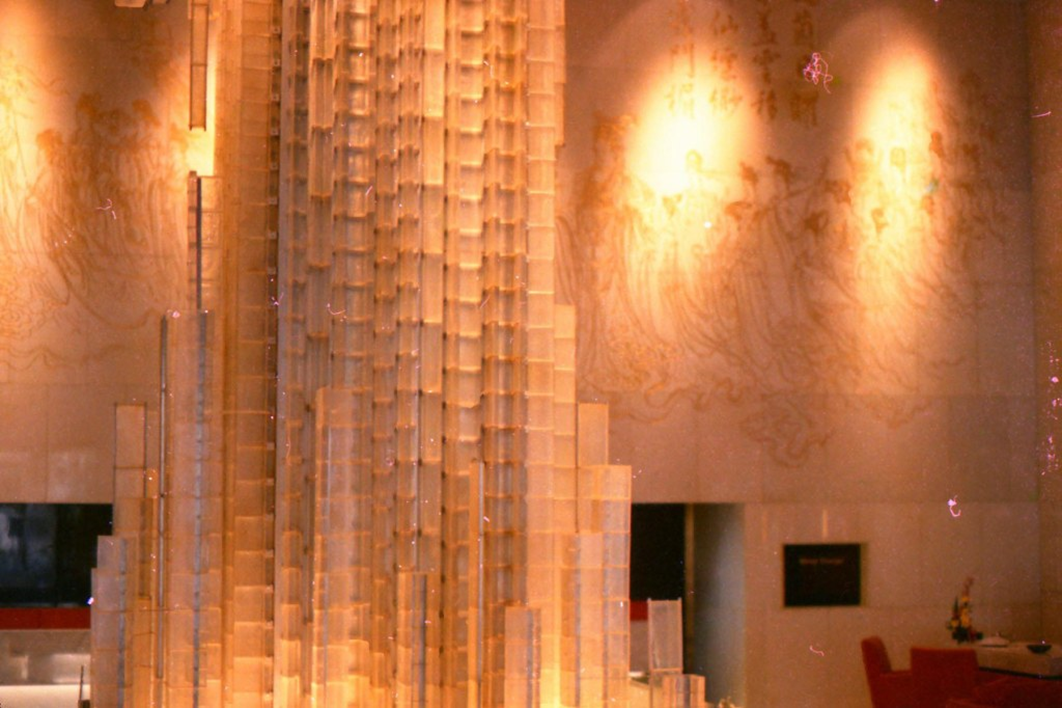
Photo by author, 1973
A coffee shop shortly after the hotel opened.
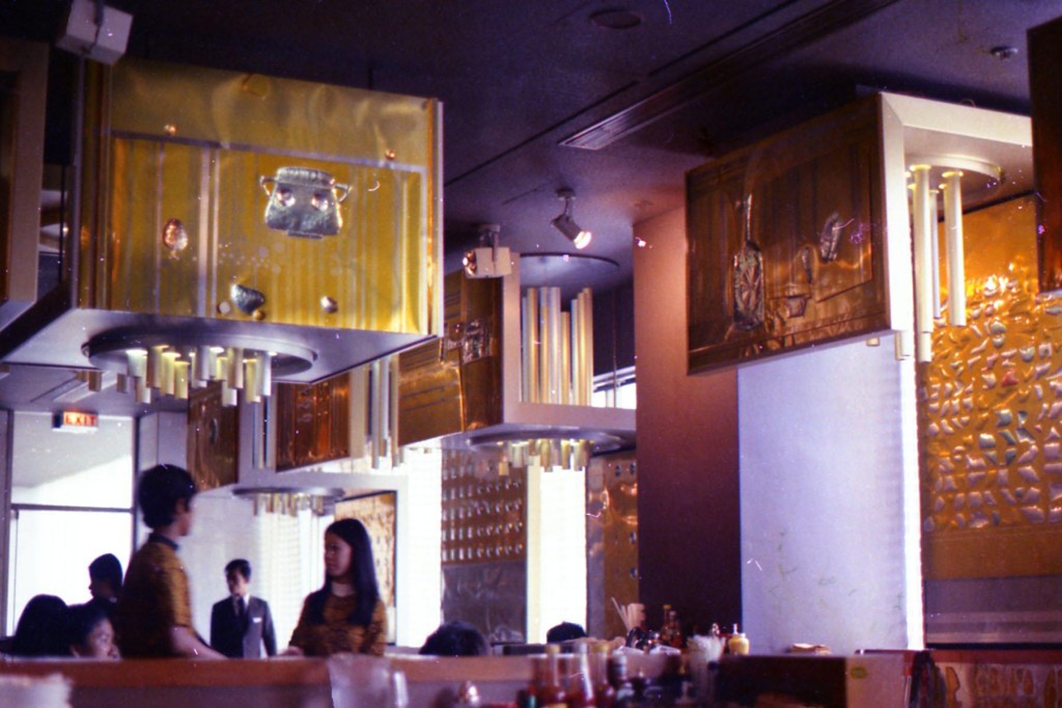
Photo by author, 1973
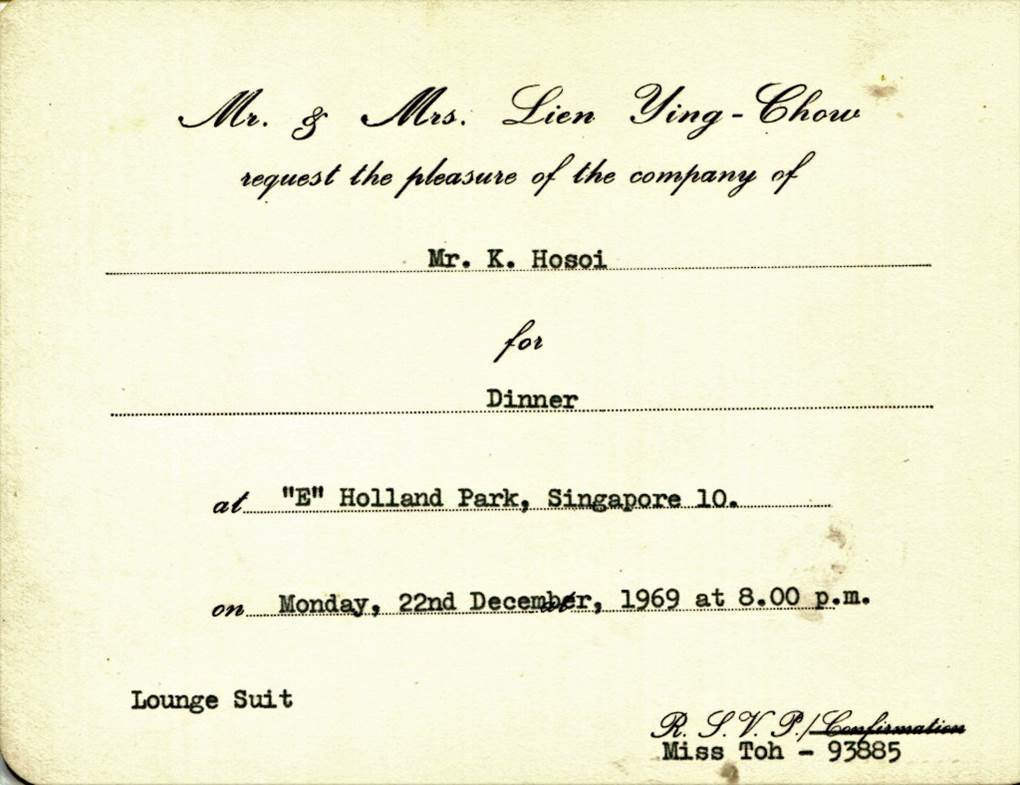
Party after the hotel opens.
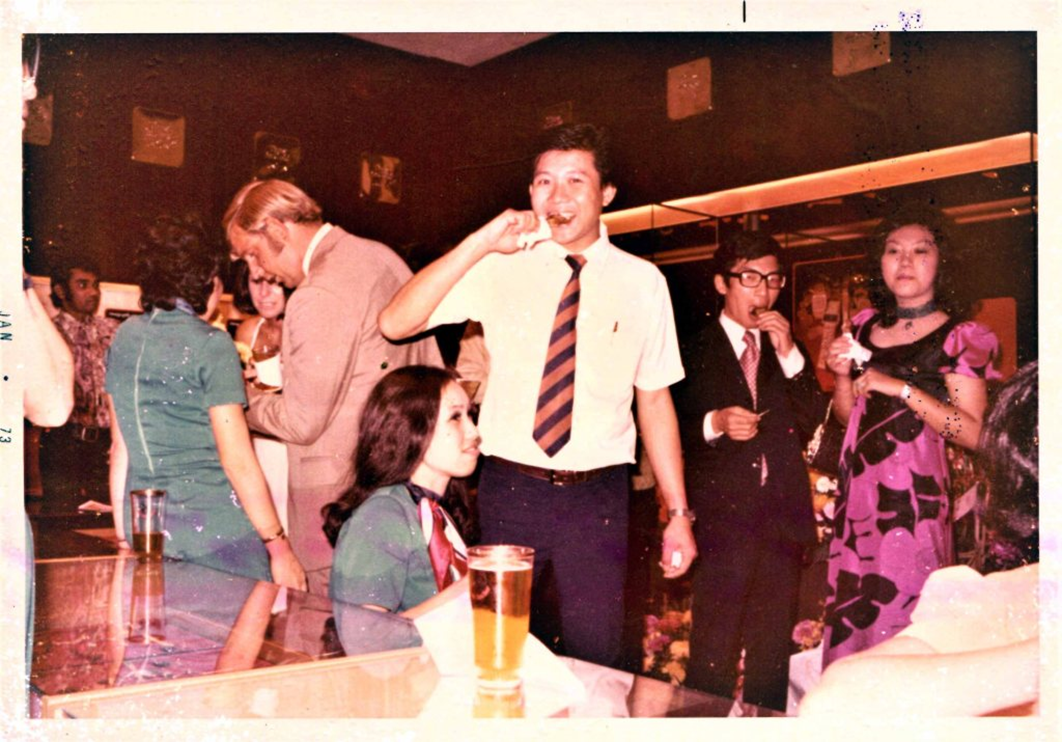
Photo by author, 1973
After the opening of the hotel, the revolving restaurant on the 36th floor is under preparation for opening.
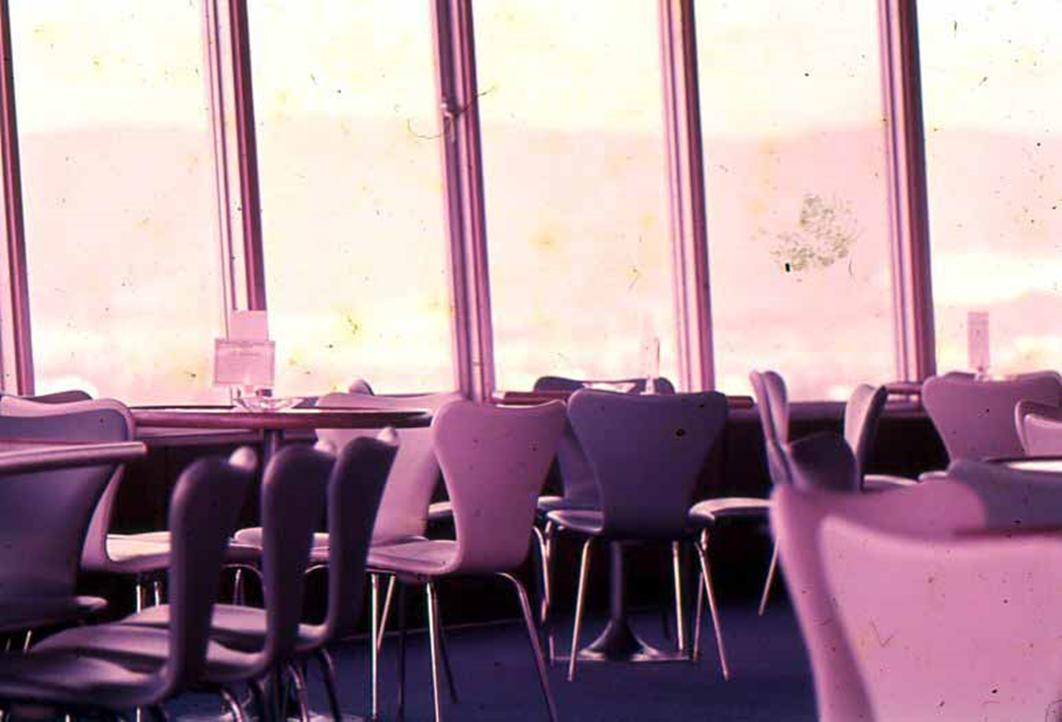
Photo by author, 1973
Orchard Road in 1972, just after the opening of the Mandarin Hotel.
All the low-rise buildings on both sides of the road in this photo were demolished due to redevelopment.
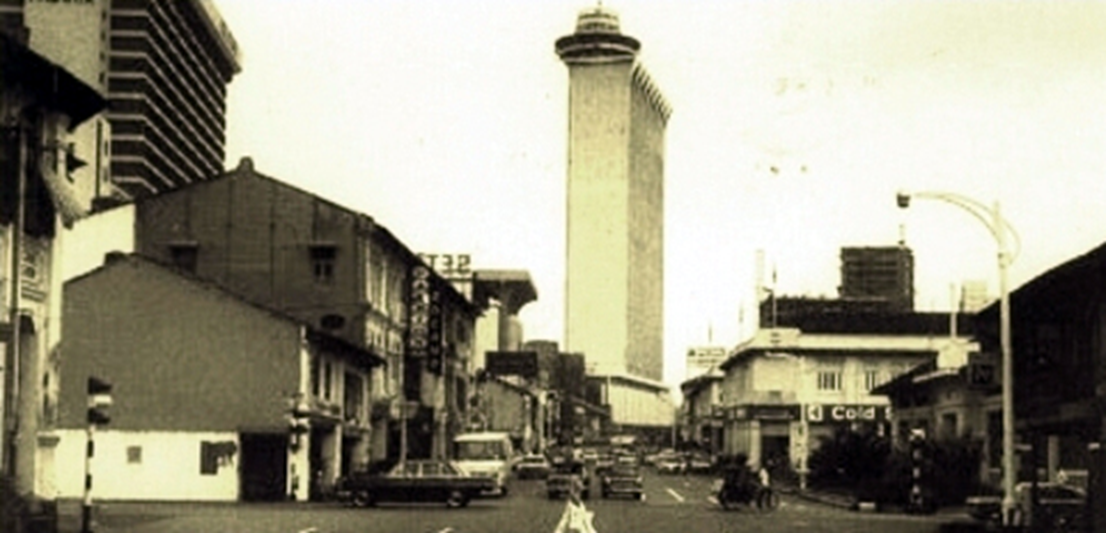
Photo by author, 1973
Orchard area in 1972. Asbestos roofs can be seen on the side streets.
The one-story building was a food market, of course, there was no air conditioning, and it was a hot and humid place with a strange smell.
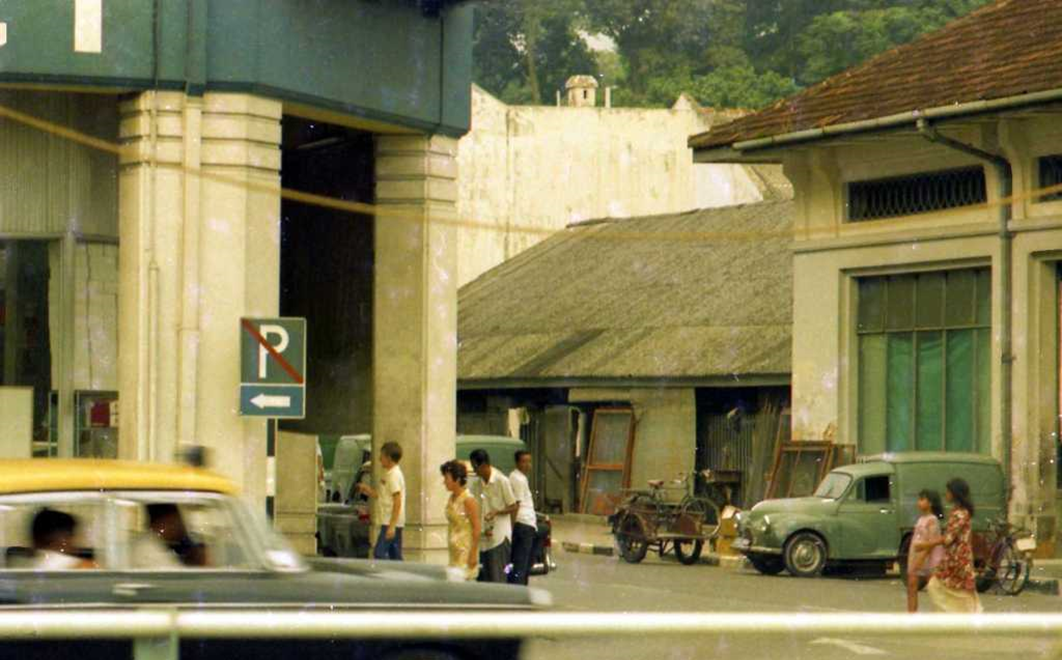
Photo by author, 1973
Looking towards the Orchard area from the OCBC Centre under construction in downtown Singapore. Buildings are being erected, but the ridge of Bukit Timah Hill is still clearly visible in the background.
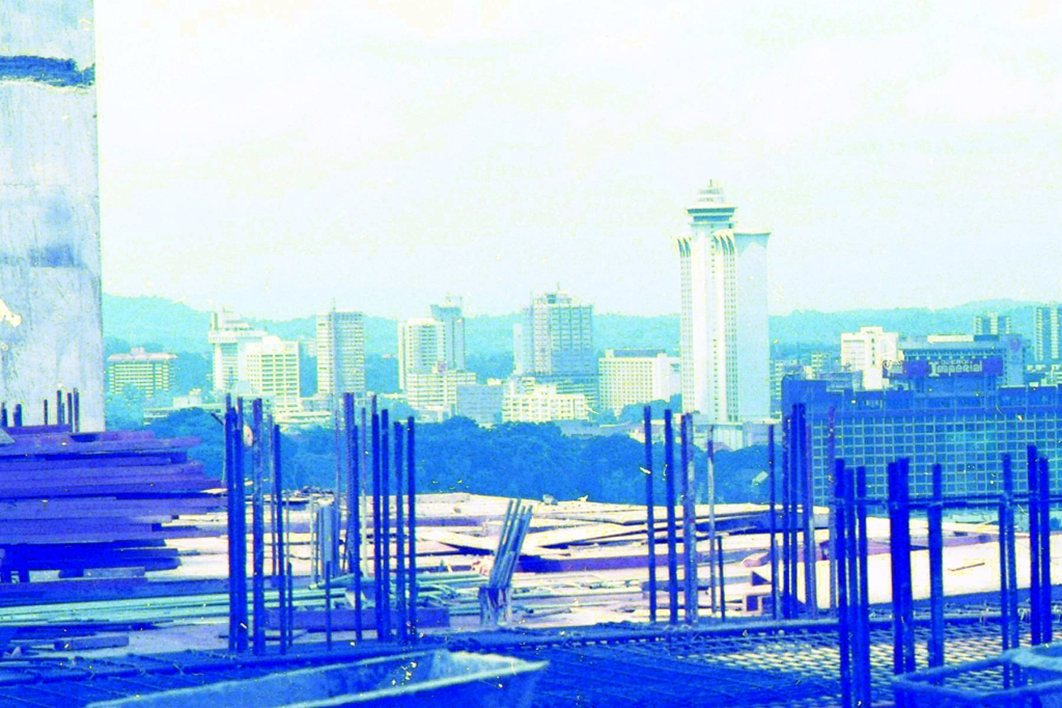
Photo by author, 1973