JAP | ENG
KYOTO December 1968
(Showa 43)
Urashima Taro
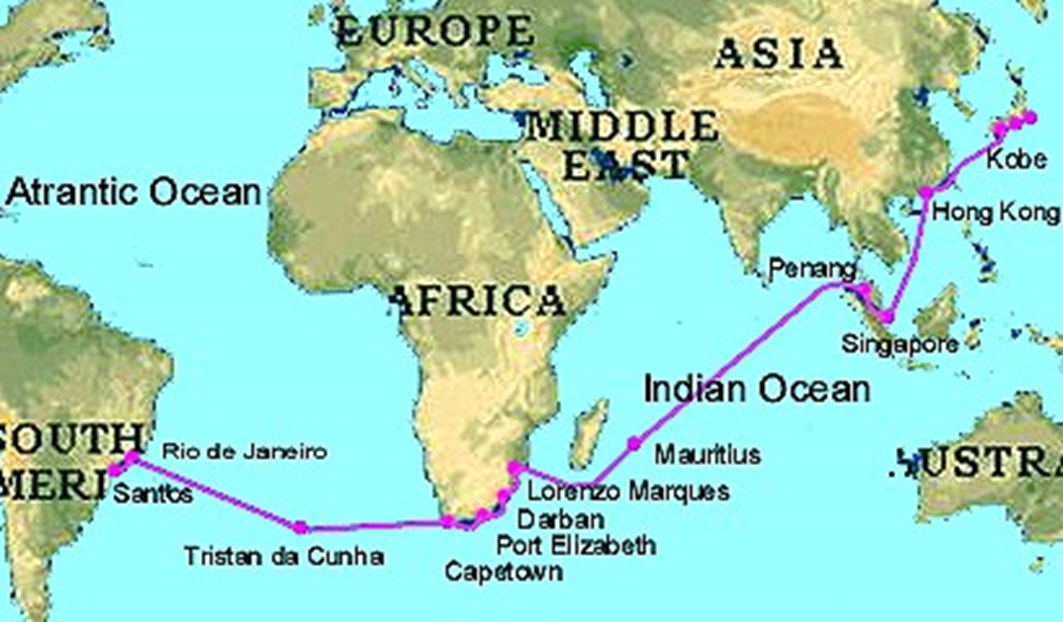
After six years away from Japan, being based in São Paulo, Brazil, for work and inland travel, and traveling to 15 countries in Europe for four months, I return to Japan in November 1968.
In the four years after the Olympics and Tokyo had undergone a remarkable transformation, and it was as if this was the not the Japan I had known. In the meantime, there was no need to wait to get a job and make a living as a member of society. Many of the familiar townscapes of Tokyo have been lost, and the tempo of the activities around me is dizzying, and I felt restless.
The healing power of Kyoto
That’s right, let’s go to Kyoto! Convinced that there was a “real Japan” that would never change, I decided to go to Kyoto with my acquaintances and became the first few to ride the Tokaido Shinkansen.
Kyoto is a different world
In December 1968 (Showa 43), Kyoto City Sanjo Street, a scene near Keage. In Tokyo, trams were almost completely abolished, but the Kyoto trams was still in operation for more than 80 years until it was abolished in 1978. It was an unchanging scene in Japan that I knew.
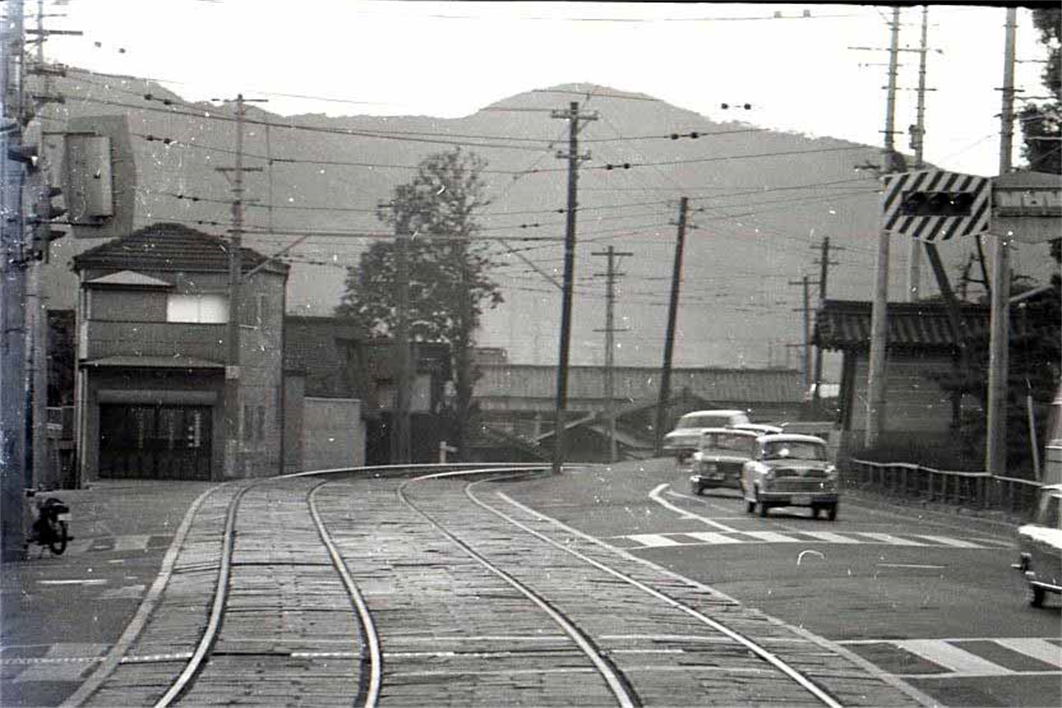
Sanjo Street, Kyoto, December 1968 Photo by the author
Women wearing crisp uniforms guiding a group of travellers.
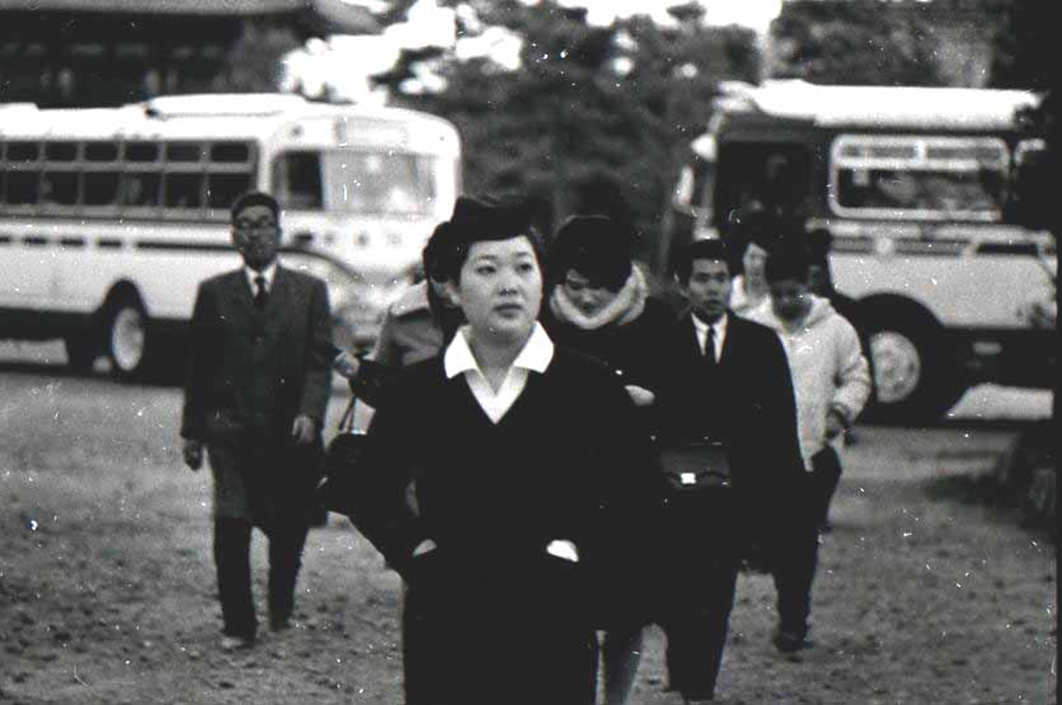
Photo by author, Dec 1968
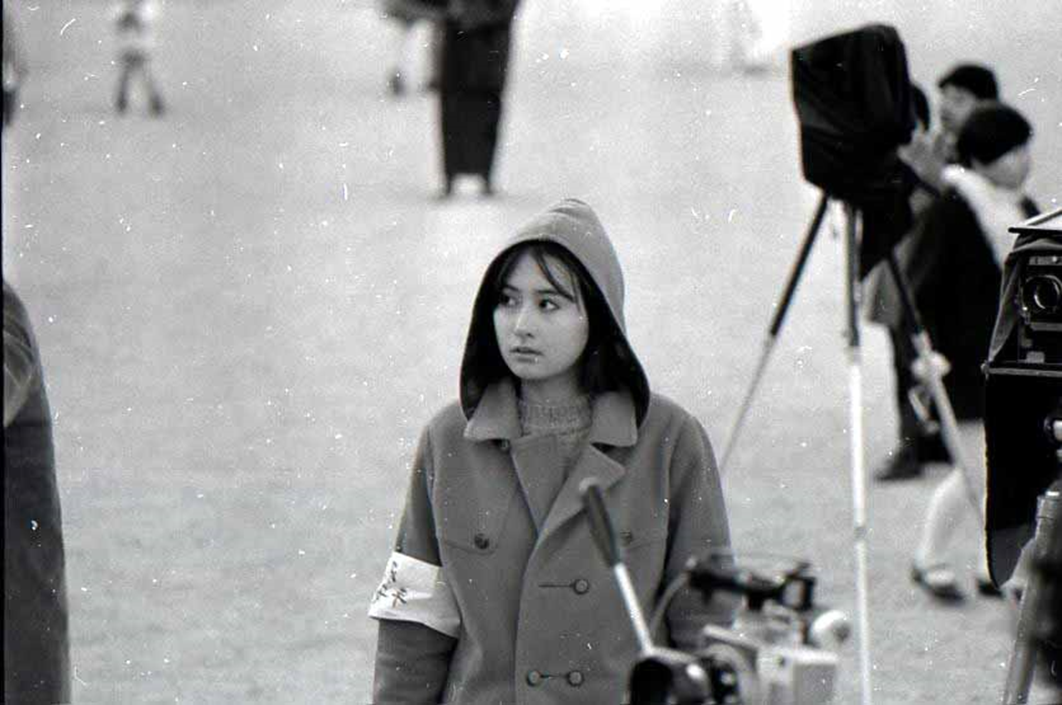
Photo by author, Dec 1968
My travel companion, Mr. M (pictured below, left), is one of my best friends living in Brazil. He is an expatriate of Toho Film Company on a business trip to São Paulo. The films “Rashomon,” “Seven Samurai,” “The Bouncer” and “Heaven and Hell,” which were distributed in Brazil, received rave reviews from artists and intellectuals in São Paulo.
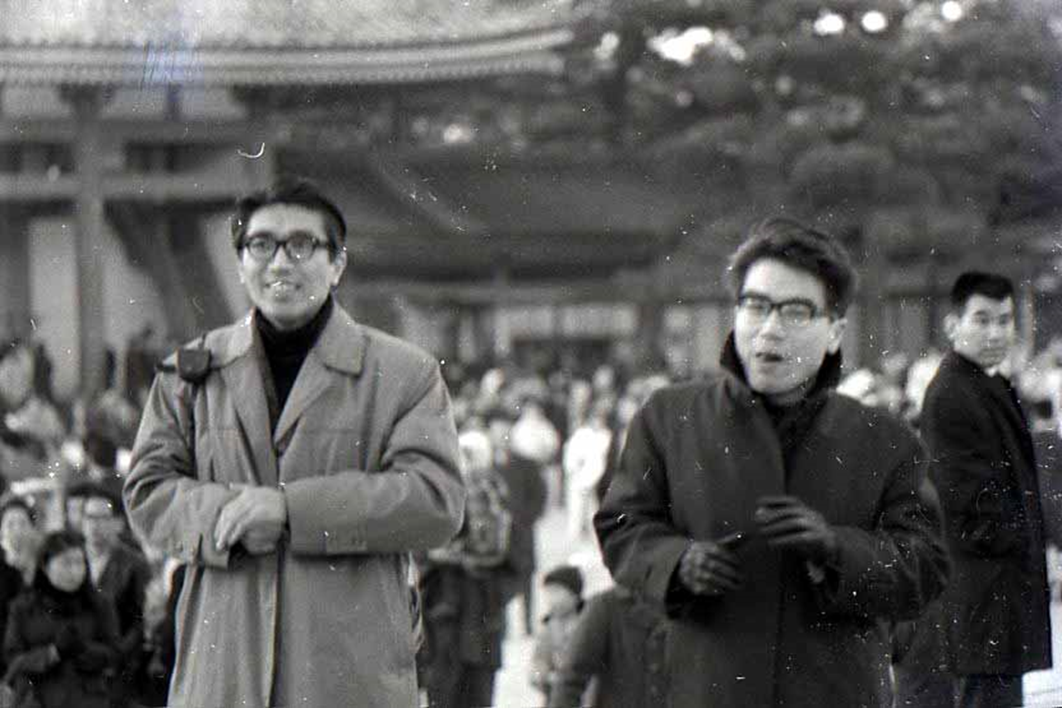
Mr M (left), Photo by author, Dec 1968
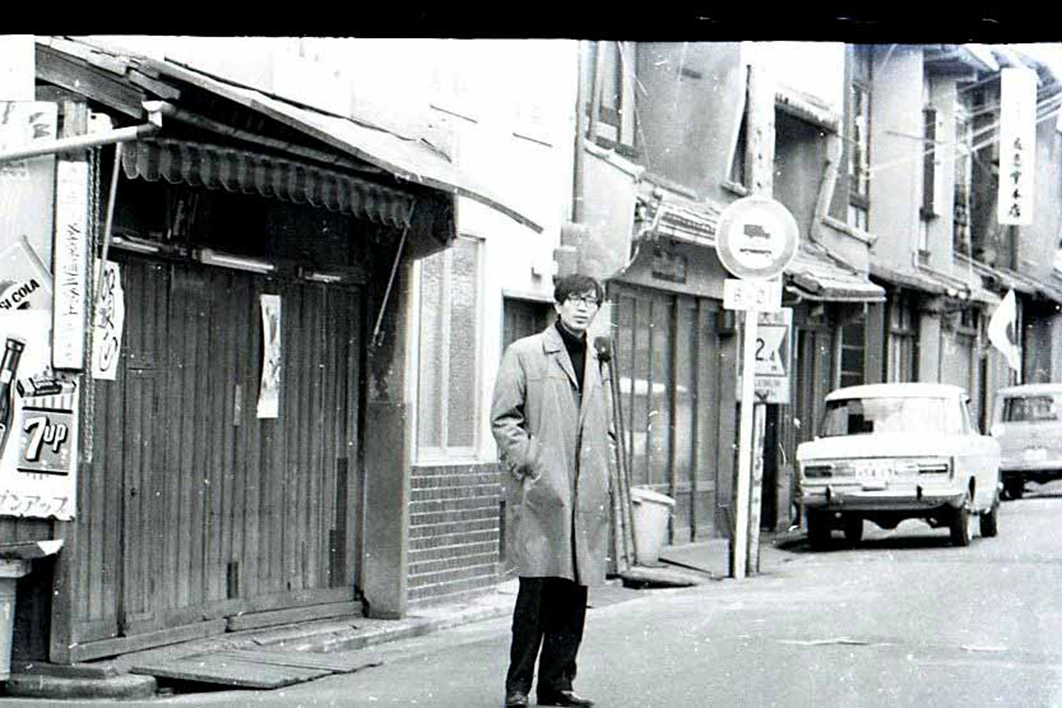
Photo of author, Dec 1968
If you look again at the black-and-white collection photographs taken during this period (1968), you can see that most of them are women dressed in kimono.
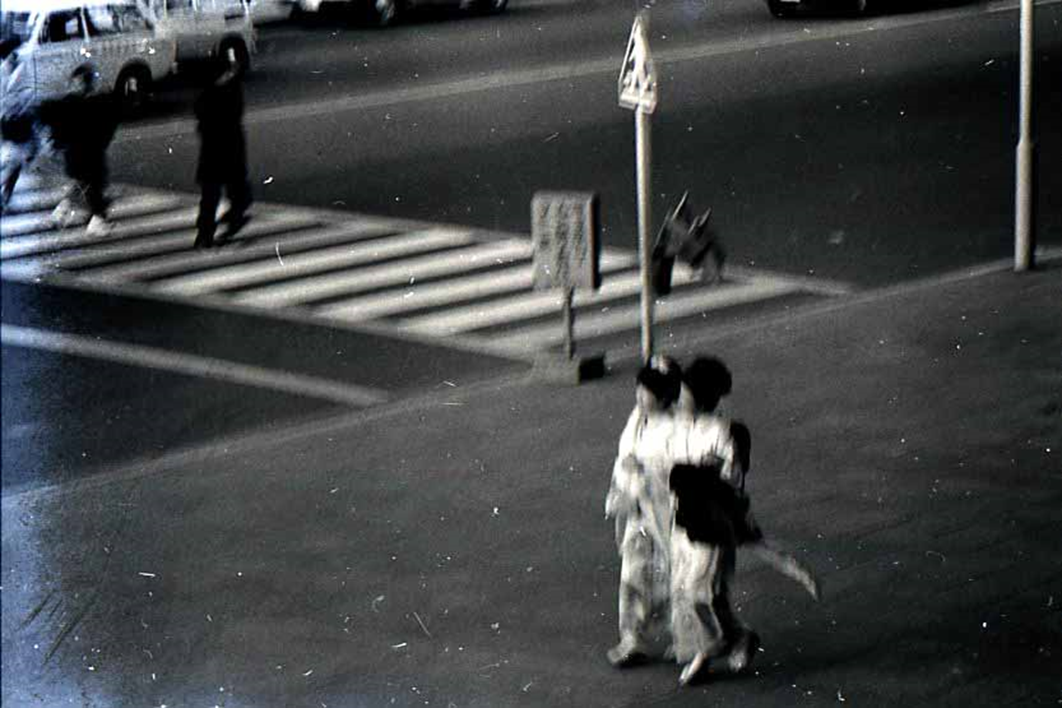
Photo by author, Dec 1968
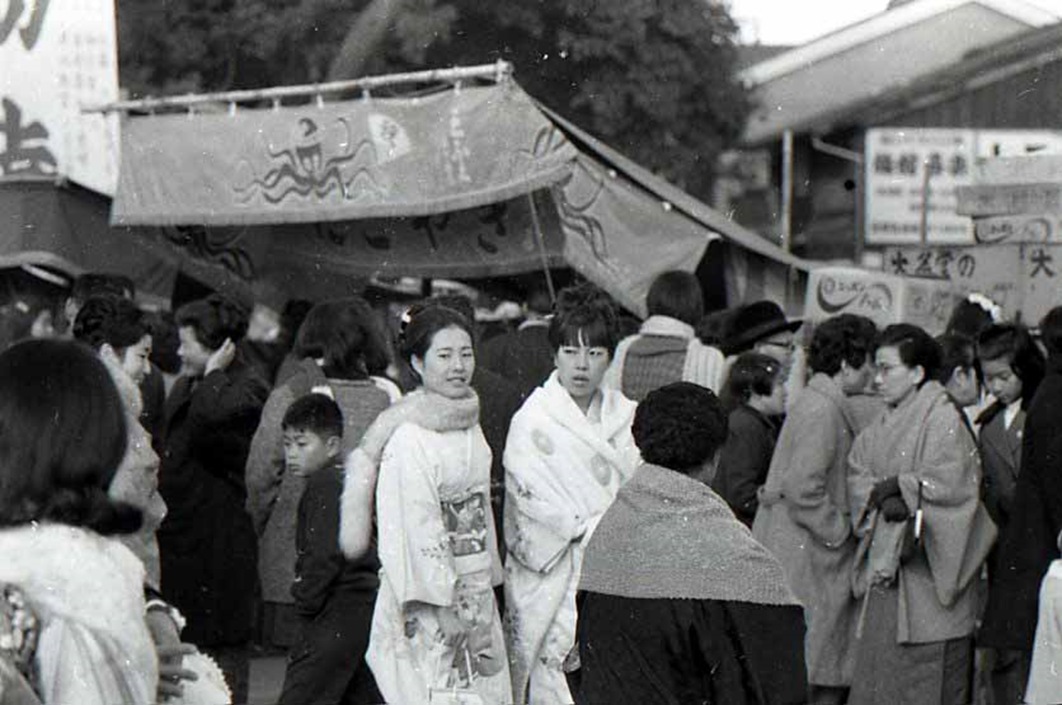
Photo by author, Dec 1968
A man smoking in a public place near a temple where a national treasure is located (photo below). At that time, there were ministers who smoked cigarettes at government cabinet meetings.
In addition, it was a time when the arm-rests of all seats on international airplanes were equipped with small stainless steel ashtrays.
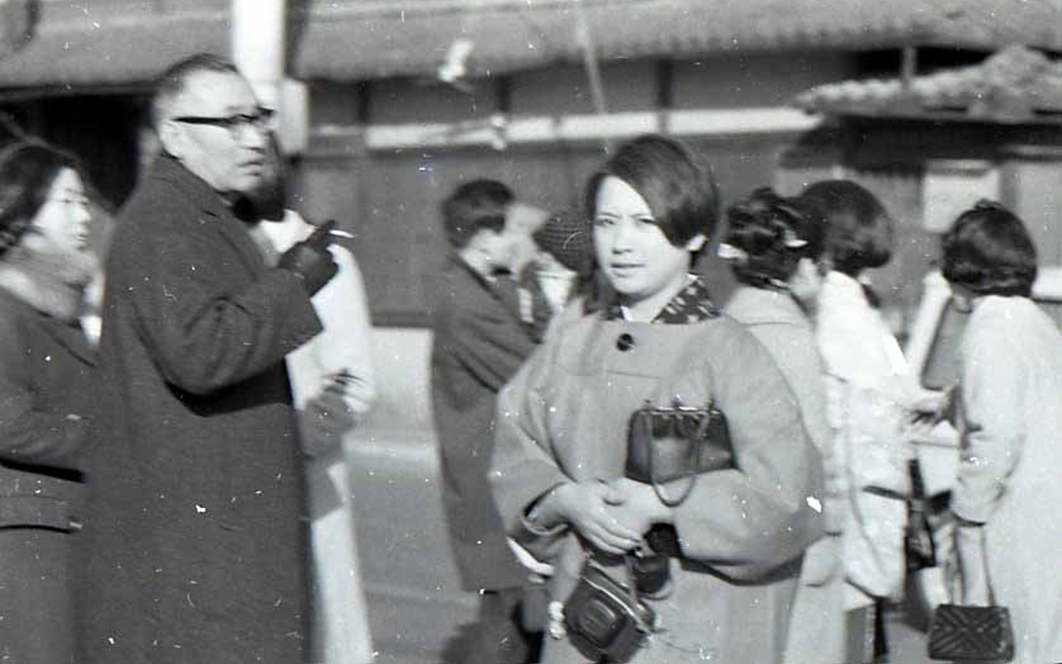
Photo by author, Dec 1968
One camera per citizen. The was an era, when cameras surpassed those of Germany and watches surpassed those of Switzerland. Japan was in the midst of a period of rapid economic growth.
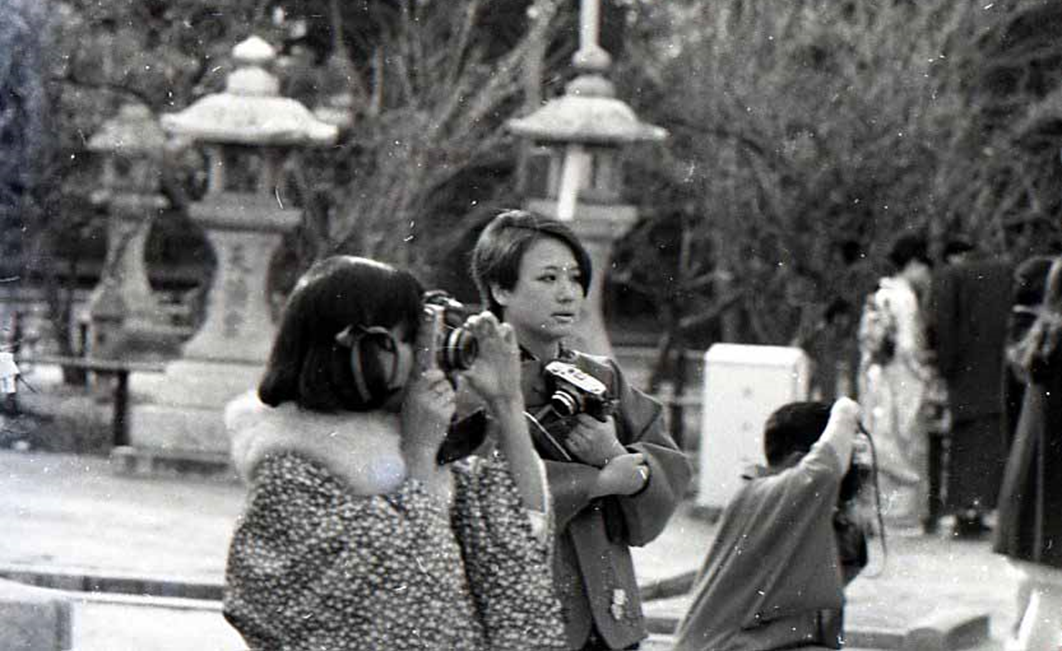
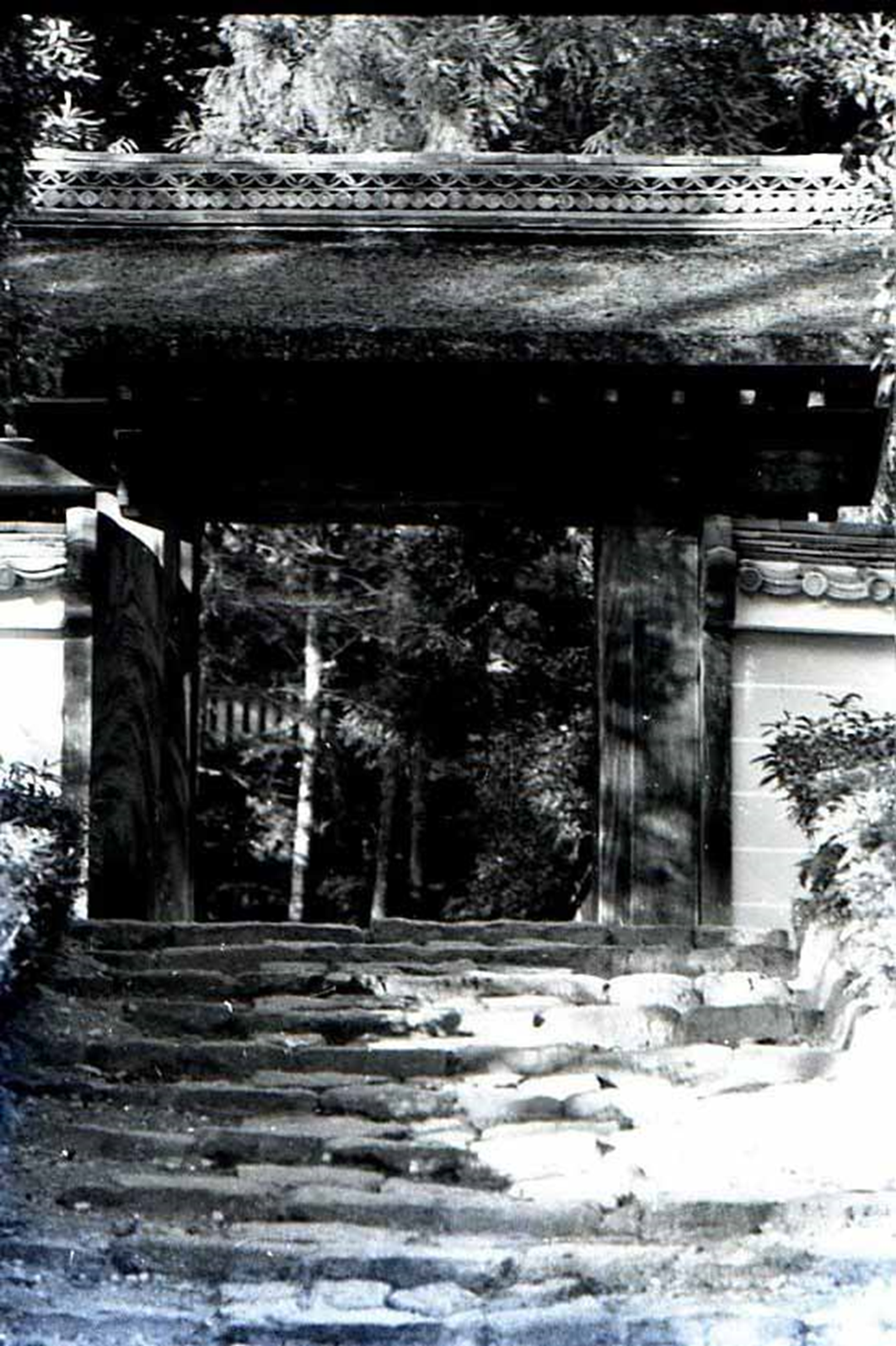
Photo by author, Dec 1968
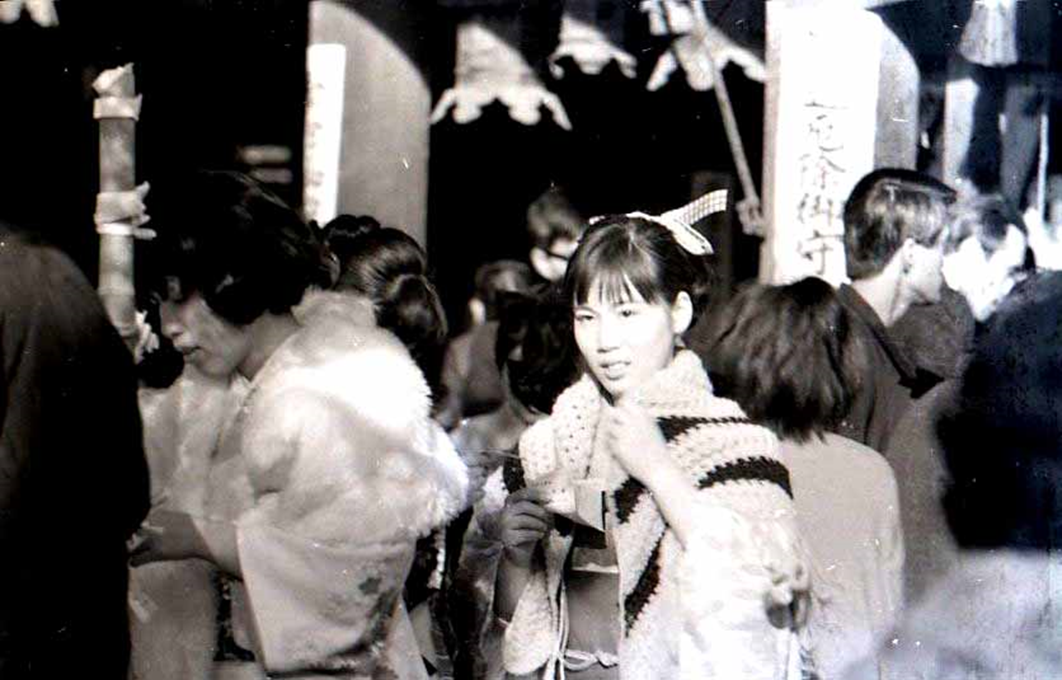
Photo by author, Dec 1968
Offering of Rice and Sake
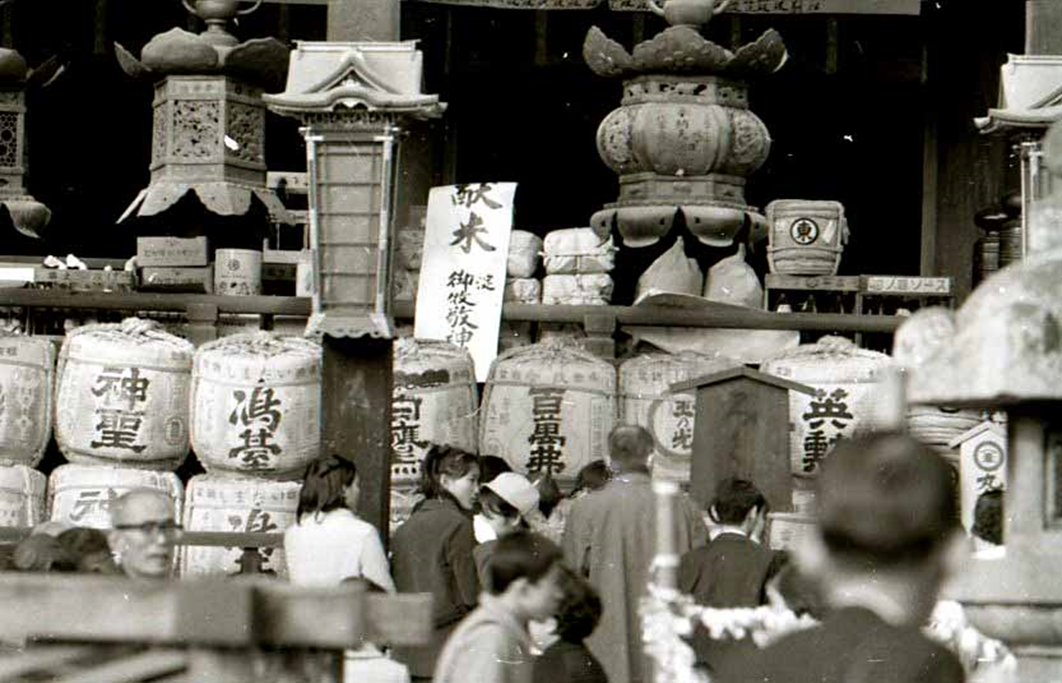
Photo by author, Dec 1968
Offering of Sake Wine
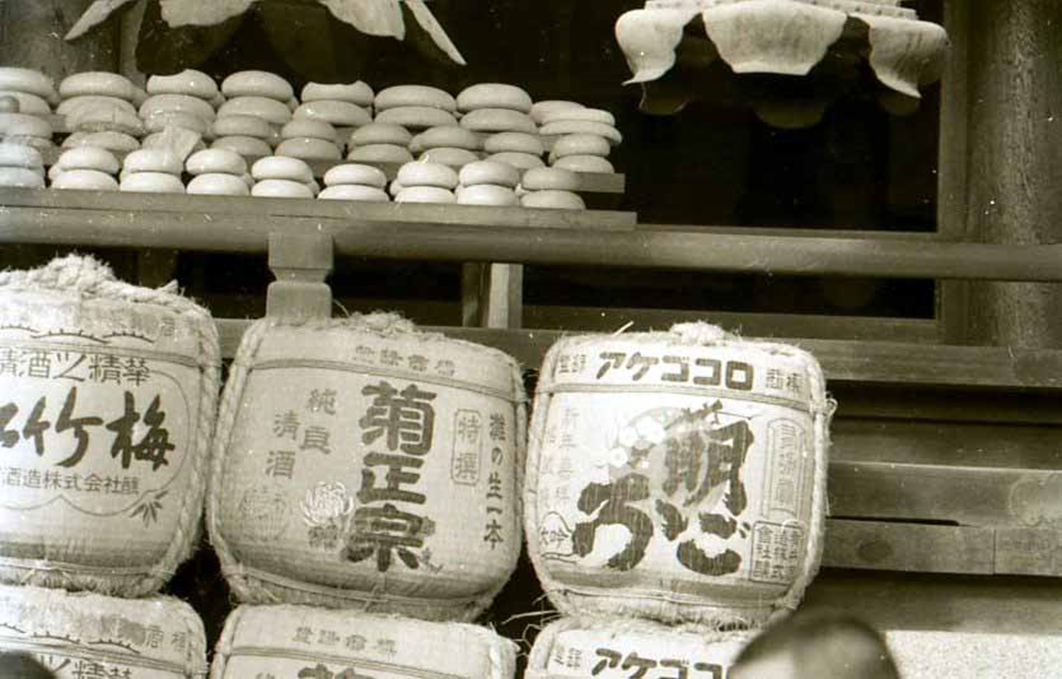
Photo by author, Dec 1968
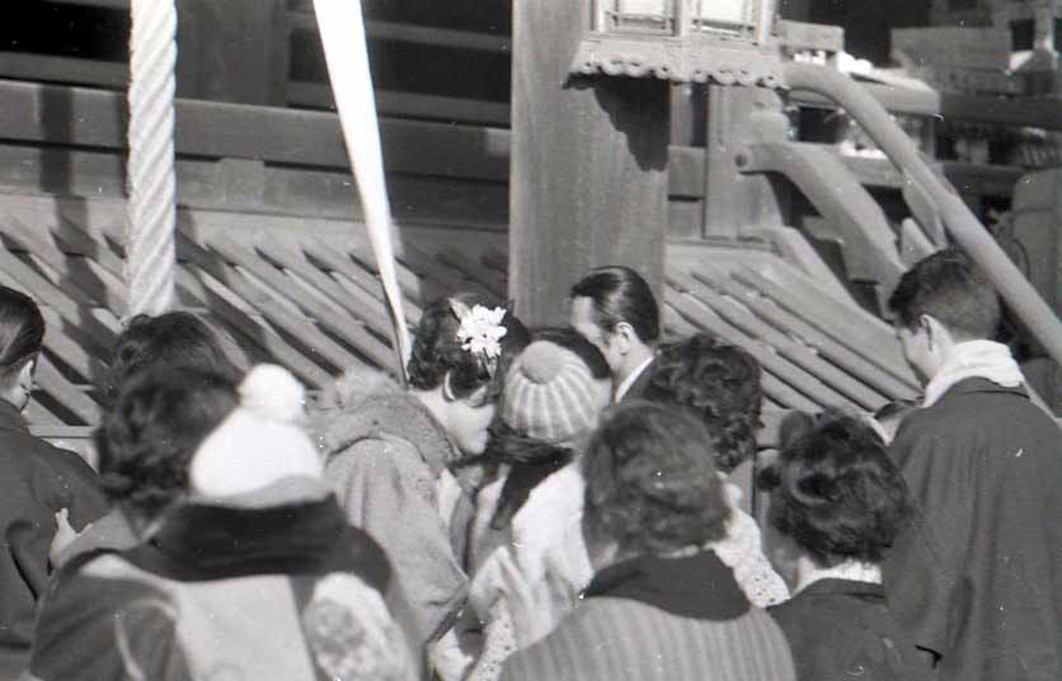
Photo by author, Dec 1968
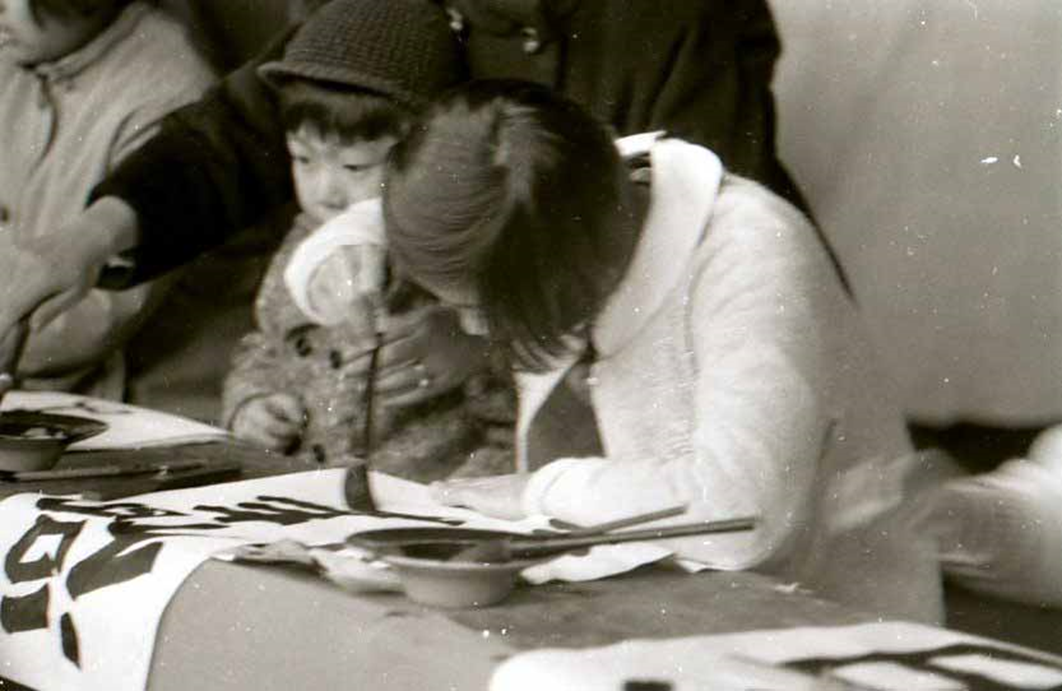
Photo by author, Dec 1968
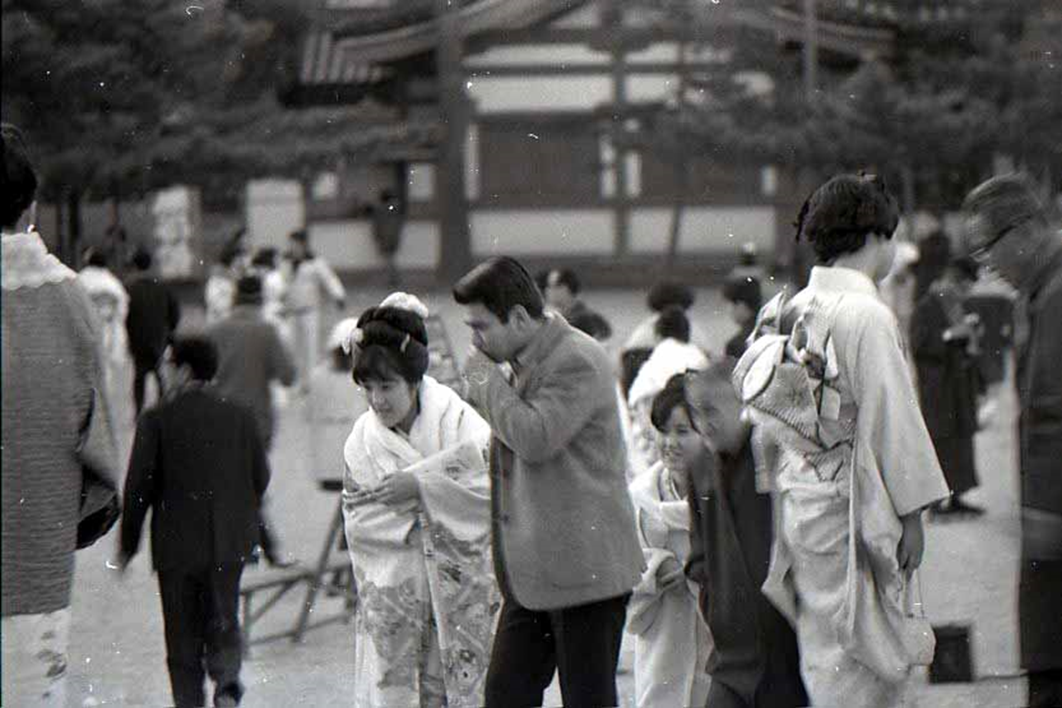
Photo by author, Dec 1968
Ryoanji Temple, founded in the Muromachi period (1450).
World Heritage Site “Cultural Properties of Ancient Kyoto”
People earnestly appreciating the dry mountain water from the edge of the temple. Overcrowded !!
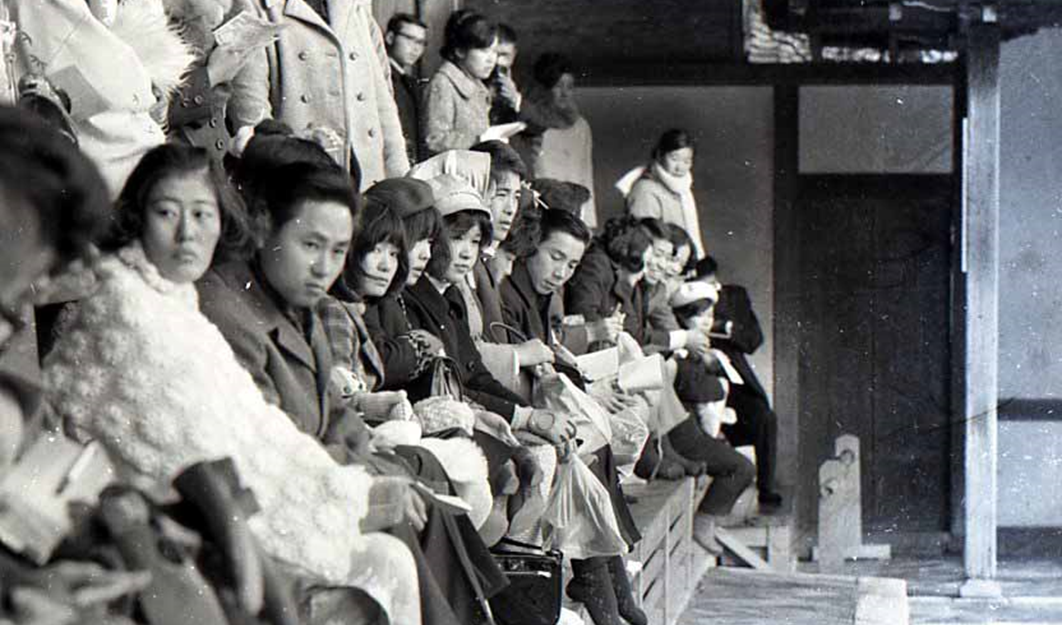
Photo by author, Dec 1968
After that, Ryoanji Temple experienced several fires. However, after overcoming these difficulties, in 1954 the Hojo Garden (rock garden) was designated as a special scenic spot of the country.
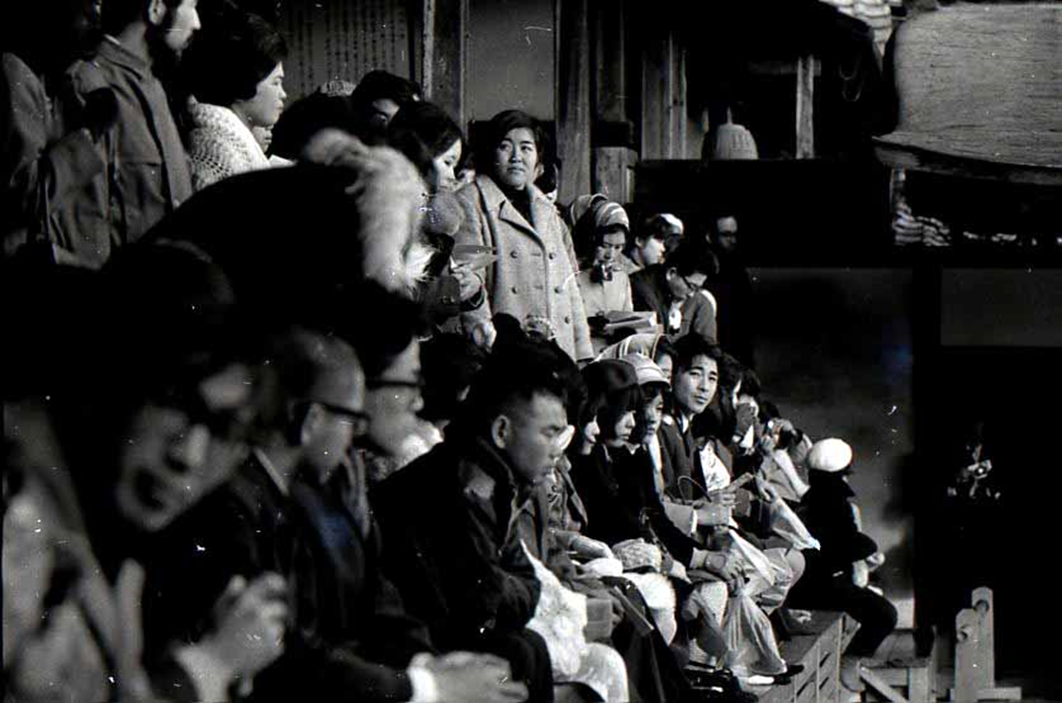
Photo by author, Dec 1968
Ryoanji Gardens
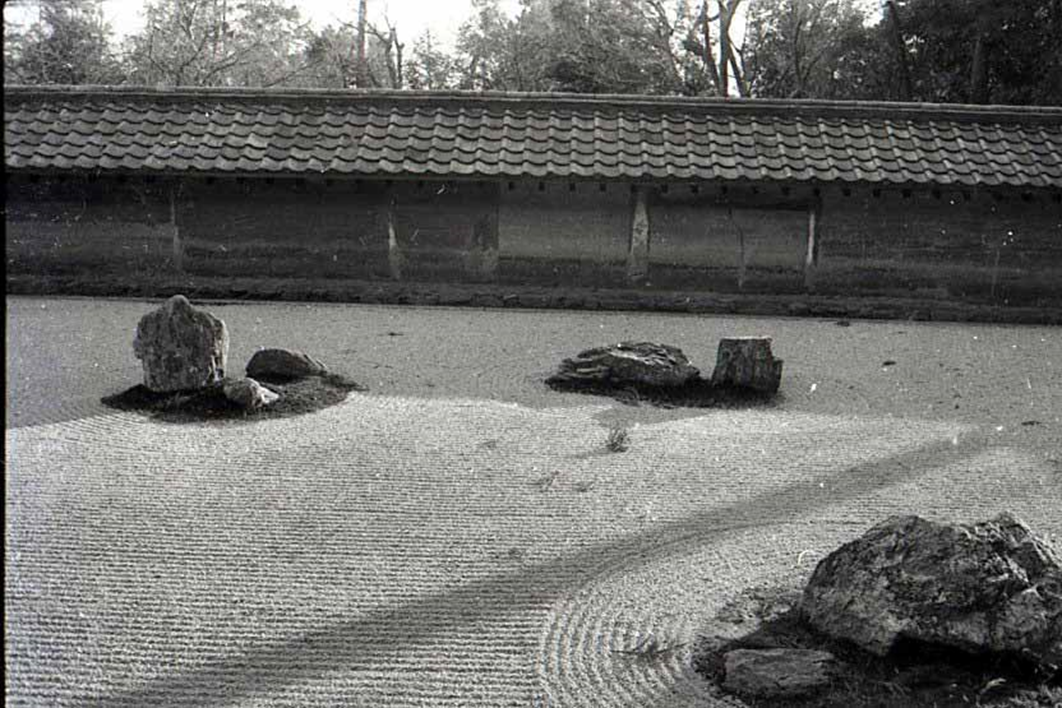
Photo by author, Dec 1968
UNESCO Intangible Cultural Heritage Registered in 1994
In 1994, the entire stone garden and the precincts of Ryoanji Temple were registered as World Heritage Sites as “Cultural Properties of Ancient Kyoto”.
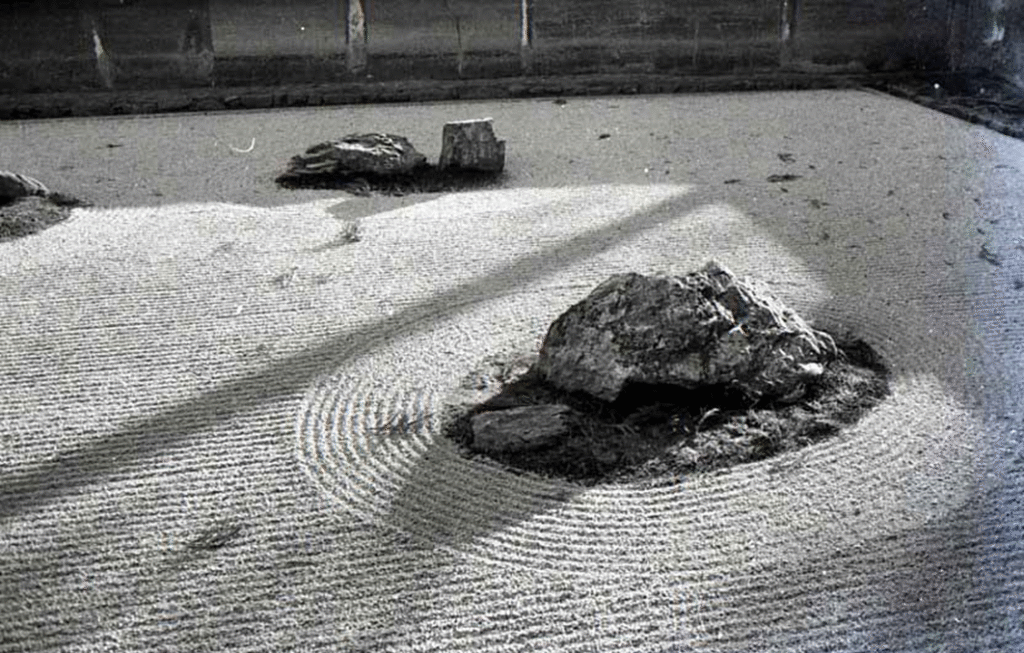
Photo by author, Dec 1968
Ten years ago, as part of my studies as a student in the Department of Architecture, I visited here with a reservation from the university in advance.
I clearly felt the difference between it and the Western garden.
Five years later, in 1975, Queen Elizabeth II of the United Kingdom visited the rock garden of Ryoanji Temple, and it became more known abroad.
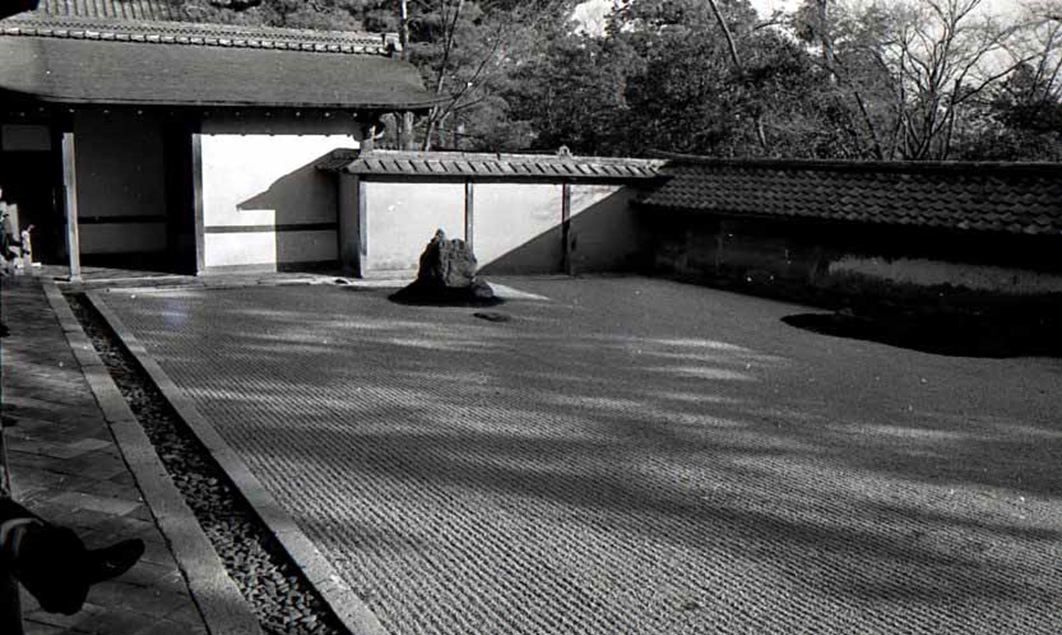
Photo by author, Dec 1968
Based on books that mentioned about the rock garden, it is estimated that the garden was created in the Edo period, 1619~1680.
In addition, since Western methods such as perspective and the golden ratio are used, it is speculated that the garden designer was Kobori Enshu, who was a magistrate of the Edo shogunate and was also known as a tea master.
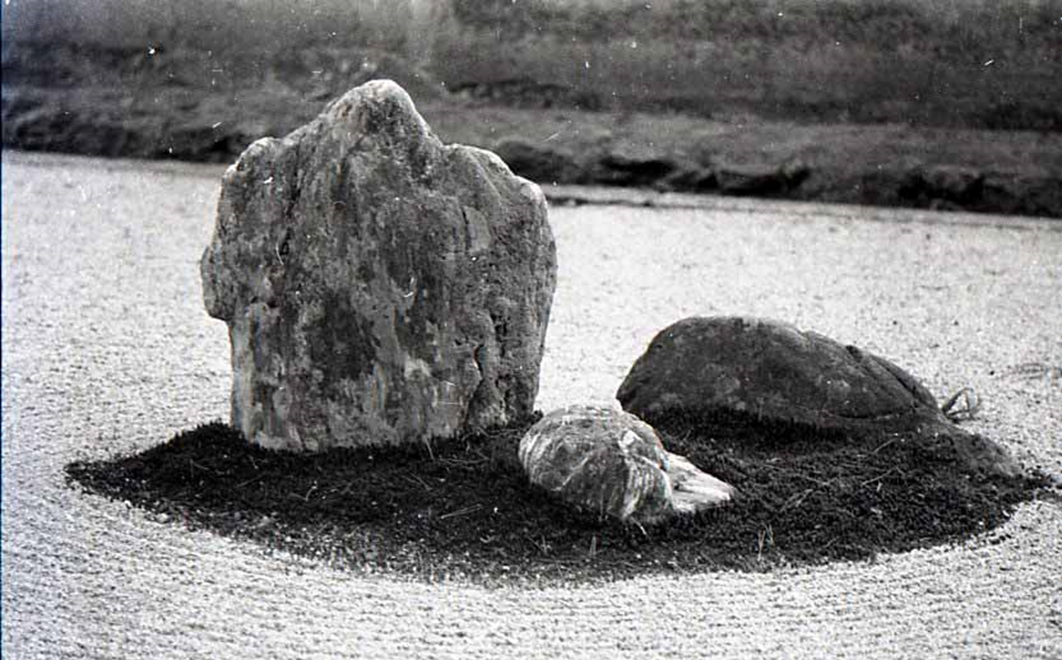
Photo by author, Dec 1968
Tenryuji Temple
It is the main temple of the Tenryuji sect of the Rinzai sect, and was recognized and registered as one of the World Heritage Sites “Cultural Properties of Ancient Kyoto” in Heisei 6 (1994).
The temple was founded by Ashikaga Takashi on the site of Emperor Go-Saga’s Kameyama Hall to pray for the repose of Emperor Go-Daigo’s soul.
It was the first place in Japan to be designated as a historic site and a special scenic spot.
Tenryuji’s Kuri (Temple living quarters)
The building that can be seen at the end of the approach is a building familiar from Zen temples.
This building, which shows a beautiful triangular gable face in front, is a main symbol of Tenryuji.
There was a kitchen and administrative offices in this building.
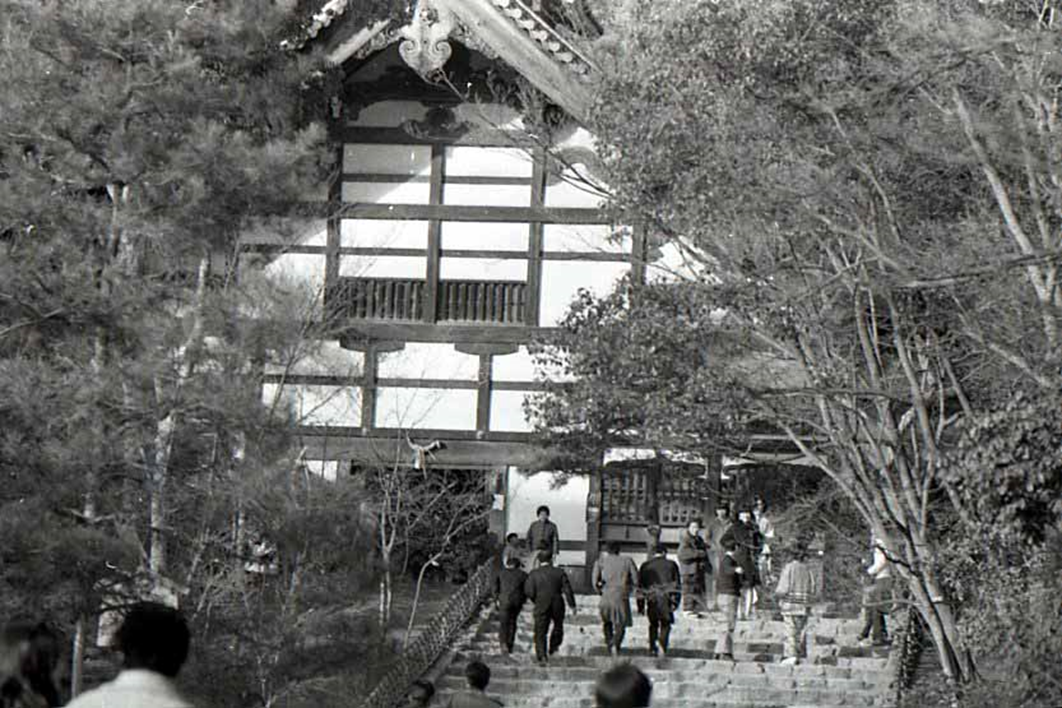
façade of the Kuri behind Tenryuji Temple
Photo by author, Dec 1968
Side of the Kuri
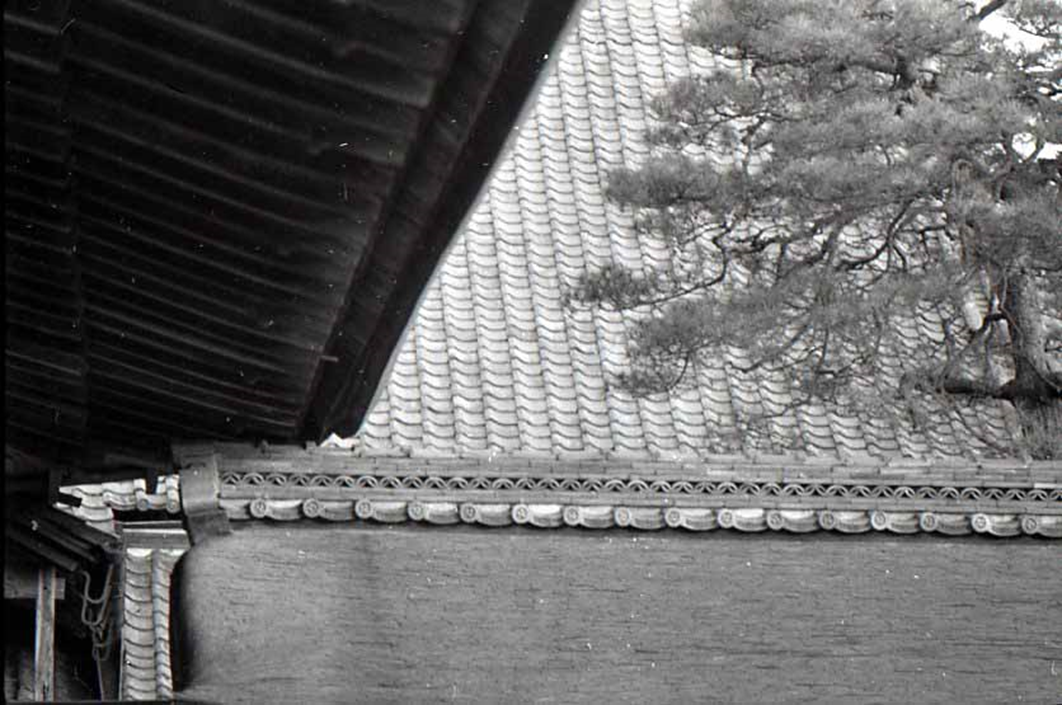
Photo by author, Dec 1968
Ventilation roof on back of the Kuri.
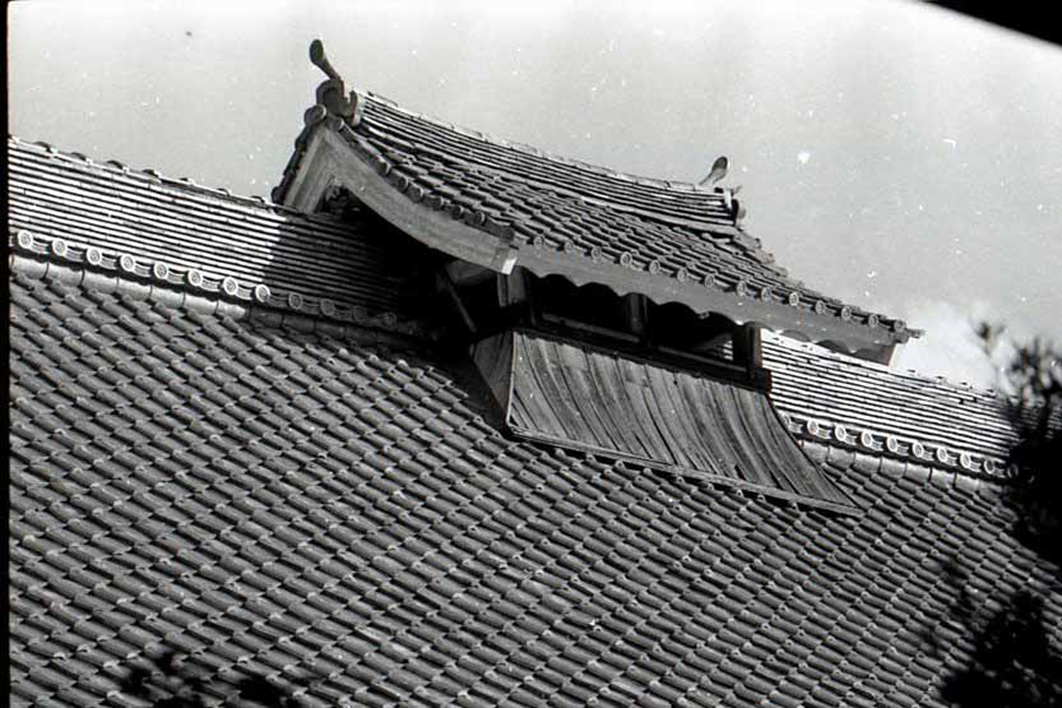
Back of the Kuri
Photo by author, Dec 1968
Photo by author, Dec 1968
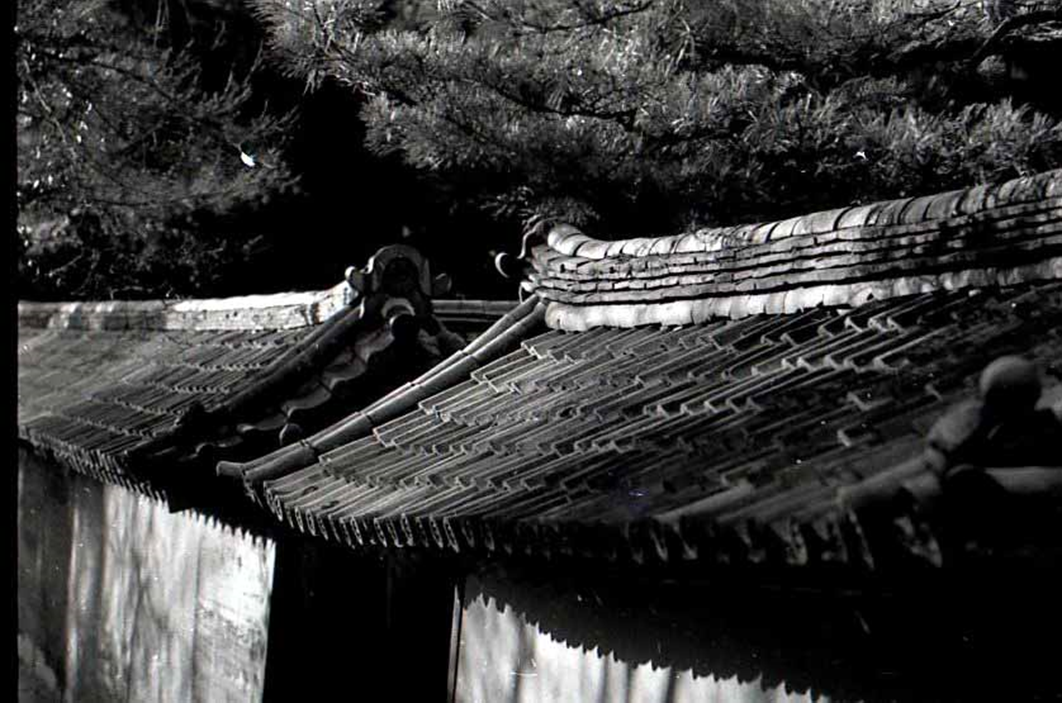
Photo by author, Dec 1968
Flower Head shaped Window
A flower head window unique to the Zen Buddhist temple of Tenryuji.
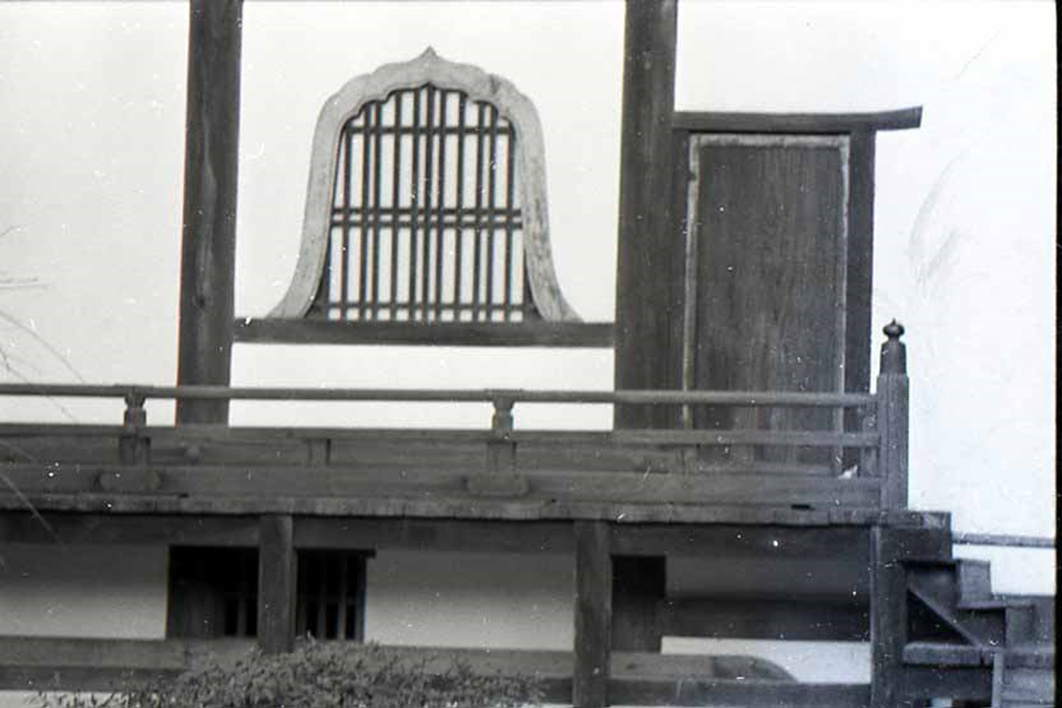
1968年12月 筆者撮影
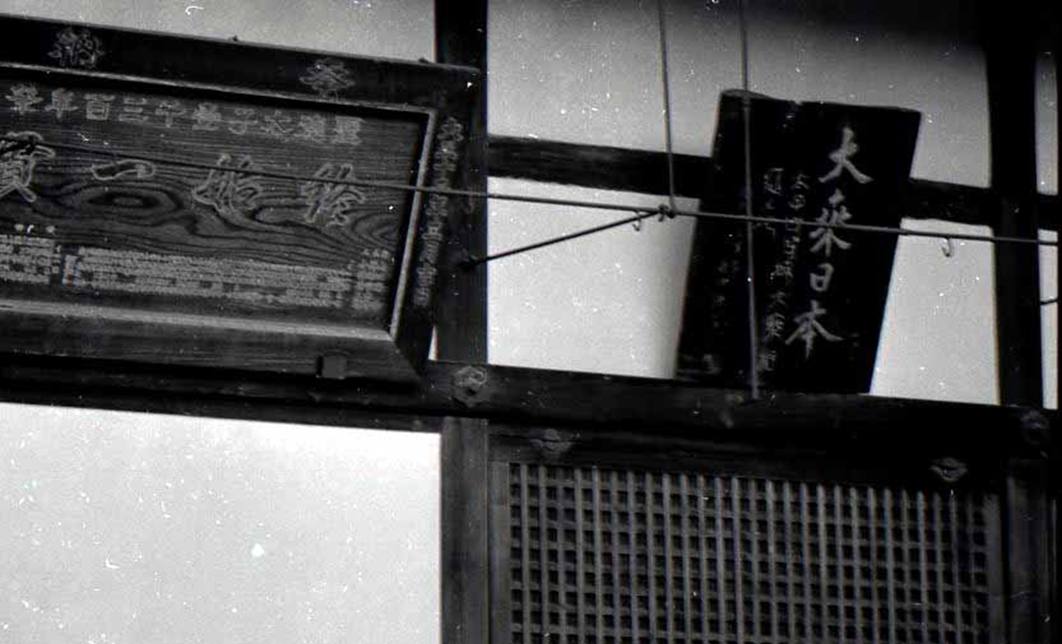
Photo by author, Dec 1968
On the way, I saw a thatched house in the style of a tea house
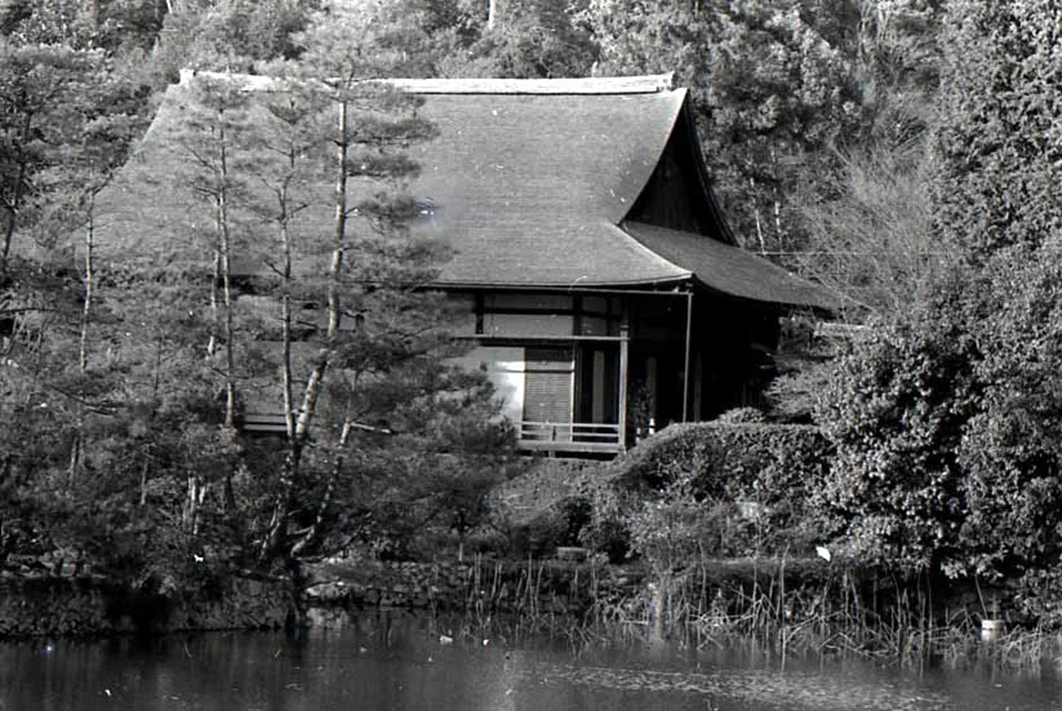
Photo by author, Dec 1968
Job hunting, interviews, and employment
After returning to Tokyo, in January 1969, I was introduced by a university professor to an interview at an architectural design firm specializing in the design of hotel architecture, and was hired.