JAP | ENG
Athens, Greece
October 2014
#2/4
The walking route from the hotel to the Acropolis Hill is only about 850m, but it will take more than 1 hour if you proceed while observing the surroundings.
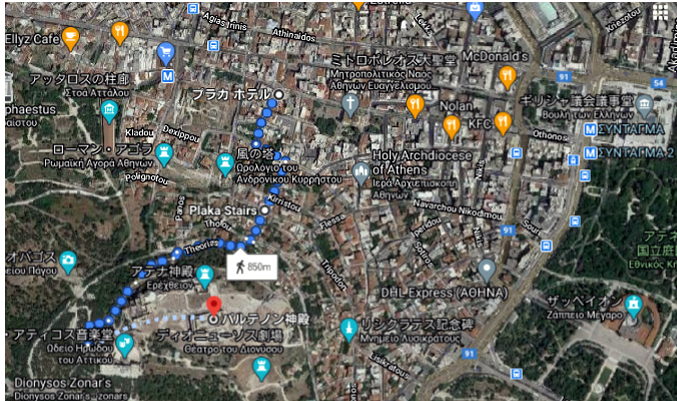
Leaving the hotel, we walked south through the quiet residential area of Plaka towards the Acropolis.
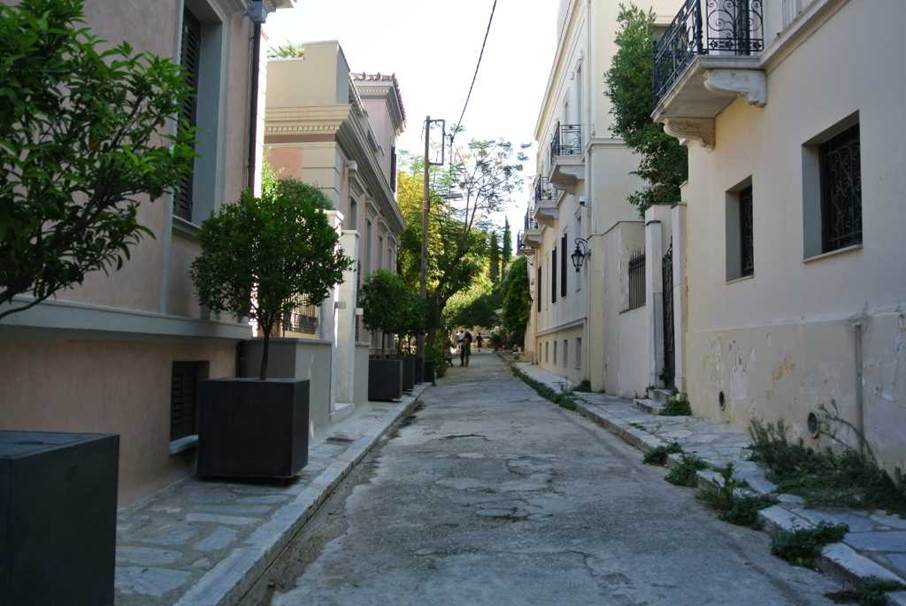
Photo by author, 2014
Along the way, the artist’s works are exhibited outdoors.
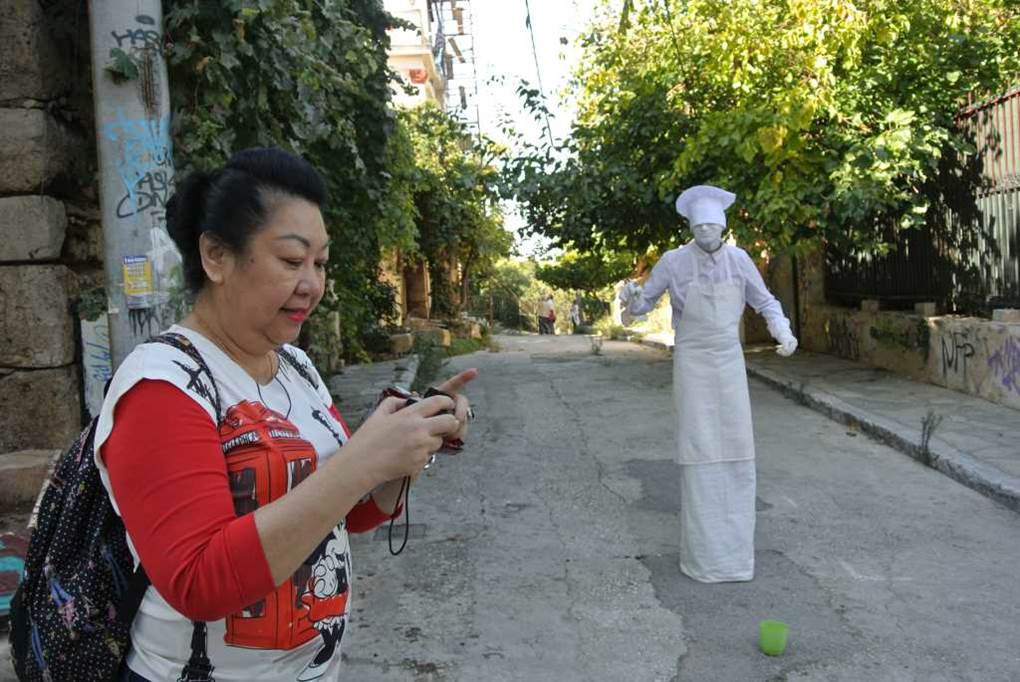
Photo by author, 2014
This is where the stairs start and you climb up.
The rock wall of the Acropolis looms on the opposite side.
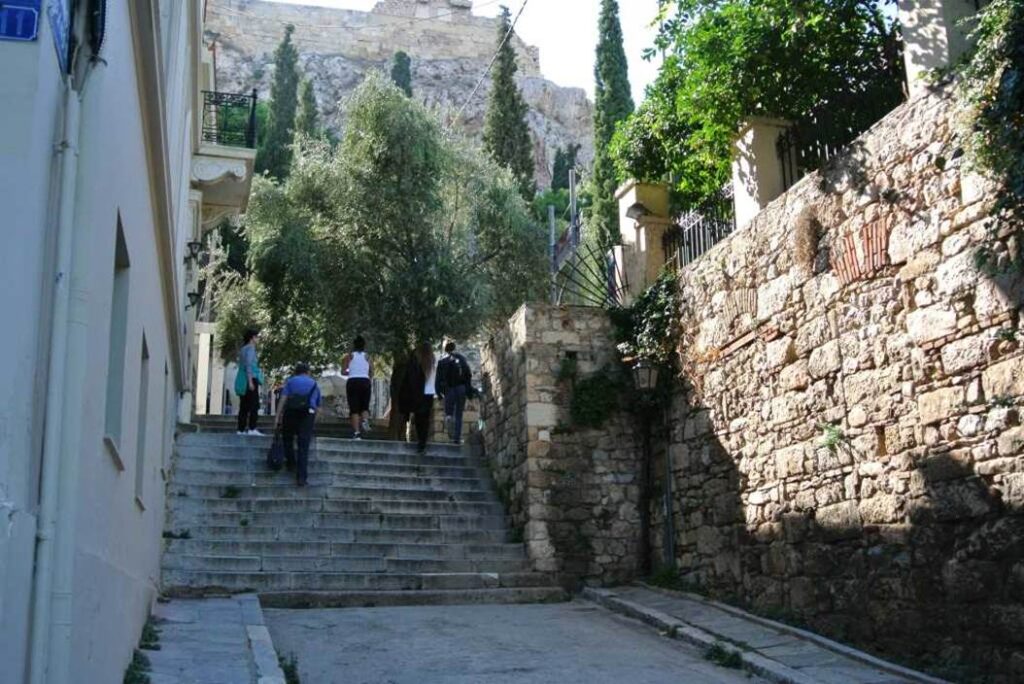
Photo by author, 2014
If you climb for a while and look back, you will be able to see the city far below through the gaps between the building.
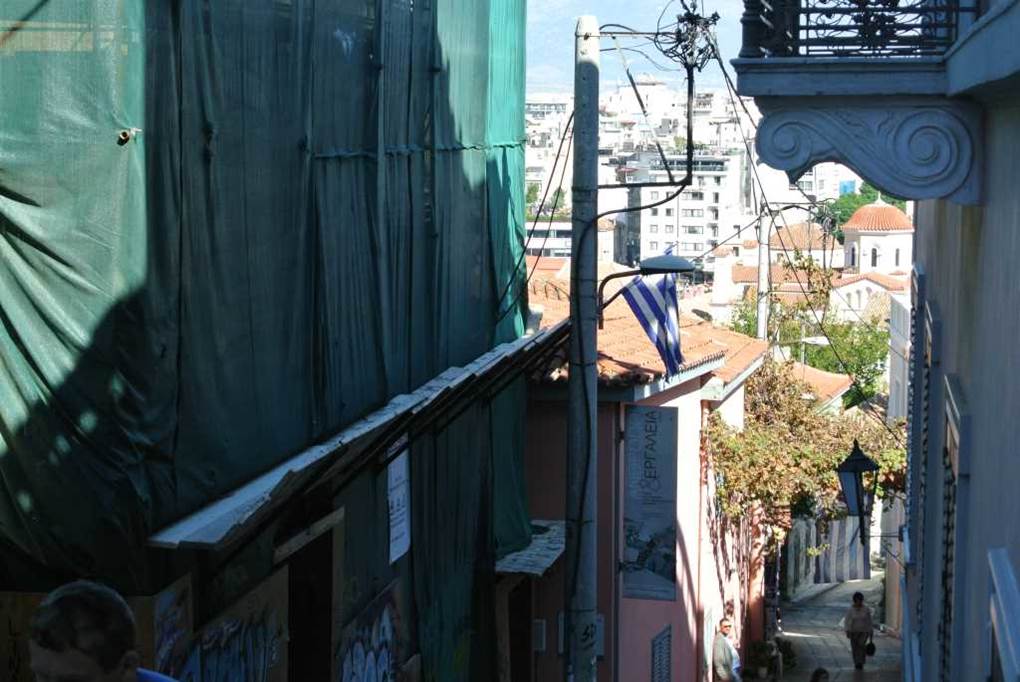
Photo by author, 2014
Walk pass the steep walls of the Acropolis and climb further up.
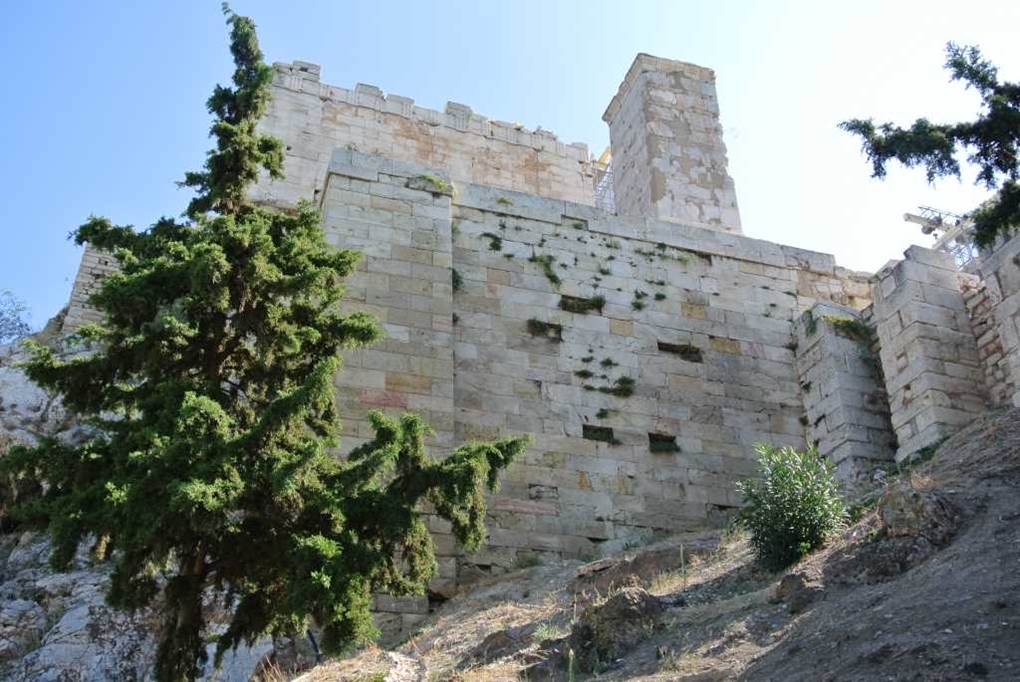
Photo by author, 2014
The balcony design is full of creative energy.
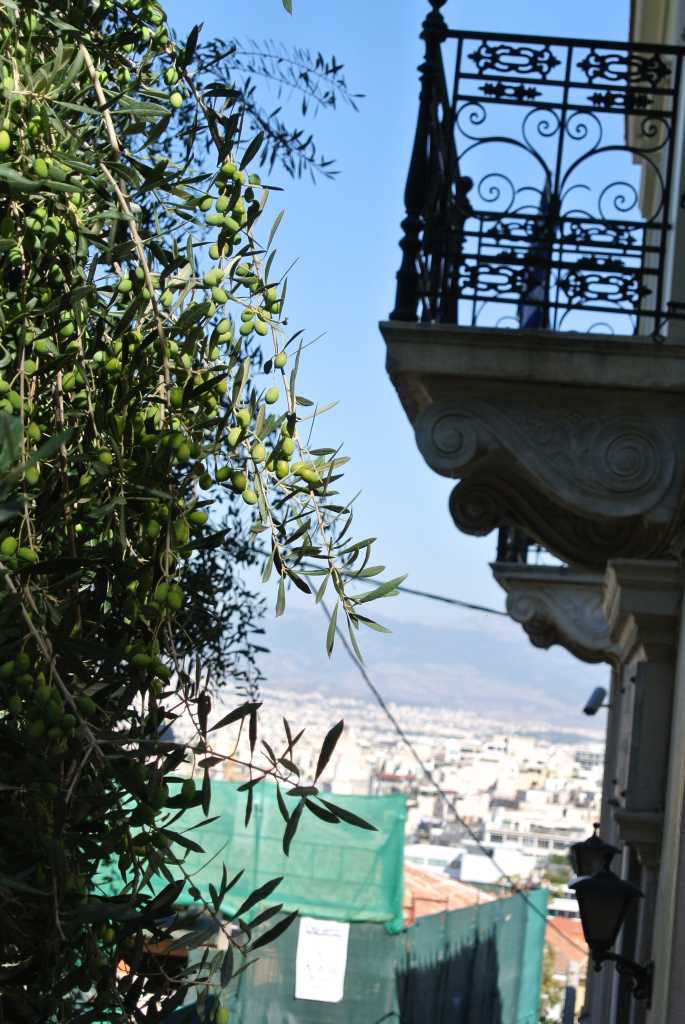
Photo by author, 2014
Church of Metamorphosis (Sotiros)
The Church of Metamorphosis (Transfiguration of Christ) Church, a Byzantine church found on the northern slope of the Acropolis.
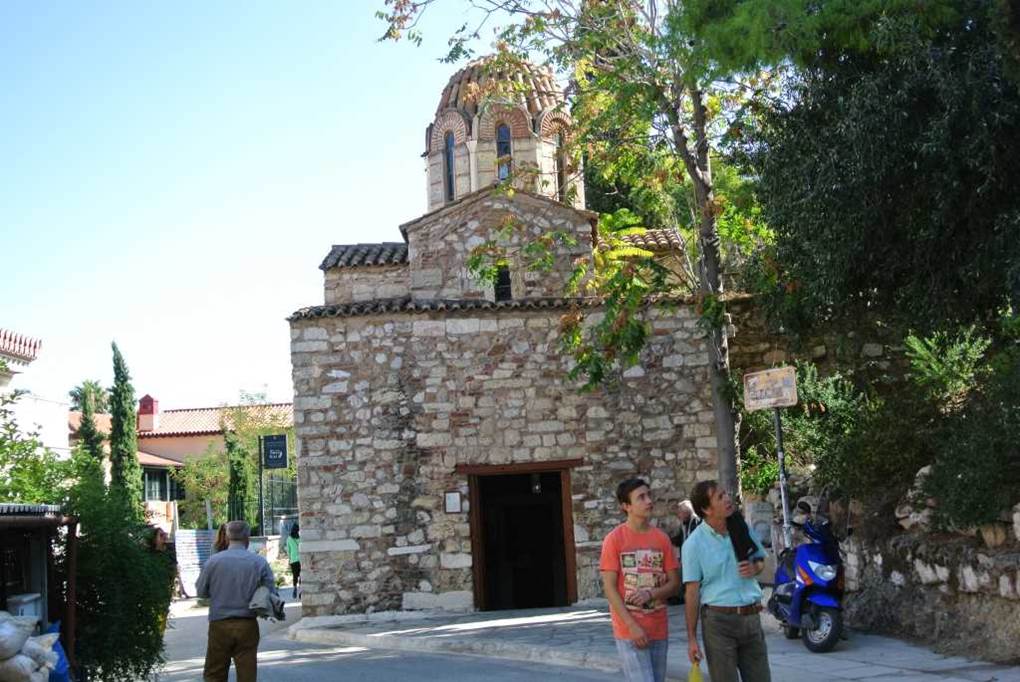
Photo by author, 2014
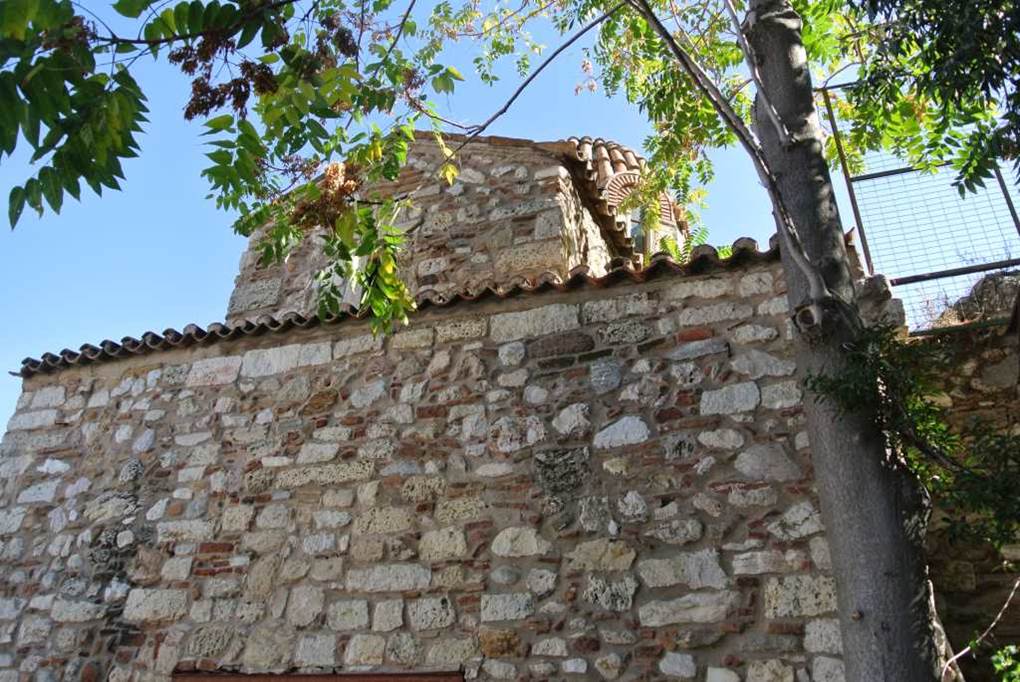
Photo by author, 2014
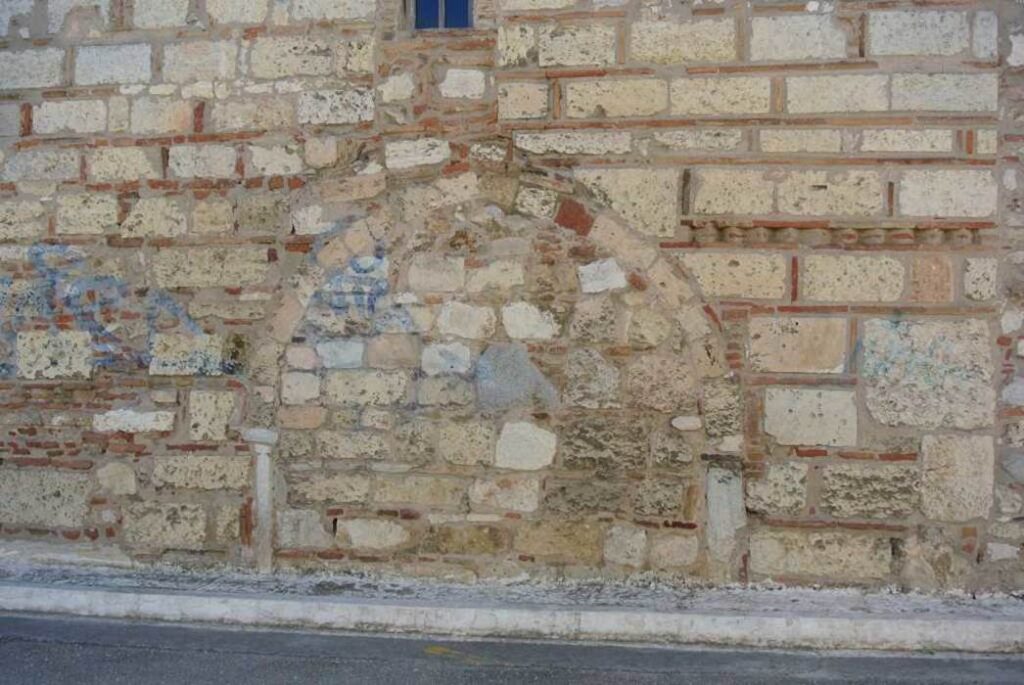
Photo by author, 2014
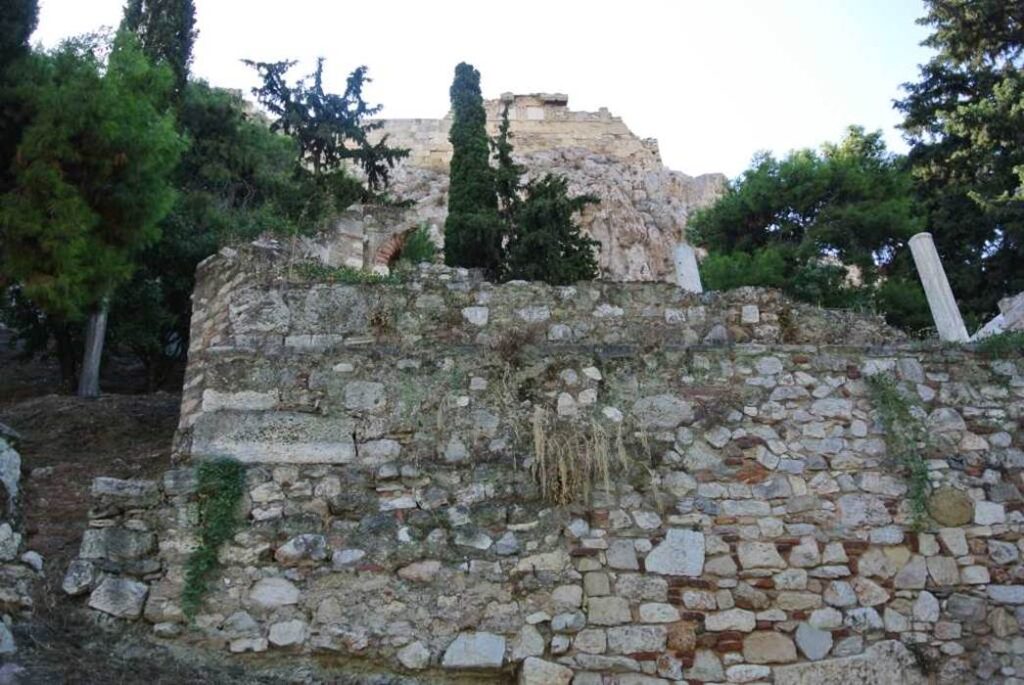
Photo by author, 2014
Local information boards showing various walking approaches to the Acropolis.
If you follow these while climbing, you won’t get lost.
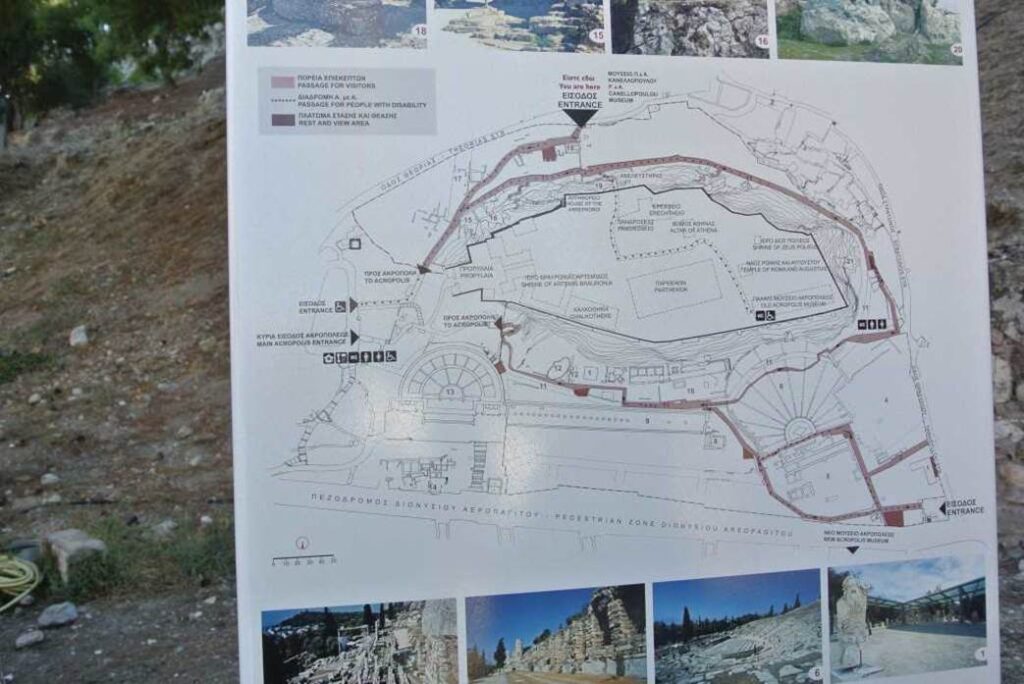
Photo by author, 2014
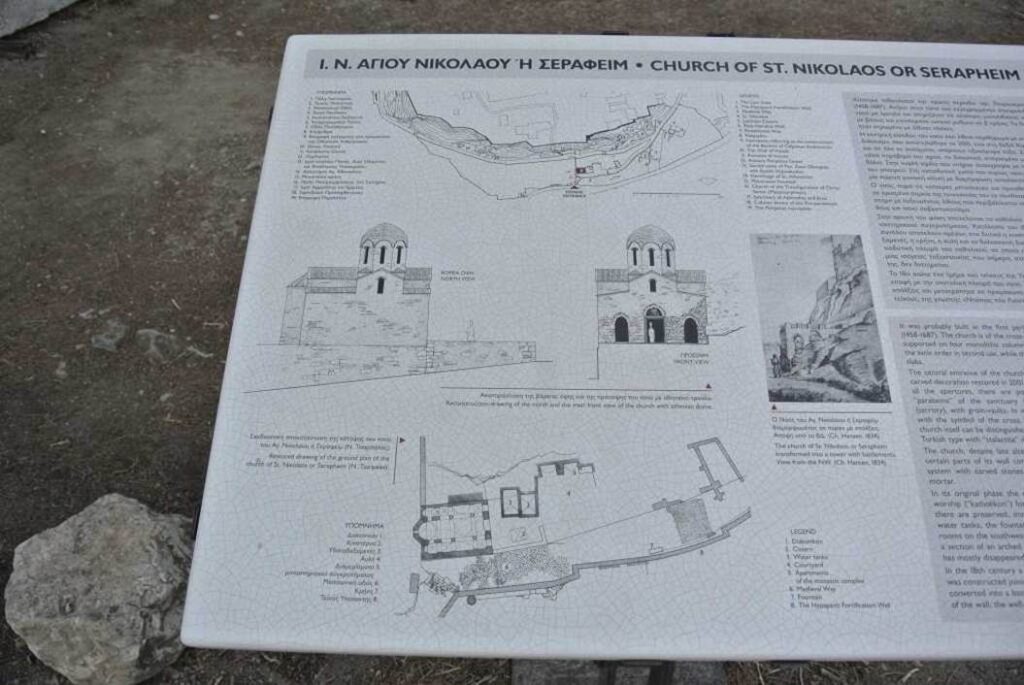
Photo by author, 2014
Lycabettus Hill
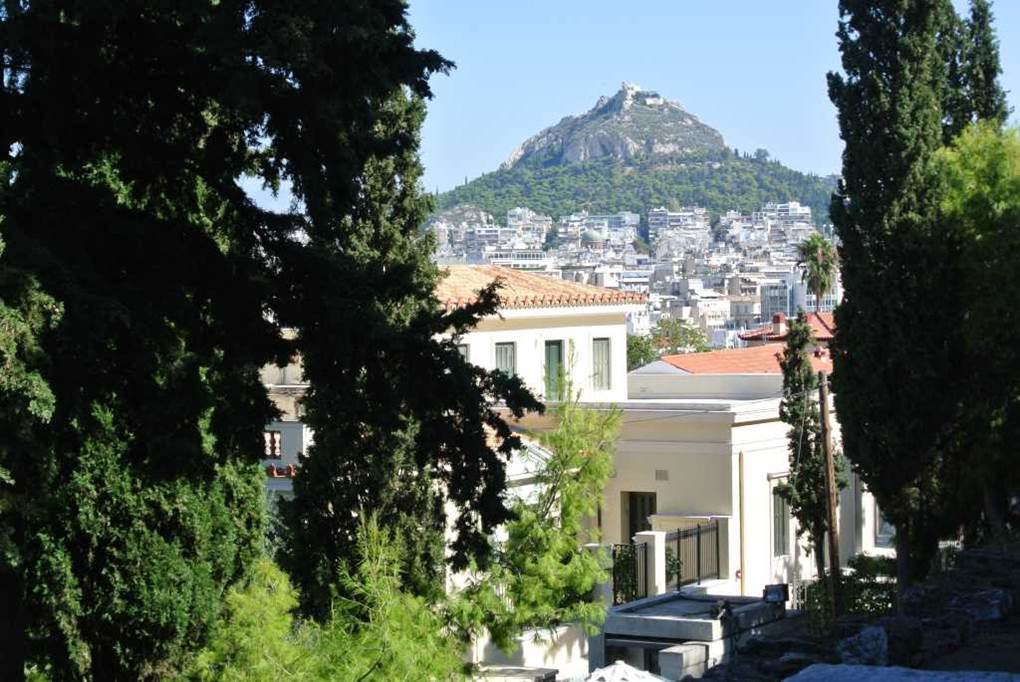
Photo by author, 2014
The city of Athens on the north side of the Acropolis.
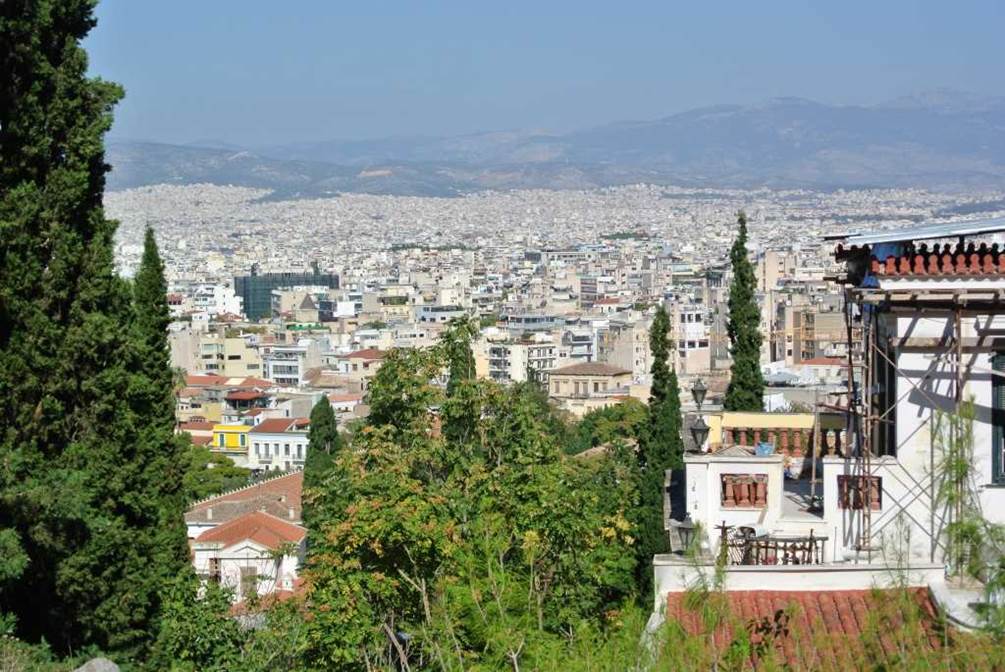
Photo by author, 2014
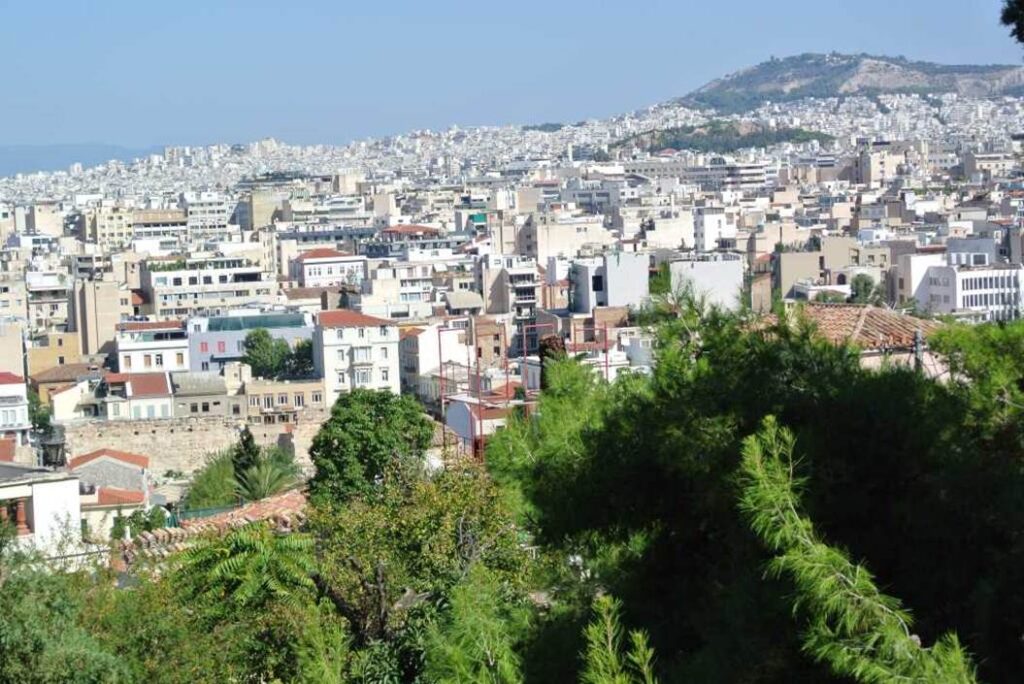
Photo by author, 2014
There was a water source like this under the cliff on the northwest side of the Acropolis. It was about 100 meters away and we arrived at the western entrance to the Acropolis.
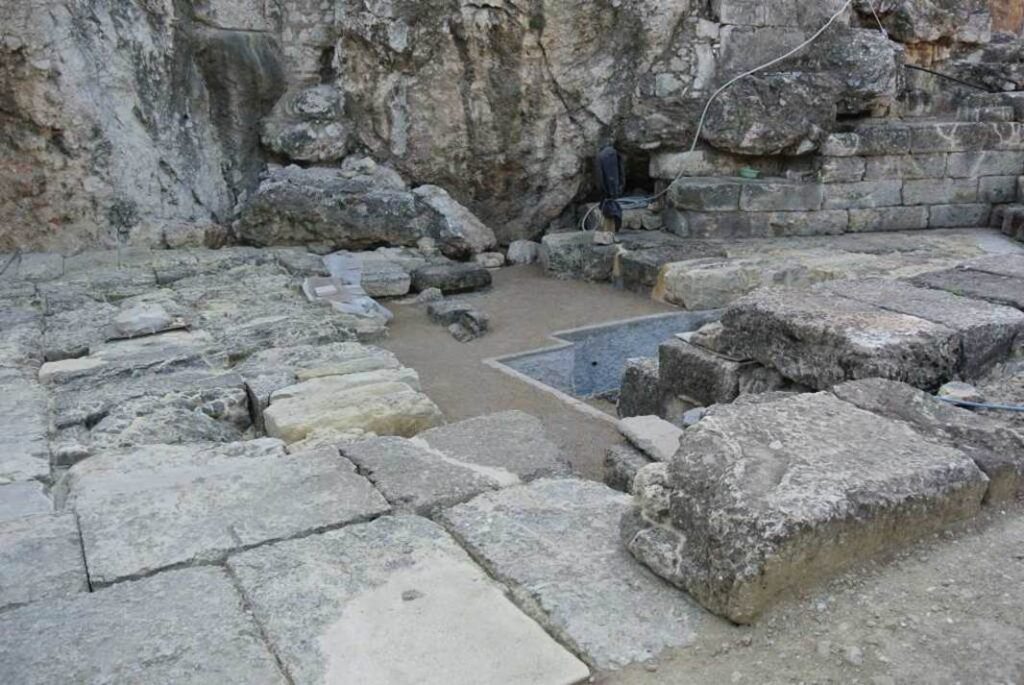
Photo by author, 2014
We climbed the hill and arrived at the western end of the Acropolis hill.
Propylaea Staircase→ Pedestal of Agrippa →Temple of Athena Nike→ Propylaia → The Erectheion (Temple of Athena Polias) → Parthenon
We proceed in the order above.
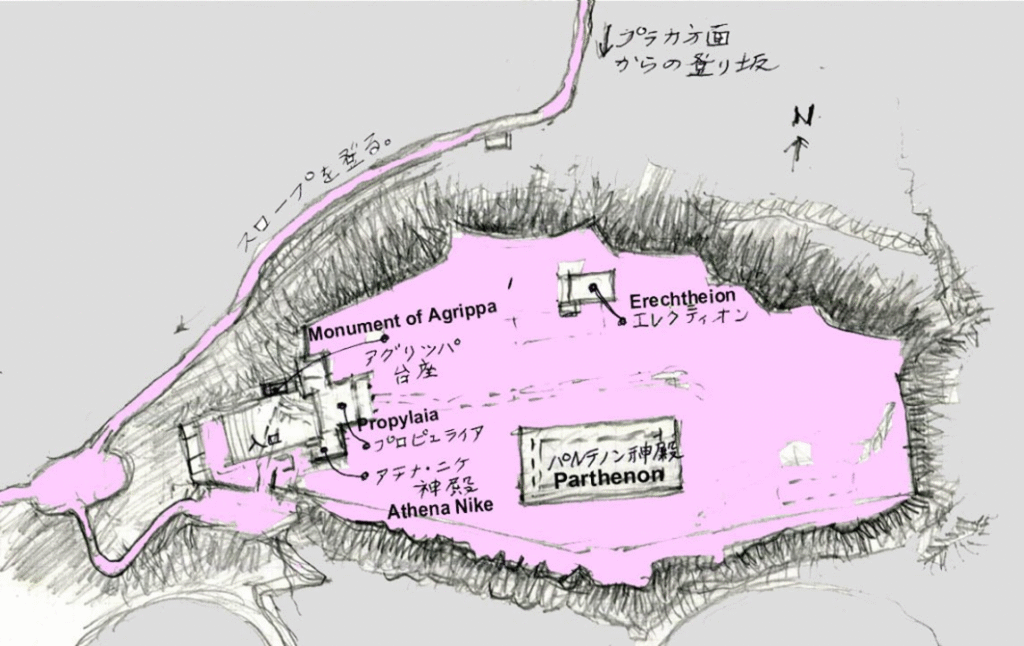
Acropolis Hill, Author’s Sketch
This is the southwestern end of the Acropolis.
In the upper right, the Propylaia Gate and the Temple of Athena Nike came into view.
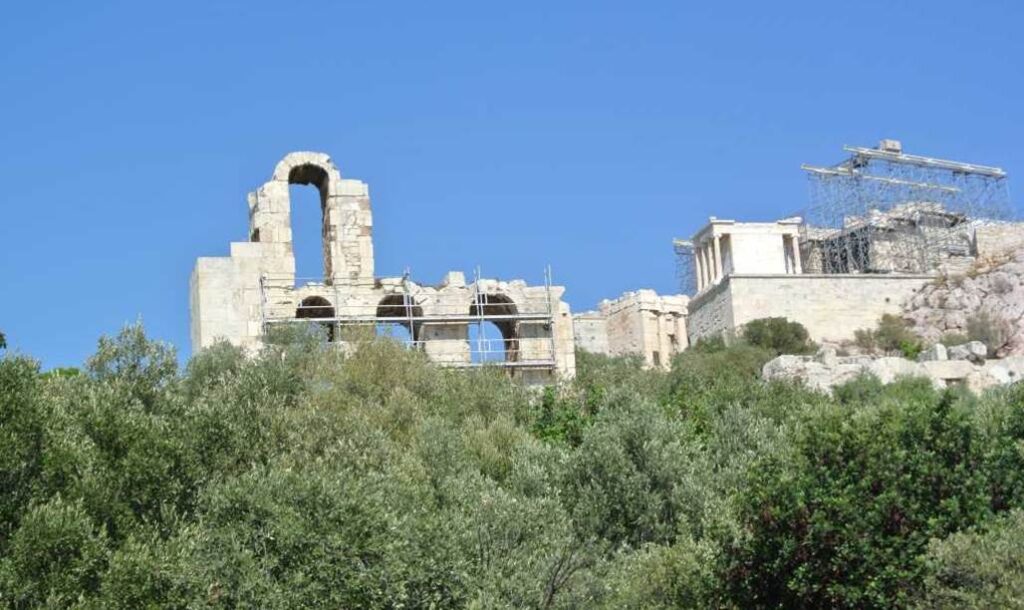
Photo by author, 2014
The entrance gate was built in Roman times.
Gate of Boulé

Photo by author, 2014
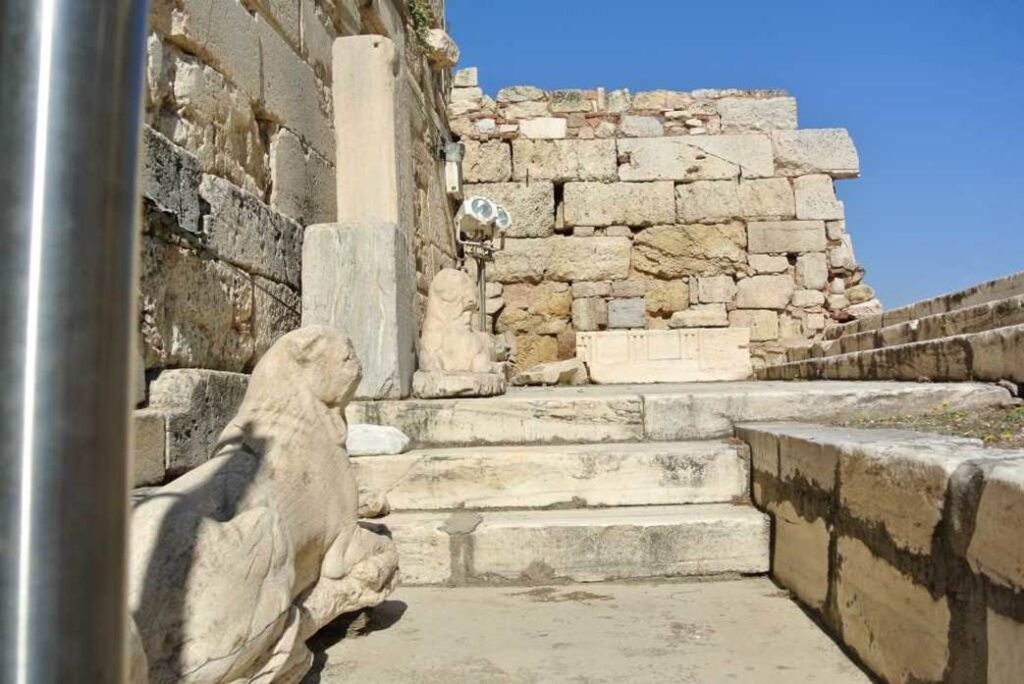
Photo by author, 2014
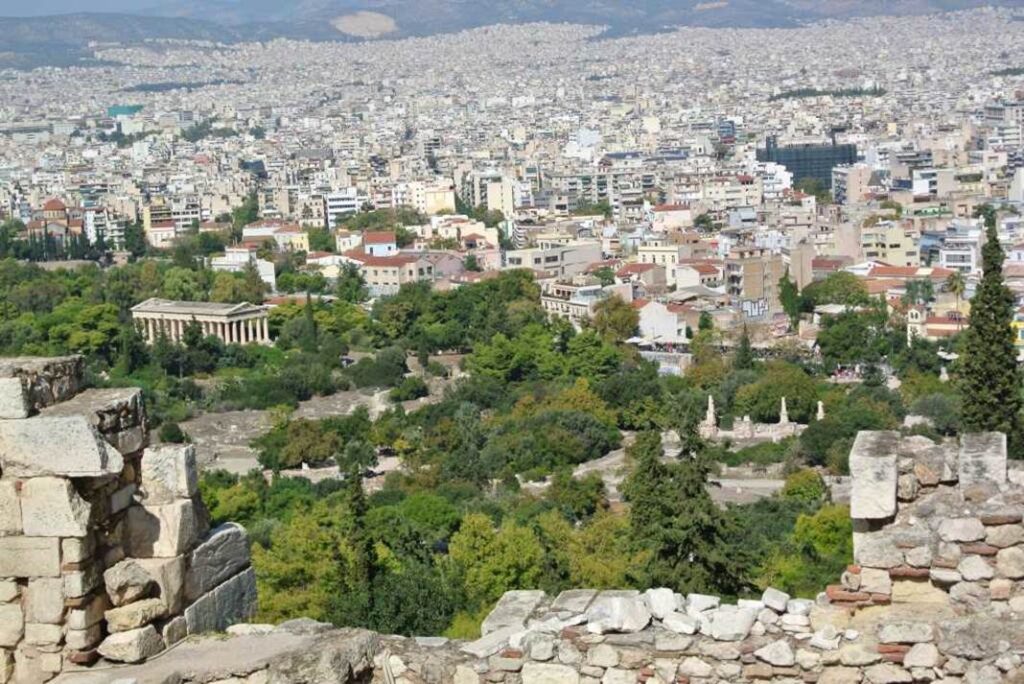
Photo by author, 2014
Propylaia (Gate)
Stairs leading to the Propylaea Gate. Located at the western end of the Acropolis Hill , this is the only approach to the site.
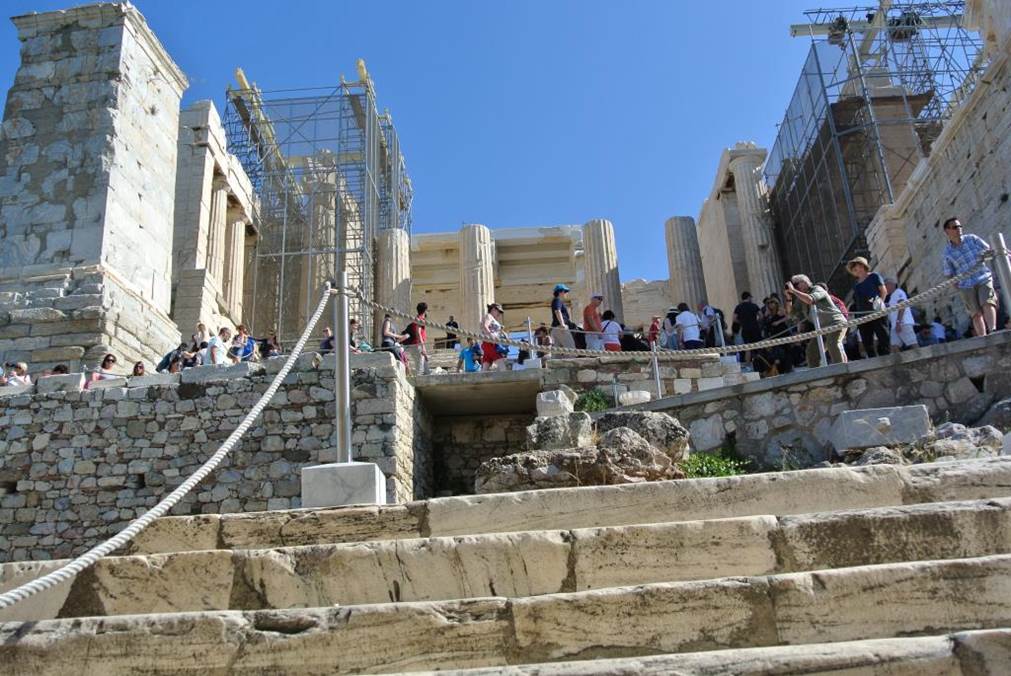
Photo by author, 2014
Restoration work is underway in parts of the Propylaia.
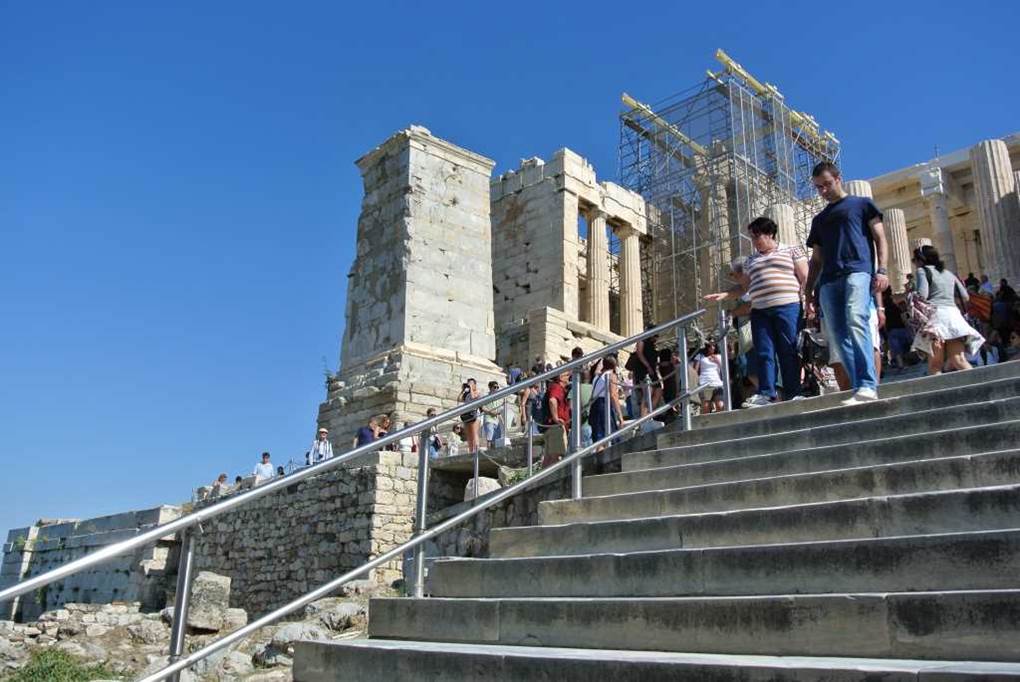
Photo by author, 2014
The entrance to the mountain is narrow in this area, and because the marble columns of the front gate are a scenic spot, it gets crowded with tourists, so both going up and down the mountain are one-way.
Pedestal of Agrippa (left)and Pinacoteca (Picture Gallery, right)
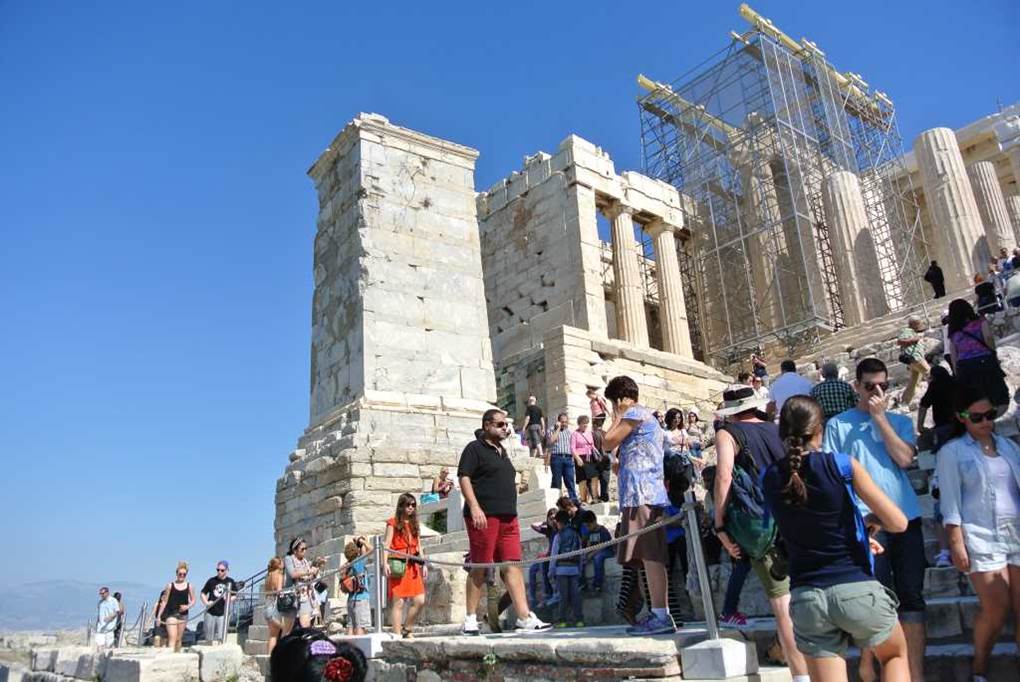
Photo by author, 2014
Pedestal of Agrippa
At the entrance to the Acropolis Hill, next to the Propylaia (front gate), stands the pedestal of Agrippa.
The pedestal is 8.9 m high and covered with marble.
At the time of construction, there was a statue of Agrippa on a chariot pulled by a horse on a pedestal, according to the explanatory panel.
There is no statue now, and the pedestal remains as it was when it was built. Agrippa was a general of the Roman emperors.
Agrippa also built the Odeion in the ancient agora of Athens.
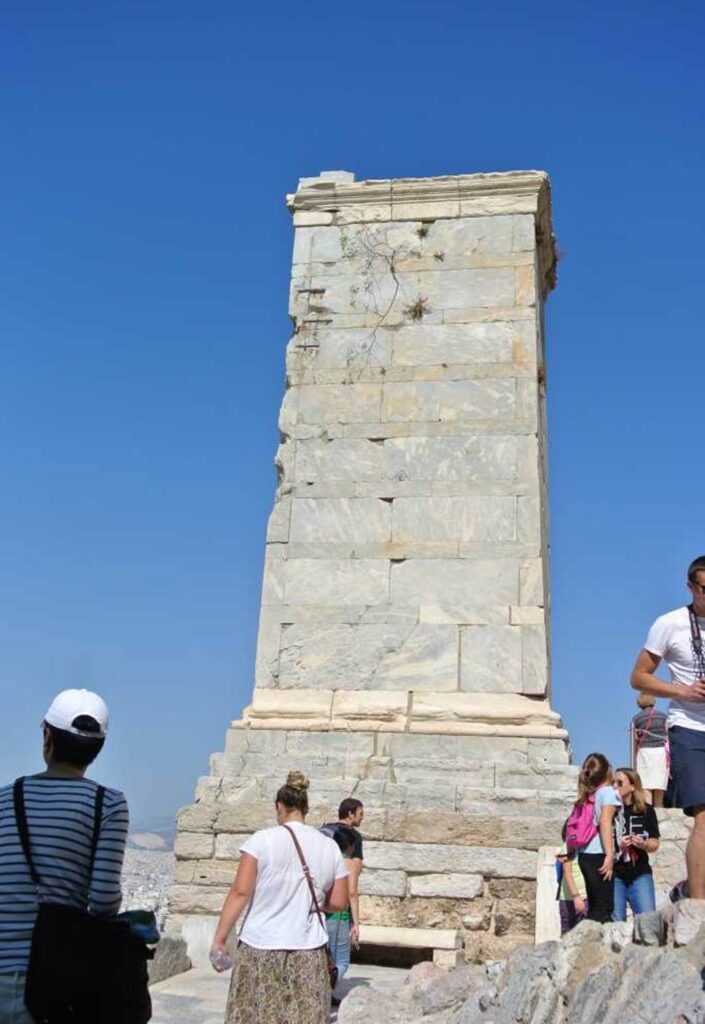
Photo by author, 2014
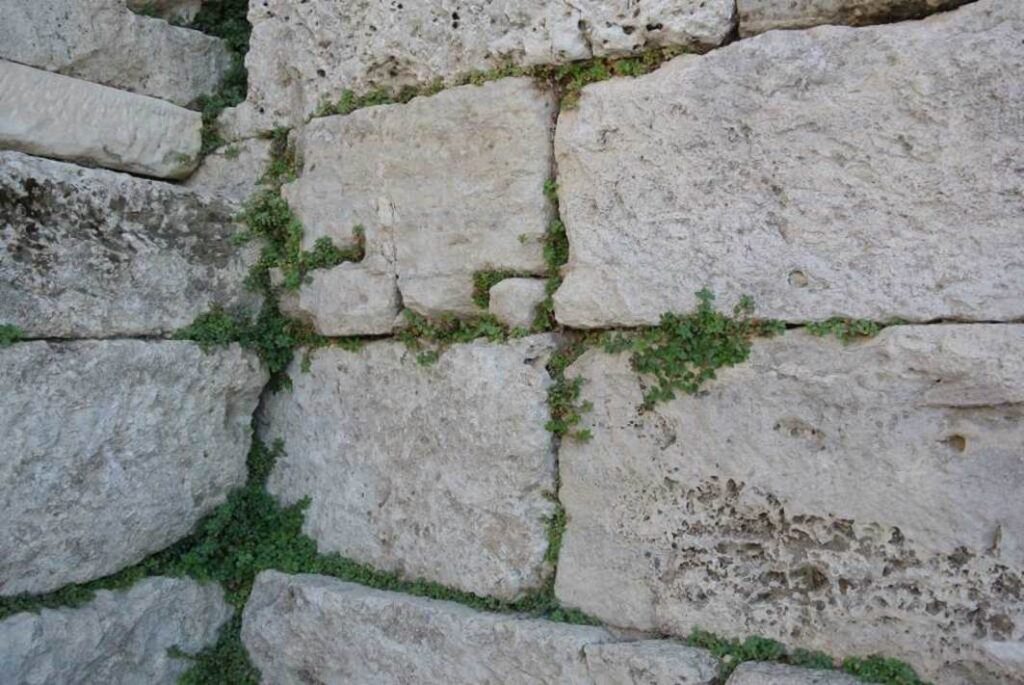
Photo by author, 2014
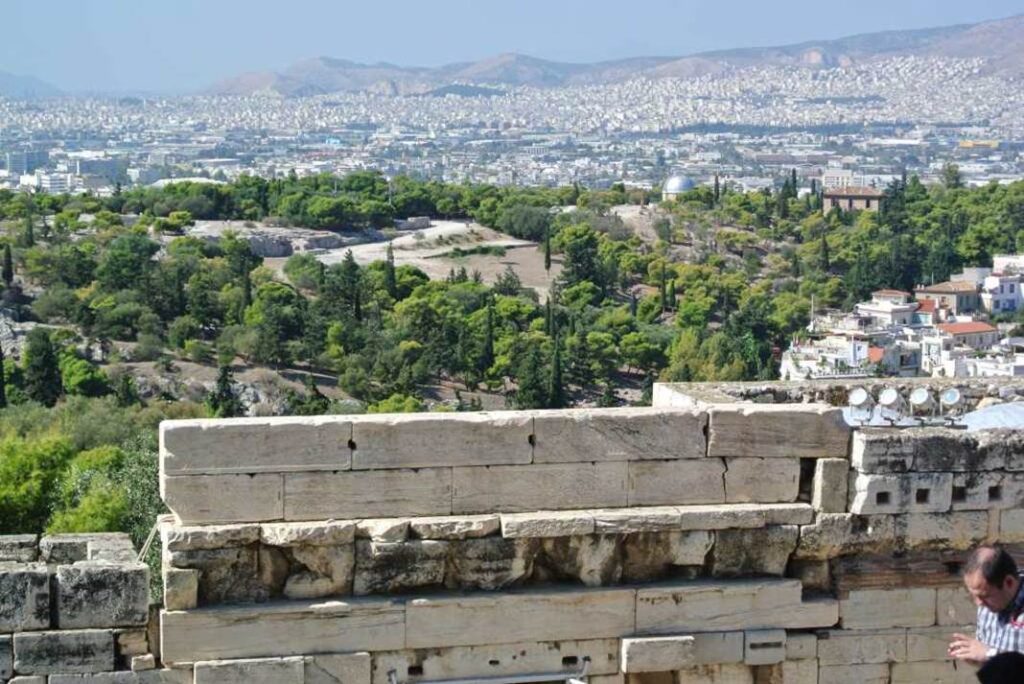
Photo by author, 2014
Temple of Athena Nike
The Temple of Athena Nike is a temple dedicated to Athena.
Nike means “victory” and was worshipped as the god of wisdom.
It is the earliest Ionic temple on the Acropolis.
It is located to the right of the Propylaea, the entrance to the Acropolis, and here citizens worshiped the goddess to pray for victory in the long Peloponnesian War with Sparta.
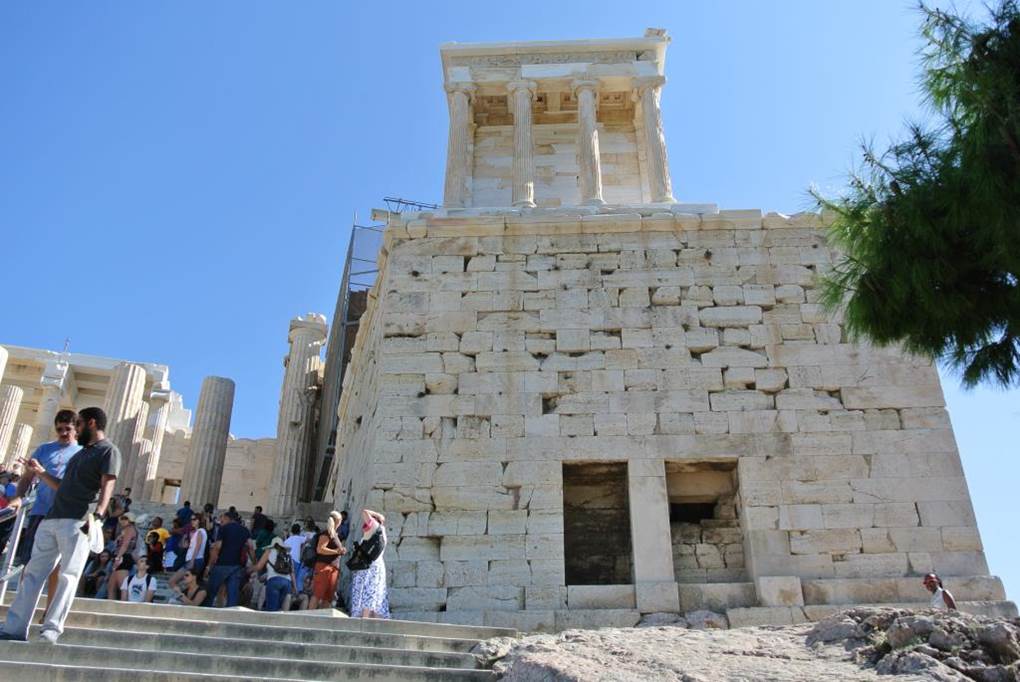
Photo by author, 2014
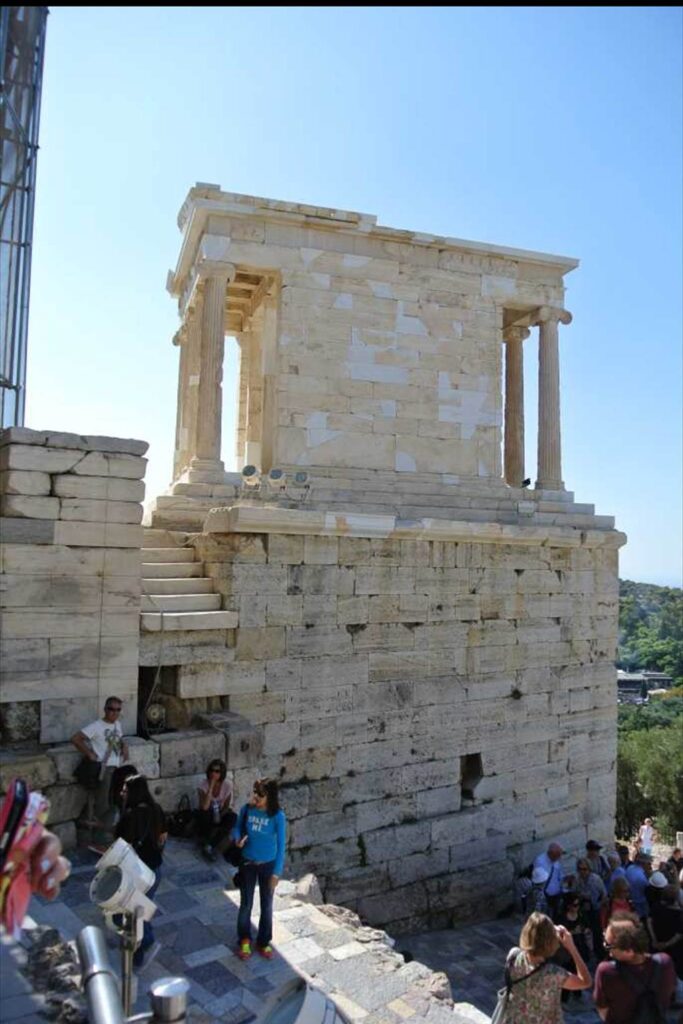
Photo by author, 2014
Propylaia
The propylaia is a building that serves as a gate located in front of the long stone staircase in the reconstruction (below).
The Brandenburg Gate in Berlin is modeled after the Propylaia Gate.
The smaller building on the right is the Temple of Athena Nike, and the larger building in the back is the Parthenon.
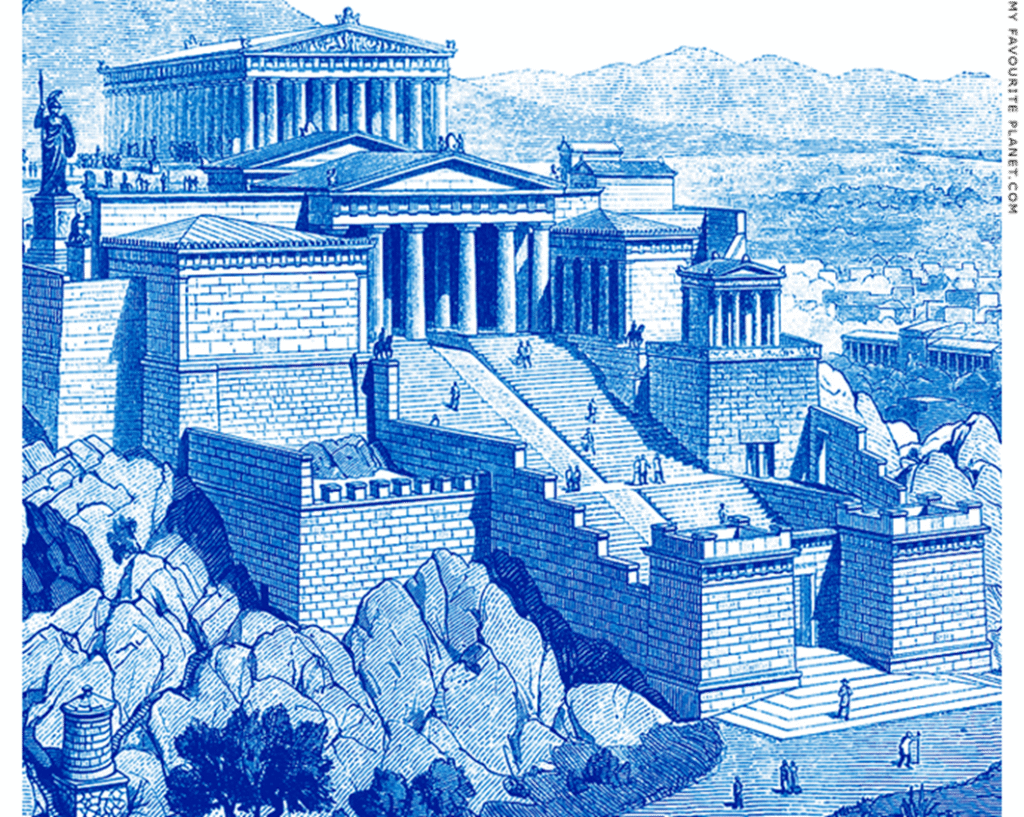
Image source: Wilhelm Wägner and Fritz Baumgarten, Hellas, Land und Volk der Alten Griechen. Verlag von Otto Spamer, Leipzig, 1902.
Illustration by Friedrich von Thiersch (1852-1921).
The Acropolis was not designed as a defensive structure, but those entering the Acropolis were identified and controlled by Propylaia.
People who were not ceremonially clean could be denied access to the sanctuary.
Fugitive slaves and other heretics were not allowed to enter the sanctuary.

Photo by author, 2014
The woman standing in the shade on the far left is an official from the Greek Ministry of Culture. There was no special security check.
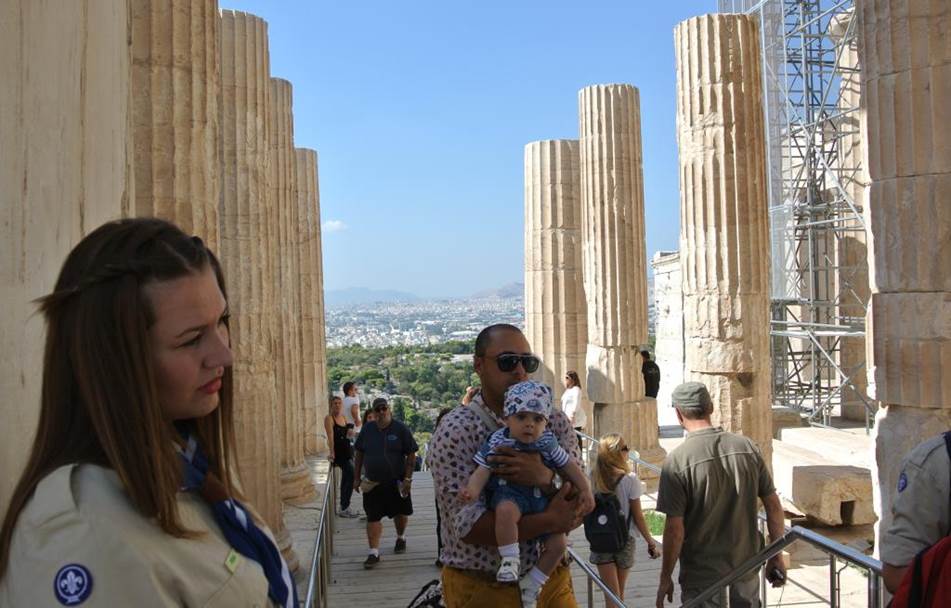
Photo by author, 2014
The upper part of the Propylaia.
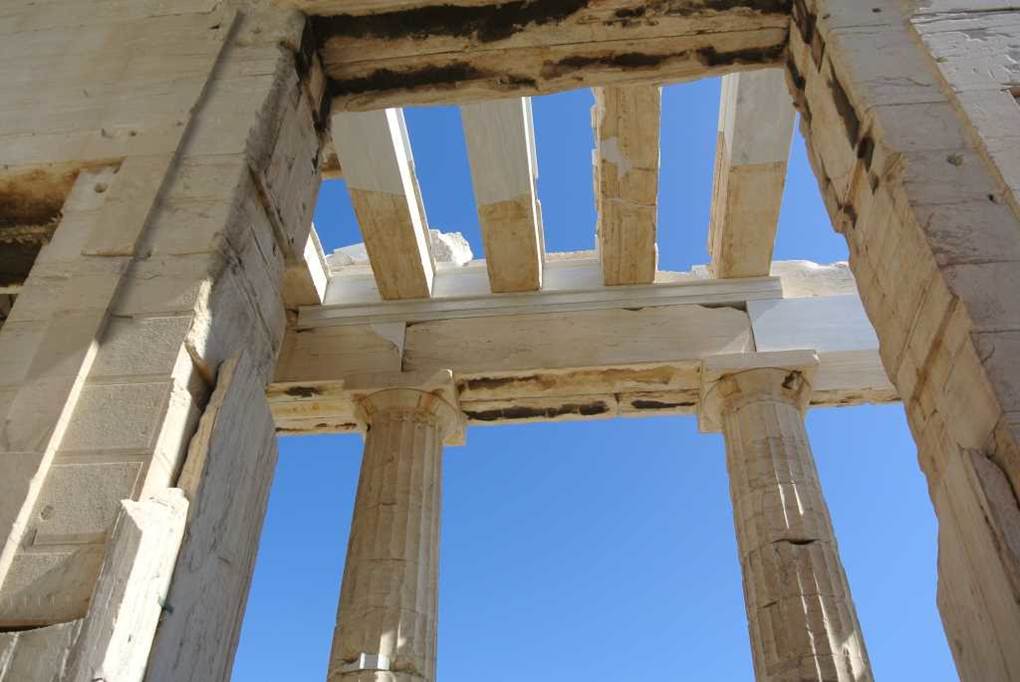
Photo by author, 2014
Part of the Propylaia.
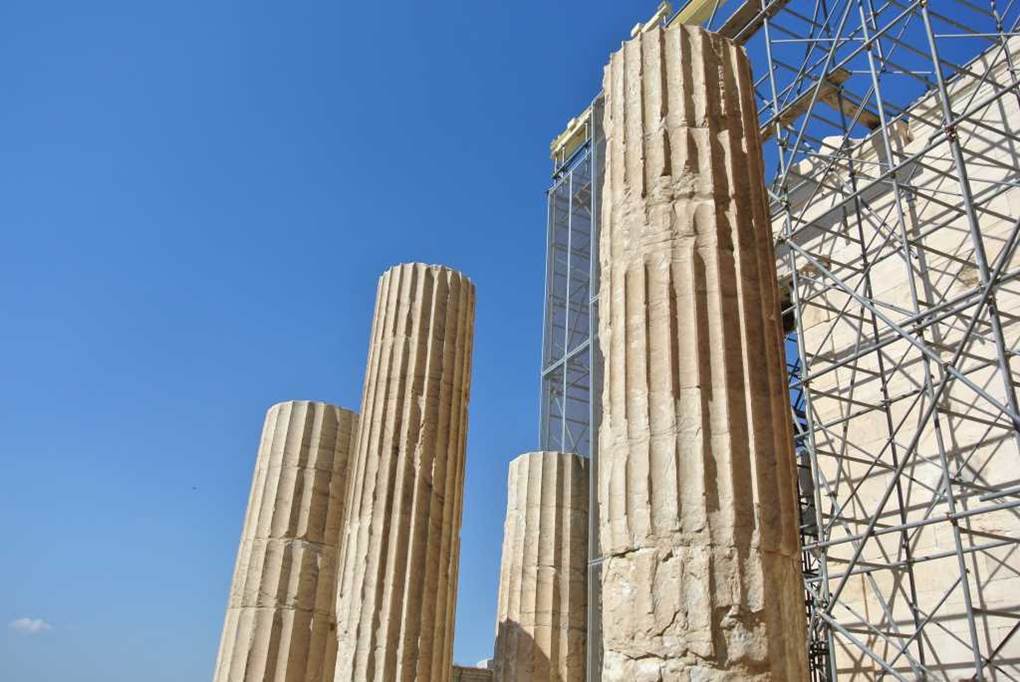
Photo by author, 2014
Part of the Propylaia.
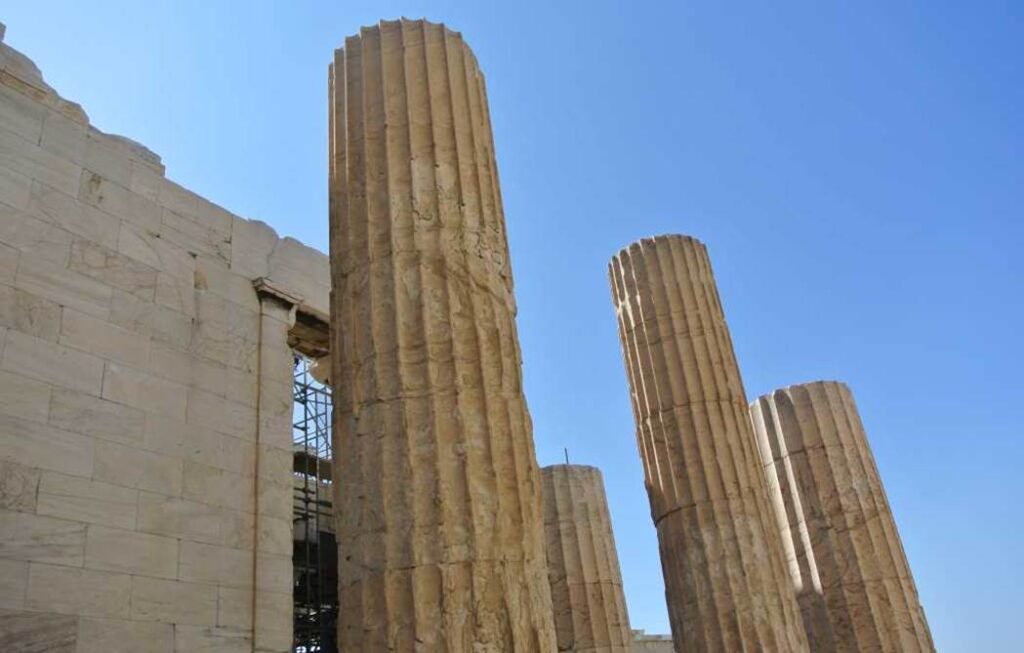
Photo by author, 2014
The Erectheion (Temple of Athena Polias)
The Erectheion was completed at the end of the 5th century BC.
A masterpiece of elegant Ionic architecture with spiral decoration on the capital.
It was once painted and housed a statue of the goddess Athena.
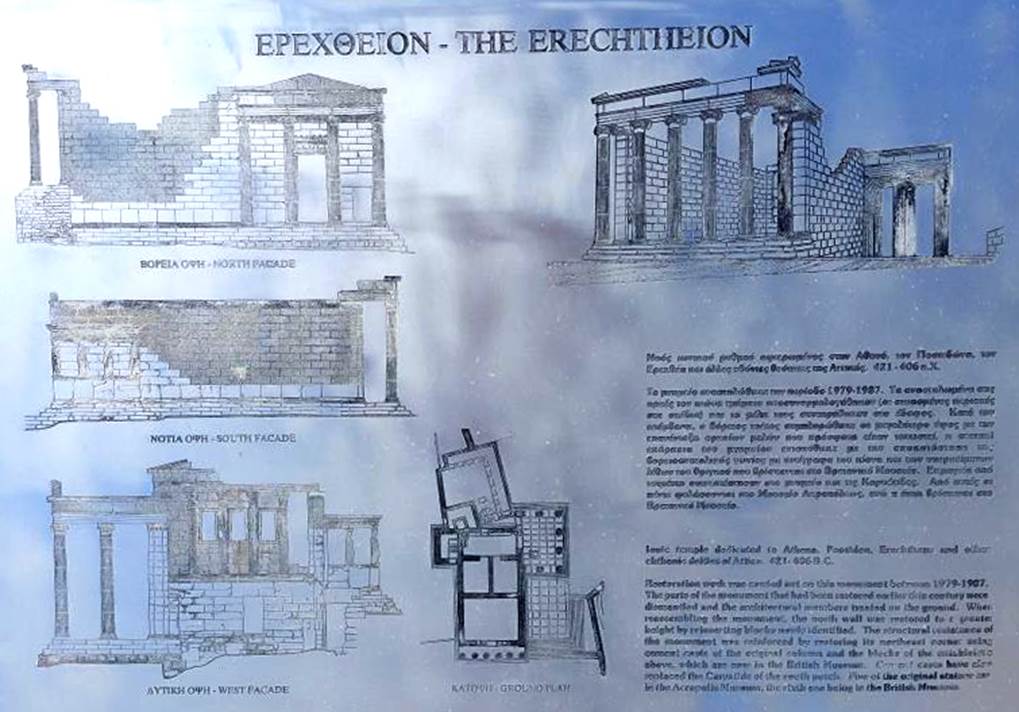
In mythology, it is the place where the goddess Athena and the sea god Poseidon fought for the position of patron god of Athens.
Six Girls Statue
There is a protruding colonnade in the southwest corner of Erectheion.
Six statues of young girls surround the colonnade.
All of these statues are replicas, and five of the real ones have been kept and exhibited in the New Acropolis Museum at the foot of the hill since 1979.
One of the remains was taken to the British Museum in London and is said to be there now.
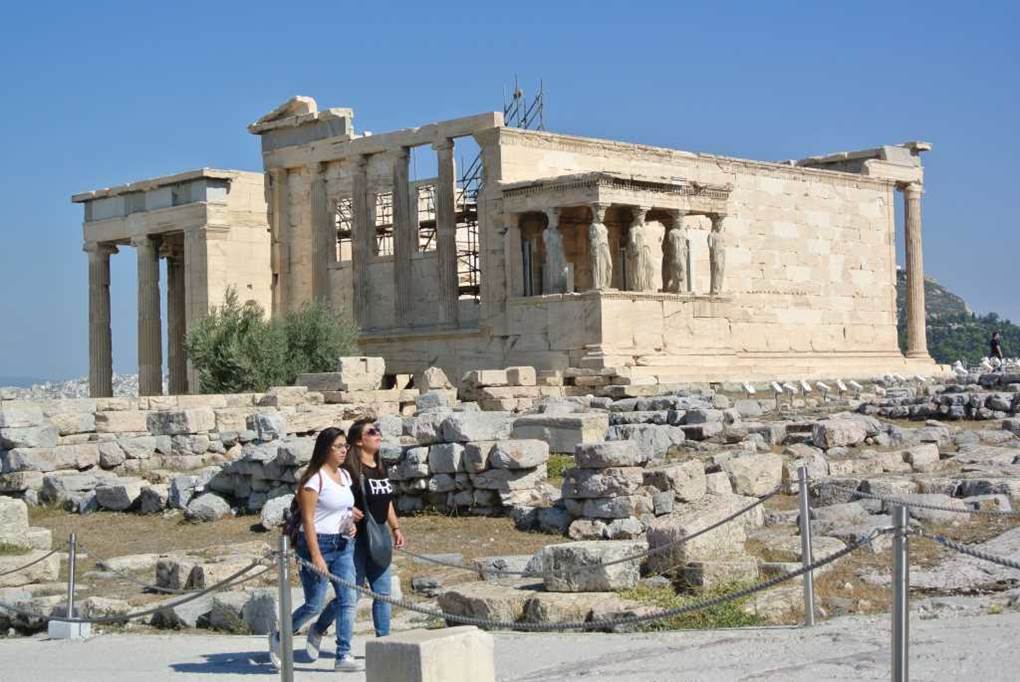
Photo by author, 2014
The marble of the statue is said to be a translucent white marble from the island of Paros in the Aegean Sea.
The five statues of real girls are located at the New Acropolis Museum at the foot of the building, so it is difficult to realize their size, but when you go to the museum, you will be overwhelmed by the real and realistic size.
Six statues of young girls on the far left of the photo. These are replicas.
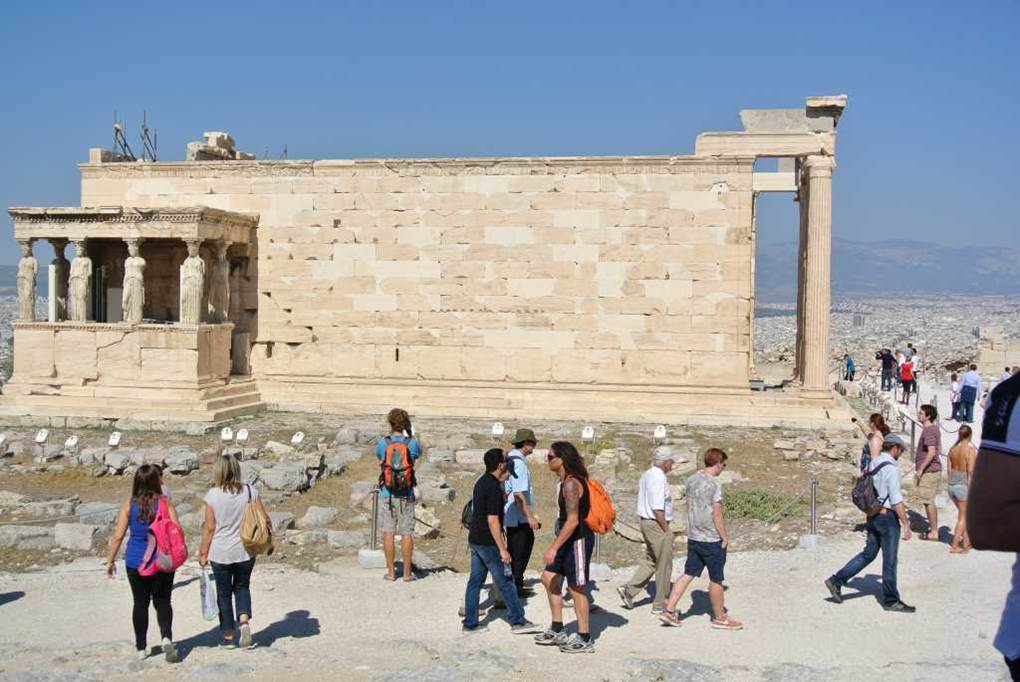
Photo by author, 2014
The Erectheion
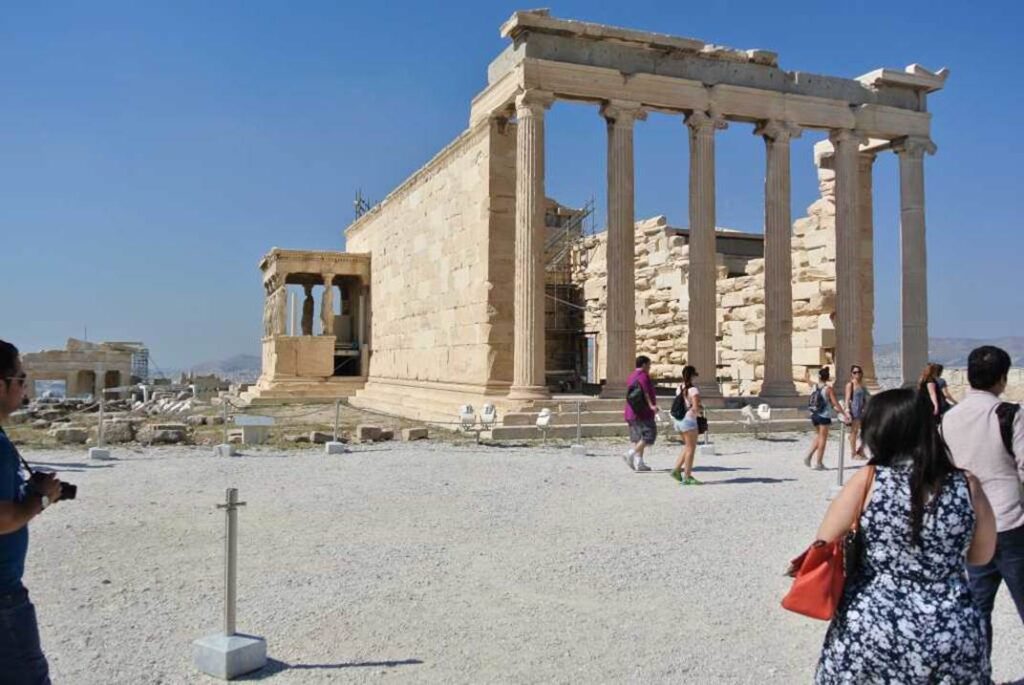
Photo by author, 2014
The Erectheion Photographed from the west side
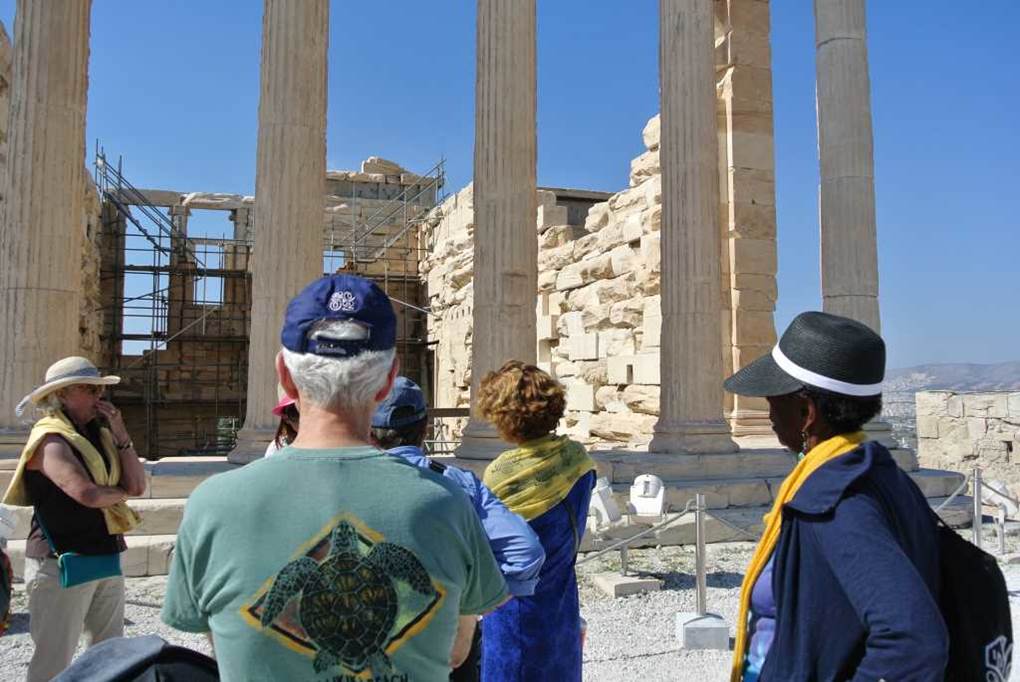
Photo by author, 2014
In this, the statue of the goddess Athena was enshrined.
It is considered the most sacred place on the Acropolis Hill.
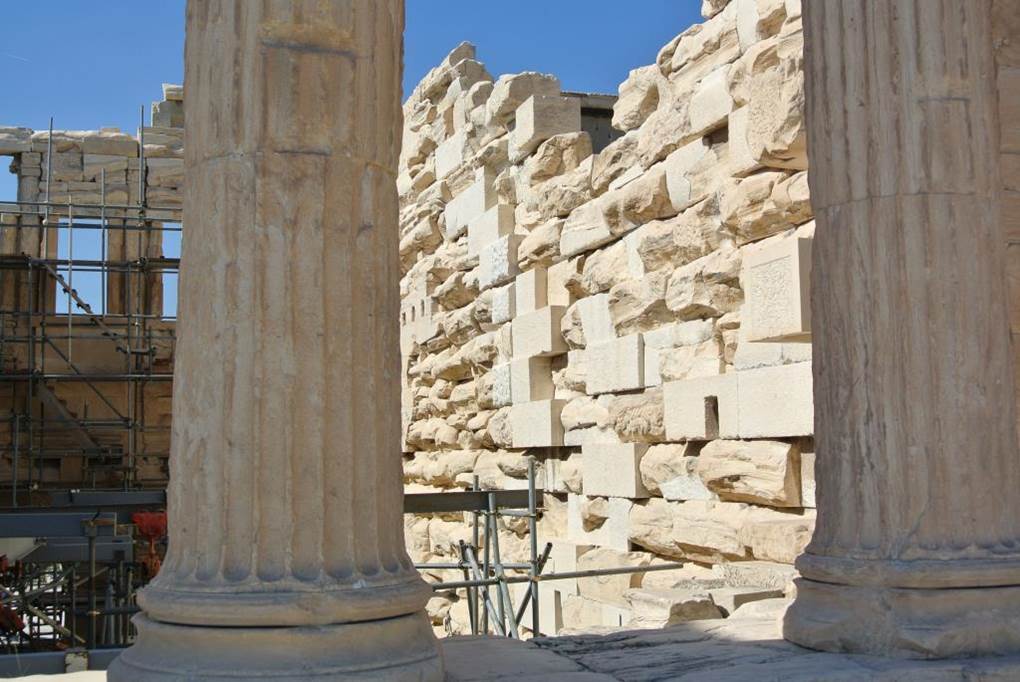
Photo by author, 2014
The Erectheion Photographed from the north side.
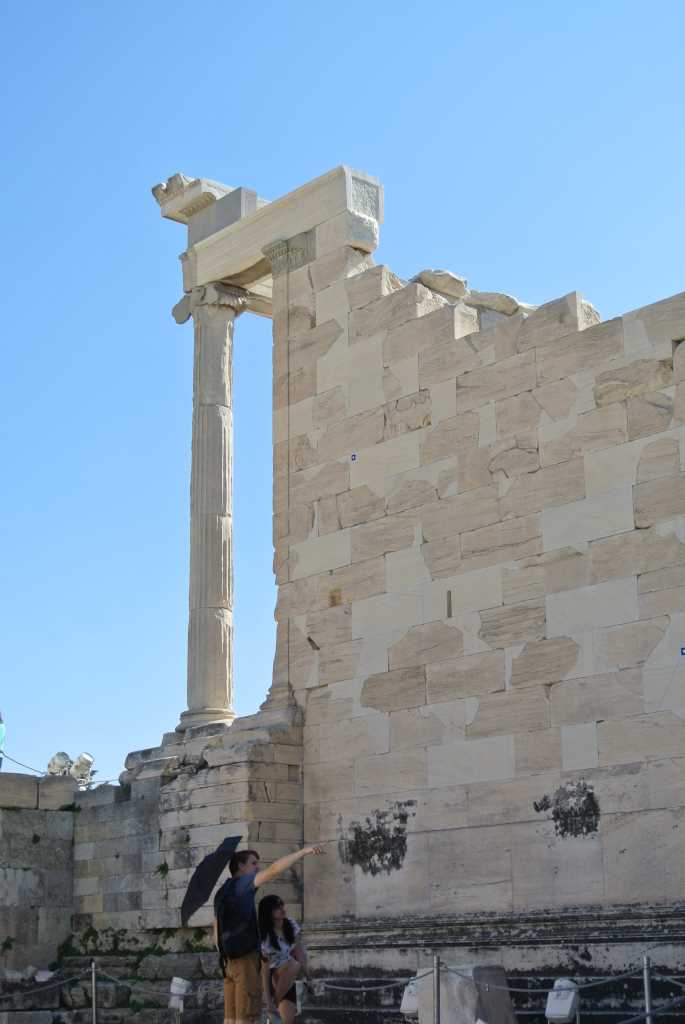
Photo by author, 2014
Parthenon
The Parthenon means “virgin temple” and is a temple dedicated to the virgin goddess Athena.
The temple that remains today was built after the Persian Wars and is 69 meters long, 31 meters wide, and 10 meters high. As one of the masterpieces of Greek architecture of the classical period, it is registered as a World Cultural Heritage Site.
Lined on the outside are 46 pillars, with a diameter of nearly 2 m at the bottom.
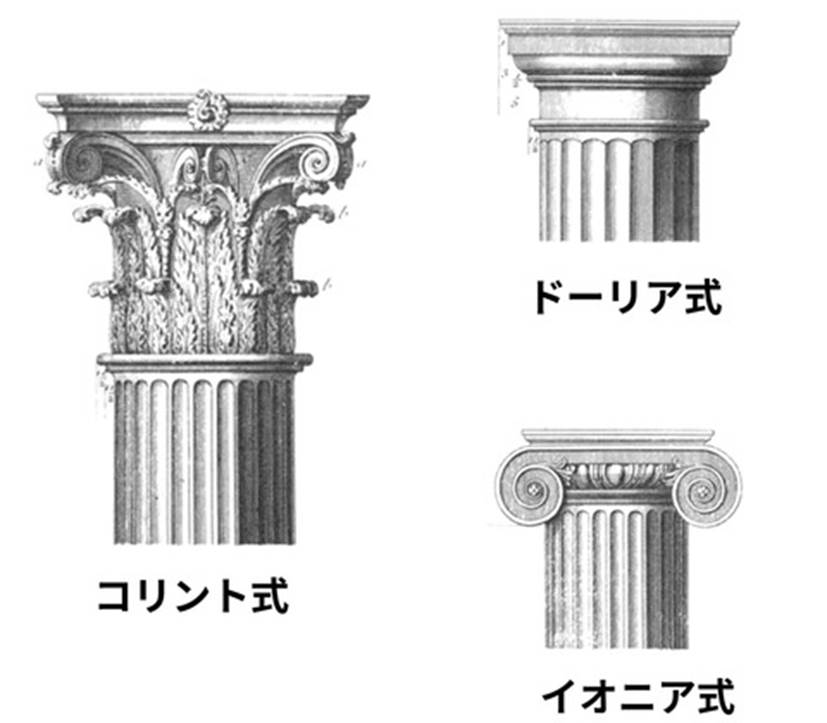
The capitals are Doric.
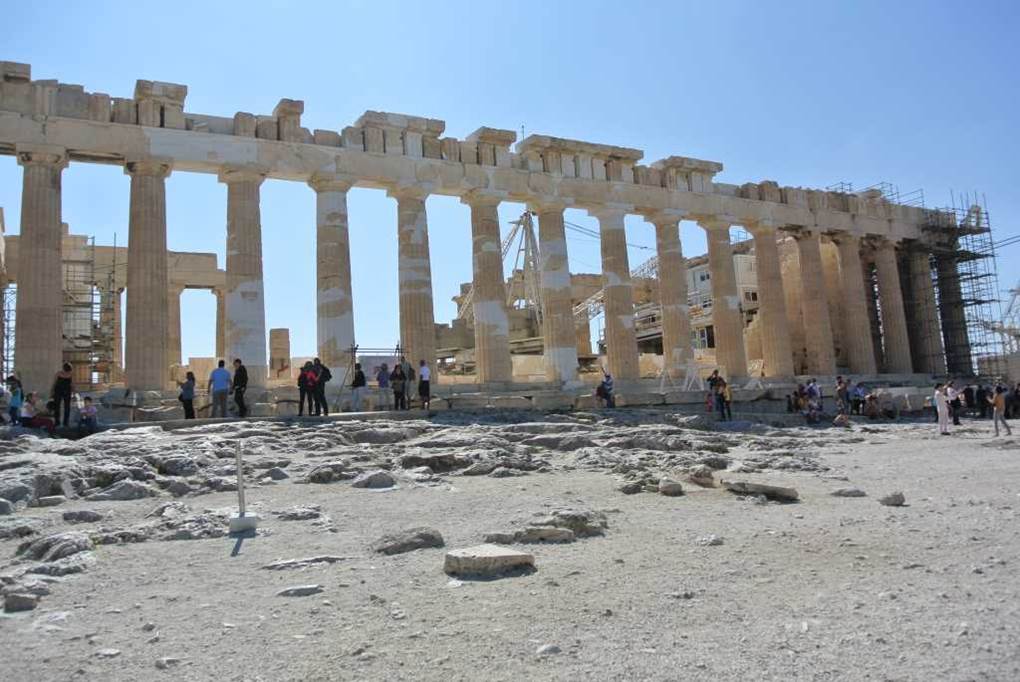
Photo by author, 2014
Entasis
Entasis is a shape in which the column gradually tapers from the bottom or middle to the top of an independent column.
When viewed from below, a column with entasis appears more stable than a straight column.
In Japanese, entasis means “bulge of circular object”, and this architectural concept can also be seen on the wooden pillars of the Golden Hall of Horyu-ji Temple.
Even so, I can’t help but be amazed at the aesthetic sense of the ancient Greeks, who discovered the aesthetic effect of entasis.

Photo by author, 2014
Parts of the Parthenon are also undergoing minor restorations.
The restoration is supposed to faithfully reproduce the original form in order to meet UNESCO’s strict standards, so the components must be put together like a jigsaw puzzle. It’s a daunting task
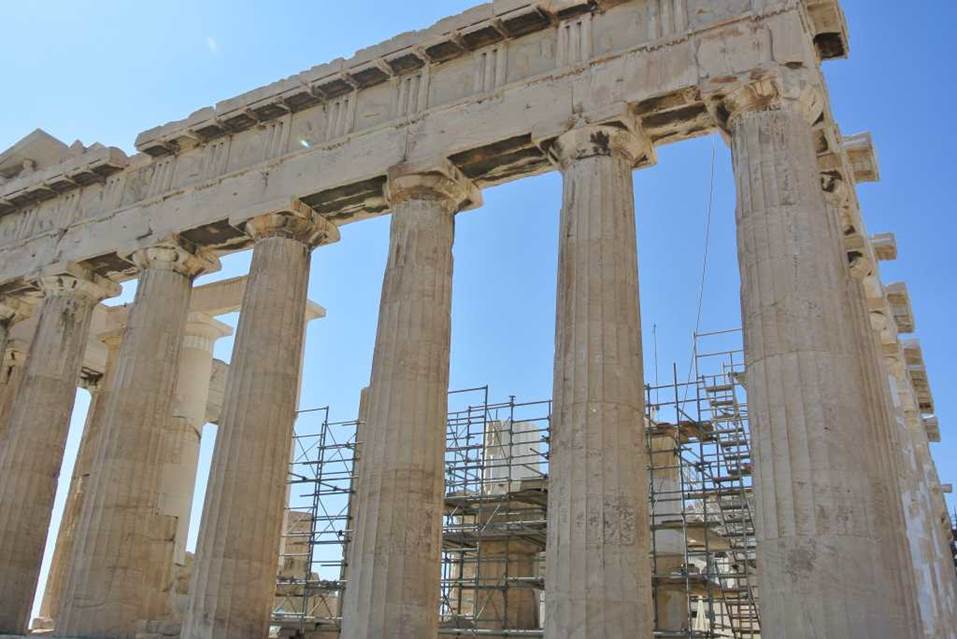
Photo by author, 2014
When I was a student, I saw the entasis of Horyuji Temple, and the impression has remained with me to this day.
One of the purposes of my trip to Greece this time was to see the entasis of the Parthenon with my own eyes. I was able to understand how much aesthetic sense the ancient Greek clients and architects had.
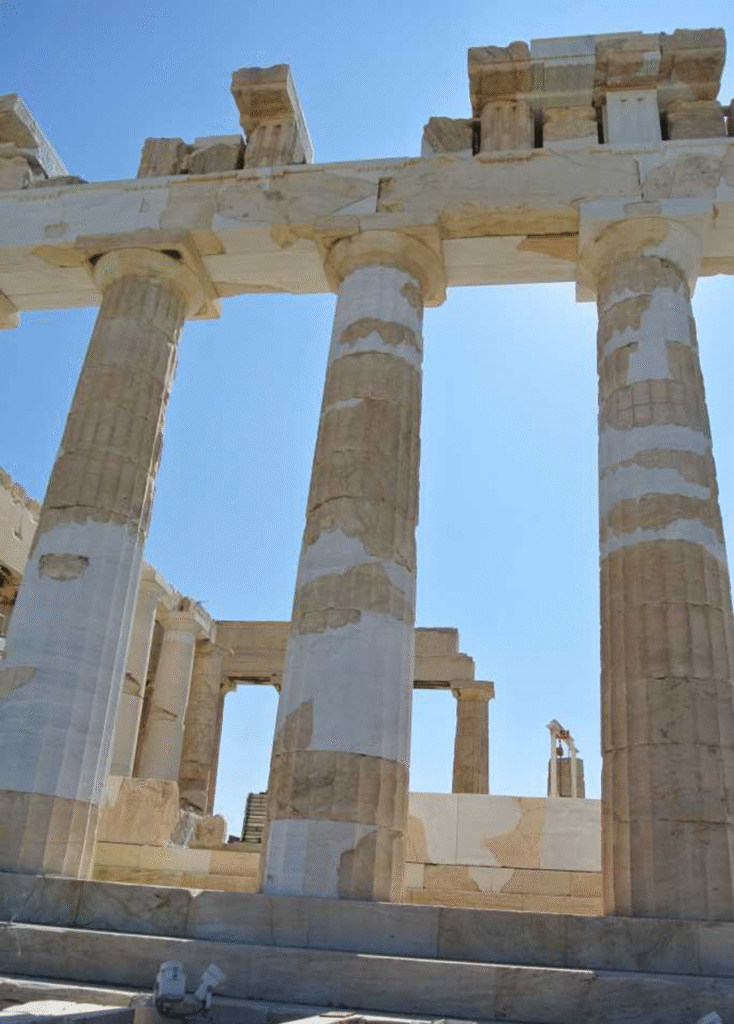
Photo by author, 2014
The Parthenon is said to have been planned and directed by Pericles (495-429 BC), an ancient Athenian politician who built the Golden Age of Athens after winning the Persian War.
It was built with the tribute collected by the Delian League (a confederacy of 150 to 330 Greek city-states) from the surrounding Polis to Athens.
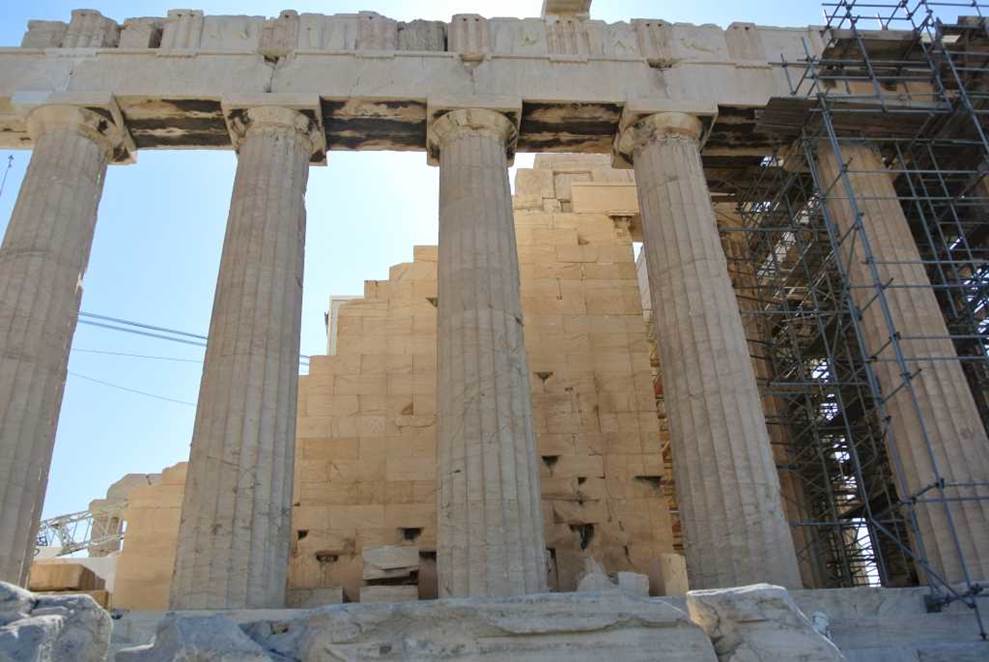
Photo by author, 2014
Ionic capital.
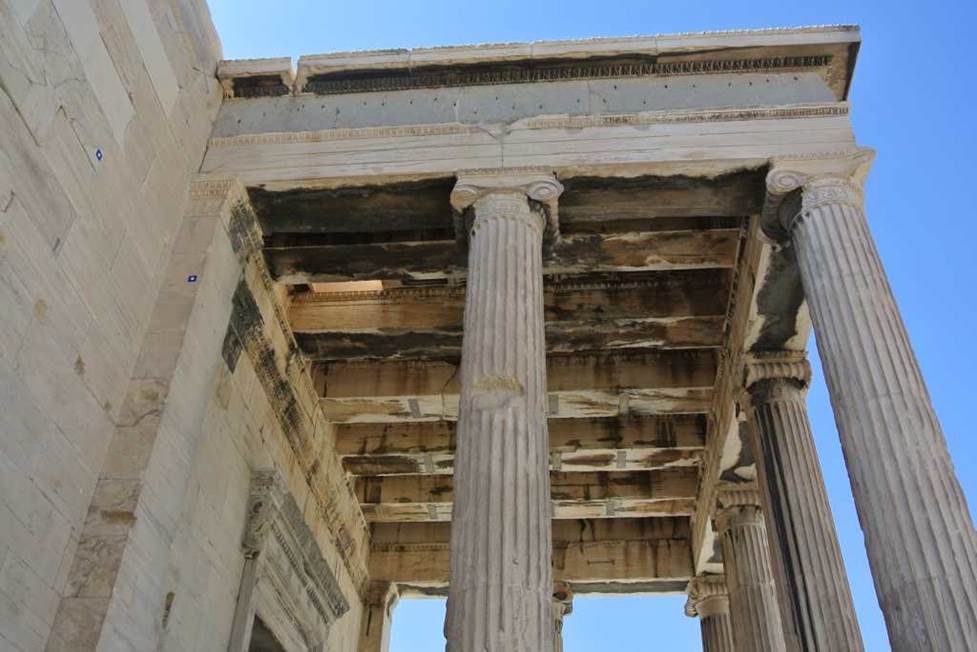
Photo by author, 2014
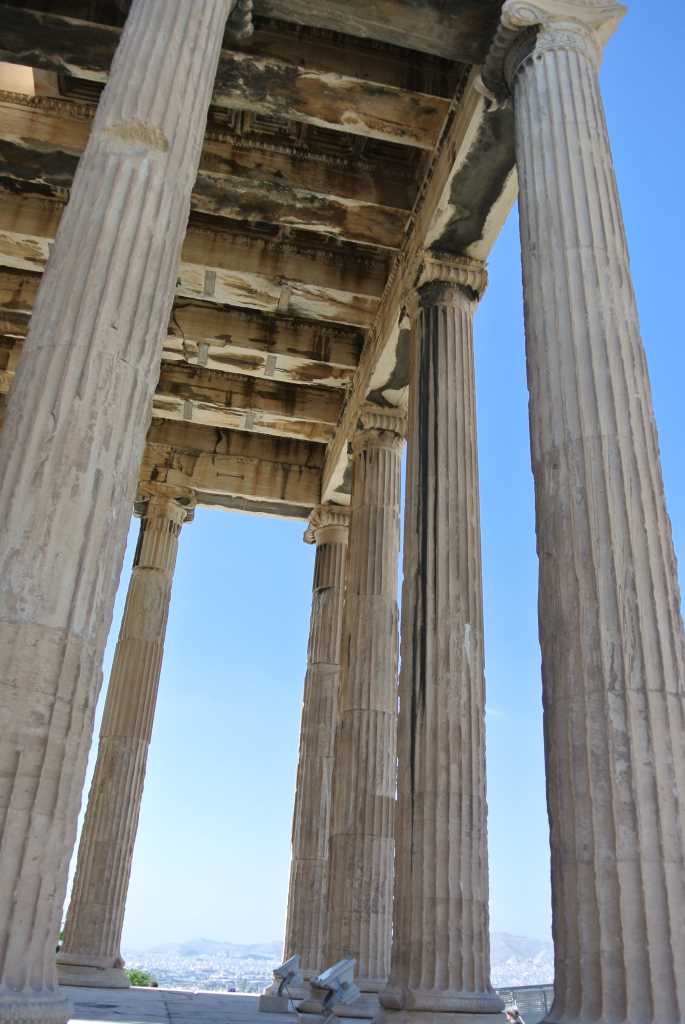
Photo by author, 2014
The Parthenon was used as a church during the Byzantine period.
During the Ottoman period, it was used by the military and was also used as a mosque.
During the battle with the Venetian army, the Parthenon, which was supposed to be a repository of gunpowder, was destroyed by a large explosion caused by a cannon attack by the Venetian Navy.
Today, the Parthenon is undergoing restoration work to restore it to its appearance in the 5th century BC.
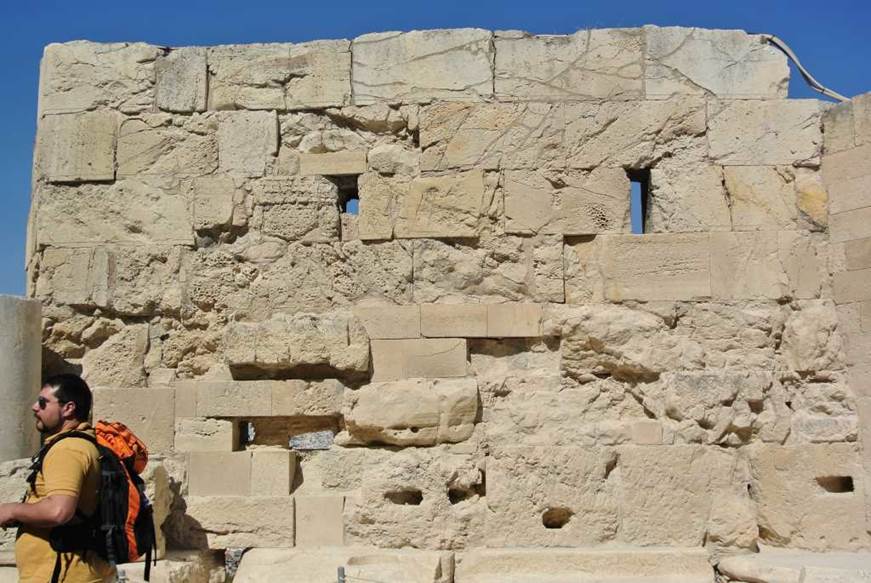
Photo by author, 2014
Parts of the building were left exposed to the elements on the flat ground at the western end of the Acropolis. Each piece is a precious cultural asset.
Ionic capitals were also placed there.
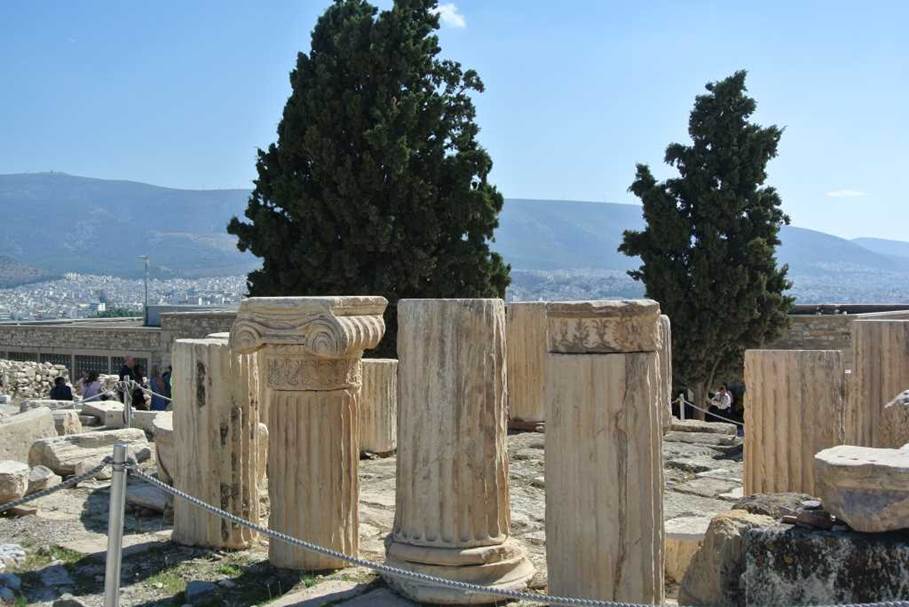
Photo by author, 2014
From the northeast corner of the Acropolis, you can see the north of Athens.
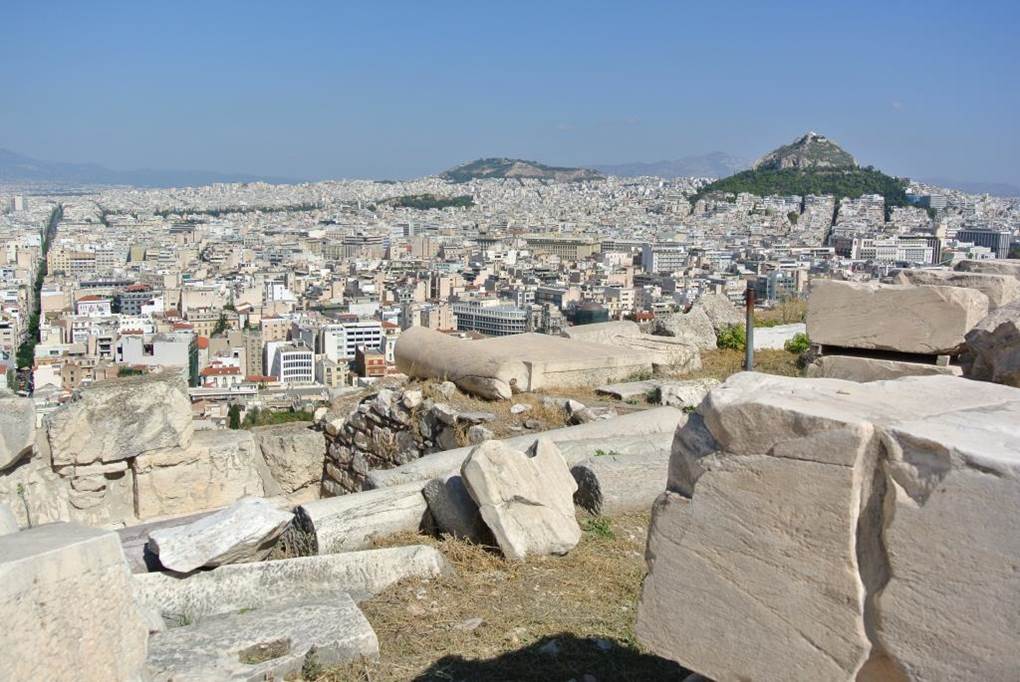
Photo by author, 2014
All photos by author, October 2014