JAP | ENG
Phnom Penh Business Trip
2006-2013
#4/4
Floodplain
This area is about 10km outside Phnom Penh.
In the rainy season, a large amount of water flows back from the Mekong River, flooding the entire land.
In the dry season, the floodwaters return to the Mekong River, but some areas remain with poor drainage, as shown in the photo below.
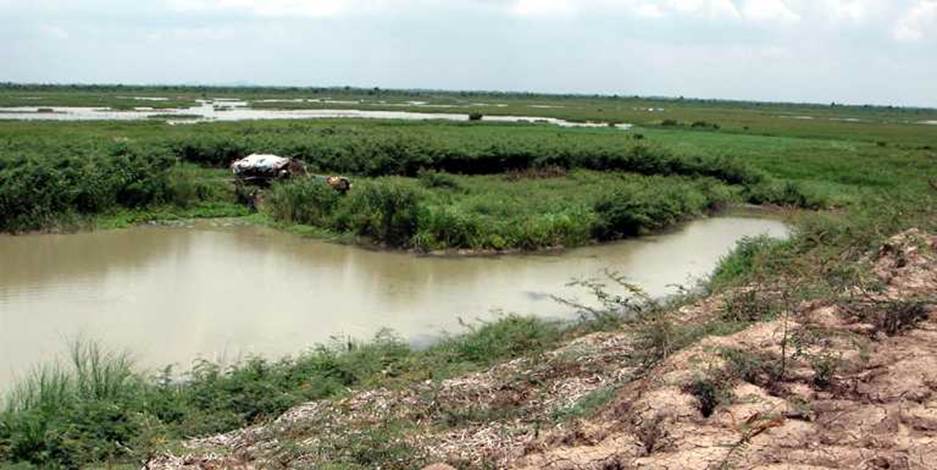
Photo by author, 2006
A large amount of sand brought in by barges from the upper reaches of the Mekong River is pumped into a predetermined position for reclamation.
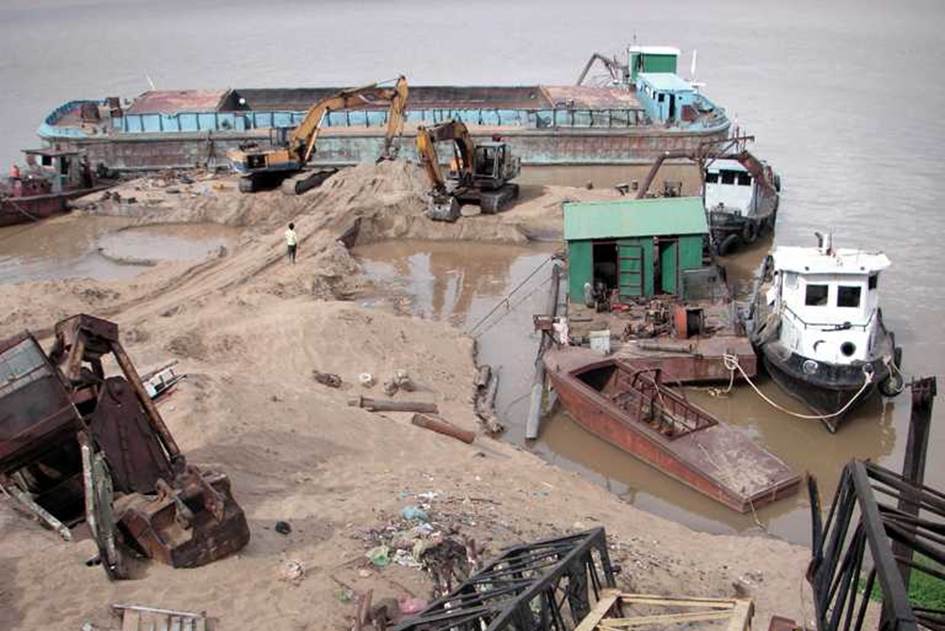
Photo by author, 2006
On the outskirts of Phnom Penh, large-scale landfills are being built for development on the Mekong floodplain.
The pasture fields for cattle graze are also shrinking.
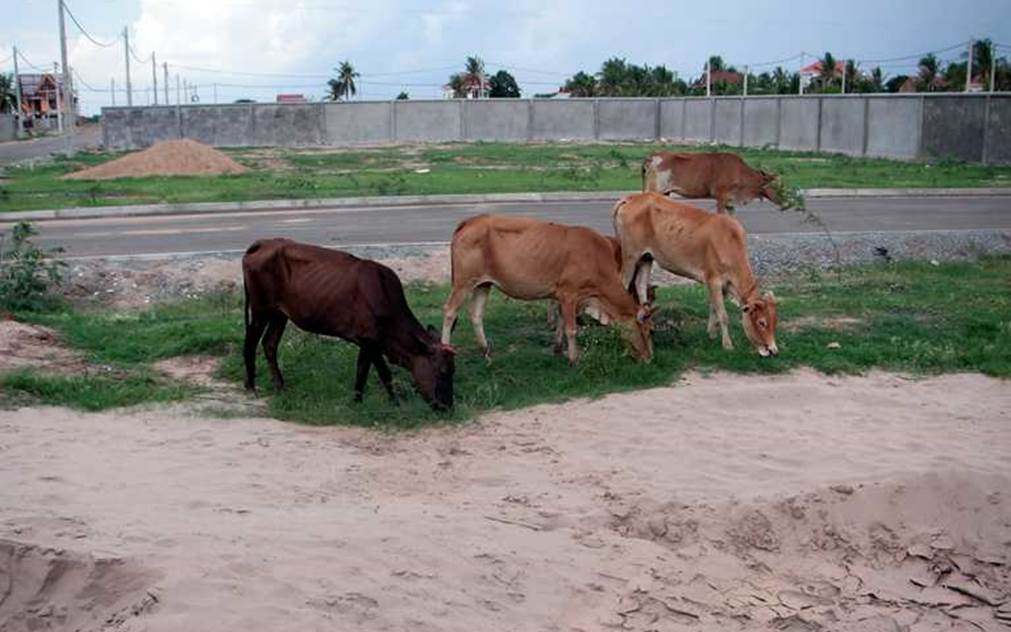
Photo by author, 2006
Construction of a bridge is underway on the creek of the floodplain.
A primitive pile driver is visible.
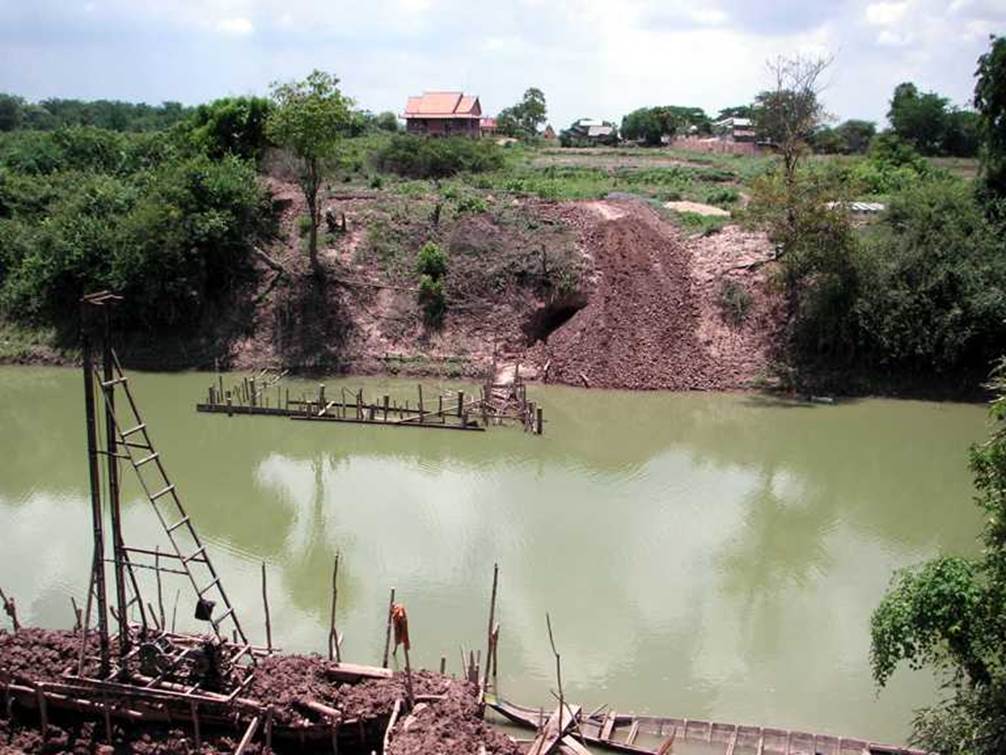
Photo by author, 2006
Newly completed bridges and water conduits in the floodplain creek.
It’s dry season, so there’s no water in the creek.
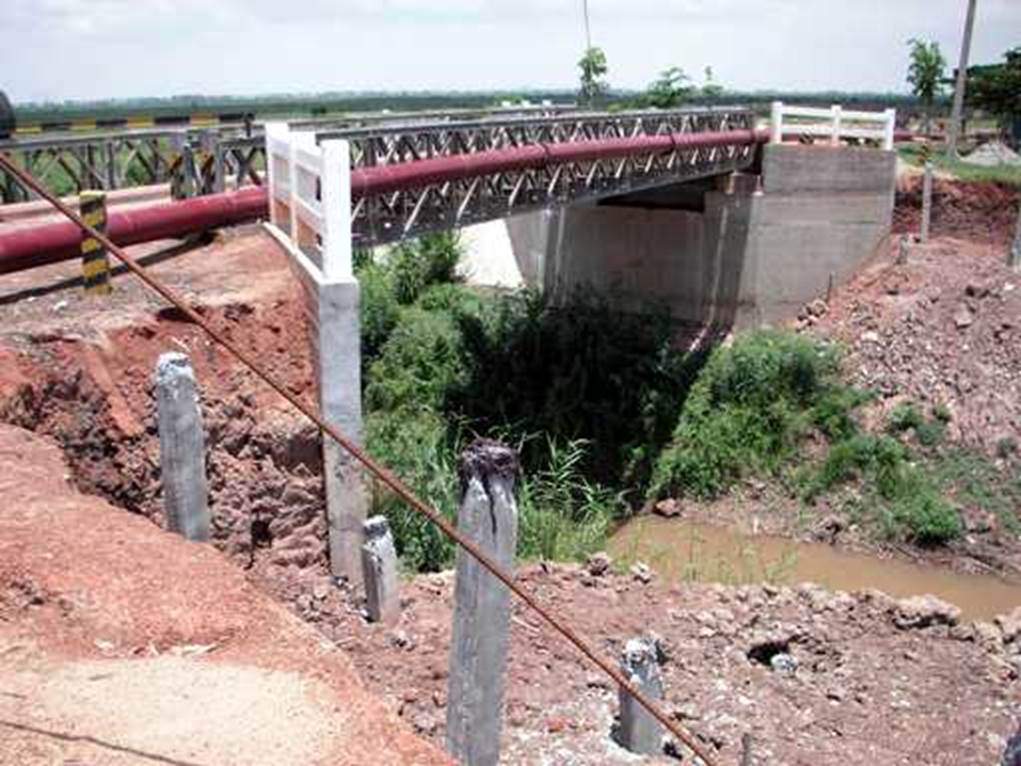
Photo by author, 2006
Houses in the floodplain.
They pile up soil on the floodplain , set concrete piles on top of which they build wooden houses. This style is the most common farmhouse residential architecture in rural Cambodia.
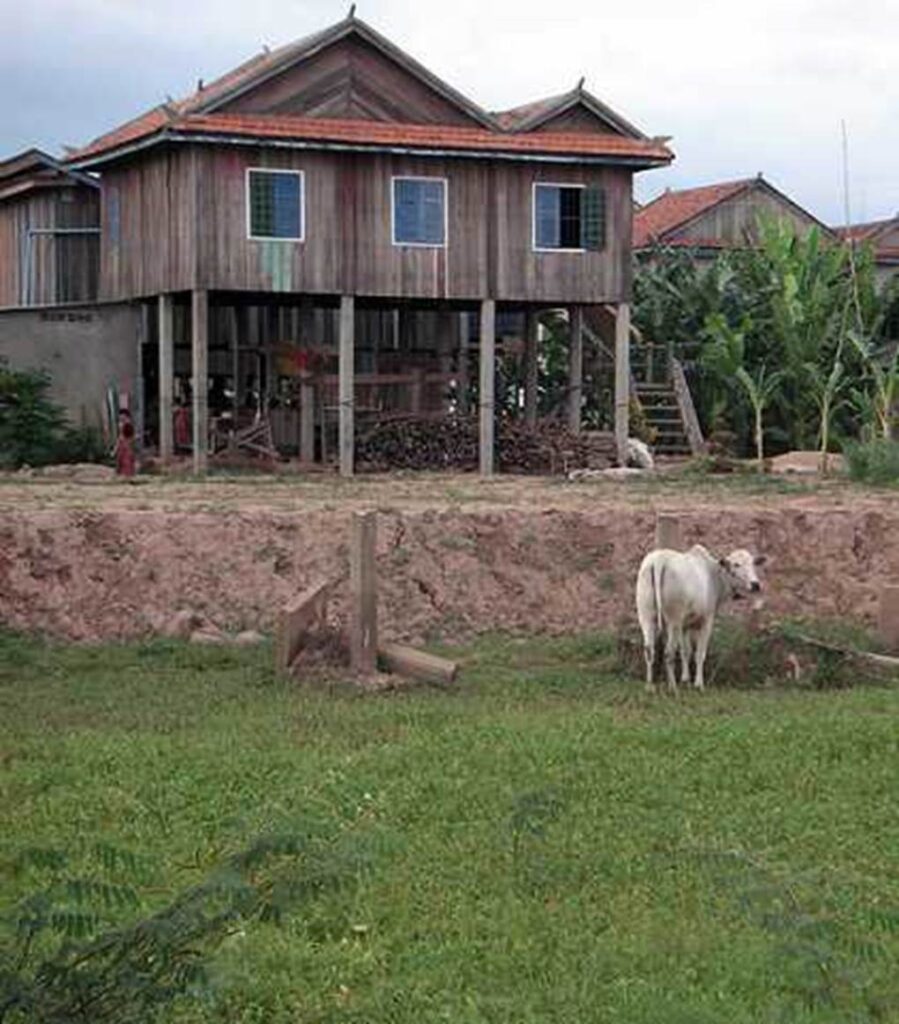
Photo by author, 2006
Houses in the plantation.
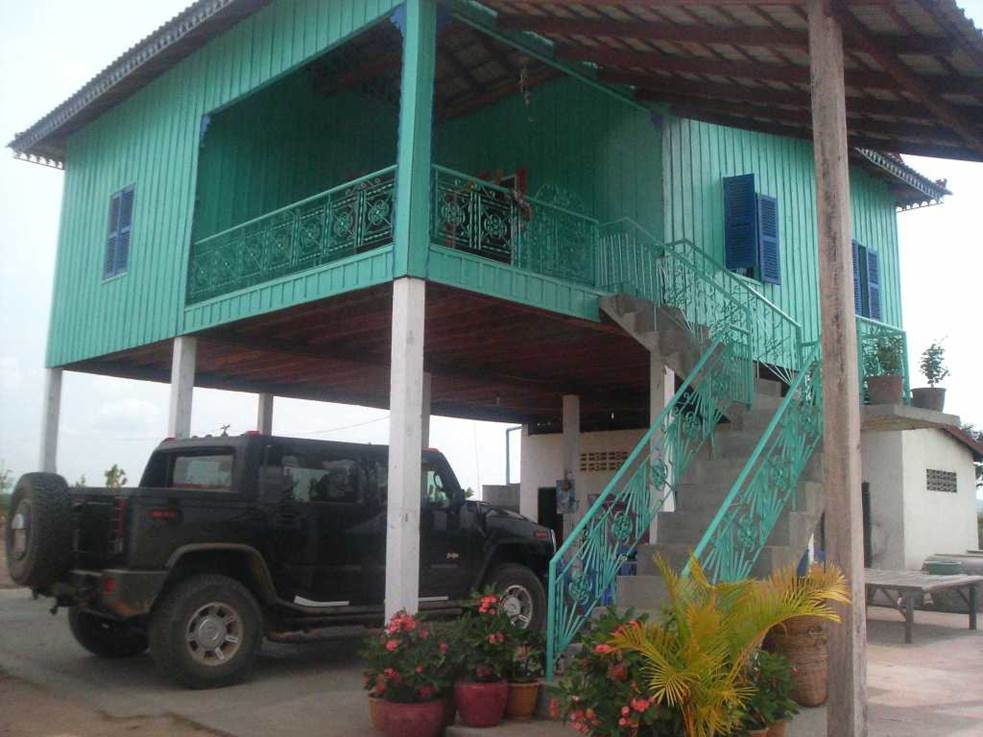
Photo by author, 2006
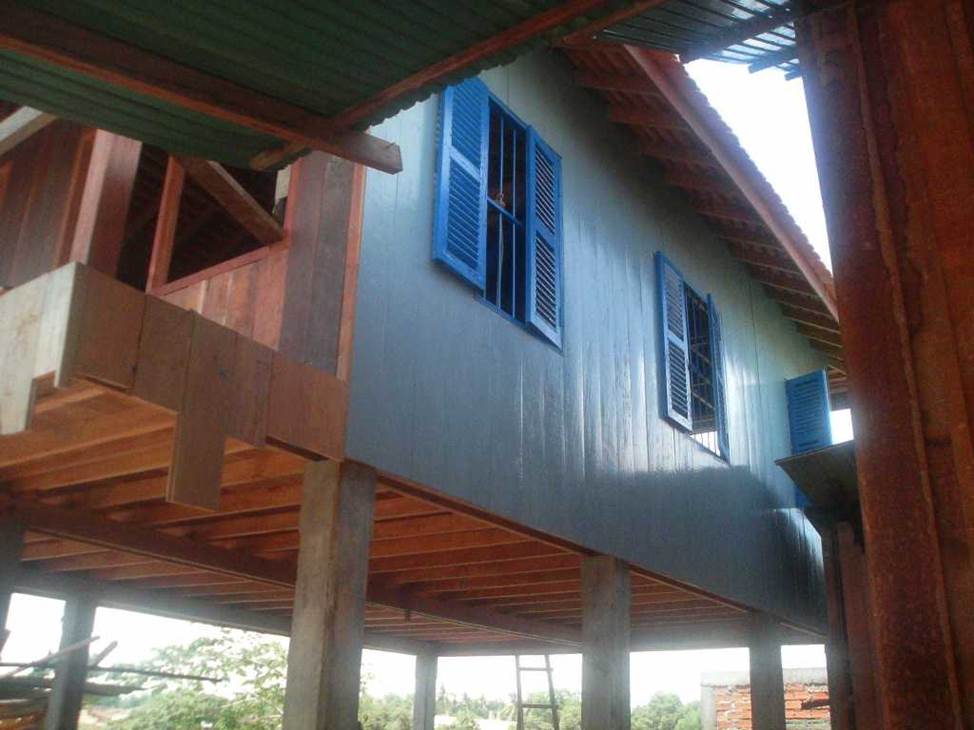
Photo by author, 2006
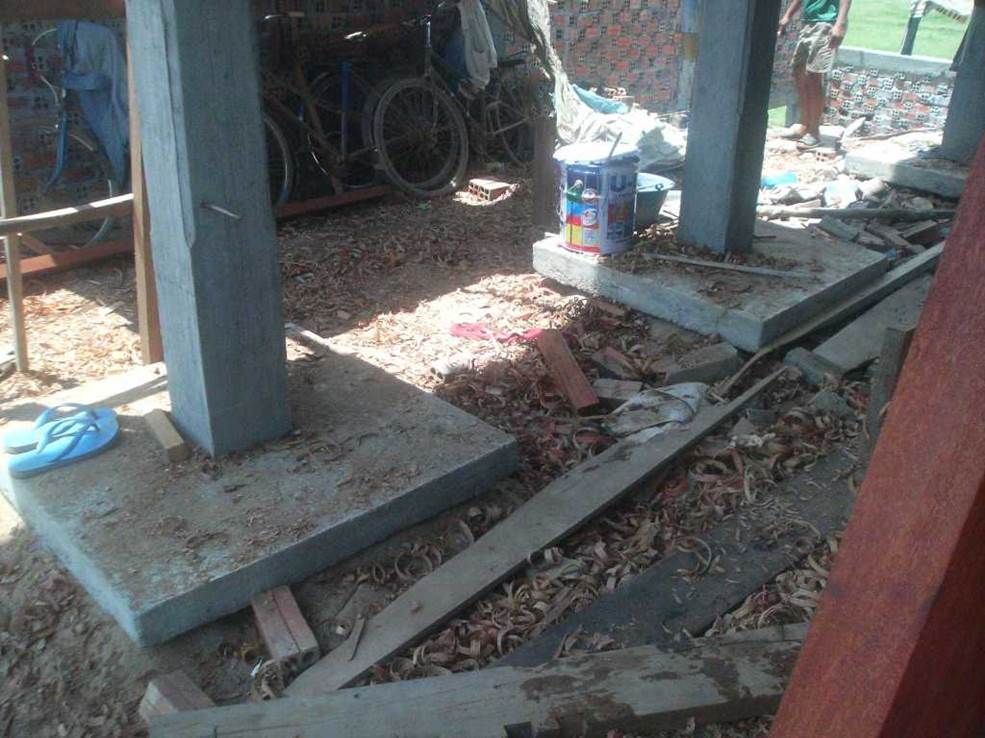
Photo by author, 2006
A gazebo built on the banks of an artificial water hole.
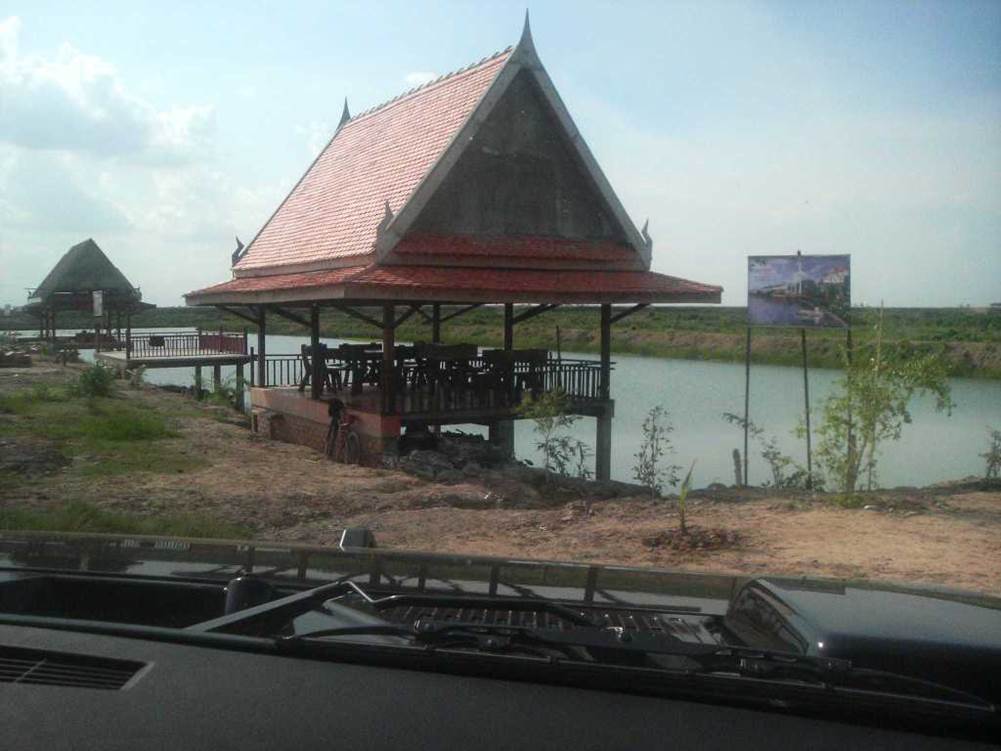
Photo by author, 2006
Floodplain crops
Jackfruit tree.
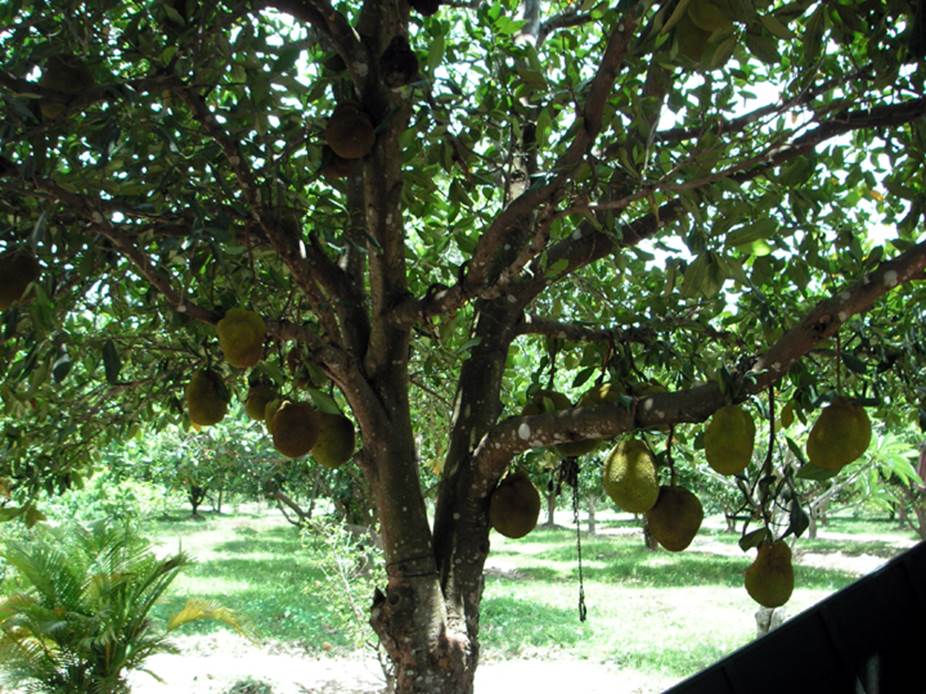
Photo by author, 2006
Jackfruits.
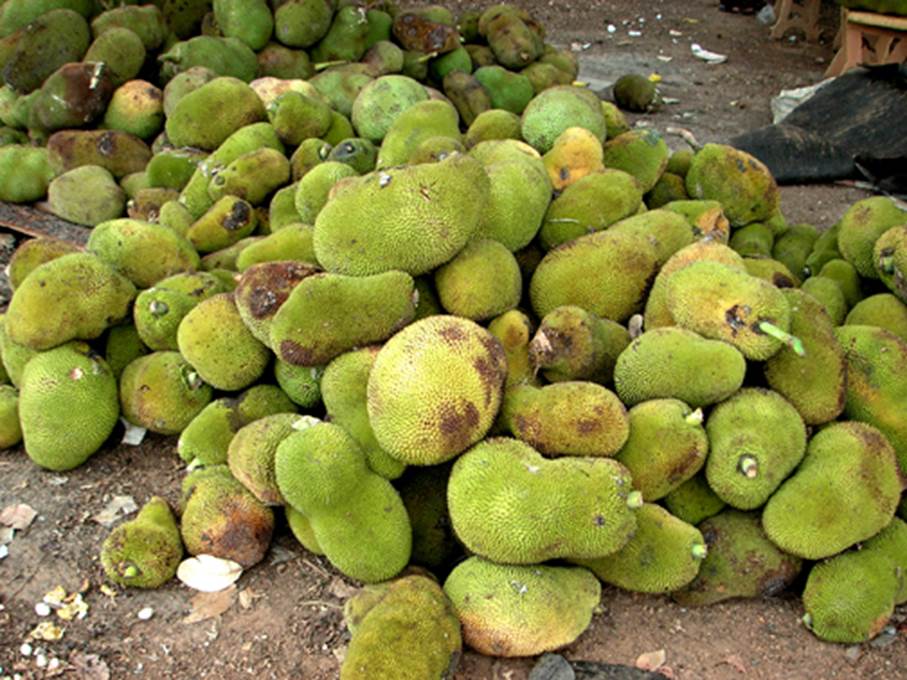
Photo by author, 2006
Cashew Nut Tree.
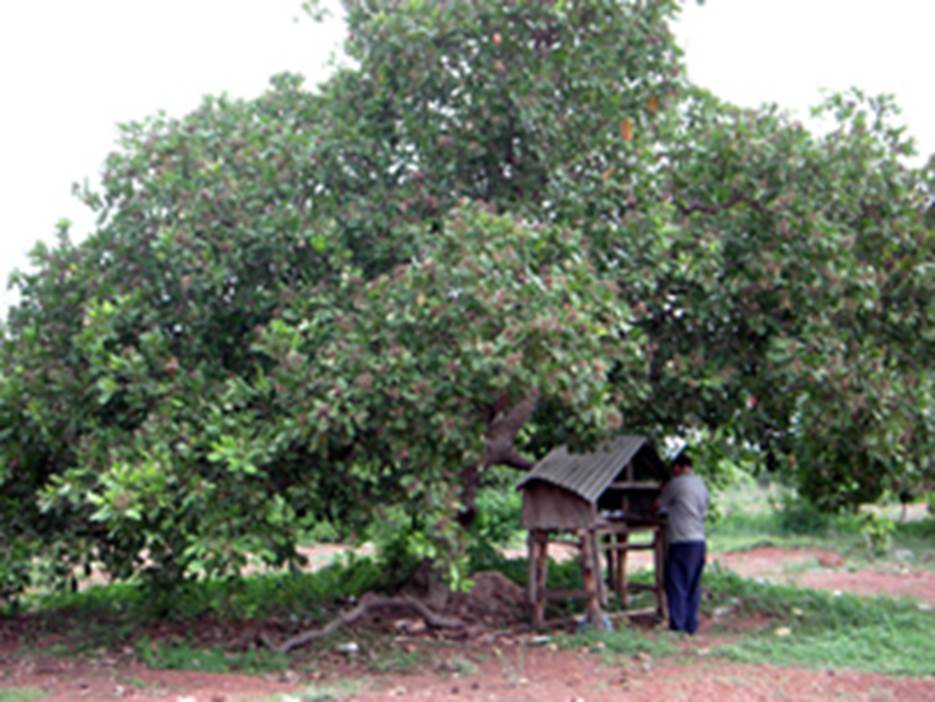
Photo by author, 2006
The upper green part is the fruit of the cashew nut.
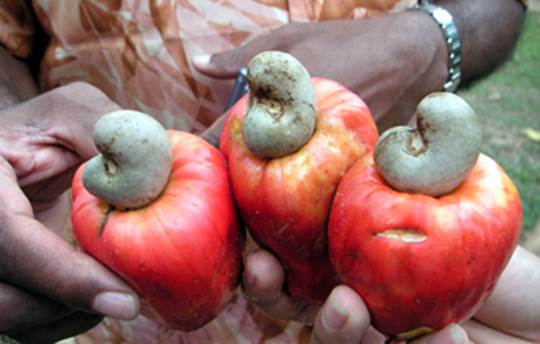
Photo by author, 2006
Harvesting cashew nuts. It is very labour intensive.
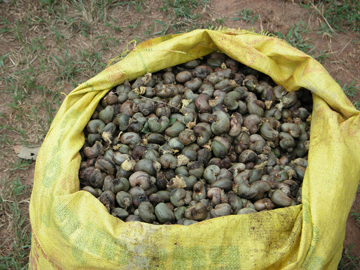
Photo by author, 2006
A place of relaxation in the farm.
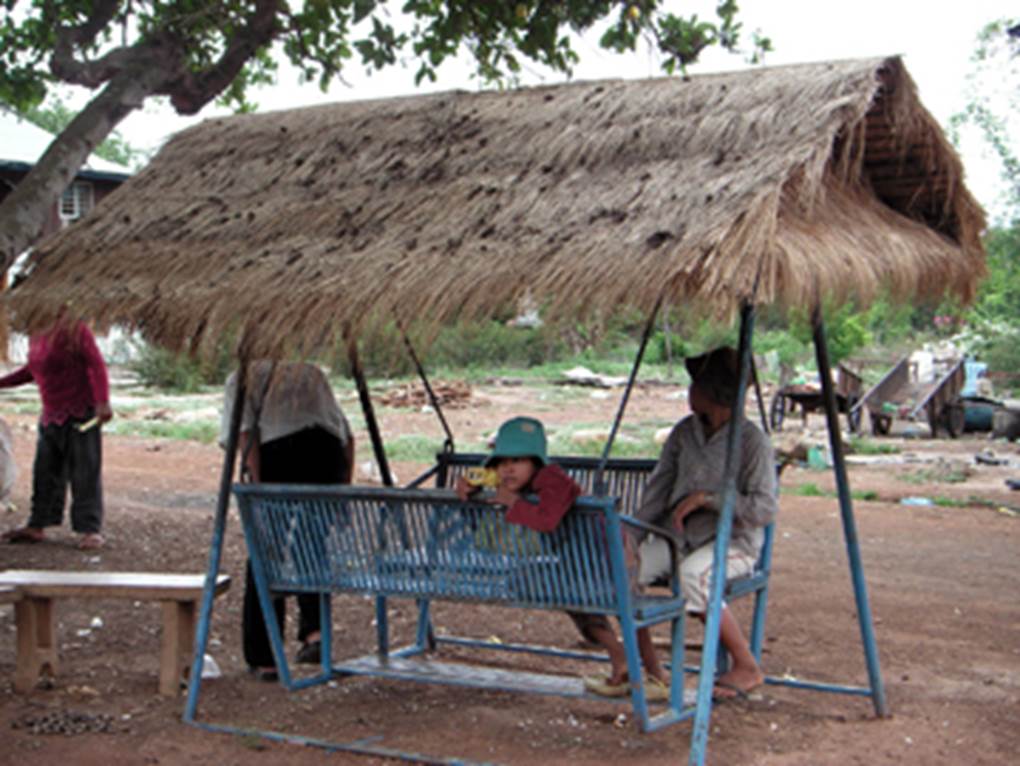
Photo by author, 2006
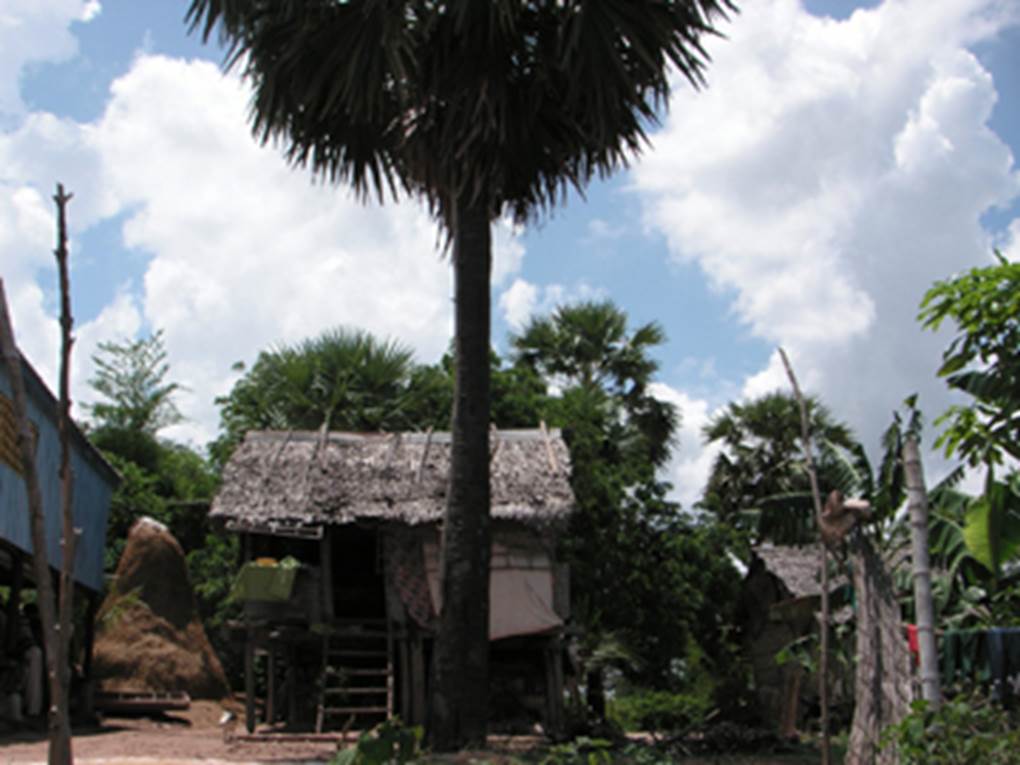
Photo by author, 2006
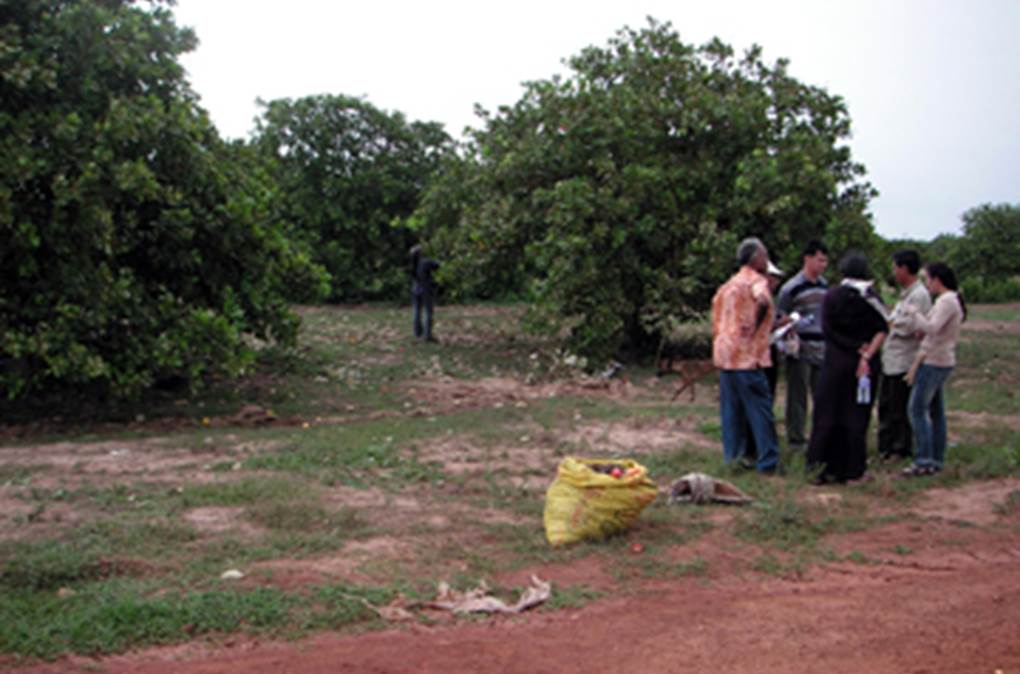
Photo by author, 2006
Water Jars are very important.
When you visit villages in Cambodia, you often see water bottles like the one in the photo below. The dry season in Cambodia is from early November to mid-May and water jars are very important for storing water.
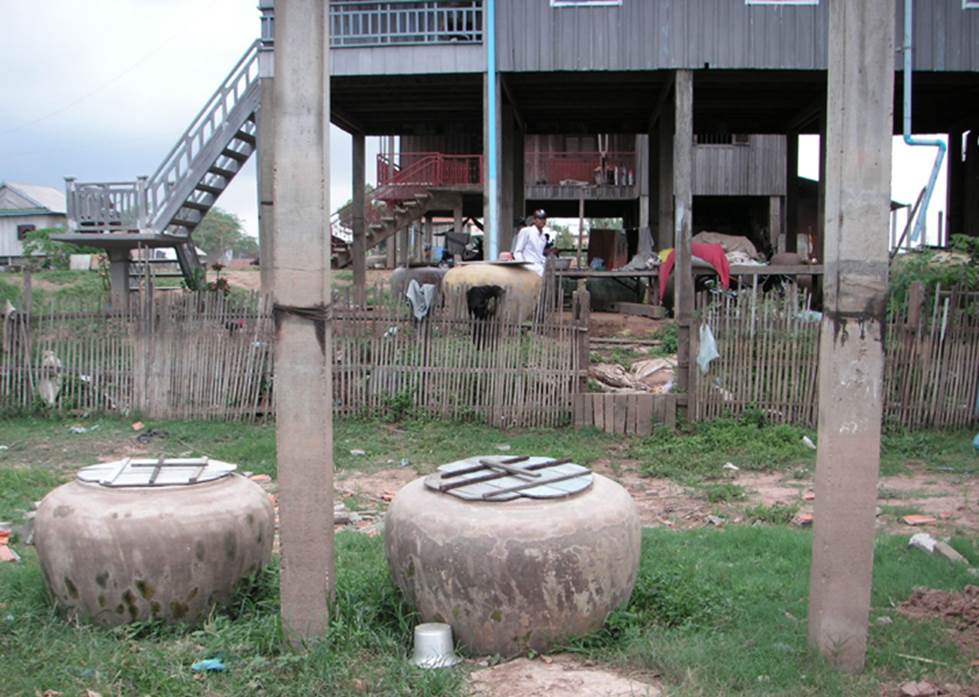
Photo by author, 2006
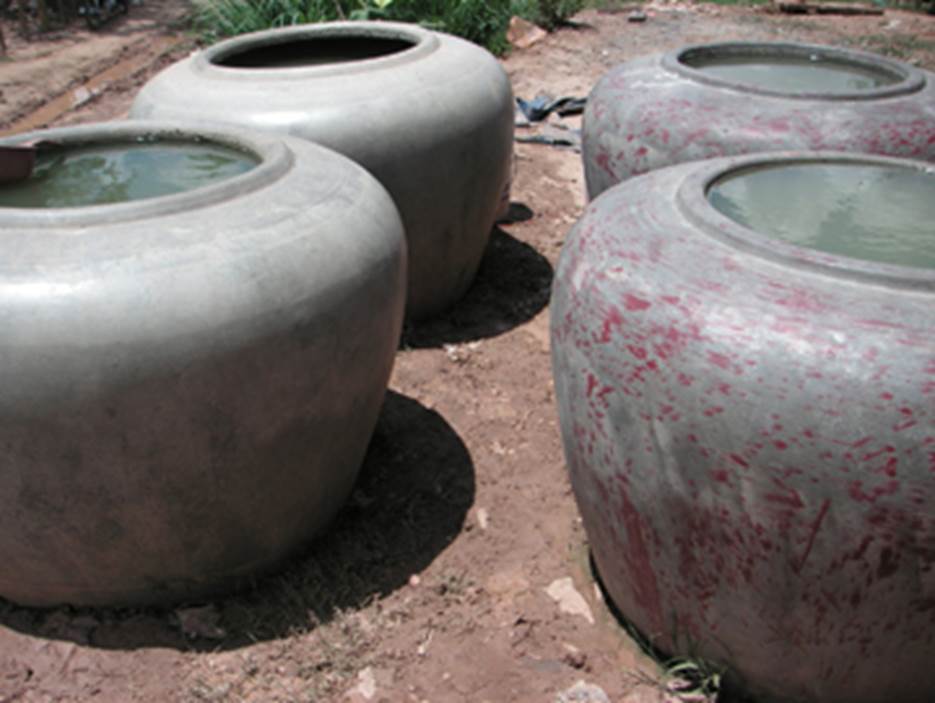
Photo by author, 2006
Farmers in the floodplain
I met a group of young farmers. They are a lucky new generation born after the Pol Pot era, which had disastrous consequences for Cambodia.
They look very healthy. They are also well-dressed.
However, since you don’t see any foreigners around here, there is no need to speak English, only Khmer.
I wanted to try to converse with them, but it didn’t work out
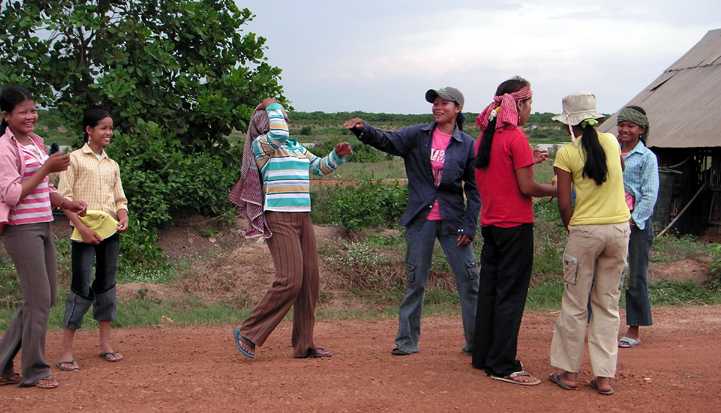
Photo by author, 2006
Peasant couple on a farm. They are part of the unlucky generation born before the Pol Pot era.
They share a cigarette and take is taking a break.
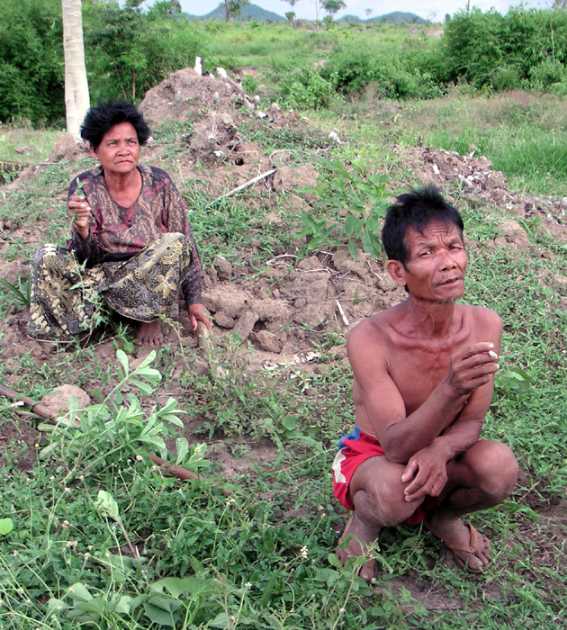
Photo by author, 2006
Phnom Penh to Ho Chi Minh City by land (2008)
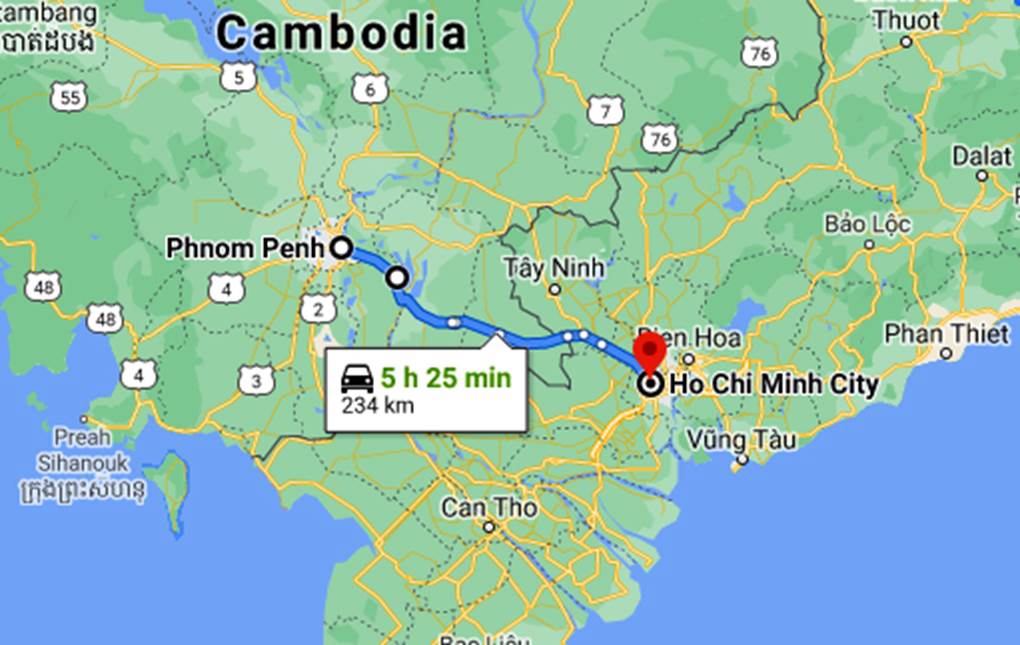
I was invited by my client’s expatriate Phnom Penh to join them on a 240km one-way journey to Ho Chi Minh City, Vietnam.
I would like to describe the scene I encountered there. In terms of distance, it is about the same as Tokyo and Hamamatsu, but three-quarters of the way was in Cambodia, National Highway No. 1 has poor drainage and is extremely bad road condition. (Map below)
Compared to National Highway No. 1, National Highway No. 3, which connects Phnom Penh with its outer port of Sihanouk-Ville, was well paved and of a much higher standard. The reason for this disparity is the historical situation in which the Cambodian side does not welcome travel to and from Vietnam on National Highway No. 1.
Travel overland from Phnom Penh to Ho Chi Minh City, Vietnam in a HUMMER car.
(HUMMER) is an SUV brand developed by General Motors in 1992 that was originally a military four-wheel drive vehicle for civilian use.
We took this car for a long drive with five people, including the driver.
GM discontinued sales of Hummer in 2010.
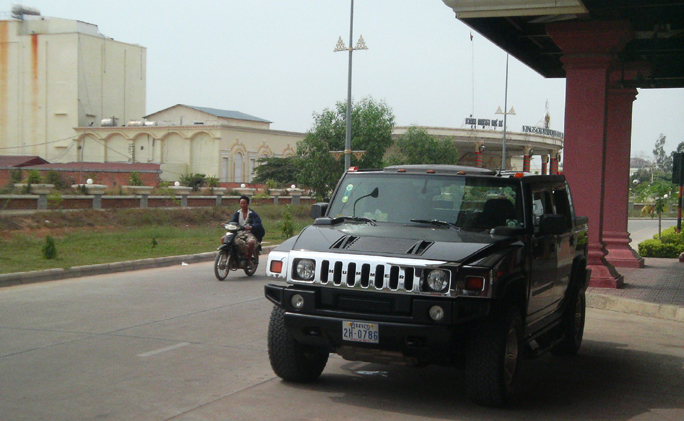
Photo by author, 2008
Ferry on the Mekong River.
Until 2015, there was a ferry terminal over the Mekong River on National Highway No. 1 connecting Phnom Penh and Ho Chi Minh City.
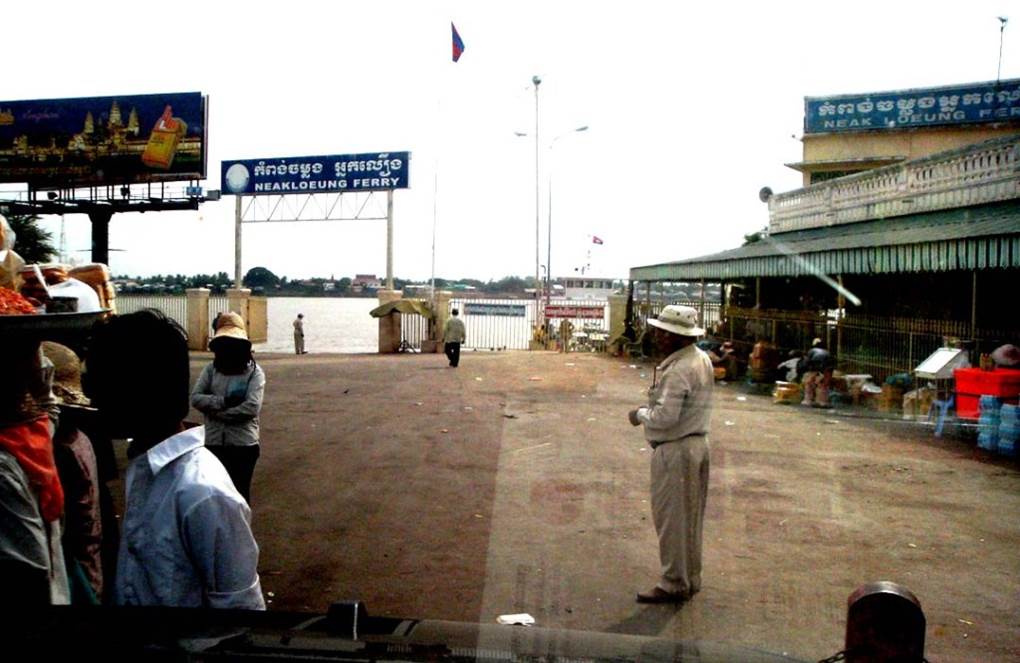
Photo by author, 2008
Boarding the ferry ship.
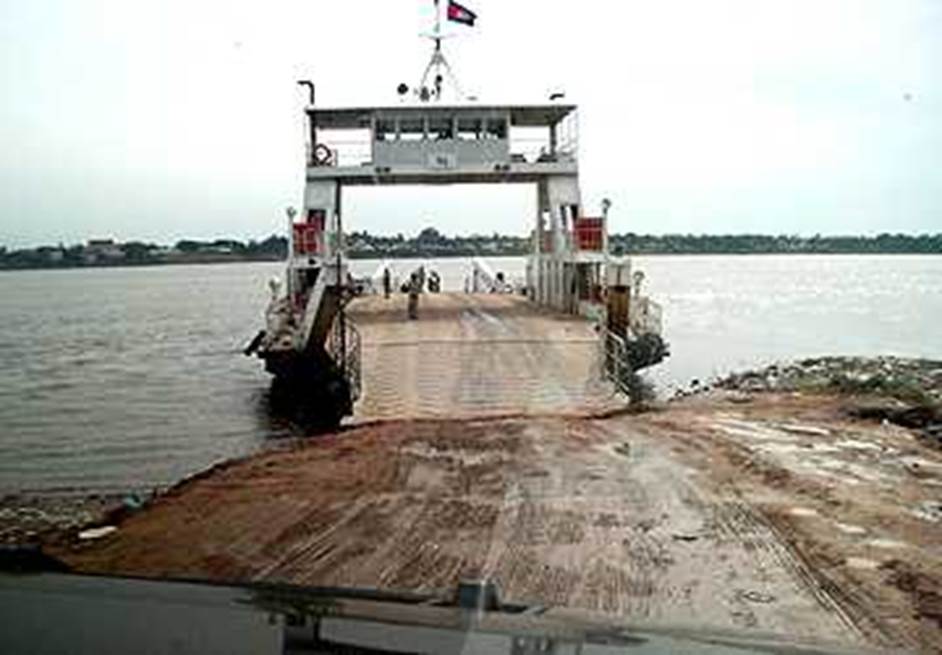
Photo by author, 2008
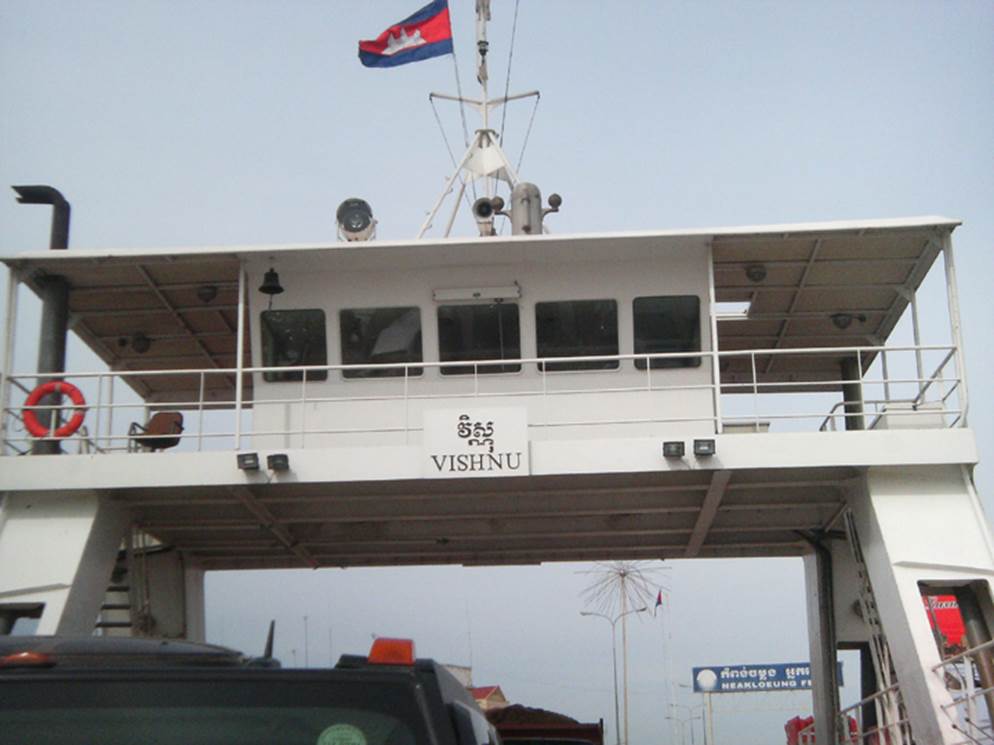
Photo by author, 2008
People crossing the Mekong River.
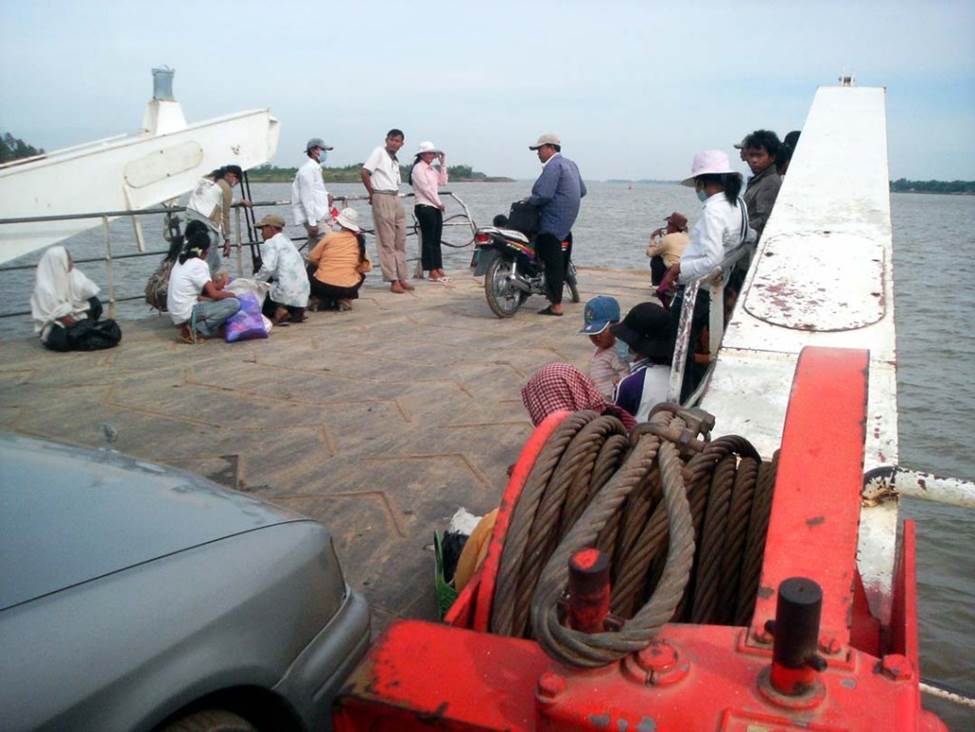
Photo by author, 2008
When I arrived at the opposite bank, I was suddenly surrounded by a large number of vendors.
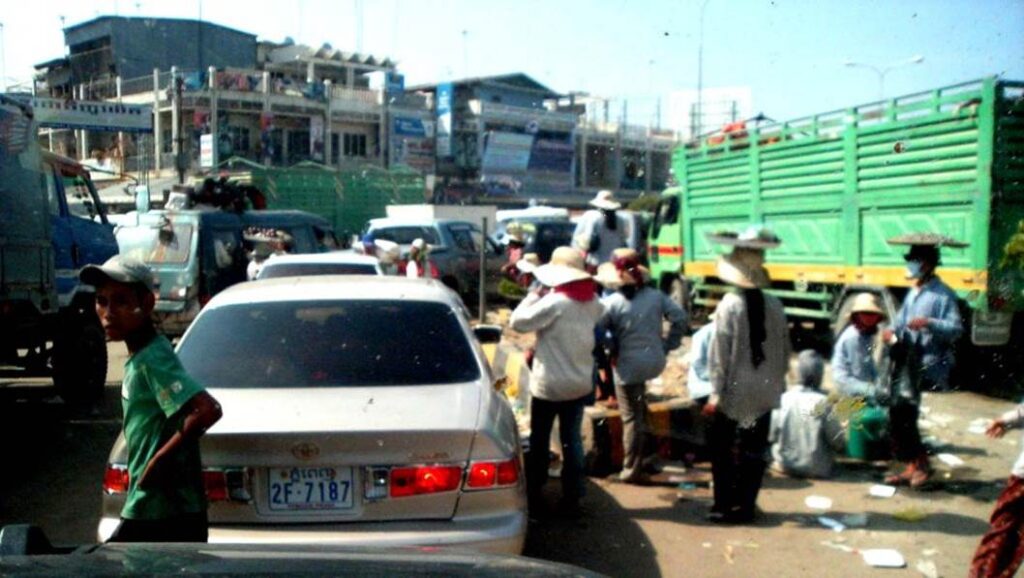
Photo by author, 2008
A large number of vendors at the Mekong River ferry terminal (2008).
Seven years later, in 2015, with the opening of the Tsubasa Bridge, which will be described later, ferry connections was abolished, and everyone lost their jobs.
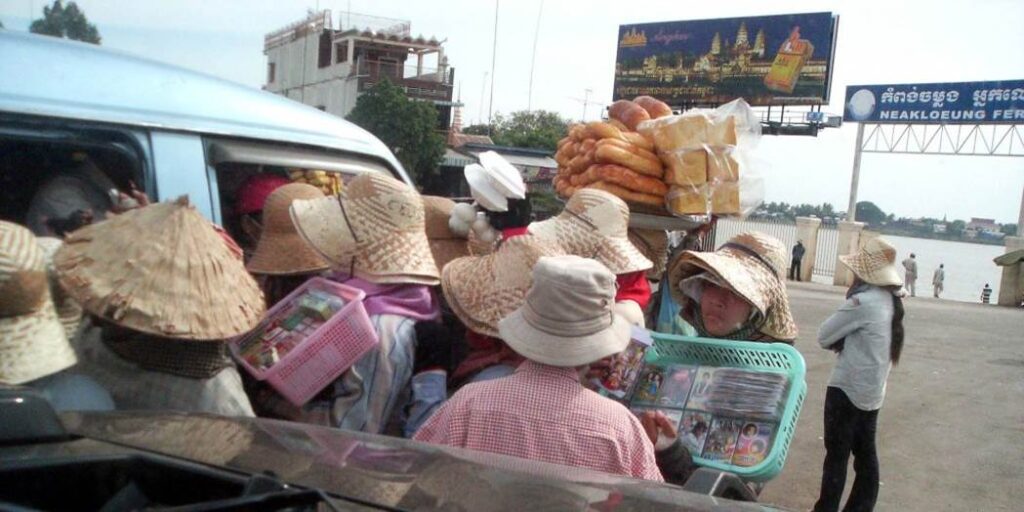
Photo by author, 2008
The ferry terminal and the roadside stalls in the village on the opposite bank.
The area is thriving, with an abundance of seafood.
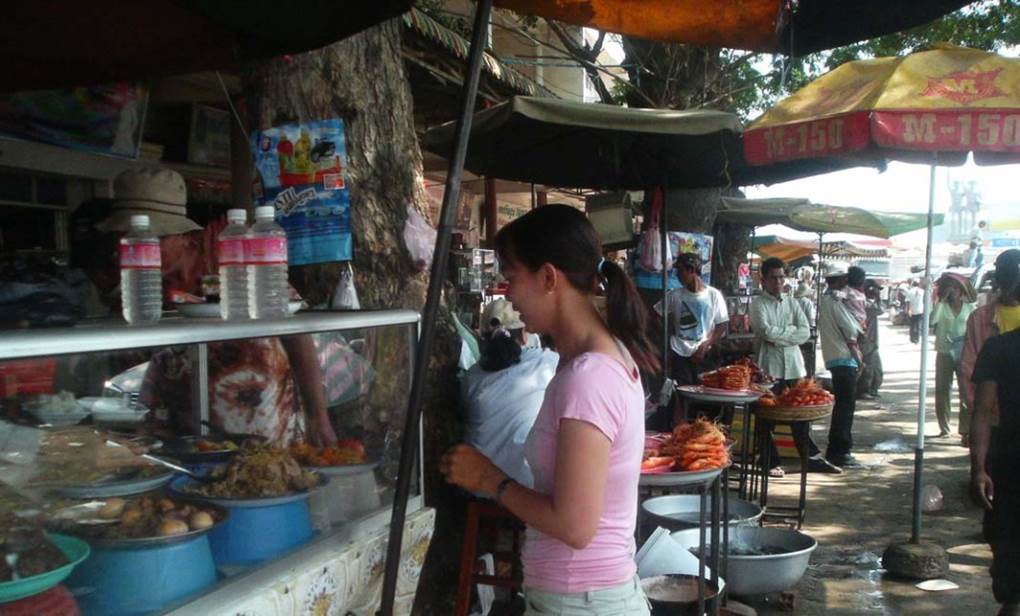
Photo by author, 2008
Abundant river shrimp and river crabs are fried and sold.
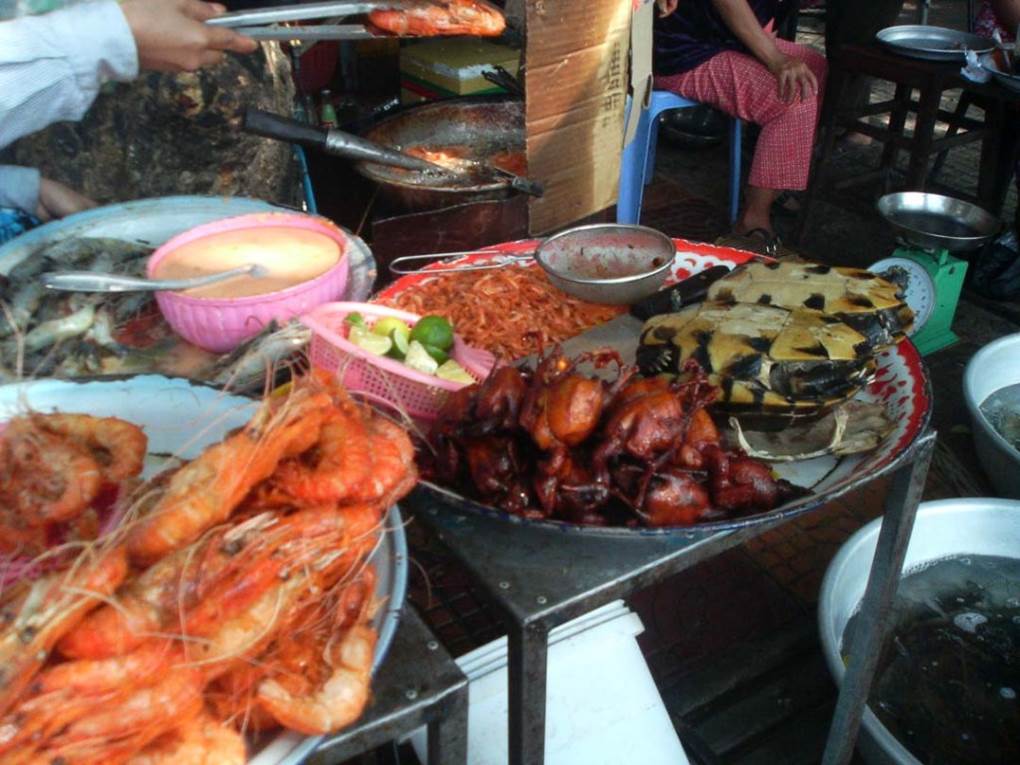
Photo by author, 2008
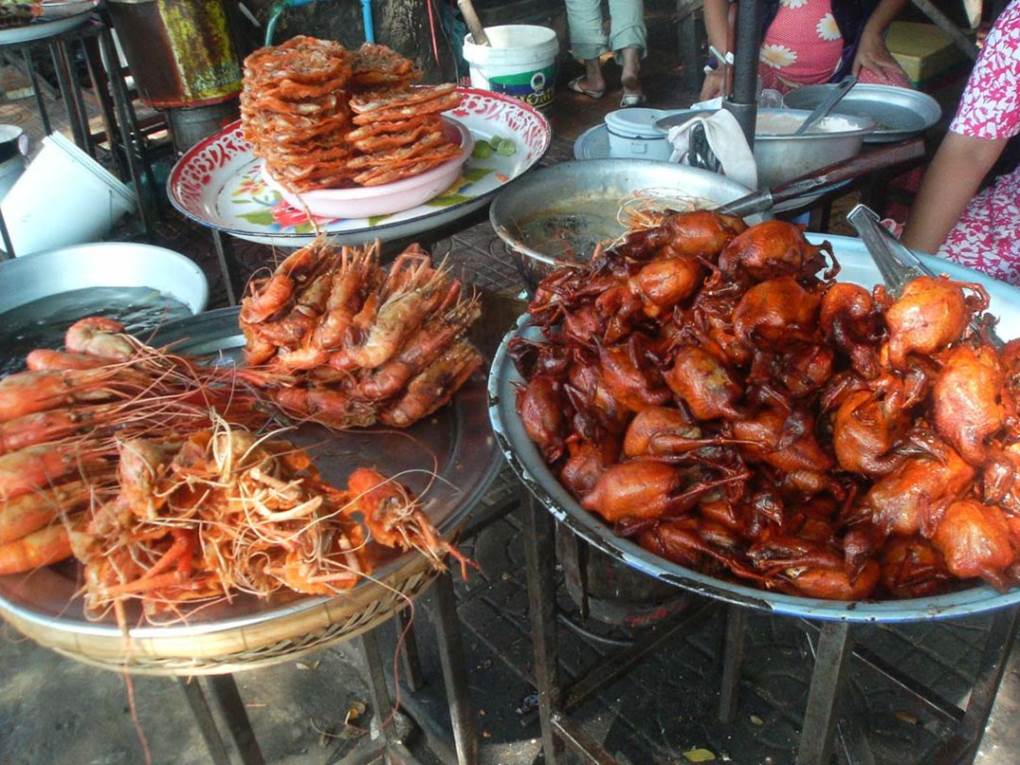
Photo by author, 2008
Border Checkpoint
Cambodia-Vietnam border crossing.
Travellers getting off buses in Cambodia are being inspected by Vietnamese immigration officers. It’s kind of rather loose border.
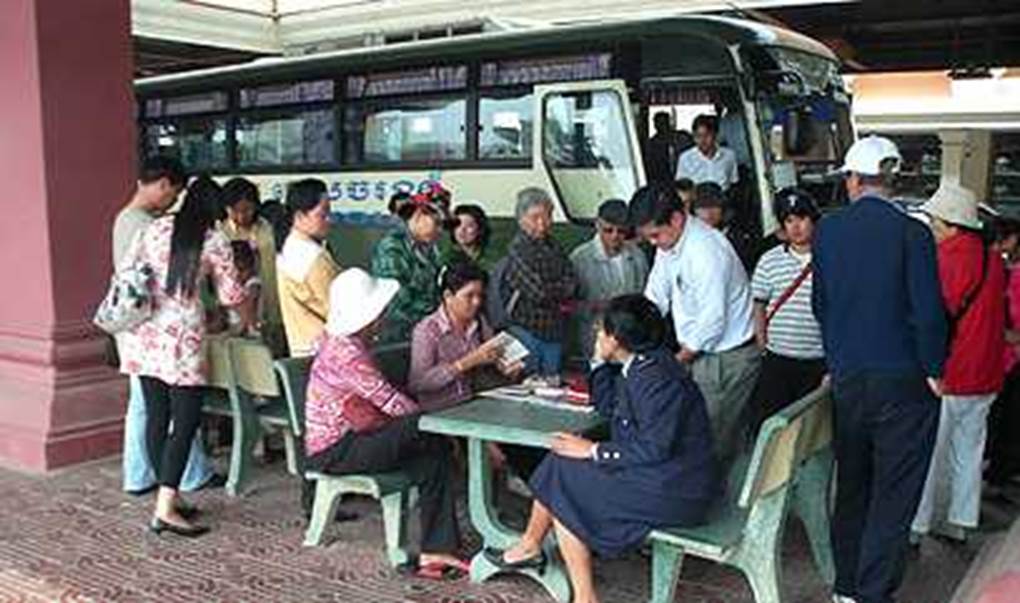
Photo by author, 2008
After the border check, you can see the building on the Vietnamese side ahead

Photo by author, 2008
Enter Vietnam from Cambodia.
Duty-free shopping center map on the Vietnamese side.
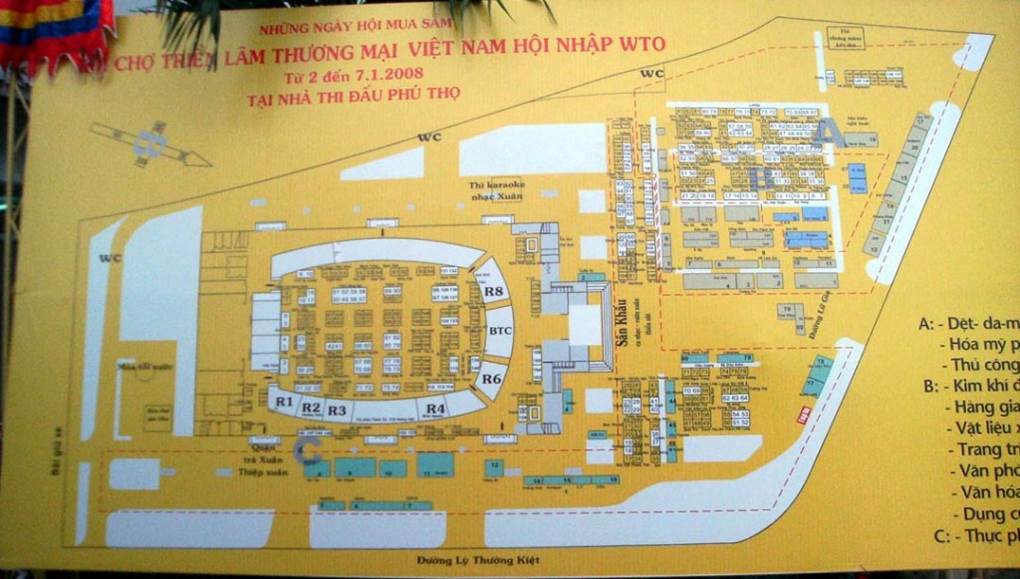
Photo by author, 2008
Duty-free shopping center on the Vietnamese side.
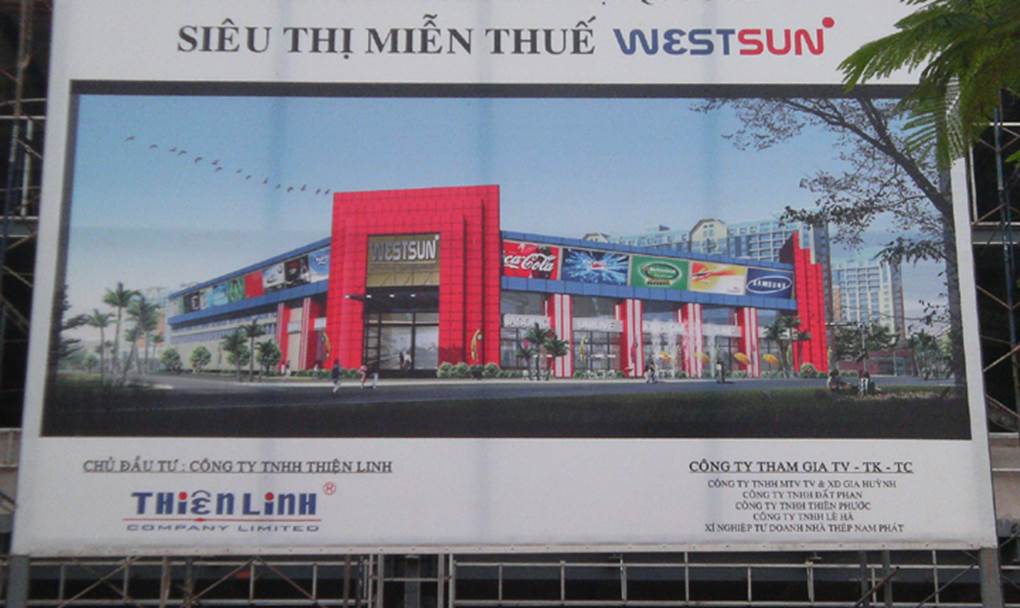
Photo by author, 2008
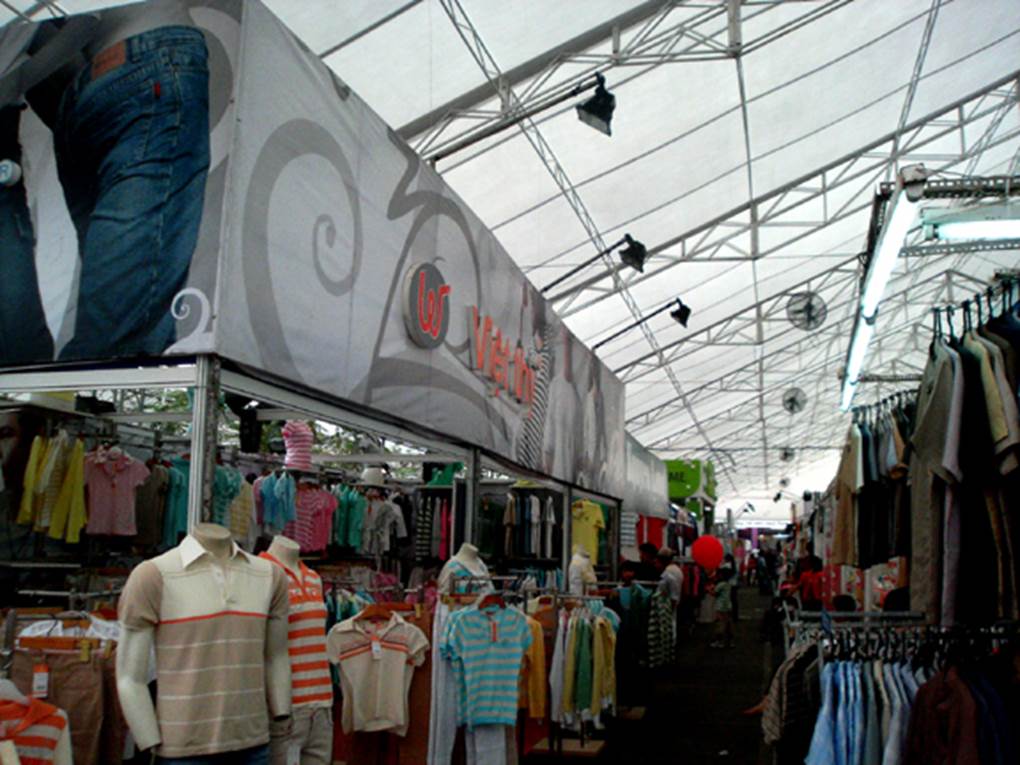
Photo by author, 2008
Return to Cambodia from Vietnam.
View of the Cambodian side from the Vietnam border checkpoint.
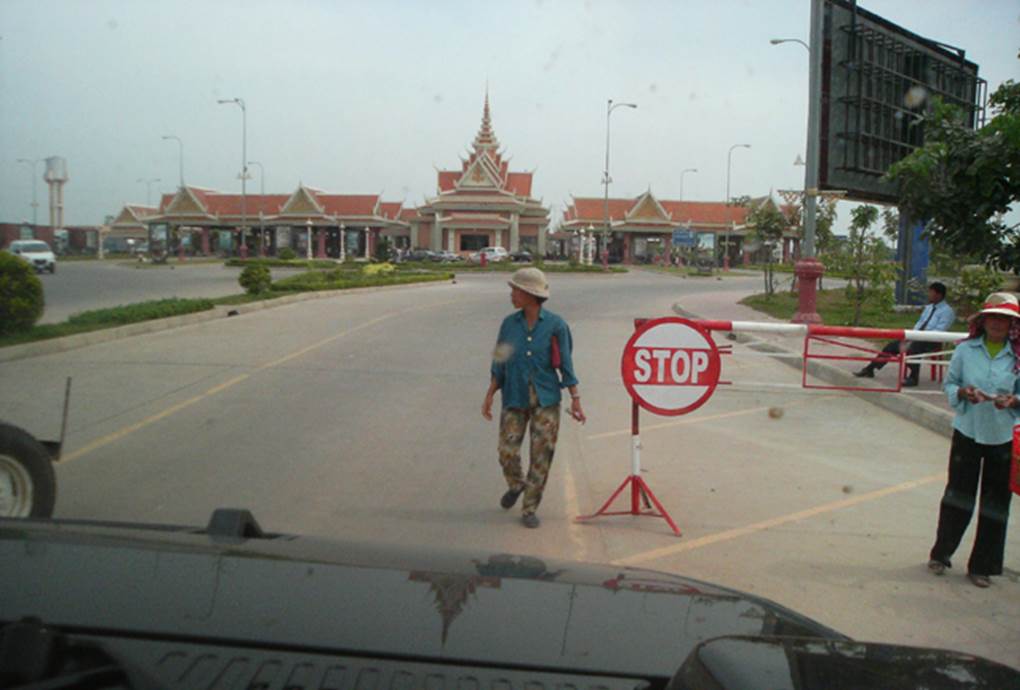
Photo by author, 2008
Border casino facilities.
It is said that there are more than 50 casino facilities in Cambodia.
There is also a casino complex on the border, which is targeted at tourists from Vietnam. An even larger casino complex is located on the Thai border, which is targeted at Thai tourists. In addition, at Phnom Penh’s outer port Sihanoukville, there is an even larger casino complex, which attracts Chinese people.
Even further on top of that are the casinos in Phnom Penh. Naga World (mentioned before, Phnom Penh Business Trip Part 2) operates the largest casino in Cambodia. According to newspaper, Phnom Penh Post in 2018, the amount of money gambled by VIP customers at Naga World casinos in 2017 reached $21.1 billion (approximately 2.16 trillion yen), exceeding Cambodia’s total GDP of $20.02 billion in 2016.
After 2000, Chinese visitors has increased to a level unimaginable, and in 2016, the number of visitors to NagaWorld casinos reached 1.2 million, an increase of 40% from the previous year. Chinese people were seen everywhere in the city, and Chinese signs began to appear everywhere.
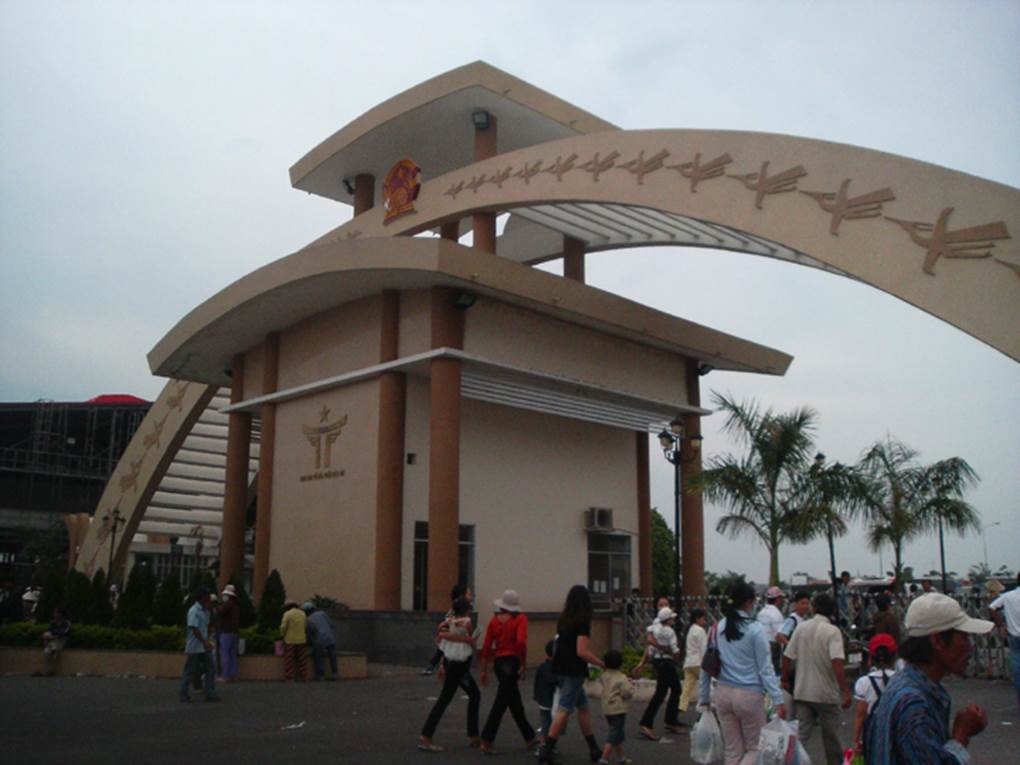
Photo by author, 2008
According to estimates by the National Bank of Cambodia, foreign visitors spent $2 billion (about 240 billion yen) in 2014, of which 40% were spent in casinos.
Tsubasa Bridge
The Tsubasa Bridge was completed in May 2015 with the assistance of Japan.
A grant aid project by the Japan government made it possible to directly cross the Mekong River directly on a road bridge, instead of previously crossing by ferry. The bridge will bring significant benefits to transportation.
The bridge was built about 60 kilo meters southeast of the capital Phnom Penh on National Highway No. 1. Sumitomo Mitsui Construction was contracted for the construction. The approach bridge exceeds 1,500 meters on the east and west sides combined. It was a large-scale construction with a total length of 5,460 meters, including the approach road.
With the completion of this bridge, Vietmam, Cambodia and Thailand will be connected by a single road, making it a groundbreaking project for improving distribution and logistics.
With the completion of Tsubasa Bridge in 2015, ferries connecting the old road were abolished or reduced in number, so the photo I took of the ferry in March 2008 will become a valuable record of the past.
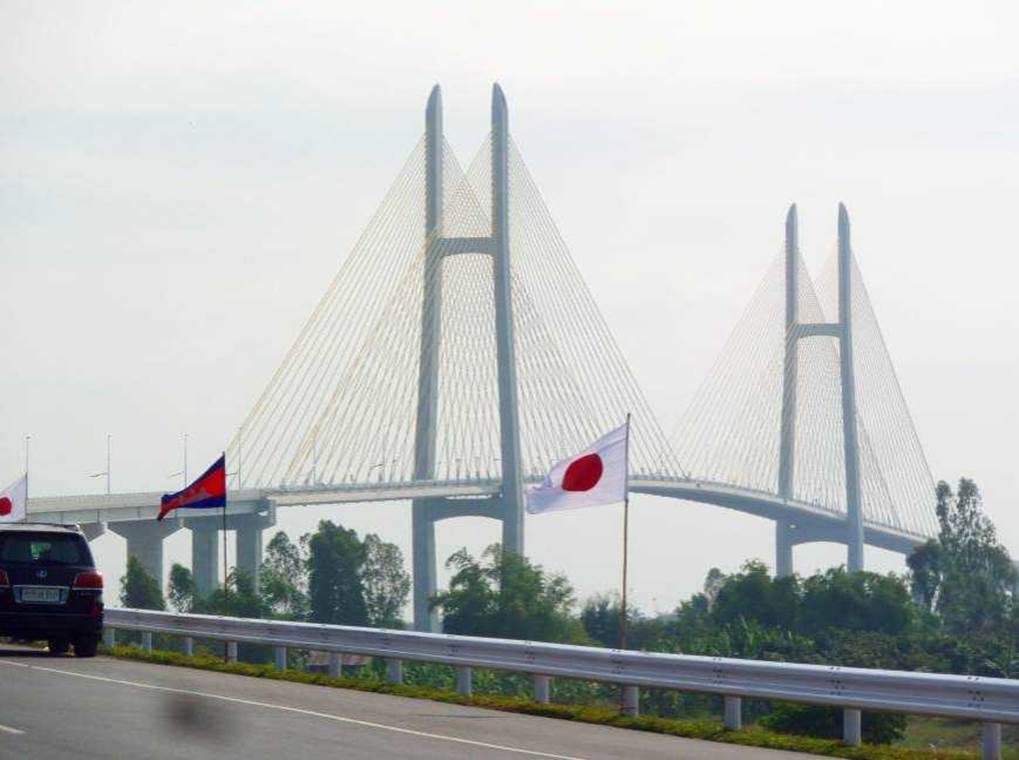
This bridge project dramatically improved Cambodia’s infrastructure with two bridges, the Japan Bridge in Phnom Penh and the Tsubasa Bridge in the Mekong Delta.
Photos by author, 2006~2008