JAP | ENG
Ho Chi Minh City,
Vietnam
1989
My first time in Ho Chi Minh City
I had the opportunity to visit Vietnam with an acquaintance who lives in Singapore and has been running a Japanese restaurant for 20 years.
First, we had to get an entry visa, but we were told that we could get it quickly if we applied at the Vietnamese Embassy in Bangkok, so we headed to Bangkok.
Below: Flying over Bangkok.

Photo by author, 1989
Apply for and get a visa to enter Vietnam in Bangkok
On the day I arrived in Bangkok, I applied for a Vietnamese visa, stayed overnight, then went to pick up my passport and headed to Ho Chi Minh City.

Arrivals exit at Bangkok Don Mueang Airport. Photo by author, 1989
Ho Chi Minh City’s airport still retains the appearance of a military airfield
As we prepared to land over Ho Chi Minh City, the runway of the airport came into view. Right next to the runway were a series of fighter plane hangars, likely left by the former U.S. military, and oil tanks.
It was a bizarre sight, as if it were an active military airfield.
After the long Vietnam War, Saigon unexpectedly fell in 1975, and South Vietnam, which had been supported by the United States, became a communist country.
After that, the Vietnamese communist army invaded Cambodia, and the war continued, leading to the Sino-Vietnamese War in 1979.
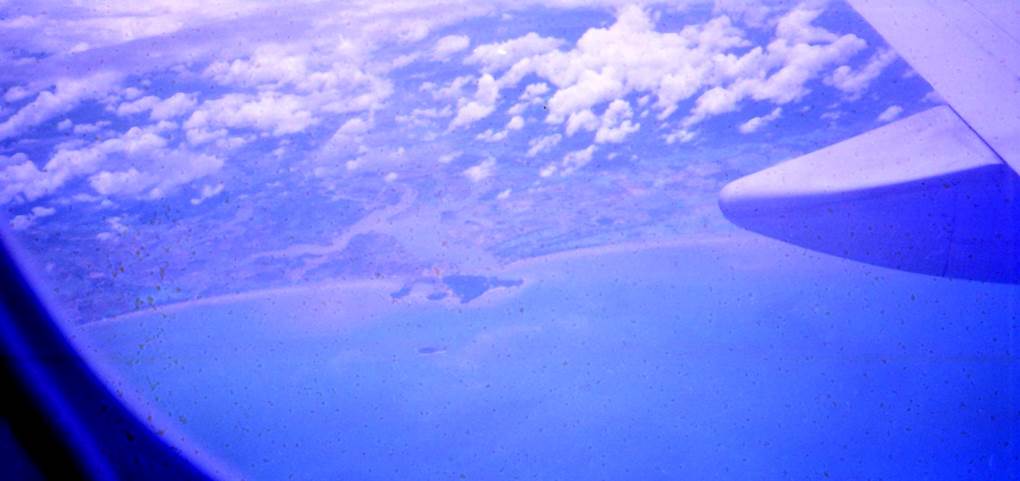
Flying over Vietnam Photo by author, 1989
A Japanese trading company specializing in products from the communist countries.
At the airport, an employee of a Japanese trading company that specializes in products from communist countries, stationed in Ho Chi Minh City, led the way and we headed to the center of the city in his company car.
It was my first time to learn that there were trading companies that specialized in products from communist countries .
I had certainly entered a “communist country.”
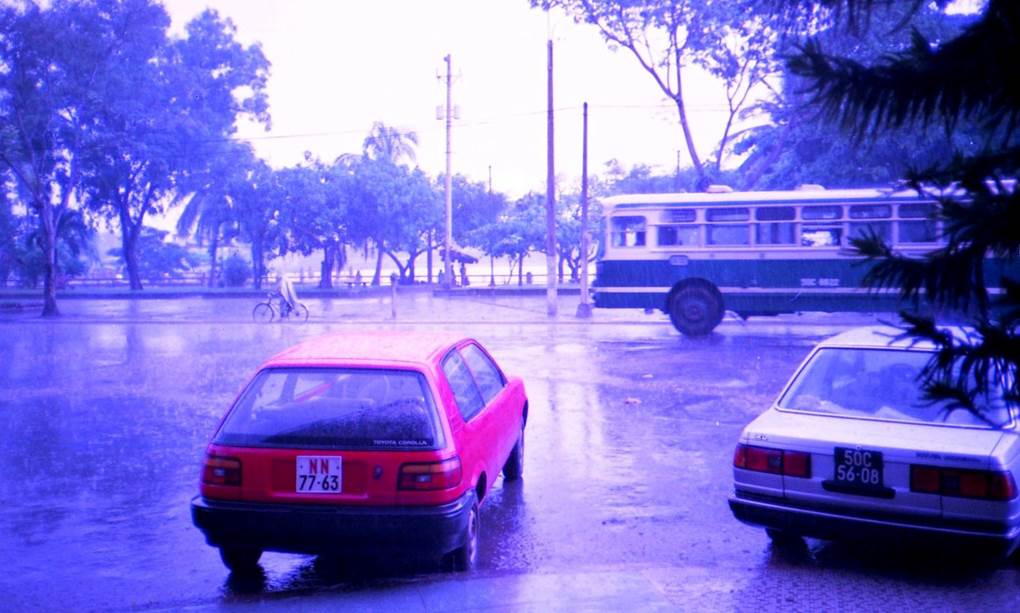
Arrival exit at Ho Chi Minh Airport, Vietnam
Photo by author, 1989
Saigon, known as the Paris of the East
During the French colonial era, Saigon was a prosperous city with wide streets and parks in a planned manner, and was called the Paris of the East, on a par with Bangkok.
When we visited in 1989, there was an incomparably greater disparity between the two cities. There are still many old Soviet-made and communist cars and trucks on the streets.

The road from the airport to the city center.
Photo by author, 1989
This car was made in Japan and had a Sony car audio system, but most of the other cars were made in communist countries.
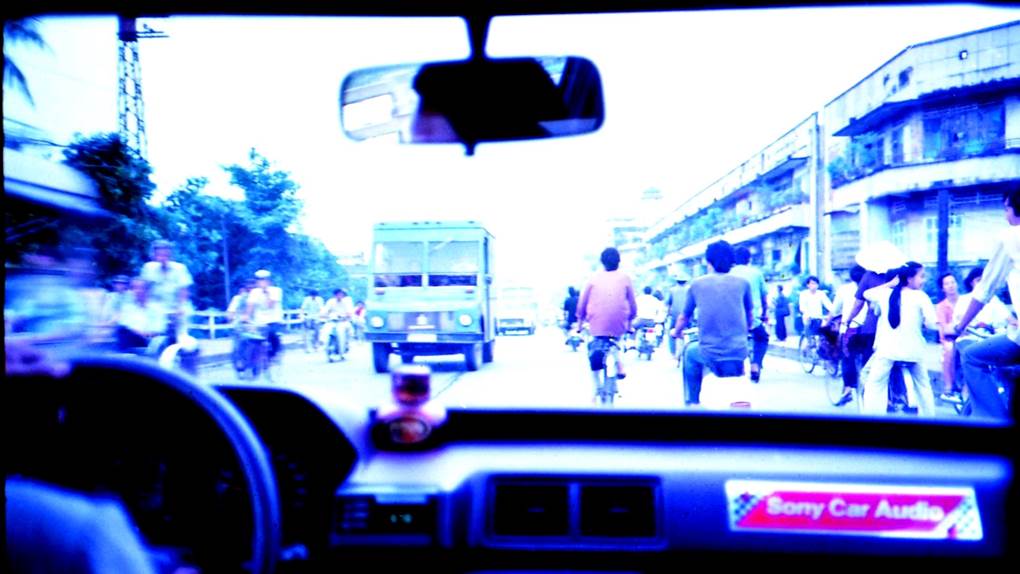
Photo by author, 1989
There are injured children and homeless people on the street corners.
Even after the fall of Saigon and the unification of Vietnam as a socialist country, the invasion of Cambodia and the Sino-Vietnamese War continued, further delaying the reconstruction of the exhausted economy.
Even when we visited in 1989, the city was filled with injured children and homeless people, and we repeatedly encountered the scars of the terrible war on the street corners.
In 1986, Vietnam embarked on the Doi Moi policy (a slogan for renewal that incorporated the liberal elements of capitalism), but it was not until the 1990s that the effects of the policy became apparent.
A colonial-era building remains on the main street.

Photo by author, 1989
Majestic Hotel Saigon
Opened in 1925 during the French colonial era, this historic hotel was the pioneer of the Western colonial style. With the fall of Saigon in the Vietnam War in 1975, the hotel was renamed to Chu Long Hotel (Mekong Hotel or Khách Sạn Cửu Long). When we checked in in 1989, the name remain the same, and there was no recognition of it as a historic Majestic hotel, and only the impression of a depressed hotel remained.
It is located in a prime location on the corner of Dong Khoi Street, the main street in Saigon’s 1st District, where it meets the Saigon River.

The photo below shows the area around the check-in counter at the Majestic Hotel. In the late 1980s, the tourism industry was booming in Southeast Asia’s major cities, and many modern hotels were already emerging, but Ho Chi Minh City had not yet found its foothold.
The dimly lit check-in counter of the Chu Long Hotel
(formerly the Majestic Hotel)
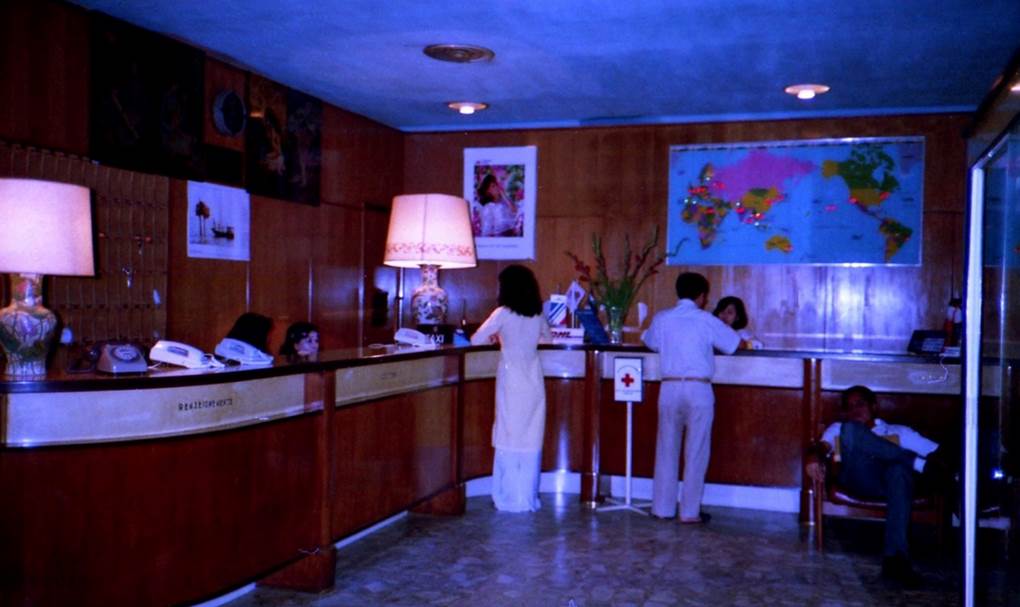
Photo by author, 1989
The dimly lit lobby lounge of the Chu Long Hotel (formerly the Majestic Hotel).

Photo by author, 1989
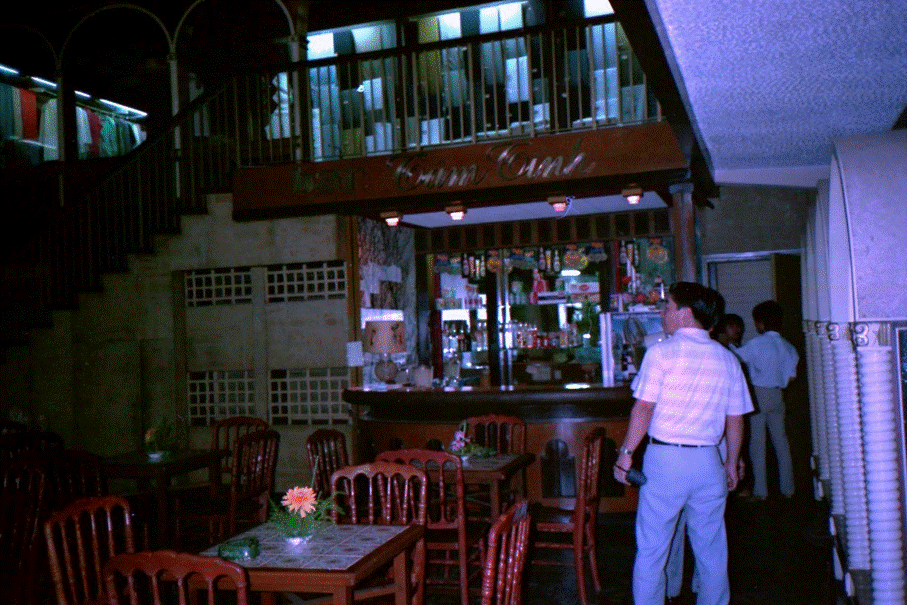
Photo by author, 1989
Vietnamese woman wearing ao dai (modernized Vietnamese national garment) at the reception. They have great style.
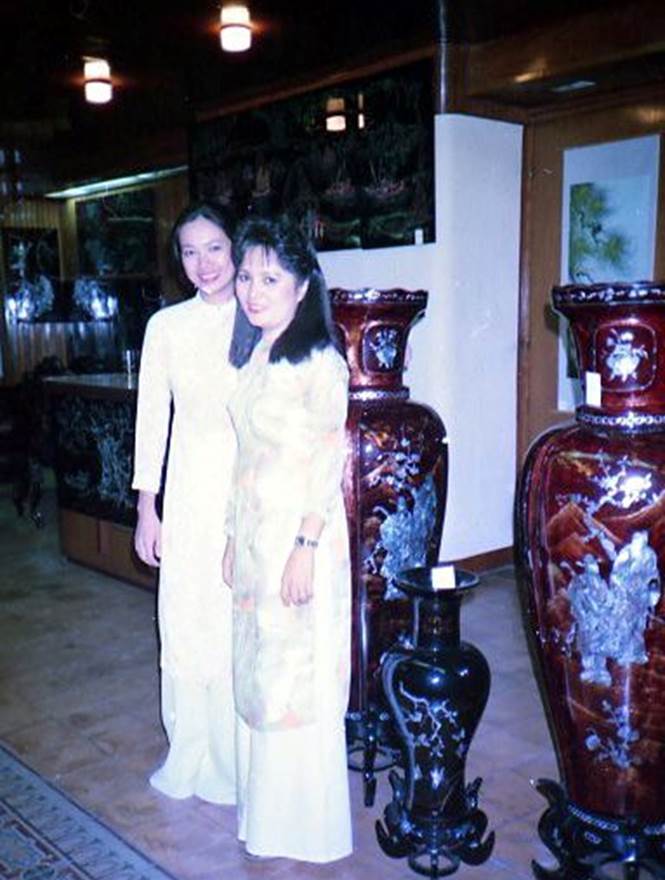
Photo by author, 1989
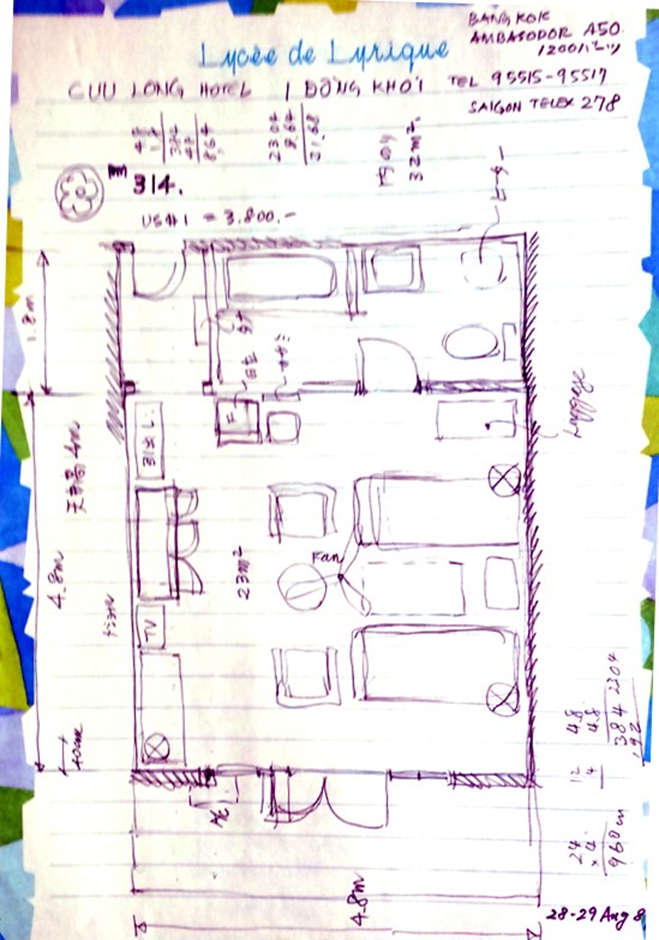
Guest room
Contrasting with the sleek ao dai costumes is the heavy interior and the overly strong color of the walls. It is a room that can be tolerated for one or two nights, but not for a long stay.

Photo by author, 1989

Photo by author, 1989
There is an antenna above the TV.
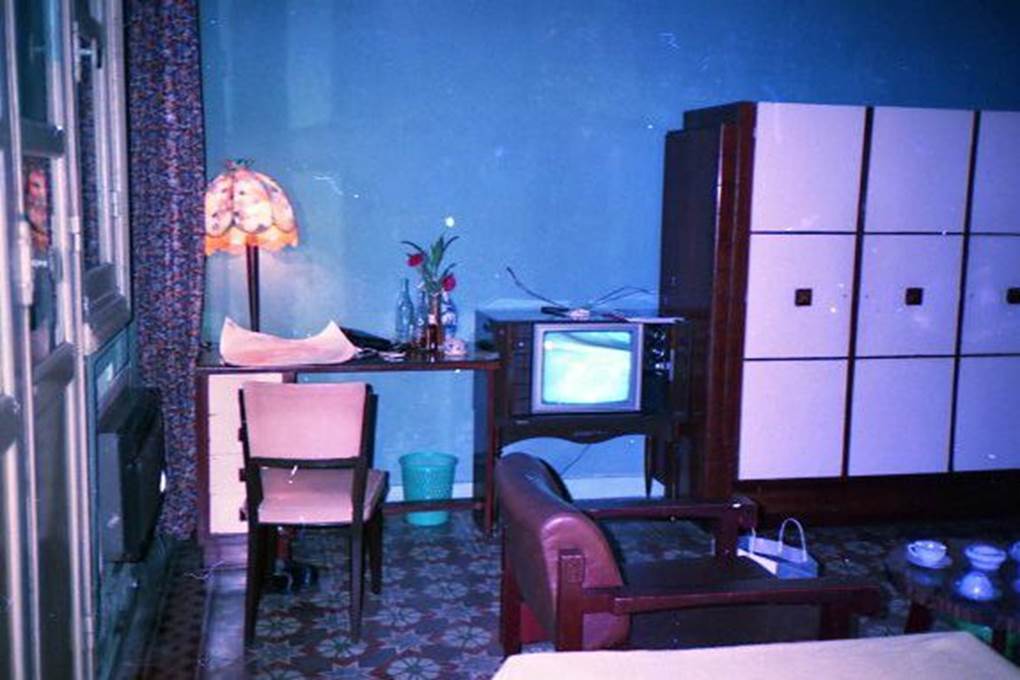
Photo by author, 1989

Photo by author, 1989
Hotel 1st floor patio
The guest rooms are lit from the corridor facing the garden. When other guests pass through the corridor, they are uncomfortable because they see a shadow.
The courtyard of the Chu Long Hotel (former Majestic Hotel).
The patio on the first floor is cluttered with machinery.

Photo by author, 1989
Courtyard of the Chu Long Hotel (former Majestic Hotel)
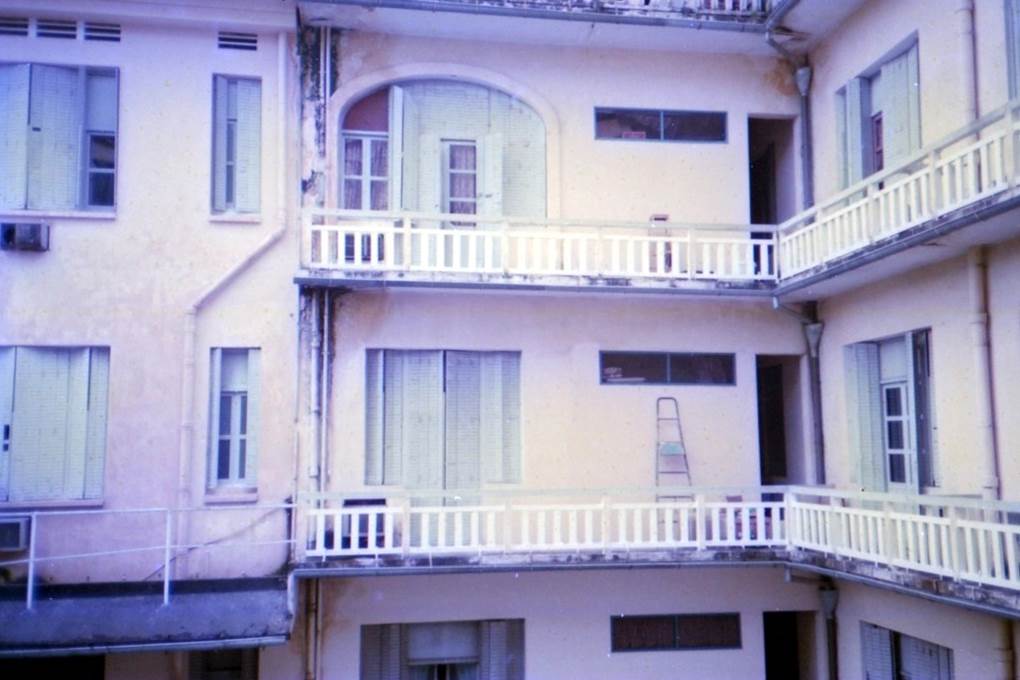
Photo by author, 1989
War Reporting and the Majestic Hotel
During the Vietnam War, it is well known that journalists such as Ken Kaitaka and Koichi Kondo used this hotel to send articles to Japan.
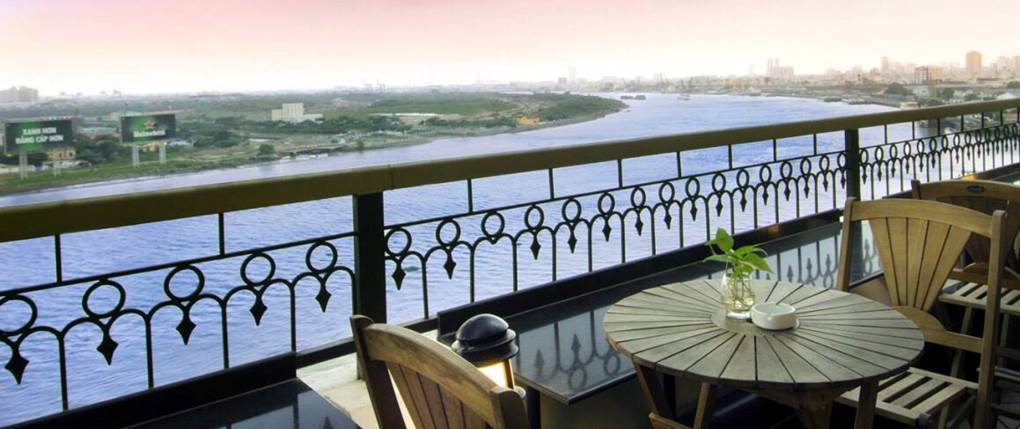
On the rooftop of the Majestic Hotel, there is an airy and open bar overlooking the Saigon River.
They must have had a drink here and had a lot of discussions.
What a wonderful view.
Rough sketch of the guest room layout by the author, 1989
Ho Chi Minh City again, 1989
Rex Hotel Saigon
The hotel I stayed at on my second stay in Ho Chi Minh City was the Rex Hotel. It is on a main street that runs through the center of the city, and is close to the InterContinental Hotel, Caravelle Hotel, and the Concert hall.
Rex Hotel, taken from the park on Le loi Street

Photo by author, 1989
The main entrance of the Rex Hotel and the Air France sign.
(There was a regular service between Paris and Saigon.)
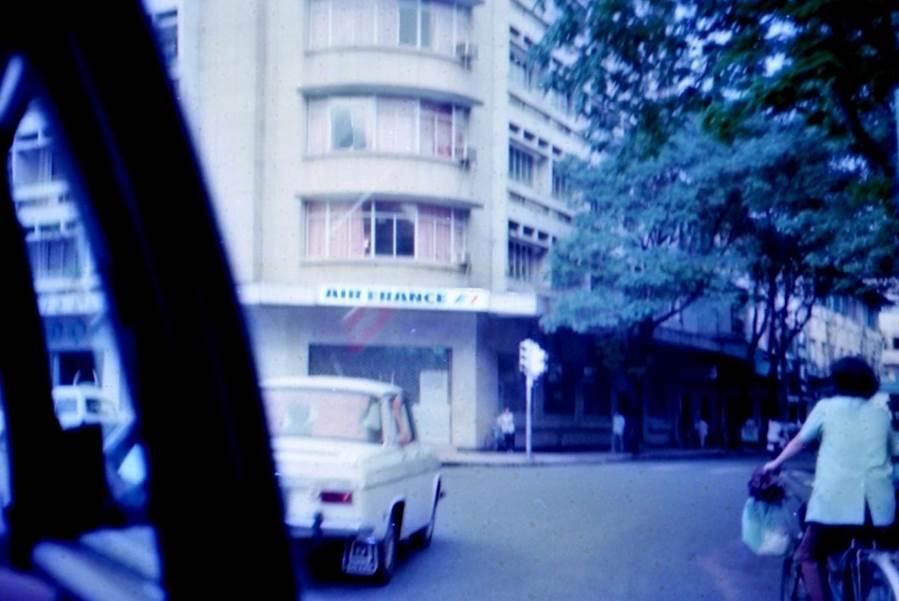
Photo by author, 1989
The sign at the main entrance of the Rex Hotel has changed from French to English.
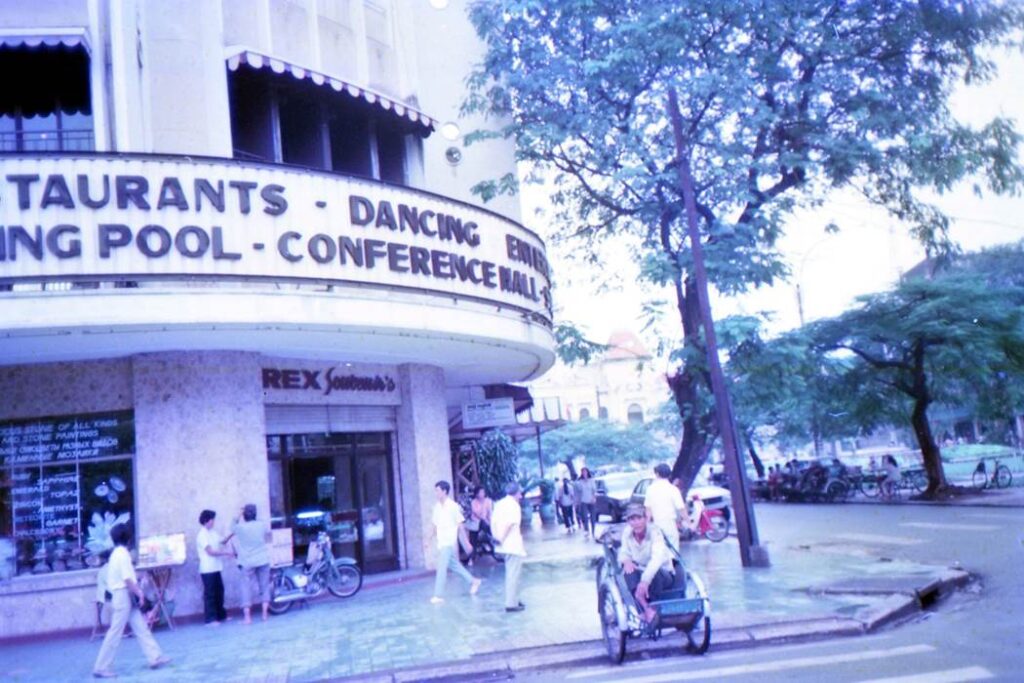
Photo by author, 1989
On the side of the hotel on Le Loi Street. People doing business on the sidewalk.

Photo by author, 1989
A lady selling cigarettes on the sidewalk of Le Loi Street.

Photo by author, 1989
There were few cars, motorcycles were still rare, but there were many bicycles.
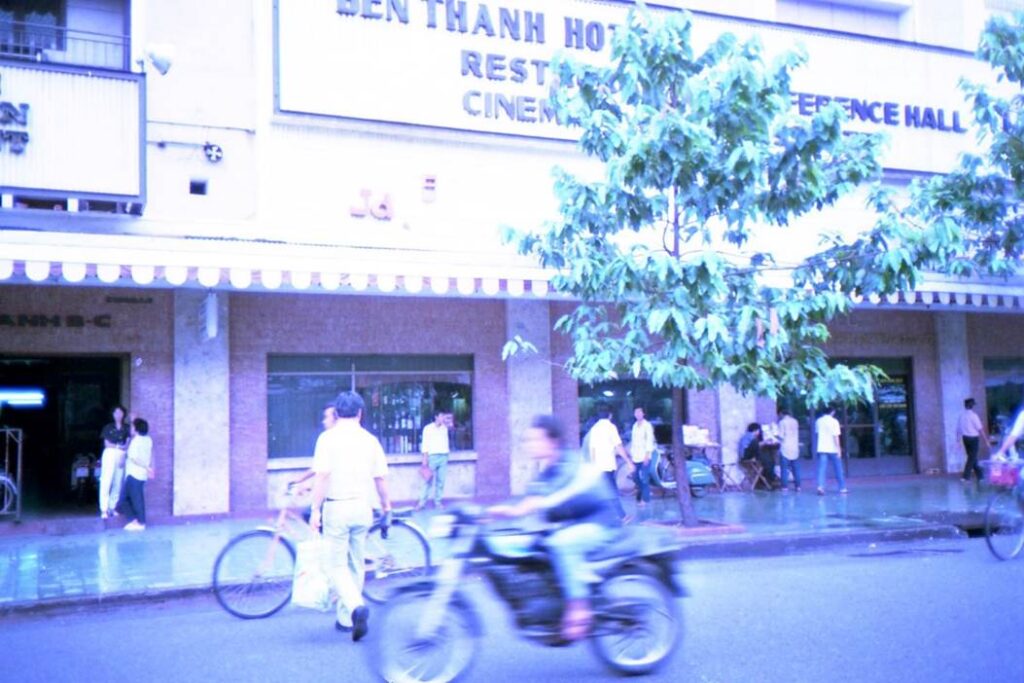
Hotel side of Le Loi Street
Photo by author, 1989
Rex Hotel Reception
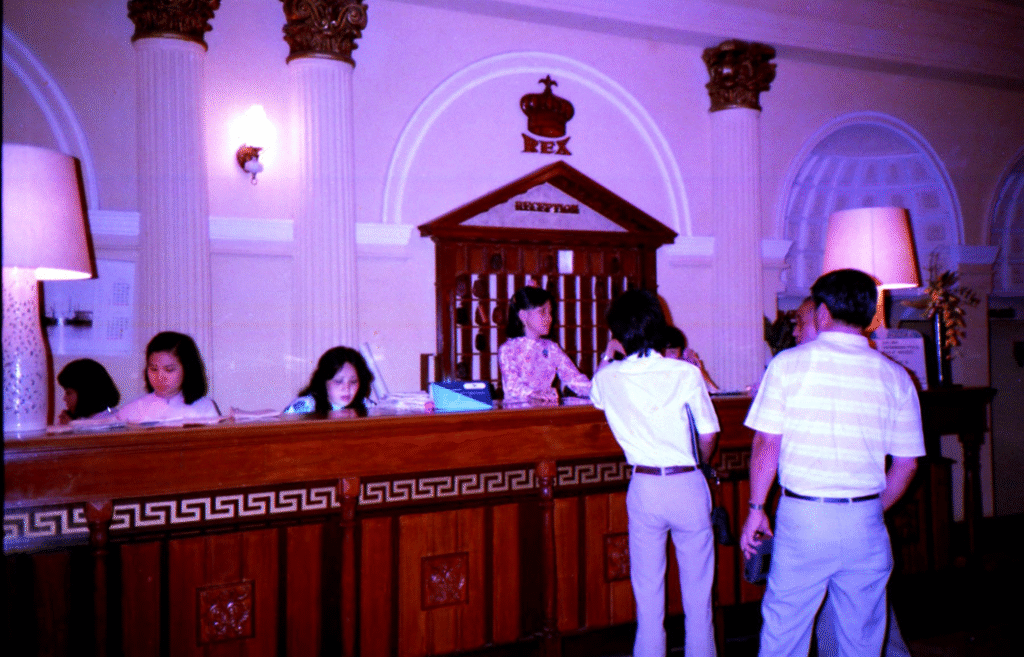
Photo by author, 1989
The shiny black rosewood furniture in the lobby lounge is too heavy and darkens the space. It was a time when ivory objects were considered high class.
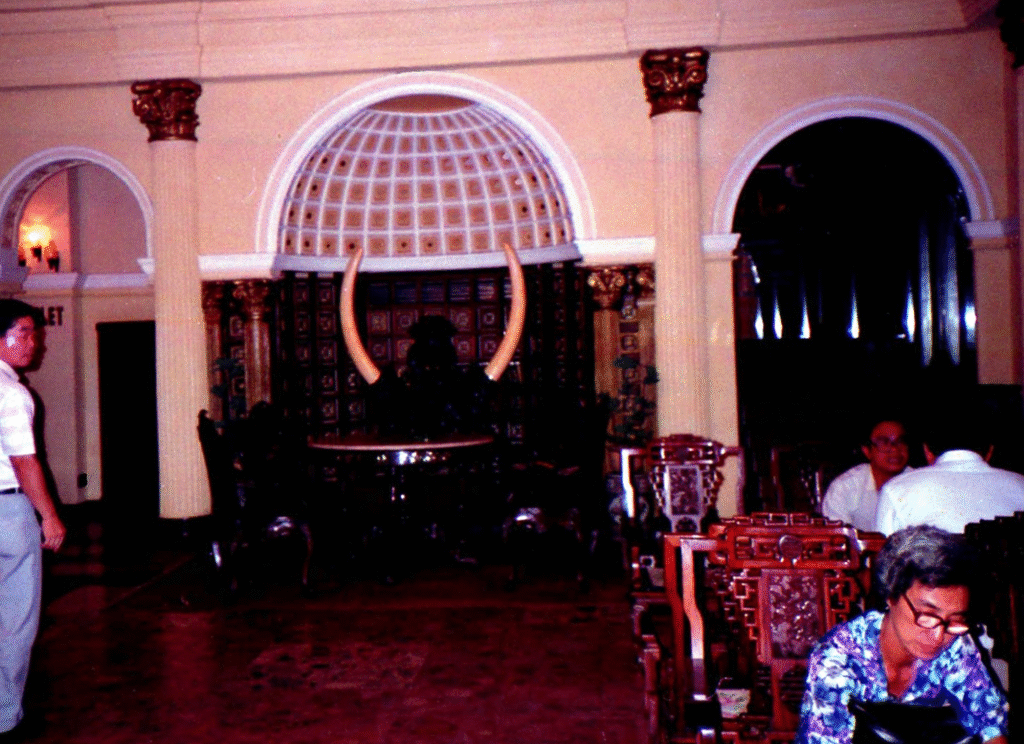
Photo by author, 1989
Photo by author, 1989
The furniture material is too heavy with rosewood.
And ivory objects !
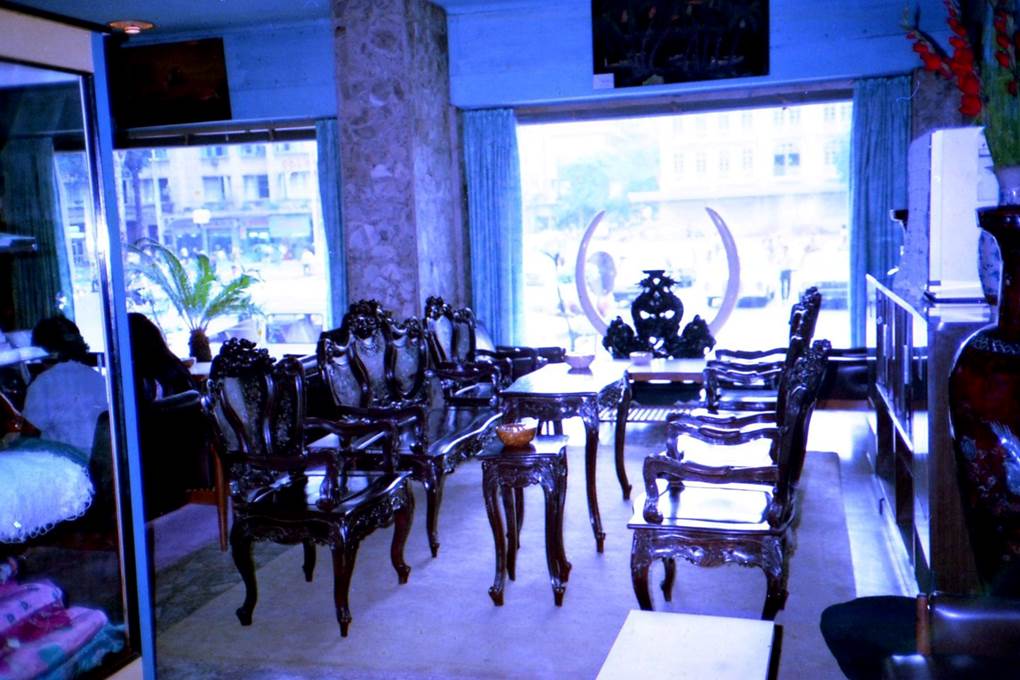
Photo by author, 1989
Guest room (Rex Hotel)
The rooms at the Rex Hotel are much better than the previous Majestic Hotel.
However, the TV is also retro, with no remote control and a manual, rattle-crank type to change channel.
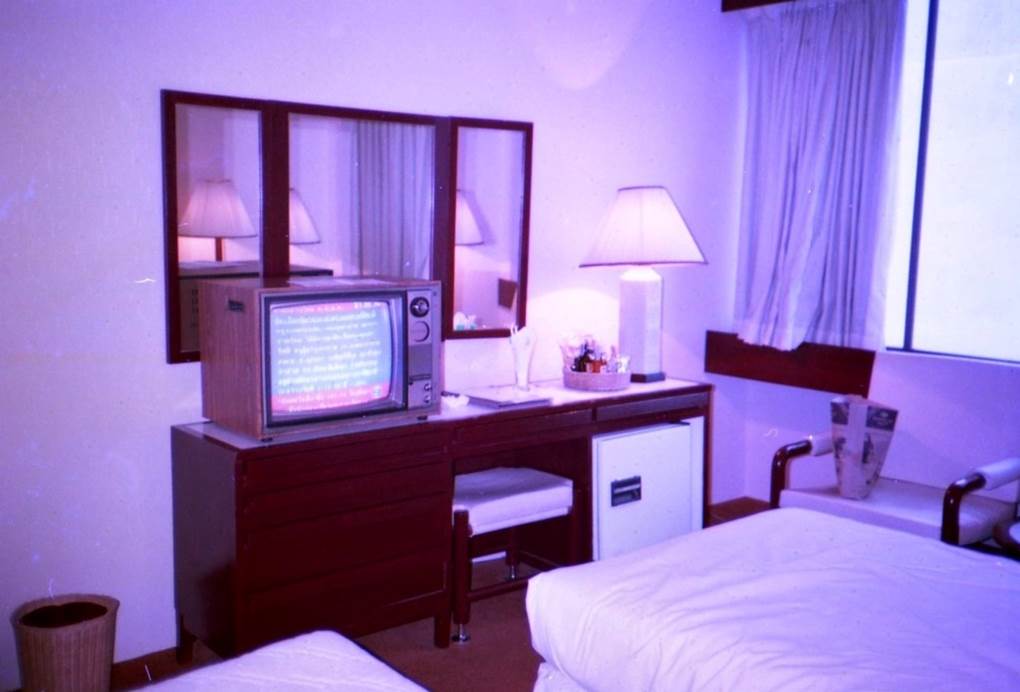
Room at the Rex Hotel, Photo by author, 1989
Back area of the hotel
The following four photos are a record of the back space of the closed restaurant on the first floor of the hotel. We received an request to design a Japan restaurant in this space that which had been neglected for a long time.
So I went to investigate. As you can see, the kitchen equipment was in tatters, and all the equipment had to be imported and completely replaced.
After that, I returned to Singapore, prepared drawings, selected an interior space contractor in Singapore, and began preparations for work at the site in Vietnam.
After the preparations were completed, a team of Singaporean craftsmen arrived in Vietnam. What they found was that the interior contractors on the Vietnamese side did not have the tools (cutters, drills, etc.) necessary for installation, which are commonplace in capitalist countries. They needed to import more tools than they could get in Singapore.
After the interior work on the shop was completed, the Vietnamese side asked us to leave our tools and machinery behind, so we left them in Ho Chi Minh City.
Japan was in the midst of its bubble economy at the time. Vietnam was in a opposite situation at the same time, and there was an unimaginable disparity.
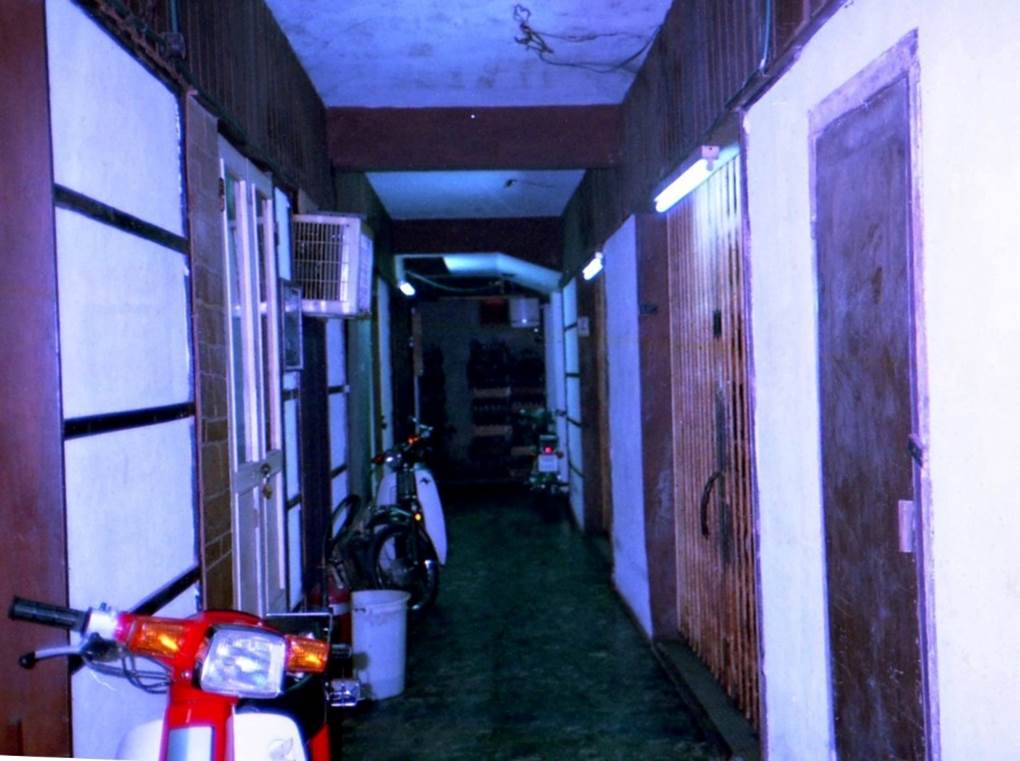
Service area corridor
Photo by author, 1989
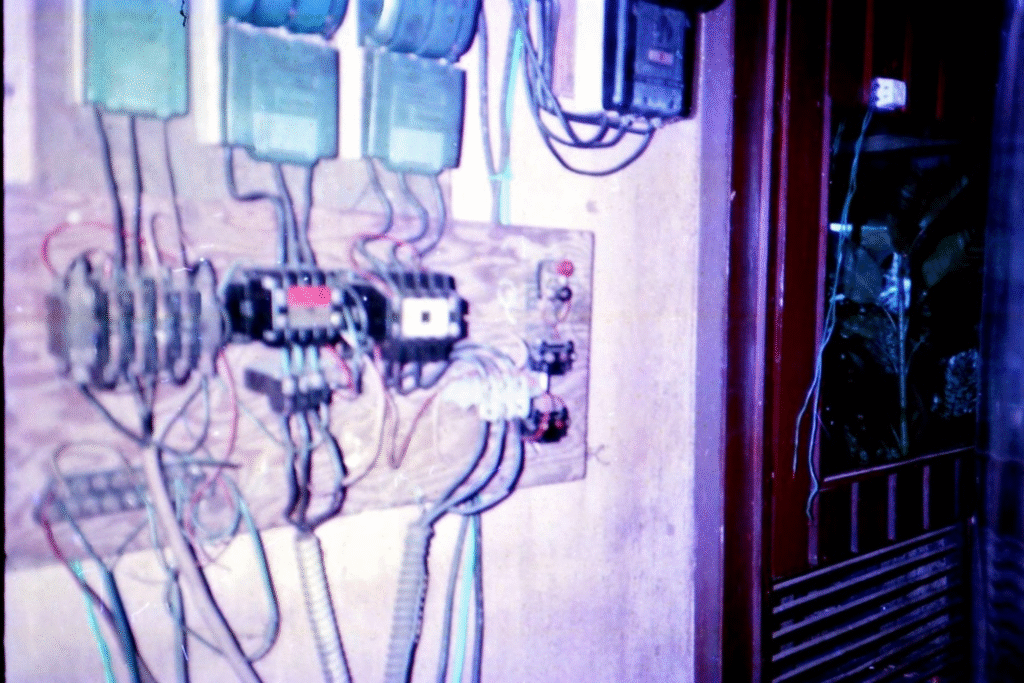
Dangerous electrical cable in switchboard
Photo by author, 1989
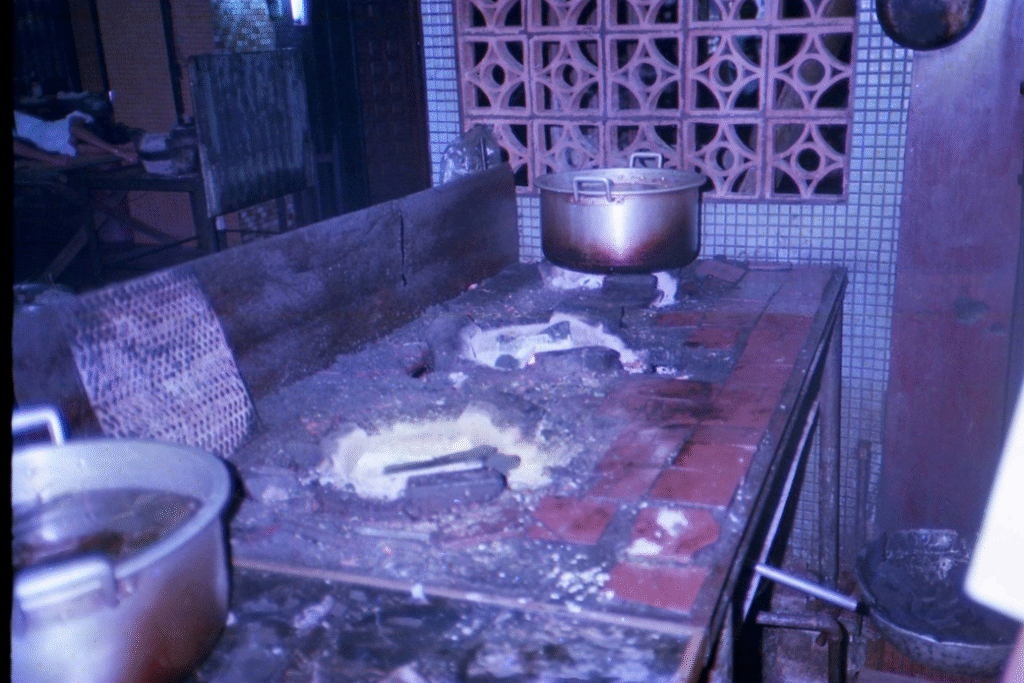
Cookware Photo by author, 1989
Sink area
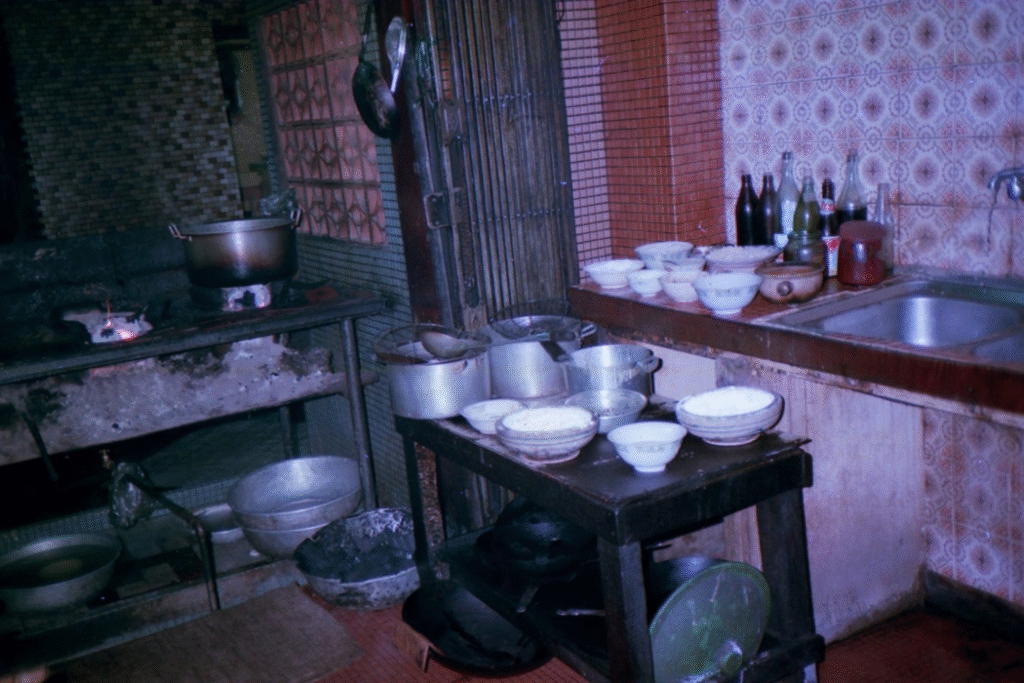
Photo by author, 1989
Scenery of the Mekong Delta, on the outskirts of Ho Chi Minh City

Photo by author, 1989
Riverside restaurant.
At that time, there were few stylish restaurants in the city that catered to foreigners and where they could enjoy lunchtime conversation.
The only enjoyment for eating out was at simple outdoor restaurants by the river, where people could eat river fish and the delicious river shrimp that are unique to the area, and relax.

Photo by author, 1989
Vietnam Airlines Refugee Plane
In 1989, I finished my job in Ho Chi Minh City, Vietnam, and headed to the airport to leave the country. The departure lobby was crowded with quite a few locals. After waiting in a long line for a Vietnam Airlines flight to Bangkok, which I had already booked, it was my turn. After my suitcase was checked in, I was told that the seat I had reserved was not available. I had encountered an unbelievable overbooking.
I had no choice but to board the next available seat on a Vietnamese plane to Bangkok. When I boarded from the ramp (of course, there is no air bridge, etc.), it was super full. In the seat next to me was a boy holding a violin.
He asked, ‘I’m going to America, where are you going?’
The families in the surrounding area also seemed to be flying for the first time, and the atmosphere was somewhat uplifting. After talking for a while, I realised that this plane was a special plane for Vietnamese refugees.
On this flight, I was treated as one of the refugees.
The following six photos are taken immediately after arriving at Bangkok Don Mueang Airport.
The refugees were escorted to a bus set up at the airport to a UN special facility. From there, they will be scattered to refugee host countries such as the United States, Canada, and Australia.
As you can see in the photos, they were quite well-dressed, and they looked like wealthy refugees, far from the image of boat refugees.
There were five or six ordinary foreign passengers, including myself, who were on this refugee plane, and we took a bus to the customs clearance area for normal procedures.

Vietnamese refugees arriving at Bangkok airport
Photo by author, 1989
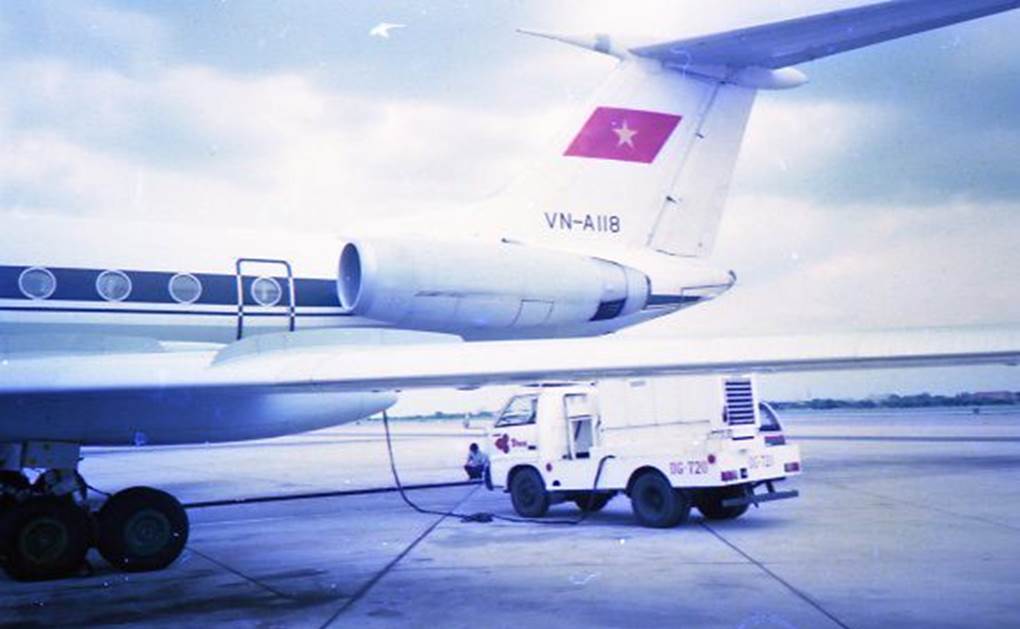
Photo by author, 1989
Soviet-made Tupolv special plane (TU-134B-3) carrying Vietnamese refugees arrives in Bangkok
The model number is written on the Vietnam Airlines aircraft, TU-134B.
This plane is a Soviet-made Tupolv.
After the fall of Saigon, Vietnam was still boycotted by liberal countries, so it was not possible for them to introduce Boeing or Airbus aircraft.

Photo by author, 1989
Refugees are escorted to a bus that takes them to a special UN facility
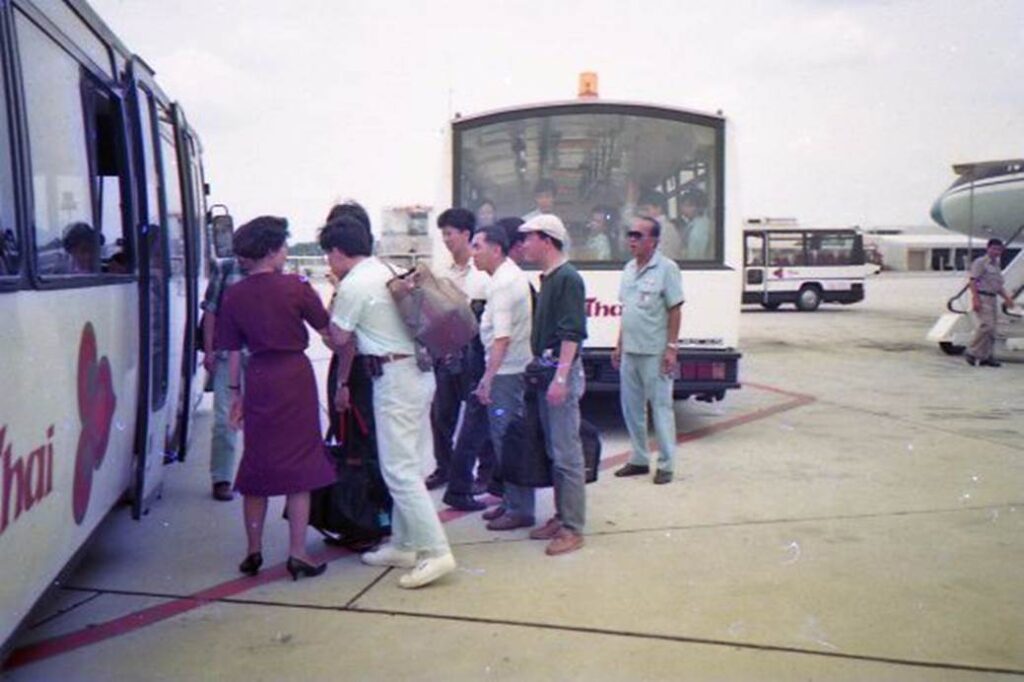
Photo by author, 1989
Travelling on special bus for Vietnamese refugees to the UN facility in Bangkok

Photo by author, 1989

Photo by author, 1989

Photo by author, 1989
MINOX has been stolen!
I carried a spy camera (Minox) and a mini tape recorder that I had collected at the time to use in Vietnam, just in case.
In the chaos of leaving Vietnam, my suitcase was kept out of reach for a long time.
When I returned to Singapore and checked a few days later, I found that these miniature equipment was a shell of itself and my recordings had been stolen.

All the recordings taken by the spy camera were lost.