JAP | ENG
Trip around Java #1/2
1974-75
My first time in Indonesia
After a few years of living in Singapore, I had the opportunity to visit Bali.
At the invitation of a real estate developer in Kuala Lumpur, Malaysia, I decided to take an inspection trip to resort hotels in Bali.
At that time, in the 1970s, if you were heading to a regional city in Indonesia, you had to first go to Jakarta, the capital, and after immigration and customs clearance, board again to another domestic flight to continue to various cities.
I find this process very complicated.
Borobudur Hotel, Jakarta, 1974
Due to such circumstances, I was forced to stay in Jakarta for one night. The hotel I stay was the Borobudur Hotel, the only five-star hotel in Jakarta at the time.
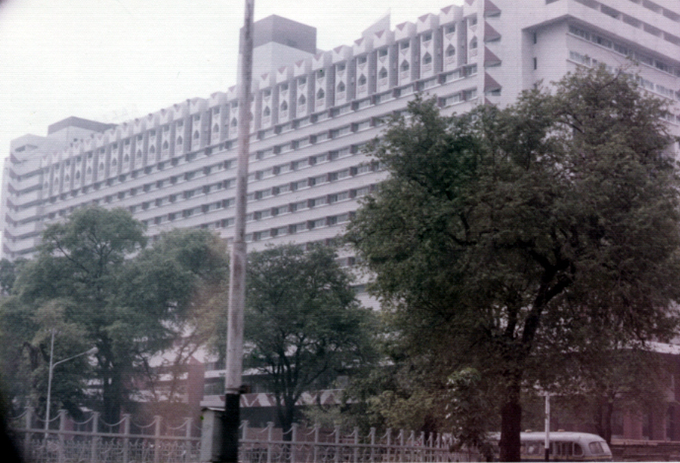
Photo by author, 1974
Jakarta night view, 1974
A night view of Jakarta city from a room at the Borobudur Hotel.
The tall tower is the Independence Monument.
This is taken in 1974, long before the skyscrapers that line the streets today appeared.
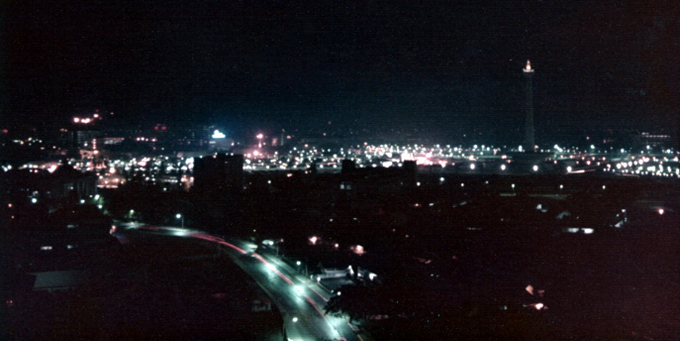
Photo by author, 1974
Java Island Travelogue
Jakarta, the capital city in 1975
The main street in the center of Jakarta.
The Japan Embassy is located in the lower right corner.
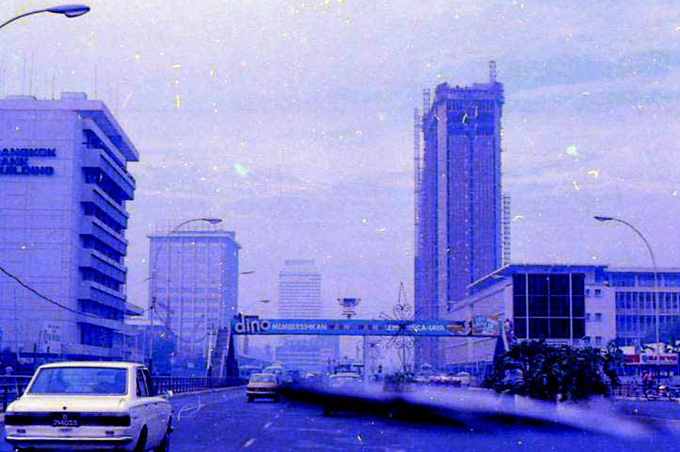
Photo by author, 1975
The new building of the Toyota’s dealer.
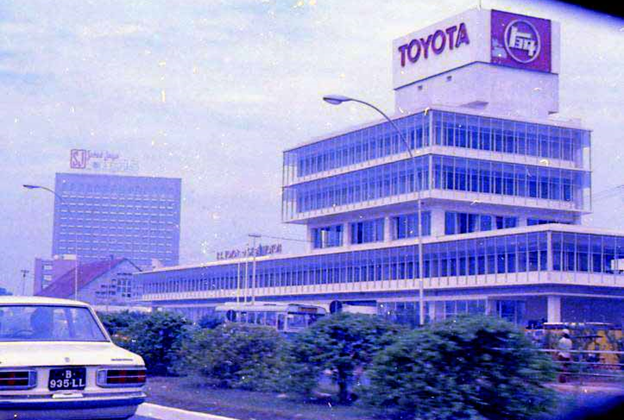
Photo by author, 1975
Hotel Indonesia and the Great Fountain
Before the advent of the expressway, the roundabout of the large fountain was the busiest with traffic in Jakarta. Facing the large fountain, this Hotel (Hotel Indonesia Kempinski Jakarta) was built and still exists to this day.
It is a fine example of modernist architecture that was internationally popular at that time. I also stayed at the former Ashoka Hotel, which was demolished due to the development of this hotel. At that time, it was a much talked about hotel, as it have been frequented by many government dignitaries, including Dewi Sukarno, and businessmen from Japanese companies.
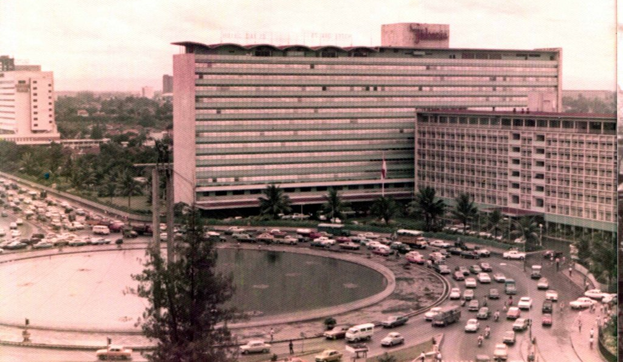
Photo by author, 1975
Roundabout with a large fountain.
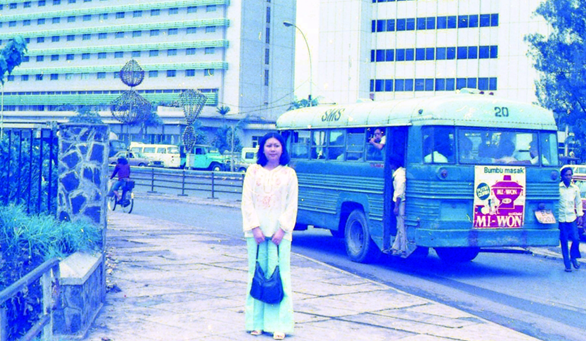
Photo by author, 1975
Taman Mini
In the suburbs of Jakarta, there is a facility called Taman Mini, which brings together the traditional architecture of various tribes from various parts of Indonesia. If you go here, you can efficiently see replicas of a buildings from remote area without having to go to the actual location, saving time.
From the Batak people of the northern Sumatra interior to the New Guinea highlanders (5,000km stretch), you can get to see various of their indigenous buildings. It’s like a gateway to get a quick overview of the rich traditional and different architectural culture of the world’s largest island nation with a population of 260 million.
Traditional buildings in Javanese villages.
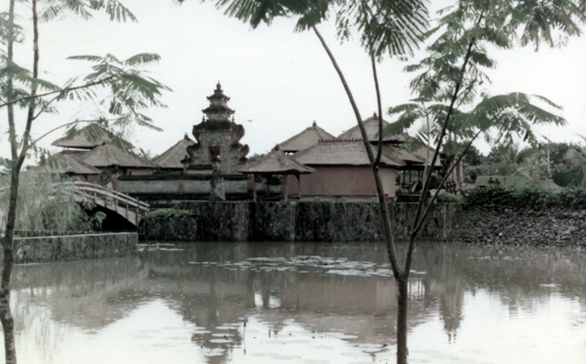
Photo by author, 1975
Traditional buildings of the Batak people of northern Sumatra.
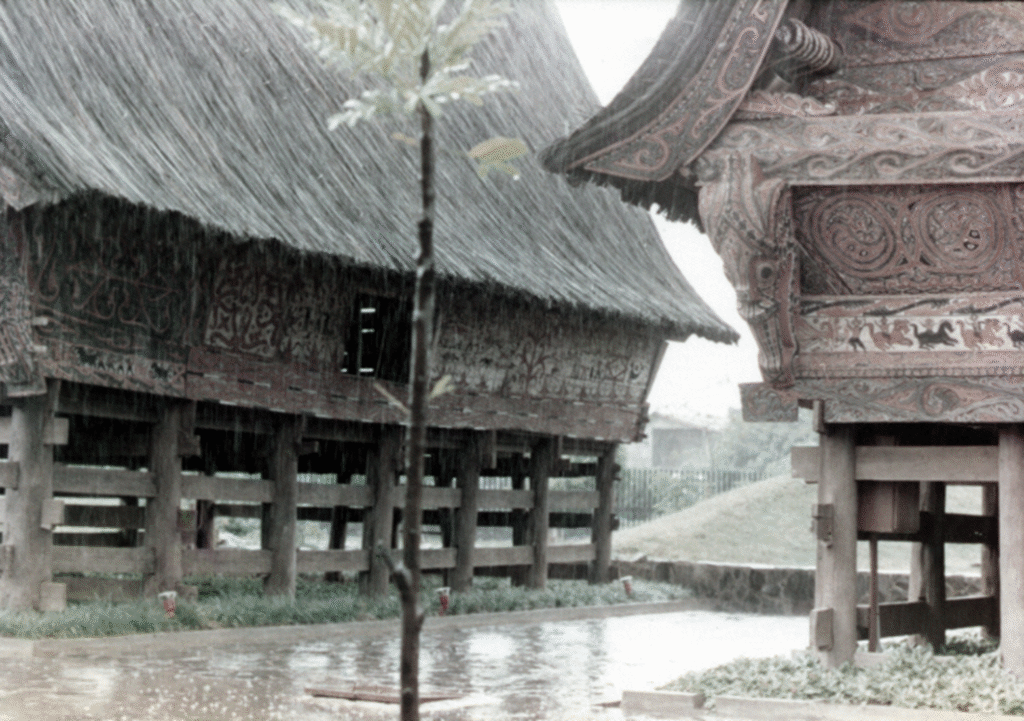
Photo by author, 1975
Under the floors of traditional houses of the Batak people.
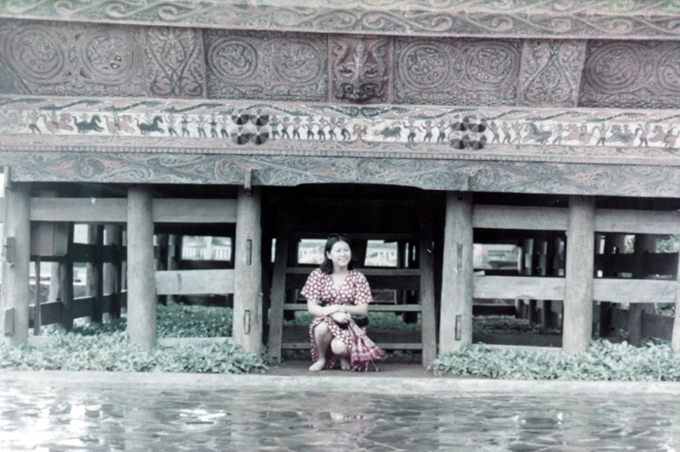
Photo by author, 1975
Traditional buildings in Bali.
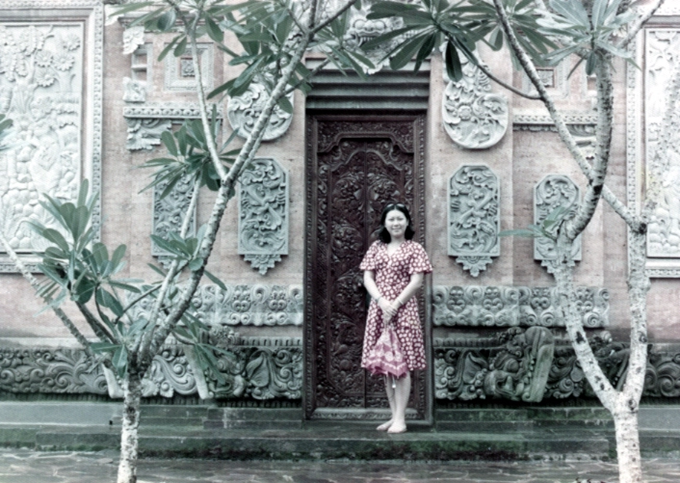
Photo by author, 1975
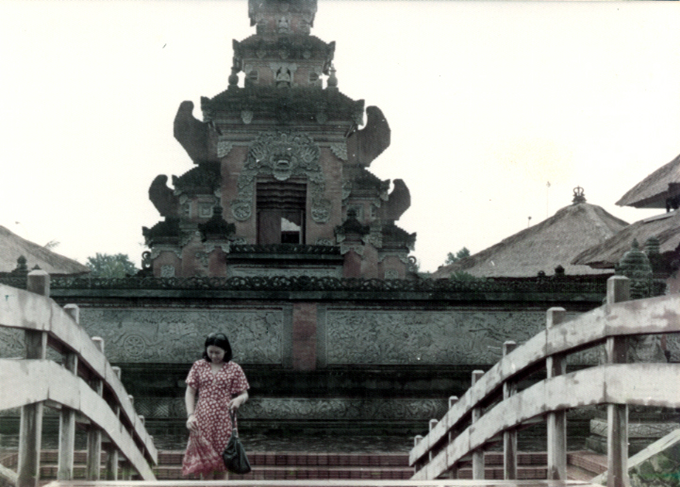
Photo by author, 1975
Traditional buildings in Sulawesi.
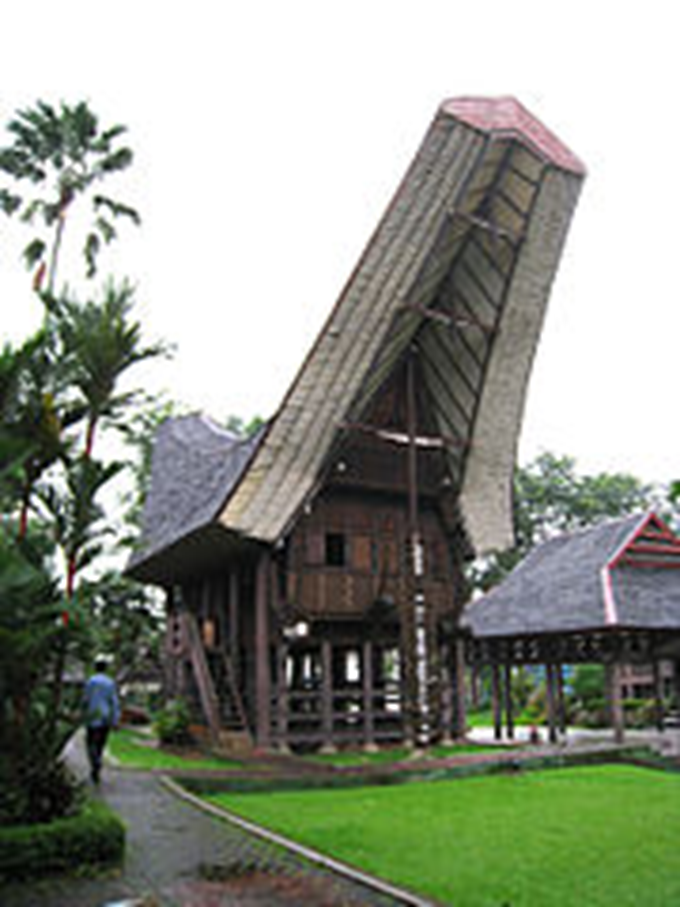
from Wikiwand
Java Island Travelogue
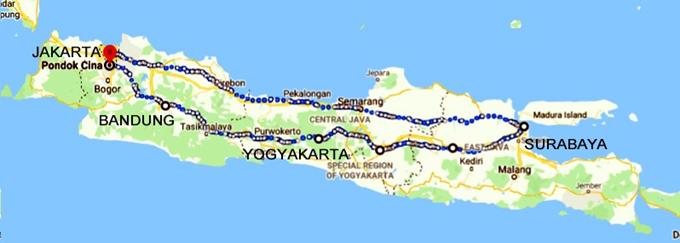
Jakarta ⇒ Surabaya ⇒ Yogyakarta ⇒ Jakarta
2000 km by rail
Jakarta Central Railway Station
This station has a long history, having opened in 1870, and once functioned as the terminal station for long-distance trains connecting various parts of Java Island, playing a key role in the history of Indonesian railways.
Around 1990, by the time I was making frequent trips back and forth between Jakarta and Bandung, the center had shifted to Gambir Station, which was closer to the new city center.
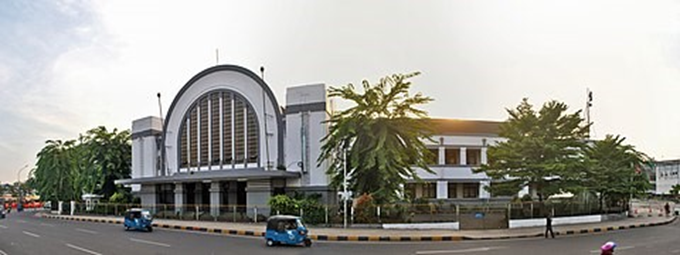
FROM WIKIWND
Jakarta ⇒ Surabaya
Jakarta Station is a comb-shaped station with many platforms.
Antique passenger cars are parked there. There are hardly any tourists.
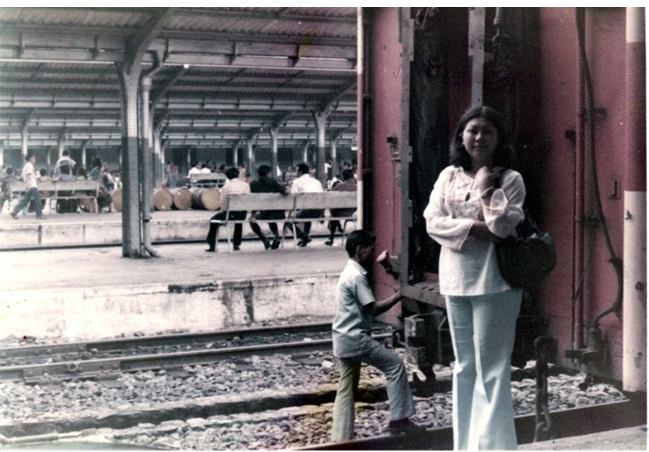
Photo by author, 1975
From here it takes more than 12 hours by train to reach Surabaya.
The distance is 800 km, which is equivalent to the distance between Tokyo and Hiroshima.
The train was a limited express Bima hauled by a non-electrified Gisel locomotive. It was the first long train trip outside of Asia.
There was no ordinary class in the train, and all carriages were executive class.
Most of the route between Jakarta and Surabaya runs on plains.
The ride quality was that of Japan immediately after the war, so I didn’t feel any particular discomfort.
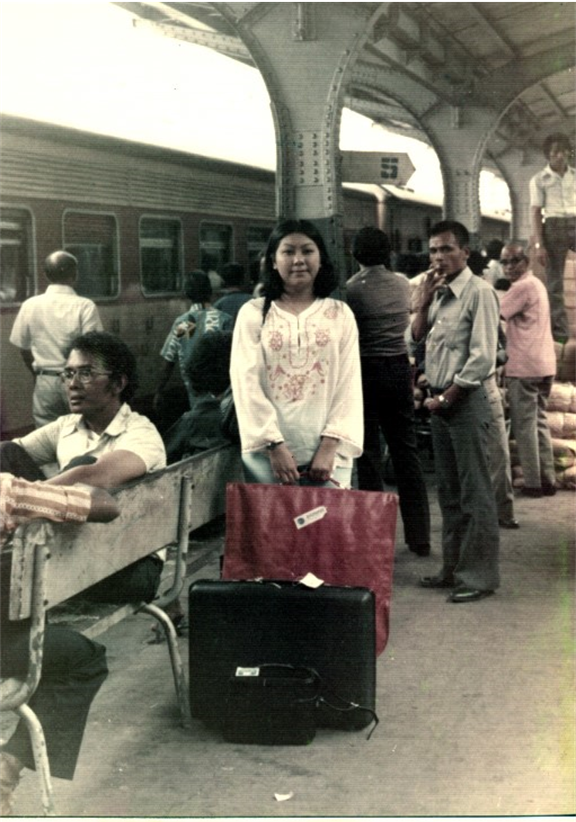
Photo by author, 1975
Steam locomotives in active service
A steam locomotive working hard in the Indonesian National Railways’ engine depot on the outskirts of Jakarta. This reminds me of the Japanese National Railways of my childhood, shortly after the war, and brings to mind a nostalgic memory.
After passing through this engine depot and after about an hour, the scenery changes and becomes a field of rice paddies. A farmer wearing a straw hat is working with a buffalo in a green rice field filled with water. It was a living copy of the countryside of Japan in the days when there were no agricultural machinery immediately after the war.
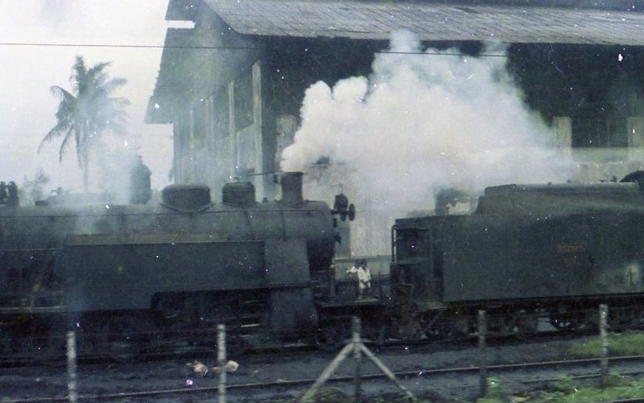
Photo by author, 1975
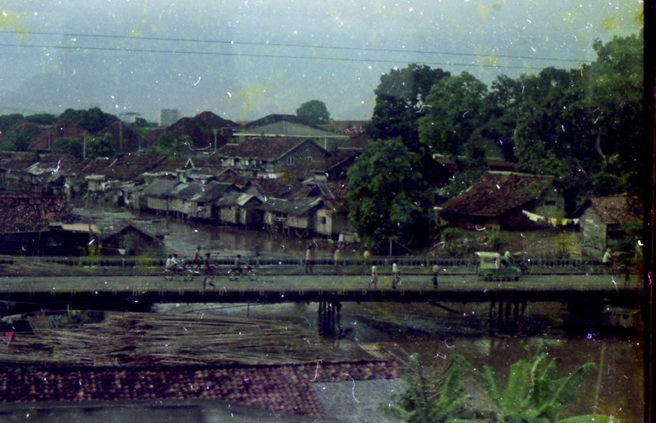
Photo by author, 1975
Looking out the window of a moving train, you can clearly see that the houses are excessively densely packed on the riverbank without embankments.
It is a representation of the high population density of the island of Java.
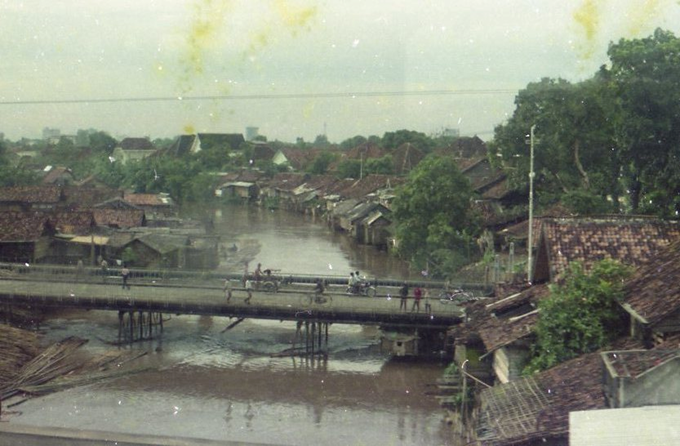
Photo by author, 1975
Incidents on the long-distance train Bima
The long-distance express train Bima bound for Surabaya left the city of Jakarta and ran through the rich rice-growing area. The rice paddies are lined with blue mountain ranges in the background. If it weren’t for the palm trees, it looks exactly like the rice paddy fields of Japan.
This train has a dining car coupled to it. It was almost time for dinner, so I decided to move to the dining car and rest. There was no one in the dining car.I ordered a drink from the attendant boy, but he gave me a response that I didn’t understand.
After being in a state of uncertainty for a while, there was an announcement in Indonesian in the car. Immediately afterwards, a large number of passengers moved into the dining car. I found out later that the fasting time was over and they all came into the dining car at once. In a society where more than 90% of population are Muslims, certain social rules are widely established.
As foreigners, I was not aware of these rules, so I did not realize that there even though it was a dining car, but why it was completely empty.
Shortly after the meal, I boarded the night train and headed for Surabaya.
Total distance: about 750km.
Surabaya
Majapahit Hotel
I arrived early in the morning at the central station of Surabaya, Indonesia’s second largest city. The information desk at the station recommended a hotel, and I took a taxi to the Majapahit Hotel. It was a rundown colonial-style hotel of Dutch origin located in the center of the city.
In the 1970s, modern architecture was celebrated as a symbol of progress in Southeast Asian cities. Even the Raffles Hotel in Singapore was neglected and looked like a half-haunted house, so I wasn’t particularly surprised by the poorly maintained Majapahit Hotel.
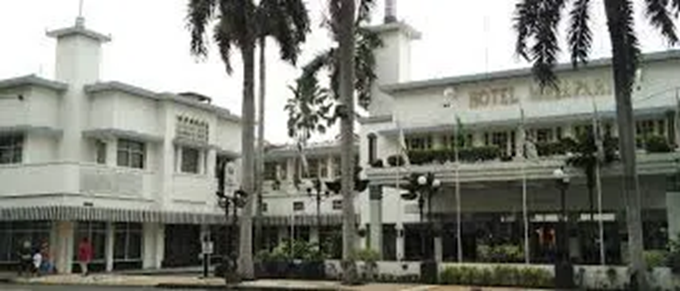
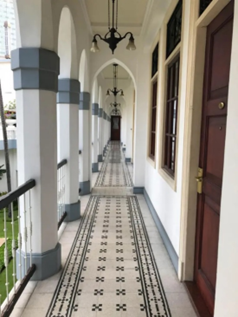
The photo below shows the passage in front of the guest room facing the courtyard of the current Majapahit Hotel. When I stayed in the 1970s, I remembered that a bent fan on the ceiling was spinning with a strange friction sound, and the toilet cover was broken and bent.
Since then, the movement to rethink heritage architecture has become a global trend, and the dying hotel has been transformed into a luxury boutique hotel over the decades.
Commercial area of Surabaya.
Many people are engaged in outdoor work such as rickshaw driving, and the streets are overflowing with people.
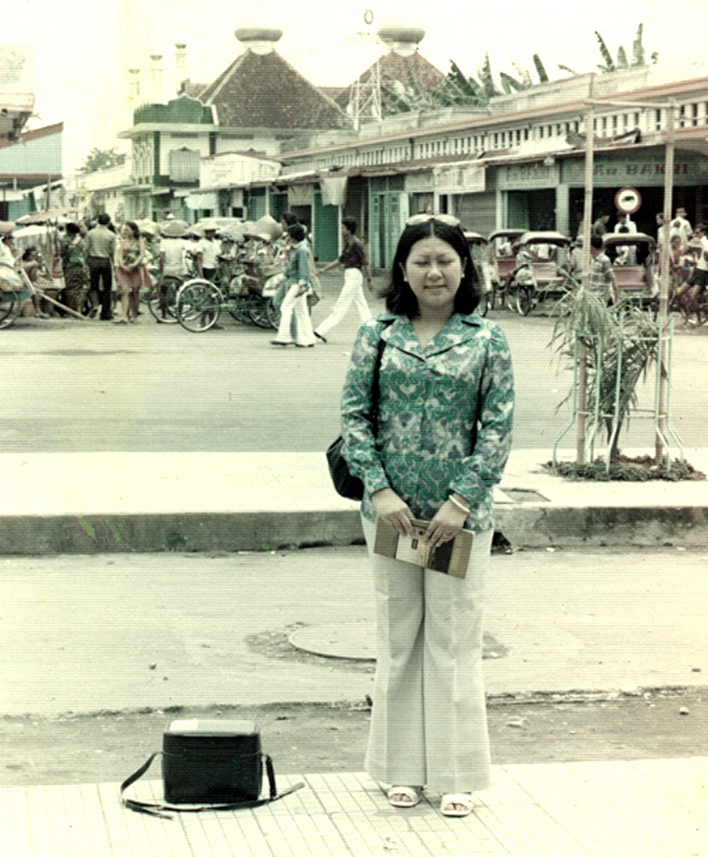
Photo by author, 1975
Residential districts of Surabaya
There are many Dutch-style houses, characterized by their steeply sloping roofs.
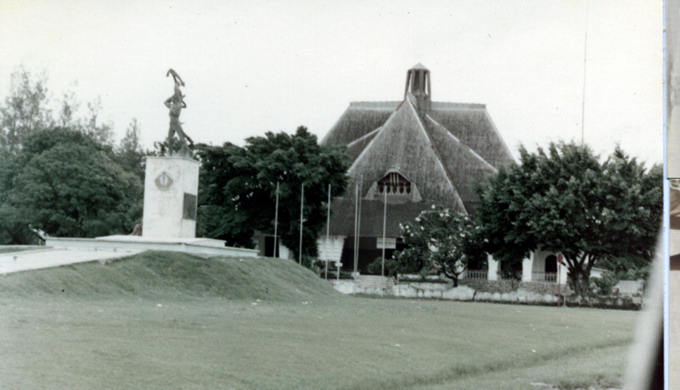
Photo by author, 1975
The main road in an area a little outside of downtown Surabaya is a peaceful place where goats and sheep walk.
People, cars and animals coexist.
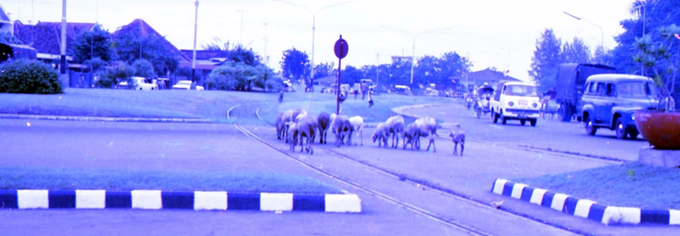
Photo by author, 1975
On both sides of the main road, rickshaw drivers and unemployed people hang out.
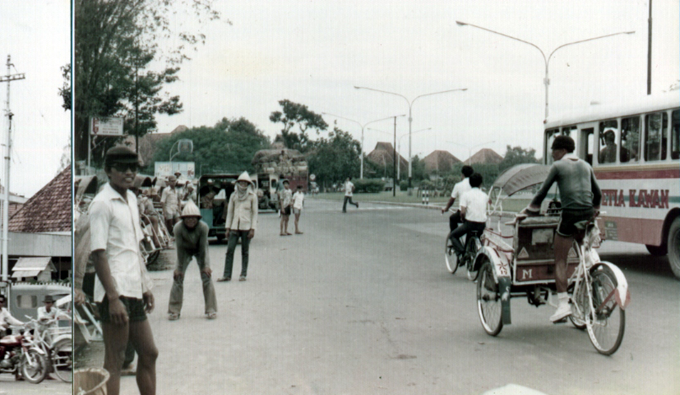
Photo by author, 1975
Colonial buildings in Surabaya Old Town.
Surabaya’s old town is dotted with remnants of the Dutch colonial era.
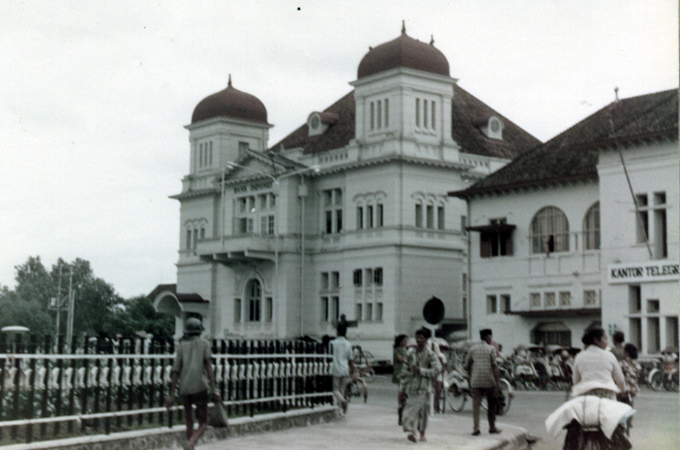
Photo by author, 1975