JAP | ENG
Sumatra Travelogue #2/9
2016
Medan Architecture
Medan City, the capital of North Sumatra Province of Indonesia.
Medan City is the capital of North Sumatra Province. It is Indonesia’s fourth-largest city with a population of about 2.5 million.
It started as a small Malay village around the 16th century, and then farms were developed in the Dutch colony, and it became a place where plantation crops were accumulated, and from the middle of the 19th century, it accepted a large number of immigrants from Java Island and China, and it can be said that it is a new city with a rapidly increasing population.
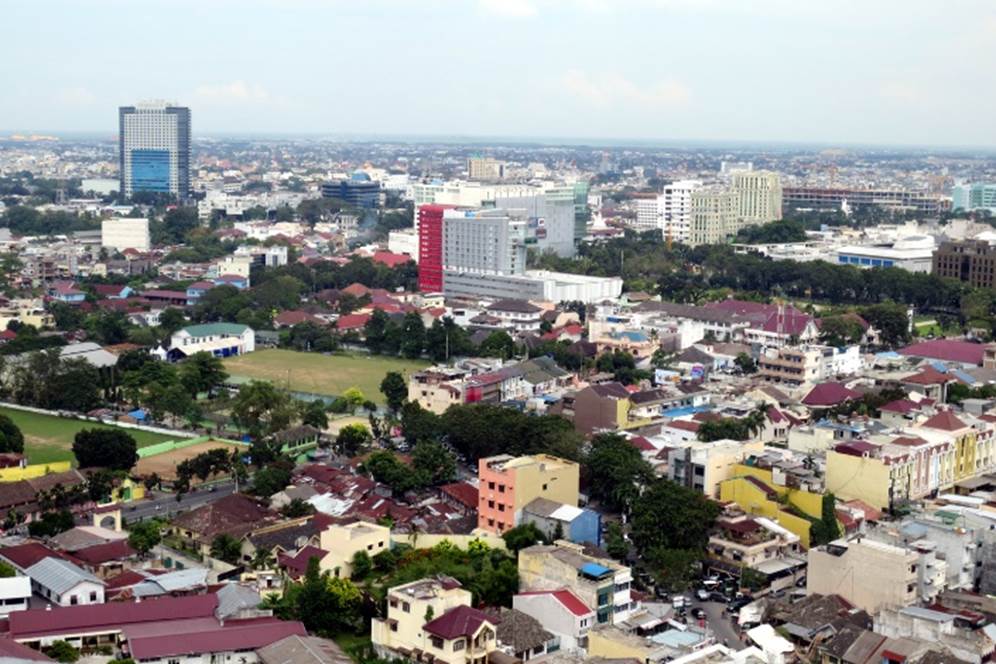
Photo by author, 2006
Medan City, the capital of North Sumatra Province of Indonesia. Since independence, the population has been growing rapidly.
1970 : 600,000
2010 : 2.2 million, (metropolitan area: 4.5 million)
The racial composition is made up of a moderate balance of multi-ethnicity.
One-third Batak, 30% Javanese, 15% Chinese, and the rest are others races.
One of the most unique languages spoken in the town is Hokkien, a dialect of China.
The official language of Indonesia is Indonesian, which is of Malay origin.
Chinese businessmen here in Medan are grateful for the good fortune their ancestors brought in with immigration. They communicate in the Hokkien language.
A restaurant that has existed for a long time in downtown Medan.
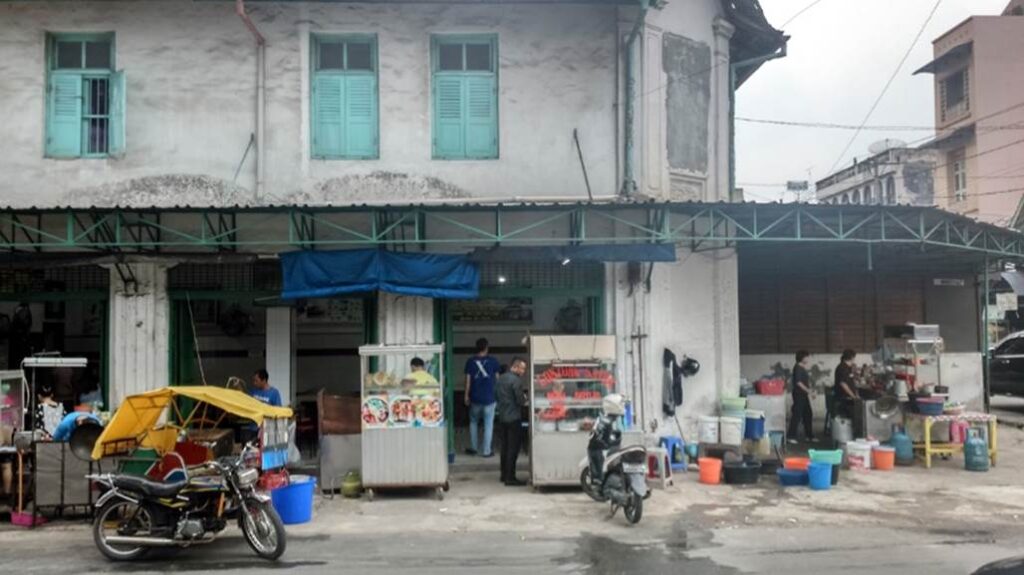
Photo by author, 2016
There are many people who casually visit at night.
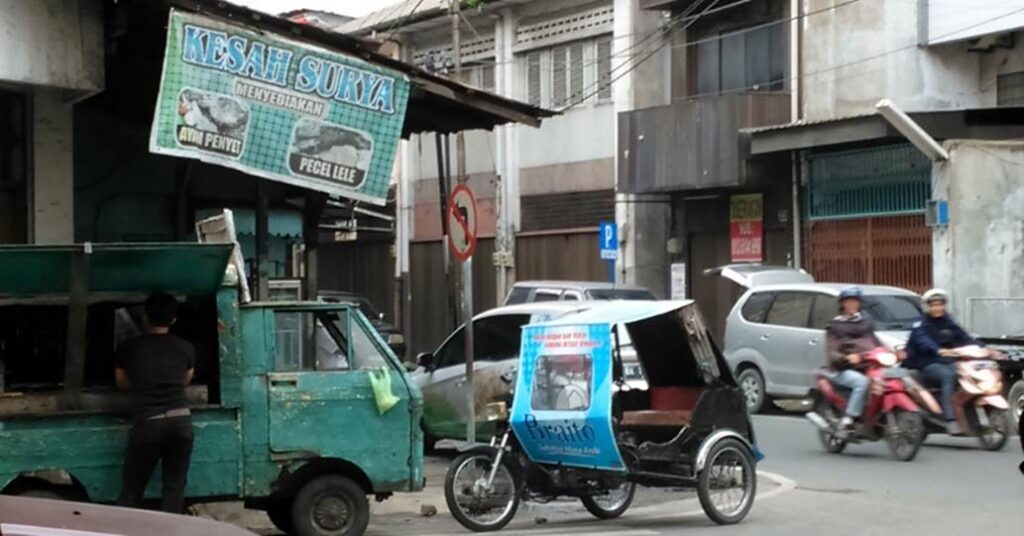
Photo by author, 2016
Even in Southeast Asia, the scenery shown in the above photographs are disappearing.
Medan city and architectural heritage
Due to the rapid increase in population, some part of the central city was densely occupied.
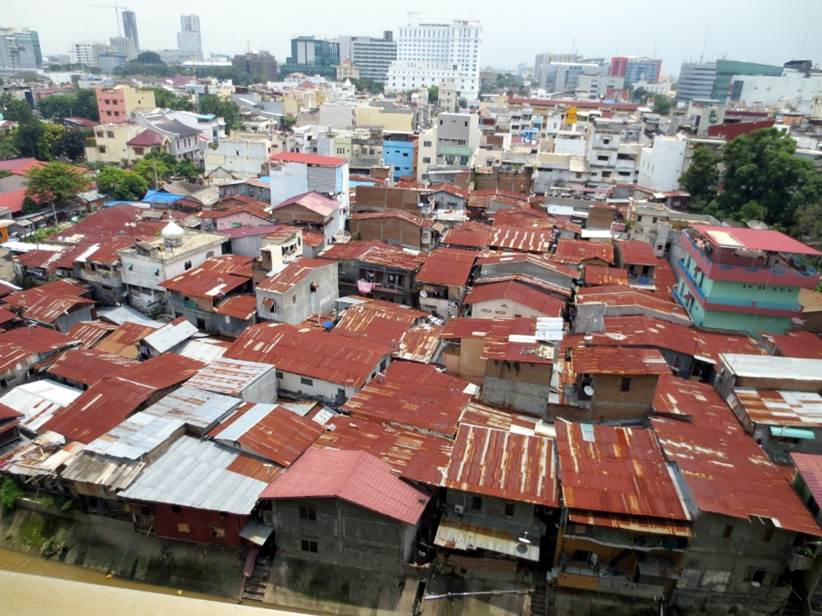
Photo by author, 2016
Based on the basic design created by the author’s office, the commercial podium and residential tower project are taking shape in the distance. The next project will be designing the interior of a commercial facility.

Photo by author, 2016
Colonial and Peranakan architecture in Medan
During the Dutch colonial period, many colonial buildings such as government offices and post offices appeared, but the preservation of their heritage has not been systematically carried out to this day.
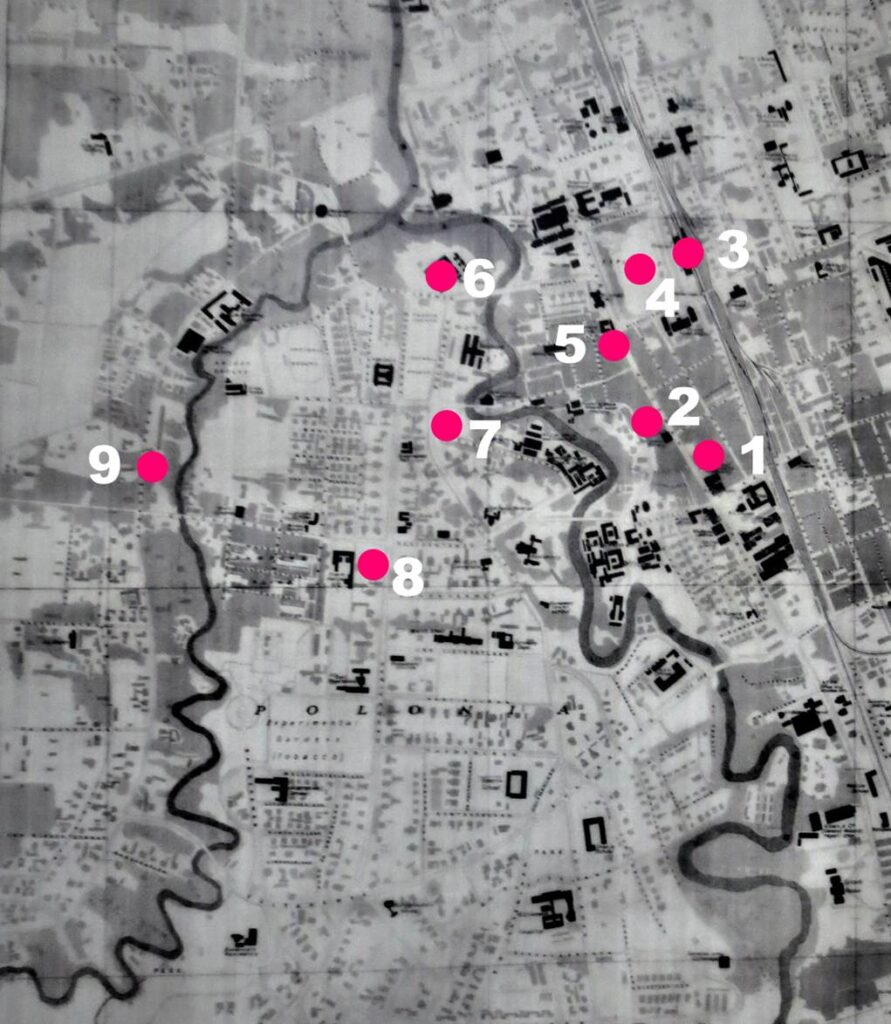
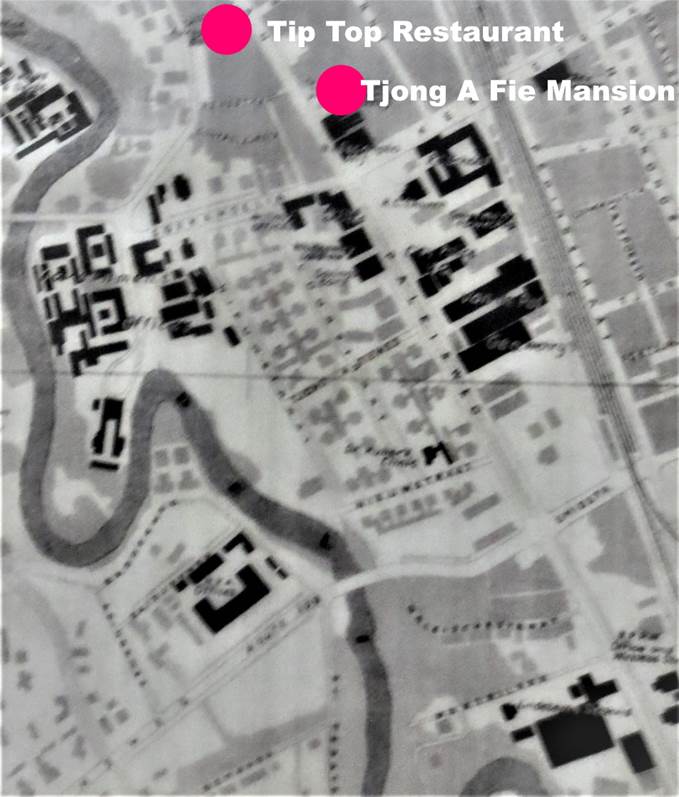
List of historically significant buildings superimposed on the old map of Medan
| 1. Tjong A Fie Mansion | 6. Medan City Office |
| 2. TIP TOP Restaurant | 7. Singapore Consulate |
| 3. Medan Rail Station | 8. Japan Consulate |
| 4. Plaza in front of Station | 9. Shopping mall and Condo (Designed by Author’s Singapore studio) |
| 5. Lonsum Building |
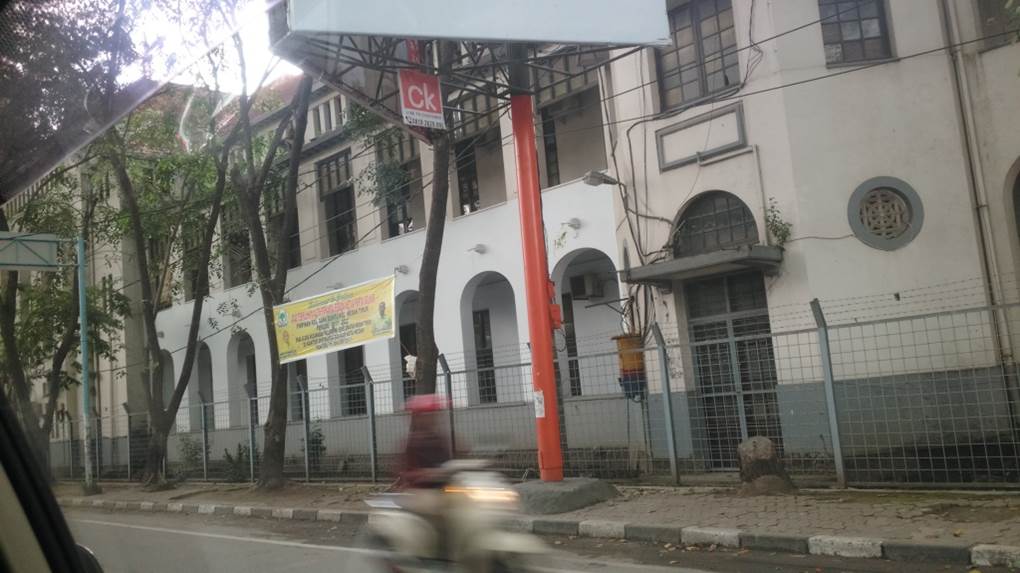
Photo by author, 2016
5. Lonsum Building
at Kesawan Square
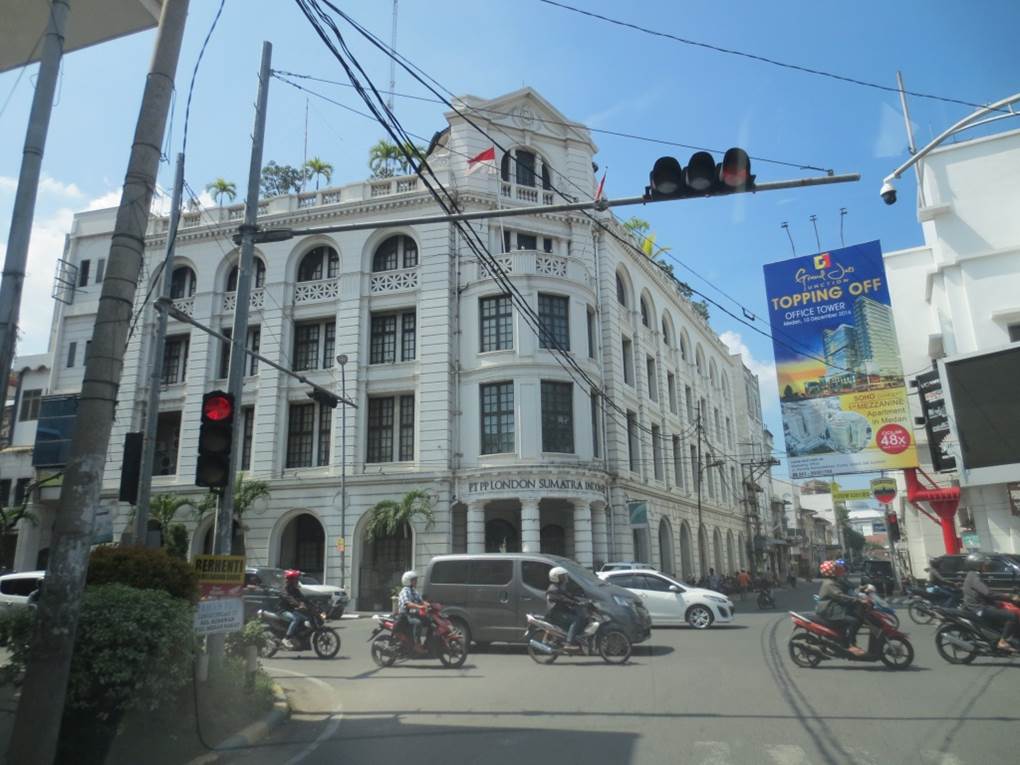
Photo by author, 2016
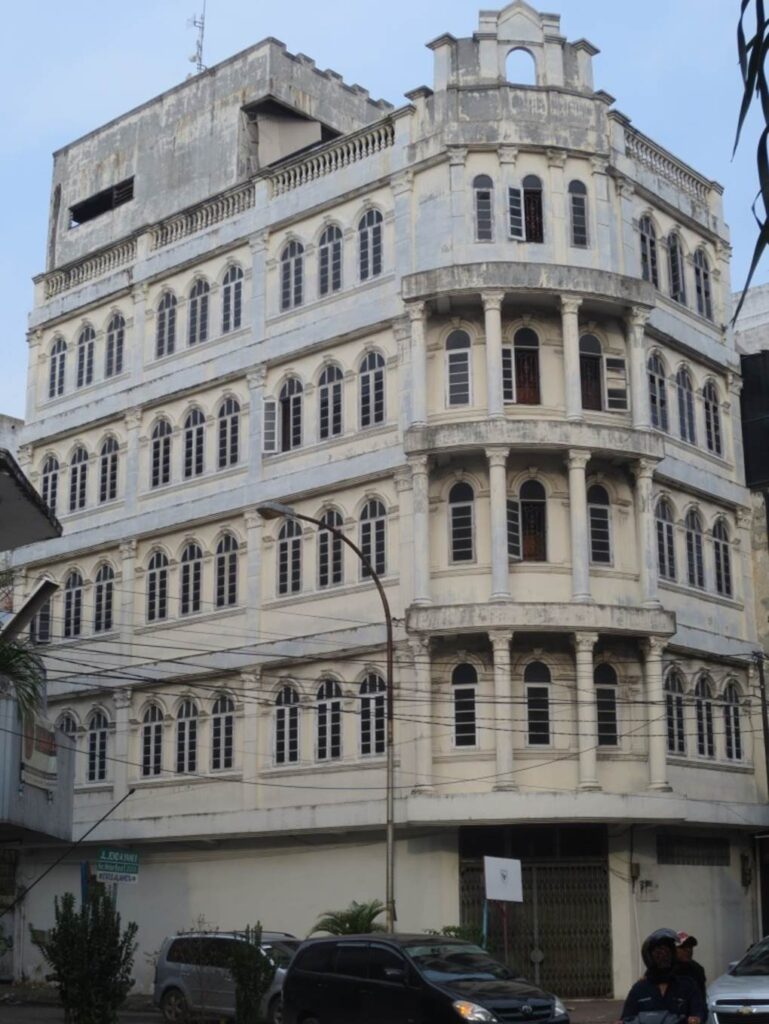
Photo by author, 2016
An information office for tourist.
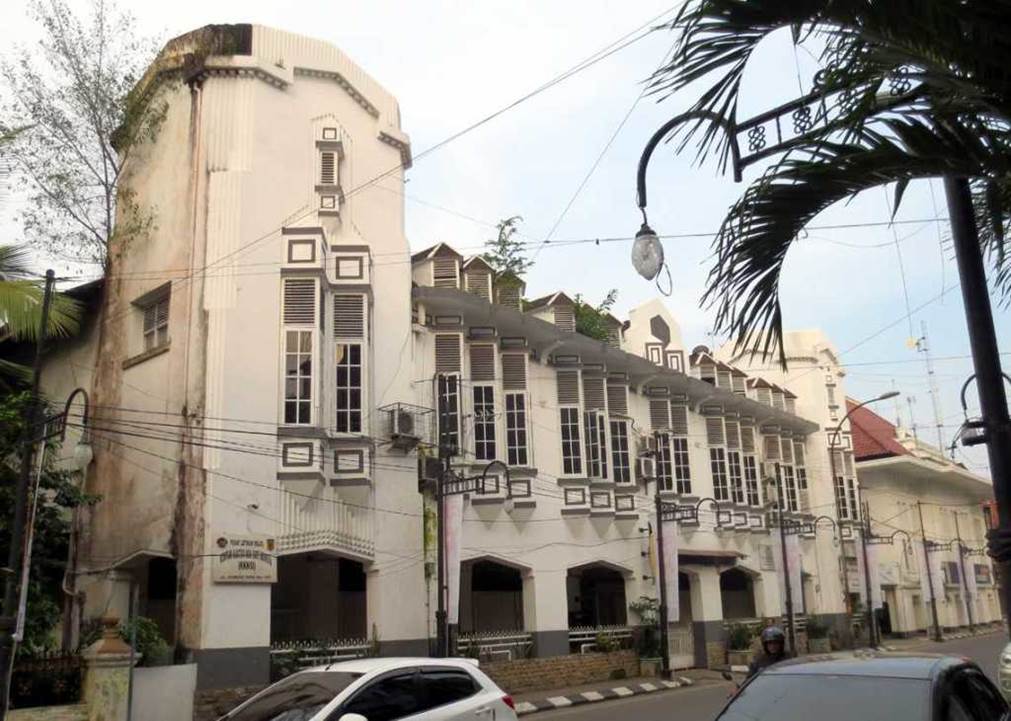
Photo by author, 2016
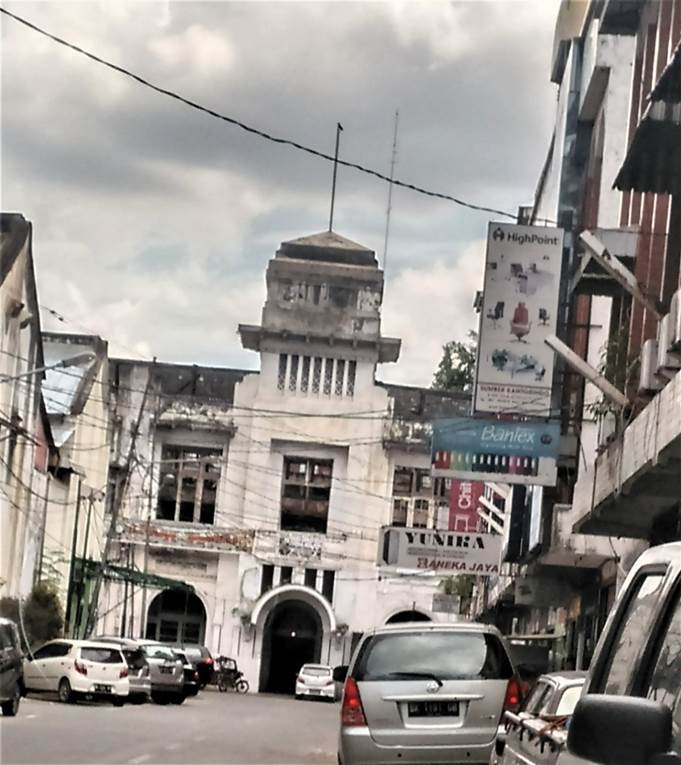
Photo by author, 2016
Tirtanadi Water Tower near Jalan Selat Panjang, 1908
A water tower built during the Dutch colonial era.
To this day, it exists as a symbol of Medan, and the water supply is still active.
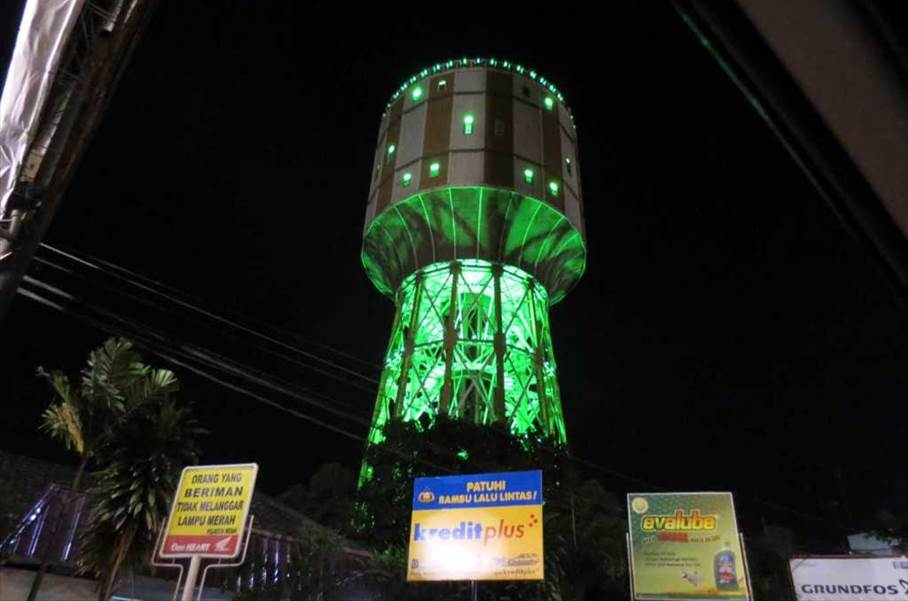
Photo by author, 2016
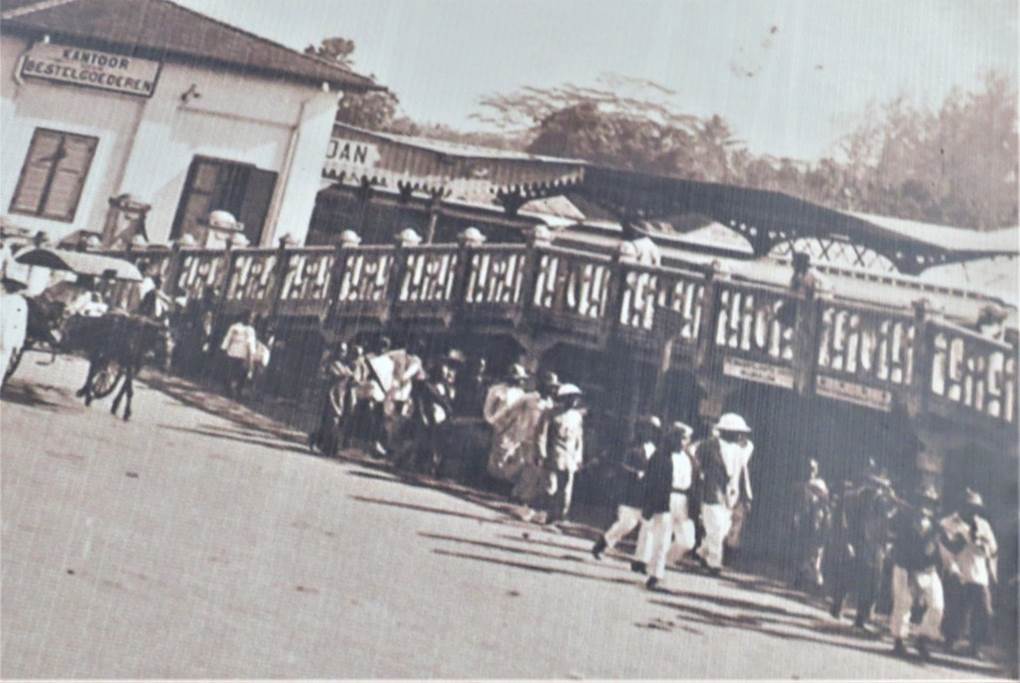
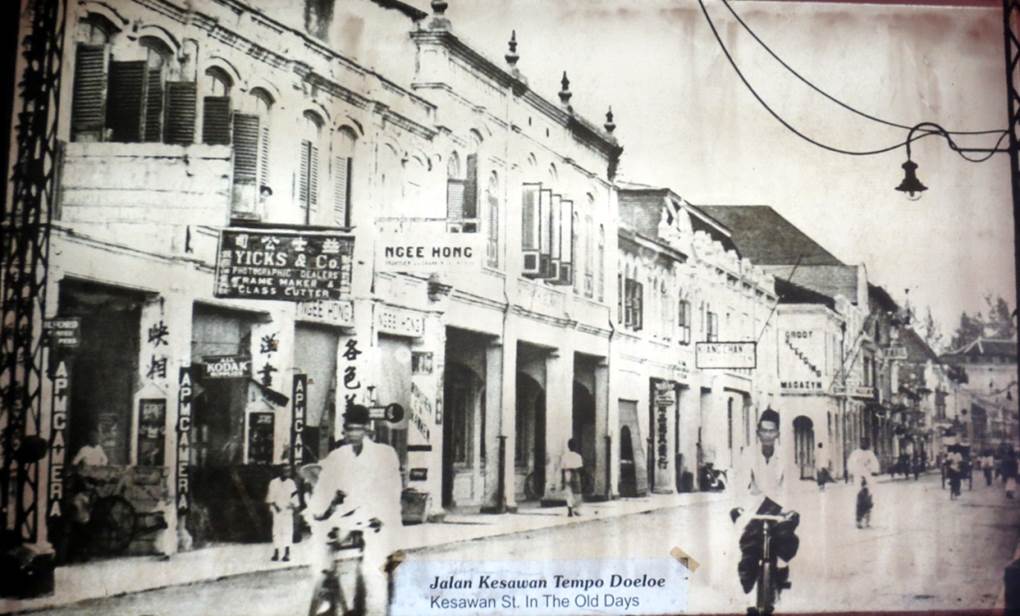
Kesawan Street
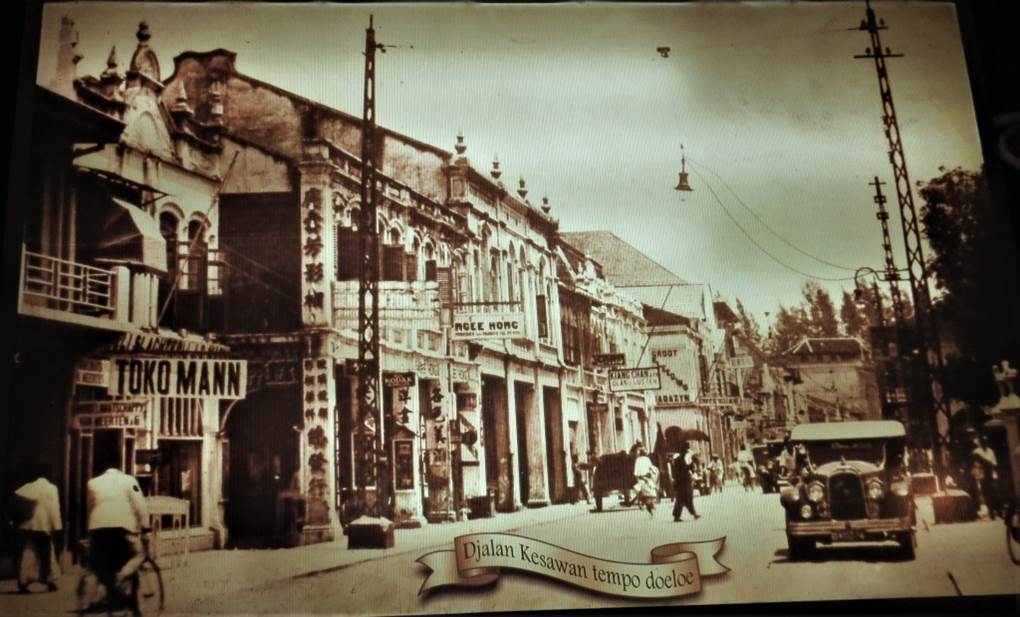
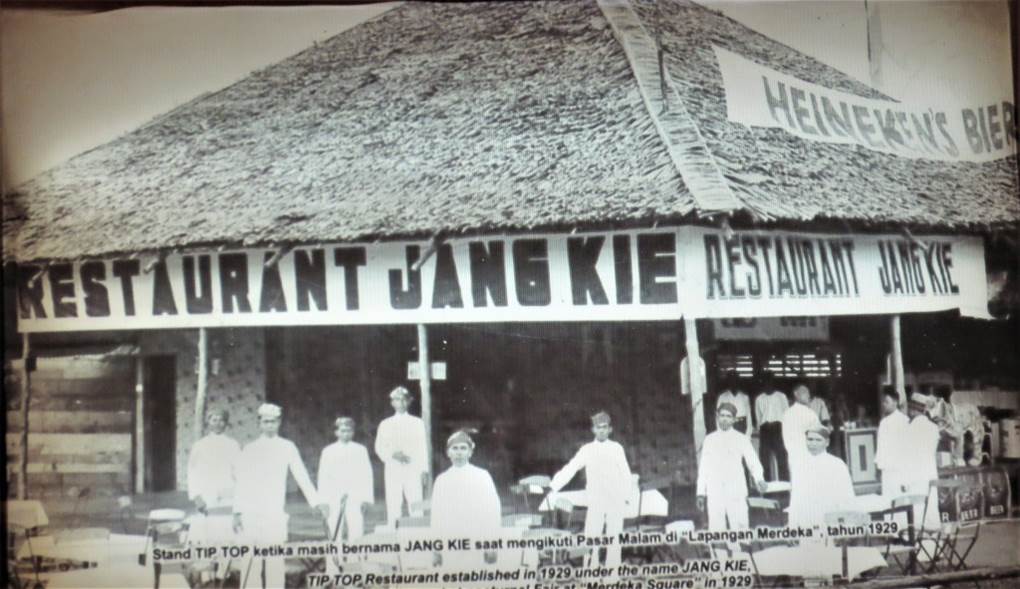
JANGKIE RESTAURANT, the predecessor of TIPTOP in 1929
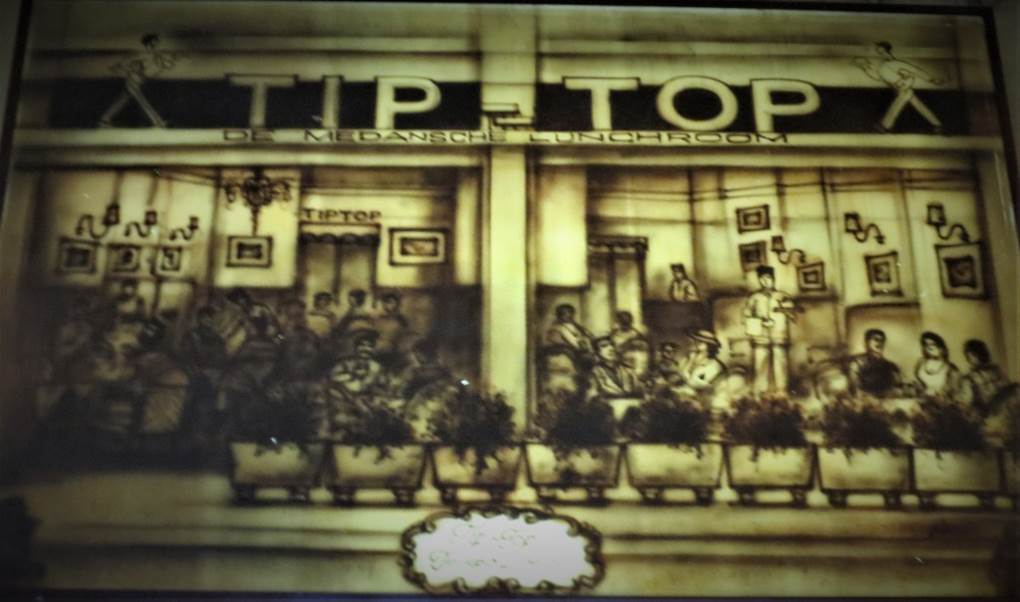
TIP TOP Restaurant
A long-established café that continues to this day.
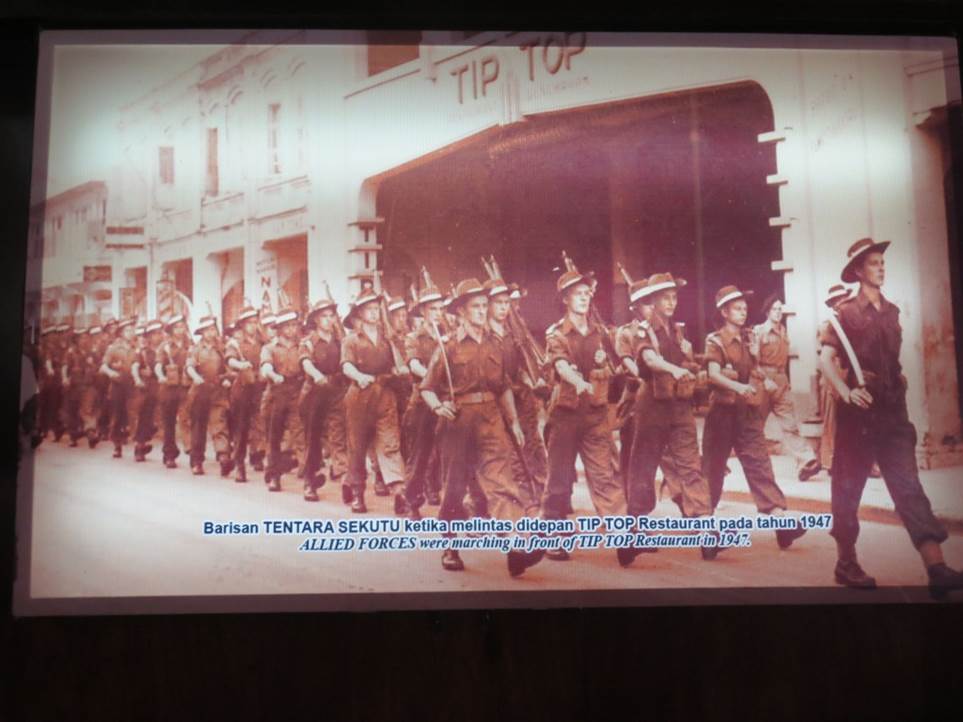
Rare photo of Dutch and Allied soldiers returning after the withdrawal of Japan troops in World War II, marching on the road in front of the TIPTOP restaurant.
1. Tjong A Fie Mansion
A mansion of a wealthy Chinese man who immigrated from China in the middle of the Meiji era and made a fortune in plantations and finance. It is located in the heart of the city. Completed in 1900, there are 35 rooms in total and is built on a land of 8,000m2. It is one of Medan’s landmark.
Tjong A Fie was officially recognized by the Dutch colonial government and led the Chinese immigrant community. Tjong A Fie is said to be a relative of Cheong Fatt Tze, who built the Cheong Fatt Tze mansion in Penang.
There is a splendid gate facing Kesawan Street, the downtown area of Medan, and when you enter it, you will see the mansion.
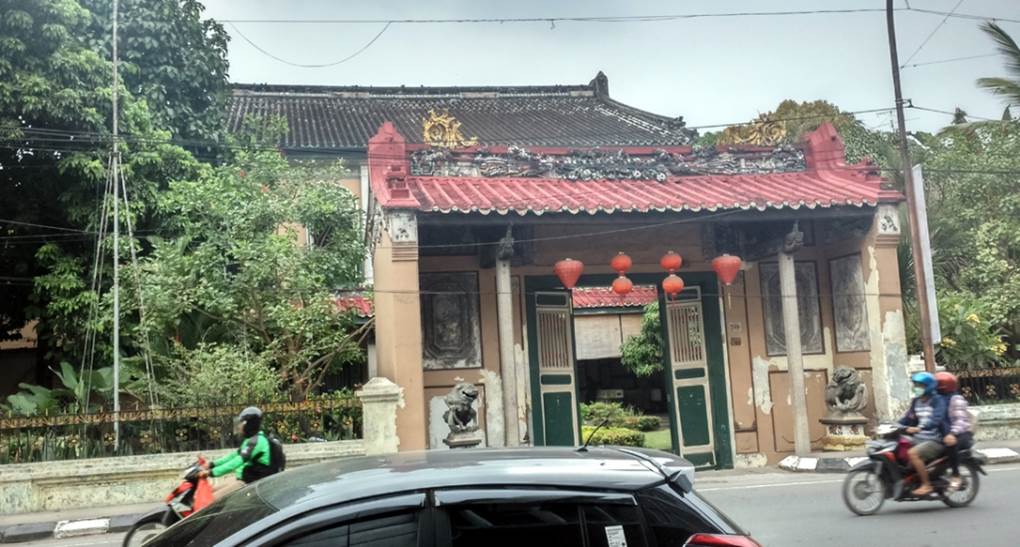
Photo by author, 2016
From the gate to the entrance of the mansion, you pass through an open space of about 10 meters long.
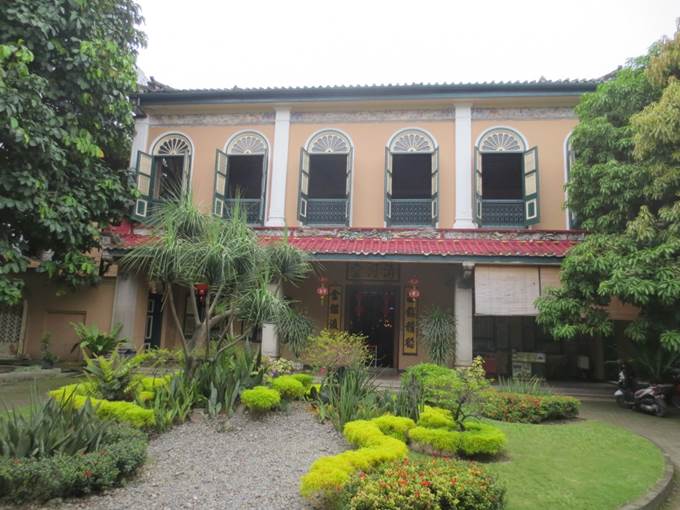
Photo by author, 2016
Entrance and reception.
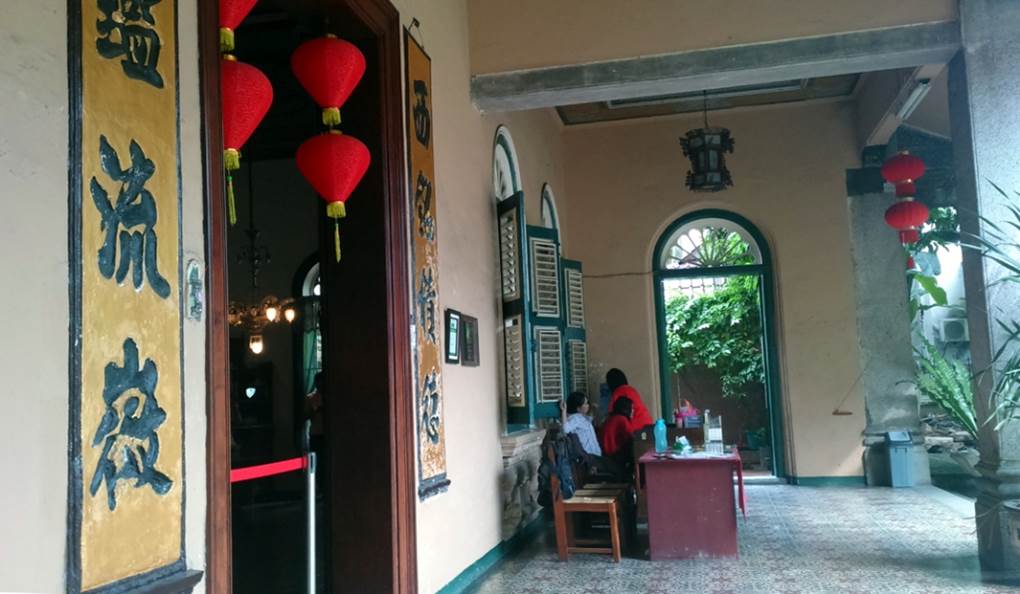
Photo by author, 2016
Land area: 8000m2, 35 rooms in total
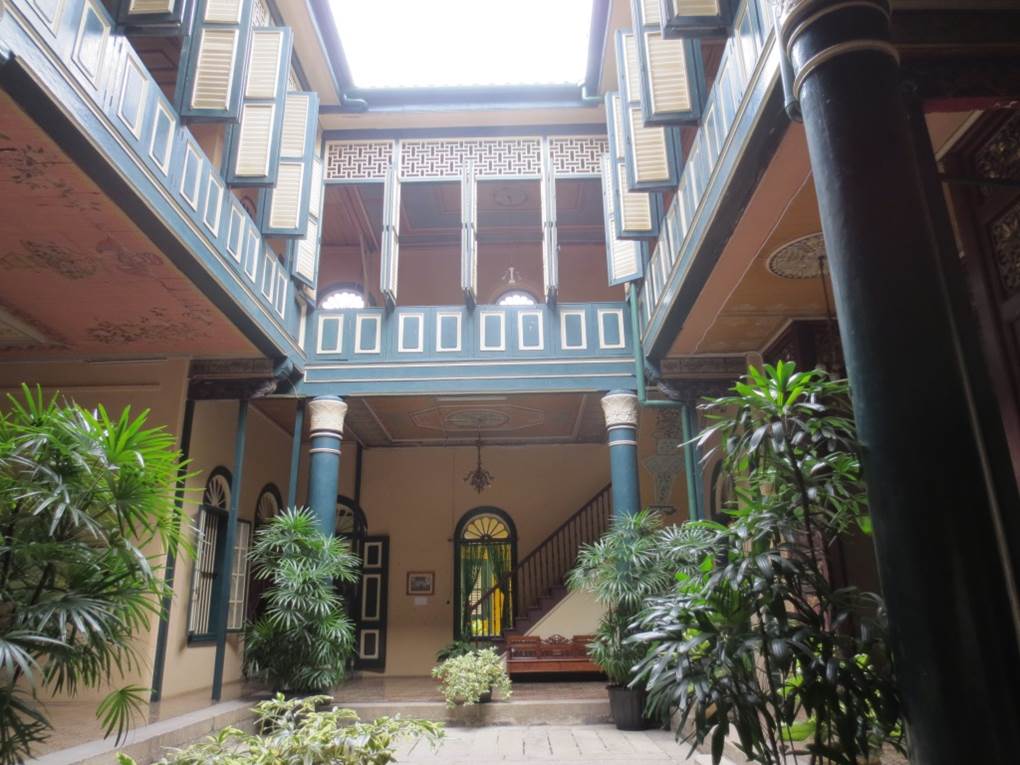
Photo by author, 2016
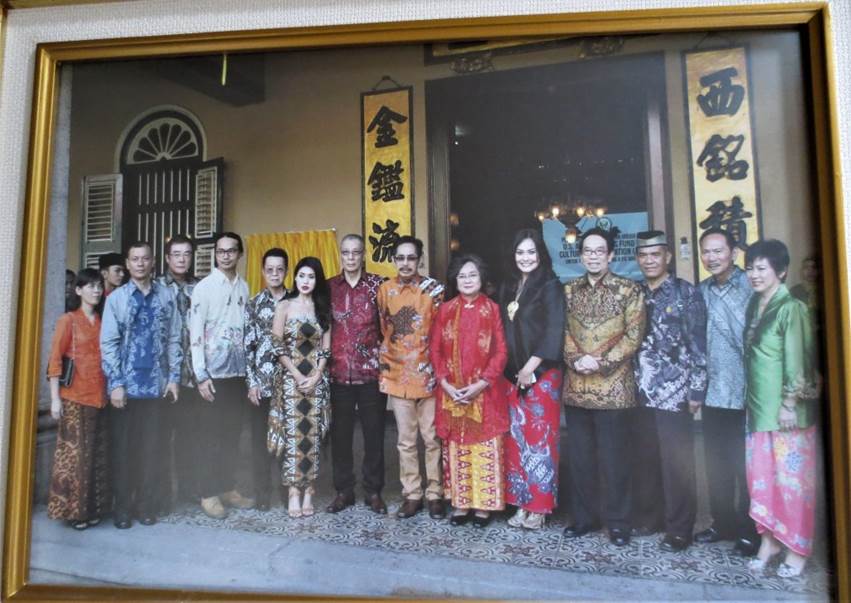
Photo by author, 2016
This Batak woman is a guide of the mansion and she shows me the interior.
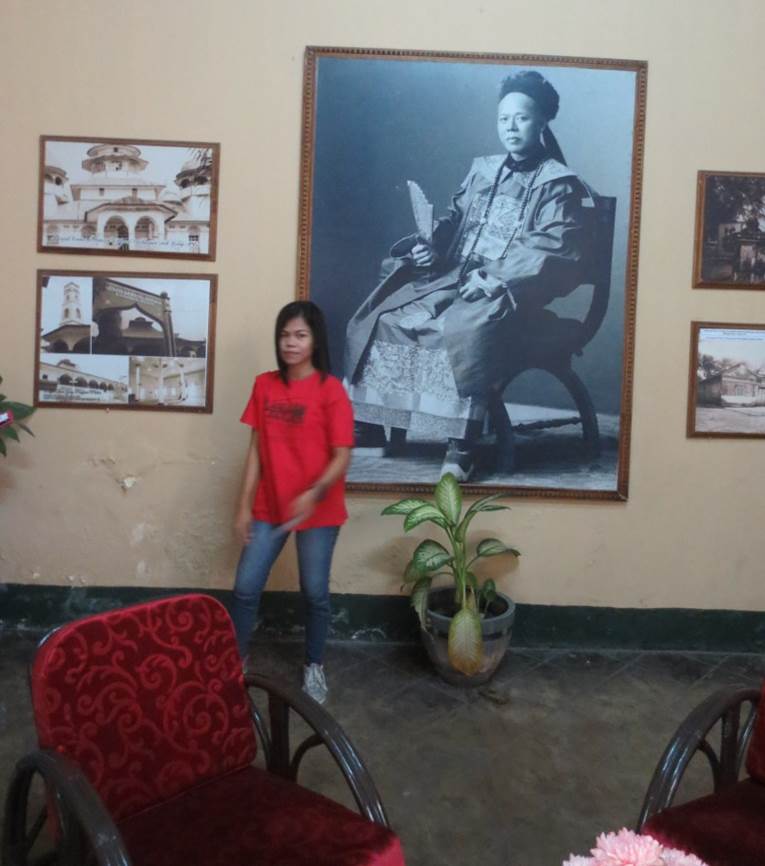
Photo by author, 2016
Main Lobby Lounge
The partitions of the rooms are well built, reflecting the taste of the wealthy at that time.
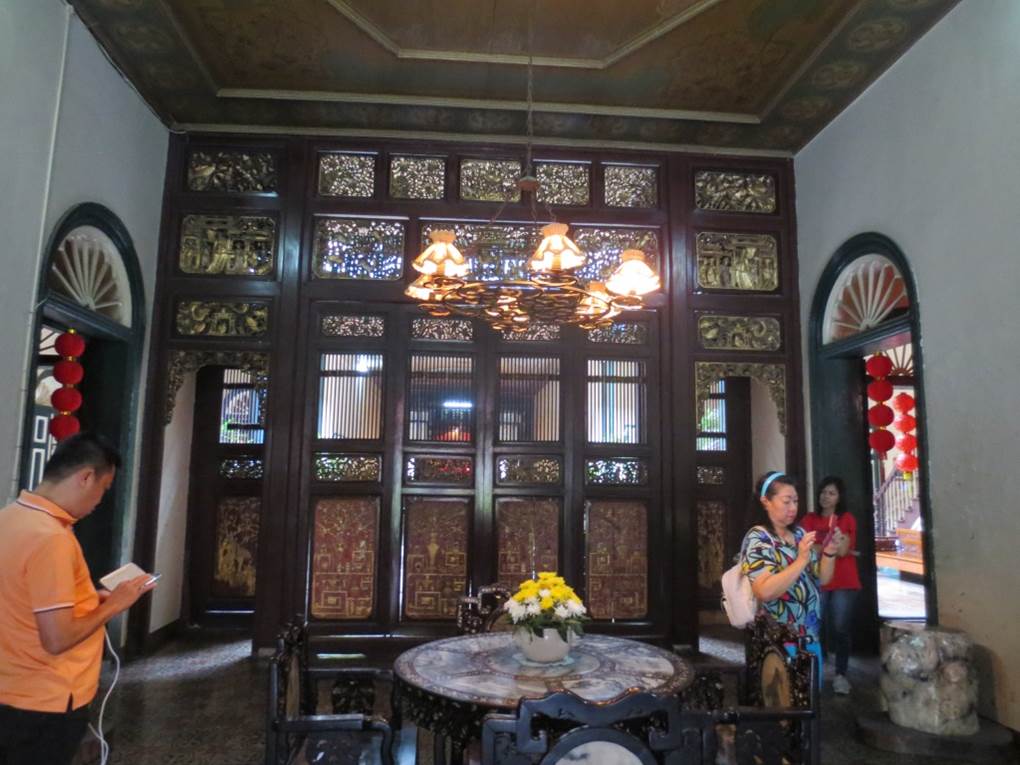
Photo by author, 2016
A brief biography of the owner and his wife of this mansion.
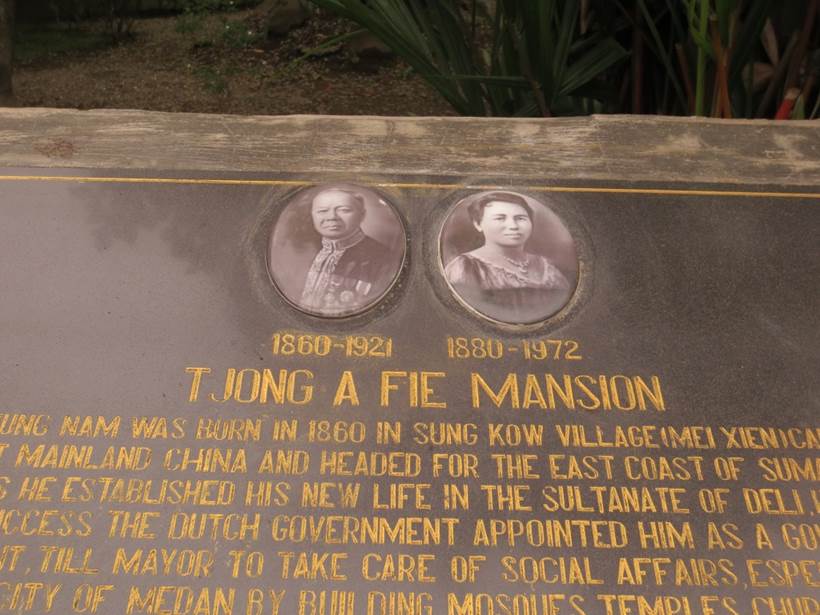
Photo by author, 2016