JAP | ENG
Sri Lanka Travelogue
February 2014
#1/6
The 26-year Sri Lankan Civil War (1983-2009) has finally come to an end, and the political situation seems to have stabilized, so I decided to visit Sri Lanka for the first time in a long time.
At Singapore Changi Airport, Terminal 3.

Photo by author, 2014
SriLankan Airlines connects Singapore and Colombo in about 3 hours.
This will be my fourth trip to Sri Lanka.
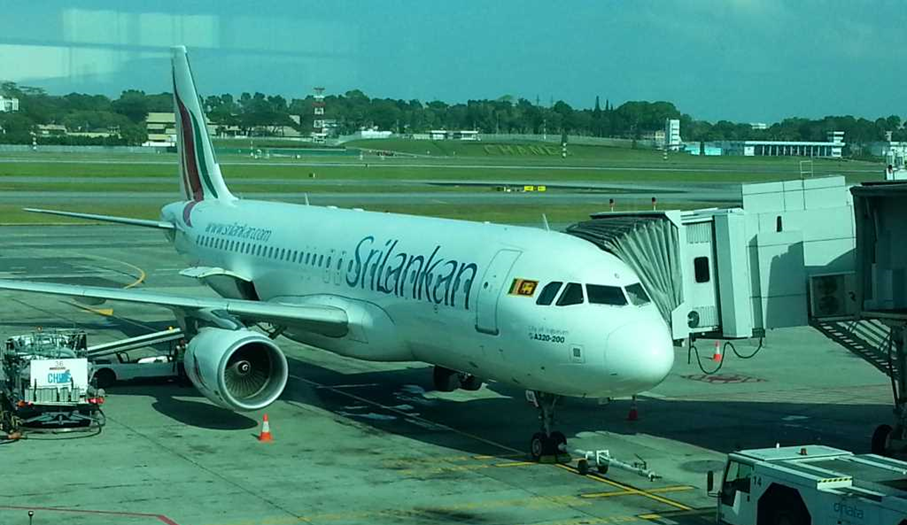
Photo by author, 2014
Colombo Bandaranaike International Airport
Five years have passed since the end of the civil war, and the old airport has been renovated and replaced with a bright modern architecture. A small band of four musicians was playing their instruments in the open-air walkway leading to the parking lot. The Sri Lankan government seems to have started to make a serious effort to attract tourists.

Photo by author, 2014
Ethnic composition and religion
The total population of Sri Lanka is about 20 million. Of these, about 75% are Sinhalese and 15% are Tamils, accounting for almost 90%. Seventy percent of the population is Buddhist. Other religious compositions include Hindus, Muslims, and Christians.
The whole journey is 700km
The car with driver that I had reserved was waiting in the airport parking lot.
I had entrusted the safety of this car with the driver as we began our week-long, 700km journey around Sri Lanka.
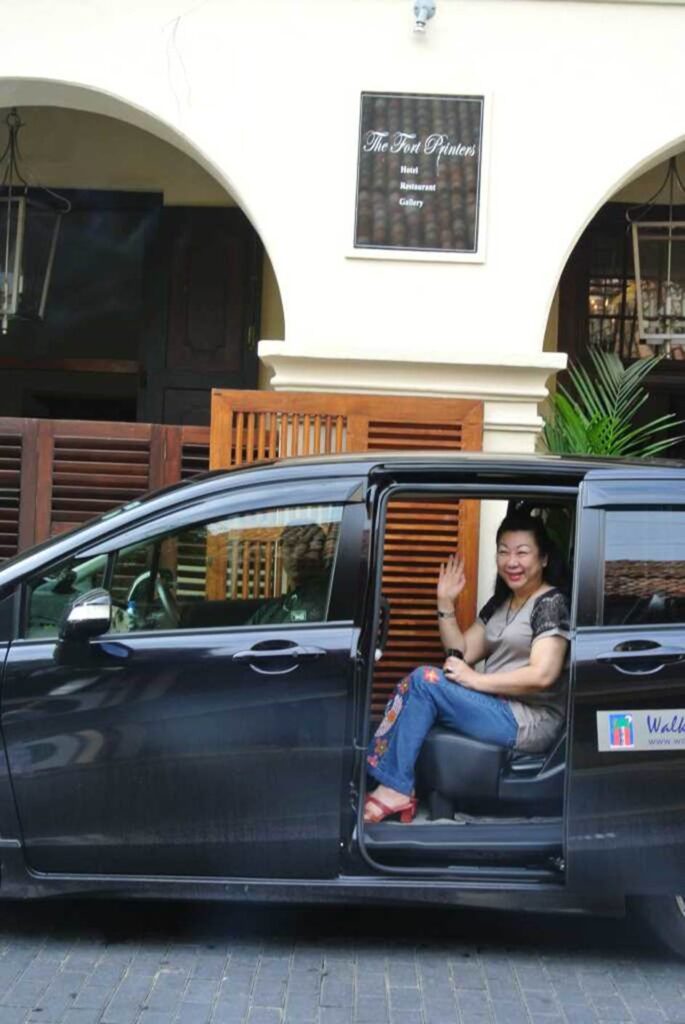
Photo by author, 2014
The area of Sri Lanka (Ceylon Island) is almost equal to the area of Hokkaido in Japan.
It is surprising that there are eight UNESCO World Heritage Sites, six World Heritage Sites and two World Natural Heritage Sites, on this island.
On the first day, we will head to Galle (Galle), 170 km south of the airport.
It is a town with the World Heritage Site of Galle Fort Old Town.
Along the way, we visited The Blue Water Hotel, which faces the West Coast.

Bypassing Colombo’s city area and driving through the suburbs to the south.

Photo by author, 2014
On the outskirts of Colombo, I came across a building like this.

2014年2月 筆者撮影
The building coverage ratio is extremely high. I wonder what the building regulations are. Scenes like this are often seen in South Asian countries, including India and Bangladesh.
After a while, we find the entrance to the highway, and continue south to our first destination.

Photo by author, 2014
Leaving the highway, passing through rural areas and a railway crossing, we arrived at the west coast where our hotel was located.
This single-track railway connects Colombo to the city of Galle.
As you can see from the photo below, the railway is a broad gauge (1676 mm) track, the same gauge used in India, including mountainous areas.
With the construction of parallel highways, these colonial era railways are destined to become obsolete.
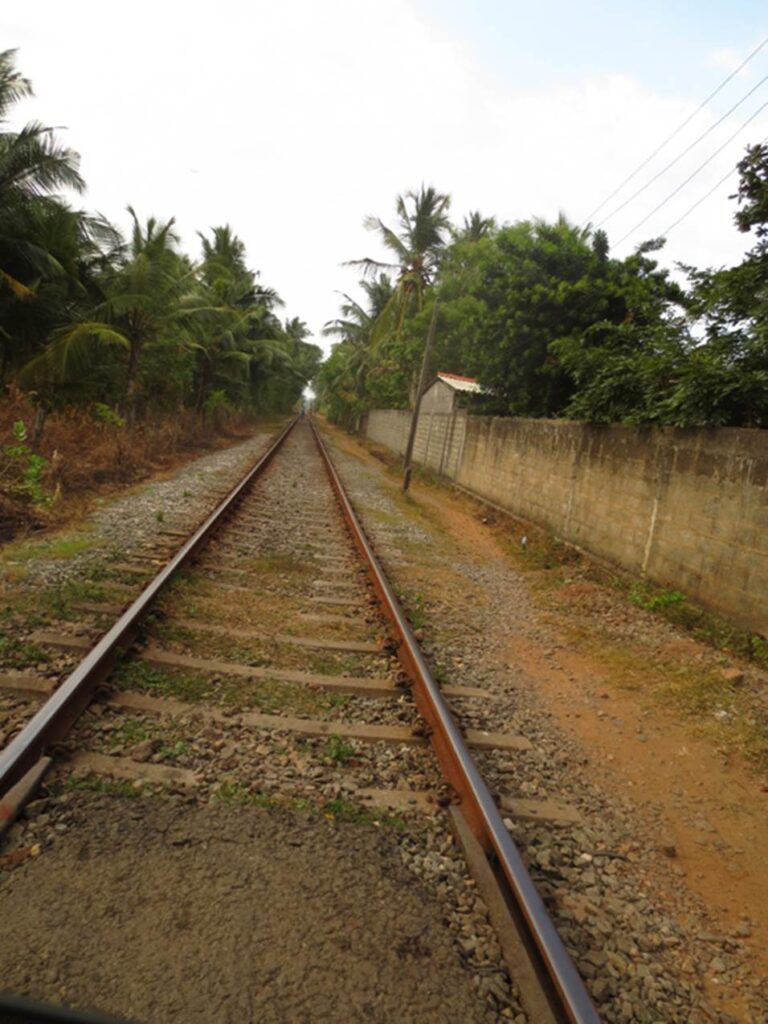
Photo by author, 2014
Sri Lankan architect Geoffrey Bawa
Jeffrey Bawa is one of Sri Lanka’s most famous architects. (1919-2003) As a young man, he studied law in the UK, stayed in Europe for a long time, received an architectural education, and returned to Sri Lanka at the age of 38 to start his design career.
Bawa was born into a wealthy family in Colombo to a Sri Lankan mother and an English father. In his late 30s, he studied architecture in order to create his own utopia in Sri Lanka, and eventually left a number of works in Sri Lanka.
Bawa’s style is strongly influenced by both the British colonial style and the traditional architecture of Ceylon. In particular, he skillfully incorporated the climate and environment of this tropical island nation into his architecture, and succeeded in creating a sense of unity between architecture and the environment.
The discovery of these architectural solutions in the tropics influenced the architectural design of other tropical Asian countries, such as Bali.
The Blue Water Wadduwa
This hotel is located in Wadduwa, about an hour’s drive away.
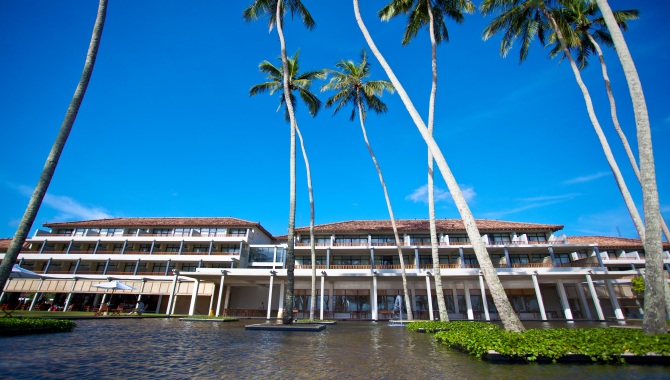
Photo by author, 2014
The reception desk at the Blue Water Hotel. A bold mosaic of a snake on the wall.
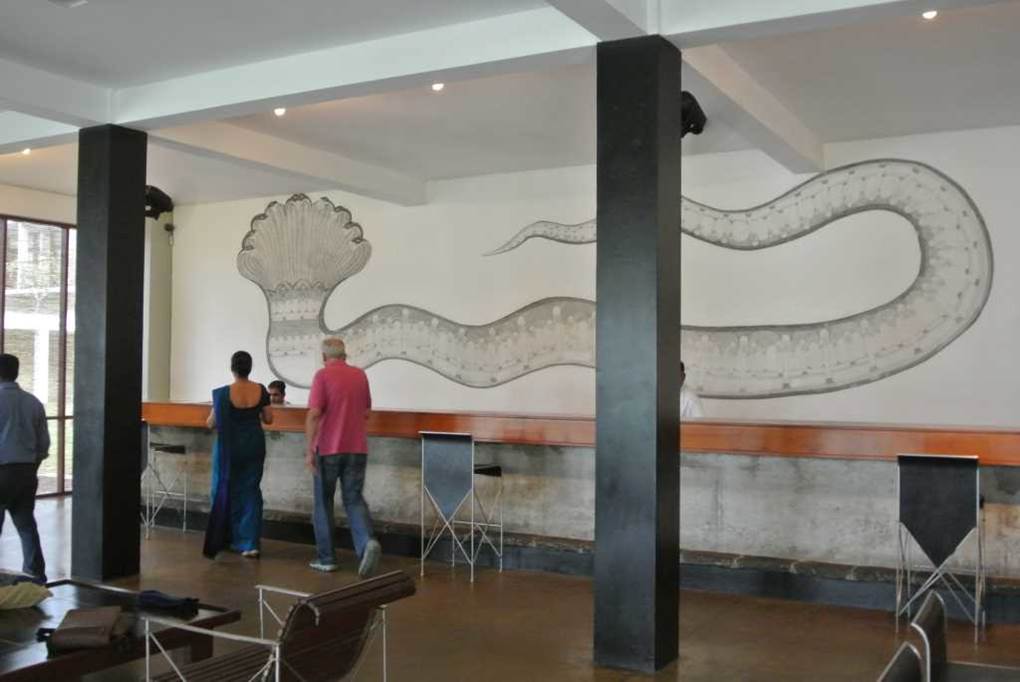
Photo by author, 2014

Photo by author, 2014

Photo by author, 2014

Photo by author, 2014

Photo by author, 2014
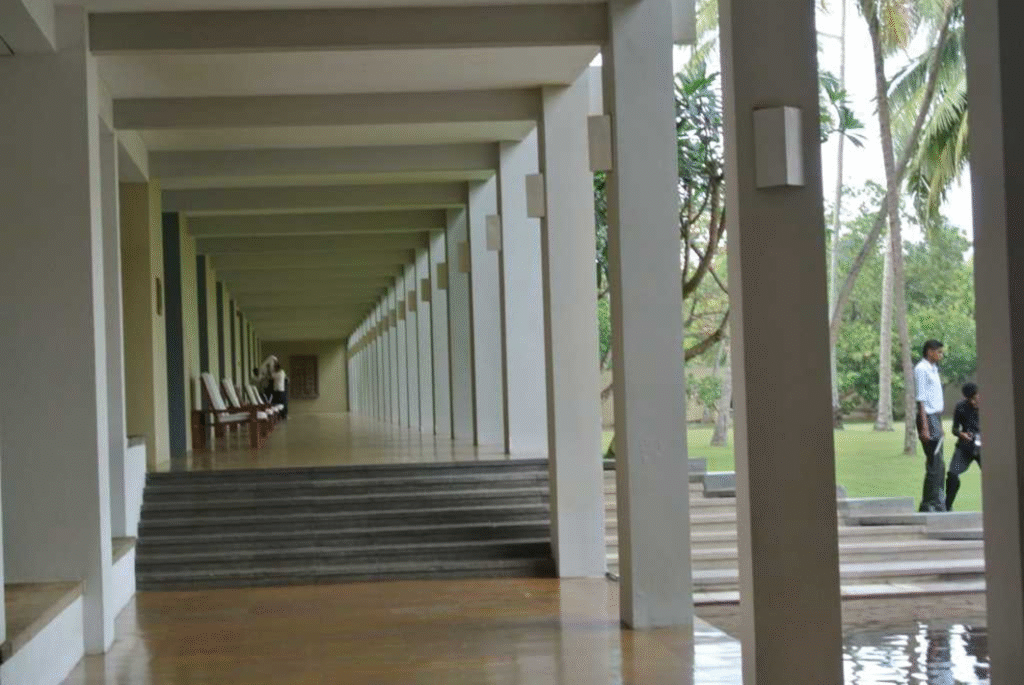
Photo by author, 2014
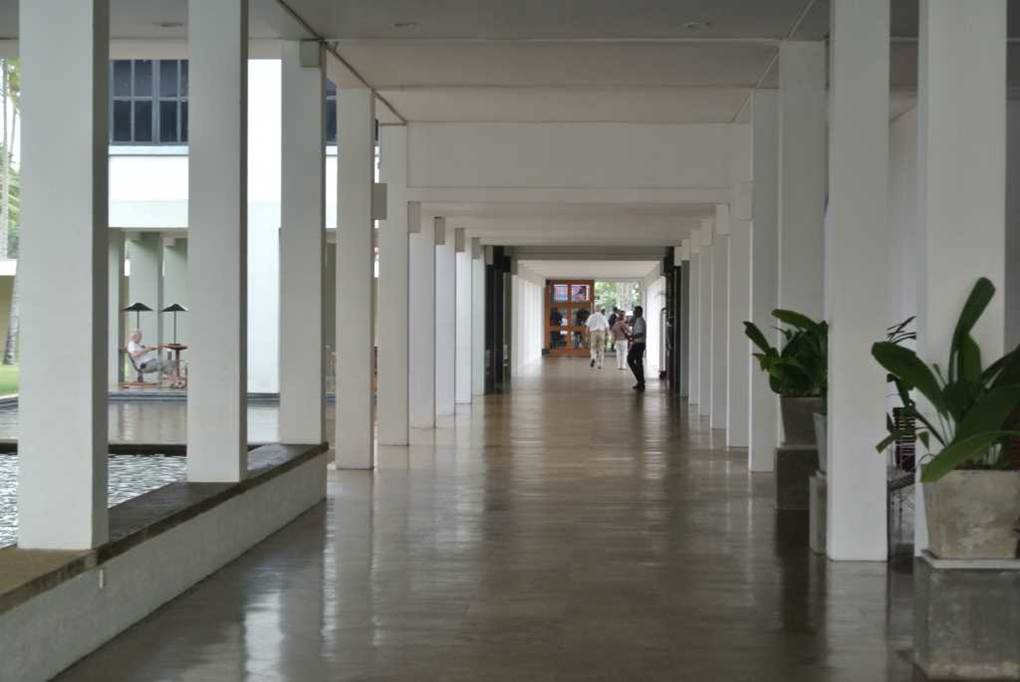
Photo by author, 2014
There is a unique open feeling that seems to be connected between the nature and climate of the tropics, as well as the indoors and outdoors.
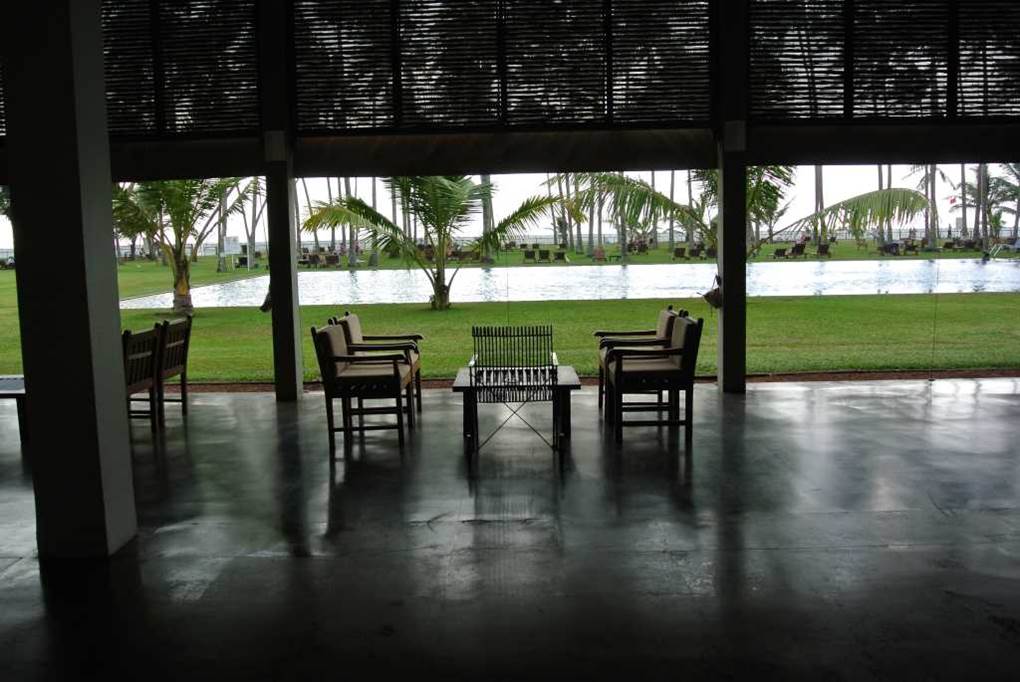
Photo by author, 2014

Photo by author, 2014
The Bluewater Hotel is located in Wadduwa, between Colombo and Galle, along a coastline where the sunset is so beautiful that it is called the Golden Coast.
The endless coastline and the surface of the pool blend together.
Jeffrey Bawa is the creator of the “Infinity Pool”.
This hotel was the last resort hotel that Bawa worked on.
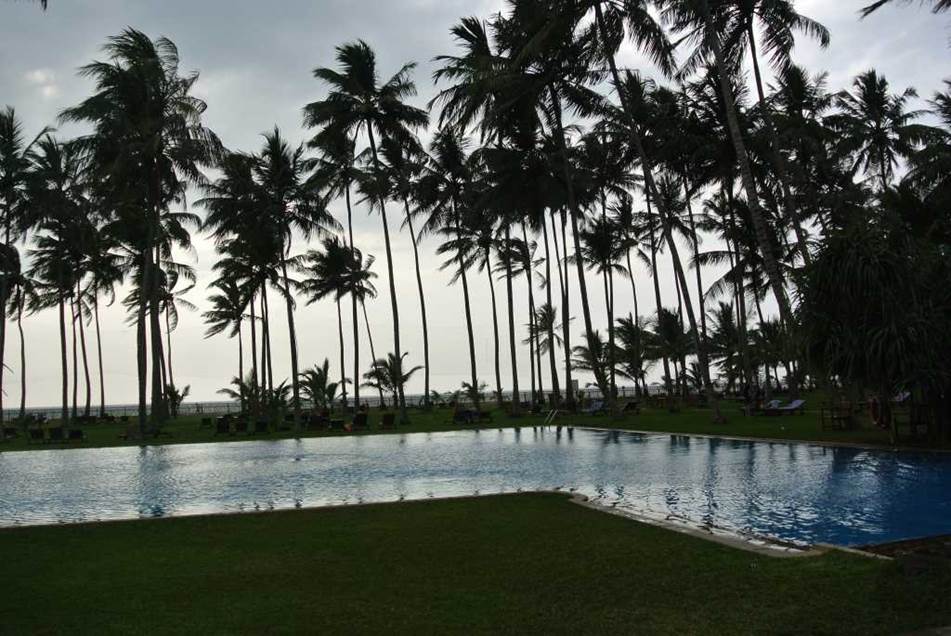
Photo by author, 2014
Bawa skillfully incorporates the climate and environment of the tropical island nation into his architecture, and has succeeded in creating a sense of unity between architecture, water, and green environment.
The discovery of these architectural design solutions in the tropics influenced the architectural design of other tropical countries.
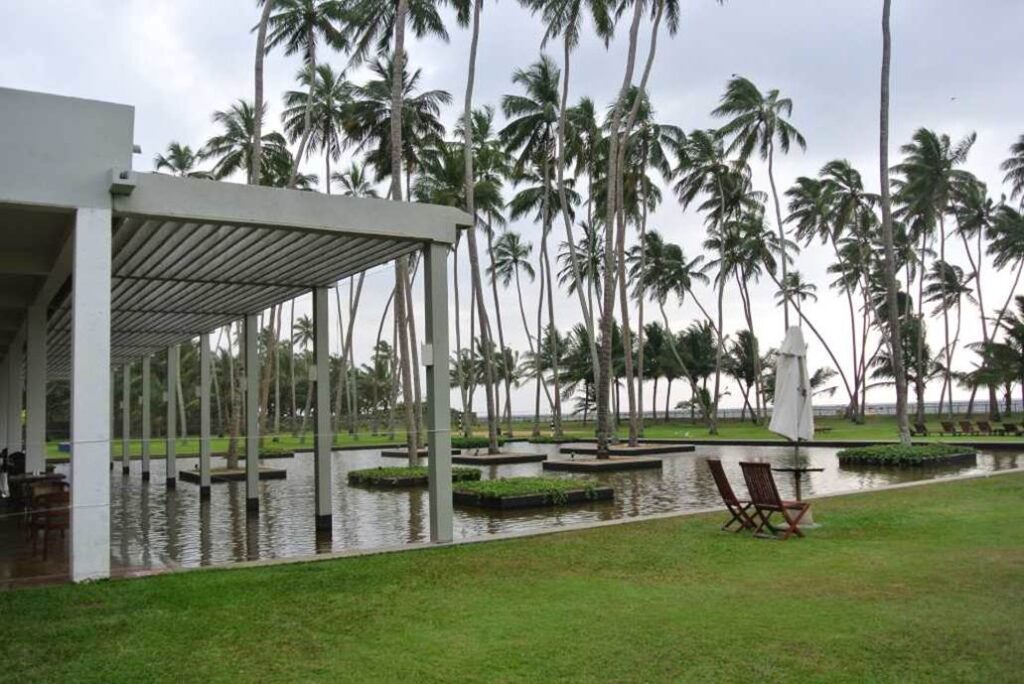
Photo by author, 2014
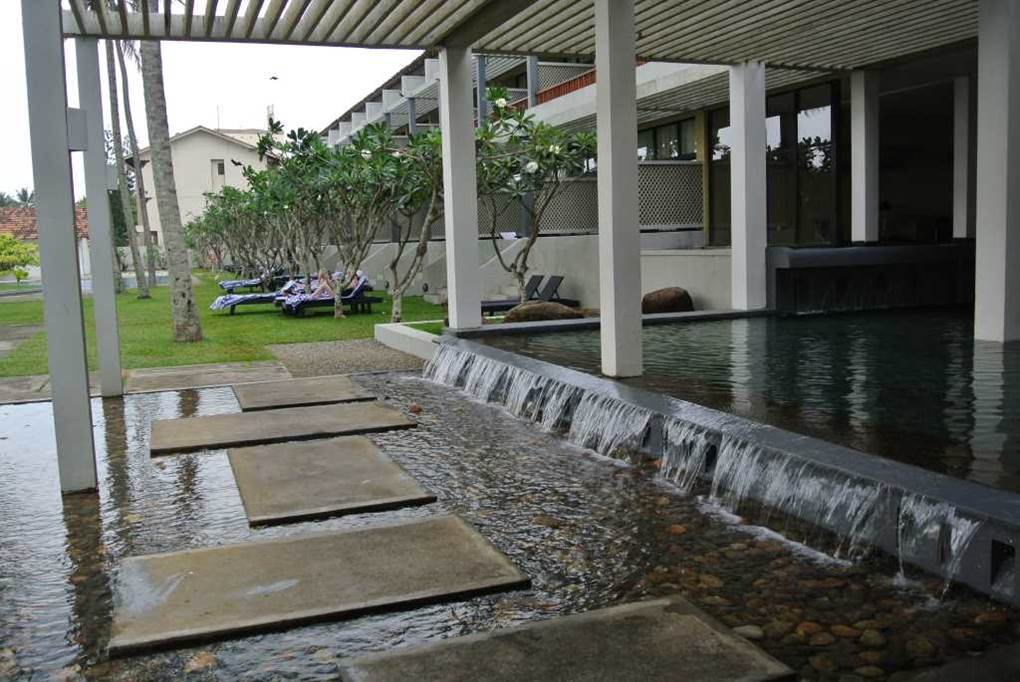
Photo by author, 2014
Photo by author, 2014

Photo by author, 2014
Sri Lankan crab in thick curry.

Photo by author, 2014
Self-service counter for Sri Lankan tea.
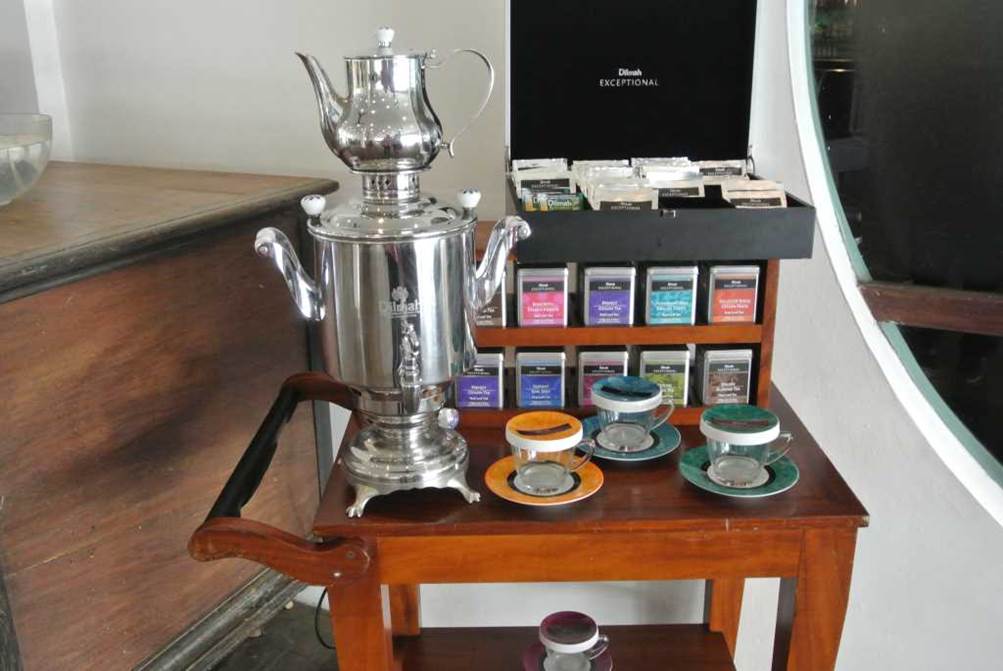
Photo by author, 2014
By chance, we came across a wedding reception group at the hotel.

Photo by author, 2014
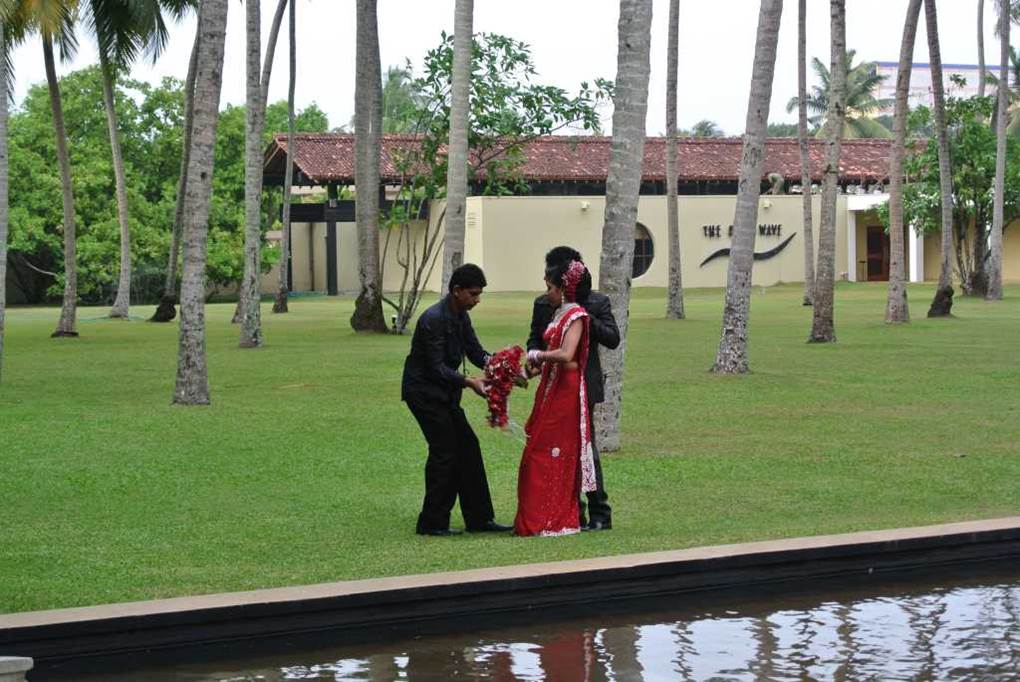
Photo by author, 2014
The Newlyweds.

Photo by author, 2014
Jetwing Lighthouse Hotel
Jetwing Lighthouse in an excellent location with dynamic Indian Ocean views.
It is the work of Geoffrey Bawa’s later years and is close to the World Heritage city of Galle.
Colombo’s Bandaranaike International Airport is 170 km away.

This resort hotel is located at the southernmost tip of Ceylon, close to the World Heritage Galle Fortress.
The waves of the Indian Ocean are crashing on the shore.
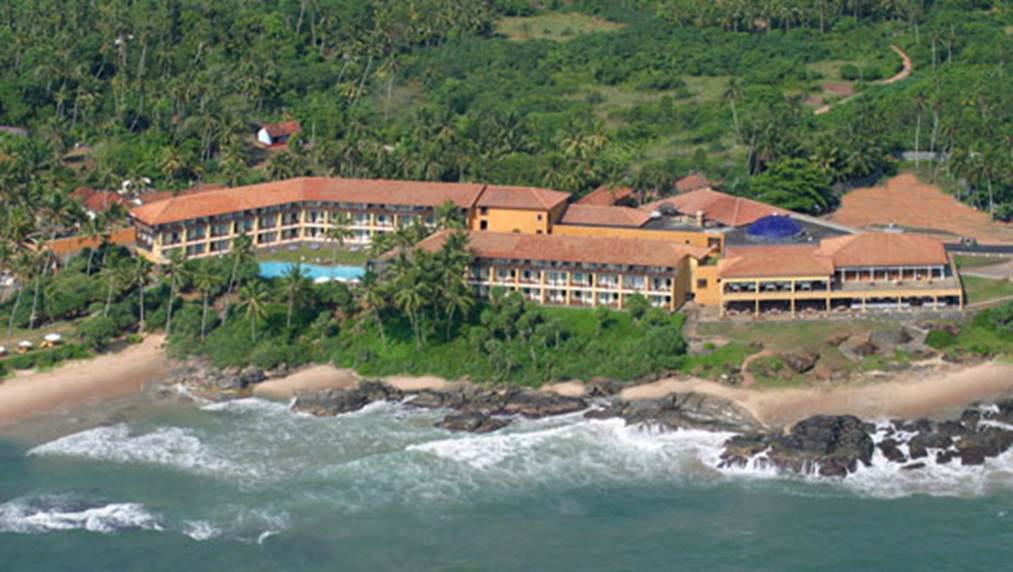

Photo by author, 2014

Photo by author, 2014
We went out to the beach. There are no other people. We had the beach all to ourselves.

Photo by author, 2014
The sight of healthy palm trees growing freely is soothing.
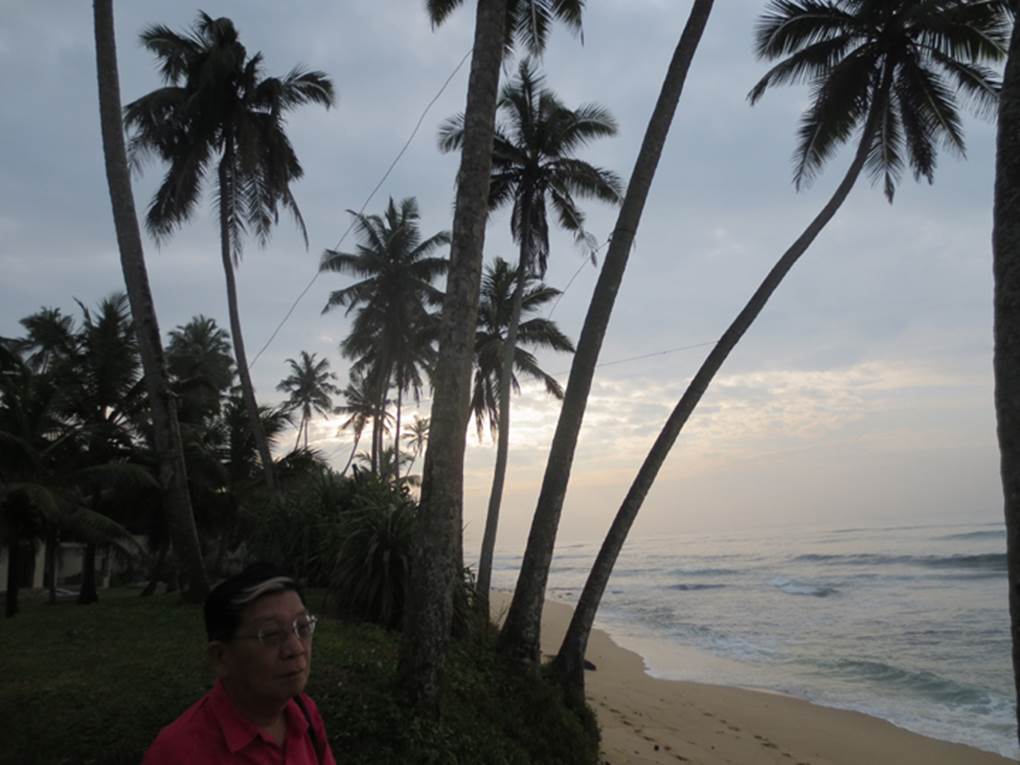
Photo by author, 2014
On the first day, we checked into a small pre-booked seaside hotel on the outskirts of Galle City.
The rooms are surrounded by deep eaves corridors and provide ample shade.

Photo by author, 2014
The building is a one-story structure with a pool in the center and the sea beyond it.
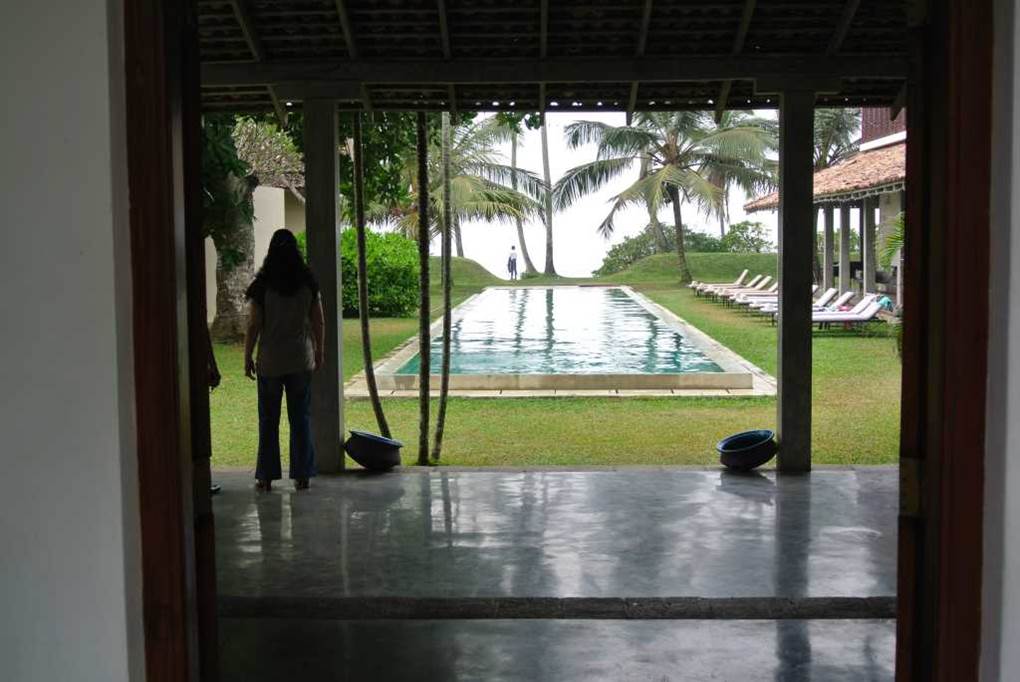
Photo by author, 2014
The room overlook the Indian Ocean. There is a private terrace outside.

Photo by author, 2014
The rooms are Large.

Photo by author, 2014
The bed is covered with a mosquito net.

Photo by author, 2014
Washrooms, showers and bathtubs are located outdoors.
Unlike urban living spaces, you can enjoy a sense of openness.

Photo by author, 2014
It has a unique quality that large hotels don’t have. The outside nature and air are subtly brought inside and blend in seamlessly.

Photo by author, 2014
All photos by author, February 2014