JAP | ENG
Southeast Asian Waterfront
#3/6
Sarawak
Kuching City, Sarawak
In 1975, I was invited to his hometown by a wealthy Chinese man from Sarawak, Malaysia, who lived in the penthouse of the my apartment building in Singapore.
He owned the Aurora Hotel in Kuching, and he agree to let me stay there.
I was excited to be in Borneo for the first time.
At that time, the Federation of Malaya had only been independent from Britain for about 10 years. This was decades before ASEAN’s Open Skies Policy, which was later agreed upon by other countries, came into effect. The only airline available was operated by Malaysia Airlines, which was a one-hour flight from Singapore.
Kuching Airport, Sarawak
Kuching Airport, Sarawak, Borneo in 1975. It was a mini airport.
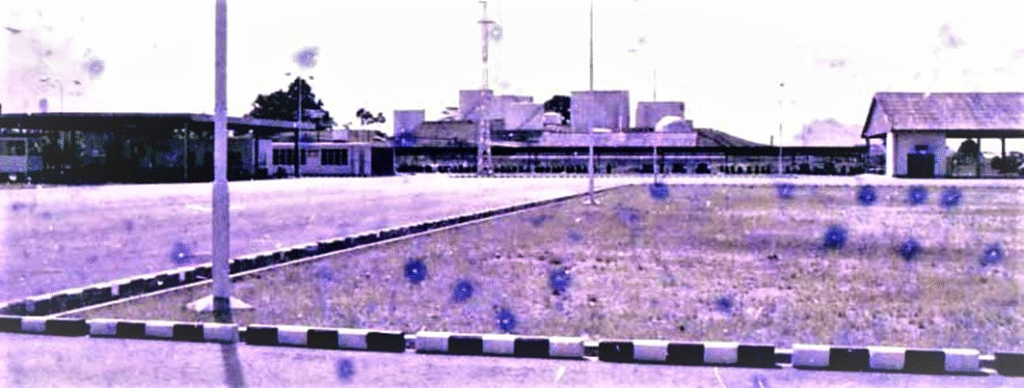
Kuching Airport, Sarawak, Photo by author, 1975
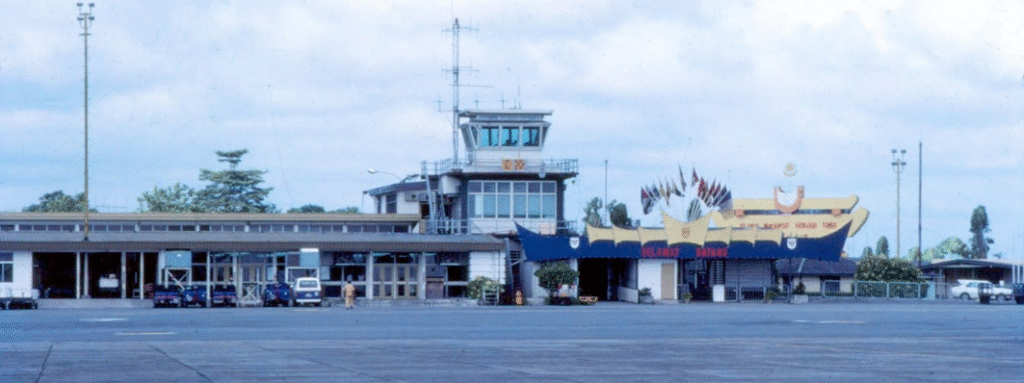
Kuching Airport, Sarawak, Photo by author, 1975
Kuching Port, Sarawak
Unloading cargo at Kuching wharf in 1975. The wharf is located next to downtown Kuching, upstream from the mouth of the river from the South China Sea.
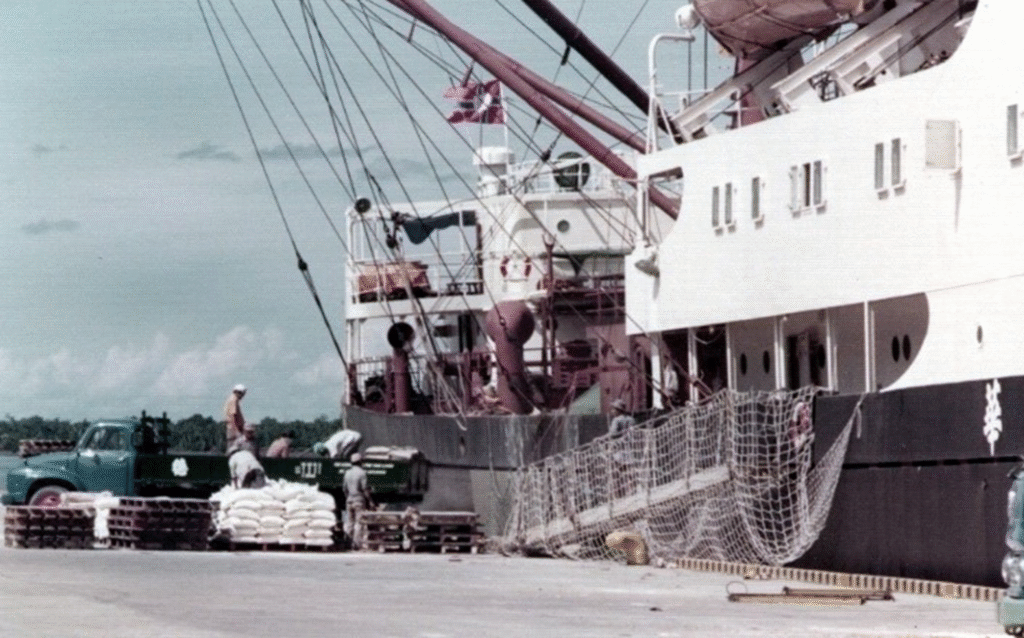
Photo by author, 1975
Major buildings in Kuching city
British colonial-era colonial-style building in Independence Square
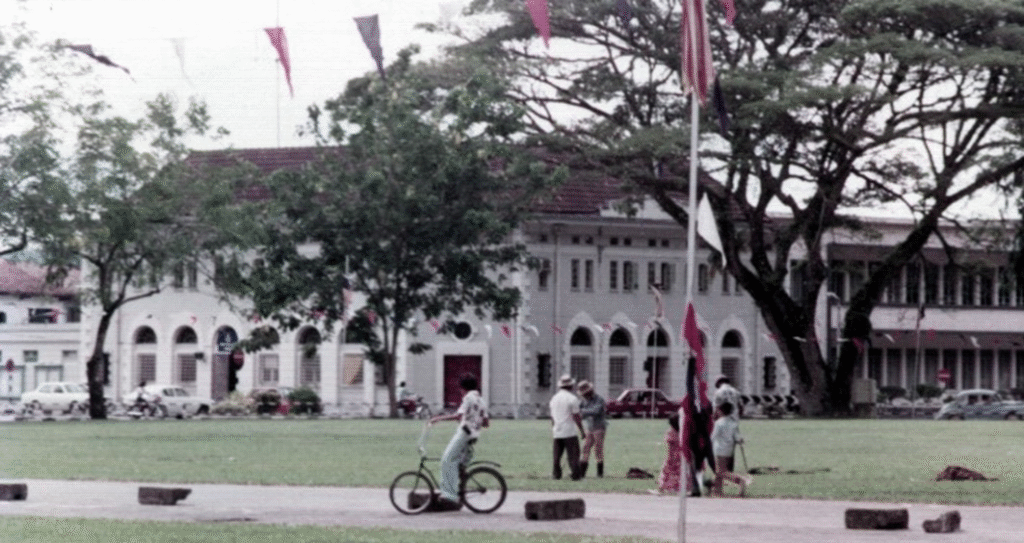
Photo by author, 1975
Mosques in the city
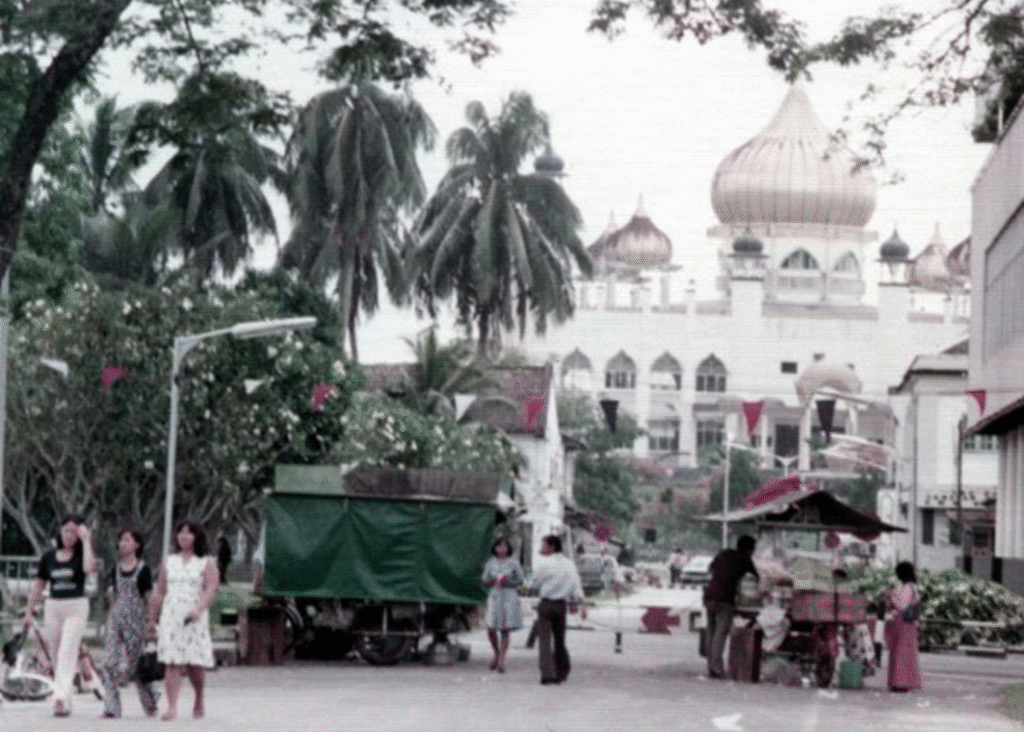
Photo by author, 1975
Western-style townhouse. It is made of wood.
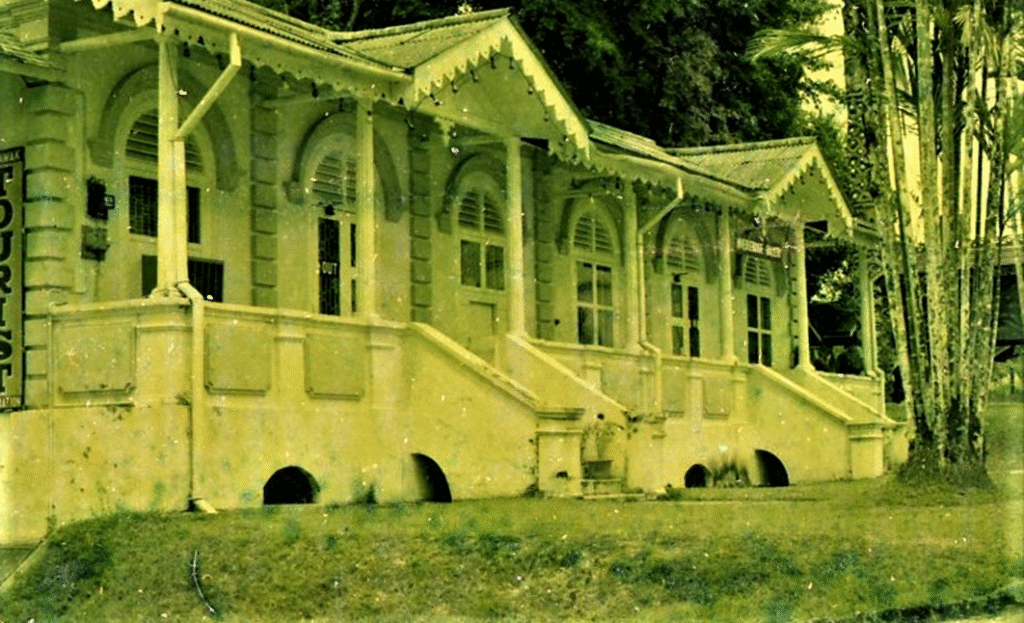
Photo by author, 1975
The Aurora Hotel, the top-class hotel in Kuching at the time, where I stayed.
A model of the expansion plan.
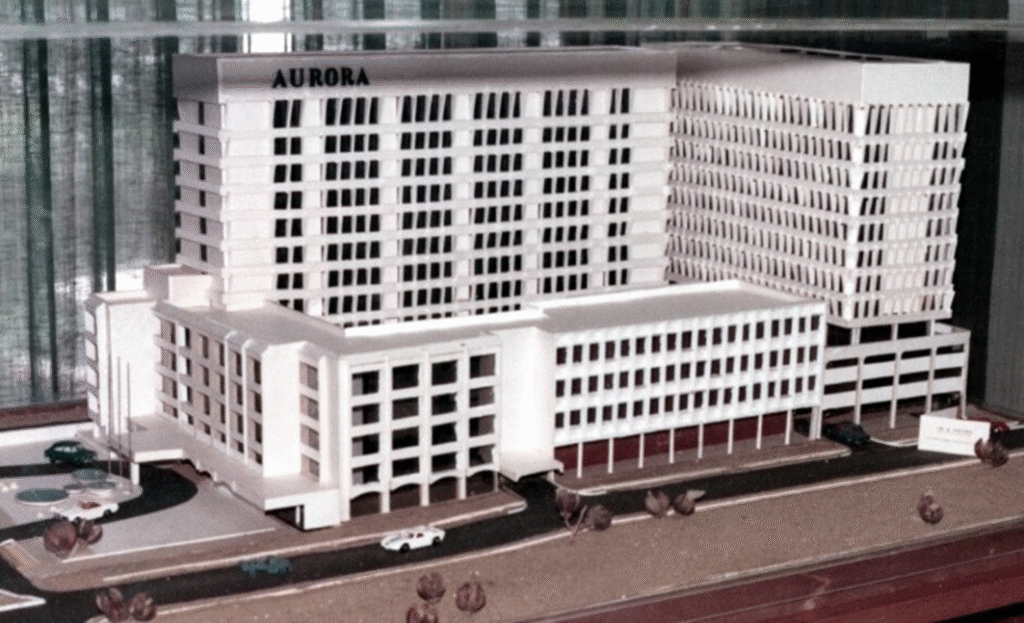
Photo by author, 1975
Holiday Inn Hotel Under Construction
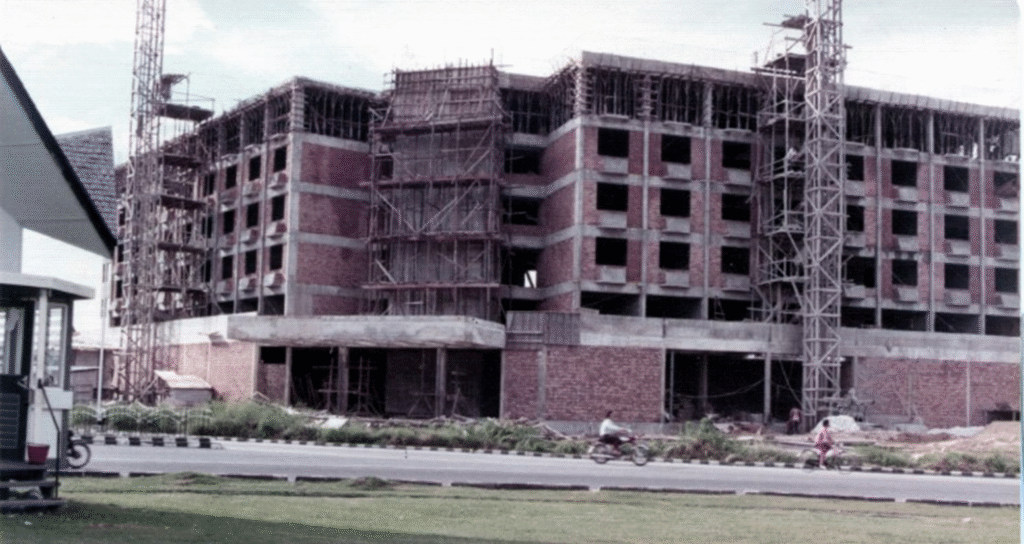
Photo by author, 1975
Thatched roofs found in the city. You don’t see them in the Malay Peninsula.
This is an example of local production for local usage on the island of Borneo.
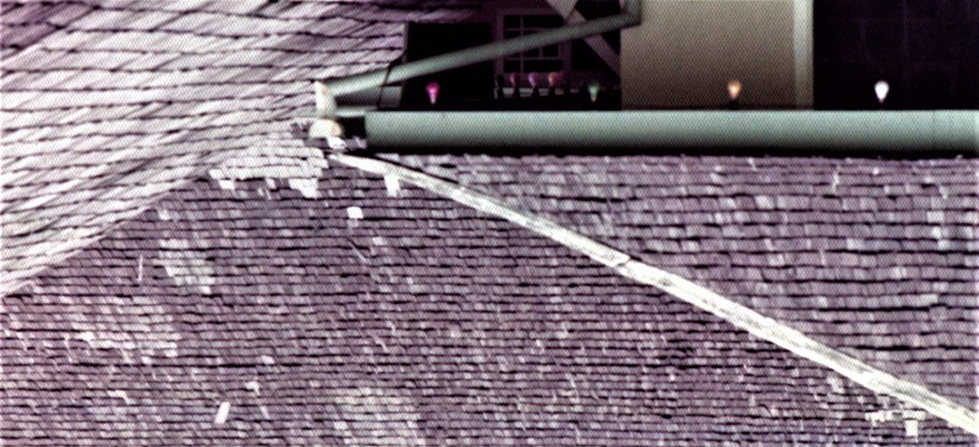
Photo by author, 1975
Sarawak Museum
Sarawak Museum in Kuching City
If you go up the river where the mangrove forest grows at the mouth of the river, you will find a longhouse on stilts on the banks of the inland tropical forest.
It is inhabited by the indigenous people of Sarawak who religiously believe in animism. Sculptures and tools used in the rituals of the Dayak tribe are on display.

Photo by author, 1975
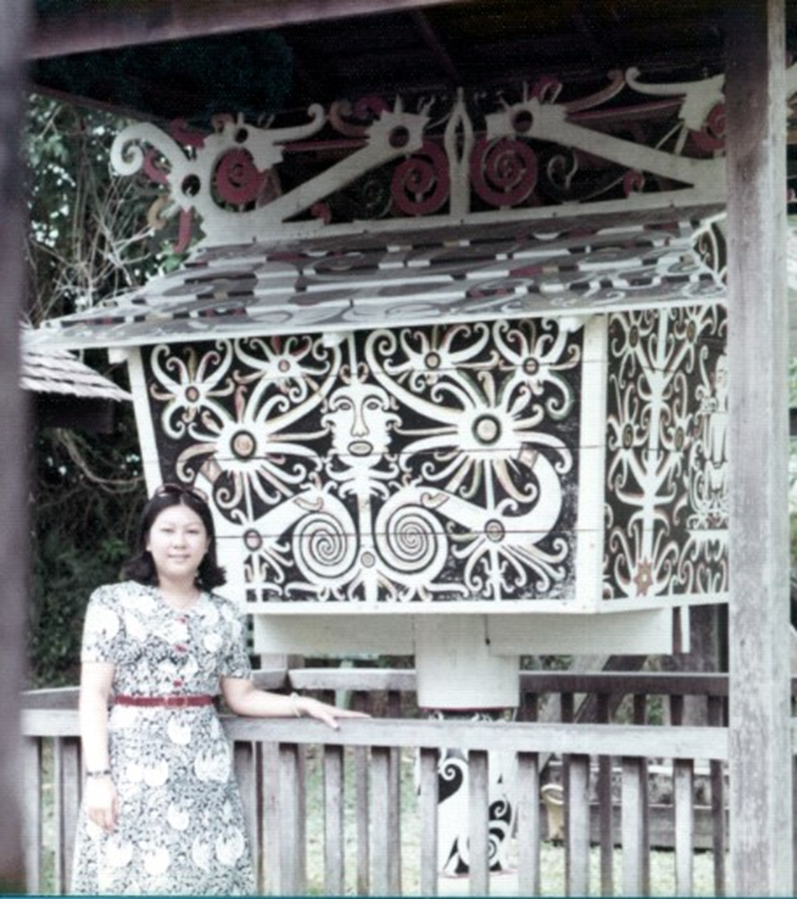
Photo by author, 1975
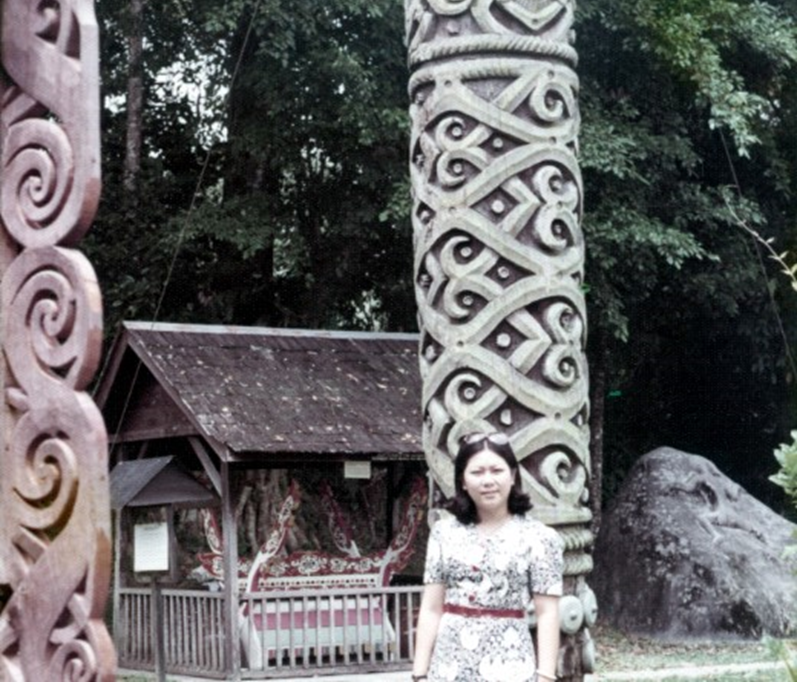
Photo by author, 1975
Searching for Dayak people’s stilt dwellings in the forest
From the tour desk of the Aurora Hotel in Kuching, I heard that there was a stilt dwelling (longhouse) of the Land Dayak (or Bidayuh) tribe in the depths of the jungle, and I thought that I should definitely go to see it.
I immediately hired a guide and went deep into the mountains for about two hours, alternating between dense forests and slash-and-burn fields.
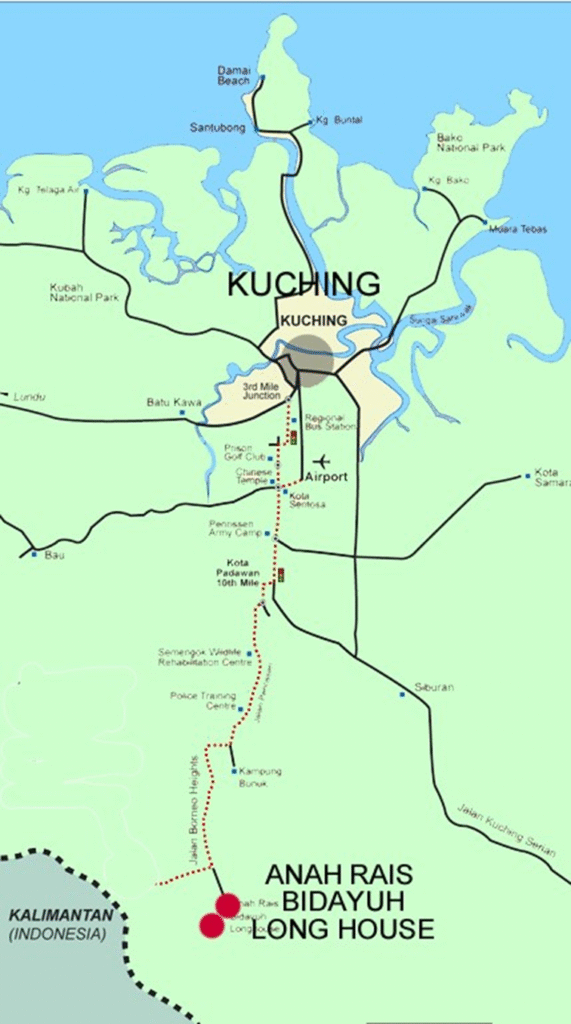
Location of the longhouse
Outskirts of Kuching, the capital of Sarawak
Such a landscape appears.
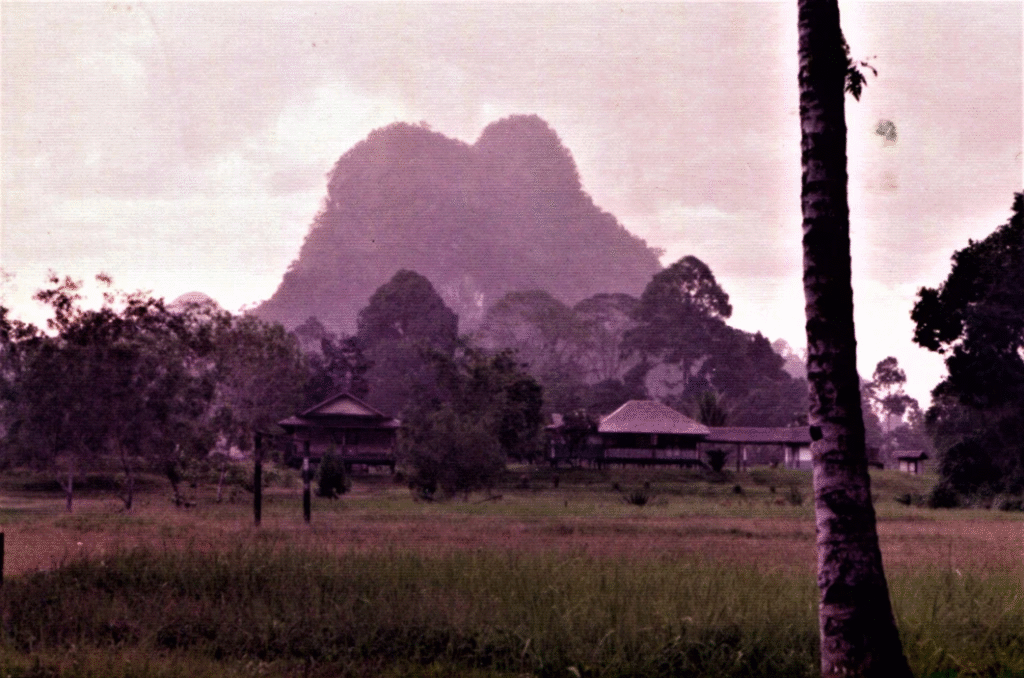
Photo by author, 1975
Infiltrating the Longhouse
After passing through rice fields and dense forests, we arrived at a huge stilt-built communal settlement like the one in the photo, the like of which we had never seen before.
At the time, these remote mountain areas, which could be called unexplored, were not well known except by peddlers who travelled by boat on the river, and tourist routes like those of today had not been established.
Naturally, I was the only visitor at the time, accompanied by one local.
To reach the raised platform, there are wooden stairs, and when visitors reach the top, they are presented with a bottle of homemade sake that they must drink without hesitation as a greeting.
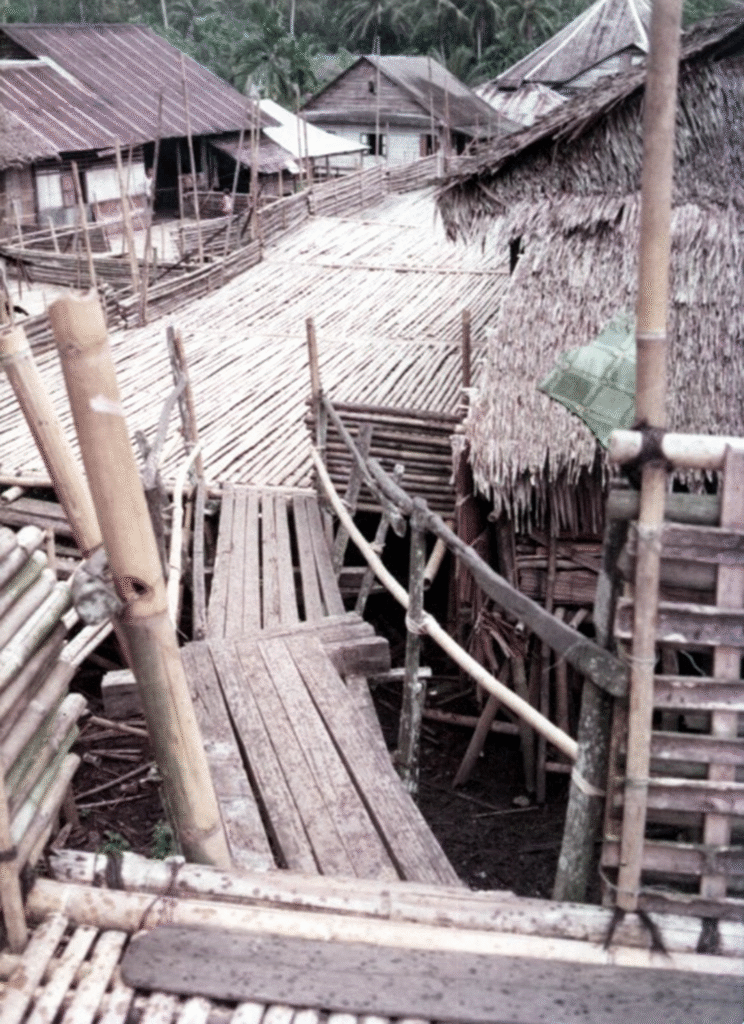
Photo by author, 1975
Golden longhouse corridor
It is a typical stilt-floor construction style in which the natural slope of the land is used as is, without any intervention in the ground by excavation or other means, and beams are raised from the ground to create a flat wooden foundation on which the house is then built.
Strong winds such as typhoons are relatively rare, but rainfall is high throughout the year, and avoiding leaks is a priority.
The shape of the roof is gabled rather than hipped.
The eaves are deep and excellent in shading, and natural ventilation is fully functional throughout.
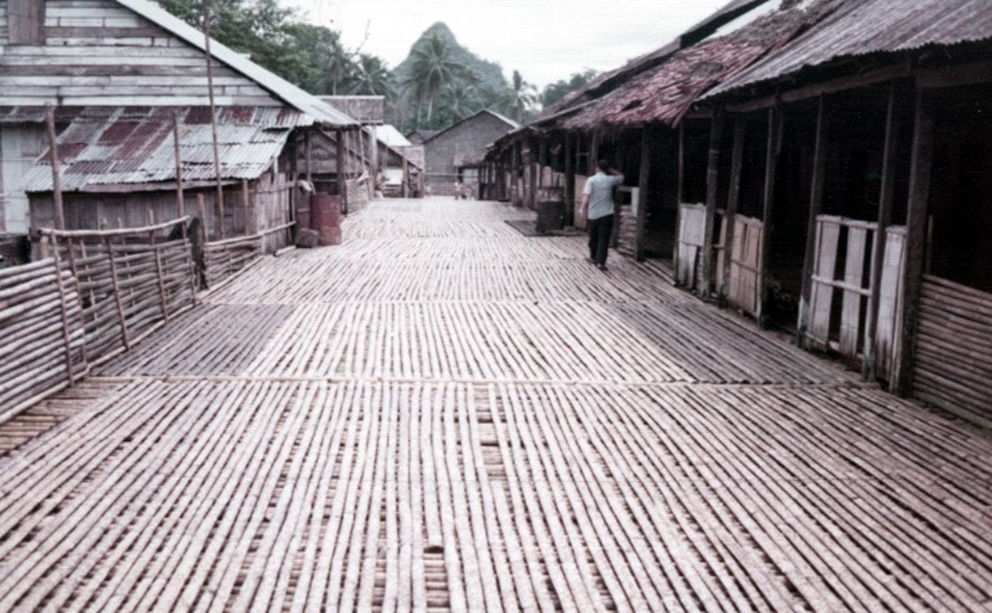
Photo by author, 1975
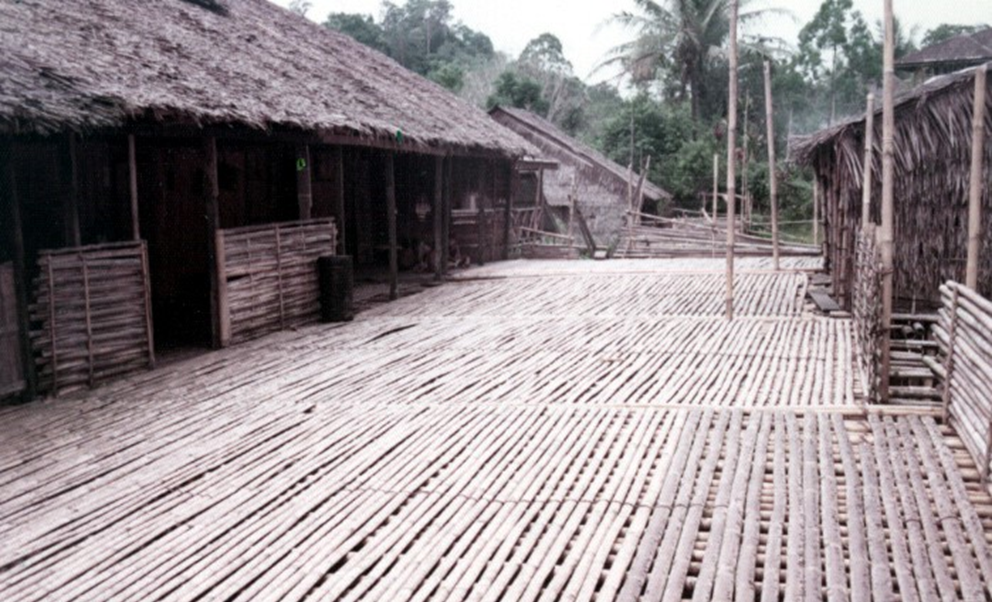
Photo by author, 1975
The long side of the tenement is at least 100 meters, and there is a wide passage space of 6~8 meters wide in the center, which is a public space.
The floor finish is covered with bamboo, which softly reflects sunlight and is very beautiful. The floor has gaps to allow for ample ventilation, while also allowing for good drainage so that tropical showers can dry out quickly.
On either side are separate rooms and kitchens, each of which may have dozens of family units, and privacy is maintained with each other. Residents’ excrement feeds livestock under the raised floors, creating an ideal sustainable cycle.
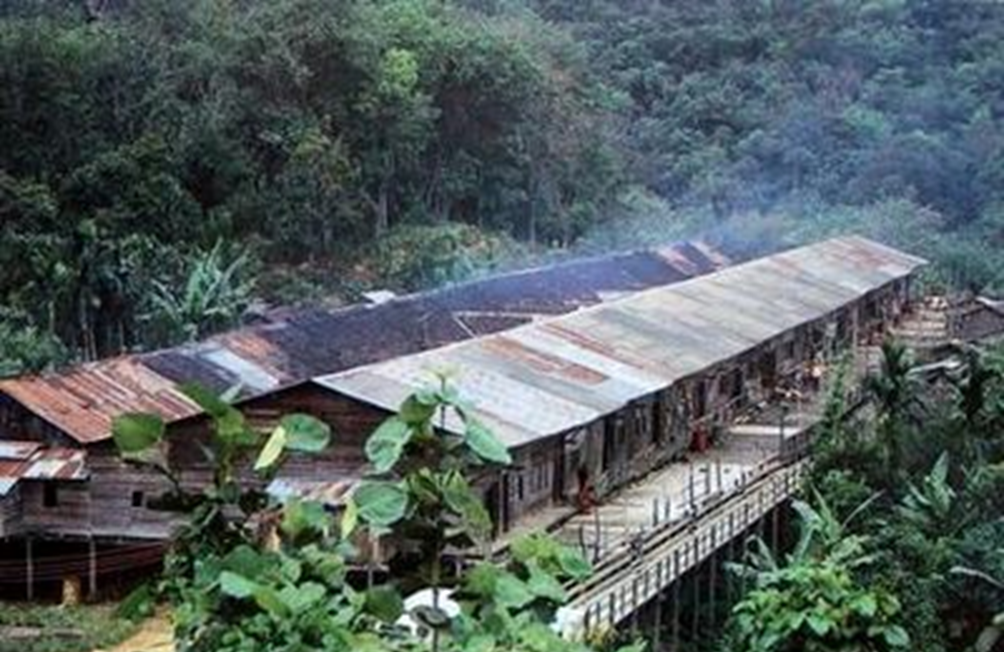
Photo by author, 1975
Model of a longhouse
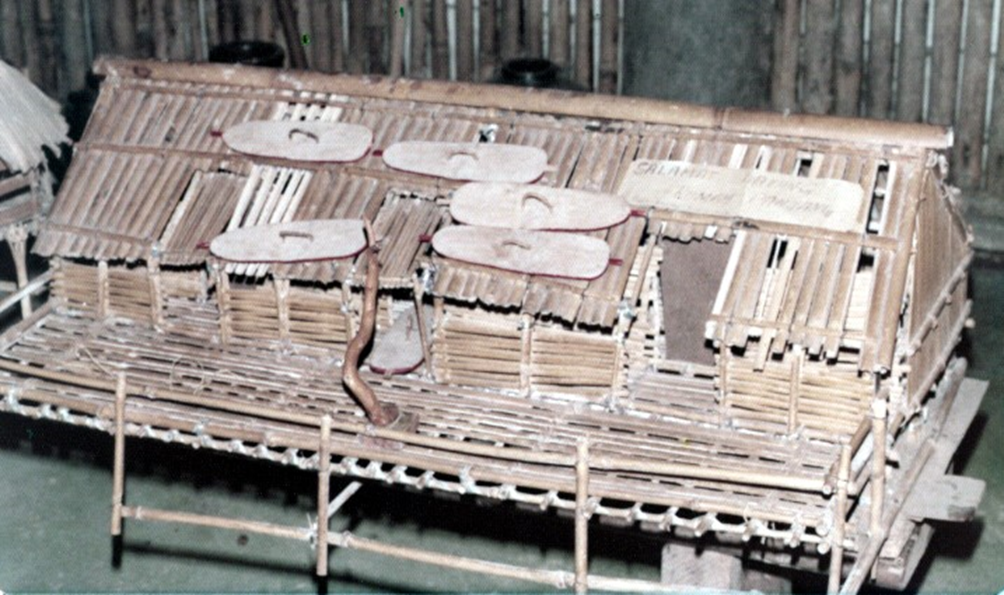
Photo by author, 1975
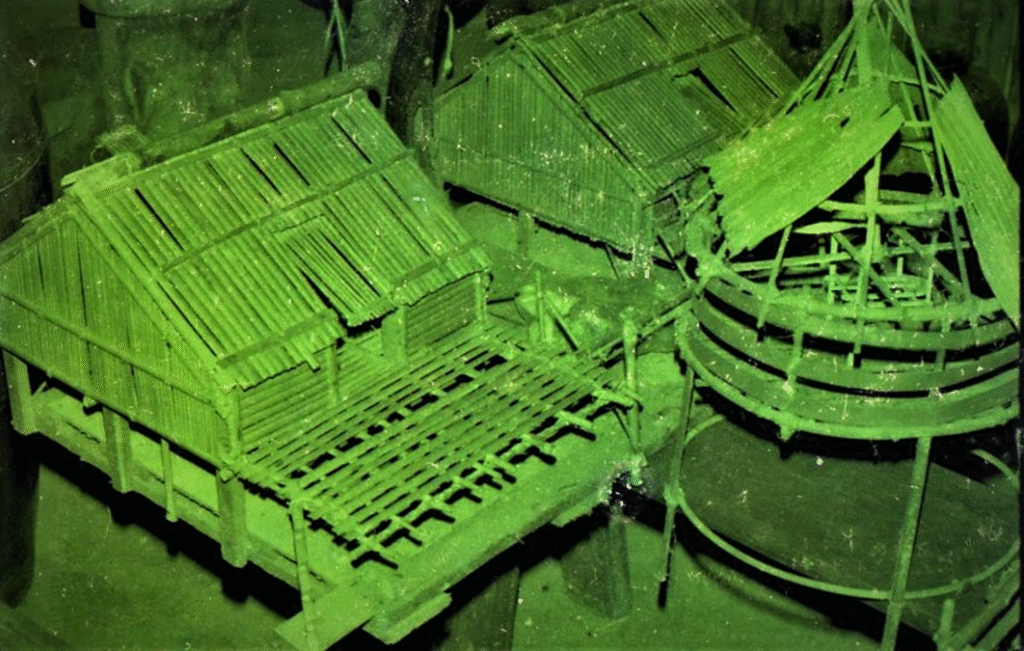
Photo by author, 1975
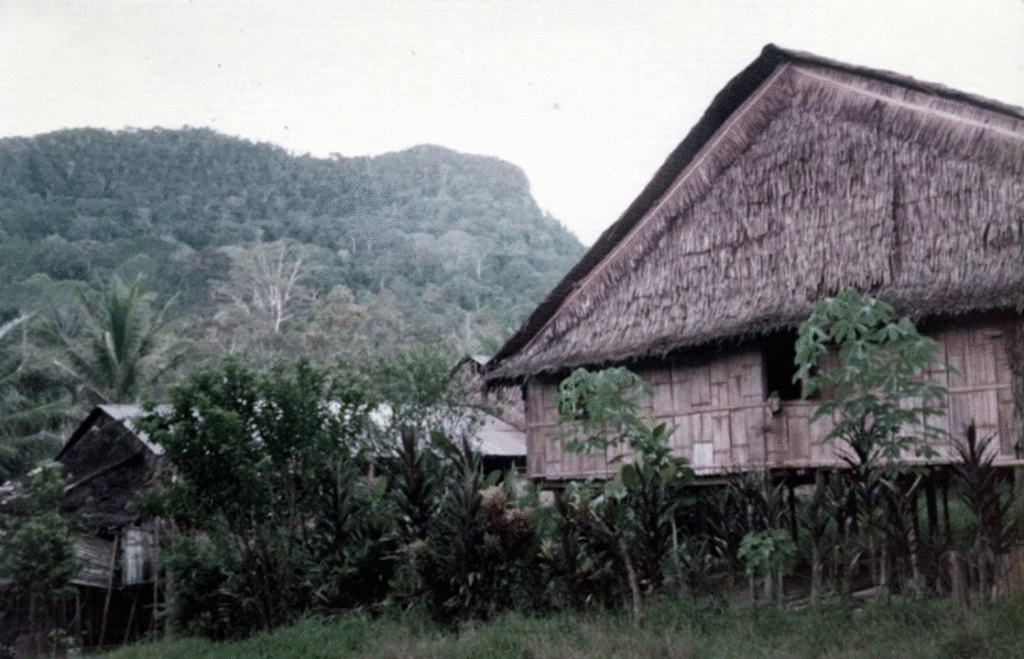
Photo by author, 1975
A different World ! !
In the meeting hall in the center of the group of houses, a collection of human skulls is hunged, symbolizing the fact that the custom of headhunting existed in the past. It is a different world.
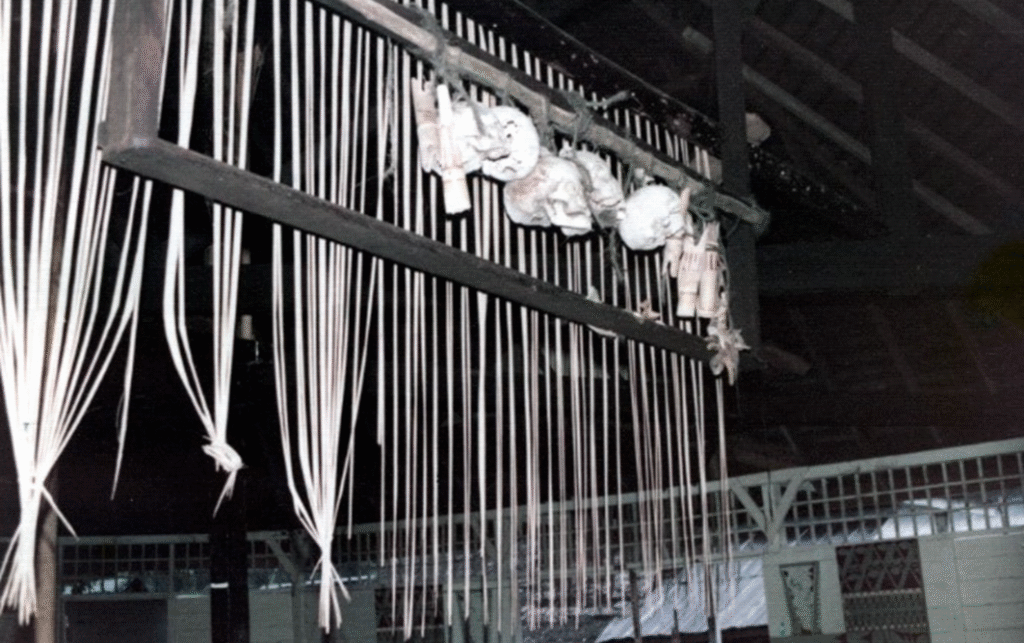
Photo by author, 1975
Residents grinding dried tapioca into powder in a central public workspace.
To take a photo, you have to keep your hips low and politely ask for permission.
If you take a picture without permission, they will be angry. However, they did not ask for money. Tourists were extremely rare at that time.
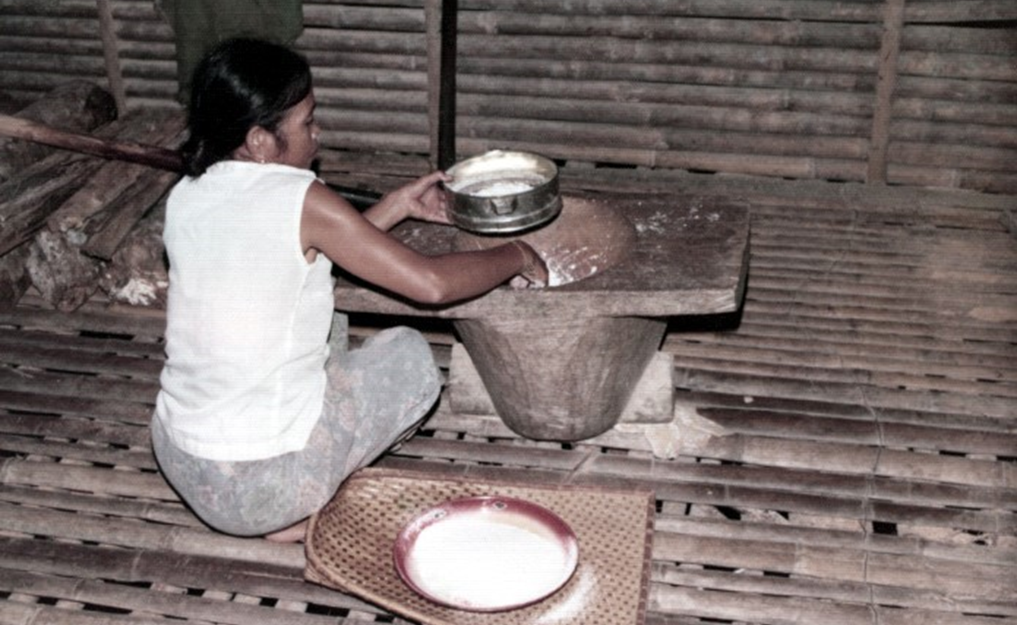
Photo by author, 1975