JAP | ENG
Singapore’s Early Days
1970s
#1/10
Back to Singapore
In the 1950s, the main means of transportation between Japan and Singapore /Malaysia was by the sea. When I was in college, until around 1962, international university students returned to their home countries by ship after graduation.
In the late 1960s, when I visited Singapore again, air travel had become the main mode of transportation.
However, at that time, there were no direct flights, probably due to fuel and distance constraints, and the flight schedule was usually Tokyo-Taipei-Hong Kong-Bangkok-Singapore.
In my case, I flew from Haneda to Bangkok via Taipei and Hong Kong on Japan Airlines, stayed overnight, and then transferred to the now-defunct Malaysia Singapore Airlines (MSA) the next day from Bangkok to Singapore.
Smoking was permitted during air travel once the plane was in level flight, and there were ashtrays in the armrests; it was a leisurely time.
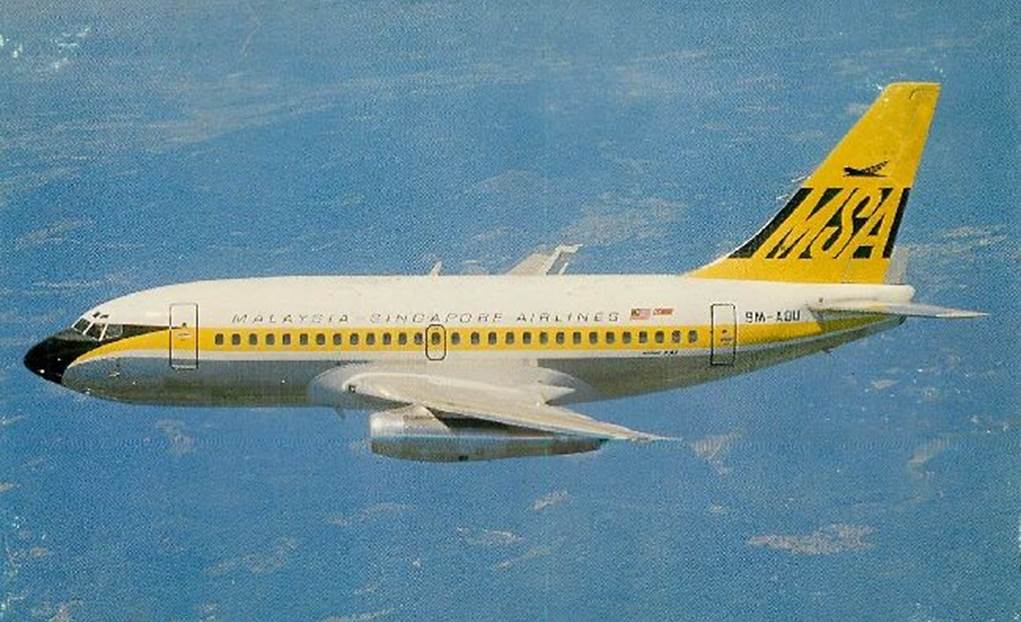
Former Malaysia Singapore Airlines, soon separated into Singapore Airlines and Malaysia Airlines, each of which became independent.
At that time, flights arrived in Singapore to Paya Lebar Airport. It is now a military airport, but until Changi Airport opened in 1981, Paya Lebar was the largest international airport for civilian flights in Singapore.
There are five airports on Singapore Island, 1970s
Singapore, which covers an area about the size of Tokyo’s 23 wards, has as many as five airfields. With the exception of Changi Airport, which was later built on reclaimed land, the four airports originated from the former British colony. (Map below)
One of them, Seletar Airport, was used for military purposes before and after the war, but later small civilian planes were able to take off and land.
When I visited in the early 1970s, there were flight training courses for Cessna planes and other aircraft. I signed up with the hope of taking lessons in light aircraft piloting, but I failed a vision test and my wish was not fulfilled.

There are five airports on the island of Singapore
An adventurous flight to Sumatra, Indonesia in a Cessna
Shortly after settling in Singapore, I became acquainted with a young Belgian man who had been seconded from Canada to Singapore as a hotel manager.
He approached me with the following plan: To visit Palembang city on the Indonesian island of Sumatra in a Cessna plane with a private pilot.
Speaking of Palembang in Sumatra, I knew that it was famous for the raids of former Japan parachute troops to secure oil fields during World War II.
So, I was introduced to an Indonesian pilot of Dutch descent, and a total of three people, including me, took off from Seletar Airport.
The weather was perfect in the morning, and we leveled off over the blue waters off the coast of Sumatra just below the equator, looking down at the many green islands of tropical rainforest below.
My seat happened to be the co-pilot’s seat, and I was enjoying the cloudless blue sky in the front of me. It was early in the morning, before the formation of cumulonimbus clouds, and the weather was perfect.
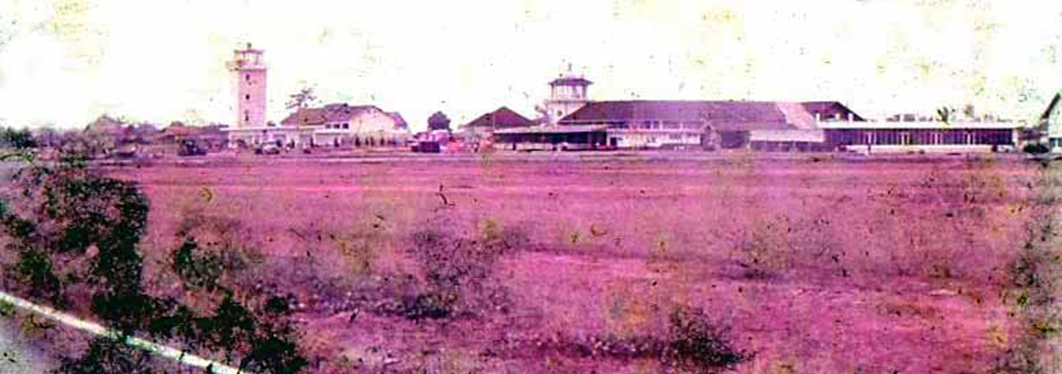
Singapore Seletar Airport
Photo by author, 1969
20-minute piloting training
Then the pilot taught me how to fly the plane and suggested that I hold the control stick for a short period of time, all while we were in the air.
The instructions are:
1. Keep the direction of progress constant.
2. Maintain a constant altitude.
3. Keep the front and rear of the aircraft and both wings level.
I was also taught how to check the individual meters necessary for this purpose.
Then I grabbed the control stick.
However, because I was so focused on staring at the gauges, I lost the ability to look ahead. As a result, I ended up not looking at anything but the gauges.
After about 20 minutes of flight training as a co-pilot, I gave up due to tension and fatigue.
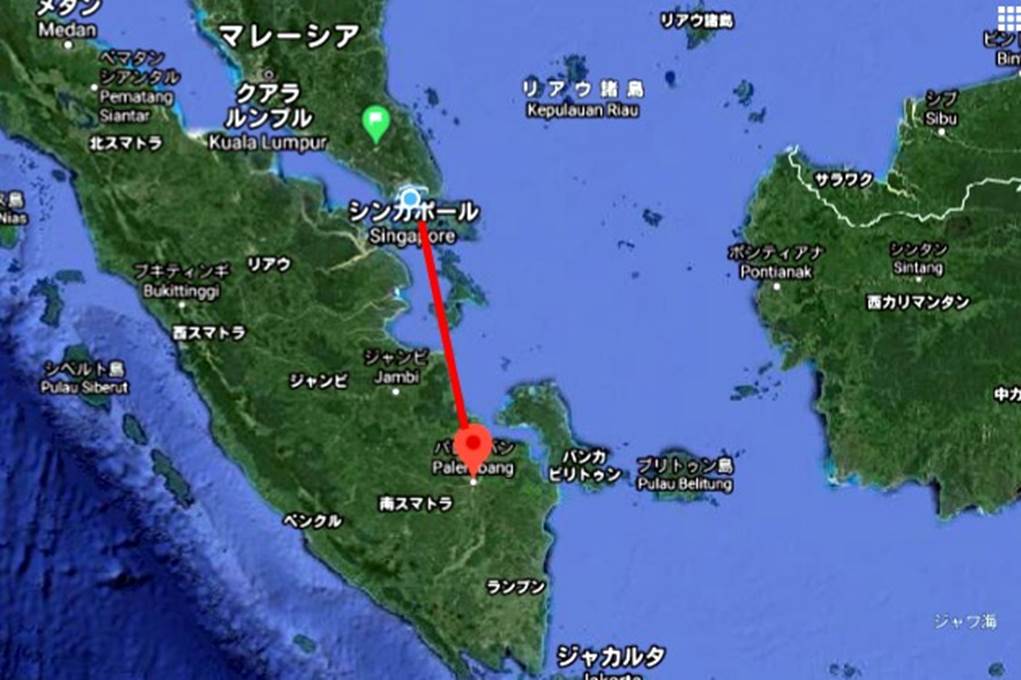
Singapore-Palembang round-trip, Cessna flight route
Palembang, Sumatra
Why did I decide to go to Palembang?
It seems that the Belgian acquaintance mentioned above received a request from the owner of a hotel in Palembang to consult with him about a hotel he owns. When I arrived in Palembang, the city had the atmosphere of a large Indonesian countryside.
When I arrived at the hotel, I was shown to my room, but to my surprise, the floor of the guest room was simply finished with cement mortar.
Nonetheless, the room rate was extremely low for foreigners.
Most of the guests were Western engineers involved in oil drilling, and there was no other suitable accommodation.
It was afternoon after the meeting, and it suddenly became hot and humid.
The three of us exchanged glasses of local beer, quenching our thirst and enjoying each other’s company, and the afternoon was running out.
We had to get back to Singapore as soon as possible.
We hurried to the airport.
Just before take off, my Belgian friend asked the pilot if he could take off.
It turned out that he had completed several dozen hours of training at a flying club in Mexico. And with the momentum of the beer, we took off safely!
After take off, the pilot returned to the pilot, which was a relief.
After a while, the sun went down and my vision became pitch black.
At this point, the airspace is no longer reachable by radio signals from the airport air traffic controllers in Singapore or Palembang.
During the day, visual flight is possible, but in the darkness of night, it is impossible to confirm one’s position. It is a terrifying darkness, but there is no choice but to move forward.
As I was enduring the tense time, the lights of the city suddenly burst into my field of vision! Radio communication has also returned.
According to guidance from the ground, Seletar Airport, where we departed that morning, either did not have runway taxi lights or they had already been turned off, and we were not given permission to land.
The air traffic controller at Seletar Airport instructed the pilot to “change our arrival to Paya Lebar international Airport.”
The pilot replied that he understood, made an emergency go-round, and landed our small Cessna on the vast runway amid the dazzling runway taxi lights. . . Applause. . .
Former Paya Lebar Airport
Check-in counter at Paya Lebar Airport in the early 1970s. Check-in was directly outside from the driveway. There was no lobby and no air conditioning.
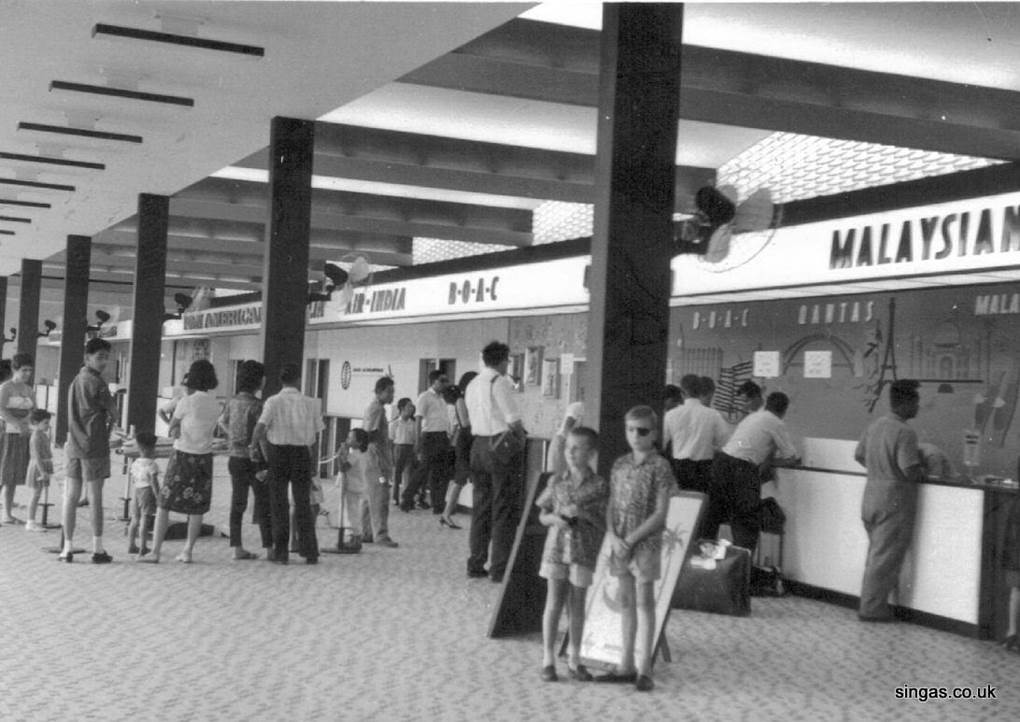
Paya Lebar International Airport check-in counter in early 1970
A duty-free shop at Paya Lebar Airport in the early 1970s. At the time, Hong Kong Kai Tak Airport also had a similar counter-style duty-free shop, which was packed with Japanese tourists looking for highly taxed alcoholic beverages.
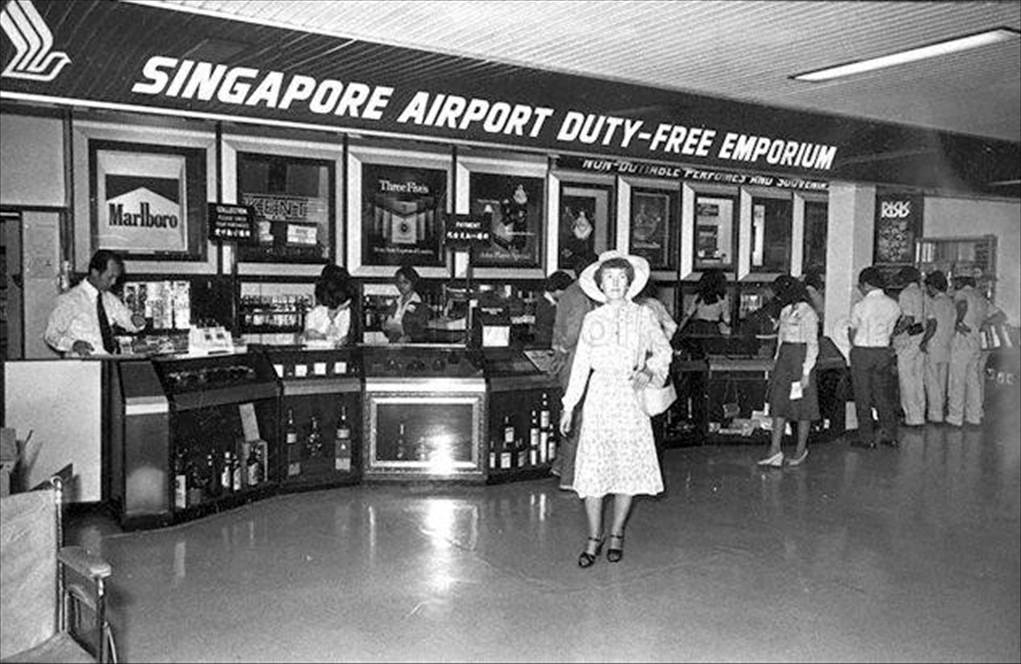
How I became a resident in Singapore?
Six years had passed since my stay in Brazil, when I returned Japan home after completing my four-month tour of European architecture.
Fortunately, through the introduction of a professor from Waseda University whom I had been his bag carrier in Sao Paulo, Brazil, I had the opportunity to go to an interview at a architectural design firm in the Toranomon area of Tokyo.
It was the end of 1968 in Tokyo. After assessing the employee’s qualifications at the interview, I was offered a salary of 45,000 yen.
This was equivalent to half of the salary I was receiving in São Paulo, Brazil. When I told them that, they said they could not pay me that amount (obviously). After I understood and accepted the average salary in Japan at the time,
I was immediately accepted this new mid-career position.
I thought that I would be able to settle down in Japan and work in Tokyo.
However, after a while, the company president ordered me to be stationed in Singapore in two weeks time. It was a surprise.
I urgently asked Mr. Y, a friend from my student days who is from Singapore and lives permanently in Japan, about the local situation.
His reply was, “You will find out when you are there.”
It had been less than two months since I returned from Brazil and Europe, and I had applied for a request to leave for Singapore after receiving a two-month grace period, which was granted, and I was allowed to leave for Singapore.
Hotel New Otani
The president took me to Hotel New Otani, Tokyo, where the company I joined was involved in design and supervision. Built in time for the 1964 Tokyo Olympics,it was one of the few five-star hotels in Tokyo at the time with international specifications. While enjoying cognac at the bar on the top floor, he taught me about the mindset of hotel design.
The revolving restaurant on the top floor was also built in a hotel in Singapore, and I later visited the manufacturing company and factory in Osaka.
Meanwhile, I also visited the Hotel Okura, which was located near the company at the time, several times, and was impressed by its fusion of Japanese style and modern architecture. The owner in Singapore was very fond of the design of the Okura shopping arcade, and was keen to visit it so that he could use it in the future.
The Hotel New Otani (main building) and the newly completed Shuto Expressway in the yearly 1960s just on time of Tokyo Olympic 1964
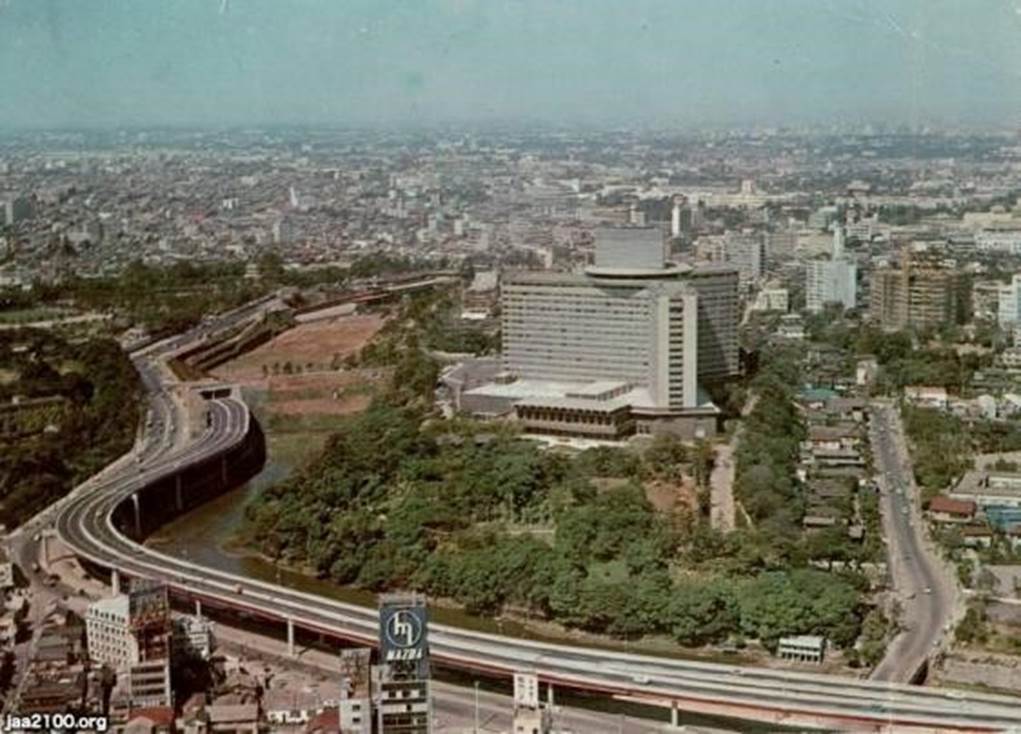
From Japan Archive
Hotel New Otani, 2018. Photographed from a room in the Garden Tower, looking towards Akasaka and Aoyama. I visited and stayed here for the first time in 50 years to attend a wedding.
From the Garden Wing guest room of Hotel New Otani.
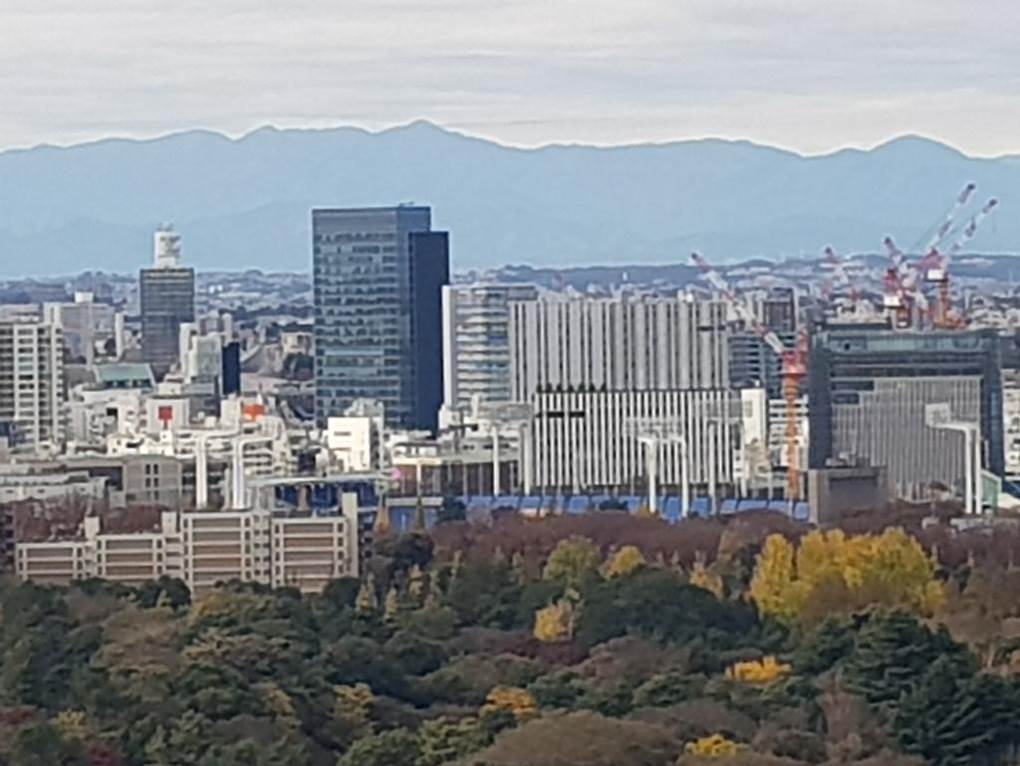
Photo by author, Dec 2018
“You’ll find out when you go” Singapore
My first impression when I arrived in Singapore from Bangkok on the aforementioned flight was that the city was “downtown”.
At that time, Bangkok was already undergoing construction work by a major construction company in Japan, and with a glittering entertainment district and abundant tourist resources such as a royal palace and Buddhist temples, it was already beginning to show the character of a big city.
Compared to Bangkok, Singapore still has the feel of a rural town.
There were almost no five-star international-class hotels.
This was the first hotel I stayed at after arriving in Singapore.
At the time, it was the only 5-star modern hotel in Singapore. In 1969.
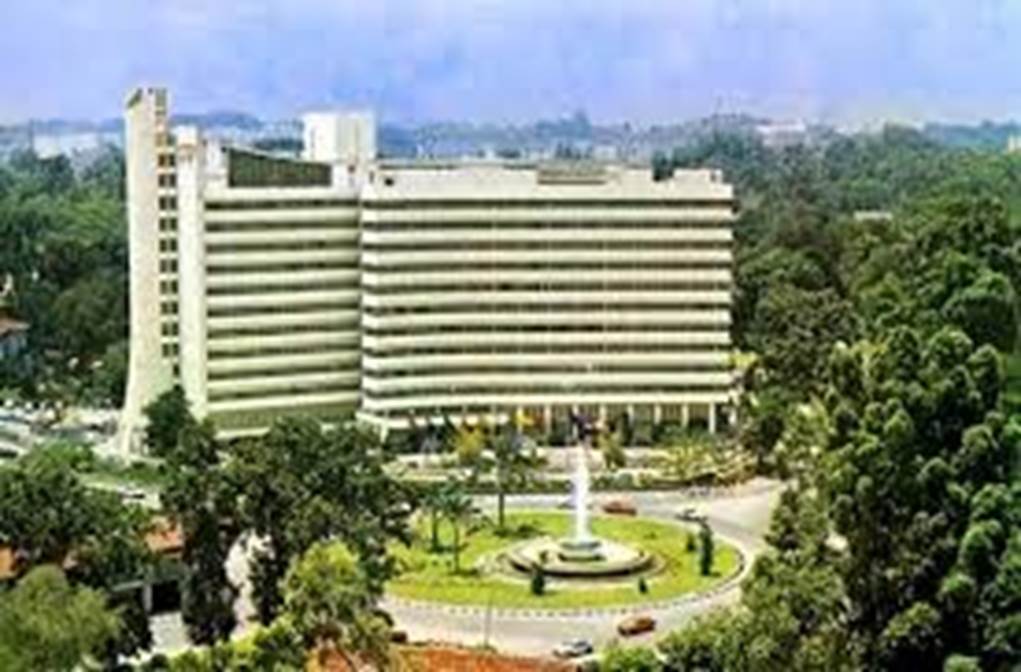
There is a music bar upstairs at night. Exoticism outstanding. Later, it was demolished for redevelopment and is now a luxury condominium
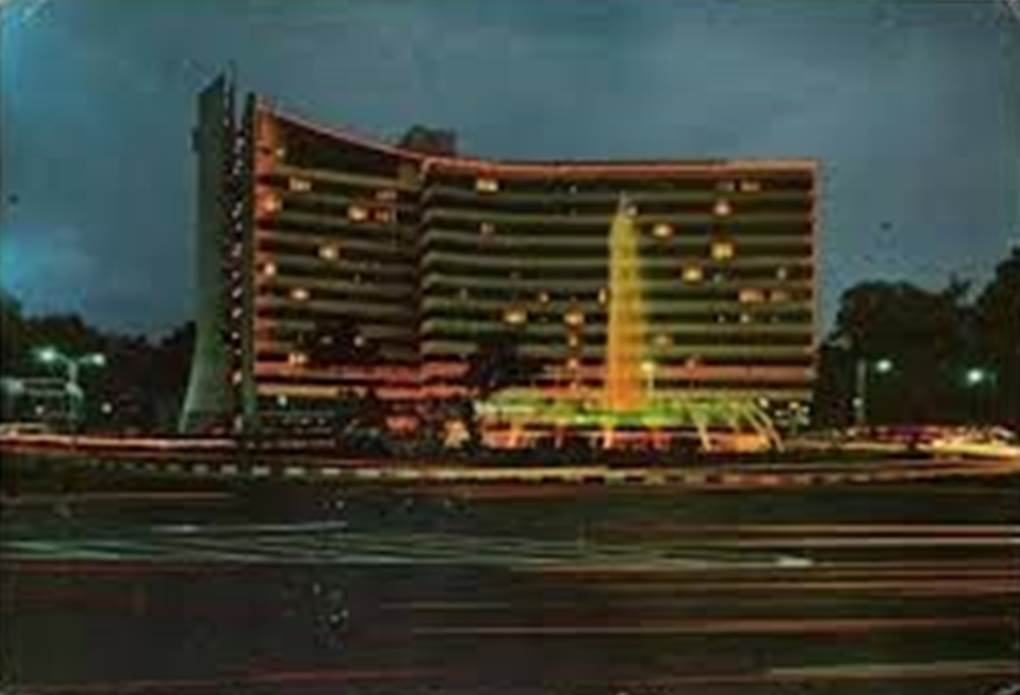
Finding a home in Singapore
I stayed for only one night in a luxury hotel in Singapore, which was one of the most expensive at the time. The company’s goal was to give its employees the experience of staying in a five-star hotel, nothing more.
Mytre Hotel
So, I hurriedly found the following simple hotel, stayed in a room on the second floor for a while, and looked for an apartment while commuting to the work site. The old hotel belonged to a local family, was poorly maintained, and looked like a bit of a haunted house.
One morning, I was woken up by the sound of continuous, intense gunfire. Still half asleep, I cautiously opened the rattling window, only to find that it was a peaceful morning outside.
After getting changed, I went down to the first floor and asked the manager what the sound was, and he told me it was firecrackers from the Chinese New Year.
Until then, I had never even known that there were countries that celebrated the New Year on the lunar calendar, let alone imagined that there was a culture that welcomed the New Year with the sound of intense firecrackers.
At the time, the Vietnam War was in full swing, and Southeast Asian countries were in the midst of a period of fear that the Viet Cong would turn them into communists in a domino effect.
One morning, I had a dream in which the North Vietnamese communist army suddenly invaded Singapore.
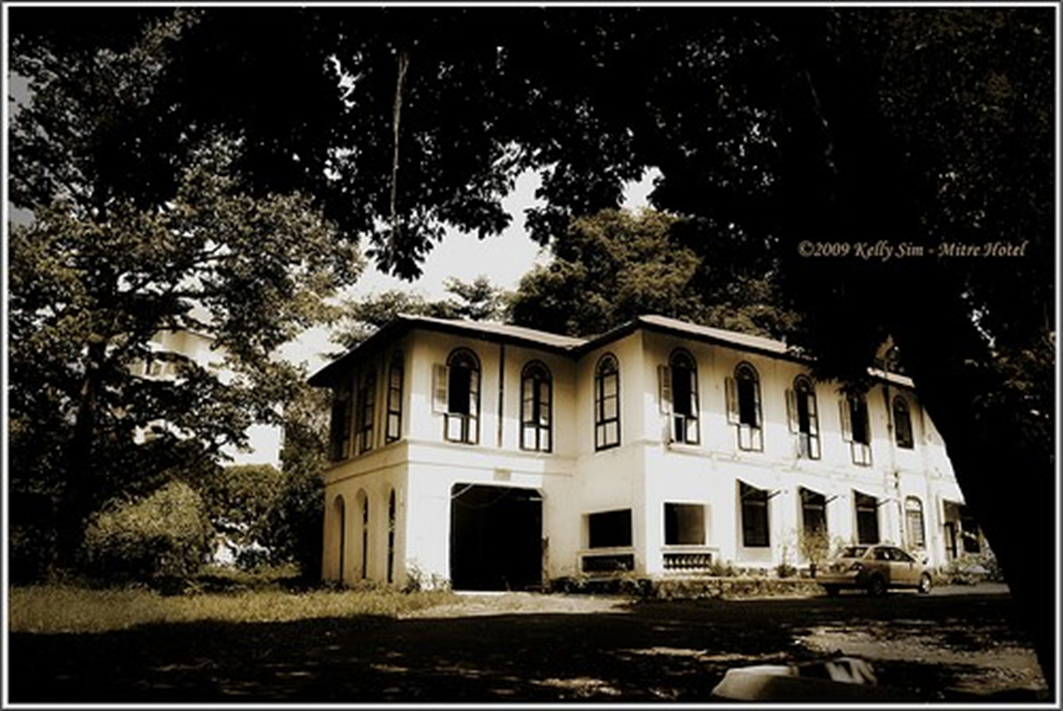
The Mytre Hotel Singapore was later demolished for redevelopment
Pacific Mansion
A high-rise condominium on River Valley Road where I stayed for a few weeks before settling in the Emerald Mansion.
Pacific Mansion, a high-rise apartment building that was still rare at that time,
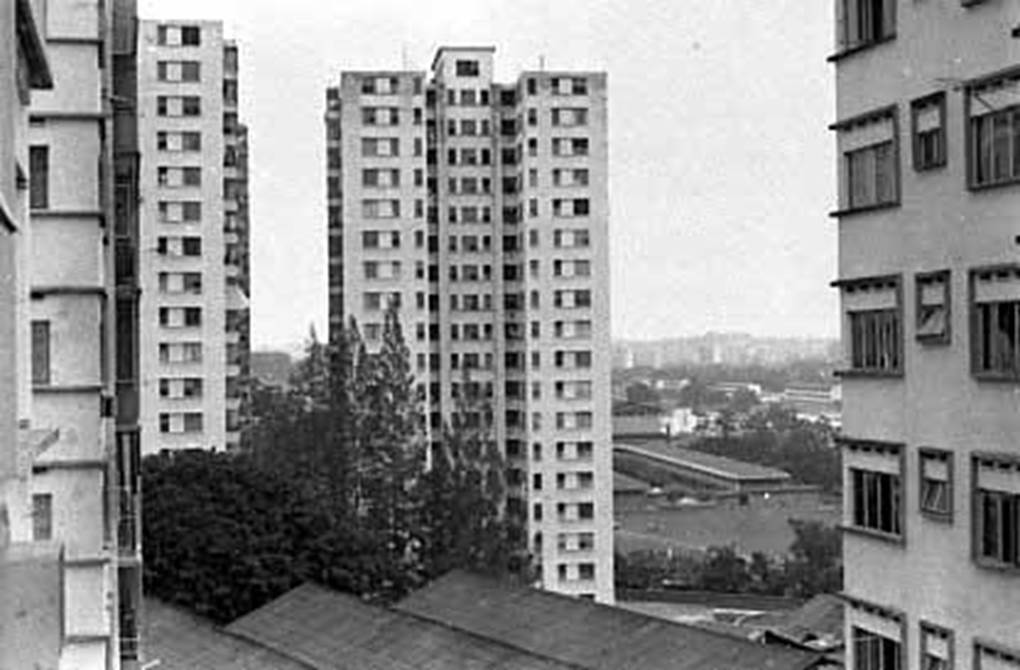
Photo by author, 1969
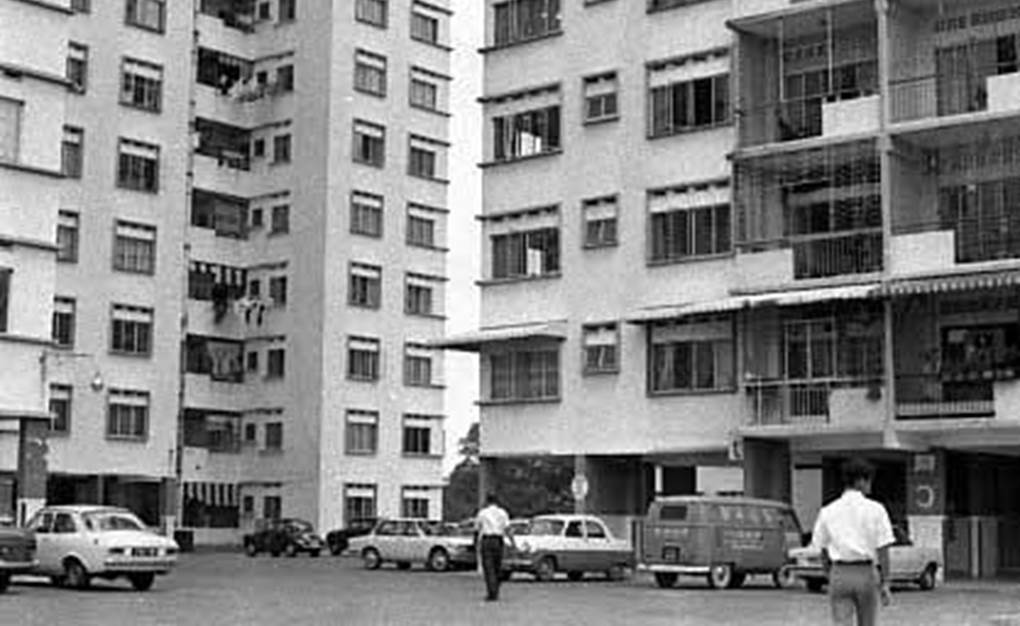
Photo by author, 1969
Emerald Mansion
We found a mid-range apartment near Orchard Road. It was convenient, as it was only a 10-minute walk to the project site. The apartment was about 150m2 in size, had three bedrooms, a large living room and kitchen, and was a comfortable place for two of us, with a single colleague of mine. The owner was a captain with Malaysia Singapore Airlines, and we signed a two-year lease.
Emerald Mansion Emerald Hill Road
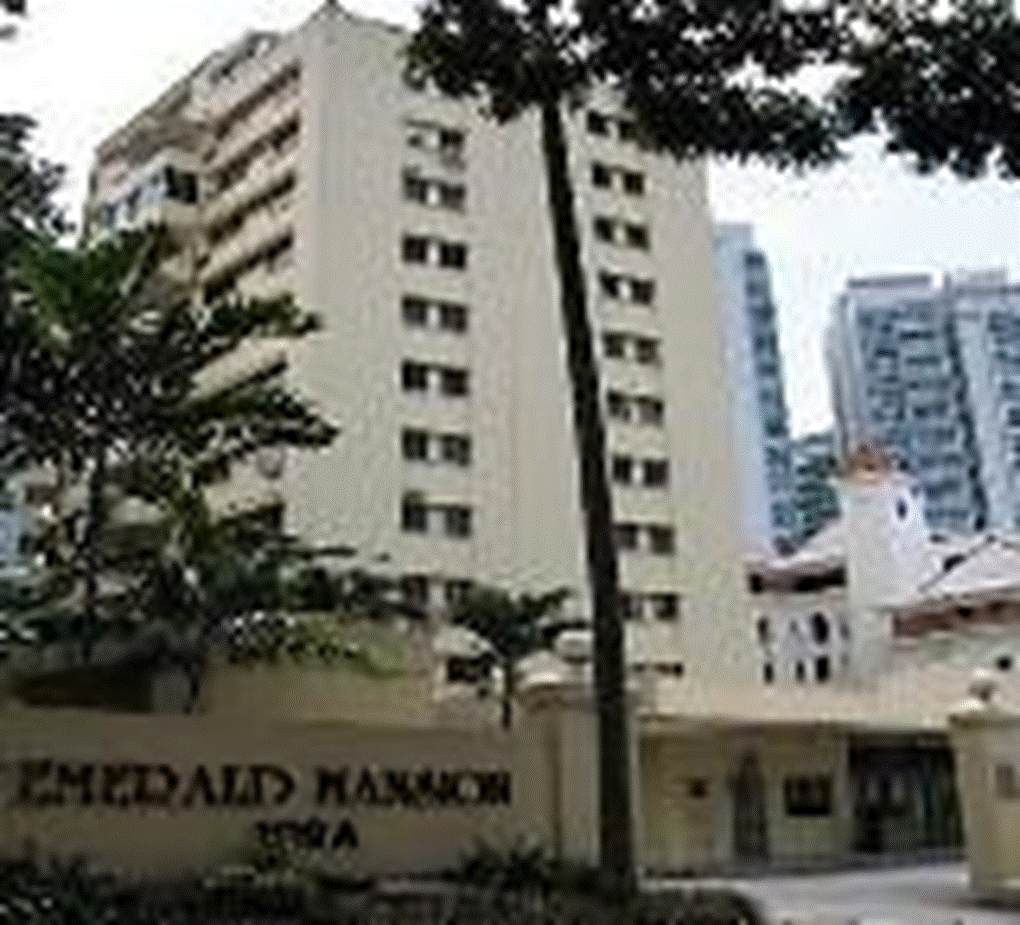
Photo by author, 1970
Emerald Hill Road
It was later designated as a town conservation area.
The green highland in the back is Fort Canning Hill. The two buildings in the center were apartment buildings, which were still few at the time.
View from the Emerald Mansion.
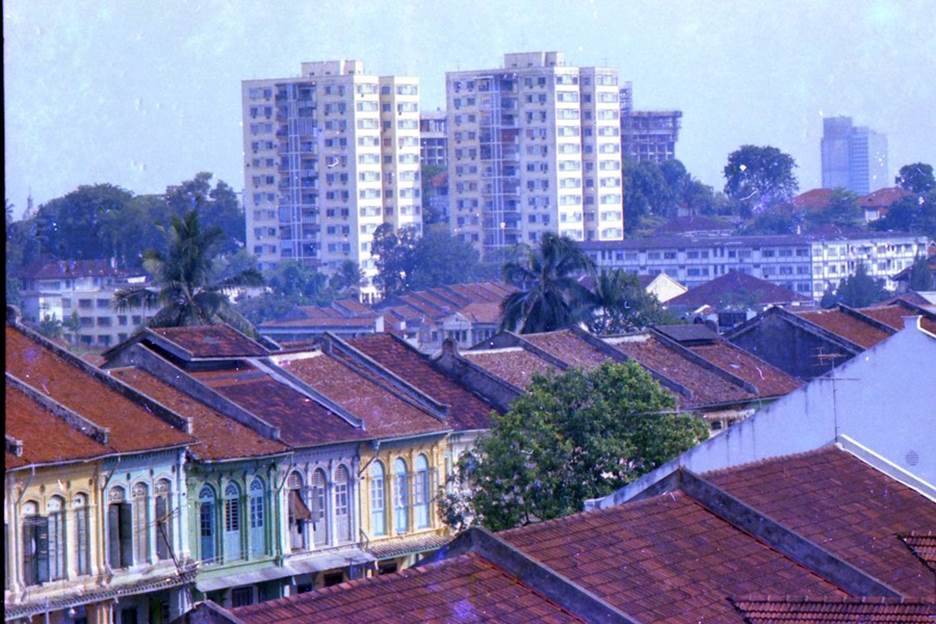
Photo by author, 1969
The green hill in the background of the traditional shophouse on Emerald Hill is Fort Canning Hill.
It was a key part of the city’s defence during the colonial era
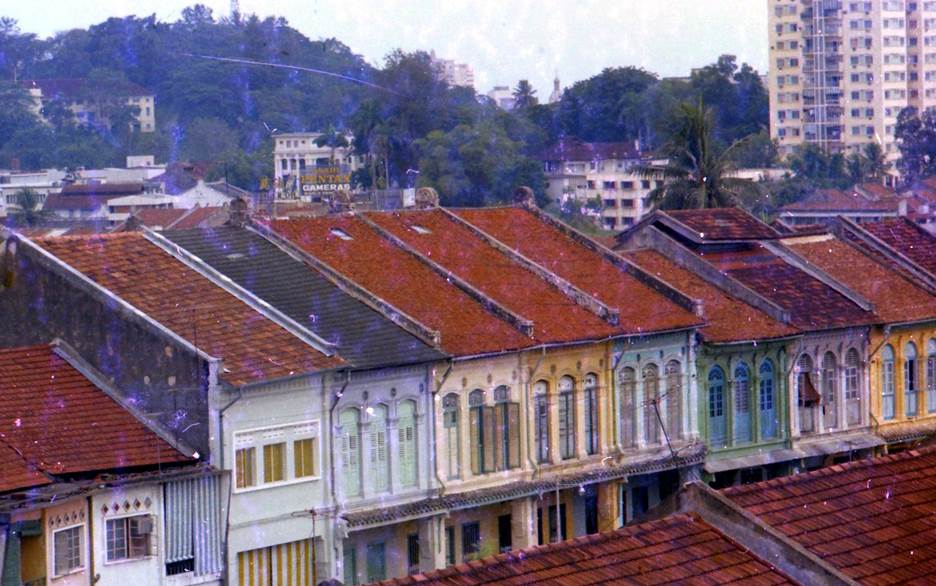
Photo by author, 1970
At that time, Japanese expatriates were paid a salary in Japan, as well as living expenses, housing, and a car (a driver was provided for branch managers) that were roughly the same amount in their overseas postings.
This was a time when elite expatriates were the norm, and there were still few Japanese people. For single people, it was a leisurely, good time when their domestic salary could be directly deposited in fixed deposits.
Acquisition of immunity
Before I moved to this apartment on Emerald Hill Road, I ate at outdoor food stalls. At that time, Orchard Road had a large outdoor space that was a car park during the day and a food stall village at night, and it was a very lively and bustling spot
Soon after arriving, I was lost in my tracks, not knowing where anything was, and ate the same yakisoba noodles I liked every night for two weeks at the only food stall I knew. Eventually, I got food poisoning, suffered from severe stomach pains, and was forced to take a few days off work. After this baptism of food poisoning, I developed an immunity to tropical germs.
A large shopping mall later emerged in this parking lot and food stall village on Orchard Road, and since 2000 it has been transformed into Uniqlo, Tokyu Hands, Don Quijote, and Japanese restaurants.
Behind Orchard Road, the 40 hectares of forest of ISTANA (the Presidential Palace) can be seen in the background. It is now covered with skyscrapers and can no longer be seen.
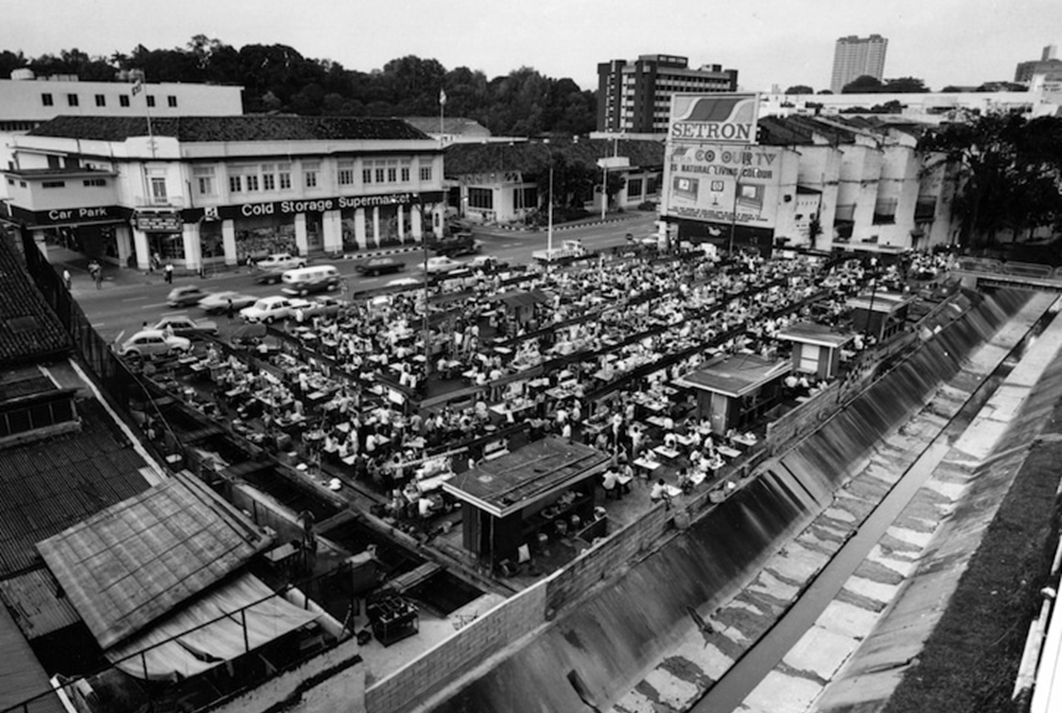
Parking lot next to Orchard Road. At night, it transforms into an outdoor food village.
Reprinted from https://www.sassymamasg.com/