JAP | ENG
Sevilla, Spain
October 2013
#1/2
SEVILLA
This was my second visit to Seville in Andalusia since 1968. It was a 440km bus ride from Lisbon, four hours including breaks.
Seville is the capital and largest city of Andalusia and the province of Seville. It is the political, economical and cultural center of southern Spain.
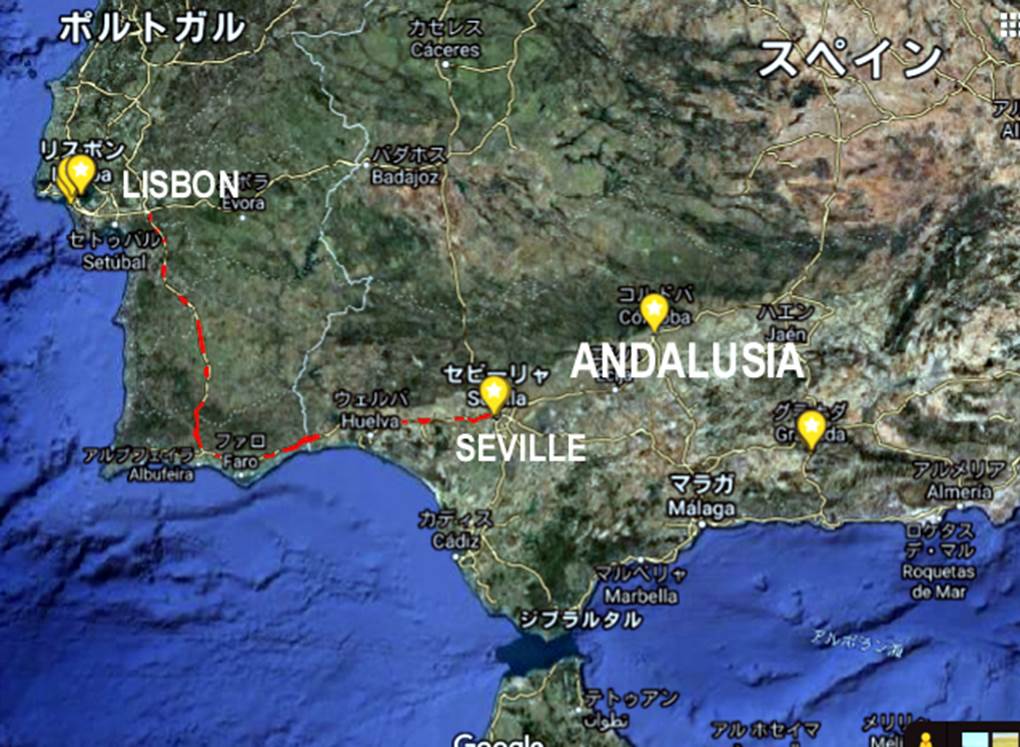
Guadalquivir River and Seville
The topography of Seville is different from that of Lisbon, and it is a historic port city developed on flat land with an average elevation of 7 meters. It is well located, allowing ships to travel directly from the Mediterranean Sea and the Atlantic Ocean to Seville via the Guadalquivir River.
In the 16th and 17th centuries, it flourished as a monopoly port for trade with the New World. At that time, Seville was the most populous city in Spain.
In the second half of the 15th century, the Kingdom of Spain completed the Reconquista (the movement to recover lost territories) at the end of the century, and set sail across the Atlantic Ocean, bringing back enormous wealth from the New World to Seville.

Seville Cathedral (Catedral de Sevilla) World Heritage Site
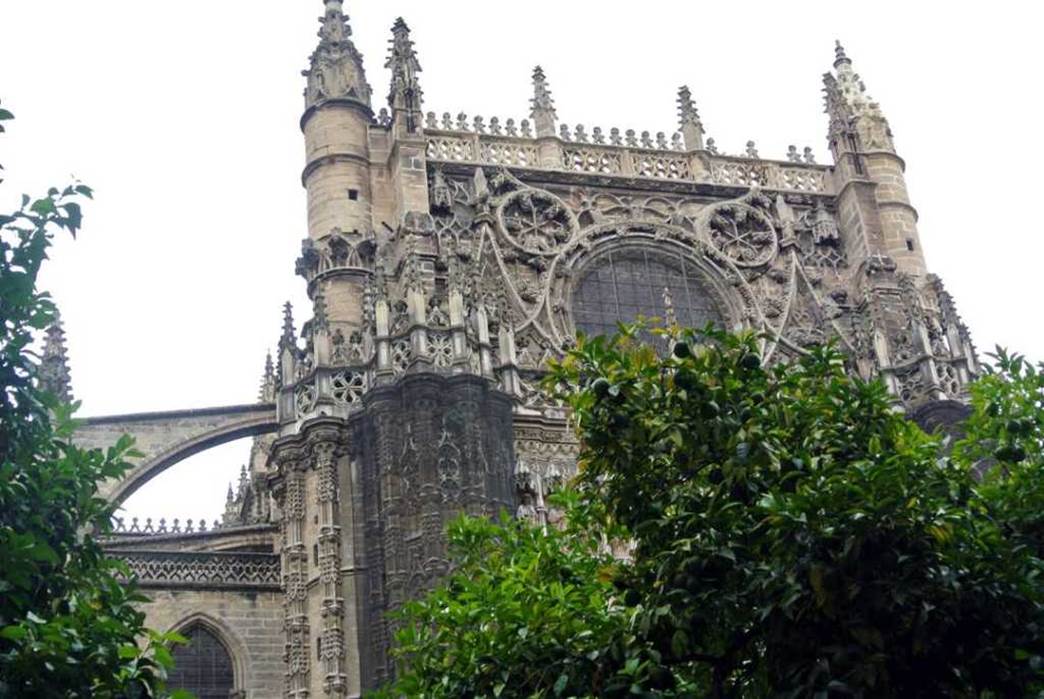
Seville Cathedral is a valuable architectural heritage that was converted into a church using the huge Almohad mosque (1172–1248) that existed before the Reconquista, while preserving the remains of the mosque.
On the north side of the cathedral, for example, there is still a large courtyard, a typical component of a mosque. The Giralda Tower on the east side, the minaret of the mosque (a spire that announces prayer times five times daily), is also preserved.
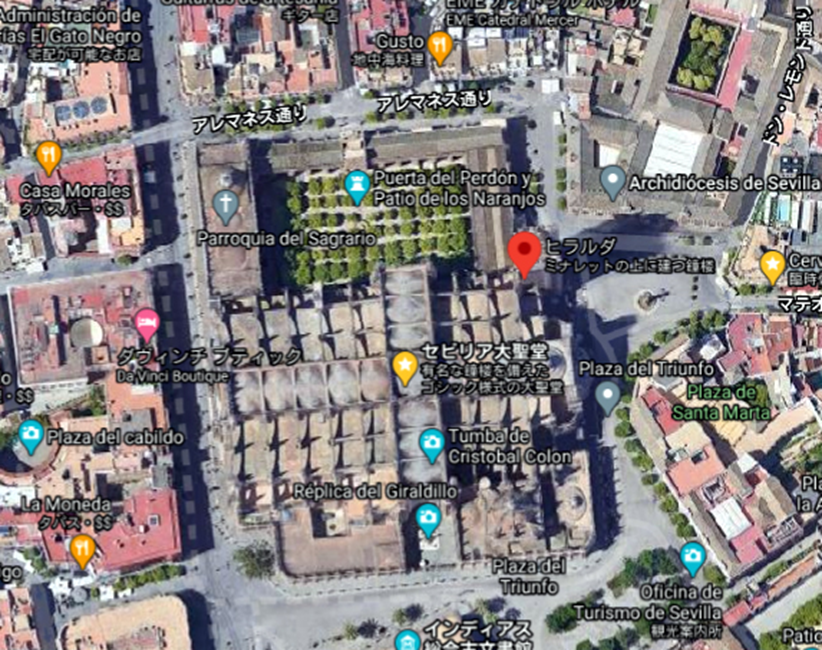
Triunfo Square and the doors of San Cristobal
Visitors are usually supposed to enter the cathedral through the doors of San Cristobal, which faces Triunfo Square (Victory Square) on the south side. Immediately after entering is the tomb of Columbus.
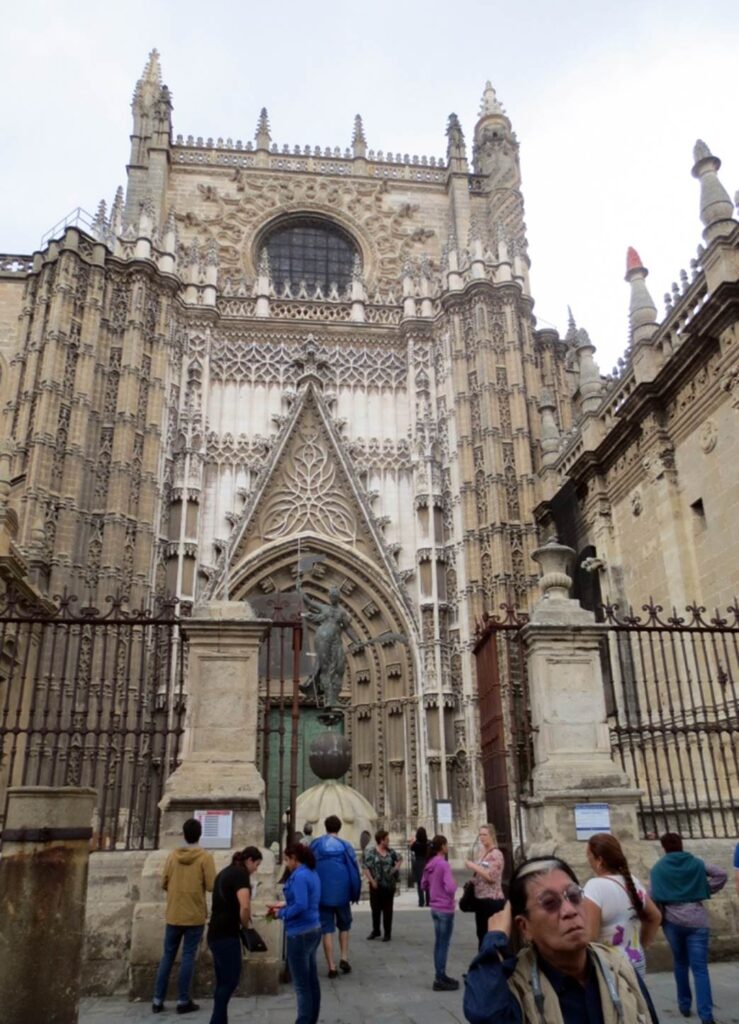
Photo of author, 2013
The Seville Cathedral is not only the largest cathedral in Spain, but also the second largest Catholic cathedral in the world, after St. Peter’s Basilica in the Vatican. It is also largest Gothic Cathedral in the world.
There were not so many tourists, and we were able to enter smoothly.
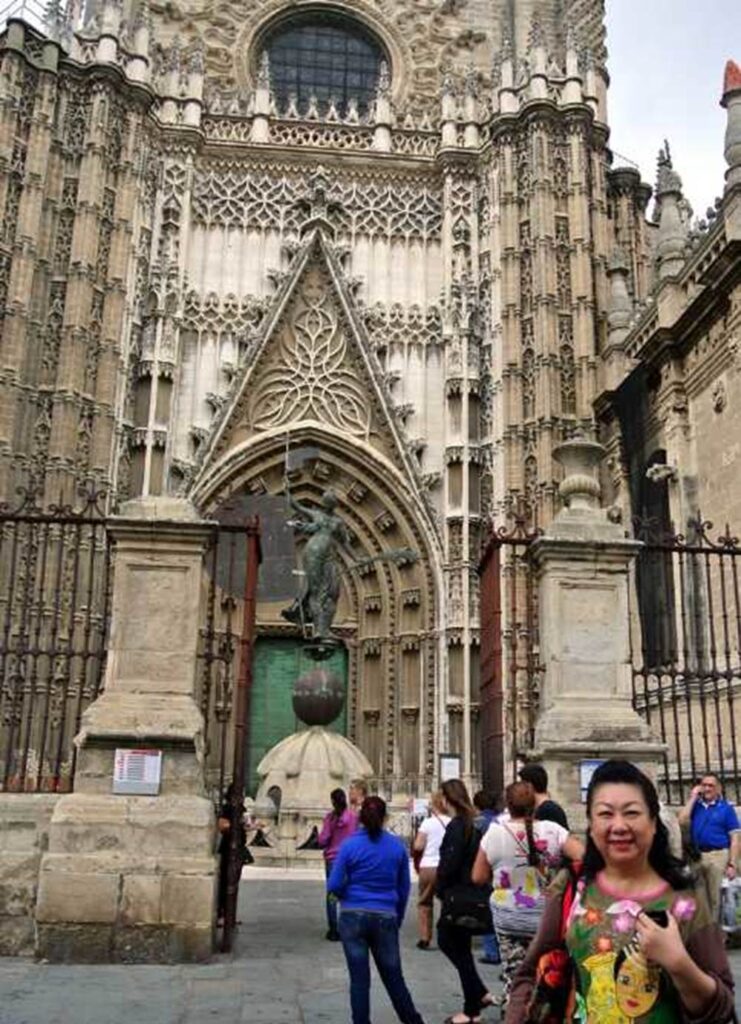
Photo by author, 2013
Although it is a Gothic building, the ornate decoration of the walls are in Islamic style.
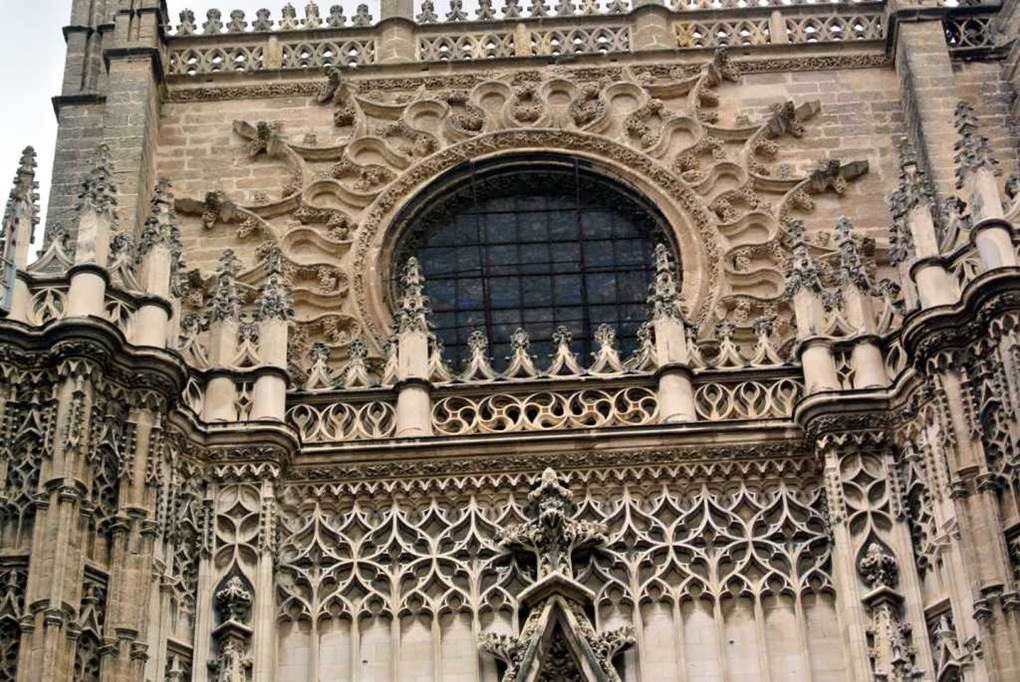
Photo by author, 2013
In front of the entrance is the “Triumph of Faith” statue by master Bartolomé, known to the public as Giraldillo. It is a statue of a goddess holding a shield in her right hand and a palm leaf in her left. There is a larger version of the same statue in the Giralda Tower. This is said to be the original.
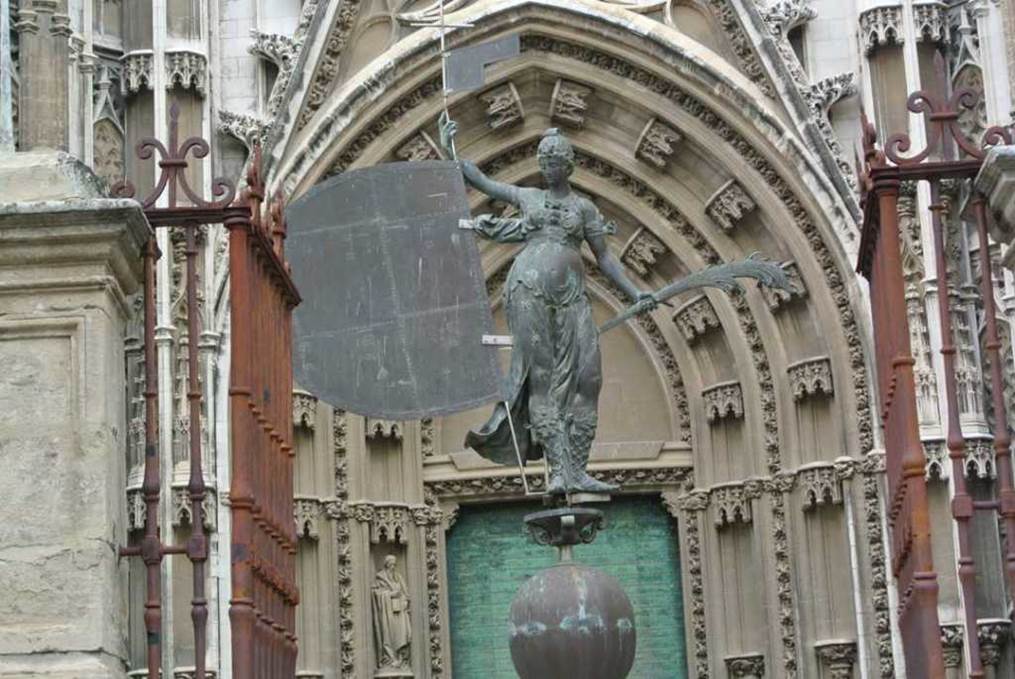
Photo by author, 2013
Columbus was the man who discovered the New World with the help of Spain during the Age of Discovery, and who would later bring great wealth to Spain. In 1506, Columbus’s remains were placed in the Seville Cathedral.
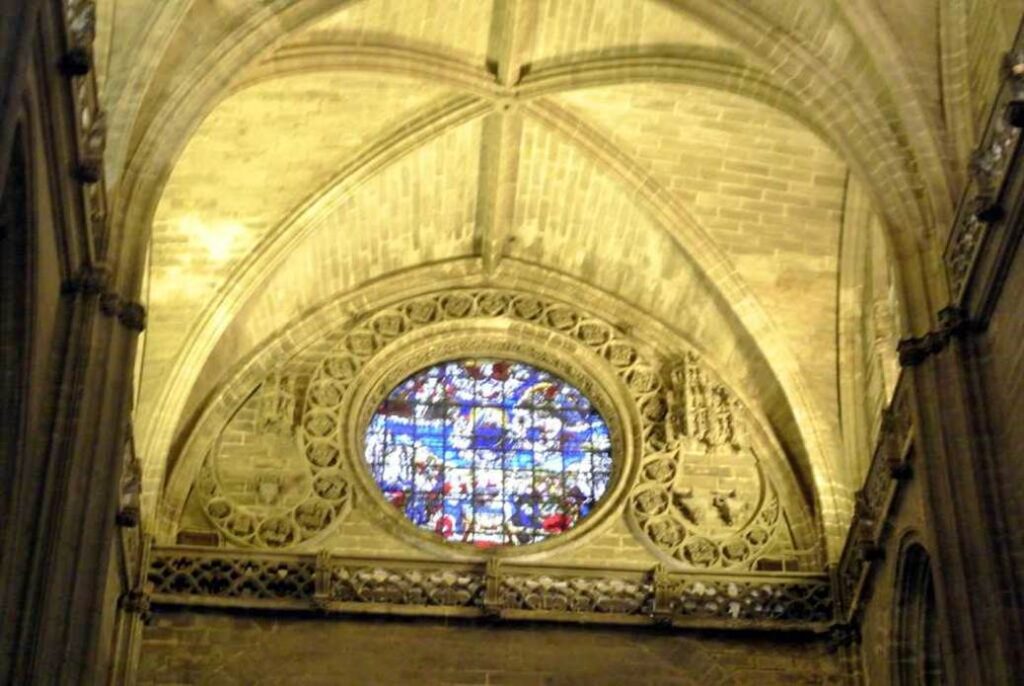
Photo by author, 2013

Photo by author, 2013
The gold accents on the luxurious rosewood and ebony-like wood are a real highlight.
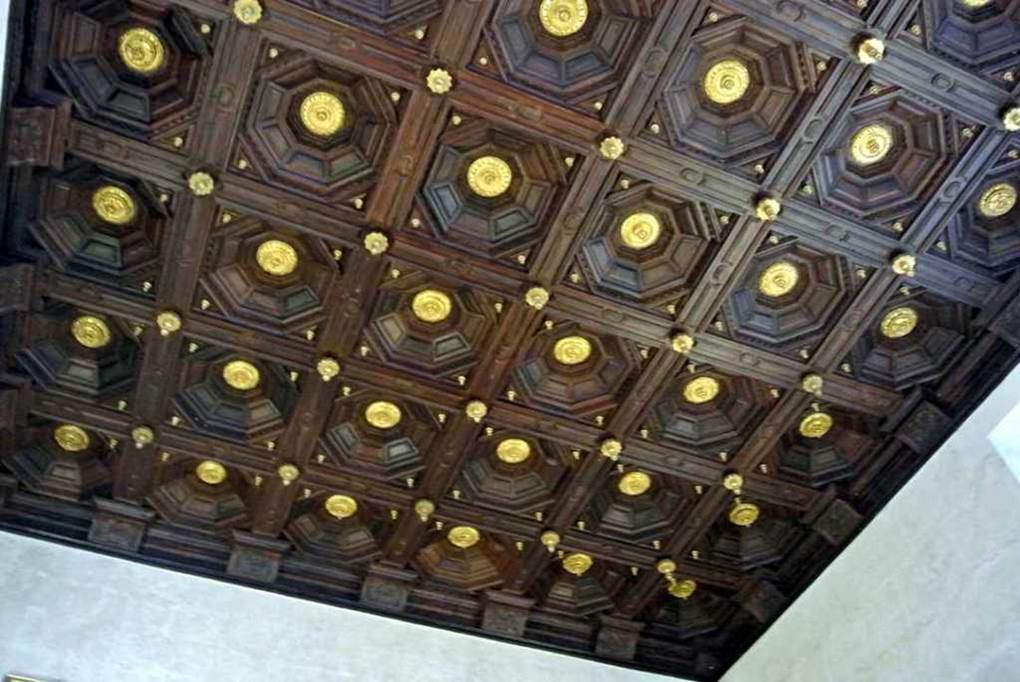
Photo by author, 2013
The Seville Cathedral has many alcoves along the east and west walls of the chapel, and all of them are meticulous works of art. There are so many of them that it is dizzying to describe them all.

Photo by author, 2013
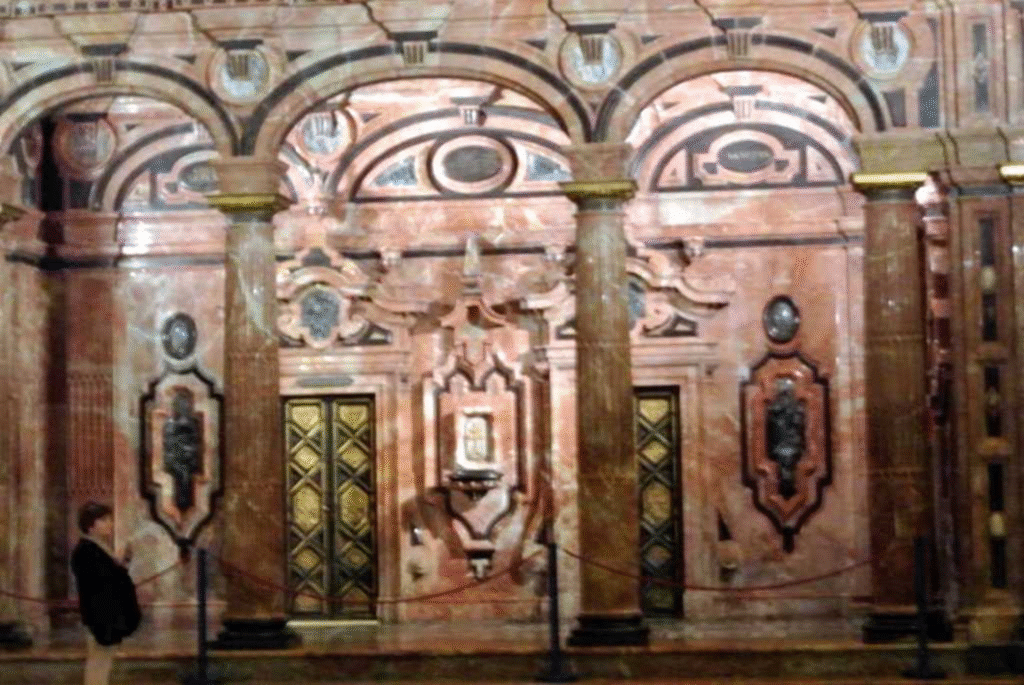
Photo by author, 2013
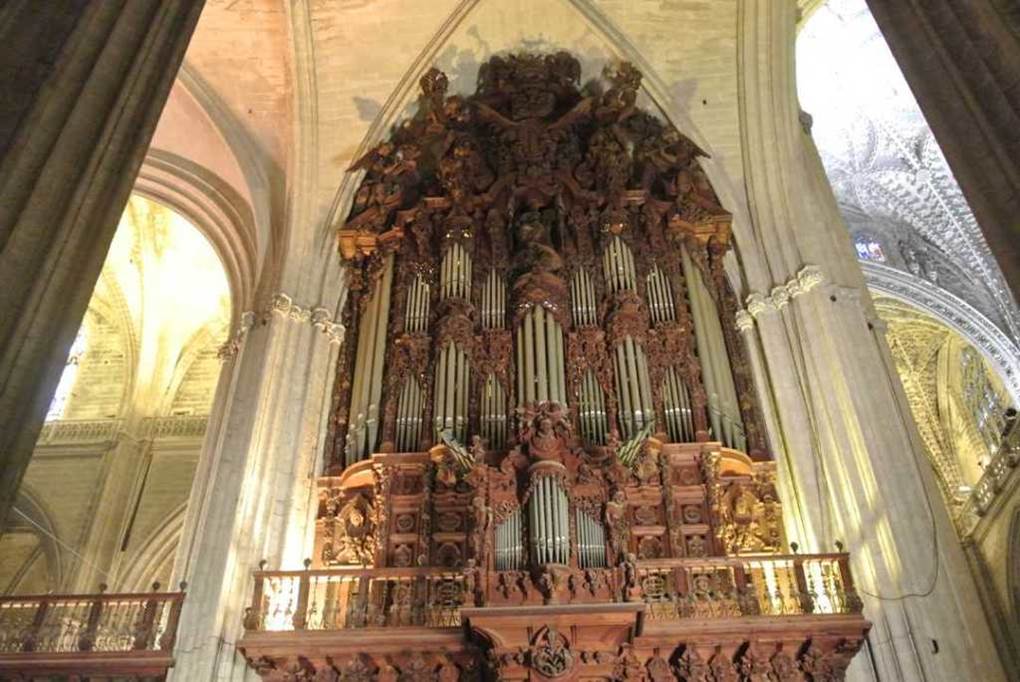
Photo by author, 2013
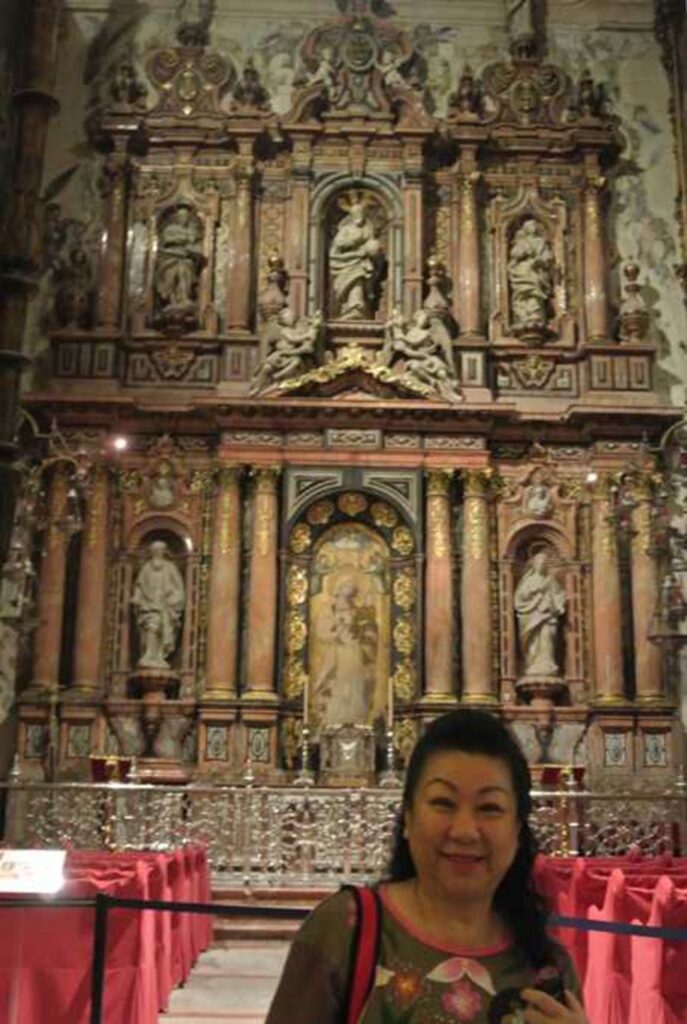
Photo by author, 2013

Photo by author, 2013
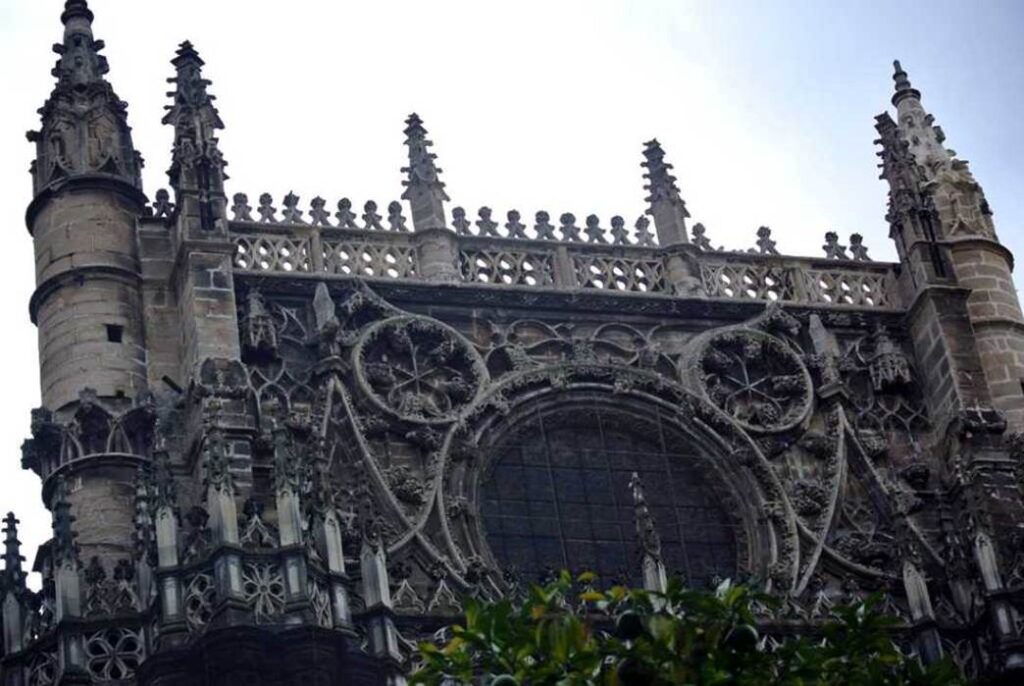
Photo by author, 2013
La Giralda, World Heritage site
The people of Seville are proud of the 98-metre-high bell tower, nicknamed the “Giralda Tower”. The Giralda Tower (La Giralda) is derived from the word “giralda”, which means weathervane.
The Giralda tower, which was a minaret, is said to have been built in 1184 modelled after the minaret in Marrakech, Morocco.
At the top is a statue of a goddess, resembling a pea.
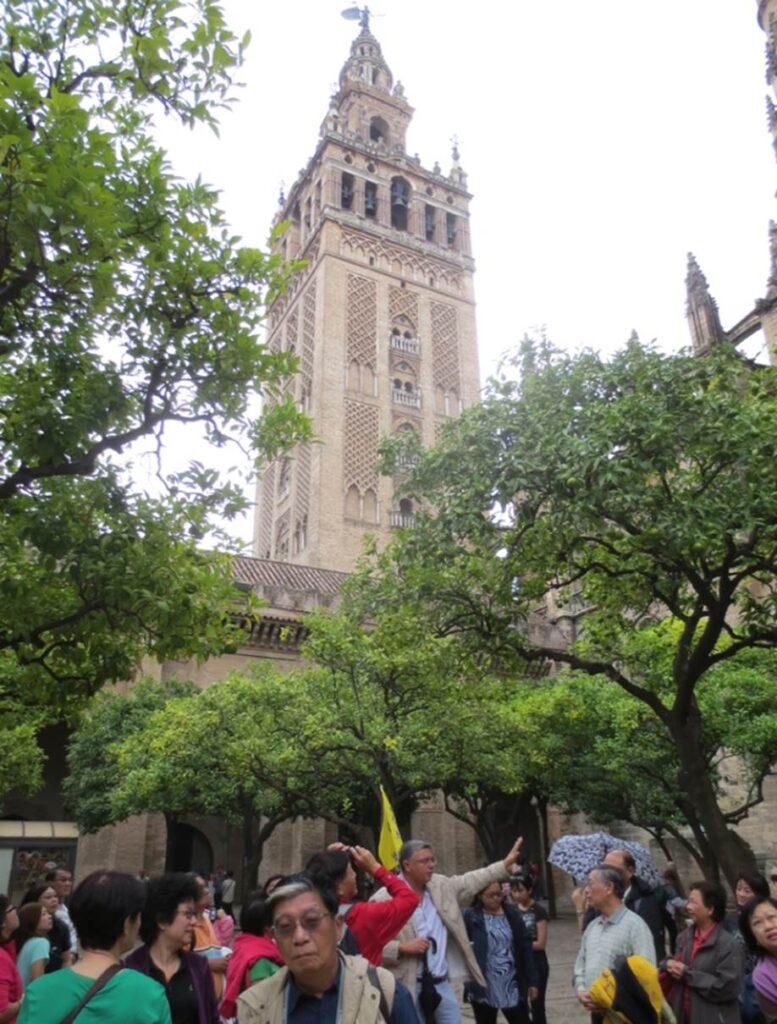
Photo of author, 2013
It was originally a minaret for a mosque built by Muslims in 1198. During the 16th century, when it came under Christian rule, the basic form of the minaret was retained, including the arabesque-patterned walls, and the upper part where the bell is placed during expansion, resulting in a unique tower.
Later, bells, a cross, a Renaissance-style balcony, and a bronze statue of the goddess were added to the top. Including the weathervane, the tower is 105 meters tall.

Photo by author, 2013
If you climb up to the observation deck at a height of about 70 meters, you can see the city of Seville. When visiting Seville, if you use the Giralda Tower as a landmark, you won’t get lost.

Photo by author, 2013
At the top of the tower, there is a rotating sculpture (known as Giraldillo)of a goddess, symbolizing faith. It also act as a weather vane. She holds a shield in her right hand and a palm leaf in her left. The sculpture is 4m tall.
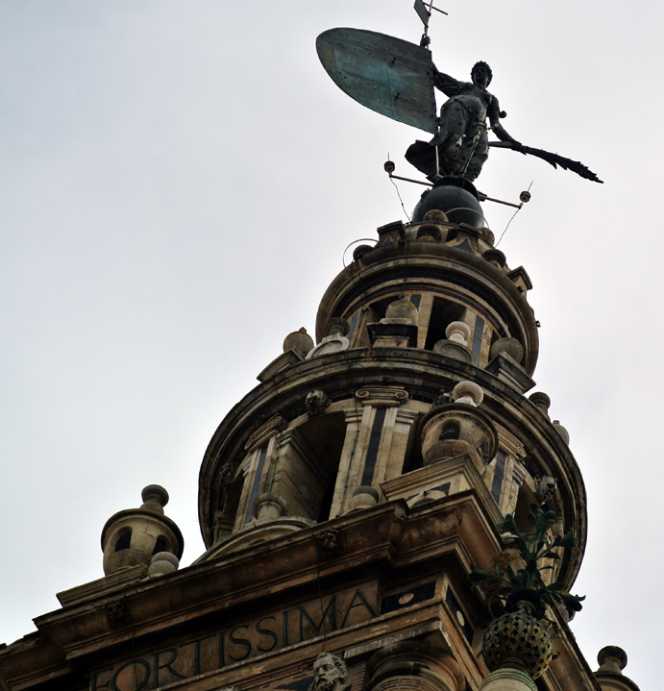
Photo by author, 2013
The structure of this renovated and expanded part is called a flying buttresses, which is unique to the Gothic style and serves to support the high walls.
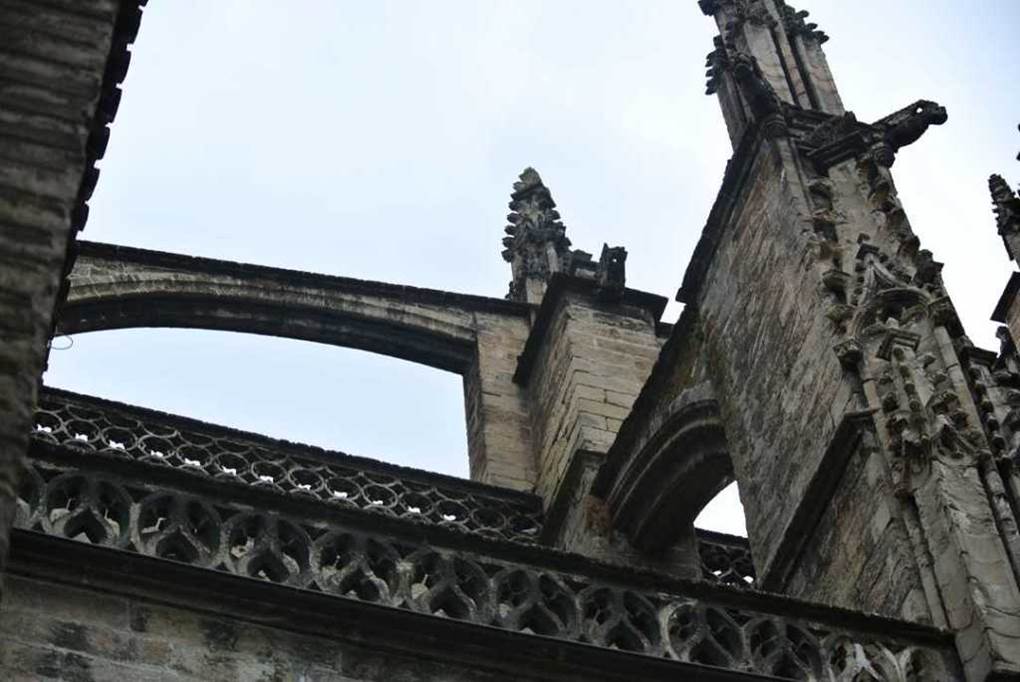
Photo by author, 2013
After visiting the cathedral, we went to Triunfo Square on the south side.
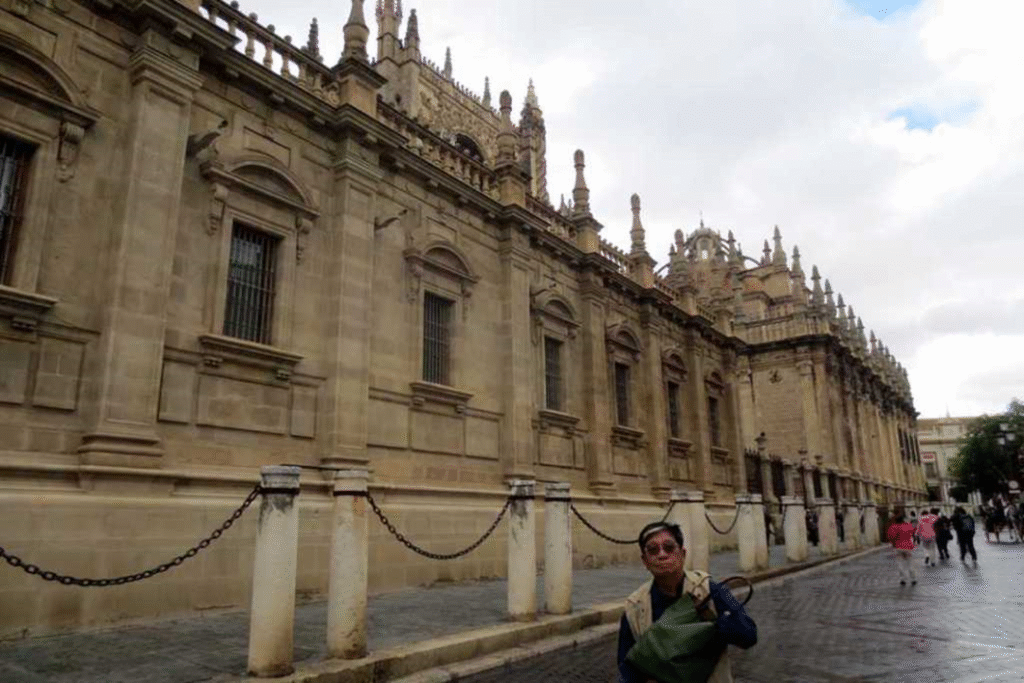
Photo of author, 2013
A huge chain on the north side of the cathedral.
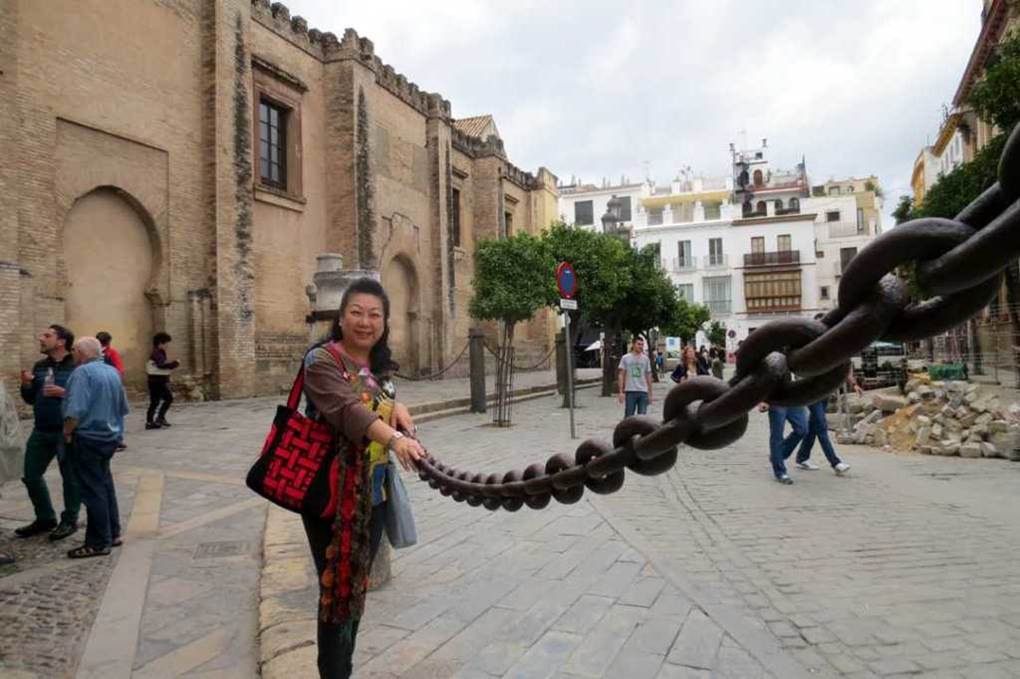
Photo by author, 2013
Moroccan Islamic roof tiles and their supporting structures.
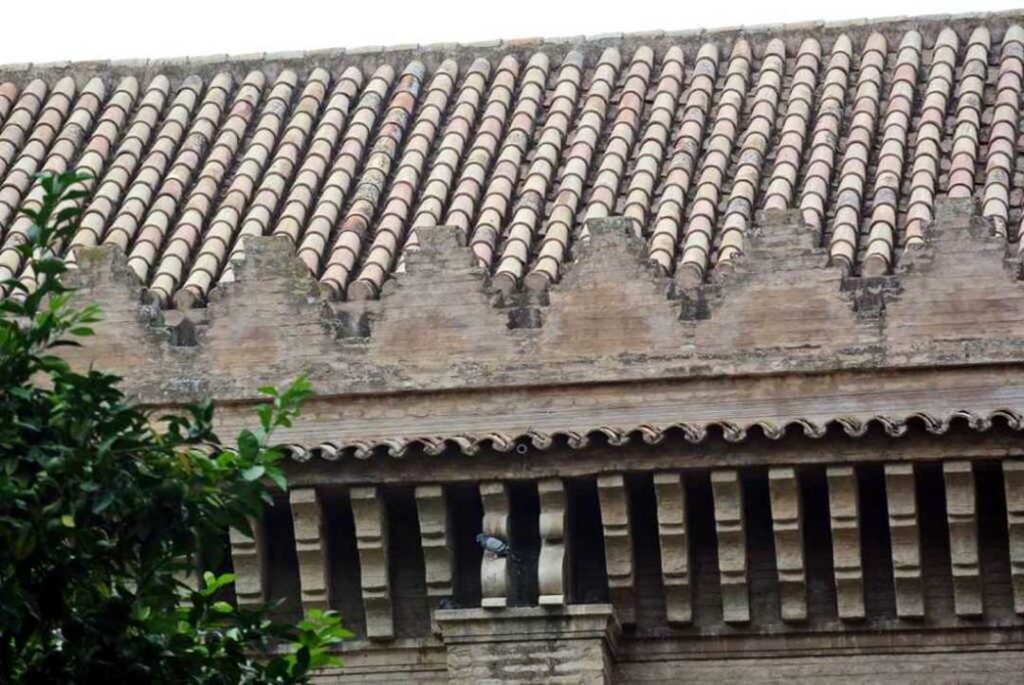
Photo by author, 2013
The upper parapet of the surrounding wall. Here too, there are Islamic patterns.
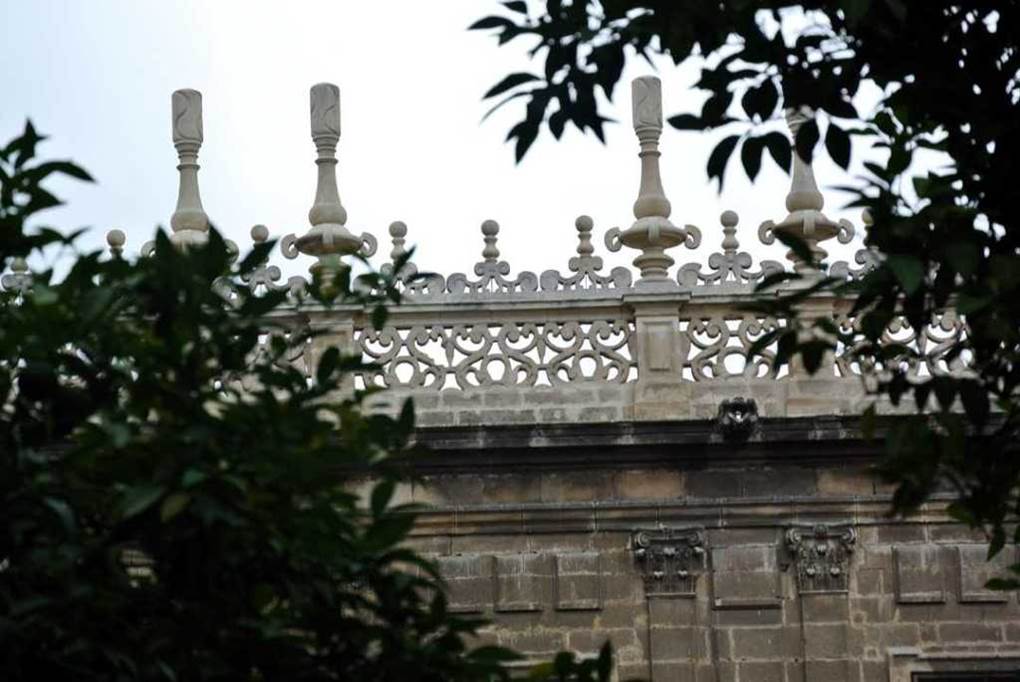
Photo by author, 2013
The large metal door also features Islamic geometric patterns.
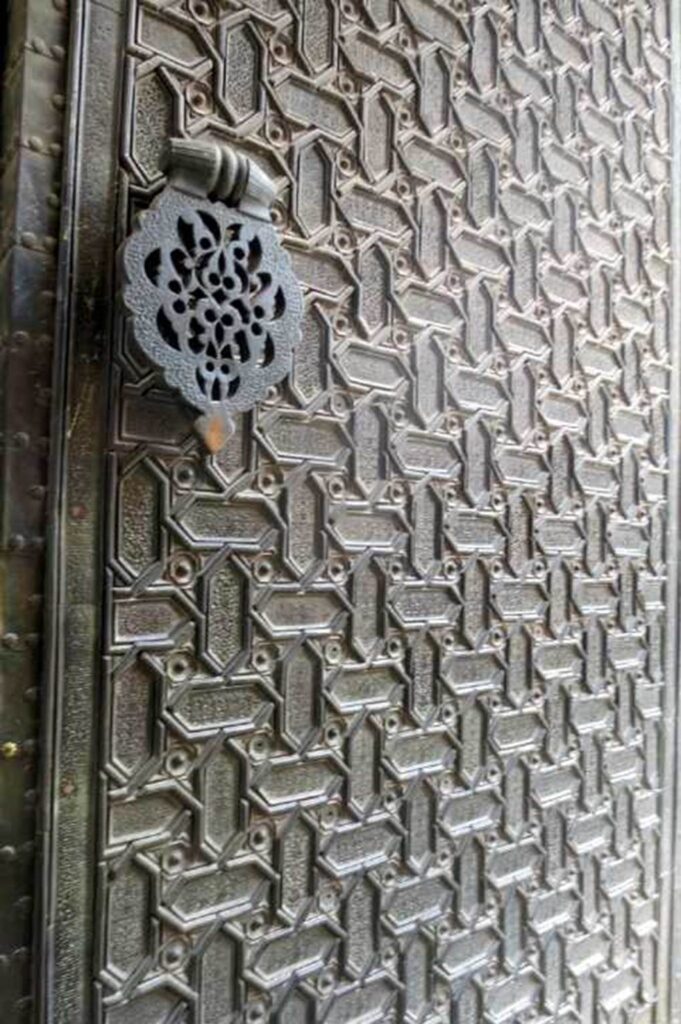
Photo by author, 2013
Seville Cathedral is a mixture of many architectural styles:
Mudejar, Plateresque (early Renaissance), Renaissance Gothic, Islamic arches surrounding the courtyard, etc.
The architectural characteristics developed in Spain and Portugal resulted in a fusion of Islamic and Christian architecture.
Orange Patio (Patio de los Naranjos)
To the north of Seville cathedral is a spacious courtyard. A typical Christian church would not have such a courtyard next to it.
The pattern of the grooves that circulate the water in this garden is geometric and Islamic style. Orange trees are also arranged in an orderly grid. This garden and the cloisters surrounding it were once necessary and indispensable elements of mosque architecture, where Muslims would purify themselves before prayer. This courtyard remains unchanged.
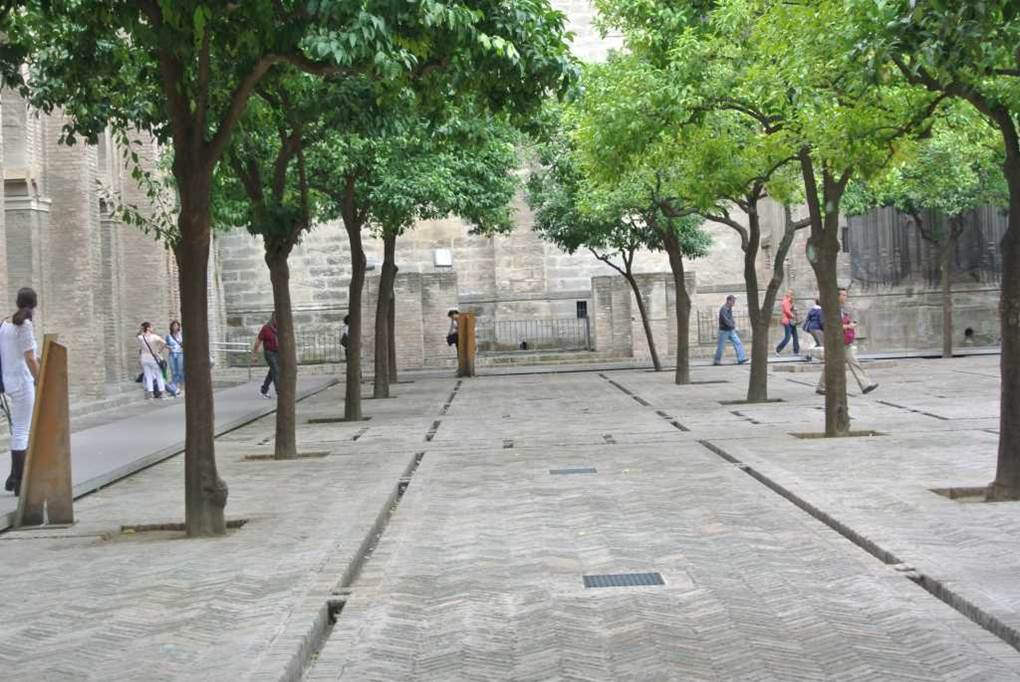
Photo by author, 2013
The plumbing and floor patterns are in a geometric Islamic style.
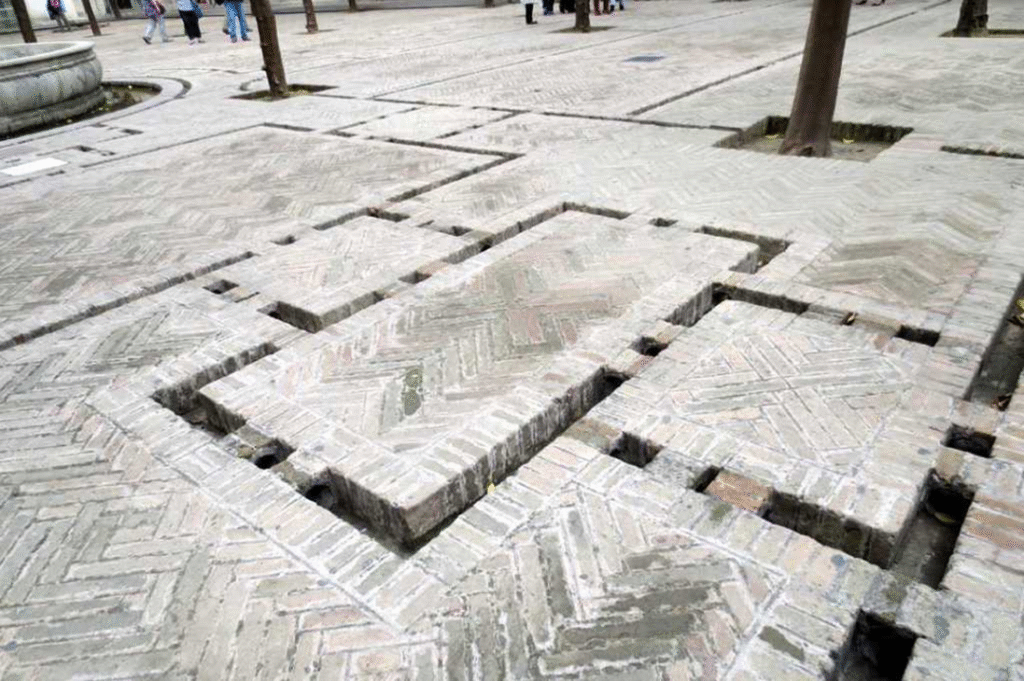
Photo by author, 2013
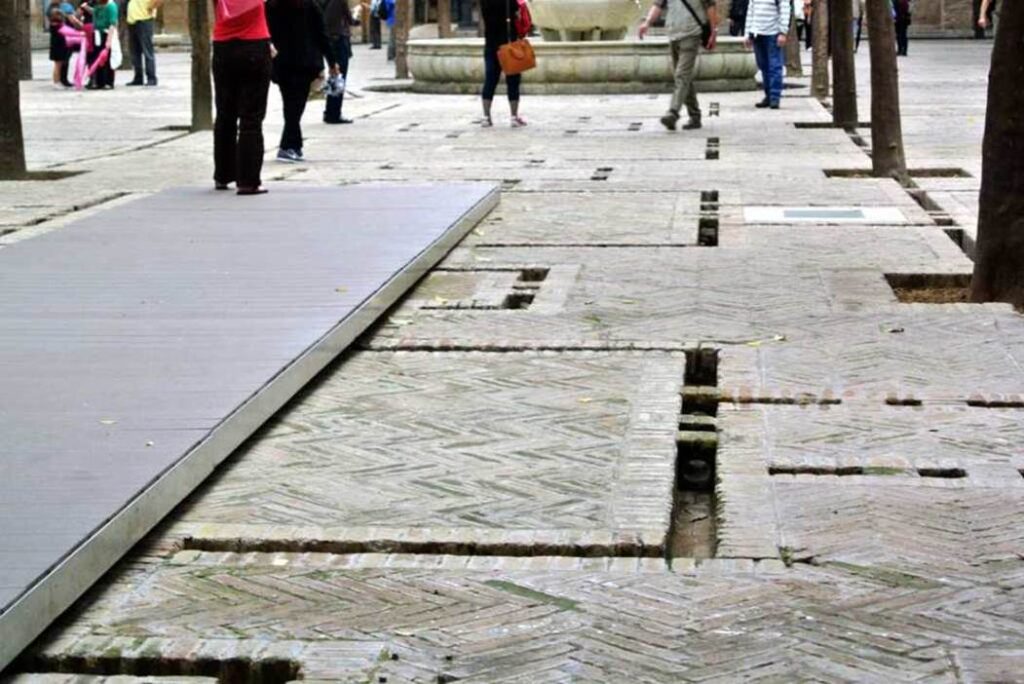
Photo by author, 2013
A tram runs along the western street around Seville Cathedral.
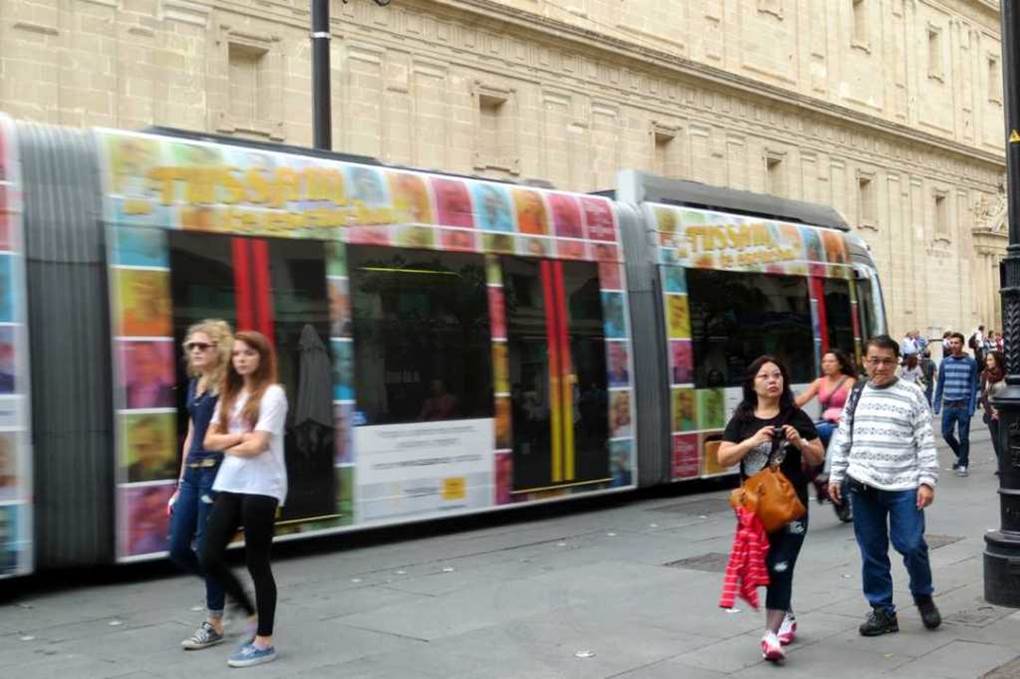
Photo by author, 2013
Streets around the Seville Cathedral.
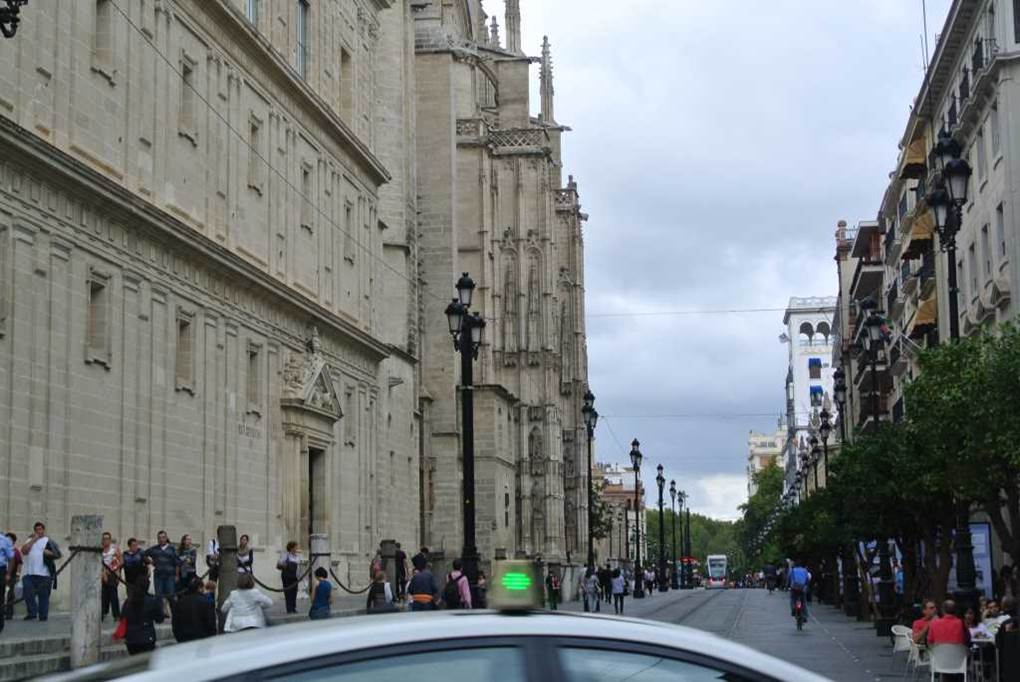
Photo by author, 2013
Streets around the Seville Cathedral.

Photo by author, 2013
The heart of the Old Town Conservation Area.
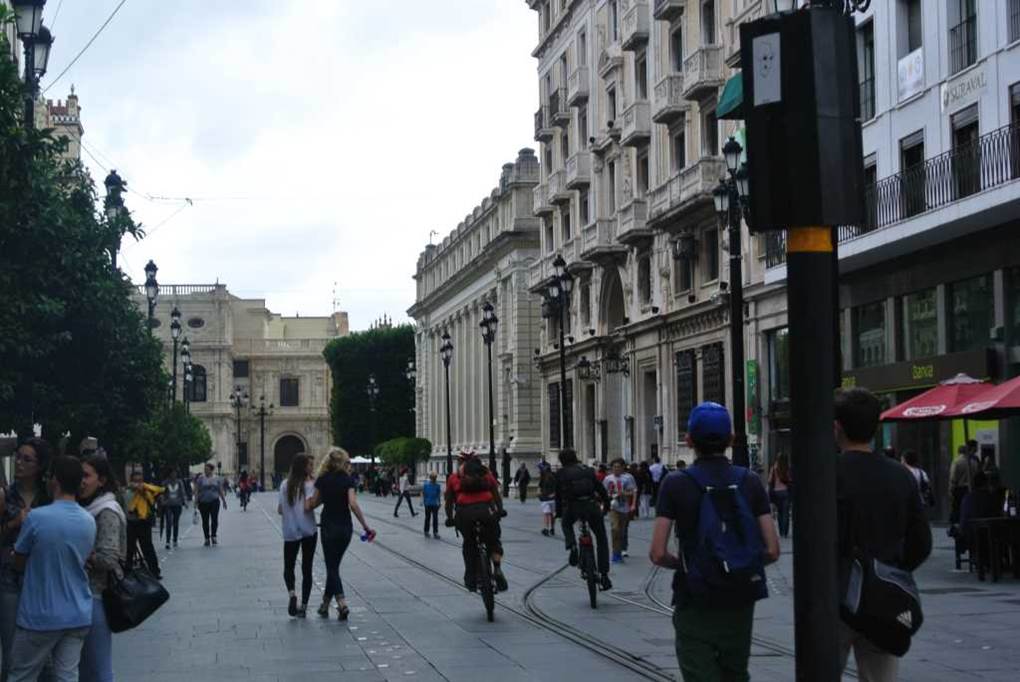
Photo by author, 2013
The townscape of the Old Town Preservation Area.

Photo by author, 2013
The townscape of the Old Town Preservation Area. The roads are well kept and clean.
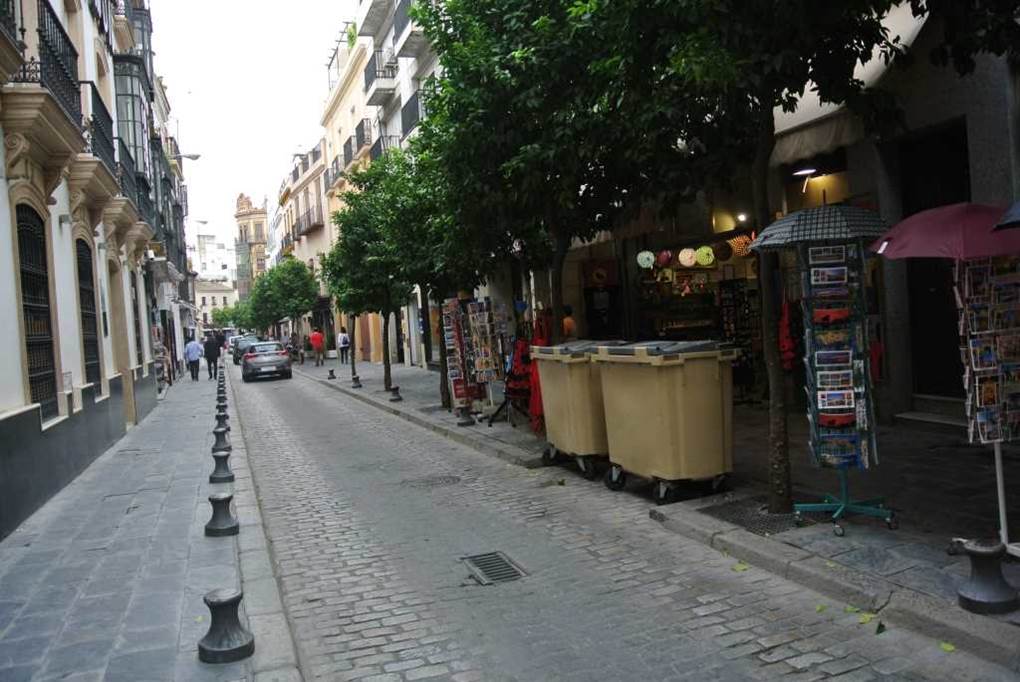
Photo by author, 2013
Hotel Simon
Hotel Simon is located in the heart of Seville, in a preserved area close to Seville Cathedral. Set in an 18th-century mansion, this hotel features a beautiful courtyard. The design of the balcony is simple and beautiful.
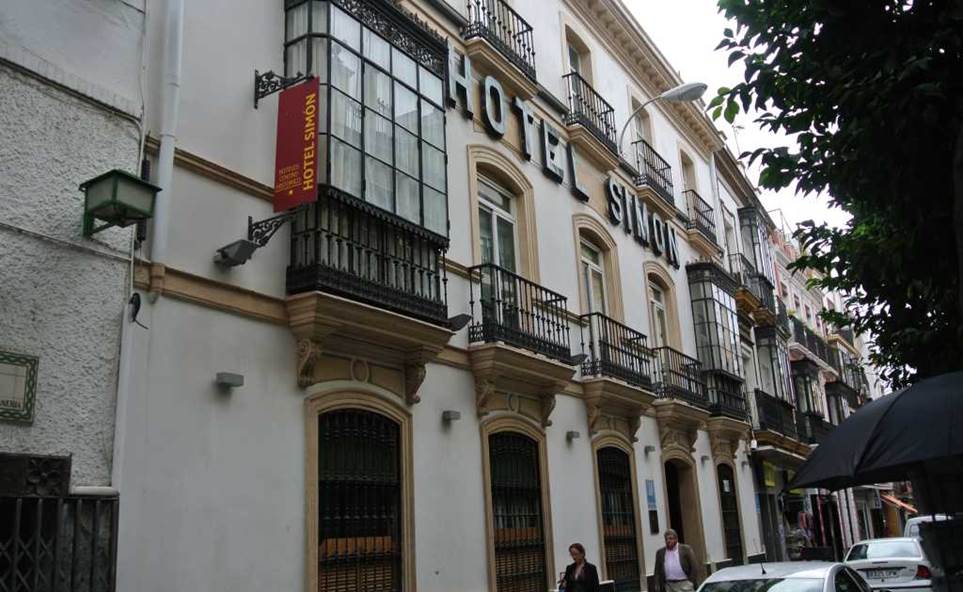
Photo by author, 2013
Other residential buildings
On the lower floor, there is a burglar grill. On the upper floor is the outdoor unit of the air conditioner. The building is in a scenic area, and the facade has a unified look.

Photo by author, 2013