JAP | ENG
Myanmar Travelogue 1993
#4/5
Bagan #1
The Three Great Ruins of Southeast Asia
The ruins of the temple complex in Bagan are one of the three major archaeological sites in Southeast Asia, including the ruins of Borodubur on the island of Java and the ruins of Angkor Wat in Cambodia.
I had wanted to visit this place for many years, and finally got the chance in 1993 during a break from work in Yangon.
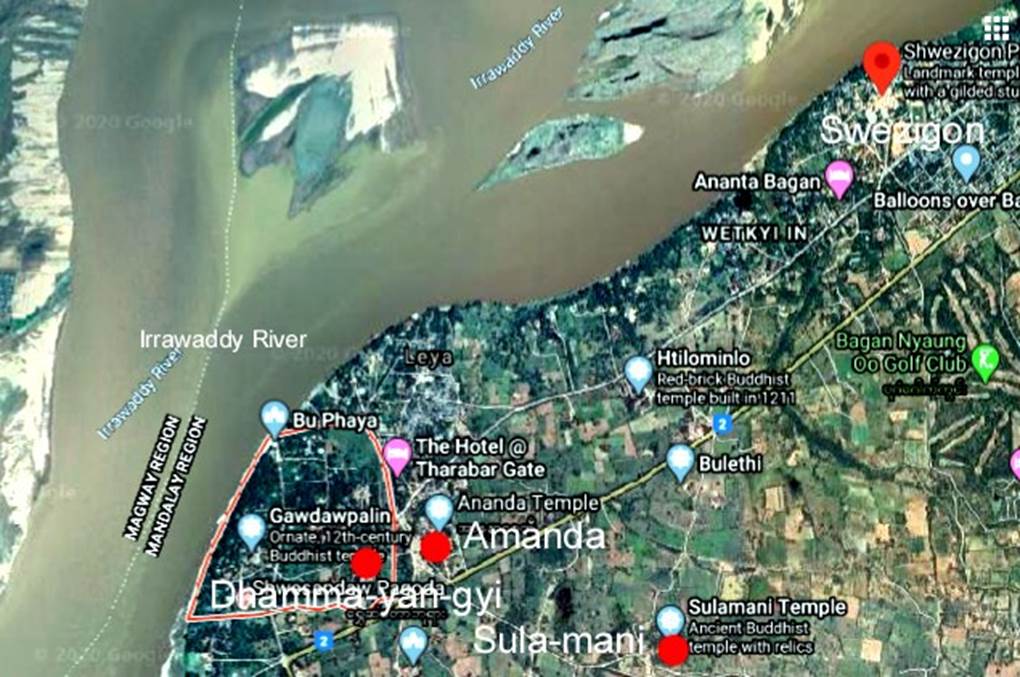
Bagan is located on the east bank of the Irrawaddy River, 180km southwest of Mandalay, about a three-and-a-half-hour drive from Mandalay.
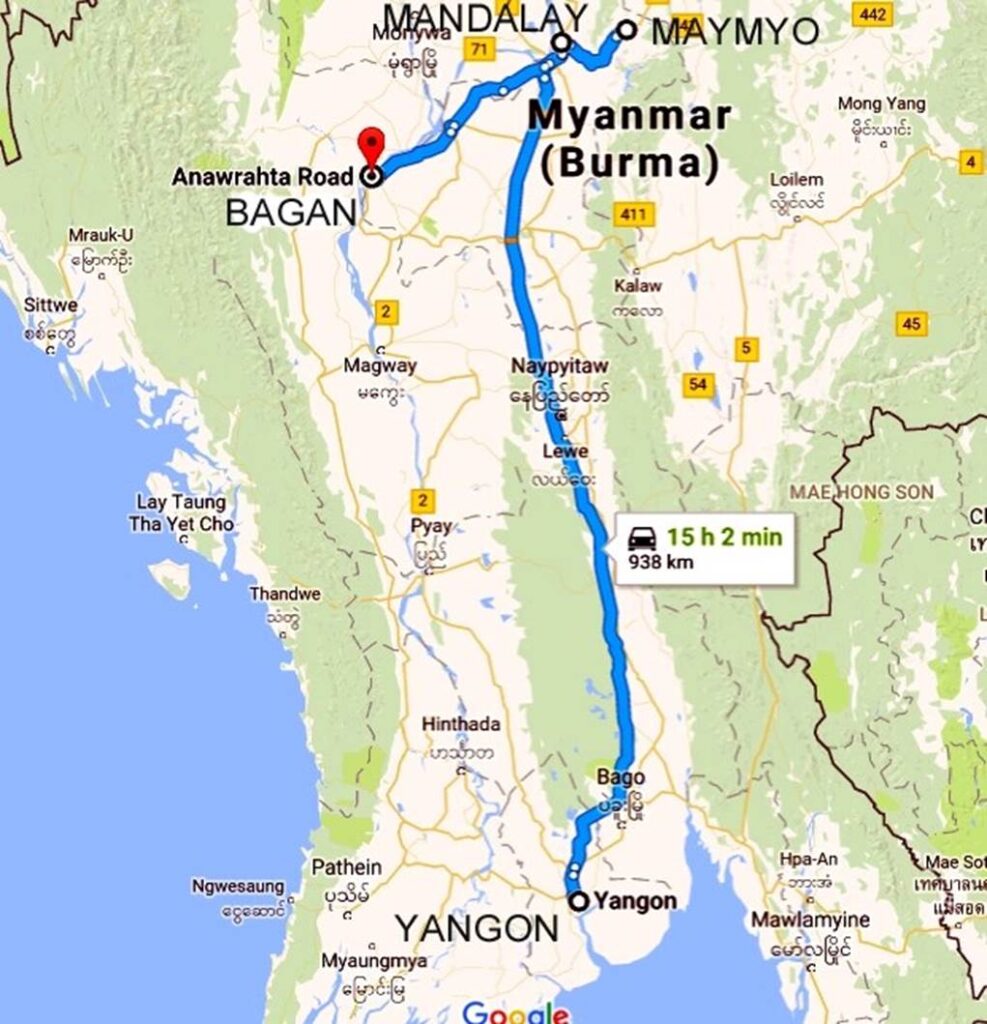
Our group visited Bagan in 1993.
This was 16 years before the site was registered as a World Cultural Heritage Site.
This was a time when there was no internet or smartphones, and no satisfactory guidebooks or hotels.
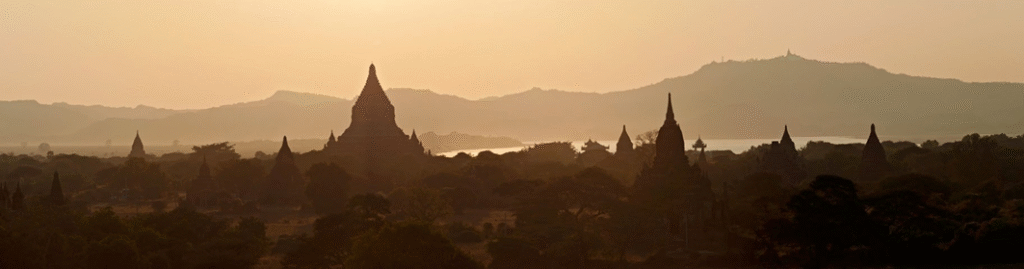
We had a local female guide who was knowledgeable with the ruins, and she told us that the area of the archaeological sites in Bagan is about 4 km2 and there are about 3,000 pagodas in the vast area.
All of them were built between the 11th and 13th centuries, and there are many of them of various sizes, many of which are in a state of collapse, making it very difficult to get an overall picture of the era in which they were constructed.
Extinct due to Mongolian offensive
According to the guide, the Bagan dynasty was overthrown by the Mongols in 1287 after refusing the Mongol Kublai gifts.
For reference, the Mongol invasion of Japan began in 1274 (landing on Tsushima and then being defeated in the Battle of Hakata Bay).
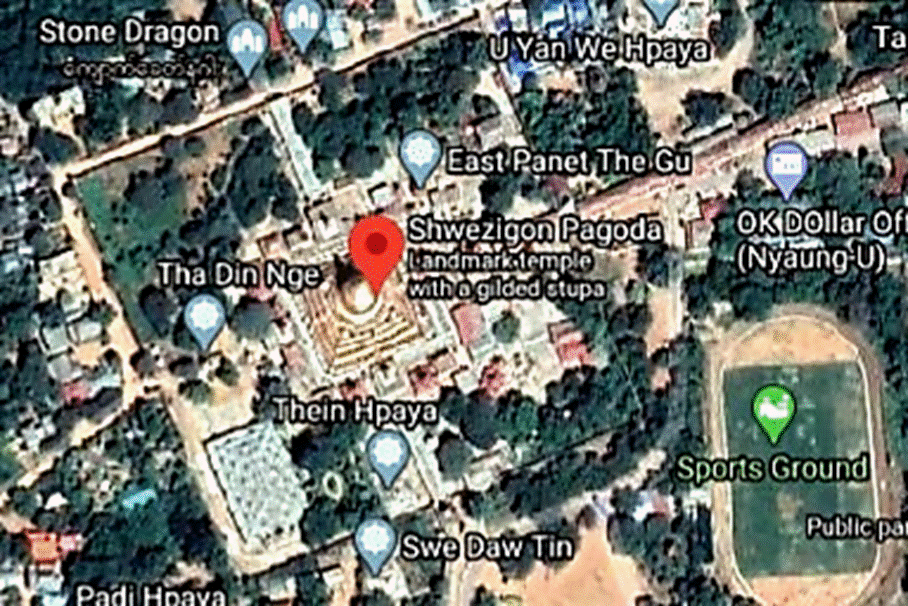
Shwezigon temple complex
When you reach the area of Mandalay and Bagan, the first group of buildings you will encounter is the Shwezigon Monastery.
Construction was started by King Anawata, the founder of the Bagan dynasty, and was completed in 1102 by his son.
The temple has a gabled roof made of teak wood that has darkened over time.
Behind it is a pure white pagoda. The contrast of the colors under the tropical sun is strong and unique.

Photo by author, 1993
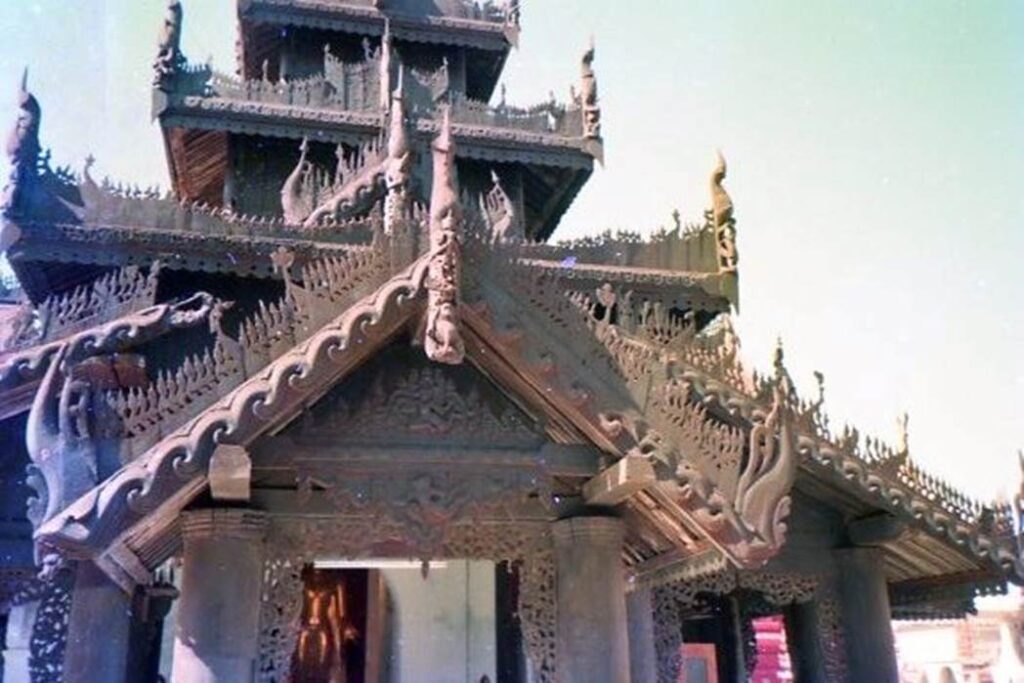
Photo by author, 1993
Deep eaves to keep out the heat, it matches the climate of this area.
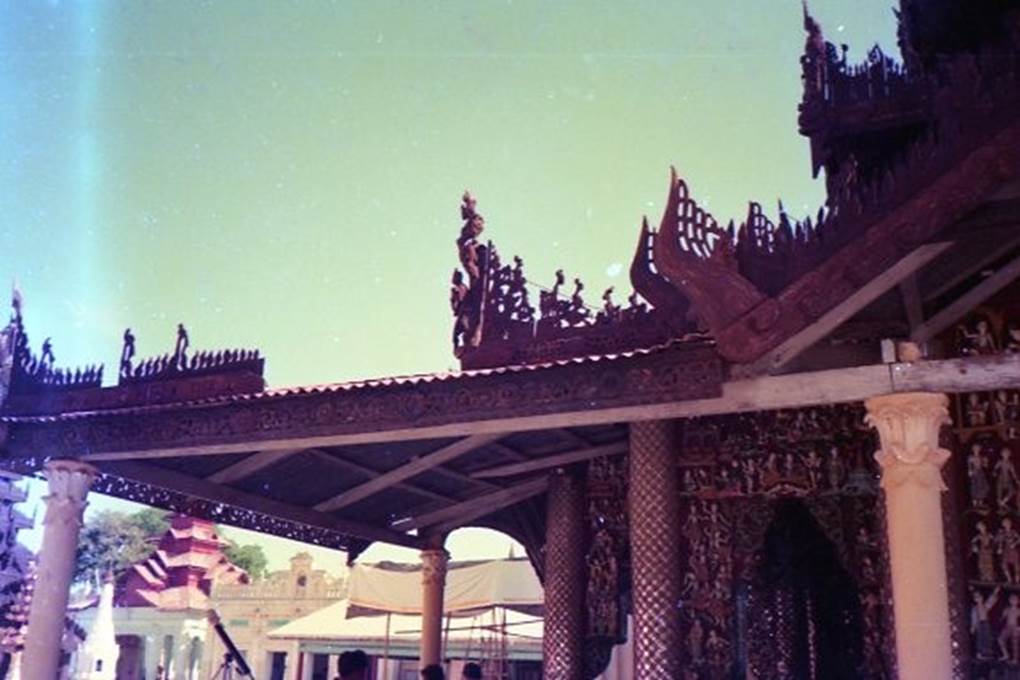
Photo by author, 1993
The wooden sculptures that rise from the four corners of the eaves bring life to the building.
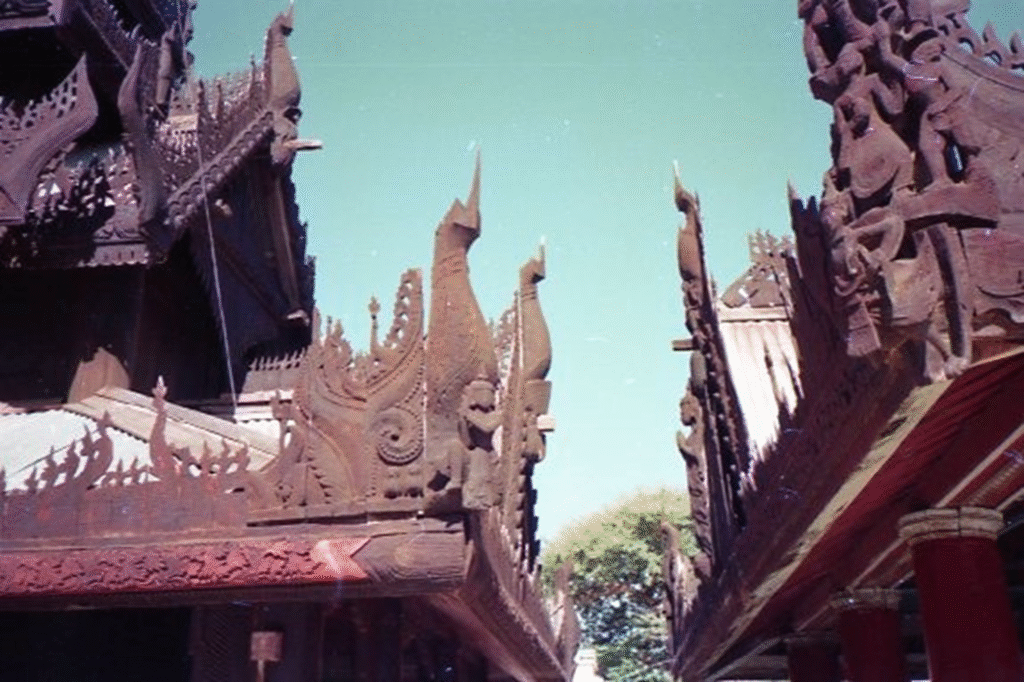
Photo by author, 1993
Black and white. The color contrast of different buildings is great.
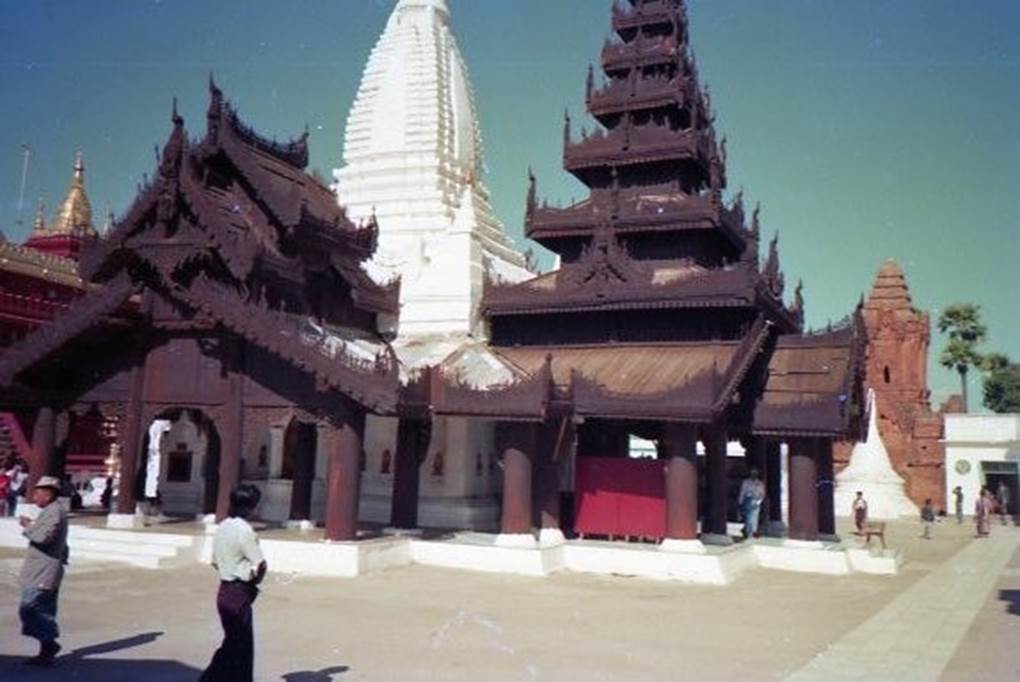
Photo by author, 1993
The plaza within the temple grounds. It is composed of black and white pagodas.

Photo by author, 1993
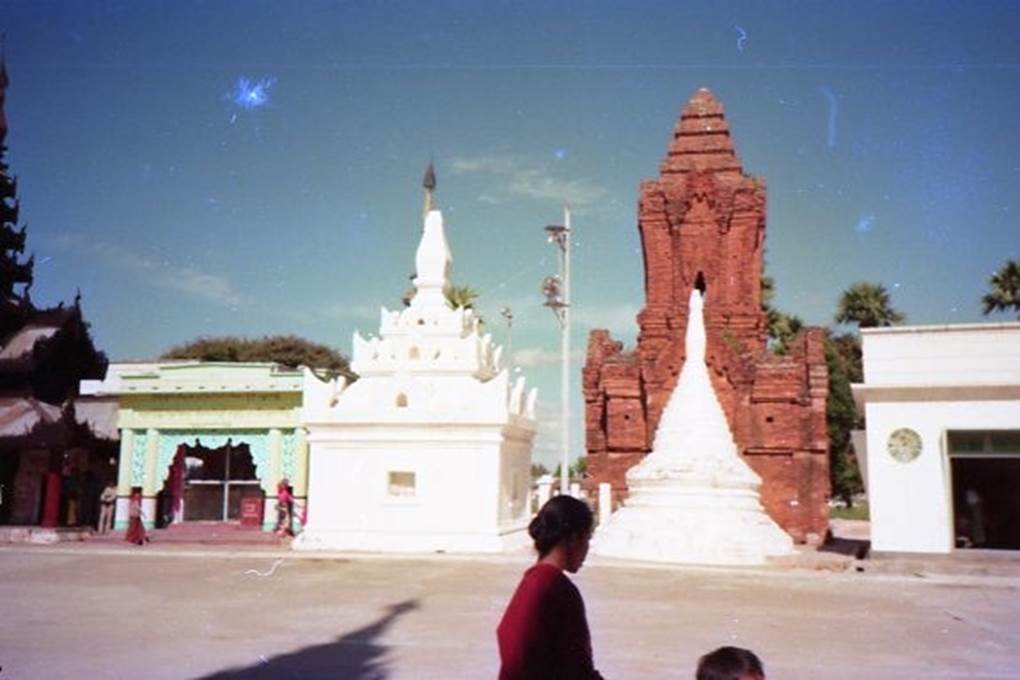
Photo by author, 1993
A blue sky without a single cloud!
And dry, pollution-free air!
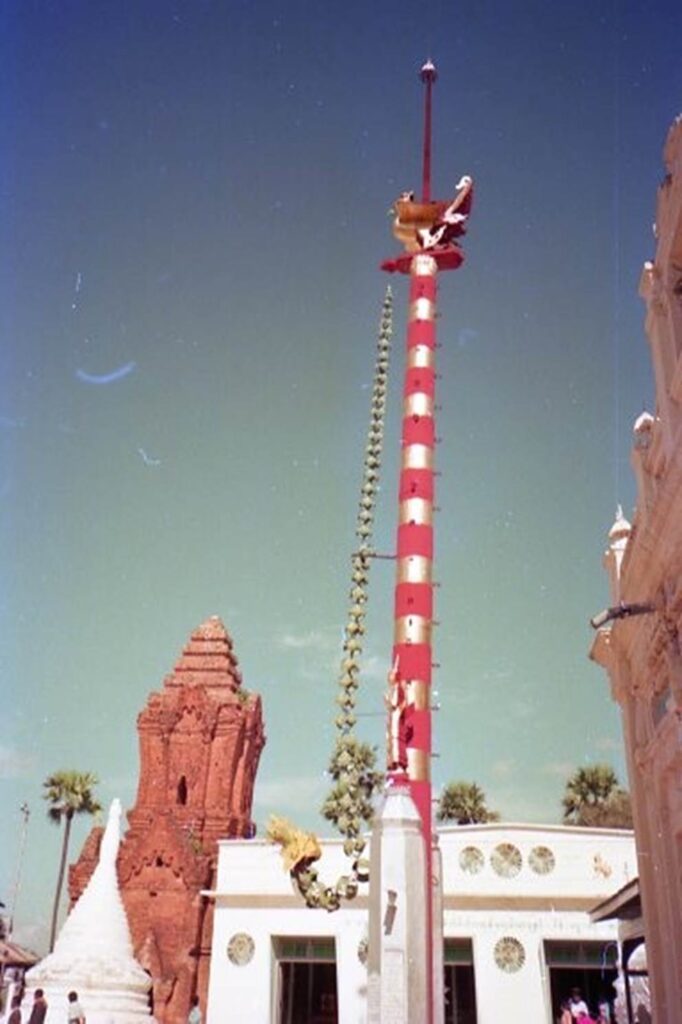
Photo by author, 1993
Ceiling pattern.

Photo by author, 1993
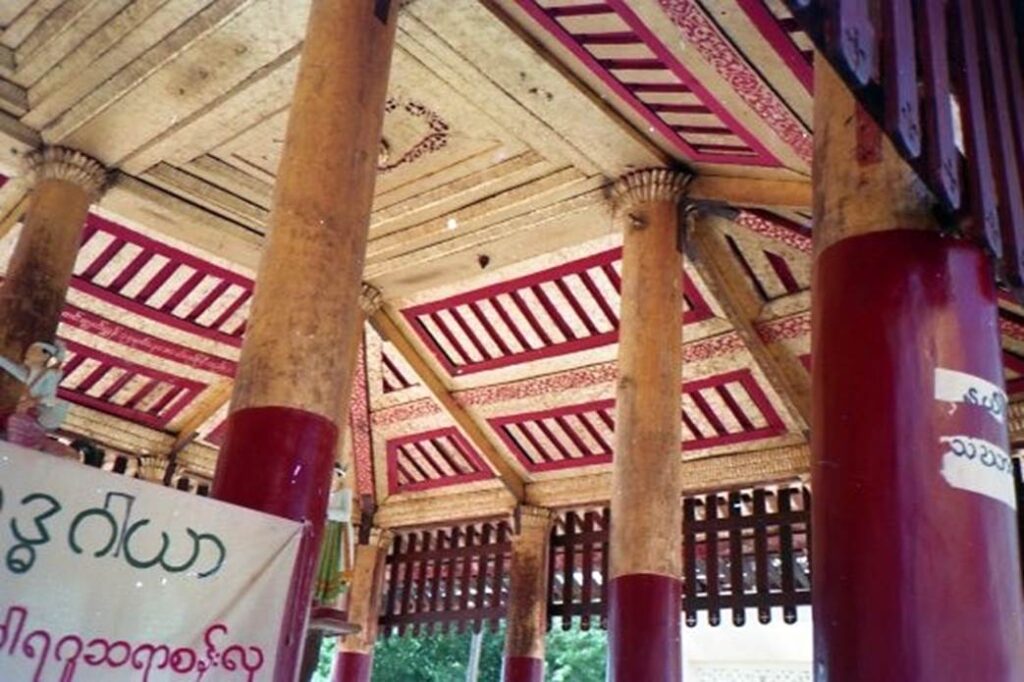
Photo by author, 1993
Temple entrance access and intricate wood carvings.
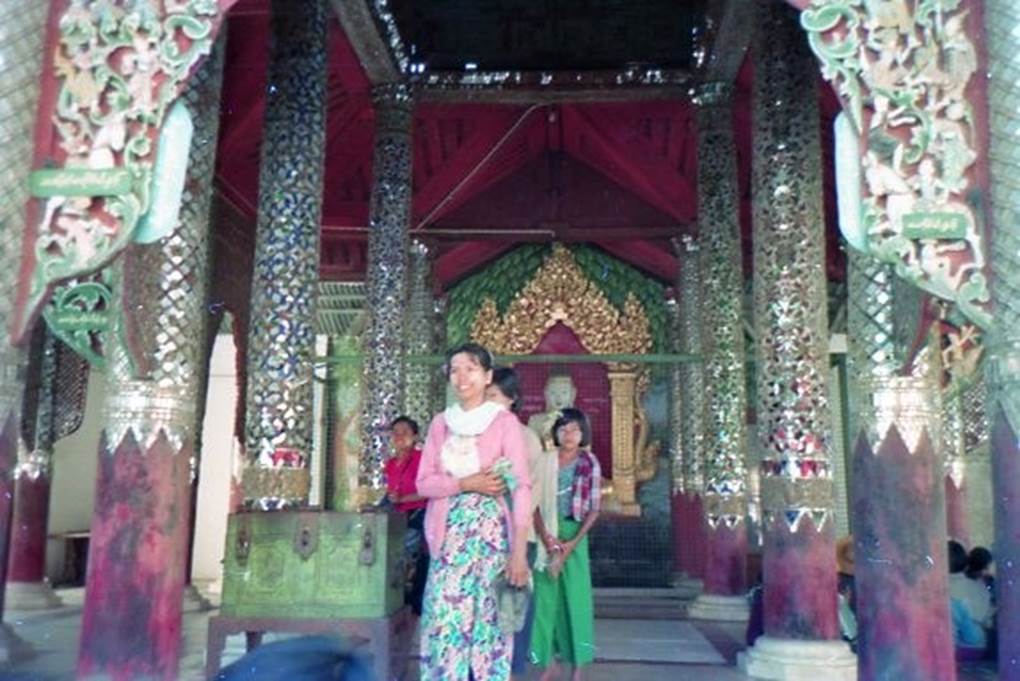
Photo by author, 1993
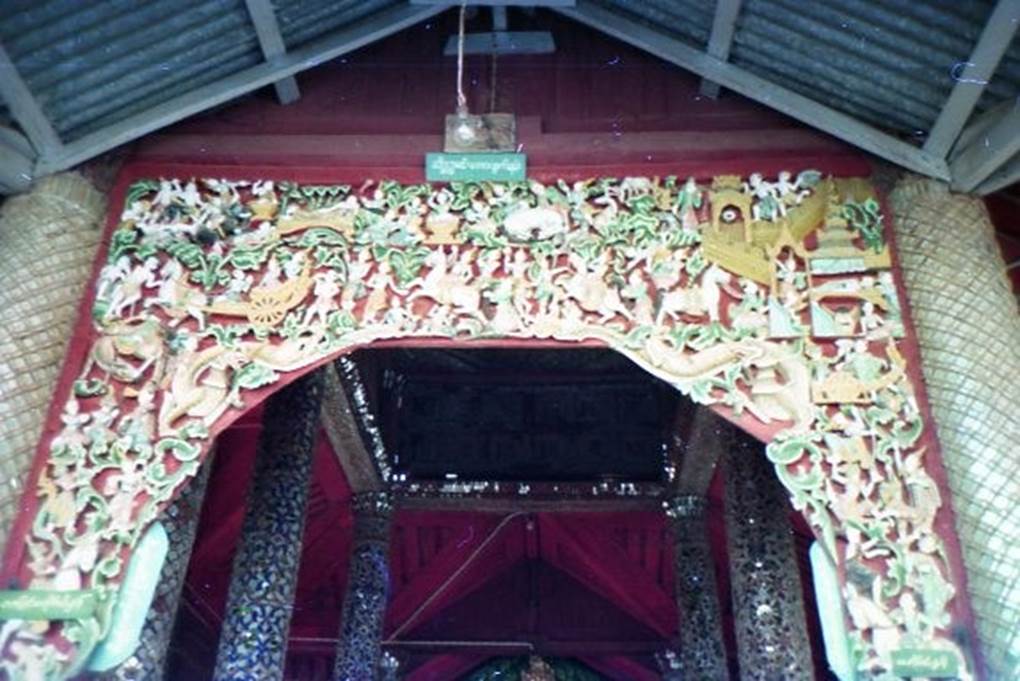
Photo by author, 1993
It seems that this is the only temple in Bagan that still attracts worshippers.
By observing the temple, one can see that many additions and renovations have been made to the white pagoda and other parts of the temple over the years.

Photo by author, 1993
Bagan was a religious city
Map of the site during archaeological excavation.
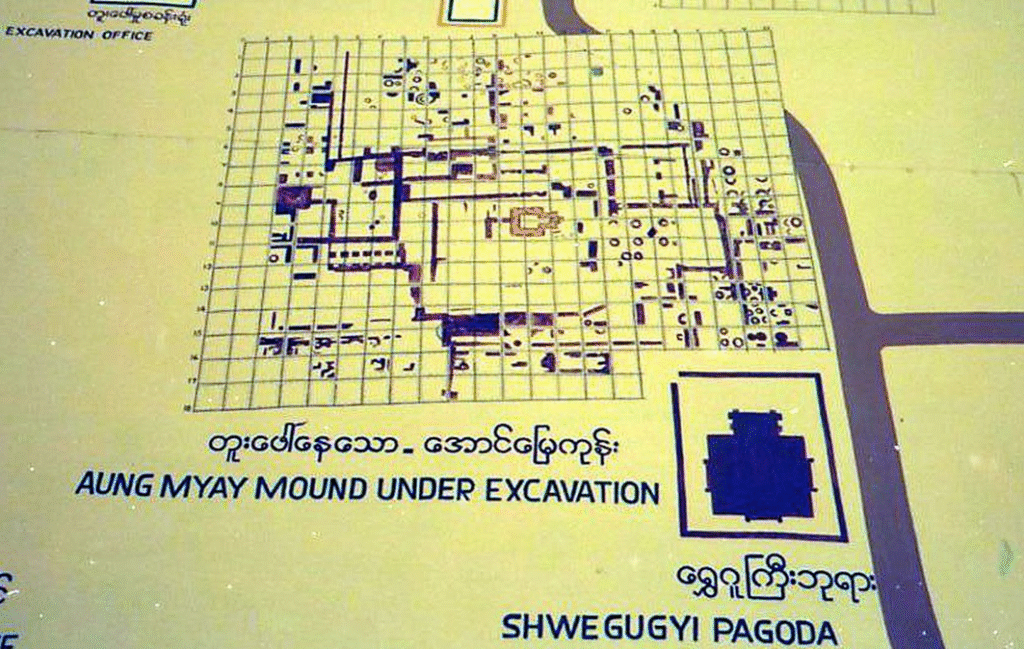
Photo by author, 1993
Ananda Temple
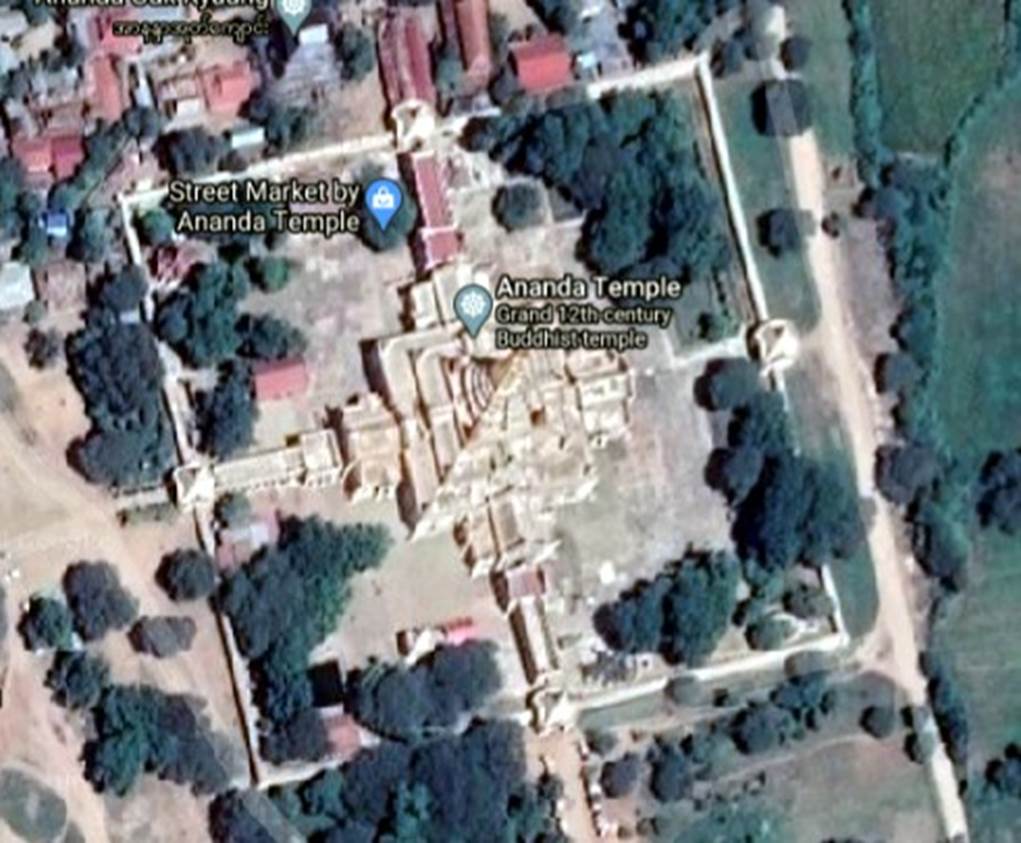
The design is a mix of Hmong and Indian styles, and is believed to have been designed by an Indian architect.
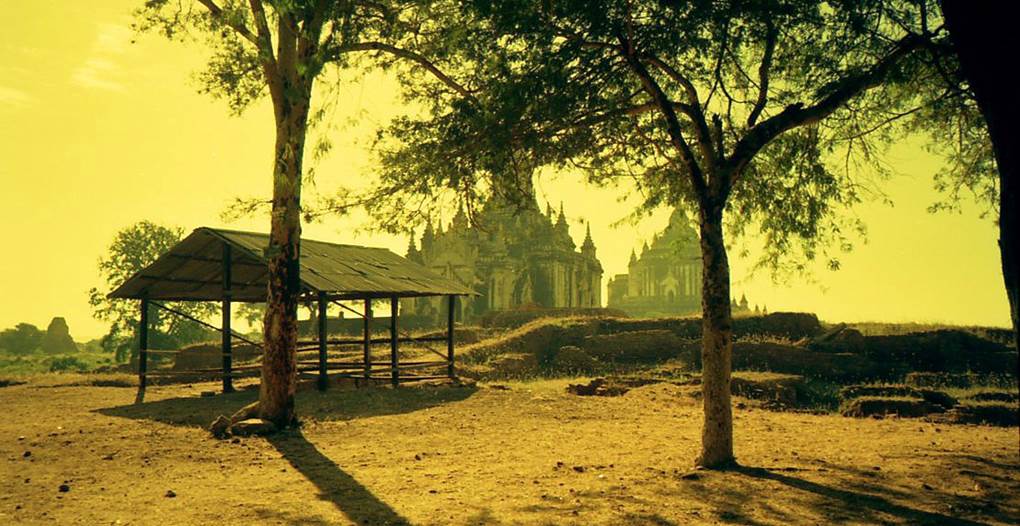
Photo by author, 1993
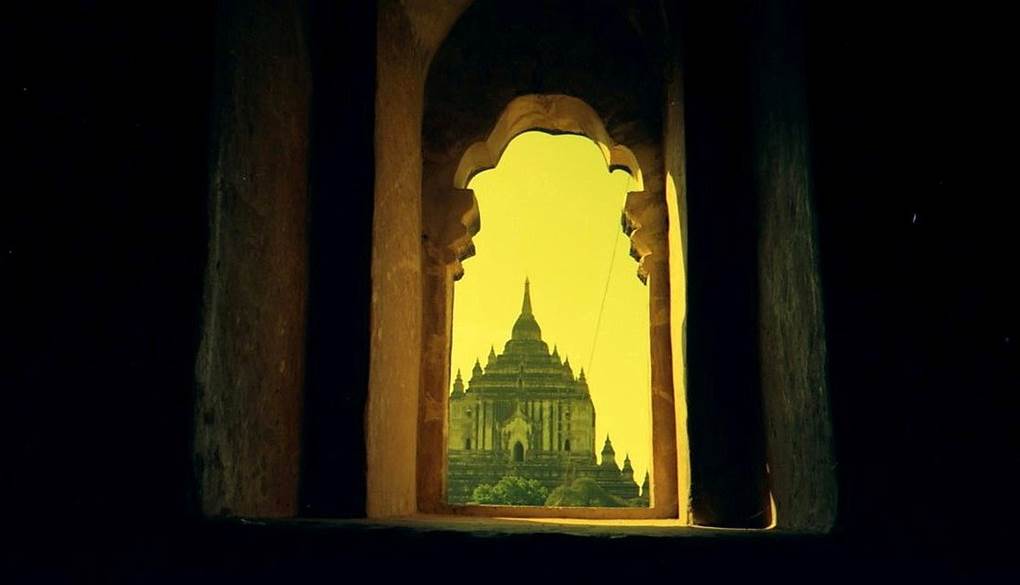
Photo by author, 1993
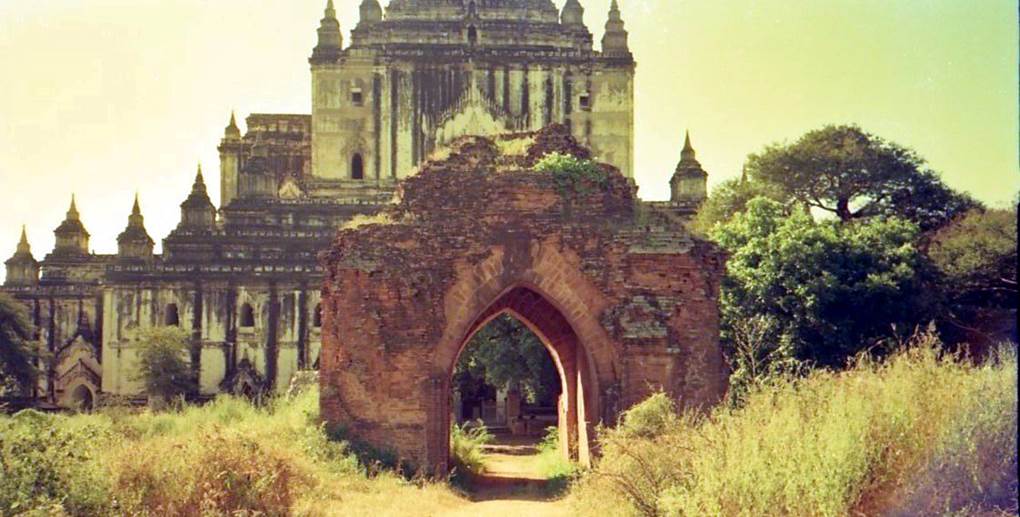
Photo by author, 1993
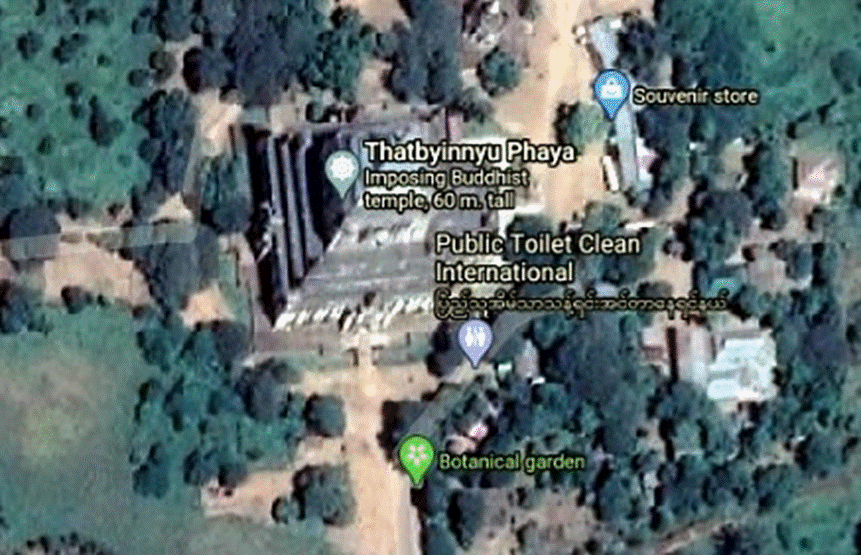
That-byin-nyu Temple
It is located near the Ananda Temple.
It is believed to have been built in the middle of the 12th century.
Dhamma-yan-gyi Temple
It is the largest archaeological temple in the Bagan area and has a definite presence. According to the guide’s explanation, it was built by King Narathu.
He killed his father and eldest brother and took the throne.
He built this temple to atone for his sins.
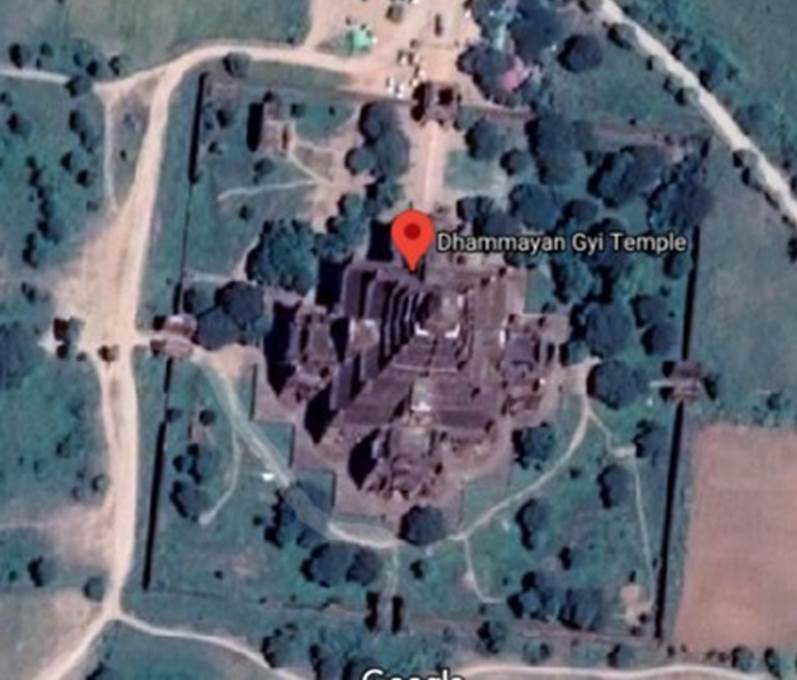
Bagan’s largest temple Source: Google Maps
Among the temples in Bagan, this temple boasts an overwhelming amount of bricks. In order to fire and produce so many bricks, it would have been necessary to cut down a large amount of trees. The same applies to other temples.
As a result, widespread environmental destruction was inevitable, and the ability to maintain the dynasty would have been lost.
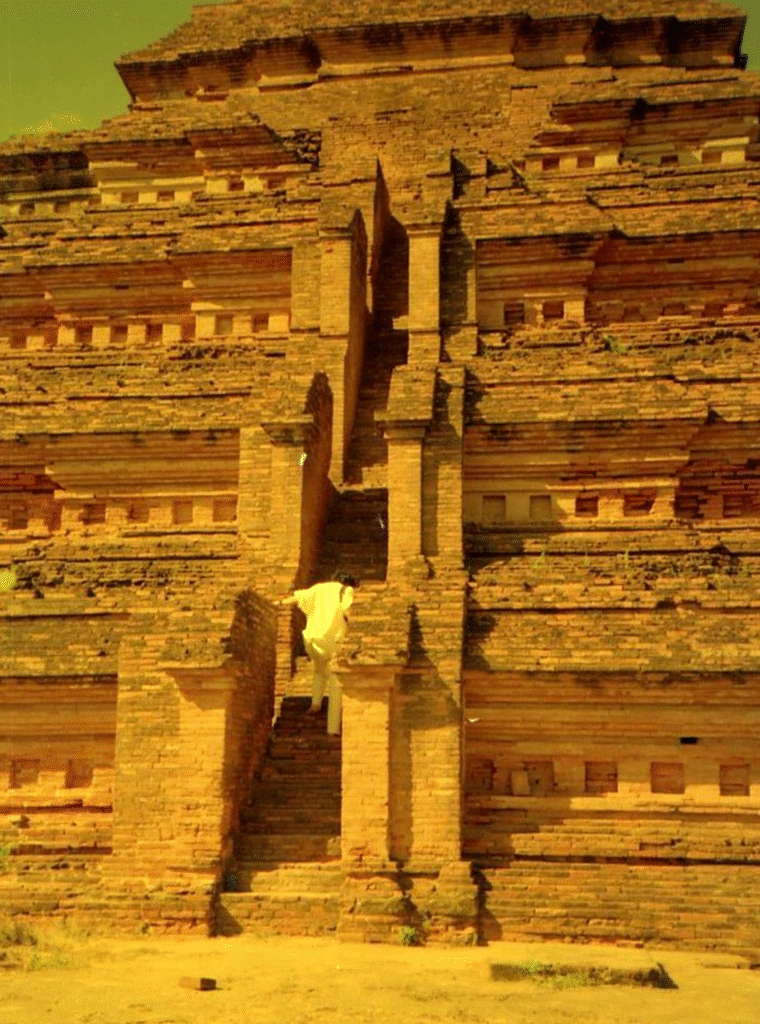
Photo by author, 1993
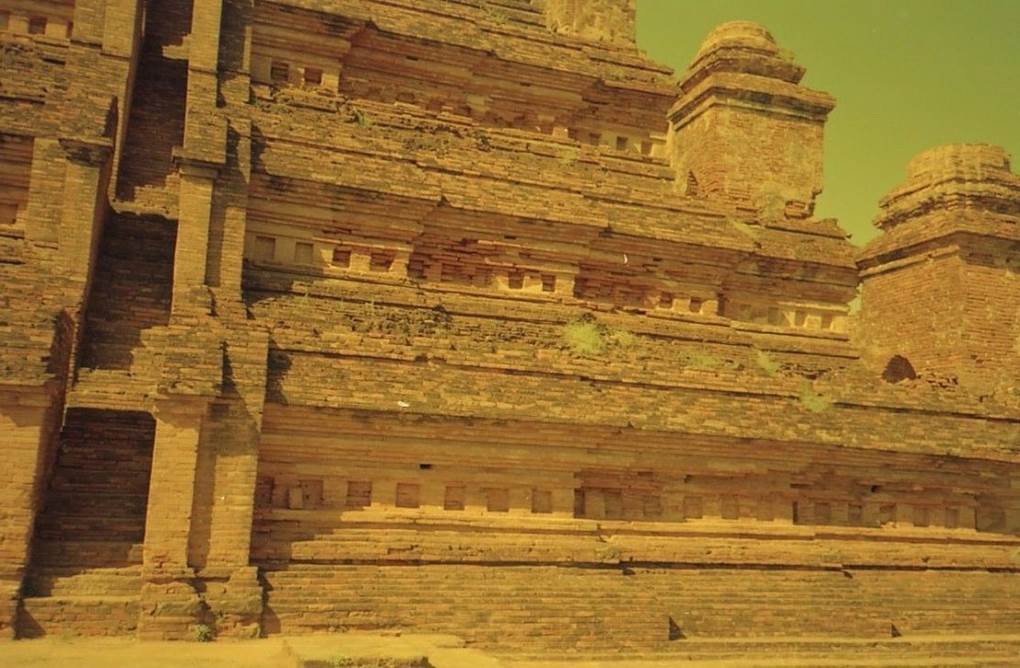
Photo by author, 1993
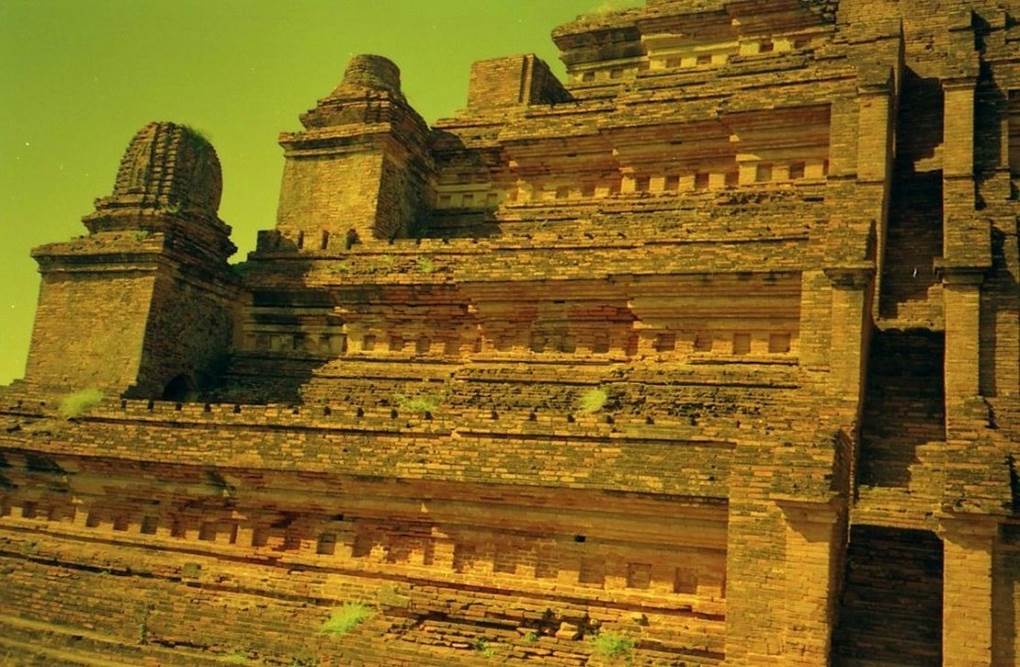
Photo by author, 1993
Overwhelming amount of bricks
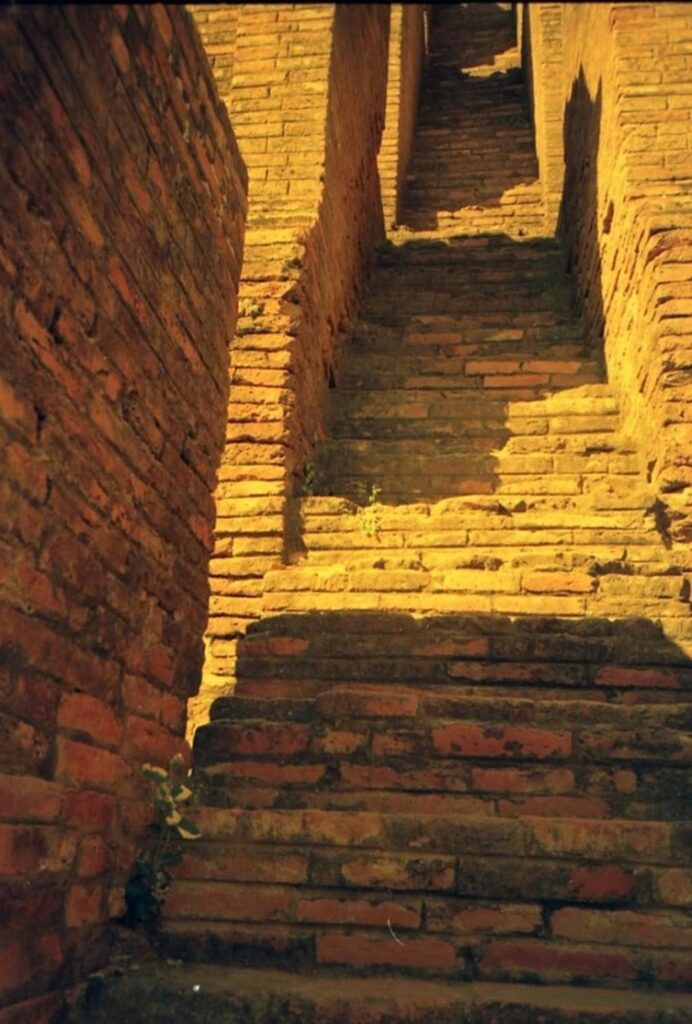
Photo by author, 1993
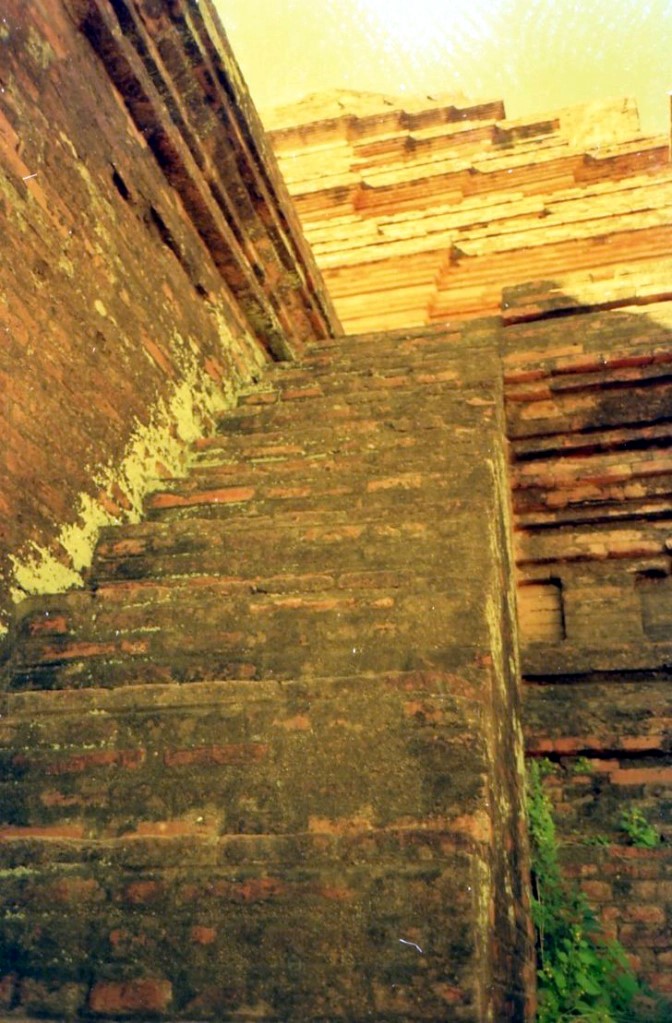
Photo by author, 1993
In the hot and dry weather, we sit on a brick terrace like this, take a break and drink some local Mandalay beer while viewing the vast historical heritage from above. It was a blissful experience.
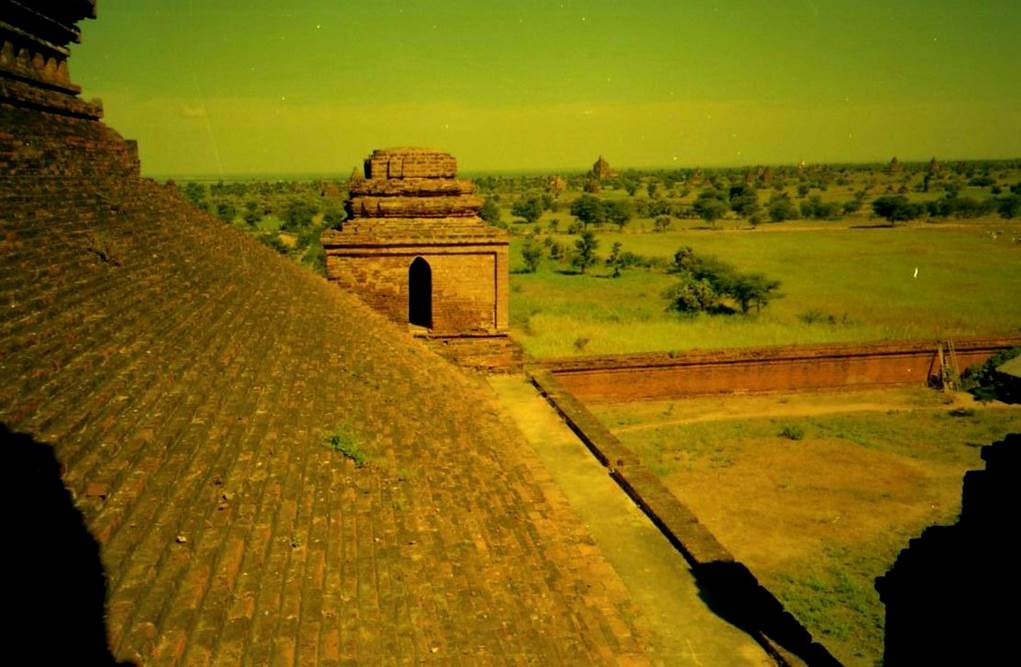
Photo by author, 1993
Dry air without pollution.
The sharp contrast of shadows projected on a brick building.

Photo by author, 1993
The rounded tower, and each brick looks like it was handcrafted!
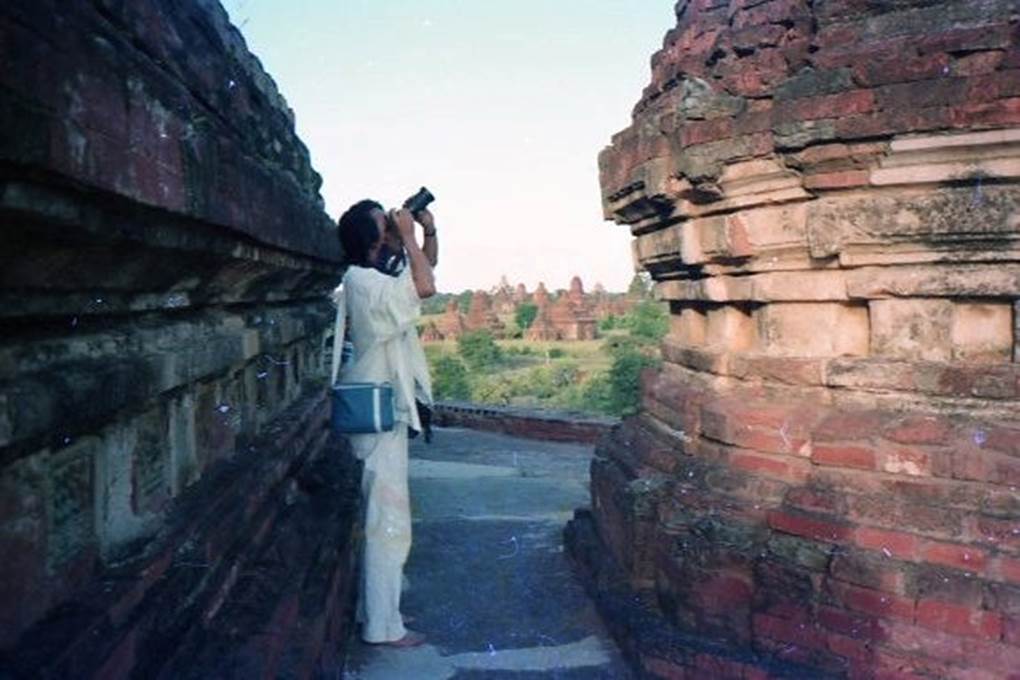
Photo by author, 1993
Countless white pagodas come into view.
It is said that there are about 3,000 pagodas, which is quite impressive.
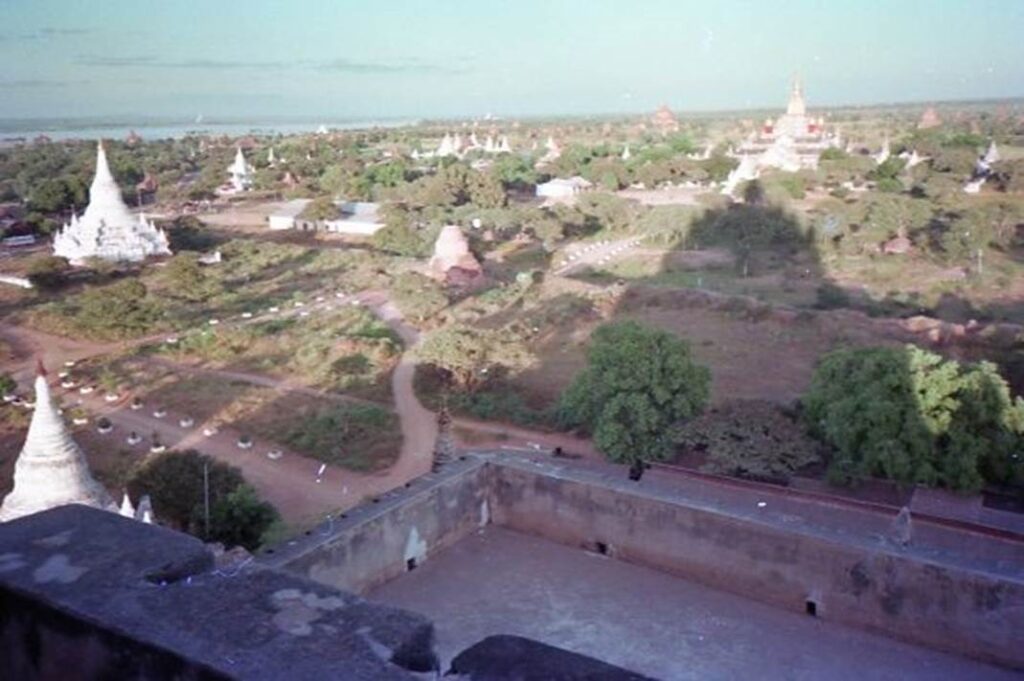
Photo by author, 1993
On the western horizon, you can see the Irrawaddy River.
The view of the setting sun must be magnificent. There were only a few of us there. In those days, you could freely climb the roofs of the pagodas and enjoy the view, but after the site was registered as a World Heritage Site and the number of tourists increased, it must have become impossible to take photos like this.

Photo by author, 1993
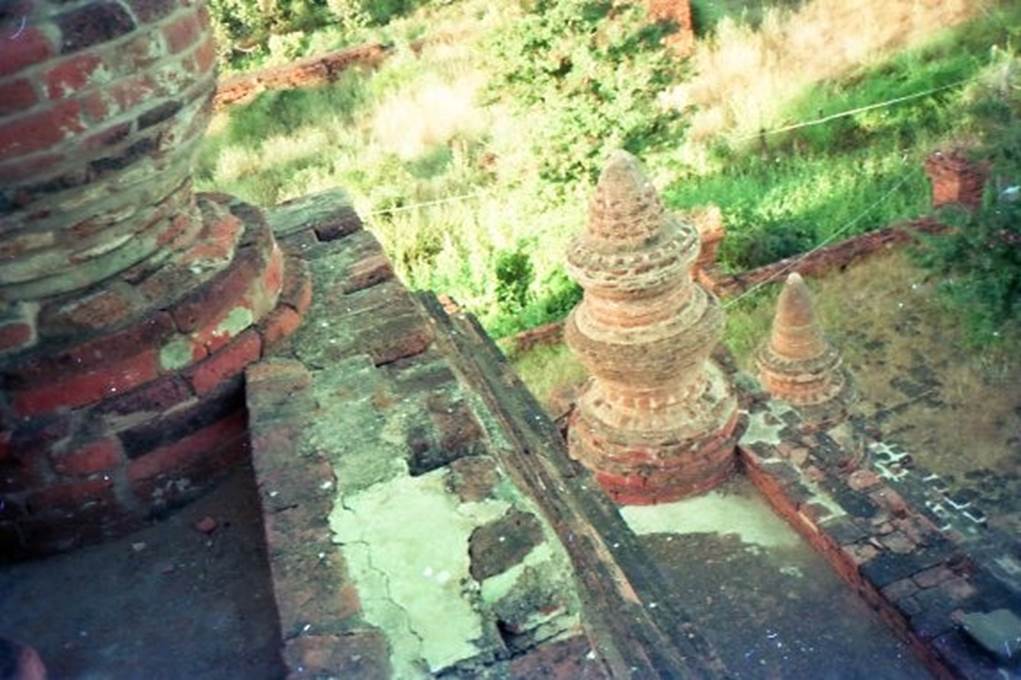
Photo by author, 1993

Photo by author, 1993
Religious City of Bagan
According to the researchers, the materials of the temples and houses varied depending on the status of the residents.
Brick was a special building material that was only allowed in Buddhist architecture. The high-ranking people live in wooden mansions. The common people lived in houses with thatched roofs and bamboo walls.
It can be inferred that this was a religious city where a clear distinction was made between the sacred and the secular in terms of architecture by visually differentiating the buildings.
The wooden or bamboo buildings of the dynasty city were probably destroyed by the Mongol invasion. As a result, the buildings that remained lost their inhabitants and the population decreased, and only brick religious buildings remain, making it difficult to imagine what the city once was.
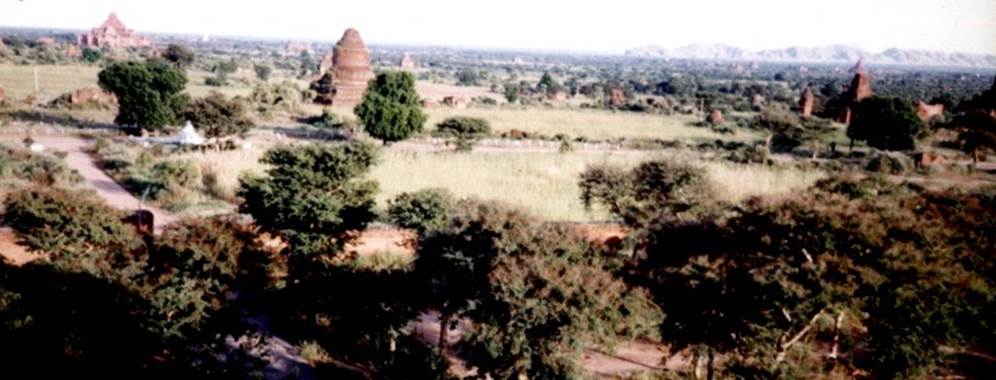
Photo by author, 1993
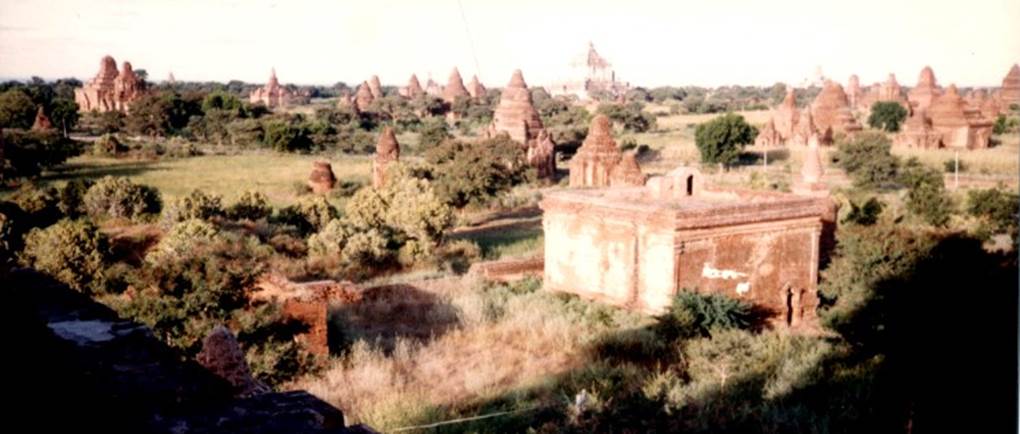
Photo by author, 1993
Photo by author, 1993
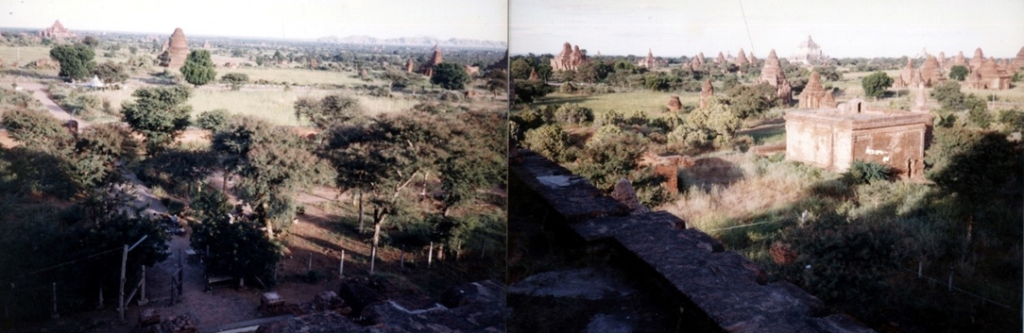
Photo by author, 1993
Irrawaddy River
After being shown around the vast Bagan ruins by our driver and tour guide, we came to a small hill on the bank of the Irrawaddy River at the southern end.
The Irrawaddy River, which originates in the Tibetan Plateau and the eastern end of the Himalayas, is 2,170 km long, almost the length of the Shinkansen train from Hakodate to Kagoshima. Its drainage basin is 410,000 square kilometers, larger than the total land area of Japan.
Riverbank without people. Water is pumped up by a pump.
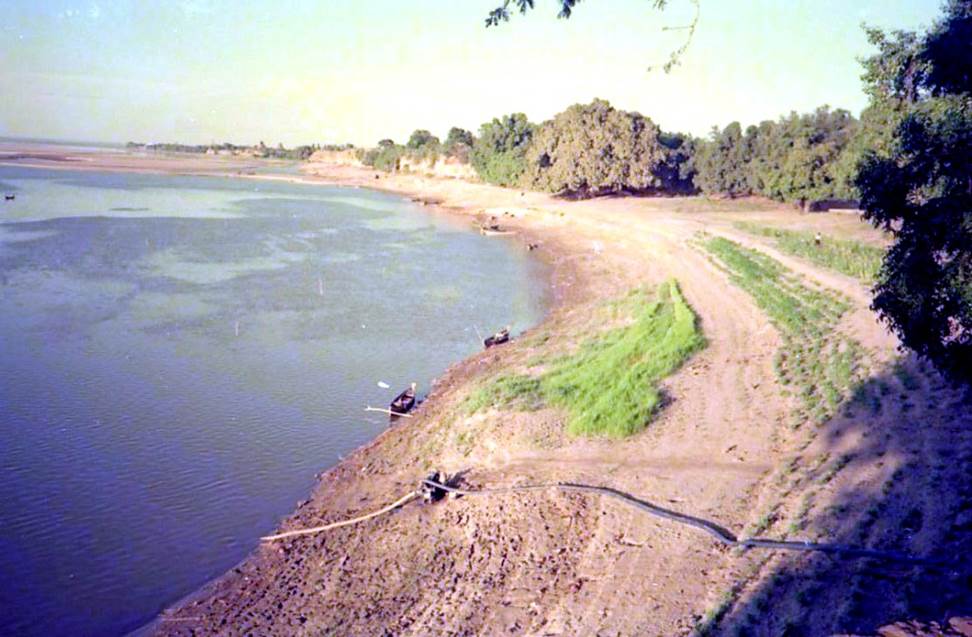
Photo by author, 1993
The Irrawaddy River is a quiet and peaceful river in the interior of Myanmar.
The water and air are clean
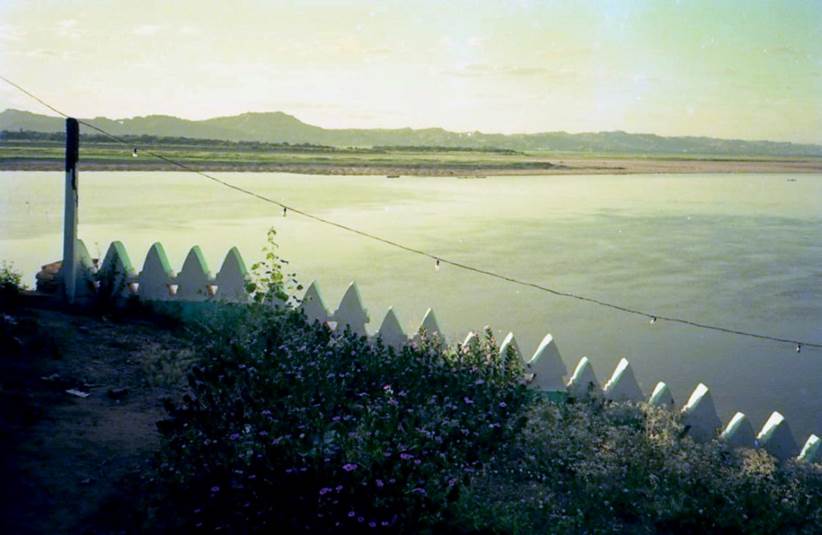
Photo by author, 1993
The umbrella on top of the Buddha statue has a unique design.
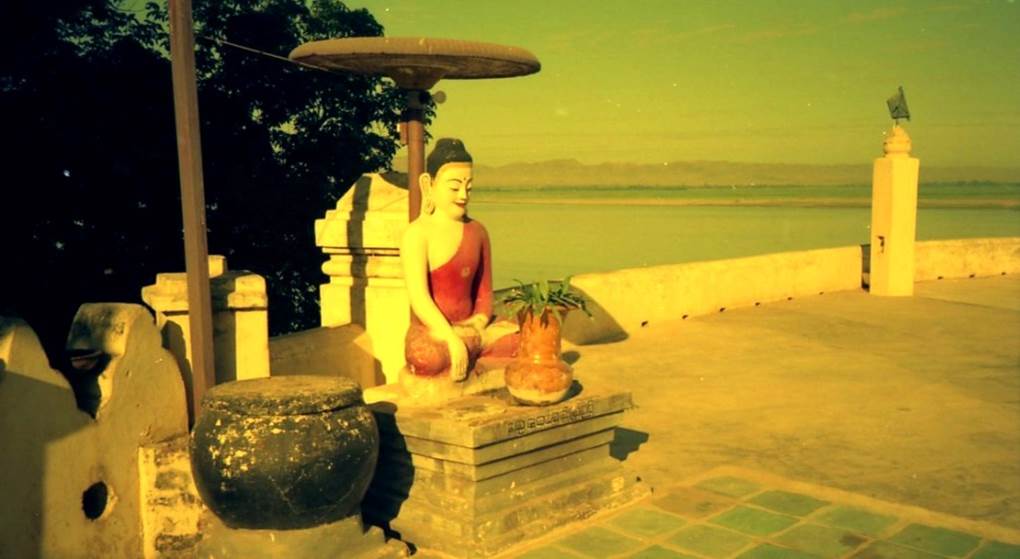
Photo by author, 1993
Lawkananda Pagoda is faintly visible in the background. When I came to the front yard of this temple at the southern end, for the first time, I saw a large crowd of local Myanmar people gathering in Bagan. In the vast area of the Bagan ruins, there were almost no foreigners or local tourists.
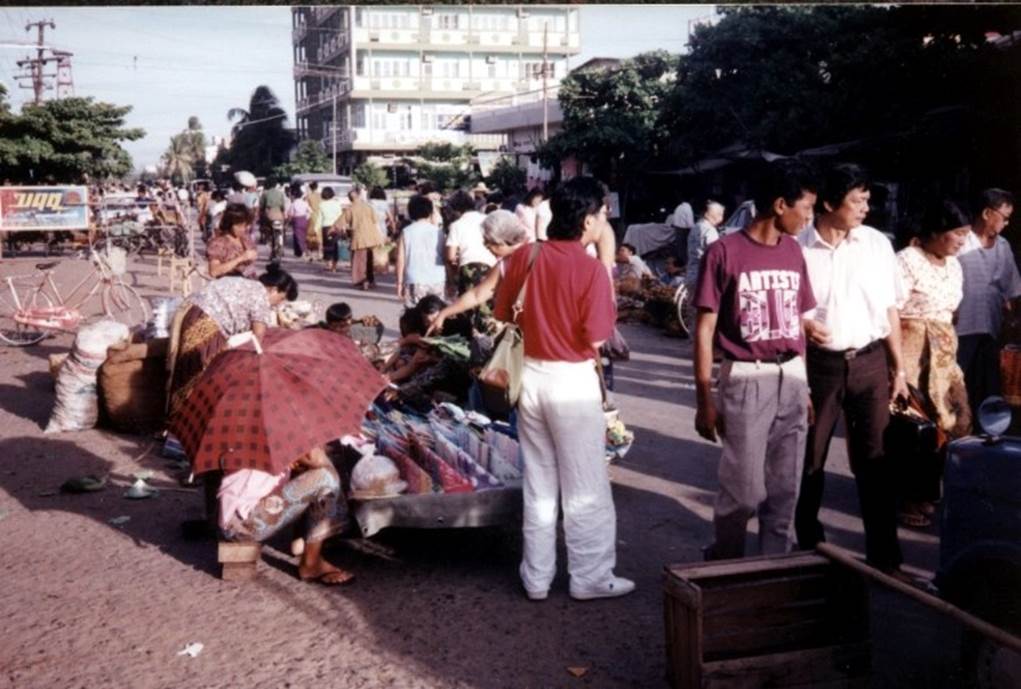
Photo by author, 1993