JAP | ENG
Myanmar Travelogue 1993
#2/5
Mandalay
Inland in Maynmar
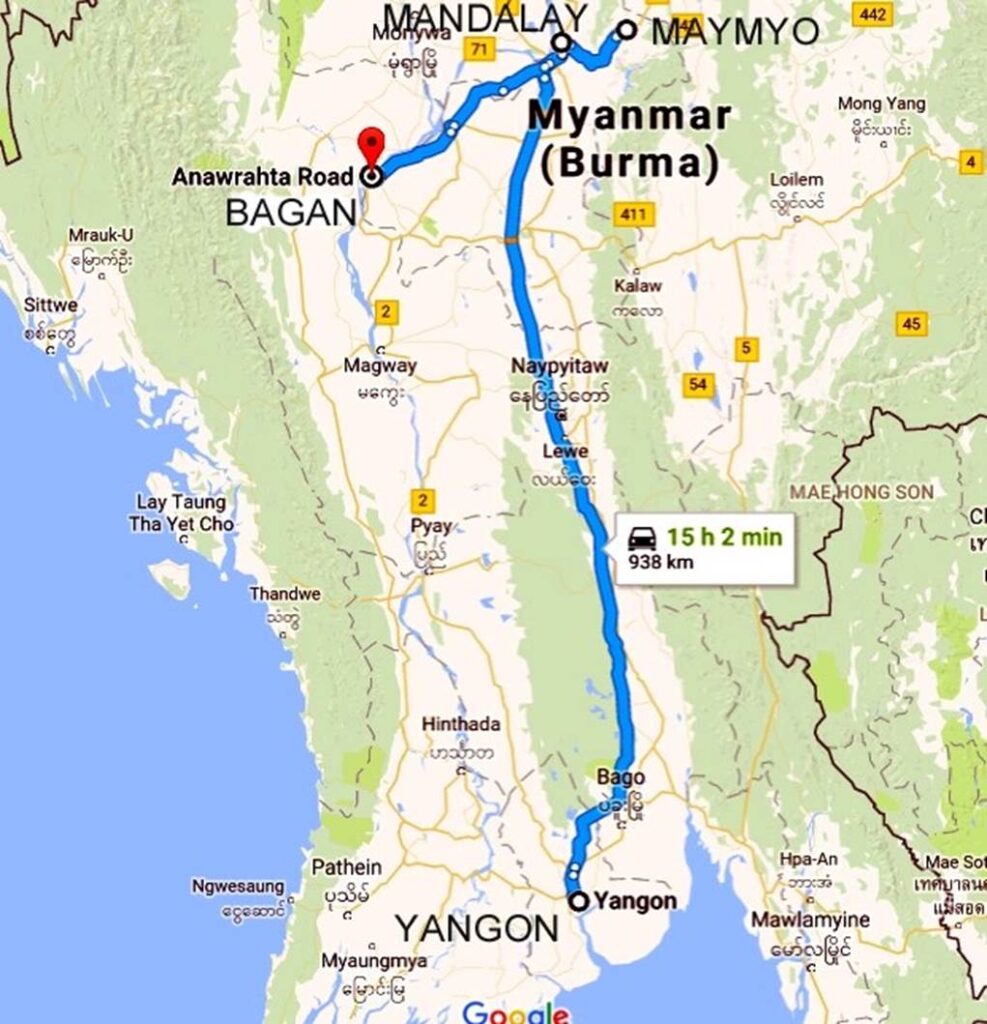
In October 1993, I made a plan to go to Mandalay, Bagan, and Maymyo in central Myanmar, which is more than 1,500 kilo meters round trip by land, with a group of colleagues who engage a hotel project in Yangon, Myanmar.
Gasoline is rationed
At that time, Myanmar was in the midst of sanctions from the international community and was in a state of semi-isolation. As a result, there was an extreme shortage of oil, and gasoline for cars was rationed.
I couldn’t believe my ears when I heard that there were no refueling facilities along the road between Yangon, Mandalay, and Bagan.
With only a drum of gasoline
The solution was as follows.
The cars will travel in a convoy of two vehicles, a sedan and a van.
Two drums of gasoline large enough for a round trip would be loaded onto the rear of the station wagon, and the two cars would be refueled as needed along the way, making the round trip a total of 3,000 km, a journey fraught with danger.
There only other means of transportation between the country’s two largest cities, Yangon and Mandalay, by vintage planes or 19th-century railways, but considering the inconvenience of after arriving in Mandalay, we had no choice but to rely on the car.
Our choice was to load two drums of gasoline and take on an unprecedented experience that was full of danger.
The daughter of a local government official and her boyfriend joined the trip, and they collected gasoline coupons, and the fuel rationing problem was solved. They drove a sedan, and we foreigners drove a station wagon with gasoline drums.
Pure white pagoda bathed in the morning sun
We left Yangon close to midnight. We estimated to arrive in Mandalay the following afternoon.
By the time the sun dawned the next morning, the car was driving across a green plain surrounded by two mountain ranges.
The morning sun rose and I could clearly see a white pagoda in the distance.
“A pure white pagoda bathed in the morning sun from the side on a green plain!”
this scene was beautiful enough to stimulate people’s sense of beauty. The shape of the pagoda is calculated and modeled so that it looks most beautiful when there is sunlight from the side.
Hotels in Mandalay
Arrived in Mandalay in the afternoon.
Mandalay’s former royal palace is surrounded by a magnificent moat.
We stayed at a guesthouse like the one in the photo below at the end of the moat on the south side.
During the colonial period, it was probably the residence of a high-ranking British official.
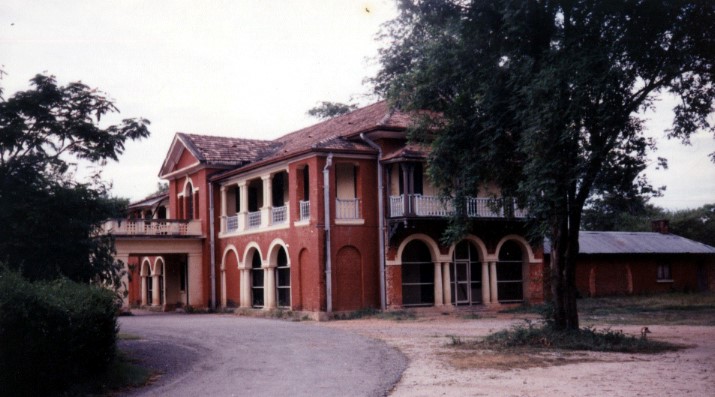
Hotel is Mandalay, Photo by author, 1993
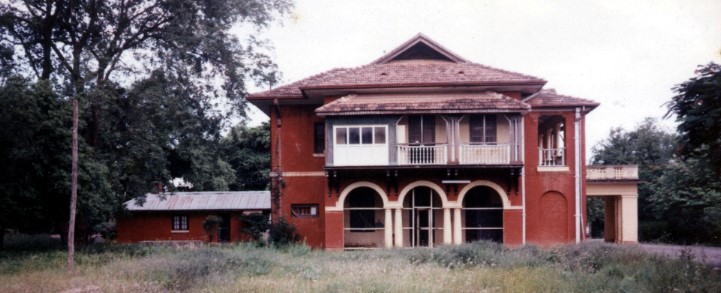
Hotel is Mandalay, Photo by author, 1993
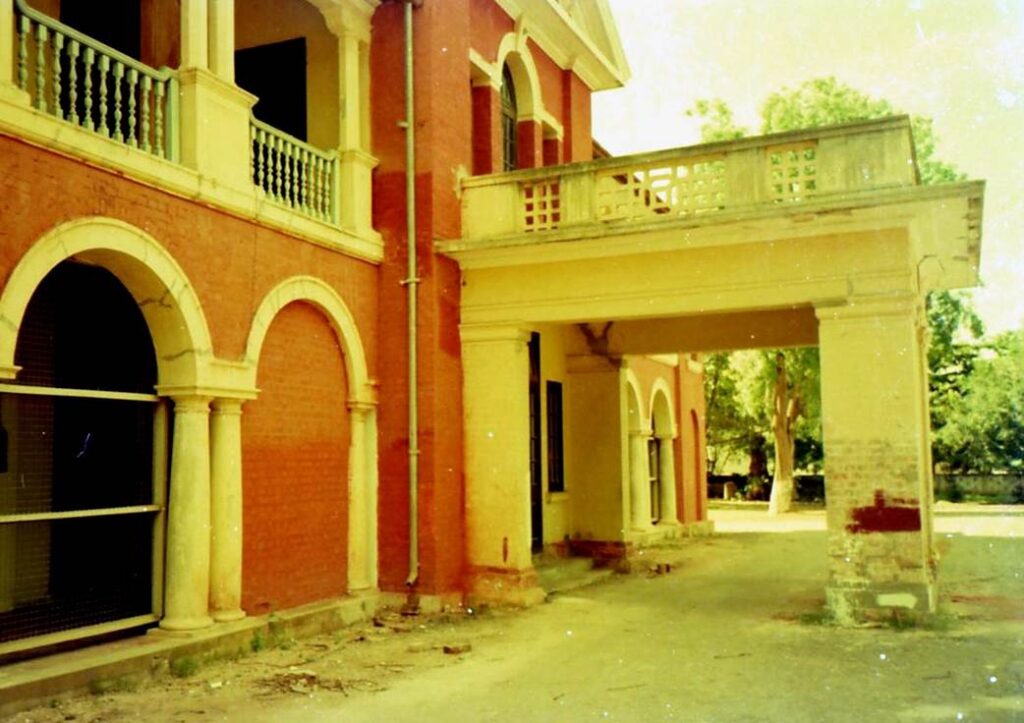
Hotel is Mandalay, Photo by author, 1993
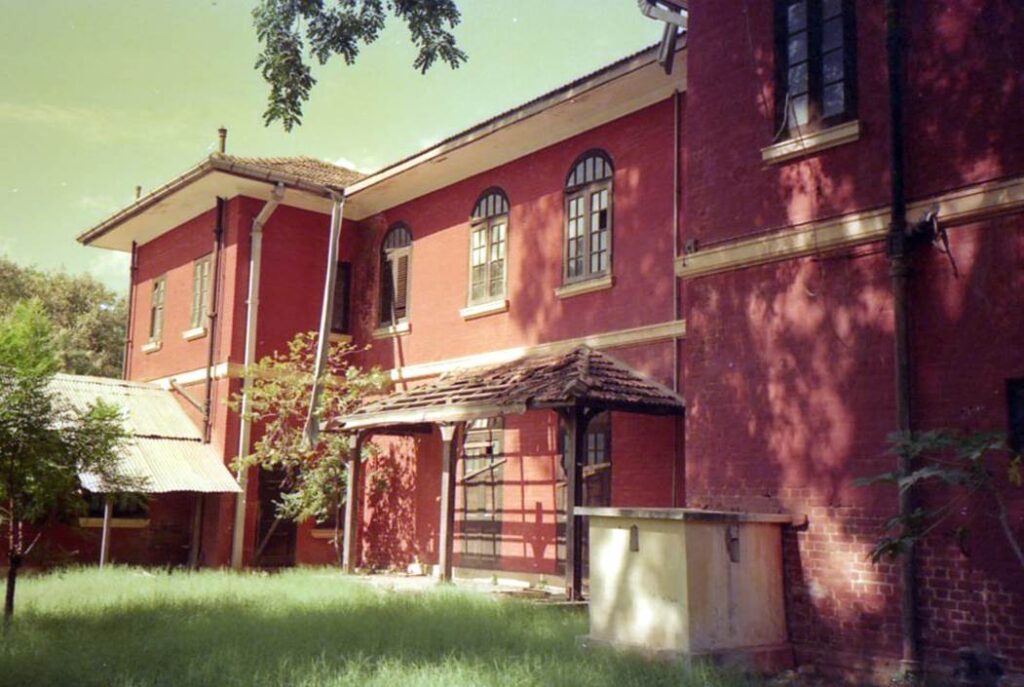
Hotel is Mandalay, Photo by author, 1993
The corbels under the balcony.
Fine solid teak wood is generously used.
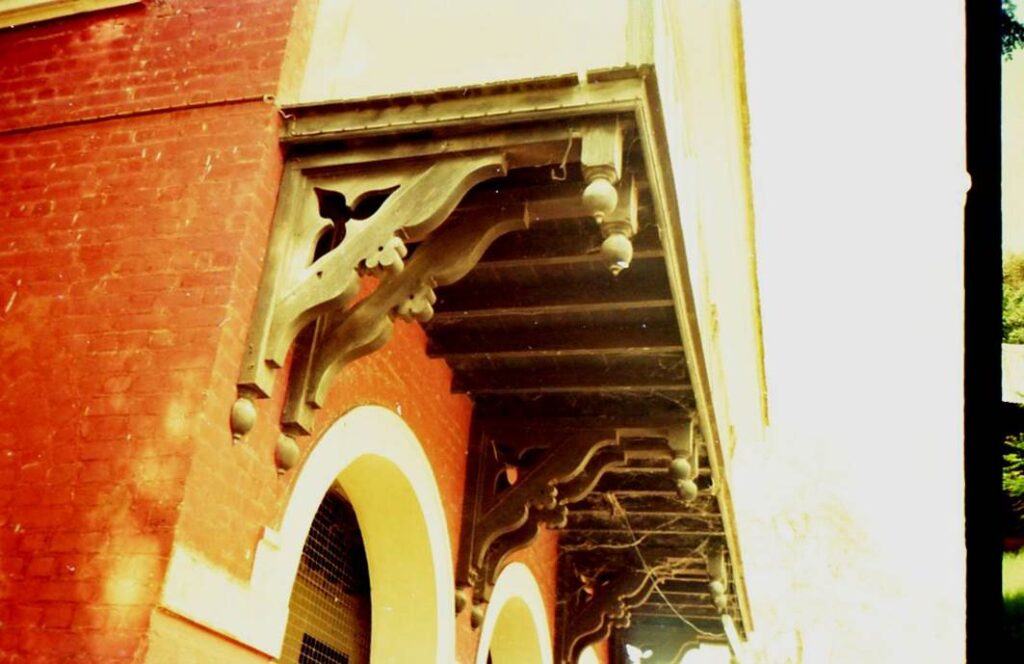
Hotel is Mandalay, Photo by author, 1993
Hotel’s courtyard
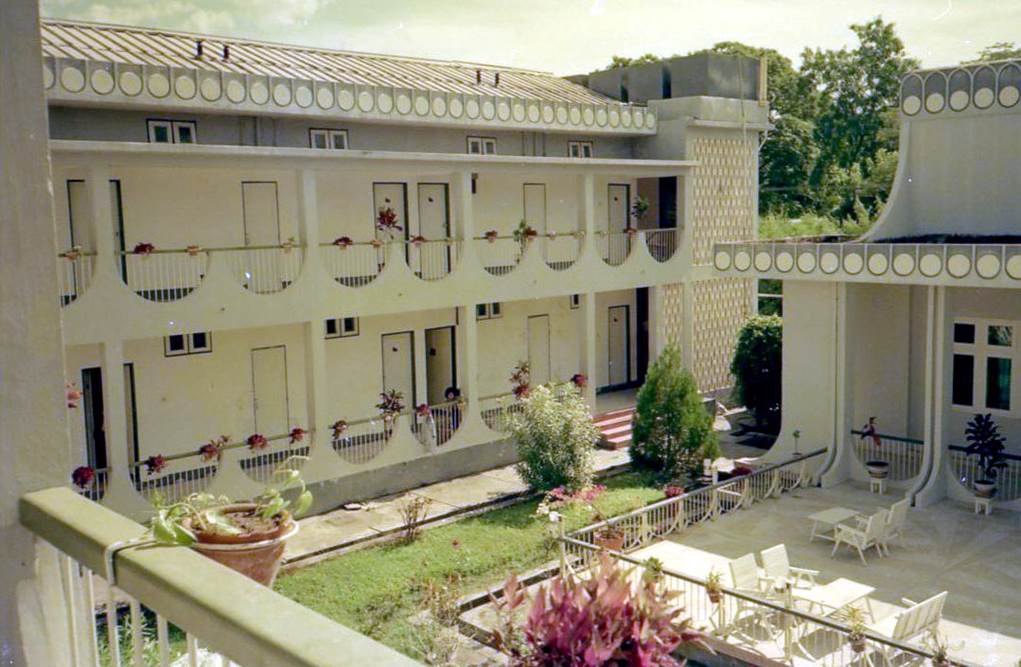
Hotel is Mandalay, Photo by author, 1993
There were not many hotel guests, and the reception and lobby were deserted.
The old-fashioned TV was a nice accent.
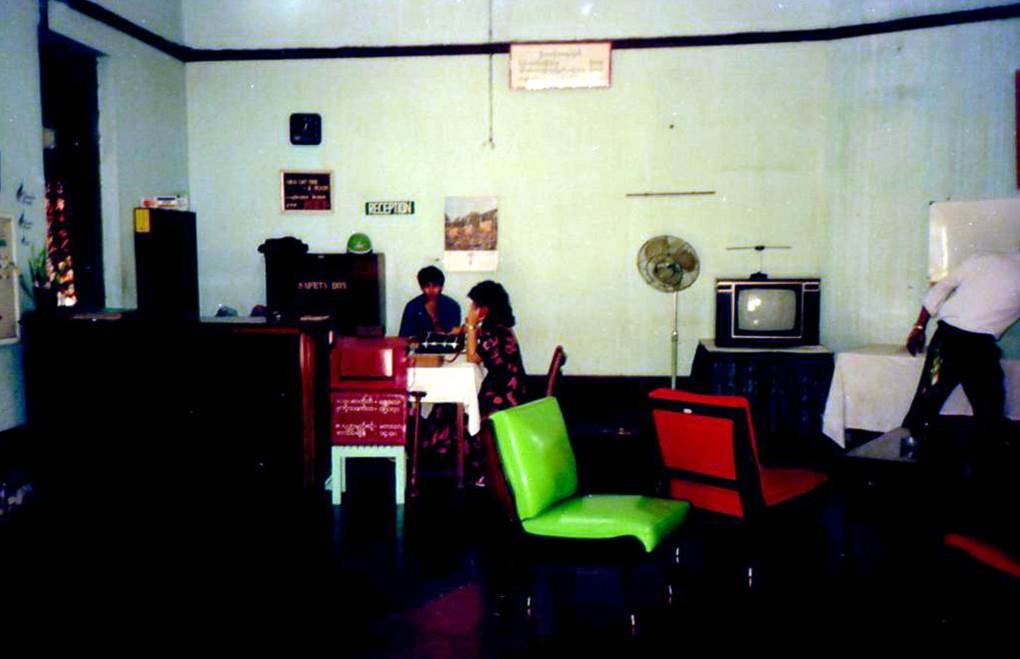
Hotel is Mandalay, Photo by author, 1993
Wooden staircase. Teak wood is used in abundance.
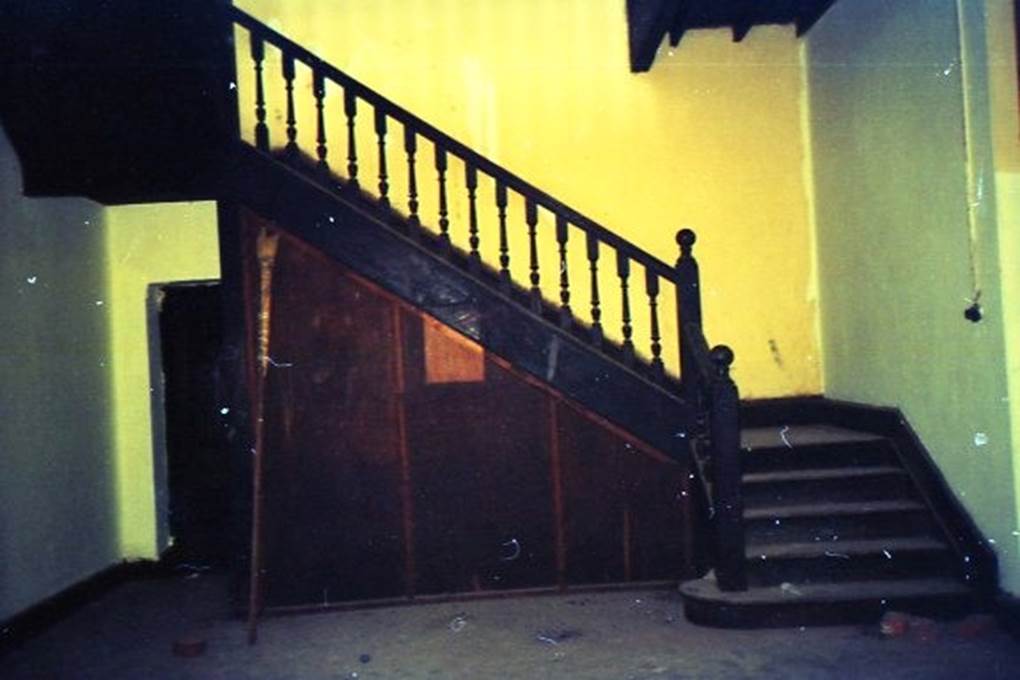
Hotel is Mandalay, Photo by author, 1993
On the wall of the guest room, there is an air conditioner with integrated indoor and outdoor unit. It’s a little noisy, but it’s better than nothing.
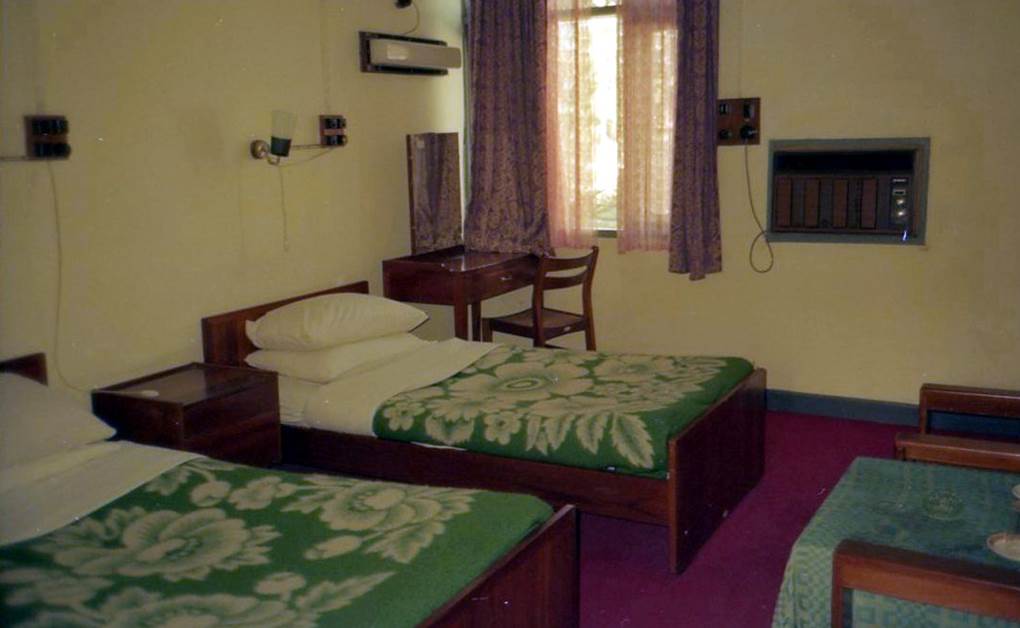
Hotel is Mandalay, Photo by author, 1993
Outside the hotel grounds, there are roads, a moat, and brown walls of the royal palace.
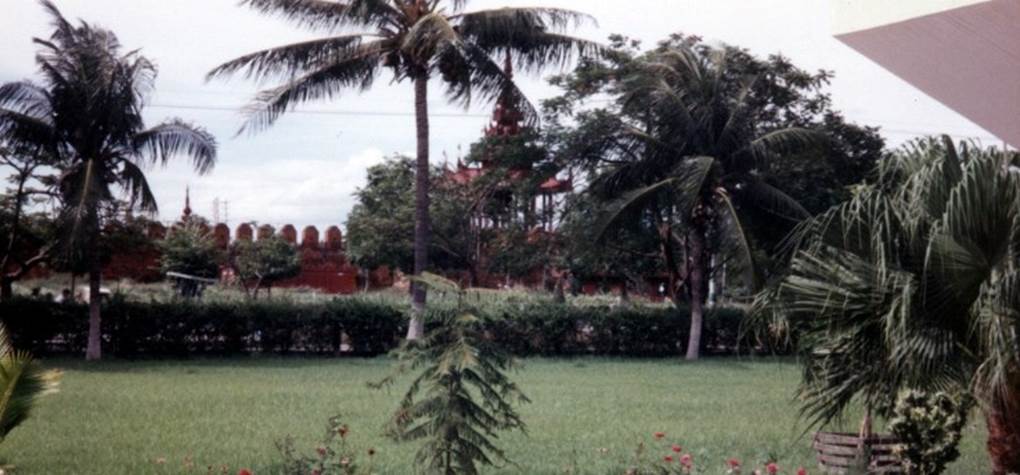
Hotel is Mandalay, Photo by author, 1993
Mandalay Royal Palace
Mandalay is located in the center of Burma, about 700 km north of Yangon.
It is a dry plain in the middle reaches of the Irrawaddy River, including the Bagan region.
Mandalay was the capital of the Burmese dynasty for a short time (1860~1885) until it was invaded by the Commonwealth forces.
In the third Anglo-Burmese war in 1885, the Burmese lost and became a province of British India, which remained under British rule until the occupation of the Japan Army in 1937.
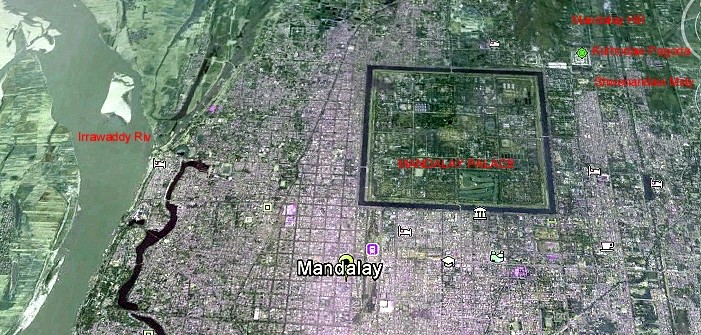
Mandalay Palace and Downtown from Google Maps
During World War II, Japan invaded to cut off the supply route from Burma to China, drove out the British, occupied Mandalay, and took control of the royal palace.
Prior to the British reoccupation of Mandalay in March 1945, the palace was heavily bombed, and the teak royal palace architecture and valuable cultural treasures were completely destroyed.
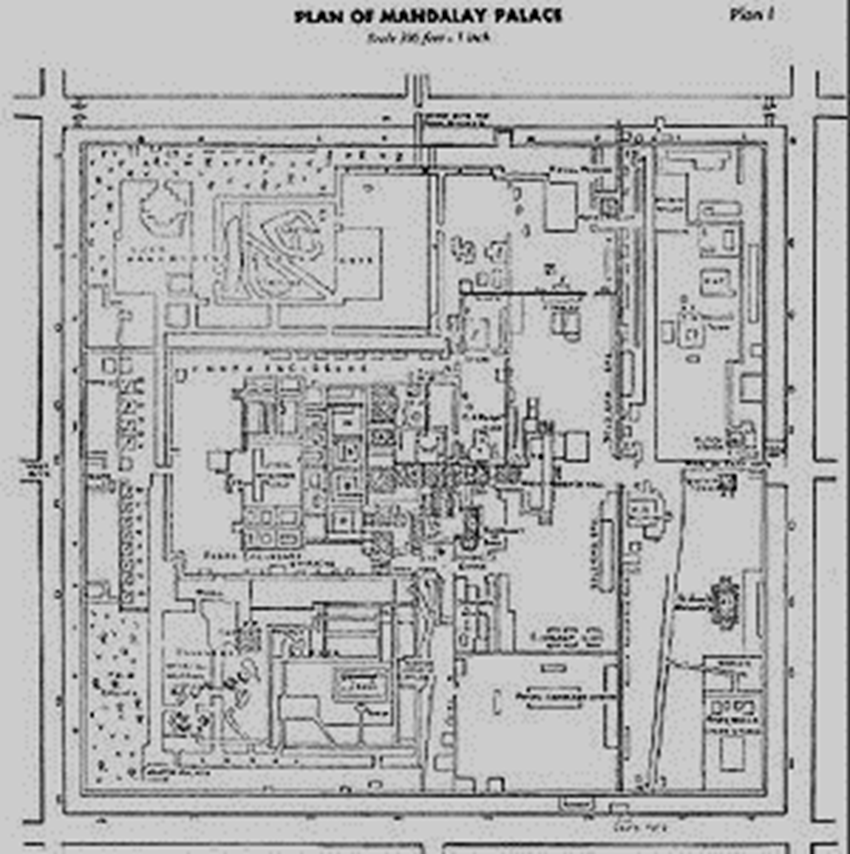
Old floor plan of the Mandalay Royal Palace
Reconstructed replica of the Royal Palace
In the 1980s, more than 30 years after Myanmar’s independence, a replica of the destroyed royal palace was recreated.
The 1993 photo below shows the new palace about 10 years after its reconstruction. It must have been a difficult reconstruction task, but we got to see a replica palace that had lost its depth of history.
Replica of the former Mandalay Royal Palace
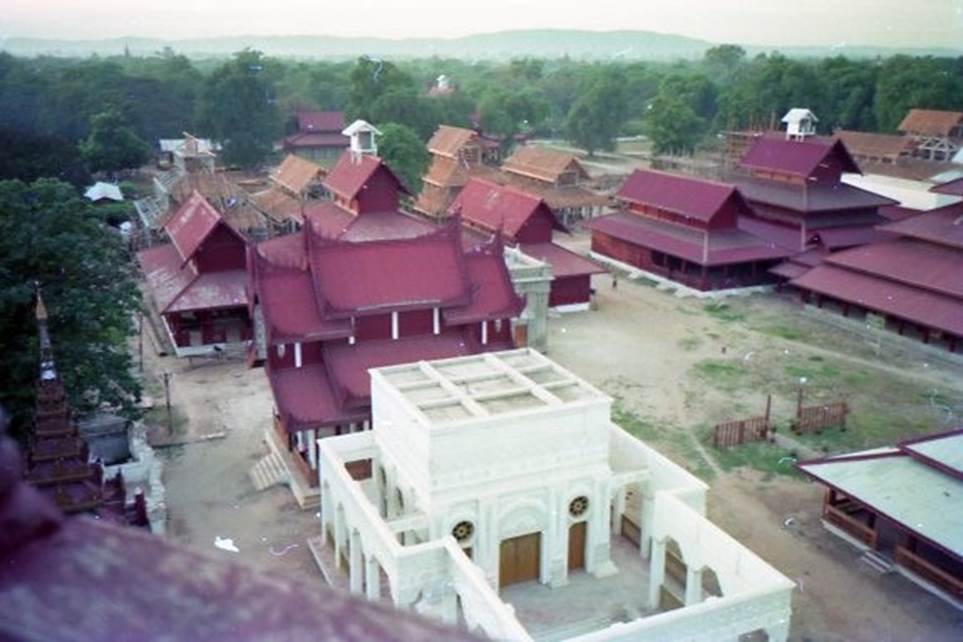
Photo by author, 1993
The heart of the Royal Palace. Mandalay Hill in the background.
Two famous pagodas can be seen on the right side of the hill foot.
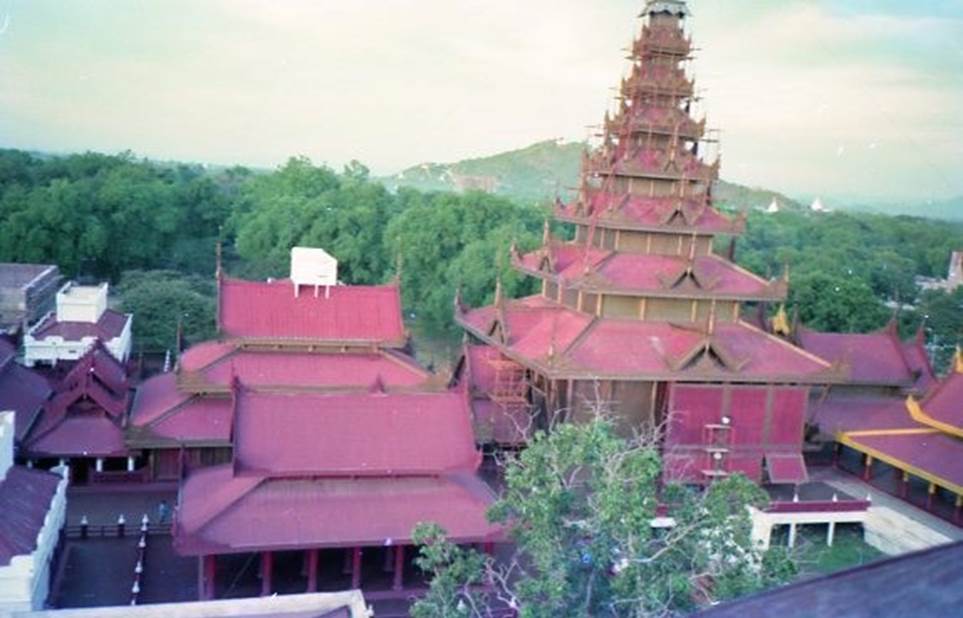
Replica of the former Mandalay Royal Palace,
Photo by author, 1993
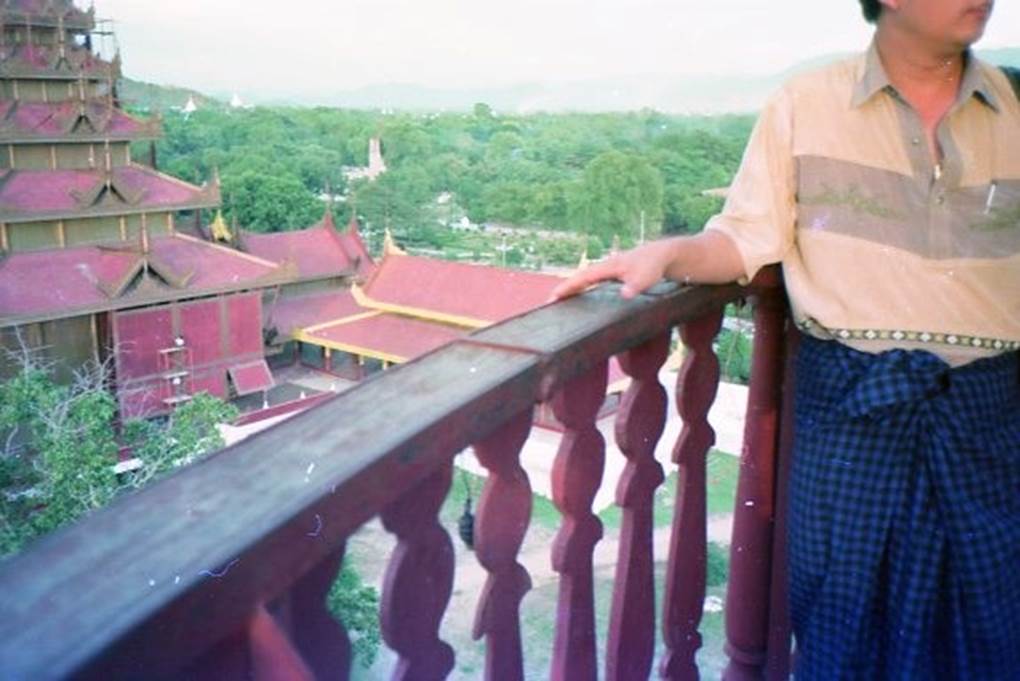
Replica of the former Mandalay Royal Palace
Photo by author, 1993
The daughter of a high-ranking Myanmar government official and her boyfriend who accompanied her on this trip to Mandalay and Bagan.
Other than our tourist group, there are no foreigners or Myanmar tourists.
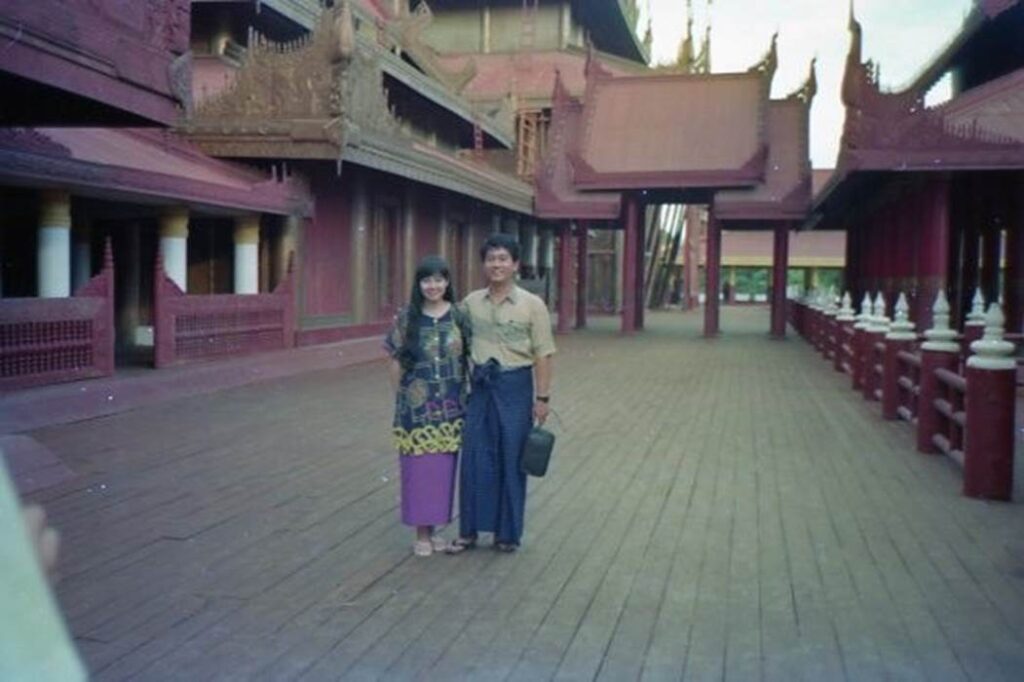
Replica of the former Mandalay Royal Palace,
Photo by author, 1993
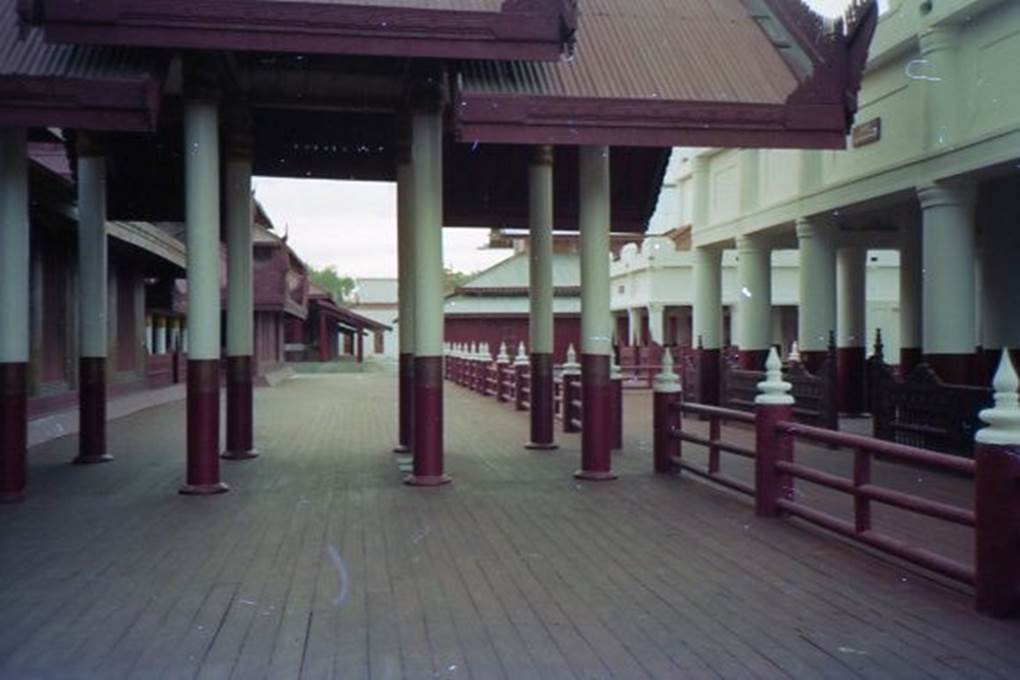
Replica of the former Mandalay Royal Palace,
Photo by author, 1993
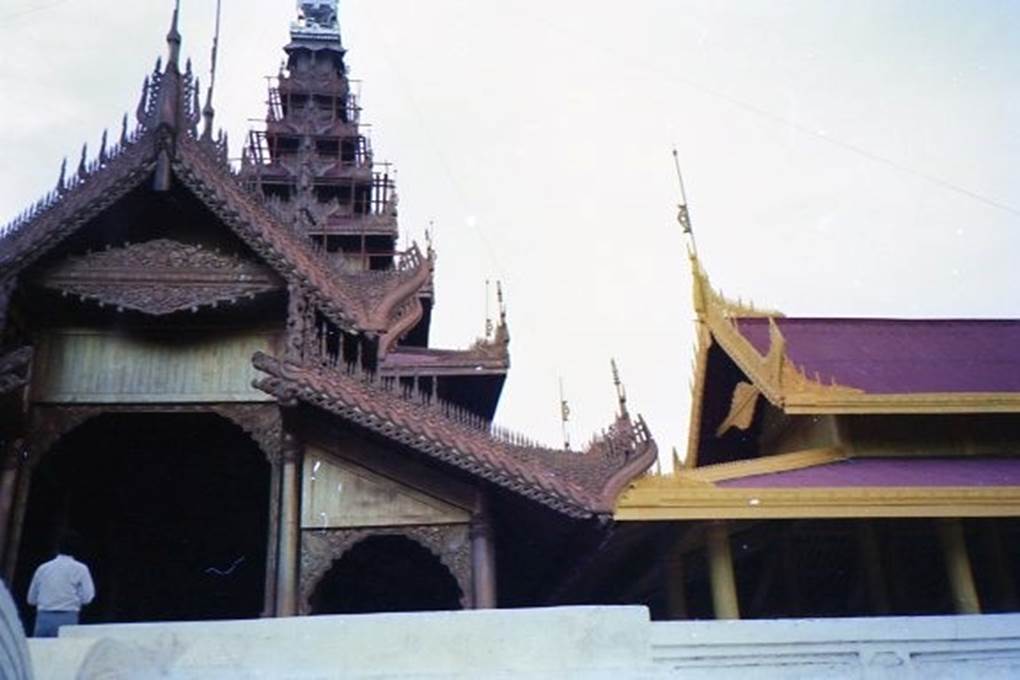
Replica of the former Mandalay Royal Palace,
Photo by author, 1993
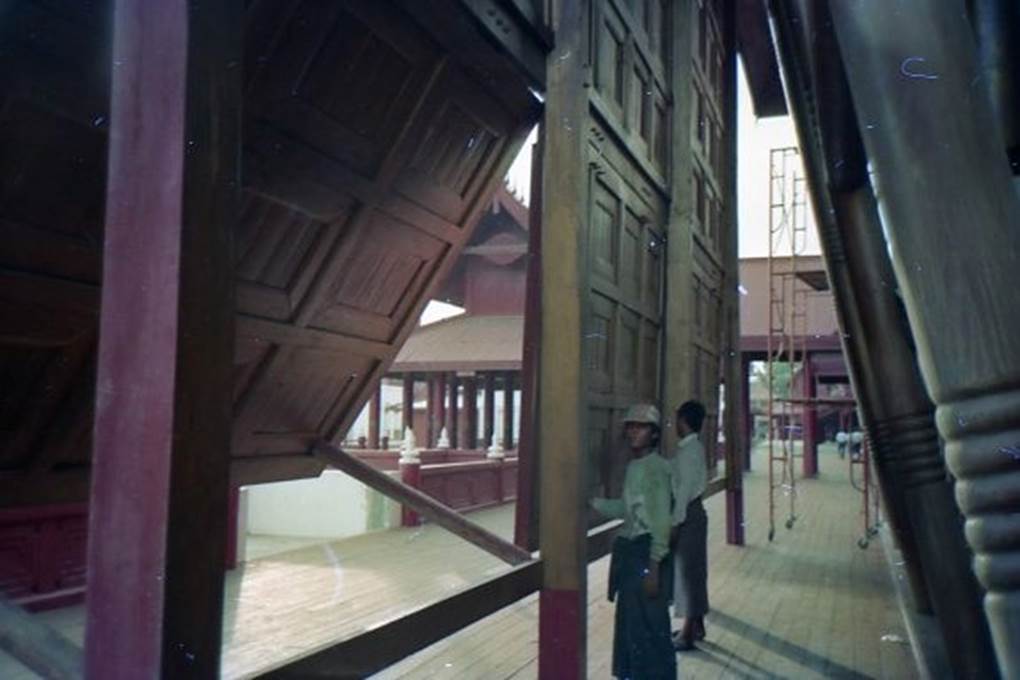
Replica of the former Mandalay Royal Palace,
Photo by author, 1993
Independent single pillar
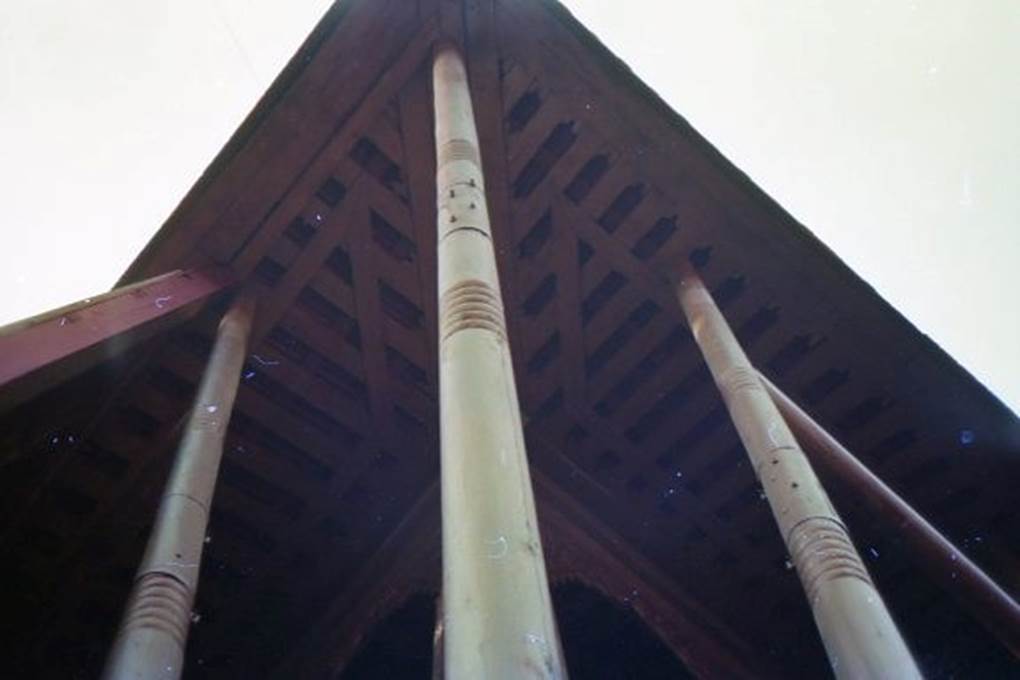
Replica of the former Mandalay Royal Palace,
Photo by author, 1993
Carved design around the door frame.
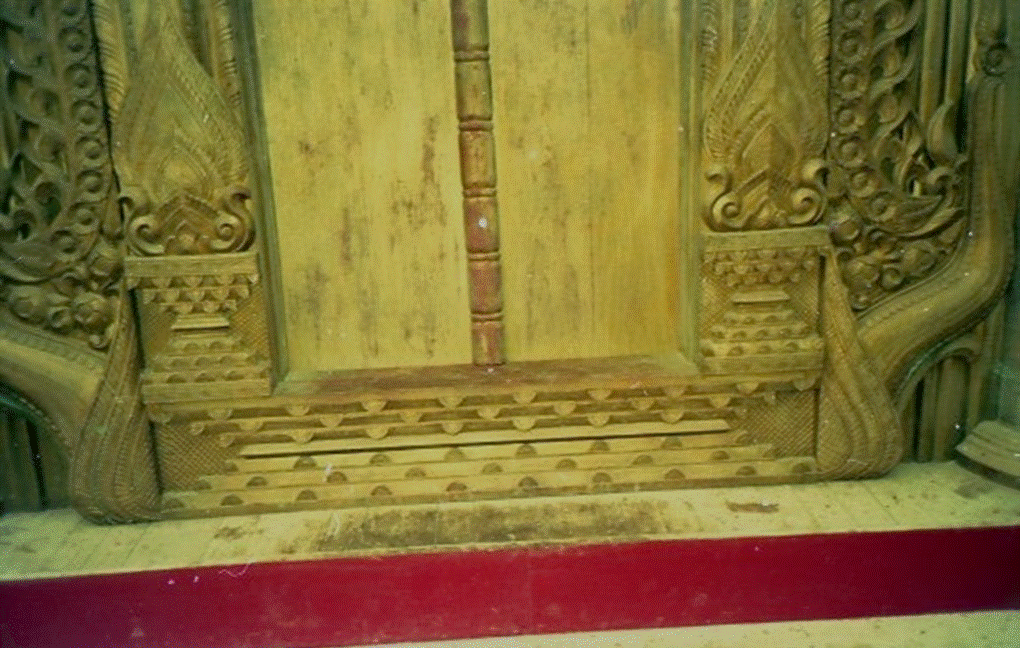
Replica of the former Mandalay Royal Palace,
Photo by author, 1993
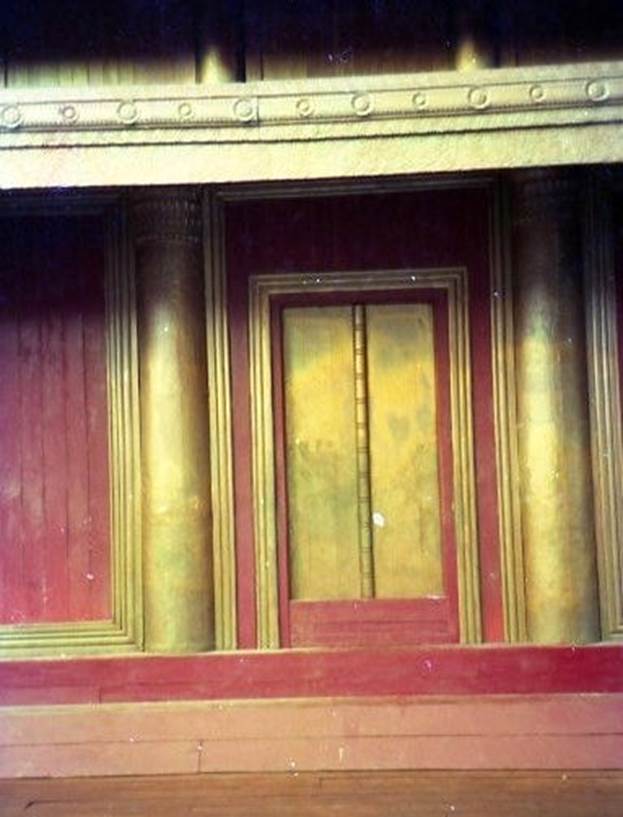
Replica of the former Mandalay Royal Palace,
Photo by author, 1993
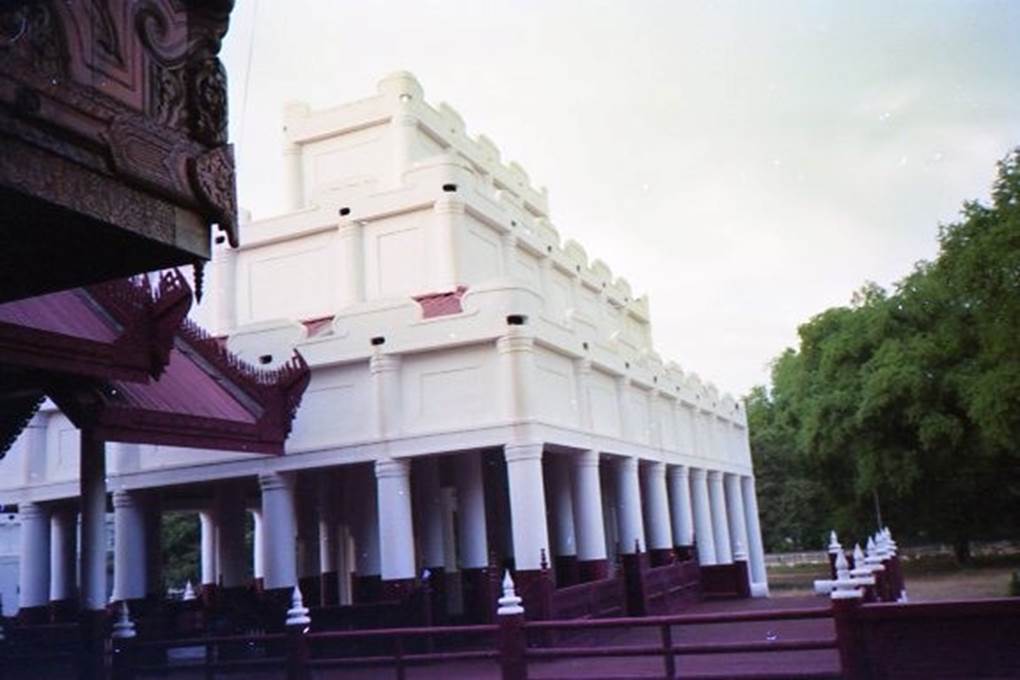
Former Mandalay Royal Palace,
Photo by author, 1993
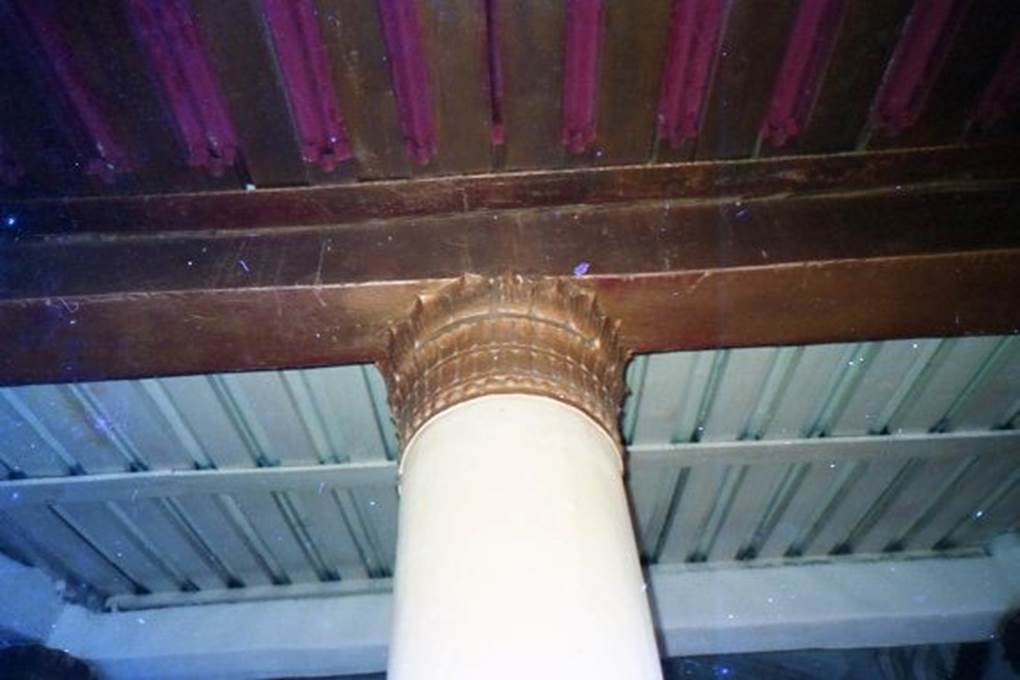
Former Mandalay Royal Palace,
Photo by author, 1993
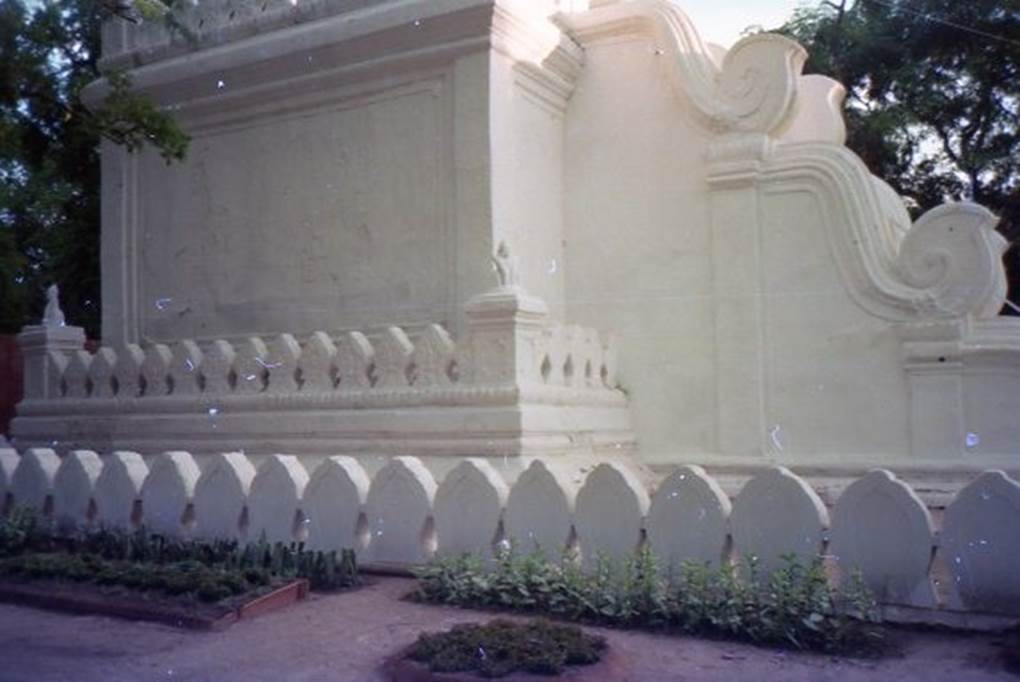
Former Mandalay Royal Palace,
Photo by author, 1993
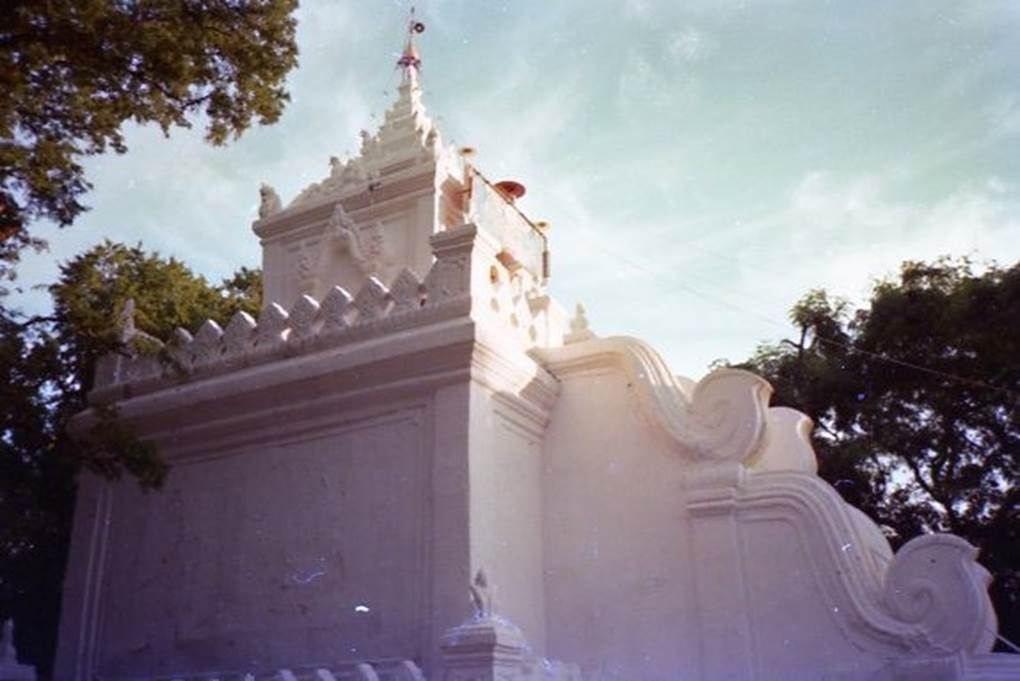
Former Mandalay Royal Palace,
Photo by author, 1993
Mandalay Hill
It is a small hill 203 meters above sea level, and it is said that the Mandalay Royal Palace and the urban area were formed from this hill.
Mandalay Hill and its surroundings have been a sacred site of Burmese Buddhism and have welcomed many pilgrims for two centuries.
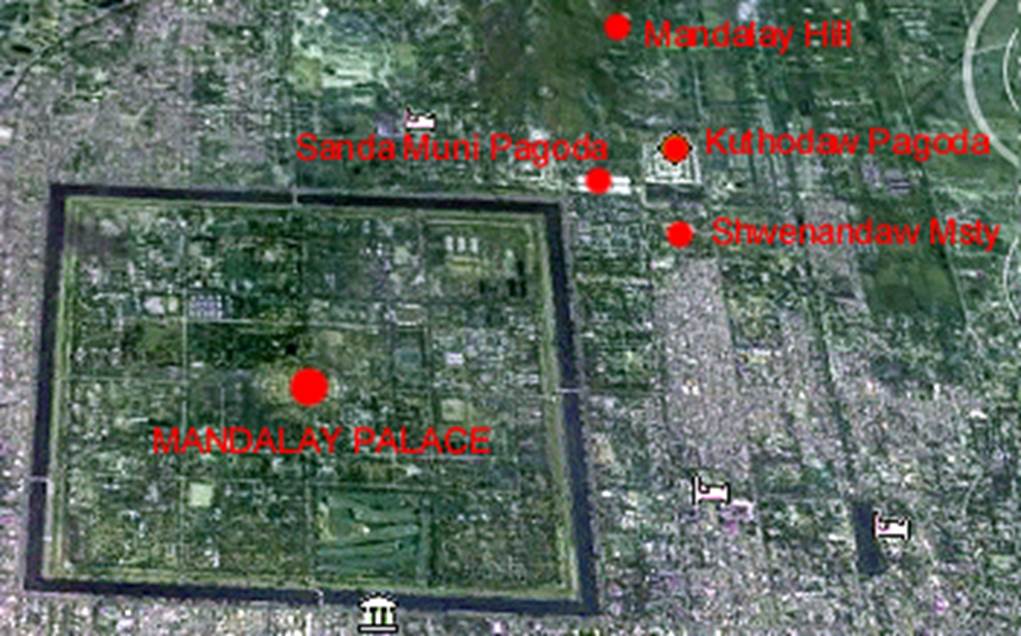
Mandalay Royal Palace and Mandalay Hill
Three Religious Buildings
It was built at the foot of Mandalay Hill, 236 meters above sea level .
On the right is Kuthodaw Pagoda, on the left is Sanda Muni Pagoda, and in the background on the left is Shwenandaw Monastry.
The green trees in the background are the Mandalay Palace inside the moat. In the distance is the city of Mandalay.

Two pagodas
On the right is Kuthodaw Pagoda and on the left is Sanda Muni Pagoda.
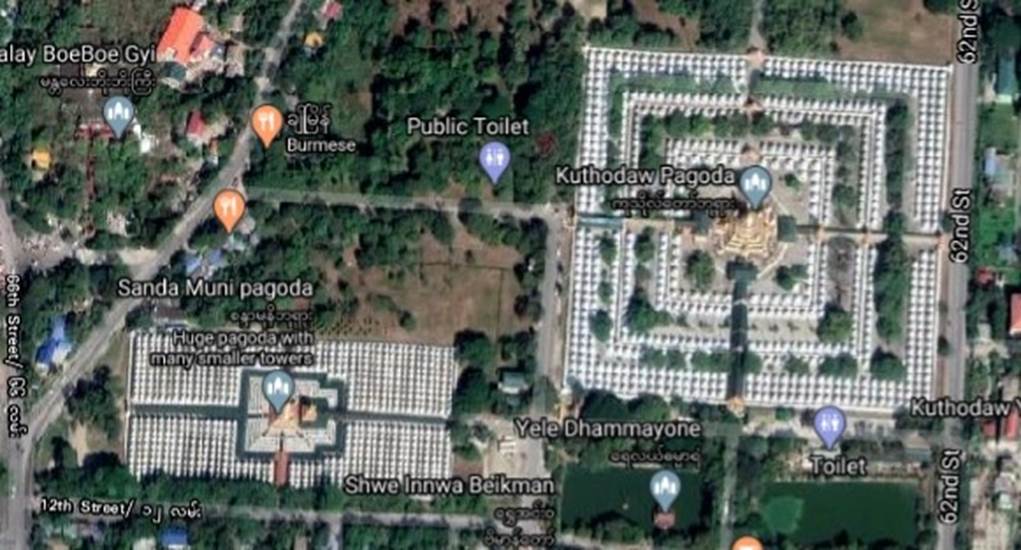
Kuthodaw Pagoda
The pagoda, built on a platform, is 57 meters high.
It is said to have been modelled after the Shwezigon Pagoda in Bagan.
After the British invasion, the area, including the Mandalay Palace, was off-limits to Burmese people. In the meantime, the precious metals of the national treasure were looted by the occupying forces.
Sanda Muni Pagoda
It is said that the pagoda was built in memory of the family member of the royal family who was assassinated in 1874.
Shwenandaw Monastry
This monastery was relocated from the Mandalay Palace in 1878.
As a result, it survived the fire caused by the bombing of the palace.
This building is the only surviving original heritage from the old dynasty.
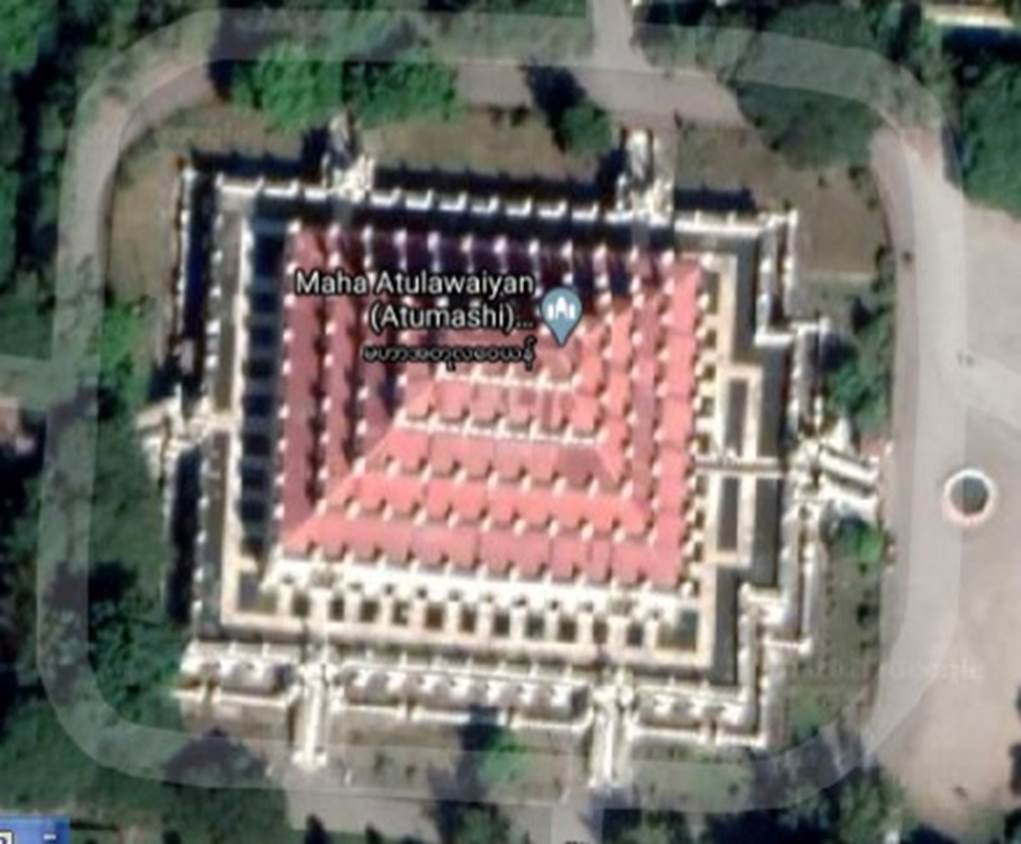
A view of Mandalay’s city
Even in the city, there are village-style neighborhoods that retain the traditional characteristics of the region.
There is a workshop in front of the house, where woodworking and metalwork are done.
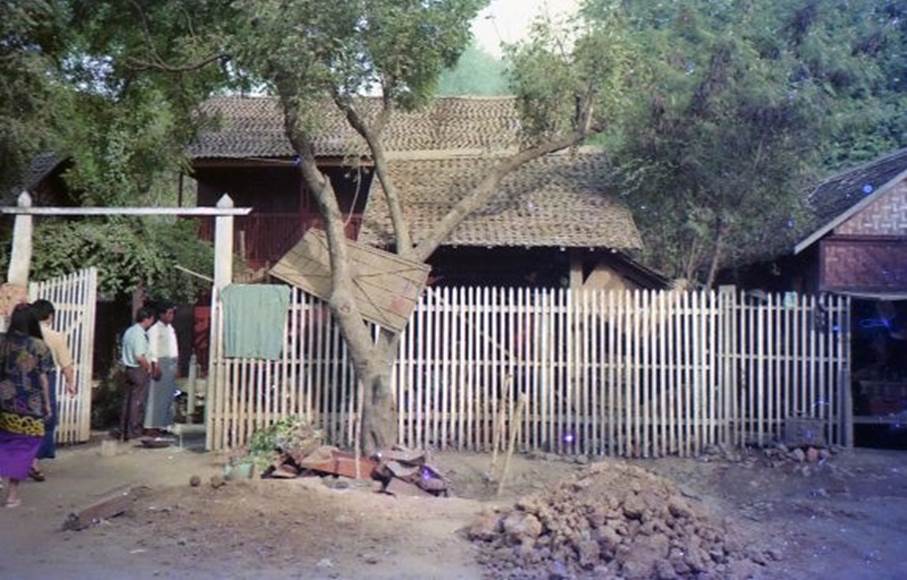
Photo by author, 1993
Wooden shops and bamboo fences blend in well with the surrounding nature, making the neighbourhood a pleasant place to walk.
In some places, teak logs are scattered on the roadside. In this way, it is dried naturally. Although it is a valuable building material, it does not seem to be in danger of being stolen. From this, it can be seen that the autonomy and security of the neighborhood are well maintained. It is a peaceful and sustainable residential area.
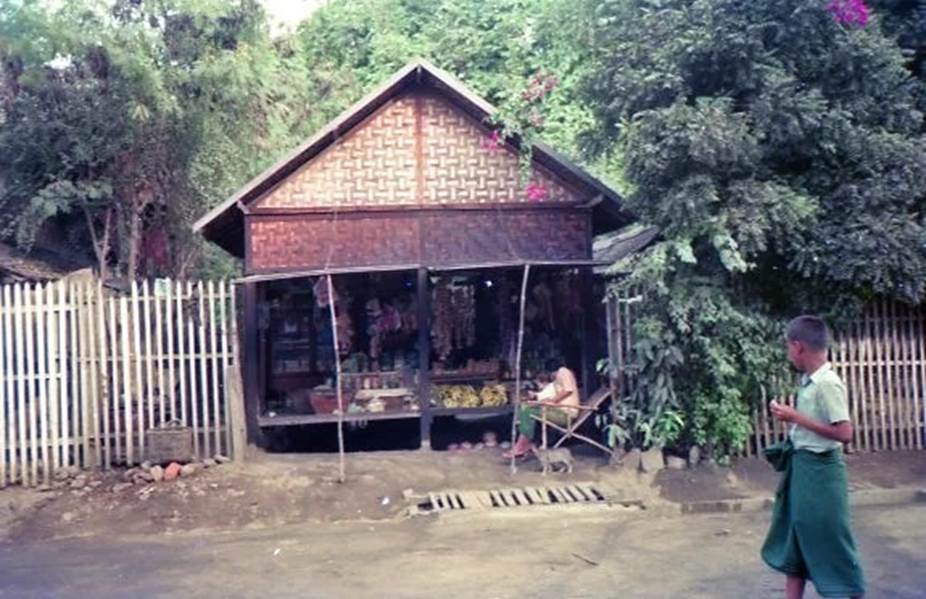
Photo by author, 1993
A young metalworker is engaged in traditional metal carving.
In this way, traditional skills are passed down. I was able to tour the workplace.
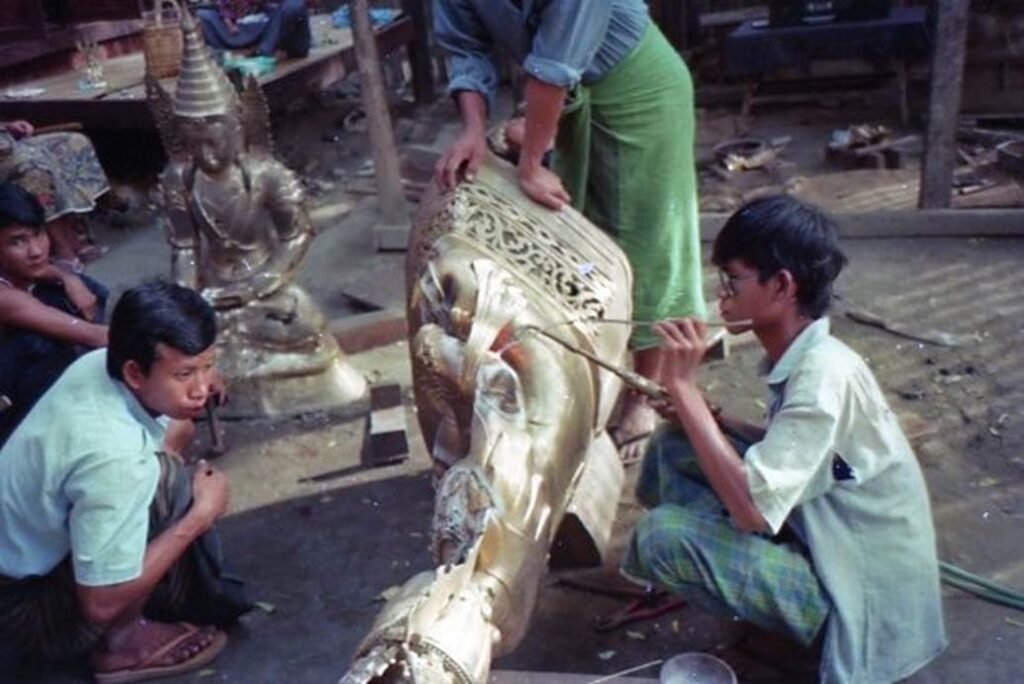
Photo by author, 1993
The finished golden Buddha statue is placed on the dirt floor. It’s a work of art.
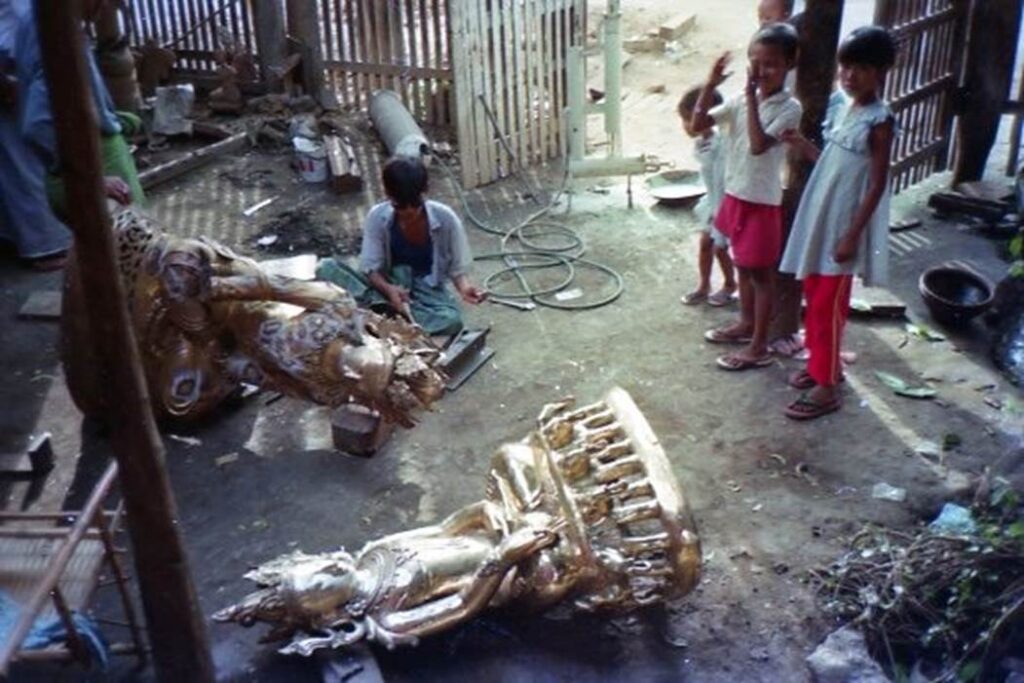
Photo by author, 1993
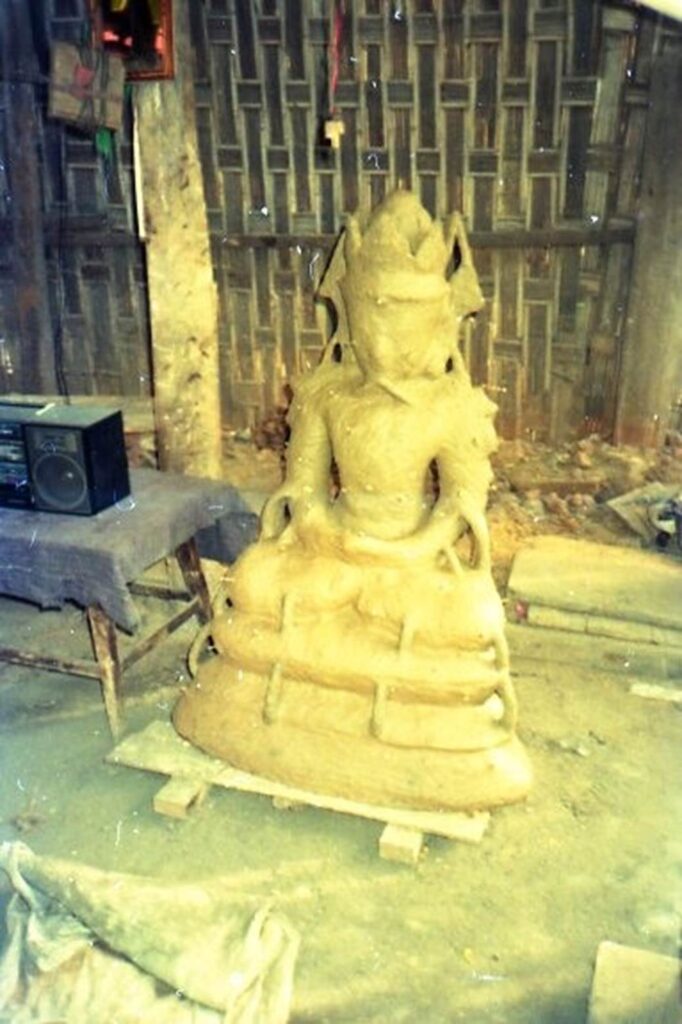
Photo by author, 1993
From Mandalay, to northeast highlands
Maymyo
A 15-kilometer drive east of Mandalay City on the flatlands will take you to the foot of the Shan Plateau.
From this point, we climb a winding road to Maymyo, which is 1,000 meters above sea level.
The town was a colonial summer resort for the British and has a famous botanical garden. The purpose of the visit was to visit here.
The distance is about 70 km from Mandalay City.
At the top of the winding road, we came across a monastery, so we decided to take a rest there. The view of the world below was amazing, so we sat on a bench and enjoyed the view.
Risk of losing my Passport !
From there, I drove back in my car, and about three minutes later, I realized that I had left my bag on the bench.
Inside the bag are passport, credit cards, airline tickets, wallets, etc. I hurriedly turned back. But there was no longer a bag on the bench.
To reissue my passport, I will have to appear at the Japan embassy in Yangon, and the procedure will take a considerable number of days. I will have to stay in Myanmar for at least 1-2 weeks, which will affect my work schedules.
At times like these, my mind goes blank and I can’t think calmly.
I asked some monks in the monastery, and they all said they had never seen such a bag.
My travel companion, a friend of mine who is a Malaysian national, saw that there was a bag hidden somewhere in the monastery.
In the course of the negotiations, it became clear that the monks had to exchange cash for the condition that they hand over their bags.
As I did so, my bag came out of the pedestal of the Buddha statue.
I never imagined that a Buddhist monk would behave in such a way.
This was the third time I had been in danger of losing my passport, including two in Europe. I really need to reflect on this!
Unification of Republic of Myanmar
Myanmar is a multi-ethnic country.
Sixty percent of the population is ethnic Burmese, who live on the fertile plains from Mandalay to Yangon.
The plains are surrounded by plateaus and mountainous terrain, surrounded by ethnic minorities such as the Karen, Kachin, Kayah, Rakhine, Chin, Hmong, Rohingya, Shan and Chinese Kokang in the northeast.
Many ethnic minorities adhere to different religions, such as Christianity and Islam. Each ethnic minority has its own militia and a semi-independent spirit, making it difficult for the federal government to govern them.
Souvenirs purchased at Yangon’s Central Market.
The names of 10 tribes in Myanmar are stamped on the platform below.

While Japan was still in the midst of the dreams of the peak of its bubble economy and the afterglow was still lingering, Myanmar was finally beginning to make its move as the rearguard of Southeast Asia.
Photos taken by author, 1993