JAP | ENG
Long term stay in Brazil #2/15
São Paulo #2
Employment
Travelling abroad, 1962
First job, first salary
While I was looking for a job, I was introduced to a Jewish Brazilian who I had met in Japan who was studying abroad at the Tokyo University at the time, and I was hired by a joint office of two Jewish architects.
When I came to Brazil, I realized that the Portuguese I had learned from a private tutor in Tokyo was almost not applicable and unpractical.
However here, the job required me to draw blueprints, so it was a meaningful language acquisition period for me to gradually switch from English to Portuguese.
The office I was hired.
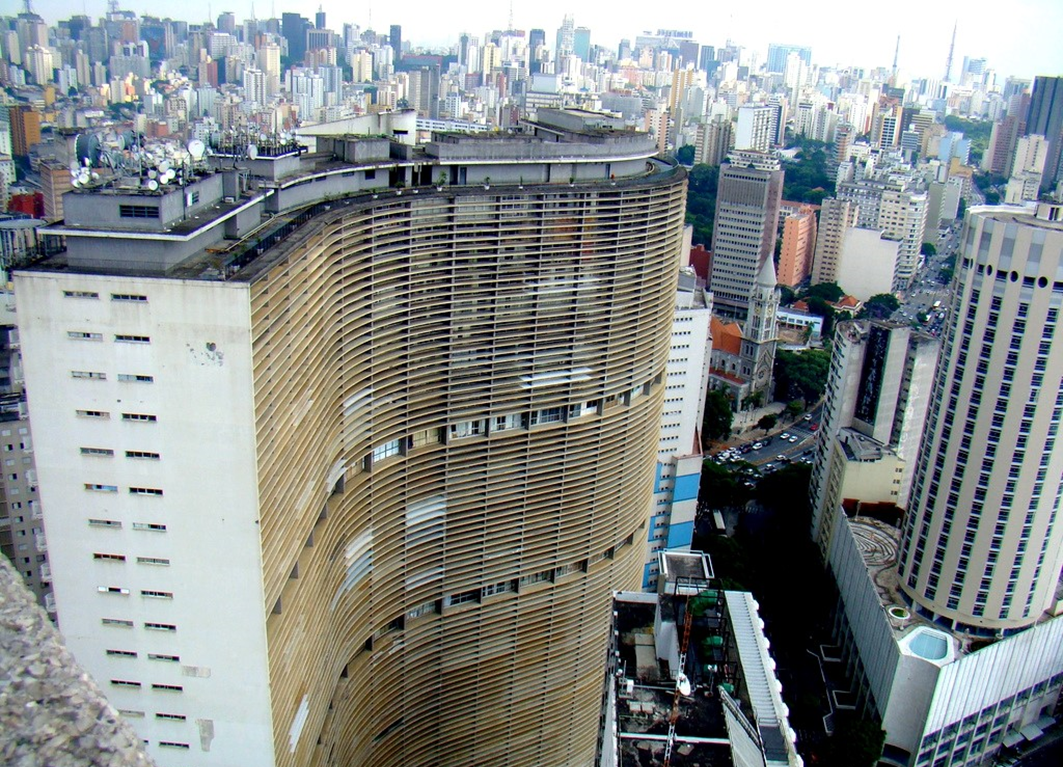
The second floor on the right side of the photo below is the office where I worked for about a year and a half.

COPAN Building.
It was completed in 1966.
It was designed by Oscar Niemeyer’s architectural office in São Paulo.
The building has 1,160 apartments and can accommodate 5,000 people.
THE BUILDING ON THE LEFT, EDIFICIO ITALIA IS A SKYSCRAPER LOCATED IN SÃO PAULO.
It is 168 m high and has 46 floors.
Construction began in 1956 and was completed in 1965.
It is the third tallest in Brazil.
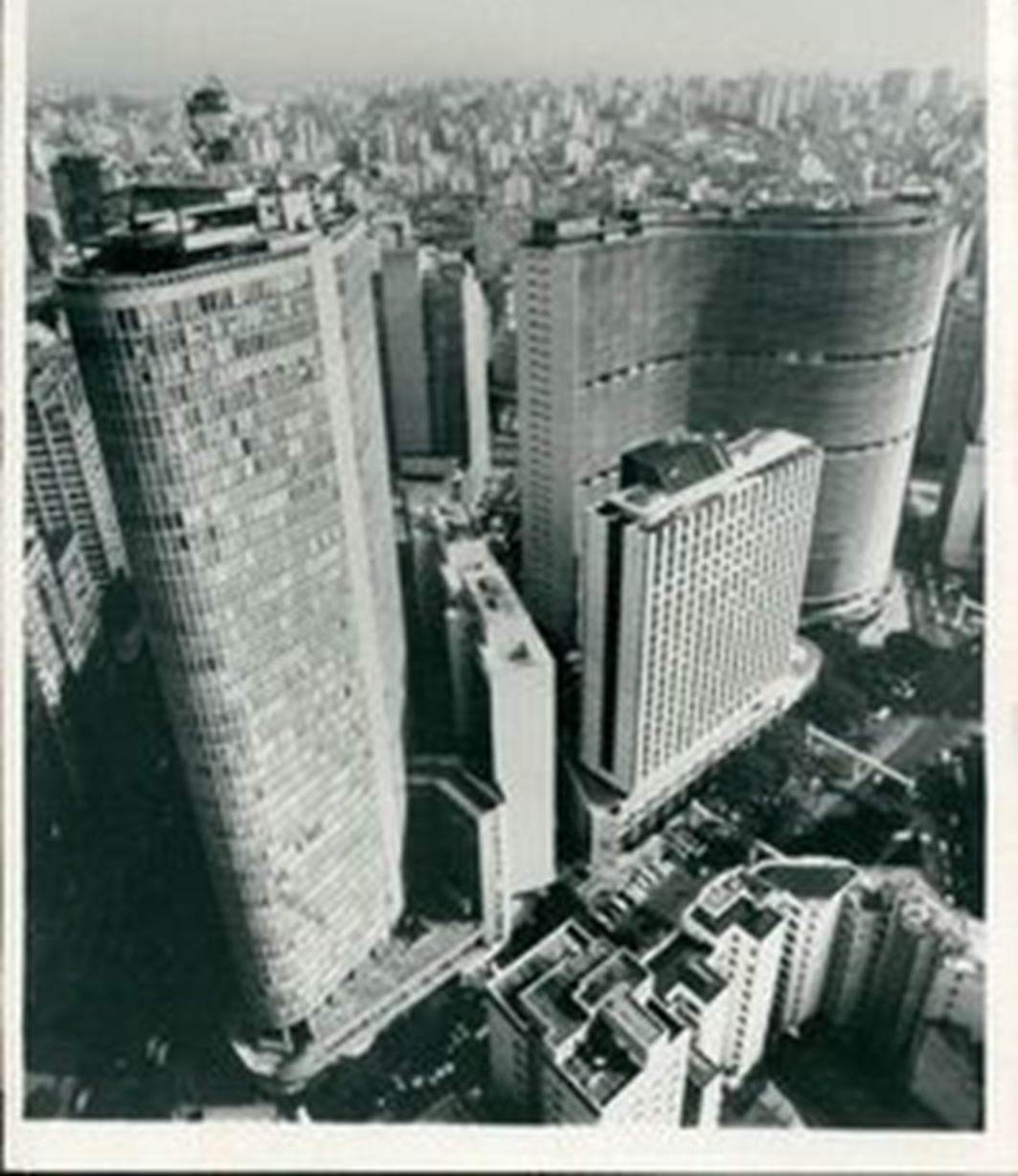
These two buildings, completed around the time of the 1964 Tokyo Olympics, were made of cast-in-place reinforced concrete, and I was astonished at how they managed to create such streamlined three-dimensional shapes.
I witnessed the high level of creative ability of Brazilian architect.
6. AVENIDA PAULISTA
The Avenida Paulista was completed in 1891, and in 1909 it became the first non-cobblestone, asphalt thoroughfare in São Paulo.
Successful business owners from coffee and other businesses competed to build mansions on and around this boulevard.
Since the late 1950s, these residences have been replaced by modern buildings. At an altitude of about 830 meters, it corresponds to the ridge of the city of São Paulo, and its total length corresponds to a watershed of less than 3 kilometers.
At present, this boulevard is home to international companies, first-class companies, major banks, trading companies, and other well-known domestic and foreign companies with their head offices, branches, agents, etc., as well as consulates.
The São Paulo Art Museum, the university, and the TV and FM broadcasting stations are also located in this prime location, and it is a cultural center that is not limited to São Paulo’s business.
For four years, I commuted to work every day by car along Paulista Avenue, a distance of 5 kilometers from the boarding house where I lived in the 1960s, a distance that now seems nostalgic to me.
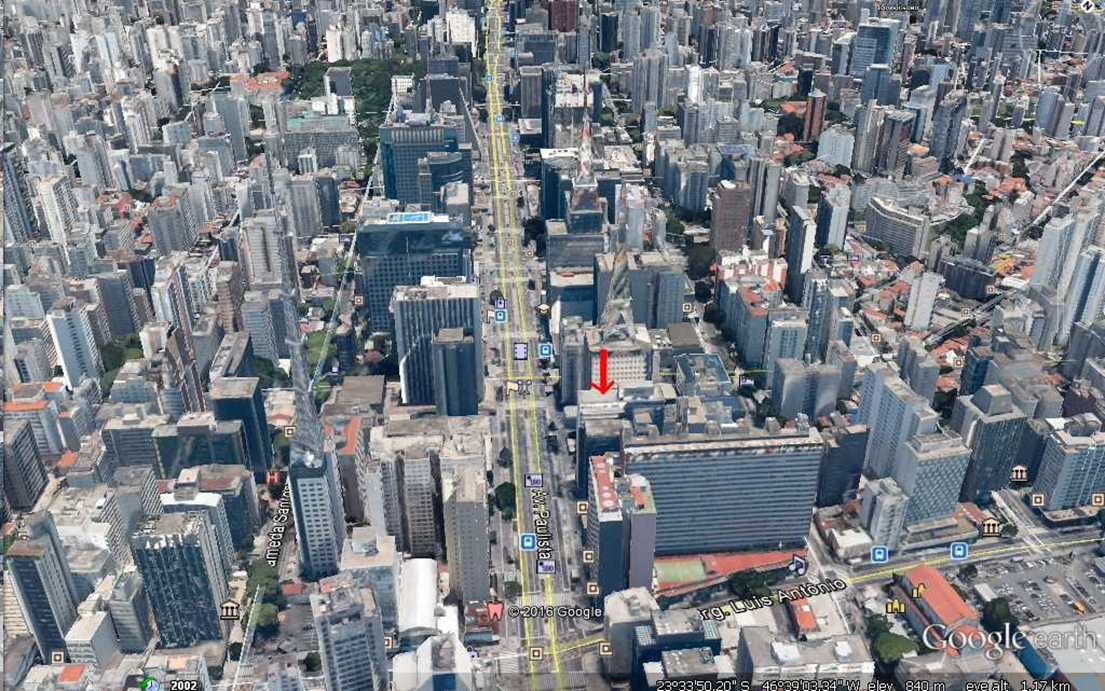
Red mark is the location of office I worked.
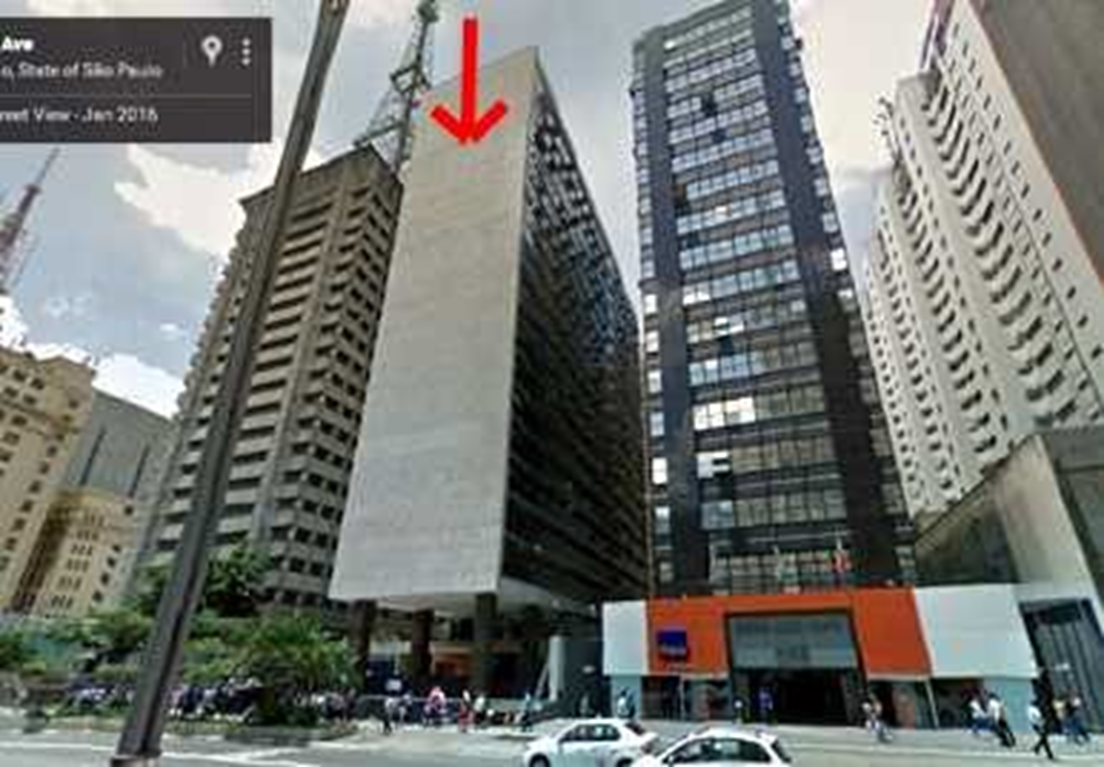
The building of the architect design office on Paulista Street, where I worked from 1966 to 1968 (red arrow).
The façade is a white marble building. I looked it up on Google Maps and found that it still exists today.
At that time, in the 1960s, there were no buildings on the left and right, and the view from the upper floors where the office was located was a very good environment to take a break from work.
The washrooms were not shared, but were located in each office section, which was also comfortable.
Around 10 o’clock in the morning, a young boss in his 30s invited me to a café a few blocks away for an espresso drink, and my daily routine was to communicate with him about work.
There was always a lot of work, and I was entrusted with the design and drafting of shopping arcades, high-rise condominiums, houses, soccer stadiums, etc., at this design office. I was willing to work overtime and holidays when I was busy.
I was a young monk between the ages of 26 and 28 and was a single man, so my motto at the time was that I should endure the hardships.
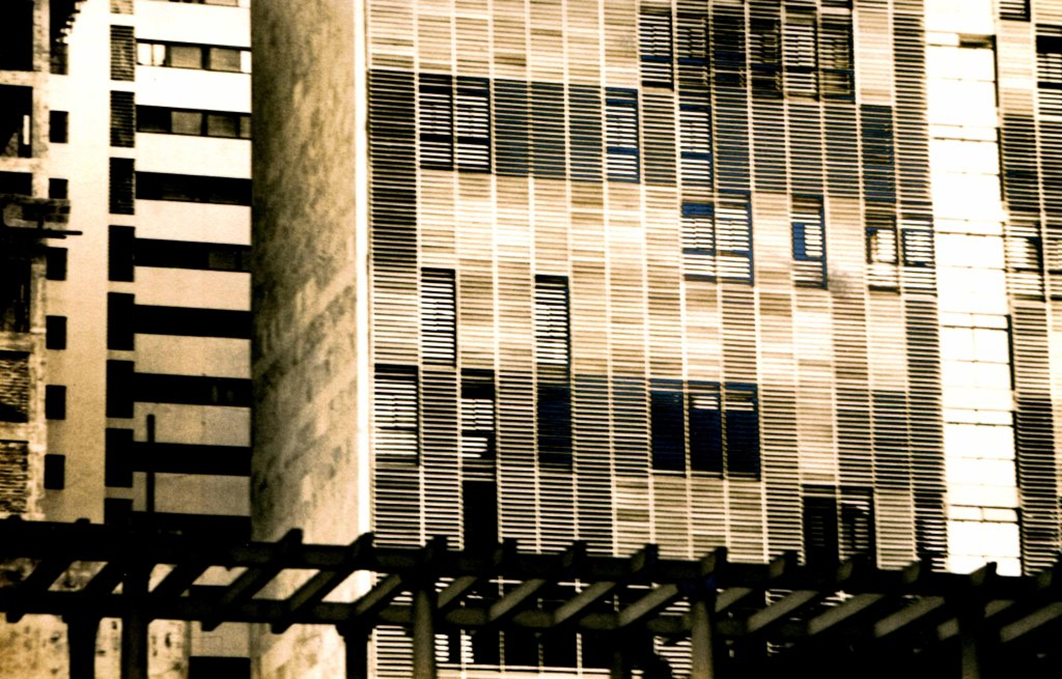
Photo by author, 1963
7. Rua da Consolazón
The first boarding house in São Paulo.
A house in the Portuguese colonial style. (Pink mark)
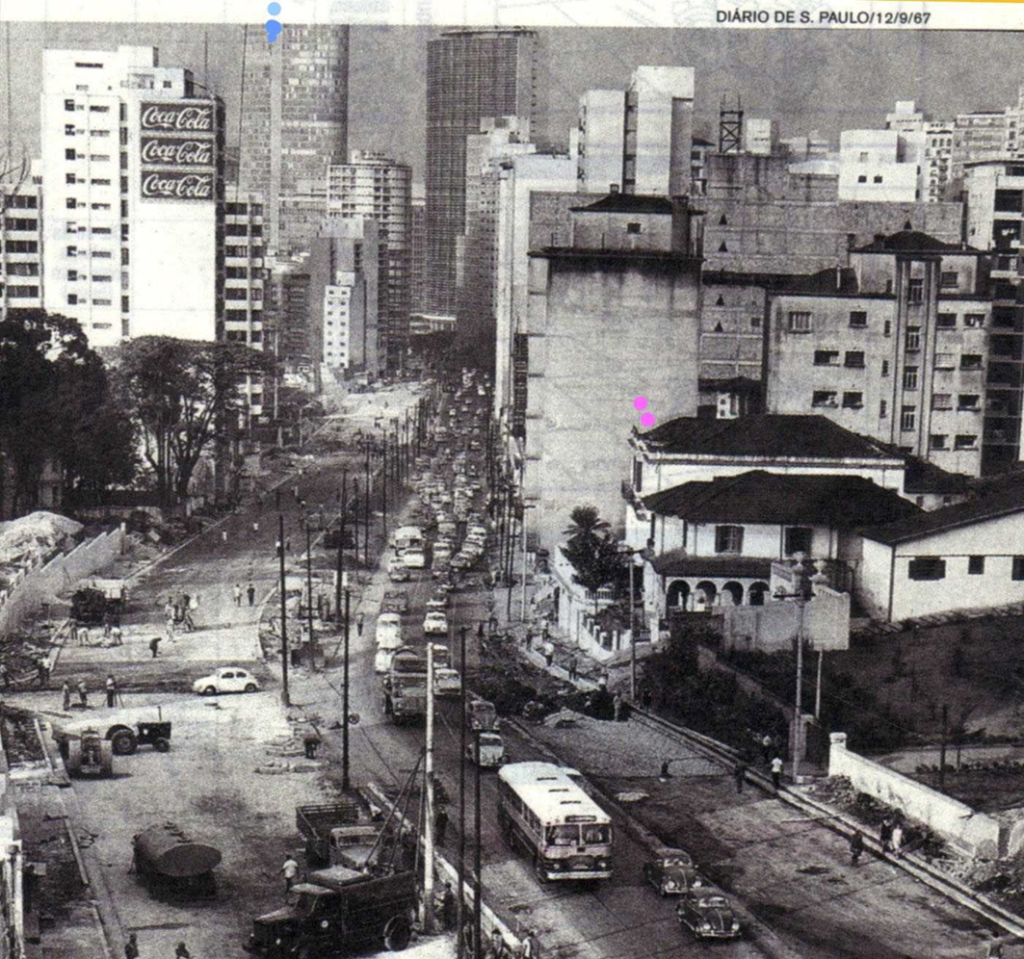
Photo by author, 1963
I really liked this bed and breakfast boarding house, which supported me in my first time living abroad, because it had an exotic atmosphere in a Latin cultural space.
However, the only language I could speak to from the chatty Brazilians was Portuguese, and in addition to feeling homesick for Japan, which was on the other side of the world, the language tension made me feel sick, I got a headache and a fever, and I spent about a week in bed recovering.
The boss hostess of the guesthouse, Dona Carmela, kindly brought me drinks and food right to my bed, and I will never forget her kindness.
8. Rua Cardoso de Almeida
A tramway that crisscrossed the city of São Paulo
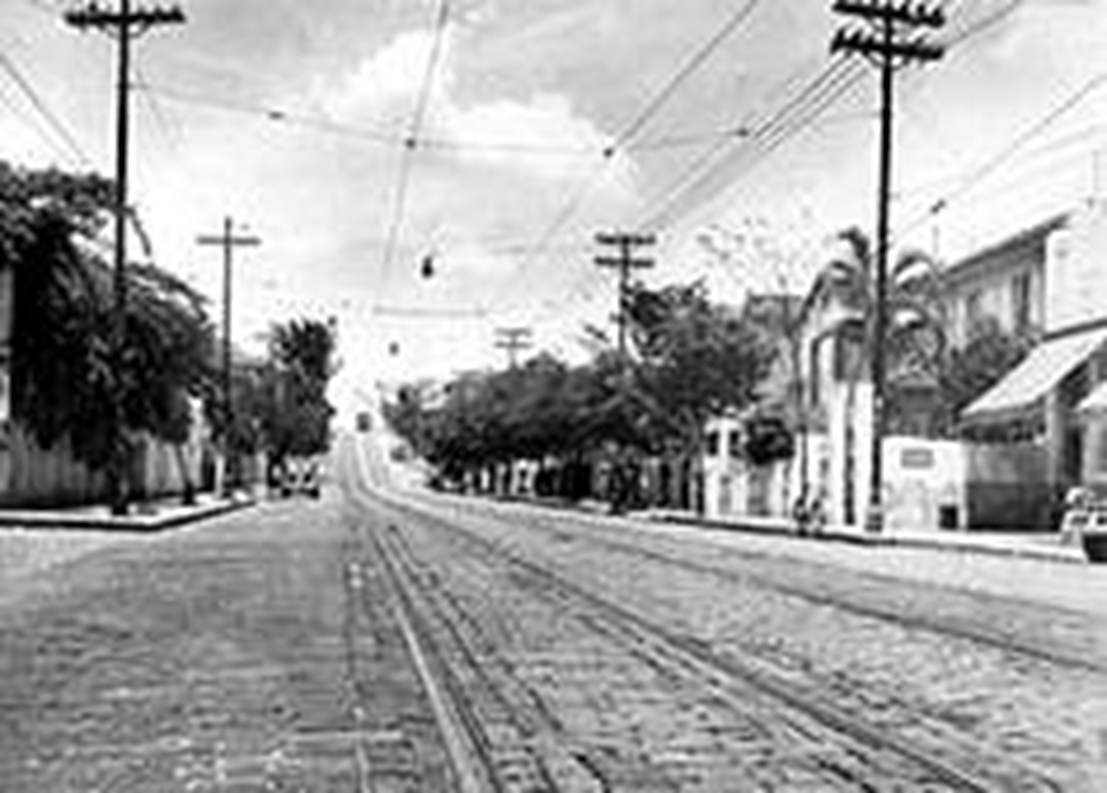
Photo by author, 1965
In the middle of this slope was boarding house, where I moved for the second time, and I used to drive 5 kilometers every day in my Volkswagen car to the office of Avenida Paulista, where I worked,.
There were about a dozen young male bachelors living in this boarding house, all in a shared room with two or three people.
In my case, I was assigned a private room by request, and although it was a semi-basement room, it was a comfortable living environment with sufficient privacy.
There was one more parking space, and the owner of the car was an engineer who worked for the company.
One day, I found a large bullet hole under the driver’s window of the car. When I asked the owner, he told me that he had been hit by a bullet while driving on the highway from São Paulo to Rio de Janeiro.
If the bullet had hit just a little higher, there would have been no way to avoid a fatal accident. It was on the highway at night. Criminals assume that long-distance drivers always carry cash, so I concluded that shootings like this were not uncommon.
Rua Cardoso de Almeida

Photo by author, 1965
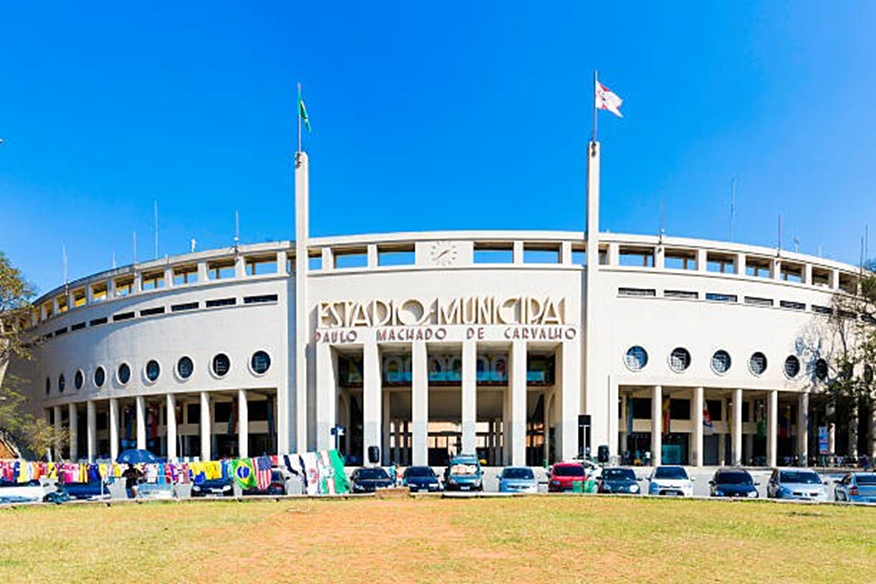
Pakaembu Stadium
The most famous football stadium in São Paulo, which was located halfway between the place of work and the place of residence.
It was here that a Brazilian soccer fan took me to see a game played by the real champion Pele.