JAP | ENG
Long-term stay in Brazil #10/15
Bahia #3
It was worth the 30 hour bus ride one way from Sao Paulo, or 60 hours round trip
Salvador de Bahia #3
I researched the history of Salvadol, a world cultural heritage city.
In 1500, the Portuguese explorer Cabral was washed ashore near Salvador and discovered Brazil.
In 1549, Tomé de Souza was sent by Portugal as governor-general.
In 1763, the capital moved to Rio de Janeiro.
Over the course of more than 200 years in the 16th and 18th centuries, when it was the capital, these churches were gradually renovated and upgraded from small-scale simple buildings to become the cultural heritage of today.
Subsequently, with the loss of the function of the capital, development stopped, and these townscapes and churches were able to convey the style of the 17th century to the present day.
These photos below were taken before it was inscribed on the UNESCO World Heritage List.
Historic heritage of Salvador de Bahia
From the town above Cidade Alta to the fossil-like Cidade Baixa view of the town below
The height difference is about 80m.
In one corner of the photo below, the commercial buildings of the town below, which have become fossilized, are gathered as if they were asleep.
Since there was no huge earthquake and tsunami (1755) like the one that occurred in Lisbon, Portugal, such a corner remains, and it is a valuable heritage of the Portuguese colonial era.
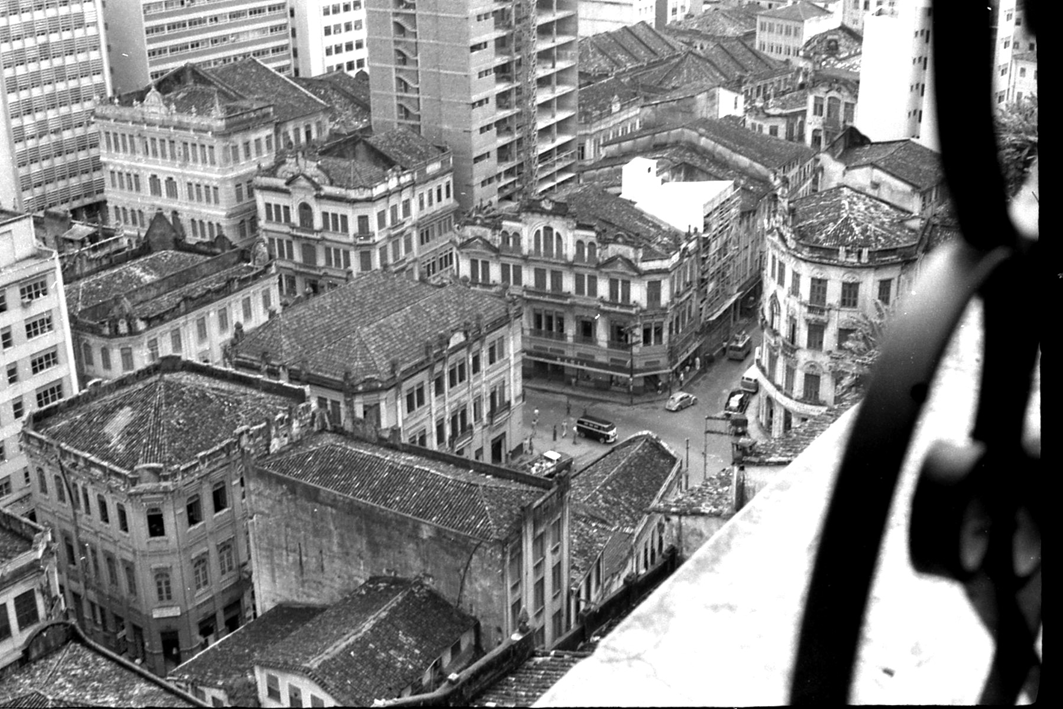
Photo by author, 1964
This old town area is mixed with some modern architecture (see photo below).
If it becomes any more worn out, the town’s historical unity will be lost.
It is important to look after and preserve each historical building, but by leaving the block as a cohesive area, the value of each individual building can be enjoyed more.
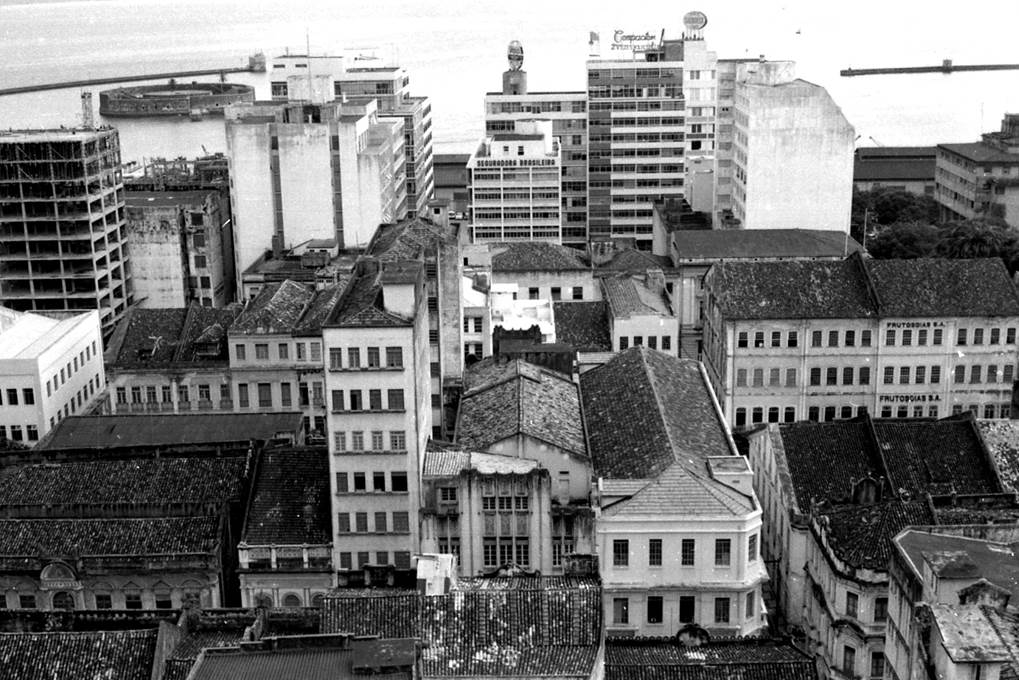
Photo by author, 1964
View of Cidade Alta (Upper Town) from Cidade Baixa (Lower Town)
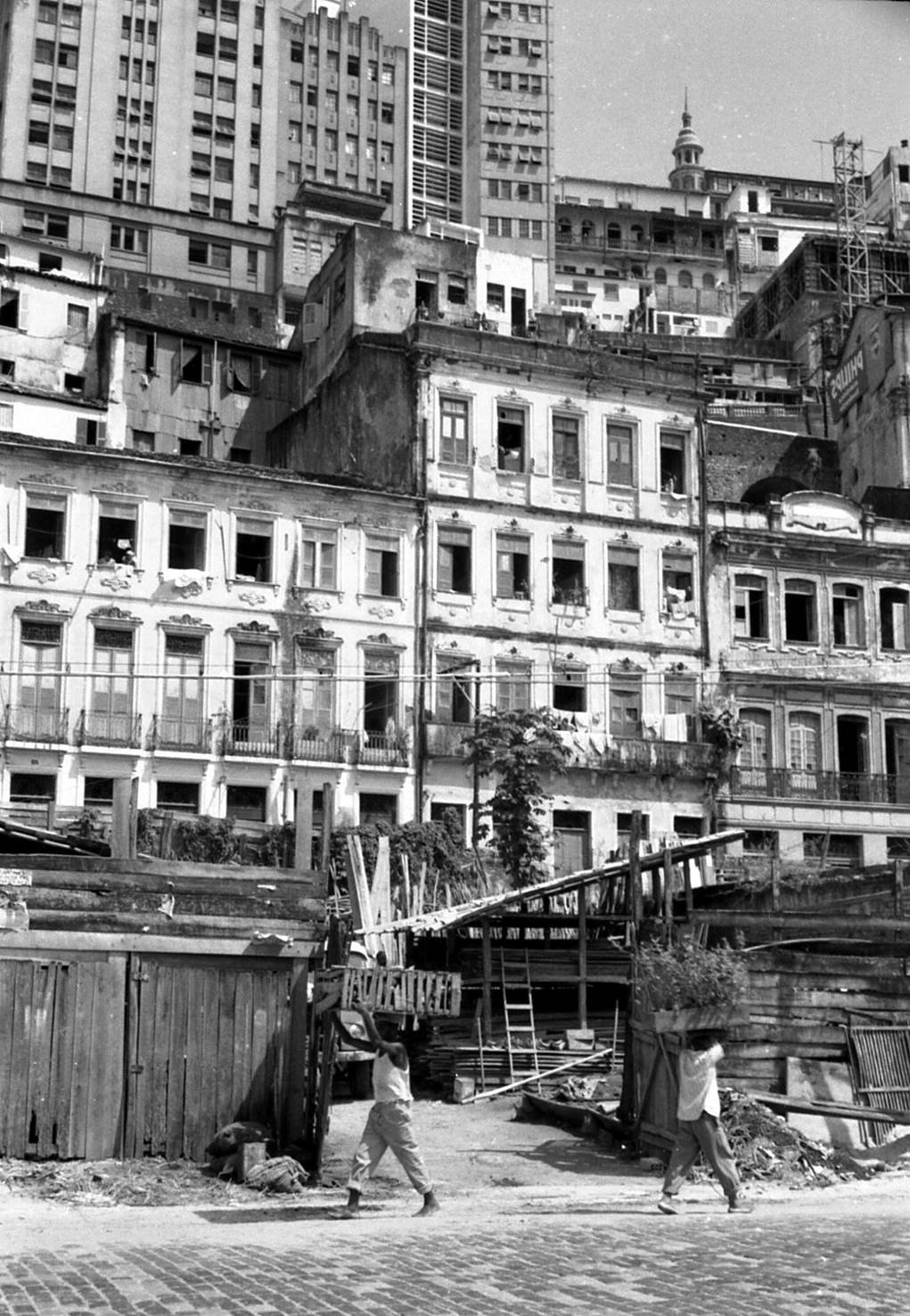
Photo by author, 1964
Seaside in the bay of the Atlantic Ocean.
A group of buildings to cover the entire cliffside.
The lodging where I stayed for a few days was also located in this area.
It was in a great location, with a view of the bay and the Atlantic Ocean outside the mouth of the bay from the window.
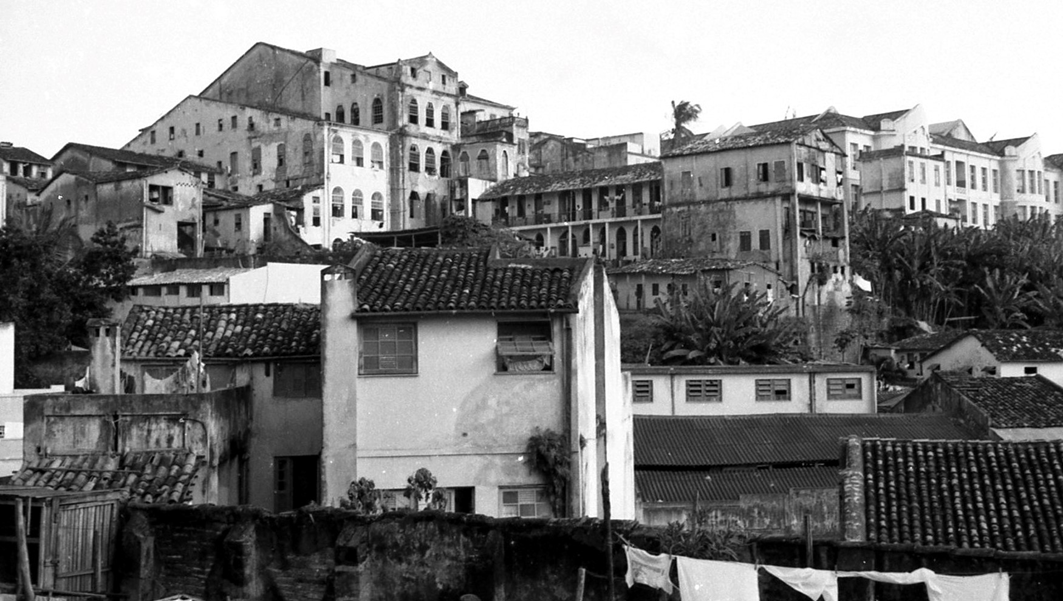
Photo by author, 1964
A Portuguese colonial-style house.
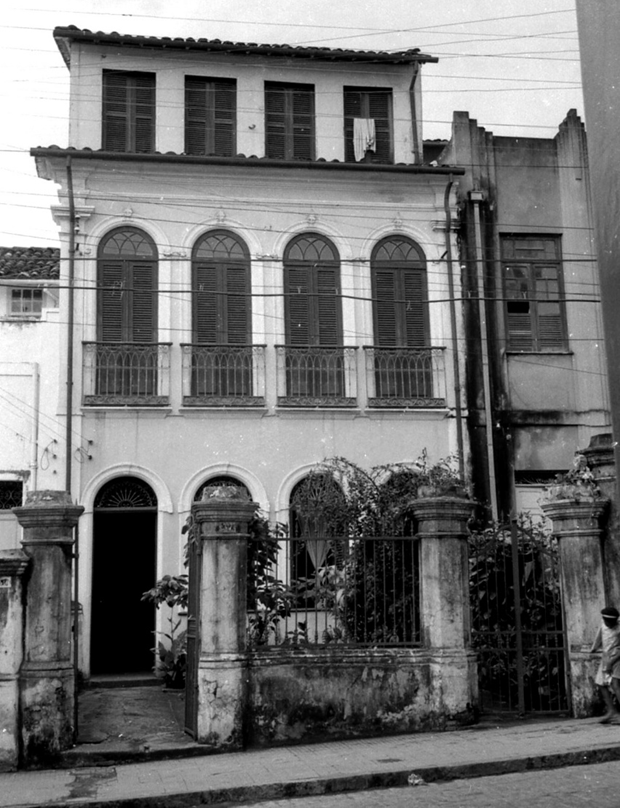
Photo by author, 1964
Looking up at the church in upper town from the lower town
It is enjoyable to stroll through the squares, main streets, and street corners from the upper town to the lower town.
Twenty years before it was registered as a World Heritage Site in 1985, this town was looked down upon as a backward area domestically, not to mention for foreign tourists, so there were few Brazilian tourists, and even less Japanese tourists. There were few beggars targeting tourists, and no homeless people, so there was no need to be on guard at all.
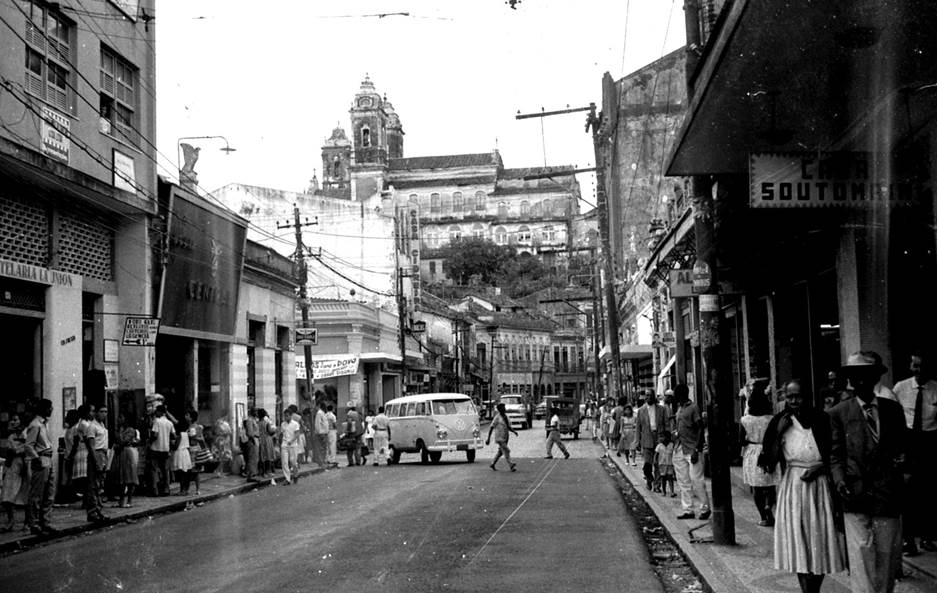
Photo by author, 1964
For some reason, there was a queue.
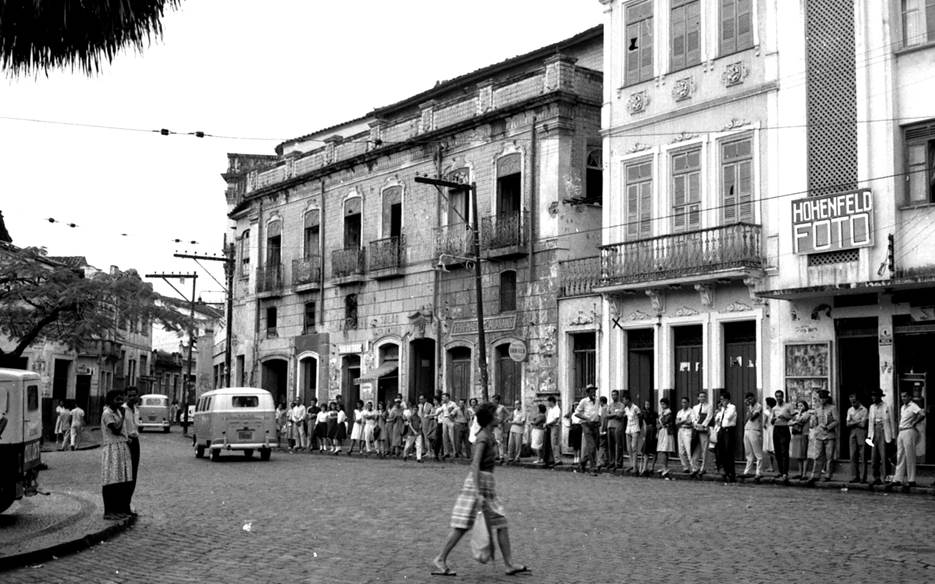
Photo by author, 1964
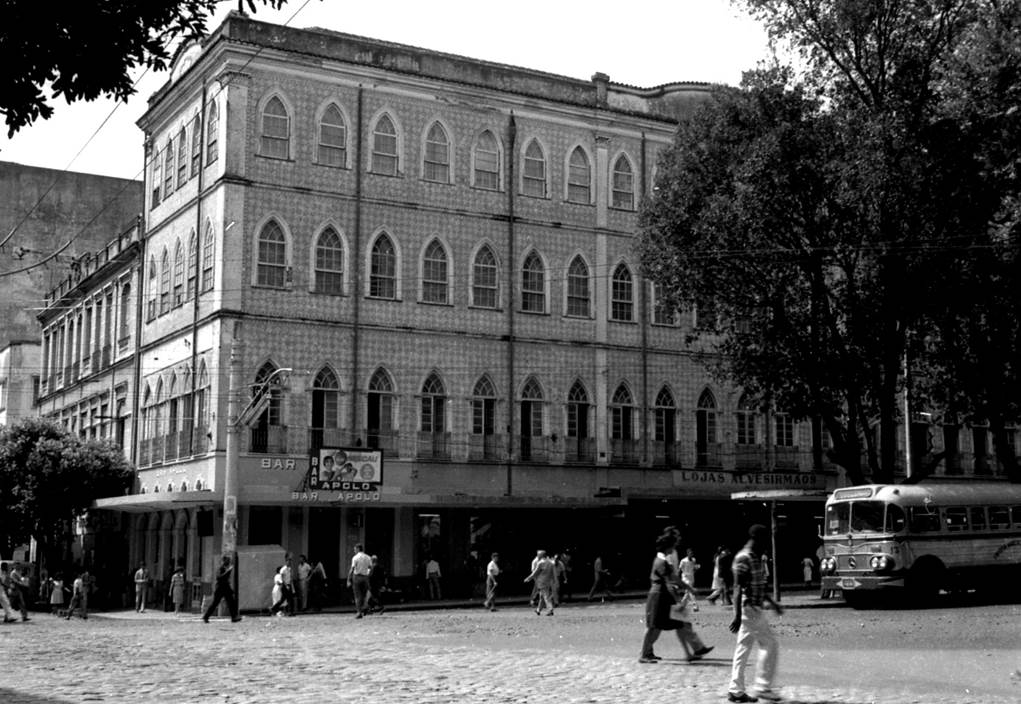
Photo by author, 1964
I found a street with few cars and friendly people.
Traditional Brazilian gravel road. The road surface casts soft shadows.
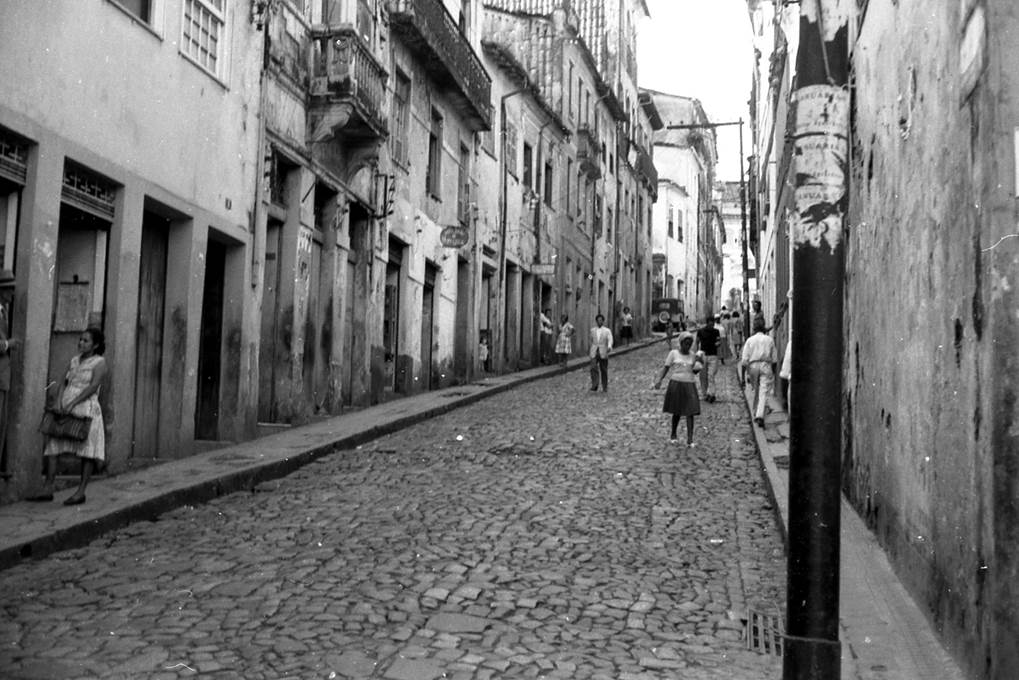
Photo by author, 1964
Cars from the good old days
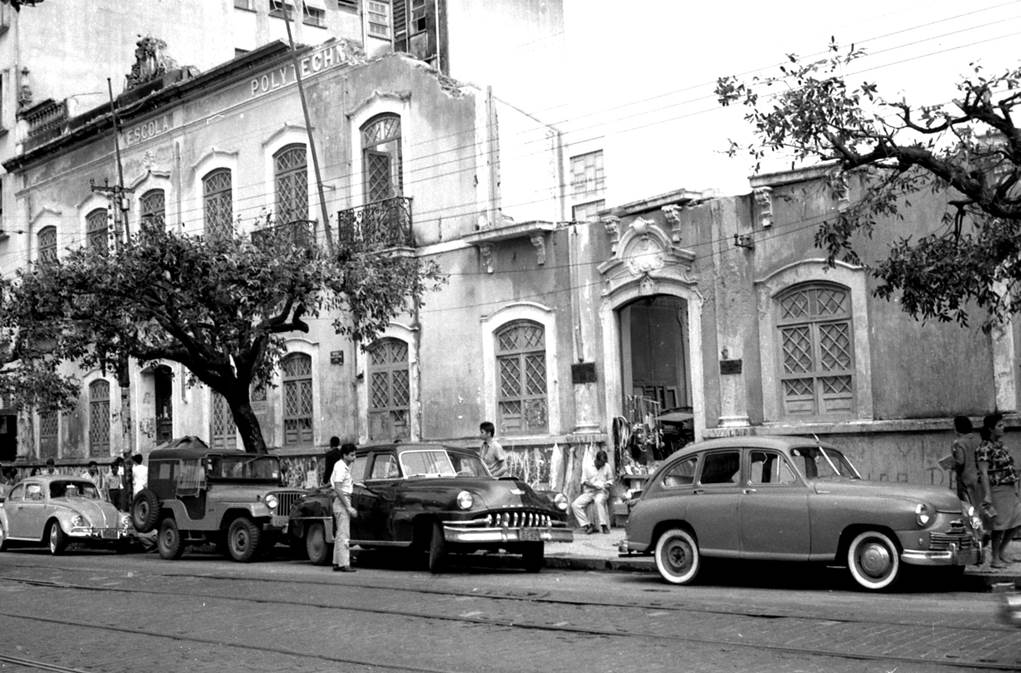
Photo by author, 1964
A row of distinctive Portuguese-style houses line the slope.
The openings of each residence vary. Each owner built their house in their own way, but the block as a whole has a sense of unity.
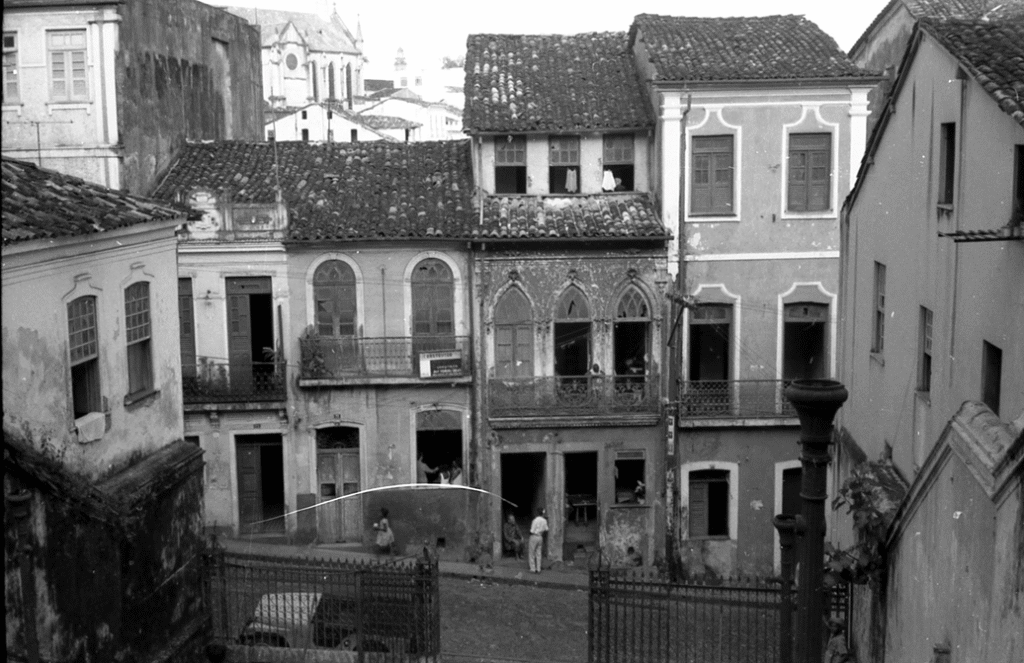
Photo by author, 1964
Residents of Salvador.
1964
In the city of Salvador Bahia, the total population of blacks and mixed races exceeds 80%, making it a representative Afro-Brazilian city, where African-origin music, dance, martial arts, and food culture were formed, and it can be recognized as the birthplace of Brazilian identity.
In contrast, Brazil can be observed in the city of São Paulo. With more than 60% of the white population, mainly from southern Europe, and a large number of hard-working people who put their jobs first, it has a presence as a dynamo of the Brazilian economy.
Brazil is truly a melting pot of races, but recent statistics (around 2015) show that the racial composition of each city varies considerably.
What is the racial composition of Brazil’s three major cities?
| White % | Mixed % | Black % | Population | |
| Salvador Bahia | 16.7 | 53.8 | 28.4 | 2.8 million |
| Rio de Janeiro | 53.4 | 33.5 | 12.6 | 6.5 million |
| Sao Paulo | 60.6 | 30.5 | 6.5 | 12 million |
In this way, São Paulo and Salvador are polar opposites in terms of racial composition. These people make up Brazil’s diverse nation.
Boys and girls looking at the photographer from the balcony
When I walk around the streets, I meet all kinds of people.
In residential areas, the majority are children.
Since the travellers are of Asian descent, they sometimes gather in large groups, curious to see what is going on. There must be some children among them who have never seen an Asian person before.
They eagerly become subjects for the photo. They all look like they are having fun. They all have different skin and hair colours, but I think that the photo gives a strange sense of unity that makes them the common people of Brazil. (1964)

Photo by author, 1964
Everyone was friendly and posing for the camera
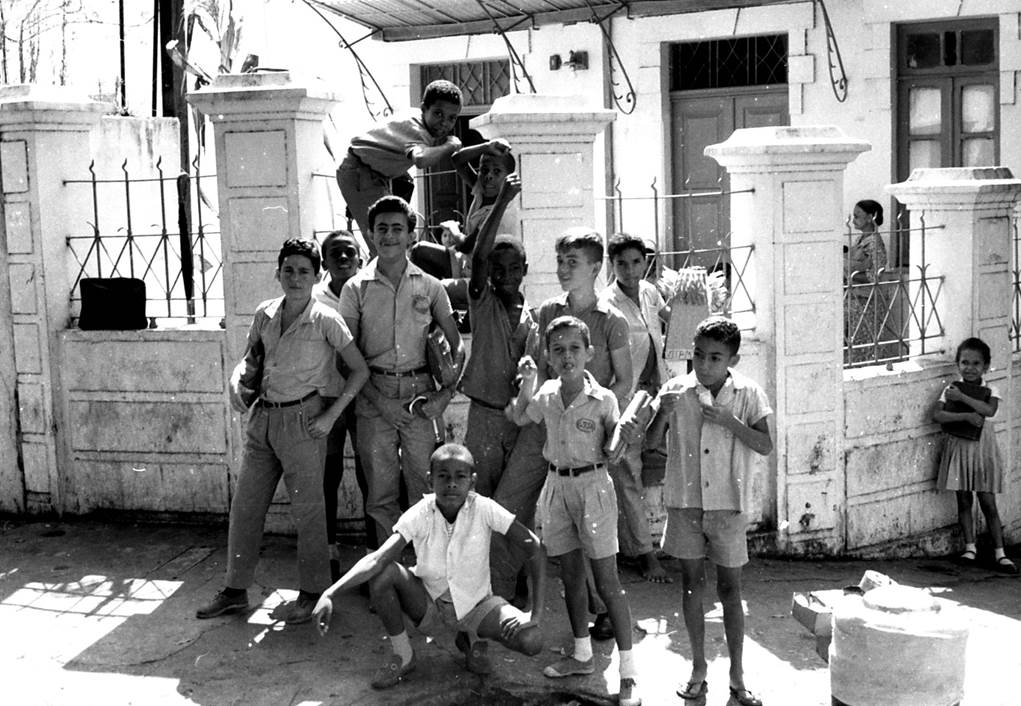
Photo by author, 1964
There is quite a bit of variation in skin color.

Photo by author, 1964
A worker who still retains his youth.
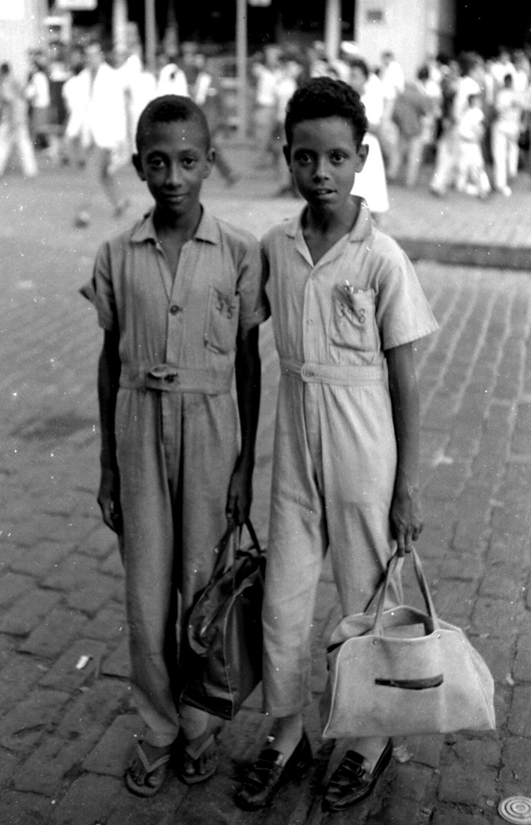
Photo by author, 1964
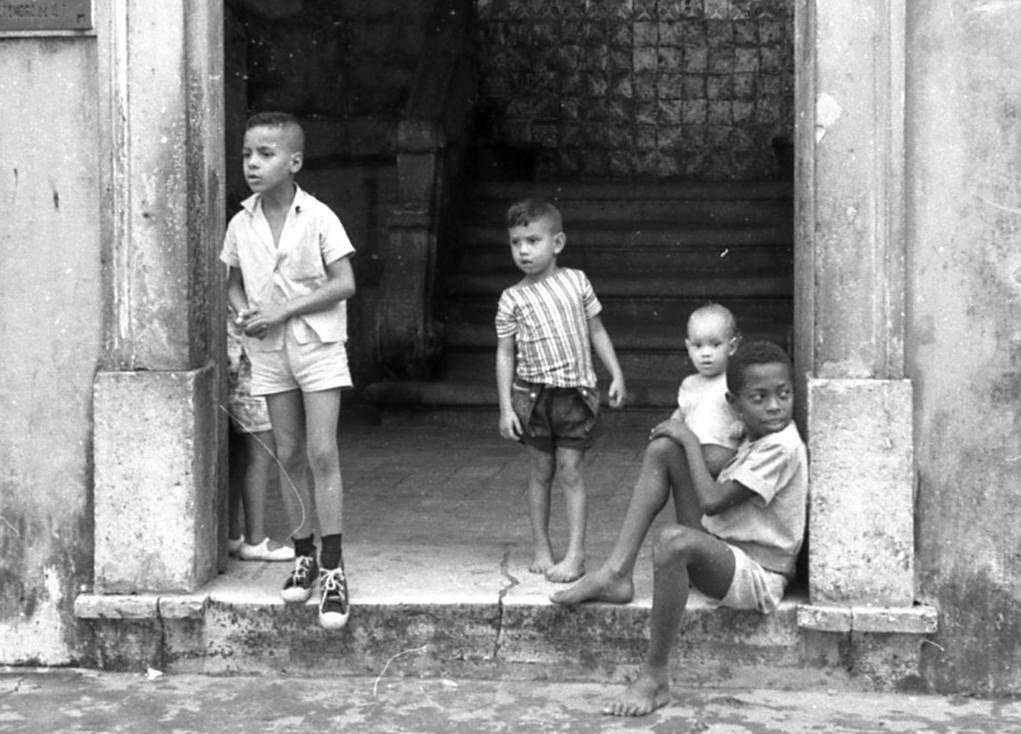
Photo by author, 1964
Privately owned gas stations
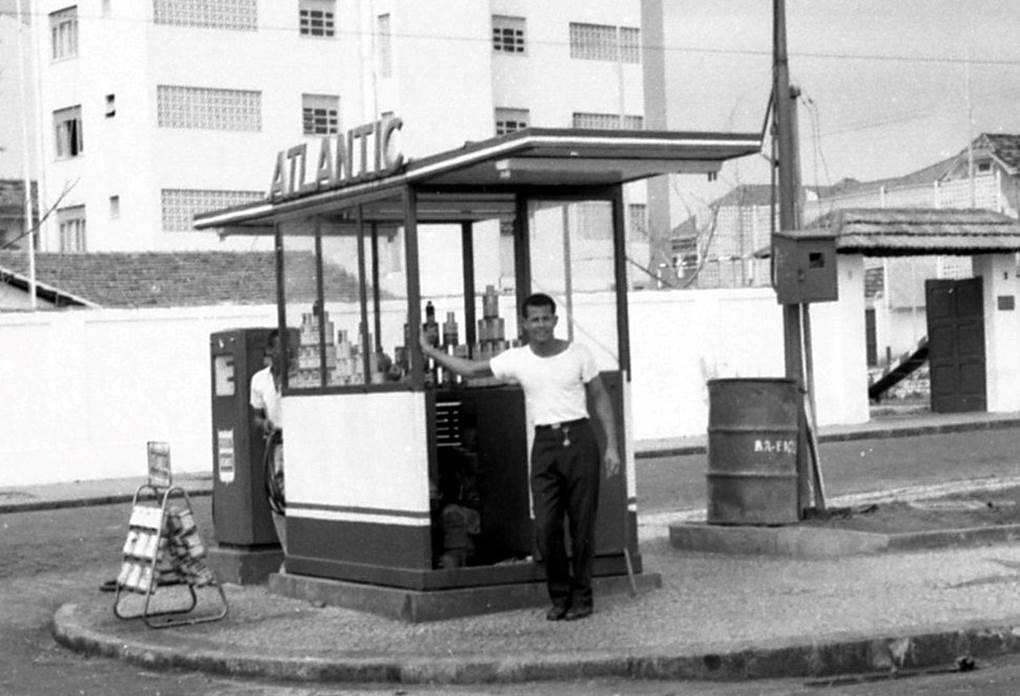
Photo by author, 1964
A small bar on a street corner

Photo by author, 1964