JAP | ENG
Lisbon Trip
October 2013
#1/2
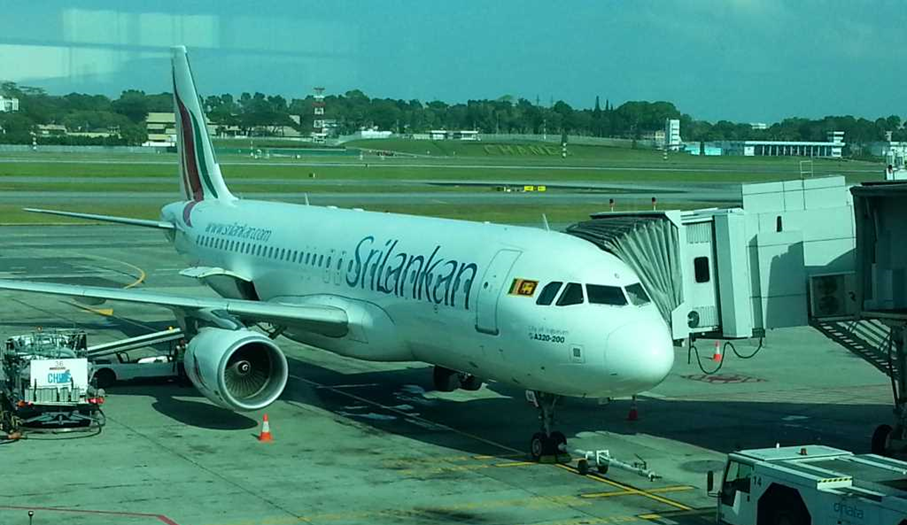
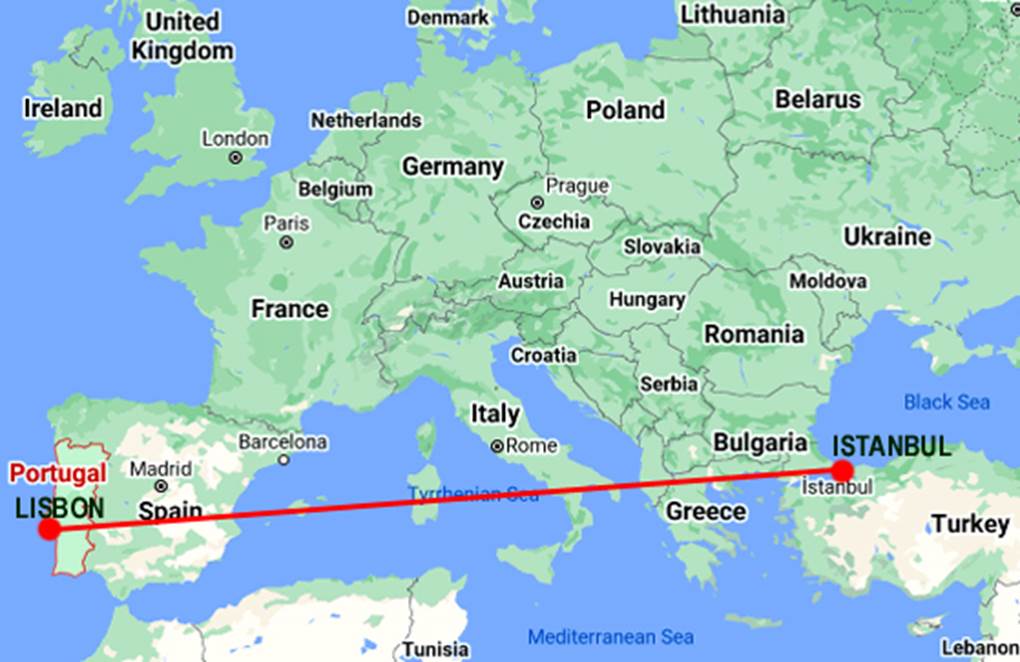
At Singapore Changi Airport, I checked in at the Turkish Airlines counter and headed to Lisbon with a stopover in Istanbul. The time difference with Istanbul is 5 hours, and the flight time is 11 hours.
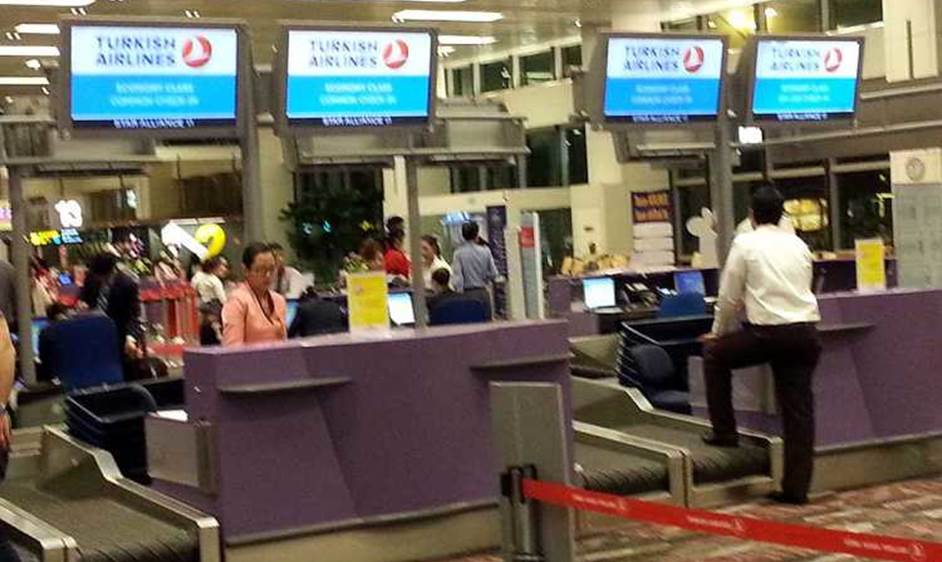
Photo by author, 2013
This is the flight route from Istanbul to Lisbon. The time difference is 3 hours and the flight time is 5 hours.
Istanbul Ataturk Airport
I arrived at Istanbul Ataturk Airport, Turkey’s largest airport, early in the morning. Many passengers connecting to European cities were arriving here, and the terminal was very crowded. After walking through a maze of passageways, I finally arrived at the smoking area on the rooftop.
There were many smokers relaxing comfortably in the morning sun. And I became one of them.
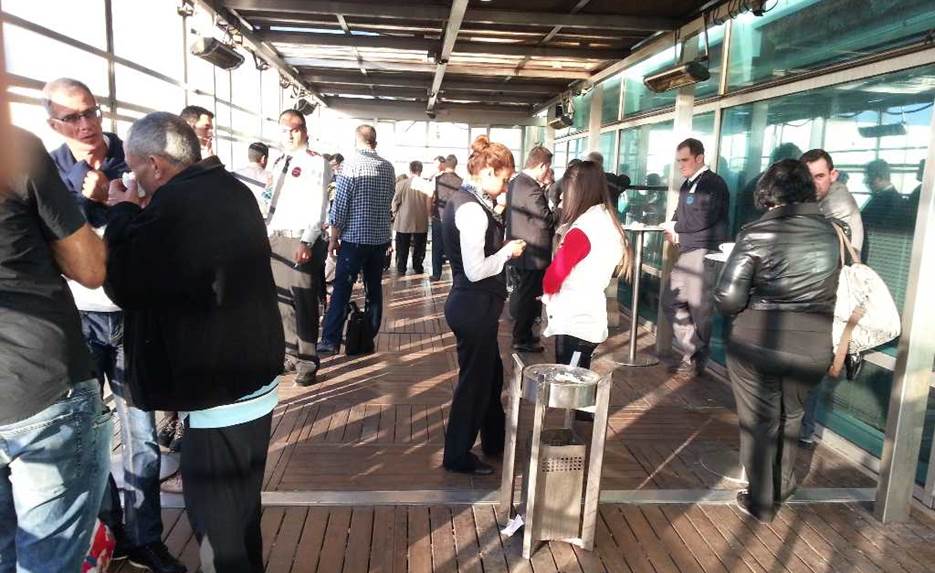
Photo by author, 2013
A person smoking hookah. I felt like I was in a different cultural sphere.
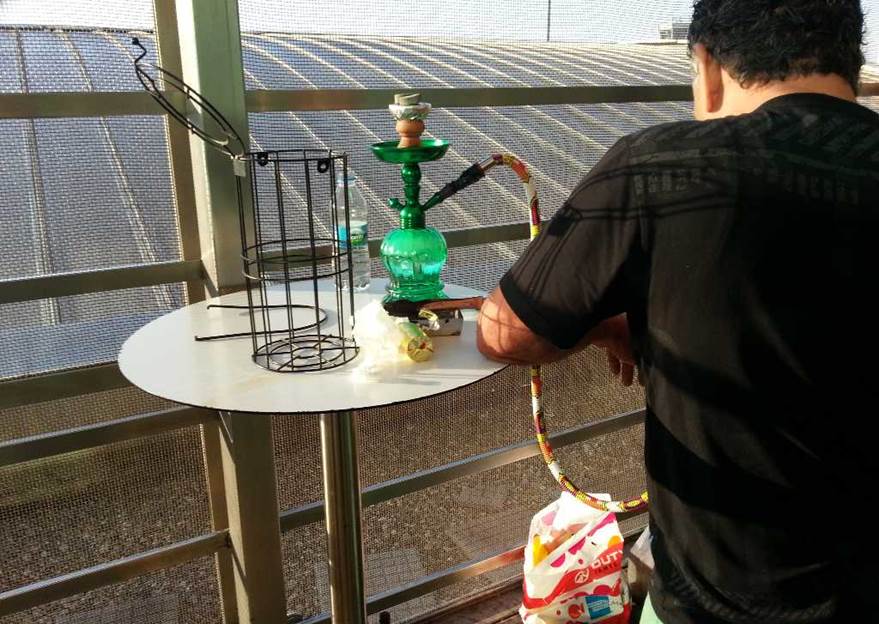
Photo by author, 2013
Turkish Airlines in-flight meals. Economy class.
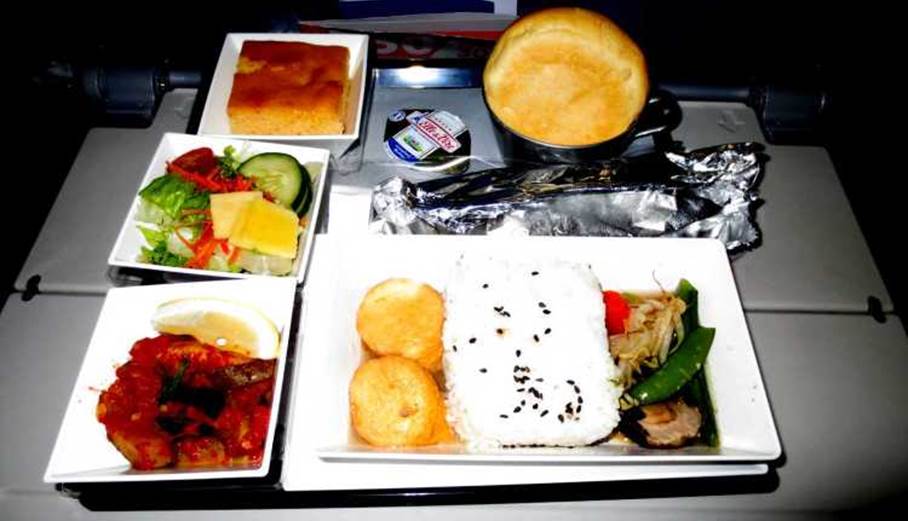
Photo by author, 2013
Lisbon Airport
I arrived at Lisbon Airport, which is located at the western edge of Europe. The airport is located at the edge of Europe, and compared to Istanbul Airport, the scale of the airport was comparable to that of a regional airport.
It was the first time in 45 years that I am back to Lisbon since arriving by ship in July 1968 from the Atlantic Ocean via Brazil.
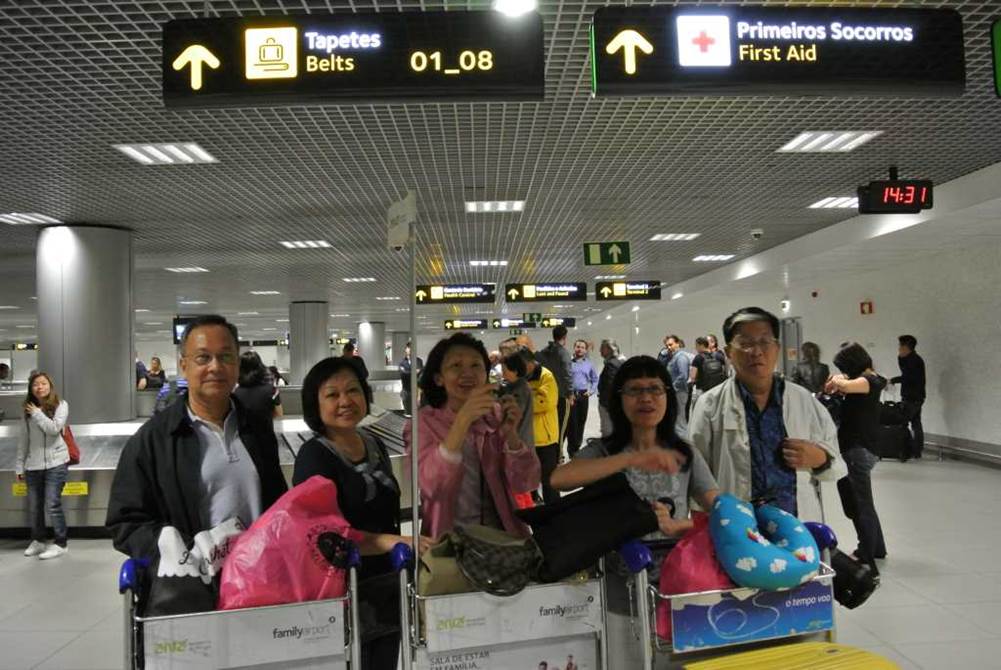
Photo of author and his travelling group, 2013
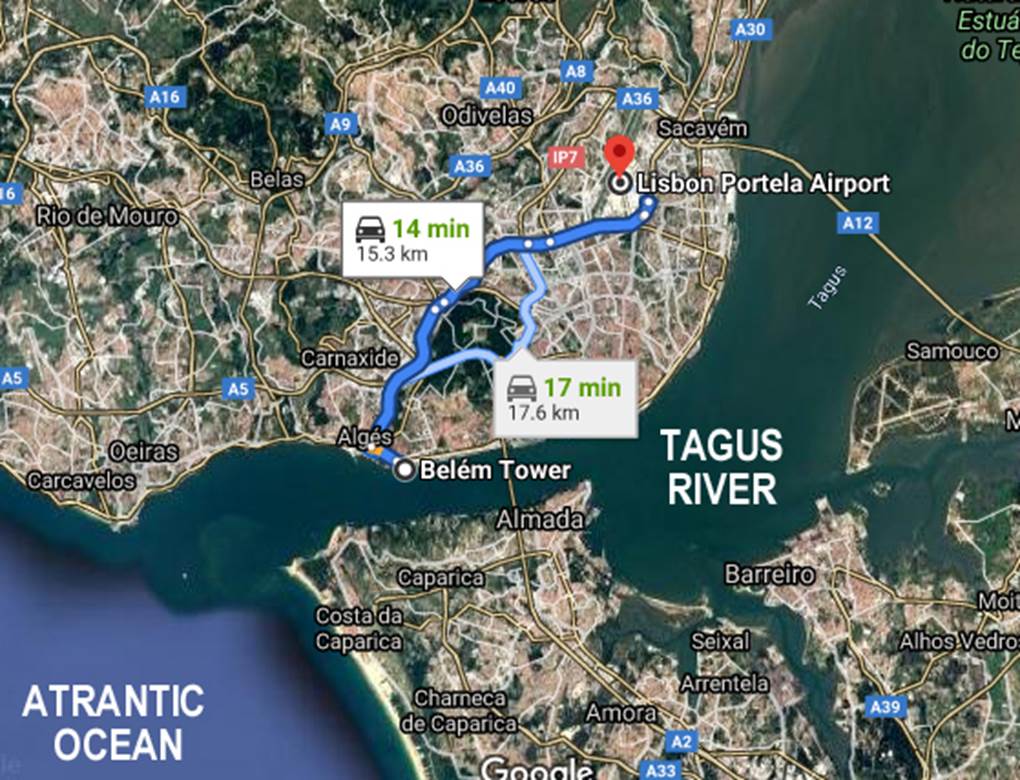
From the airport, we took a bus that bypass the city center and arrived at the Belem district, about 15 km away.
When we arrived at the big square, we were greeted by a large Portuguese flag fluttering in the air. The golden (yellow) spherical pattern was said to be an armillary sphere, a nautical instrument of the Age of Discovery.

Photo by author, 2013
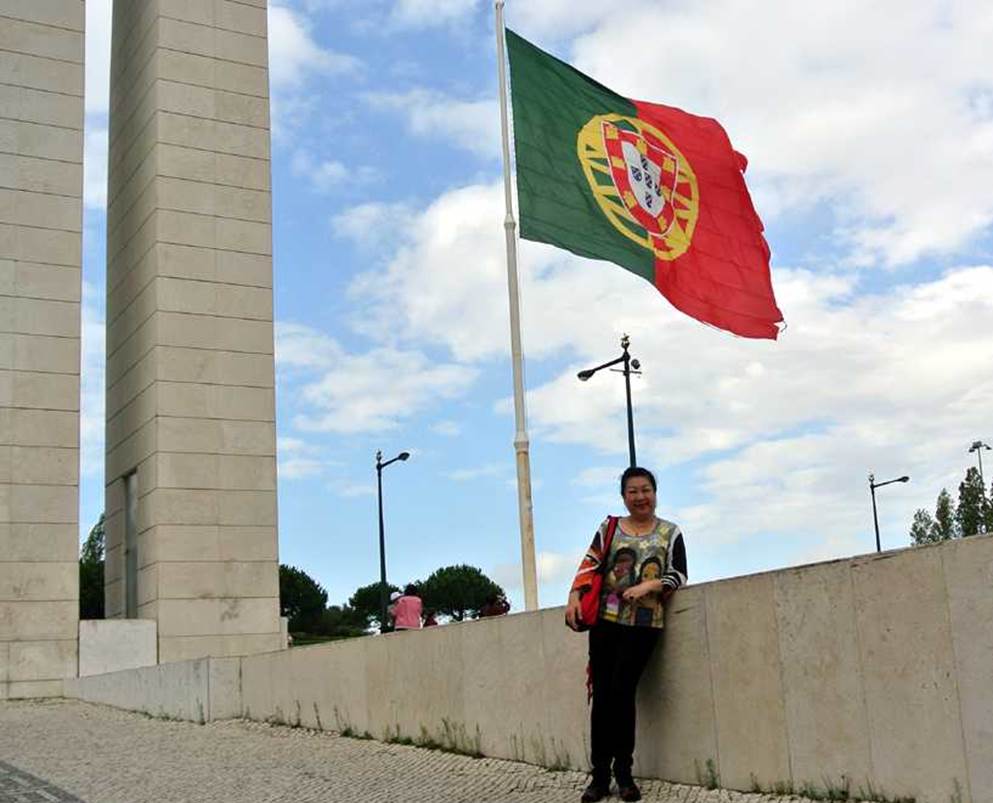
Photo by author, 2013
After a long flight, we arrived in Lisbon.
A game-changing moment was the start of our trip in an open park.
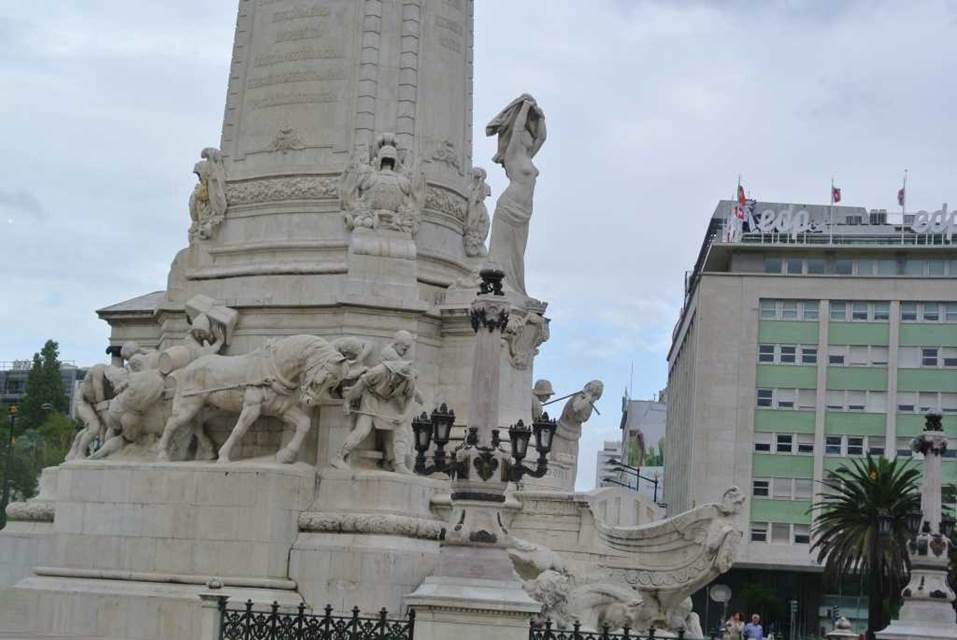
Photo by author, 2013
Belem District
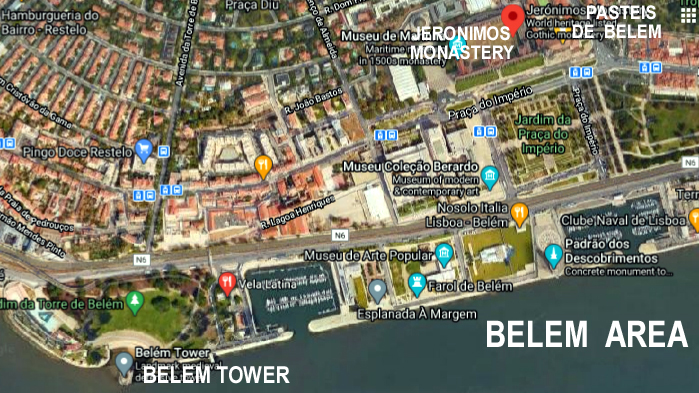
The Belem district is a must-see district because it has two World Heritage Sites, as well as the Belém Tower, the 25th of April Bridge, the Church of Santa Maria and the Jerónimo Monastery.
Wow, the trams are still in operation!!
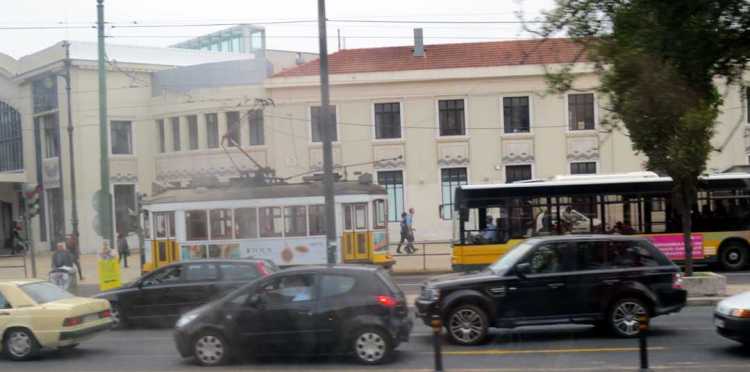
Photo by author, 2013
25th of April Bridge
A suspension bridge over the mouth of the Tagus River.
The total length is 2 km. Construction began in 1962 and was completed in 1966. It connects Lisbon with Almada on the opposite shore.
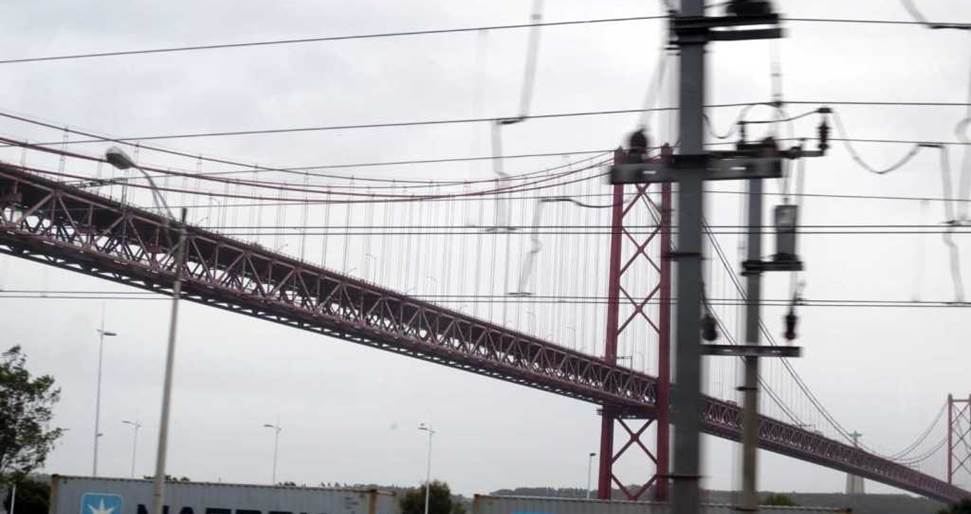
Photo by author, 2013
It was built by an American construction company that also constructed the San Francisco Bay Area Bridge. Lisbon has a history of massive earthquakes, so the design must have been done with caution.
The foundation of the main pillars are in the river, 80m deep before reaching the basalt bedrock, which is said to be the deepest in the world.
A four-lane road with two lanes on each side is on the upper deck, and on the lower deck, a double-track railway has been operating since 1999 after the bridge was reinforced.
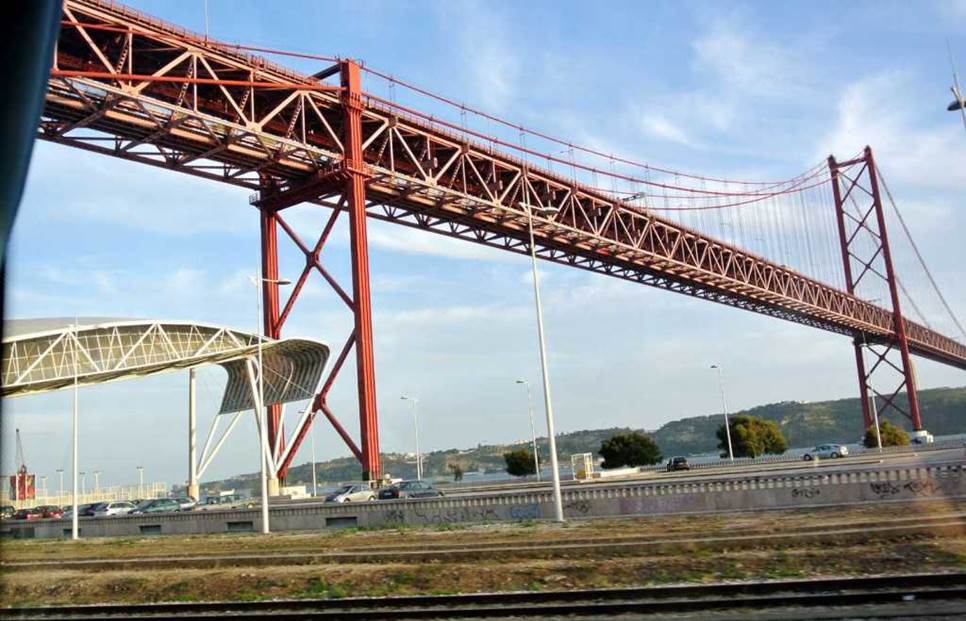
Photo by author, 2013
Railways and warehouse districts on the riverbank.
It’s a scenery typical of a port city.
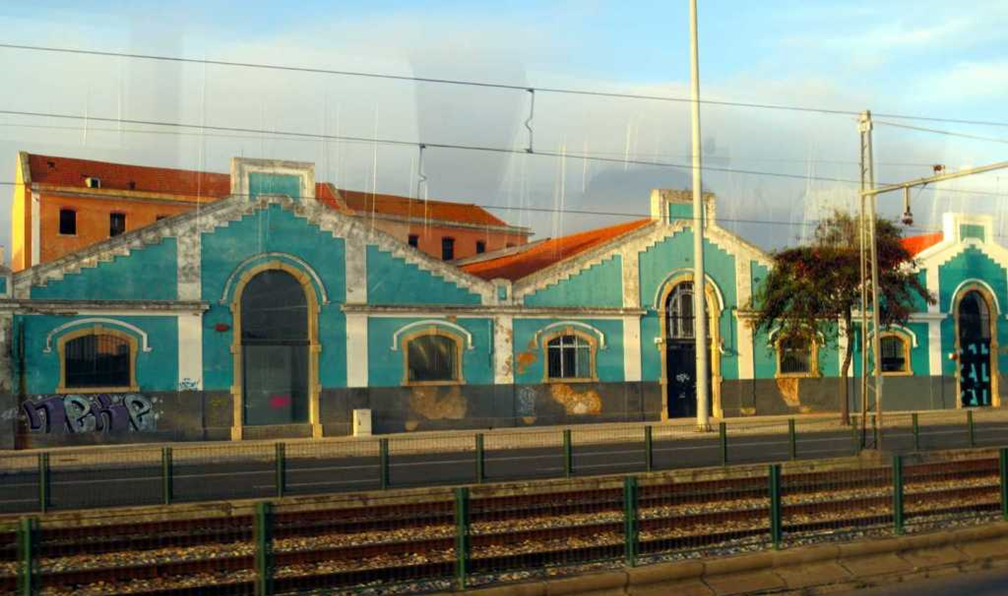
Photo by author, 2013
Tower of Belém Tower, World Heritage Site
It is located at the mouth of the Tagus River, 10 km west of the center of Lisbon.
It was built by King Manuel I of Portugal (1469~1521) to commemorate Vasco da Gama’s discovery of the Indian route and Magellan’s circumnavigation of the world, for the purpose of defending the port of Lisbon and monitoring ships entering and leaving the Tagus River.
It is a three-story square stone tower. Designed by a Moroccan architect, it also shows the influence of Islamic architecture.
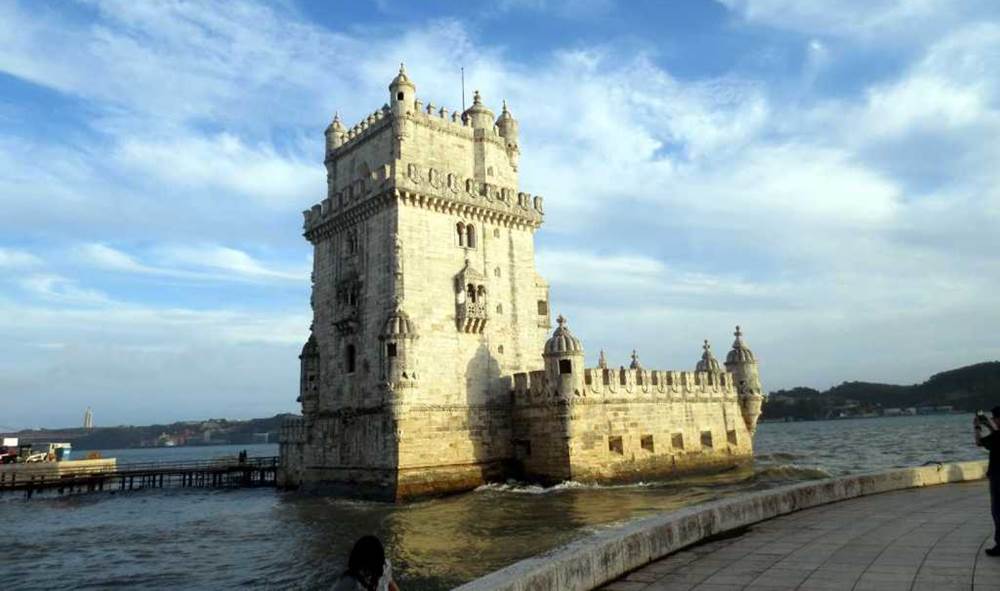
Photo by author, 2013
It is a fortress structure intended to monitor the comings and goings of ships.
The tower of Belém has an elegant Manueline façade and was called the “Lady of the Tagus River”. It was also a symbol of Lisbon, which kindly welcomed sailors returning after a long voyage. On the second floor is a statue of Mary watching over the safety of the ship.
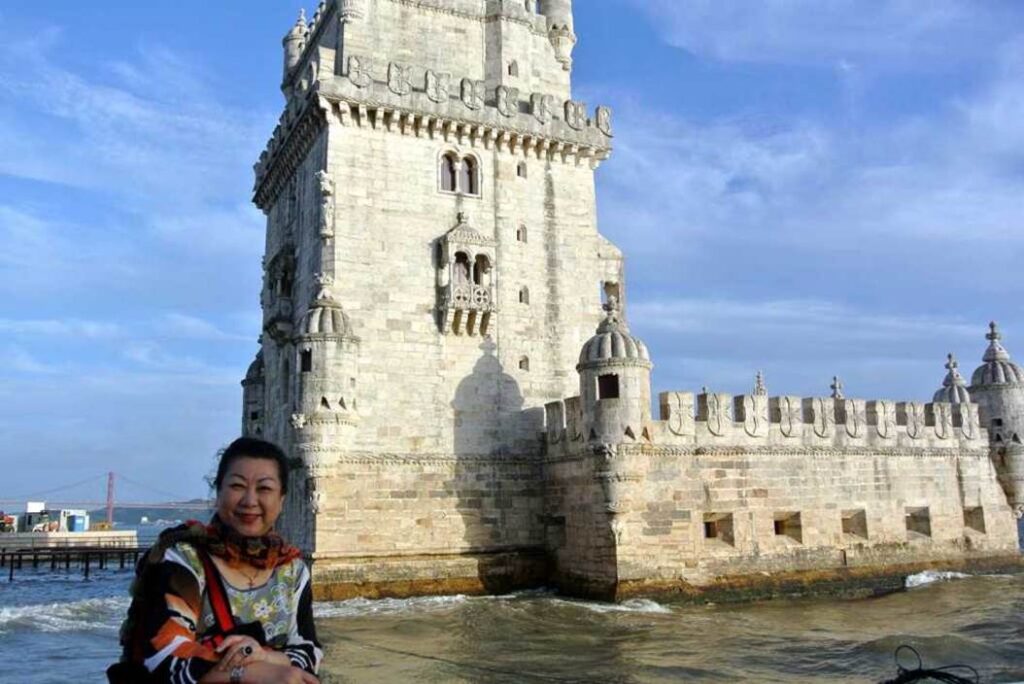
Photo by author, 2013
Waves washing at the base of the Tower of Belém.
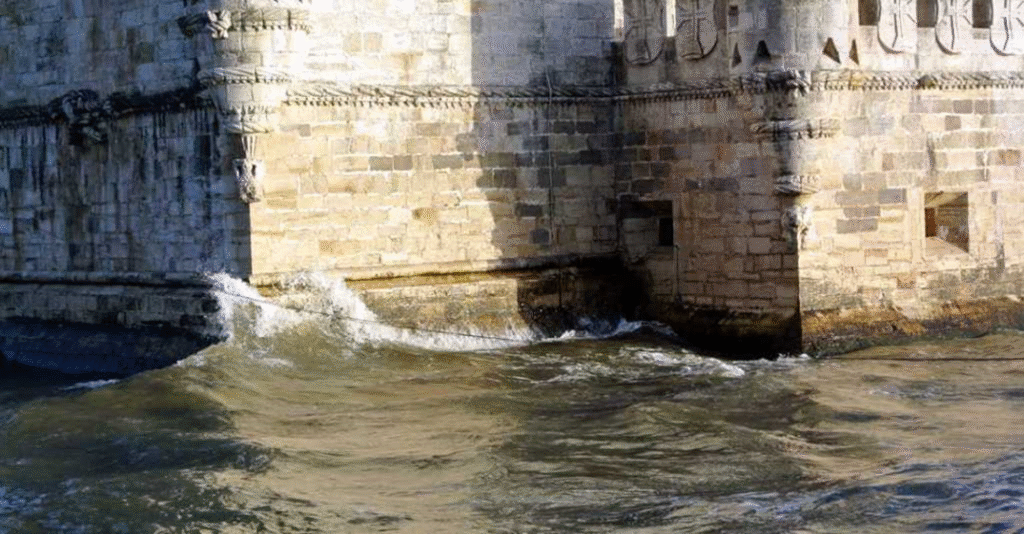
Photo by author, 2013
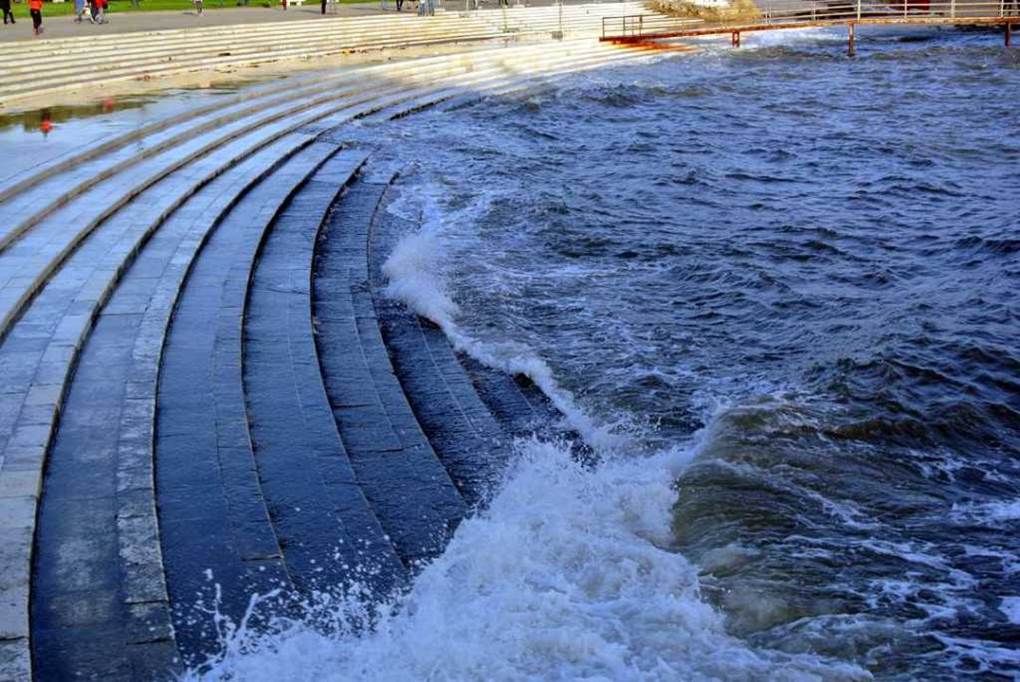
Photo by author, 2013
Monument Gago Coutinho and Sacadura Cabral
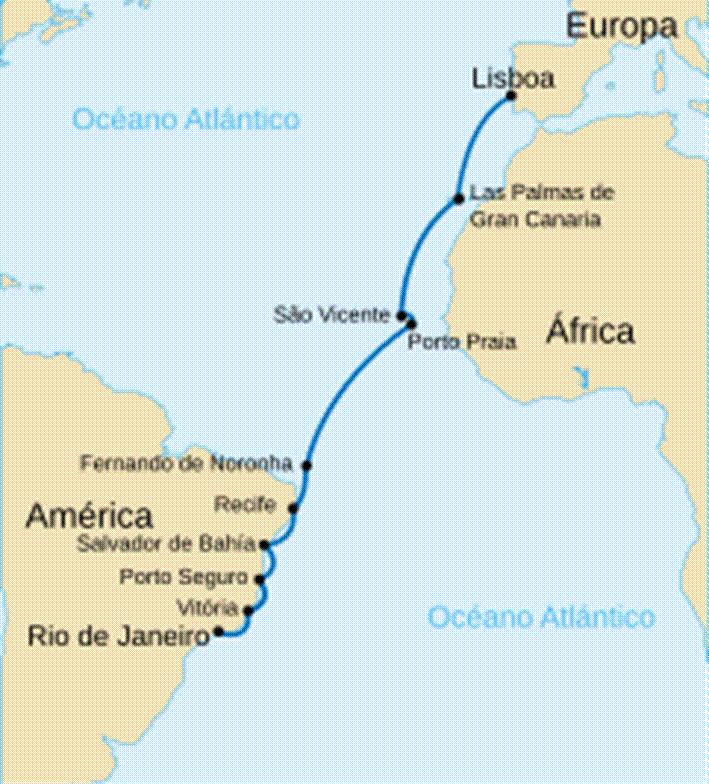
Monument to the First Aerial Crossing of the South Atlantic.
It was the first in the world to be accomplished by Portuguese aviators (Gago Coutinho and Sacadura Cabral) in 1922.
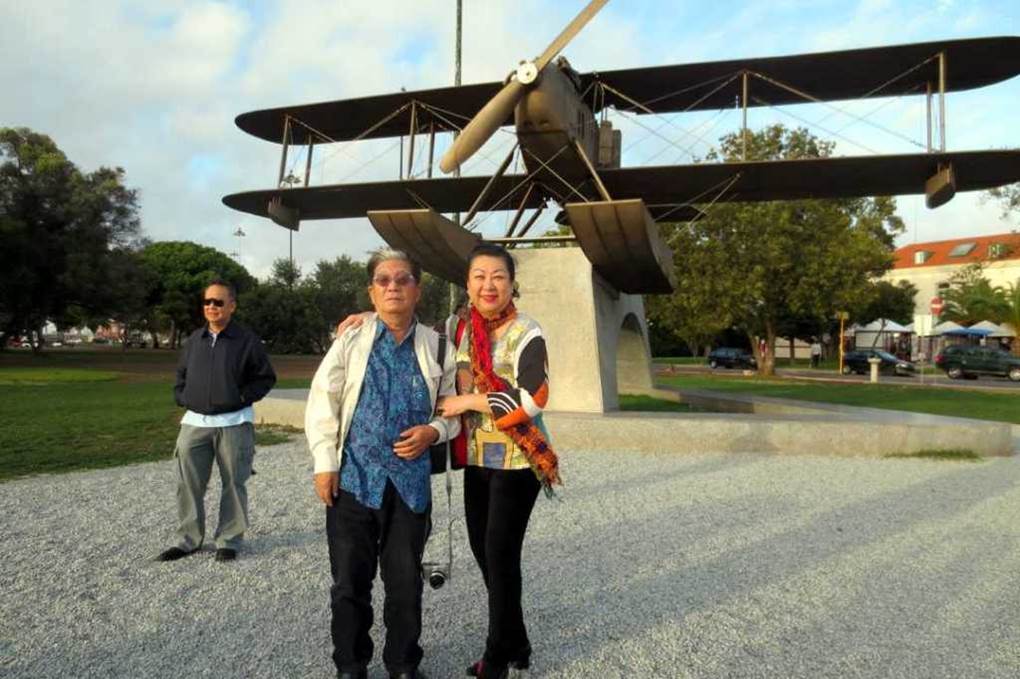
Photo of author, 2013
Route map of the world’s first trans-Atlantic flight between Lisbon and Rio de Janeiro.
Discover a stone bench on the sidewalk of the park. It is designed to be disassembled.
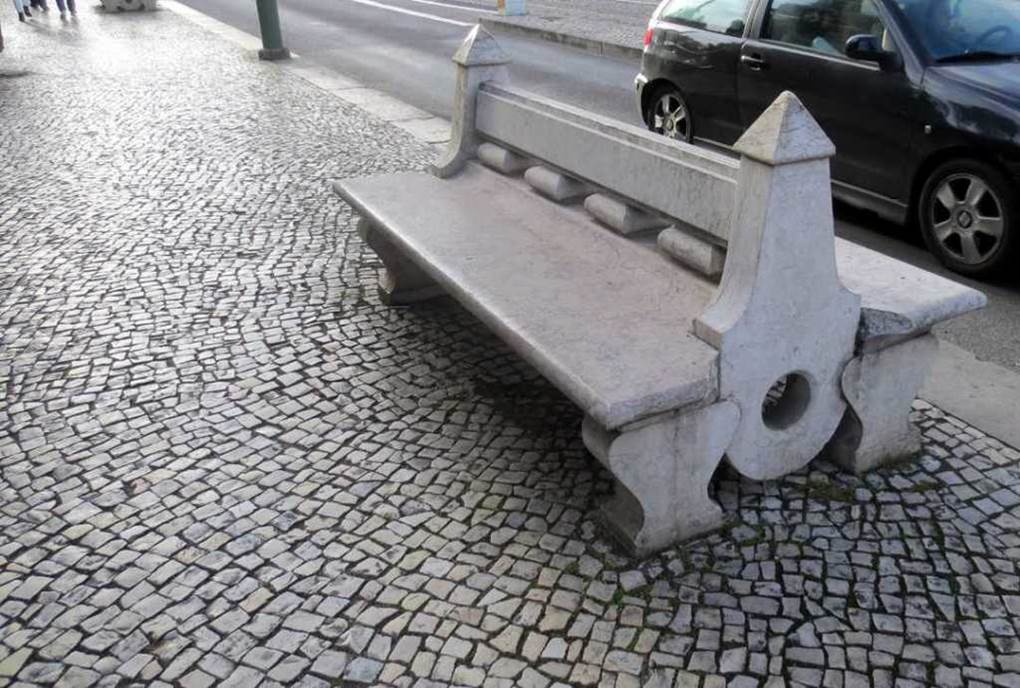
Photo by author, 2013
Church of Santa Maria and Jerónimos Monastery
World Heritage Site
Church of Santa Maria
It is a historical building that condenses the wealth of Portugal during the Age of Discovery. Construction was begun by King Manuel I in 1502 and largely completed in 1511, but it took about 300 years to complete it.
Manuel I is also buried here, along with Vasco da Gama.
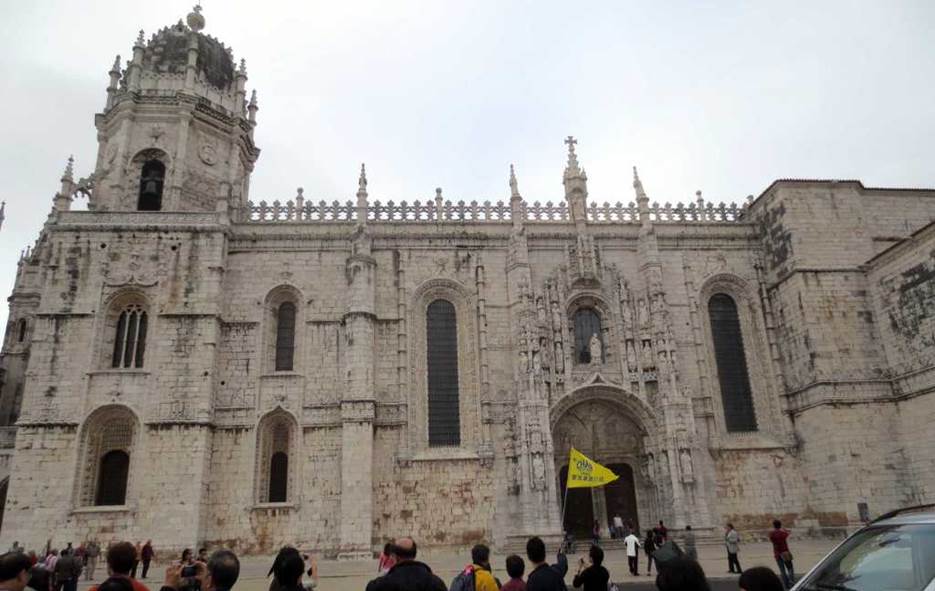
Photo by author, 2013
The construction was financed by the enormous profits from the spice trade that Vasco da Gama and others brought back from India.
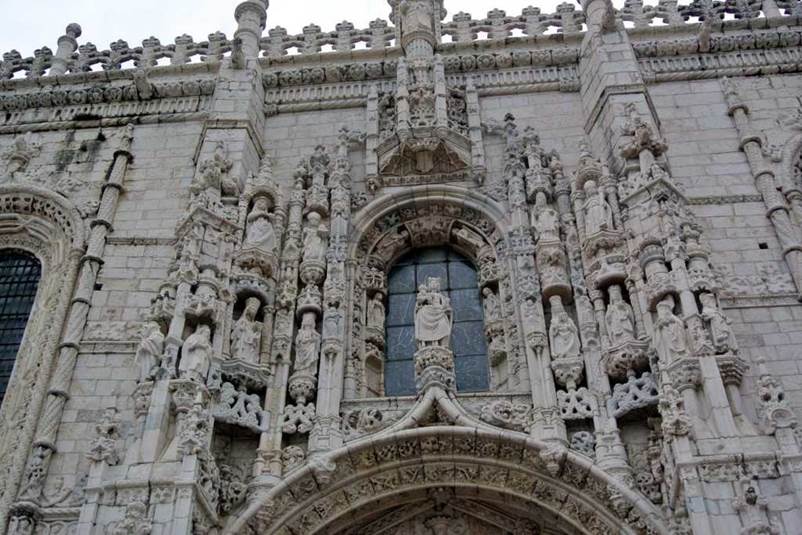
Photo by author, 2013
The building and sculptures are said to be masterpieces of the Manueline style.
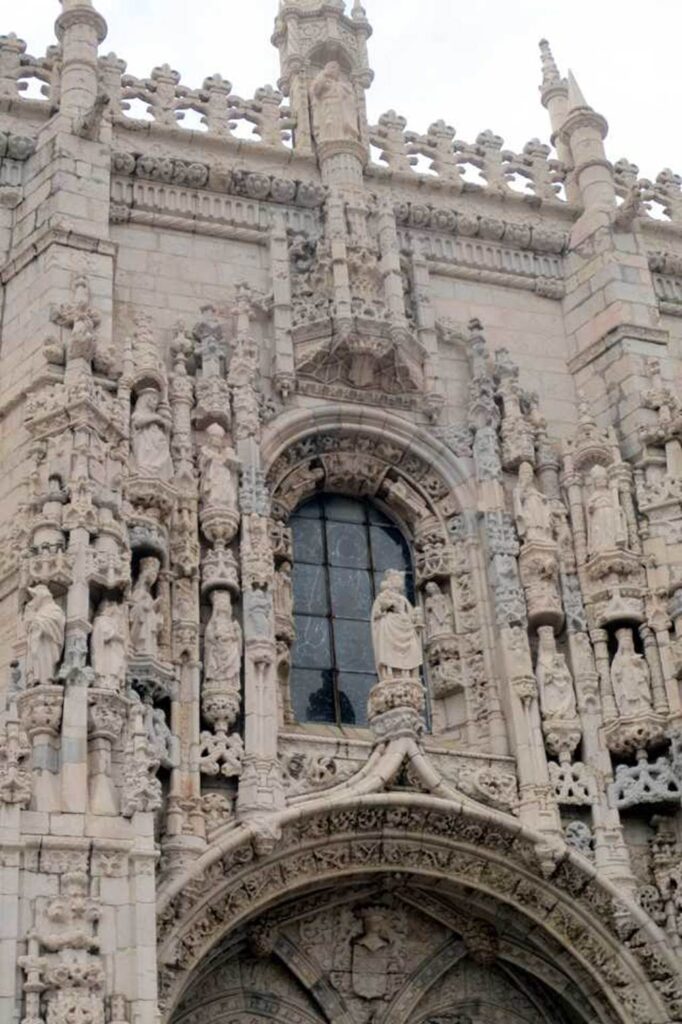
Photo by author, 2013
Church of Santa Maria
The church is a perfect blend of architecture and sculpture, and its unique elegance is unparalleled. It is a masterpiece.
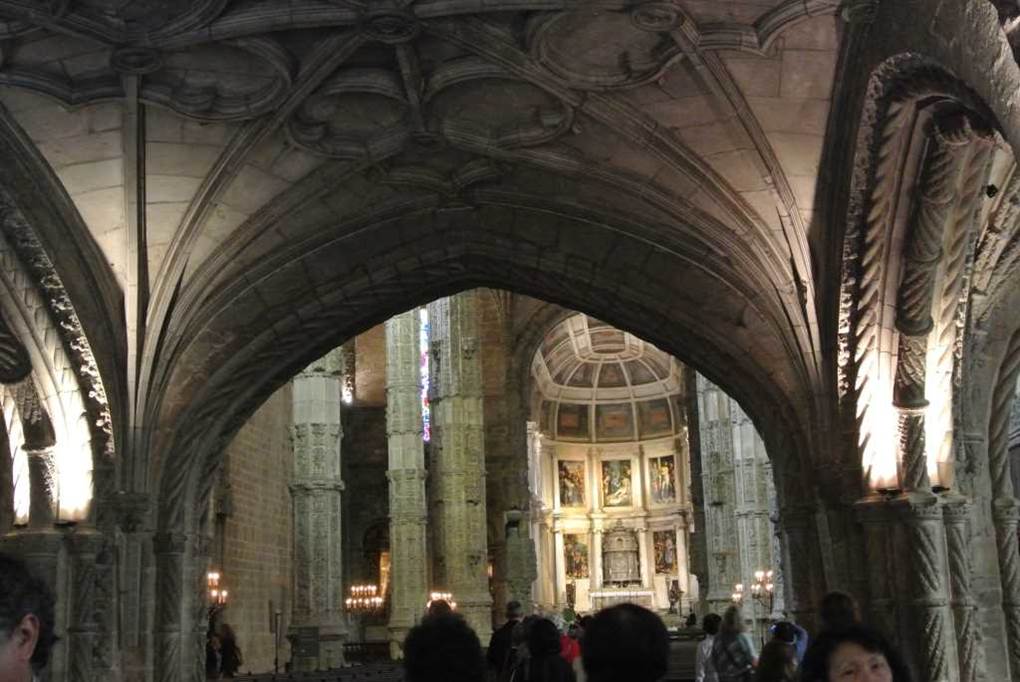
Photo by author, 2013
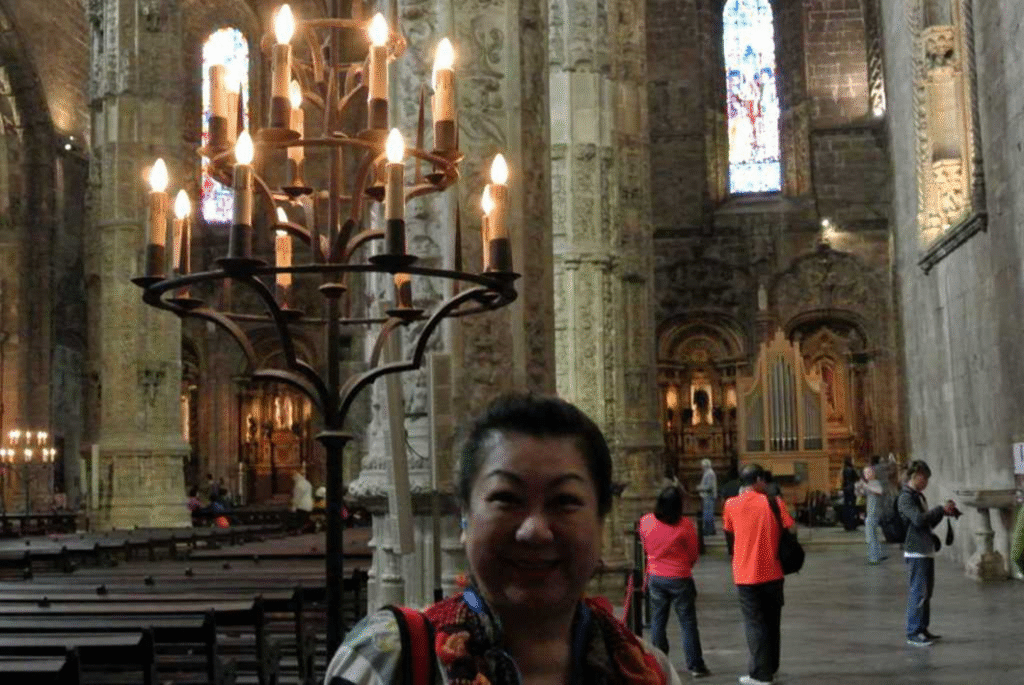
Photo by author, 2013
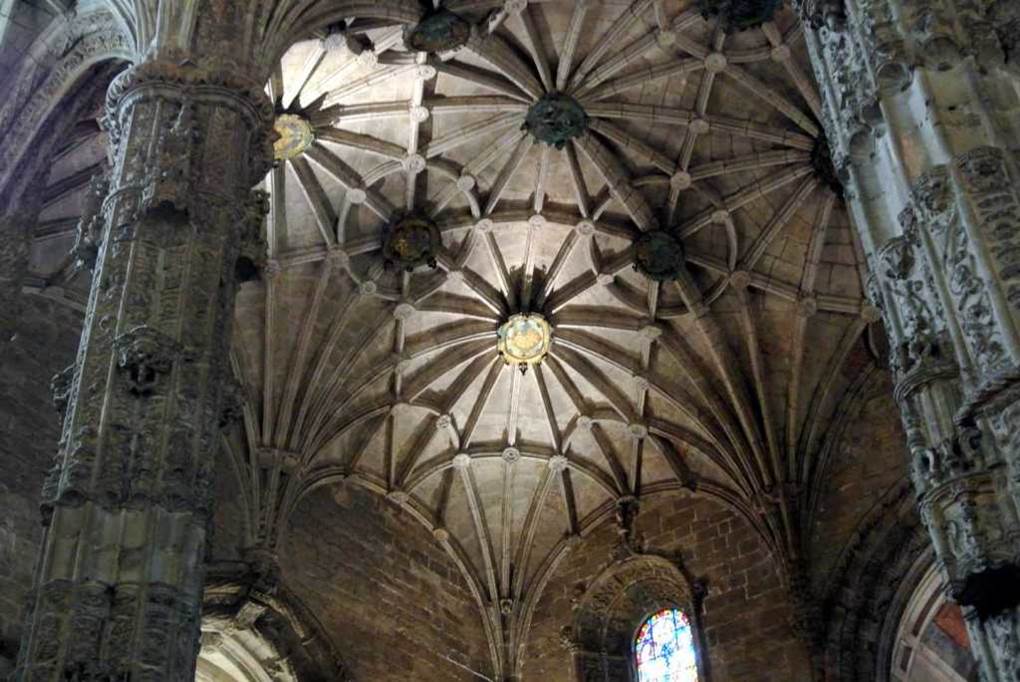
Photo by author, 2013
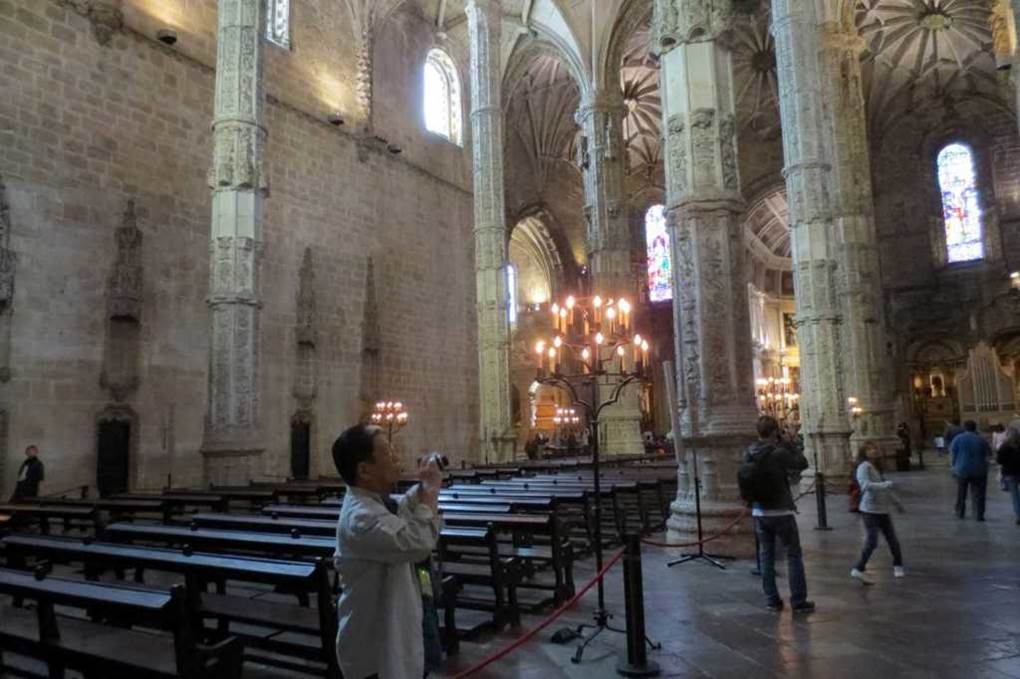
Photo by author, 2013
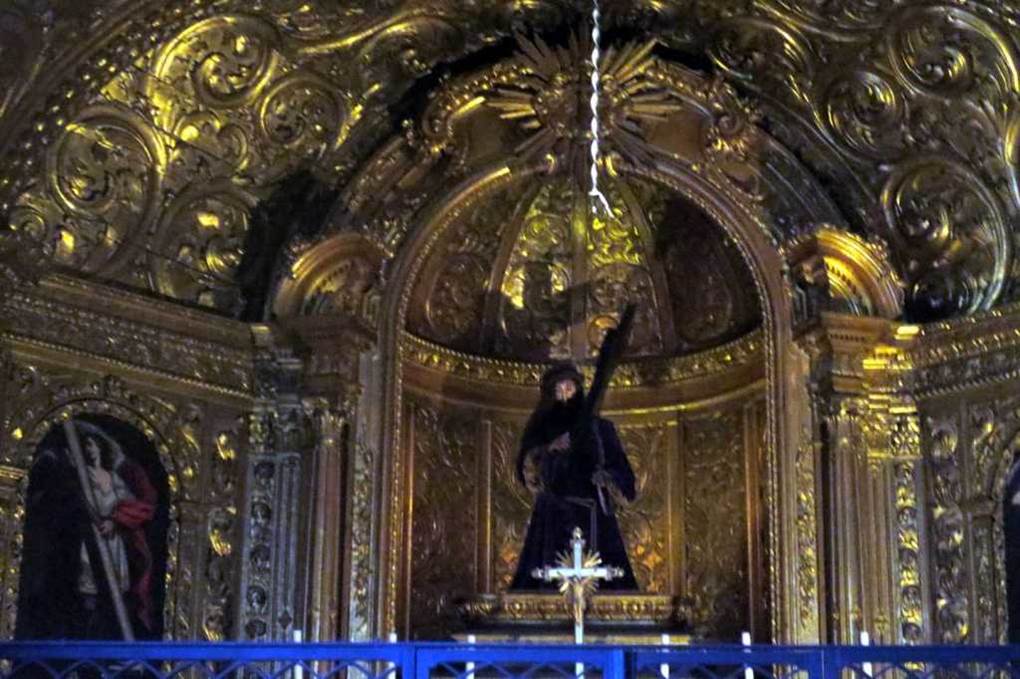
Photo by author, 2013
Intricate stained glass.
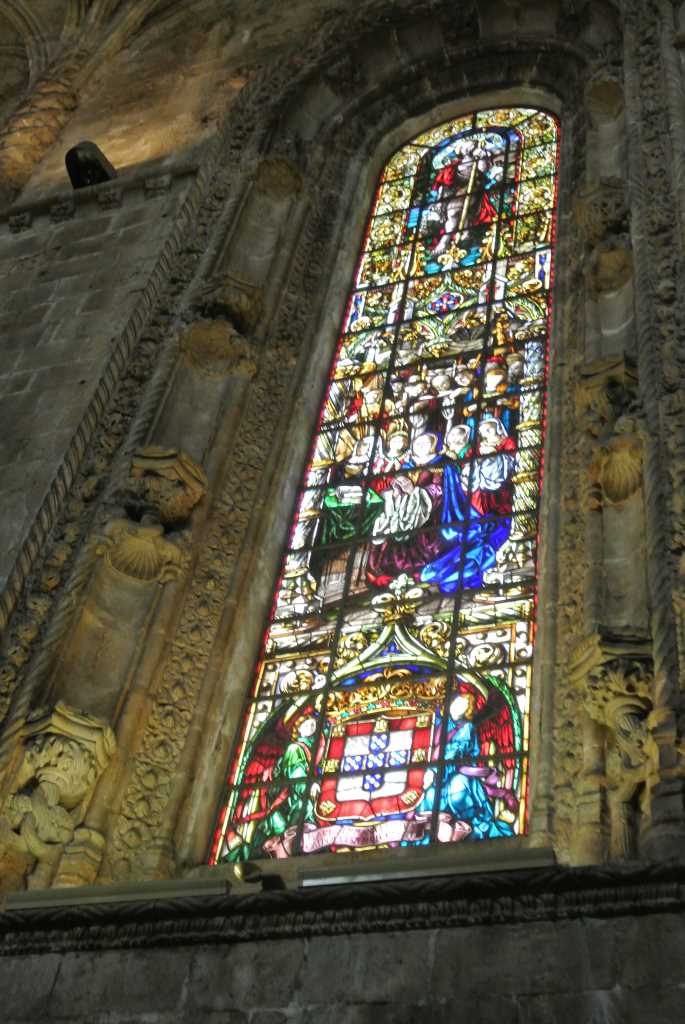
Photo by author, 2013
Death and burial of Vasco da Gama
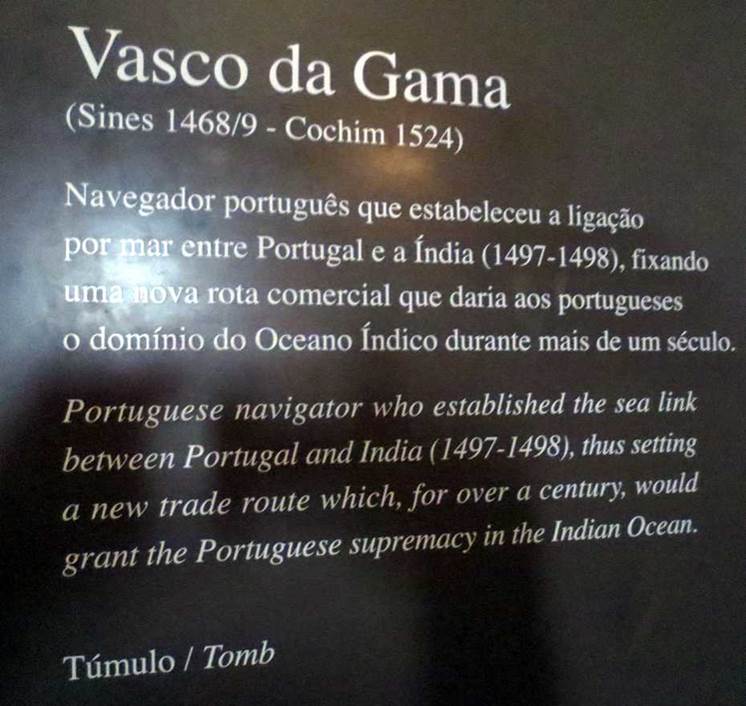
Photo by author, 2013
Vasco da Gama fell ill in Goa during his third voyage to India and died in Kochi in 1524. His body was buried in the church of St. Francis in Kochi (mentioned in Indian Travelogue 18-Kochi), and was then transported to Portugal and buried in the church of the Jerónimos Monastery.
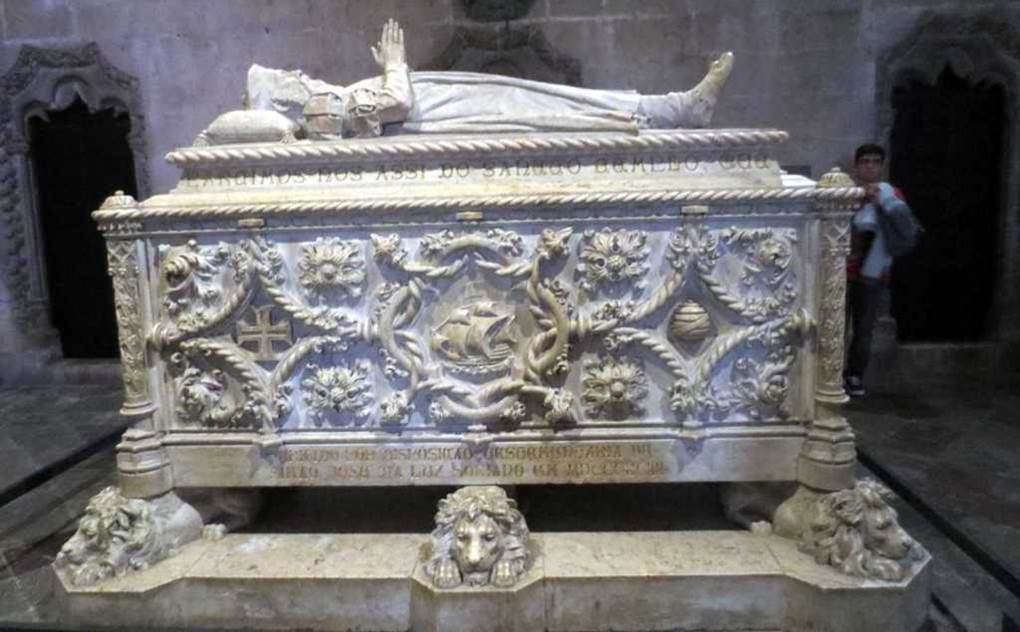
Photo by author, 2013
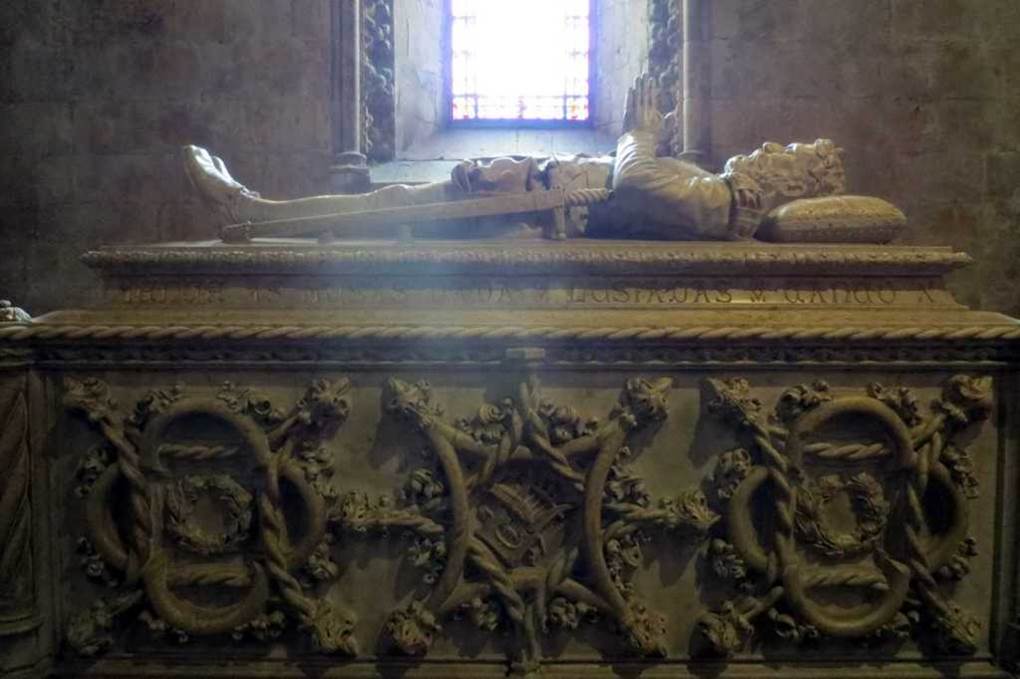
Photo by author, 2013
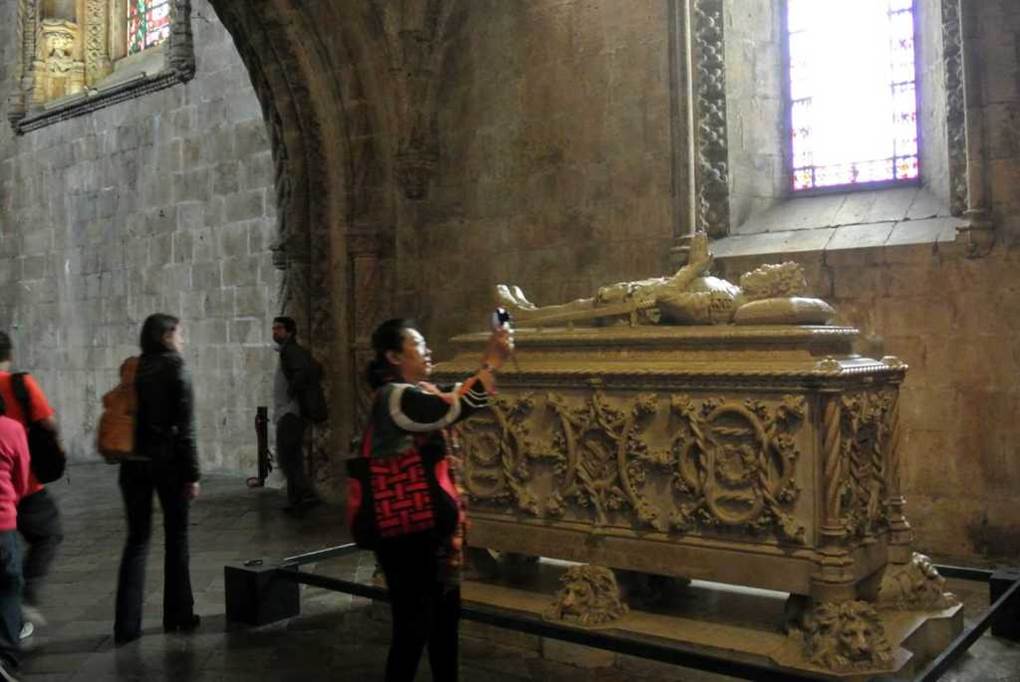
Photo by author, 2013
Manueline style architecture and decoration
It became popular during the reign of King Manuel I of Portugal (r. 1495-1521) and spread throughout almost all of Portugal. In Portugal in the first half of the 16th century, against the backdrop of profits from overseas trade during the Age of Discovery, many buildings were built with delicate decorations, as if to show off the wealth of the royal family.
The Manueline style, which was applied to buildings throughout Portugal by royal edicts, was fuelled by the sentiment of the entire Portuguese people celebrating the country’s naval achievements.
Impressive sculptural work around the door!
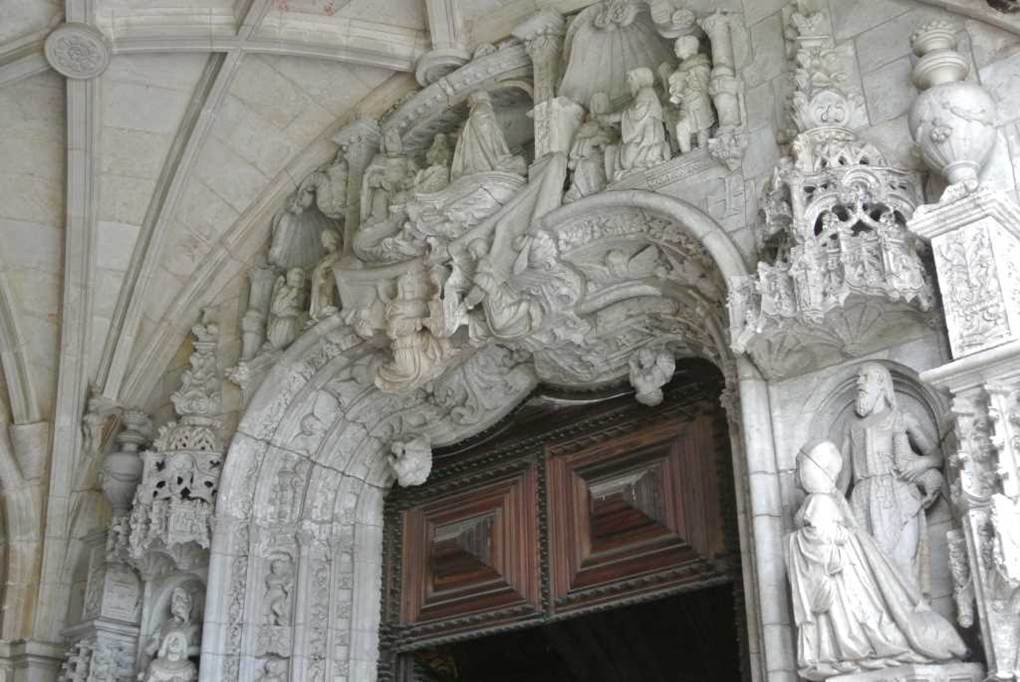
Photo by author, 2013
The carvings on the window frames are exquisite.
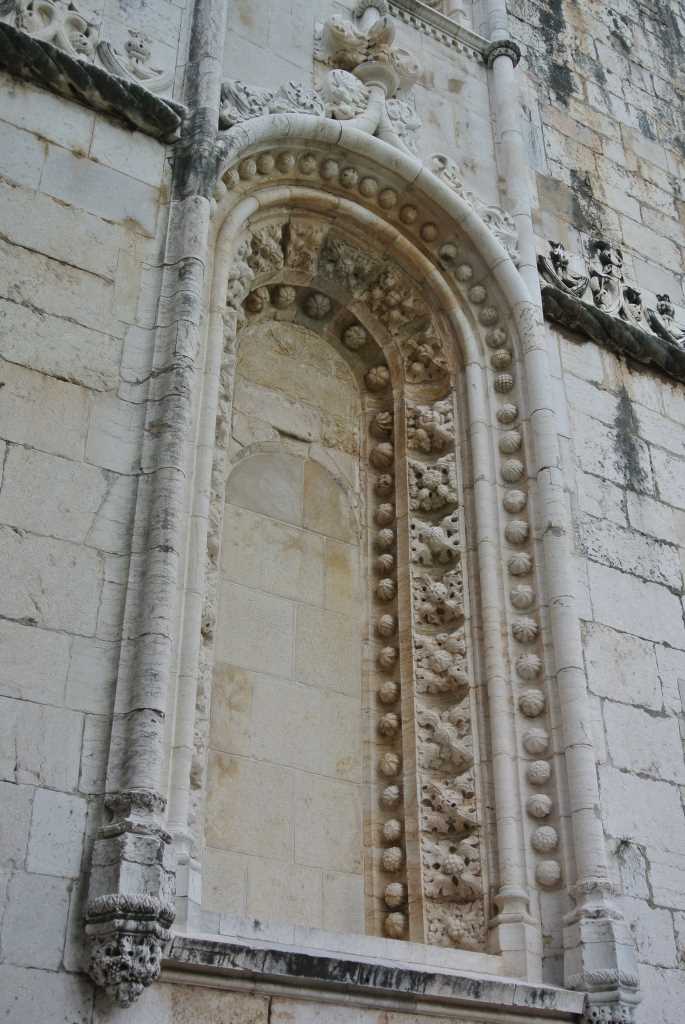
Photo by author, 2013
Jerónimos Monastery on the left and the Church of Santa Maria on the right.
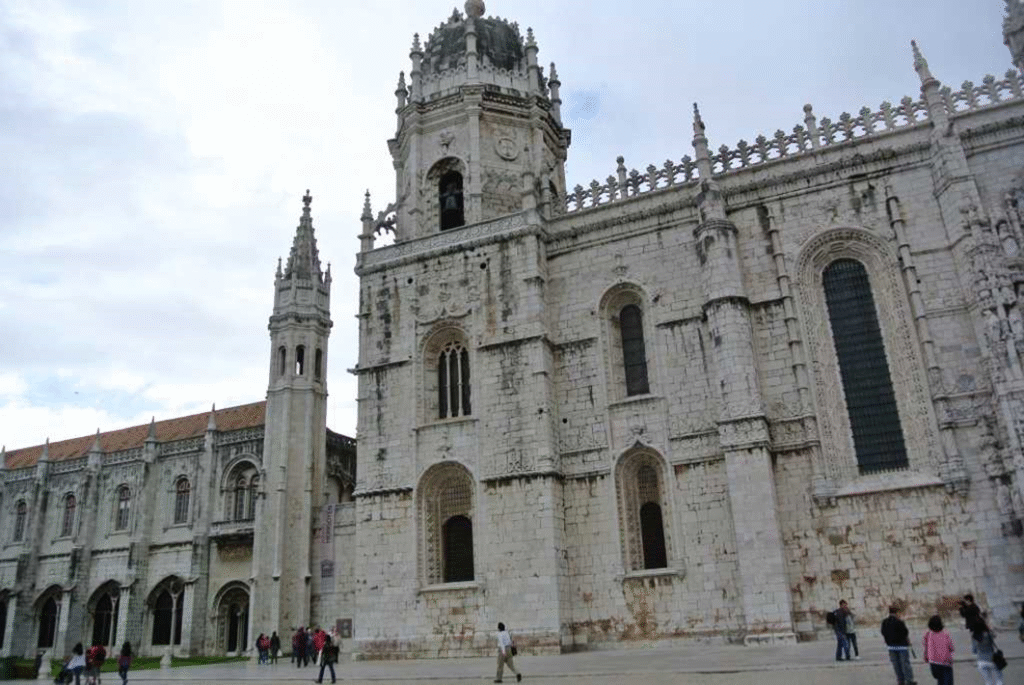
Photo by author, 2013
Jerónimos Monastery
A World Heritage Site, is located to the west of the Santa Maria Church.
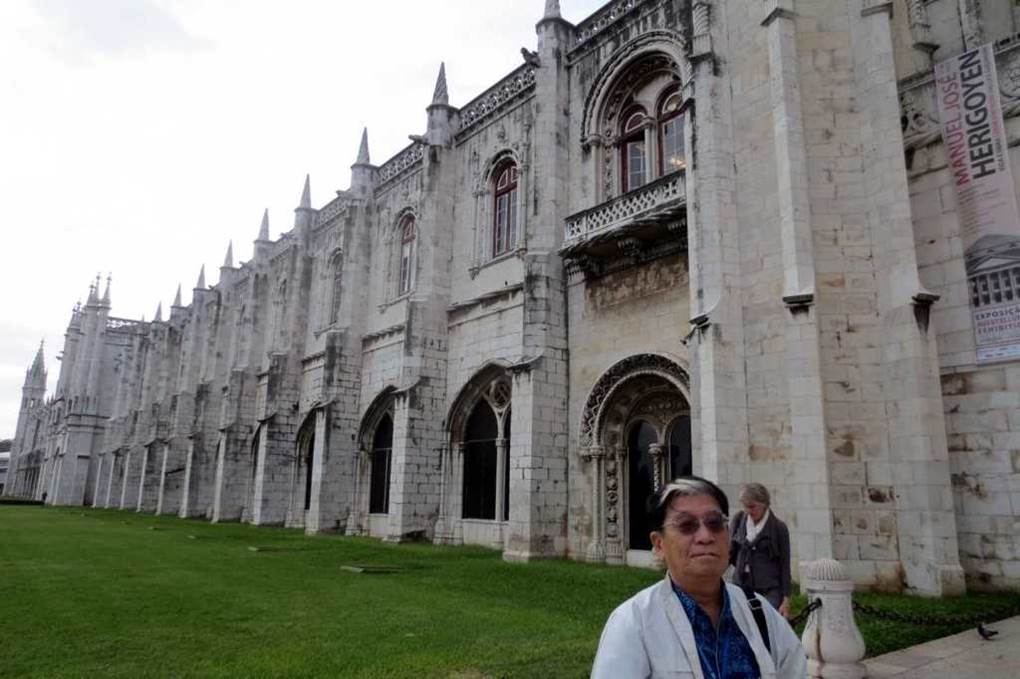
Photo of author, 2013
Pastéis de Belém Pastry shop
After visiting the Jeronimos Monastery, a World Heritage Site in Lisbon, I visited a nearby long-established Western-style pastry shop founded in 1837.
It sold popular pastries that can be eaten anywhere in Portugal, from north to south.
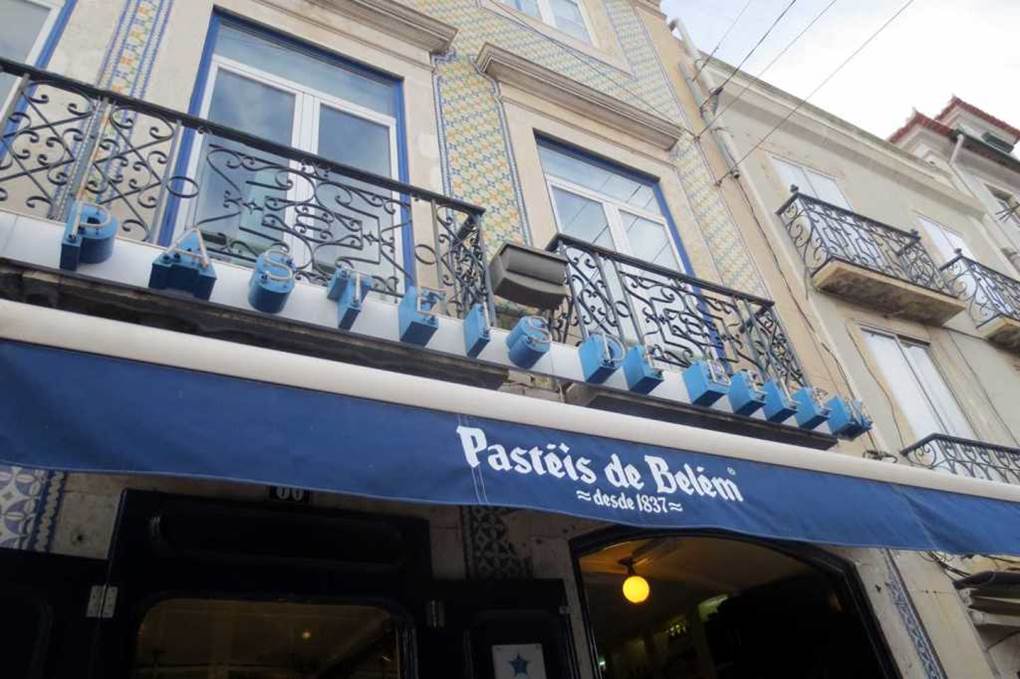
Photo by author, 2013
Pastéis de Belém, 1837, proudly inscribed on the mosaic walkway in front of the shop. Persistence is power.
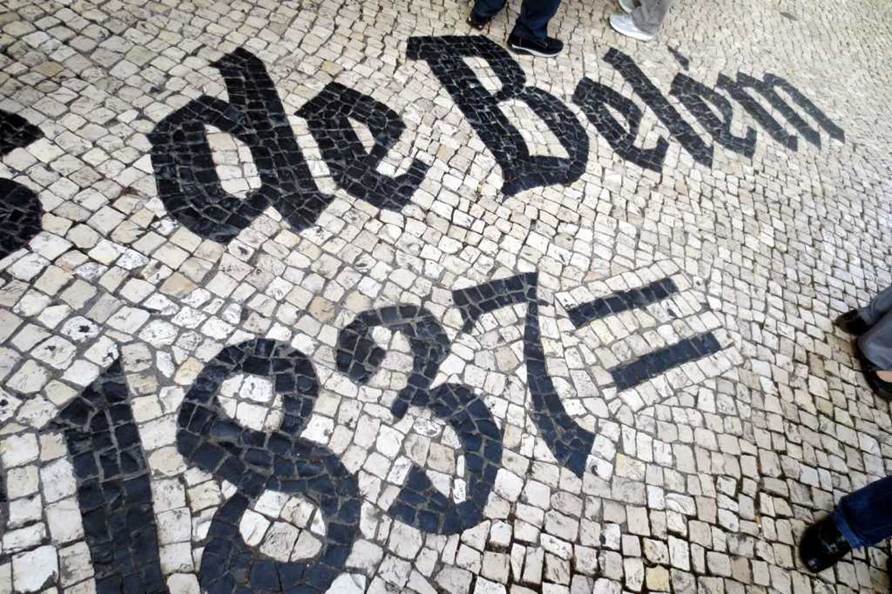
Photo by author, 2013
The pastel de nata (egg tart), which is made according to a secret recipe handed down from the Jerónimos Monastery, is said to have a taste unique here.
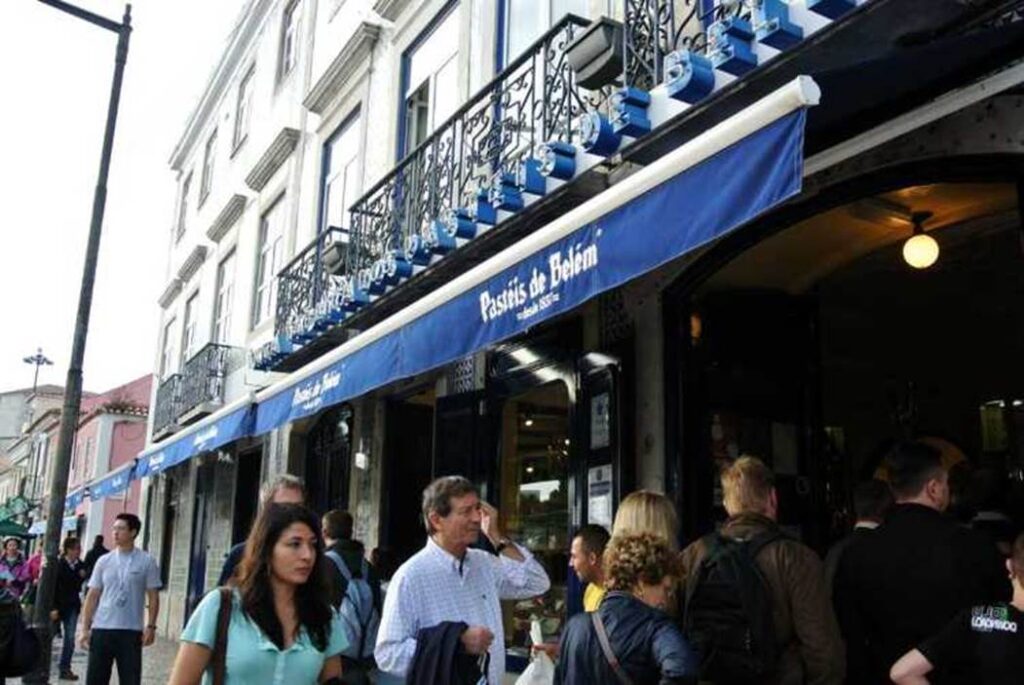
Photo by author, 2013
There is a constant stream of tourists.

Photo by author, 2013
Egg tarts are called “Pastel de Nata” in Portugal. “Pasteis de Belem” is known as the place where you can eat the most delicious “Pastel de Nata” in Portugal.
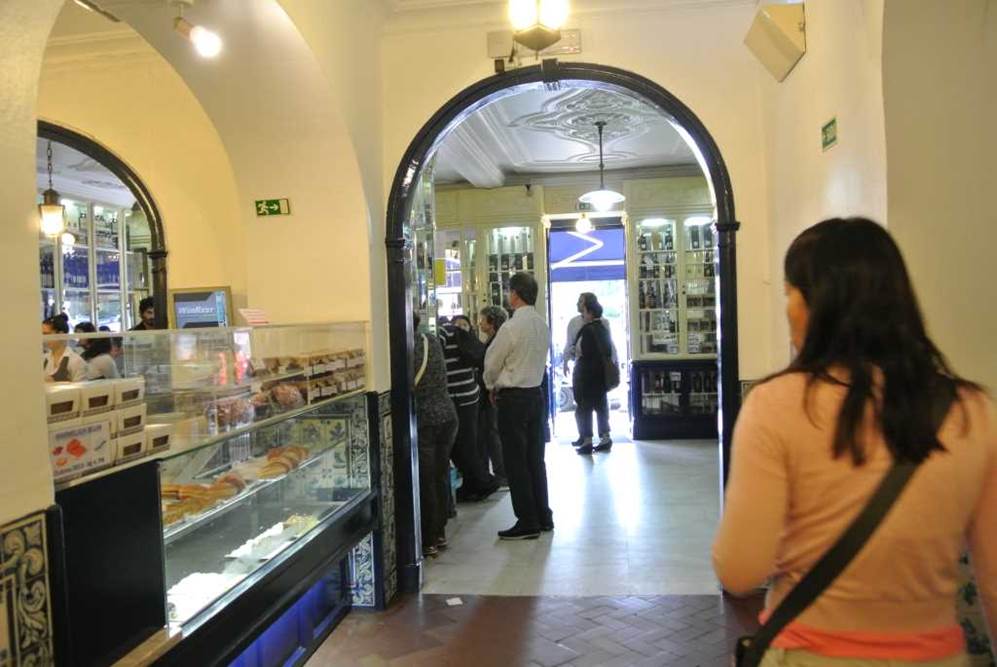
Photo by author, 2013
It seems that you can takeaway too.
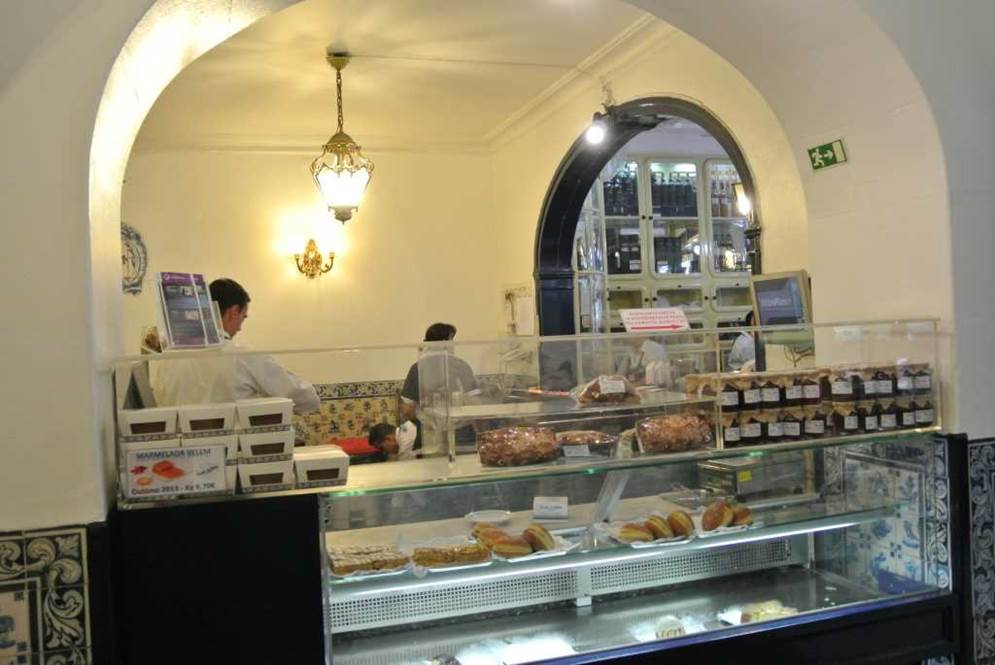
Photo by author, 2013
Luckily, there were seats available for our group, so we were able to relax.
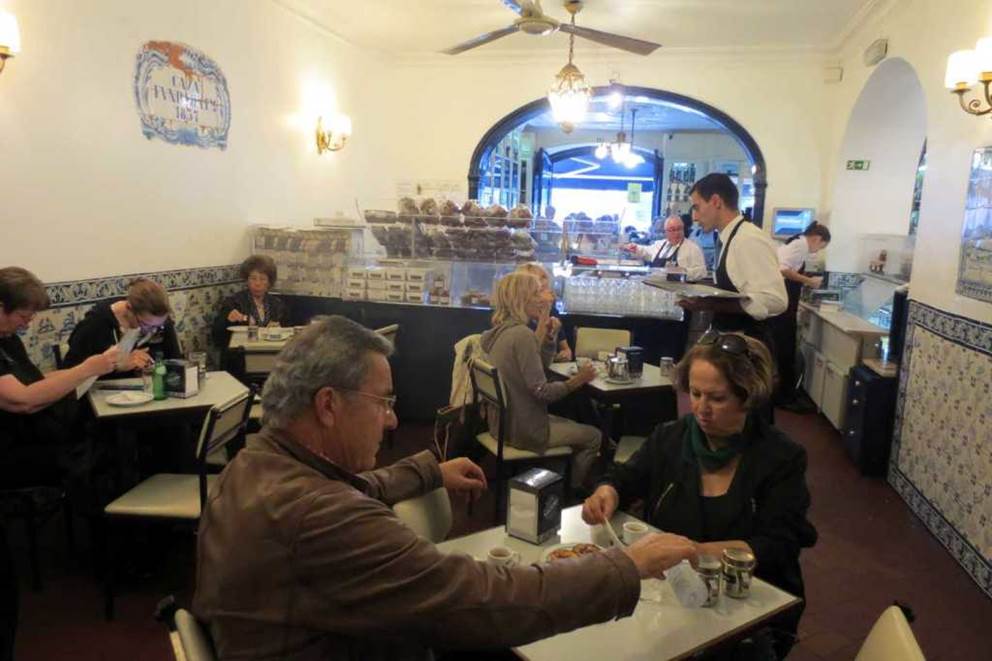
2013年 筆者撮影
The puff pastry outside is surprisingly crispy and flaky. Because it is baked in a short time at a high temperature of 400 degrees, the crispy texture can be achieved. The filling is a creamy, gooey egg cream.
Although I am allergic to eggs, I also tasted it. The sweetness was just right and makes me want to have a second serving.

Photo by author, 2013
Most of the customers who come here order “Pastel de Nata (egg tart)”.
Indeed, everyone orders this signature product of “Pasteis de Belém”.

Photo by author, 2013
It is believed to have been invented before the 18th century by the nuns of the Jerónimos Monastery in the Belem district of Lisbon.
The first shop outside the monastery to sell this cream tart was the Casa Pastéis de Belém.
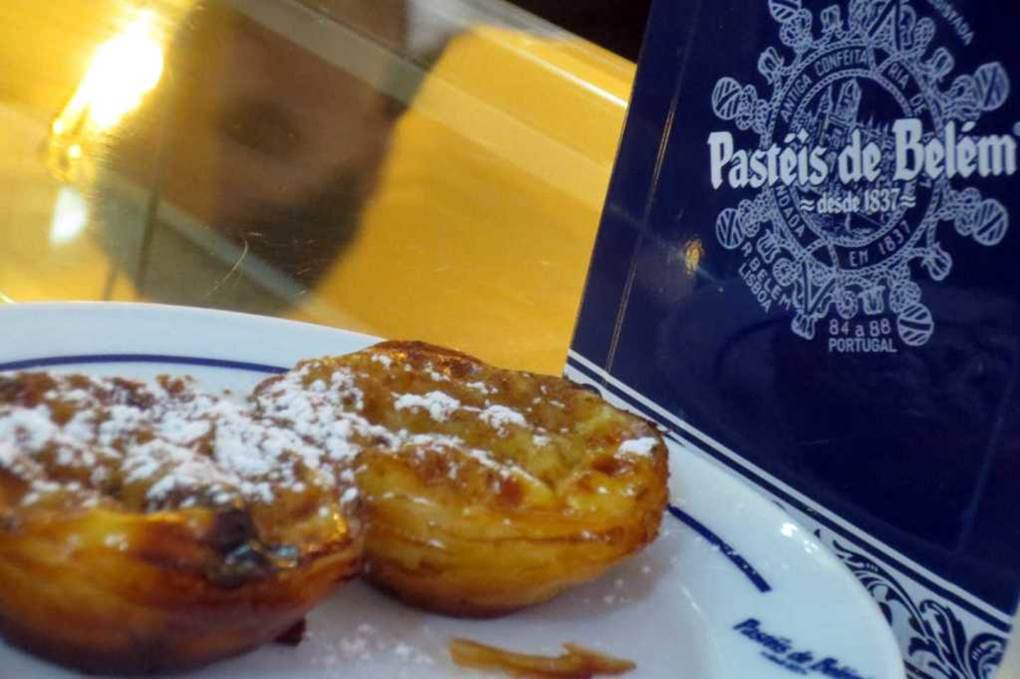
Photo by author, 2013
Tools for making Western pastries were casually displayed in the store.
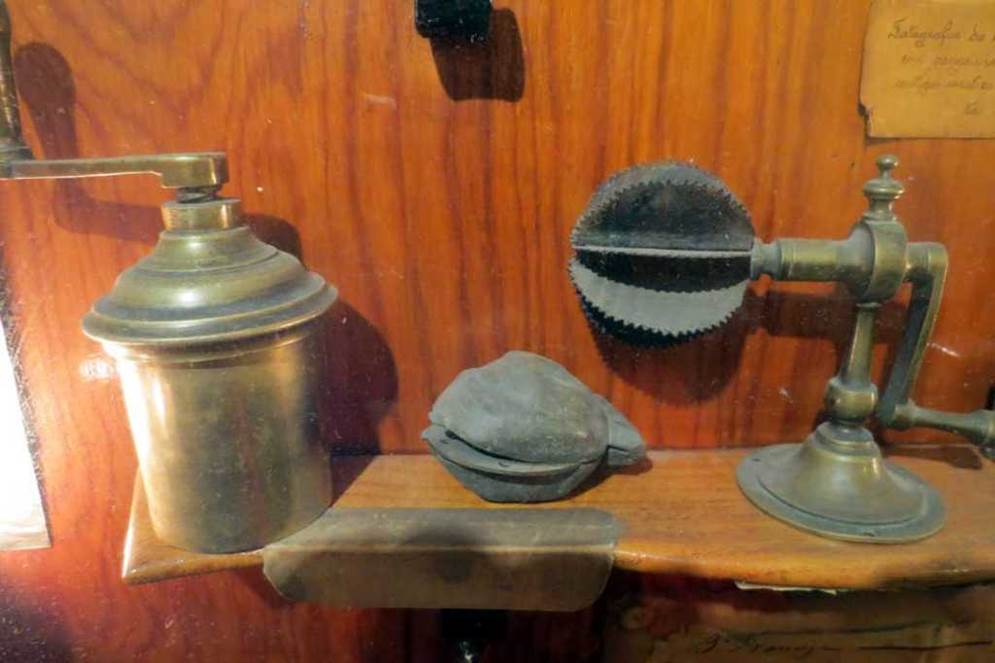
Photo by author, 2013
Azulejos
The interior of the store, decorated with traditional Portuguese decorative tiles “Azulejo“, has an atmosphere befitting a long-established store and is full of emotion. This uniquely Portuguese design wall tiles were also frequently used in retro architecture in Brazil and Southeast Asia as a sign of wealth.
Here in Lisbon, I had traced it to its source.
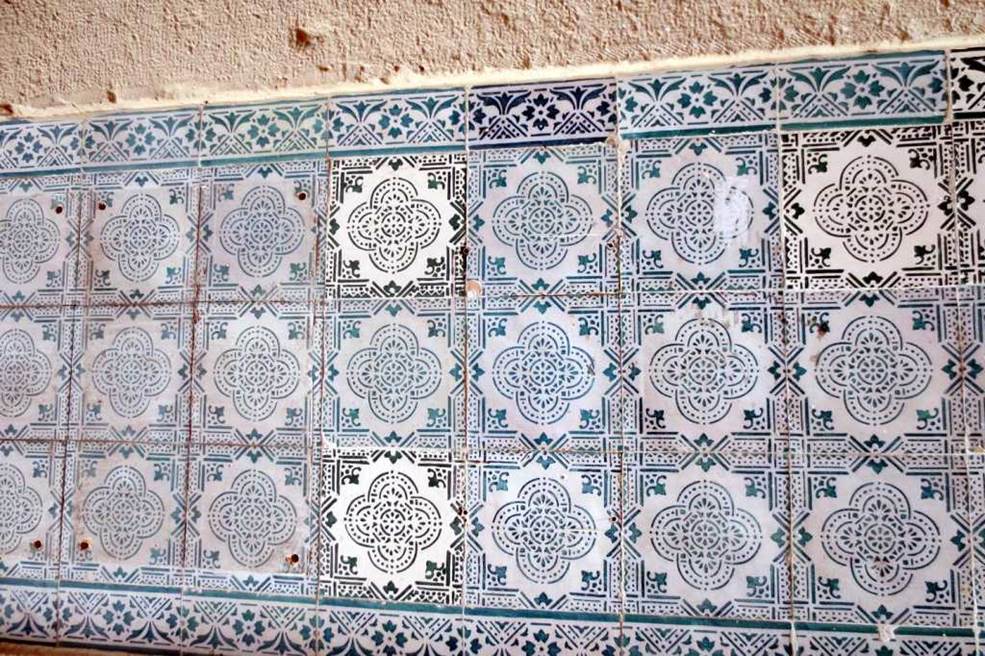
Photo by author, 2013
A work of art made of iron.. The light reflections on the ceiling is beautiful.
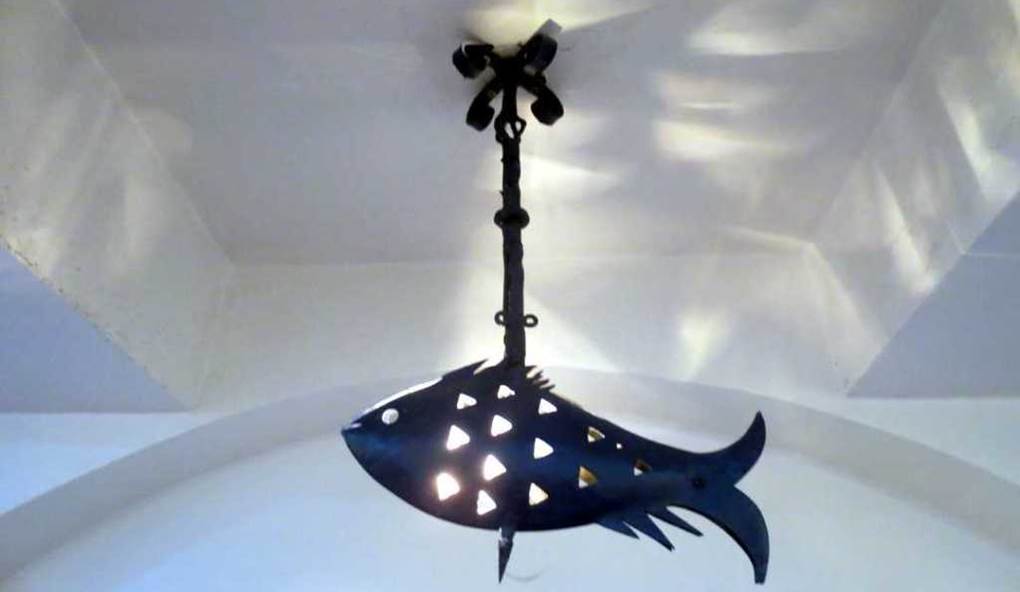
Photo by author, 2013
Tram in Lisbon
I came across a tram still in operation in the city of Lisbon. It had been a long time since I last saw a tram, so I was thrilled to see it still in operation.
Lisbon’s trams were converted to electric trains in 1901, with a special 900mm gauge.
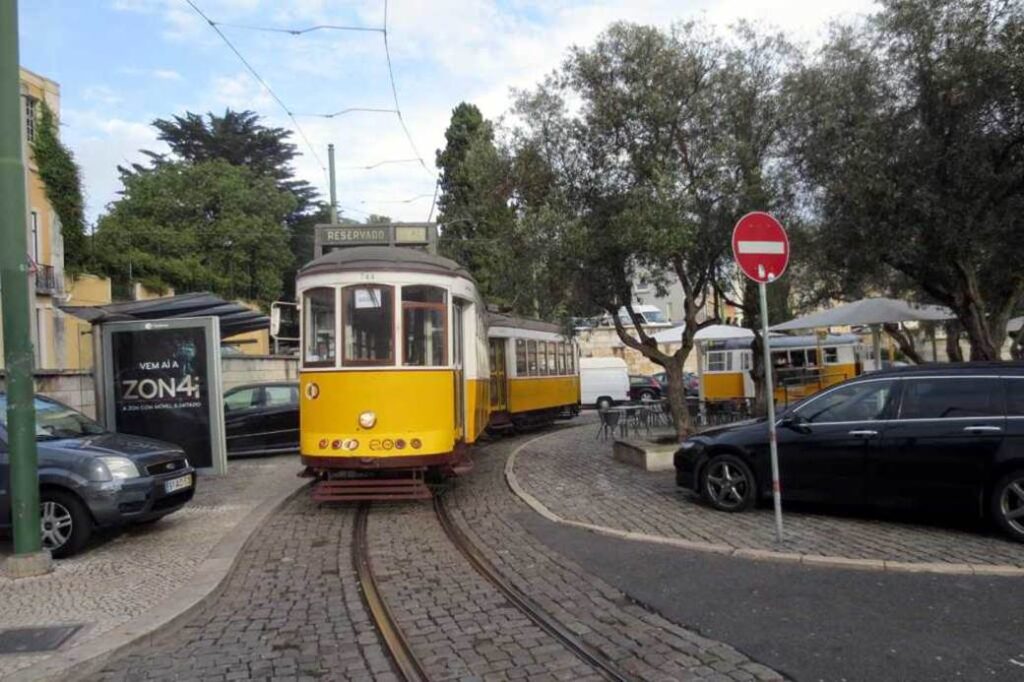
Photo by author, 2013
In the heart of Lisbon, beneath the historic district, the metro line now criss-crosses the city. But for foreign travellers, there’s no better way to get around the city than with a four-kilometre tram network with five routes.
Riding this tram will give you a clear understanding of Lisbon’s complex topography and its sloped streets.
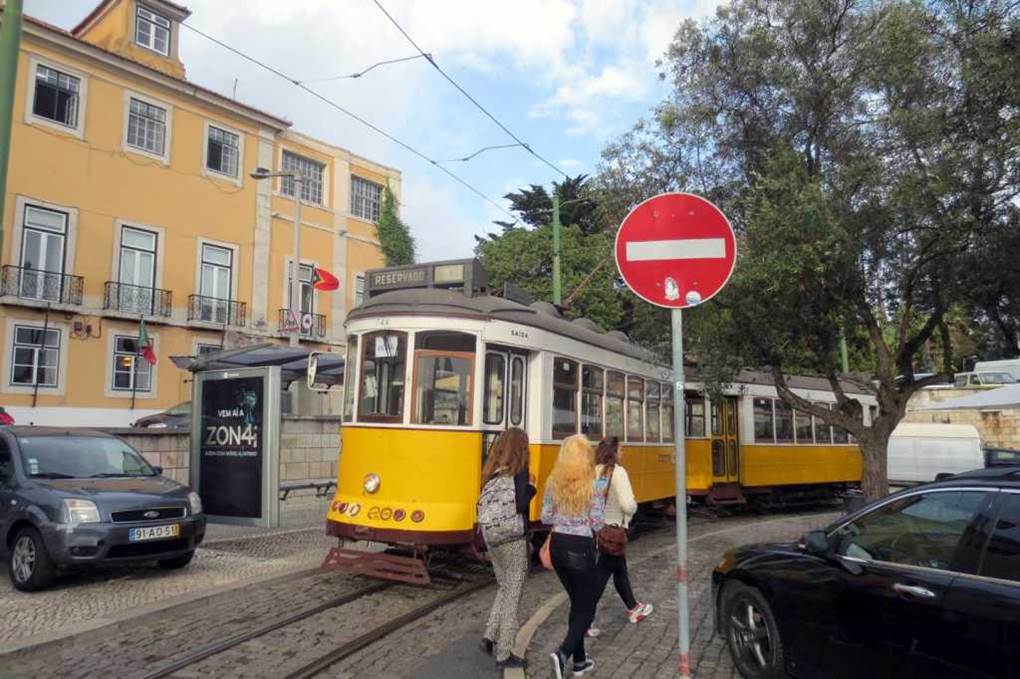
Photo by author, 2013
Bairro Alto
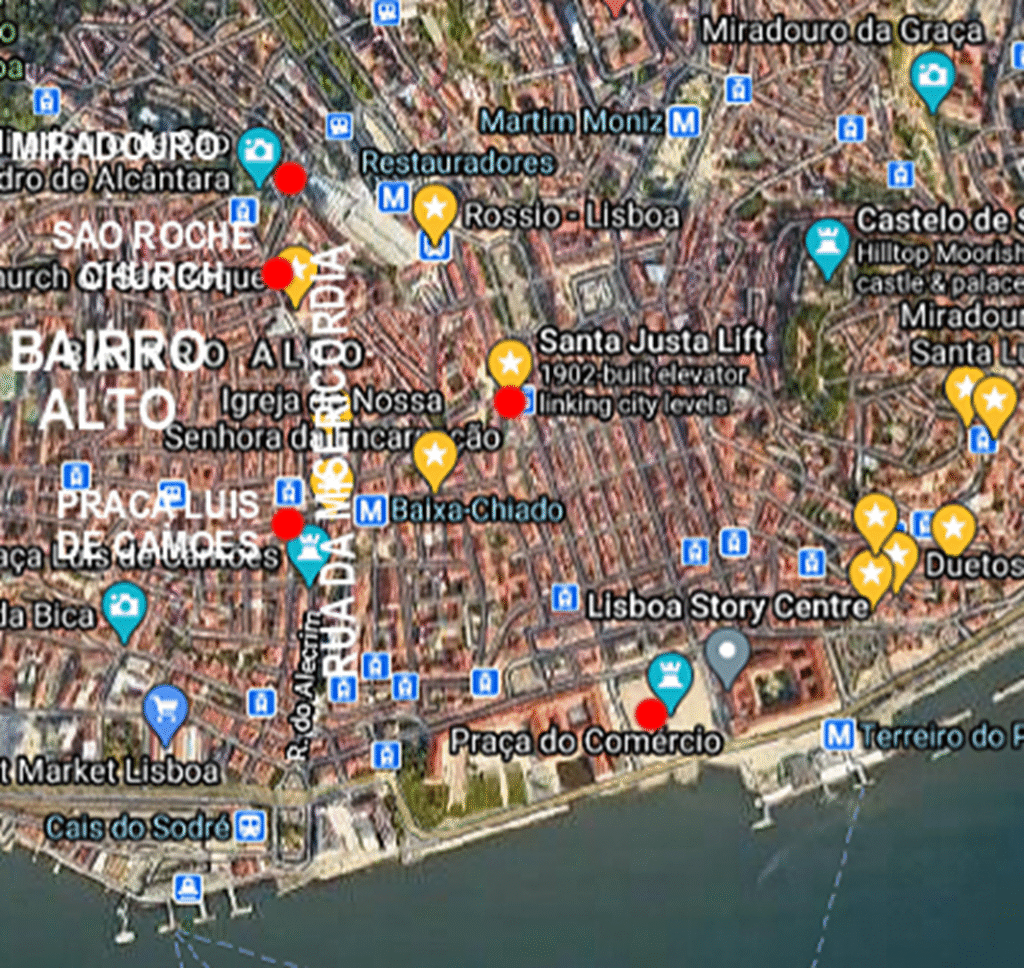
Bairro Alto means “high district” in Portuguese. It is one of Lisbon’s oldest districts, with a mix of residential and commercial areas. It used to be home to a lot of poor people, but now it is a popular neighbourhood with many clubs and taverns where you can listen to fado music.
Since the 1990s, vehicles have been banned from entering the area, except for private cars owned by Bairro Alto’s residents and ambulances, but when I visited in 2013, there were still many cars parked on the slope.
RUA DA MISERICORDIA
(Misericórdia street)
Misericórdia Street is the main street that connects Bairro Alto from north to south.The scenery of this hilly townscape is unique among European cities, and the picturesque scenery unfolds as you walk.
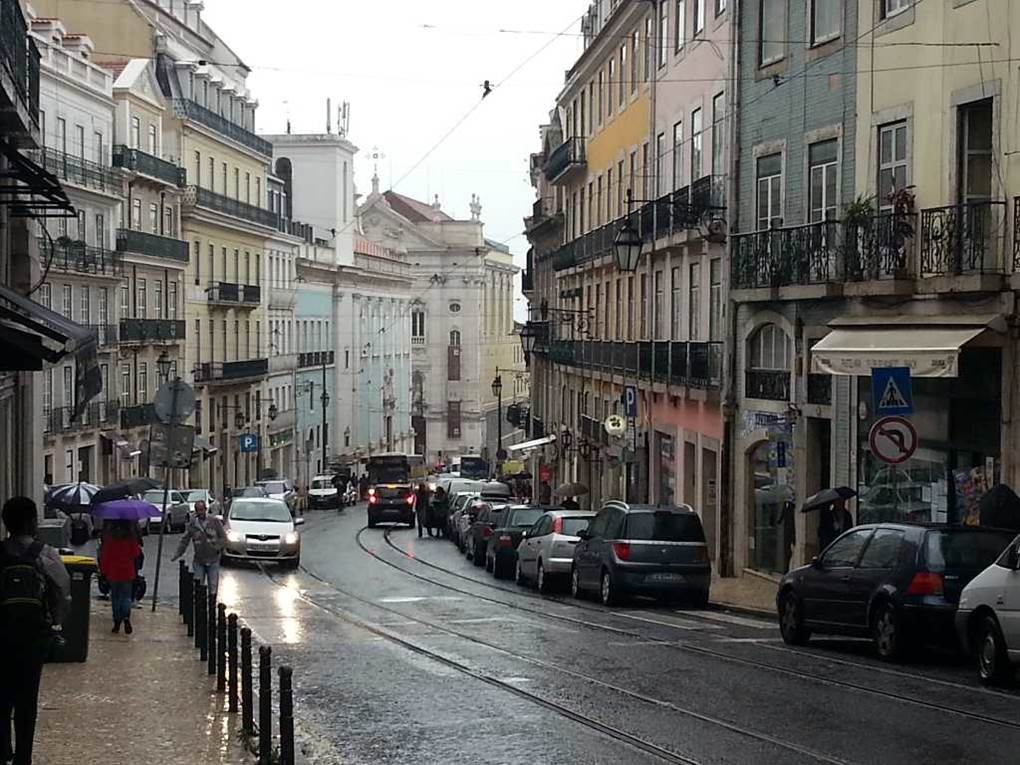
Photo by author, 2013
Church of SAO ROQUE
The church of San Roque is located at the top of the hill on Misericórdia Street. It’s a small church. It is a Jesuit church, famous in Japan for being the church of Francis Xavier.
I later discovered that in 1584, the Tensho Embassy (it was an embassy sent by the Japanese Christian Lord Ōtomo Sōrin to the pope and the kings of Europe in 1582) was sent to Europe, which arrived in Lisbon after a difficult voyage, stayed in this church for about a month. São Roque Church is an essential part of the history of exchanges between Japan and Portugal

Photo by author, 2013
Largo do Chiado
Chiado in Bairo Alto is an old commercial area where the old and the new are mixed. It is an important cultural district, with a mix of locals and tourists, and is home to museums and theaters. In front of a small square in one corner, is my planned destination, a long-established café called “A Brasileira“. I had done some research on this place beforehand, so I was able to find it without difficulty.
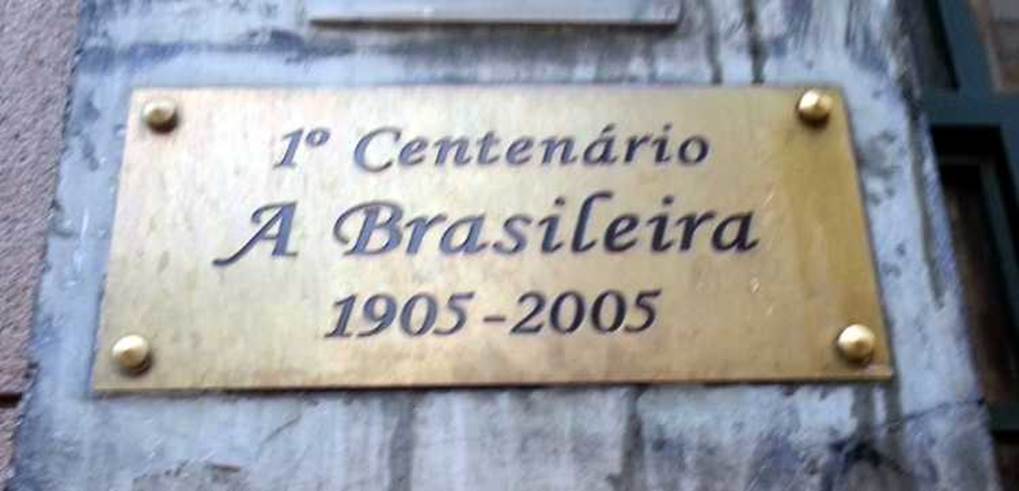
Photo by author, 2013
Our destination “Café A Brasileira” is located on Rua Garrett, halfway up the hill.
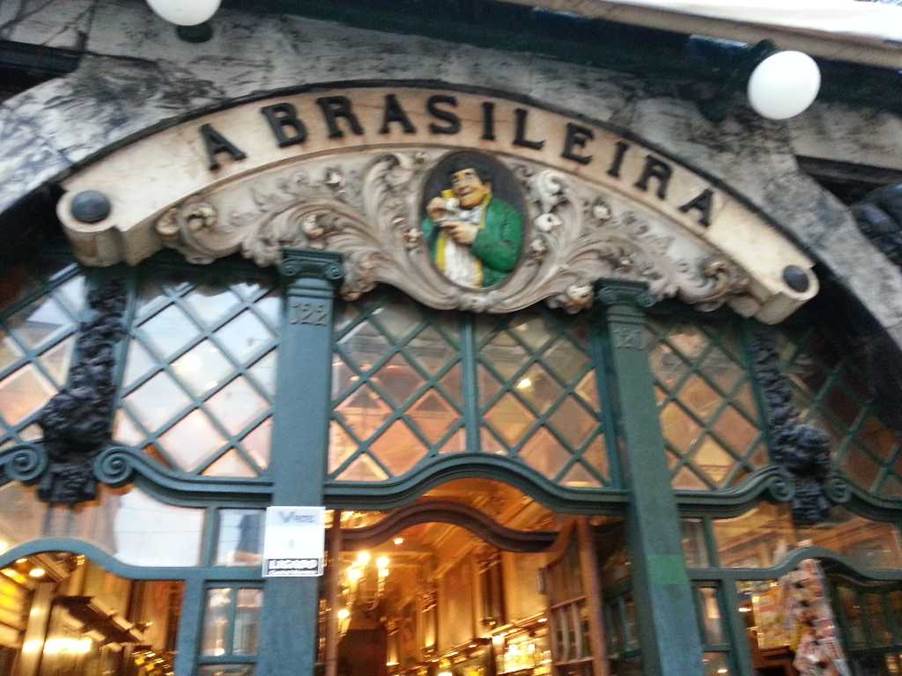
Photo by author, 2013
Taking a break with Brazilian coffee in Lisbon.

Photo by author, 2013
Praça Luís de Camões
This Square is located halfway up the slope of Rua da Misericordia.
It is surrounded by two boutique hotels and chic buildings. The area is full of beautiful streets, squares, cultural facilities, cafes and shops.
The Consulate Hotel
It is located right in front of the Plaza de Camoees and has a strong presence. From the rooms on the upper floors, you can see the beautiful city below and the mouth of the Tagus River, where Vasco da Gama once sailed.
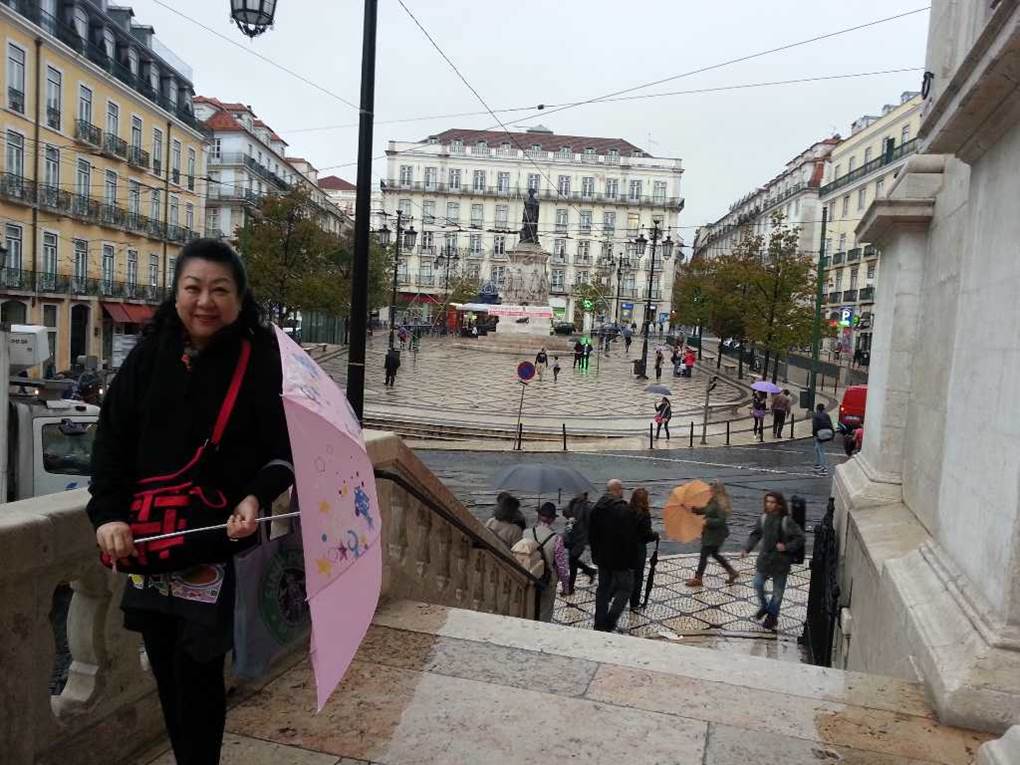
Photo by author, 2013
Bairro Alto Hotel
The boutique Hotel is located on the corner of Plaza de Camoees and Misericordia Street. Chic shades look good on the wall. A tram runs next to it.
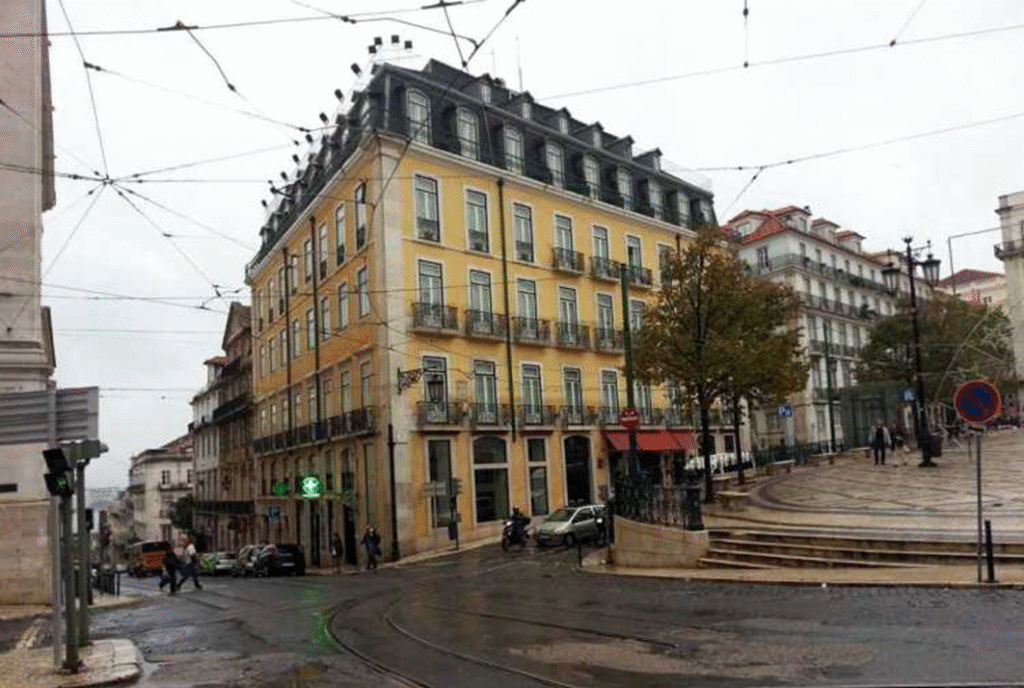
Photo by author, 2013
Viewpoint of São Pedro de Alcântara
After walking for a while behind the church of San Roque, we arrived at a park on a hilltop off a cliff. From here, we can overlook the city centre of Lisbon and the train terminal station.

Photo by author, 2013
A light rain began to fall on the observation deck of the São Pedro de Alcântara park. I saw the railway terminal station with a large roof. On the opposite hill, the castle of São Jorge is faintly visible in the rain.

Photo by author, 2013
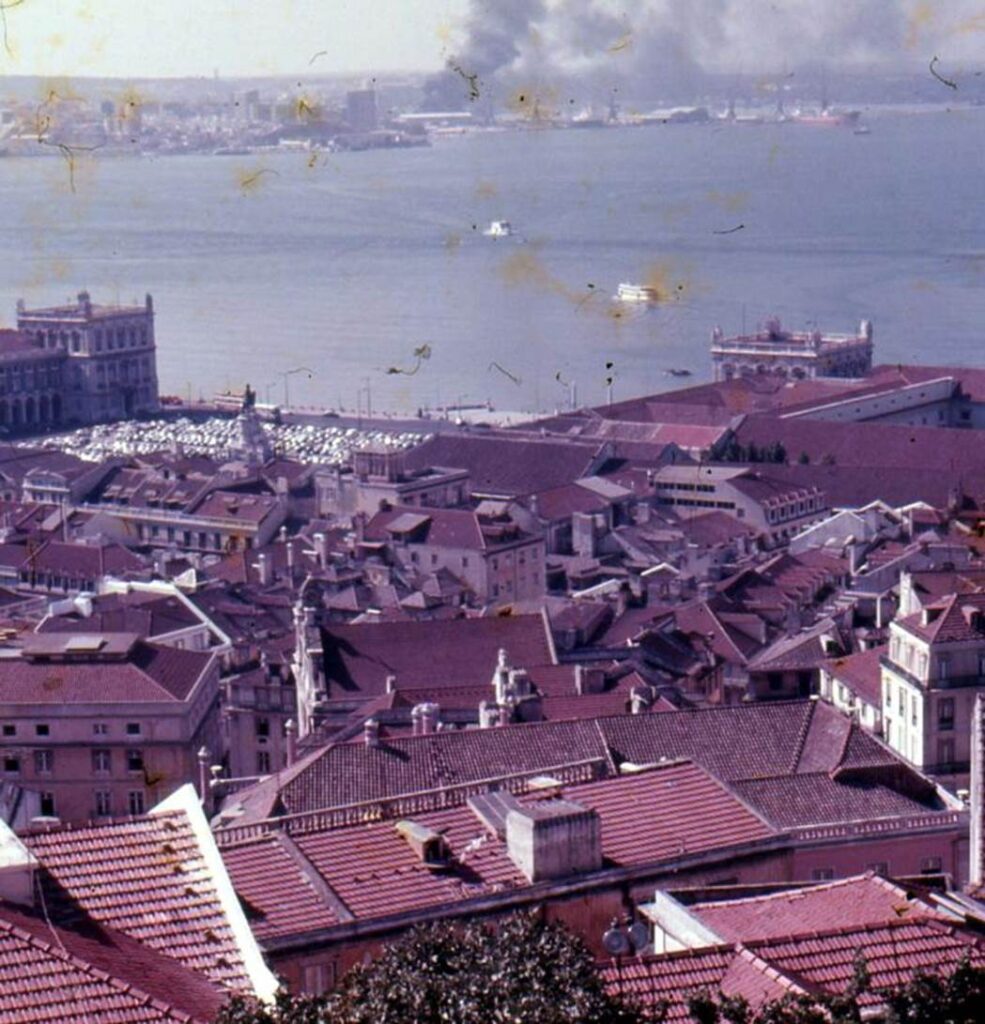
A look back at Lisbon in the summer of 1968.
Lisbon was the first European city I visited. From Rio de Janeiro, Brazil, I crossed the Atlantic Ocean on a cruise ship and landed in Lisbon. My first European lodging was on a hill in the Bairro Alto district. I still have a photo I took from the balcony. On the left is Praca do Comércio (a square about 200 meters square), which is the starting point of Lisbon.
Photo taken by the author in 1968