JAP | ENG
Let’s go to the other side of the world #1/3
Yokohama→ Nagoya→ Kobe→ Naha→ Hong Kong
Travelling abroad in 1962
Boisbain Boarding Diary 1
The story goes back to 1962. In Japan, there were significant restrictions on issuing passports for overseas travel, except for purposes such as studying abroad, business, and immigration. Passports issued at the time were for one-time use only, and had no expiration date until the return of the person to Japan. The cover of the passport was made of soft tanned sheep leather and had a luxurious navy blue color.
After that, in 1963, it became possible to travel overseas for business purposes, with a limit of $500 per person per year in foreign currency. Then, in 1964, six months before the Tokyo Olympics, the ban on overseas travel was lifted, and travel for sightseeing purposes was liberalized. Japan was in the midst of rapid economic growth, but it was an era when one dollar was 360 yen, and a 7-night, 9-day tour of Hawaii was 19 times the starting salary of a university graduate, or 4 million yen in today’s prices.
Against this backdrop, we sought a solution to the decision to travel abroad in 1962.
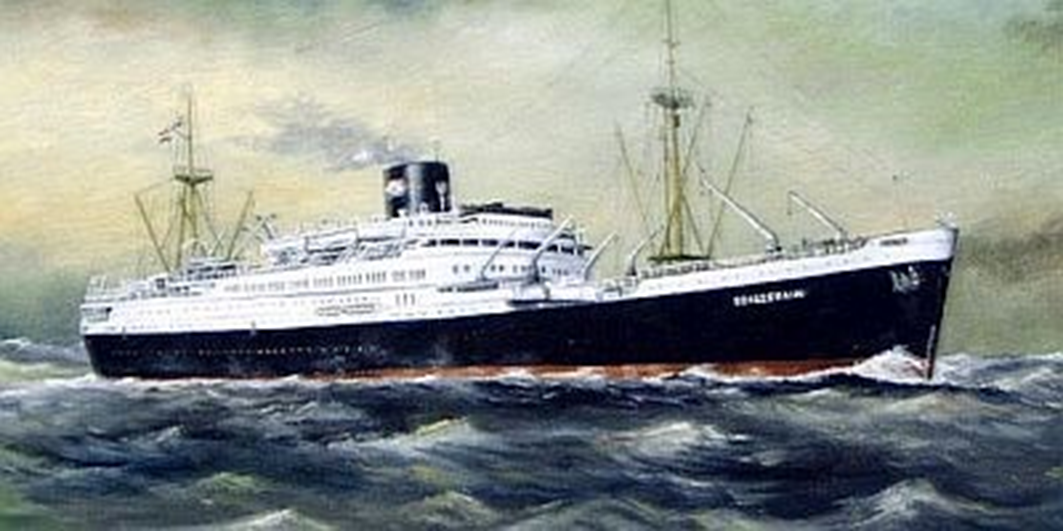
As an option, you can get a passport under the Brazilian immigration quota, or you can get a third-class cabin on a cargo ship because of the limited budget. This would take you to the most remote part of the earth for two months, following various ports of call and inexpensively with three meals.
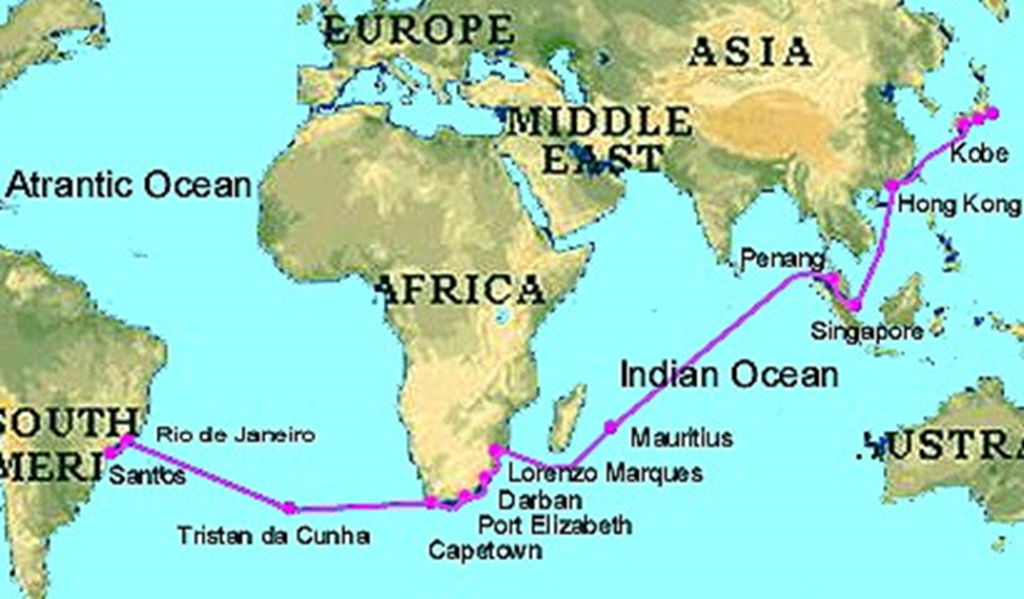
Royal Interocean Line routes. In 1962
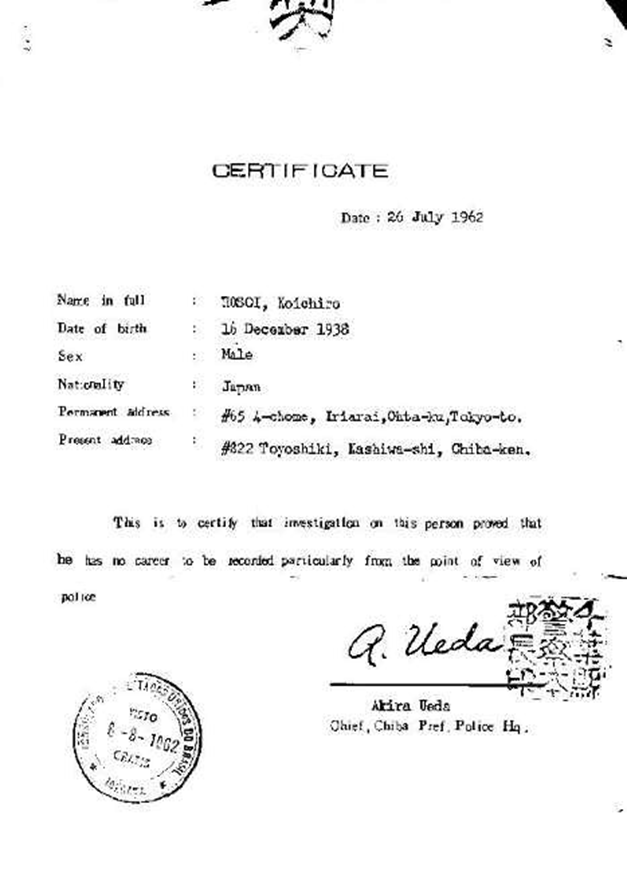
Documents proving no criminal record in Japan issued by the Chiba Prefectural Police
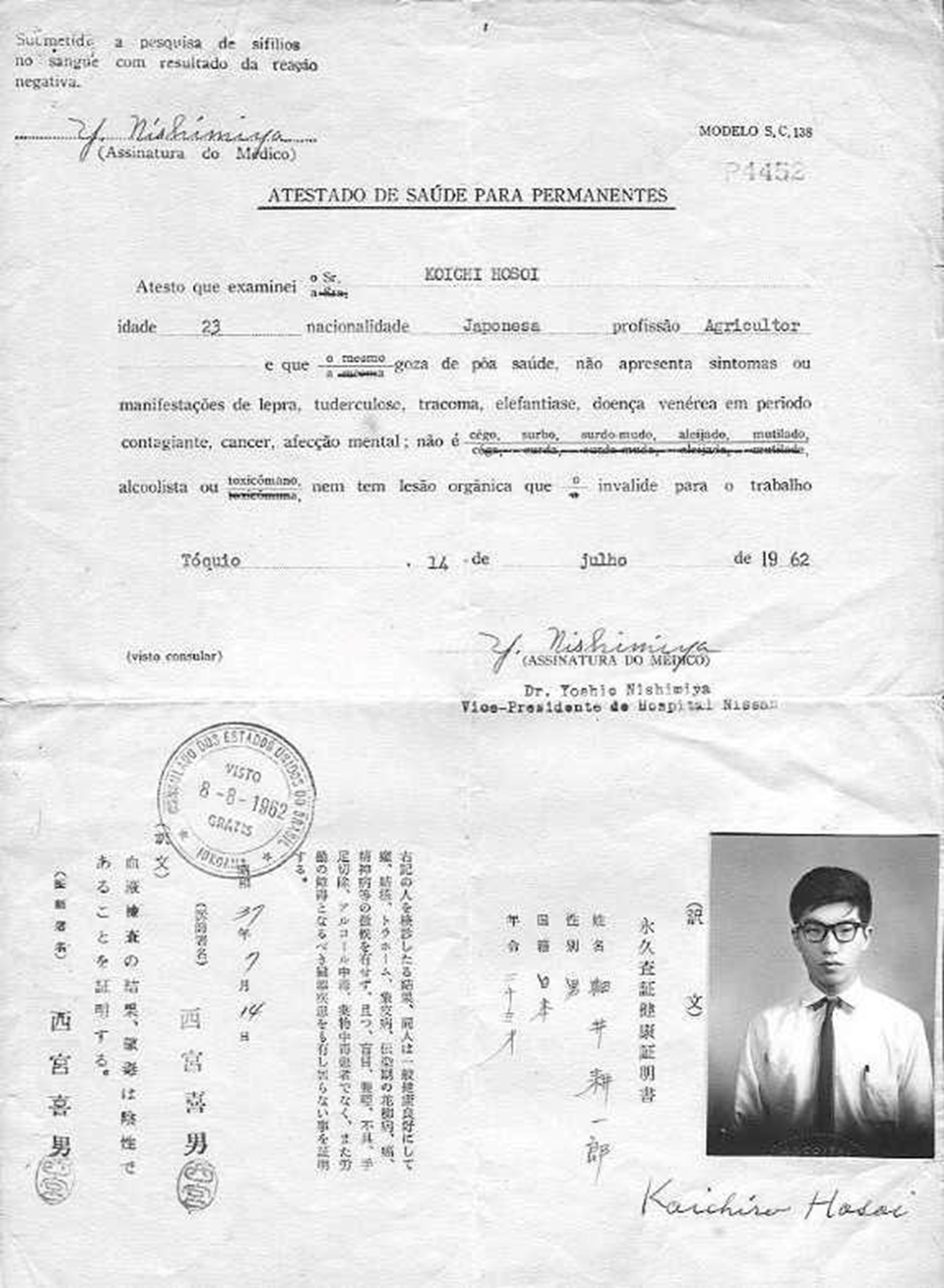
The original text of the medical certificate was in Portuguese, and it had to be signed by a doctor.
For immigrants to Brazil, the above two documents were required.
The return ports and dates of the two-month voyage were as follows:
●Yokohama Jun11 ●Kobe Jun17 ●Hong Kong Jun22/2
●Singapore Jun28/Jul02 ●Penang Jul0
● Mauritius Jul15 ● Lourenço Marques Jul20
●Durban Jul22/25 ●Port Elizabeth, Cape Town Jul30
●Rio de Janeiro Aug08 ●Santos
A few months before leaving Yokohama, I frequently visited the home of a private tutor who had just returned from Brazil, near the east exit of Meguro Station, to learn Portuguese.
With this small initial investment, I figured I would be able to manage once I got to Brazil. It was a fearless decision by a young, single man.
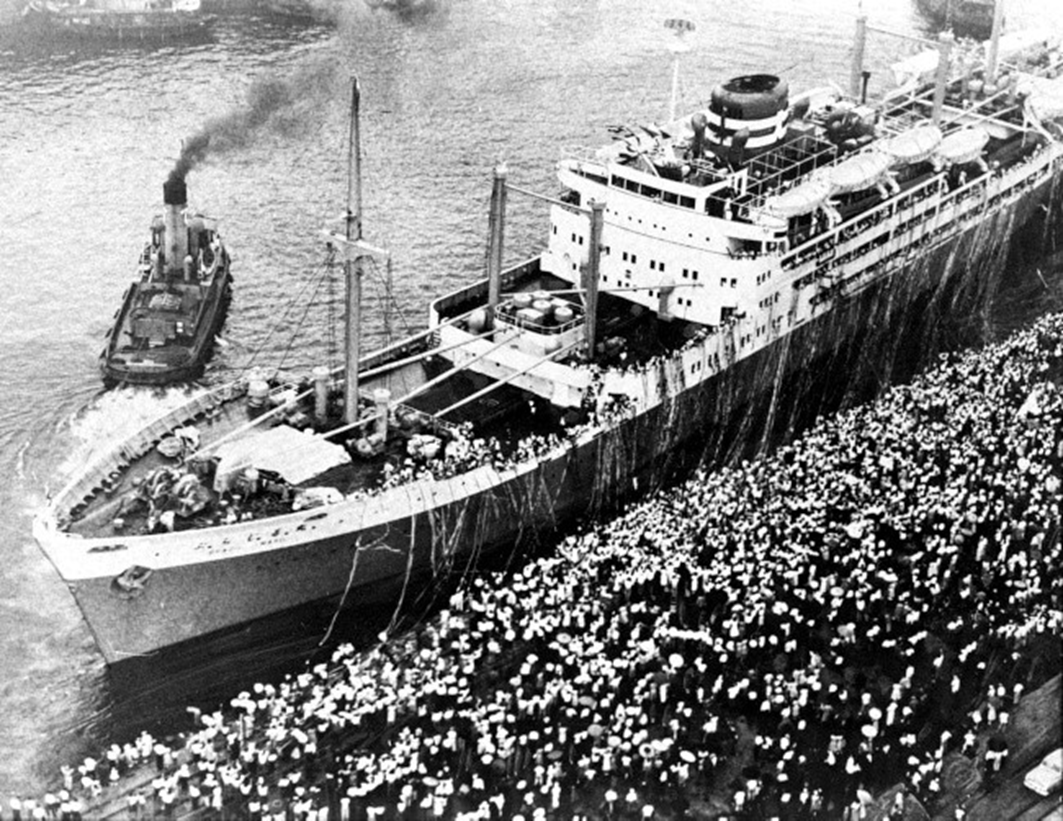
Tracing the history of immigration to Brazil, it is said that 130,000 Japan immigrated in 100 years, from the official start of immigration by the Kasato Maru in 1908 to the abolition of immigration by immigrant ships in 1973..
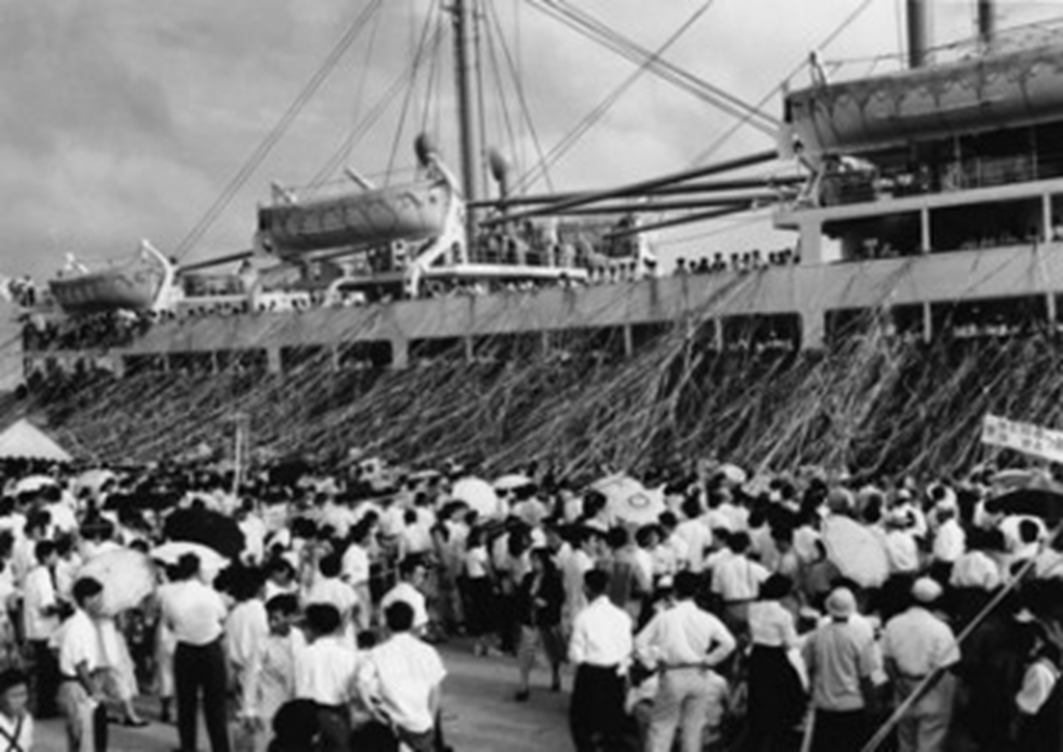
Seeing off an immigrant ship at the Port of Yokohama Pier
After departing from Yokohama, the Boisbain loaded its cargo in Nagoya and Kobe, and arrived at the port of Naha in Okinawa while encountering a typhoon on the way.
In Okinawa, the ship became lively as it welcomed even more Brazilian immigrants than those from the mainland. This was a time when Okinawa was still under the administration of the United States. At that time, people on the mainland still had a certain prejudice against Okinawans.
First time on the deck of the Boisbain in a foreign country
On the deck of the Boisbain, I hesitantly tried to strike up a conversation with a first-class passenger sunbathing. Having only ever been asked for directions in English by people I thought were American military personnel in Shibuya and Roppongi, I tried asking in my poor pseudo-English. The elderly American writer told me that he was traveling around the world with his young, attractive secretary in her 20s. I was surprised to discover that such a life was possible, something I had never heard of or seen before.
I approached Hong Kong from the sea.
This is my first time in a foreign country
The photo below was taken on the deck of the Boisbane while it was docked in Hong Kong. All were in their early 20s and full of hope, having entrusted their dreams to Brazil. Most of the men were university graduates, and some of the women become brides as immigrants.
This was an era when there were no smartphones or Internet. More than 50 years have passed since then, and I have lost contact with these people. I wonder what kind of lives they have led since then.
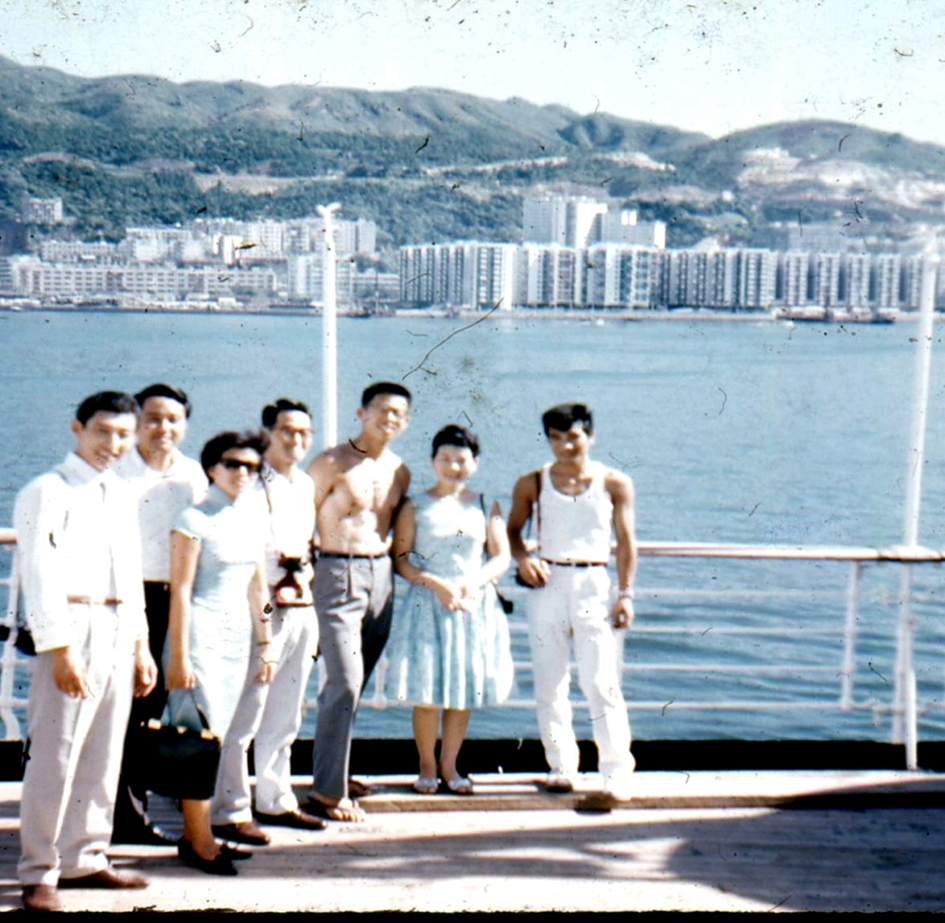
Diamond Head on the Kowloon side, which is now covered by buildings, is clearly visible. On deck of the Boisbain. Photo by author, 1962。
Utilization of Free Port Hong Kong
We were in a third-class cabin at the bottom of the ship, and there was a limit of $300 for foreign currency we could take out.
How could we increase this limited amount of money during the voyage? The answer was to use Hong Kong, a duty-free port.
We estimated that if we sold our Swiss watches, Japanese cameras and movie cameras after landing in Brazil, we would earn double the amount.
We then had our first suit tailored at a tailor in North Point, Hong Kong Island. In this area, there are many shops that make suits for cruise passengers in one day, and we were approached by one of them.
The owner recommended Italian wool fabric (the authenticity of which is uncertain). We were satisfied with the gray suit that was finished without a fitting.
It was preparation for when we would enter the workforce after landing in Brazil
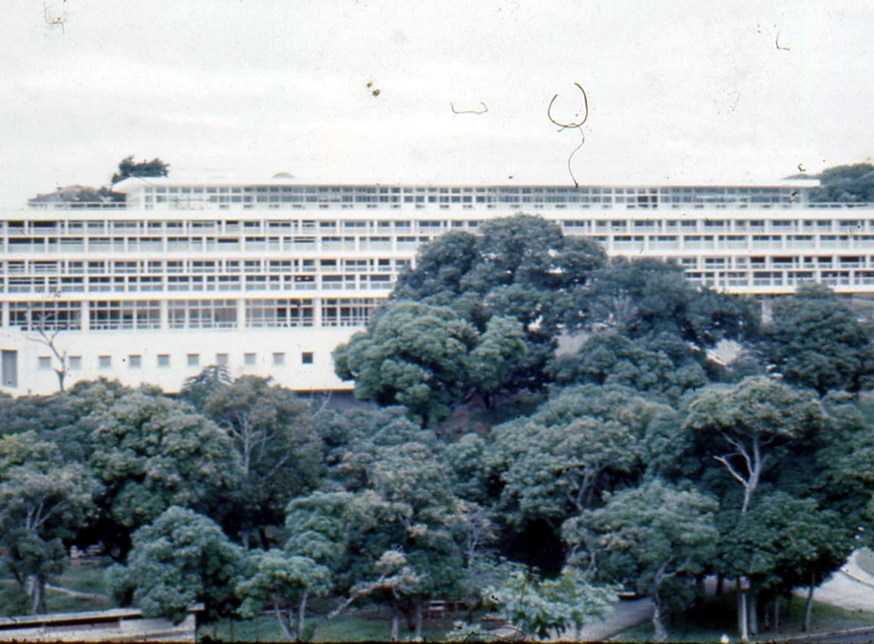
Photo by author, 1962 June。
Caucasian passengers tossing coins into the sea from a boat
Hong Kong children dive to get the coins that are thrown into the sea just before they sink, and then surface to show their accomplishments to the passengers.
This seems to have become a regular event on cruise ships anchored in Hong Kong, and several children gathered at the bow of the ship out of nowhere. Hong Kong was very poor at that time.
Meanwhile, on land, I witnessed coolies collecting leftover food from a hotel in the center of Hong Kong Island and carrying it up the mountainside on a pole. I followed them. The glitz and glamour of the coastal area suddenly changed, and I ended up in a very poor shack village.
I saw something I should not have seen, and had an unwelcome experience.
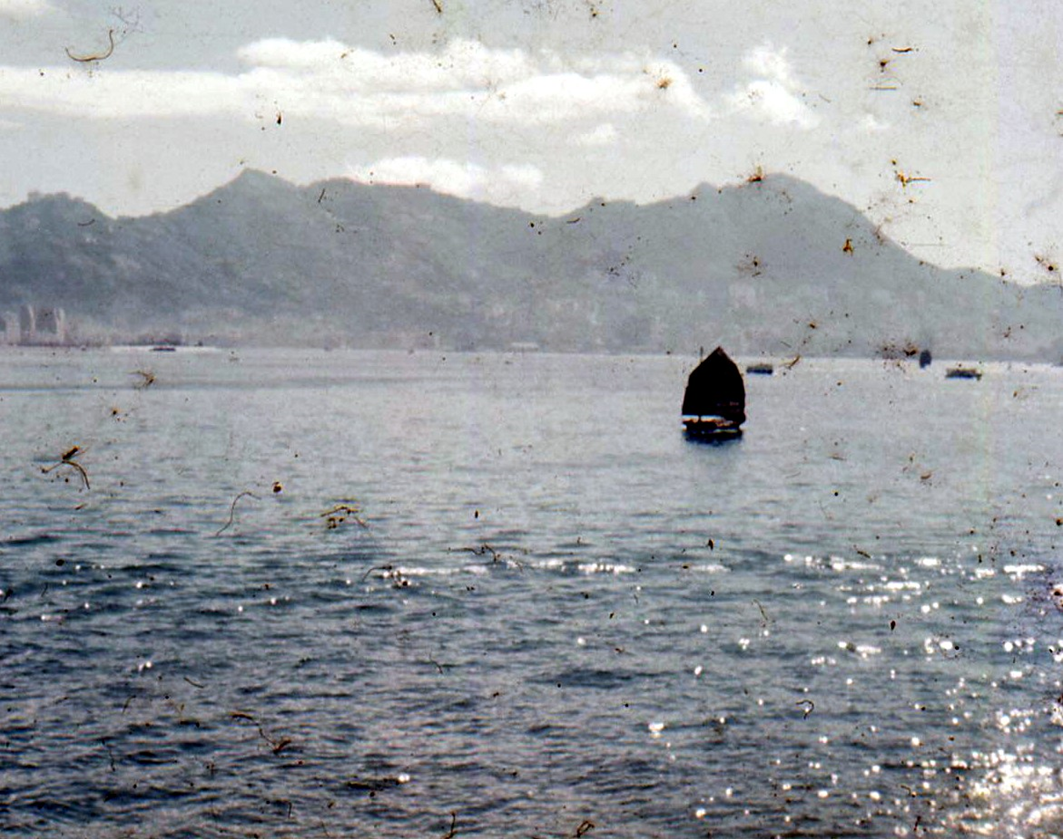
A rare junk ship, with Diamond Head on the Kowloon side in the background. Photo by author, June 1962
。
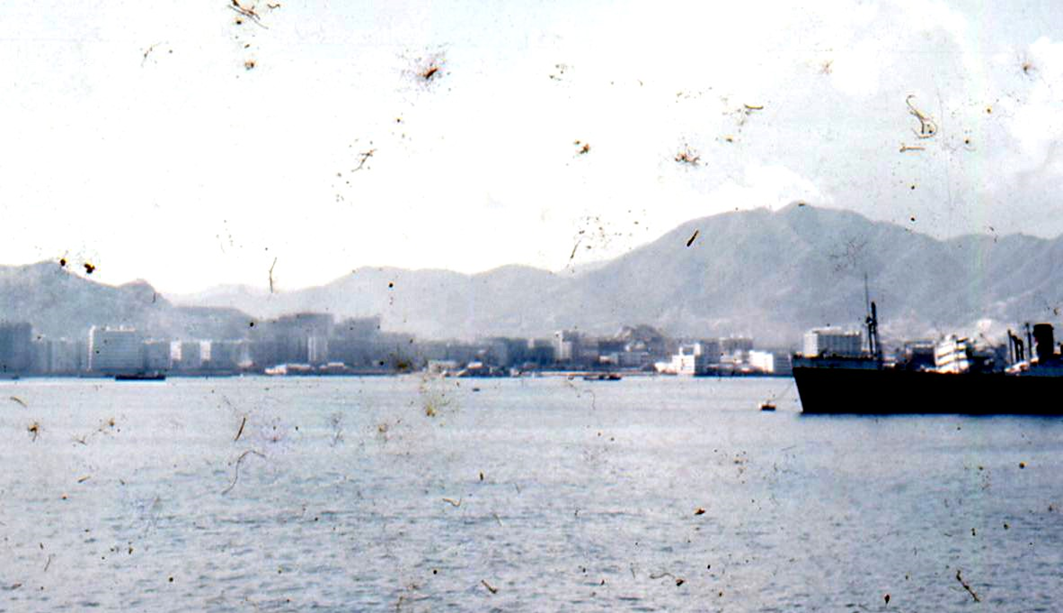
Photo by author, June 1962
Cable car
Around 1962, it was common for tourists to ride a cable car to get to the top of a mountain on Hong Kong Island and look down at the world below. As you go up, the buildings on the plains recede into the distance, improving your view.
We continue to climb higher and higher, passing by clusters of apartment buildings surrounded by greenery on the mountainside
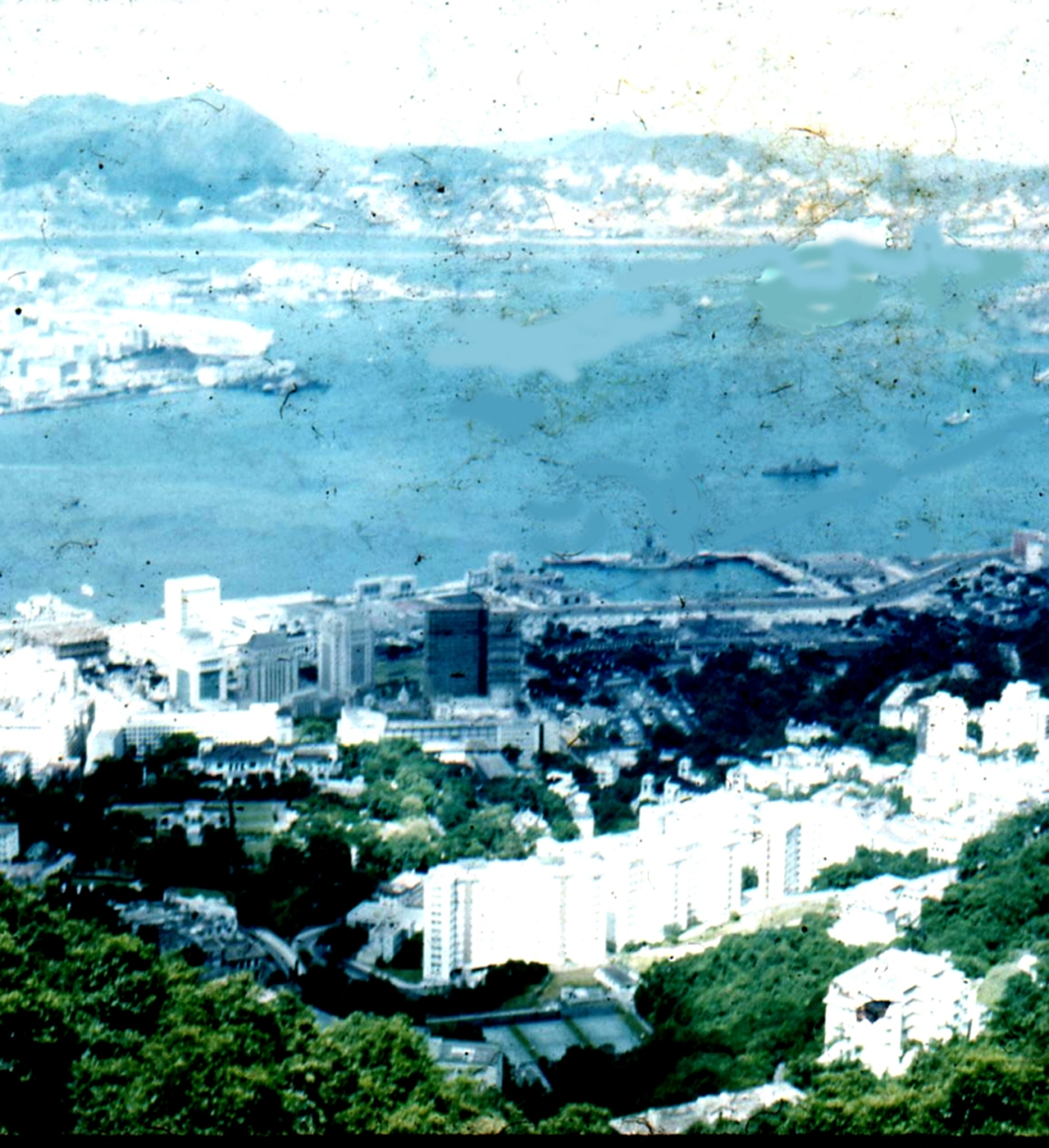
Photo by author, 1962
It seems that the wealthier the class, the higher the altitude they live.
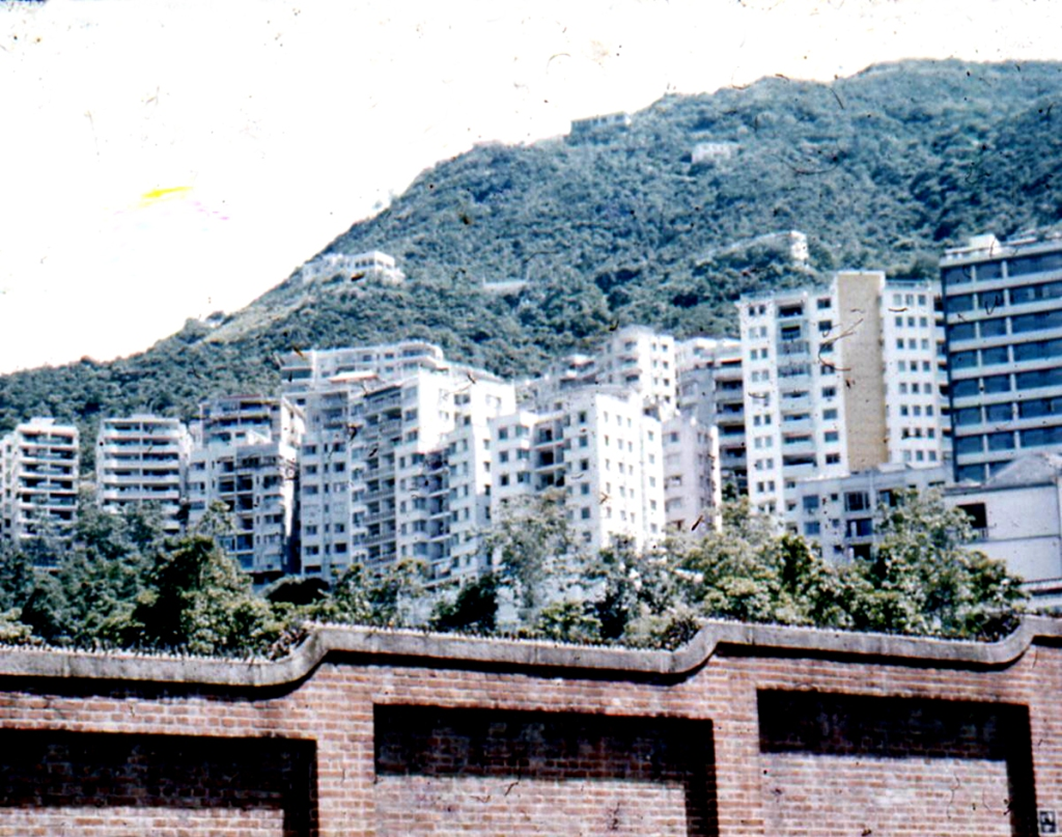
Photo by author, 1962
Many Brazilian immigrants also boarded from Hong Kong, filling the third-class cabins. After unloading its cargo in Hong Kong, the Boisbain set off for its next destination, Singapore.