JAP | ENG
Jakarta Travelogue
1981
Jakarta Halim International Airport
It is an airport that has existed since the pre-war Dutch colonization period.
I remember that it was an old building and the interior lighting was very dim.
This was at a time when the power supply was not sufficient.
The parking lot in front of the terminal building had few street lights and was dark at night, so it was not the kind of airport that tourists would like to visit.
As soon as you leave the airport area, rice fields spread out, making it a typical airport in the capital of a developing country.
From 1981 to 1991, until the new airport was completed, I had to take off and land at this airport at least 20 times for the project work in Surabaya.
Customs and immigration officers always asked for bribes, so it is an airport I don’t like to remember.
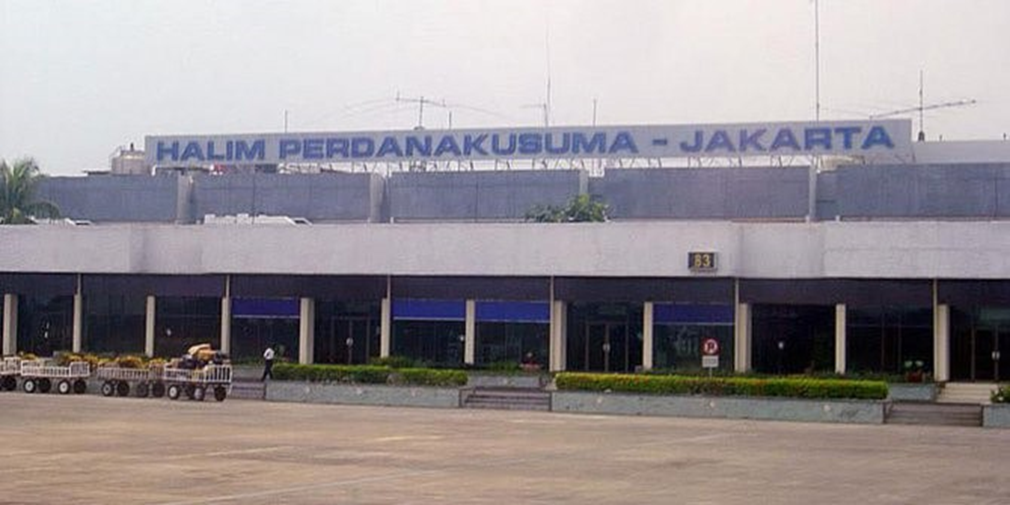
Halim International Airport
The Malari Incident
Japan’s then Prime Minister Kakuei Tanaka arrived at Halim Airport on his visit to Indonesia as the last part of his Southeast Asia’s tour.
However, all the main roads from the airport to the State Guest House were blocked by the demonstrators, so he took a detour.
The riots eventually resulted in the destruction of 800 vehicles, the arrest of 470 people, and the deaths of 11 people.
I remember seeing the riots on Singapore television.
The incident took place in January 1974, during the Suharto administration.
A year after the heat had died down, I decided to take a trip around Java.
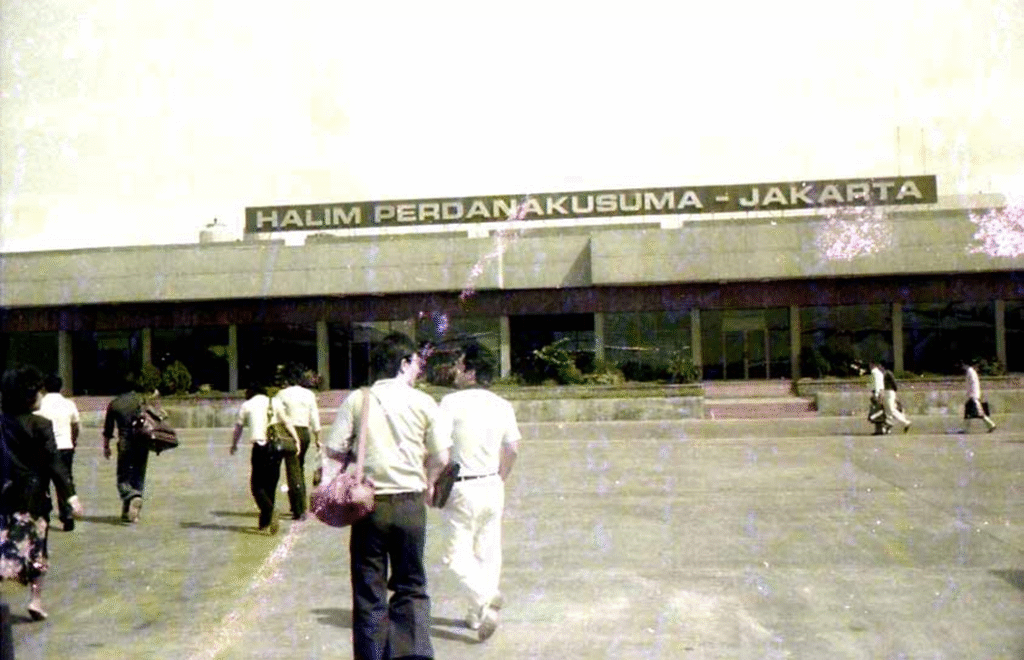
Halim International Airport
Jakarta Kemayoran Domestic Airport
After clearing immigration at Halim International Airport, I had to go to another airport in the city, Kemayoran Airport, to check in again in order to go to a regional city in Indonesia. For foreigners, this airport was even more difficult.
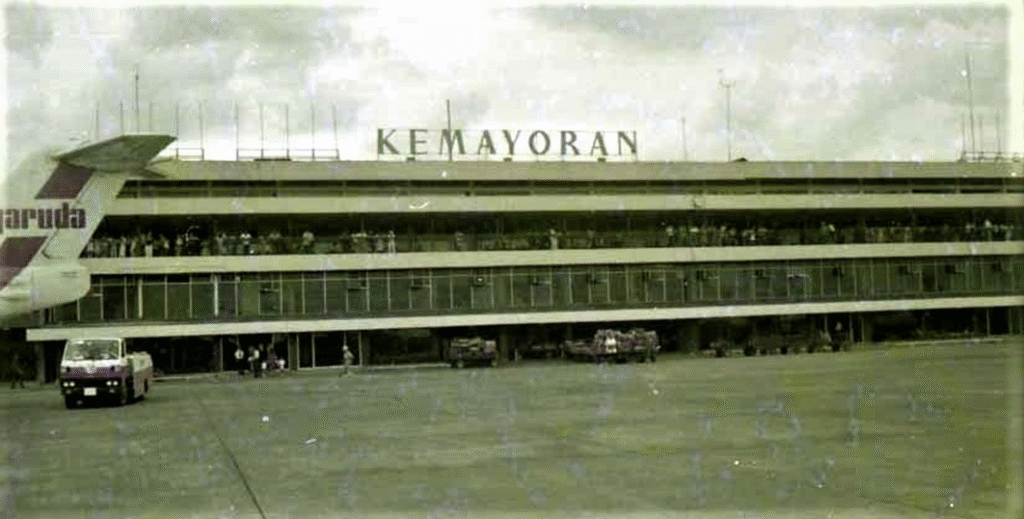
Kemayoran Airport Terminal Building
When heading further from Jakarta to Surabaya, there was a baggage recheck at the check-in counter for domestic flights, which was similar to international flights. In my case, as I carry a huge number of design documents for presentations and meetings in Surabaya, and I am required to unfold them.
The officer in charge faced with drawings that he had never seen before, and he said that it must have looked expensive, and began to demand customs duty and tried to get me off the plane unless I paid the fee. This was despite the fact that I already been inspected at the Halim International Airport.
This was already beyond the authority of the government officials.
However, they must have learned from experience that foreigners are easy targets when they are threatened.
In those days, such unethical behaviour was common.
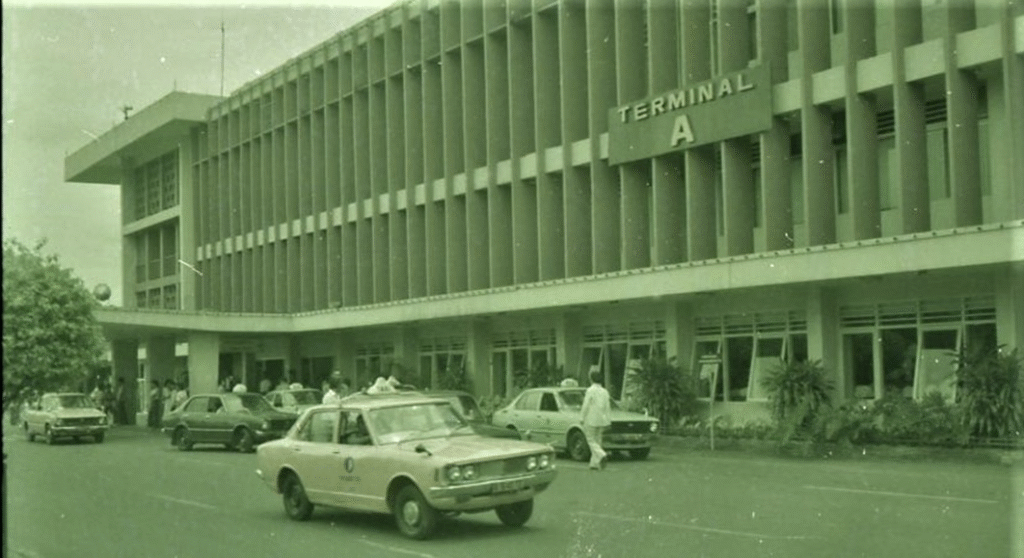
Kemayoran Airport terminal building near the entrance
Photo by author, 1982
Sukarno and Urban Planning
Sukarno was an Indonesian politician who left a significant mark on the movement for the liberation of the people from the Dutch colonial power.
He inspired the masses’ sense of tribe. Soekarno is a graduate of the Bandung Institute of Technology, which was founded by the Netherlands.
There, he gained a background in architecture and art, and before his downfall in 1965, he left behind urban planning, architectural planning, and numerous monuments that conveyed the open feeling of national independence for Indonesia’s founding capital, Jakarta, to future generations.
The following is a summary of some of the commemorative works in Jakarta, which is full of a sense of openness and independence of the people.
Tower of the Sky Statue (Patung Dirgantara)
Built in 1966 in front of the former Navy Headquaters, the 40-metre-tall tower was built by then-President Sukarno as a prayer for Indonesia’s future development.
It is said to be based on the Indian myth of Mahabhara.
When Halim Airport was the only international airport, you would always see this statue on your way from the airport to the city center.
It was a monument that made you realize that you had entered Jakarta, Indonesia’s capital
Tower in the Sky
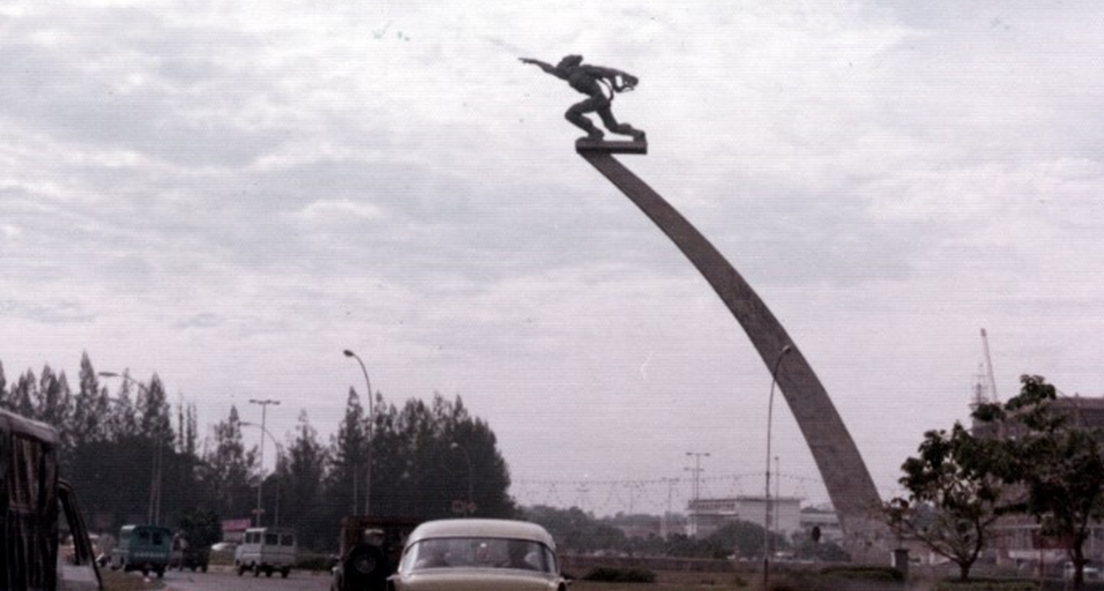
Photo by author, 1975
West Irian Liberation Monument
(Monumen Pembebasan Irian Barat)
The statue was erected in 1962 to commemorate the liberation of West Irian (now Papua) from Dutch colonial rule.
It depicts a human figure ripping off chains and roaring, expressing the freedom that was won after much struggle.
It is an impressive bronze statue 25m above the ground, with its enormous, deformed arms raised.
This tower gives a glimpse into how independence and integration were such a long-cherished dream.
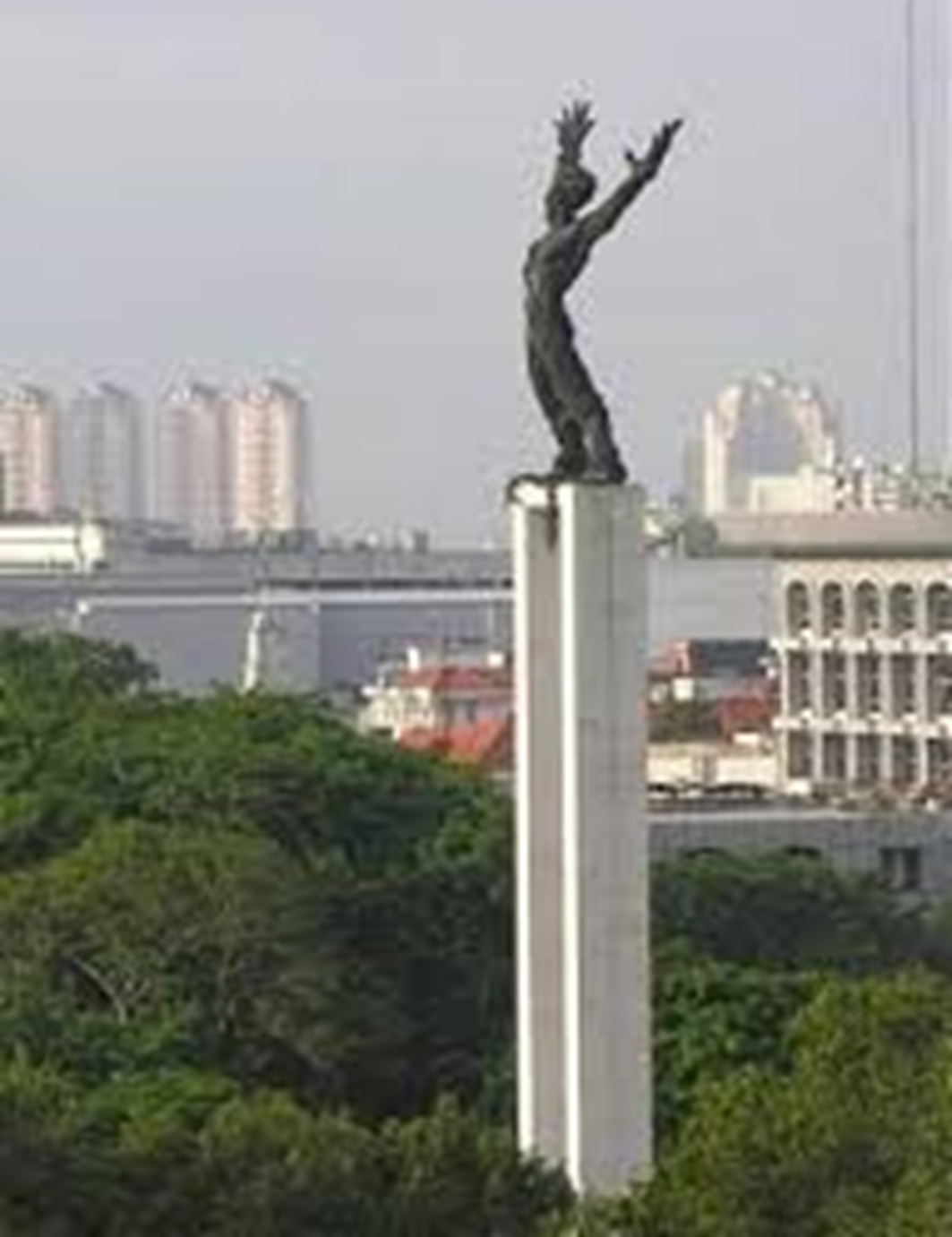
Welcome Tower (Patung Selamat Datang) completed in 1962
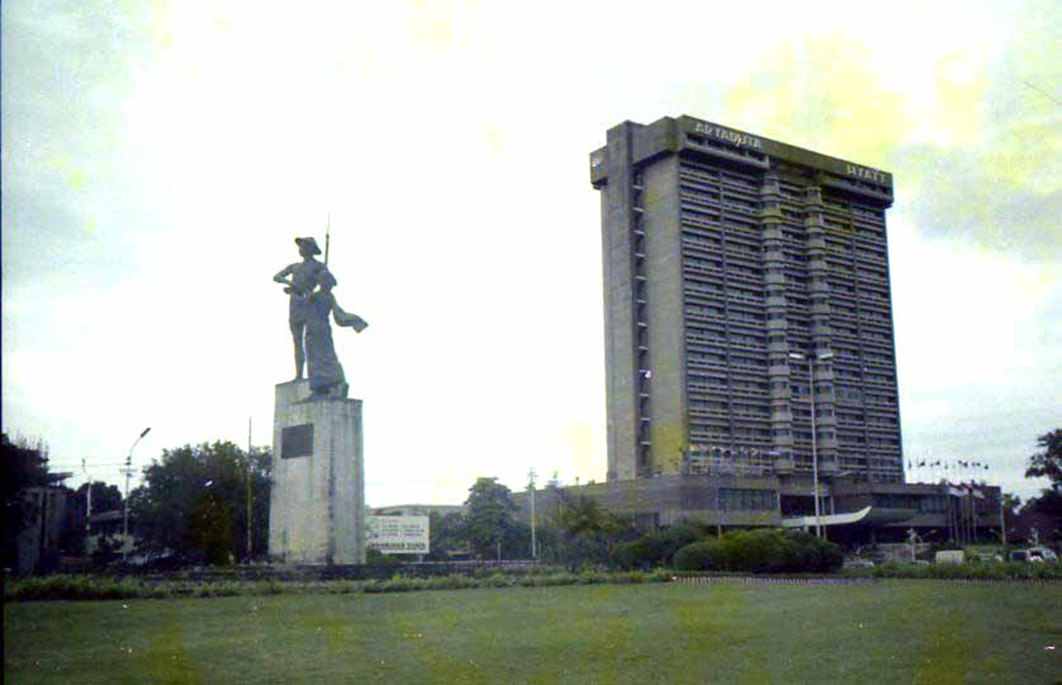
A man and a woman raise their hands and smile in front of Hotel Indonesia. In 1962, the 4th Asian Games were held, and the “Welcome Tower” was built at the suggestion of President Sukarno.
It is located in the center of a 30-meter-high pedestal and a large fountain that surrounds it. In this place in Jakarta, it is a statue that constantly delivers a welcoming smile.
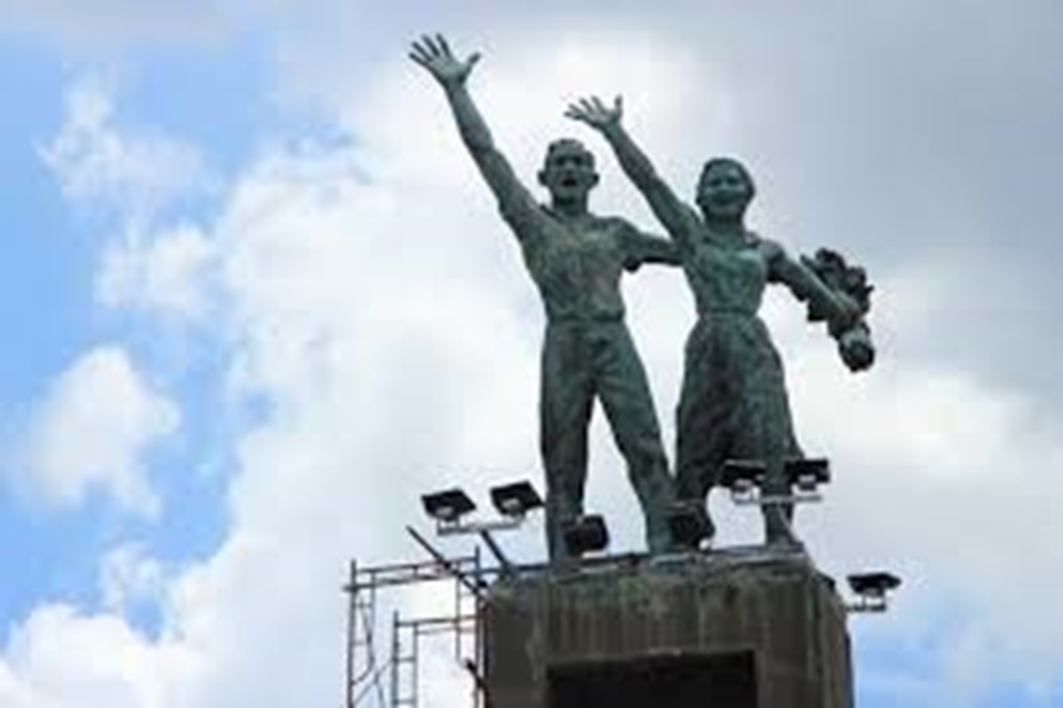
Indonesia has a population of 260 million, 90% of whom are Muslims.
In Islam, idols are forbidden by the teachings of the Qur’an.
Nonetheless, these statues were made by Sukarno in the capital city of Jakarta.
It can be understood that this is due to the fact that Buddhist and Hindu dynastic cultures already existed in Indonesia before the spread of Islam, and as a result, a historical multi-layered society was already formed.
Map of Landmarks of central Jakarta in the 1970s
The location of some of the landmarks are shown below.
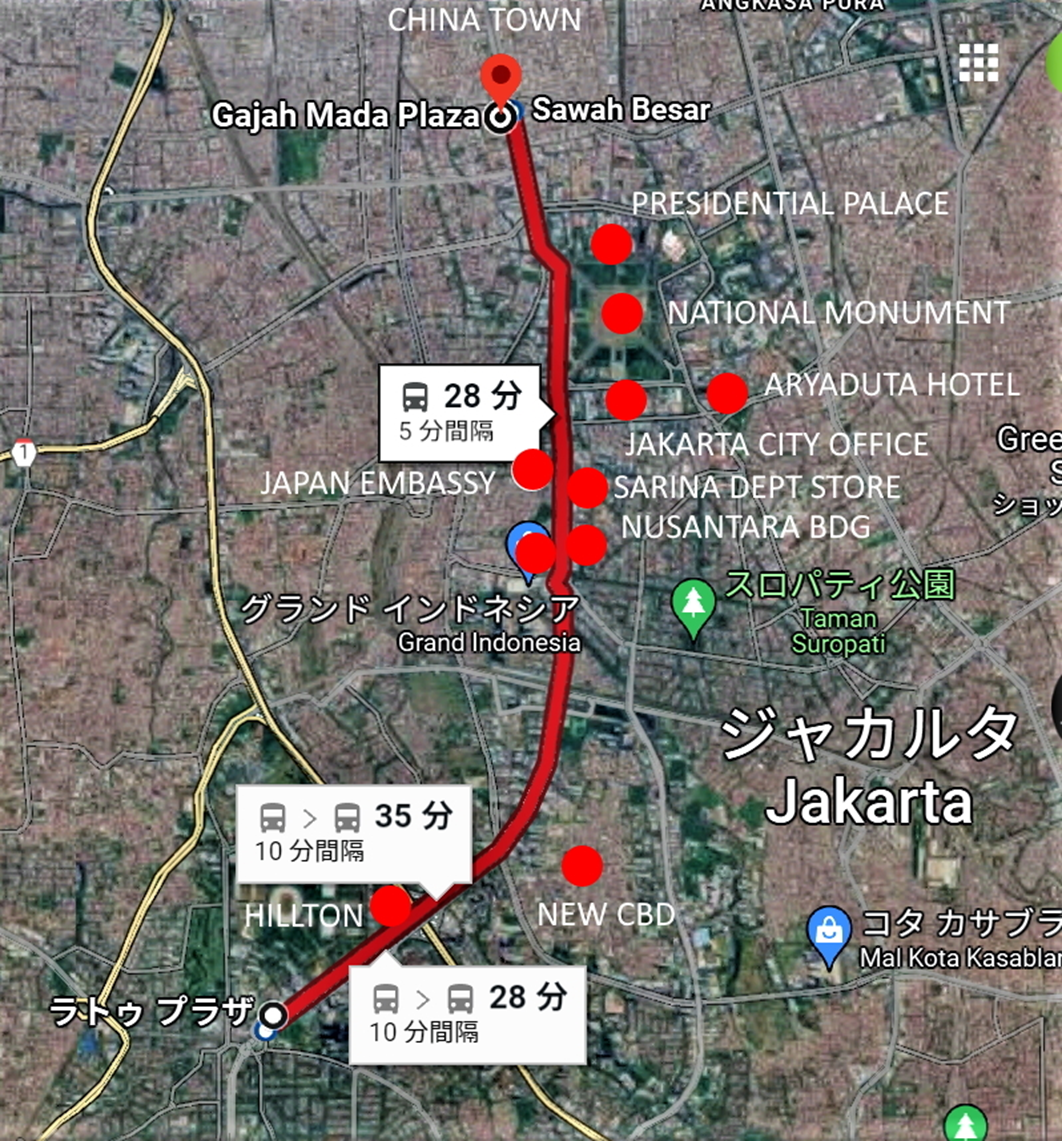
Independence Monument (Monas) NATIONAL MONUMENT
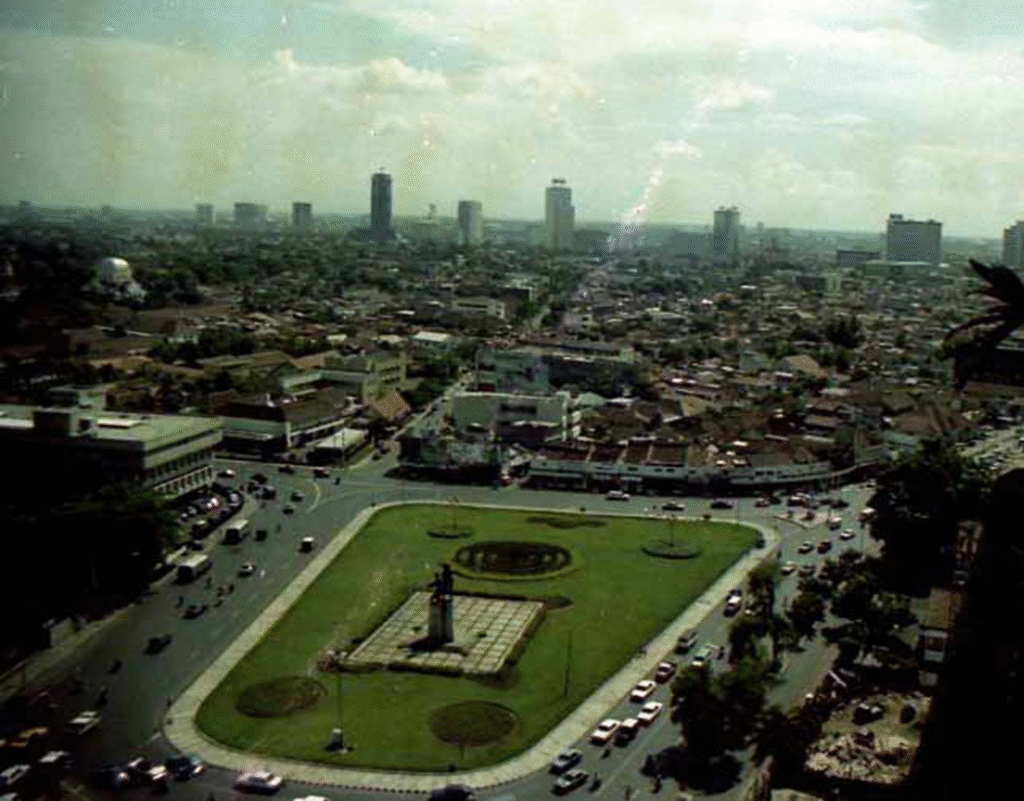
The Independence Monument stands in the middle of Jakarta’s central park.
The Thamrin-Sudirman street, which runs from north to south of the square, is a world-class main street conceived and opened by Soekarno.
This early Sukarno-inspired urban plan subsequently served as the backbone of Jakarta’s urban development.
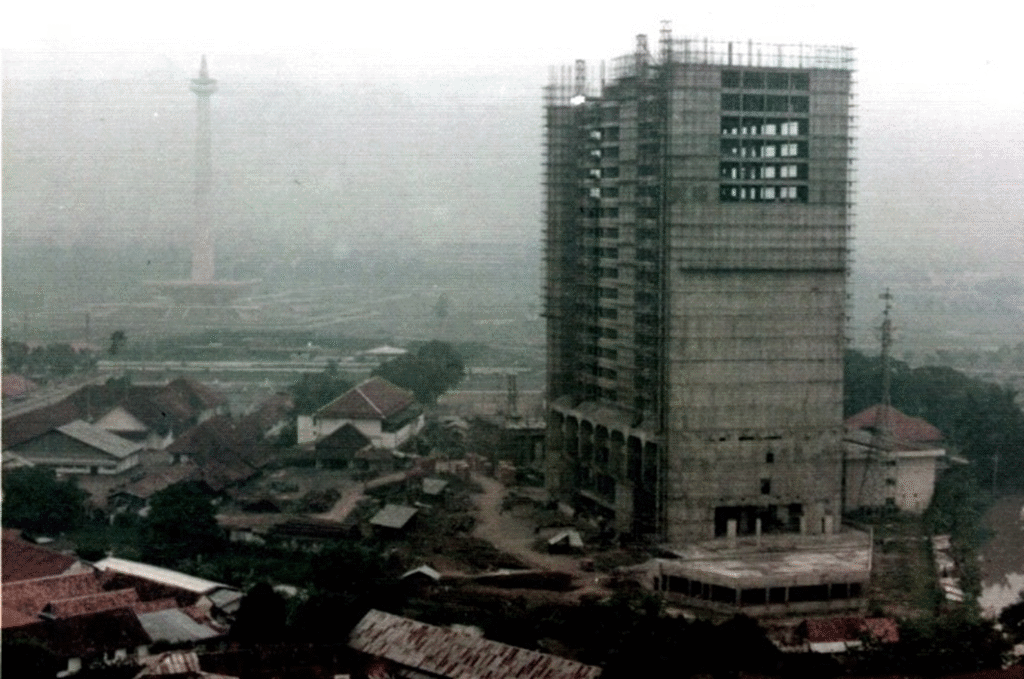
Photo by author, 1981
Pictured above from the Hyatt Al Yaduta Hotel at the time.
The Indonesian National Petroleum Corporation building under construction in the foreground.
In front of the parkwhere the “Monas” monument, the Indonesian Independence Monument by former President Sukarno, stands, there is Jakarta City Hall and the former presidential palace on the opposite side.
Japan’s Postwar Reparations and Modern Architecture
Nusantara Building (high-rise office building)
This 100-metre skyscraper is located on the main street, Thamrin Road.
Shortly after Indonesia’s independence, it was built with an earthquake-resistant steel structure with Japan funds and technology.
It was designed by Kiyoshi Muto, a master of earthquake-resistant structures in Japan. This was before the Kasumigaseki Building, which he worked on and became Tokyo’s first skyscraper with an earthquake-resistant structure.
This project has led to exchanges between Japanese and Indonesian engineers. Willatman, an Indonesian engineer, would later be responsible for a number of high-rise buildings in Indonesia.
This is a story I heard from a local architect in the 1980s, when I became involved in a project in Indonesia.
Nusantara Building (high-rise building),
Nikko Hotel (low-rise part).
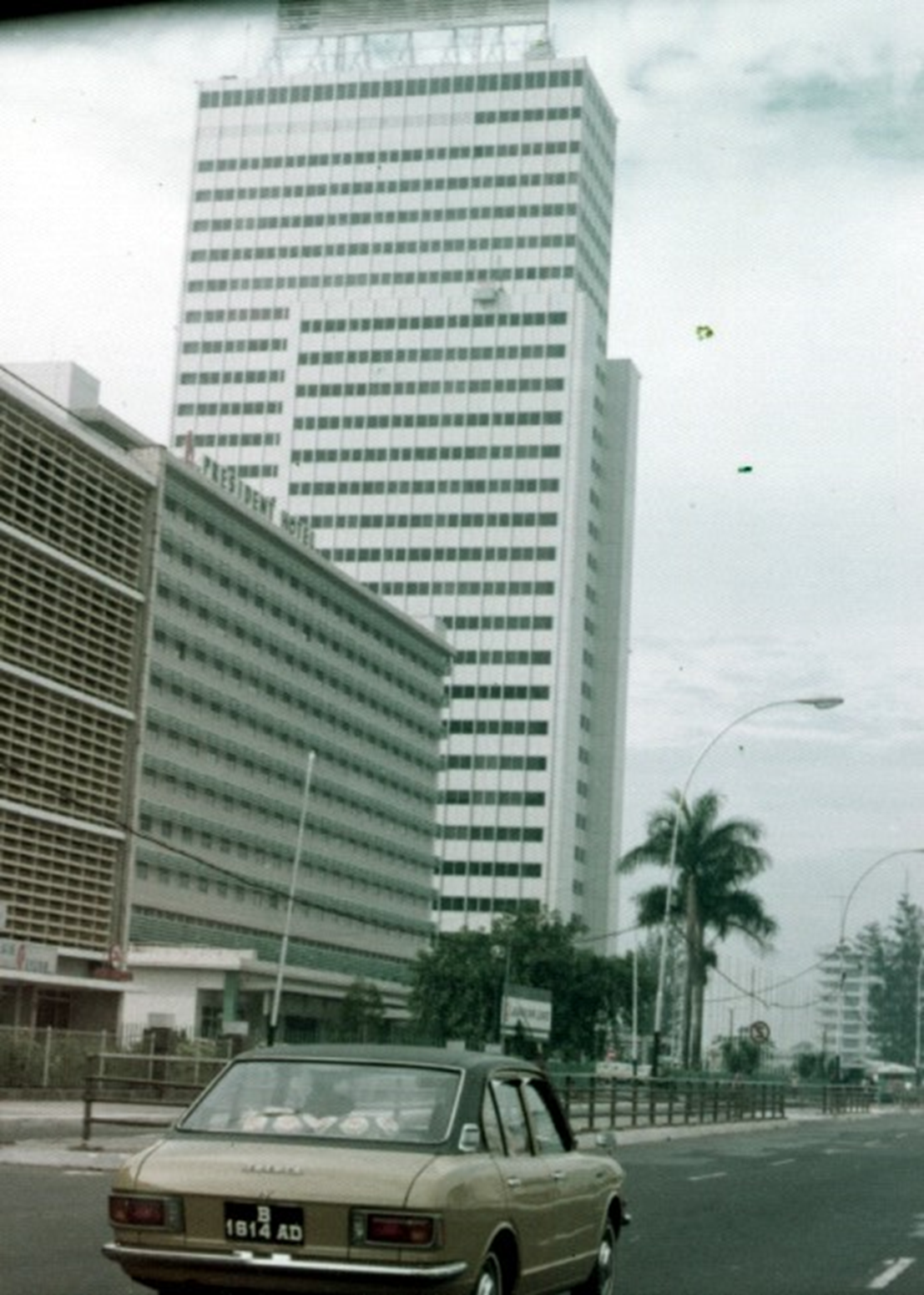
筆者撮影 1981年
Sarinah Department Store
The only department store in the center of Jakarta in the 1970s.
There were a lot of Indonesian crafts on display that foreigners liked.
There was a pedestrian bridge connected to the building across a side street.
On the second floor of the building was a dimly lit space filled with cigarette smoke and crowded with rough-looking men. It was a kind of illegal casino.
In Islam, idolatry is strictly prohibited. Because Islam emphasizes the oneness of God, pictorial depictions of the Prophet are not permitted.
Islamic finance refers to financial transactions that comply with “Sharia,” the laws and regulations of Islam.
The concept of ” interest ” is prohibited, and the counterparty must not be involved in any business that goes against Islamic teachings (such as those related to pork, alcohol, weapons, gambling, etc.)
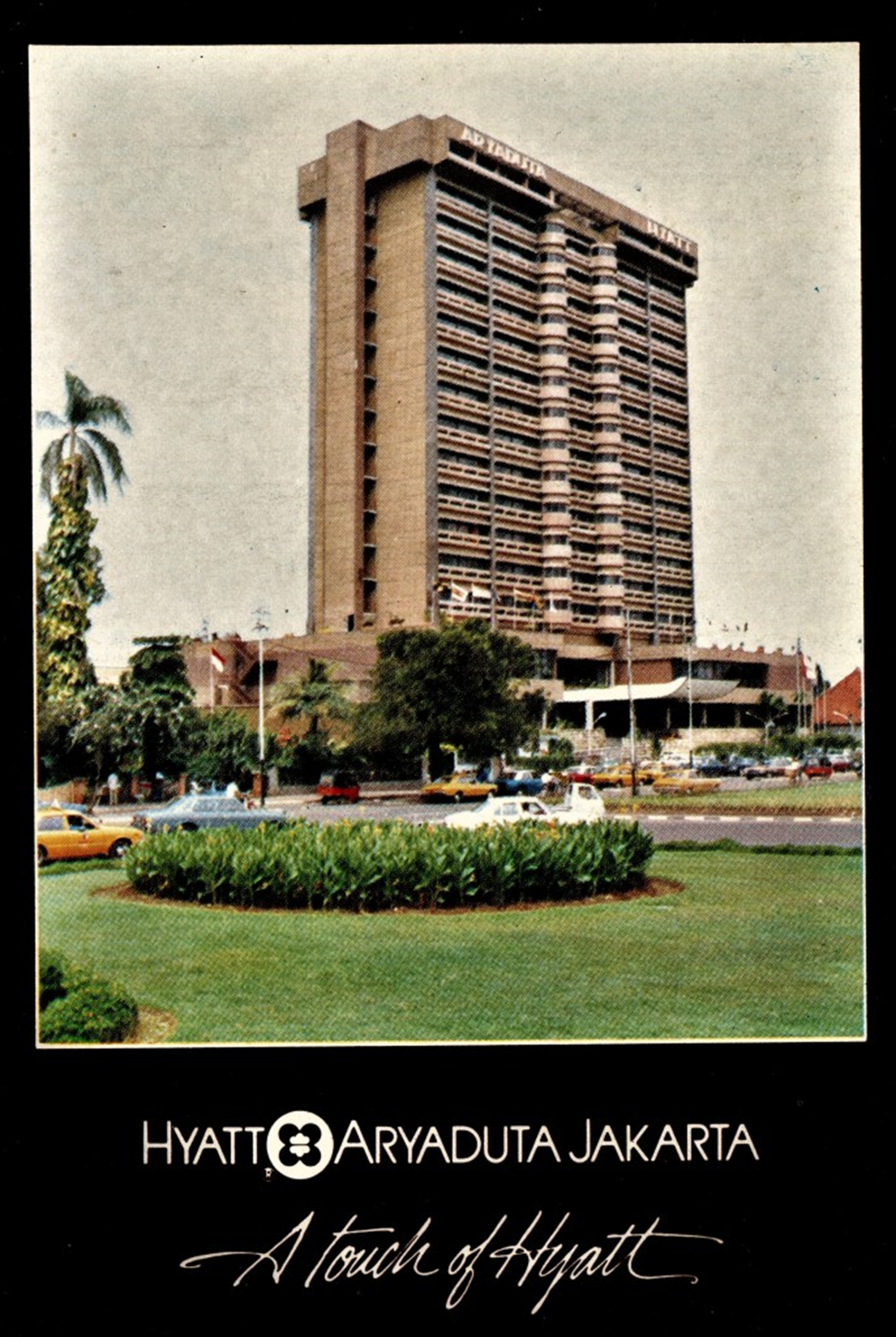
HYATT ARYADUTA HOTEL, JAKARTA
In the 1980s, I often stayed in this hotel in Jakarta.
On the top floor, there was a Japanese restaurant (halal) owned by Mr. K, a Japanese business man living in Jakarta.
Yakiniku and teppanyaki were the main dishes, and it was very popular with guests entertaining local government and private sector guests.
INDEPENDENCE MONUMENT AND ARYADUTA HOTEL (background)
A bird’s-eye view of the Independence Monument Square from the upper floors of the ARYADUTA HOTEL.
A bird’s-eye view of the Ciliwung River, which meanders through the city, photo from the upper floors of the ARYADUTA HOTEL.
The following three photos are documentary photographs of central Jakarta in the early 1980s.
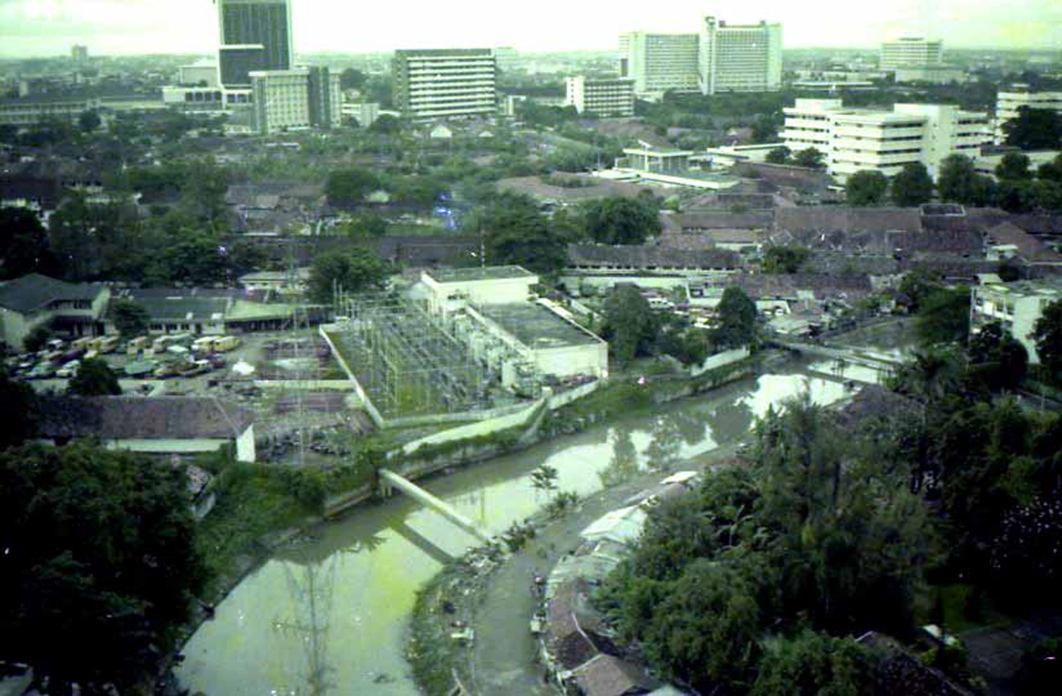
Photo by author early 1980s
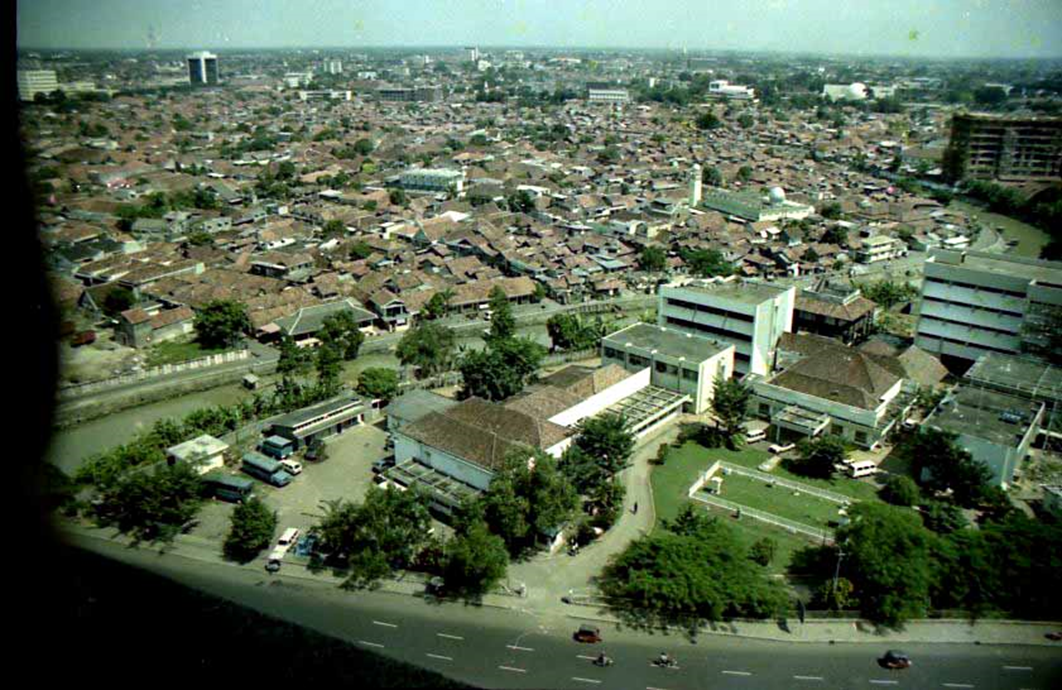
Photo by author early 1980s
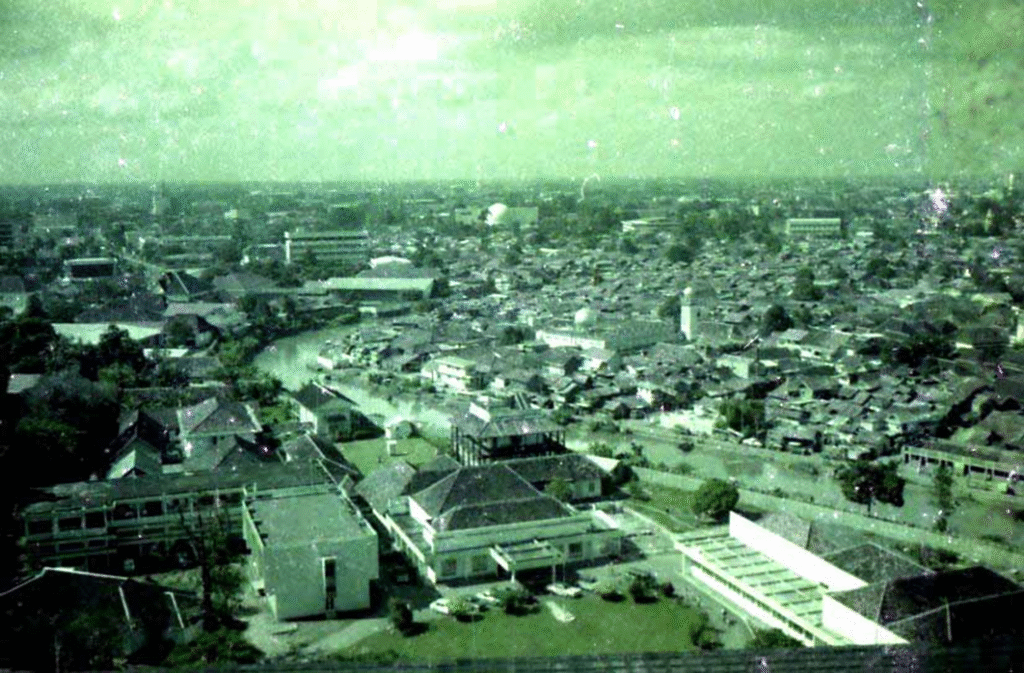
Photo by author early 1980s
Guest room at HYATT ARYADUTA HOTEL. Retro Television.
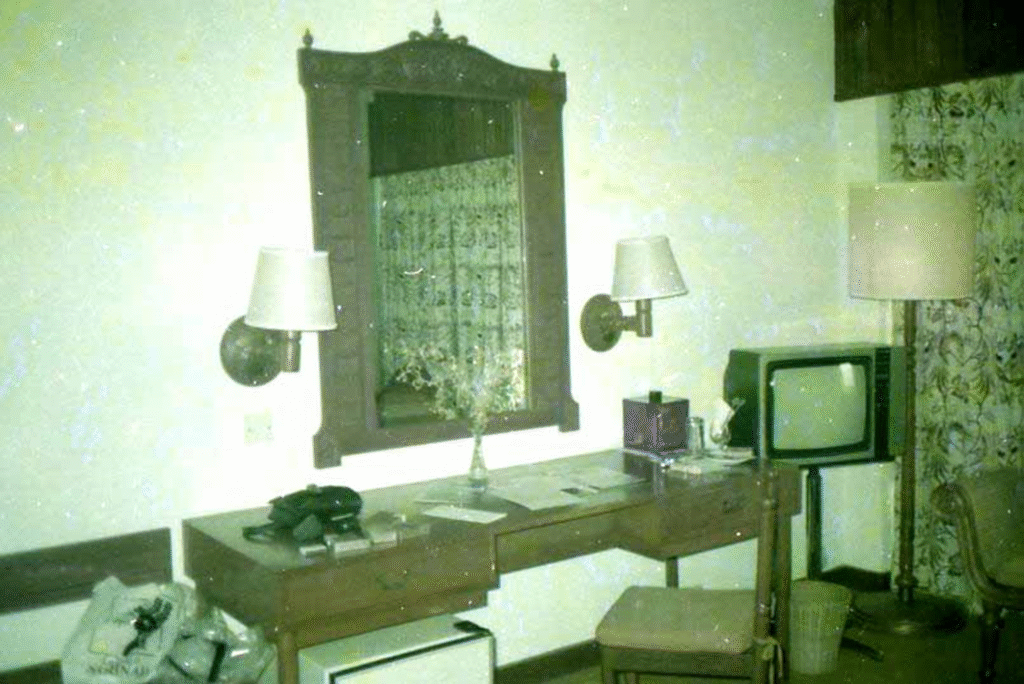
Photo by author early 1980s
GAJAH MADA PLAZA has just been completed on GAJAH MADA Street.
I visited for reference.
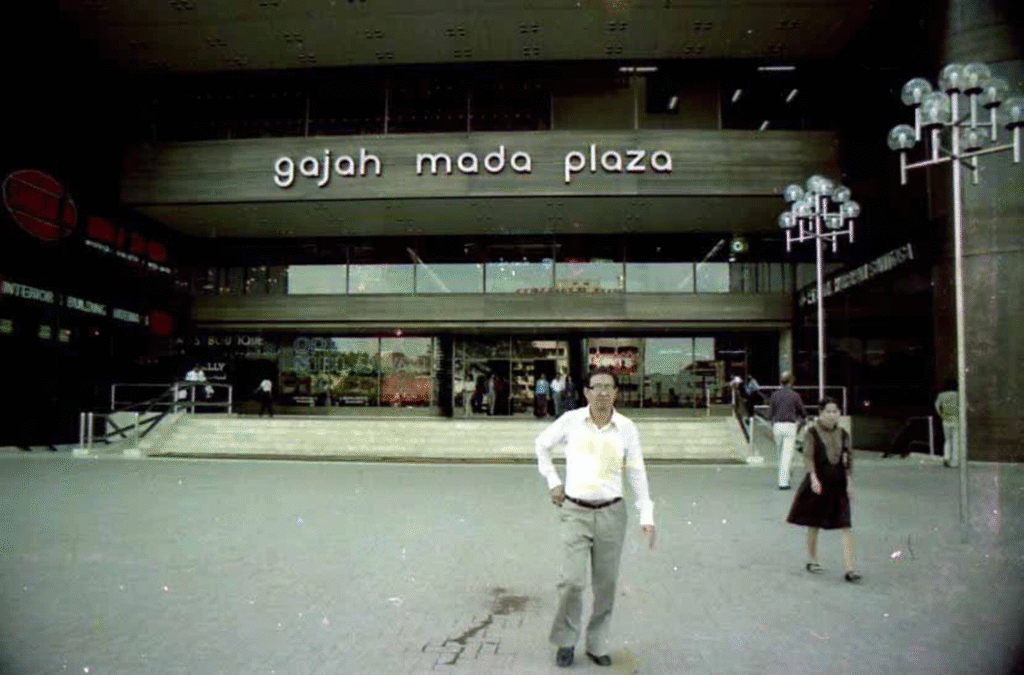
Photo by author early 1980s
RATU PLAZA, just completed on Sundiram Street. I visited for reference.
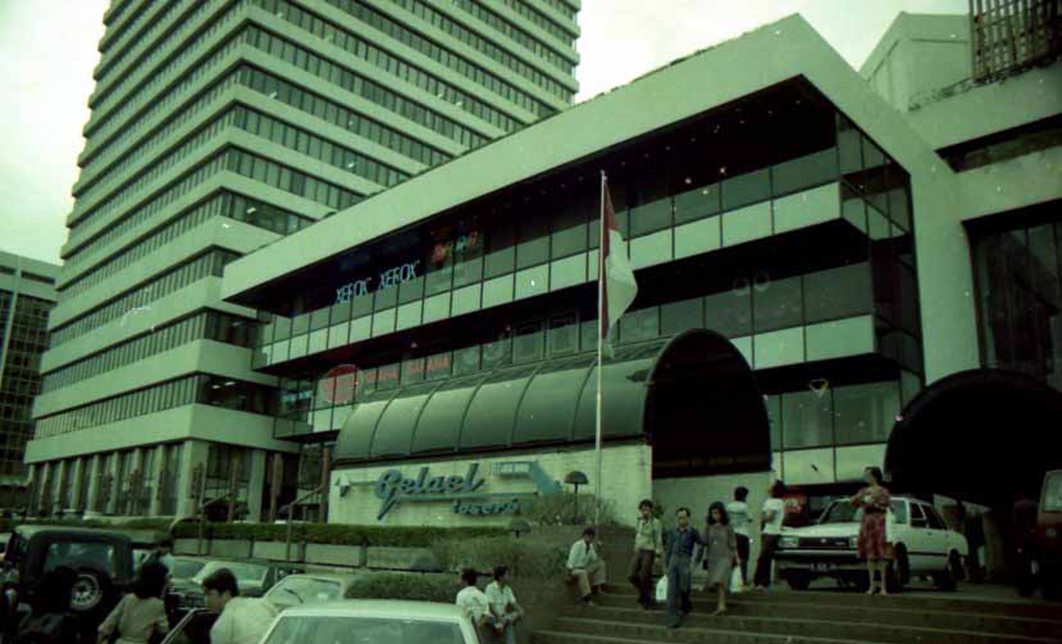
Photo by author early 1980s
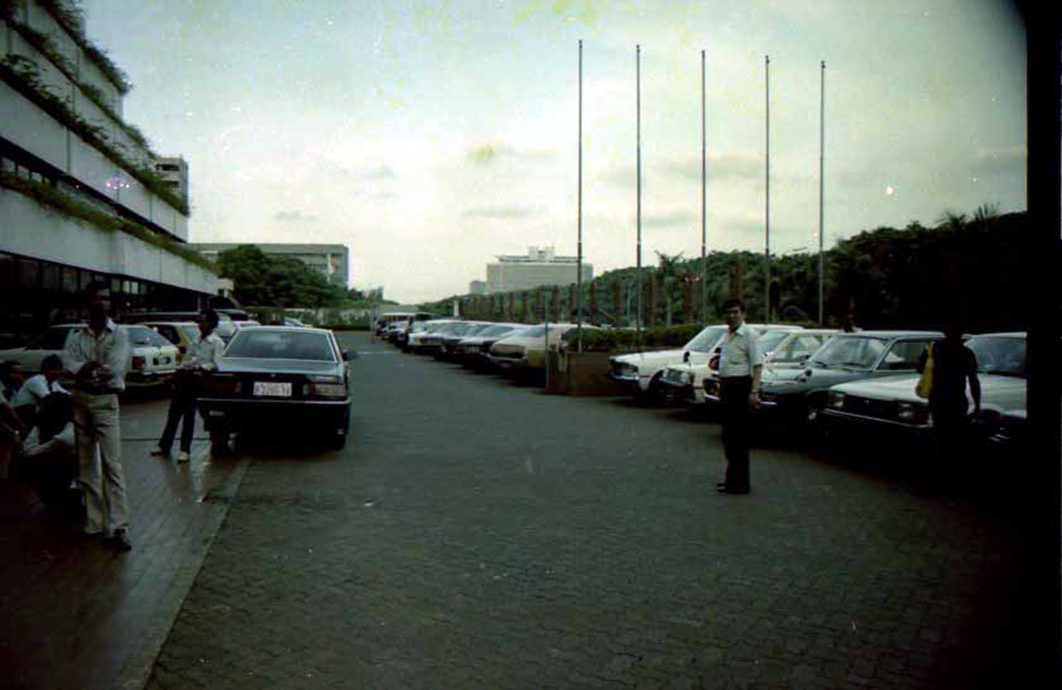
Photo by author early 1980s
Many buildings from the Dutch colonial period remain in Jakarta Old Town.
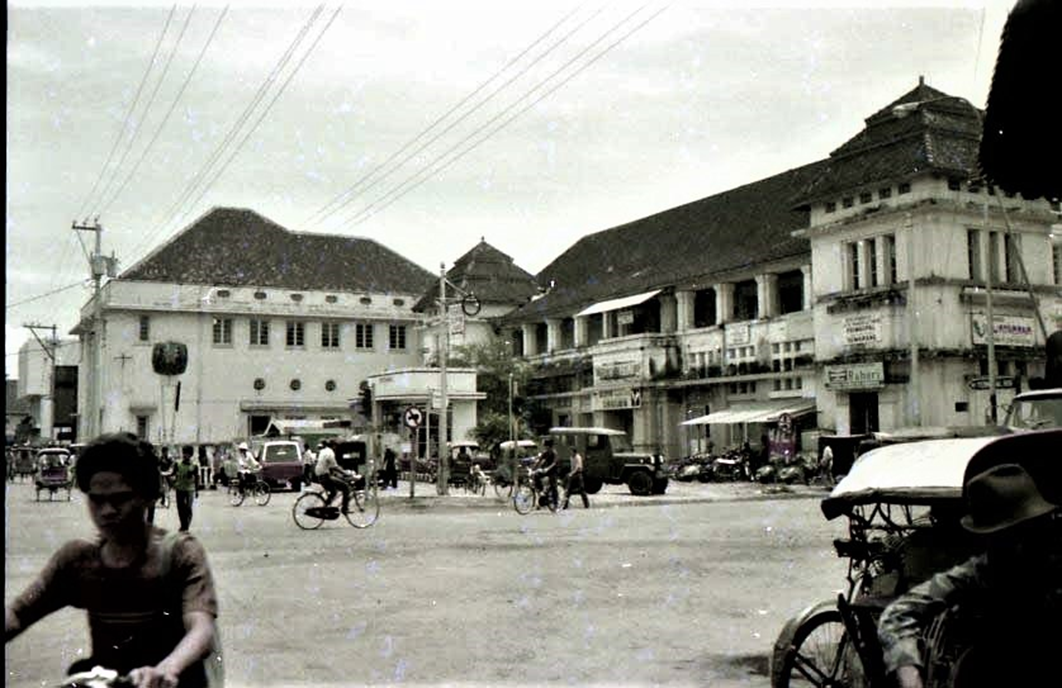
Photo by author early 1980s
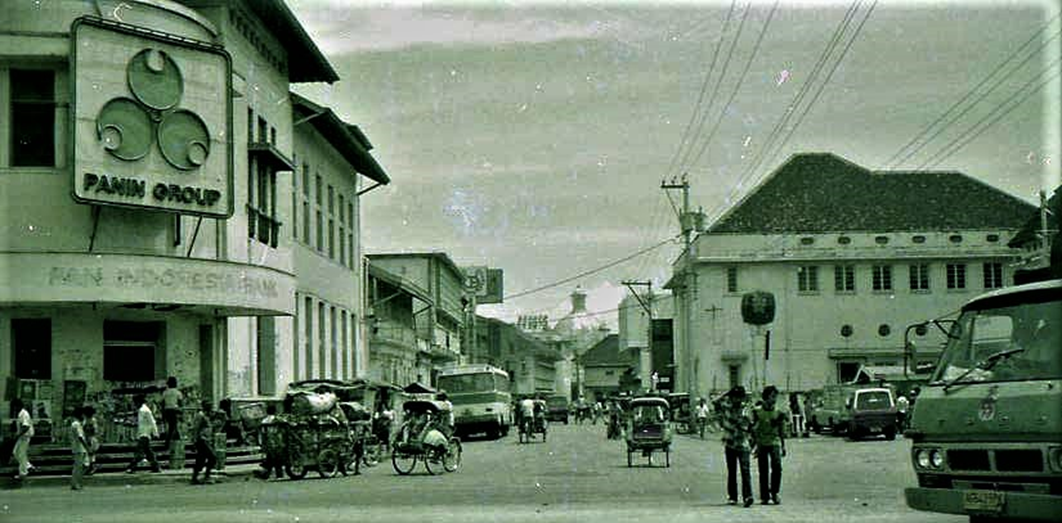
Photo by author early 1980s
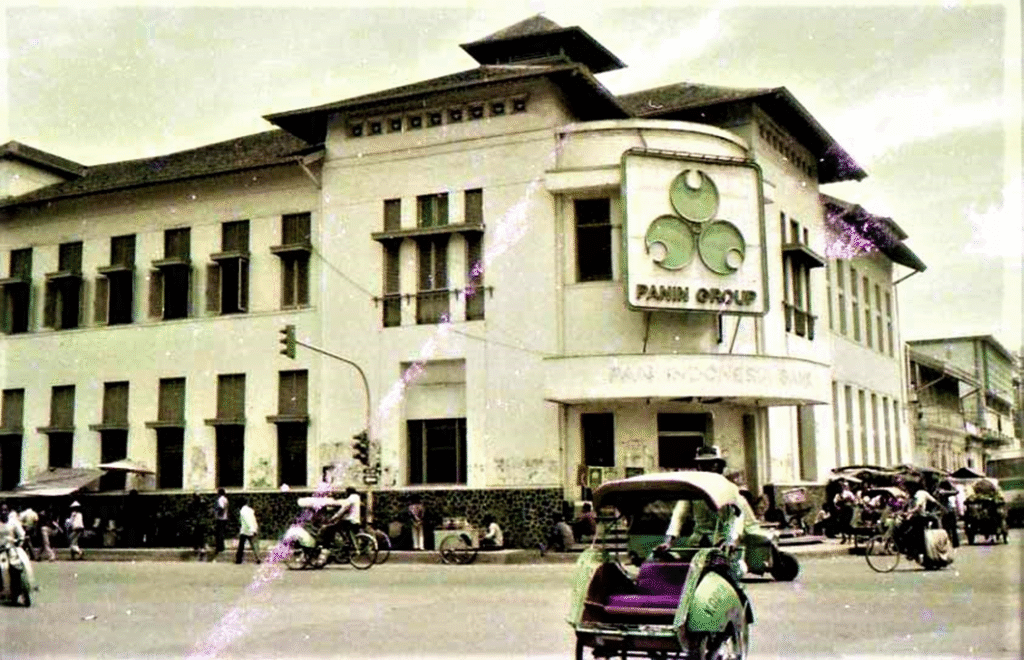
Photo by author early 1980s
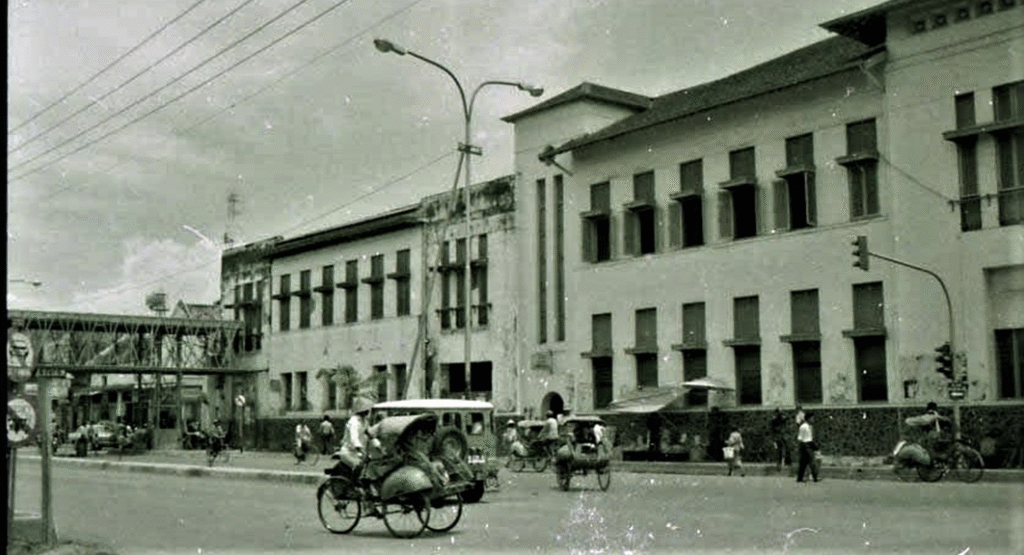
Photo by author early 1980s
Underdeveloped public transportation
Lots of bikes and scooters.
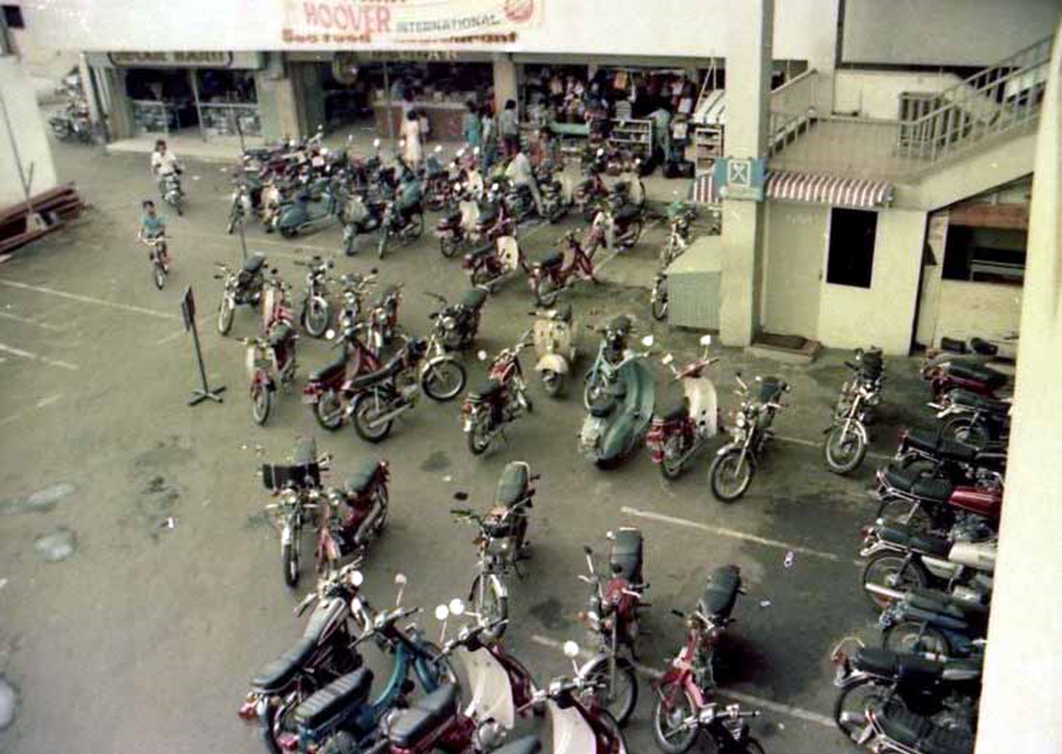
Photo by author early 1980s
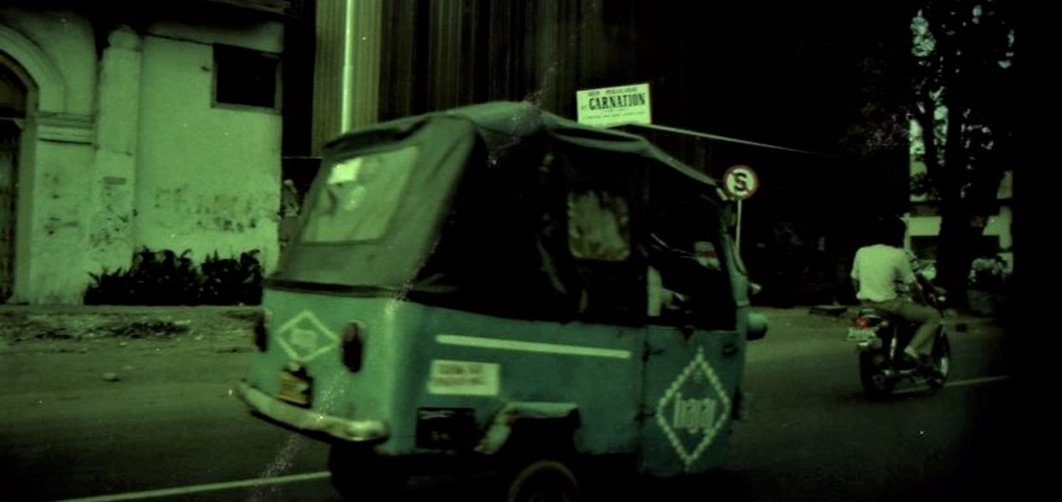
Photo by author early 1980s
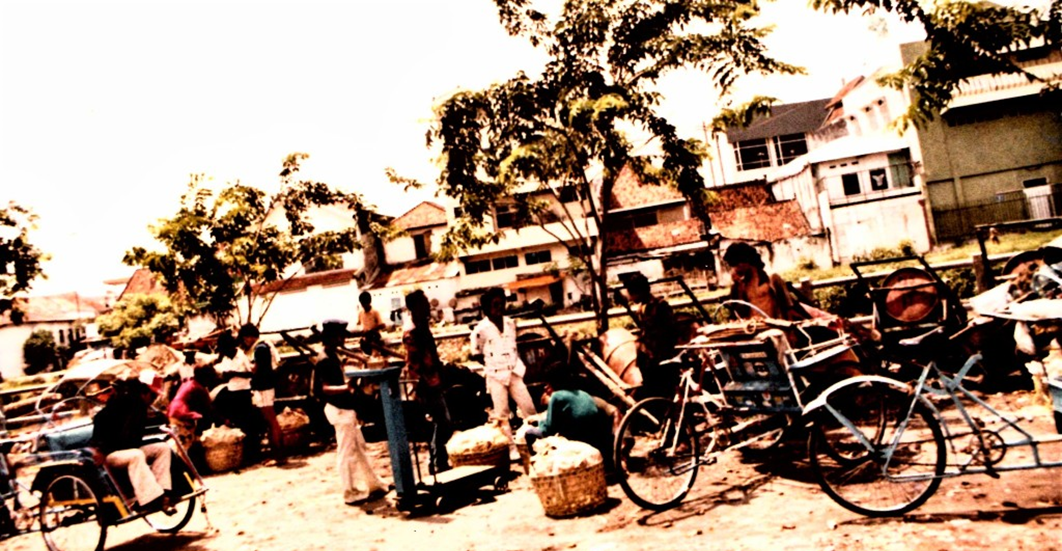
Photo by author early 1980s
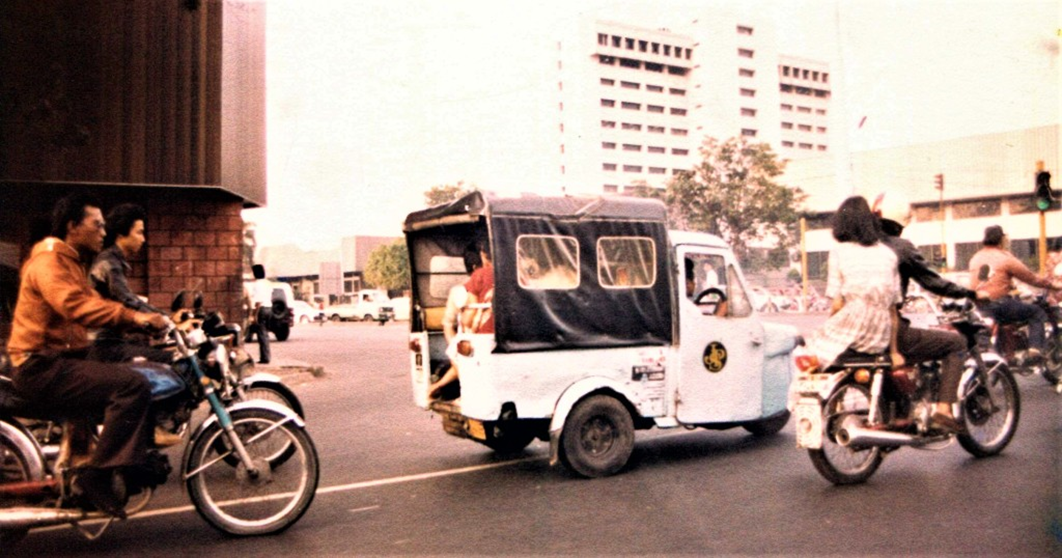
Photo by author early 1980s
Hand-crafted volcanic stone blocks are sold on the roadside.
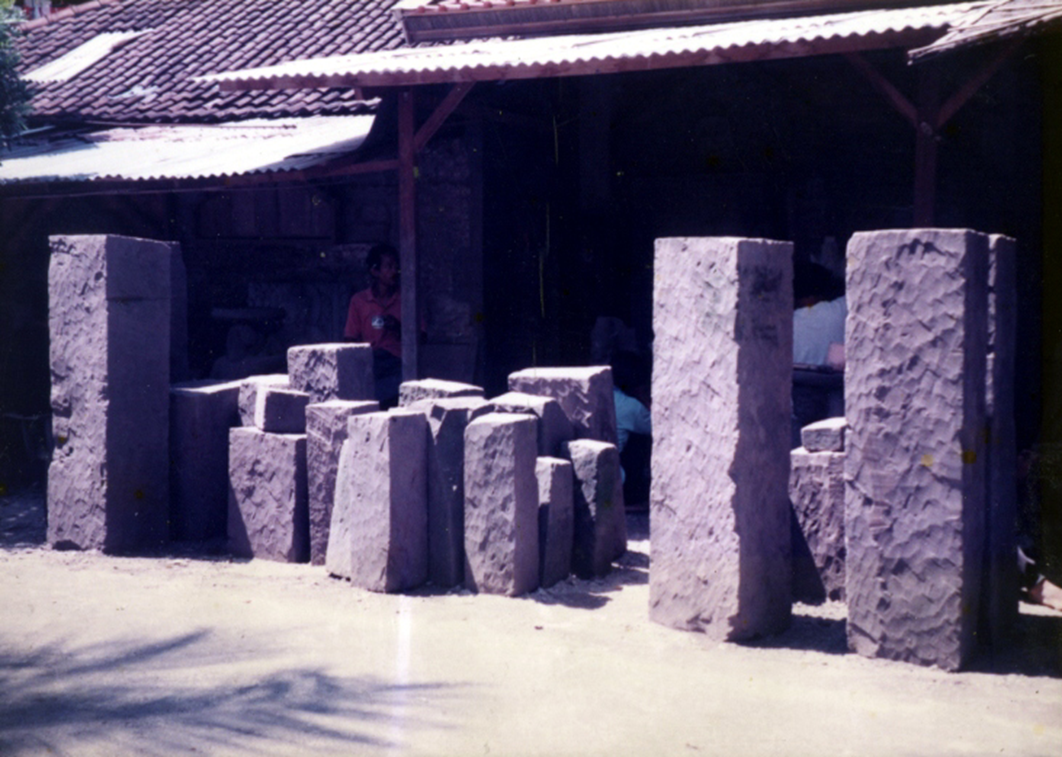
Photo by author, 1975
Roadside sculptural work.
The city is a city of artists, and there are many painters who make oil paintings.
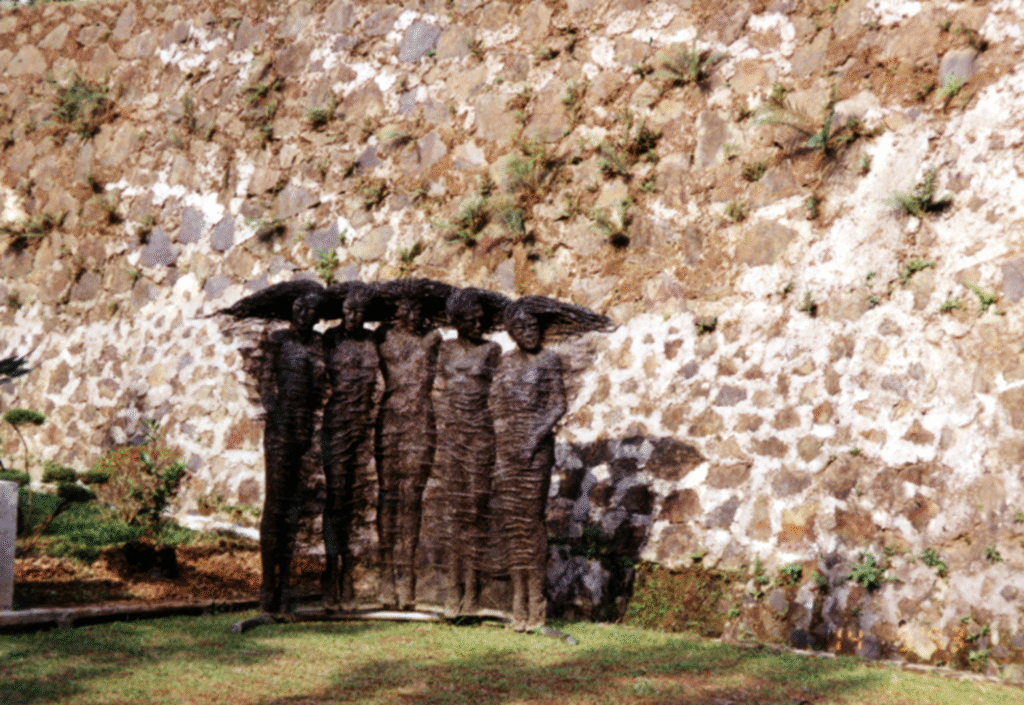
Photo by author, 1975