JAP | ENG
India Travelogue 1991
#14/26
Udaipur
In August 1990, the situation in the Middle East suddenly became unstable with Iraq’s invasion of Kuwait. The possibility of war increased, the world economy declined, and construction-related work slowed down due to investors’ caution.
As a result, I had a lot of free time, so I decided to go on a trip, and I decided to go to India (for the second time) and Nepal, for about two weeks.
The itinerary was as follows.
1 night in Kolkata, 3 nights in Kathmandu, 2 nights in Delhi, 3 nights in Udaipur, 2 nights in Aurangabad
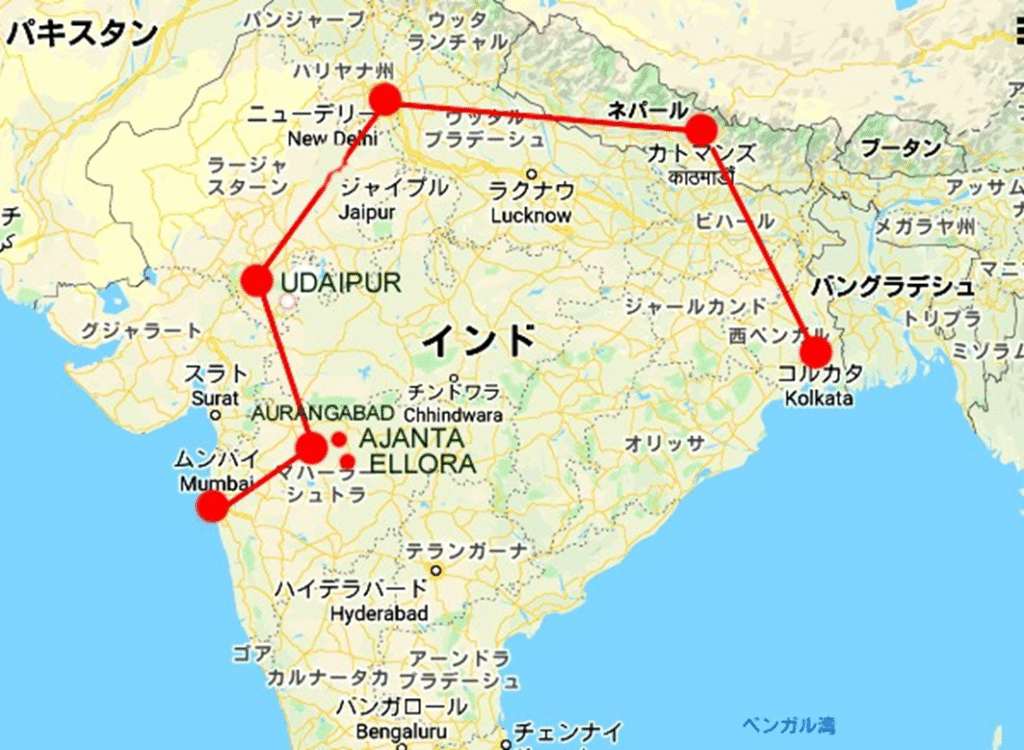
Back in Delhi
I visited here on January 15, 1991.
It was just before the start of the first Gulf War, and tourists were sparse.
It was a triple whammy for India, with a large number of migrants from India going to the Middle East, and the high price of imported oil and the cancellation of exports of furniture and decorations to the Arab region, which was a good customer on the eve of the war.
Under these circumstances, furniture and furnishings that had been cancelled from Arab countries were piling up in warehouses. I decided to buy ethnic furniture and furnishings that were almost on sale and ship them from Mumbai to Singapore.
Sketch of a hotel room floor plan in New Delhi
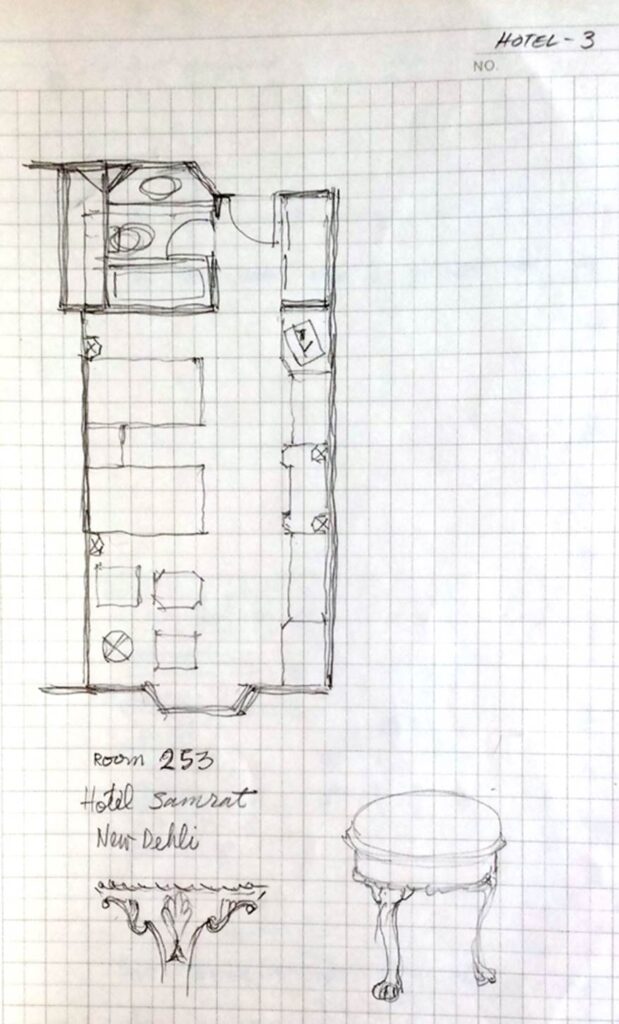
HOTEL SAMRAT NEW DELHI LAYOUT
Author’s sketch
Udaipur
Udaipur is located at the halfway point between North India, including Delhi, and the Arabian Sea, and is a key point of transportation routes.
It is located 630 km south of Delhi and can be reached in 1.5 hours by domestic flight.
In the middle of the 16th century the Hindu Maharaja ruled the area and had a long conflict with the Mughal emperor Akbar (Islamic dynasty). The Maharaja lost the long war, and the capital, Chittorgarh, fell.
After losing his capital, Uday Singh built a new capital for the kingdom of Mewar, which is the current Udaipur. The city was named after Uday Singh II.
Artificial lakes have been formed around Udaipur like a string of beads, supporting the city’s population and agriculture. With the completion of this man-made lake complex by the Maharajah, Udaipur became the administrative and commercial center of southern Rajasthan.
There are not as many expensive buildings as Jaipur, but there are many white buildings, and Udaipur is called the “White City” as opposed to Jaipur’s “Pink City”.
City Palace [Palace of the Maharajah]
The altitude of Udaipur is 600 m.
The City Palace is located on a hill of about 750m.
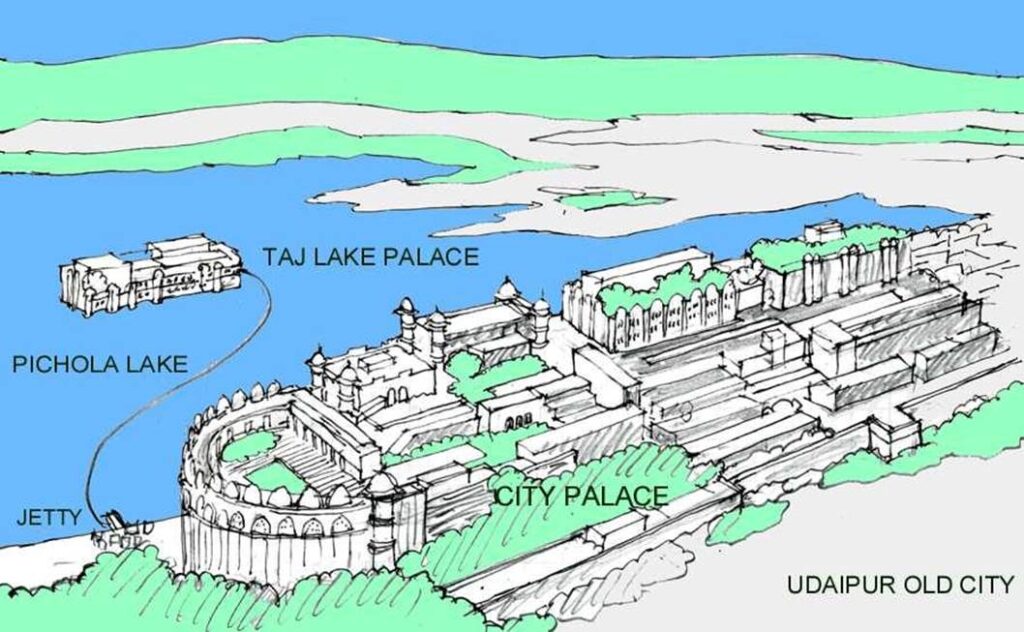
Built on a hill facing the shores of Lake Pichola, the City Palace overlooks the Taj Lake Palace Hotel (a summer palace) on the lake.
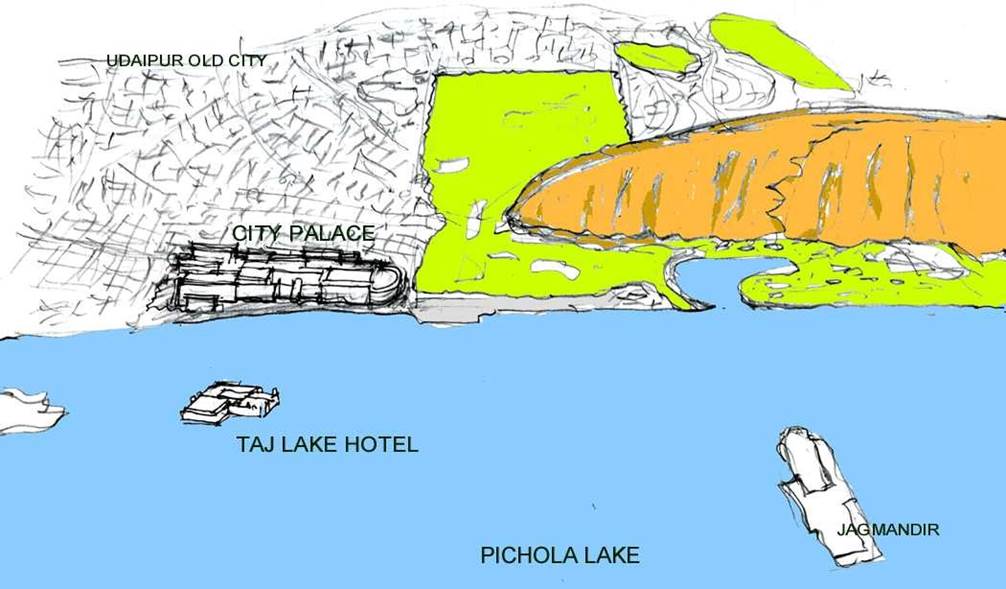
Author’s sketch
Taj Lake Palace Hotel
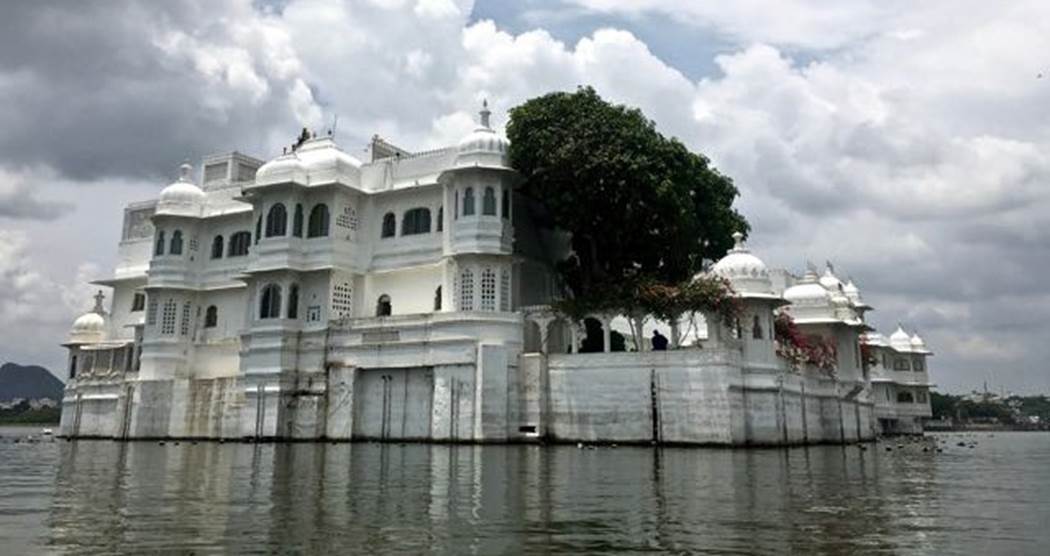
The hotel (formerly known as Jag Niwas Palace) is a palace built of white marble on a small island (Jag Niwas) in Lake Pichola.
It was built by a Raja in 1743-46 as a summer resort palace.
During the reign of a later Raja, it was renovated into Udaipur’s first luxury palace hotel, and became a beautiful, shining white palace hotel standing in the lake.
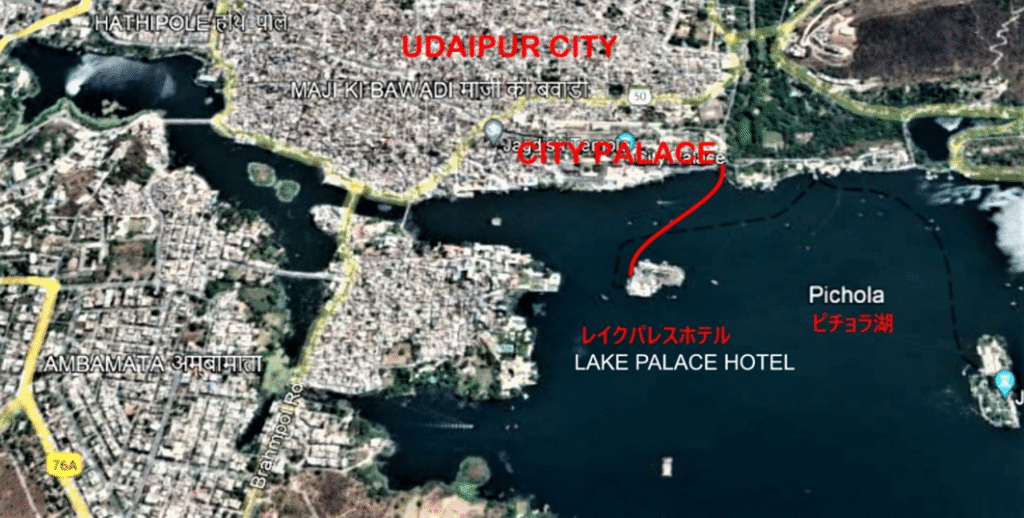
Author’s sketch
The Taj Lake Palace Hotel is only accessible by water, from a small private wharf at the foot of the City Palace walls.
Only guests with a reservation are allowed to board the hotel’s private small boat. This gives you a sense of exclusivity before you even arrive at the hotel’s dock. There are probably few hotels in the world that offer such a sense of expectation in their approach to the hotel.
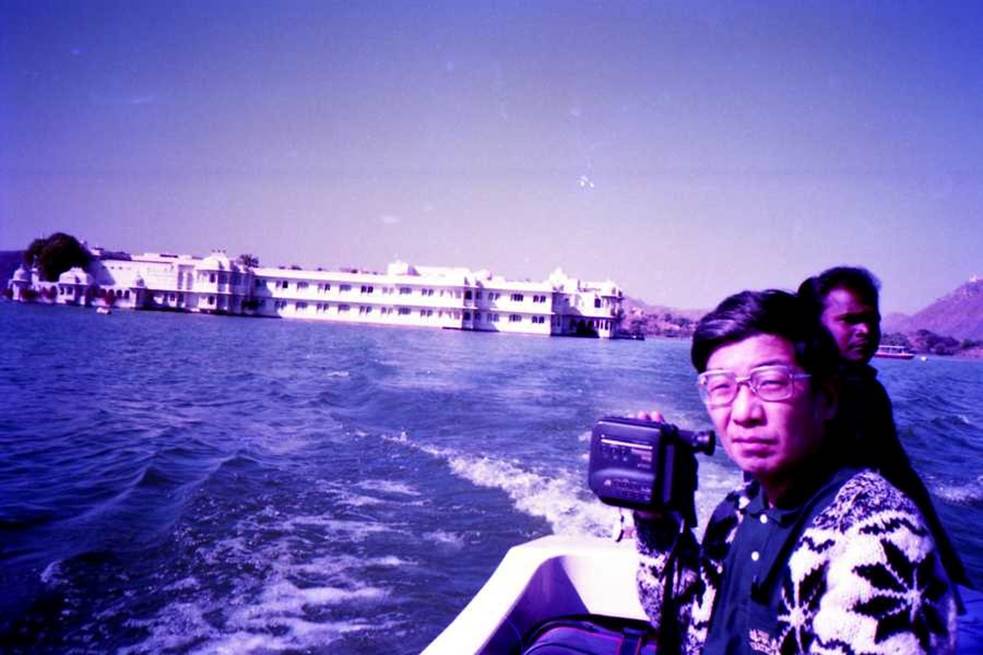
Photo of author, 1991
In the middle of the 18th century, during the Mewar dynasty, a summer palace was built on a small island in the lake for summer retreat.
The palace is arranged so that the entrance faces east.
This follows the layout of many Hindu temples in India.
It was probably done in consideration of the fact that the residents of the palace worshipped the sunrise every morning.
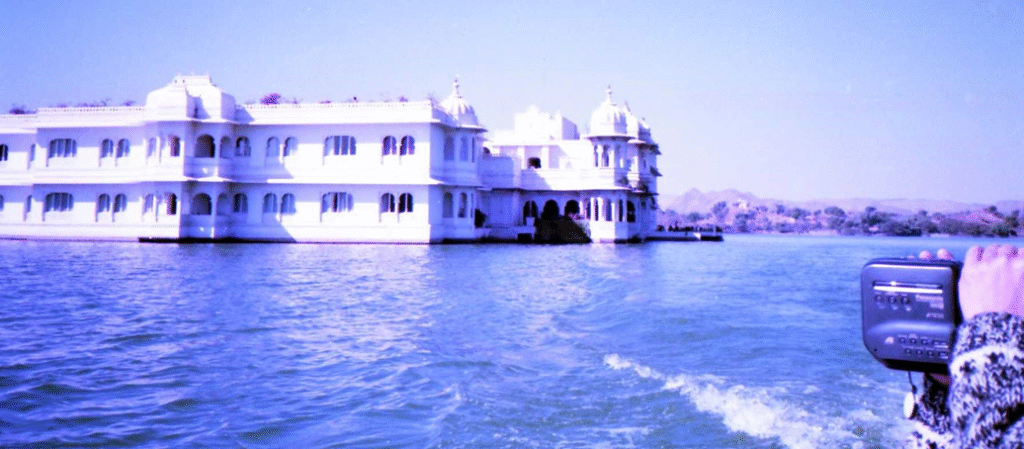
The island also has a history of providing refuge and protection to Westerners fleeing the Sepoy Mutiny (an anti-British uprising by Indian soldiers in 1857).
Between 1930 and 1955 the palace fell into disrepair, but Bhagwat Singh converted it from a palace to a hotel and underwent a major renovation to survive. It was designed by an American artist.
In 1971, the Taj Hotel Group, which owns and operates the Taj Mahal Hotel in Mumbai, became involved in the operation of the Lake Palace Hotel.
Celebrities who have visited in the past, including Queen Elizabeth, King of Iran, King of Nepal and Jacqueline Kennedy. In 1983, it was the setting for the filming of Octopussy, starring James Bond.
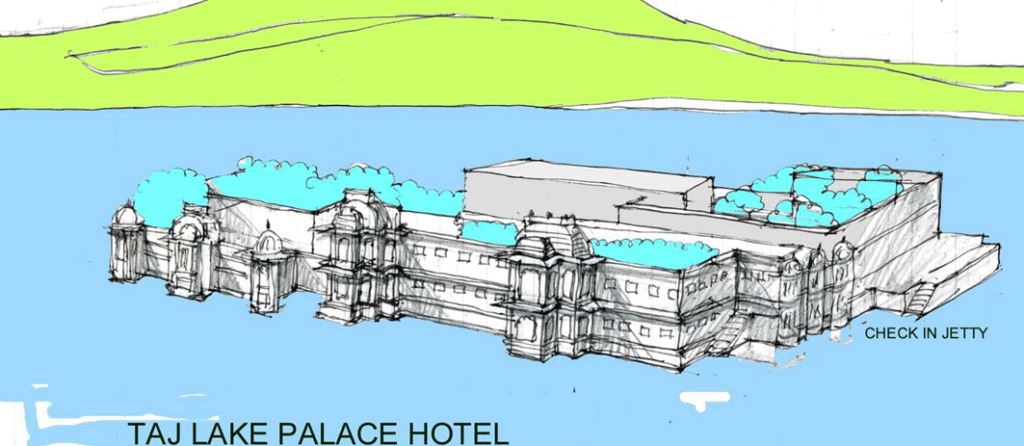
Author’s sketch
Nearby view of Lake Palace Hotel.
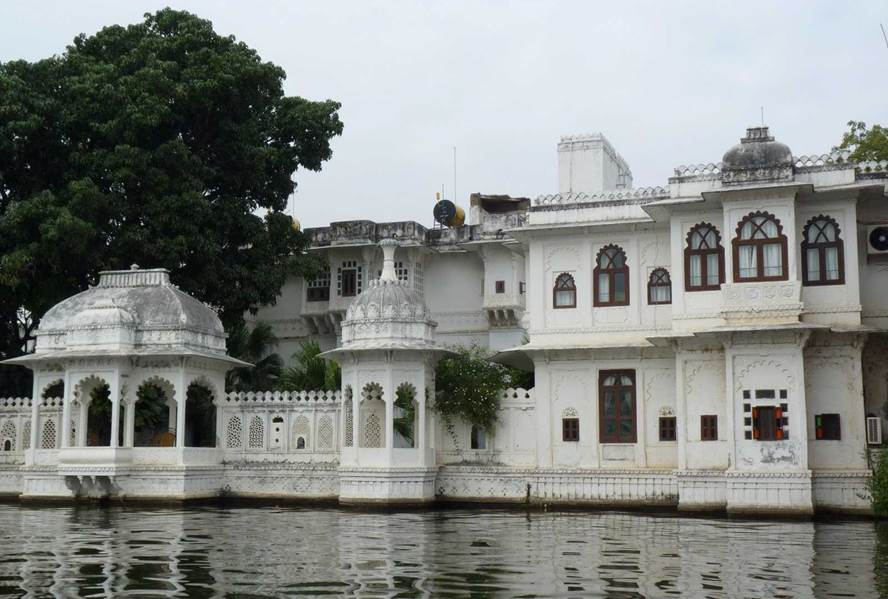
Photo by author, 1991
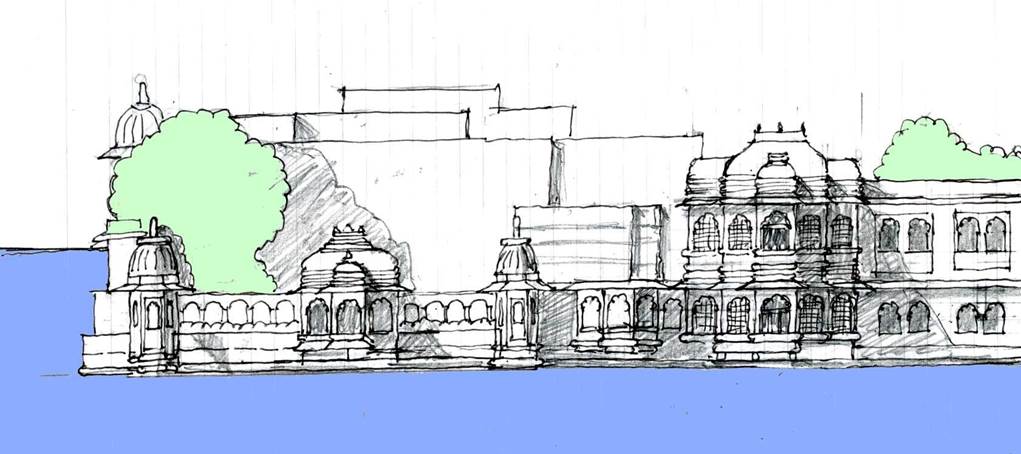
Author’s sketch
The site area is about 16,000 m2. In the courtyard lay a splendid but deserted swimming pool. Since the Gulf War was about to break out, the number of guests was extremely small.
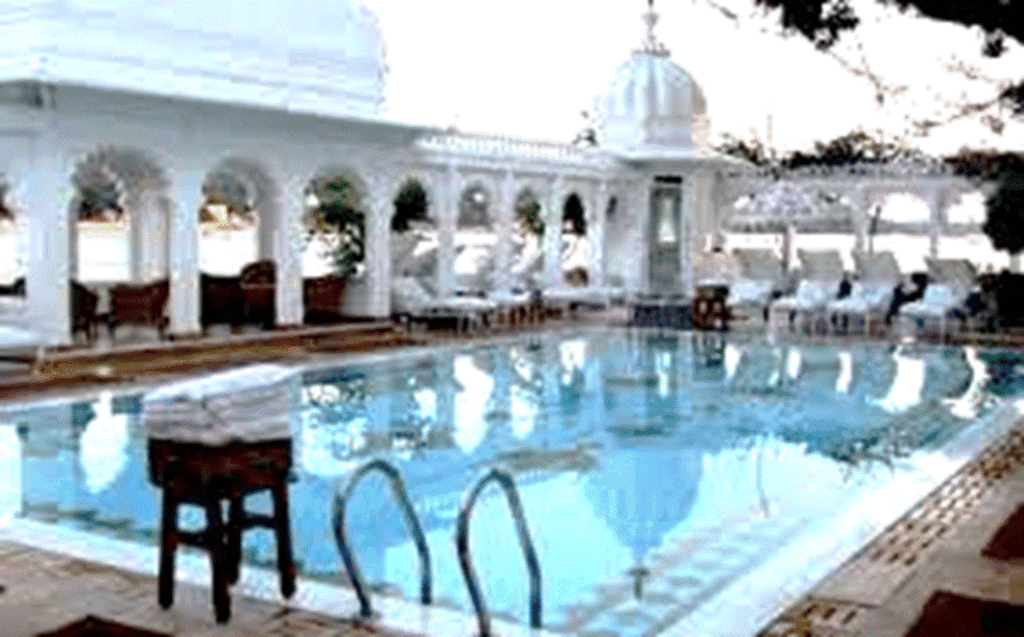
Photo by author, 1991
On January 17, 1991, while staying at the Lake Palace Hotel, the First Gulf War broke out.
From the deserted palace hotel on the lake, you can see the walled City Palace on the opposite bank.
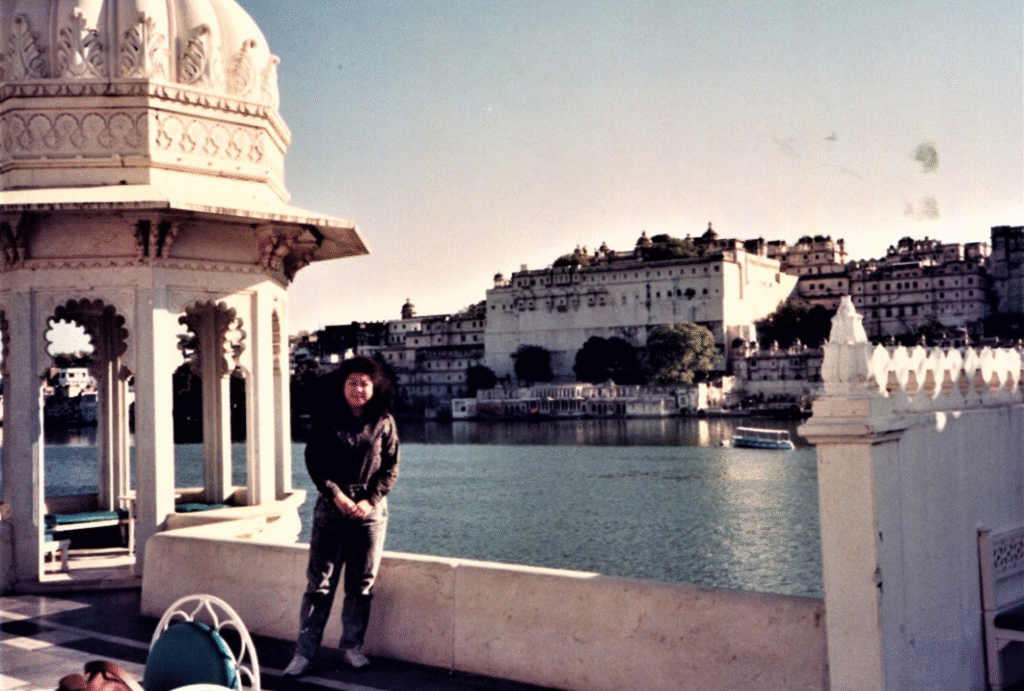
Photo by author, 1991
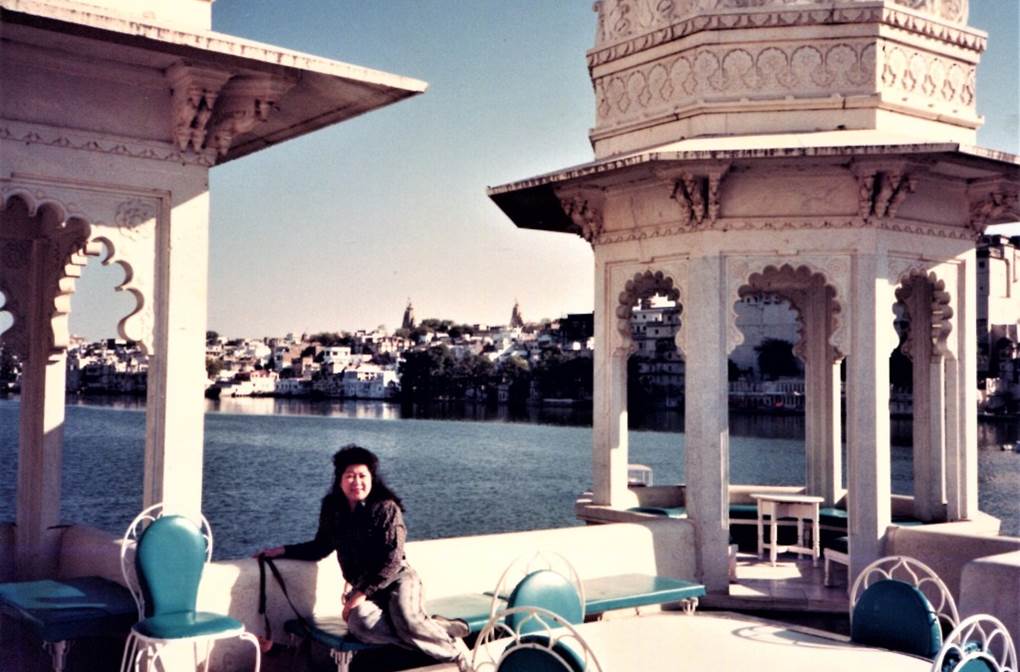
Photo by author, 1991
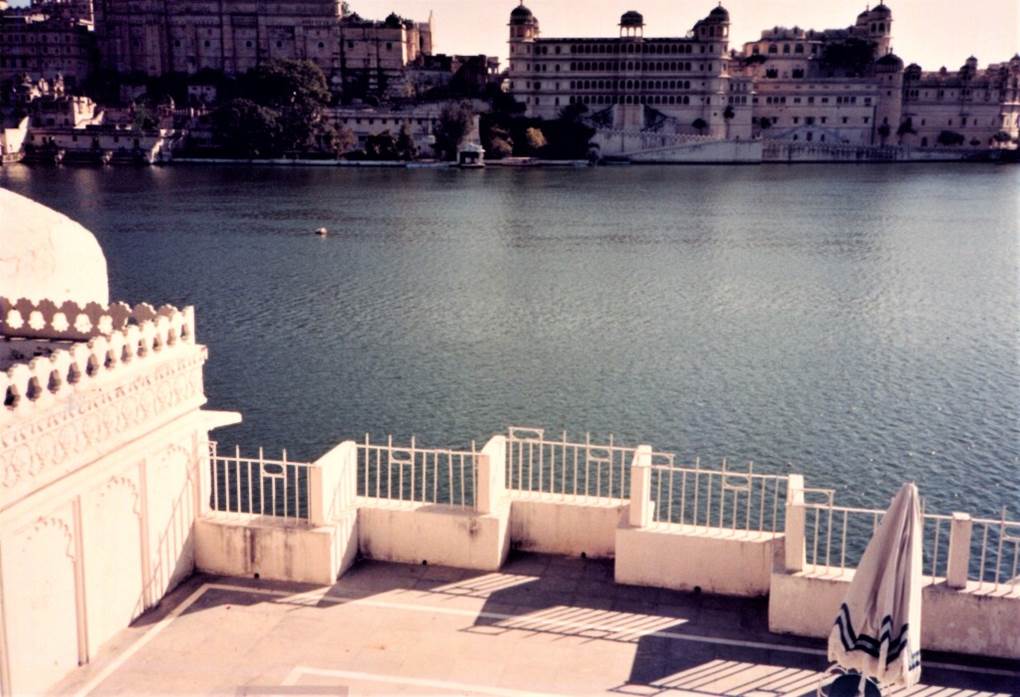
Photo by author, 1991
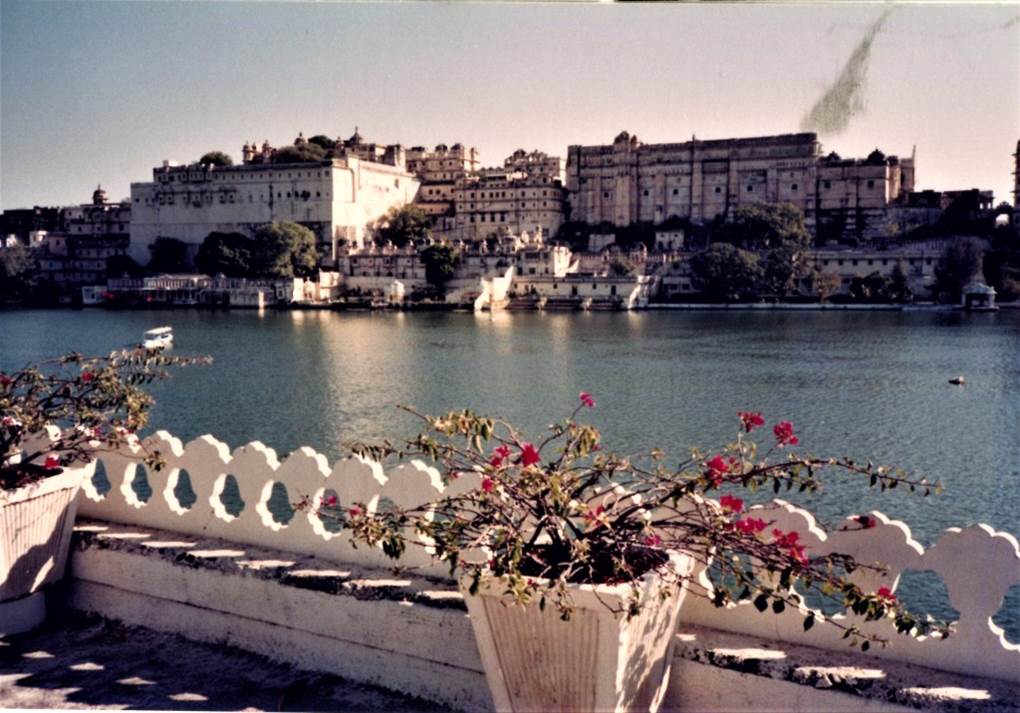
Photo by author, 1991
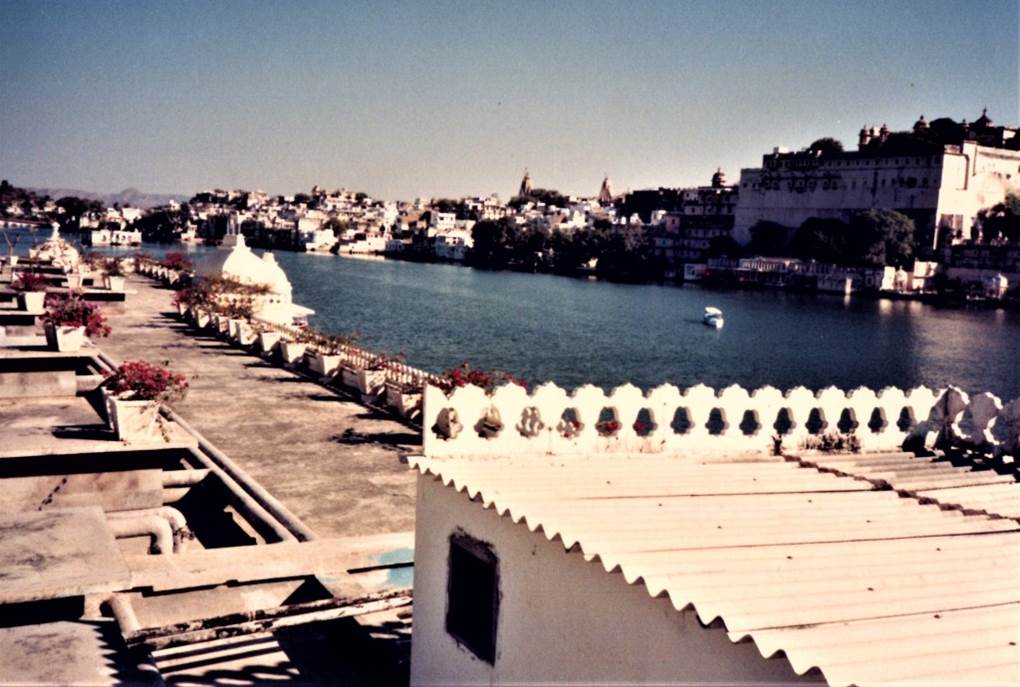
Photo by author, 1991
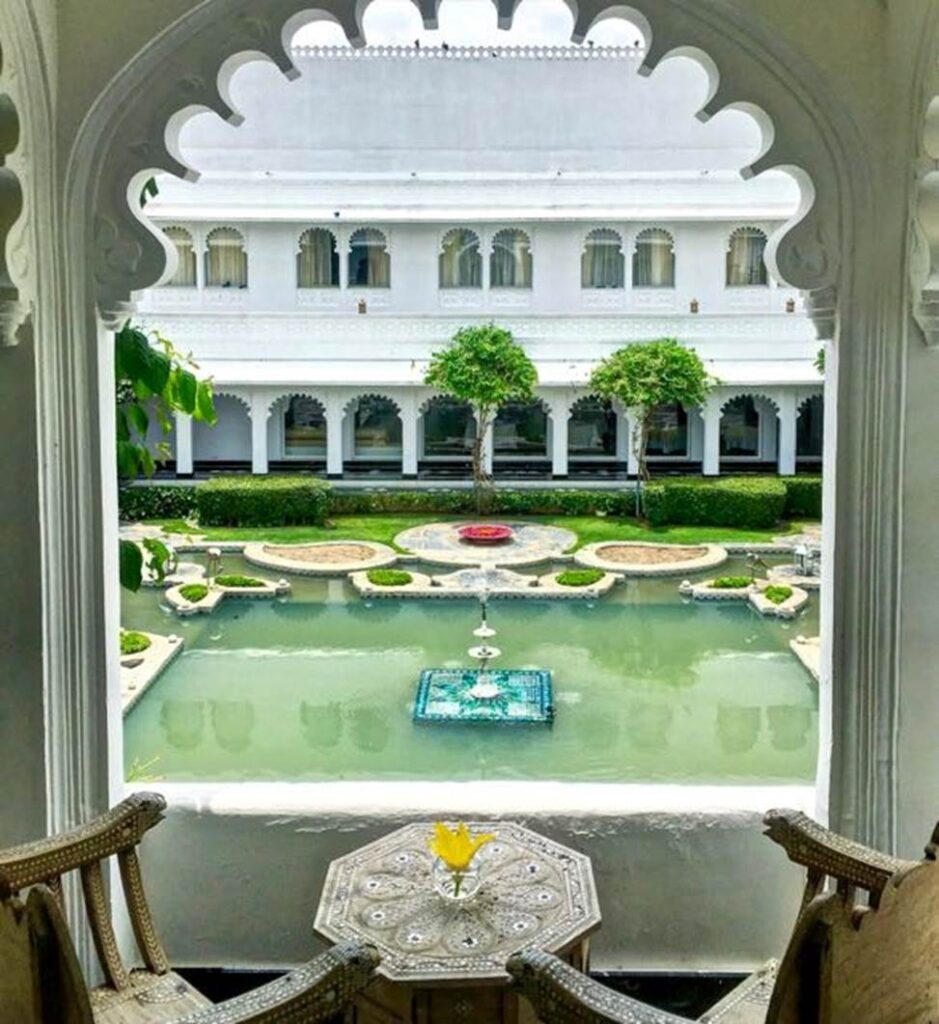
The courtyard of the Taj Lake Palace Hotel
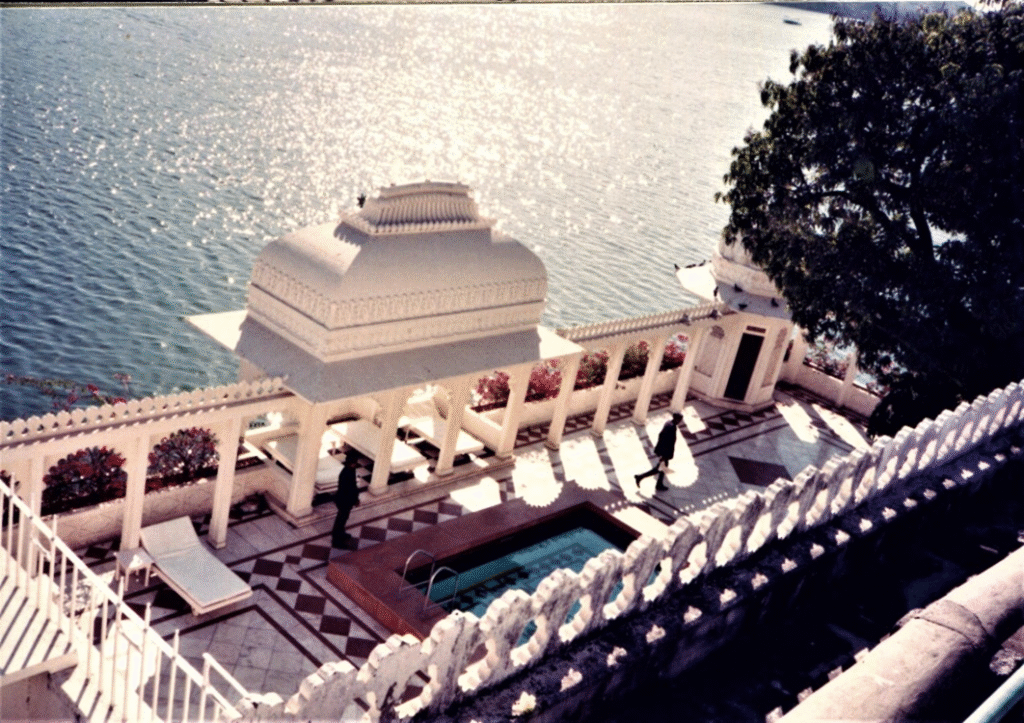
Photo by author, 1991
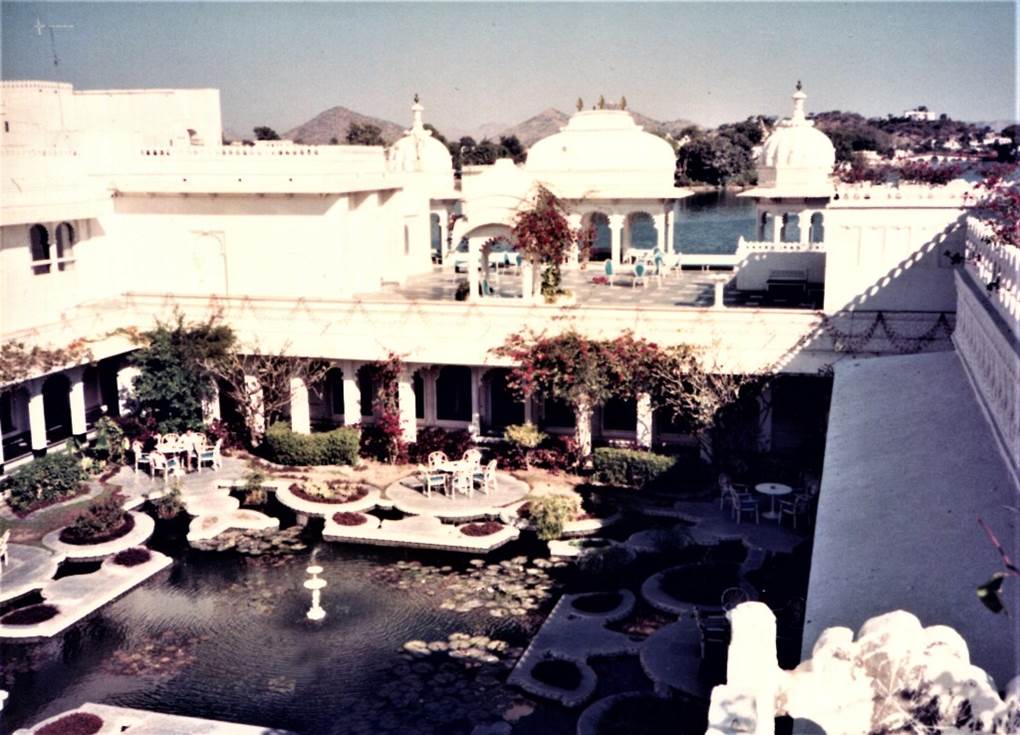
Photo by author, 1991
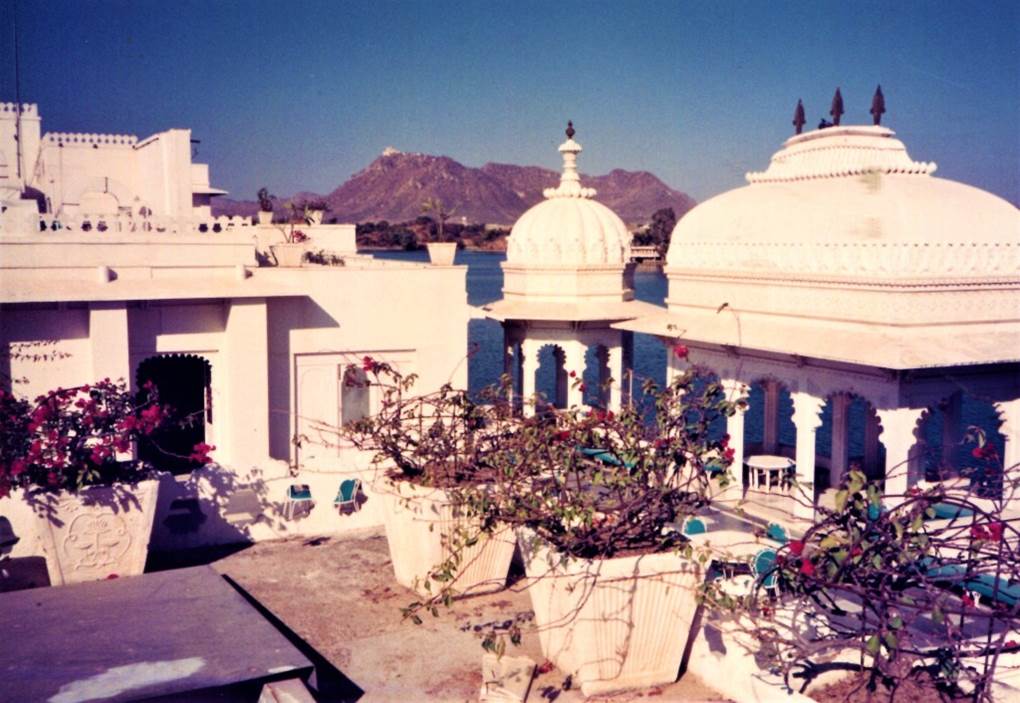
Photo by author, 1991
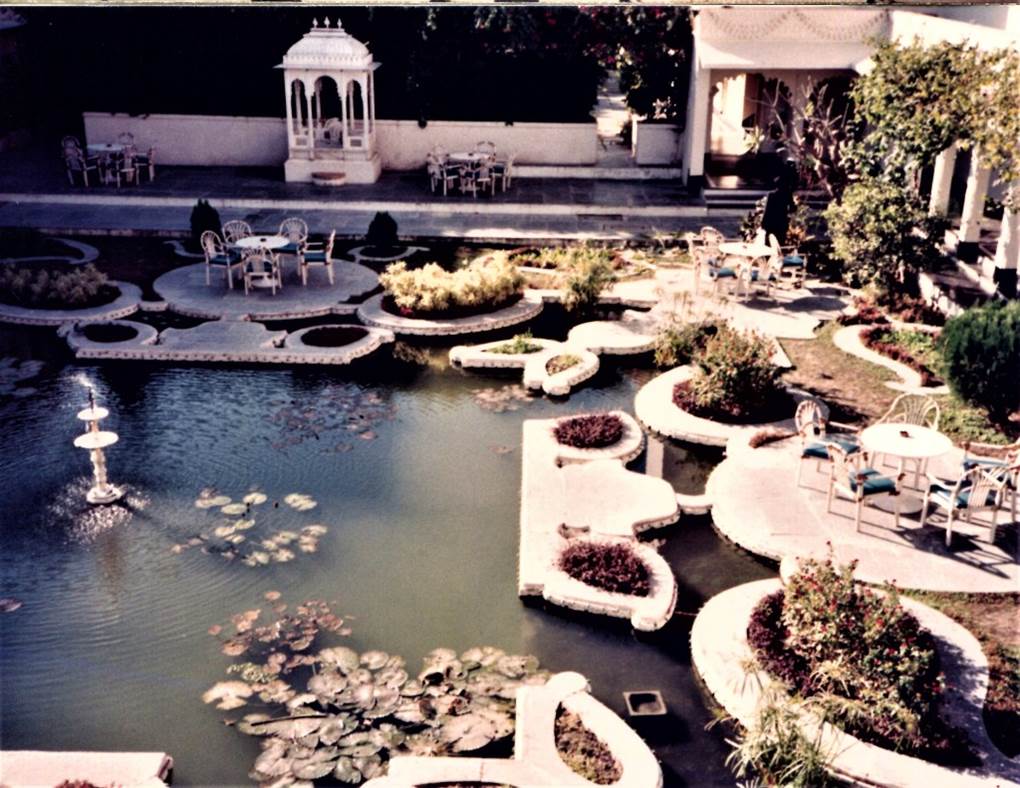
Photo by author, 1991

Photo by author, 1991

Photo by author, 1991
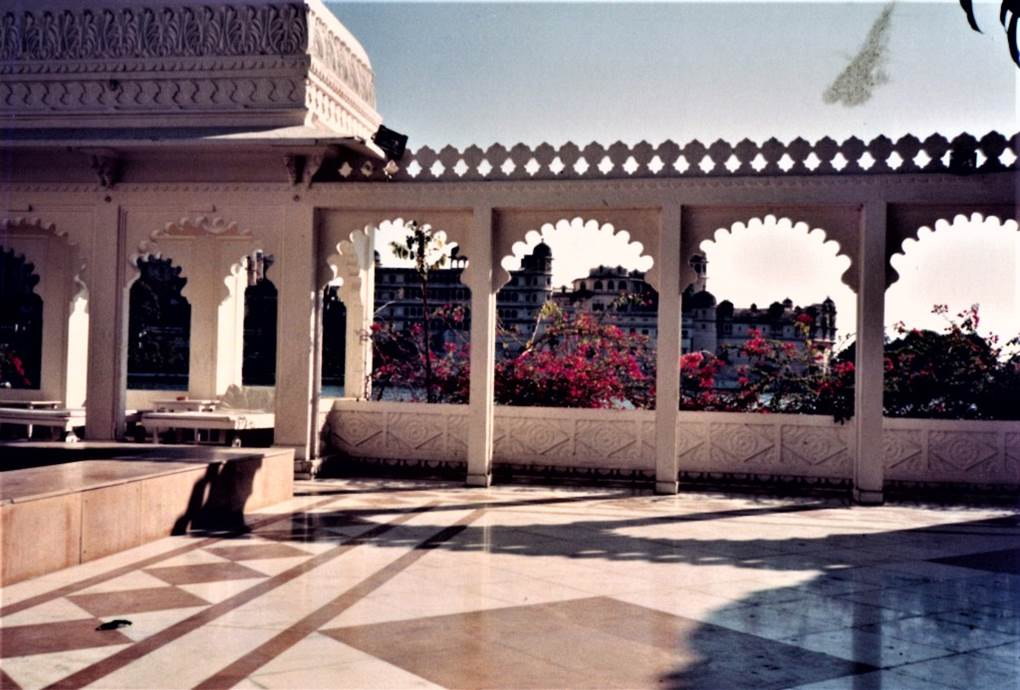
Photo by author, 1991
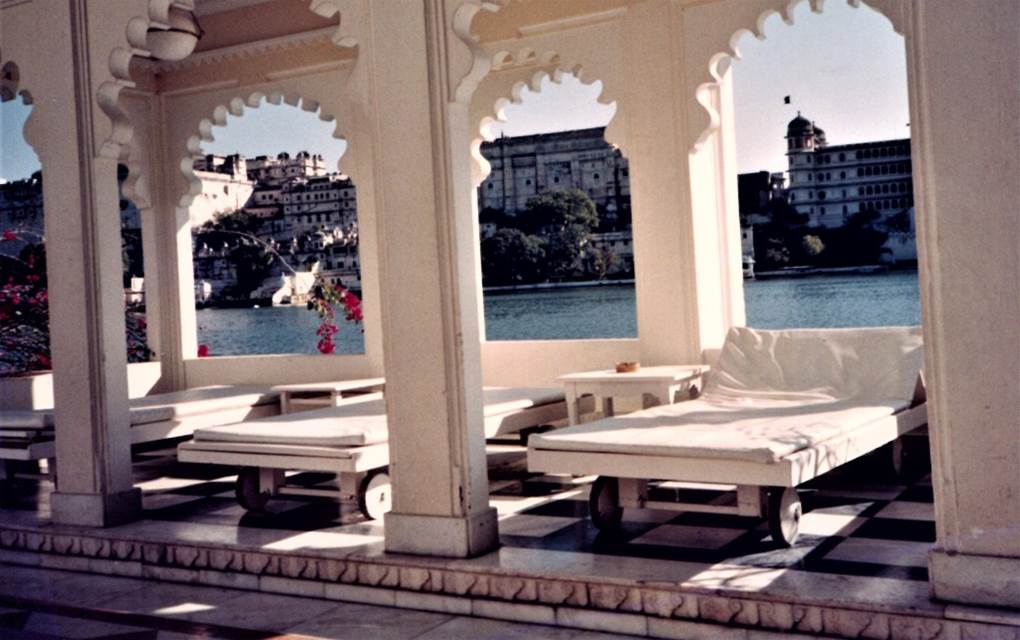
Photo by author, 1991
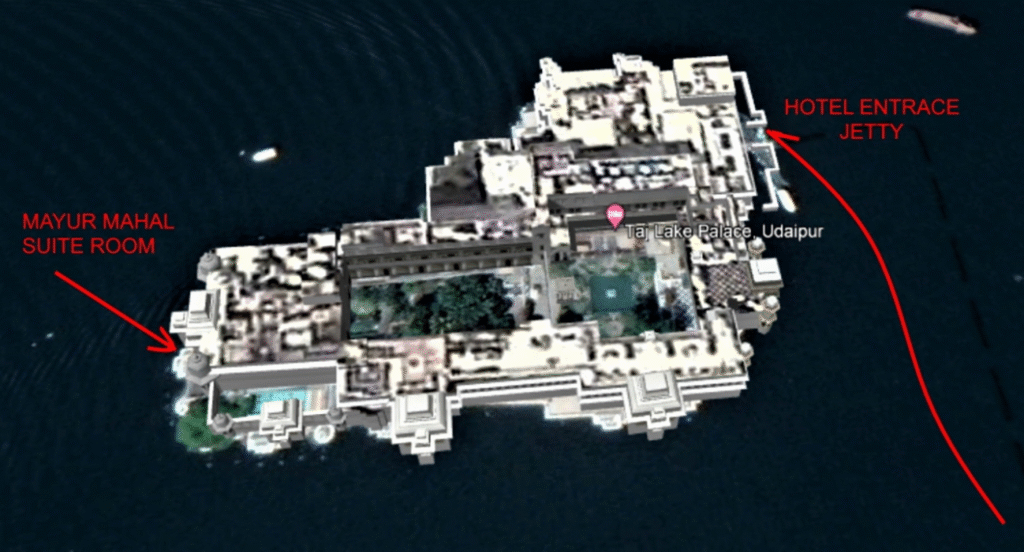
Floor plan of the Taj Lake Palace Hotel.
The room where I stayed is in the far right corner.
There is a pool in the courtyard, and there are guest rooms surrounding it, and the arrangement is such that you can see the lake from the room.
The wharf and reception area face east and offer a panoramic view of the Maharajah’s City Palace.
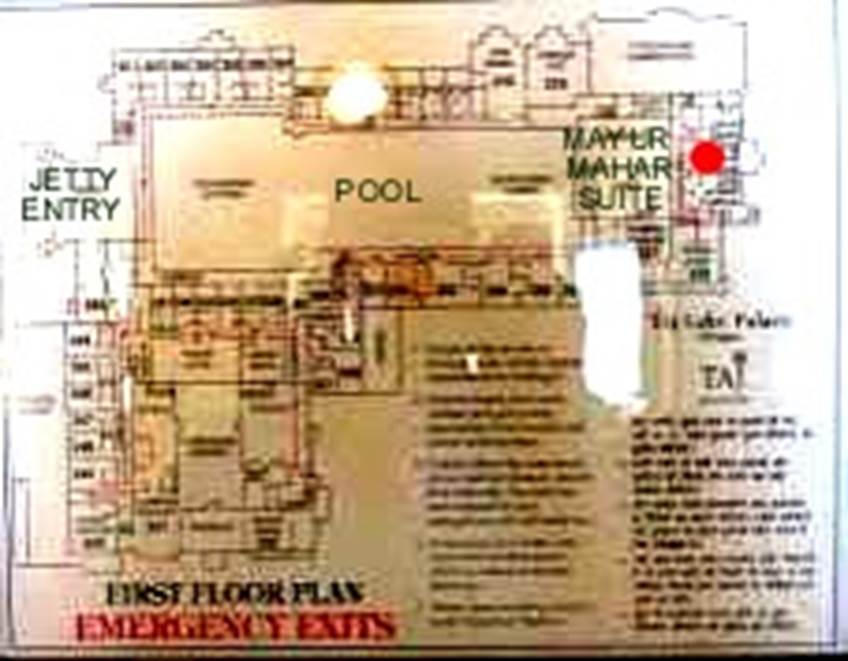
Photo by author, 1991
Mayur Mahal Suite (the suite where I stayed)
The butler, who led me to the room from the hotel’s entrance, told me that the suite had been occupied by a member of the Belgian royal family until the night before.
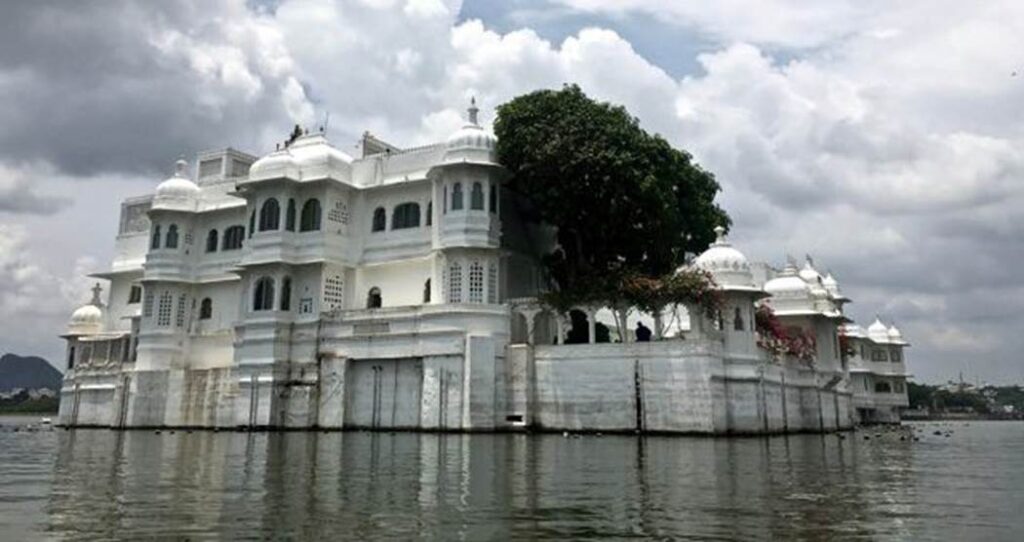
Photo by author, 1991
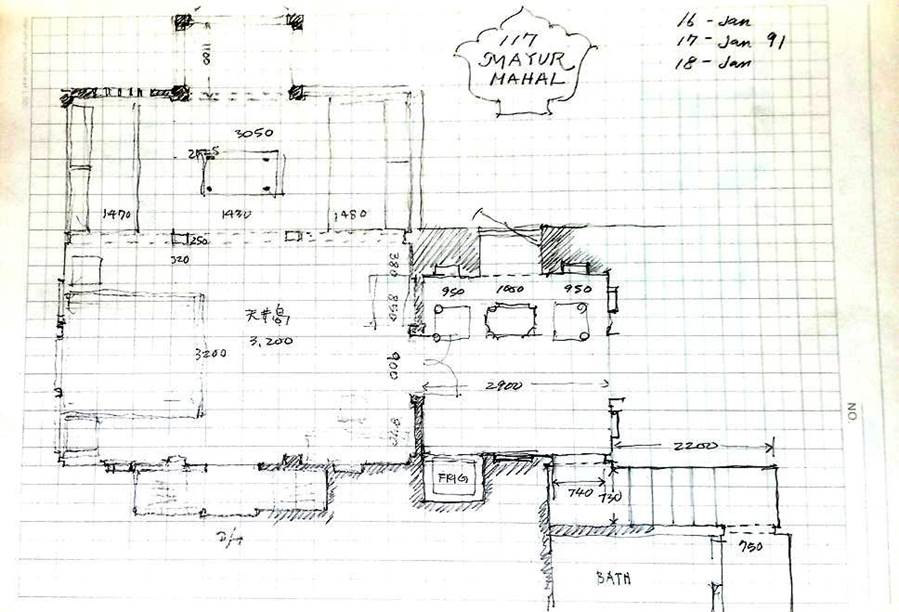
Sketch of Mayur Mahal Suite Room
Including the bathroom, it is about 60 m2.
I stayed for 3 nights from January 16, 1991.
Author’s sketch
A major feature of this palace hotel is the daylight in the rooms.
In the early morning, the morning sun reflected on the surface of the lake shines the room through colored glass.
In particular, the color tones projected on the white ceiling catch your eye when the ripples on the surface of the lake are swaying, so you will never get tired of lying on the bed and watching the shifting light.
In addition, the angle of the sun in the morning changes slightly. In response, the position of the colors and shadows projected on the ceiling slowly shifts.
While lying on the bed, I forgot about breakfast and watched it for more than an hour.
If the designer had calculated and intentionally created such an effect of light and color, it can be said that the resulted effect was a great success.
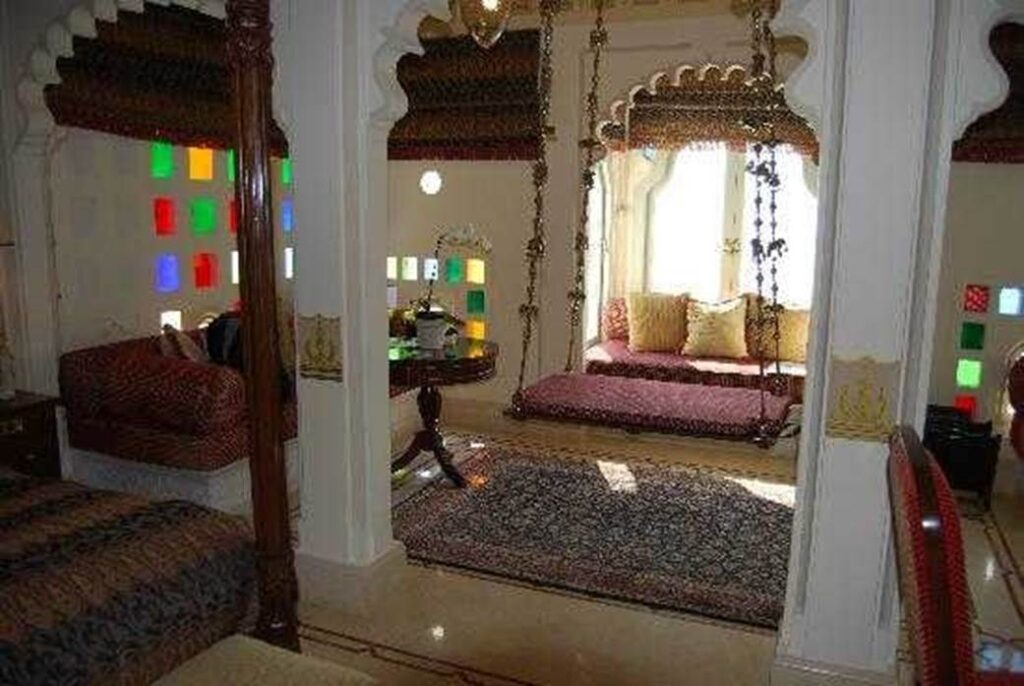
Photo by author, 1991
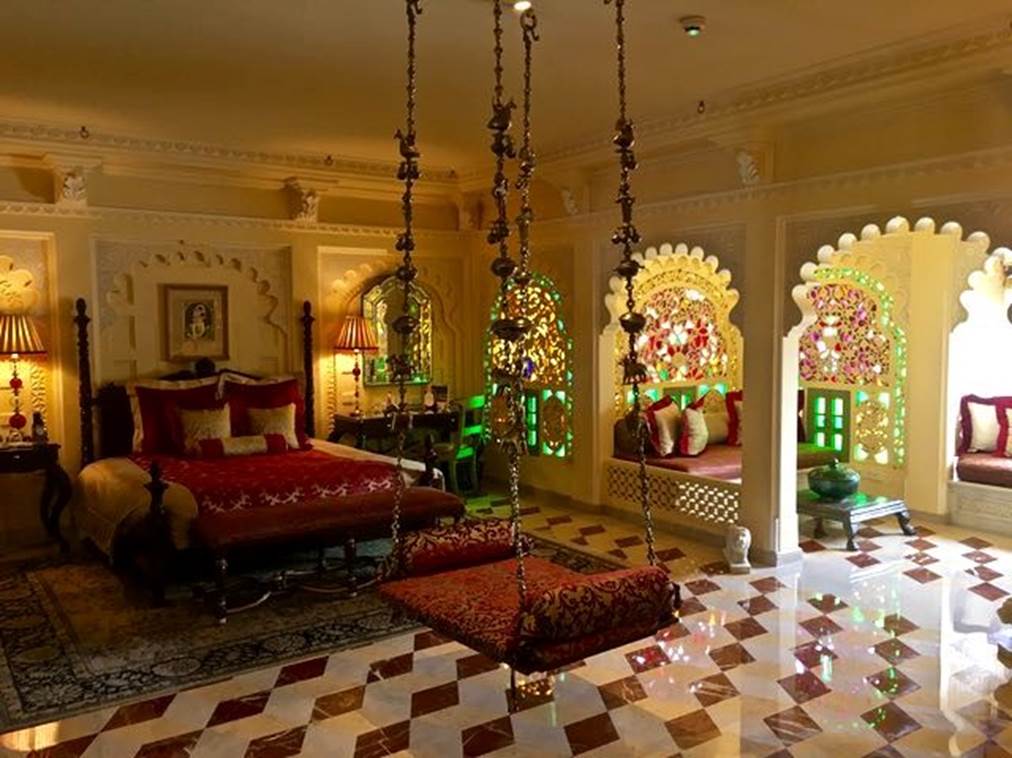
Photo by author, 1991
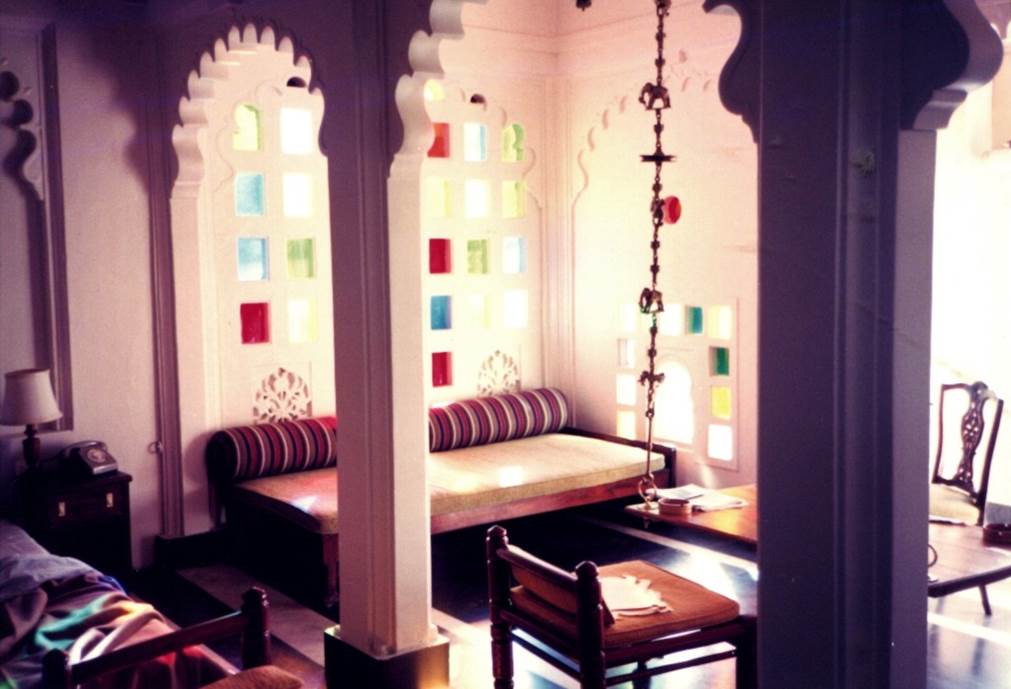
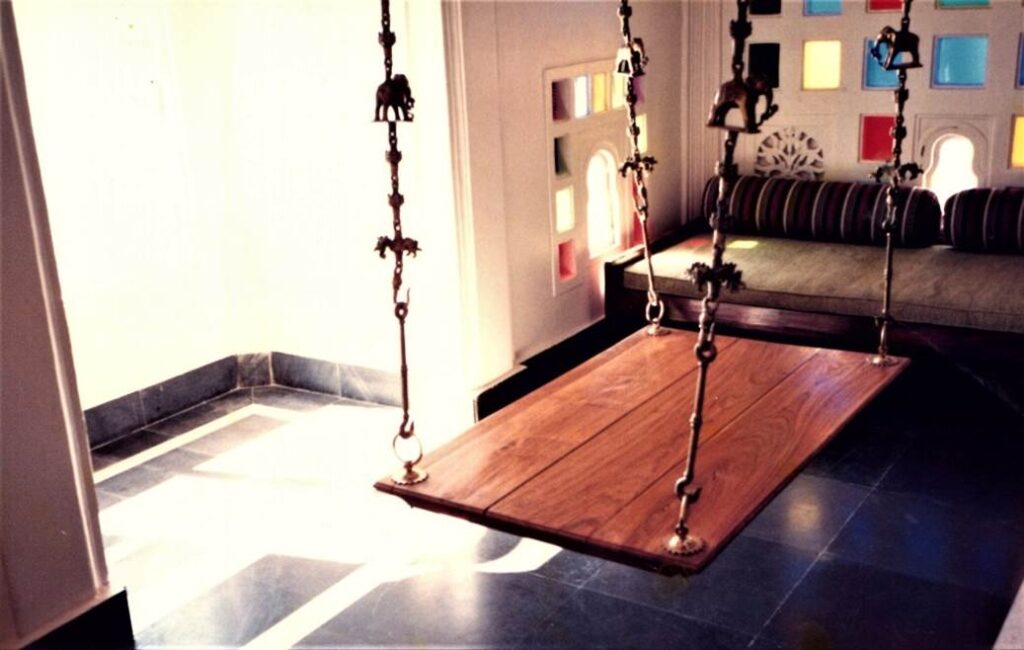
There is a swing in the living room.
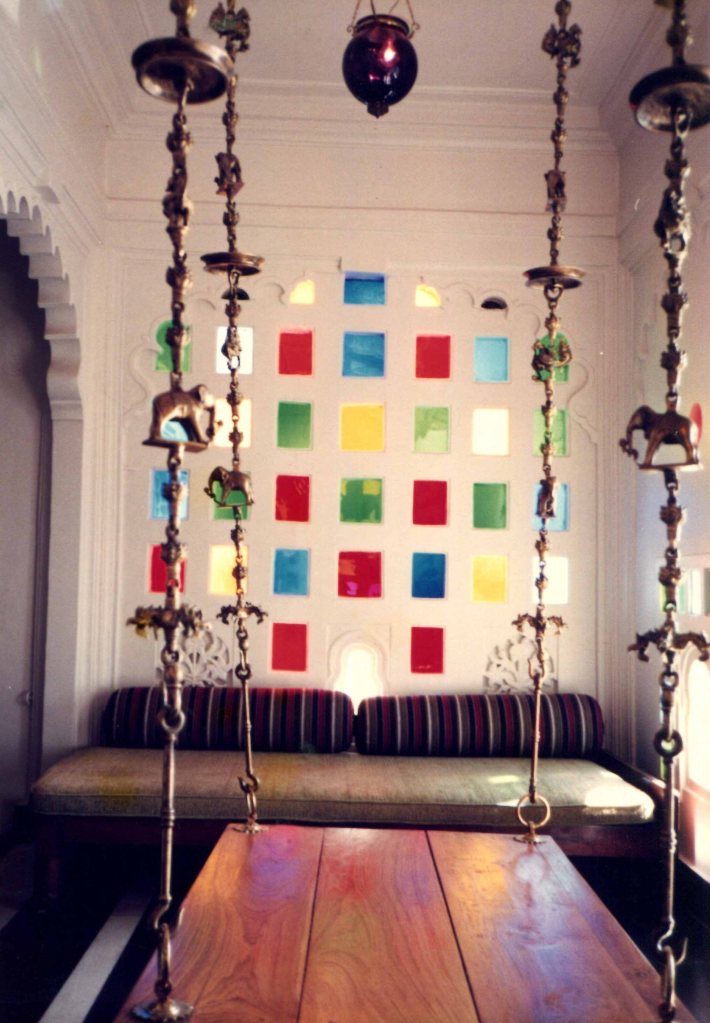
Photo by author, 1991
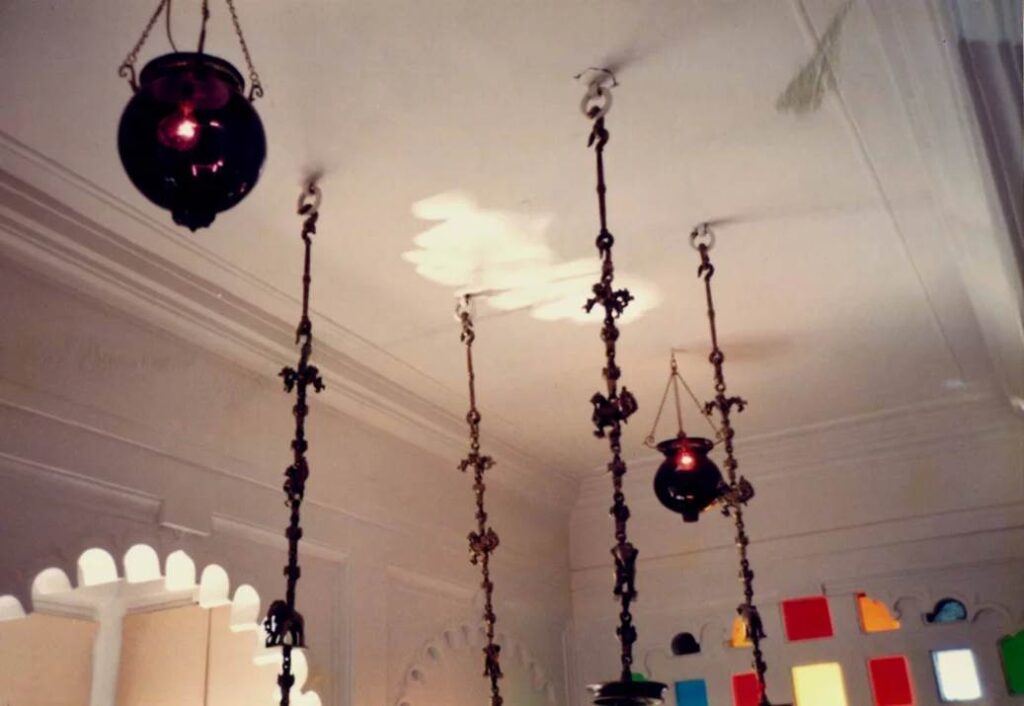
Photo by author, 1991
The bedhead is embroidered with a peacock.
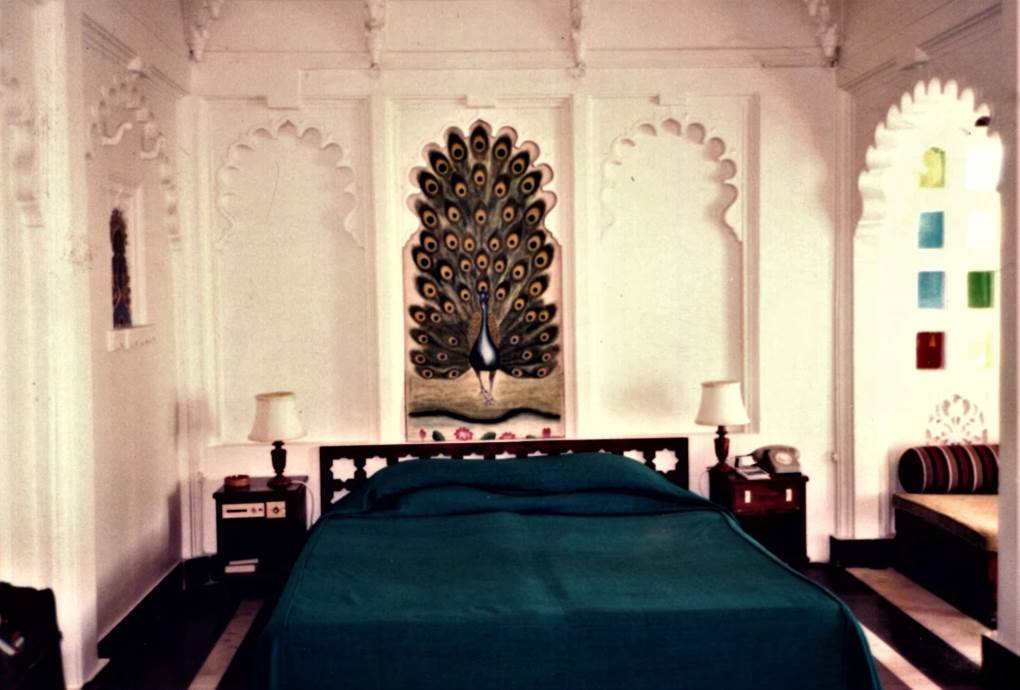
Photo by author, 1991
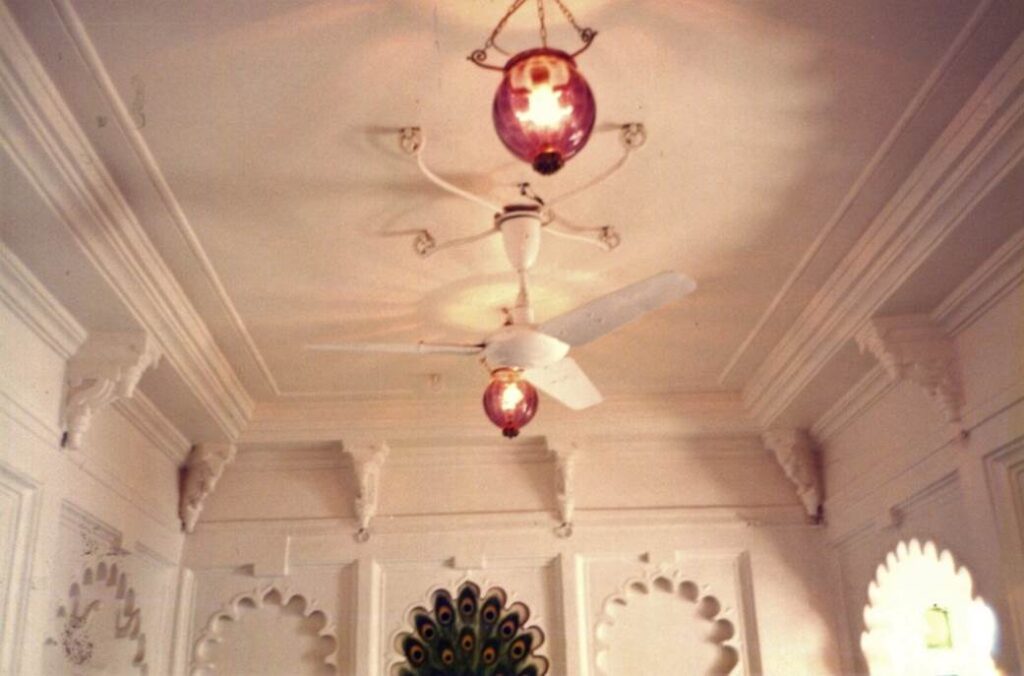
Photo by author, 1991
Total marble bathroom
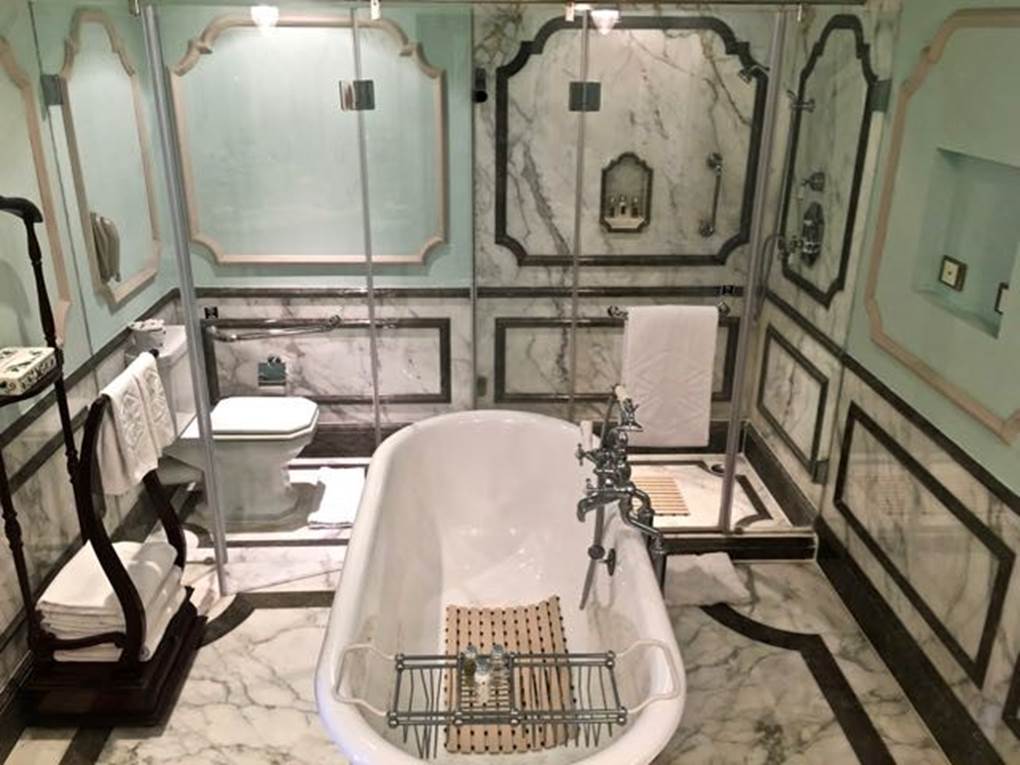
Photo by author, 1991
Between the entrances to the bathroom.
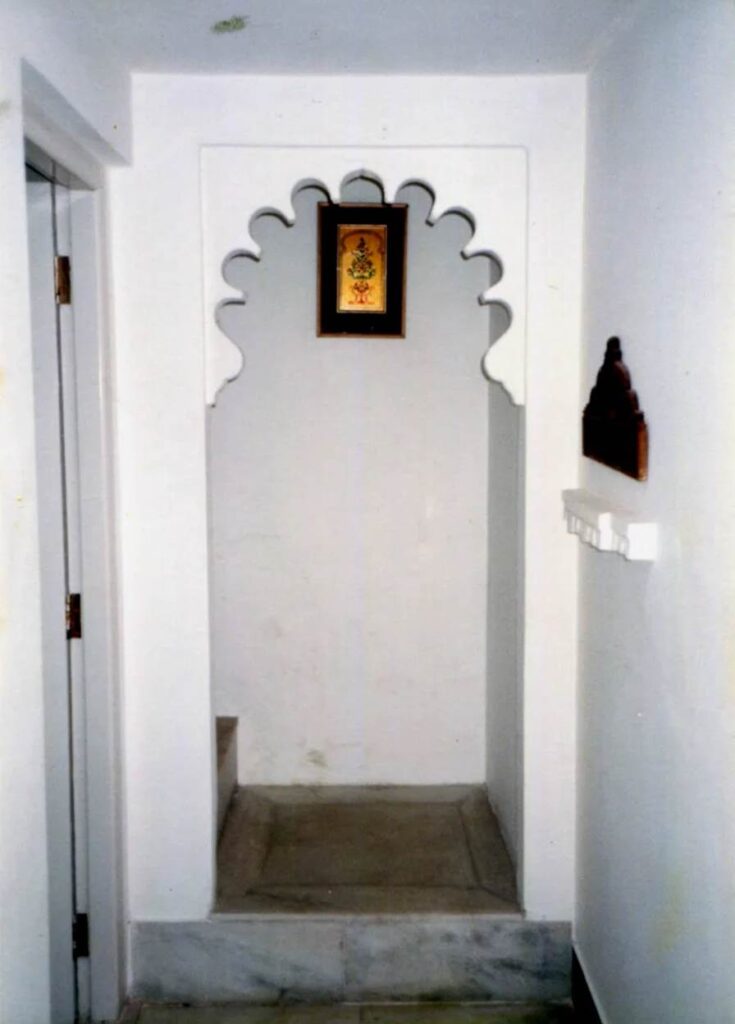
Photo by author, 1991
Common hallway and guest room doors.
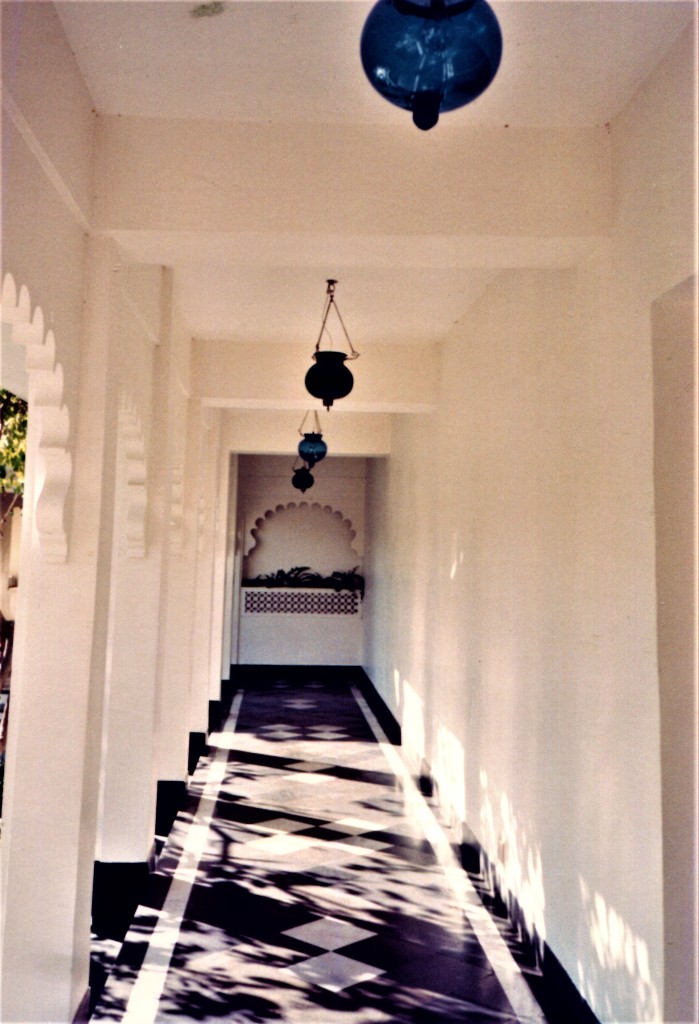
Photo by author, 1991
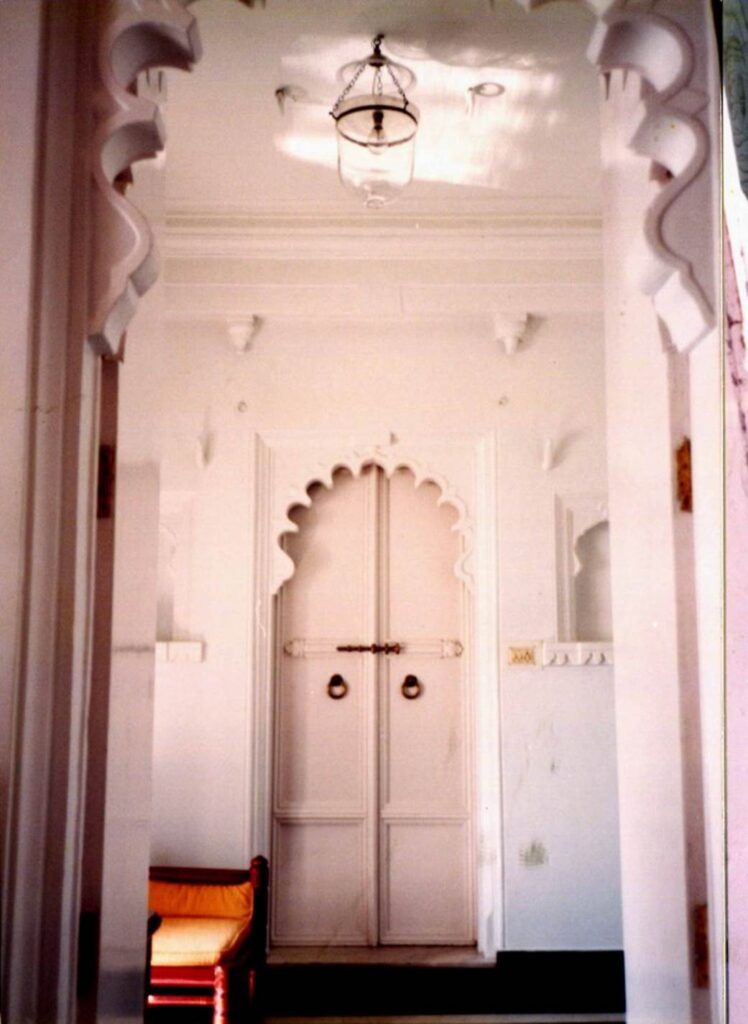
Photo by author, 1991
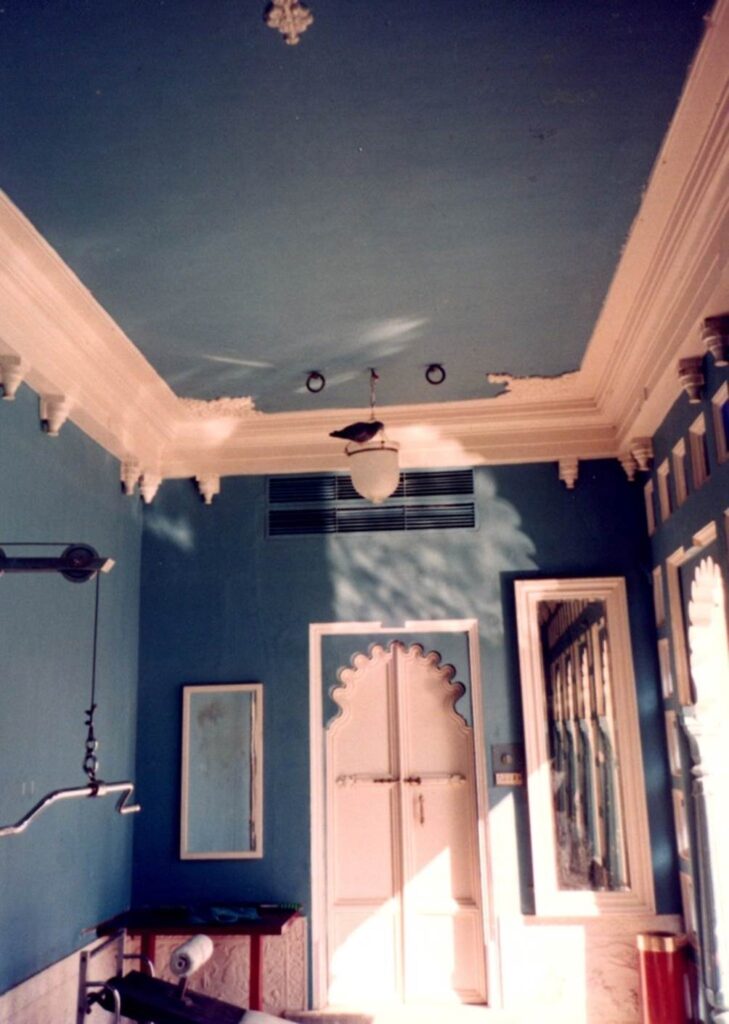
All photos by author, January 1991