JAP | ENG
India Travelogue 1989
#7/26
AMBER FORT
Amber Fort
UNESCO World Heritage Site
On the morning of February 7th 1989, we departed from our accommodation, Rambagh Palace Hotel in Jaipur, to Amber Fort in a hire car arranged by a local travel agency.
Our destination was on a hill 10km north of Jaipur.
It is said that a large-scale fort was started in 1592 by Raja Man Singh on the hill where the fort originally stood.
This was around the time when Ieyasu was about to establish his base in Edo, Japan. (Tokugawa Ieyasu was a Japanese samurai)
Amber Castle and lake and its ancillary facilities
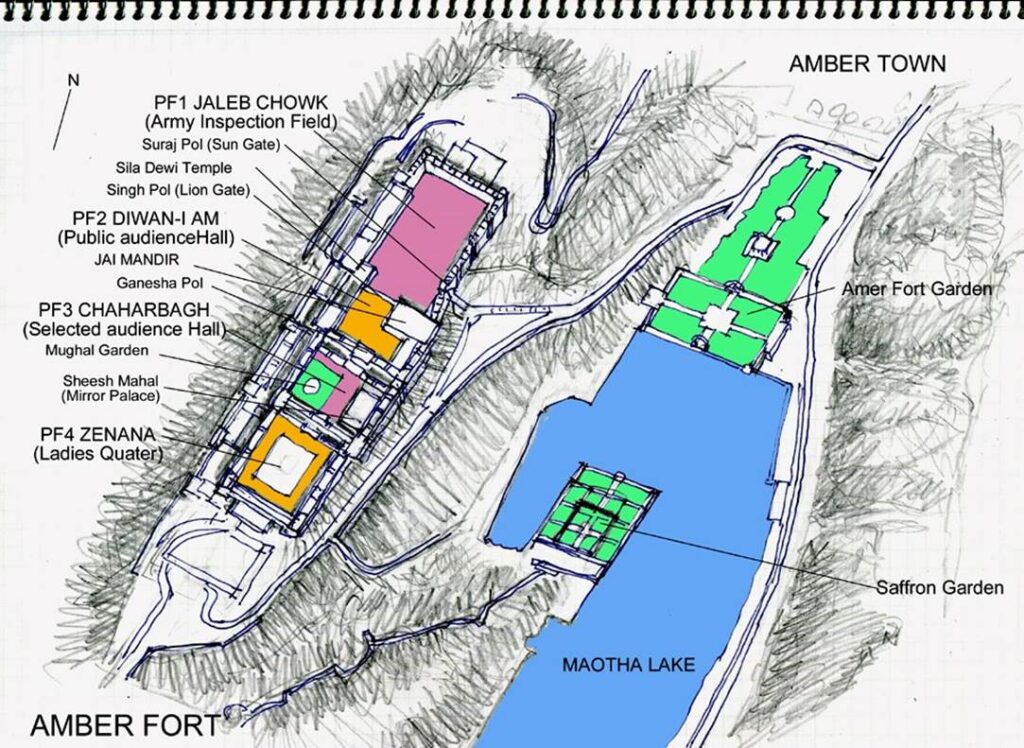
Author’s sketch
After leaving the city of Jaipur in the morning, the road leads to a narrow valley between hills.
When I asked the driver to stop the car and observe the plateau on the west side, I was told that this was the castle of Amber.
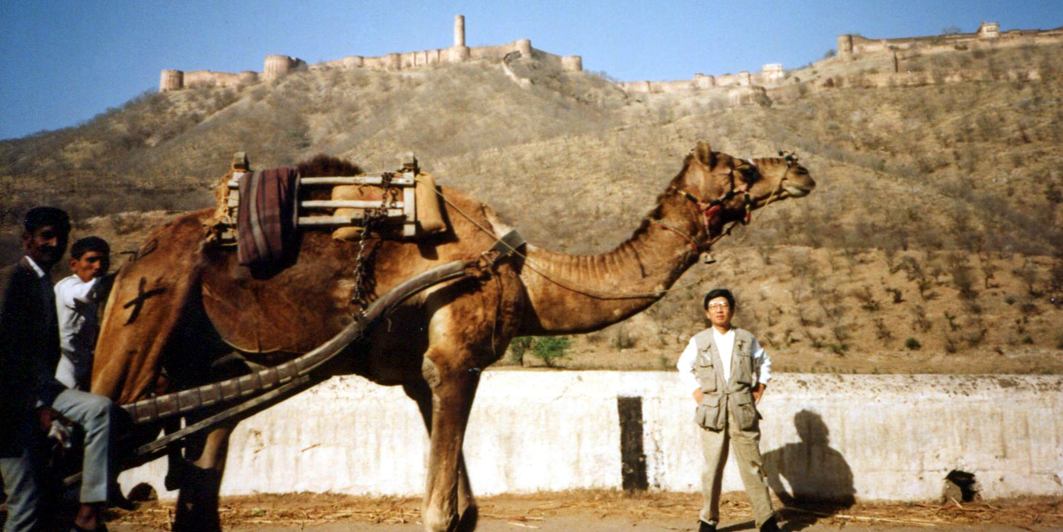
After a while, a cart pulled by camels arrived.
Our guide managed to take this exotic photo in good time.
Amber Fort stretches across the mountain ridge.
And the brown subject and the blue sky ! (Below)
Is the thickness of the camel’s neck the same as my body?!
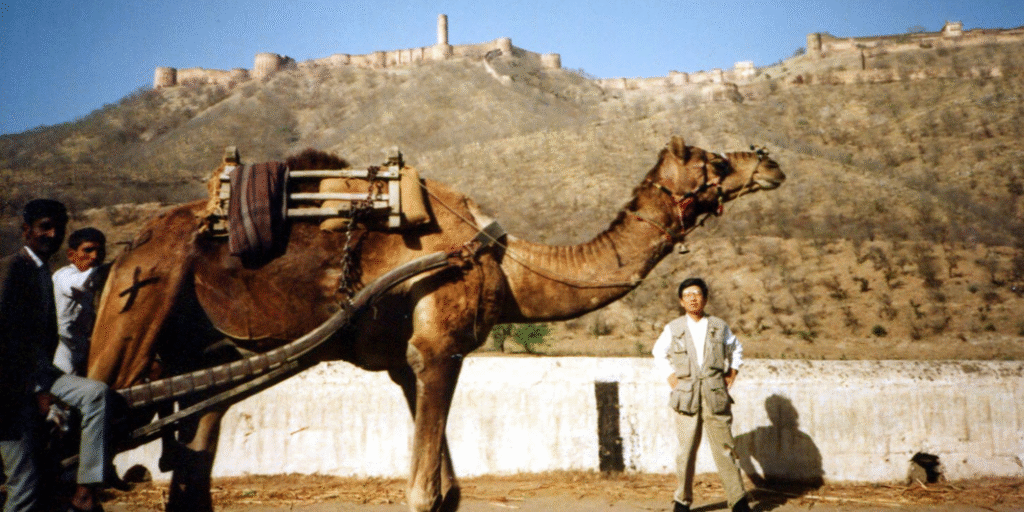
Photo of author, 1989
Leaving the car at the foot of the mountain, we set off on foot, enjoying the scenery as we climbed the long hill to the castle gate. Along the way, there were various vendors, which kept the long climb interesting. At this time of year, there were few foreign tourists, and the trail was almost entirely filled with locals, so we were able to take our time observing different cultures through the decor and costumes of the locals.
There was an extremely wide range of material to observe.
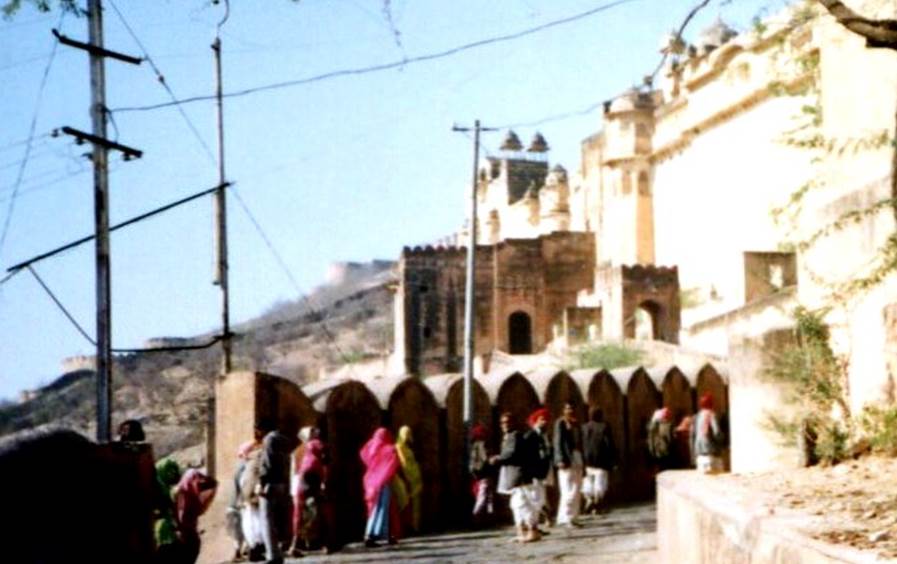
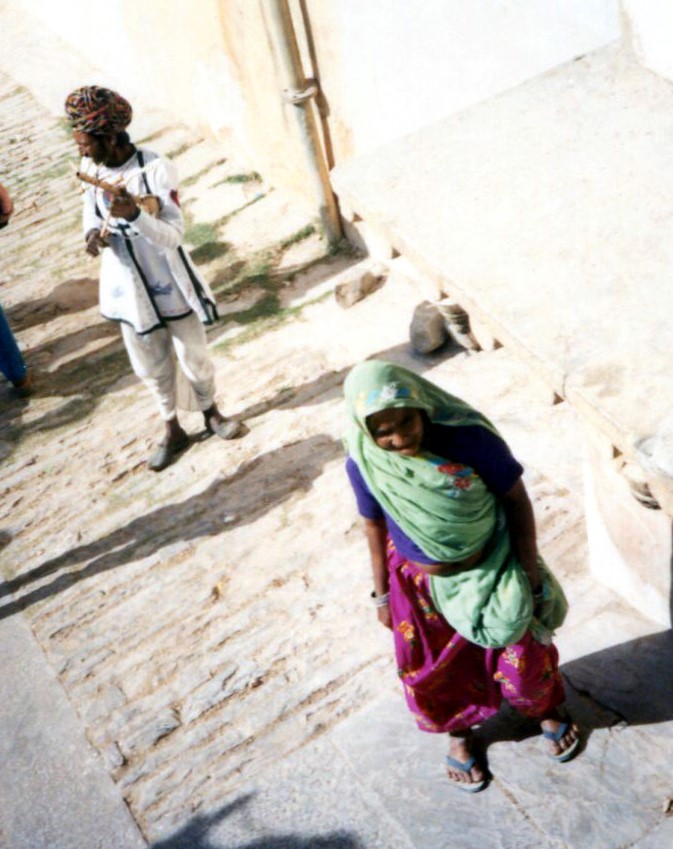
Photo by author, 1989
On the approach to the shrine, there is an elephant and a stall selling goods for locals.
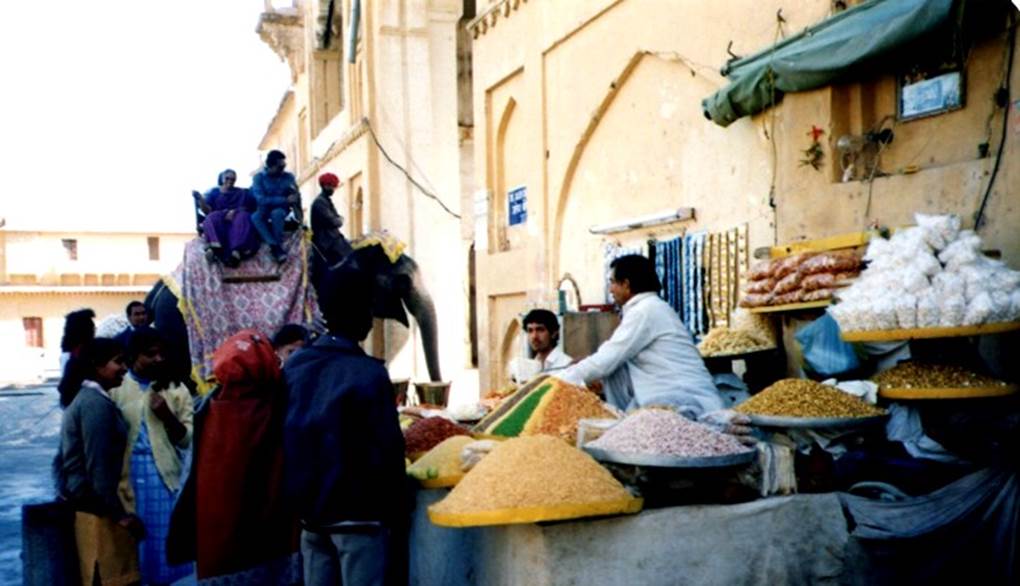
Photo by author, 1989
SAFRON GARDEN
From the sloping approach to the shrine, you can look down on the geometrically shaped Saffron Garden on a platform facing an artificial lake.
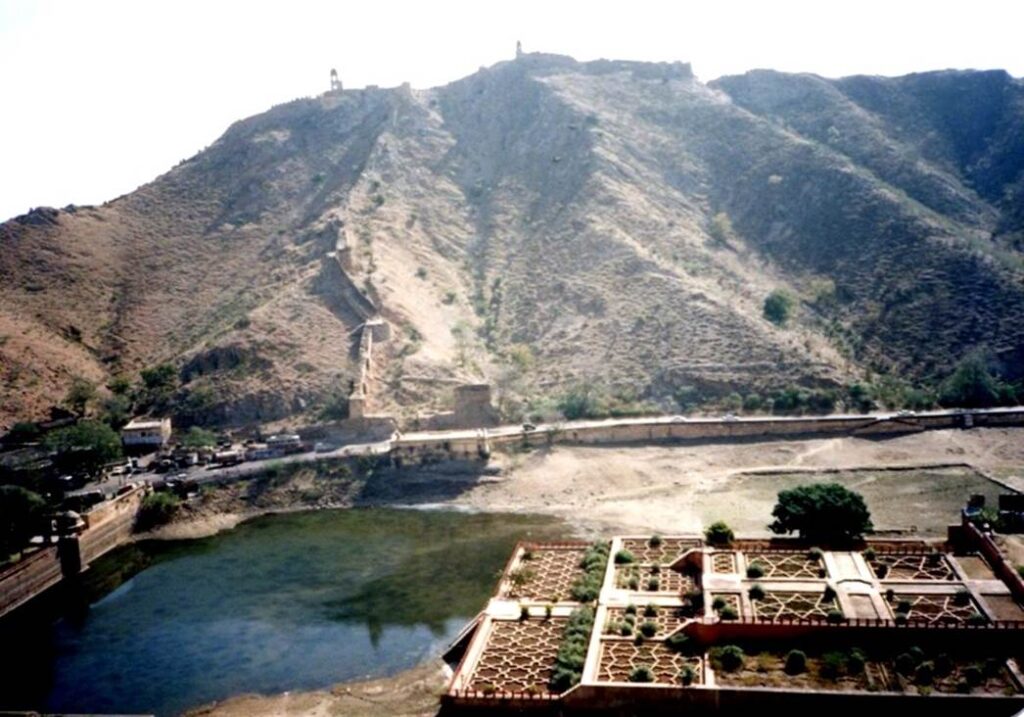
Photo by author, 1989
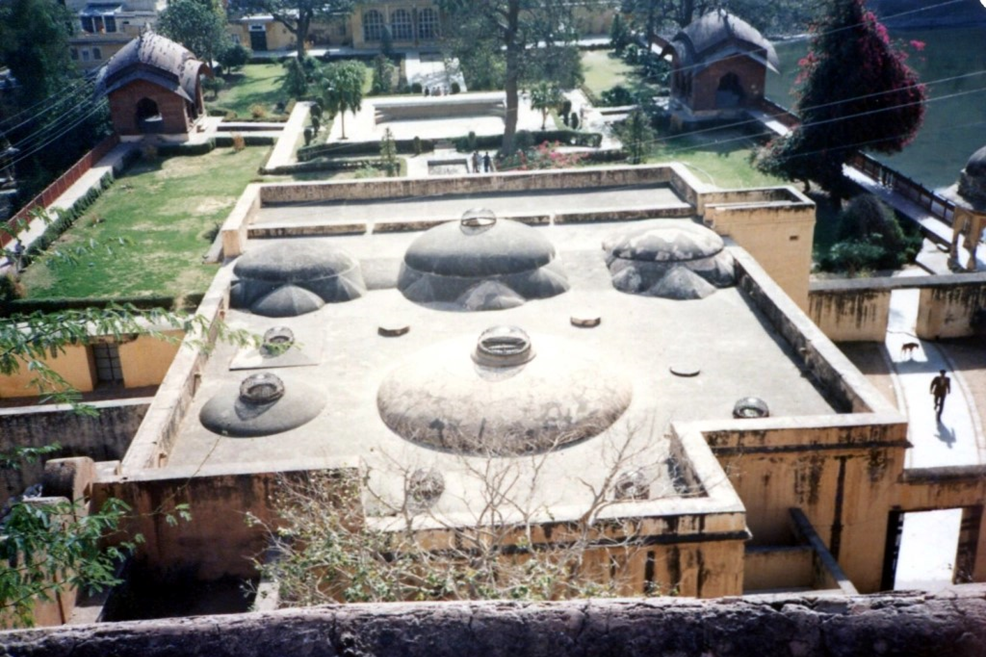
AMBER FORT GARDEN
A garden ancillary building facing an artificial lake.
In Rajasthan, where there is little rainfall, there are many flat roofs like this.
The dome on the flat roof provides daylight and ventilation.
This architectural style can be commonly seen in northern India. It is a clever construction method. Viewing down from the sloping approach to the temple.
Hanuman
The monkey (Hanuman) is still a popular object of folk worship and is widely protected in Hindu temples in the secluded areas of India, where it is considered to be a subordinate of the god Hanuman.
There is also a theory that it was introduced to China and became the model for Sun WuKong in Journey to the West.
At the top of the walls of the castle of Amber is the Monkey Highway
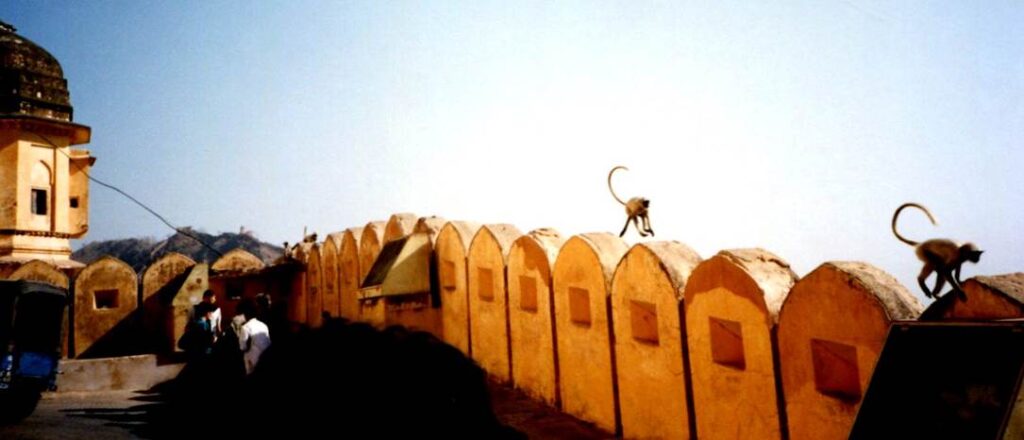
Photo by author, 1989
The First Square
Coming up the slope from the lower world to the Amber Fort, the first place you reach is this first square. When you pass through the gate, you suddenly see a flat land surrounded by a steep mountain range.
Military parades were held in this square.
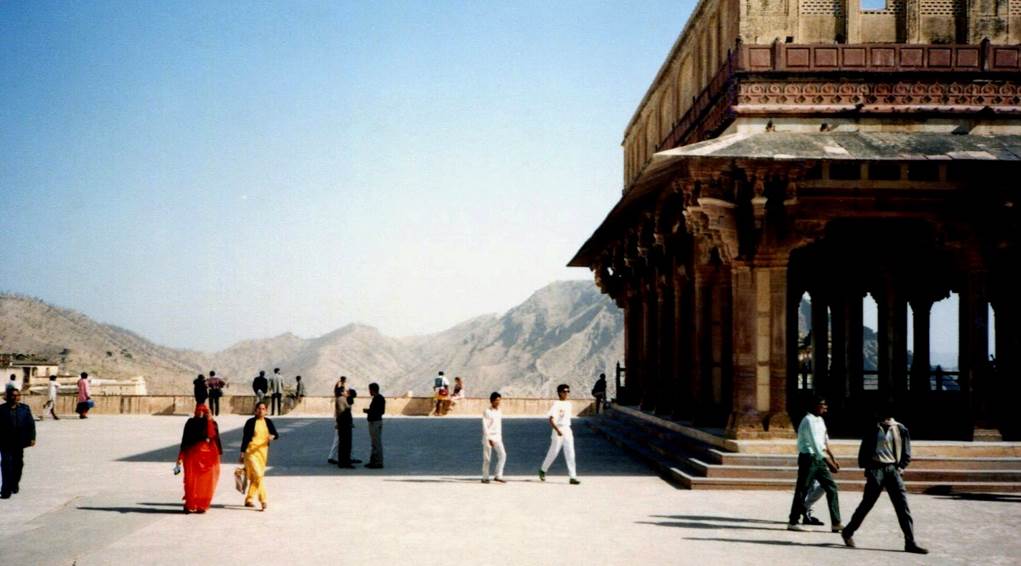
Photo by author, 1989
The building adjacent to the first square. It was here that the Trials of disputes between citizens of the domain were held here.
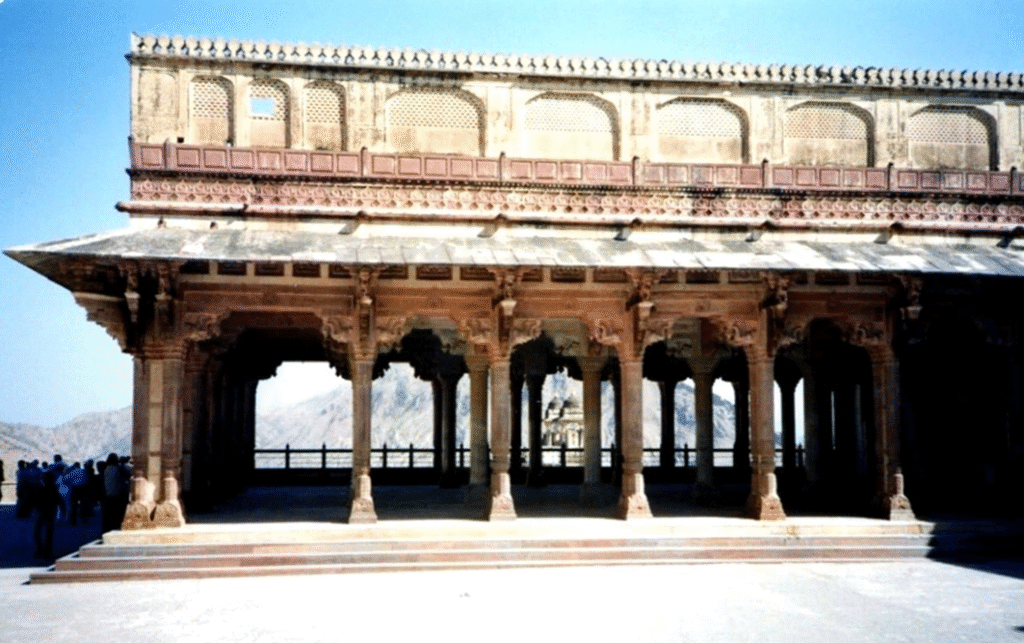
Photo by author, 1989
Diwan I Aam General Interior
The interior of the building above. The ceiling is striped in white and red. Local stone is used.
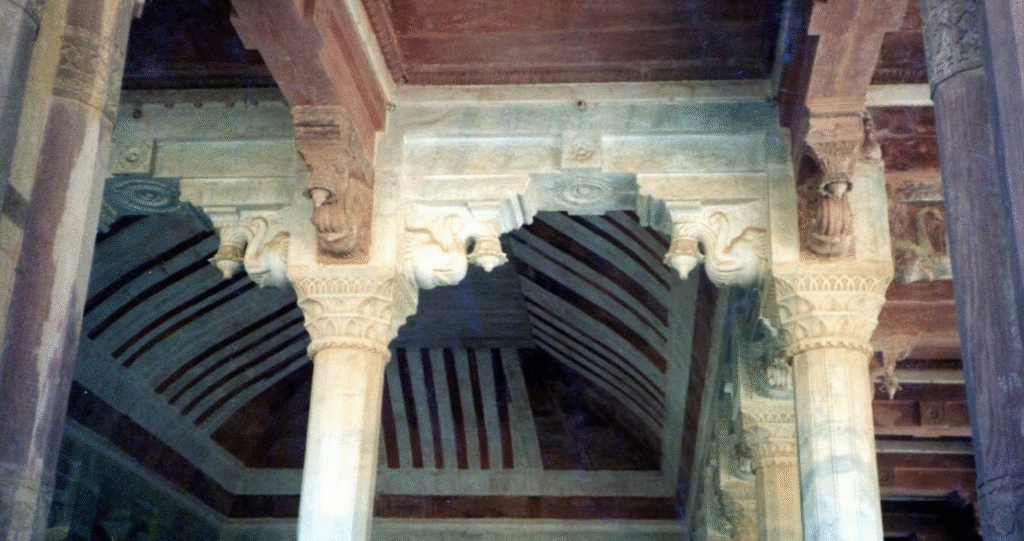
Photo by author, 1989
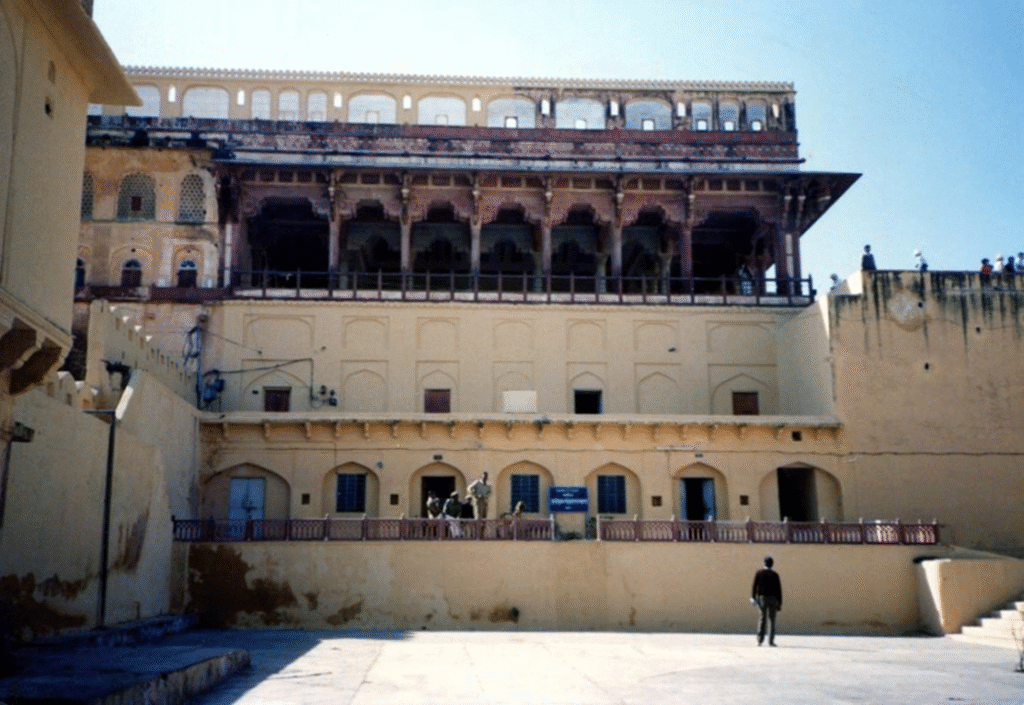
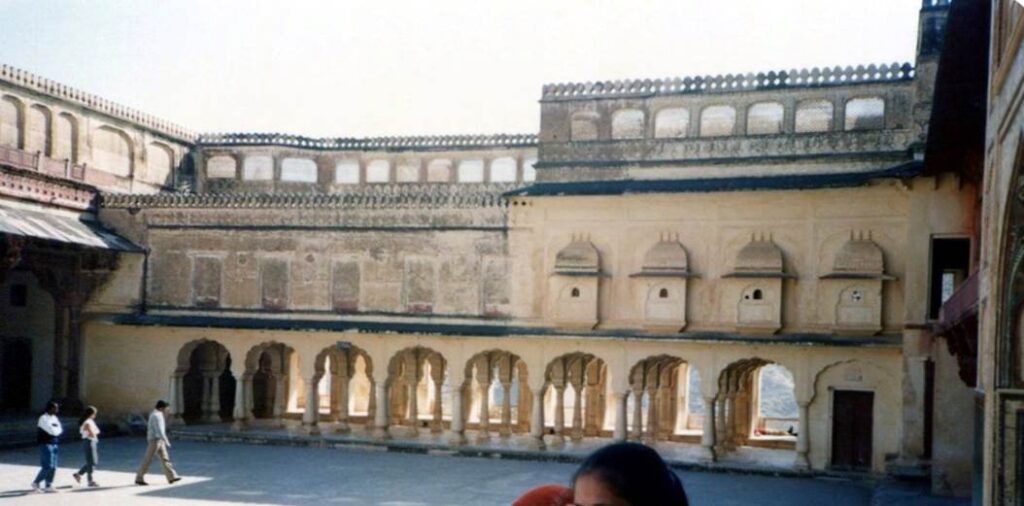
Photo by author, 1989
Ganesha
Ganesha Gate leads to the second square.
It is a spot where most people take commemorative photos.
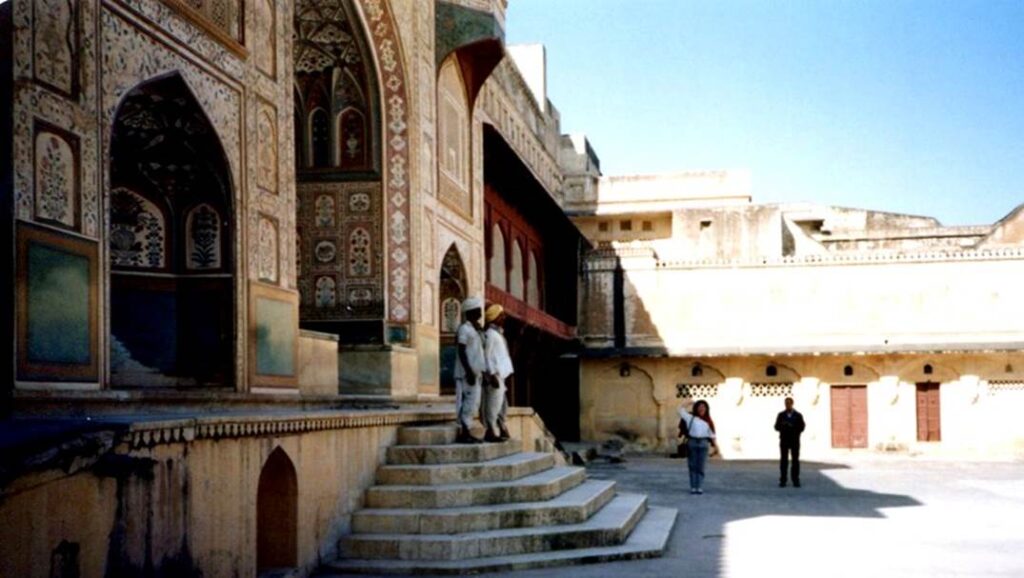
Photo by author, 1989
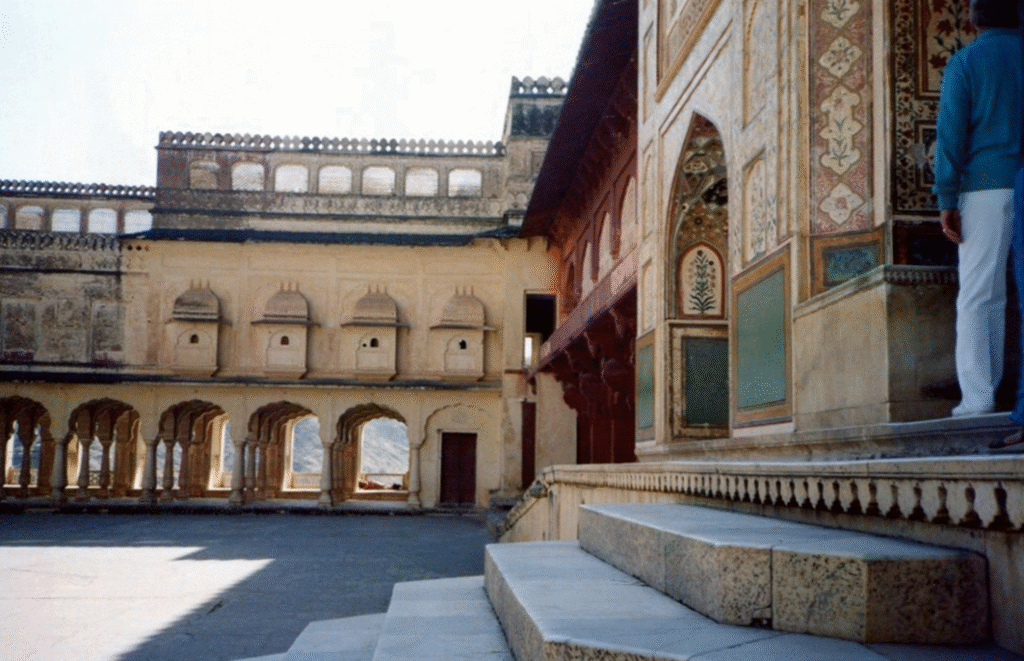
Photo by author, 1989
Openwork windows at the Ganesha Gate.
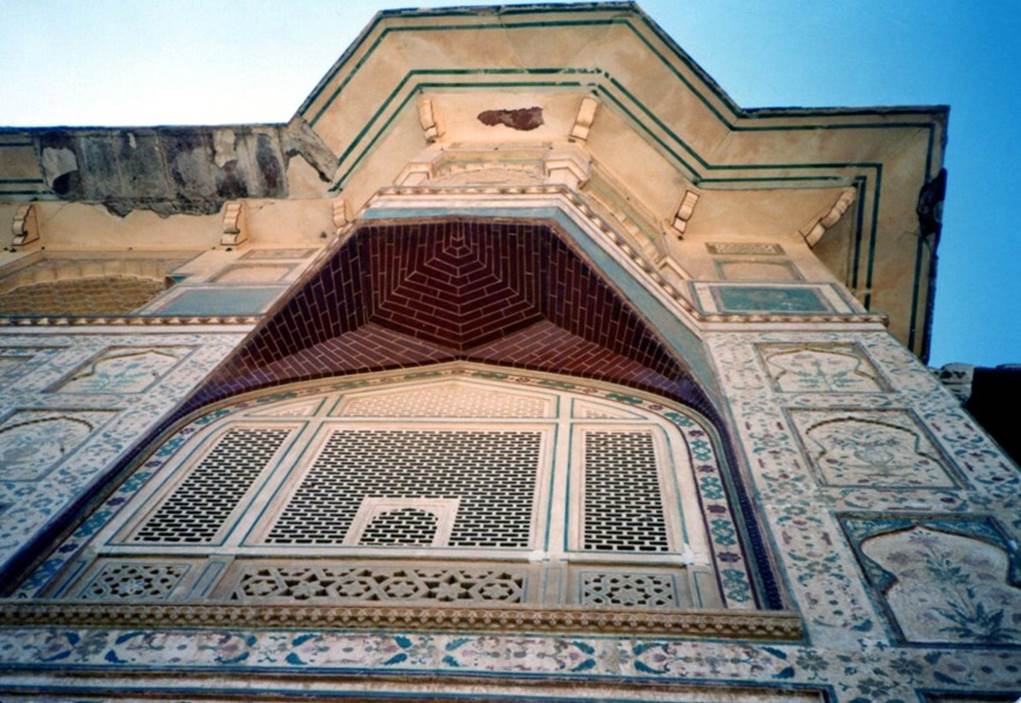
On the far right of the photo is a Ganesha (elephant), which is the origin of the gate’s name.
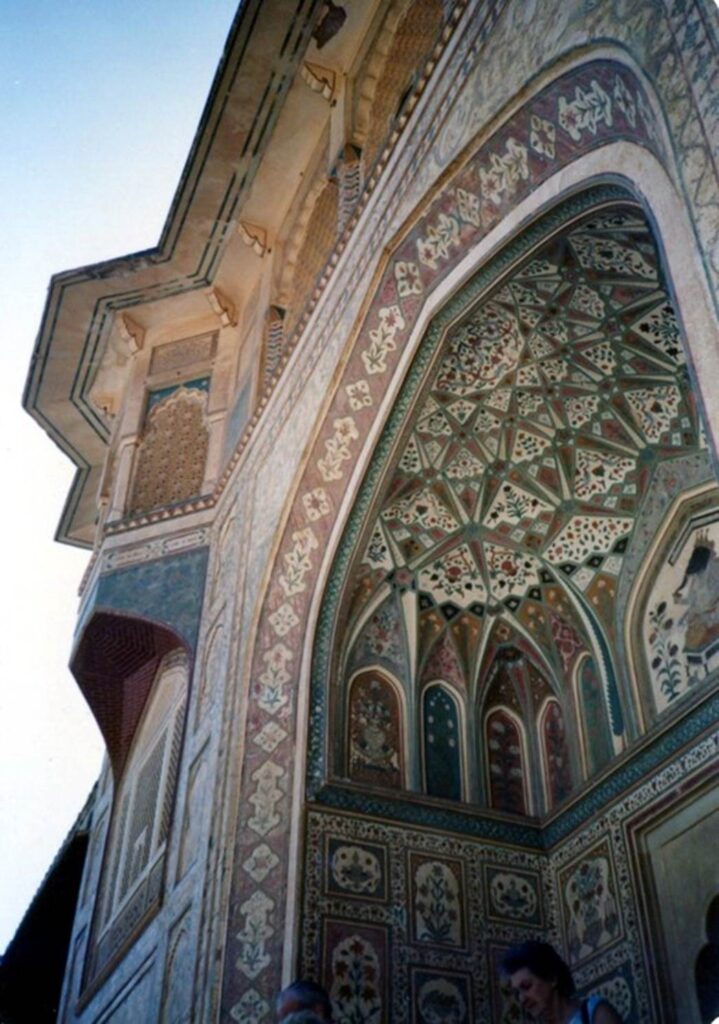
Photo by author, 1989
The Ganesha (elephant), from which the gate is named, is depicted on the front.
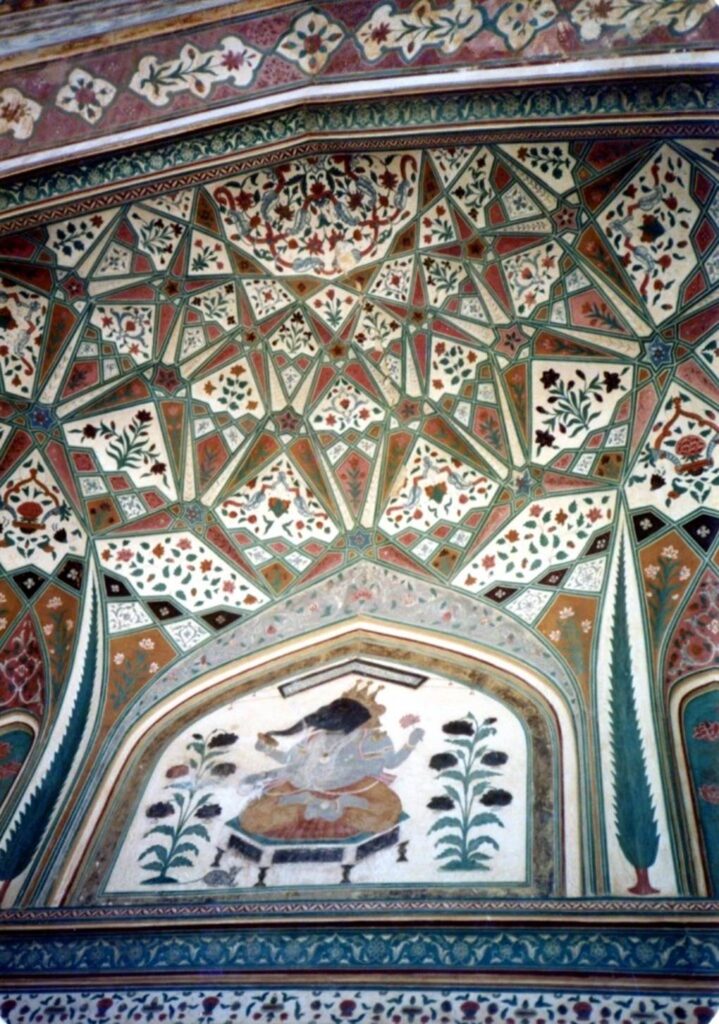
Photo by author, 1989
The floral pattern on the wall retains its unique beauty.
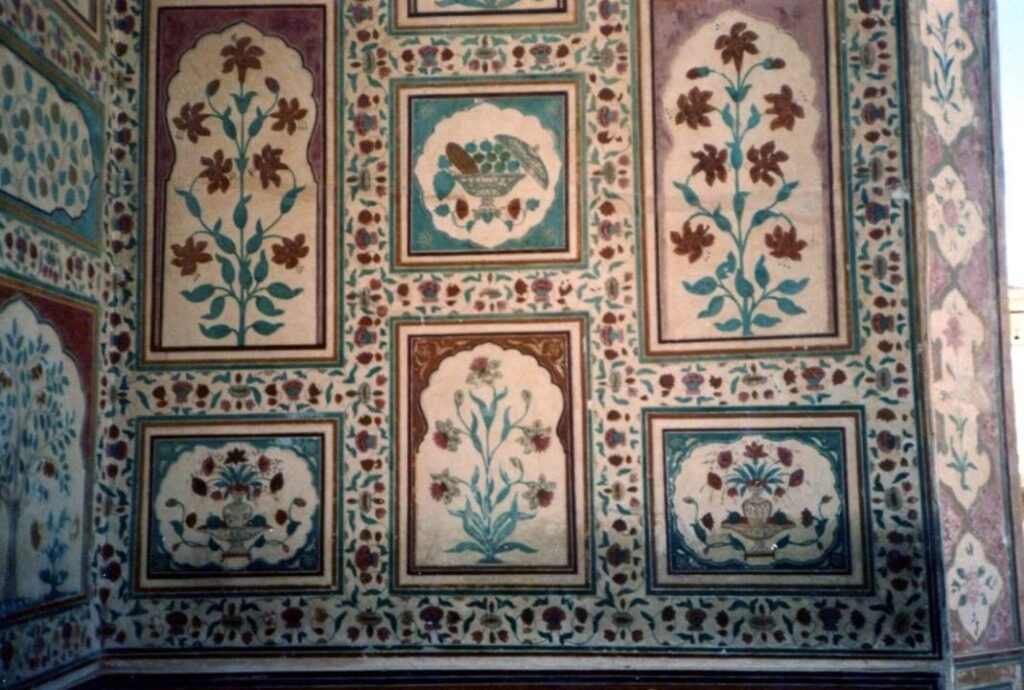
Second Square Diwan I Aam
A building called Diwan I Aam, where the lord has an audience with his people, is located in the second square.
Since a large number of people gather and sit on the marble floor, the building is designed to allow natural ventilation.
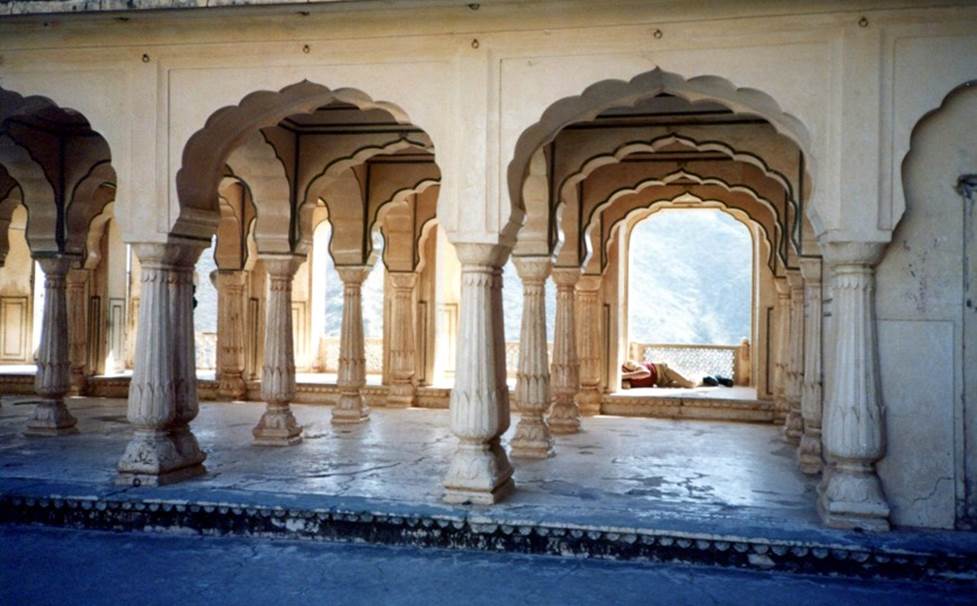
Photo by author, 1989
The openwork of the stone allows a soft light to shine through the floor
Shot from inside the Ganesha Gate
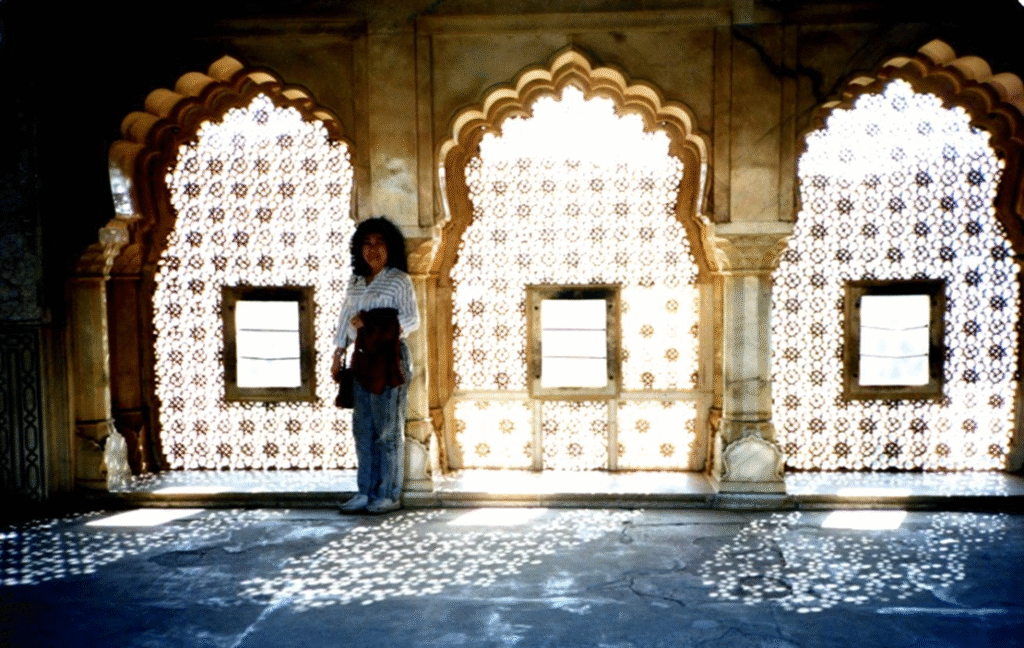
Photo by author, 1989
Entering this gate is the Maharajah’s private realm (the third square).
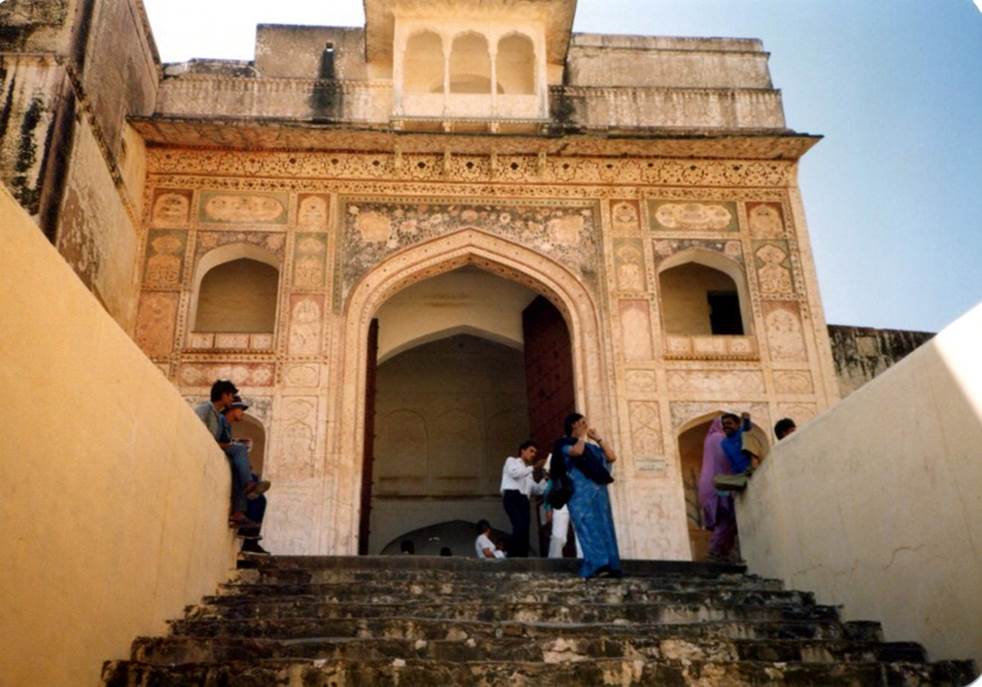
Photo by author, 1989
Third Square
The third square is the Maharajah’s private domain
Palace of Mirrors
Sheesh Mahal (mirror palace) is called the Palace of Mirrors.
The interior of the building, the walls and windows are covered with colored glass, and the ceiling is covered with mirrored glass, creating a gorgeous but soft atmosphere, which has been successfully achieved.
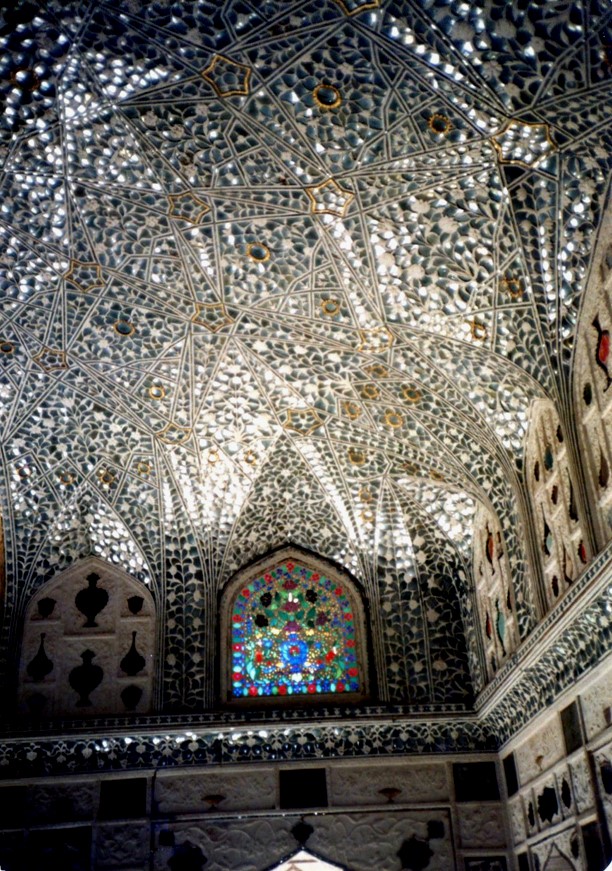
Photo by author, 1989
The most intensive work takes place in the private quarters of the Maharajah.
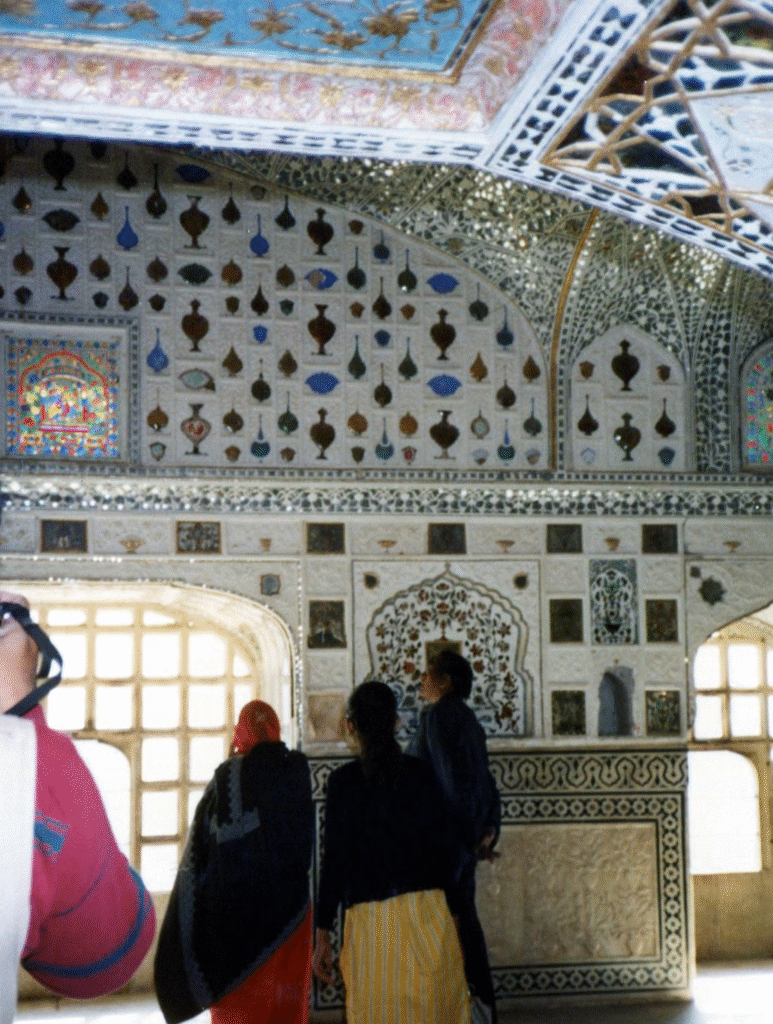
Photo by author, 1989
A craftsman who devotes himself to restoration.
It is through these daily efforts that cultural assets are maintained
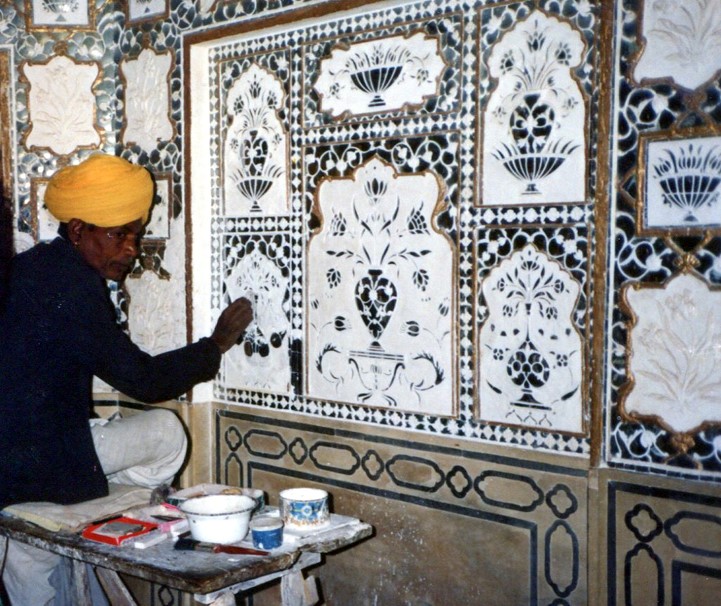
Photo by author, 1989
After visiting the third square, take in the view of the world below from the balcony of the palace. The appearance of the mountains shaded by the morning light opposite each other is a masterpiece. Since there are fewer trees, the mountainside becomes clearer and three-dimensional.
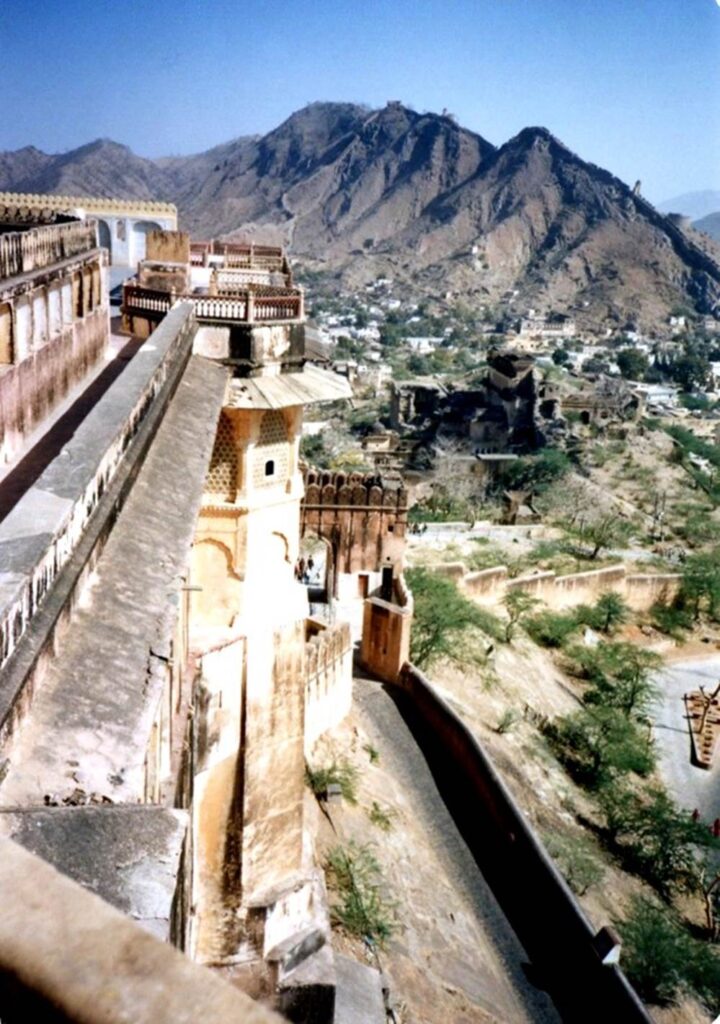
Photo by author, 1989
The Fourth Square
Further inside the Maharaja’s private space is a garden. The mountains provide an ideal backdrop. This backdrop is more beautiful than the garden itself.
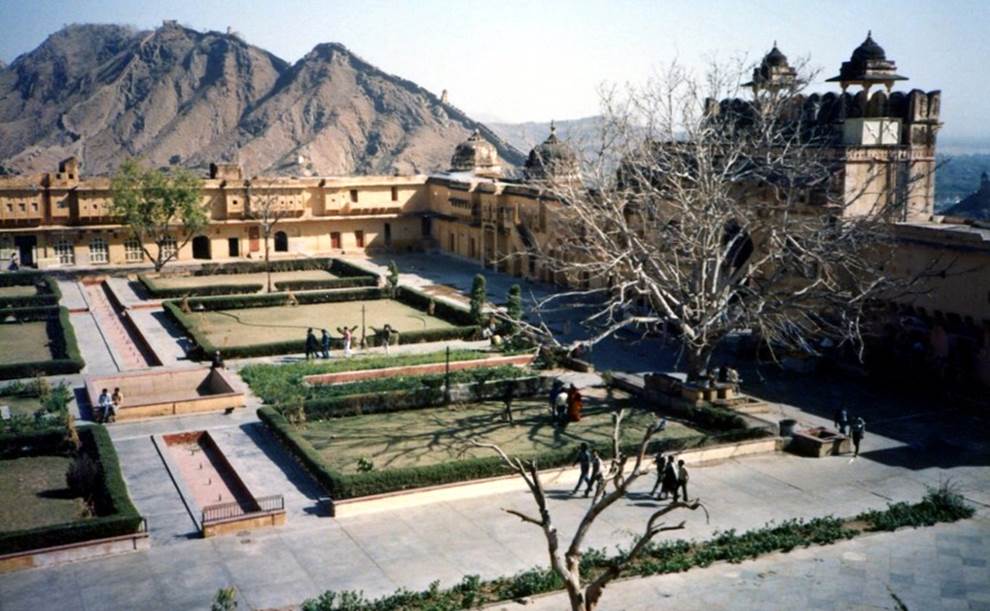
Photo by author, 1989
Harem
The Zanana Mahal (harem) was home to the emperor’s 12 concubines. In terms of Edo Castle, it is Ooku, and the location is also at the very back of Amber Castle.
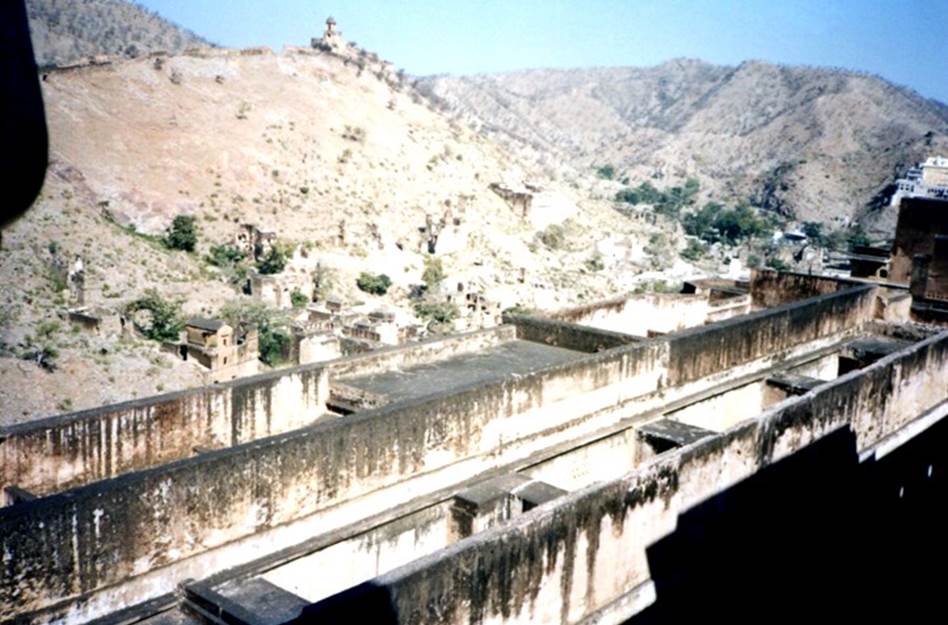
Photo by author, 1989
Remnants of Harlem (1)
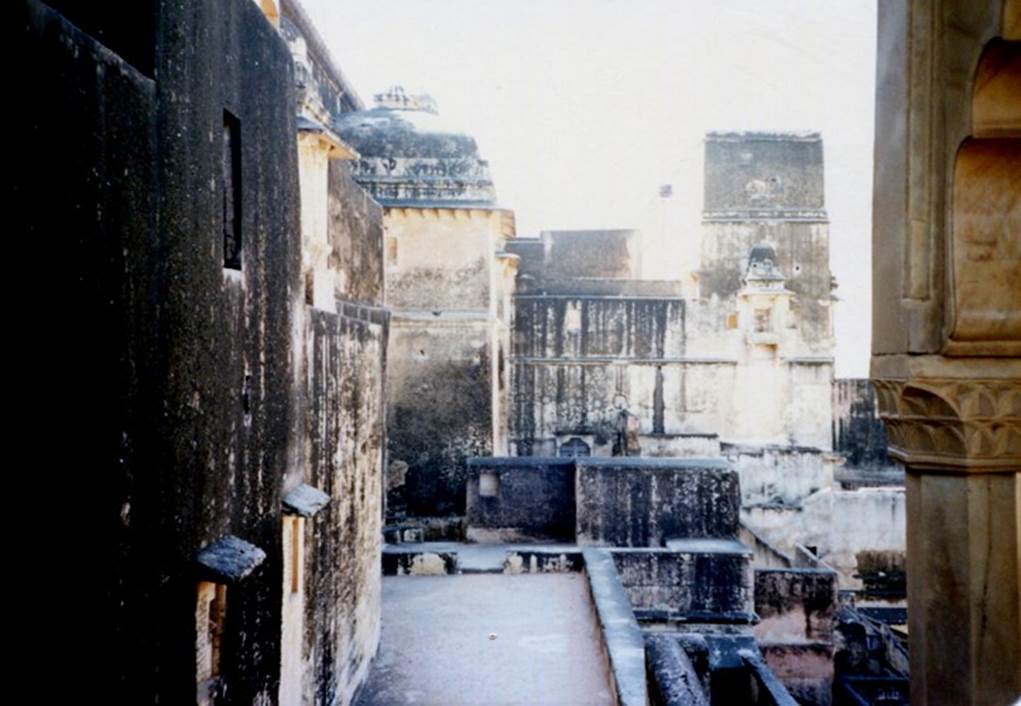
Photo by author, 1989
Remnants of Harlem (2)
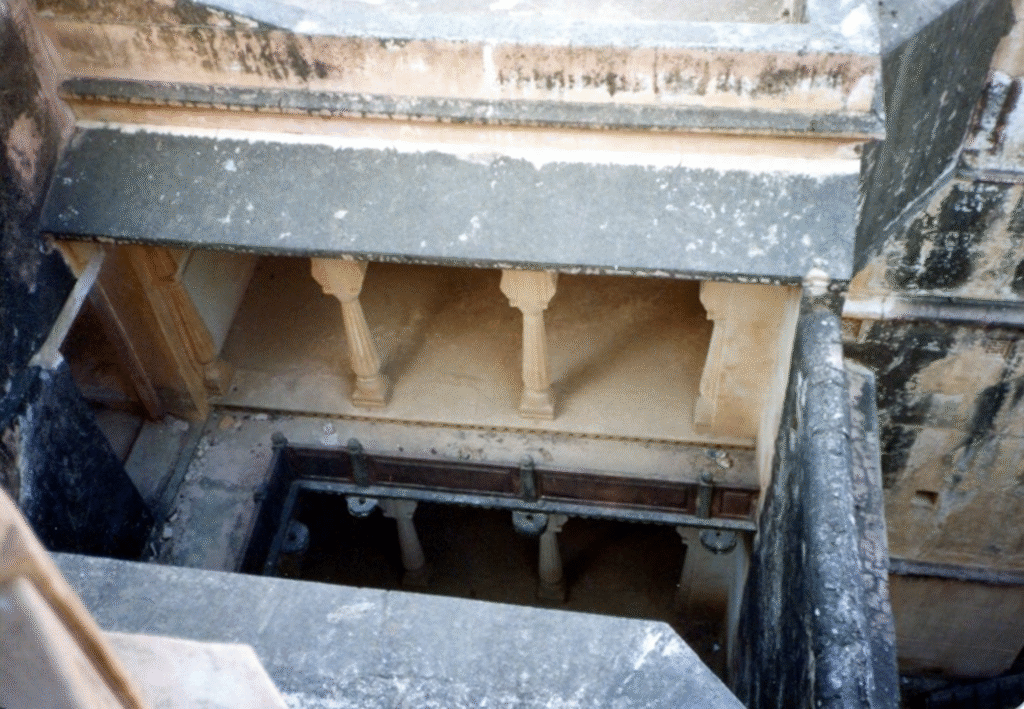
Hierarchy and content of the square
This is the end of the first to fourth squares.
There is a drop of about 2 meters in the ground for each square, and the fourth and final square is the highest.
In this way, by adding a difference in height to the ground of the square, the architectural plan suggests that the hierarchy of the square will gradually increase toward the fourth square. The exception is the harem, which is tucked away in an inconspicuous place behind the scenes.
After finishing the tour, we boarded the elephants and headed down to the world below.
There is an elephant. It can carry four people。
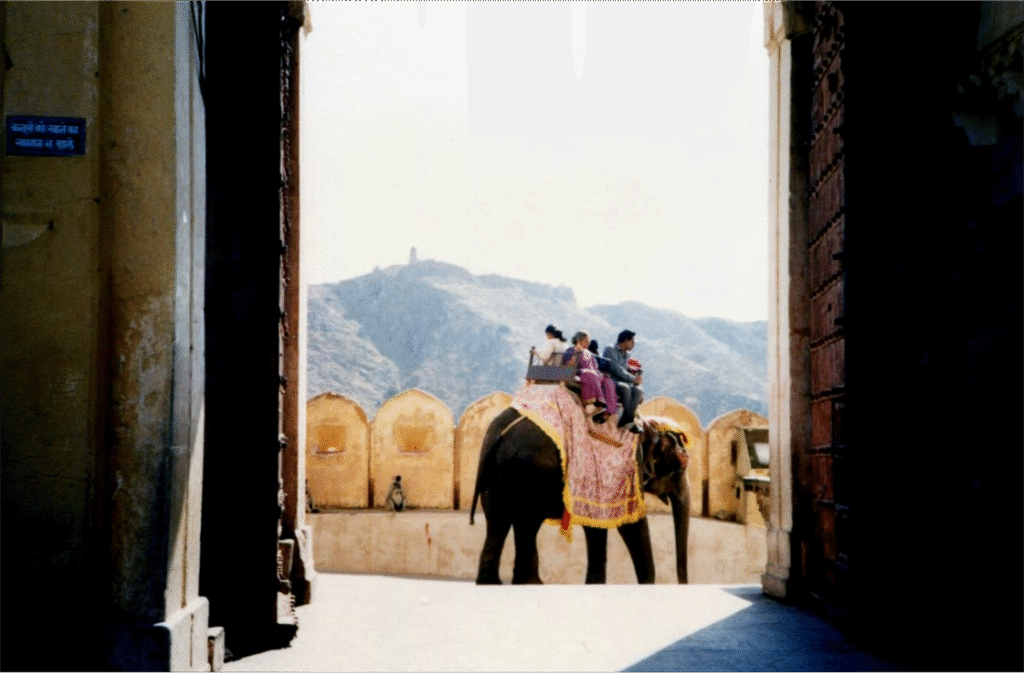
Photo by author, 1989
First experience !
Riding an elephant for the first time.
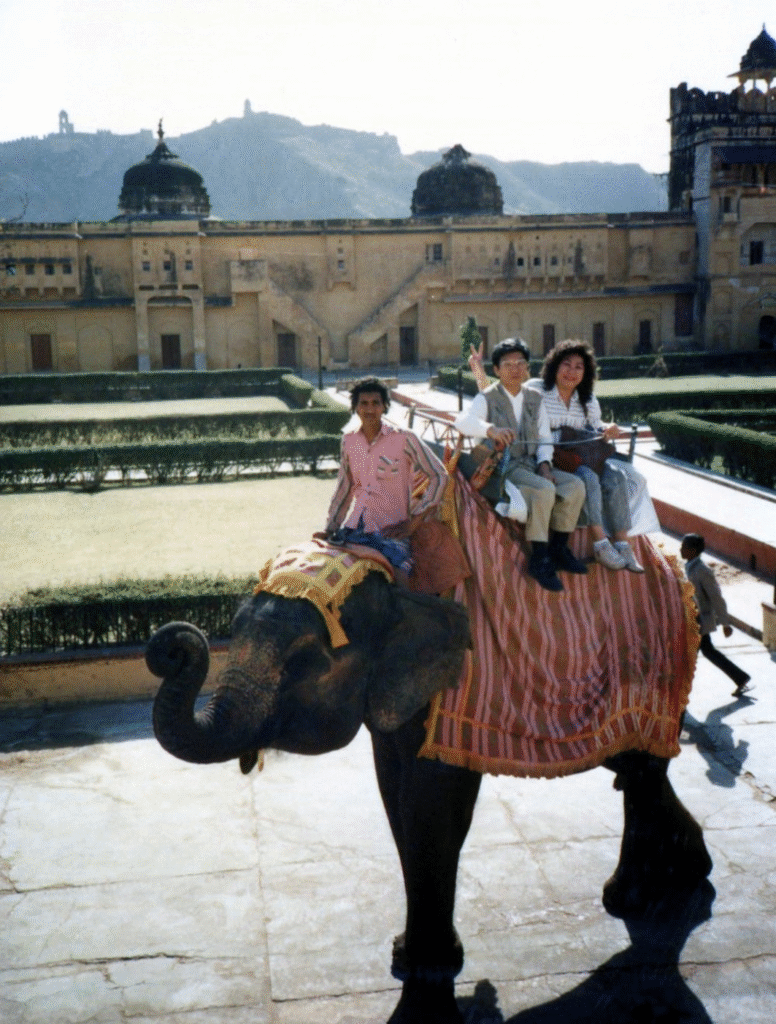
Photo of author by the guide, 1989
Elephant body odour! It’s pretty smelly!!
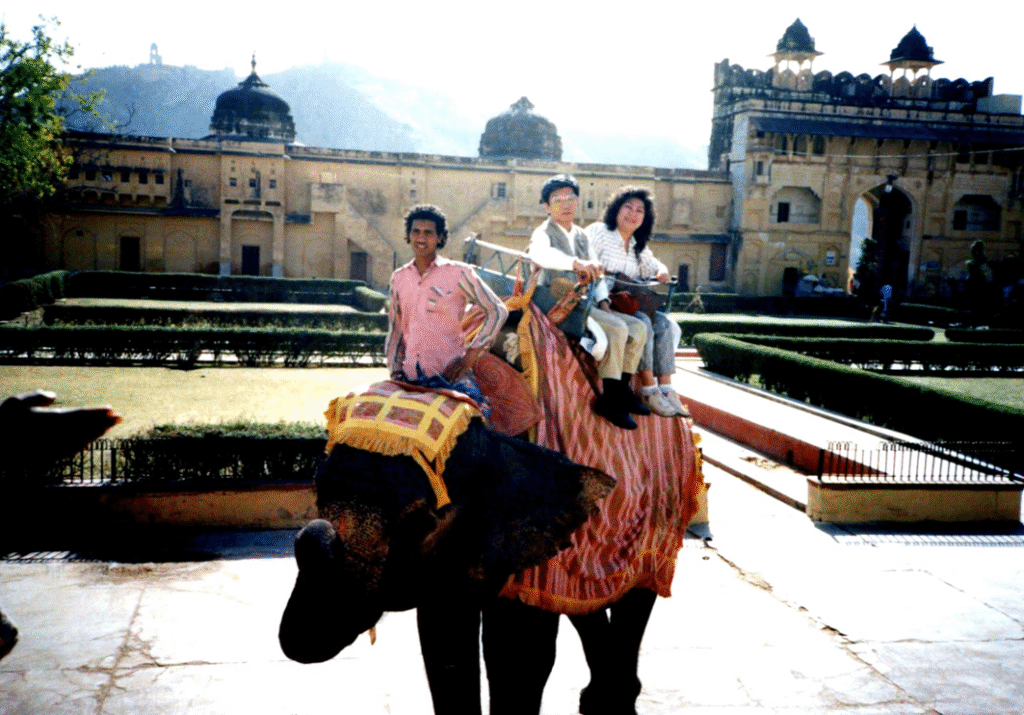
Photo of author by the guide, 1989
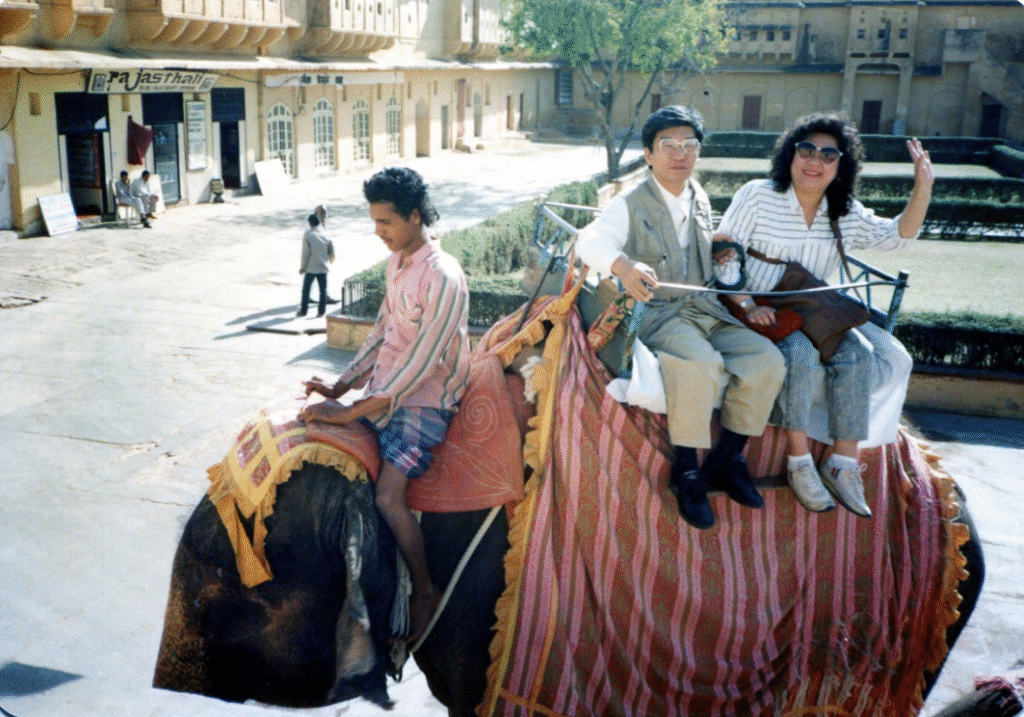
Photo of author by the guide, 1989
Elephant trainers taking a rest.
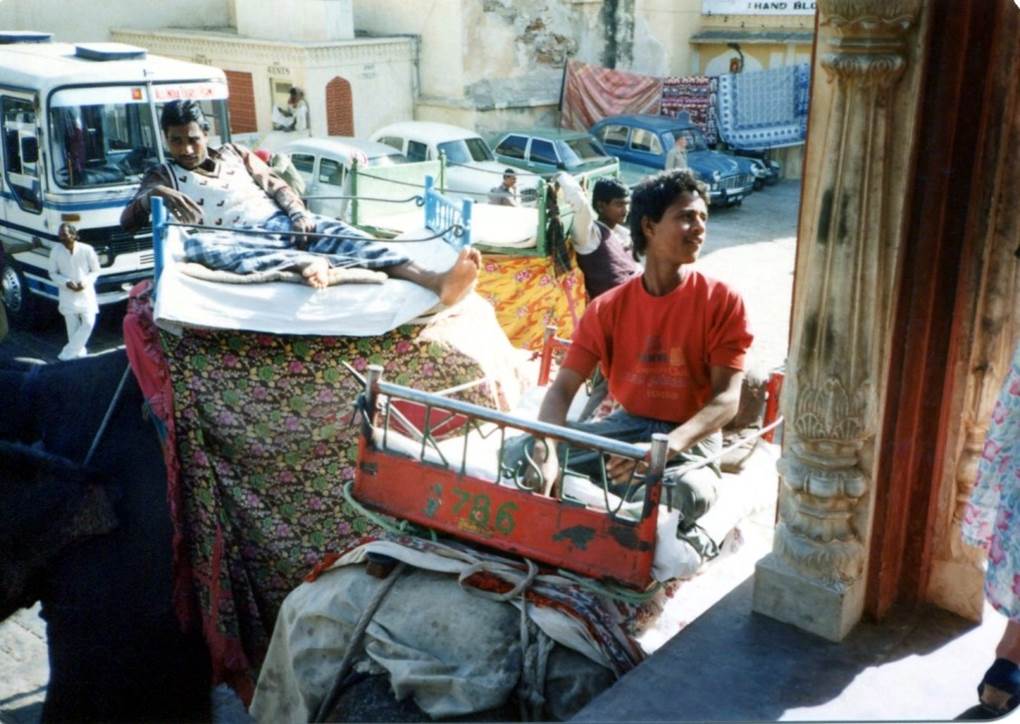
Photo by author, 1989
After touring the fort, we walked down the slope leading to the shrine.
Along the way, we came across a brightly colored tent.
I thought the colors matched well with the dry climate.
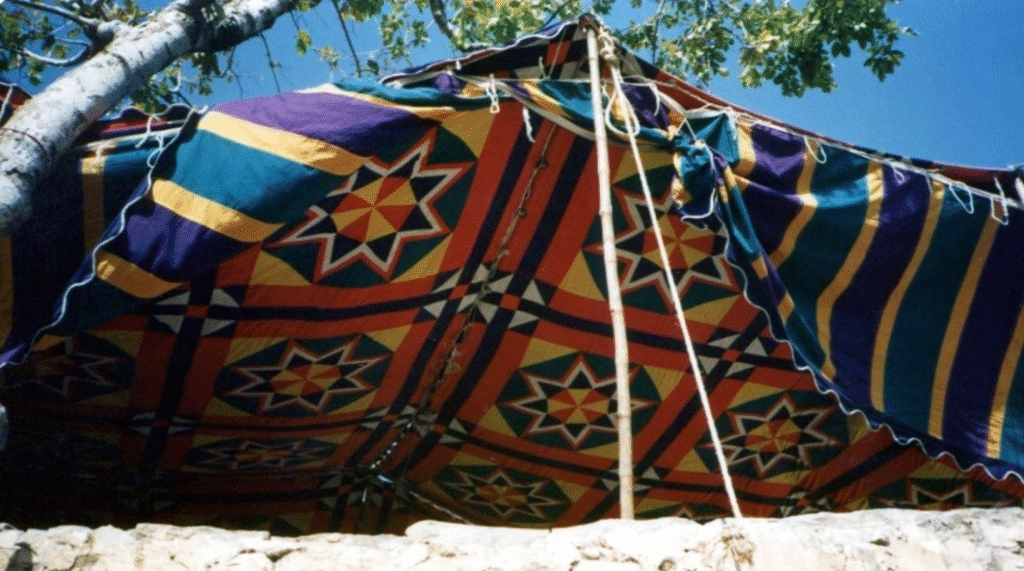
Photo by author, 1989
A stall selling spices? Along the way down the slope to the shrine.
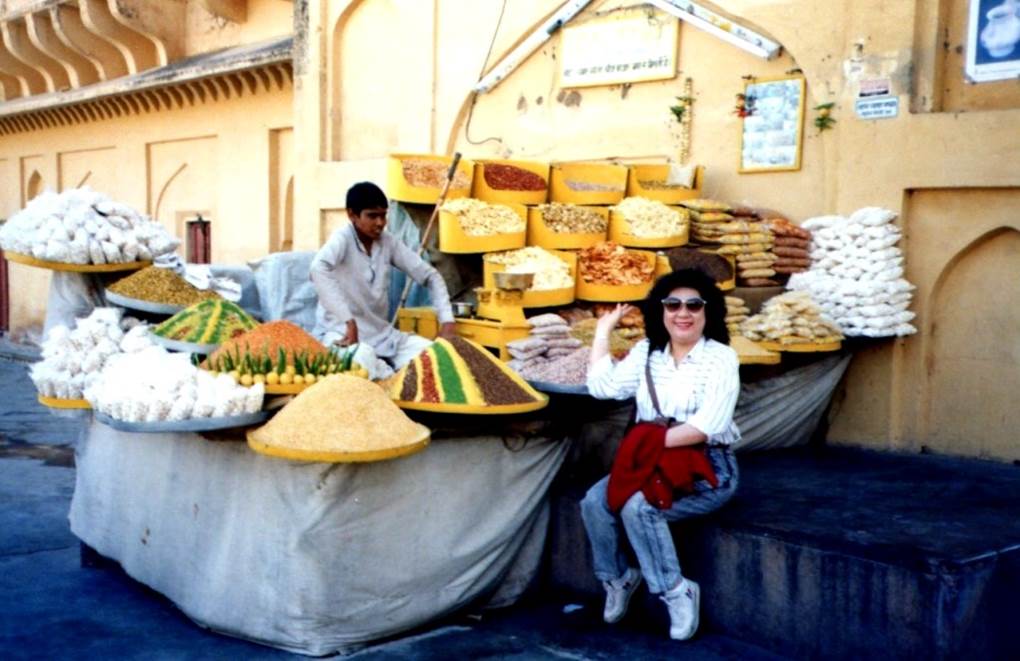
Photo by author, 1989
There are also colorful items for sale here!
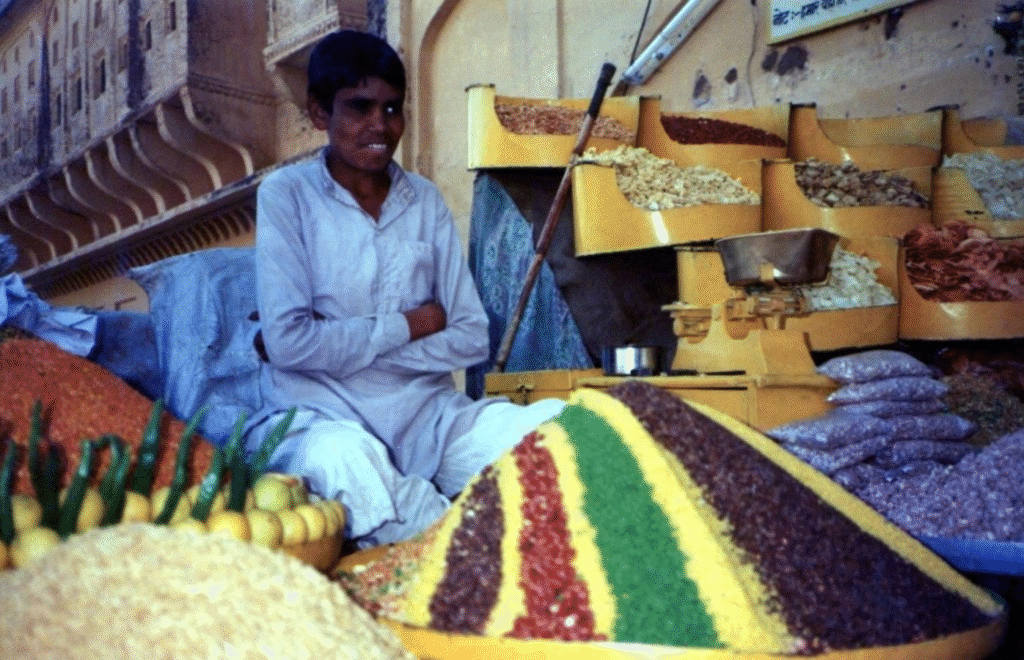
Photo by author, 1989
Cobra wielder
At the bottom of the hill, we spotted two turbaned piper entertainers performing the cobra dance.
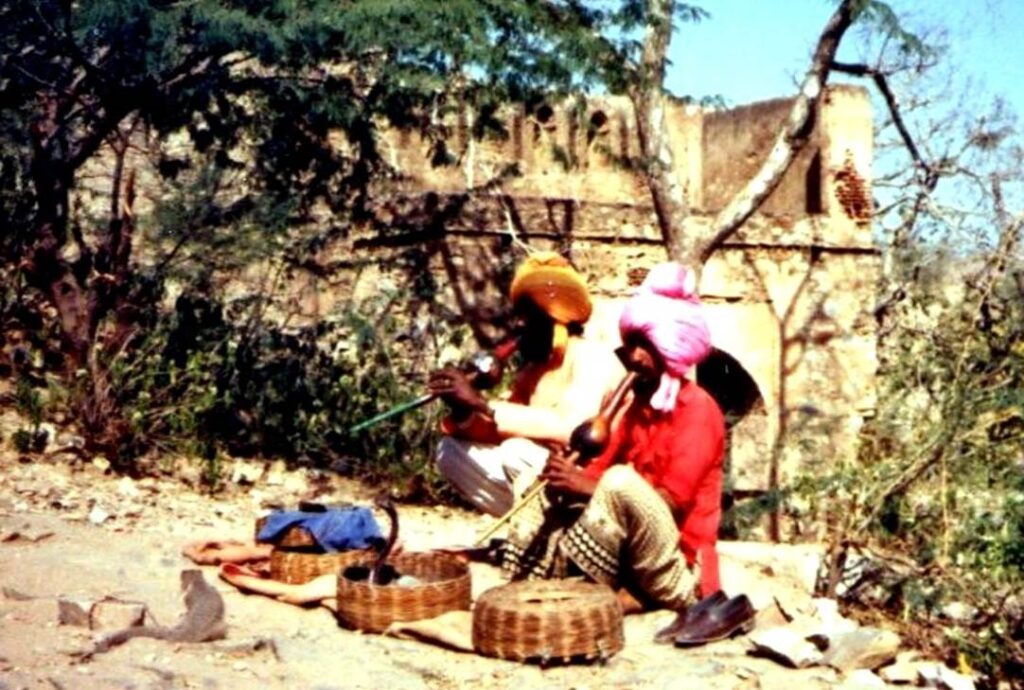
Photo by author, 1989
“Water Palace” – a building with variable floors
After a tour of the Amber Fort, drive back to the town of Jaipur.
On the way, a large lake appeared at the end of the mountain range. It’s called Man Sagar Lake. It is a man-made lake with an area of 120 hectares.
In the middle of the lake, an isolated building floated. It’s a rare sight. According to the description, it is called Jal Mahal, which means “palace of water”.
It is said to be a five-story building. From June to September, only the first floor of the top floor is visible during the rainy season, and in the dry season, the entire fifth floor is visible.
It is “a building that changes the number of floors” depending on the amount of water in the artificial lake . It was the first time I had ever seen anything like it.
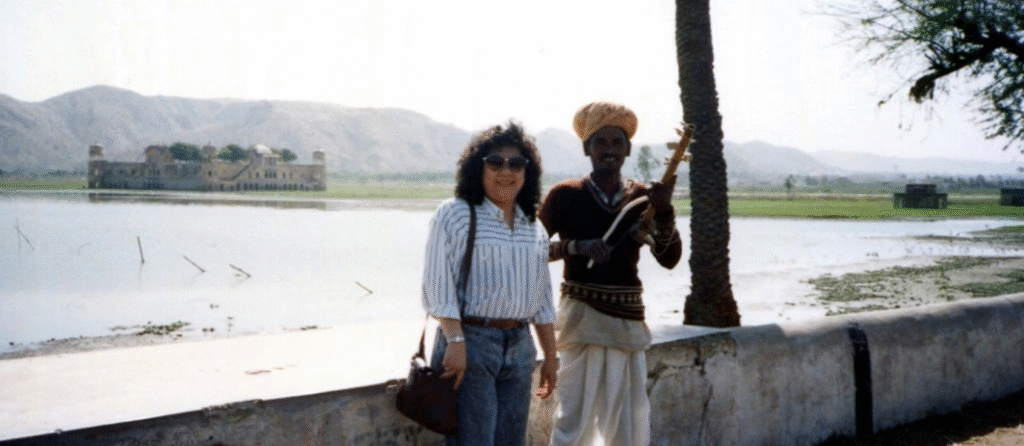
Photos by author, February 1989.