JAP | ENG
India Travelogue 1989
#6/26
Jaipur #2
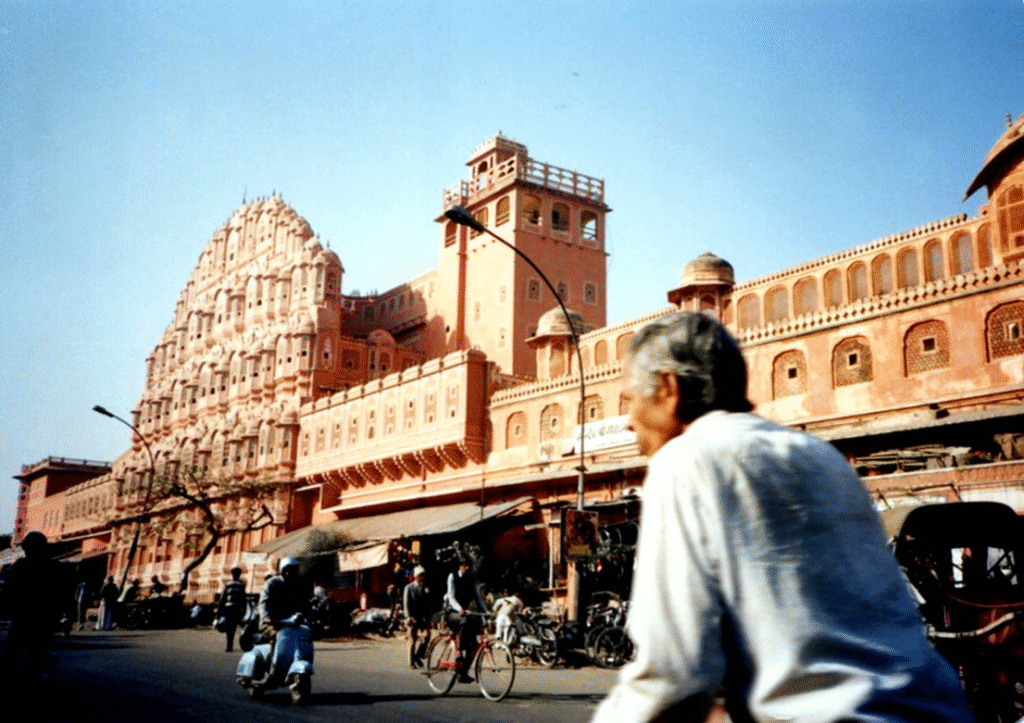
Palace of the Winds Hawa Mahal
Jaipur is also known as Pink City because of the colours of its buildings.
The pink building illuminated by the morning sun at an angle.
The contrast with the cloudless blue sky.
This architecture is unique and a work of art that can only be found here in Jaipur. It is the highlight of this walled city.
An elderly man riding his bicycle through the morning breeze. He is unusually wearing a shirt.
Palace of the Winds Hawa Mahal
(seen from the front)
Airy screens and small windows allow the ladies of the court to see the hustle and bustle of the city, but the citizens below are not able to see them.
Women who served the palace were forbidden from exposing themselves to the general public.
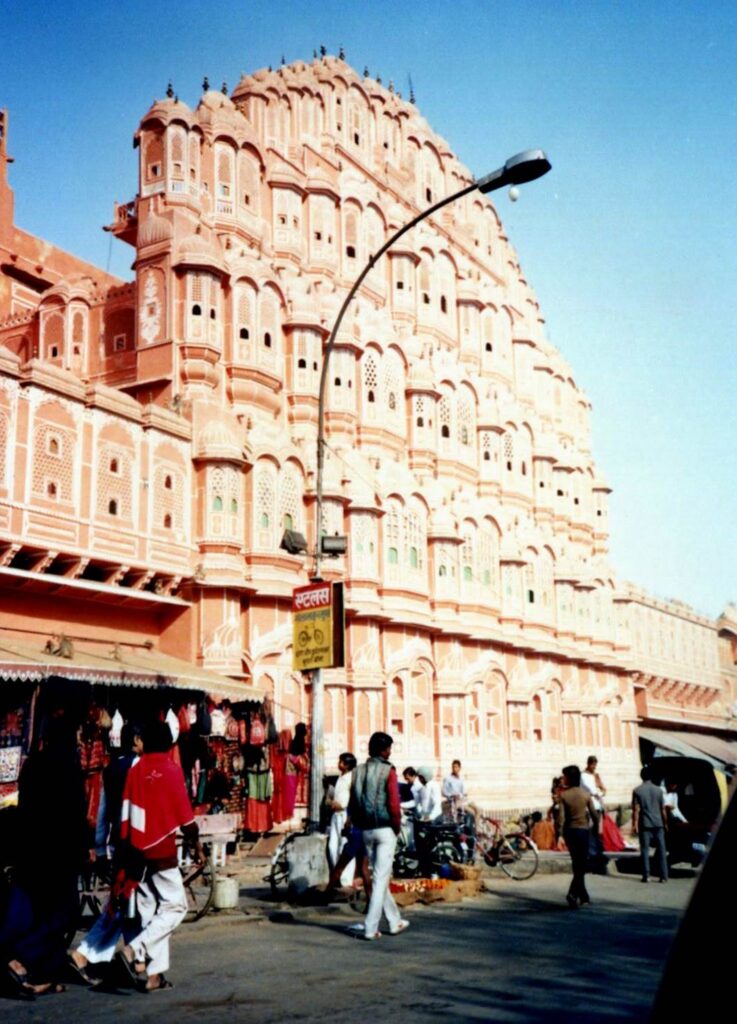
Photo by author, 1989
Palace of the Winds Hawa Mahal seen from the back.
The building is a thin wall-like structure with only corridors and bay windows. The wind blows through them.
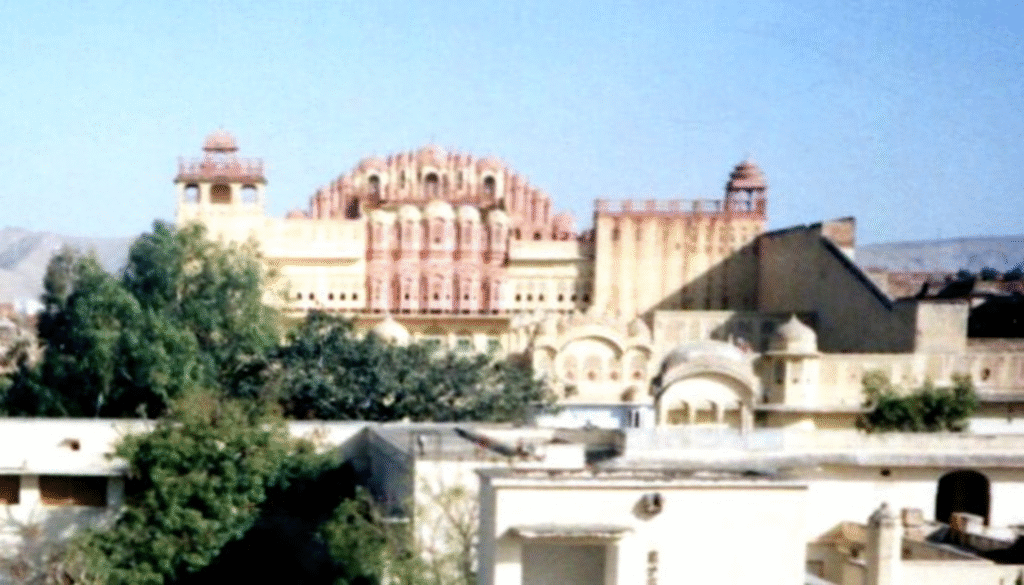
Photo by author, 1989
Pink Indian sandstone. Native to the region.

Photo by author, 1989
Maharajah’s Palace (City Palace)
The palace of the former feudal king, which is famous as a fusion of two styles, Rajasthani and Mughal. There are many palace-style buildings in the area.
Many of them are open to the public as museums.
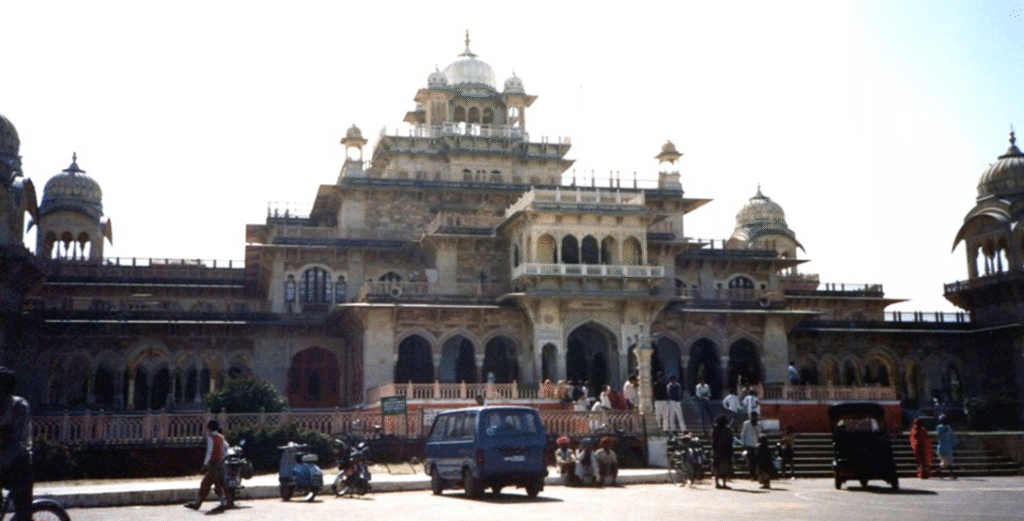
Photo by author, 1989
For more than 200 years, from its construction until around 1946, it functioned as the residence of the king of Jaipur and the political center of the Kingdom of Jaipur.
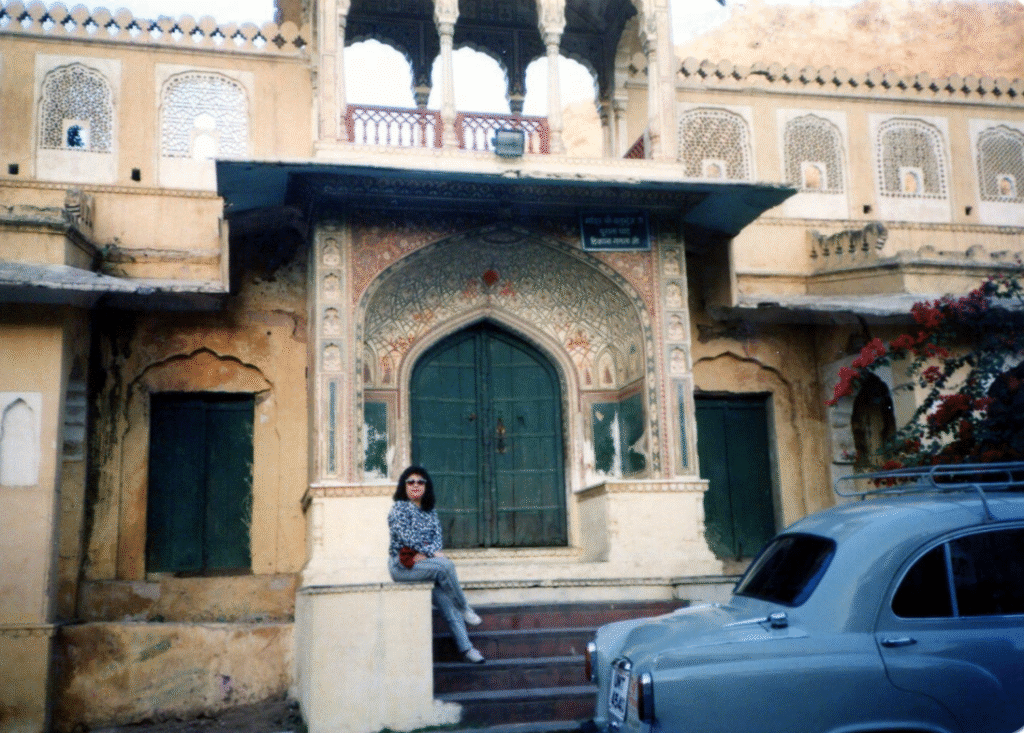
Photo by author, 1989
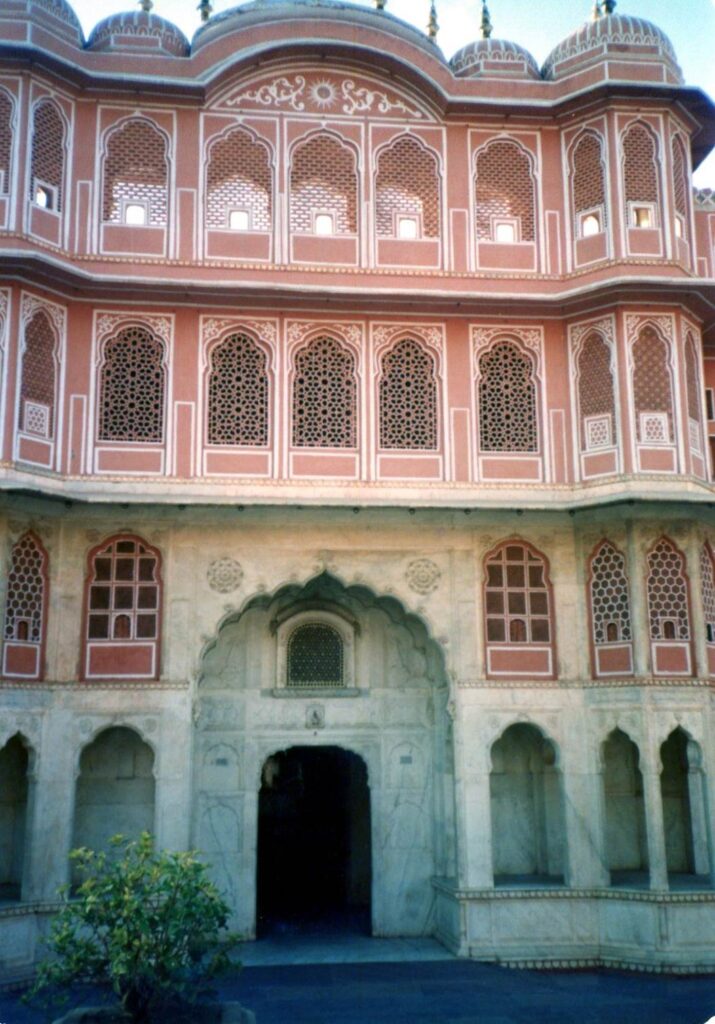
Photo by author, 1989
The palace guards wear red turbans, which are a nice contrast to complement the green gates.
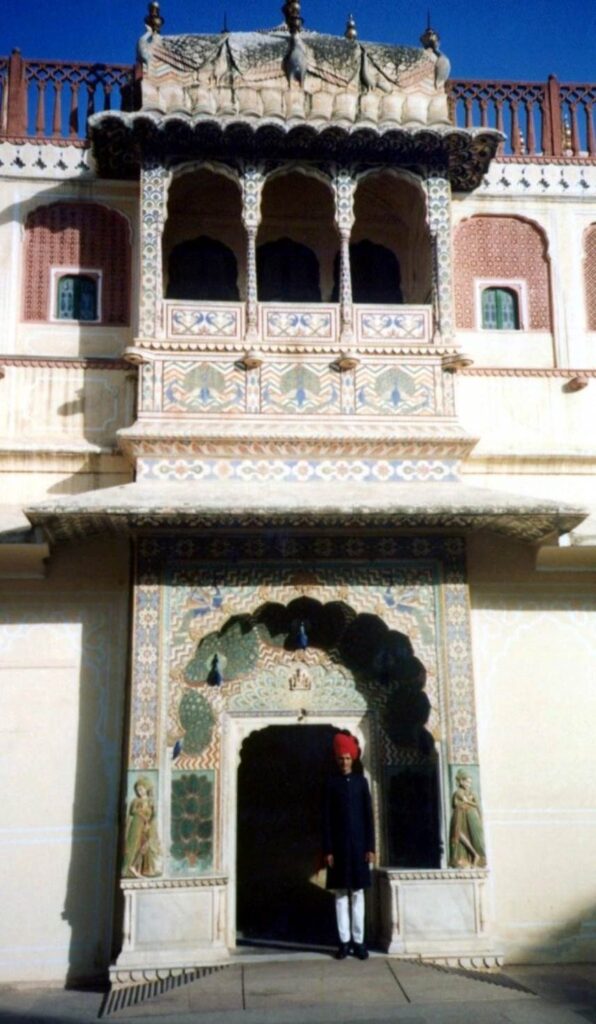
Photo by author, 1989
Pink walls, green gates and overhanging balconies.
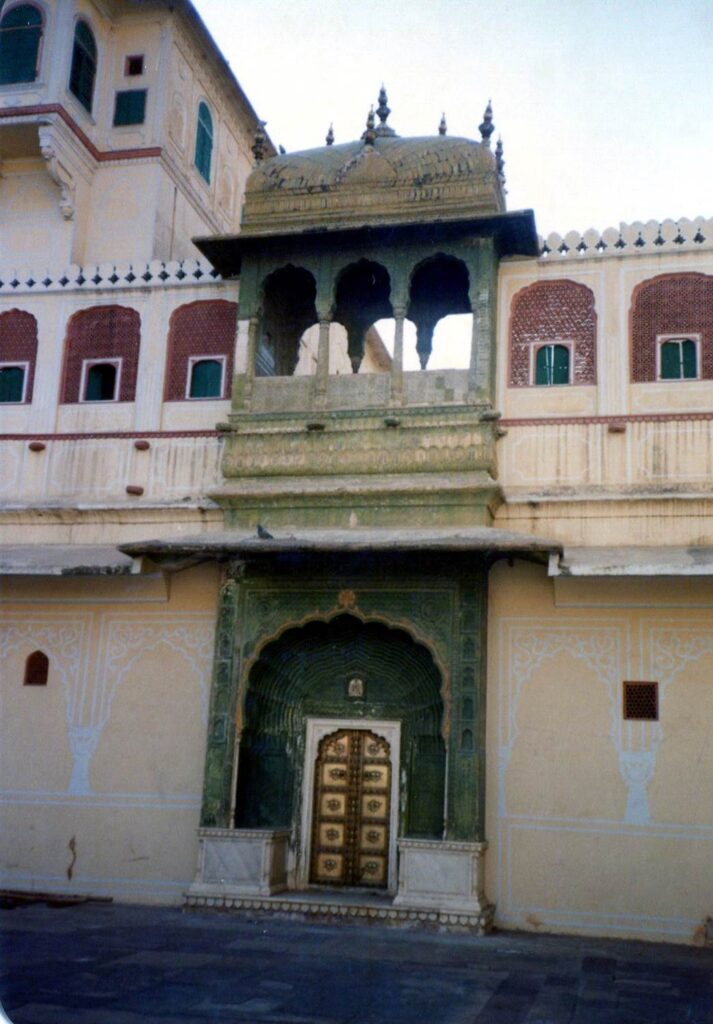
Photo by author, 1989
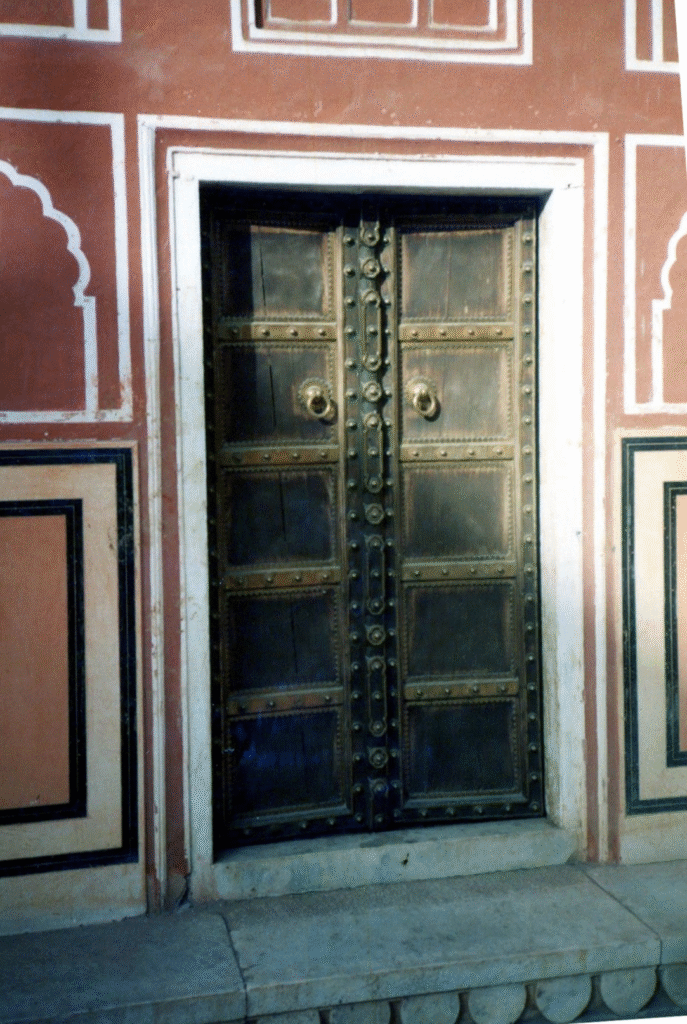
Photo by author, 1989
Astronomical Observatory Yantra Mandir (World Heritage Site)
An astronomical observatory built by the Maharajah. It is located in the City Palace. There are various astronomical observatories from the era before the advent of astronomical telescopes. It was also used for horoscopes. This facility has a geometric form that differs from other traditional palace architecture.

Photo by author, 1989
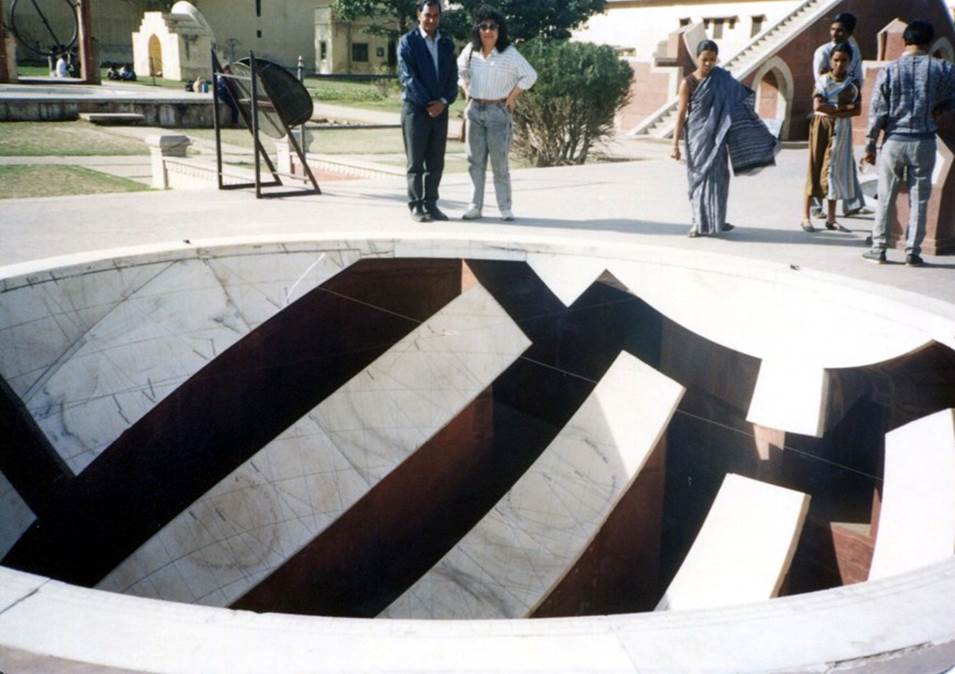
Photo by author, 1989
Man and camel live together.
If you come to Rajasthan, which is also a desert region in India, you will see camels in the city and in the suburbs.
Camels work in unison with humans to carry out their daily tasks.
The camels you see in the zoo and the camels in this area are similar and different creatures.
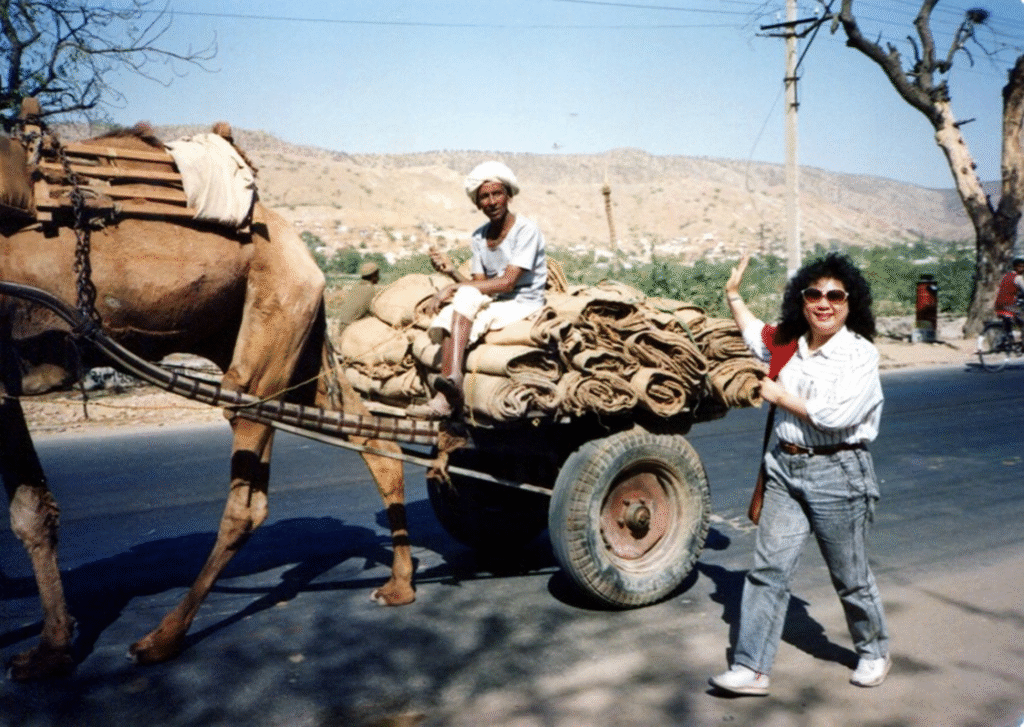
Photo by author, 1989
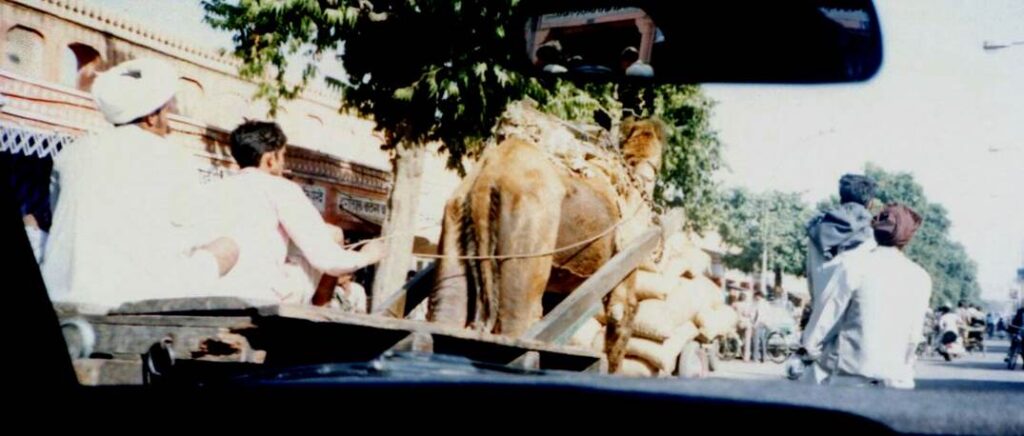
Photo by author, 1989
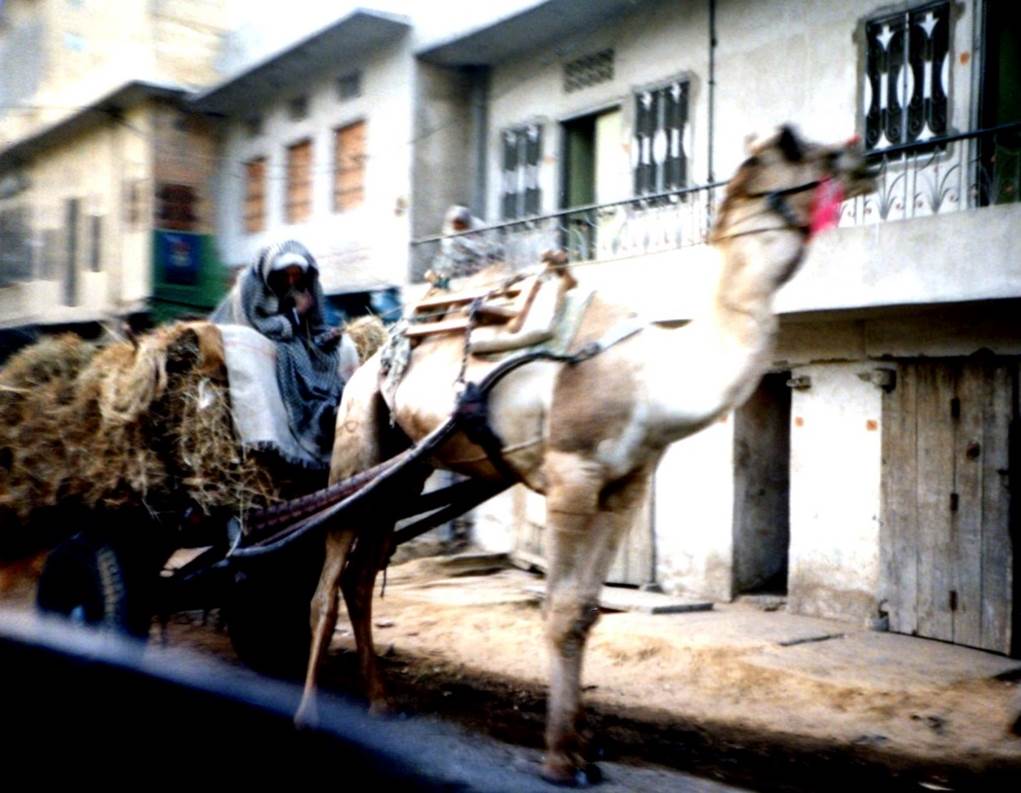
Photo by author, 1989
Cows occupying the roads!
India is a cow’s paradise. In Hinduism, cows are considered sacred creatures. Here on the roads of Jaipur, cows roam everywhere.
There are both domestic cattle and stray cattle.
Even though they move slowly, cars and other vehicles always move out of the way.
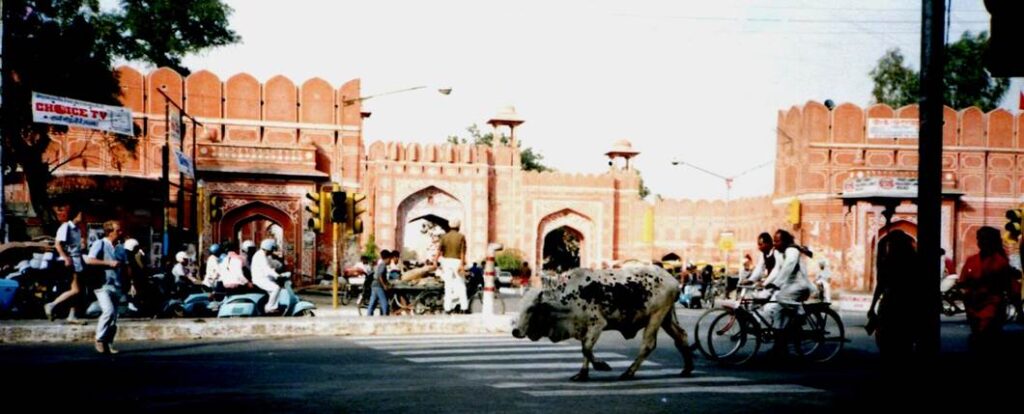
Photo by author, 1989
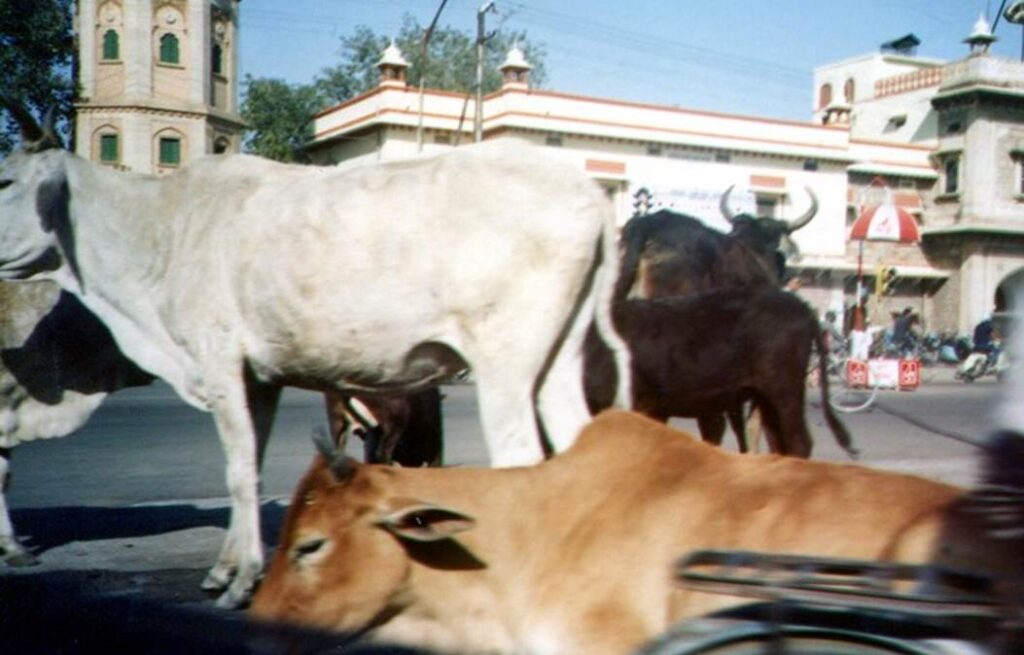
Photo by author, 1989
There were also black-haired cows. (Pictured below). It is strictly forbidden for Hindus to eat beef and Muslims to eat pork, due to religious reasons. Supermarkets do not have a section for beef, pork, ham and bacon.
Meat is limited to chicken and mutton.
I remembered that an acquaintance who used to be stationed in Delhi for work came to Singapore to buy and brought back a large amount of frozen beef to India.
This is to share it with fellow expatriates. It must have been a lot of fun to try yakiniku and sukiyaki, which had been forbidden for a long time.
(There are Western and Chinese restaurants in the area where the embassies are located in Delhi)

Photo by author, 1989

Photo by author, 1989
Cow dung is a valuable source of fuel!
A view of a rural village on the outskirts of Jaipur (below).
What is the cylindrical pile on the right side?
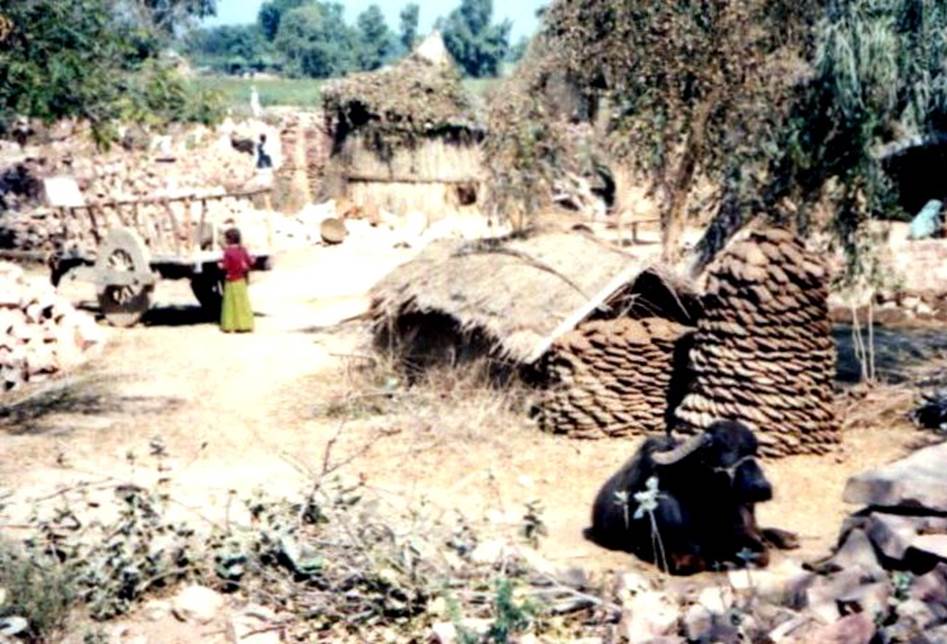
Photo by author, 1989
What are these in the photo below? Cow dung collected from the road is being dried in the sun with bare hands. This area is a dry area and firewood is difficult to obtain. This dried cow dung is lightweight and has a good fire life, making it an ideal fuel for cooking rice.
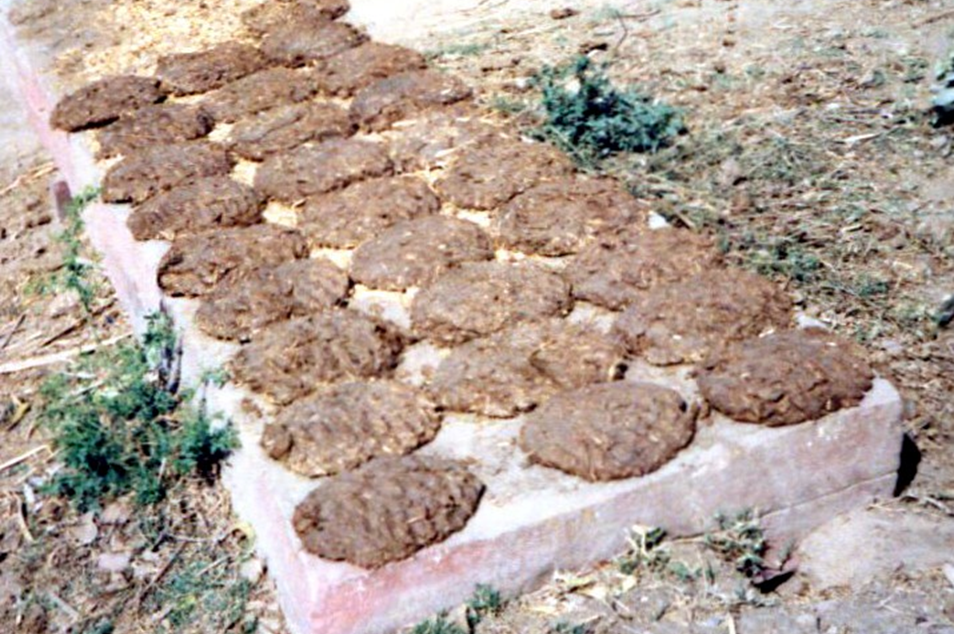
Photo by author, 1989
Lapidary craftsman
Using traditional and simple tools, they process and polish a variety of colored rough stones. The skills that have been stored in the palace since ancient times have been passed down to the present day.
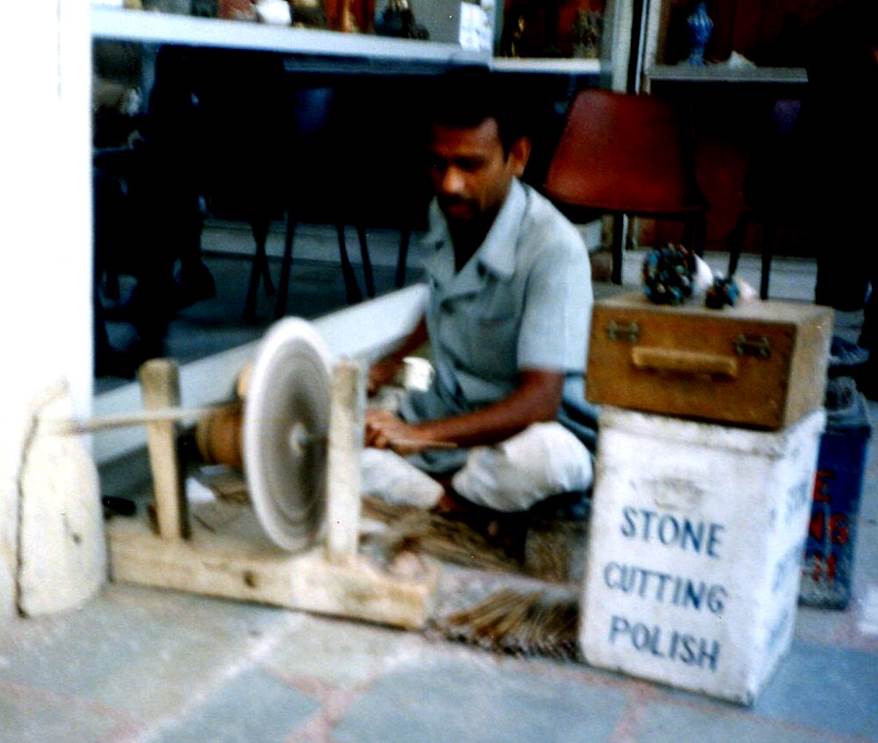
Photo by author, 1989

Photo by author, 1989
The lives of people outside the castle
Below: An elderly couple on a farmhouse?
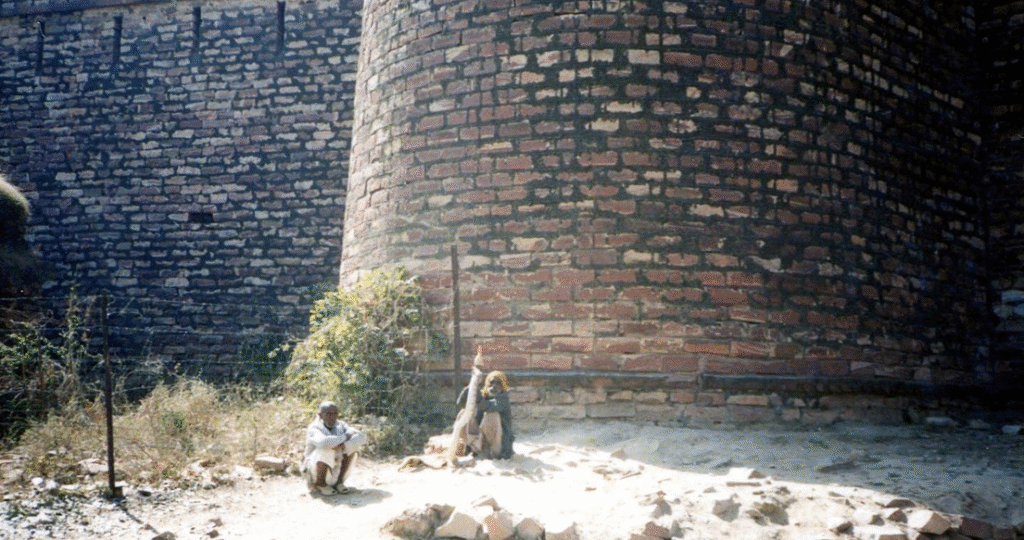
Photo by author, 1989
In the farmhouse’s yard, the children are playing games, and the cows are crouching on the ground.
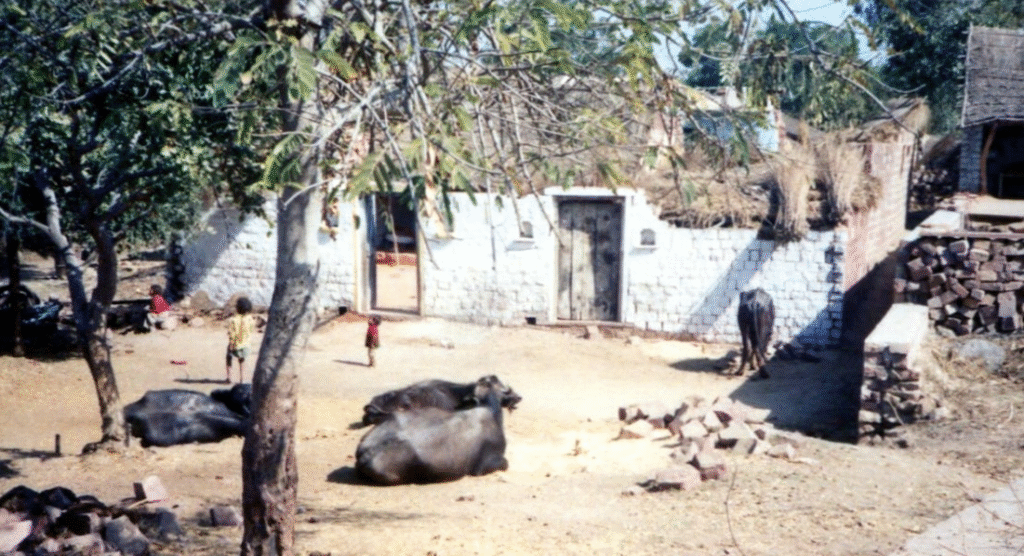
Photo by author, 1989
Water pumping station
From Jaipur to Agra, it’s a long drive along the dry steppe roads.
On the way, we spotted a figure at a public well. We took a break.
There was a symbolic tree there, that look like a large lime tree, and I tried to have a conversation in the shade of the tree.
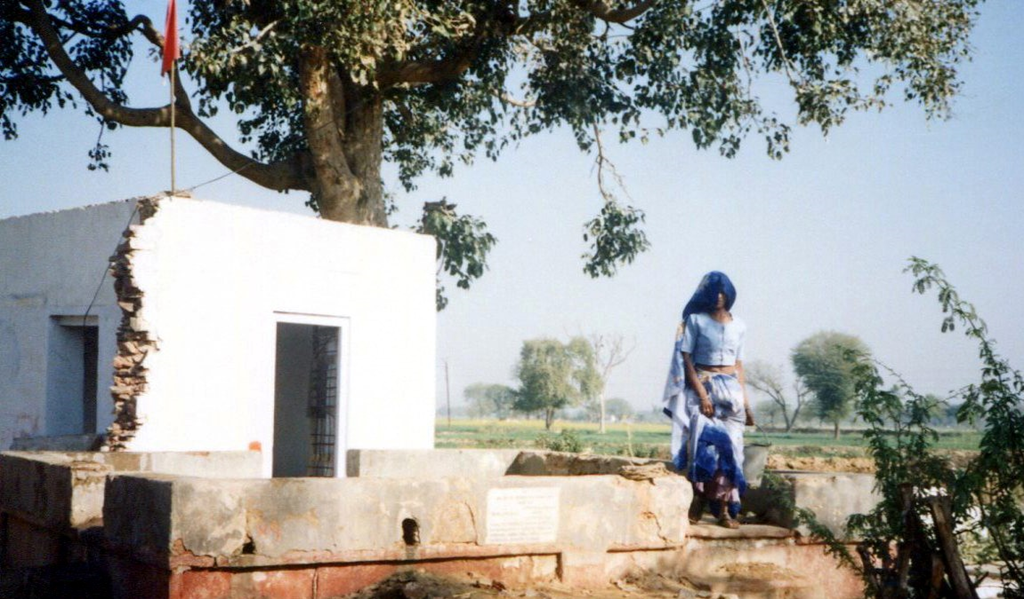
Photo by author, 1989
The children are curious about the sudden appearance of tourists.
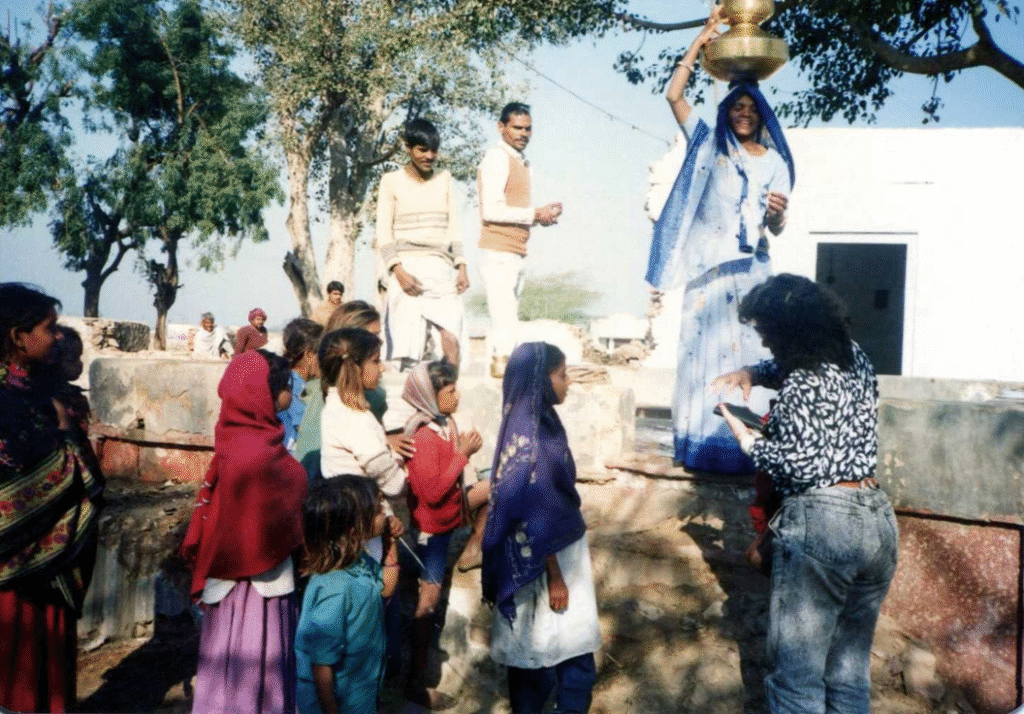
Photo by author, 1989
I took a picture with the permission of a woman who had come to fetch water. The married woman is wearing a veil to hide her face, while other young girls respond to photos with their bare faces.
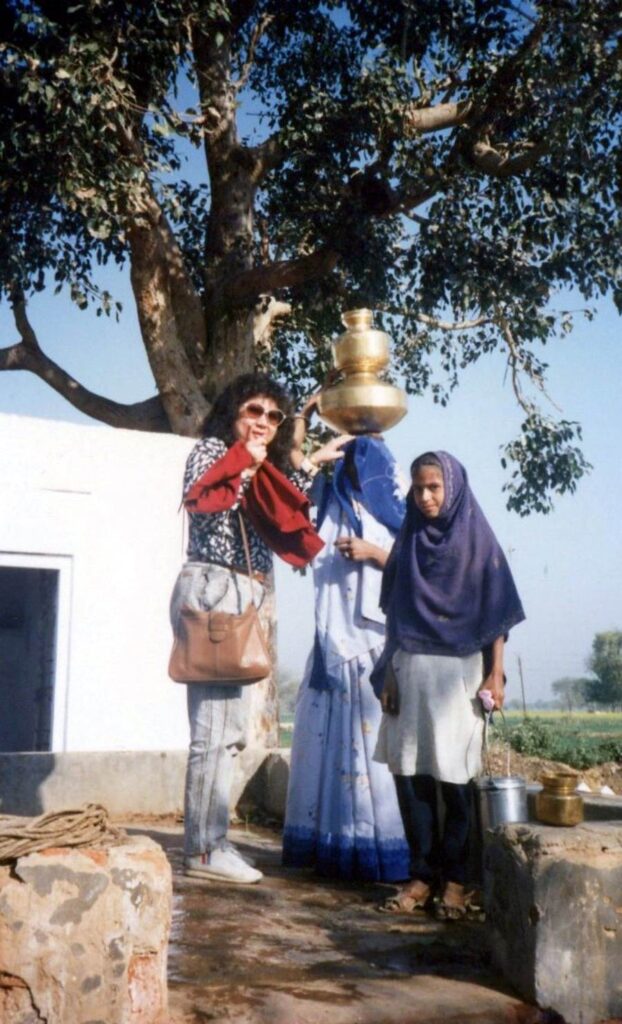
Photo by author, 1989
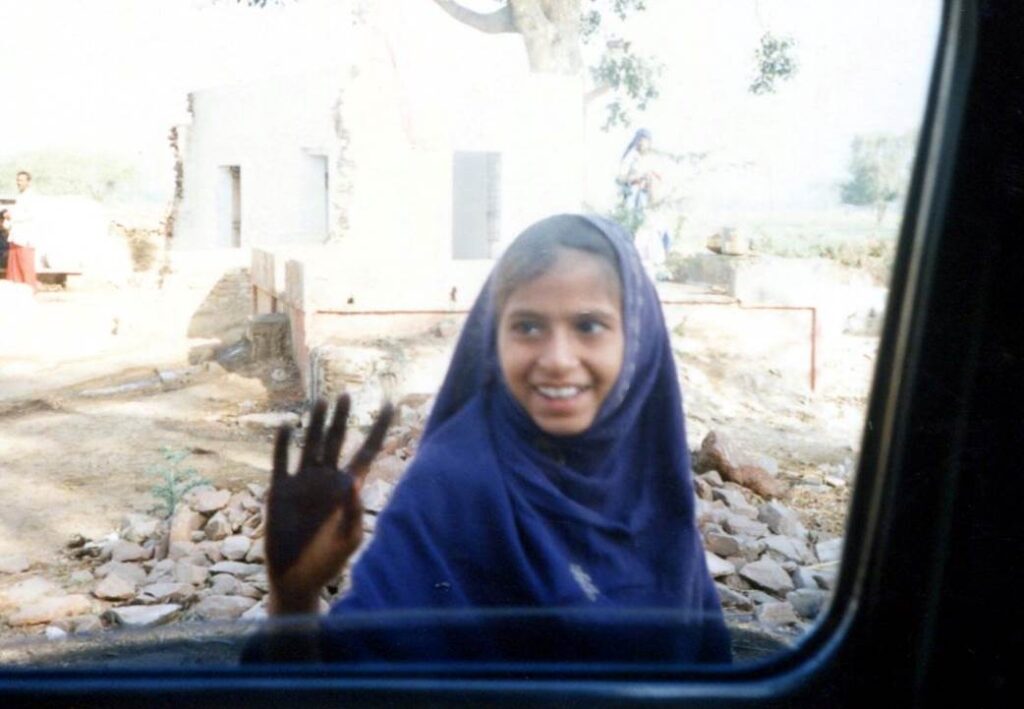
Farewell.
It is likely that the range of this child’s activity is within a few kilo meters of this village. It must have been the first time she had ever met a foreigner, let alone a tourist from East Asia.
All photos above were taken by the author in February 1989.