JAP | ENG
India Travelogue 1989
#12/26
Vanarasi #1
Vanarasi
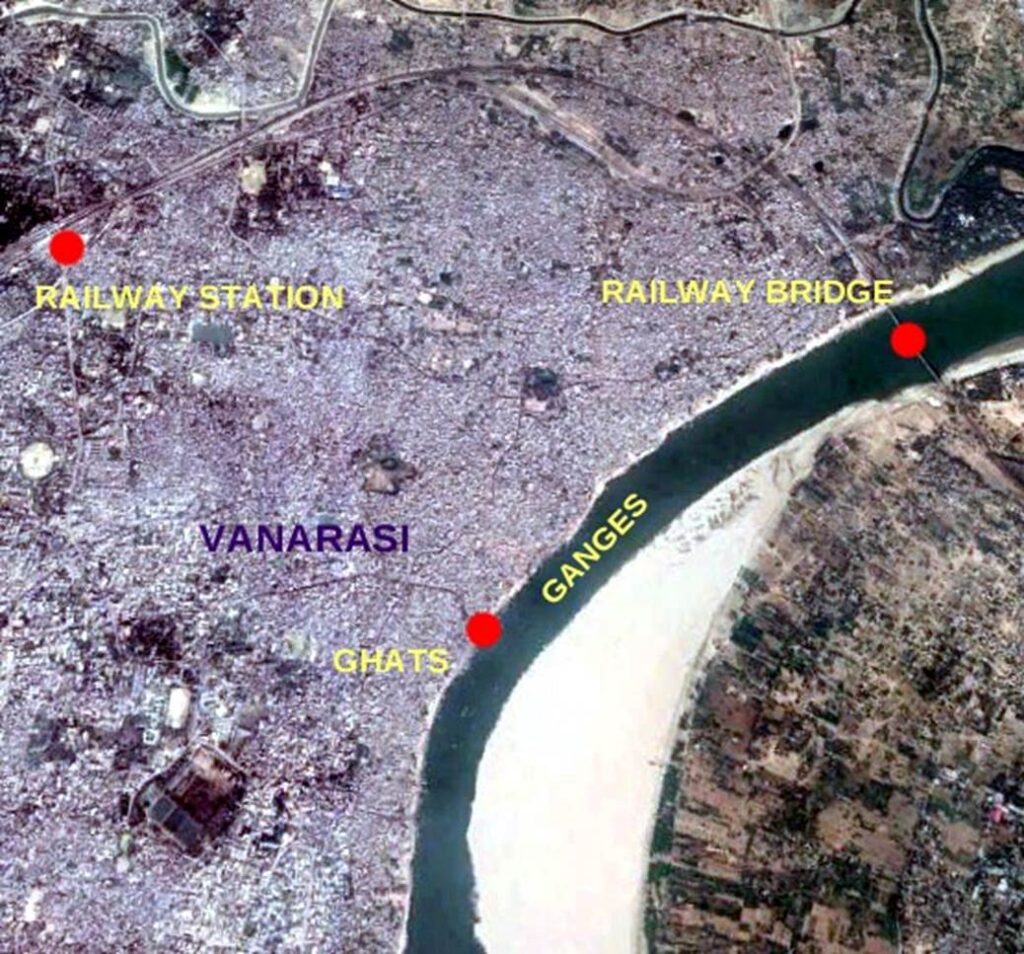
Vanarasi is the largest religious city in India and one of the holiest places in Hinduism, attracting many devotees, pilgrims, and tourists from India and abroad.
The Ganges River originates in the Himalayas and flows through the Hindustan Plain. It is a large river that flows for a total length of about 2,500 km before emptying into the Bay of Bengal.
The only place in the basin where the river changes direction and flows north is near Vanarasi.
Vanarasi is located on a river terrace on the west bank where the river flows north. The sun rises directly in front of the town. A place like this is rare and unique in the Ganges basin.
From the hotel to the Ganges
The night before (February 10, 1989) I arrived in Vanarasi from Khajuraho on a domestic flight, and checked into the Hotel Taj Ganges in the evening. It was a small, simple hotel, but I felt at ease because it was managed by the Taj Group.
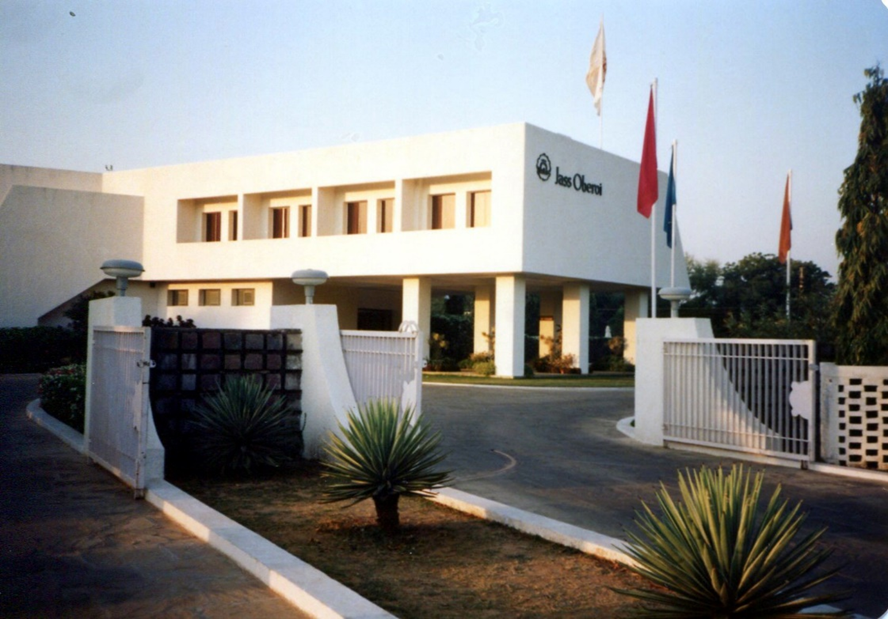
Hotel Taj Ganges, Photo by author, 1989
From the hotel, follow a local guide across the city of Vanarasi to the Ganga River.
Along the main road, a fence like the one in the photo below divides the road into two. I heard that one side is reserved for group pilgrims to prevent overcrowding. Many people in India consider it a dream to walk this pilgrimage route at least once in their lifetime.
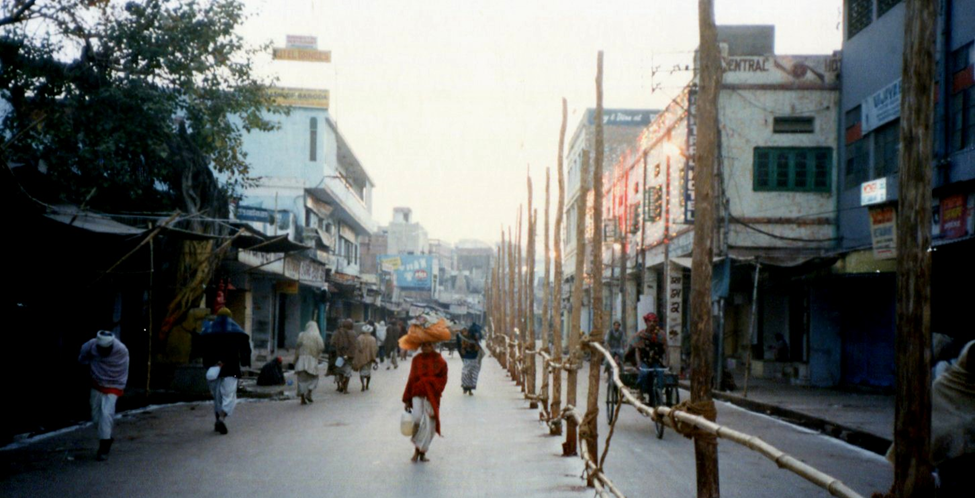
The main street of Vanarasi,
Photo by the author, 1989
Before sunrise on the road to the Ganga.
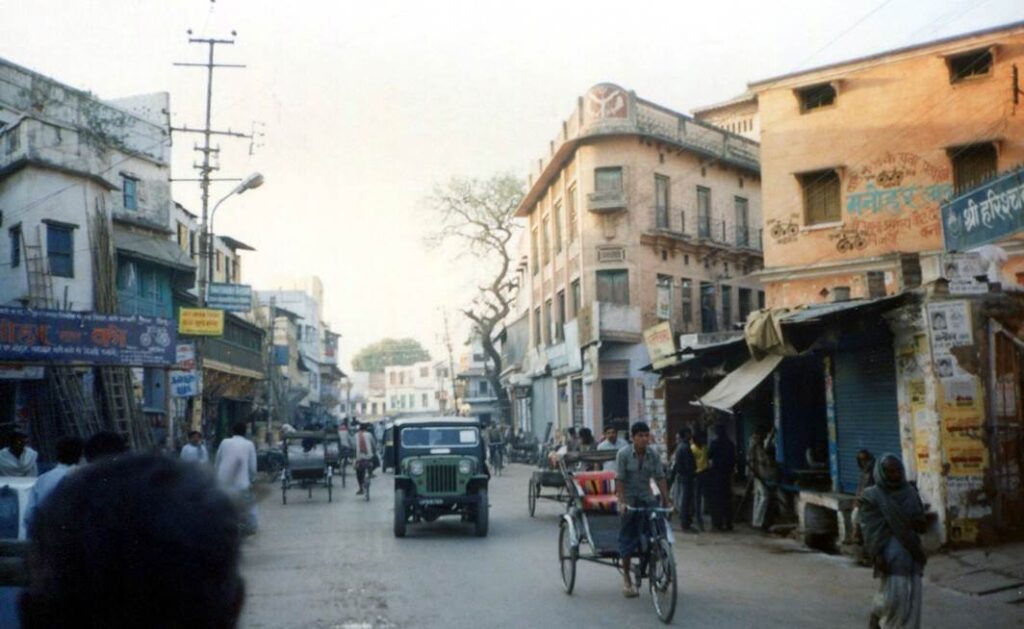
Photo by author, 1989
A flock of rickshaws carrying large loads and heading to the Ganga.
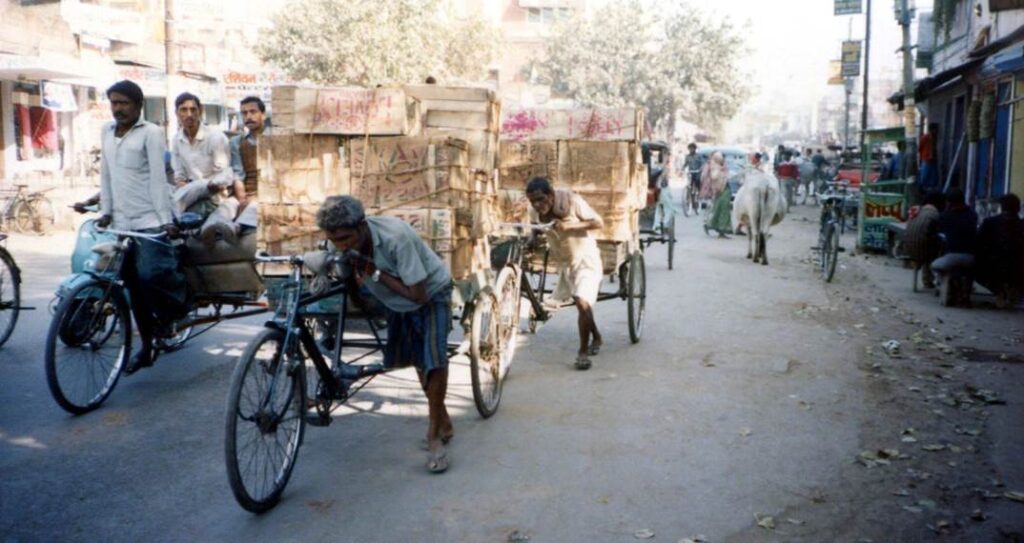
Photo by author, 1989
Early in the morning, a large group of rickshaws carrying families heading towards Ganga.
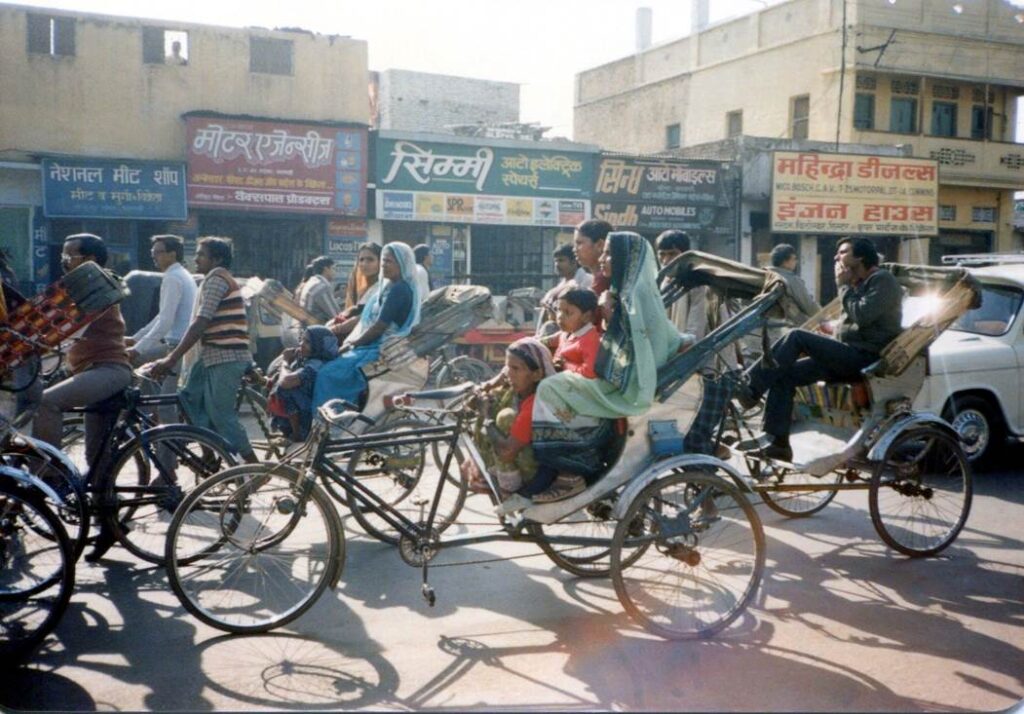
Photo by author, 1989
The streets are filled with women carrying large drums on their heads and rickshaws waiting for customers.
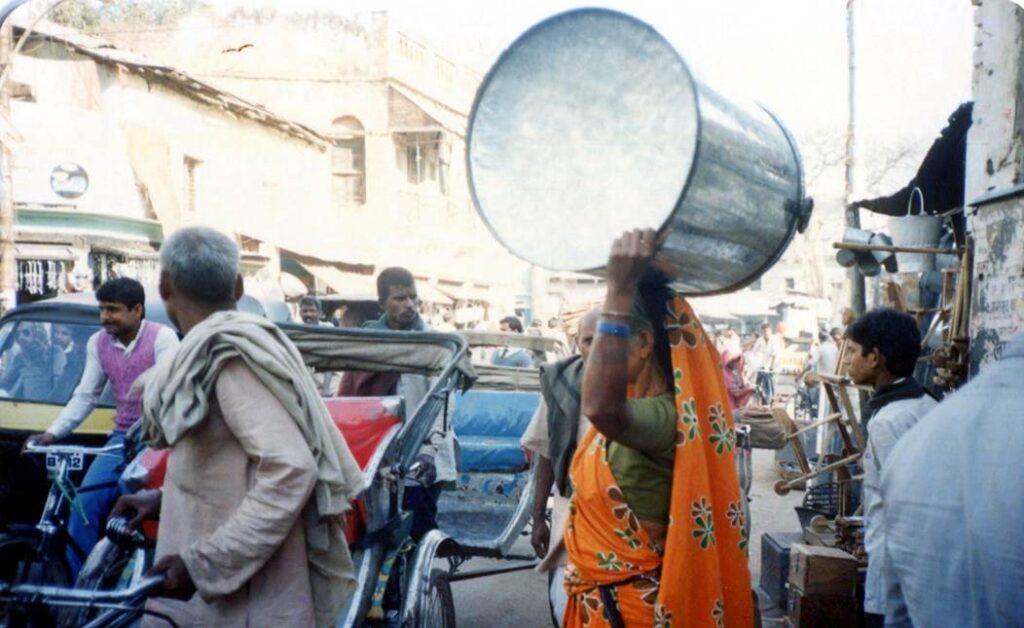
Photo by author, 1989
The lady at this stall is preparing chapati for sale on the griddle.
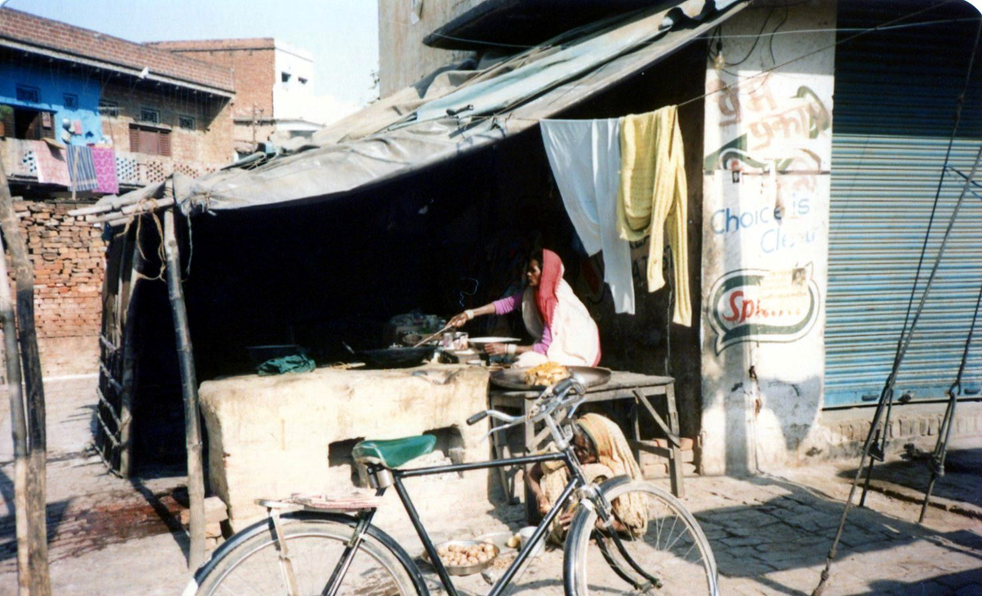
Photo by author, 1989
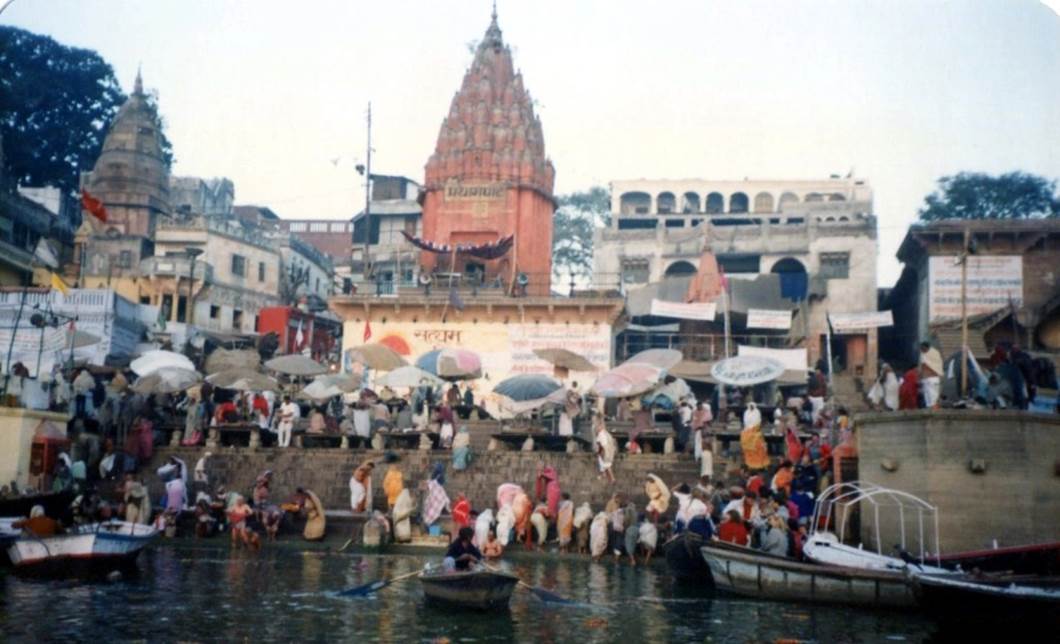
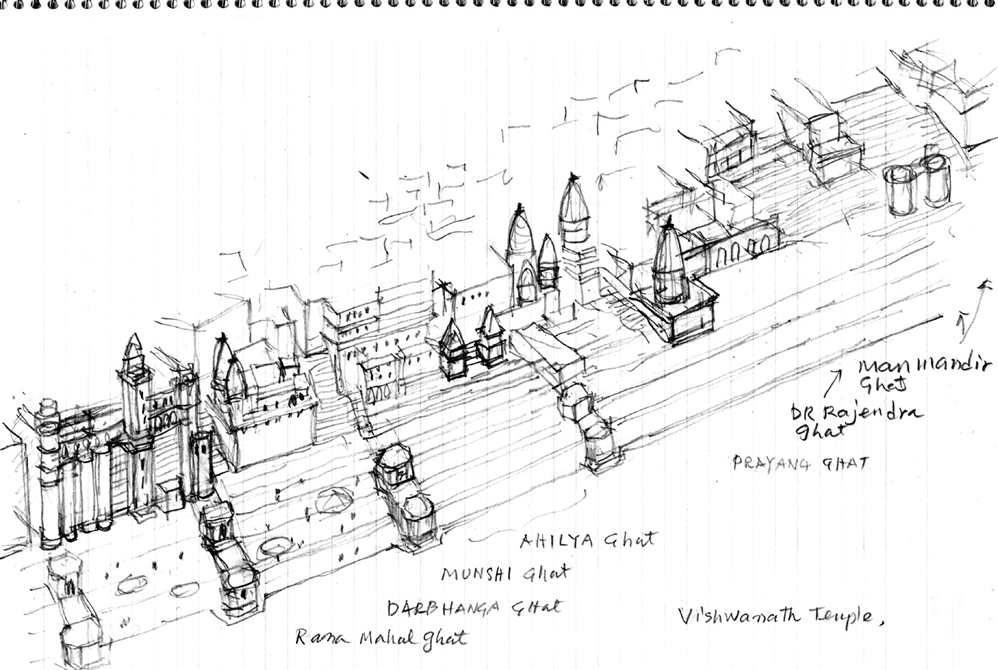
On the west bank of the Ganga, there is a stepped bathing place called a ghat, as shown in the figure below, which stretches for about 6 kilometers to the south. At the north end (far right of the sketch) is the crematorium, which serves as the origin and base of the site.
Throughout the year, a large number of bodies are buried and smoke is incessant. The ashes are scattered to the north side of the ghat, that is, downstream of the Ganges. With this, Vanarasi became the largest pilgrimage city and the largest religious city in India.
In other words, “without a crematorium, there is no vararasi.”
Author’s sketch
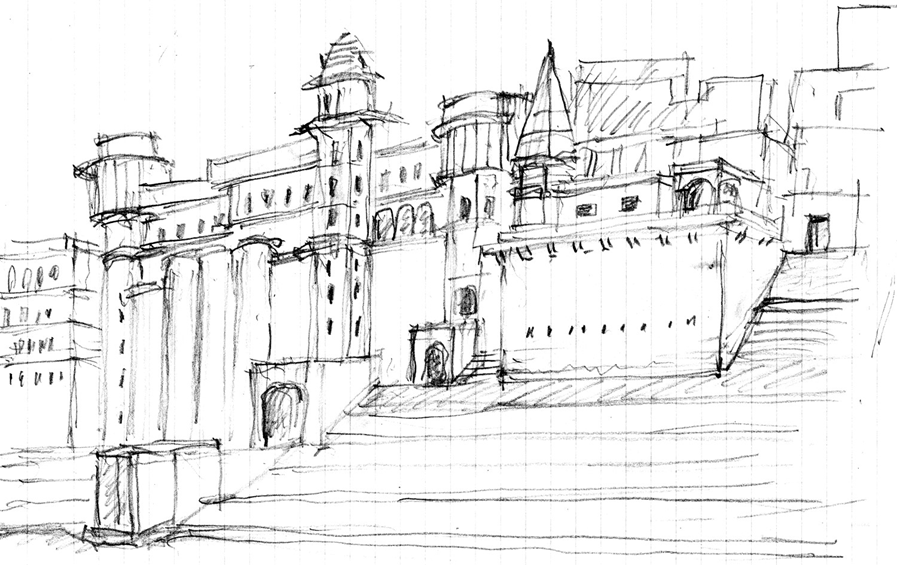
On the river terrace facing the Ganges is a large group of mansions built by maharajas from all over India. There is a stepped ghat directly below it, and it is built so that you can bathe on the riverbank. In addition, you can see the sunrise over the river from all the windows facing east.
Author’s sketch
The state of the ghat.
The hustle and bustle of the city of Vanarasi ended when we arrived at the top of the river terrace facing the Ganges. It must have been around six o’clock in the morning. Suddenly, the field of vision expands, and Ganga appears in front of us. It’s almost time for the sun to rise from the opposite shore.
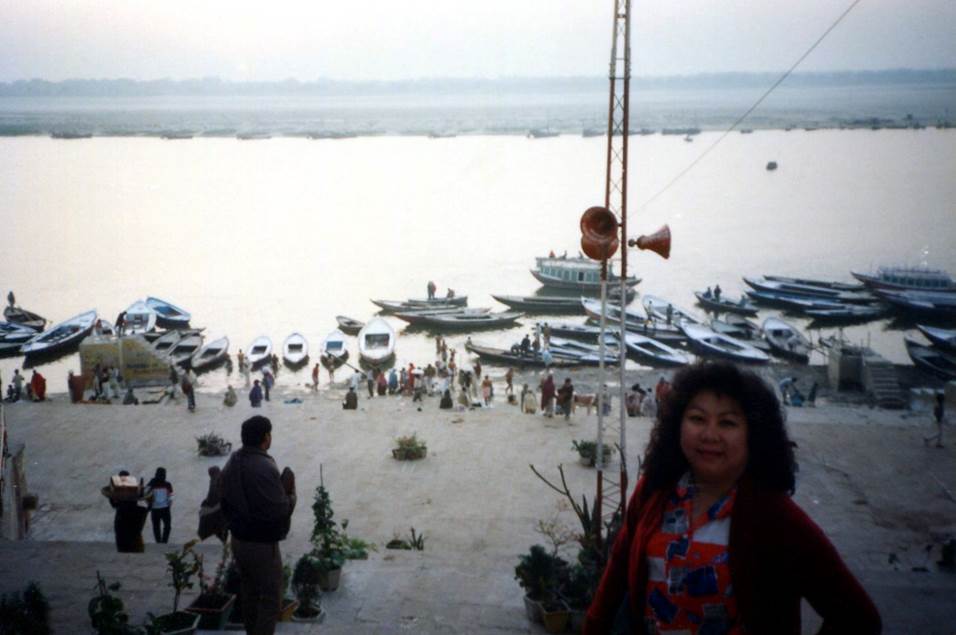
Photo by author, 1989
Ganges ghats at sunrise
It was early in the morning and there were still no bathers.
It’s still a chilly and quiet morning.
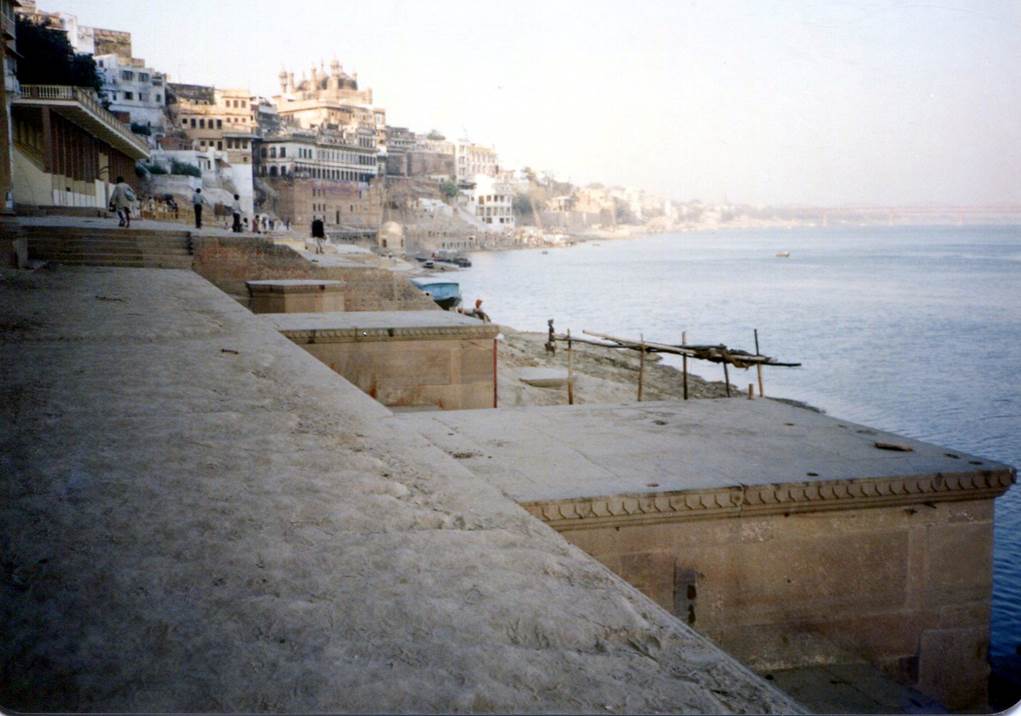
Photo by author, 1989
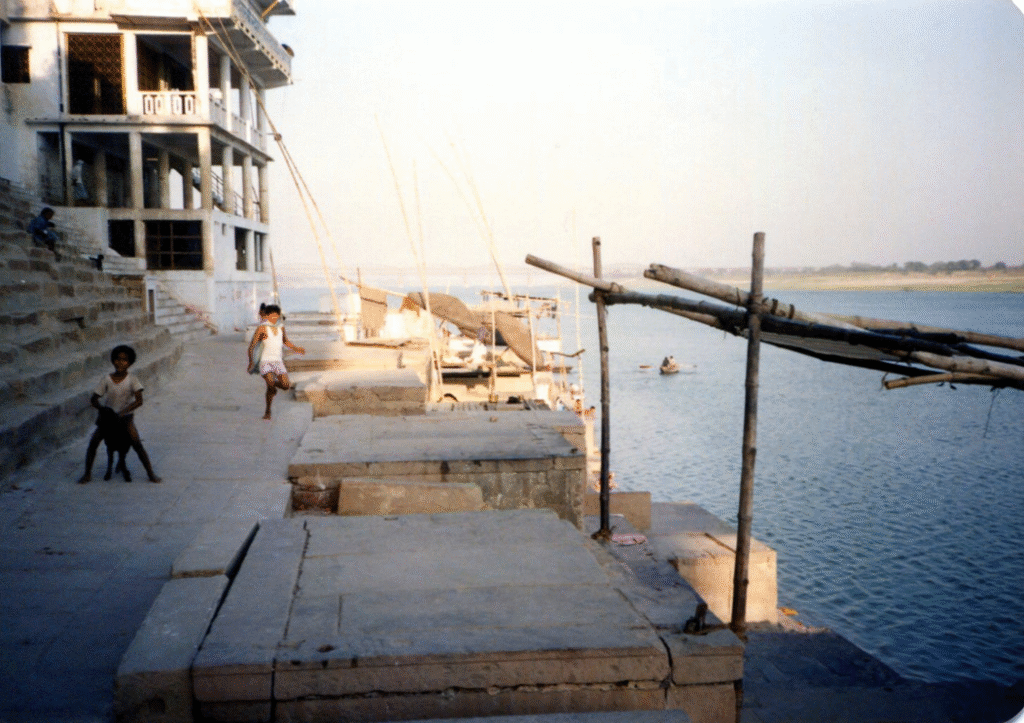
Photo by author, 1989
Pilgrims arrive at the water’s edge of the Ganga ghats and immediately worship the sunrise.
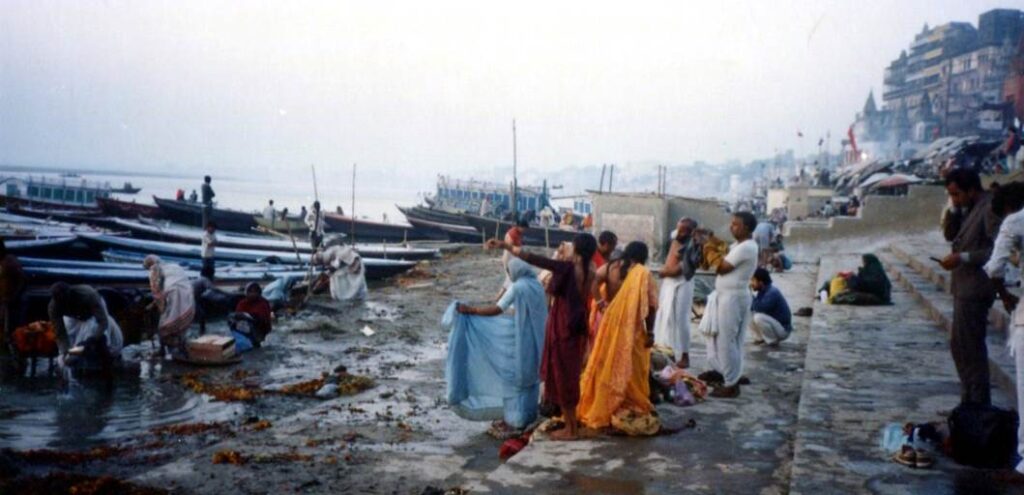
At the water’s edge of the Ganga, there is a lot of garbage drifting away.
And there are many sightseeing boats waiting for customers.
In addition, people weave between them to prepare for bathing.
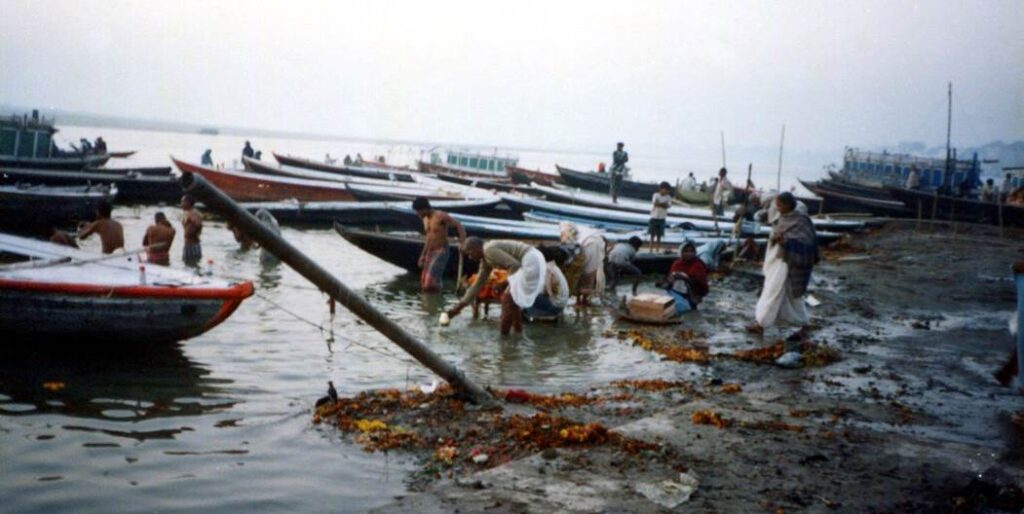
Photo by author, 1989
The sun rose, we had a boat arranged, and we left the shore.
When I went out to sea, a boat selling goods that seemed to be a father and son was already waiting for customers.
Is it the holy water of the Ganges in a copper urn? I decided to buy two later.
This is a well-thought-out business. The holy water sold here on board is a small jar for foreigners, but pilgrims from all over India are honoured to bring back large quantities of holy water from Ganga and distribute it to those waiting at home.
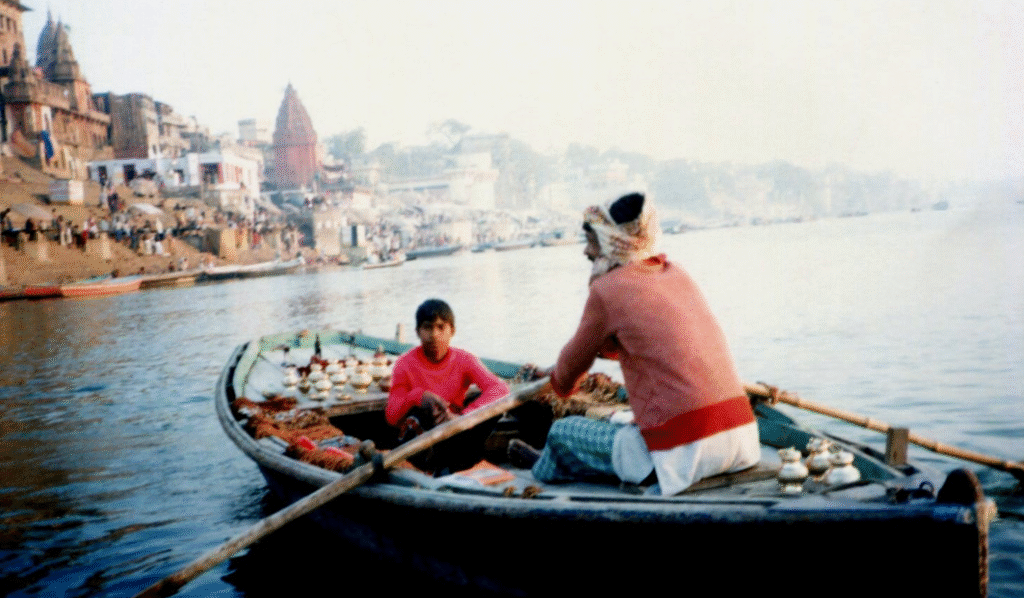
Photo by author, 1989
A picture of the ghat from a boat moving away from the shore.
The ghat is still deserted, and you can see the stairs and buildings well.
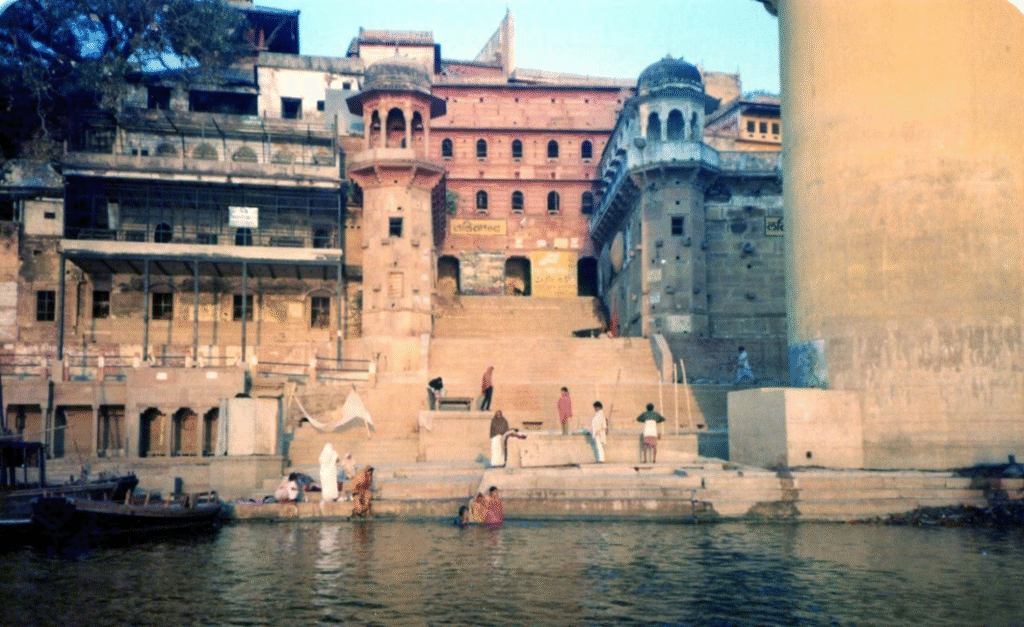
Photo by author, 1989
Soon, more and more people started taking baths.
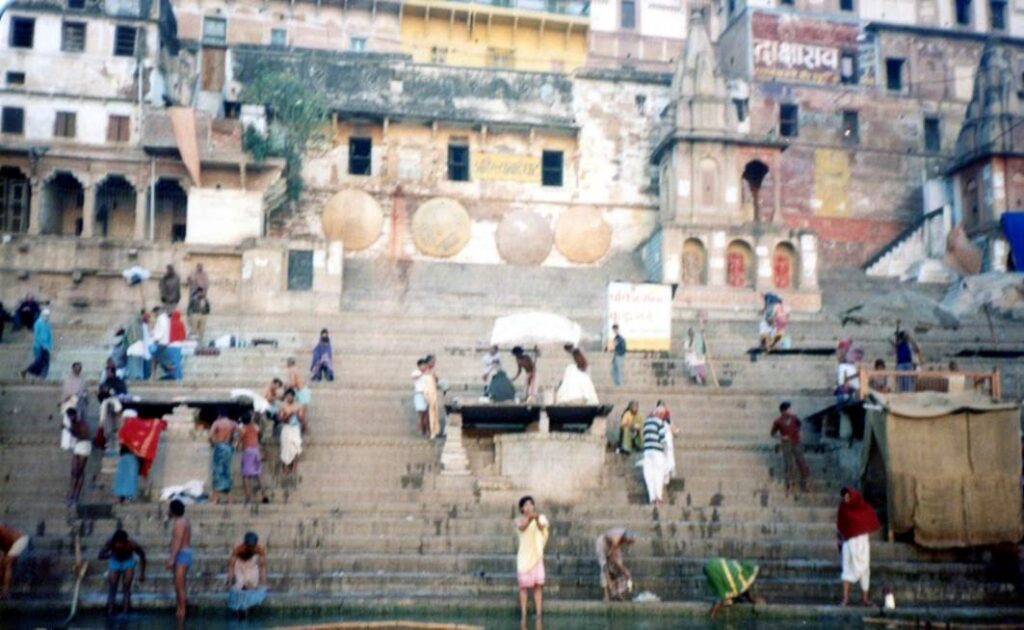
Photo by author, 1989
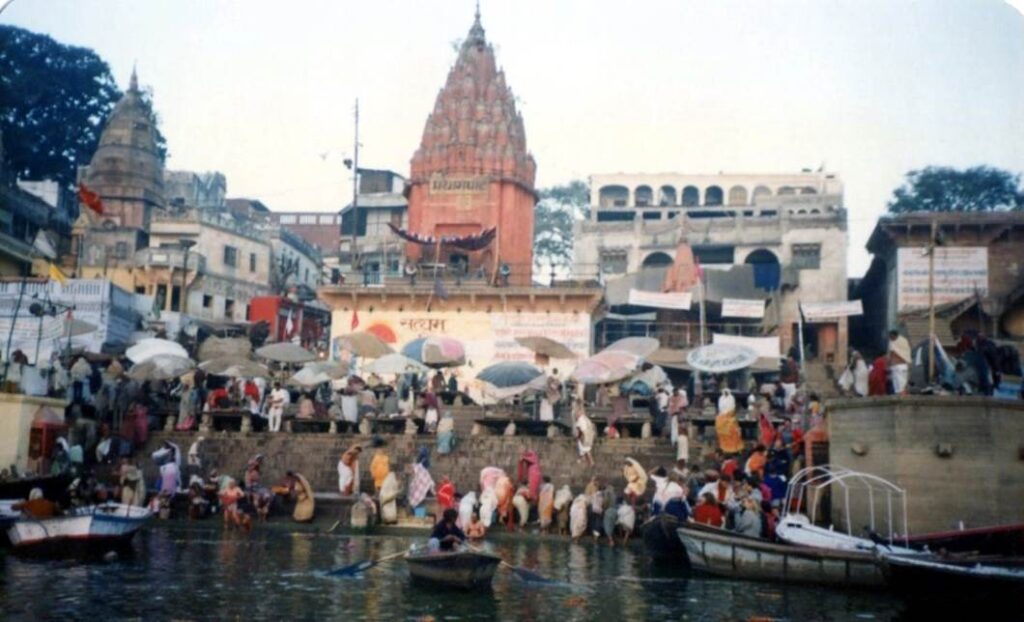
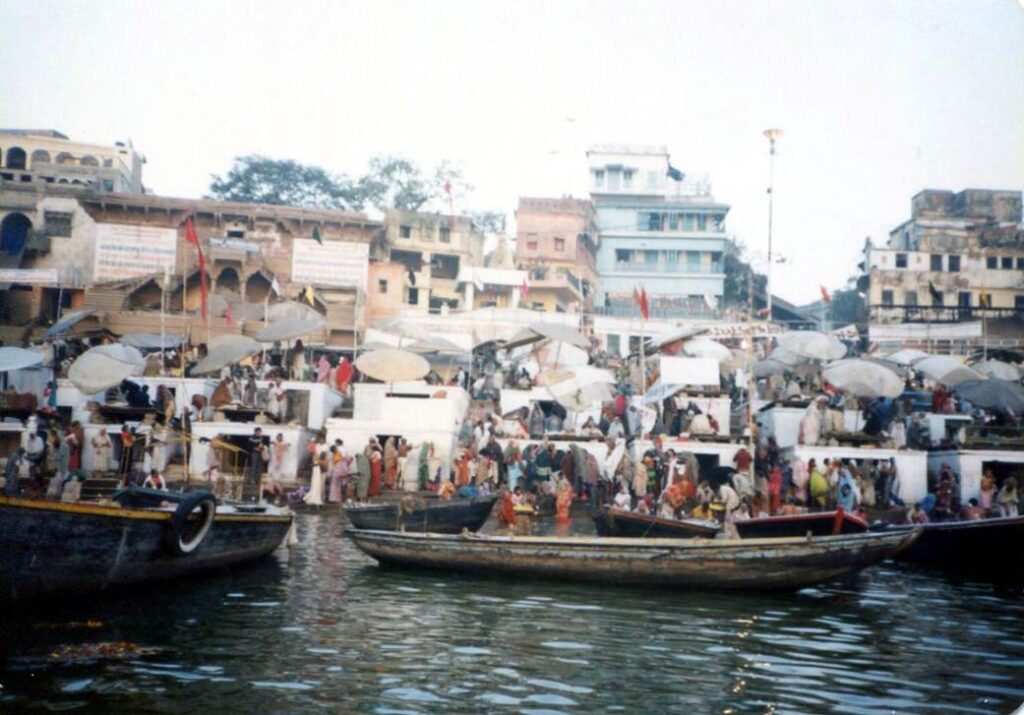
Photo by author, 1989
Bathe in the morning sun.
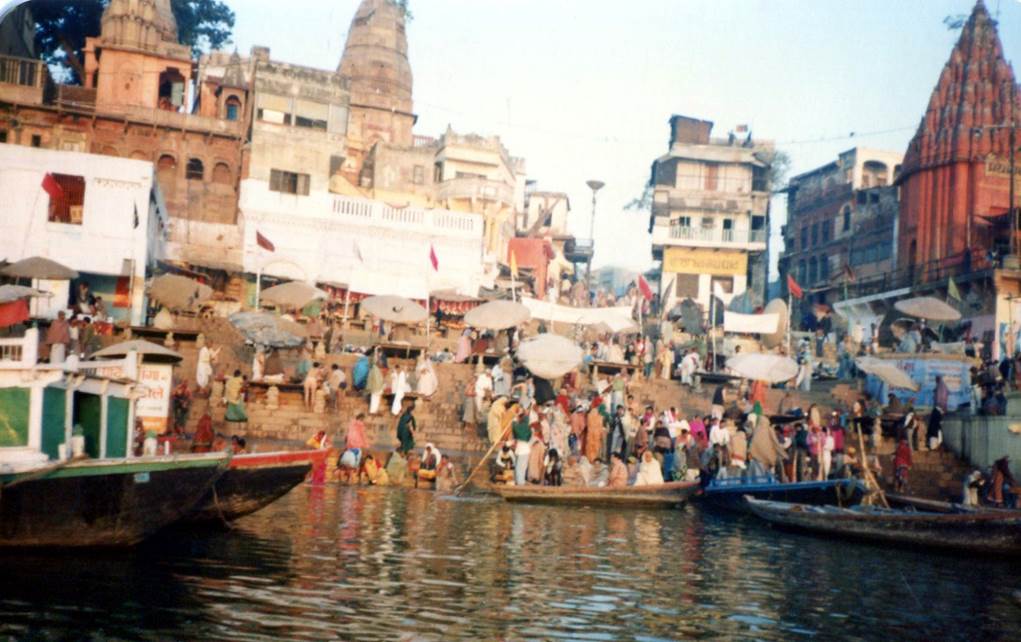
Photo by author, 1989
In the middle reaches of the Ganges River, polluted water from upstream makes it a treasure trove of bacteria and germs.
The local people seem to have acquired immunity and are not worried about getting sick.
If Japanese people who are searching for themselves were to imitate the Indians and bathe here, they would develop health problems and some would become ill.
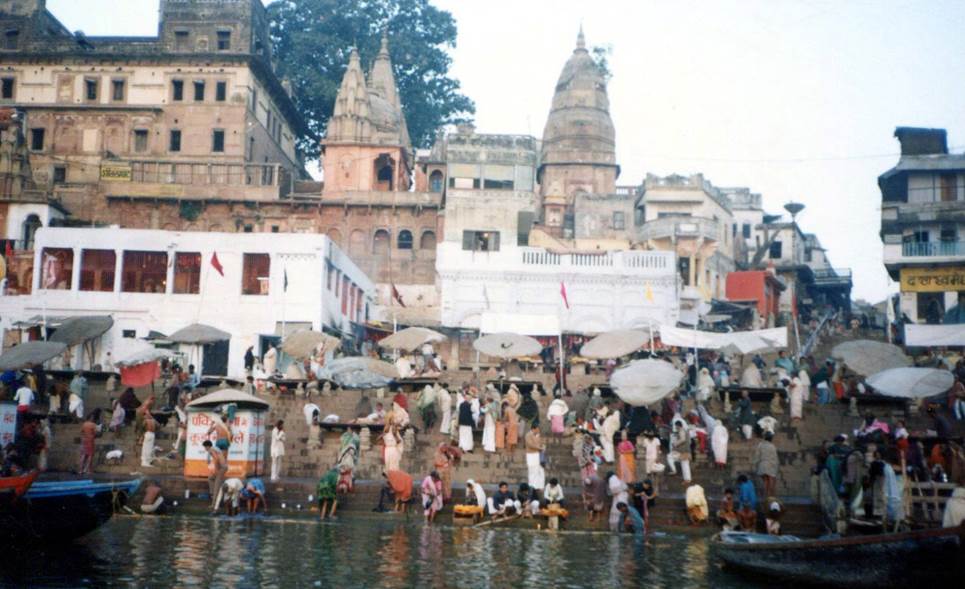
Photo by author, 1989
The ghats of Varanasi are a symbol of chaotic India. A middle-aged mother makes a fire and makes chapati (Indian bread) on a hot plate. Next to her, a child can’t hold it in and is urinating and defecating. Nearby, an old man is brushing his teeth and gargling.
Everyone around me seems to tolerate this chaotic scene. They don’t seem to mind it, as it is a normal part of their daily lives. The sacred and the secular are truly intermingled.
Photo by author, 1989
In this part of the ghat, bathing has become dense, and many people are waiting for their turn to bathe
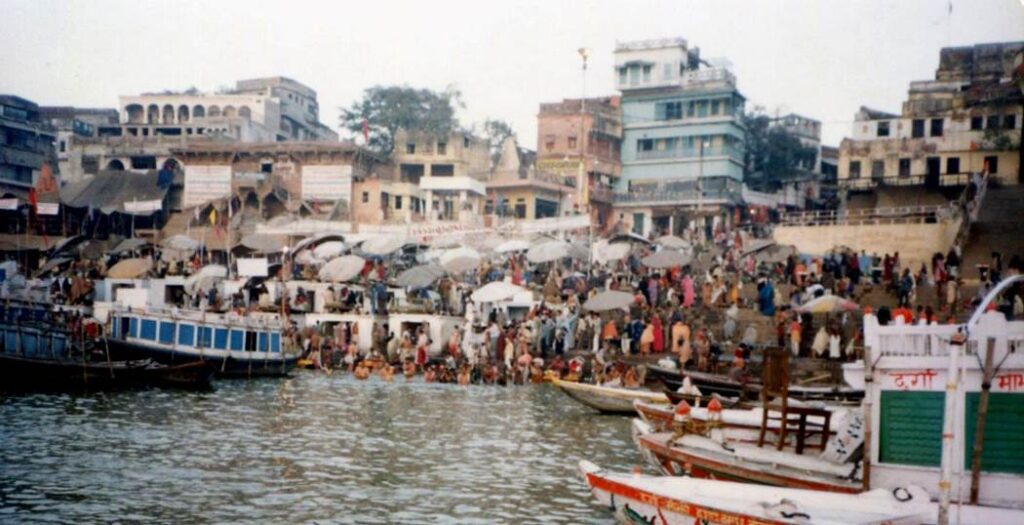
Photo by author, 1989
Near the crematorium
Those who die near the Ganga in Varanasi are believed to be able to liberate themselves from the cycle of reincarnation. For this reason, it is said that nearly 100 bodies are brought in from all over India on a typical day. The body is said to be wrapped in a cloth such as gold thread. It is also said that there are people who come all the way from all over India to make pilgrimages to this holy place and gather to wait for death.
About 650 people work in shifts at the crematorium. The deceased are immersed in the Ganga here and then laid to rest at the Ghat crematorium, and the ashes are scattered to the Ganga. A sacred fire is lit here, and people receive fire from this fire for cremation.
“ Vanarasi exists for the sake of the crematorium.
” The crematorium does not exist for the sake of Varanasi .
At the northern end of the ghats, many people were engaged in cremation. A guide took us closer. (Below) A leg was sticking out of the burning body, burning with the oil from the body.
Photography is strictly prohibited, so there are no photos.
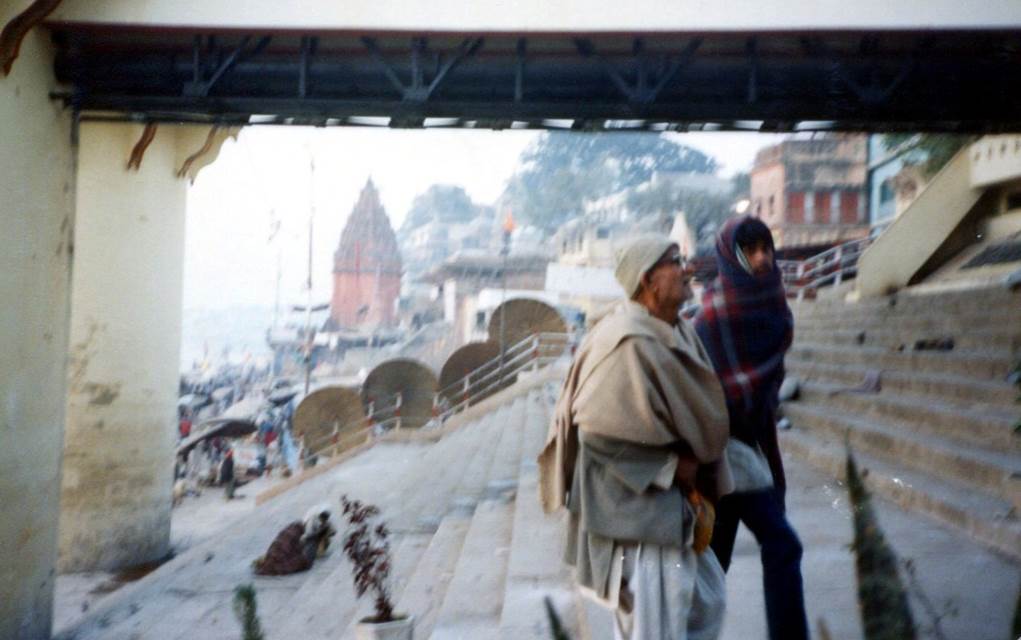
Photo by author, 1989
Firewood used to cremate the bodies is piled up haphazardly. The yellowish-brown stuff on the lower wall is drying cow dung. It’s a good eco-fuel.
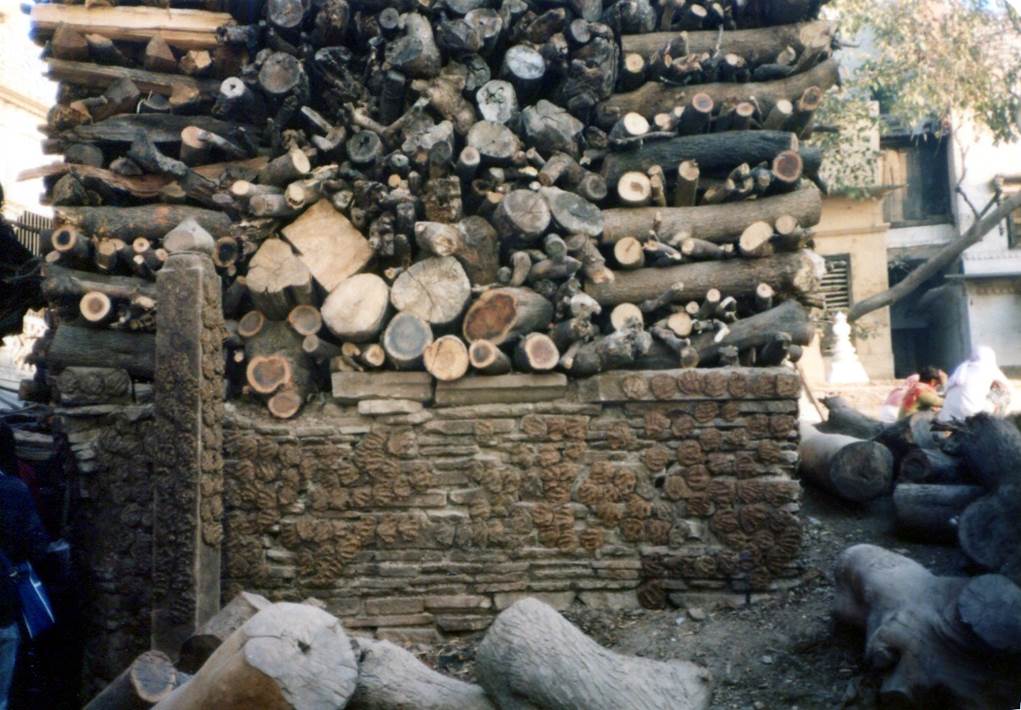
Photo by author, 1989
Spacious stepped ghat. In the early morning, the density of people is low, but by the time we leave, the density of people increases, and many beggars gather in clusters at the top of the stairs, which is the exit. There are probably more than 100 of them. It’s hard to get through a dense group of beggars. The guide had made a lot of paisa coins (units below rupees) for us and distributed them evenly to the people in line, and we were able to escape from the spot.
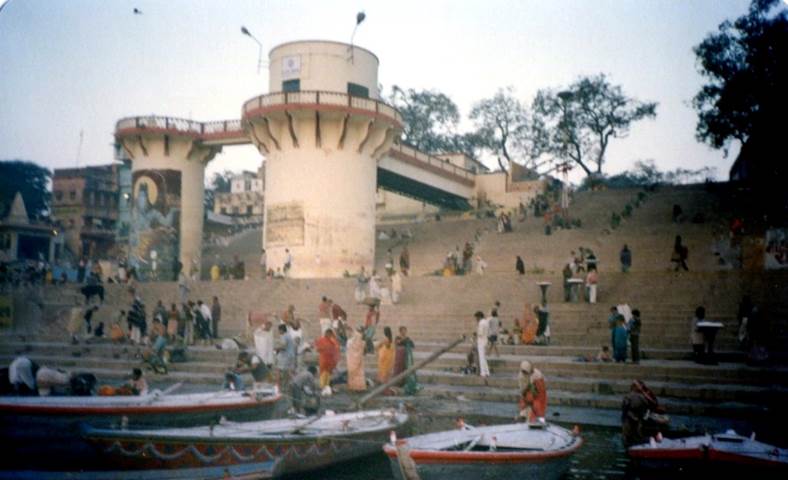
Photo by author, 1989
Indian cities are overflowing with people everywhere. This is especially true in Varanasi. This is the daytime scene on the way back from the Ganga.
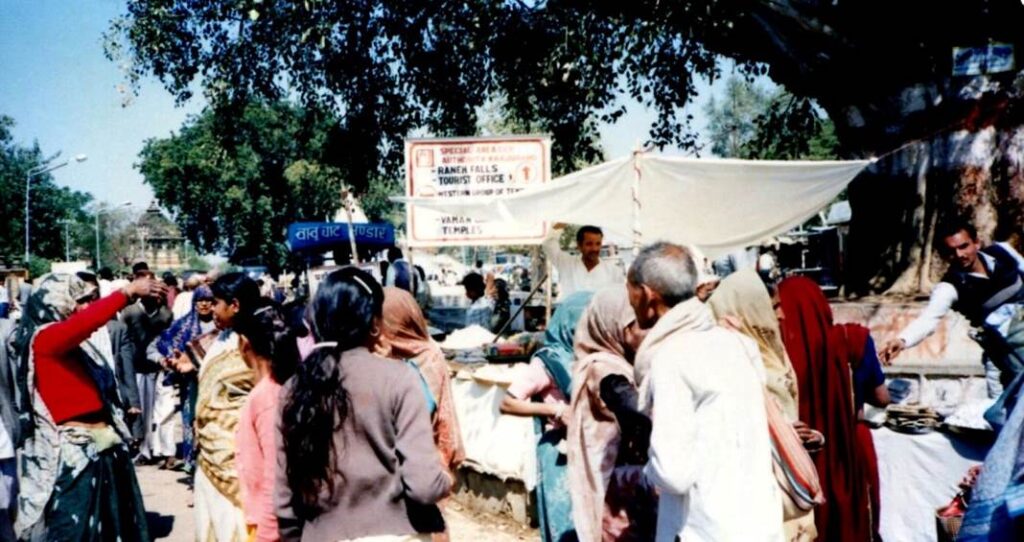
Photos taken by the author on February 10, 1989