JAP | ENG
India Travelogue 1989
#11/26
Khajuraho #2
Khajuraho temple complex and surrounding settlements
Village living space : Open Air Market
The outdoor plazas of Khajuraho are bustling with people of all kinds going about their business.
A person who sells unglazed earthenware tableware.
A person who sells flour on the ground.
Those who divide spices into small portions.
A barber with a beard.
Artisans working wood.
Woman frying and selling food.
This market is full of the feeling of village life.
There are no plastic wares in use.
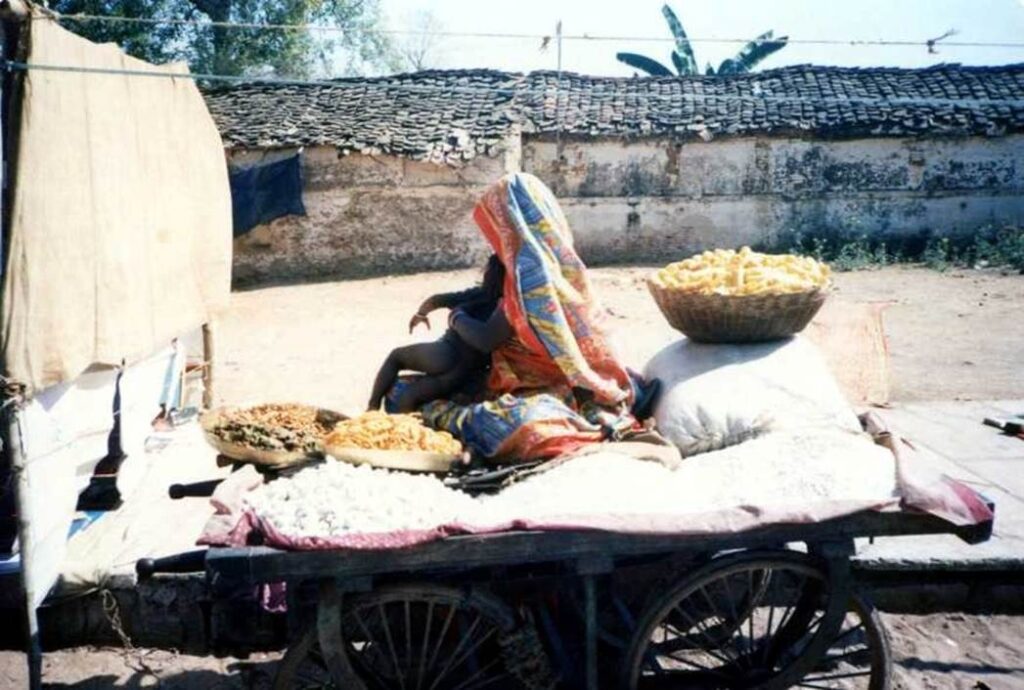
Photo by author, 1989
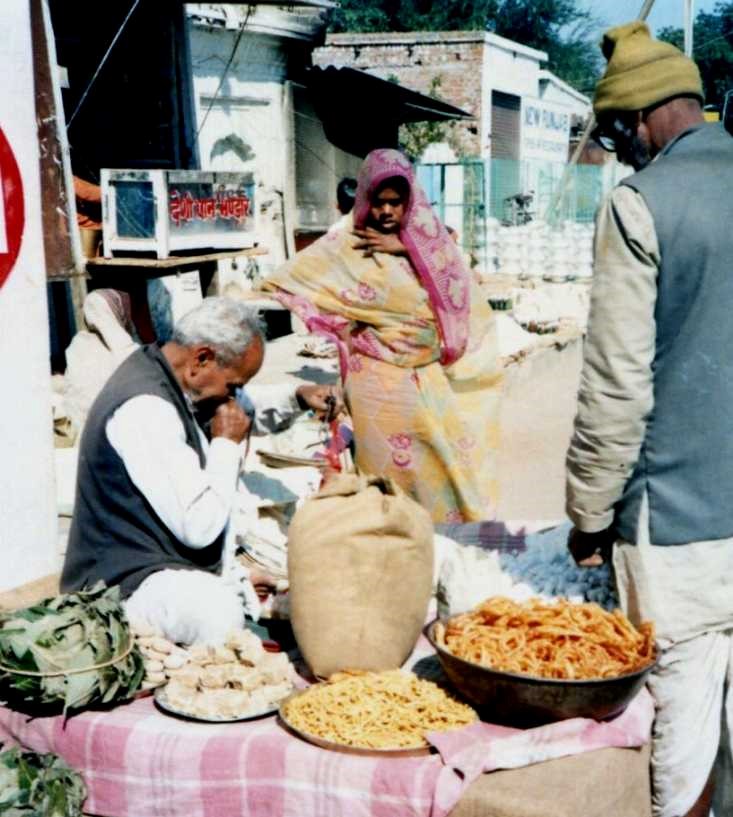
Photo by author, 1989
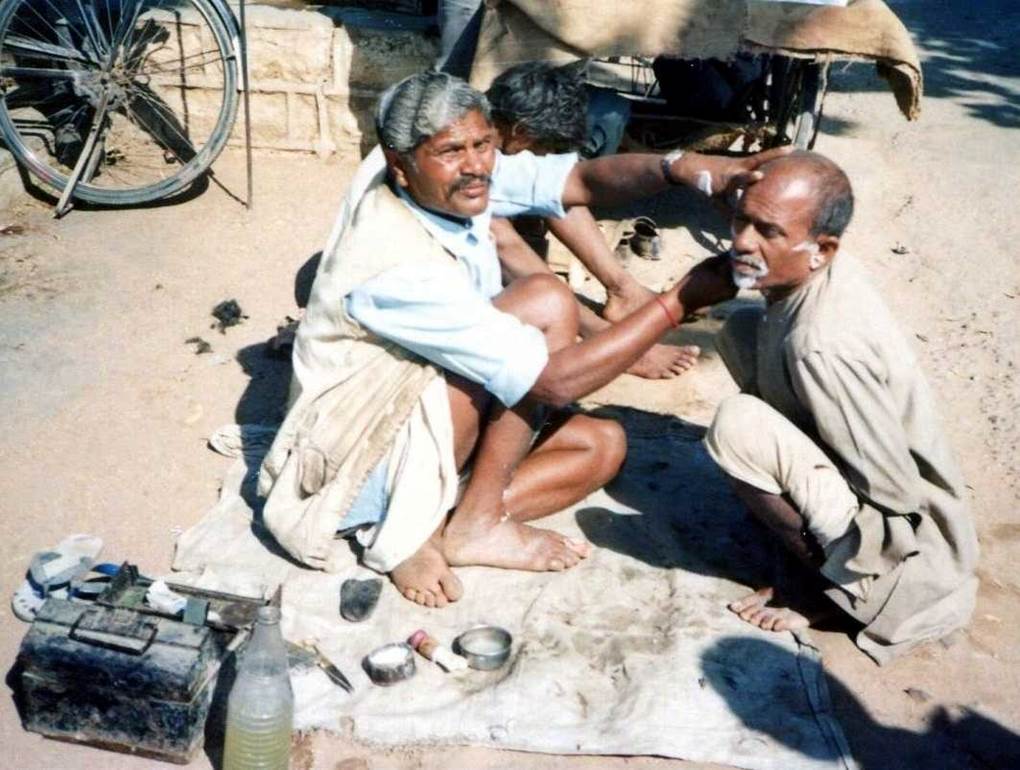
Photo by author, 1989

Photo by author, 1989

Photo by author, 1989
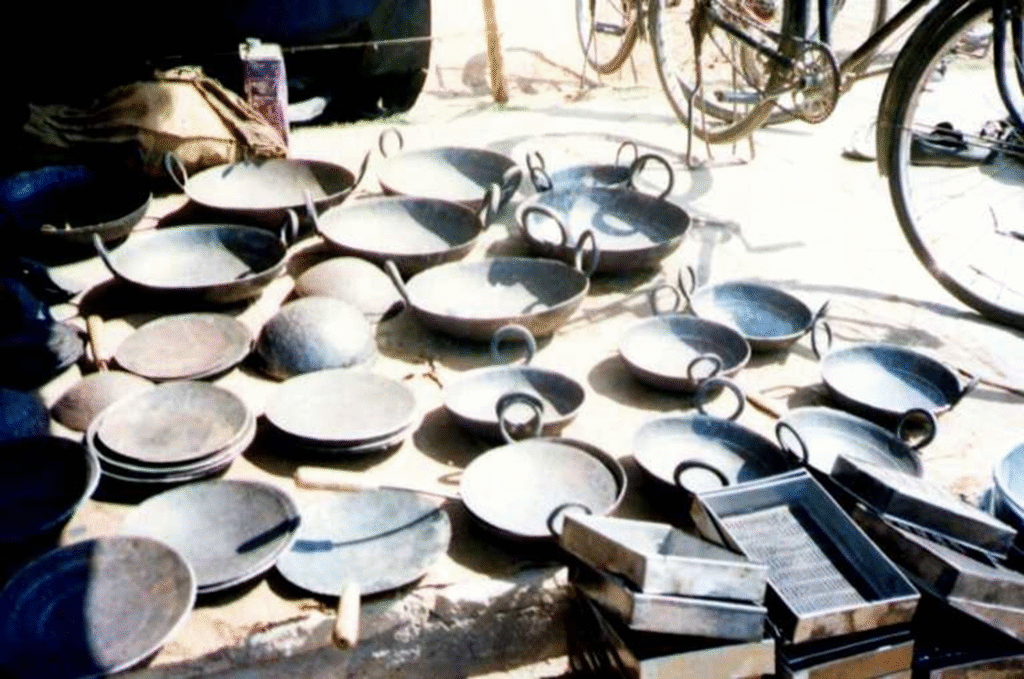
Photo by author, 1989
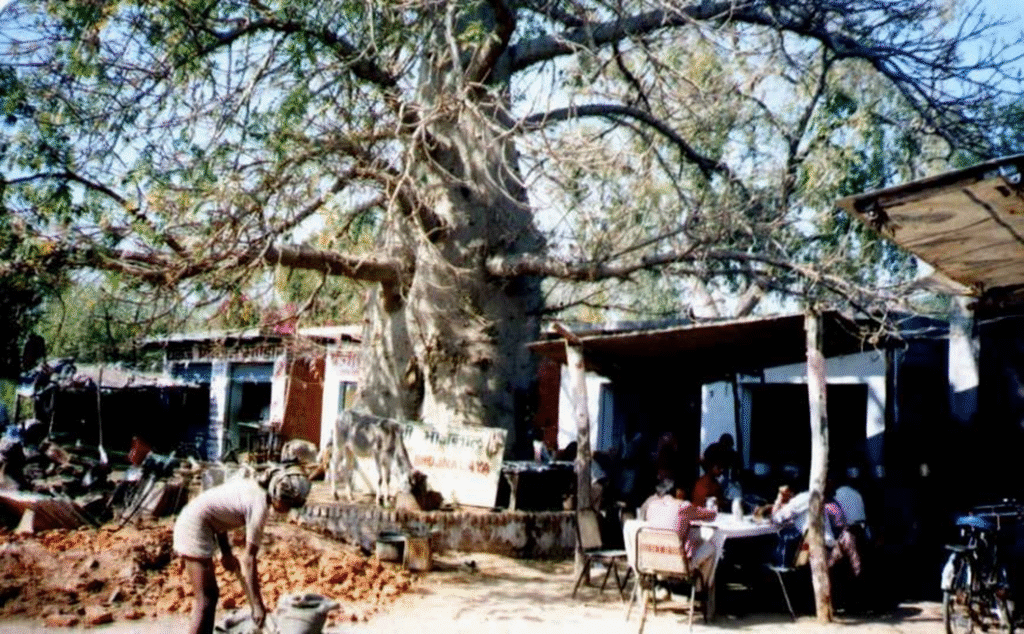
Photo by author, 1989
Village waterhole
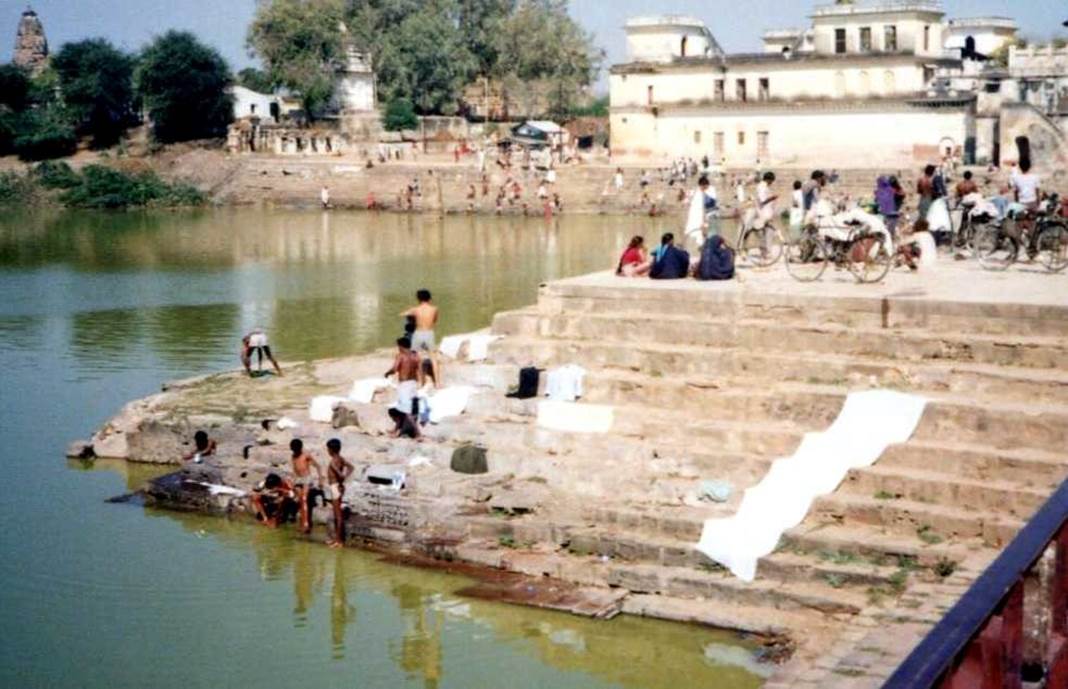
Every town and village in India has an artificial water hole like the one shown in the photo (below). Unlike the tropical rainforest climate of Southeast Asia, this is to cope with the dry season, which lasts about half of the year. The perimeter is made in a stepped shape and is called a ghat. Various activities of life are carried out on the steps of this public waterfront.
In the morning, people pray facing the rising sun. They wash their faces and brush their teeth. They knead flour on the shore, build a fire and make chapati (Indian bread) on a hot plate for breakfast.
Children bathe and swim. In the afternoon, they wash saris and other clothes and hang them out to dry on the steps. In the evening, they enjoy chai (tea) by the water and chat. It is clear that the rhythm of life revolves around these waterside locations.

Photo by author, 1989
Communal well in the village
There is a large tree such as a cherished lime tree in a corner of the village. Under these large trees there is a vein of water, so a communal well is dug.
As evening approaches, women gather from nearby houses. Fetching and transporting water is a woman’s job.
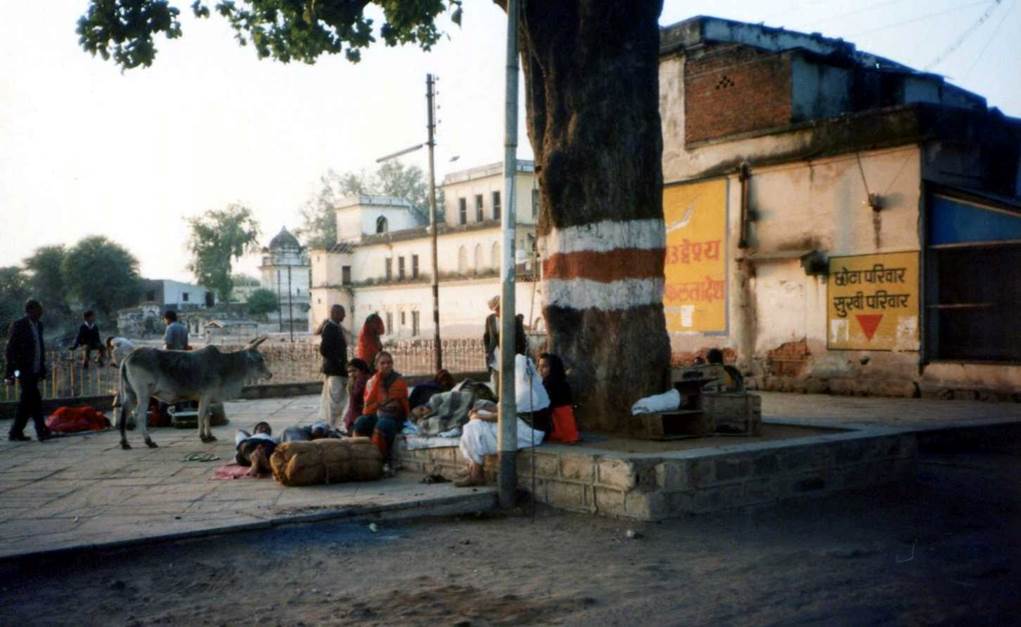
Photo by author, 1989
A galvanized iron bucket. A terracotta pot. A brass pot.
In 1989, plastic products had not yet appeared in this region.
This was the ideal world for eco-friendly living.

Communal well in the district Photo by author, 1989
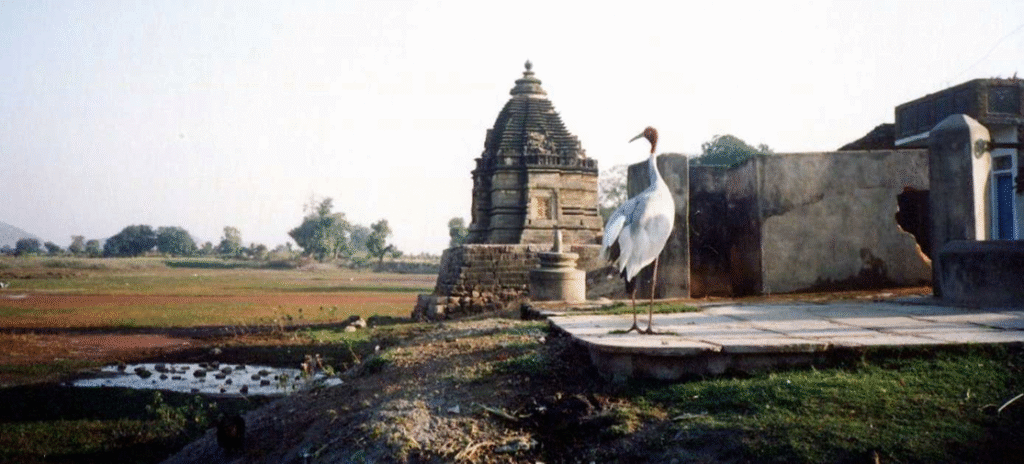
Photo by author, 1989
Cows on their way home

Photo by author, 1989
When the sun goes down, the cows go home all at once after a day’s work.
It’s a peaceful world.
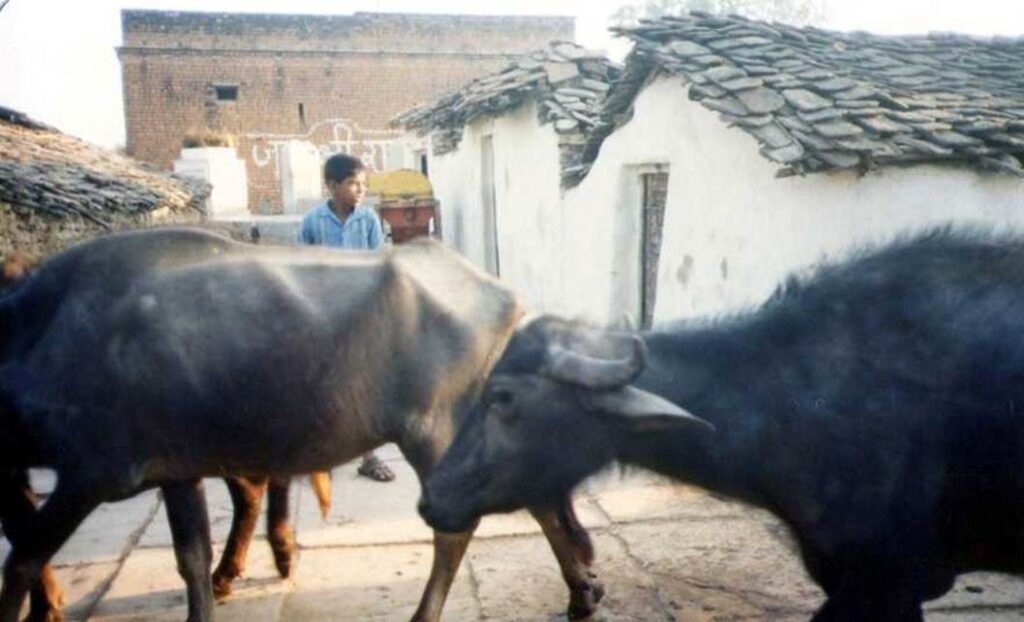
Photo by author, 1989
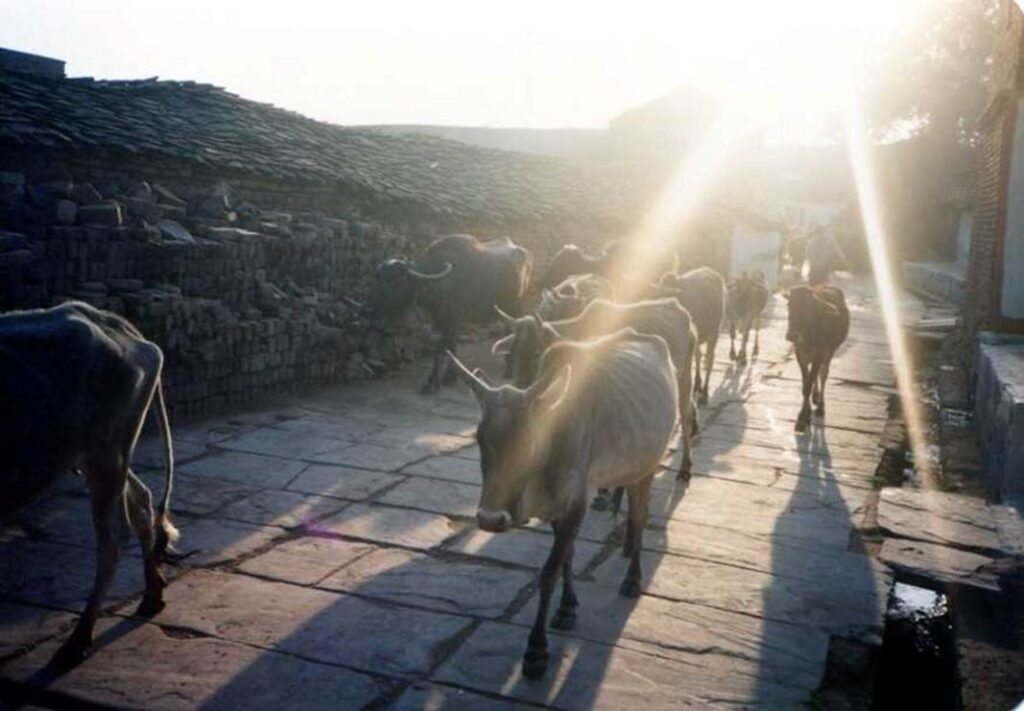
Photo by author, 1989
Villagers hurrying home.
The villagers follow the cow back home.
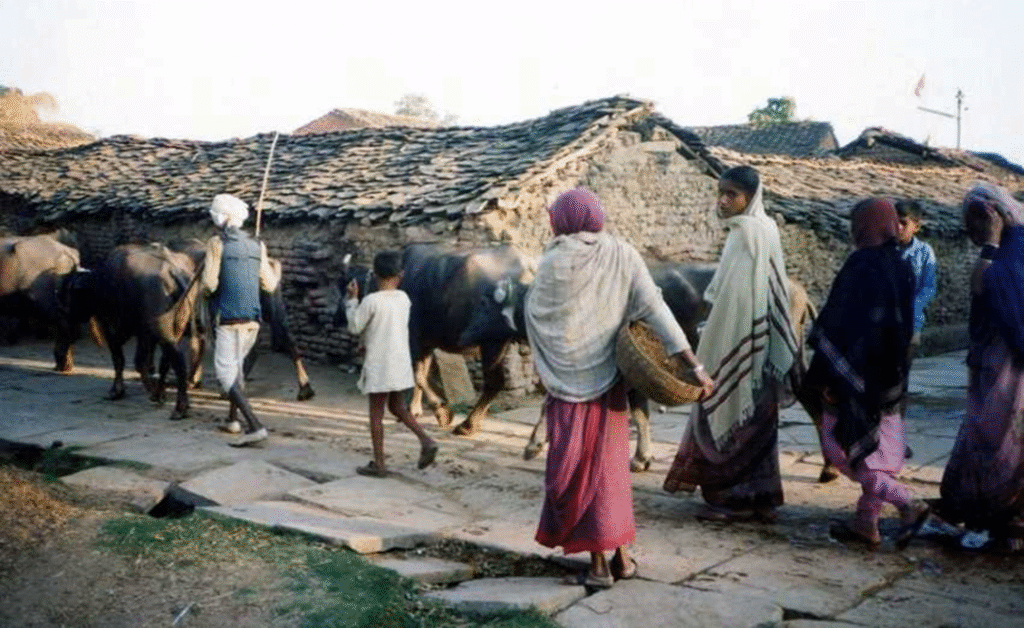
Photo by author, 1989

Photo by author, 1989
A house in a certain village. At the back is the kitchen
We asked the guide to take us to a house in Khajuraho village.
We wanted to see the kitchen.
We asked the family in the photo below to show us their kitchen while chatting in front of their house.
Before we agreed to let us in, they asked us a question.
It was about the name of the caste we belong to.
We replied through the guide that we “don’t belong to any caste.”
They seemed unable to understand that people who “don’t belong to any caste” exist in this world.
After a short exchange, we were allowed to tour the kitchen and see inside.
We refrained from taking photos inside.
On the way back from the tour, we asked the guide about what had happened, and he gave us the following explanation:
1. The kitchen is the most sacred place in an Indian home.
2. Therefore, we must not invite castes of lower classes than ourselves.
3. The reason is that when the lower caste enters, the kitchen becomes dirty.
4. It is good for people of castes above us to visit.
5. In order to invite visitors into the kitchen for this purpose, one must inquire about caste. That’s what it was.
Villagers, who have almost no contact with foreigners, believe that all people, including foreigners, belong to some caste. This is because everyone in their community belongs to some caste.

Photo by author, 1989
On the roof of a private house
Most of the villages in this area have flat roofs.
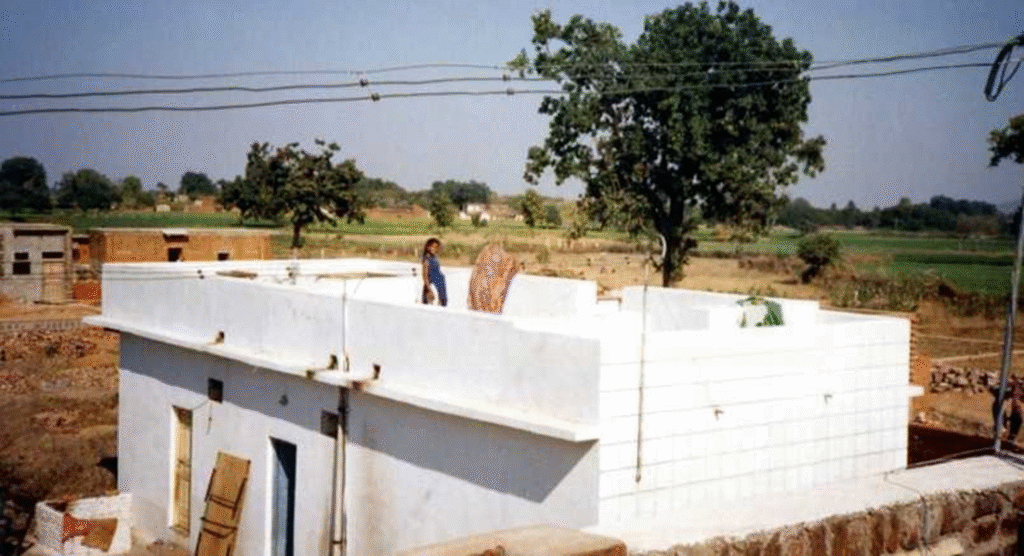
Photo by author, 1989
Construction of a private house
The construction seems to be progressing slowly.
There is no temporary fence for construction
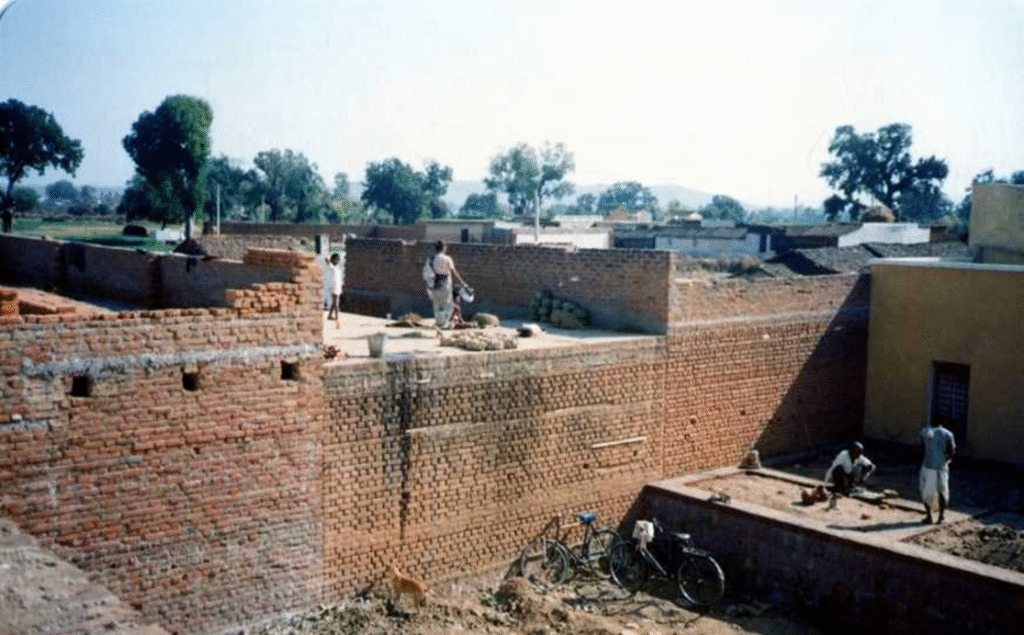
Photo by author, 1989
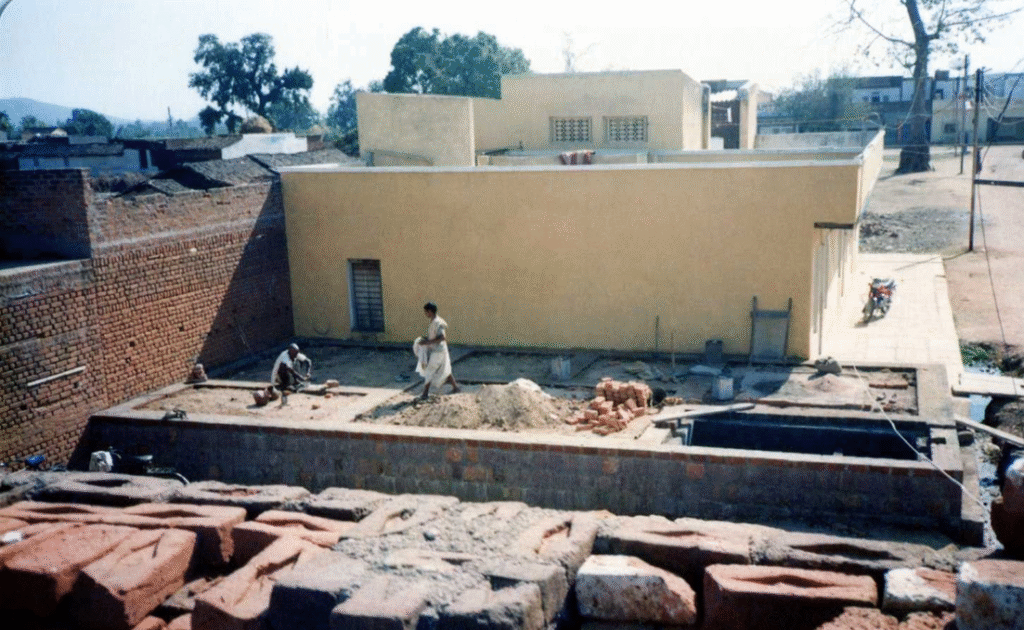
Photo by author, 1989
Small mosque
There was also a small mosque in this small village. It seems that a certain number of Muslims are also residents of this village
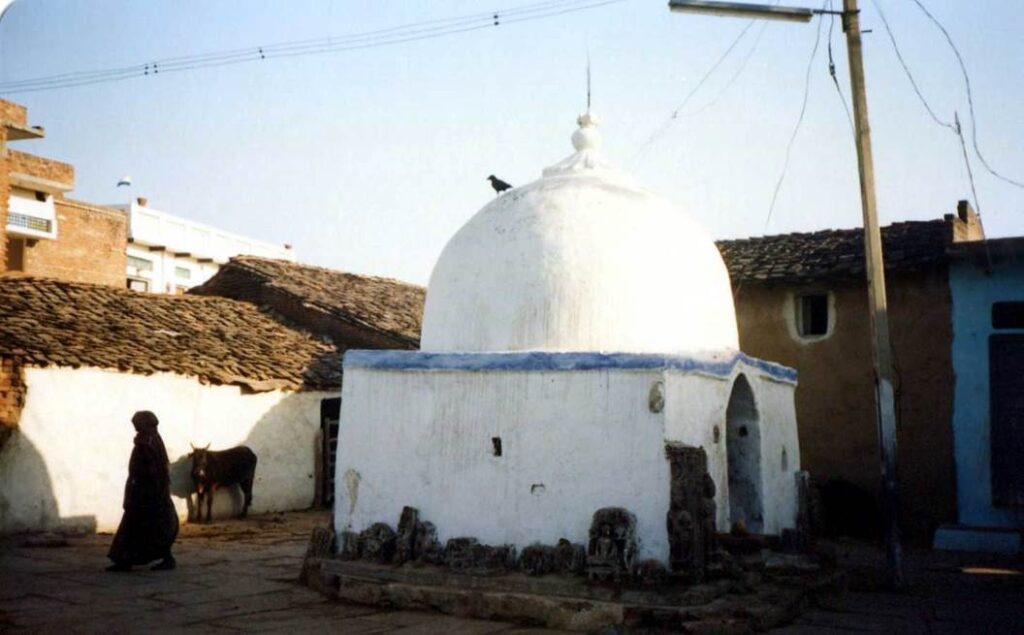
Photo by author, 1989
Building materials for private houses
Local building materials in this area.
It is kept in an open-air clearing in the village, without an enclosure.
Almost everyone in the village knows each other, so outsiders can be easily identified. Therefore, even if the material is left in the open in this way, it may be easy to prevent theft.

Photo by author, 1989

Photo by author, 1989
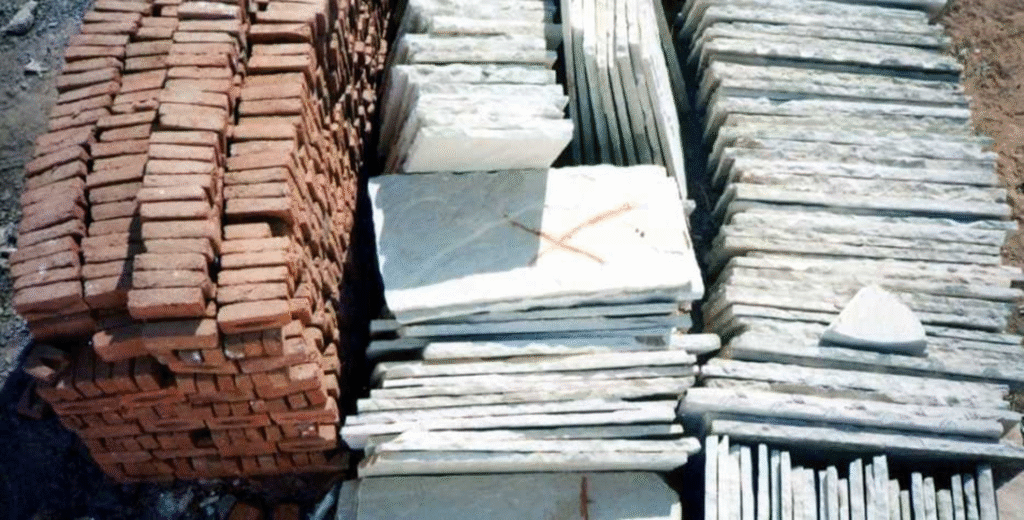
Photo by author, 1989
A child comes over and begs the rickshaw traveller for something
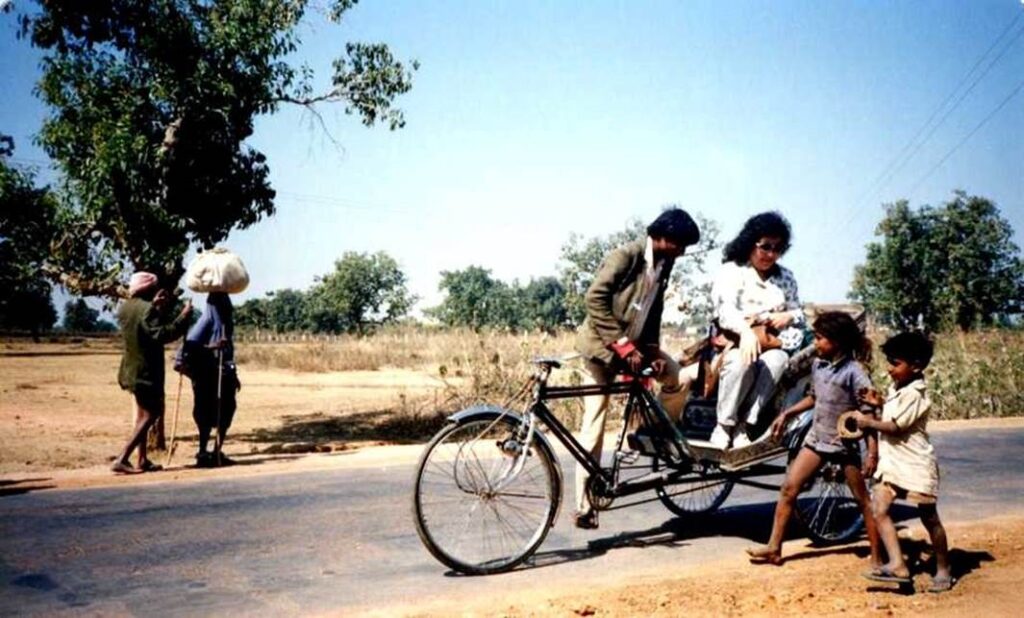
Photo by author, 1989

A child approaches and begs a rickshaw traveller for something
Photo by author, 1989
For the kids here, plastic products seem to be a rarity. They came here wanting plastic bottles and plastic bags. In particular, the plastic shopping bags with splendid handles of Japanese department stores in Singapore were the most favoured, and there was even a fight over them.

Photo by author, 1989
Far away on this rural asphalt road, a woman was squatting with her sari open. Was she looking for something she had lost?
After a while, there was no sign of her getting up. After a few minutes, she left without incident.
Suspicious, I went closer. There were traces of peeing.
I had never seen anything like this before. However, I was told that this was a normal part of daily life and not something unusual. The strong ultraviolet rays of the sun sterilize the skin and it dries quickly.
It is normal to find cow dung scattered all over the roads in this environment, so even if there is a small amount of human feces or urine mixed in, the sterilizing power of the sun will quickly render it harmless, so although it is hard to understand, it is probably within the acceptable range here.
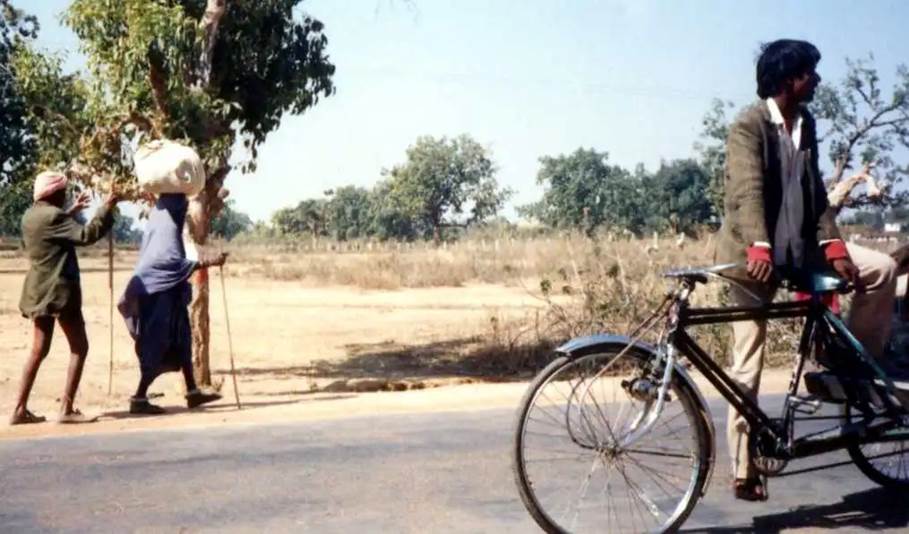
Photo by author, 1989

Photo by author, 1989
What are the bell-adorned rings lined up on the right side of the photo below?
I’ve never seen them before

Photo by author, 1989
I met a woman who wore leg rings with bells around both ankles and walked barefoot with bells ringing. The sound of the bells gives off an exotic vibe.
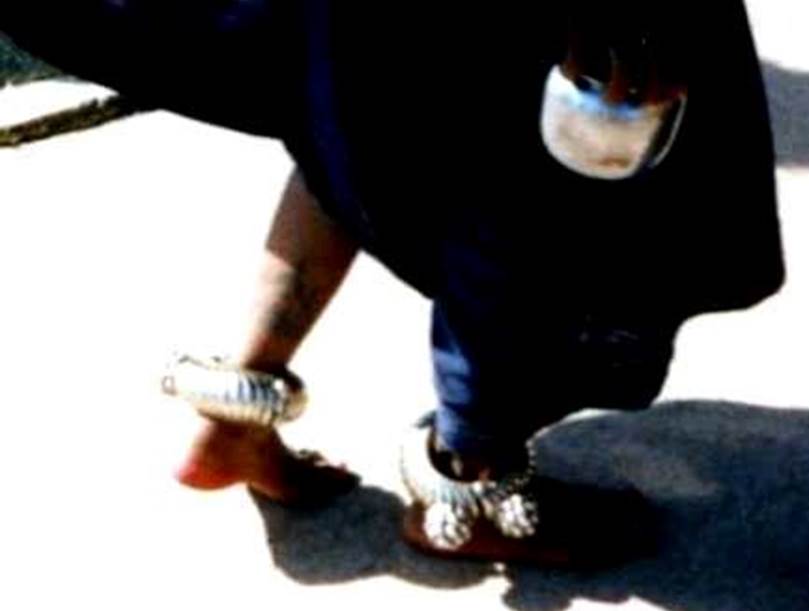
Photo by author, 1989