JAP | ENG
4 months Europe trip 1968
#6/9
Scandinavia
To the Arctic Circle
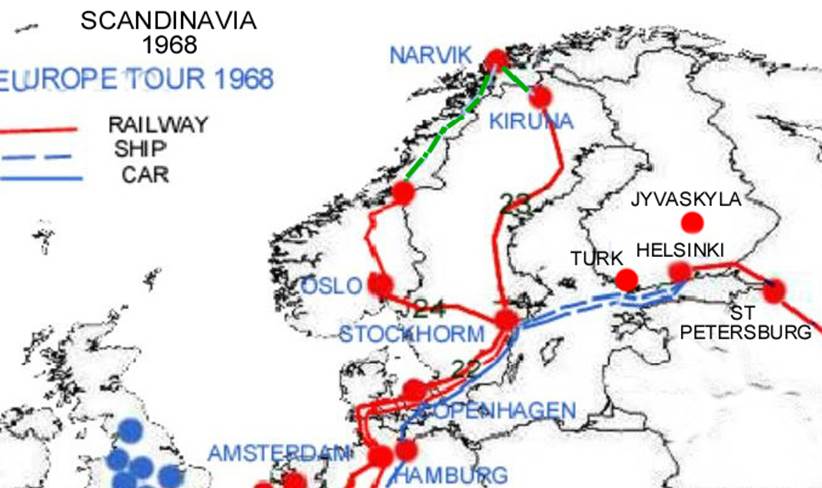
September 1968 Route map of a trip around the Nordic countries
Hamburg > train overnight (22)> Stockholm
Stockholm, September 1, 1968
Stockholm, September 1st. Visit to Yoji Kasashima. Take a motorboat ride down a lake on the outskirts of Stockholm to a small island. He told me about the architectural situation in Sweden.
I met a Japanese architect living in Sweden. His place of work is in Stockholm and his residence is on a small island in the suburbs, and he said that he travels back and forth by motorboat, and he showed me around his house. I was impressed by the unthinkable lifestyle.
(It was explained that when the ice is thick in winter, people use sleds to commute.)
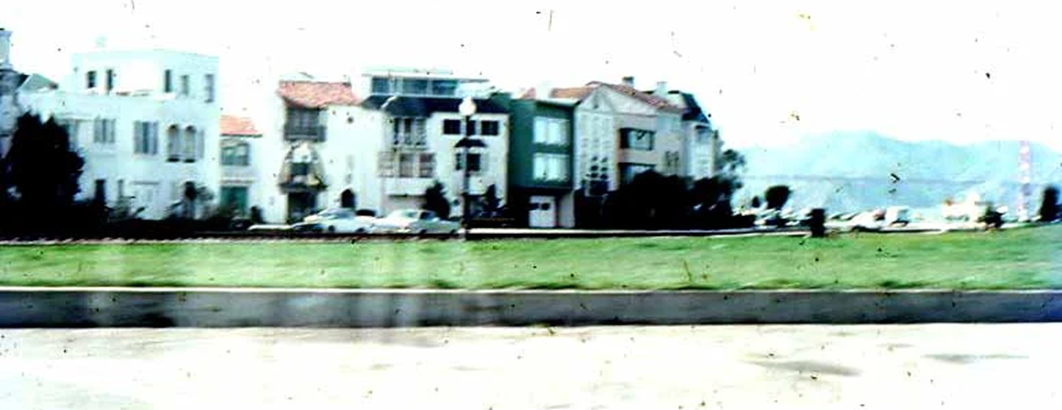
A small island on the outskirts of Stockholm,
photo by author 1st September 1968
Baltic Sea Ferry Routes
18;30 I boarded a ferry bound for Helsinki, via Turku, Finland, from Stockholm.
I met Mr. Akamatsu on the deck of the ship.
When I went out on the deck of the ferry to Helsinki in the evening, there was a person of Asian descent, so I called out to him and found out that he was Japanese.
He graduated from the Department of Architecture at a university in Tokyo and was studying abroad in Ulm, southern Germany, and was going to see Finnish architecture, so we hit it off and went on the road together.
Later, in Helsinki, we stayed together in an apartment, where we toured Finnish architecture and purchased detailed drawings of triple windows and sauna designs, which were rare in Japan at the time.
For this reason, we travelled back and forth between Germany and Finland several times.
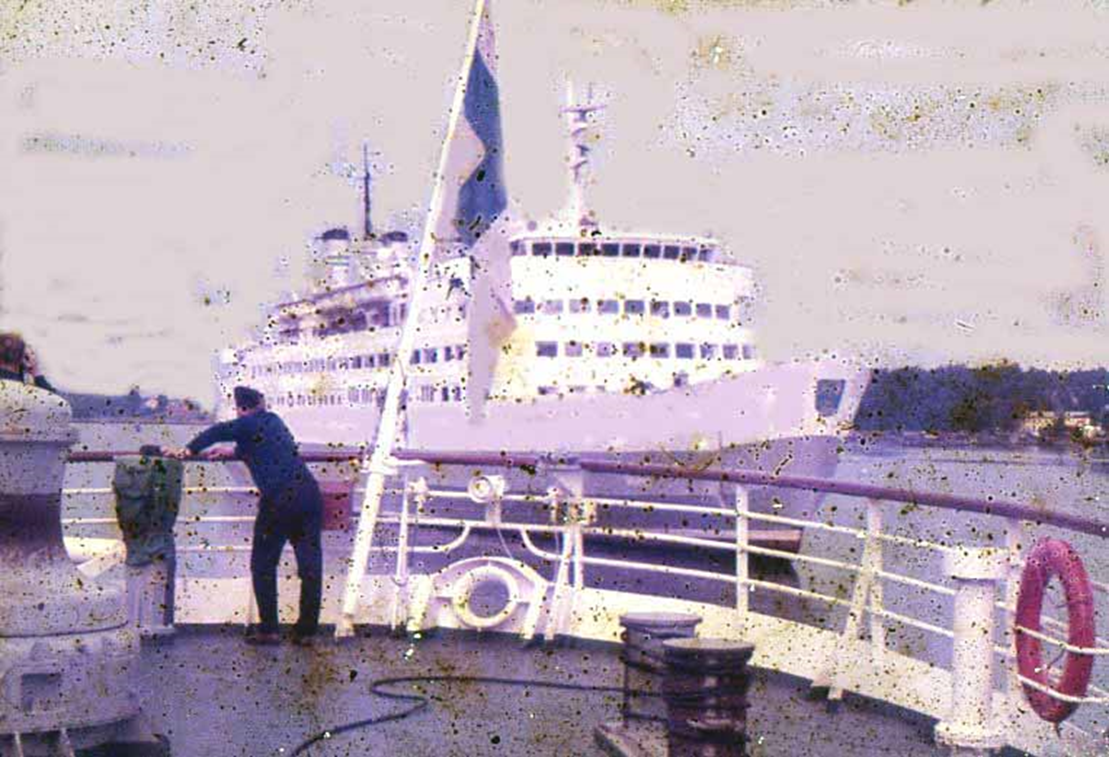
The Swedish flag flutters on the deck of the Baltic Sea ferry from Stockholm to Helsinki.
Photo by author 1st September 1968
Baltic Sea ferry routes from Stockholm to Helsinki
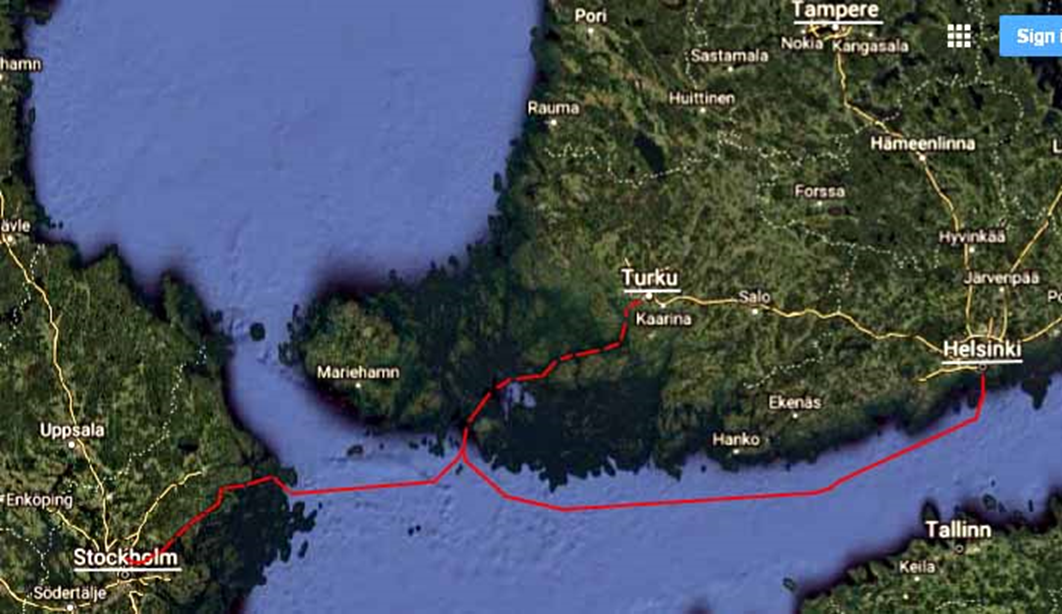
Baltic Sea Ferry Route
September 2, 1968 Helsinki Port
Arrive at the Helsinki port early in the morning.
13:30 Visited Mr. Larmo of the Architectural Association, the Cathedral, the Statue of Alexander II, the Olympic Stadium, and the Gymnasium.
September 3, 1968, Helsinki
Helsinki Blomktedt (Tapiola) Heikki Siren (Lauttasaari)
Lautta Island
Lauttasaari is an island surrounded by the sea and rich in nature.
Even though it is an island, there is a metro line, and it takes three stops from Helsinki Central Station to reach Lauttasaari Station.
There is a forest right next to the apartment, and once you pass through the forest, you will see the sea in Lauttasaari.
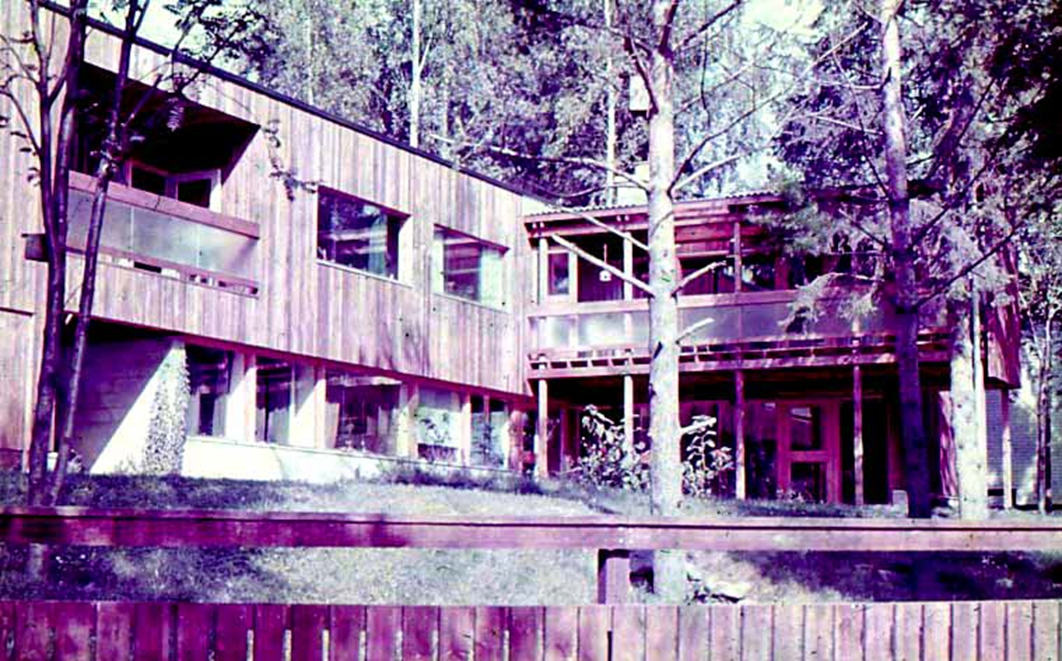
Photo by author, 3 Sept 1968
Aalto House / Home and office in Helsinki
Alvar Aalto (1898-1976) is best known as one of the world’s leading architects and designers of the 20th century.
He is a leading expert in modern Scandinavian architectural design.
In addition to architecture, he was involved in a wide range of designs for daily necessities such as furniture, lighting fixtures, and tableware.
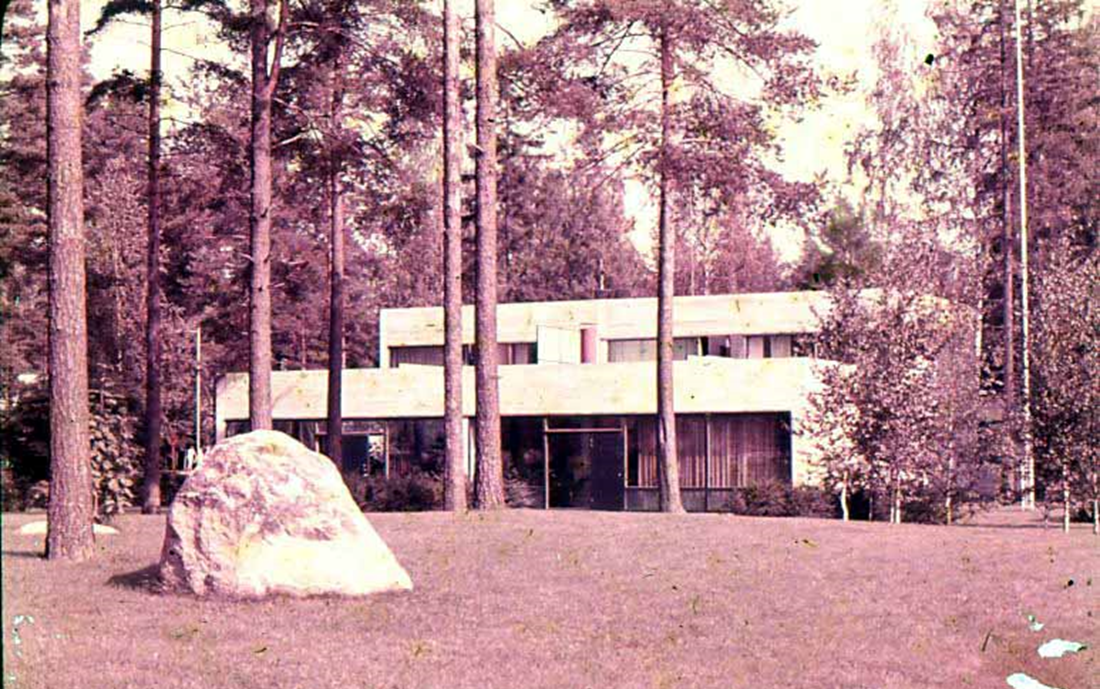
Photo by author, 3 Sept 1968
September 4
Helsinki Lundsten (Bear Island) Ruusuvuori Juhani Katainen
Karhusaari is an island near Helsinki
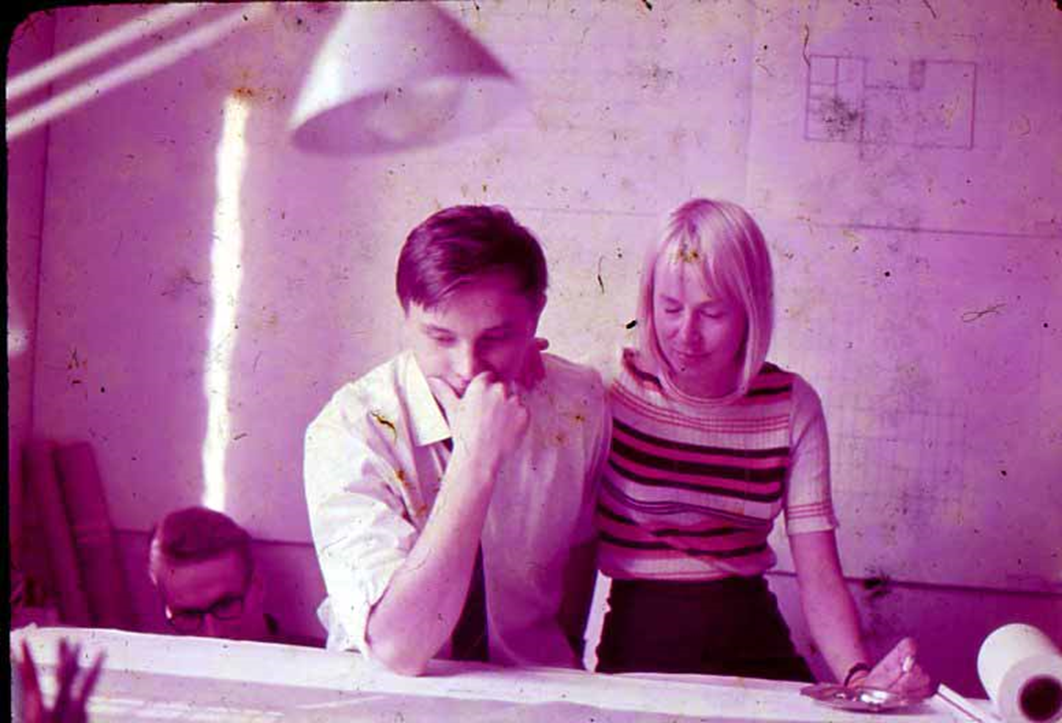
An architect couple in Helsinki, photographed by the author
Helsinki Architecture Office

Finnish motorway, Photo by author, 5 September 1968
September 5, Helsinki
September 6, Helsinki 11; 00 Ruusuvuori Korhonen
September 7, Helsinki Tapiora Bromstedt Ervi Korhonen Ruusvuori Otamieni Aarto Muratosaro Tivori
September 8, Helsinki Hivinkaja Ruusvuori
September 9, Helsinki Aarno Eevi Rengt Jundusten
Stockholm 1968
September 10, 1968 8;30 arrive Stockholm, sightseeing in the city such as the royal palace. Stockholm 16;55 depart
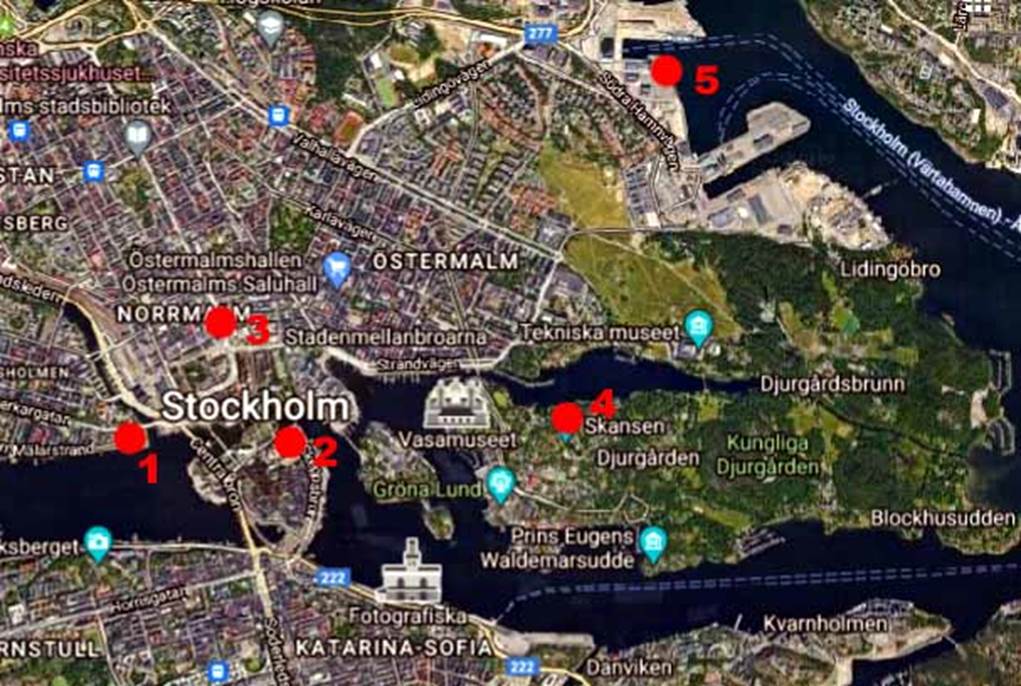
Downtown Stockholm
1, Stockholm City Hall 2, Royal Palace 3, Downtown Stockholm
4, Skansen Open Air Museum 5, Wharf to Helsinki
1, Stockholm City Hall
This is where the Nobel Prize winner’s banquet is held.
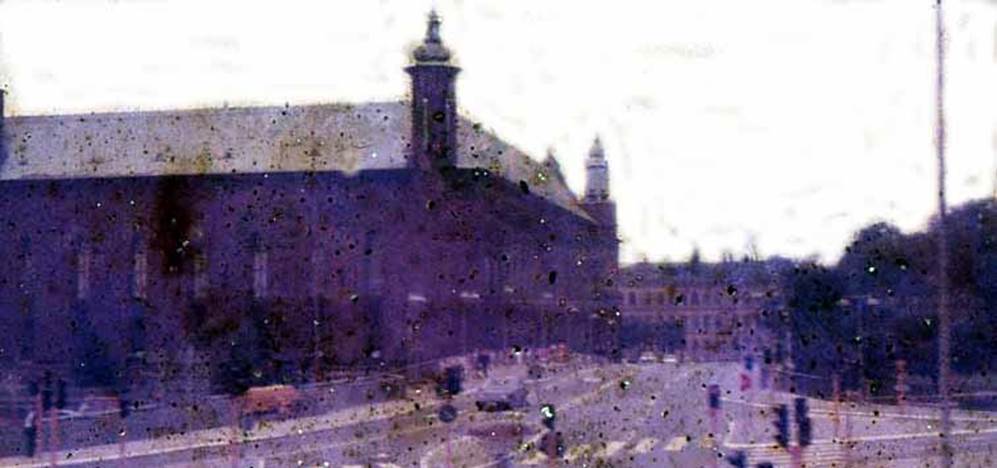
Stockholm City Hall photo by author, 10 September 1968
2 Royal Palace
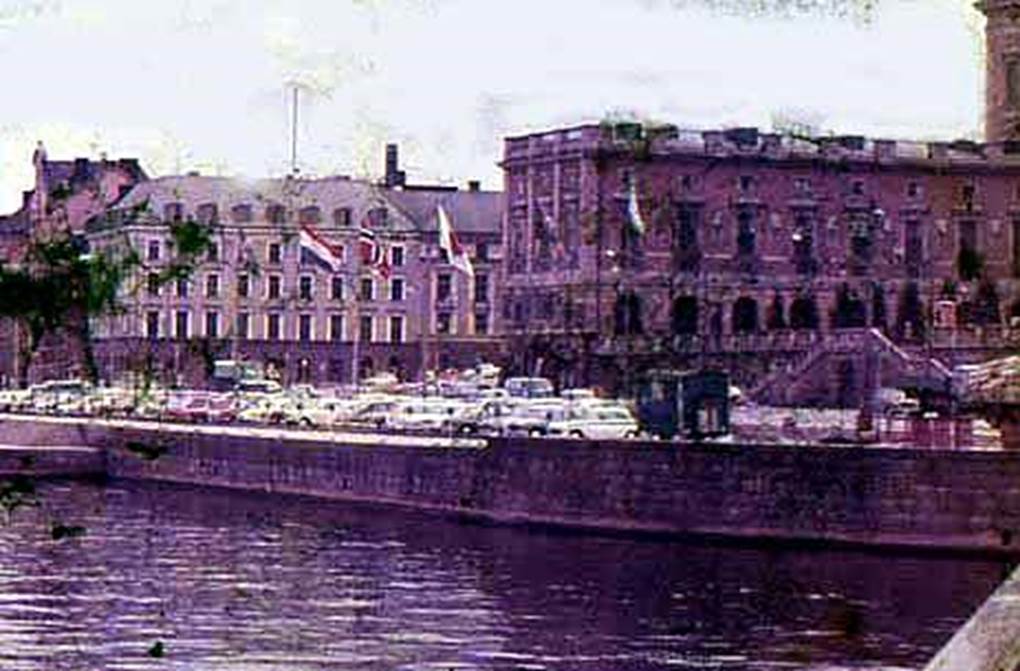
Stockholm, Photo by author, 10 September 1968
3 Stockholm Main streets
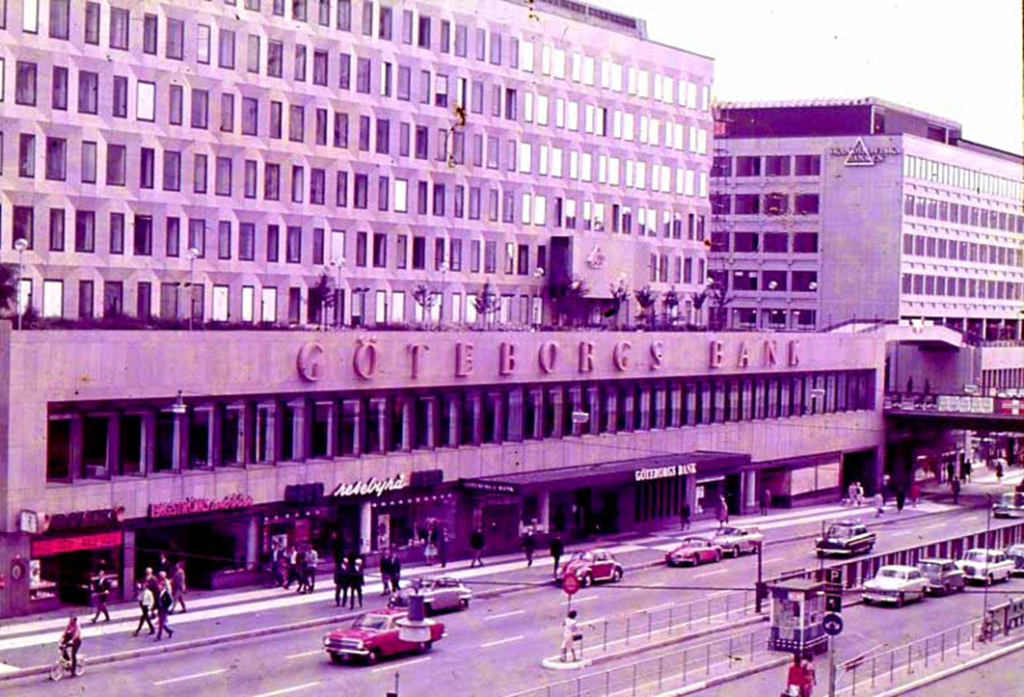
Buildings in downtown Stockholm,
Photo by author, 10 September 1968
Stockholm again
September 14
Stockholm Housing Complex Tour, Skansen. Stockholm 21;00 depart
4. Skansen Open Air Museum
Skansen Sweden’s first zoo and open-air museum
Hazelius traveled throughout Sweden and bought about 150 houses.
They were dismantled, transported by boat, and reassembled on site to recreate a traditional Swedish landscape.
Visitors can enter all the buildings and get a glimpse of life in various parts of Sweden in the past.
These buildings are wooden buildings, unlike those made of stone in Central Europe, so they have something in common with the architecture of ancient Japan.
At that time, people in remote areas in the north of Europe lived in wooden houses like this.
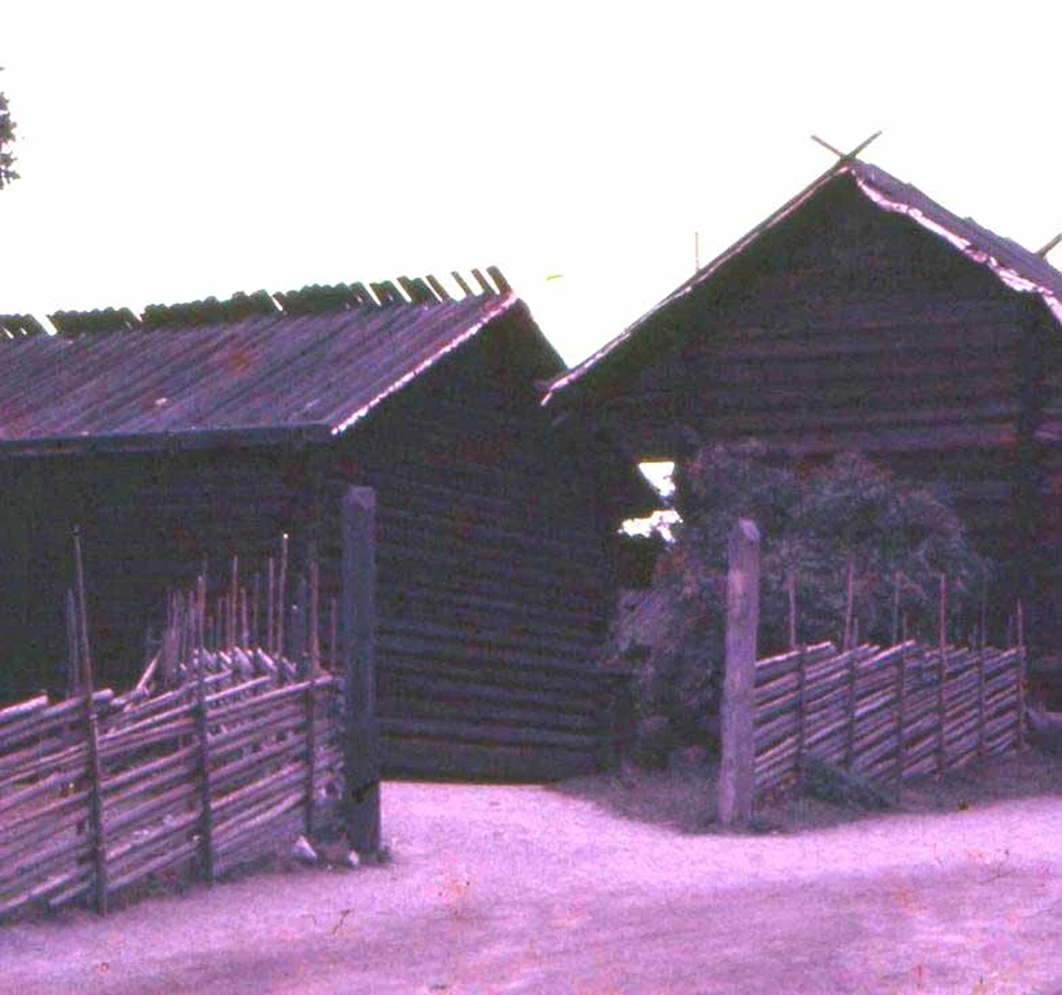
Stockholm Skansen Open Air Museum,
Photo by author 14 September 1968
5. Helsinki’s wharf
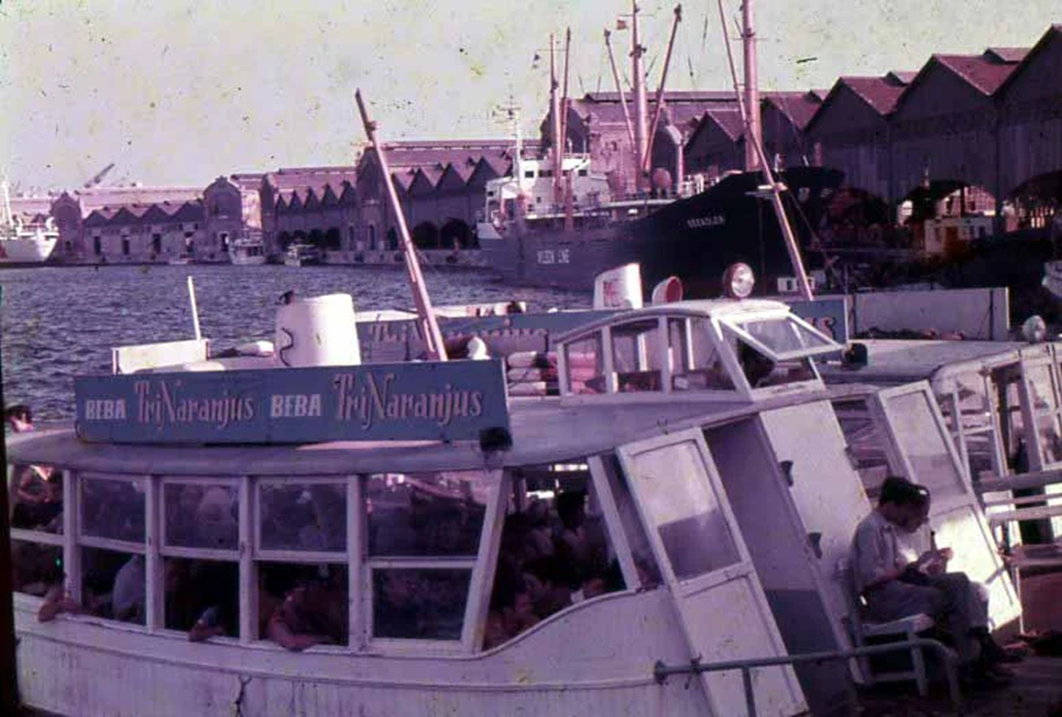
Stockholm Waterside Warehouses,
Photo by author, 10 September 1968
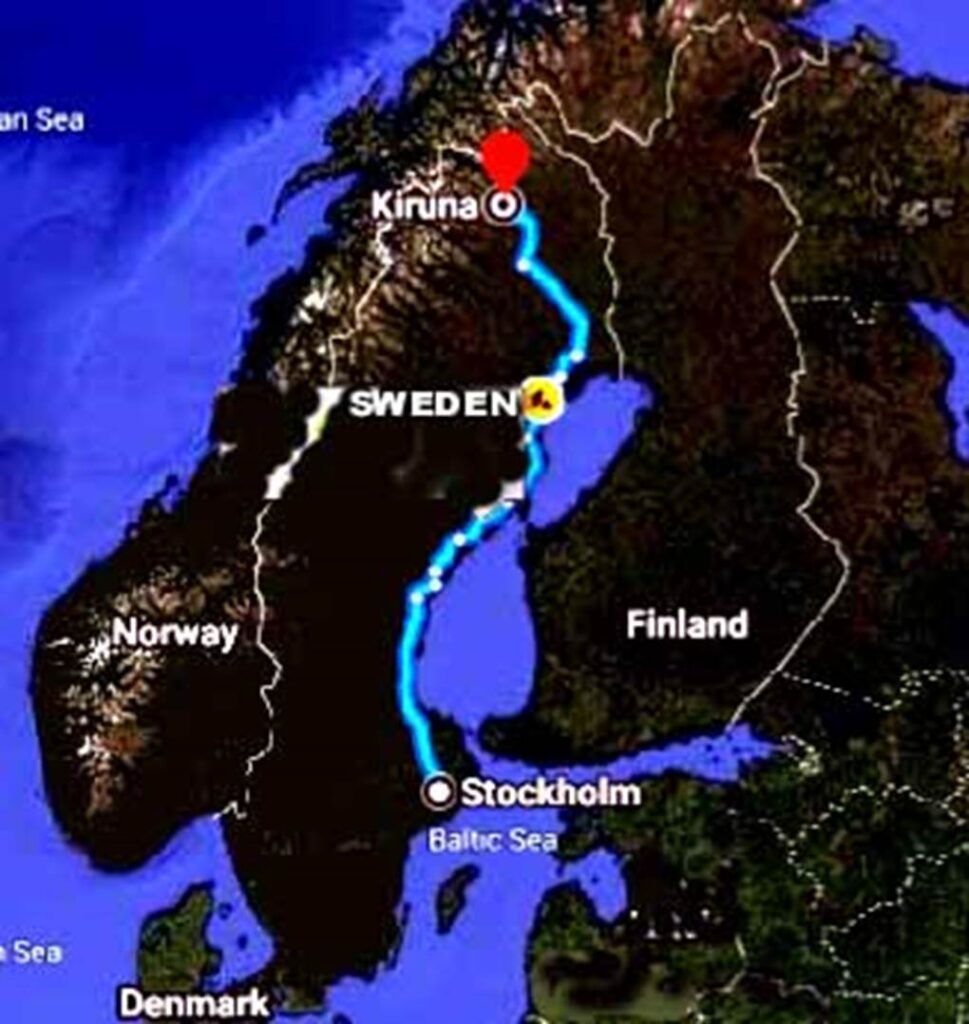
10 September, Stockholm 16;55 departures> train overnight 23 > 11 September 13;00 arrive Kiruna
1,200 km north of Stockholm to the Arctic Circle.
From Stockholm, I decided to visit the Arctic Circle in northern Sweden.
The mileage is about 1,200 km, which is equivalent to the route between Tokyo and Sapporo. The train journey took about 20 hours. The inside of the car was clean.
Even after dayfall, the train continued through the birch forests of Scandinavia, and unlike those in southern Europe, the passengers inside were silent.
However, after that, the atmosphere inside the car changed completely.
A group of people boarded the train from a station on the way.
Then, the silence in the car changed completely and became lively.
The conversation of the group passengers was in Spanish, which was not matching for the scenery outside the train window.
The birch forests and quiet passengers seen from the train window in Northern Europe.
The olive groves and chatty Spanish and Italian seen from the train window in Southern Europe.
Even though they are both in Europe, there are so many differences !
Kiruna, Sweden
September 11 13;00 arrive Kiruna.
A new city suddenly appears in Lapland. 21;12 arrive Narvik.
Overnight at a youth hostel.
Kiruna is an iron mine located in the Arctic Circle, north of Sweden at 67.8558° north latitude. It is famous for its high-quality ores and magnetite.
More than 2 billion tons of ore reserves. Mining began in 1885 and developed rapidly in the 20th century.
The ore is transported to the Norwegian Atlantic Ocean by the Lapland Railways for export. (There is no ice-free port in the Baltic Sea on the Swedish side.)
The town of Kiruna is, tourists are rare, of course.
In such a farthest place in the Arctic Circle, I met three young people from California, USA.
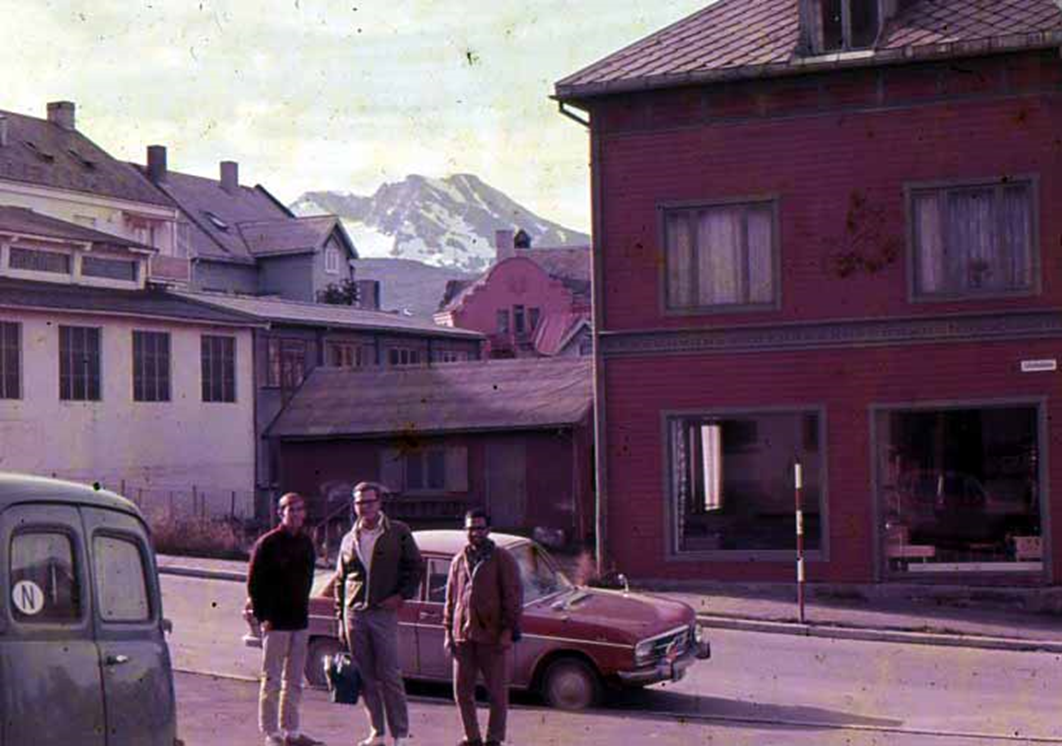
Photo by the author 11 September 1968
Port of Narvik (Norway)
September 11 13;00 arrive Kiruna.
A new city suddenly appears in Lapland. 21;12 arrive Narvik.
Overnight at a youth hostel.
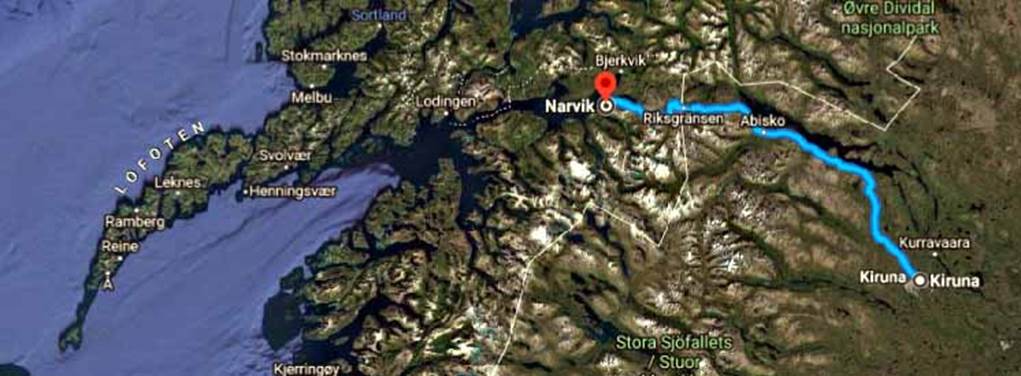
Located in a fjord, Narvik is an ice-free port, and the deep waters allow large ships to dock alongside, making it very convenient to use.
The fjord cuts deep into the land. The sunsets are very beautiful. Many ships that sank during World War II remain around the port and in the fjord.
Sun setting over the fjord, around 3 p.m.,
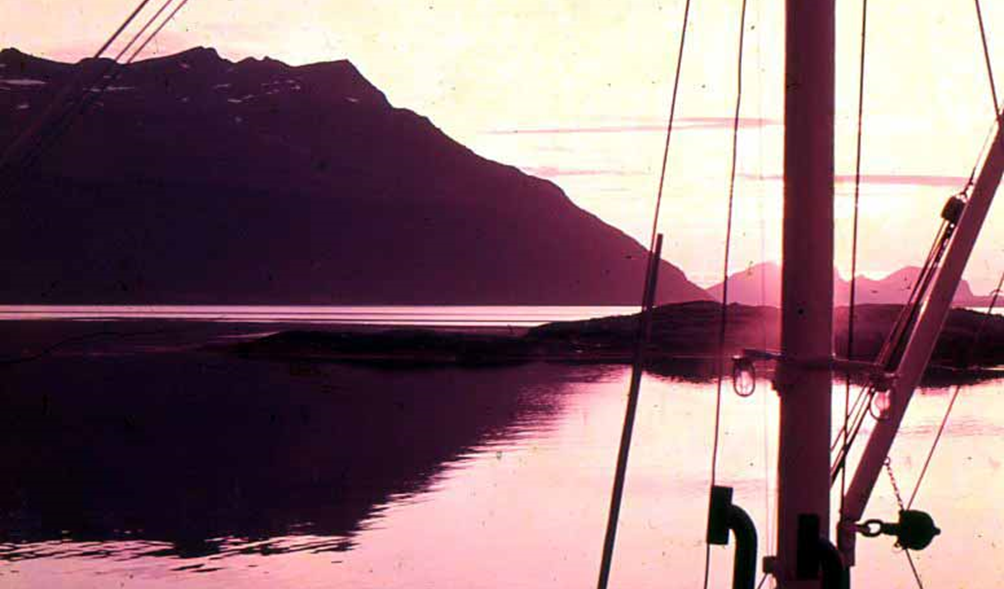
Photo by author, 11 September, 1968
Port of Narvik.
A huge conveyor belt and a ship loaded with iron ore
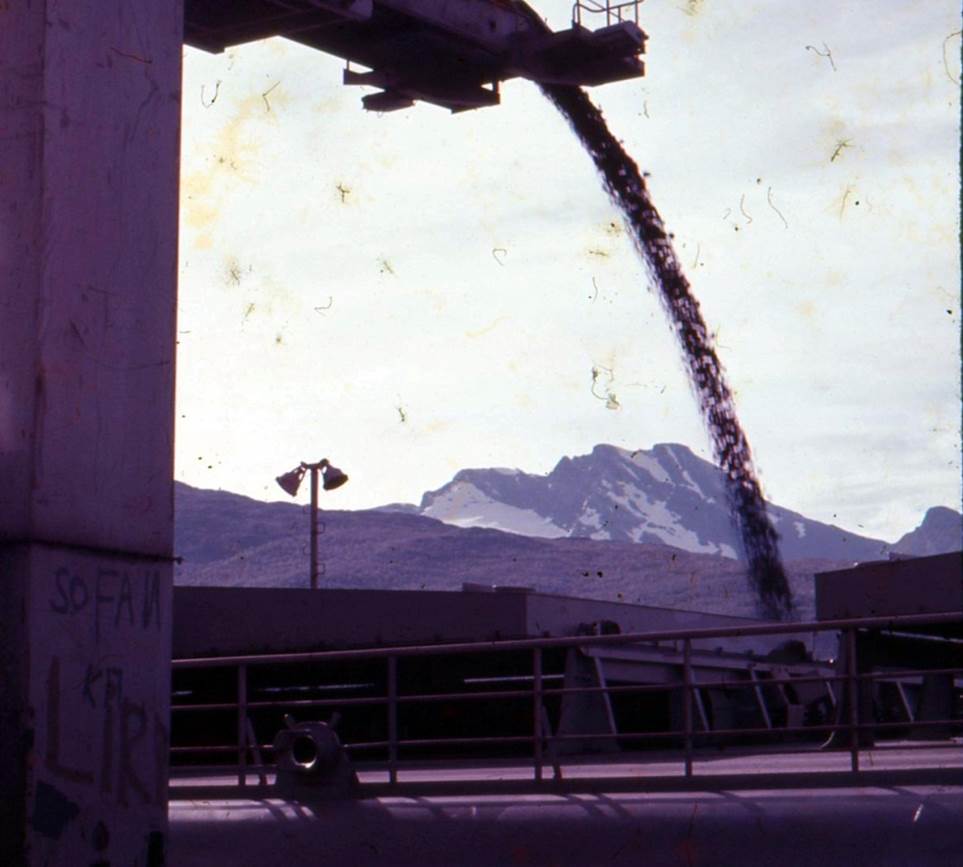
Photo by author 11 September 1968
September 12
Narvik 13;30 depart, 21;10 bus arrive Fauske. Fauske 21;30 depart
September 13
9;10 arrive Trondheim. Trondheim 10;40 depart. 21;15 arrive Oslo.
Oslo 23;15 depart
A view from a Norwegian train window near Oslo.
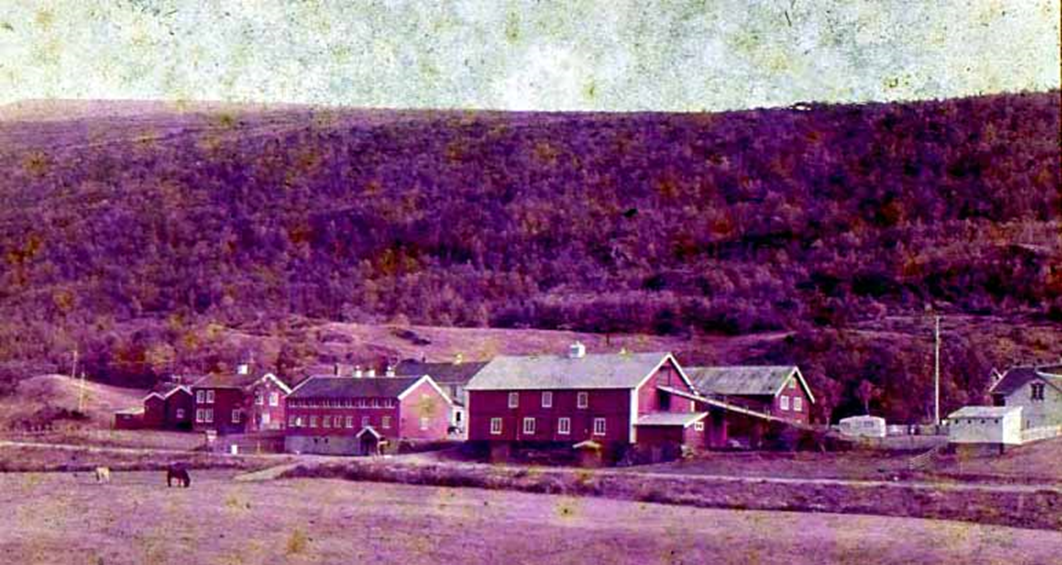
Photo by author, 13 September 1968
It is very similar to the scenery of the mountain windows of Yamanashi and Nagano prefectures in Japan.
View from Norwegian train window,
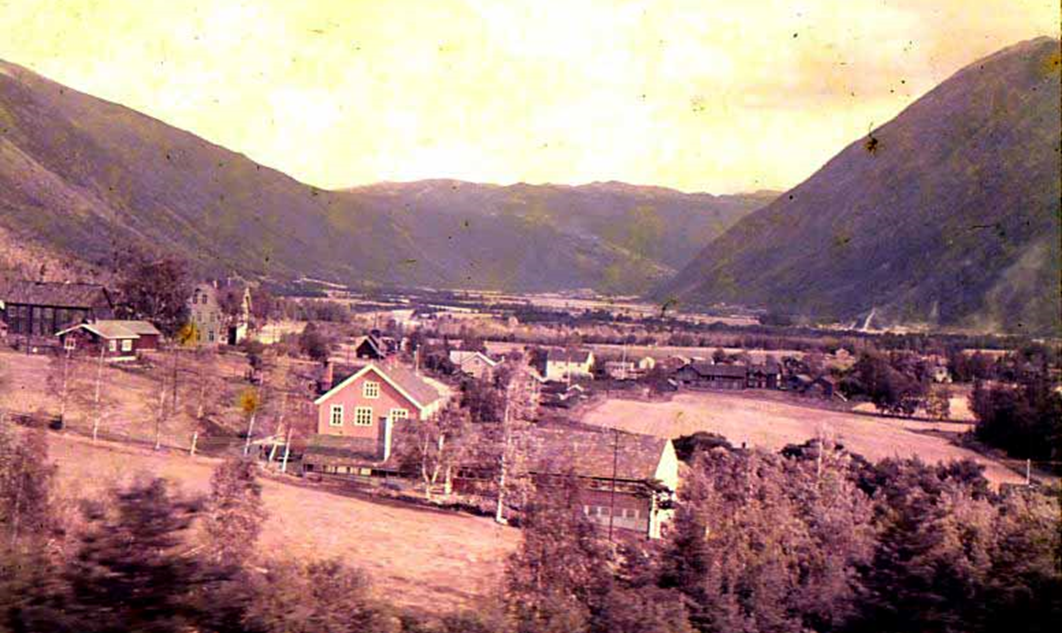
Photo by author, 13 September 1968
September 13, Oslo 23;15 departures>overnight trains (24) >
September 14, 7:14 arrive Stockholm