JAP | ENG
4 months Europe trip 1968
#5/9
From Barcelona, I travelled through Lyon, Geneva and Lausanne to Venice.
August 26 Barcelona 19;15 depart, Celebre 23;45 depart > Overnight on train from (17) > August 27 7;21 arrive Lyon
August 27 7; 21 arrive Lyon. St Juan Hotel de Ville.
Lyon 10;02 depart, 12;18 arrive Geneva. Palais de Nacion, Union de professional.Geneva 18;18 depart. Lausanne 0;59 depart.

In Geneva
I took a walk around Lake Geneva and climbed a small hill with a great view. There was a small stylish hotel and in front of it was a fairly lively square.
There were various newspapers on the ground, but there was no attendant and people who needed them could get them by putting coins into a wooden box.
I was very impressed by this system, which I think could not be implemented anywhere other than Switzerland.
I was sitting on a bench in the park, gazing at the sparkling Lake Geneva surrounded by mountains under the blue sky. It was simply beautiful.
Then, I sensed someone nearby. A young man of Asian descent approached me. He suddenly started talking to me in Japanese. He asked me to buy the camera he had. I didn’t need two cameras so I declined, but it made me think about how broke he must have been during his travels.
At the time, there was a trend among young people to travel abroad without money. During my travels around Europe, I saw many young Japanese people who had run out of money and were working as dishes washers in restaurants in Paris and Amsterdam to continue their travel.
August 27
Lausanne 0;59 depart > train overnight (18) > 28 August 7;30 arrive Venice
Venice
August 28 7;30 arrive Venice
I researched the origins of Venice
The history of Venice begins with the Great Migration of Peoples from the 3rd century onwards. In the 5th century, Germanic tribes invaded Europe and invaded Italy.
The people who lived around Venice built stakes in the lagoon and built houses on them and canals around the island to defend it.
From the land, it was difficult to attack because of the tidal flats, and the Adriatic Sea was isolated by sandbars and islands, making it possible to create a sea city that act like a natural fortress.
In the 7th century, the Republic of Venice, a government that controlled the entire tidal flats, was established. Later, it developed as a hub for Mediterranean trade, reaching its heyday in the 14th and 15th centuries.
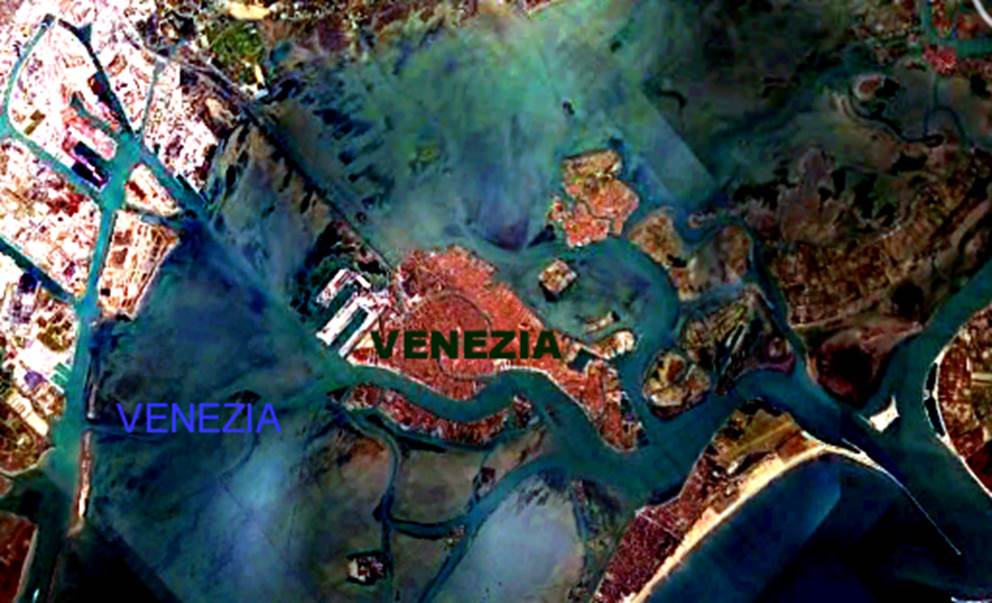
Venetian tidal flats
Venice Santa Lucia Train Station
After passing through the Simplon Tunnel on the Swiss border, the train reaches the fertile Lombardy plain in Italy. As the train approaches its final destination, Venice Station, an inorganic industrial area resembling the Keihin Industrial Zone spreads out before you.
After passing through the industrial area, the train suddenly emerges on the sea and travels for about 5 km over the sea, arriving at an island and stopping at the final destination, Venezia Santa Lucia Station..
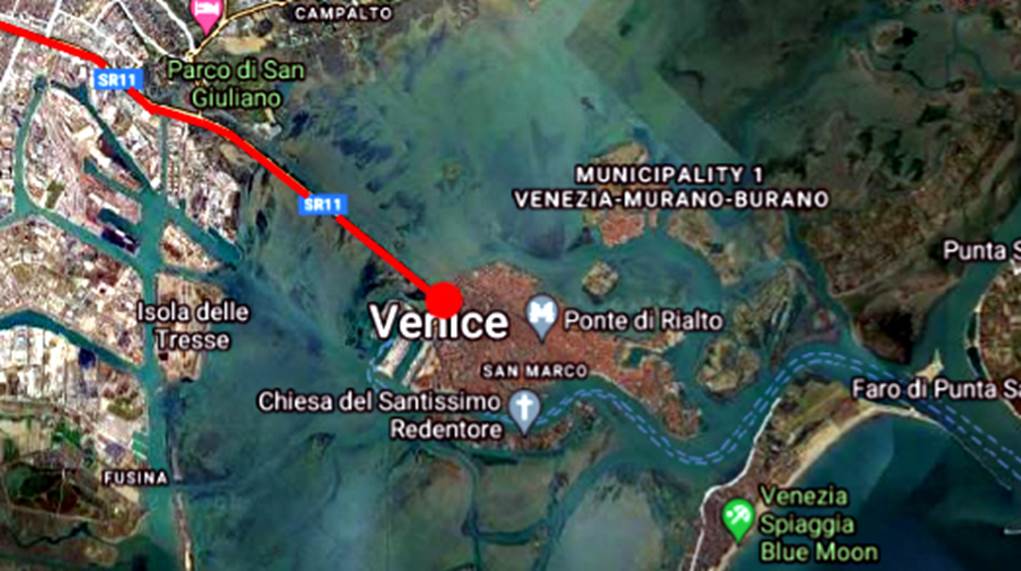
Santa Lucia Station is about 3-4 km away from St. Mark’s Square, one of the most popular tourist spots in Venice. The Grand Canal, another popular tourist spot, curves in an “S” shape and divides the city in two.
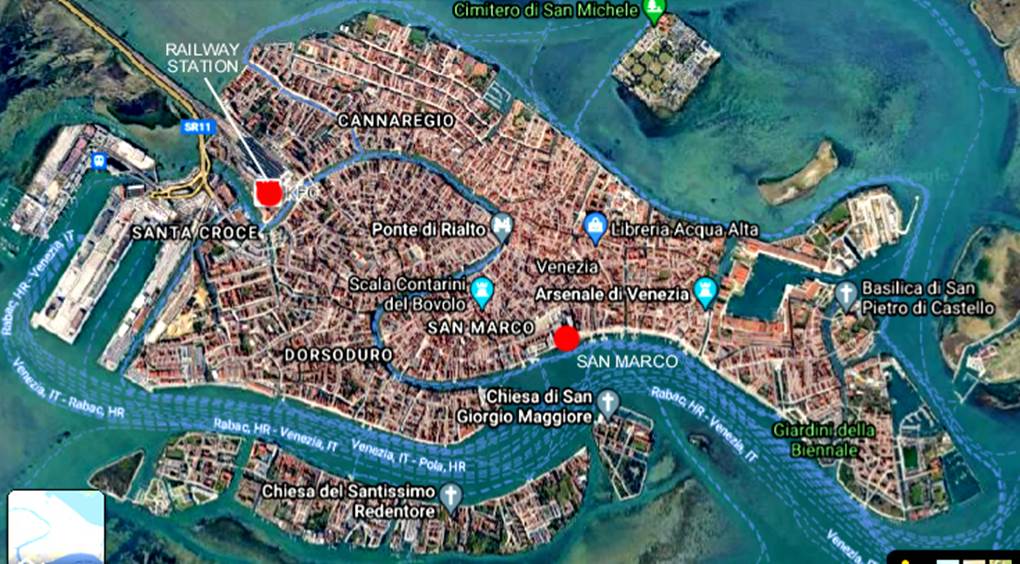
Santa Lucia Station is a comb-shaped station that is common in Europe, and it seems that there is up to line 28. The square in front of the station is large enough, but you don’t see any cars anymore, and the front is separated by the Grand Canal. From this point, you can cross the bridge and walk the maze of paths of the medieval city on your own, or you can take a paid water taxi or gondola through the canals.
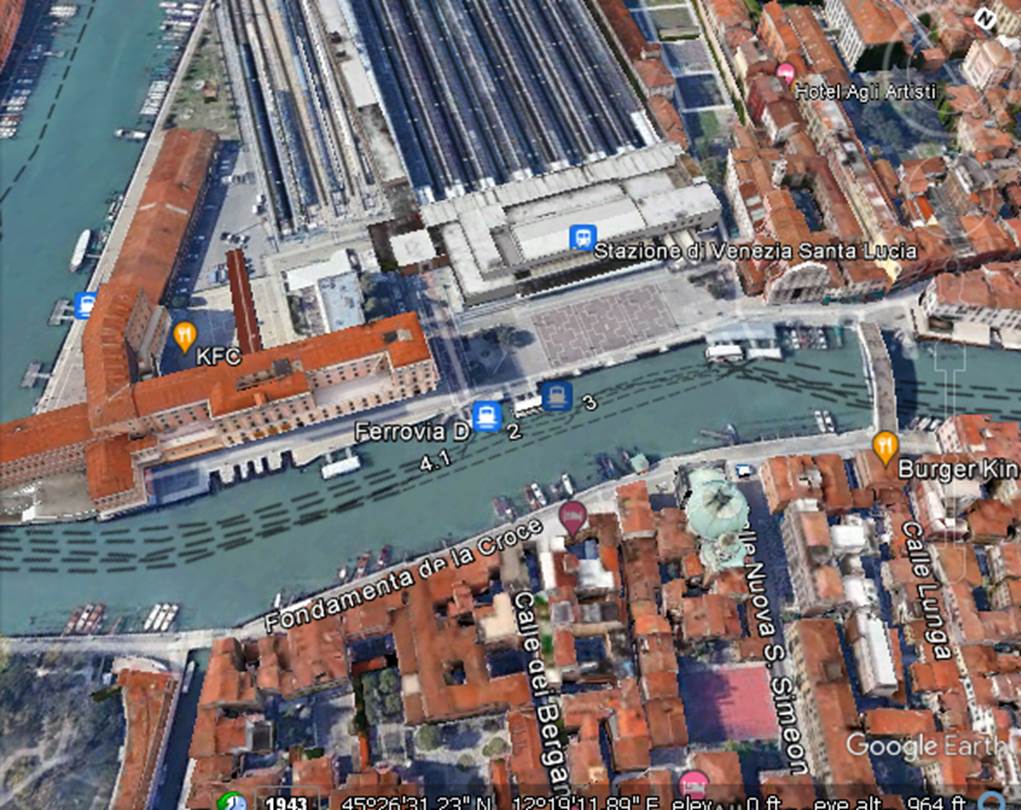
Last stop: Santa Lucia Station
Grand Canal
The Grand Canal is an S-shaped Canal that divides the city of Venice into two parts, and is 3,800 meters long. The Grand Canal is said to be “the most beautiful street in the world”.
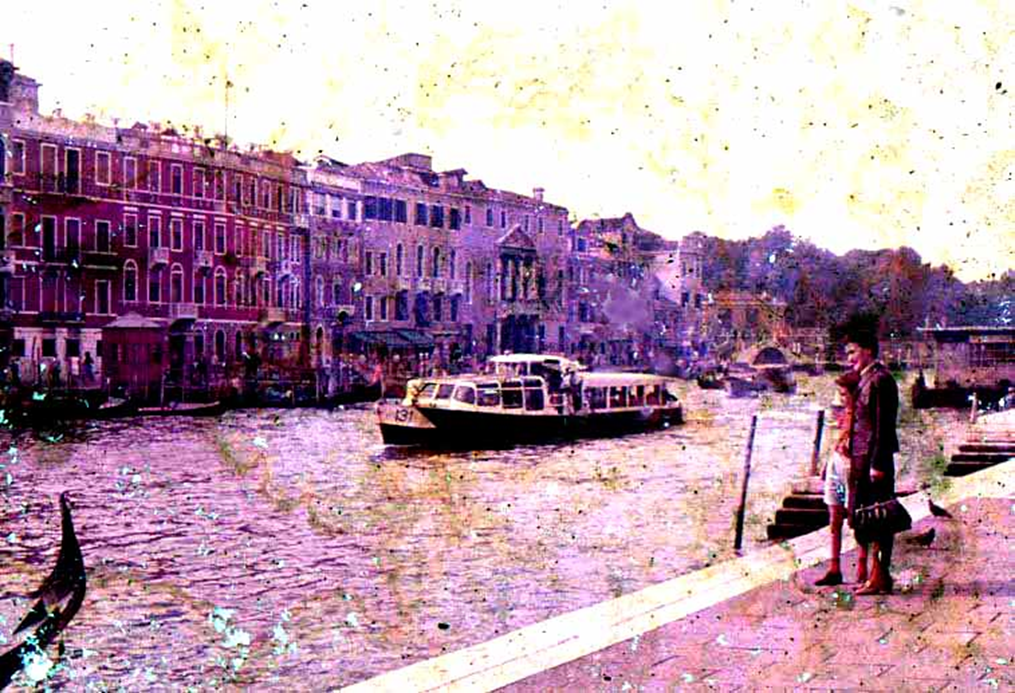
Grand Canal, Photo by author, 28 August 1968
The commercial buildings and other buildings along the Grand Canal face the canal side, with access to the back side via a footpath.

Grand Canal, Photo by author, 28 August 1968
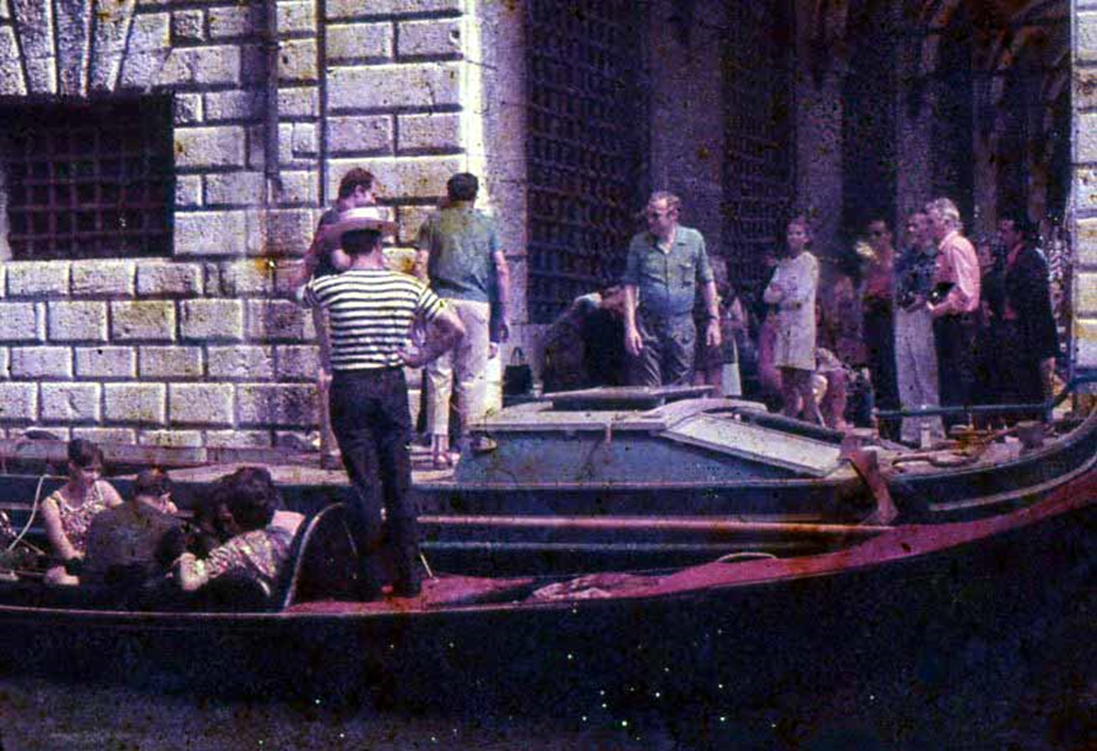
Grand Canal, Photo by author, 28 August 1968
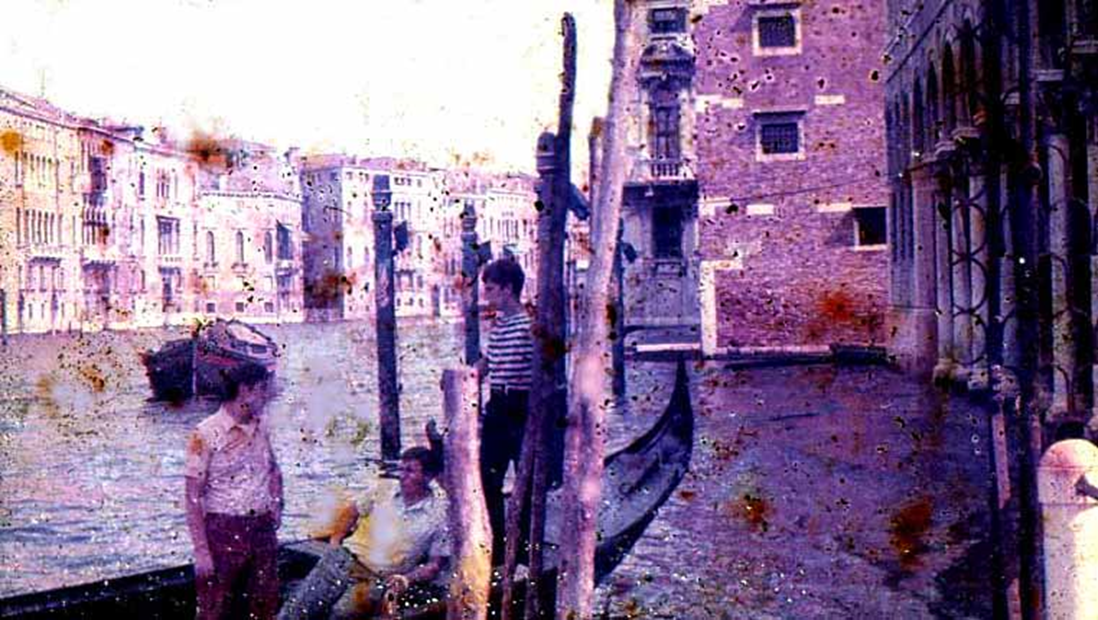
Canal Grande and Gondola,
Photo by author, 28 August 1968
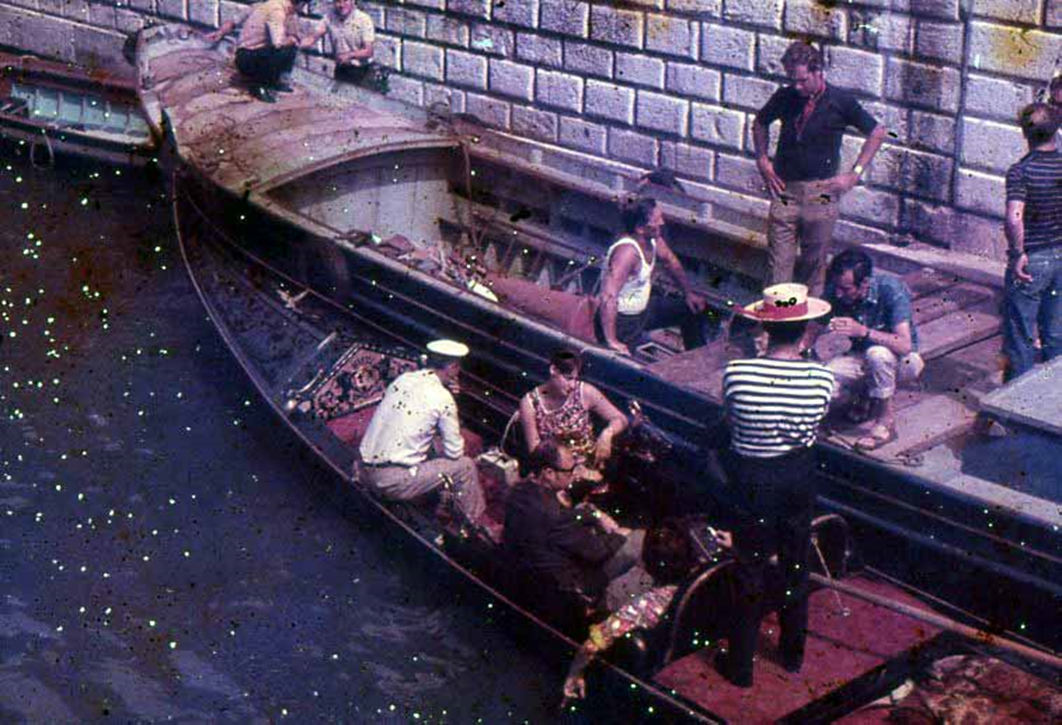
People resting on the Grand Canal,
Photo by author, 28 August 1968
PONTO DI RIALTO Rialto Bridge
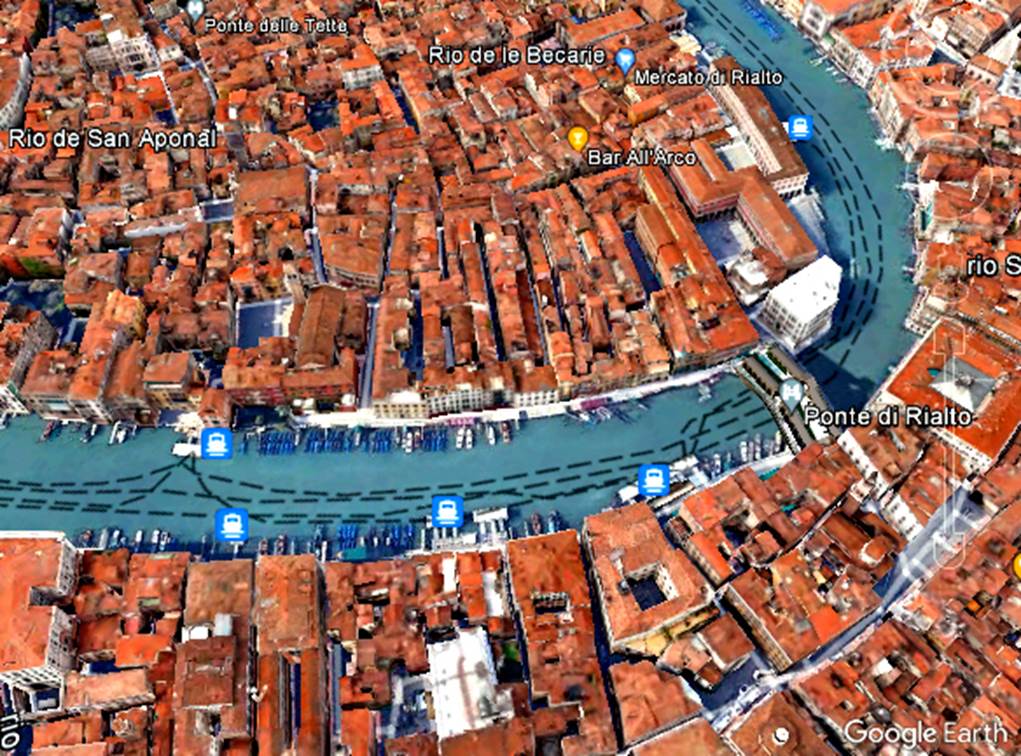
Rialto Bridge over the Grand Canal
Rialto Bridge. The arched bridge, 48m long, 22m wide, and 7.5m above the water, was completed in 1591.
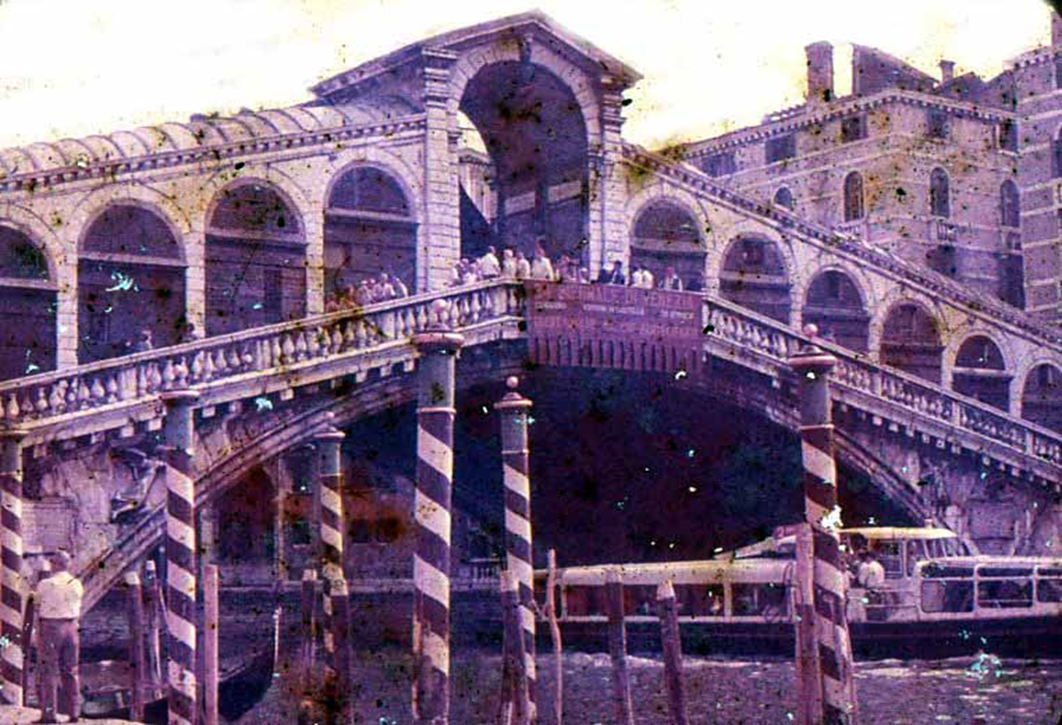
Rialto Bridge over the Grand Canal,
Photo by author, 28 August 1968
St Mark’s Square PIAZZA SAN MARCO
St. Mark’s Square is the main gateway to Venice facing the sea.
It was connected to the Mediterranean, the Aegean and Black Seas through the Adriatic Sea, and wealth was brought from all over the world.
The square is surrounded by St. Mark’s Basilica and cloister buildings, while the Doge’s Palace faces the sea.
It can be said that it is the most beautiful square in the world.
It is said that Napoleon praised it as “the most beautiful square in the world”.

Bird view of St. Mark’s Square
St. Mark’s Basilica: Basilica di San Marco
A Byzantine cathedral built to house the relics of St. Mark.
The relics of Marco were brought to Venice by Venetian merchants from Alexandria, Egypt in 828. They attracted pilgrims and merchants from all over the world.
This splendid cathedral was designed by a Greek architect and was completed in 1094, which coincides with the birth of the Kamakura shogunate of Japan.
It has a Byzantine design and is influenced by the direction of Constantinople (now Istanbul) in the east, and has a strong feeling of the former Mediterranean world, whichis complemented by St. Mark’s Square.
The winged lion at the top of the façade represents Mark holding a Bible.
In contrast to the heavy Gothic church architecture of medieval inland Europe, the design of Venice’s religious architecture and canal-side trading houses is unique, expressing and succeeding in expressing an open urban space open to the sea.
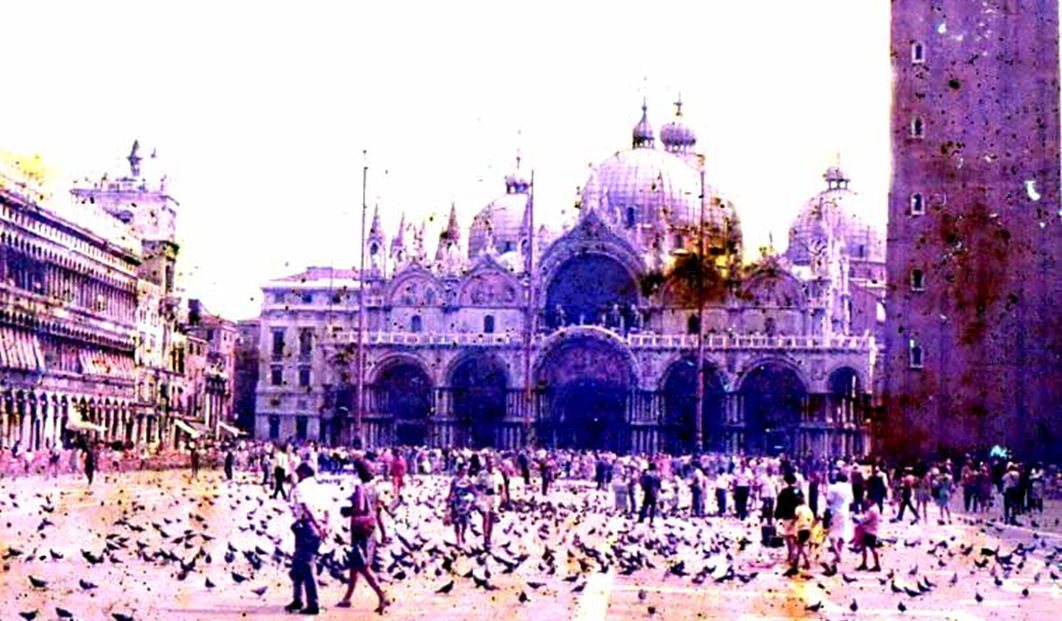
View of St. Mark’s Basilica from St. Mark’s Square. Bell tower on the right,
Photo by author, 28 August 1968
Byzantine architecture is an architectural style that emerged in the 5th and 6th centuries under the influence of Constantinople (now Istanbul), the capital of the Eastern Roman Empire. Its distinctive features include square plans, domes, and gorgeous mosaics on gold backgrounds.
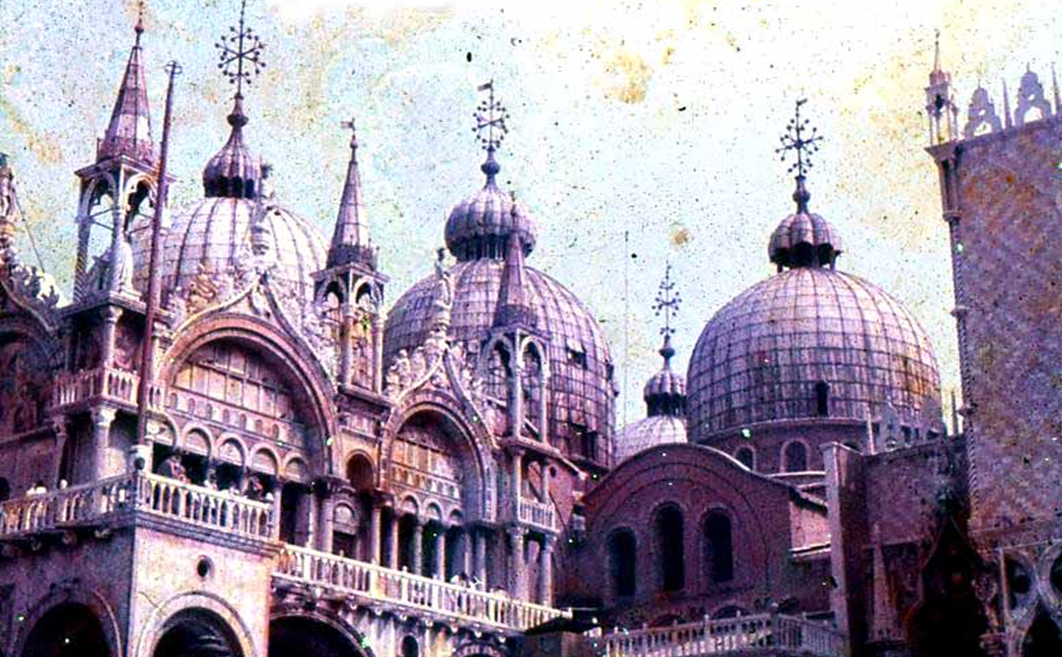
St. Mark’s Basilica, Photo by author, 28 August 1968
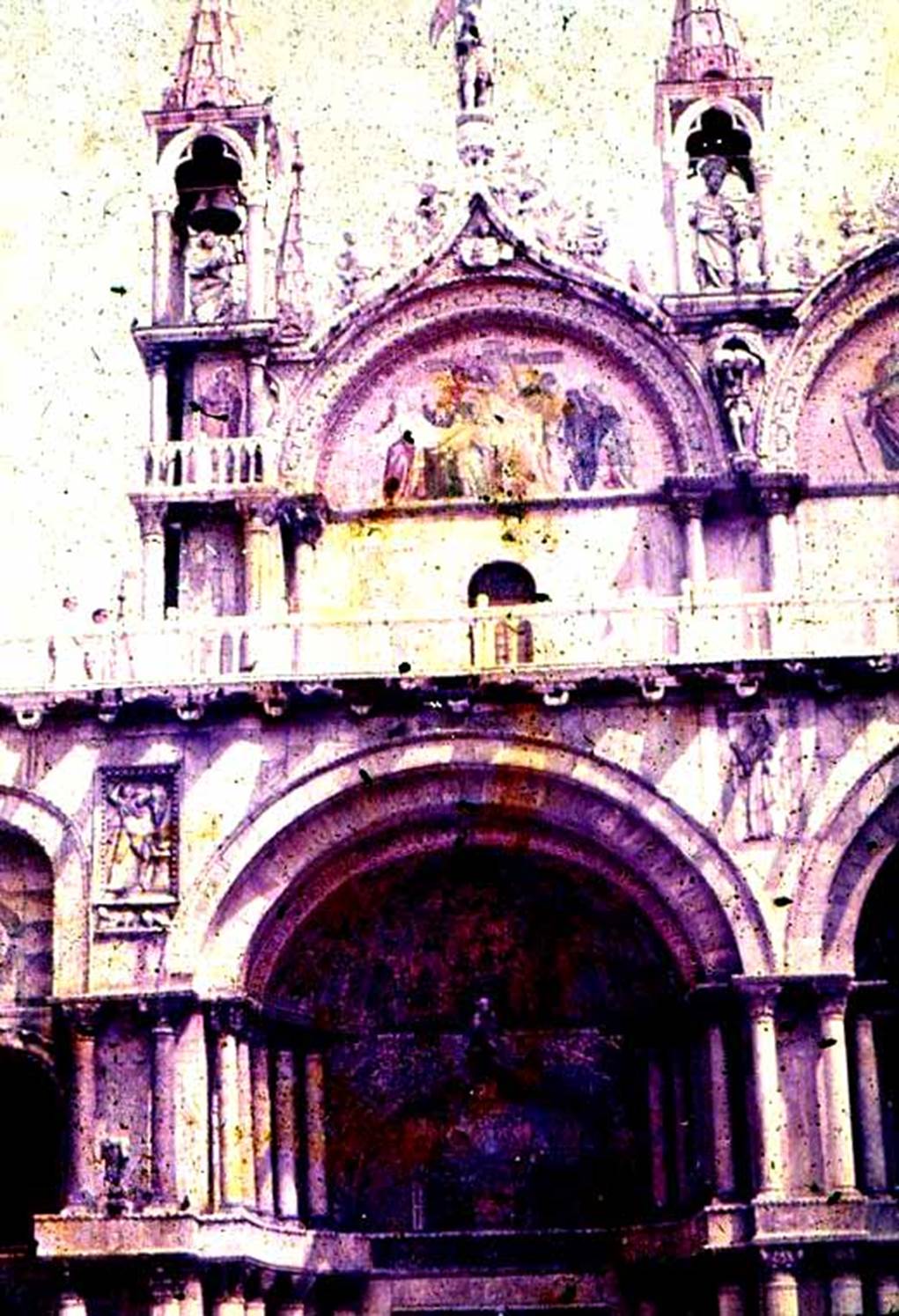
St. Mark’s Basilica, Photo by author, 28 August 1968
Doge’s Palace
9th century/12th to 14th century.
A building that was the governor’s palace and government office in Venice.
It is located on the grounds adjacent to St. Mark’s Basilica.
The Doge’s Palace was a building with multiple function: housing, executive branch, legislative branch, judicial office, and prison.
This façade has an expression strongly influenced by Islamic architecture.
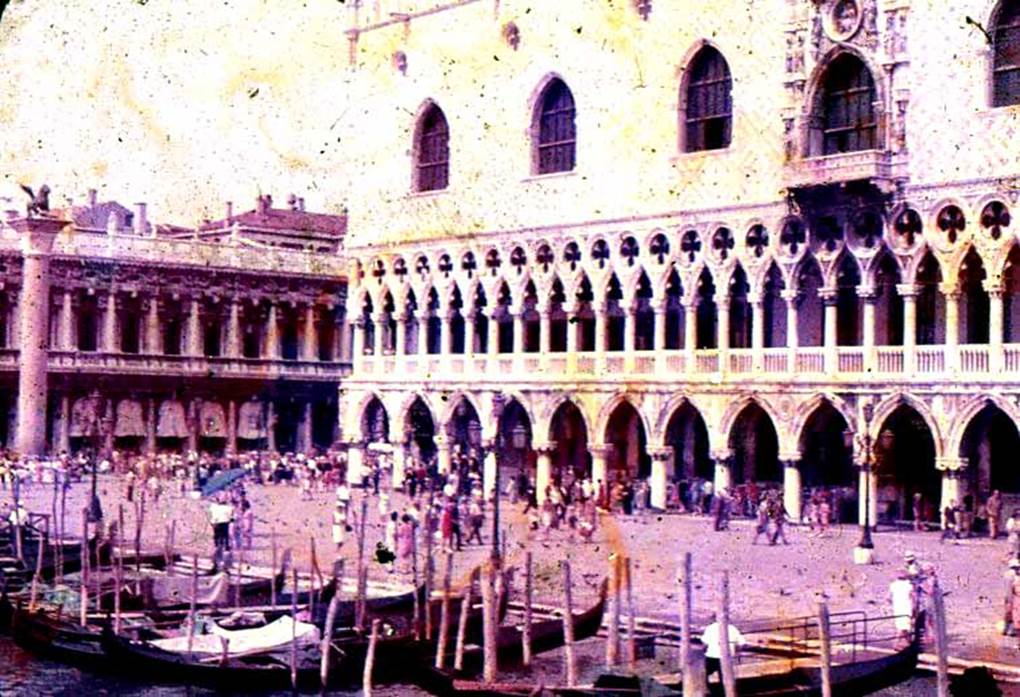
Pier in front of Doge’s Palace,
Photo by author, 28 August 1968
St. Mark’s Bell Tower (Campanile di San Marco)
The bell tower was completed in its present form in 1514. Collapsed in 1902. Reconstruction completed in 1912. Height about 100m.
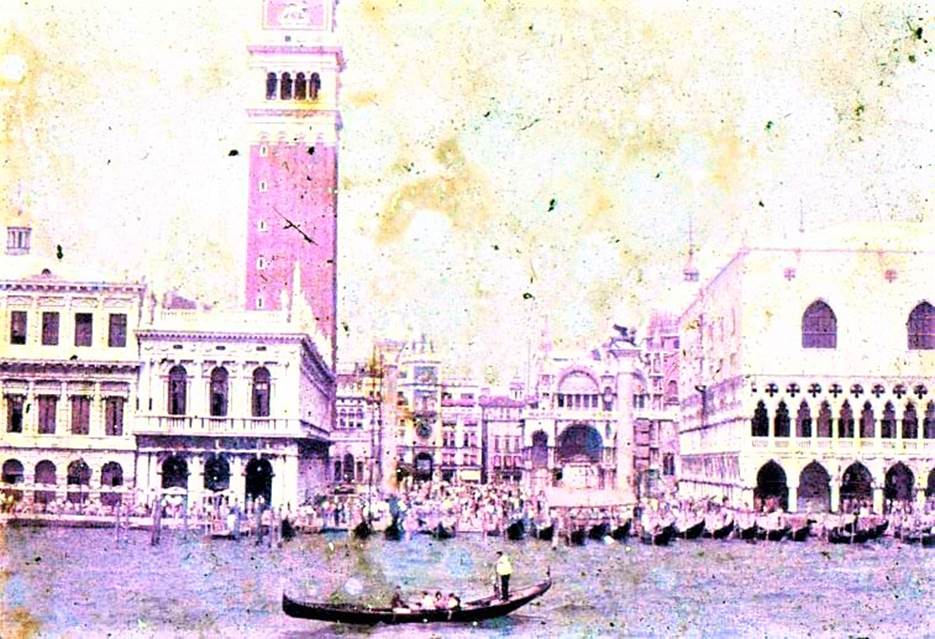
Photo by author, 28 August 1968
The bell tower on the left, the Doge’s Palace on the right
I took a water bus out to the sea to see the landscape on the land side from the pier in front of the Doge’s Palace. When I looked back, the scene in the photo spread before me. After a long voyage, the crew must have been excited to return here and see the bell tower. I can understand why.
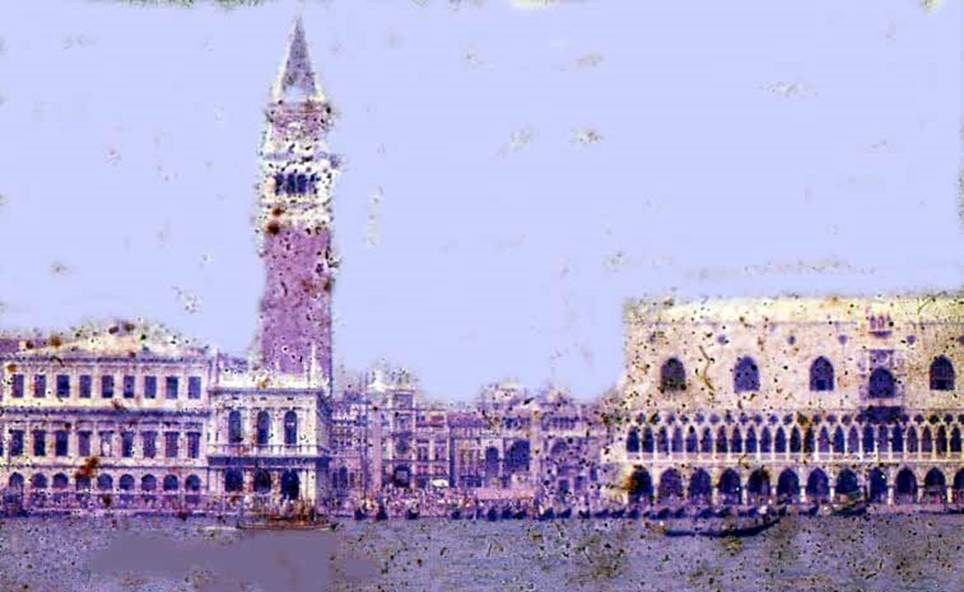
The bell tower on the left, the Doge’s Palace on the right.
Photo by author, 28 August 1968
August 28, Venice 15;15 depart, 17;00 arrive Trieste. Venice Castle, Cathedral. Trieste 21;40 depart.
Trieste
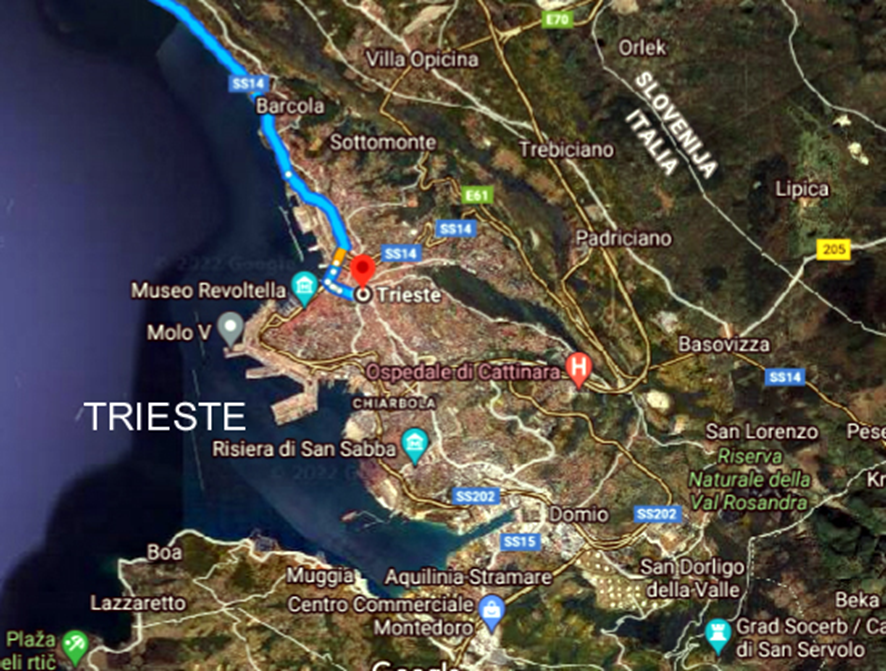
Before World War I, Trieste flourished as an important port city at the exit to the Adriatic Sea for a long time within the territory of the Austro-Hungarian Empire. After World War I, it became part of Italy, but after World War II, it was disputed between Italy and Yugoslavia.
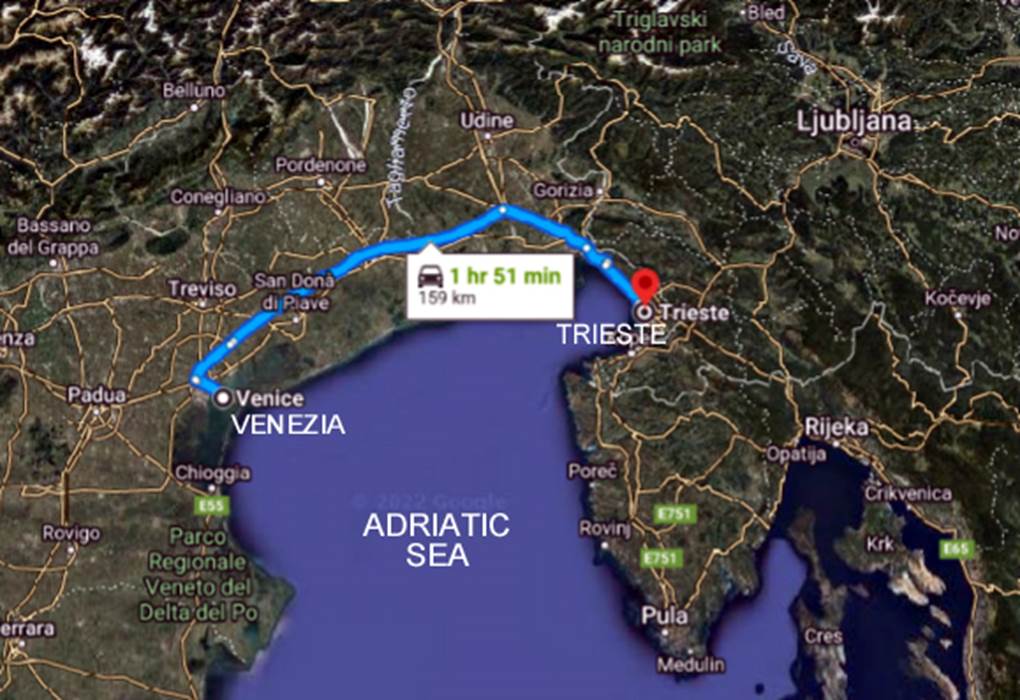
Train route from Venice to Trieste
August 28, Venice 15;15 depart, 17;00 arrive Trieste.
As Trieste approaches, the Lombardy plain recedes, the massif looms over the Adriatic Sea, and the train moves along the edge of the cliffs.
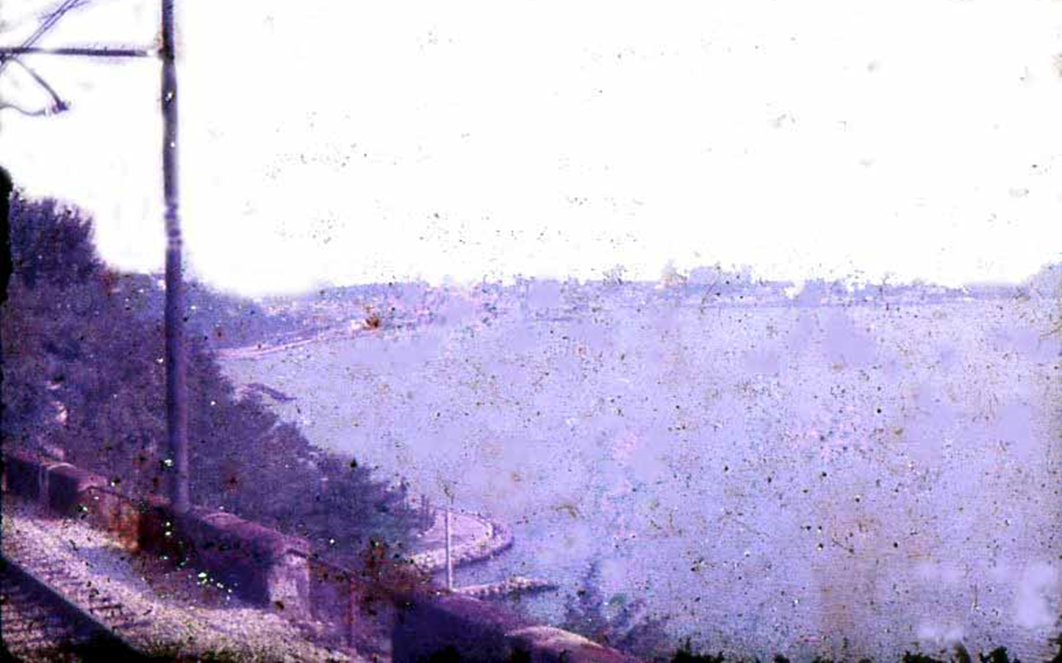
Venice to Trieste train route, Photo by author, 28 August 1968
It was divided in 1954 by Italy and Yugoslavia (today’s Slovenia). Part of the city of Trieste became part of Italy, and part of the southern part belonged to Yugoslavia. As a result, Trieste became a border town and lost its vast hinterland of the past to this day.
Trieste from the top of the hill
In Trieste, I visited Venice Castle, the Cathedral, and admired the city from the top of the hill. In 1968, the area around the mountain ridge was the Iron Curtain of the Cold War, and beyond it was a forbidden area.
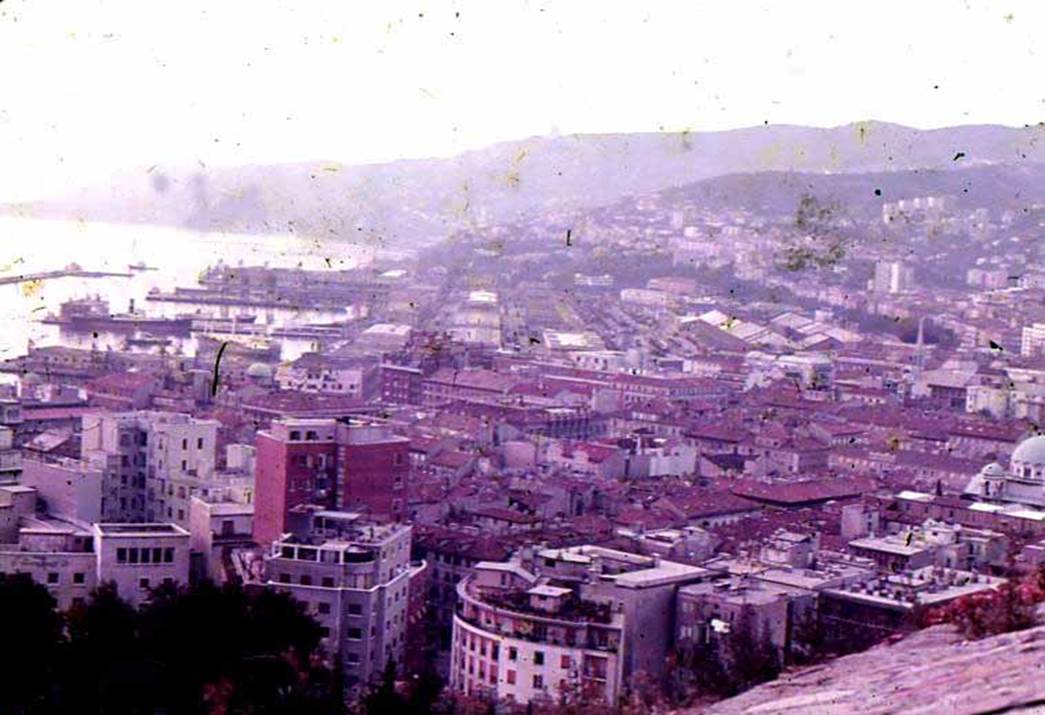
View of the city from the hill of Trieste,
photo by author, 28 Auguest1968
August 28, Venice 15;15 depart, 17;00 arrive Trieste. Venice Castle, Cathedral. Trieste 21;40 depart.
Munich
August 28, Trieste 21;40 departures > train overnight (19)
> 29 August 7;30 arrive Munich
August 29
Munich is a beautiful city. There are many Italians. City Hall, Cathedral
Church of the Theatina(Theatiner Kirche)
A Landmark mid-Baroque basilica church in the center of Munich, the capital of Bavaria, Germany. It was built in the 17th century. The Zinnturm bell tower.

Photo by author, 29 August 1968
I spent a whole day at the German Museum. Perfect models, easy-to-understand physics and chemistry experiment equipment. Large-scale mining and metallurgy departments. It’s a museum that you can’t see everything in one day.
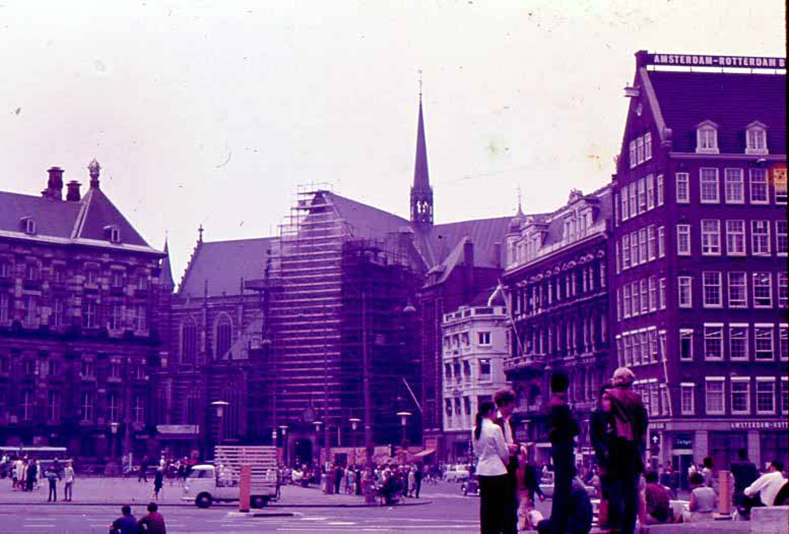
Photo by author, 29 August 1968
The birthplace of Hitler and the Nazis
In 1919, Germany lost the First World War. In Munich, where social unrest and popular unrest were spreading, such as hyperinflation, the National Socialist Nazis led by Adolf Hitler emerged.
On February 24, 1920, the first Nazi Party rally was held at the Bierhofbräuhaus in Munich.
Even now, it is a huge beer hall that can accommodate about 3,000 people, and in the summer, an outdoor beer garden opens. I also decided to have a beer there. When I order, a young woman with a good physique is busily delivering to each table with as many huge mugs as she can hold (4 in one hand and 8 in both hands) that are likely to be 700ml. This left a strong impression on me in Munich.
Military intervention in Czechoslovakia August 20, 1968
Inside the building, I met a Czech friend whom I had met on the way to London. He was very worried about returning home because of the turmoil in Czechoslovakia.
At around 11 p.m. on August 20, the Warsaw Organization forces led by the Soviet Union broke through the border and invaded. Occupied all of Czechoslovakia. It happened nine days ago while I was in Munich.
The Munich Olympics and Migrant Workers
At that time, the city of Munich, West Germany, was like a construction site in anticipation of the 1972 Olympics four years later. As I looked down at the subway construction site, I heard an unfamiliar language (non-German) coming from the bottom. Around this time, I saw that immigrant construction workers from Turkey and other countries were invited to work in 3K jobs.
August 29 Munich > train overnight (20) > August 30 8;30 arrive Paris
August 30 8;30 arrivals in Paris. Preparing for a trip to Scandinavia.
Left Paris at 14;50, arrive in Chartres 25;50. The town of Chartres is small but clean. The splendor of the stained glass in the cathedral. 17;20 Departure from Chartres. 18;20 Arrival in Paris. 23;20 Departure from Paris.
August 30, Paris 23;20 departures> 21 overnight trains (21)> 7;15 arrive Cologne
August 31, 7;15 arrive Cologne, 8;12 depart.
The rain continued to fall across the German plains as the train drove through Cologne, Haven, Bremen, and Hamburg.
I visited the Rathaus in Hamburg, and got soaked on the way back because of the rain. I met an Argentinean living in the UK.