JAP | ENG
East Java Rural Region and Madura Island,
1983
Moving from a highland summer resort to a mountainous area
Near the resort’s market, horse-drawn carriages like the one below are always on standby waiting for customers. There are no taxis. Since there is no meter and language barriers, the fees is always high for foreigners.
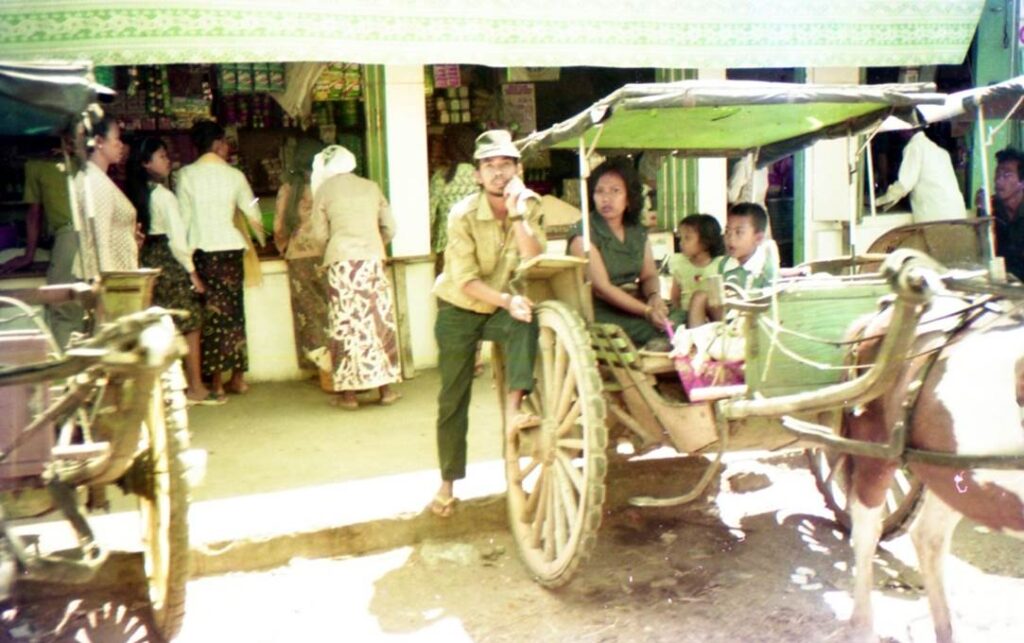
Photo by author, 1983
Horse-drawn taxis on the plateau
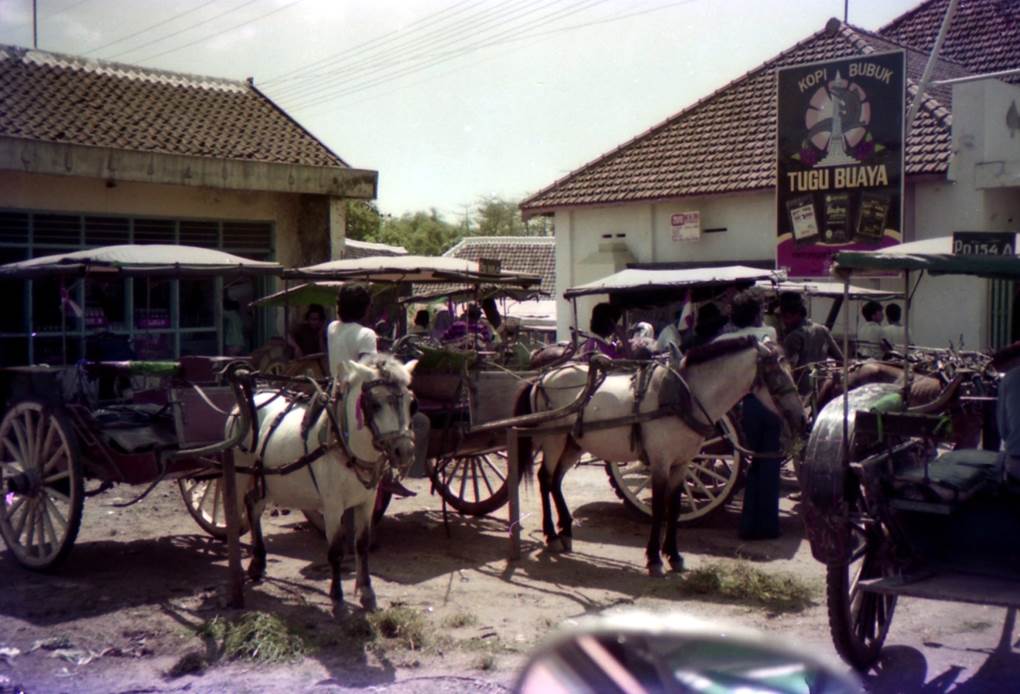
Photo by author, 1983
Children of the highlands
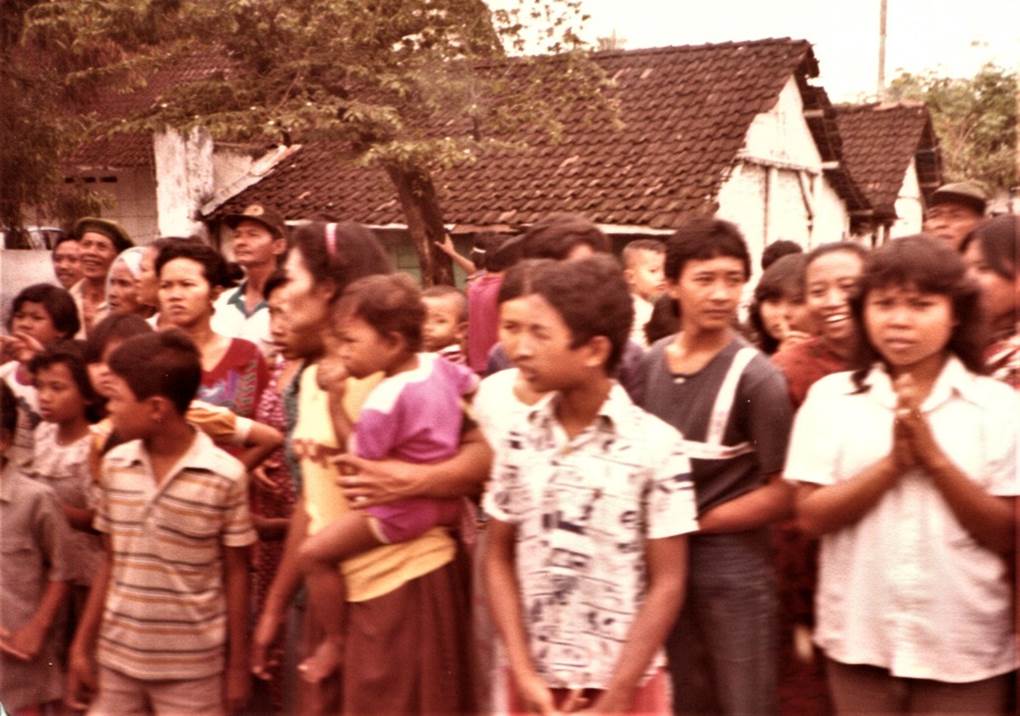
Photo by author, 1983
Two-horse ox cart !!
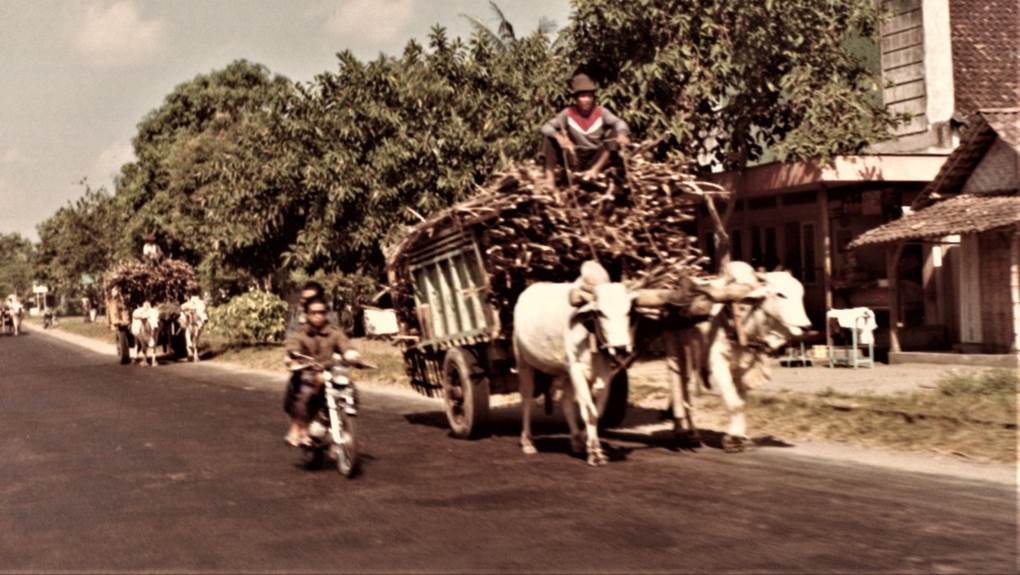
Photo by author, 1983
It’s been a while since I last rode a horse!!
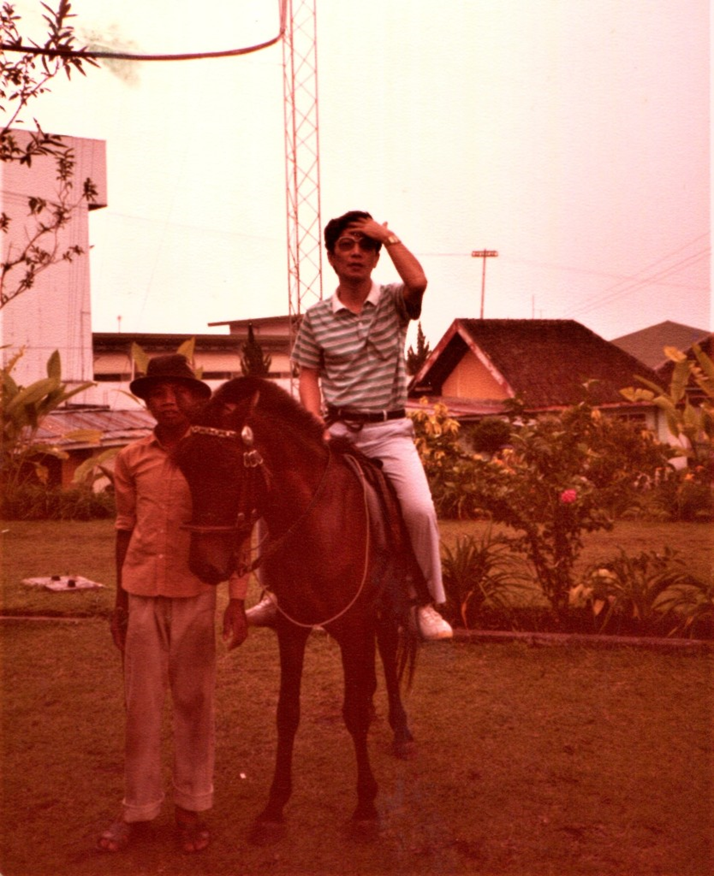
Photographed by the author’s interpreter and driver, 1983
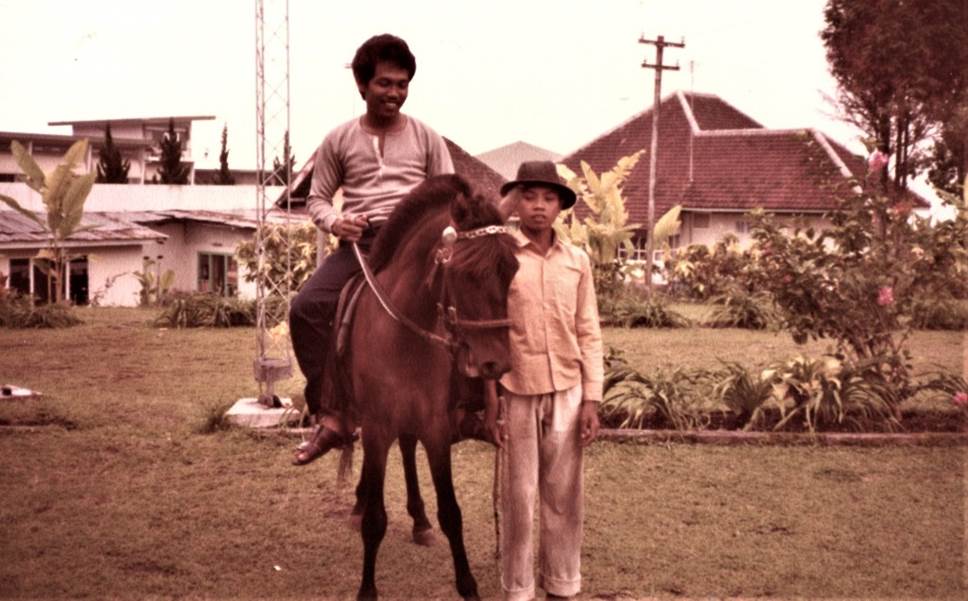
Interpreter and driver on horseback, Photo by author, 1983
East Java Rural Landscape
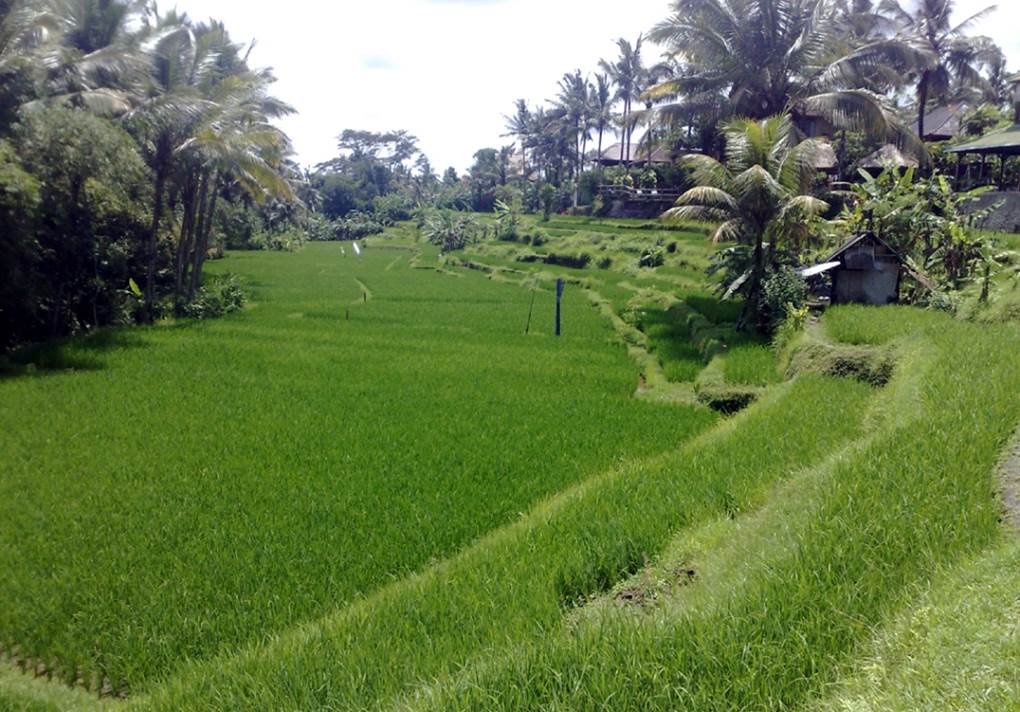
Java is an island rich in nutrients thanks to its fertile soil made from volcanic ash and abundant water.
The plains of East Java are home to triple-cropping rice paddies and sugarcane plantations, while the highlands produce a variety of agricultural products, including coffee, cloves, tapioca, and fruit.
It’s a typical Japanese Satoyama landscape.
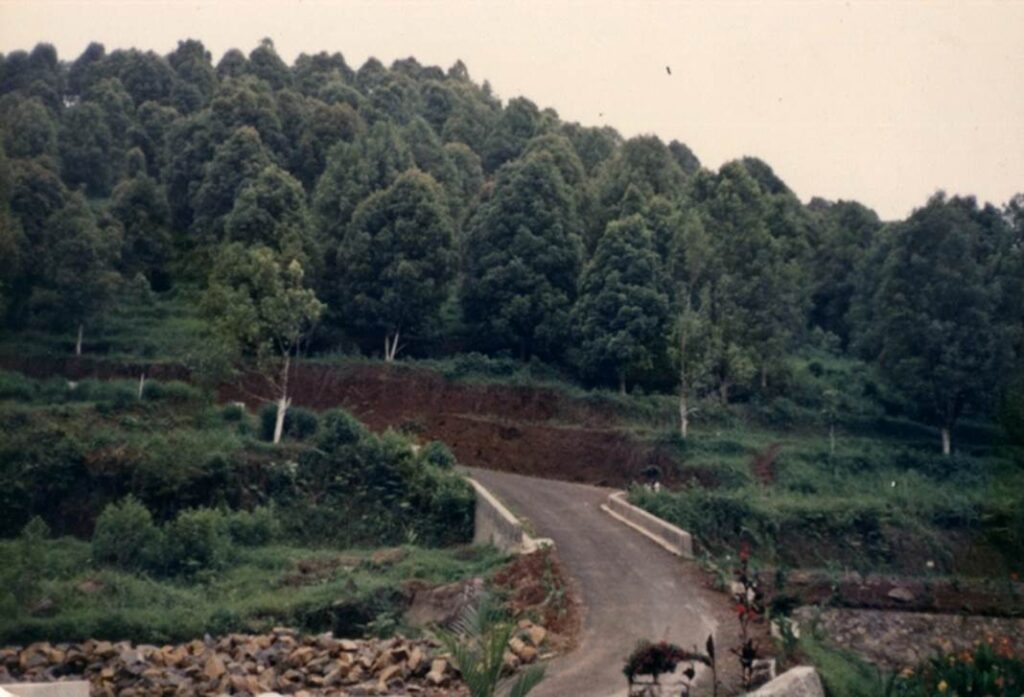
Photo by author, 1983
The Java coffee I wanted
With an interpreter and driver, we entered a rugged rural area where there were no roads on the map. Then, from the side of the bridge of the stream in the valley, we suddenly smelled the delicious aroma of coffee !
There was a temporary hut that looked like a guardhouse, and when I looked inside, I saw a farmer’s wife boiling coffee on a wood fire.
It smelled so good that I ask for a cup of coffee. The price of this delicious drink in the middle of this countryside was 5 cents a cup.
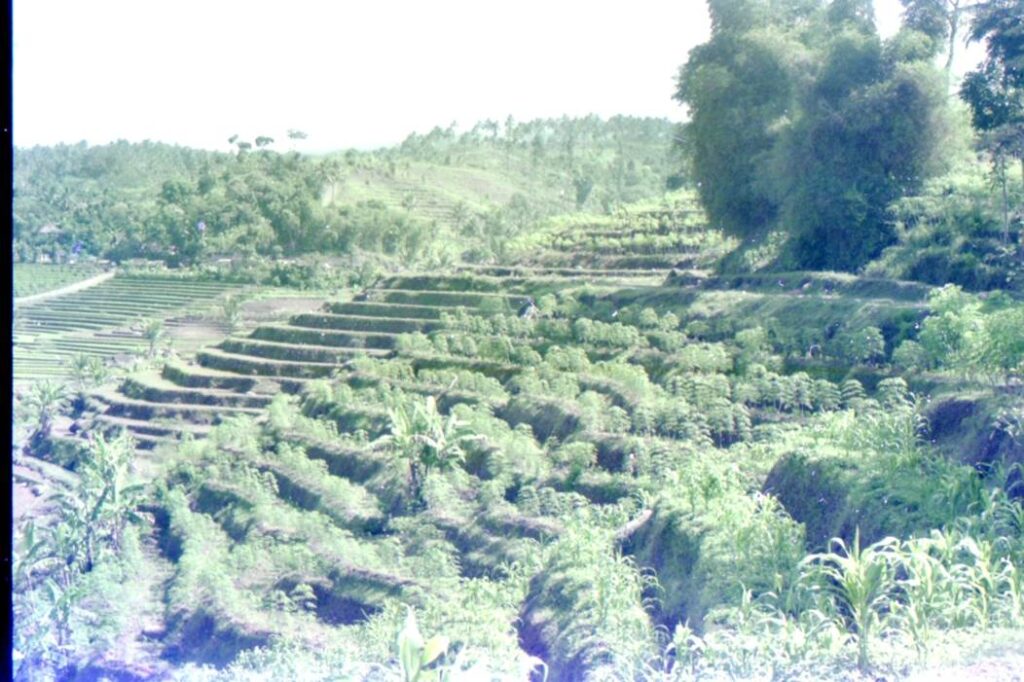
Photo by author, 1983
The spice that Magellan (Portuguese explorer) sought after
Clove plantations are also thriving in this area.
Clove buds, native to the Maluku Islands, are picked just before they bloom, dried in the shade, and used as a spice.
It is a product with high commercial value.
It was such an important source of flavouring for European cooking that both Portugal and the Netherlands competed for dominance over the Maluku Islands, the original habitat of cloves.
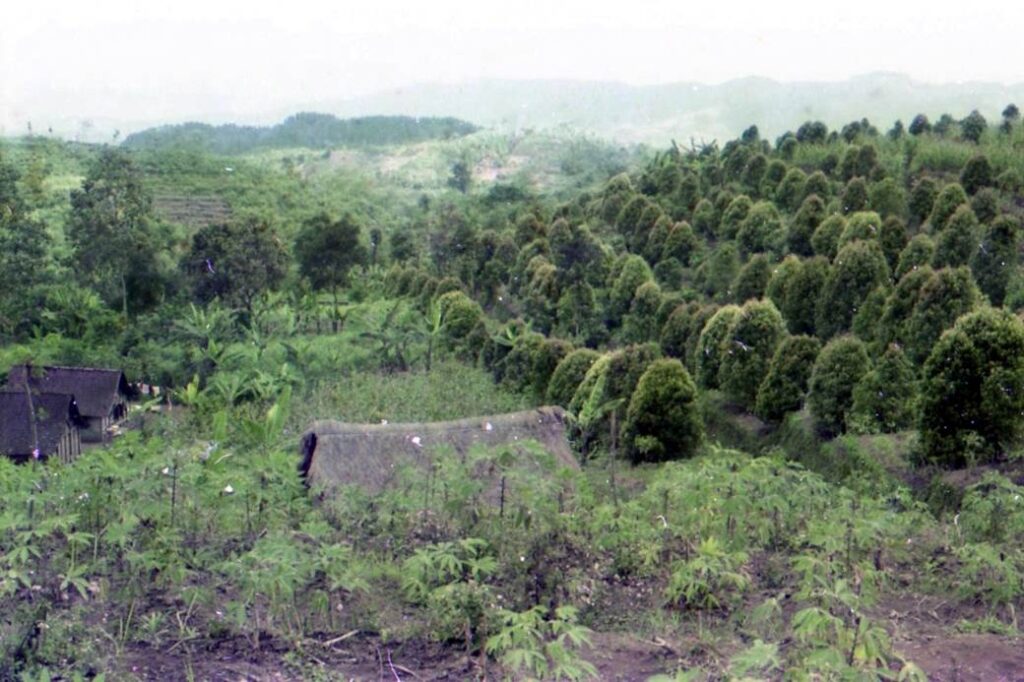
Photo by author, 1983
In Indonesia, kretek, a type of tobacco mixed with cloves, is popular with smokers and is widely sold.
When lit and burning, it makes a crackling sound, resembling the sound of a sparkler on a dark night.
Cloves are said to have a kind of narcotic effect.
Cigarettes mixed with this have a strong smell of smoke and are rarely seen outside Indonesia.
On another occasion, I visited the town of Kederi in East Java.
There was a huge Indonesian tobacco factory there.
The company had more than 300 employees, most of whom were women.
It was a time when things were made by hand without automation.
Farmer hand-picking cloves.
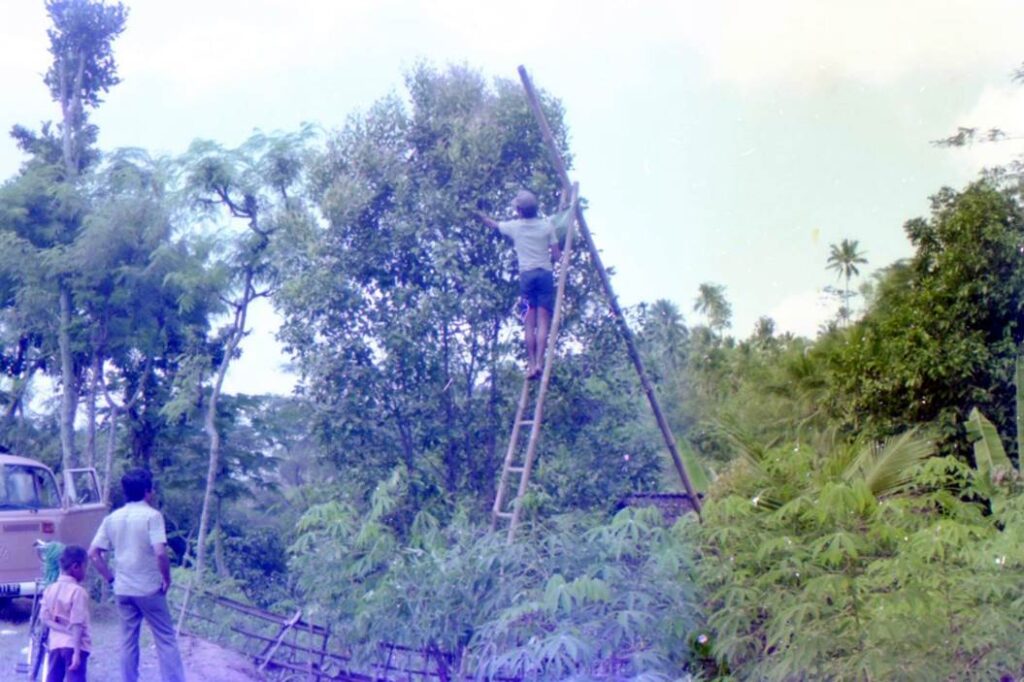
Clove picker, Photo by author, 1983
The author’s driver conversing with a farmer who grows tapioca.
If you go into this rural area of East Java, you will find that the conversation between them is not Indonesian, which is the standard language, but Javanese. People who do not speak Javanese are perceived as outsiders.
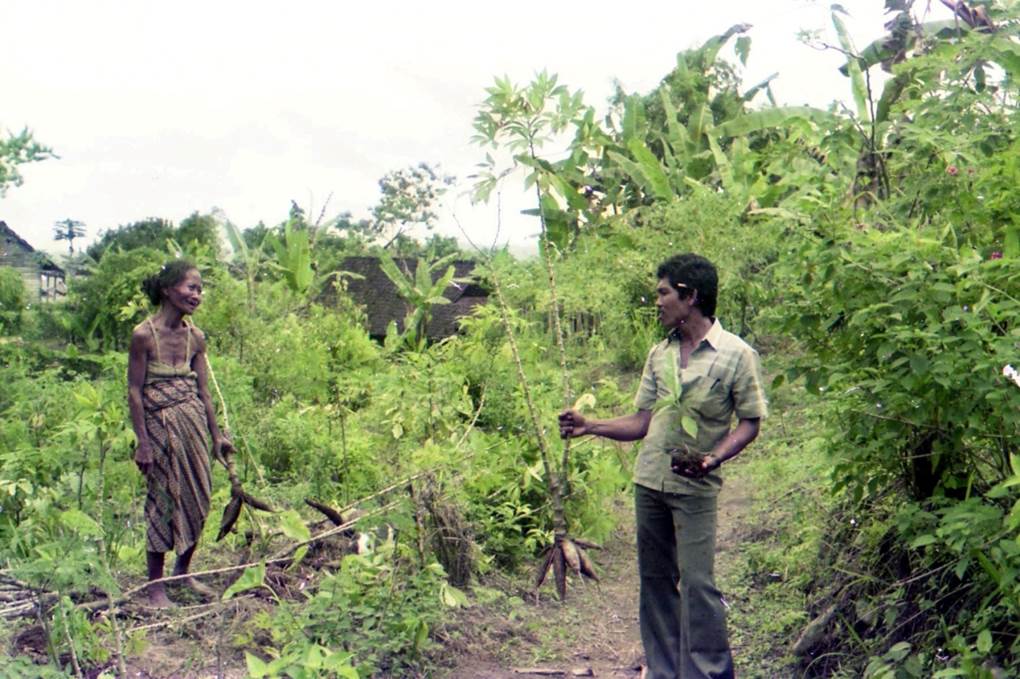
Photo by author, 1983
Tapioca is dried.
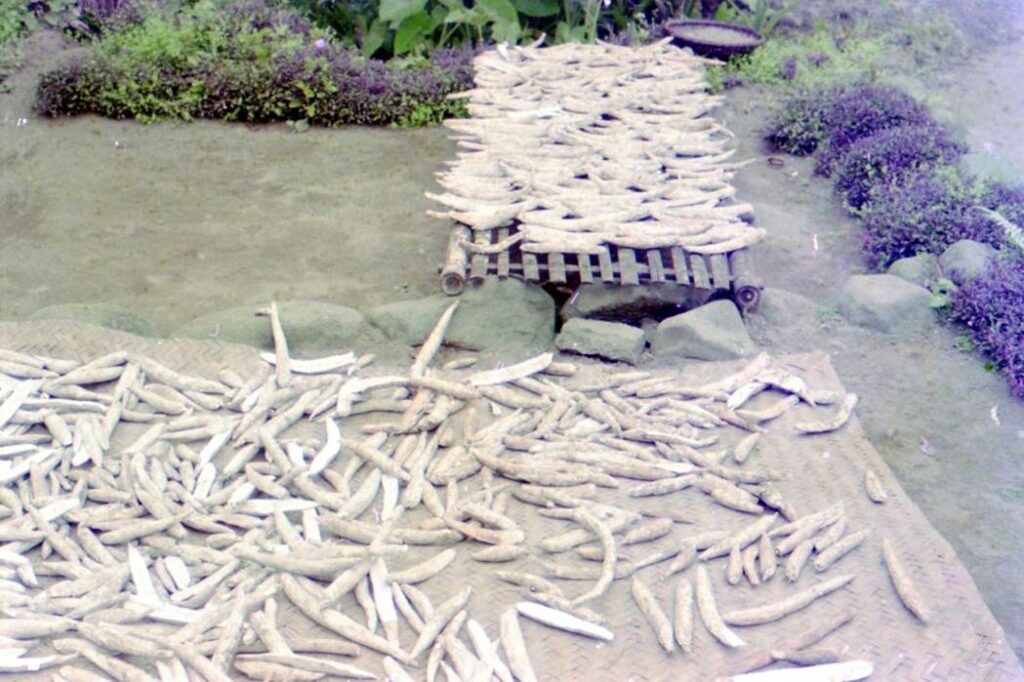
Photo by author, 1983
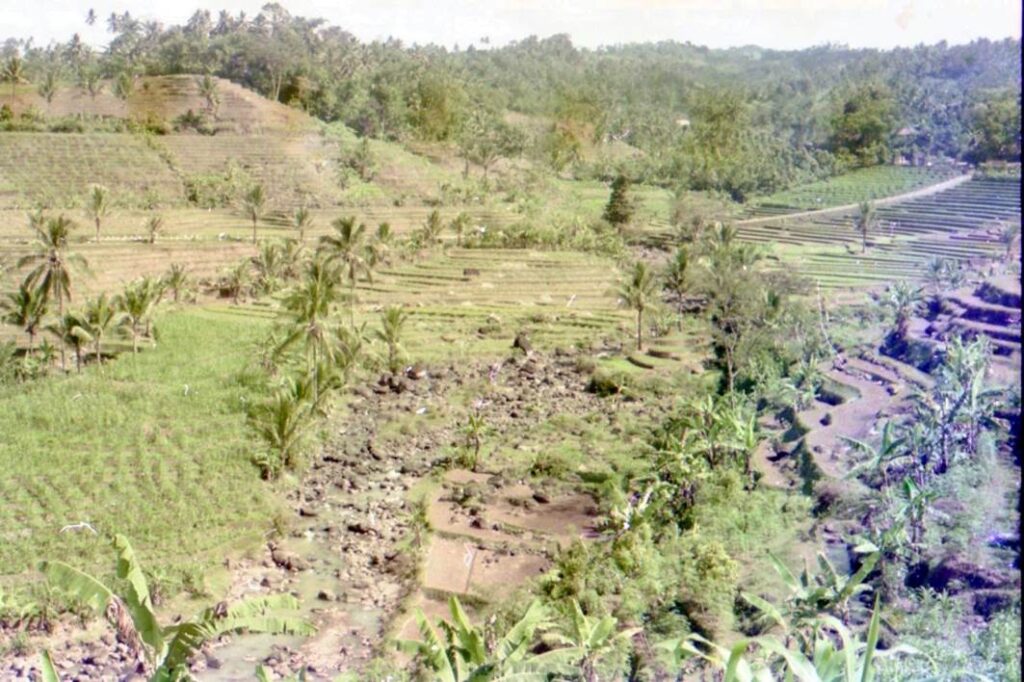
Photo by author, 1983
The car on the far right is the Volkswagen Combi, which I used regularly.
The interpreter and driver is standing next to it.
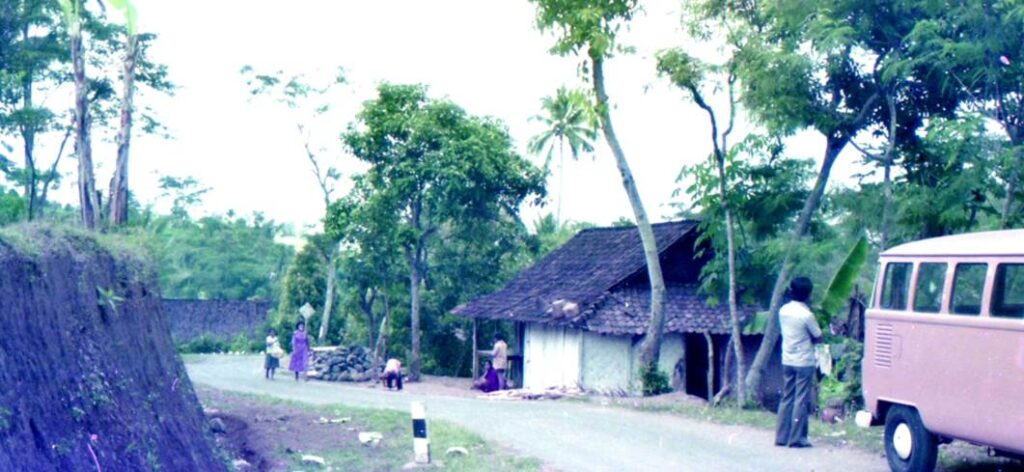
Photo by author, 1983
A typical farmhouse house on the island of Java.
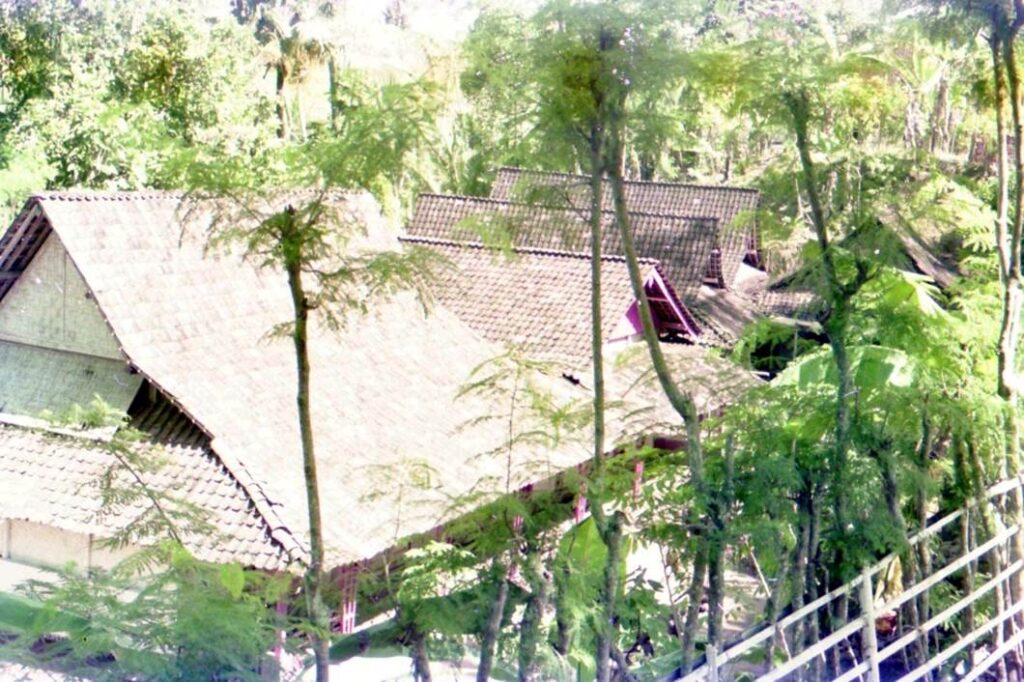
Photo by author, 1983
The driver (left) gets lost and ask a local for directions. (In the era without GPS)
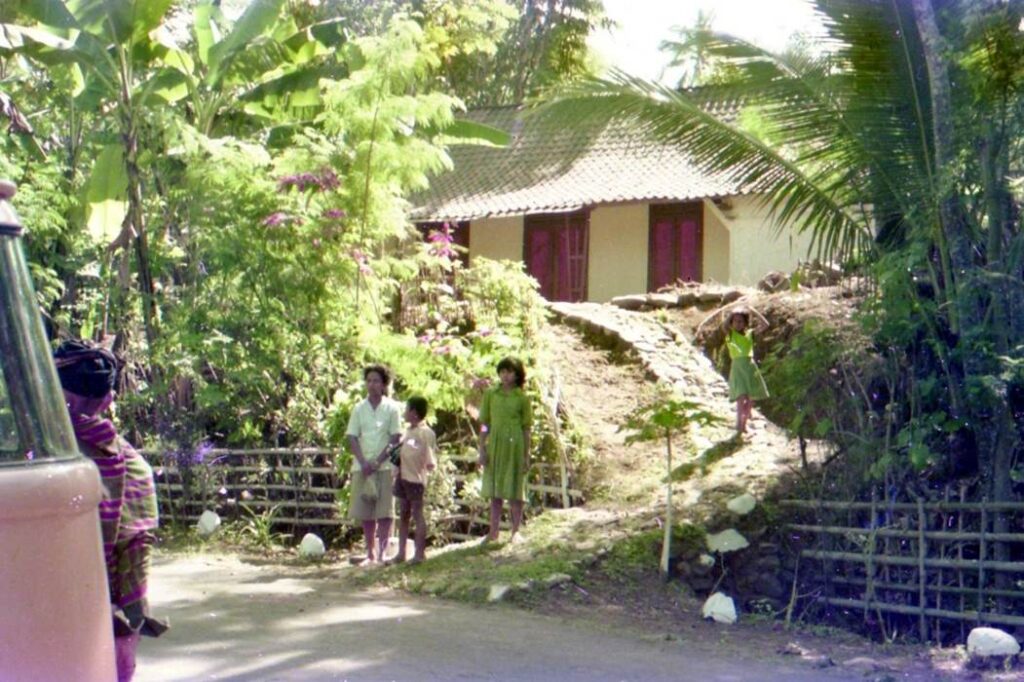
Photo by author, 1983
Cows, sheep and dogs in front of the farmhouse.
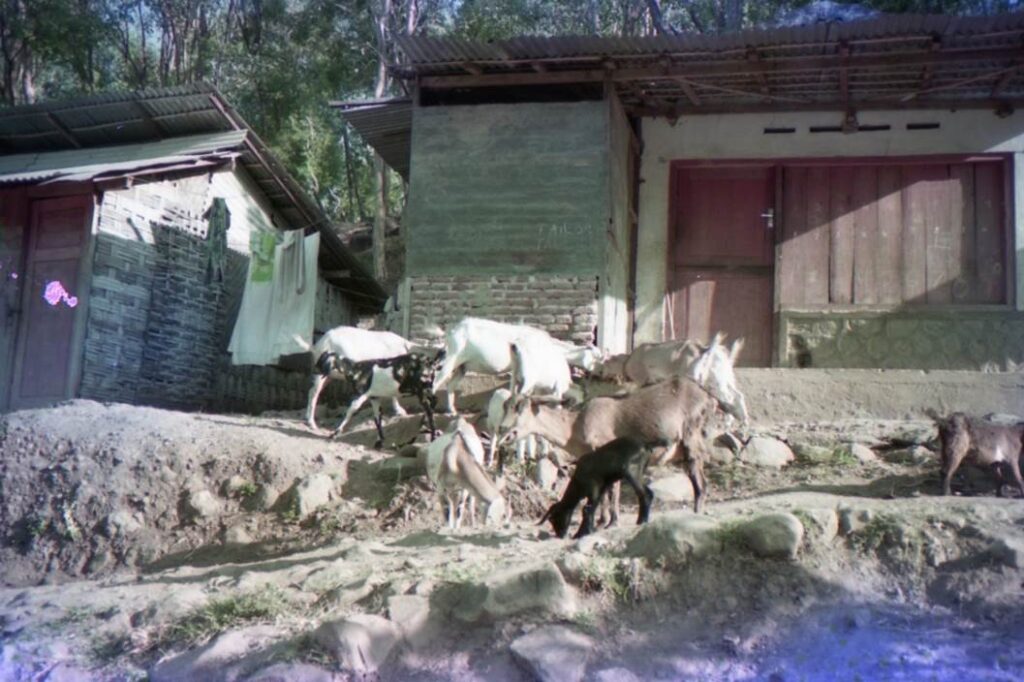
Photo by author, 1983
Transportation is carried out by oxen.
Tractors and farm machinery are not used, so the idyllic rural world is preserved.
Life is free of air pollution and noise.
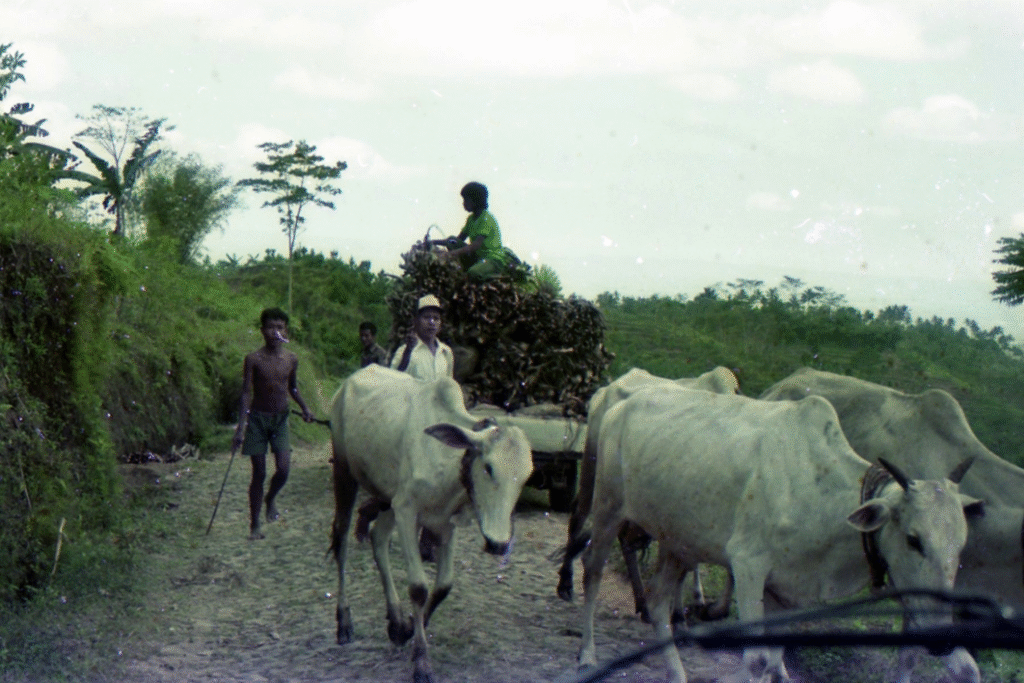
Photo by author, 1983
After the day’s work, the animals are washed by the farmers in the spring water from the foothills of the Satoyama mountain and treated as if they were members of the family.
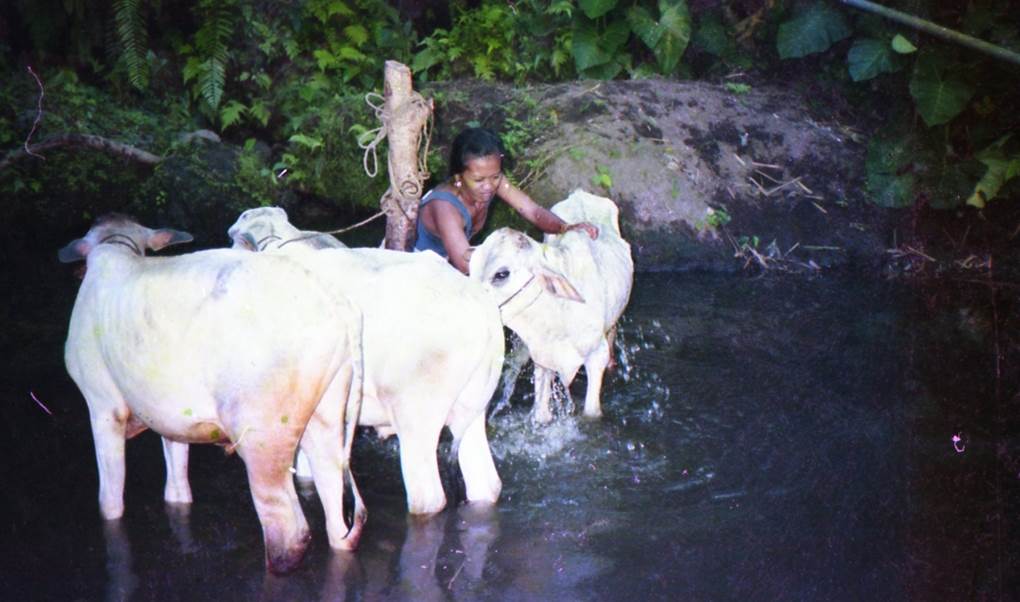
Photo by author, 1983
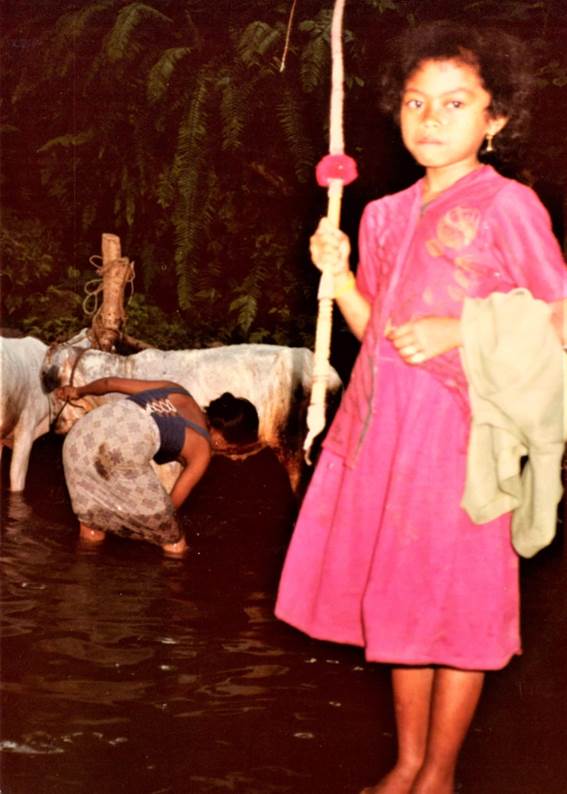
Photo by author, 1983
Brantas River
This river has a unique flow path that flows three-quarters of the way around the East Java volcanic mountain range and empties into the sea.
On the left is downstream towards Surabaya, and on the upstream right side is a collection of many mountain streams from the mountains.
In the small town of Blitar, about 30 km upstream, there is a memorial cemetery where Sukarno is buried.
In the middle reaches of this river, the kingdom of Majapahit was born.
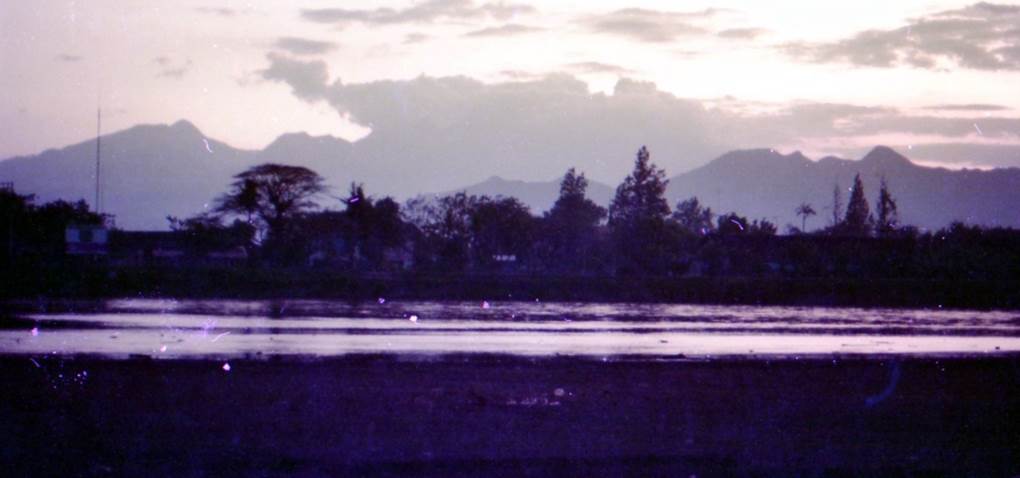
Photo by author, 1983
Ferry ride to Madura Island
In the early 1980s, my company received an order for a project to design a hotel and shopping mall complex in Surabaya, Indonesia’s second largest city.
This led to my frequent visits to Surabaya for more than four years.
The first thing I noticed during my stay was that there was an island across the strait off the coast of Surabaya, and it was an island called Madura.
It is an island attached to the northeast edge of the island of Java.
Crossing by ferry to the island of Madura, which I travelled around by car, was a flat island, and the scenery was extremely monotonous compared to Java, which is full of volcanoes.
There are 6 million Madures, no special industries, and large numbers of migrants have migrated to Surabaya, Java and Borneo.
Most of the rickshaw drivers and civil engineering workers in Surabaya were Madures. Most Javanese in Surabaya had a fixed sense of discrimination against them.
The photo below shows the scene at the ferry crossing to Madura Island.
In the 1990s, a bridge was built between the two islands, so the hustle and bustle of the terminal can no longer be seen.
People who disembarked with a lot of luggage.
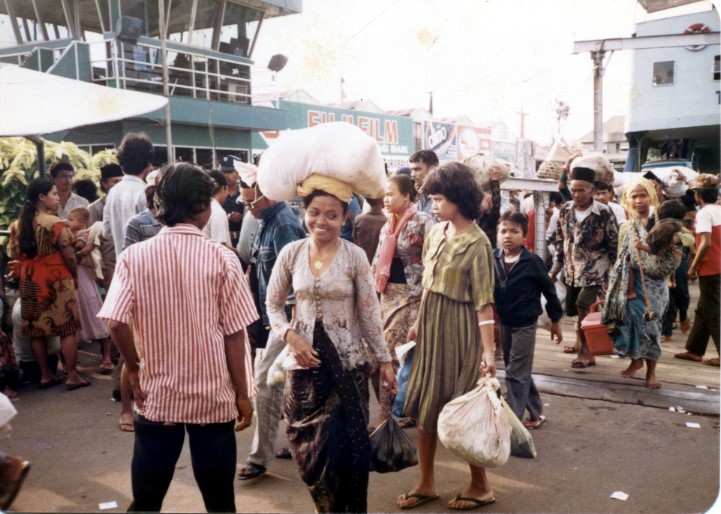
Photo by author, 1983
The man on the far left makes and sells soup noodles.
In the center is the author and a friend from Tokyo.
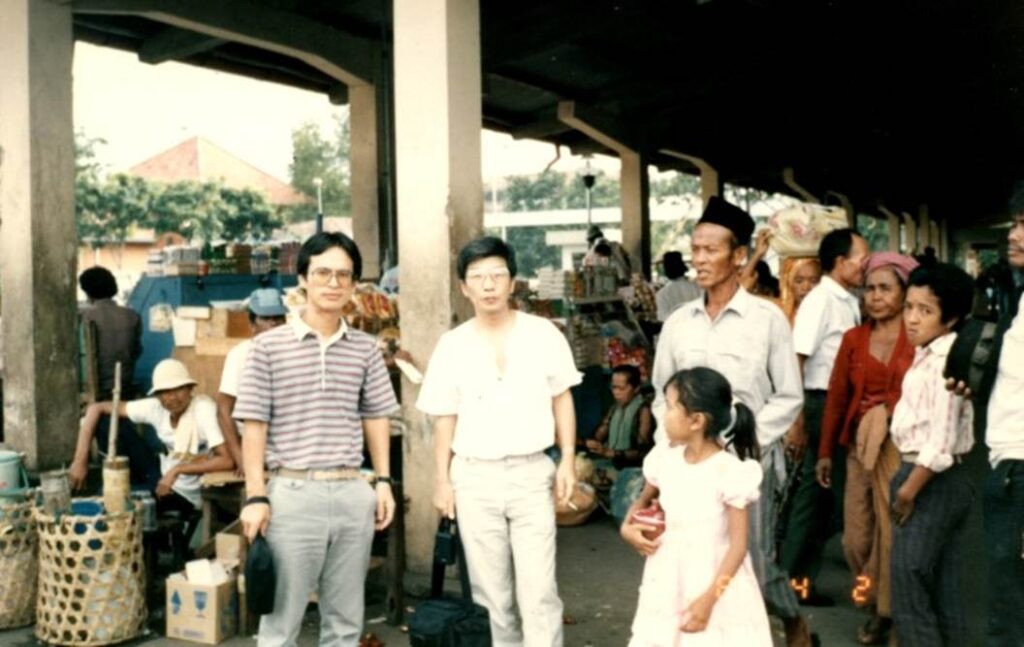
Photographed by the author’s guide, 1983
There’s a sign for FUJI FILM. (It’s the analog era)
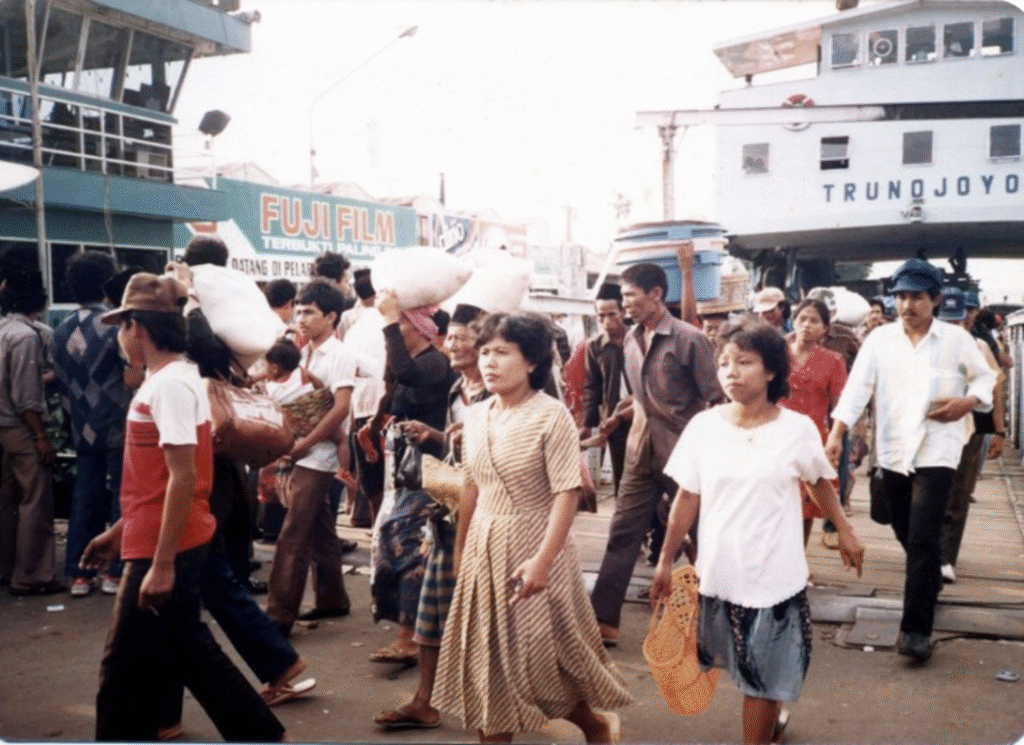
Photo by author, 1983