JAP | ENG
Delphi, Greece
October 2014
#1/2
I stay in Meteora for a full day (2 nights) before heading to my next destination, Delphi, a sacred place in ancient Greece.
Delphi is 122 km northwest of the capital Athens, but it is quite difficult to get to Delphi from Meteora.
There is no direct train service between Meteora and Delphi, and there are no direct regular buses.
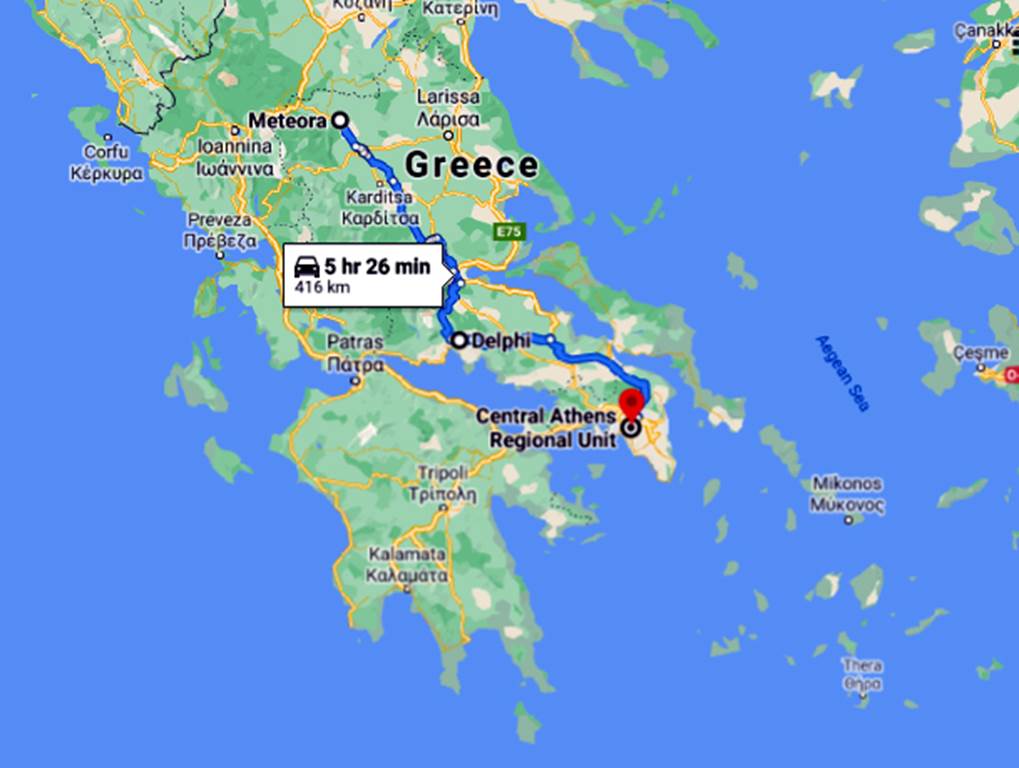
From Meteora to Delphi
I asked the front desk of the hotel and asked for a private taxi.
Soon the car arrive at the Square in front of the hotel.
The car was a new Skoda (made in the Czech Republic).
We negotiated the price of 250 kilometers to Delphi and it was a pretty good deal.
According to the driver, October is the time of year when there are the least number of tourists, so they decided to keep it cheap.
In the high summer season, the price is said to be almost doubled.
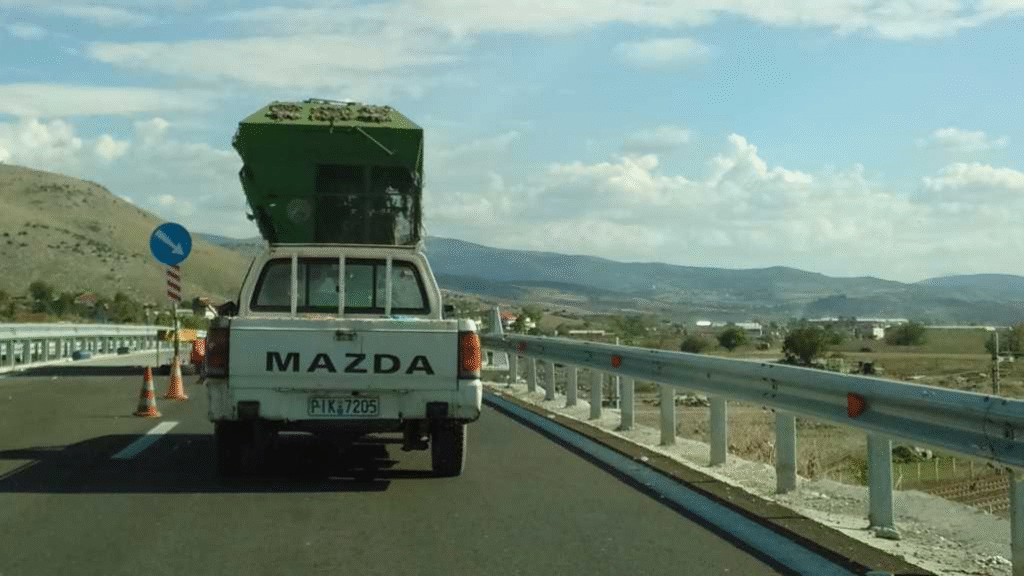
Photo by author, 2014
The roads connecting the towns in the Greek countryside were quite high-spec despite the low traffic, and we were able to comfortably navigate the flat land between the successive mountain ranges and enjoy the scenery.
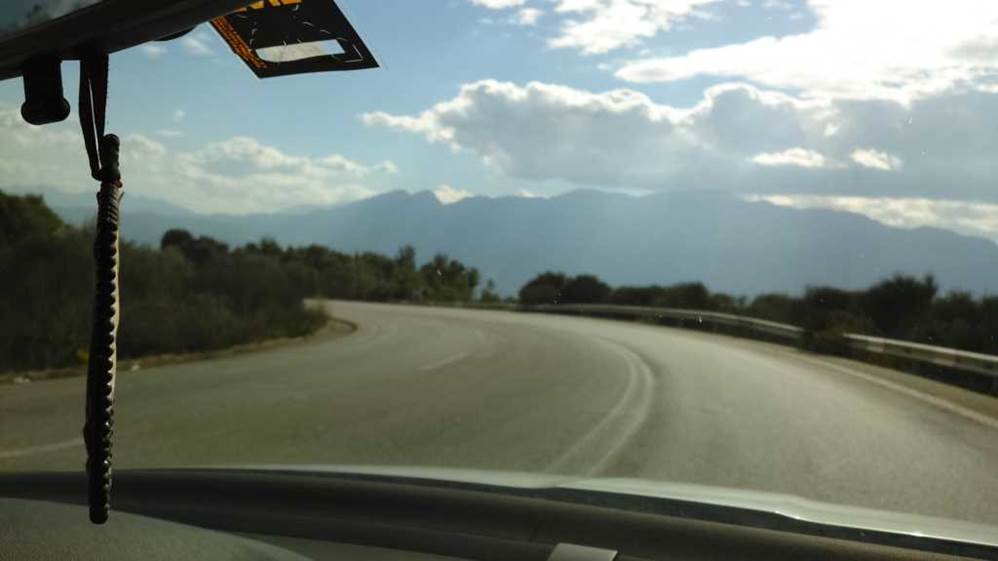
Photo by author, 2014
As I got closer to Delphi, I saw a railway line parallel to the road.
Moreover, it is a double track of electrification.
I guess it travel inland to Greece, which has a complex topography and I felt that I needed more background knowledge about the country’s railway network.
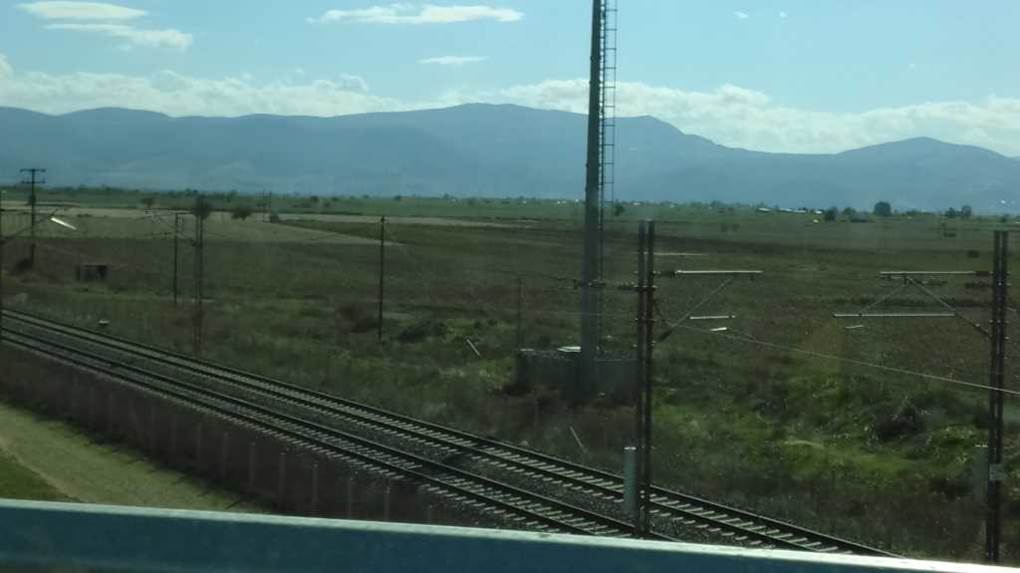
Photo by author, 2014
Arrival in Delphi
After being safely taken to the hotel in the city of Delphi, I thanked the driver and paid the fare. Thank you very much.
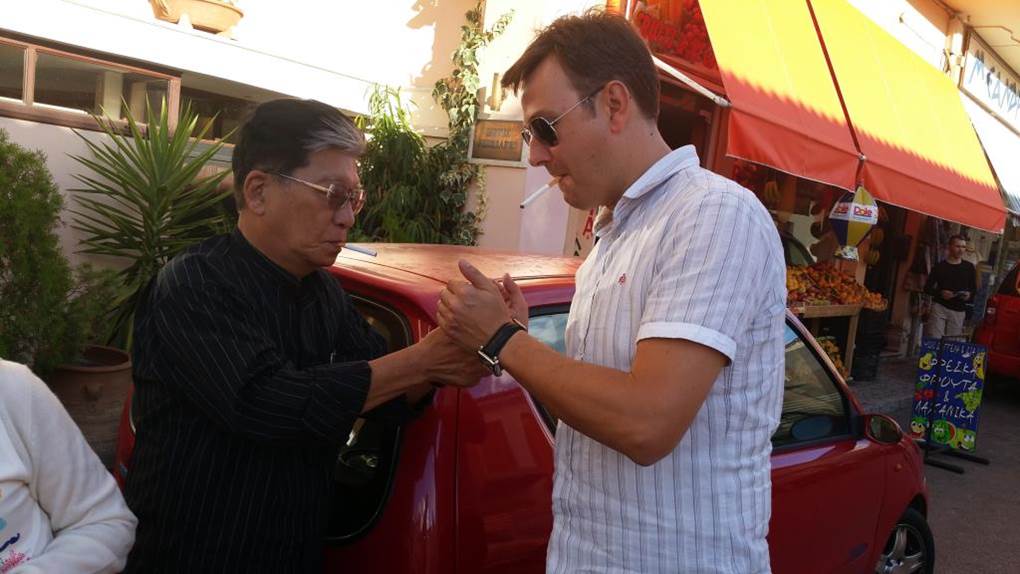
Photo of author and driver, 2014
View from a room on the second floor of the hotel.
It’s a scenery exclusive to Delphi.
The Gulf of Corinth and beyond is the Peloponnese.
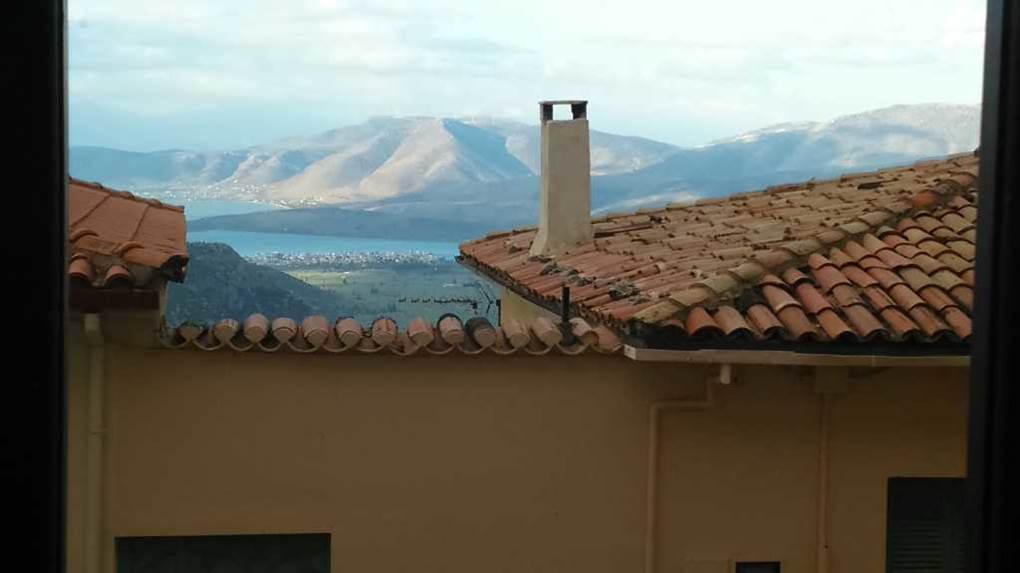
Photo by author, 2014
The main street of Delphi. It runs parallel to the mountainside, and between the buildings you can see the valley floor and the mountains beyond.
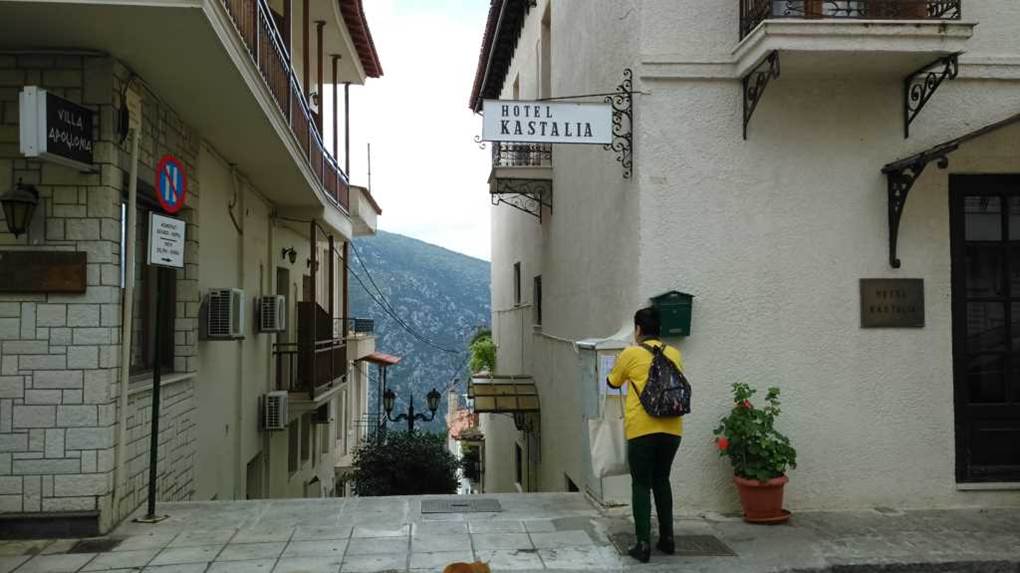
Photo by author, 2014
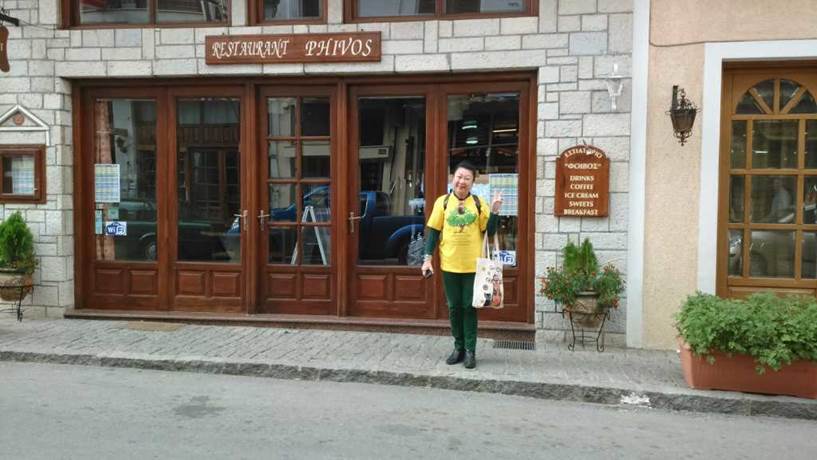
Photo by author, 2014
Delphi, a town on the slopes of a mountain.
The sign of the hotel facing the main street.
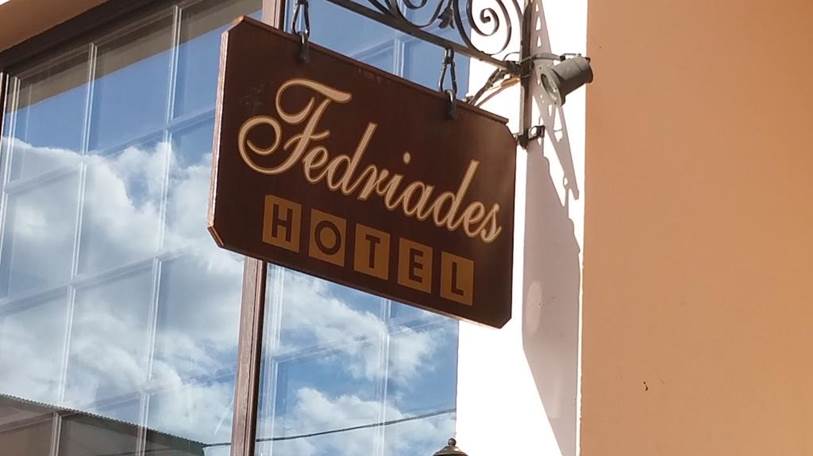
Photo by author, 2014
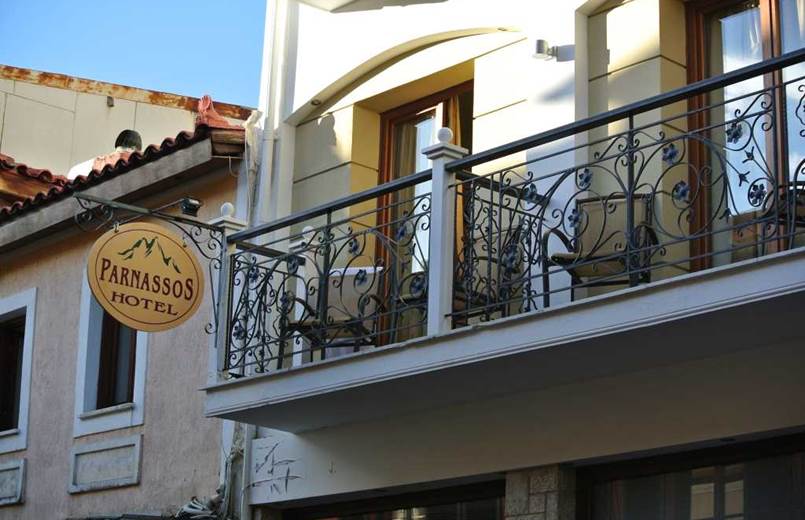
Photo by author, 2014
Two T-shirts I found at the store
I saw a lot of T-shirts hanging in front of a souvenir shop near the hotel on the main street. Two of them caught my eye. I think this is exactly the original Greek print pattern!
Pythagorean theorem
“The square of the hypotenuse of a right triangle is equal to the sum of the squares of the other two sides.” This theorem was apparently used in Babylonia and elsewhere before, but it was named after Pythagoras because he proved that it applies to all right triangles.
Pythagoras (c. 582 BC ~ c. 496 BC)

Pythagorean theorem
Golden Ratio Golden Section
Since ancient times, there has been something called the “golden ratio” that the human eye finds most beautiful.
The golden ratio is said to have been discovered by the ancient Greek mathematician Eudoxus (c. 408 BC – c. 355 BC), and was later adopted by the sculptor Phidias, who is said to have served as the general director of the construction of the Parthenon in Athens.
Representative historical buildings and works of art that use the golden ratio include:
Venus de Milo (Ancient Greece)
Pyramids (Ancient Egypt)
Leonardo da Vinci’s Mona Lisa (around 1503-1519)
Arc de Triomphe in Paris (1836)
Sagrada Familia Cathedral in Barcelona (1882-)
The golden ratio is also used in the dimensions of namecards, credit cards, and cigarette packets.

Golden Ratio Golden Section
A guide map of the townscape of Delphi spreading out on the slopes of the mountain. You can see that there are many small hotels and guesthouses scattered throughout the town.
And the town exists as a base for tourists to visit ancient ruins.
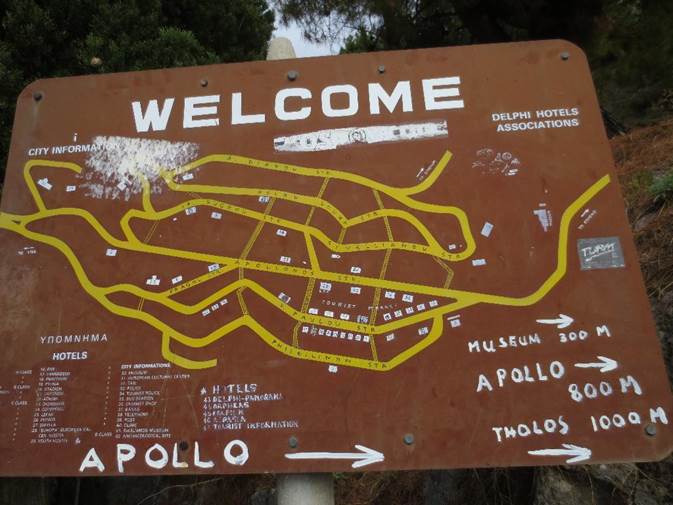
Photo by author, 2014
Delphi is located 122 km from Athens, the capital of Greece and about 157 km north of Sparta.
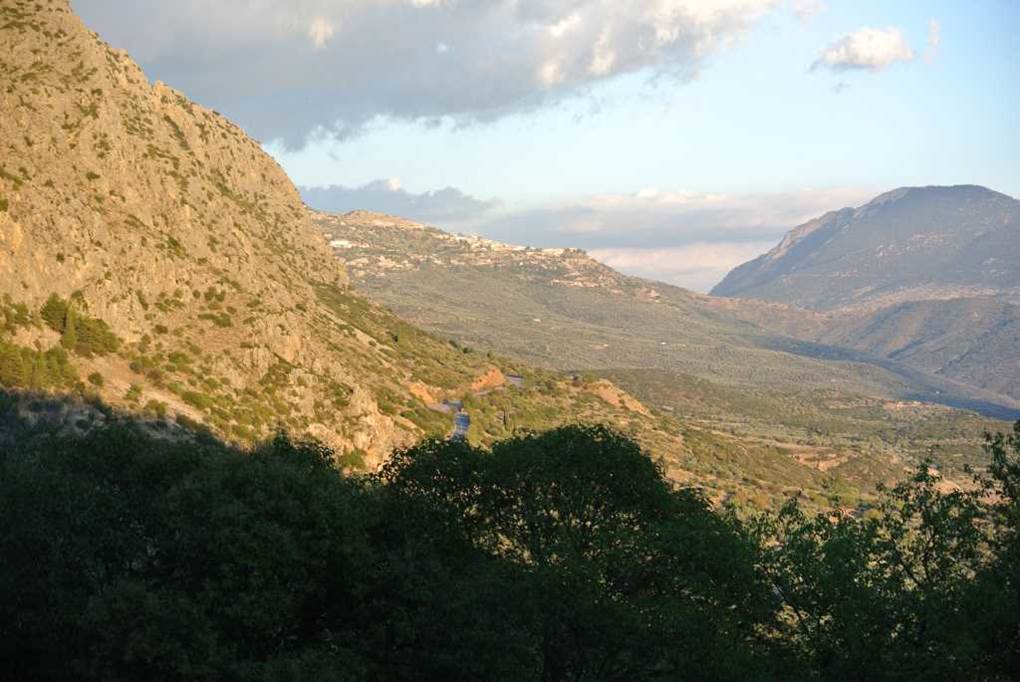
Photo by author, 2014
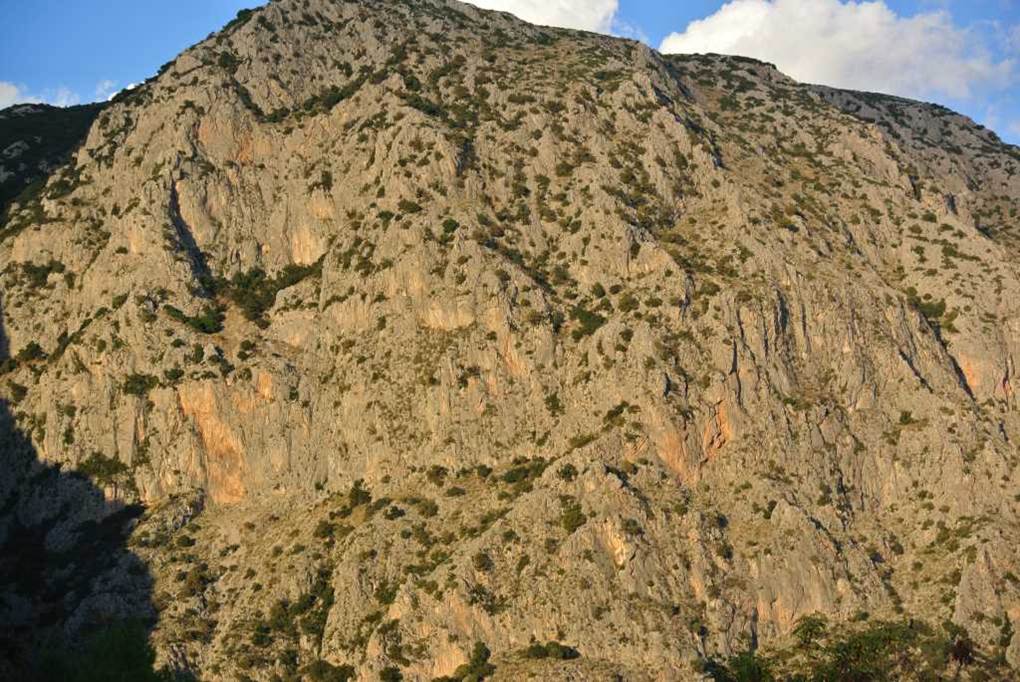
Photo by author, 2014
Archaeological ruins of the ancient city-state of Delphi
World Heritage Site
I walked about 1 km east on foot from the hotel and came to the square in front of the entrance of the world heritage site.
There, flags from all over the world were flying, starting with the Greek flag.
The flag of Japan was also fluttering in the wind.
I guessed that the flag of the countries that funded the development of this World Heritage Site were planted here.
The camera captured the moment when the Greek flag and the Japanese flag were opened simultaneously by the wind.
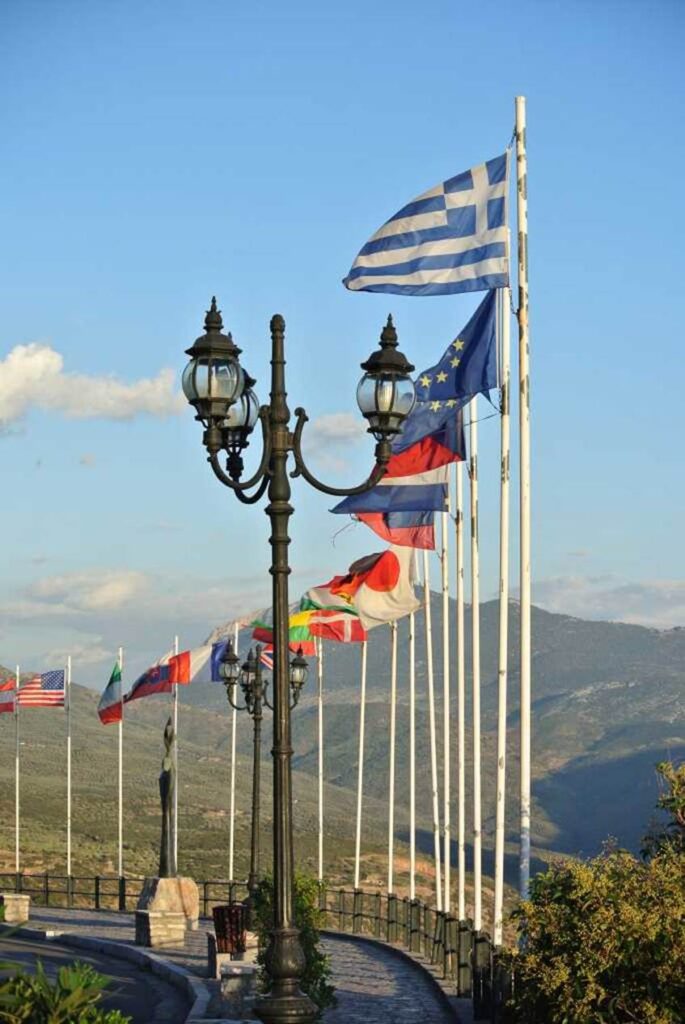
Photo by author, 2014
Archaeological sites of Delphi
World Heritage Entrance Sign.
Behind it is a handmade-looking retaining wall.
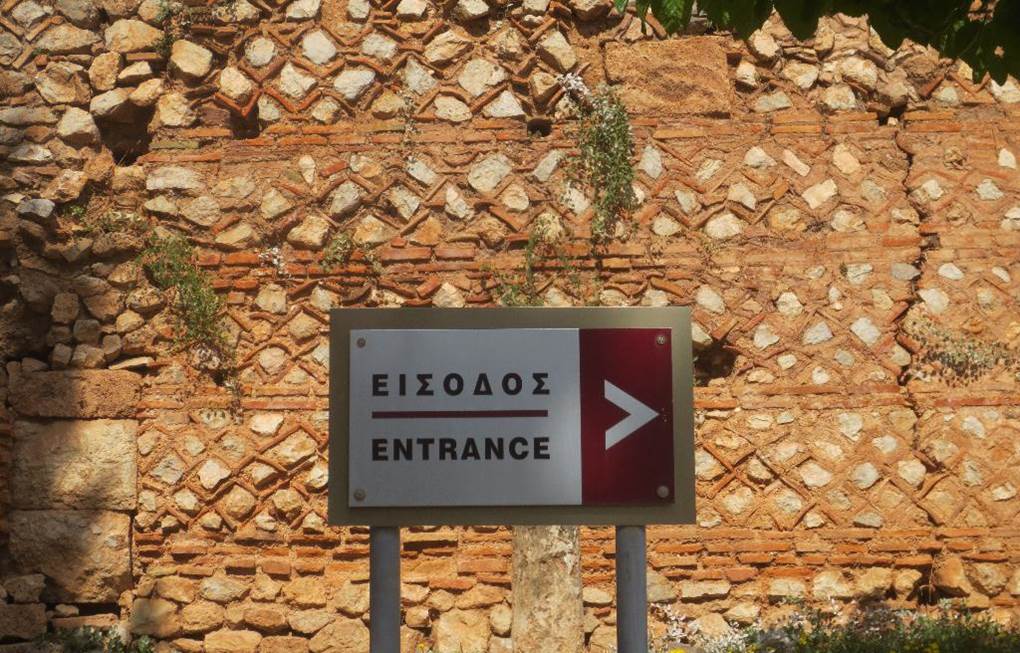
Photo by author, 2014
The ruins of Delphi consist of a sanctuary centered on the Temple of Apollo Palatinus. Adjacent to the sanctuary was also a large number of votive statues, and numerous so-called treasuries.
Apollo’s sanctuary is near the entrance to the ruins.
The remnants of buildings are scattered on the slopes of the mountains.
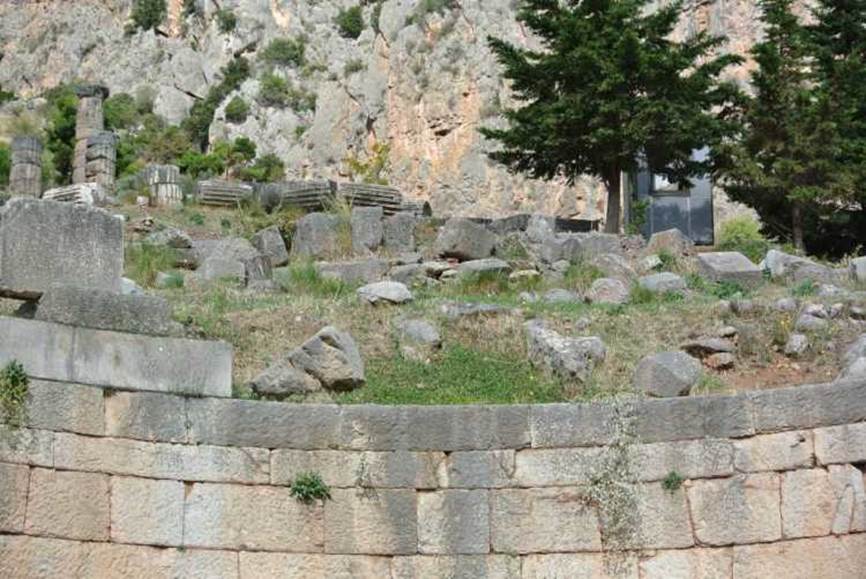
Photo by author, 2014
Delphi was just one of the ancient Greek city-states, and was mountainous and not rich, nor did it have a strong military force.
However, its political significance was the greatest in ancient Greece.
This was because they had a large number of priestesses who delivered prophecies and oracles that were believed to be certain to come true at oracle events.
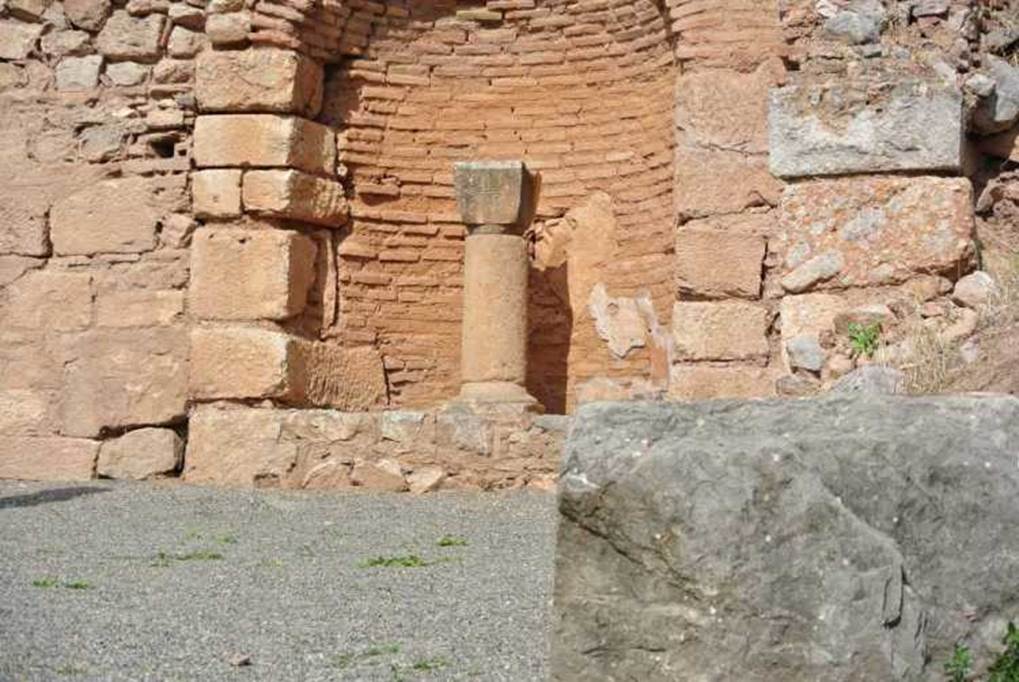
Photo by author, 2014
“Navel of the Earth“
The third attraction that seems to be overlooked is the navel of the earth.
It looks like a mere stone, but in ancient Greece, it was thought to be the center of the ancient world.
At the time, a stone throne was placed here, and a prophetic priestess would give oracles.
The original “Navel of the Earth” and the “Stone Throne” are kept in the Delphi Temple Museum.
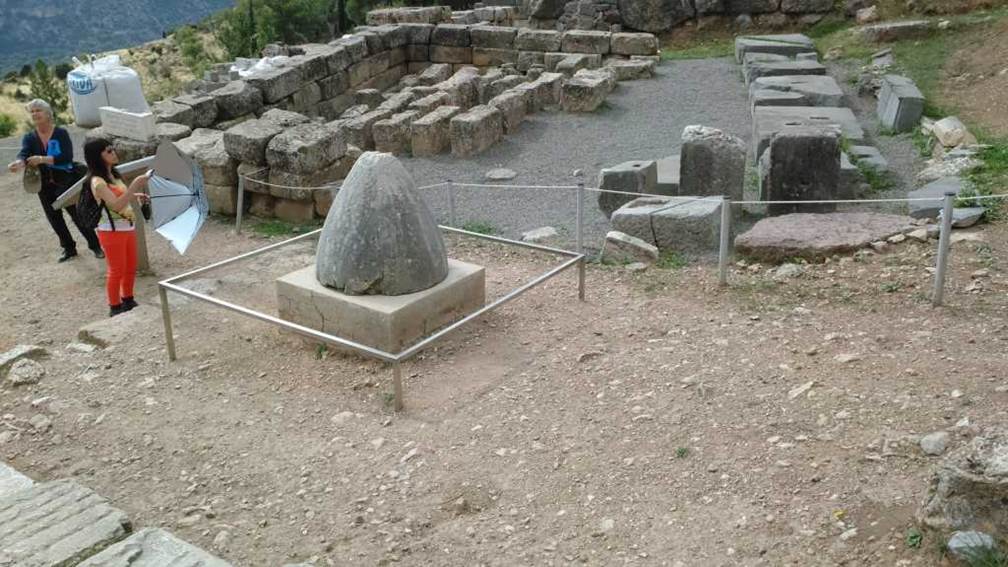
Photo by author, 2014
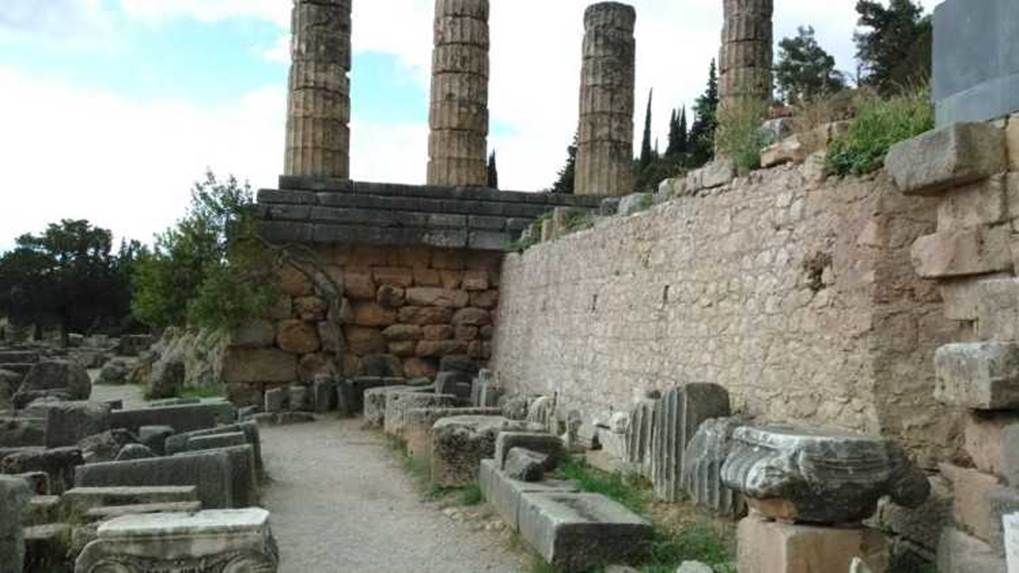
Photo by author, 2014
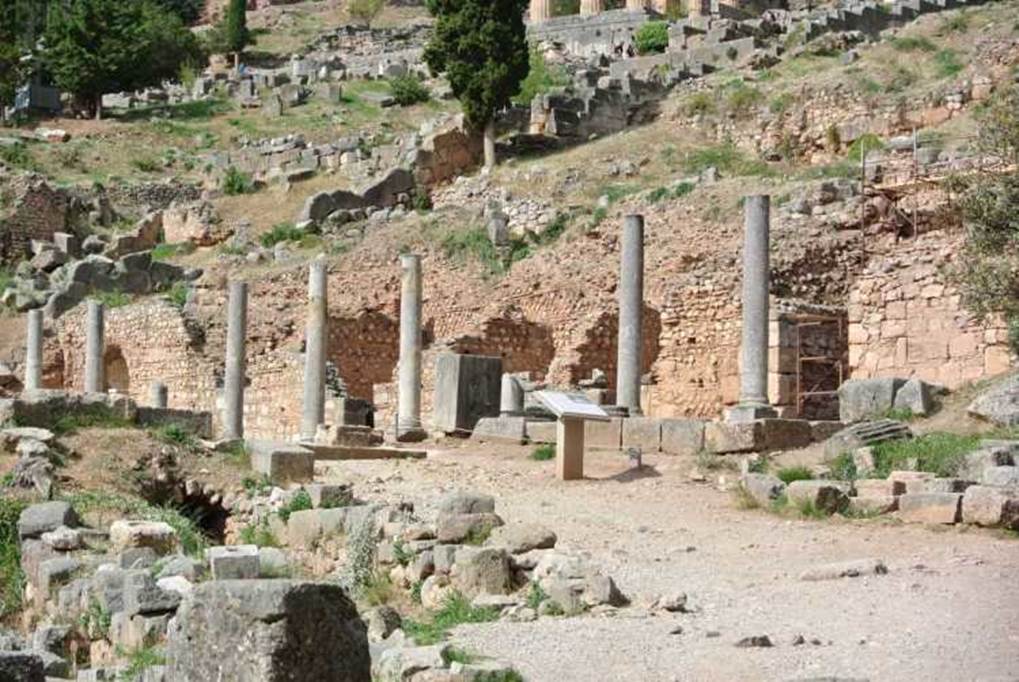
Photo by author, 2014
The Treasuries
Athenian Treasury from the 5th century BC.
The treasury is 10 meters long and 6 meters wide.
There are two Doric columns at the entrance.
Among the other ruins where only the foundation of the stone pile remains, this remains is the structure which most resembles a building.
The French Archaeological Society rebuilt it over a period of three years from 1903, and it was almost restored to its original appearance.
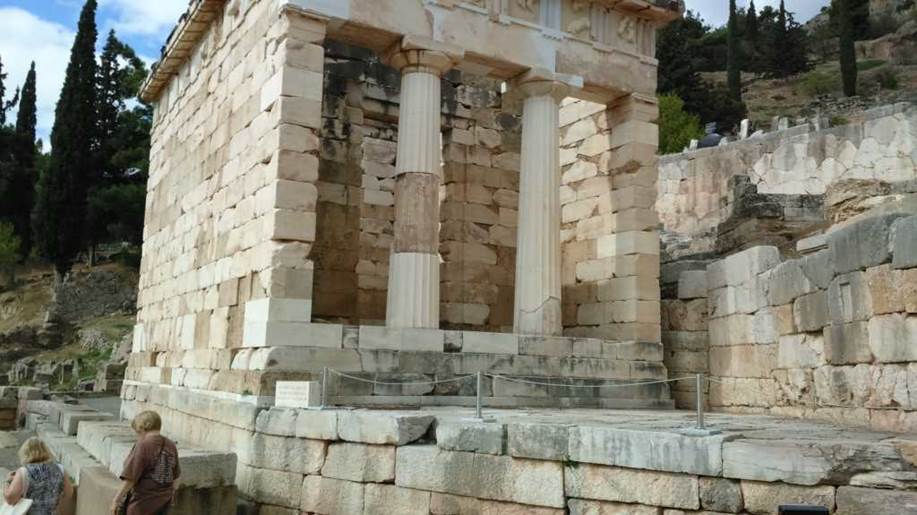
Photo by author, 2014
In addition to this treasury, there were apparently several other treasuries containing treasures from other city-states, but they are no longer there.
This treasury became the only building with a roof remaining.
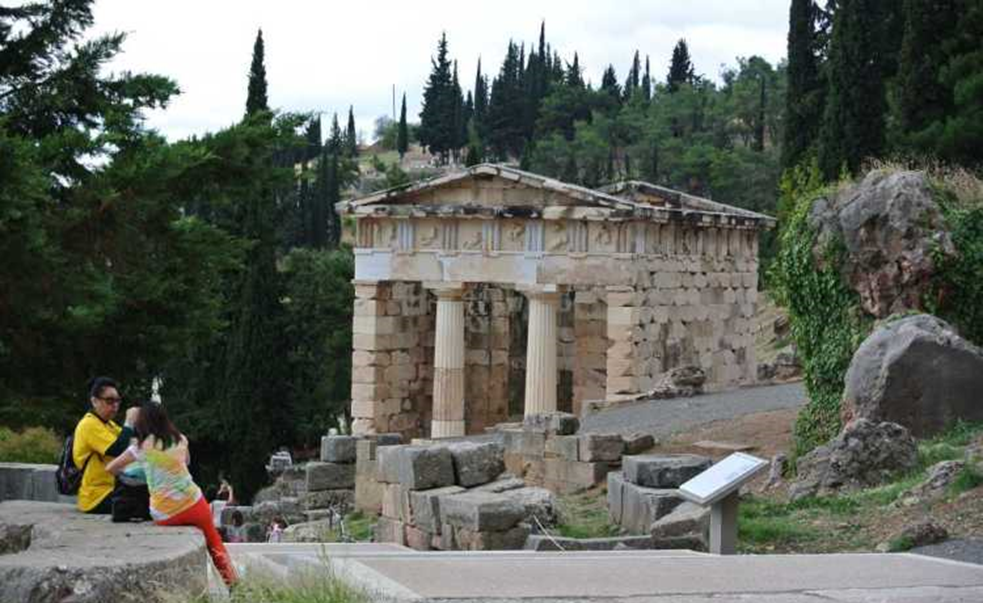
Photo by author, 2014
Stoa of the Athenians
It was built in 480 BC to display the spoils of war when Athens defeated Persia in the naval Battle of Salamis.
At the time, seven Ionic columns supported the roof, but now only these three remain. They are made of white marble brought from Athens. (Right end of the photo below)
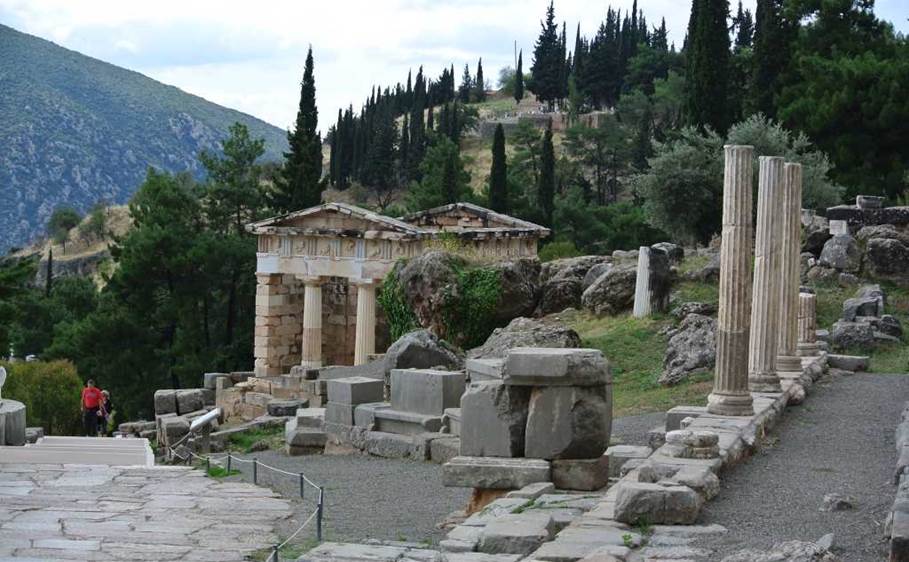
Photo by author, 2014
Doric capitals.
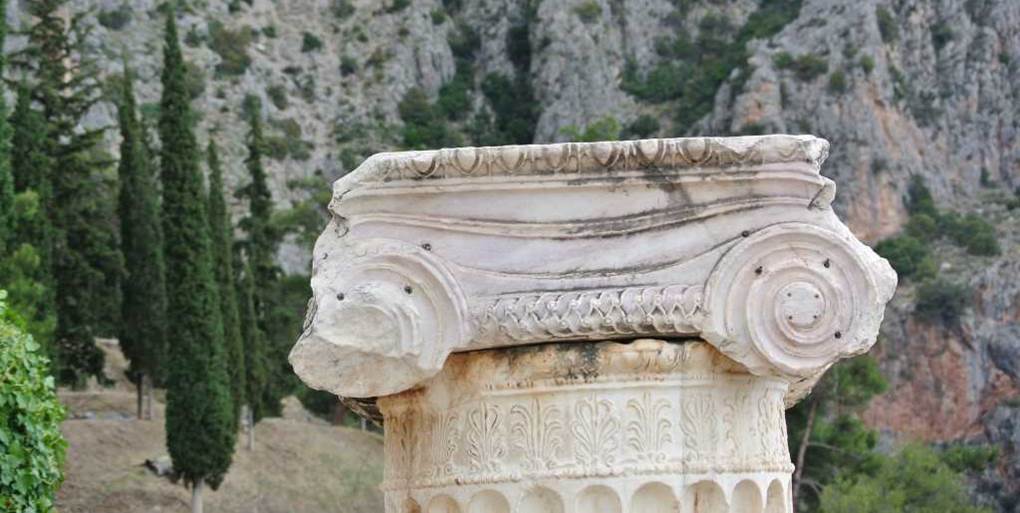
Photo by author, 2014
Ancient ruins of Temple of Apollo
The first attraction is the restored Temple of Apollo.
Even today, the upright pillars and foundations are well preserved, giving an idea of the prosperity at that time. It is said to have existed at least as early as the 8th century BC.
In ancient Greece, the temple of Apollo in the ancient ruins of Delphi was considered the center of the whole world. At its peak as a holy place, it was visited by many pilgrims from the surrounding areas.
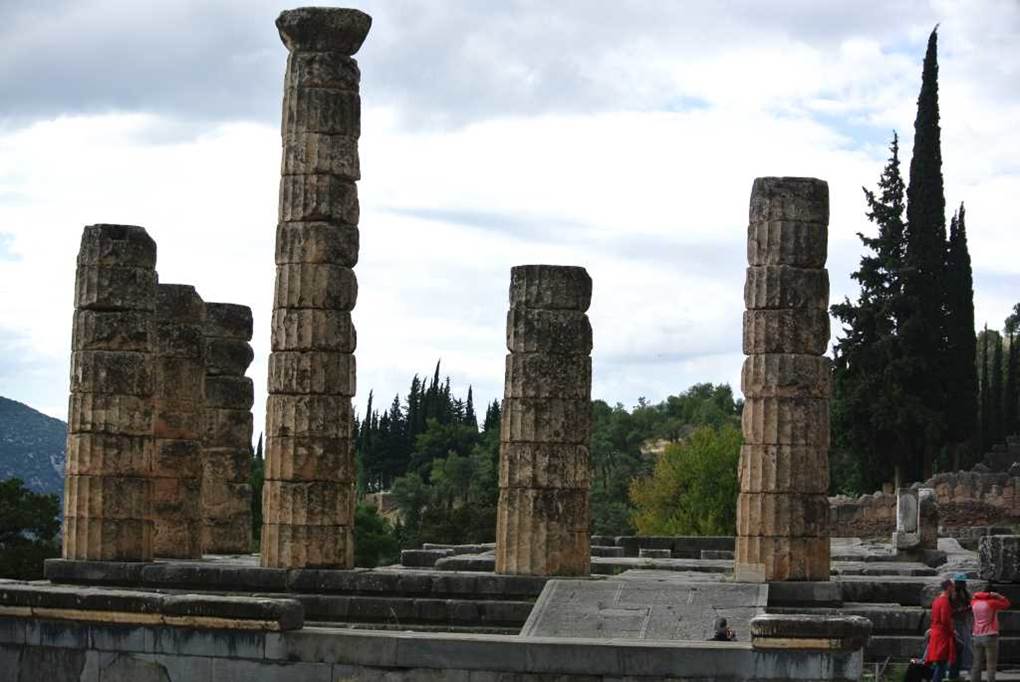
Photo by author, 2014
Rituals dedicated to the gods here took precedence over all else, and all important decisions were made by oracles. There were several oracles in Greece, the highest of which was Delphi. The oracles of Delphi were considered absolute, and the city-state council always relied on them when making important decisions.
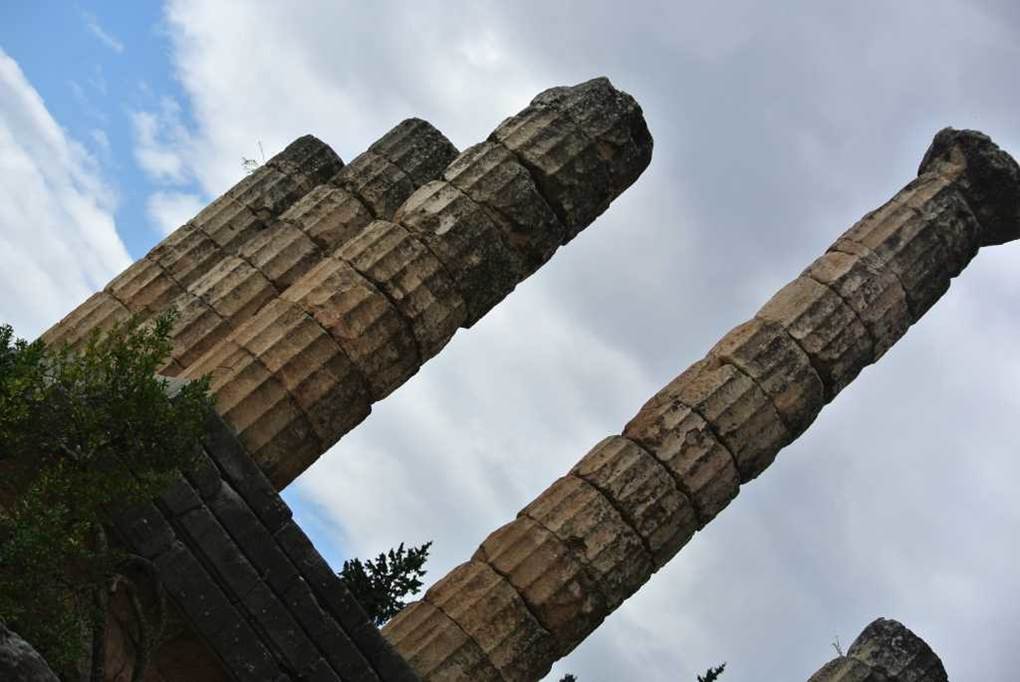
Photo by author, 2014
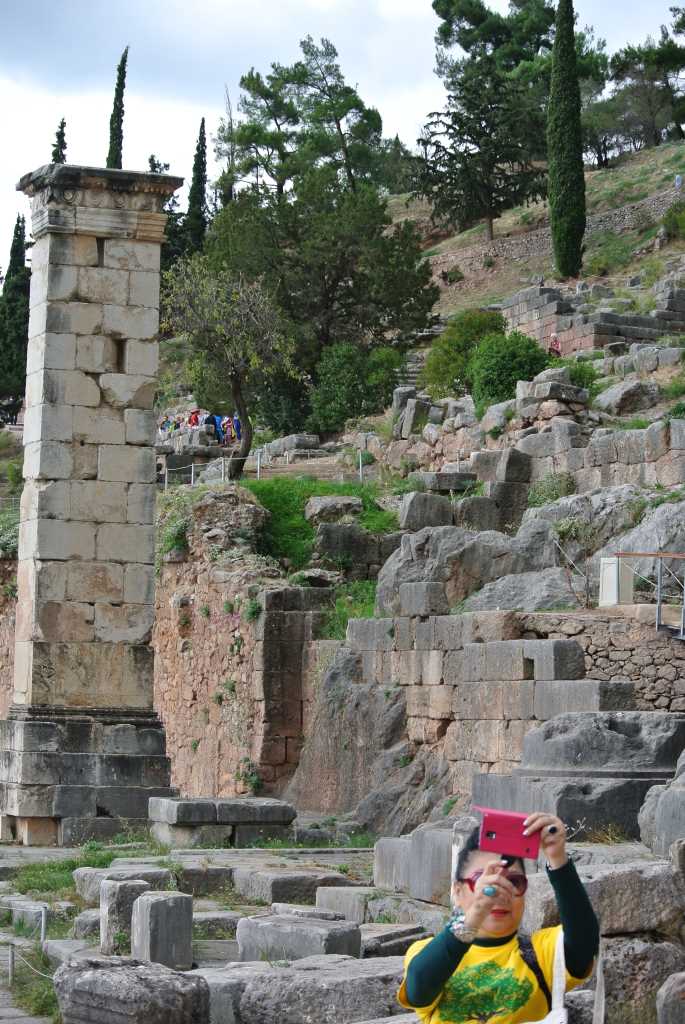
Photo by author, 2014
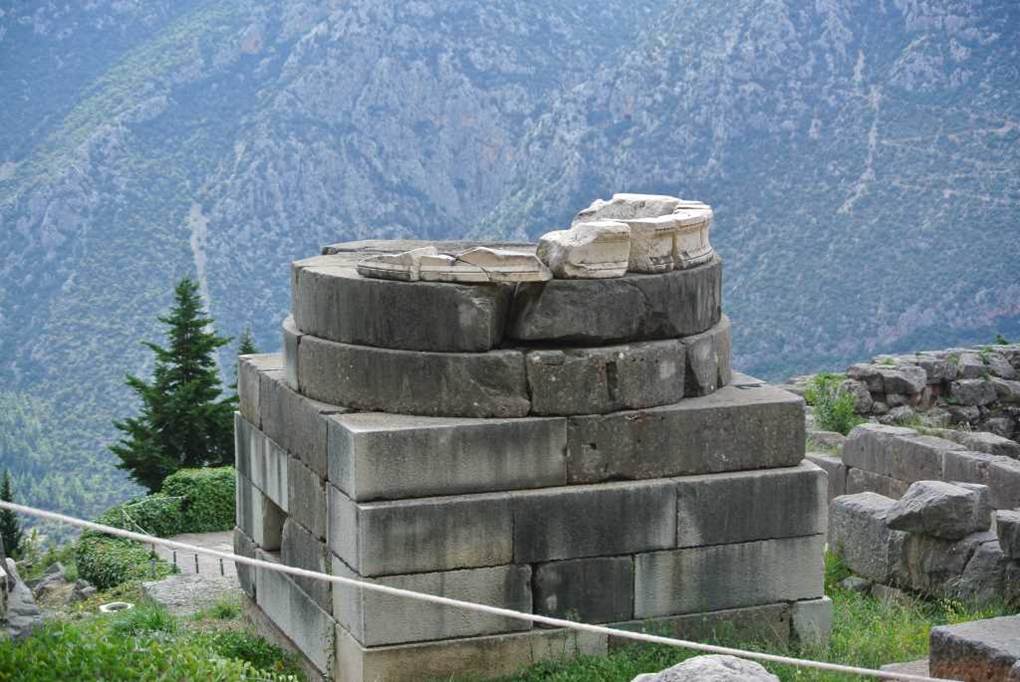
Photo by author, 2014
The Temple of Apollo that remains today dates back to around 370 BC.
It is about 60 m long and 23 m wide.
It is said that there were a total of 38 Doric columns.

Photo by author, 2014
The ancient ruins of Delphi are carved out of the slope of the mountain.
It was once revered as a place of worship since ancient times, but since the 12th century BC it has become a place of worship for gods.
The ancient ruins of Delphi, a World Heritage Site, were built around the Temple of Apollo.
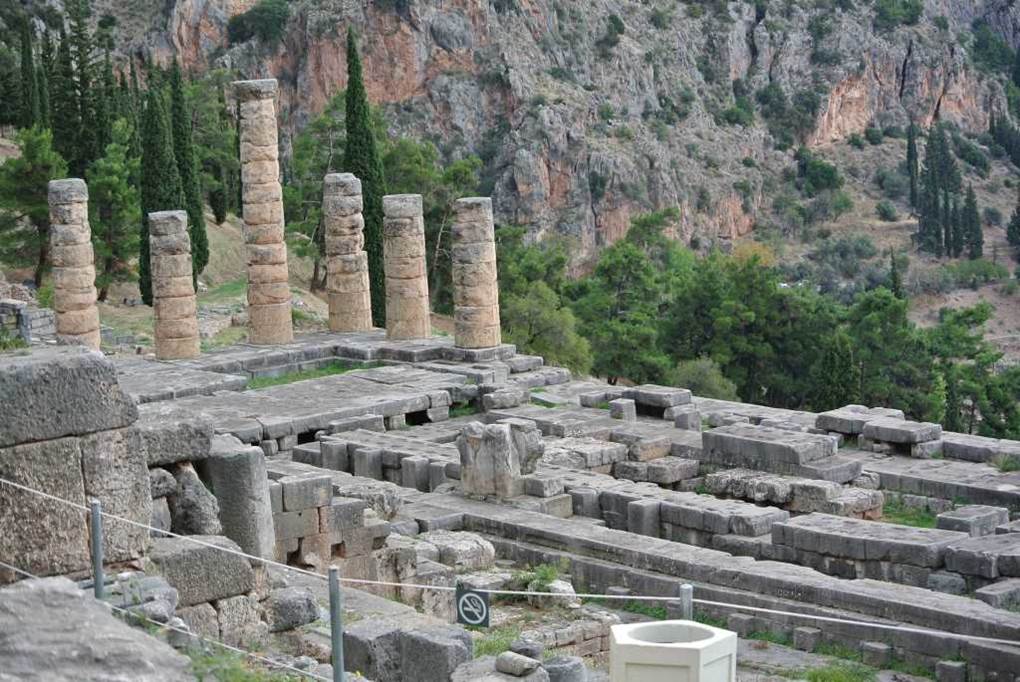
Photo by author, 2014
Panoramic view of the Temple of Apollo
with the overwhelming rocky mountain in the background.
The location of the temple gives it an indescribably sacred feel..
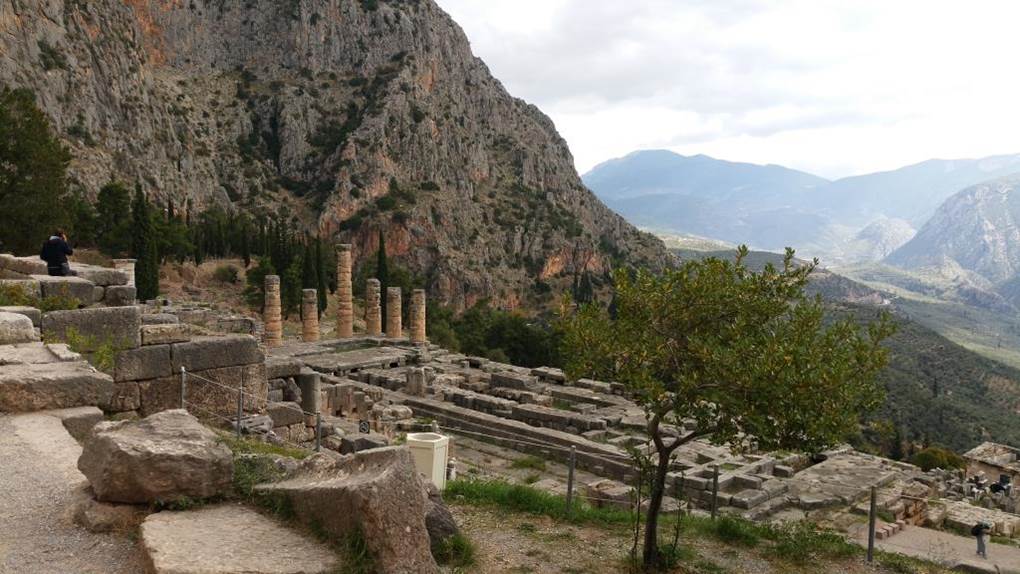
Photo by author, 2014
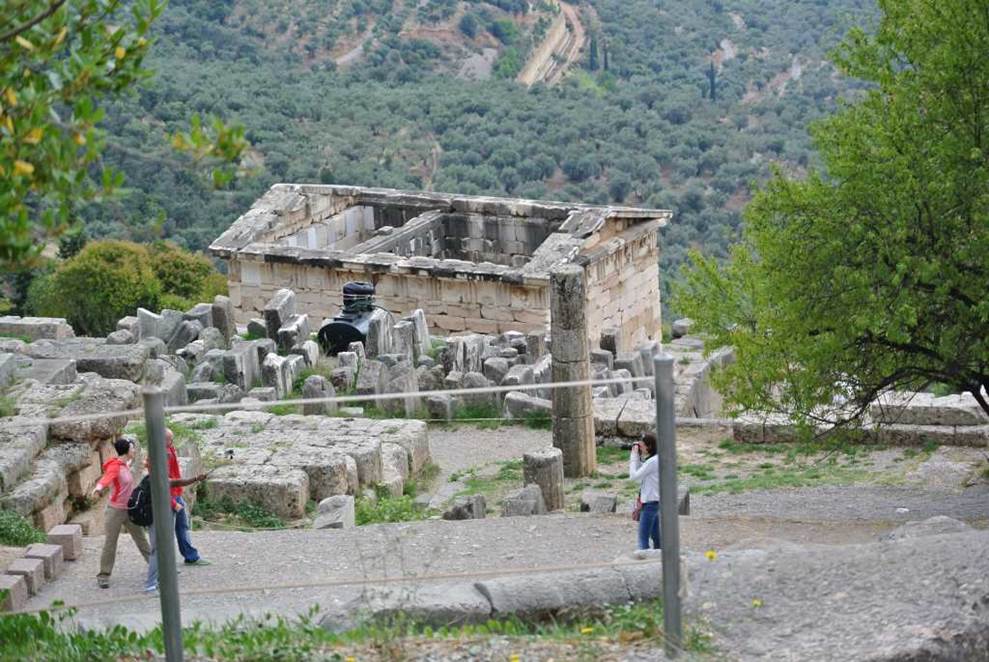
Photo by author, 2014
Panoramic view of the Temple of Apollo
According to a reconstruction drawing, a carving of Apollo in a four-horsed chariot, accompanied by many attendants, being welcomed into Delphi was once used on the pedestal on the east side (front) of the temple.
Now it can only be seen in the museum.
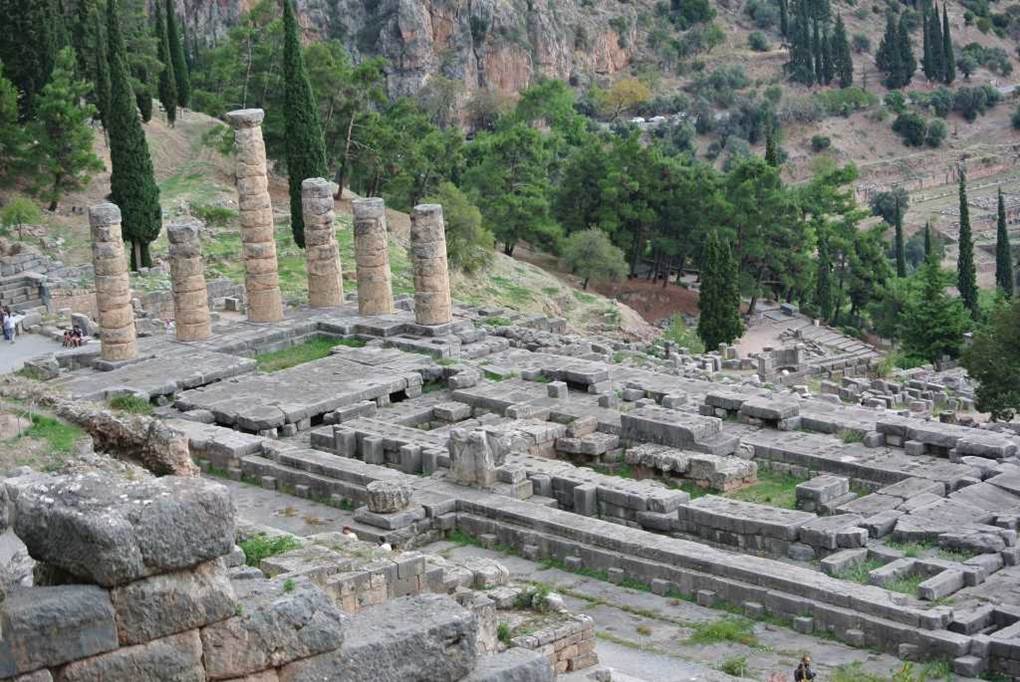
Photo by author, 2014
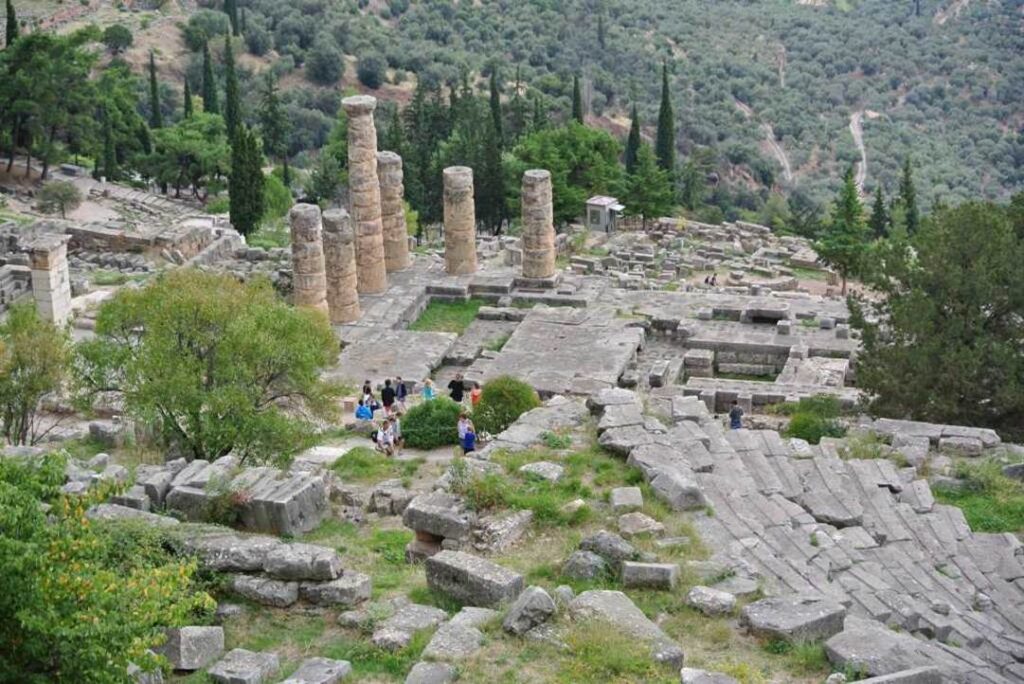
Photo by author, 2014
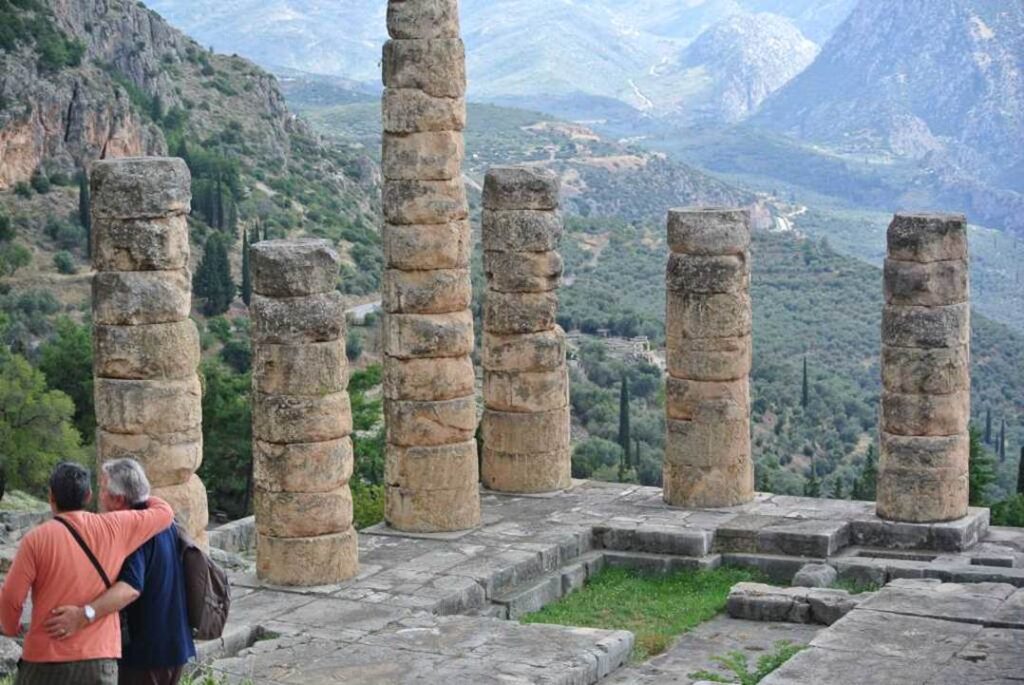
Photo by author, 2014
Amphitheatre
The second attraction is the amphitheatre. Stone stairs, seats remain.
It was built in the 4th century BC by carving out a natural rock mountain on the hill to the north of the temple.
It was restored by the Romans two centuries later.
From around the 8th century BC, Delphi held a festival once every four years to appease the spirit of the monster Python and to praise Apollo, where poetry, drama, singing, and flute playing were performed.
It is said that as many as 5,000 people attended.
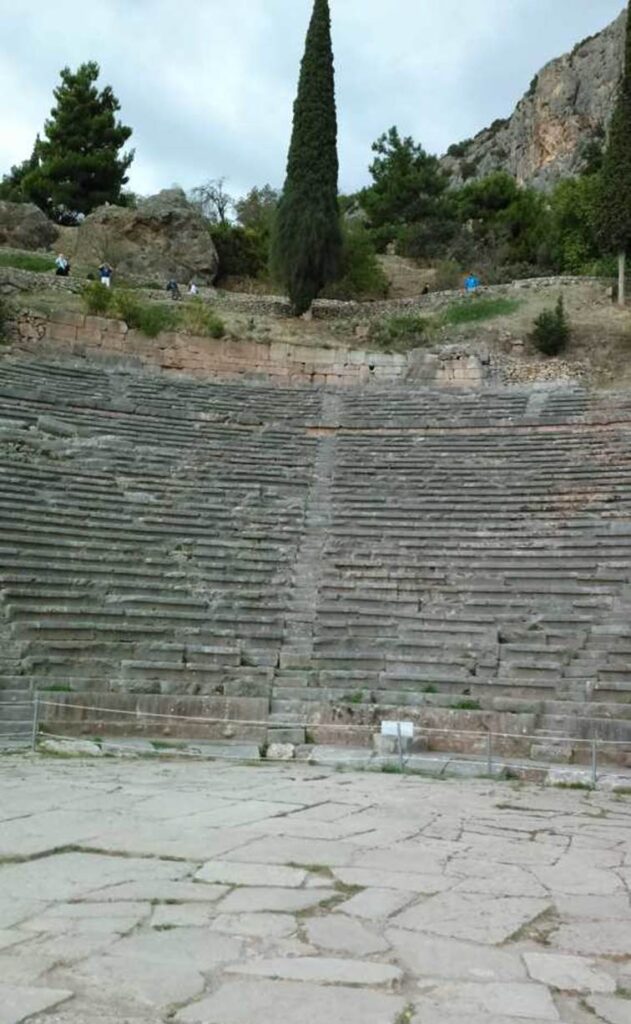
Photo by author, 2014
The state of preservation is quite good, with most of the original ancient structure remaining intact, and the view of the Sanctuary of Delphi from the top of the 35 marble steps is a mystical sight

Photo by author, 2014
The design of the auditorium of the modern international stadium also follows the basic dimensions of this Greek amphitheatre.
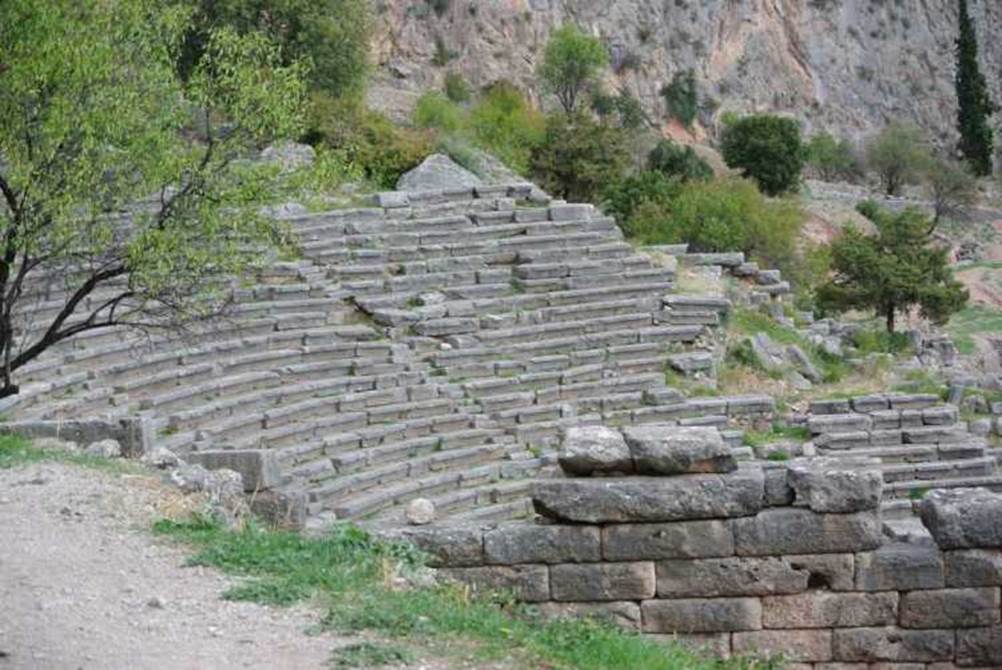
Photo by author, 2014
Stadium of Delphi
Climbing further up the amphitheatre, I came to a flat ground.
This is the original outdoor sports stadium.
There were also traces of outdoor spectator seats on one side.
In the 6th century BC, athletic competitions such as chariot races and wrestling were added, and sports festivals were held.
Competitors and spectators from all over Greece gathered from all over the city-states. The winner was given a laurel wreath made of laurel leaves, the symbol of Apollo.
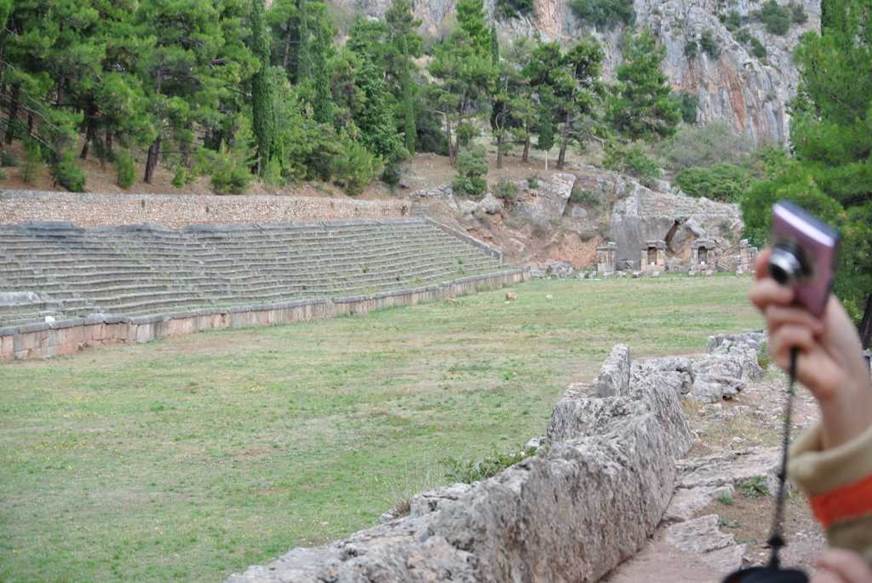
Photo by author, 2014
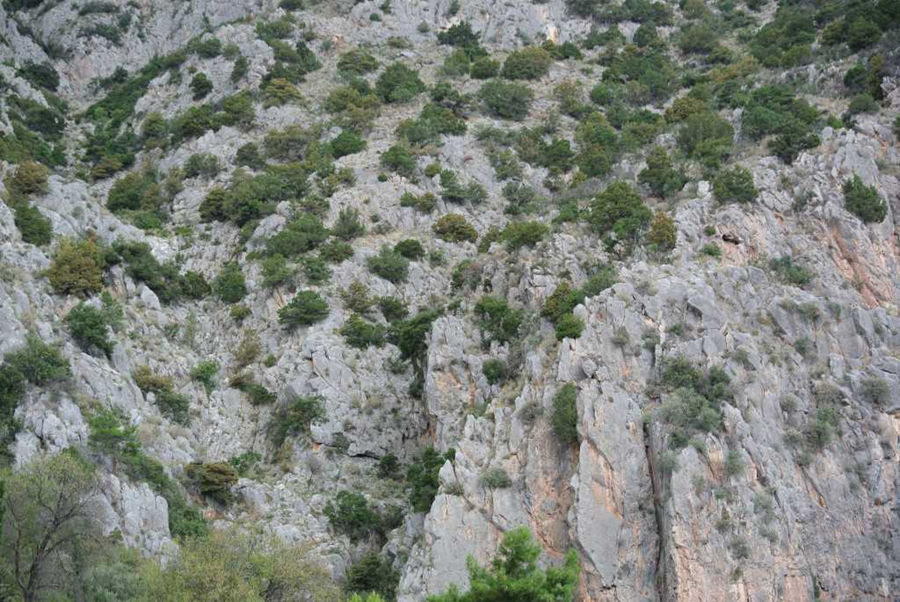
Photo by author, 2014
Ancient ruins buried in village
In the Middle Ages, settlements were built on top of the ancient ruins of Delphi.
Residents used the site’s marble pillars and structures to support the beams and roofs of their dwellings. These actions led to the burial of the ruins.
In 1580. It is said that there was also a major earthquake.
In 1893, archaeologists from the École Française Athénée rediscovered the ancient ruins of the ancient Delphi under the settlement, and the inhabitants were relocated to another location to the west.
Delphi at sunset
Greece has an extremely complex topography.
The surface of the water in the foreground looks like a lake, but it is seawater in the Gulf of Corinth.
On the other side of the bay you can see the mountains of the Peloponnese.
It is like looking into a world of myths and oracles.
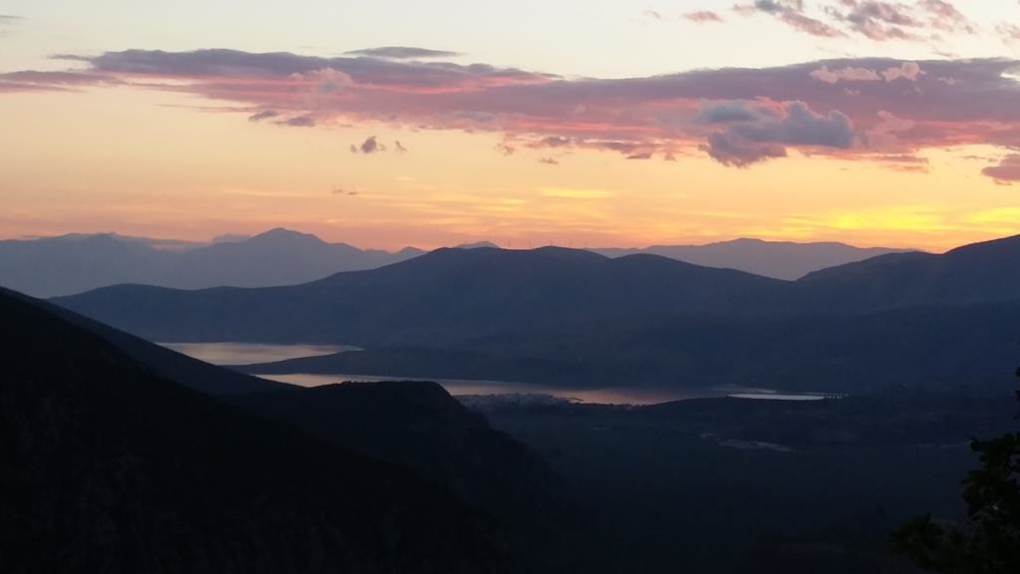
Photo by author, 2014
All photos by author, October 2014