JAP | ENG
Crete, Greece
October 2014
#2/2
What is the Minoan civilization?
The Minoan civilization is said to have flourished around 3000 BC ~ 1400 BC.
It is a civilization that is even older than the so-called ancient Greek civilization, and is called the Aegean prehistoric civilization, and its ethnicity and culture are different from those of ancient Greece. It is a civilization named after the legendary King Minos.
Architecture, murals, literature, trade, agriculture, etc., are considered to be the highest level of civilization in the world at that time. It is considered the oldest root that gives rise to today’s European civilization.
I bought a ticket at the bus terminal near Heraklion’s port and visit the Palace of Knossos, said to be the labyrinth of King Minos. It is 10 km to the south.
Photo by author, 2014
KNOSSOS
Knossos Palace, also known as labyrinth of King Minos
The first palace was built around 2000 BC in Knossos, which was inhabited in 7000 BC and is said to have had a population of over 100,000 at its peak.
The Minoan civilization flourished on the island of Crete prior to the ancient Greek civilization on the Greek mainland. It’s a must to visit its ruins.
We arrived at the entrance of the palace ruins of Knossos.
There is no World Heritage mark on the signboard. The reasons for this will be explained later.
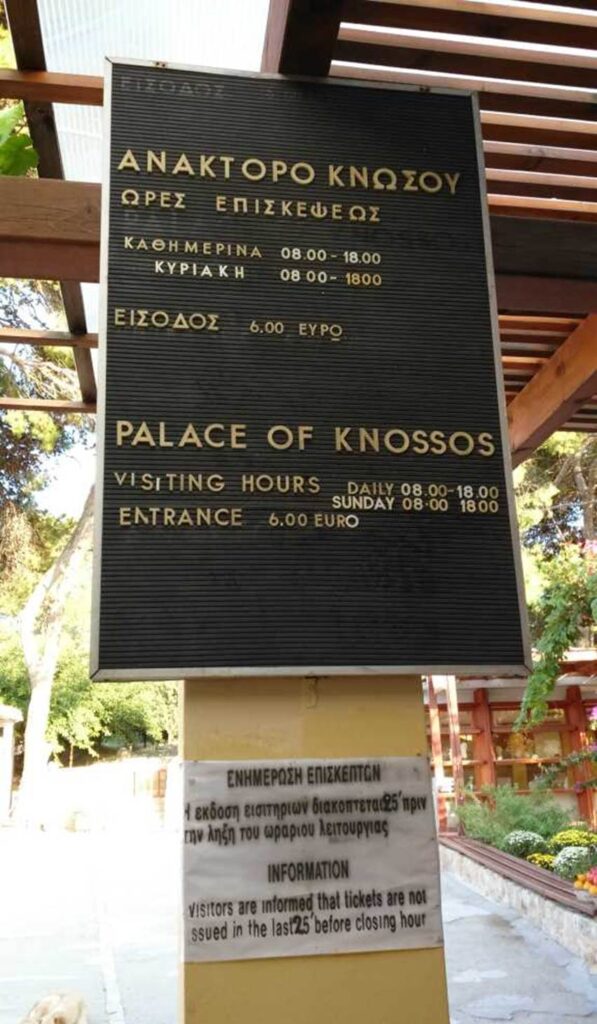
Photo by author, 2014
The Minoan Civilization is said to have suddenly disappeared around 1400 BC.
One of the causes of the collapse of civilization is the theory that it was destroyed by the Mycenaeans who came south from the Greek mainland, and the other is the theory that a huge volcanic explosion occurred on the island of Santorini in the Aegean Sea and it was destroyed by it.
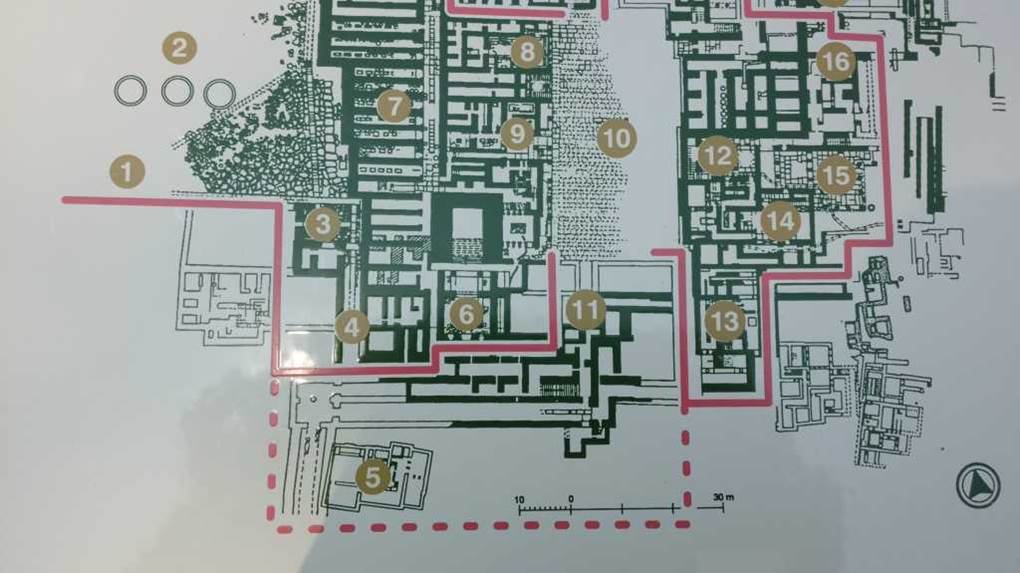
Photo by author, 2014
Once thought to be a fantasy in Greek mythology, Knossos Palace was discovered in 1900 by British archaeologist Arthur Evans. Crete became famous when Evans excavated the ruins of Knossos, which revealed that the island already had a high civilization before civilization flourished on the Greek mainland.
When Evans was involved in the restoration, he used new building materials and concrete, which were beginning to be used at the time, so the ruins of the Palace of Knossos did not meet UNESCO standards, and as a result, it was not recognized as a World Heritage Site.
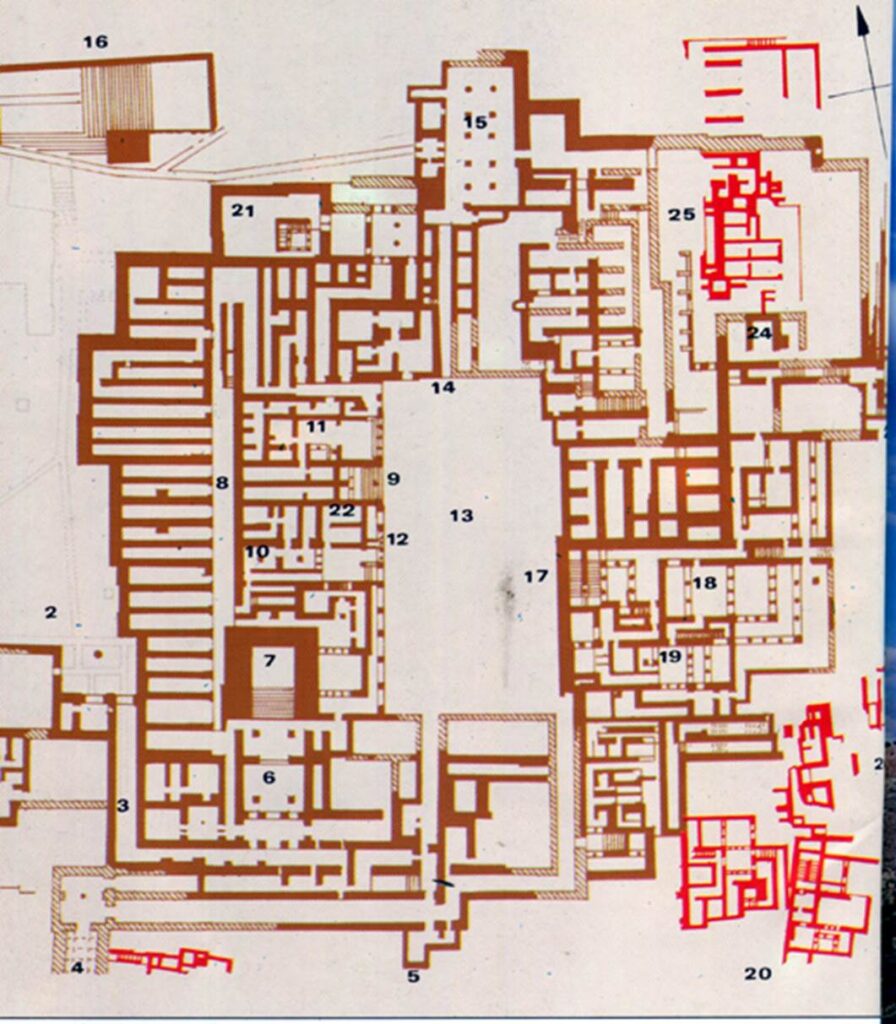
This first palace was destroyed by a major earthquake around 1700 BC, and the new palace that was rebuilt after that was destroyed by fire (there are various theories about the cause) around 1380 BC.
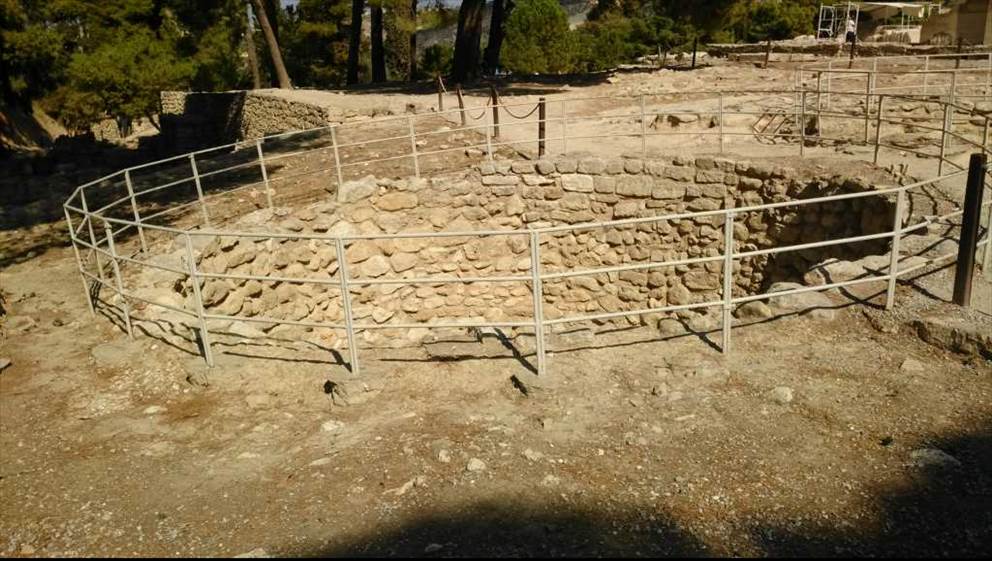
Photo by author, 2014
Small-scale excavations are being carried out little by little.
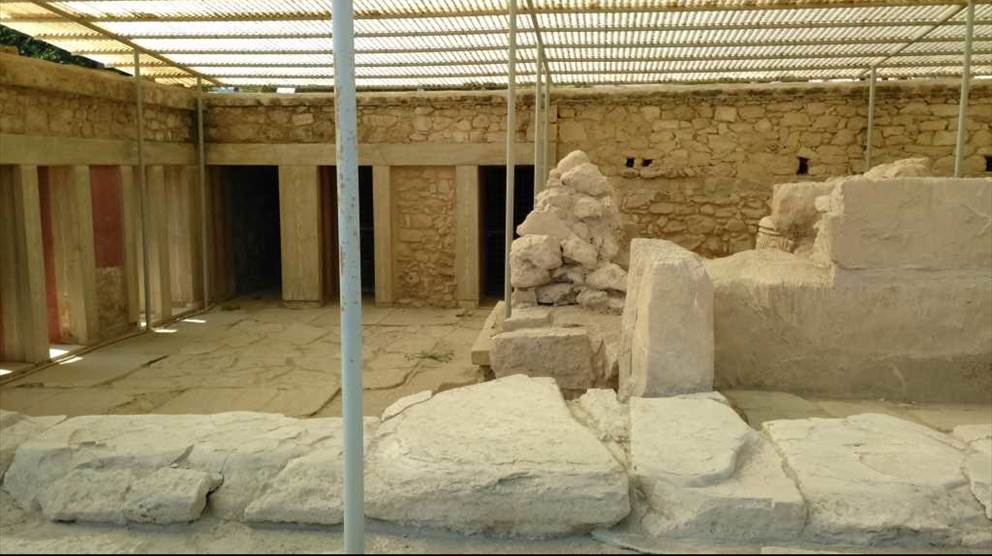
Photo by author, 2014
A place to store materials and also a resting place.
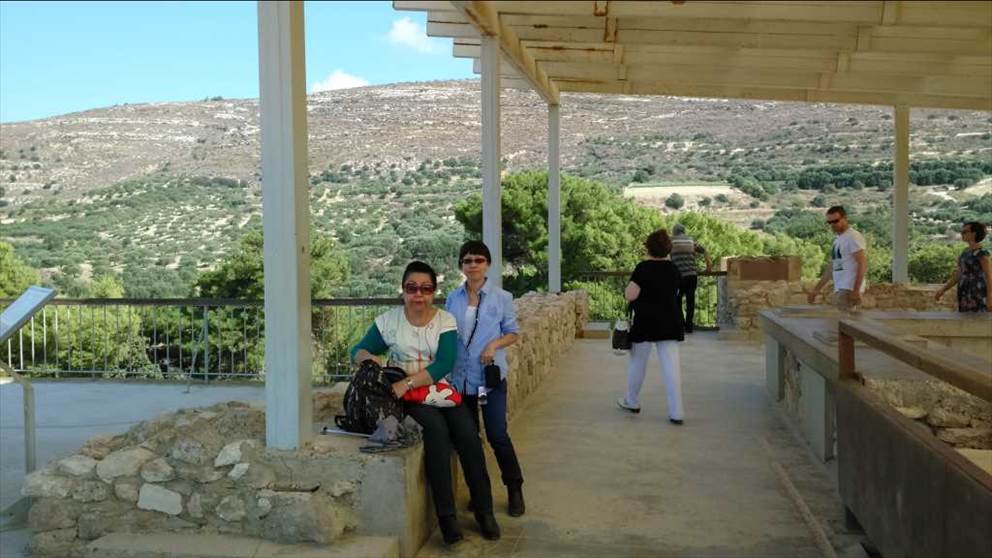
Photo by author, 2014
The palace is said to have been more than 160 meters long, with more than 1,200 rooms, and even a four-storey structure in some parts.
The palace’s most distinctive feature is its central square, which is surrounded by important facilities.
The architectural remains of the palace indicate the existence of strong royal authority and a highly advanced bureaucratic system.
It also had a huge warehouse where goods within the territory were collected and redistributed, and it is thought that they controlled distribution of goods.
The palace has a large courtyard at its center, surrounded by numerous storehouses, workshops, areas thought to have been used for rituals, and living area.
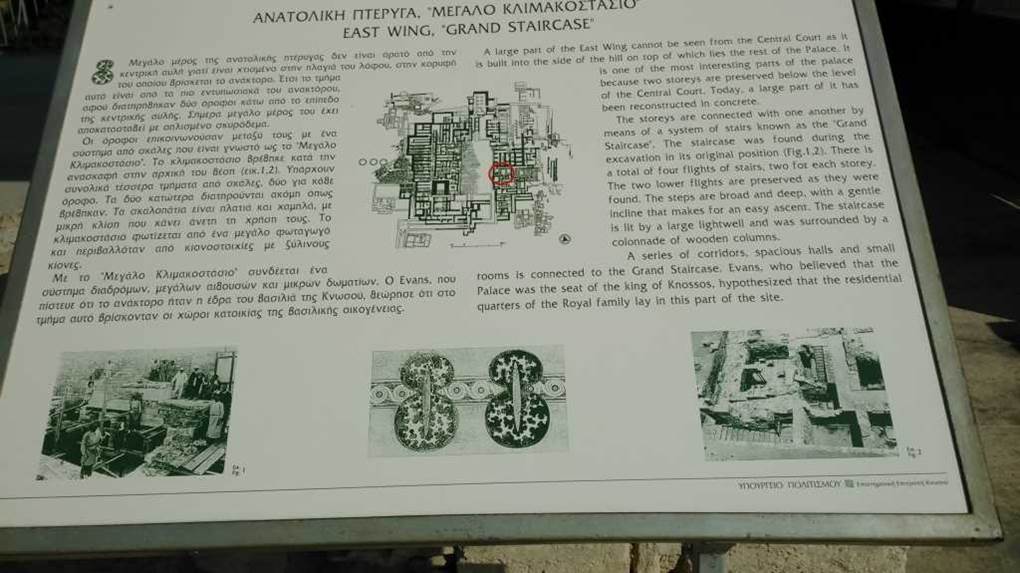
Photo by author, 2014
A reconstruction of the south entrance to the central square.
The design of the red colonnade and stairs is distinctive.
I can’t help but be surprised that such an urban design appeared around 2000 BC.
Colour Reproductions by C Iliakis
Photo by author, 2014
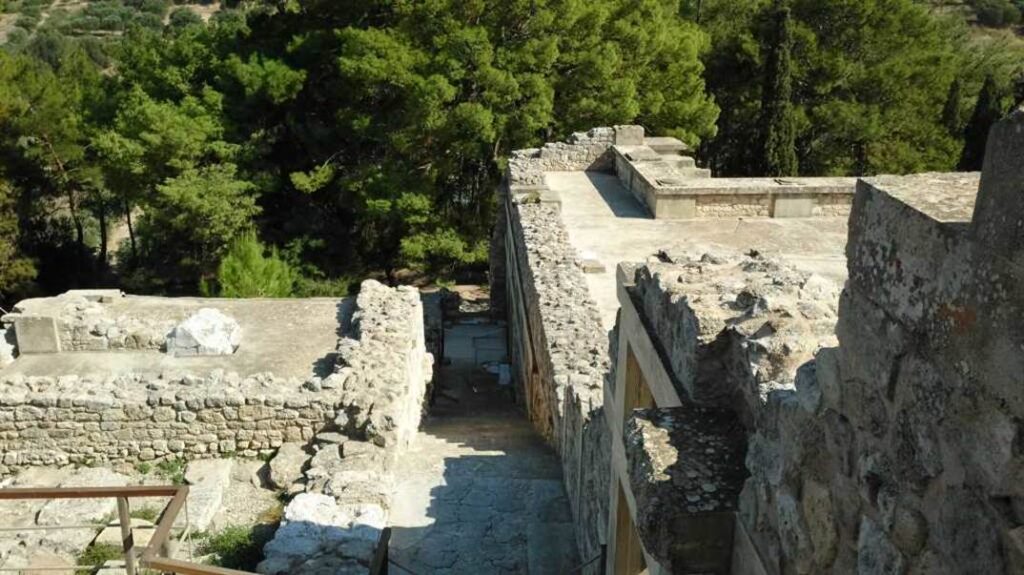
Photo by author, 2014
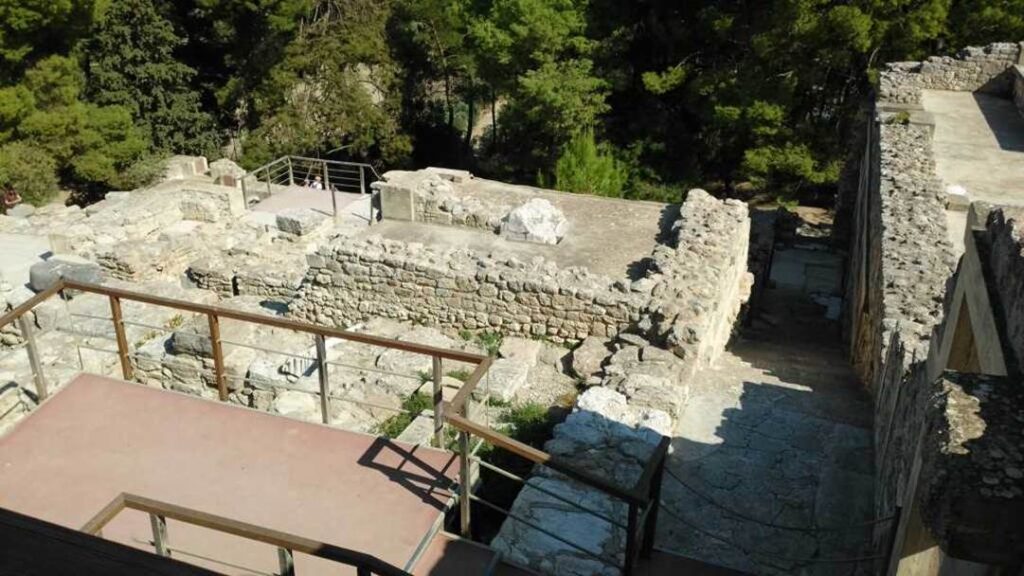
Photo by author, 2014
A reconstruction of the building on the west side of the central square.
I don’t know if it really looked like this, but I think it captures the atmosphere.
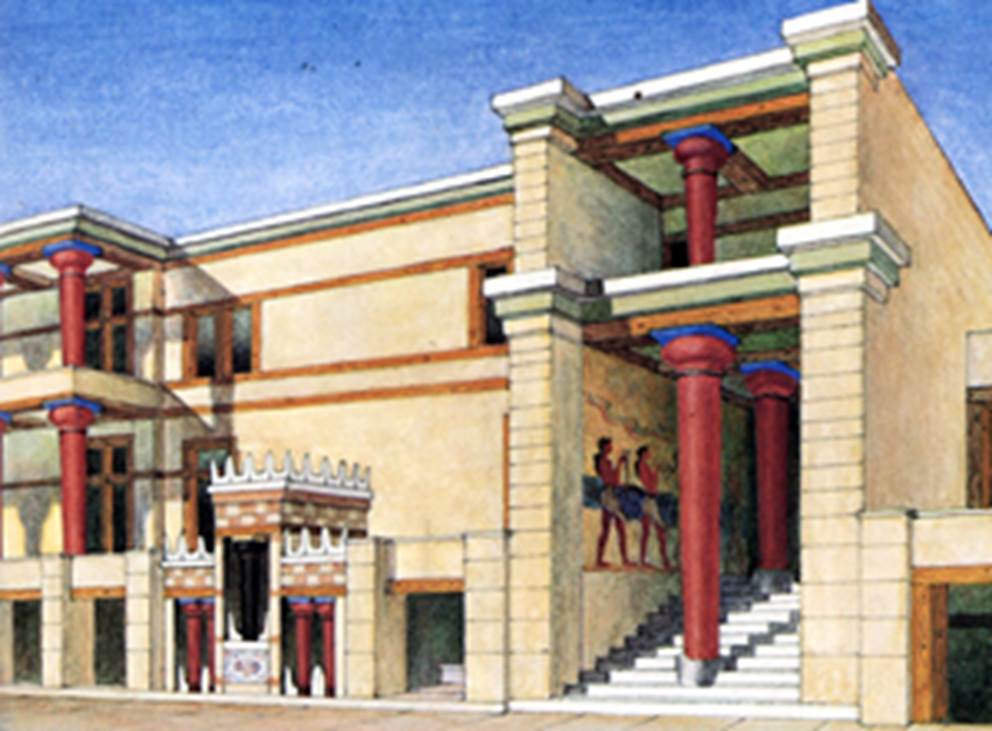
Colour Reproductions by C Iliakis
Photo by author, 2014
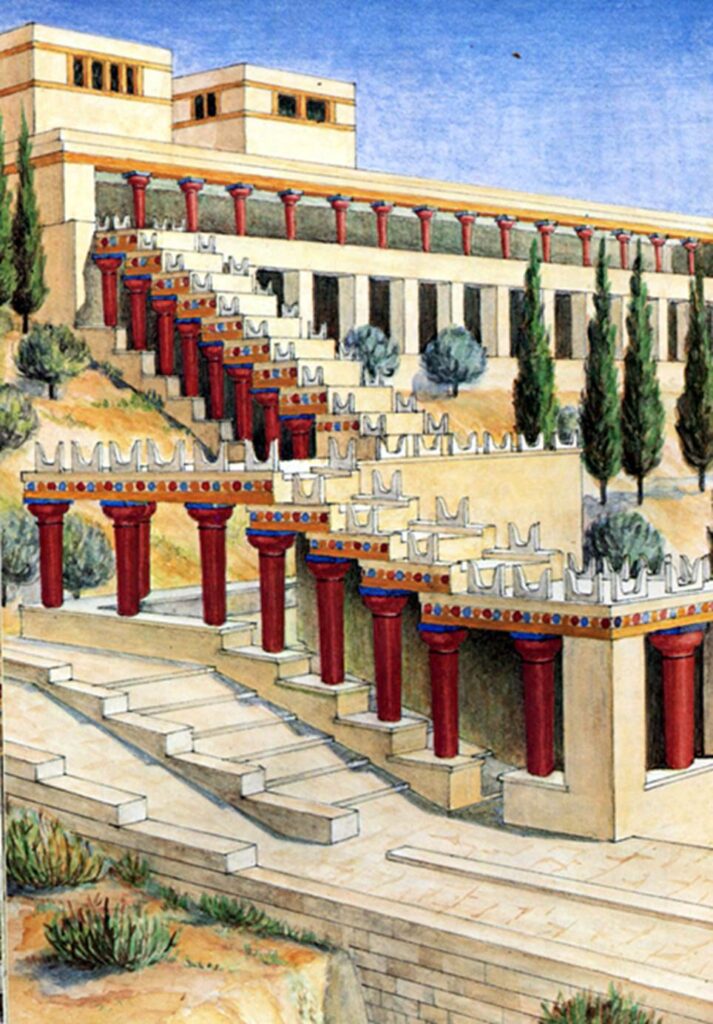
East Wing of Courtyard
The east wing across the central square is thought to be the place where the king’s family lived. The west wing has three floors, and the east wing has five floors. It has a fairly complex structure and layout, so it’s hard to understand at first glance.
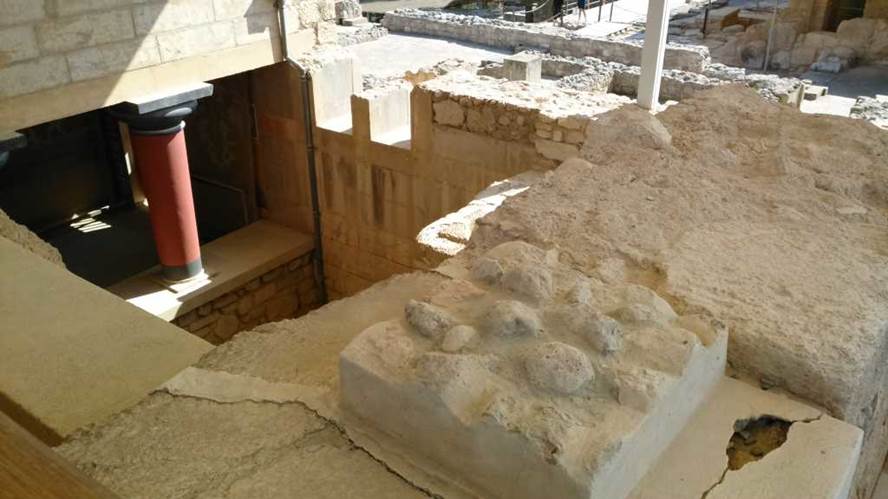
Photo by author, 2014

Photo by author, 2014
North Entrance
There is a north entrance on the north side of the ruins.
There was a sea to the north, and it seems that this north entrance was supposed to be used when coming to the palace from the port.
In the palace, only this north entrance is said to have been built with defense in mind.
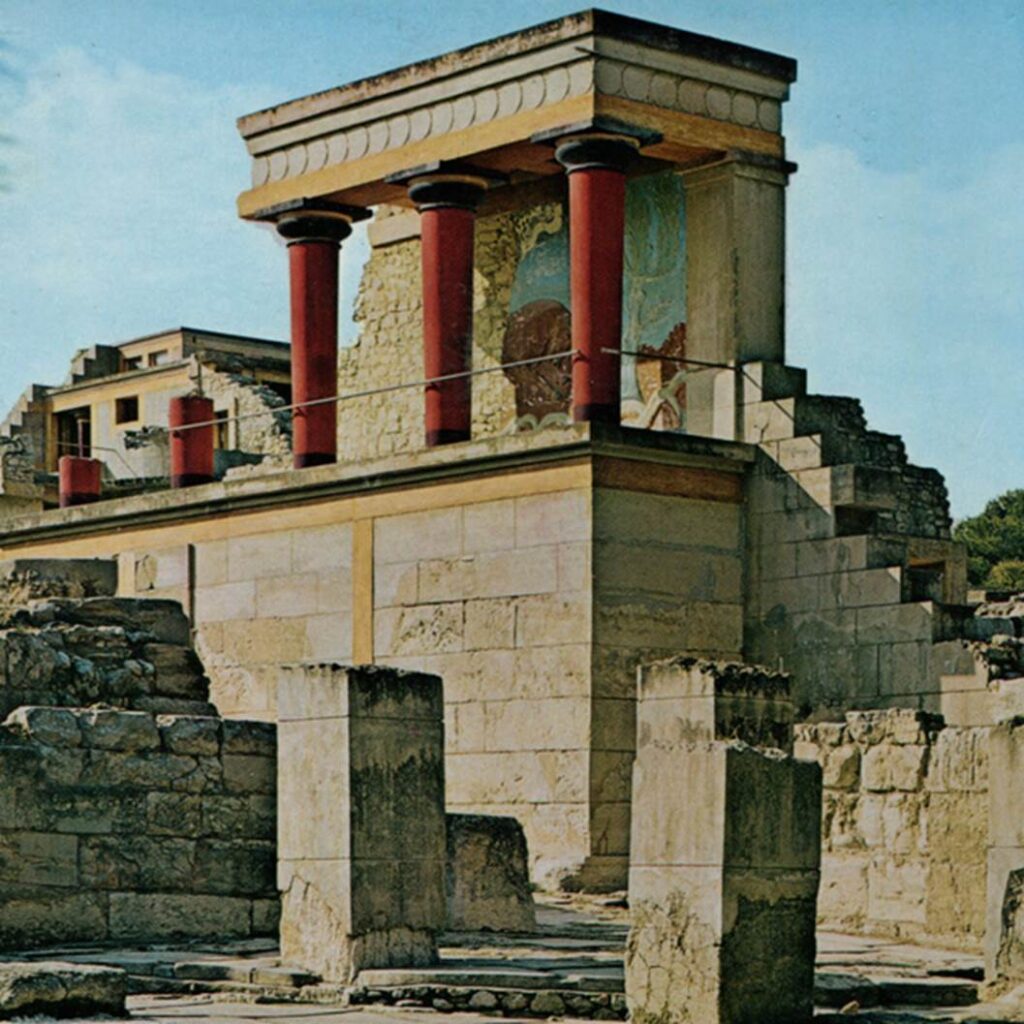
Photo by author, 2014
Among the ruins of the Palace of Knossos, the most conspicuous building is the lookout tower near the north entrance.
The red columns and the mural of a bull still have a strong presence and are particularly eye-catching.
The bull is a symbol of power and the symbol of the Palace of Knossos.
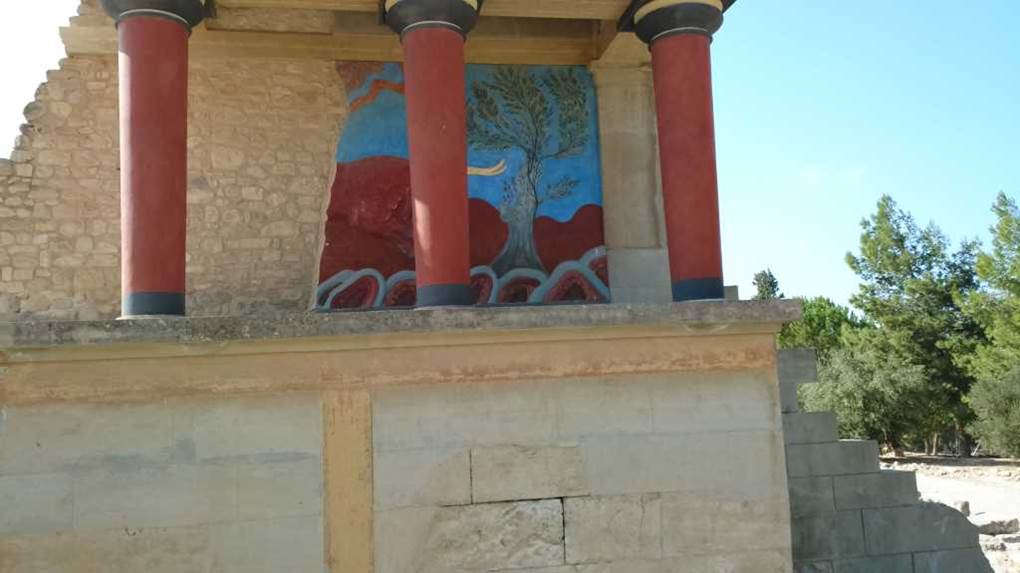
Photo by author, 2014
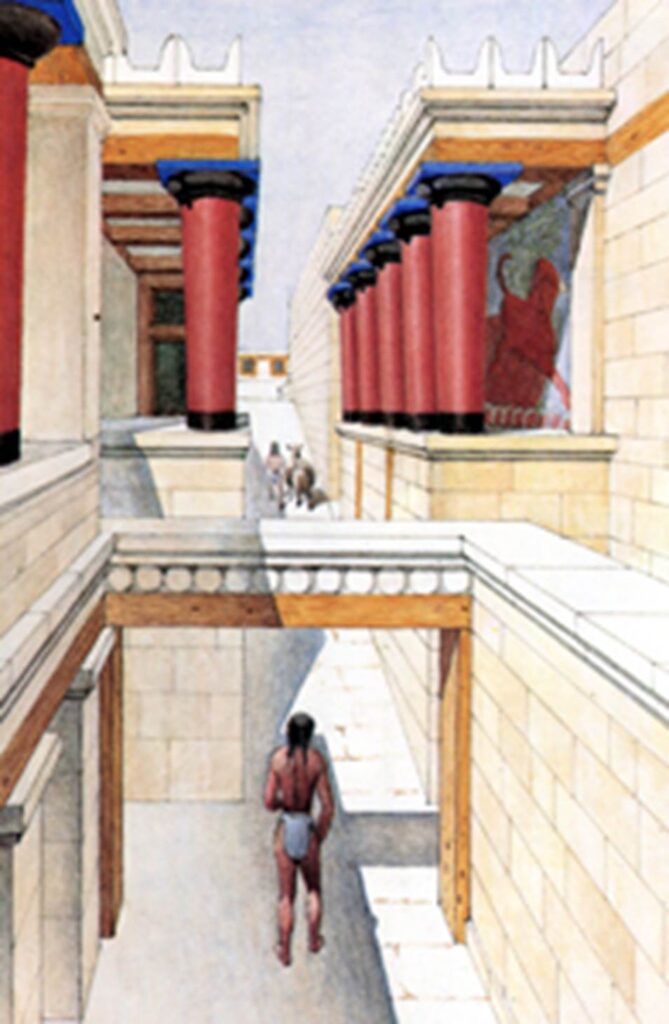
A passage space leading from the north entrance to the central part of the palace. Imaginary reconstruction diagram.
Colour Reproductions by C Iliakis
Photo by author, 2014
King’s Chamber
This is the King’s Chamber. In other places the pillars are painted vermilion (bright red), but only the pillars of the King’s Chamber are painted in black.

Photo by author, 2014
Throne Room.
The Throne Room in the Palace of Knossos. A basin of water, which is thought to contain holy water for purification, is placed in front of the throne.
The walls are painted with griffins, a mythical animal.
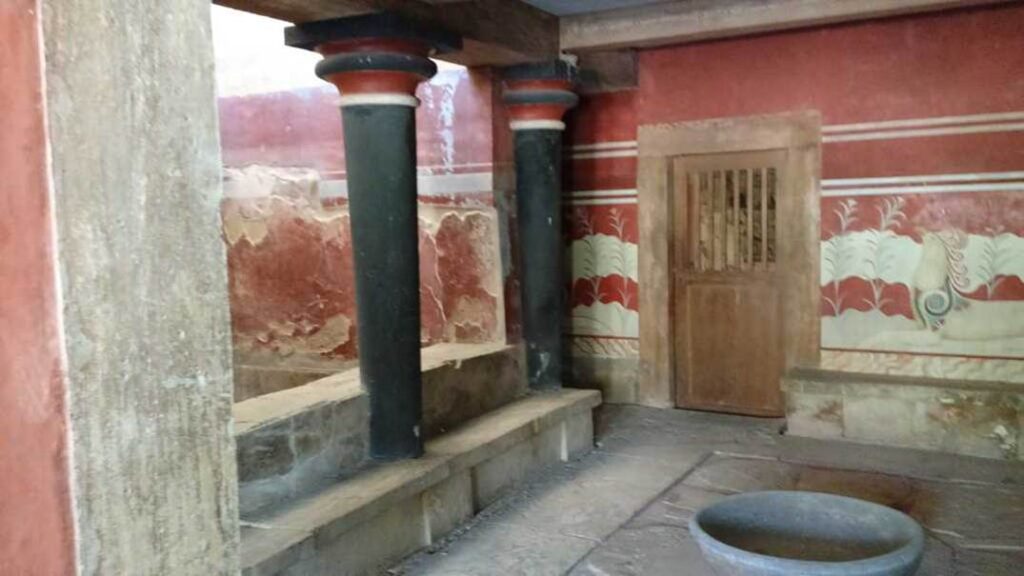
Photo by author, 2014
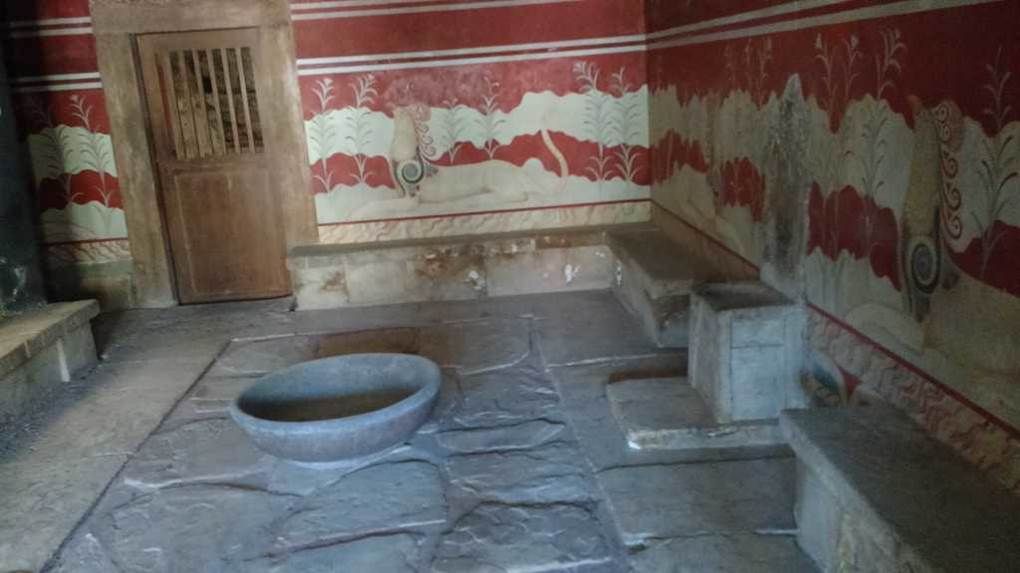
Photo by author, 2014
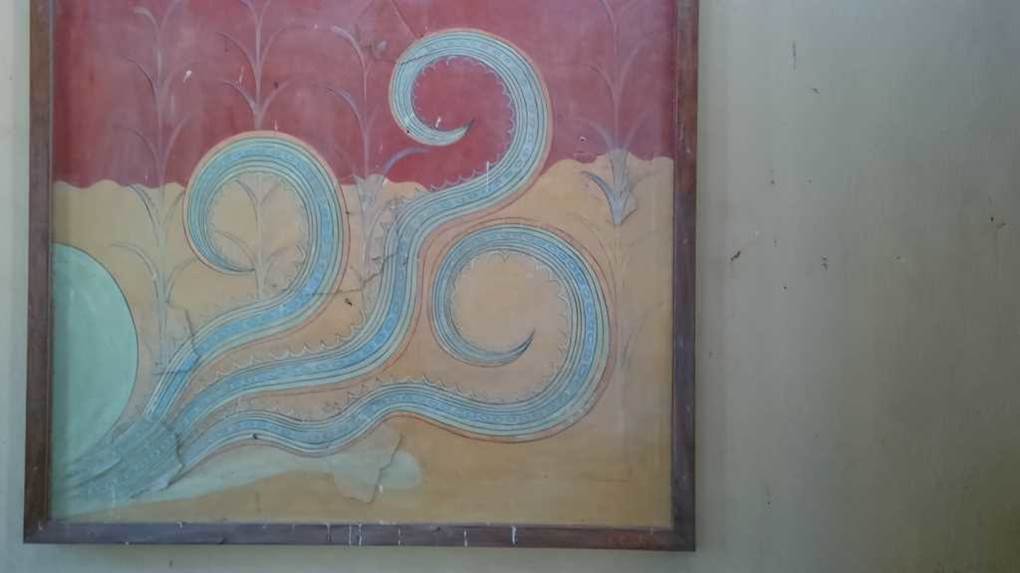
Photo by author, 2014
Warehouse
The place facing the courtyard was a warehouse. There were few large jars.
It is said that gold, silver, and copper were stored in it.
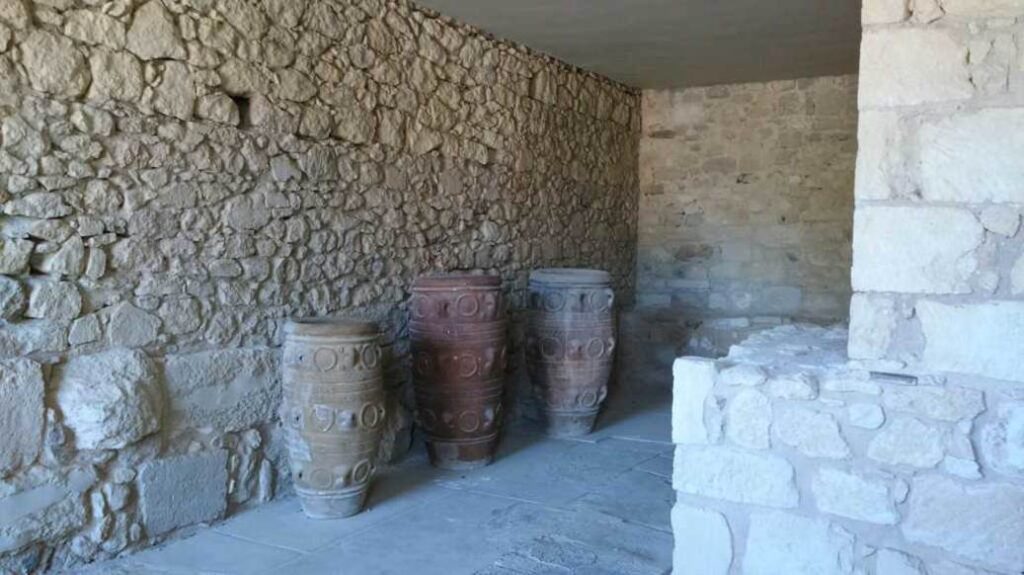
Photo by author, 2014
I can see the thickness of the partition wall, but the top part is gone.
It is difficult to imagine what the building look like in the past.
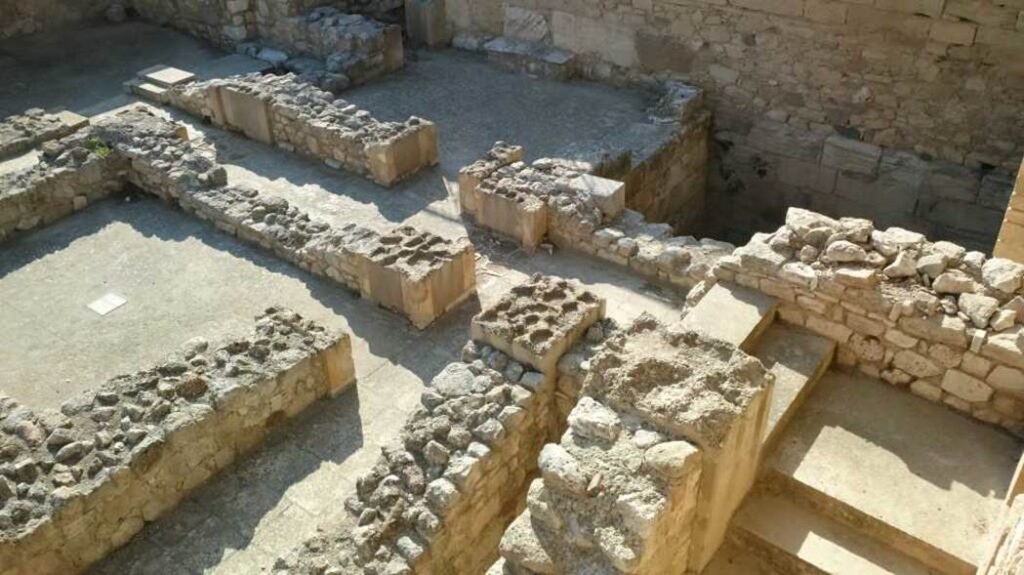
Photo by author, 2014
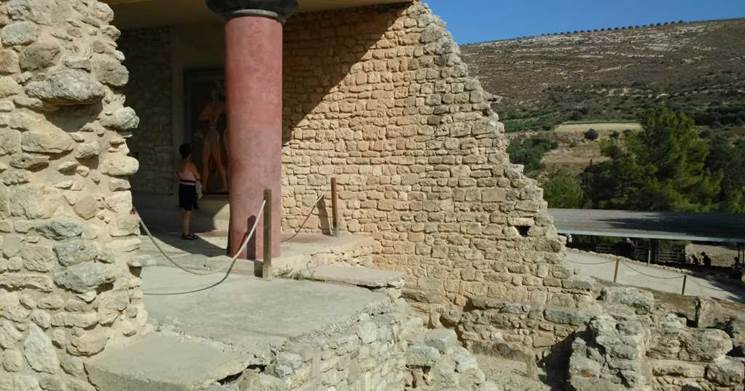
Photo by author, 2014
Mural of the “The Lily Prince”
This is a mural of the “Lily Prince” near the south entrance to the palace. The young man is named after the lily and peacock jewels he wears on his head.
This mural is a replica, and the original is preserved and exhibited at the Heraklion Archaeological Museum.
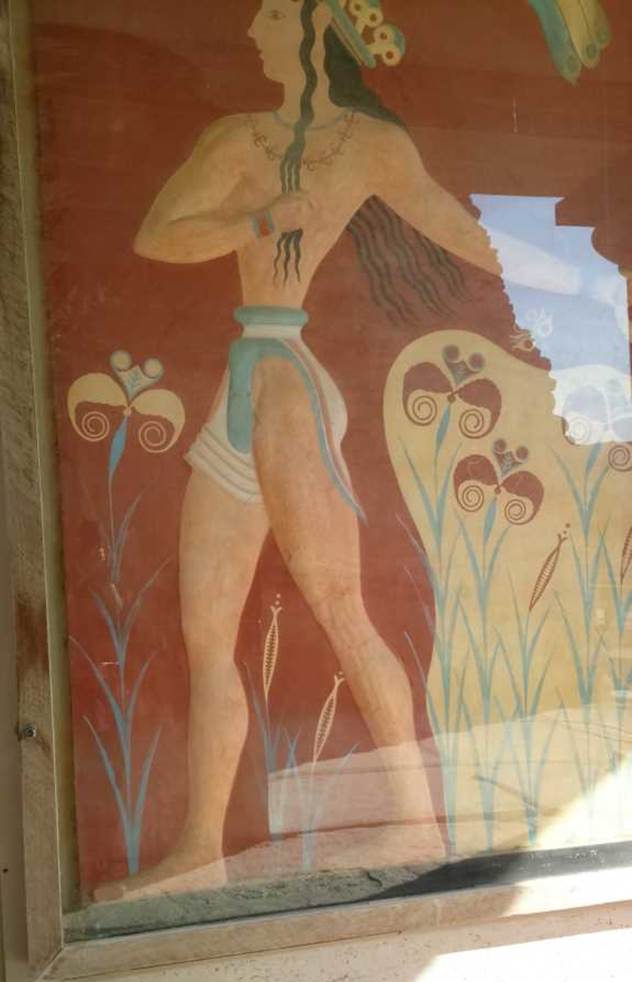
Photo by author, 2014
Photo by author, 2014
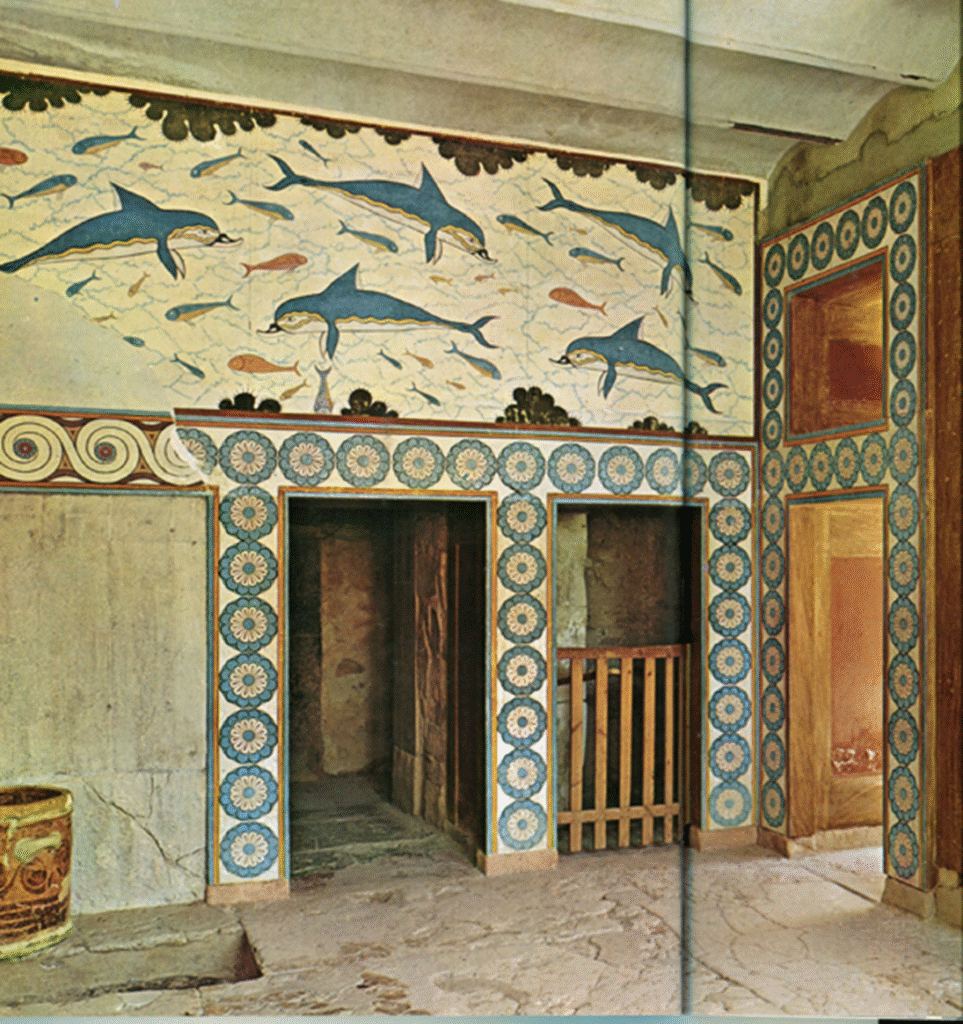
The Queen’s Hall.
Colour Reproductions after Evans
Photo by author, 2014
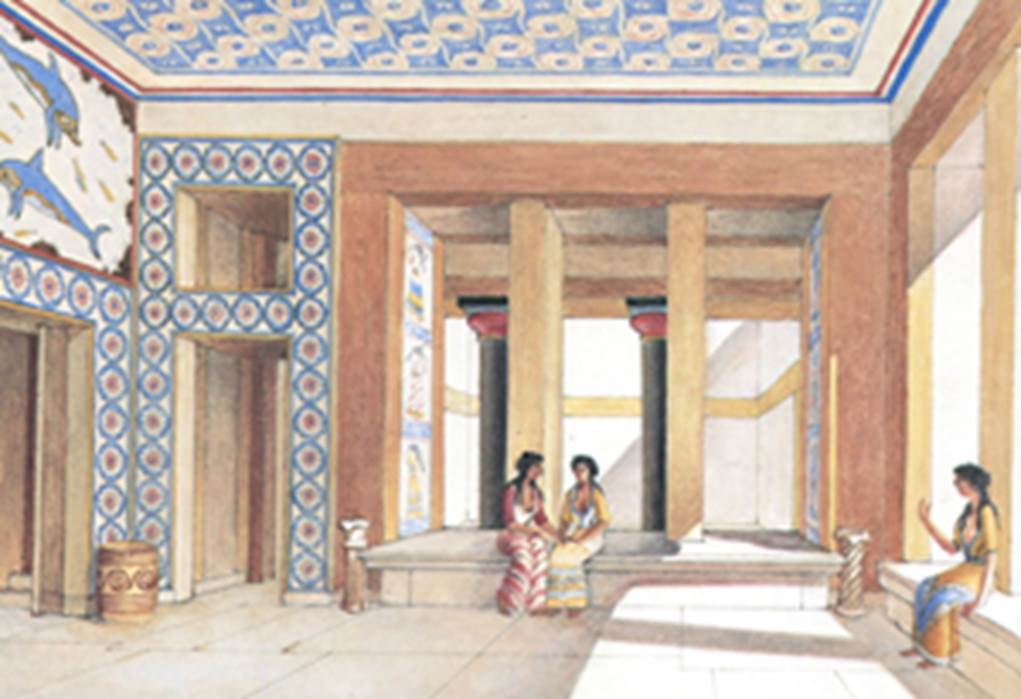
Colour Reproductions after Evans
Photo by author, 2014
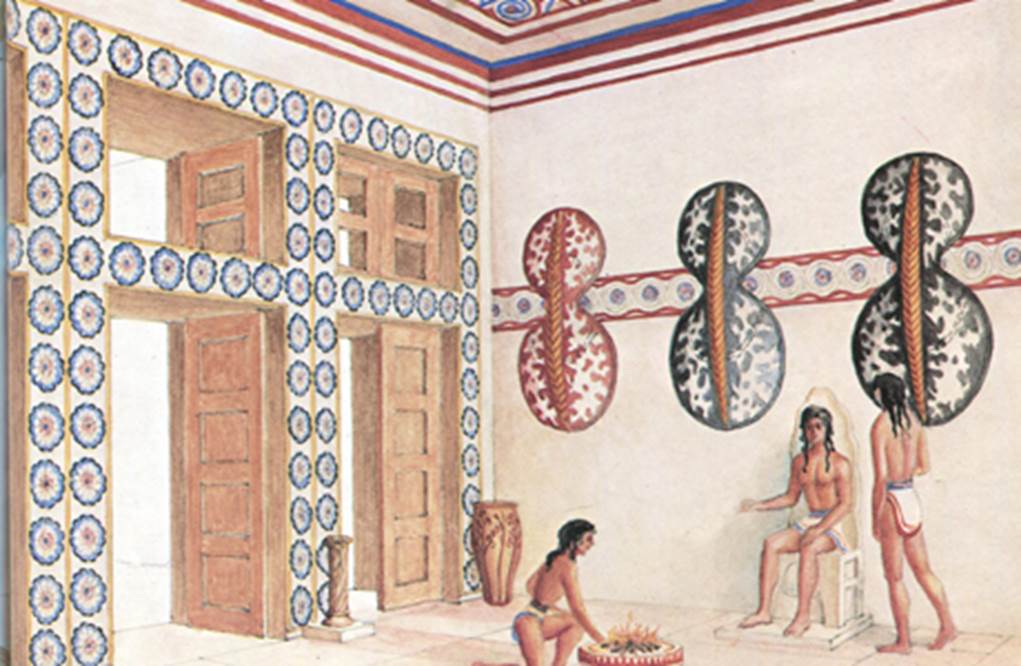
Colour Reproductions after Evans
Photo by author, 2014
Freshly squeezed orange juice
After visiting the Knossos Labyrinth under the scorching sun, there was a rest area at the exit.
Photo by author, 2014
The ruins of the Palace of Knossos, which is only stone and brick, took several hours to visit under the scorching sun even though its already October.
In contrast, this rest house building was made of wood, a rarity in Greece, and even had a green courtyard. The person who planned this building made a wise decision to use the symmetry as a selling point.
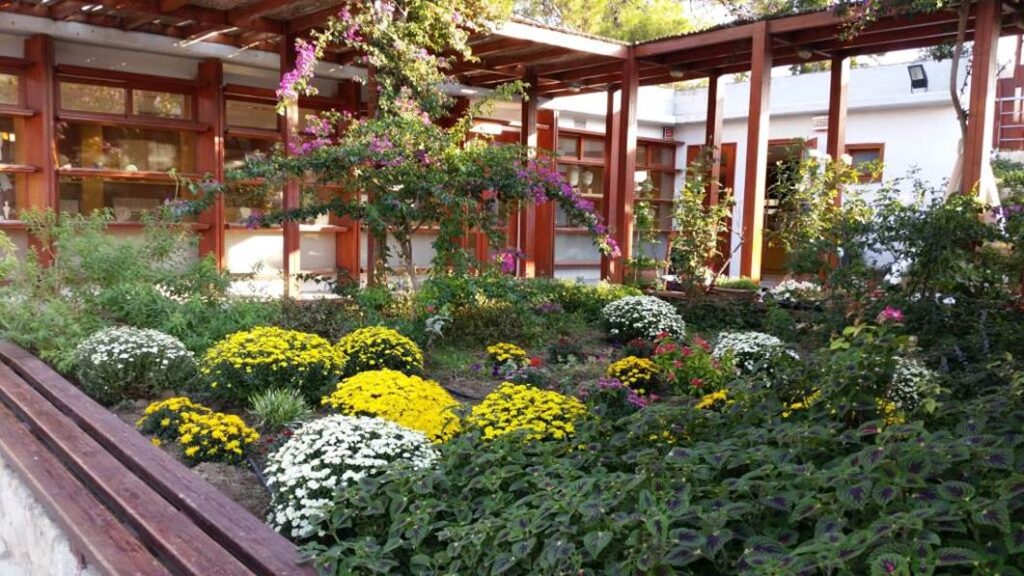
Photo by author, 2014
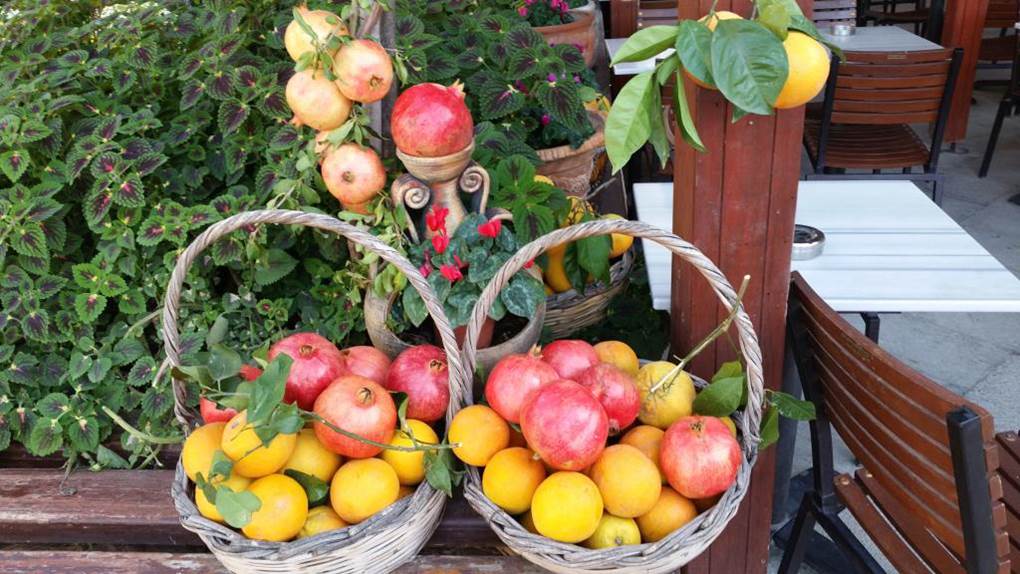
Photo by author, 2014
Abundant fruits of Crete.
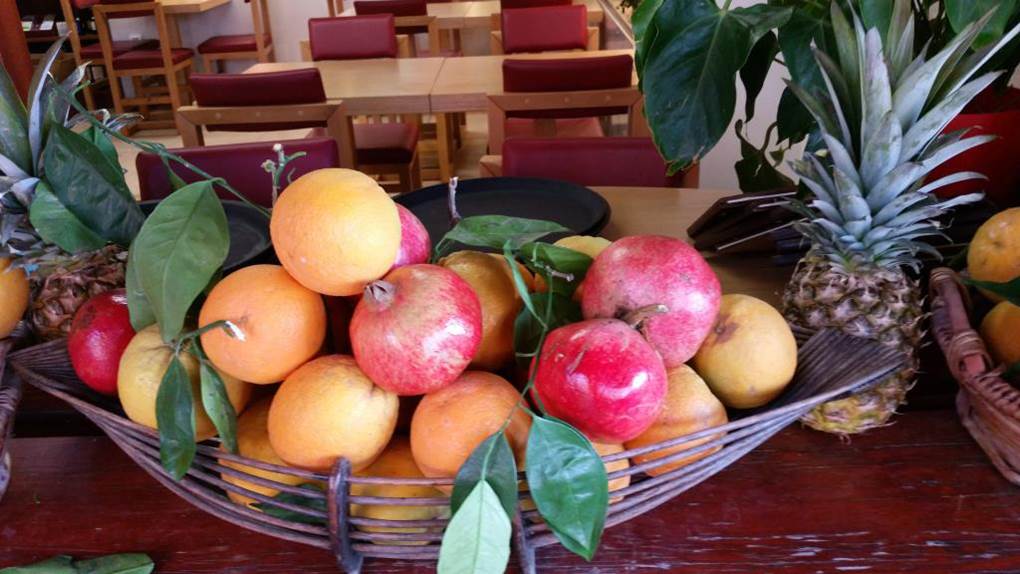
Photo by author, 2014
Almost all the tourists lined up to order this 100% natural freshly squeezed Orange Juice. It was the perfect drink after an hour of visiting Knossos Palace under the scorching sun.
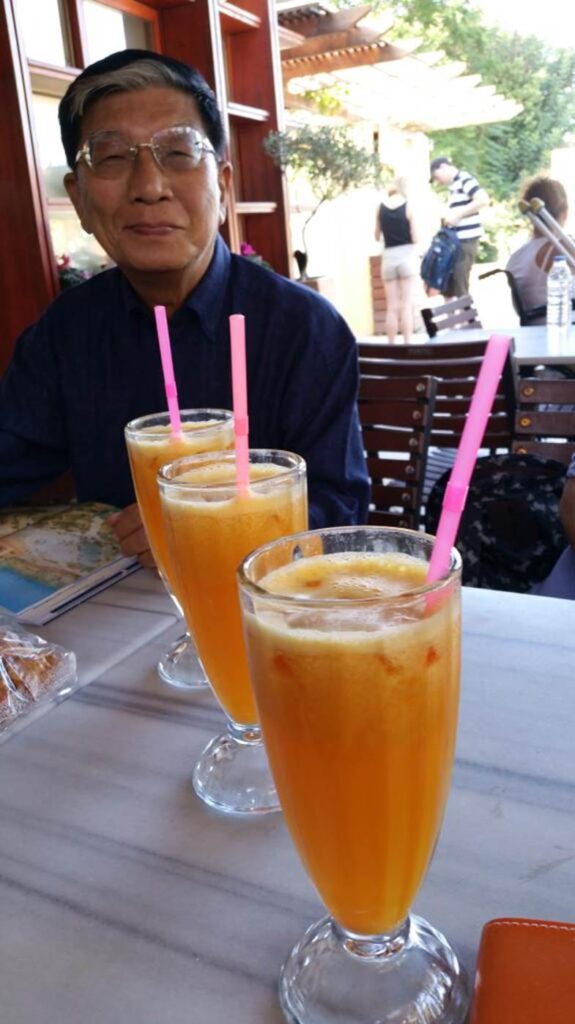
Photo of author, 2014
Heraklion Archaeological Museum
The Archaeological Museum of Heraklion, the largest city in Crete, exhibits artifacts from Crete. All the originals unearthed in the Palace of Knossos can be found here.
It is one of Greece’s leading museums, boasting a collection of 5,500 years from the Neolithic to the Roman period.
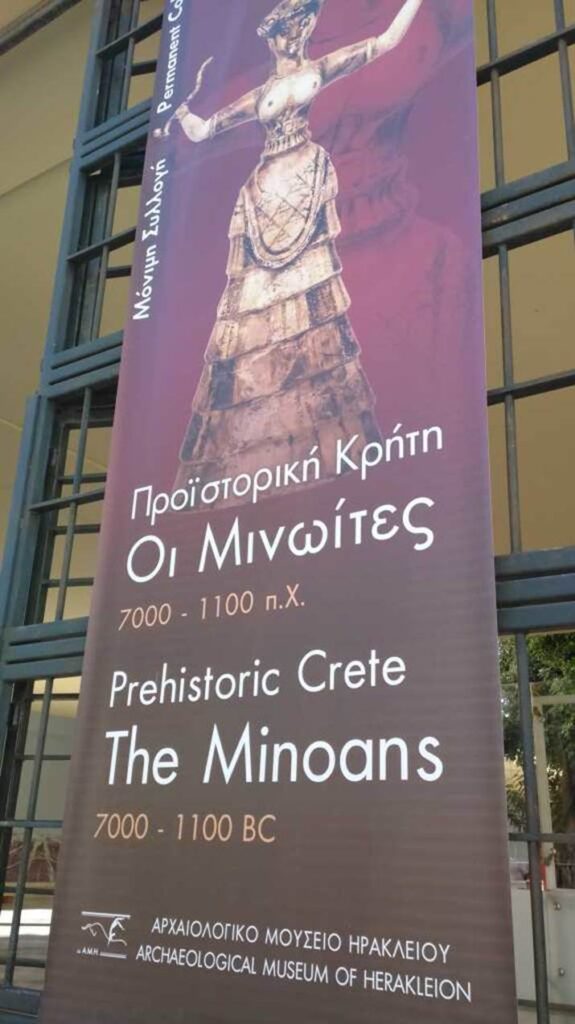
Photo by author, 2014
The Minoan civilization dominated the eastern Mediterranean and the Aegean Sea and was one of the world’s most advanced civilizations at that time.
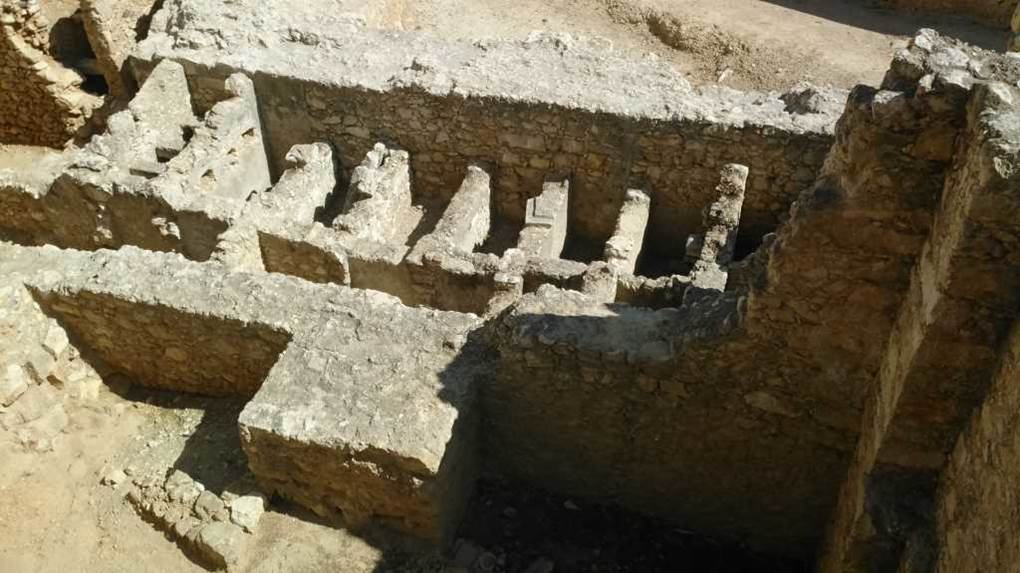
Photo by author, 2014
Photography is allowed freely in Greek museums. Below are some of the works of the ancient Cretan civilization that I captured on camera.
Restoration model of the Palace of Knossos.
It is on display at the Heraklion Archaeological Museum.
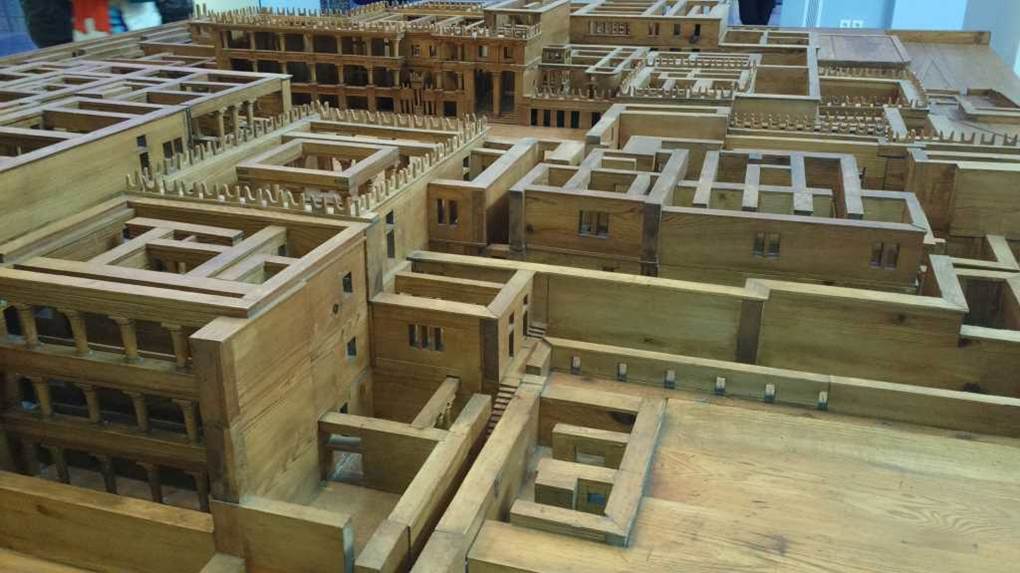
Photo by author, 2014
Ivory Bull leaper
Expresses the beauty of the body with a sense of dynamism.
I imagine that this kind of art was later inherited by the ancient Greek mainland.
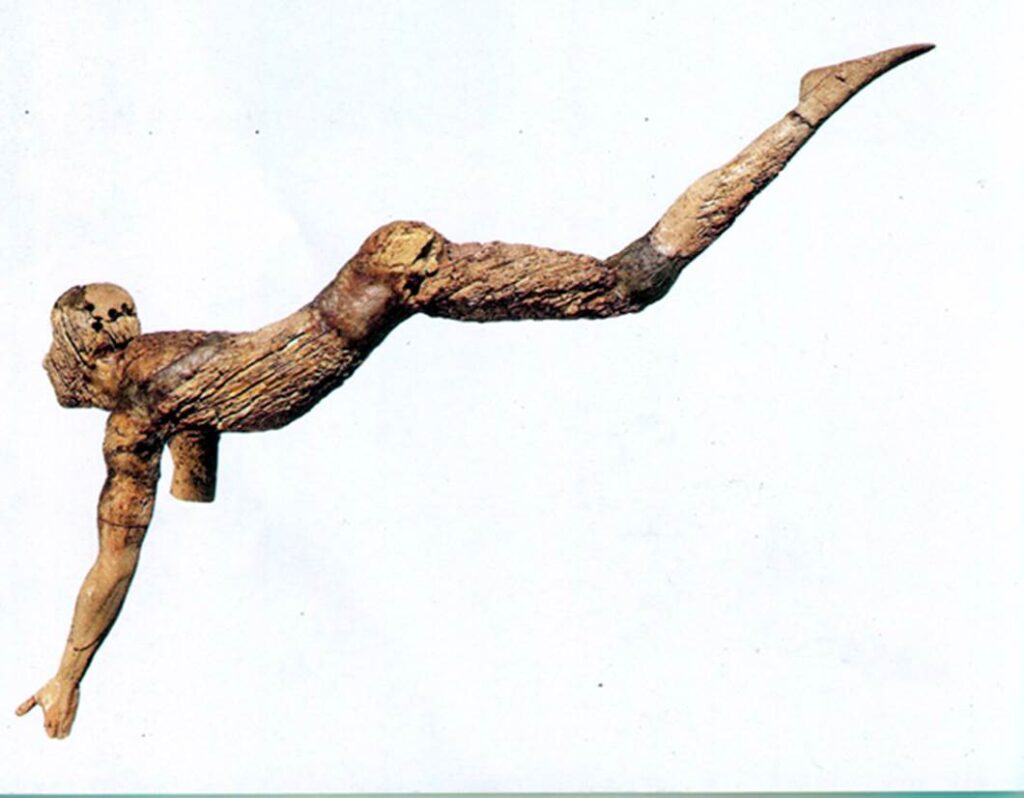
Photo by author, 2014
Serpent goddess
A masterpiece of the Cretan civilization.
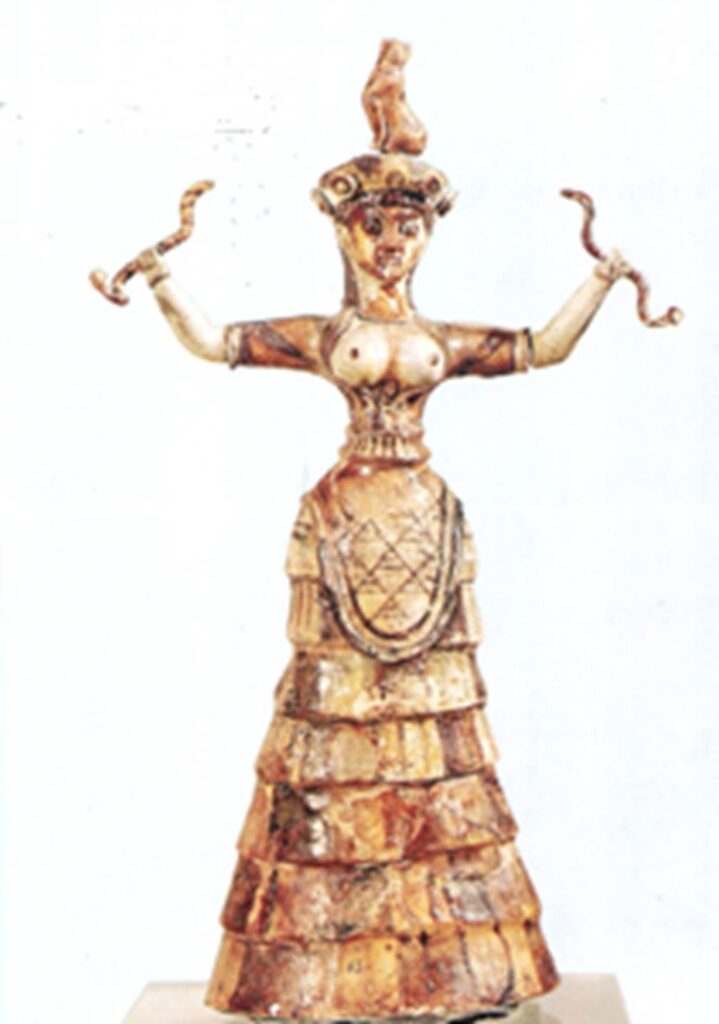
Photo by author, 2014
A model of a house at that time.
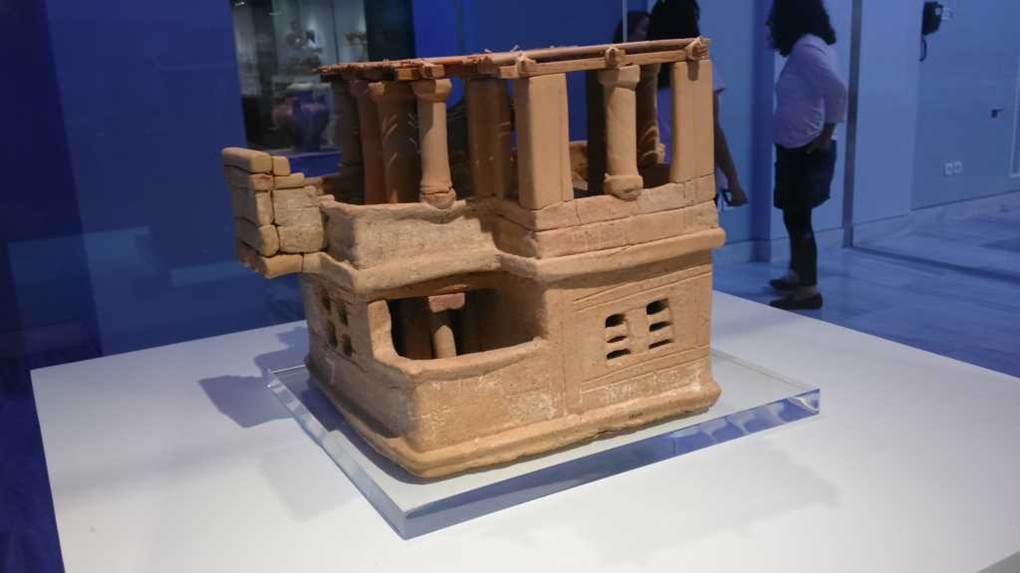
Photo by author, 2014
Various vases depicting sea creatures were on display. Octopus, squid and fishes are represented in the urn. It is clear that they were a maritime people. It dates from around the 15th century BC.
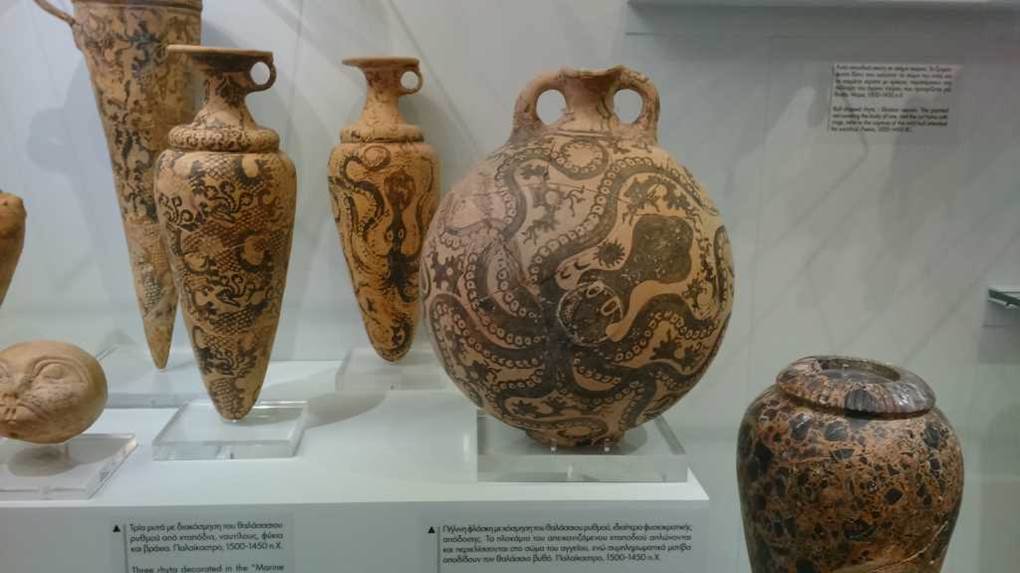
Photo by author, 2014
Photo by author, 2014
Photo by author, 2014
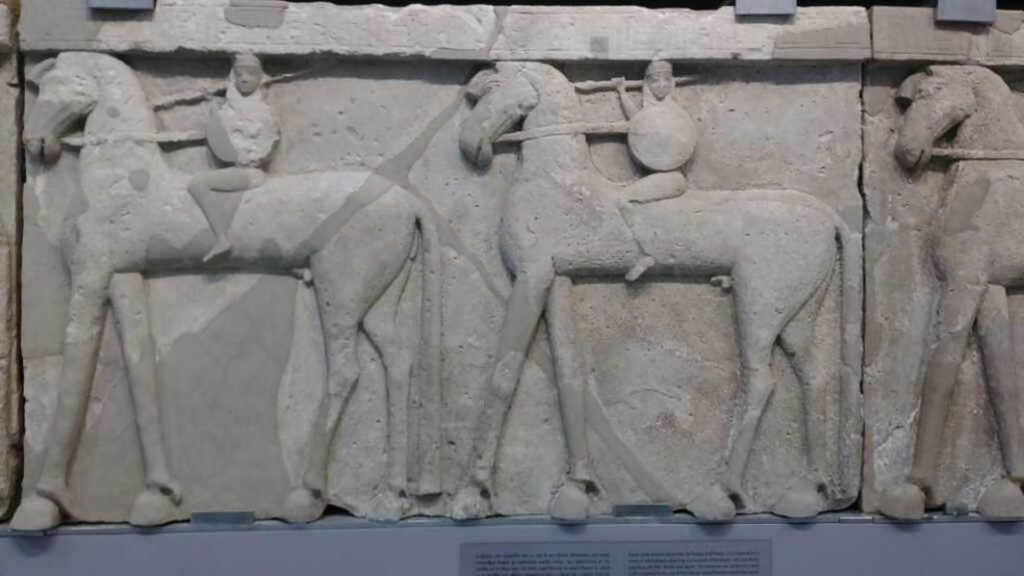
Photo by author, 2014
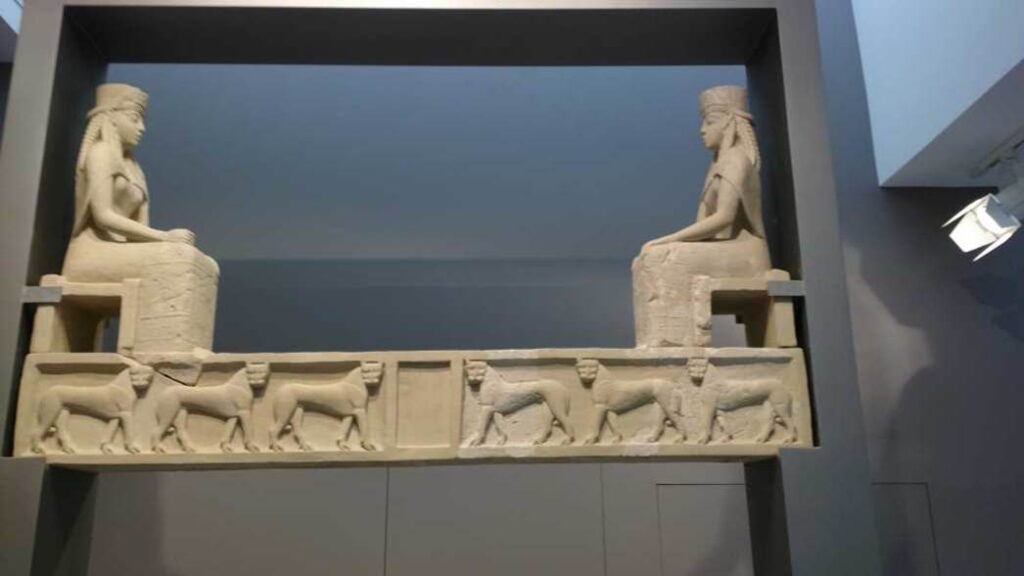
Photo by author, 2014
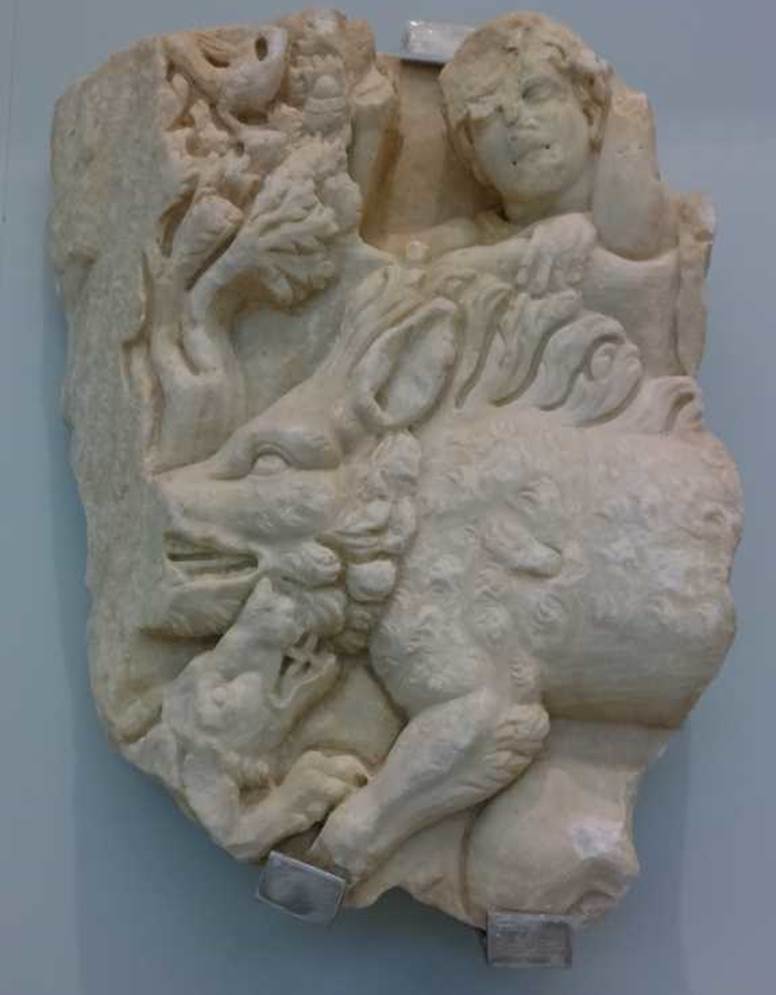
Photo by author, 2014
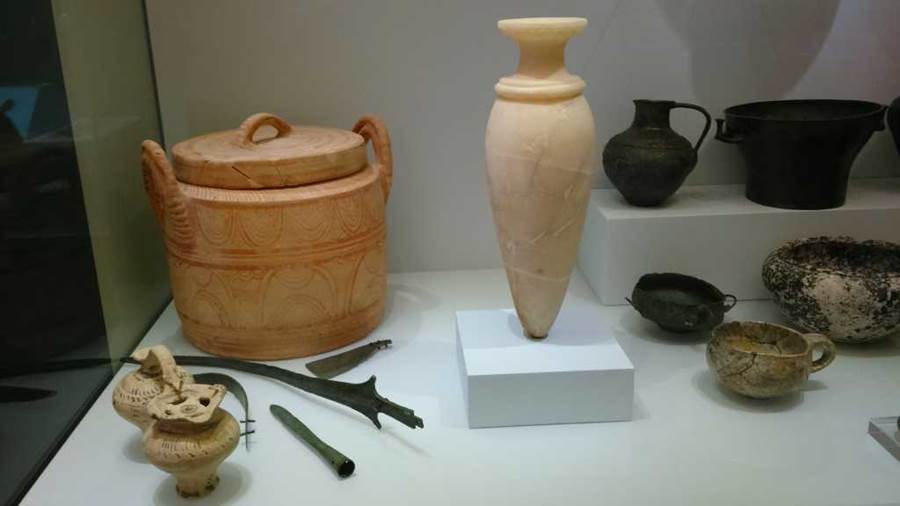
Photo by author, 2014
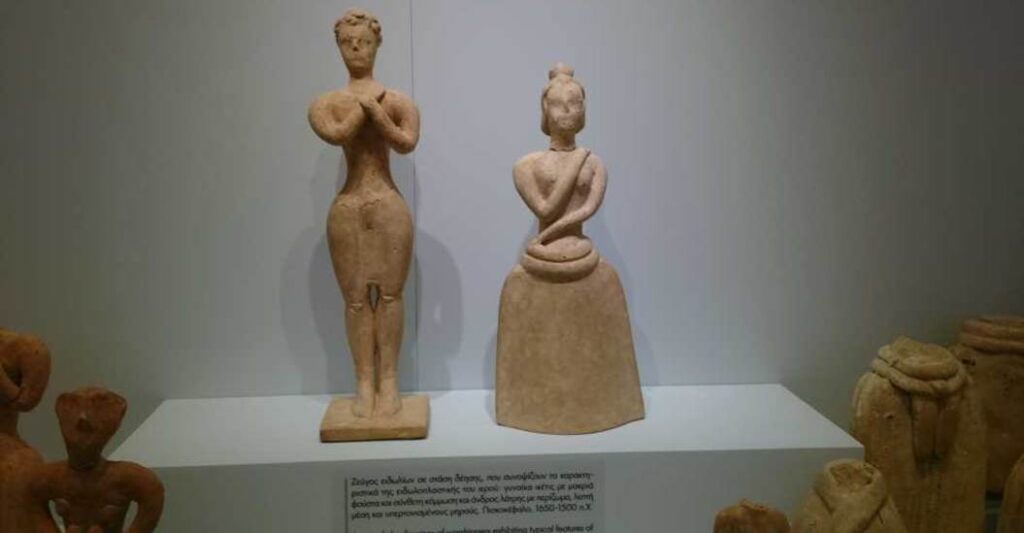
Photo by author, 2014
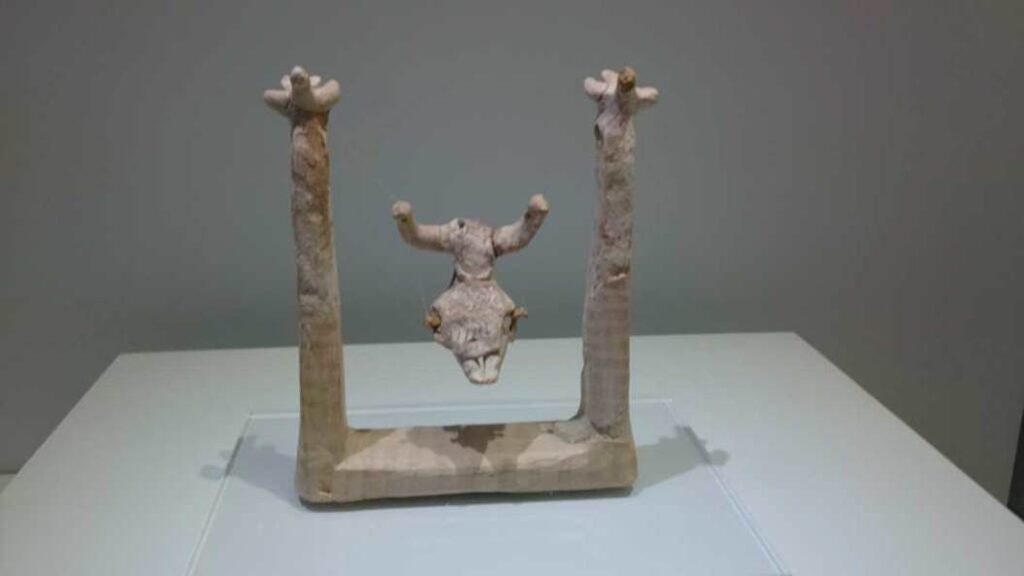
Photo by author, 2014
Metal models that expresses the relationship between humans and power (horses, cows, cars, boats) 3000-4000 years ago.
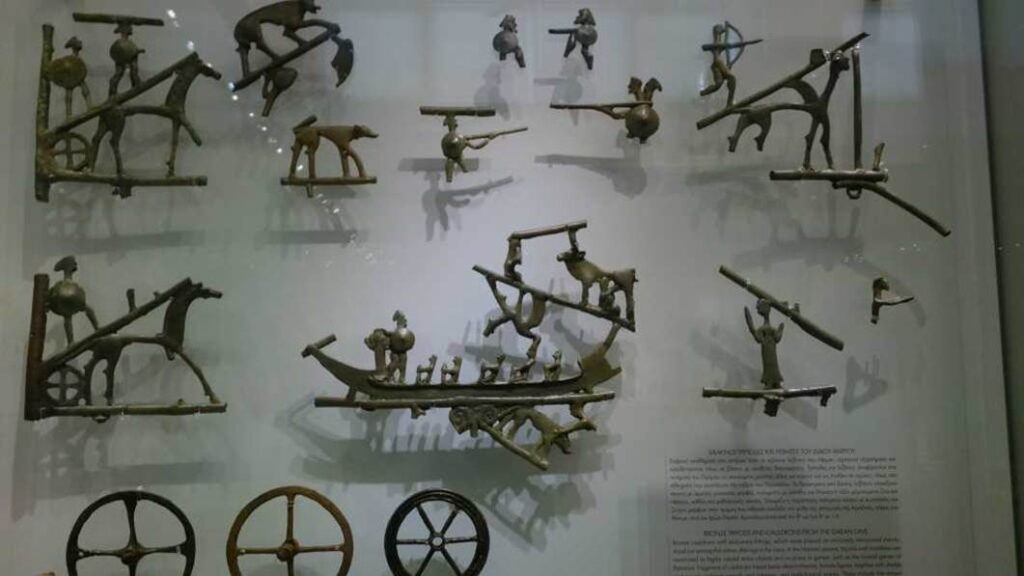
Photo by author, 2014
Bull Jumping Ceremony
The photo shows a bull-jumping ceremony
(excavated from the Palace of Knossos)

Photo by author, 2014
“Ladies in Blue”
A mural called “Women in Blue” with a blue background.
It was found in the east wing of the Palace of Knossos.
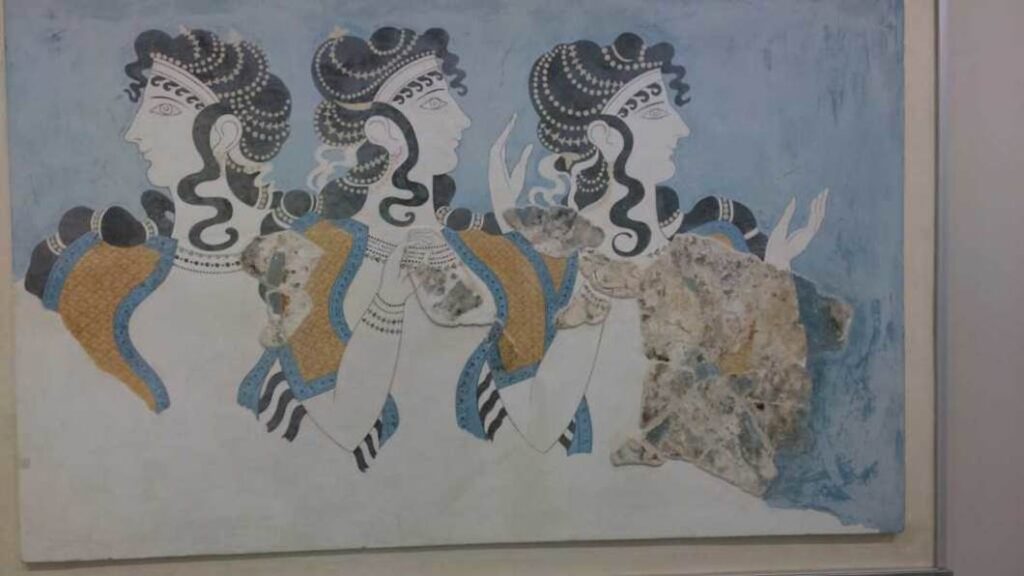
Photo by author, 2014
On the second floor, there are many beautiful murals excavated from Crete, mainly the original murals of the Palace of Knossos.
In order to appreciate them one by one, it is essential to have enough time.
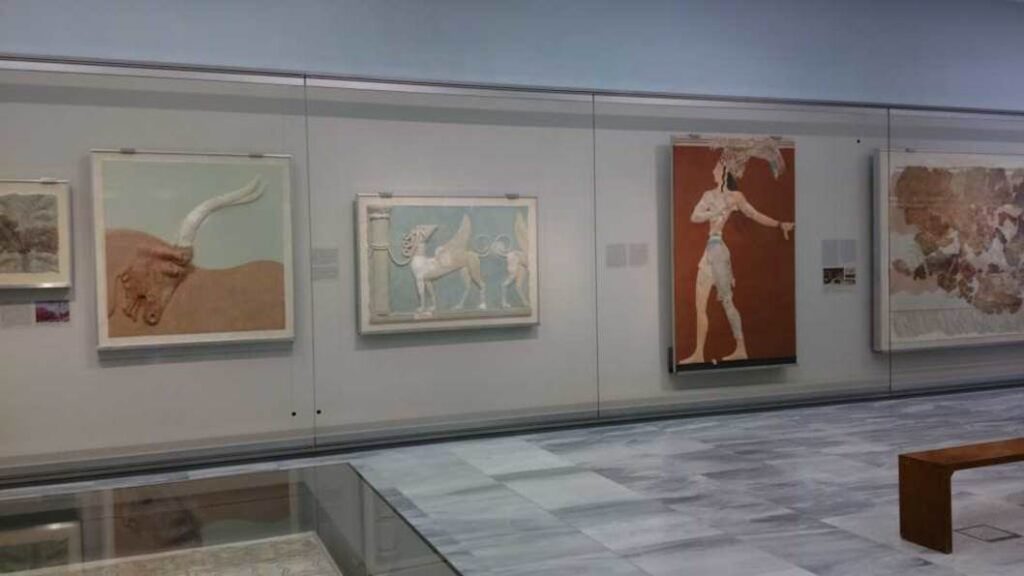
Photo by author, 2014
Mural of the Lily Prince
The original mural of the “The Lily Prince” in the Palace of Knossos.
Flowing curved brushstrokes and beautiful colors selected.
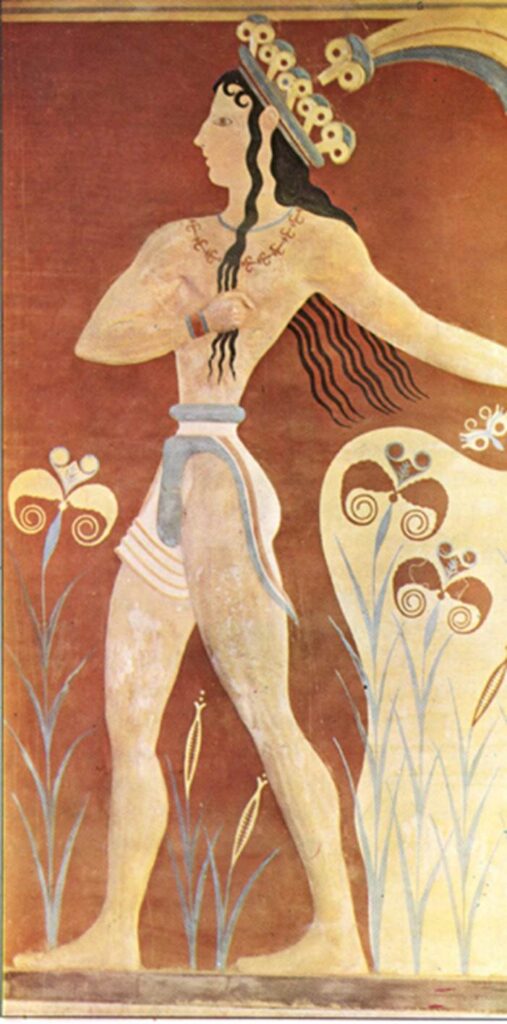
Photo by author, 2014
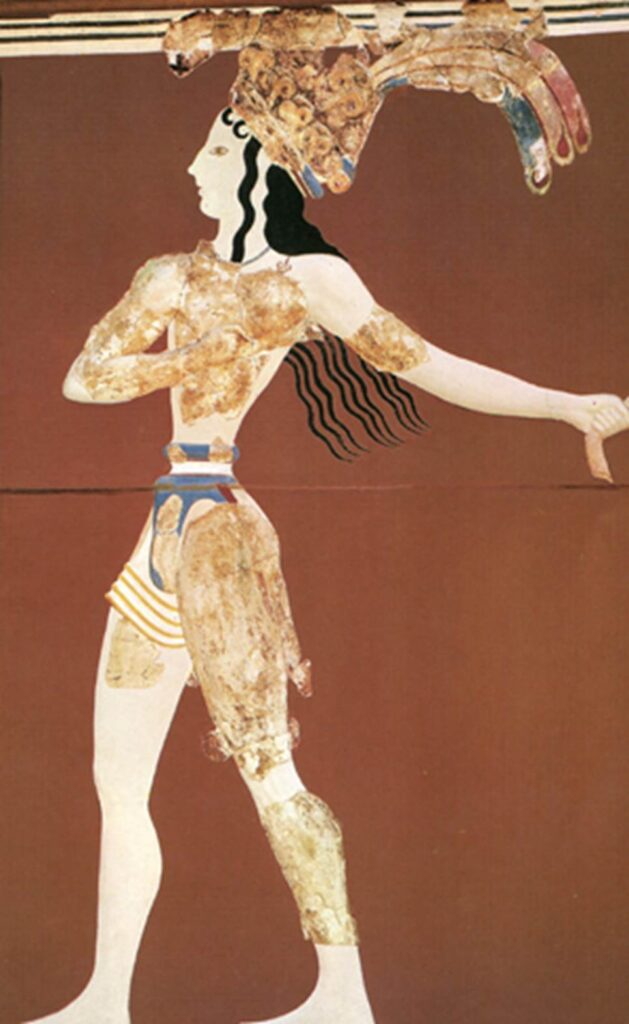
Photo by author, 2014
Actual used pottery excavated at the Palace of Knossos.
The selection and blending of glaze colours is superb.
It’s hard to believe that there were potters who created these 3,500 years ago.
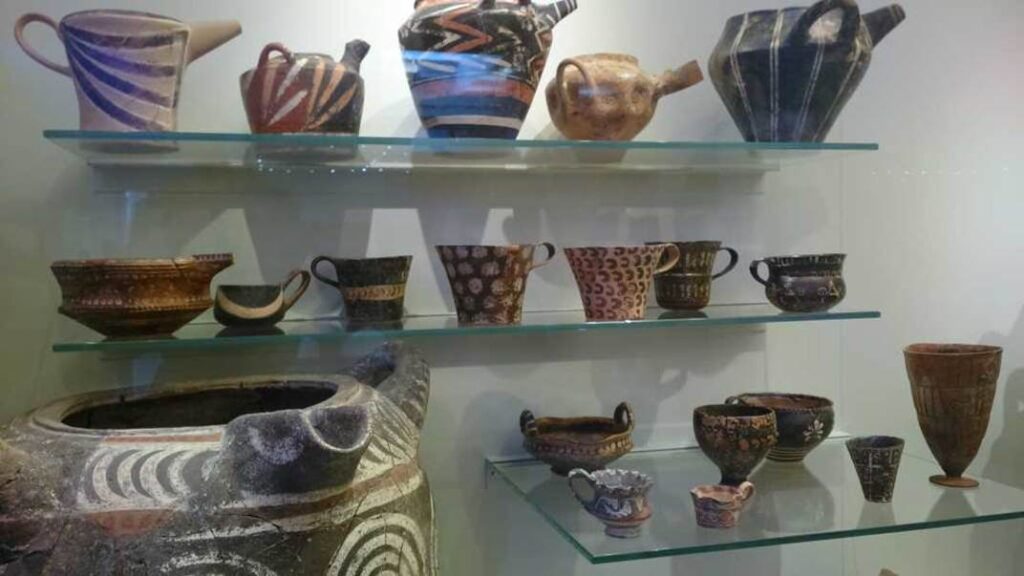
Photo by author, 2014

Photo by author, 2014
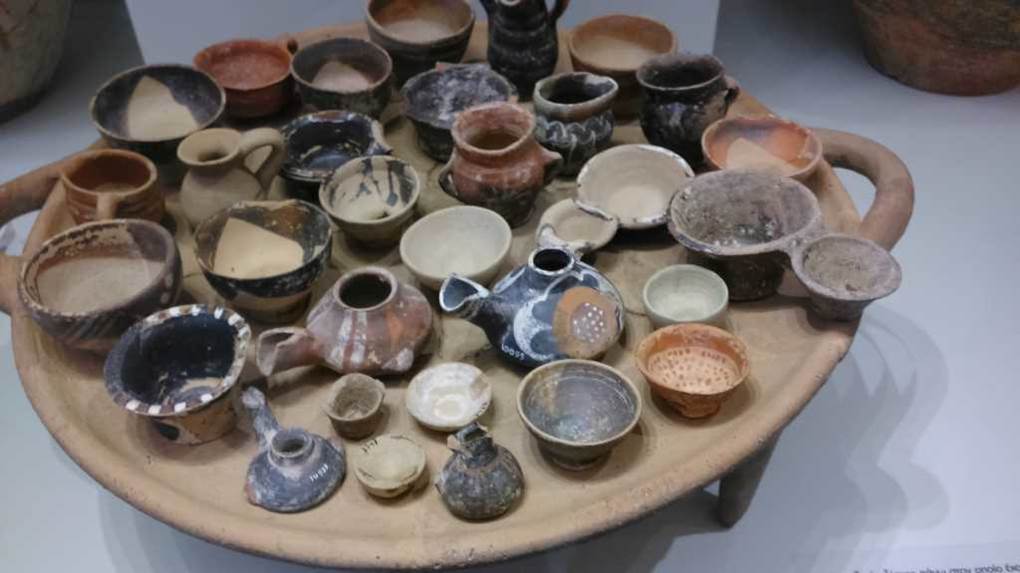
Photo by author, 2014
Crown made of Myrtle
Myrtle, native to Greece and used as a source of medicine and perfume, has leaves and flowers that symbolize beauty and youth, and the motif is often found in the graves of young women.
The technology to process metals like this existed before Christ. The Minoan civilization is astonishing !!
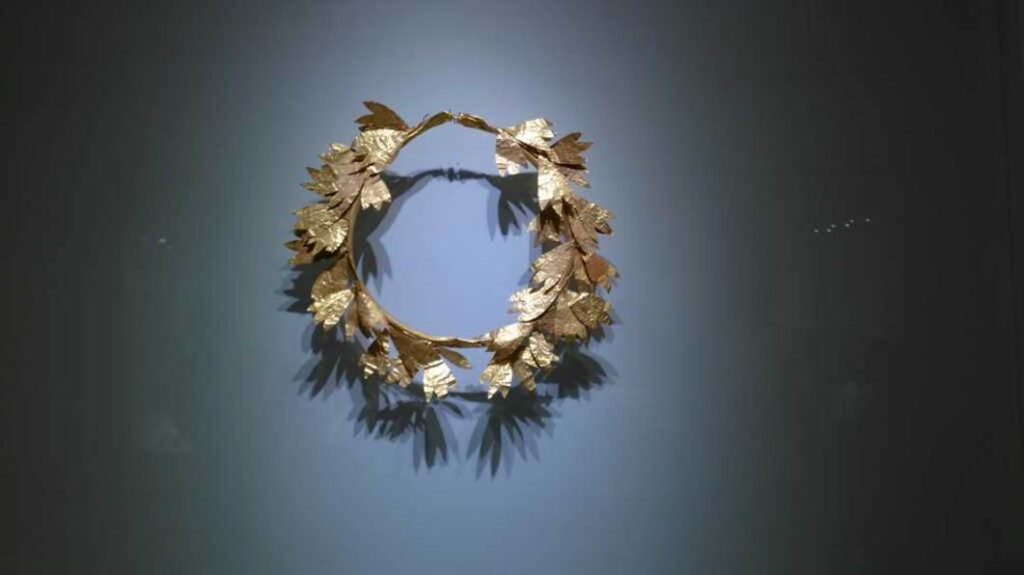
Photo by author, 2014
The next day, we will travel to the island of Santorini, which was also in the Minoan civilization.
All photos by author, October 2014